Indigenous tribe, Saugeen Ojibway Nation, has voted down plans for nuclear waste dump near Lake Huron
Hervé Courtois to C.A.N. Coalition Against Nukes, 1 Feb 2020, Members of
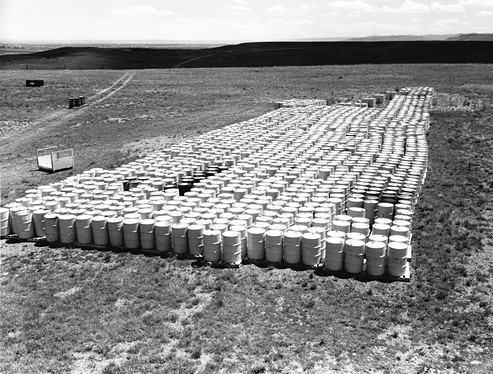
the Saugeen Ojibway Nation (SON) have voted down plans to bury Ontario’s low- and intermediate-level nuclear waste within 1.2 kilometres of Lake Huron….On Friday, 1,232 members of the First Nation band voted. The vote results saw 1,058 ‘no’ votes, with 170 ‘yes’ and 4 spoiled ballots…It means Canada’s first permanent nuclear waste facility will need to be built somewhere else in Ontario…OPG will now have to start searching for a new host community to house over 200,000 cubic metres of low- and intermediate- level nuclear waste…OPG says finding a new site may set the project back 20 to 30 years….https://www.facebook.com/groups/C.A.N.CoalitionAgainstNukes
A really bad idea – The Navy’s New Mini-Nuclear Warheads
|
The Navy’s New Mini-Nuclear Warheads Are A Really Bad Idea, In other words, a new tactical nuclear weapon is supposed to convince Russia that the U.S. could respond in kind to Moscow’s use of tactical nukes. Delivering the warhead by sub-launched ICBM means Russian air defenses can’t stop it. Unfortunately, there are questionable assumptions behind this thinking. National Interest, by Michael Peck . 31 Jan 2020, Why Does America Need New Mini-Nuclear Warheads for Its Submarines? America’s strategic ballistic missile submarines are getting tactical nuclear weapons……..
The U.S. military doesn’t discuss the deployment of nuclear weapons as a matter of policy. But it’s no secret why the Trump administration wants them. To understand why requires an appreciation of the unwritten rules that have governed the U.S. vs. Soviet Union/Russia nuclear arms race since 1949. The U.S. government fears that Russia is embracing a new military doctrine that envisions selective use of tactical nuclear weapons, such as during a conflict in Eastern Europe and the Baltic States. ……….
a new tactical nuclear weapon is supposed to convince Russia that the U.S. could respond in kind to Moscow’s use of tactical nukes. Delivering the warhead by sub-launched ICBM means Russian air defenses can’t stop it.
Unfortunately, there are questionable assumptions behind this thinking. The Cold War witnessed similar fears of nuclear blackmail if one superpower or the other fell behind in the arms race. Yet no one has employed nuclear weapons – tactical or strategic – since 1945. Perhaps that’s because the leaders of the U.S., Russia and other nuclear-armed states have realized that the nuclear threshold is crossed, events could easily spiral into full-scale atomic war.
Then there is the whole idea of using ICBMs to deliver mini-nukes. Just as with Prompt Global Strike, a controversial idea to mount conventional warheads on ICBMs, the problem is that no one can be sure whether the nose cone of a strategic ballistic missile contains high-explosive or a hydrogen bomb. Michael Peck is a contributing writer for the National Interest. He can be found on Twitter, Facebook. or on his Web site. https://nationalinterest.org/blog/buzz/navys-new-mini-nuclear-warheads-are-really-bad-idea-118831 |
|
|
Opposition to Nuclear Waste Storage Plan Near Lake Huron
|
Canada Nuclear Waste Storage Plan Near Lake Huron Faces Vote, Bloomberg, Jan. 31, 2020,
U.S. lawmakers from the Great Lakes region are weighing in on the fate of two major Canadian nuclear waste facilities, which could hinge on a vote in a First Nation community in western Ontario on Friday. The 4,500-member Saugeen Ojibway Nation, based on Lake Huron’s Bruce Peninsula, is voting on whether to support construction of Ontario Power Generation Inc.’s C$2.4 billion ($1.8 billion) deep geological repository for low- and intermediate-level nuclear waste near the shore of Lake Huron. But several U.S. members of Congress oppose it, claiming it could endanger drinking water for millions. Ontario Power Generation pledged not to move ahead if the First Nation community votes against the repository. The Nuclear Waste Management Organization, which could build a much larger C$23 billion repository for more radioactive spent nuclear fuel in the same region, won’t proceed in the area if it doesn’t have a partnership with the nation. The vote on Friday doesn’t deal with its proposal directly. The two projects together represent the bulk of Canada’s long-term plan to store nuclear waste. Canada has 2.9 million bundles of highly radioactive used nuclear fuel, according to 2015 data, and around 100,000 cubic meters of low and intermediate nuclear waste, according to 2016 figures, the most recent available. U.S. Lawmakers Oppose Both SitesU.S. lawmakers from across Lake Huron in Michigan have long opposed both projects, and environmental groups say storing radioactive materials deep underground near large bodies of water isn’t safe. “Storing high-level nuclear waste could threaten the well-being of the Great Lakes for generations to come and undo progress made to preserve them,” Sen. Gary Peters (D-Mich.) said in a statement Thursday. “This makes no sense,” said Sen. Debbie Stabenow (D-Mich.). “Canada has as much at stake as we do in protecting our Great Lakes. There is no justification for a nuclear waste site so close to Lake Huron to even be under consideration.” At its closest point, the low- and intermediate-level nuclear waste could be stored underground within a mile of the lake’s shoreline. Peters and seven other senators from the Great Lakes region introduced a resolution in the Senate on Jan. 15 calling on Canada’s federal government to stop both projects and for the Trump administration to help find a solution. An identical resolution was introduced in the House of Representatives Jan. 17. The U.S. Environmental Protection Agency has shared concerns about the project’s potential impact on the U.S. and the Great Lakes, the agency said in a statement Thursday. Highly Radioactive Waste SiteThe Nuclear Waste Management Organization repository would be built to store 5.2 million bundles of used nuclear fuel Canada is projected to produce. It could be built in South Bruce, Ontario, or farther north in Ignace, the organization said Jan. 24. The waste is currently stored outside nuclear facilities across four provinces, with 90% of it in Ontario. “We’re working to identify a single, preferred location for a deep geological repository to be located in an area with informed and willing hosts,” spokesperson Bradley Hammond wrote in an email Wednesday. Landowners in South Bruce gave the organization the go-ahead to dig bore holes to test the area’s suitability this month. The joint private-federal agency wants to pick its site by 2023. The U.S. has long wrestled with its own plan to store nuclear waste. First Nation VoteThe vote by the Saugeen Ojibway Nation on the site for low- and intermediate-level nuclear waste is a monumental accomplishment for First Nations having a say over major decisions, the nation’s environment office said in a statement in December. “Never before has a First Nation secured this level of consent on a project of this magnitude,” the nation said. It declined to comment further. Ontario Power Generation has proposed a financial benefit for the nation, but details aren’t public. A Canadian federal review panel approved the Ontario Power Generation project in May 2015, but the then environment minister asked the company to get more information on impacts to the Saugeen Ojibway Nation’s cultural heritage and wait for the results of the community vote. After receiving the new information, the Impact Assessment Agency will write a draft report on the project’s community impacts, Alison Reilander, agency spokeswoman, wrote in an email Jan. 21. Underground StorageCanada’s existing low- and intermediate-level nuclear waste is currently stored at the surface of where the repository will be located, which is also home to the eight-reactor Bruce Power plant……… https://news.bloombergenvironment.com/environment-and-energy/canada-nuclear-waste-storage-plan-near-lake-huron-faces-vote |
|
Nuclear weapons- the USA bomb making companies are doing great!
|
The Cost and Composition of America’s Nuclear Weapons Arsenal
Visual Capitalist January 29, 2020, By Nick Routley The American nuclear weapons arsenal is nowhere near its 1960s peak, but there are still thousands of warheads in the stockpile today.The U.S. nuclear program is comprised of a complex network of facilities and weaponry, and of course the actual warheads themselves. Let’s look at the location of warheads, how they’re deployed, and the costs associated with running and refurbishing an aging nuclear program. Let’s launch into the data. [ Excellent graphs] Nuclear Weapons Map……Deployment Data……America’s Nuclear Weapons BudgetThe Congressional Budget Office (CBO) is required to project the 10-year costs of nuclear forces every two years. Though much of the program is shrouded in secrecy, the budget below [on original] provides an overview of the costs of running America’s nuclear weapons arsenal……. Back in the Bomb BusinessGenerally, we think of nuclear weapons stockpiles as a sunsetting resource, slowly being dismantled; however, since the treaty that ended the arms race collapsed in mid-2019, the flood gates may be opening once again. New warheads are reportedly rolling off the production line, and in the beginning of this year, Lockheed Martin was tapped by the U.S. Navy to manufacture low yield submarine-based nuclear missiles…. https://www.visualcapitalist.com/cost-and-composition-of-americas-nuclear-weapons-arsenal/ |
|
Historic vote on nuclear waste underway in Bruce County, Ontario
|
Over 4,500 members of the Saugeen Ojibway Nation (SON) were eligible to vote on whether to approve the plan to bury Ontario’s low- and intermediate-level nuclear waste along the shores of Lake Huron. Ontario Power Generation (OPG) plans to bury 200,000 cubic metres of nuclear waste in a facility, 680 metres under the Bruce Power site, north of Kincardine, Ont. The Deep Geological Repository or DGR falls within the traditional territory of the SON, so OPG has committed to not moving forward without the band’s support. Whatever SON members decide, it will have far-reaching impacts. There are over 230 resolutions by various levels of government around the Great Lakes, including London, Sarnia and Toronto, opposing the plan. In Michigan, Congressman Dan Kildee has been leading the charge against the DGR. “Permanently storing nuclear waste less than a mile from Lake Huron just doesn’t make sense. Surely in the vast land mass that comprises Canada, there is a better place to permanently store nuclear waste than on the shores of the world’s largest supply of fresh water,” he says…….. https://london.ctvnews.ca/historic-vote-on-nuclear-waste-underway-in-bruce-county-ont-1.4792113 |
|
U.S. sanctions Iran’s atomic power chief for nuclear violations
|
U.S. sanctions Iran’s atomic power chief for nuclear violations
By Don Jacobson Jan. 31 (UPI) — The U.S. Treasury has imposed fiscal sanctions against Iran’s nuclear energy chief and ordered his U.S.-linked assets frozen, amid ongoing tensions between the Washington, D.C., and Tehran.The Treasury on Thursday sanctioned Ali Akbar Salehi, the head of the Atomic Energy Organization of Iran, saying the agency has played a significant role in Tehran violating nuclear regulations……. https://www.upi.com/Top_News/US/2020/01/31/US-sanctions-Irans-atomic-power-chief-for-nuclear-violations/3251580482287/
|
|
USA’s new low-yield nuclear warhead increases likelihood of nuclear war
|
U.S. MILITARY HAS DEPLOYED NEW NUCLEAR WEAPON THAT HAS EXPERTS WORRIED ABOUT WAR, REPORT SAYS, NewsWeek,
BY TOM O’CONNOR ON 1/31/20 THE UNITED STATES HAS DEPLOYED A NEW LOW-YIELD NUCLEAR WARHEAD THAT EXPERTS WARNED COULD INCREASE THE LIKELIHOOD OF A CONFLICT GOING NUCLEAR, ACCORDING TO A NEW REPORT.
The Federation of American Scientists reported Wednesday that the W76-2 low-yield nuclear warhead was supplied to Ohio-class USS Tennessee ballistic missile submarine, which deployed to the Atlantic Ocean from Kings Bay, Georgia, late last month. The report estimated that the new warhead was fitted on at least one or two of the vessel’s 20 Trident submarine-launched ballistic missiles, each of which could carry up to eight warheads. The report was authored by military analyst William M. Arkin and Federation of American Scientists Nuclear Information Project director Hans M. Kristensen. Earlier this month, Arkin authored a Newsweek article featuring quotes by Kristensen on how the recent introduction of the W76-2 was the result of Pentagon planning a potential first strike scenario against adversaries, especially Iran……. Non-proliferation activists say the W76-2 does little bring the world back from the brink. Tim Wright, treaty coordinator of the 2017 Nobel Peace Prize-winning International Campaign to Abolish Nuclear Weapons, called the new nuclear warhead deployment an “alarming development that heightens the risk of nuclear war.” “The United States’ new ‘low-yield’ nuclear warheads are still powerful enough to kill many tens of thousands of people,” he tweeted Wednesday…… https://www.newsweek.com/us-new-nuclear-weapon-experts-worried-1485150 |
|
Waste Isolation Pilot Plant to cease accepting nuclear wastes from Feb. 14 to March 15
|
New Mexico nuclear waste facility to pause operations, https://www.kob.com/new-mexico-news/new-mexico-nuclear-waste-facility-to-pause-operations/5629204/ The Associated Press, January 30, 2020
CARLSBAD, N.M. (AP) – A New Mexico nuclear waste plant will temporarily stop its waste acceptance and other operations to complete multiple maintenance projects. The Carlsbad Current-Argus reported that the Waste Isolation Pilot Plant is expected to cease its primary operations of receiving and disposing nuclear waste from Feb. 14 to March 15. Federal energy officials say the maintenance projects are expected to take multiple days or be conducted in critical areas of the facility. Officials say waste shipments would also be put on hold until the projects are completed. |
|
A new serious problem with stainless steel canisters for nuclear wastes
|
By David Szondy January 28, 2020 A new study by researchers at Ohio State University suggests that stainless steel may not be the best choice for containing high-level nuclear waste. By simulating long-term storage conditions, the team found that the storage materials interact with each other more than previously thought, causing them to degrade faster.
The storage of nuclear waste is more than a perennial political football, it is an existential problem. Whatever one’s opinions about nuclear power or weapons, there are thousands of tons of nuclear waste temporarily stored around the world, meaning that a way must be found to store it all
safely in the long term.
The most important type of nuclear waste is the high-level waste left over from reprocessing nuclear fuel or from nuclear weapon production. Such waste is made up of a complex mixture of radioactive isotopes with half-lives ranging from years to millennia. Though reactors have been operating all over the world for over 75 years, only Finland has started to build a permanent storage facility for such very dangerous waste.
That may show a remarkable lack of political will or even courage, but perhaps this reluctance will turn out to be serendipitous. That’s because the favored way of storing high-level waste is to vitrify it. That is, to mix the isotopes with molten glass or ceramics to form a chemically inert mass that can be sealed in stainless steel canisters before being sealed in an underground storage facility.
That plan may now have to change if the Ohio study is correct. Led by Xiaolei Guo, the team took glasses and ceramics and put them in close contact with stainless steel in various wet solutions for 30 days in conditions similar to those that would be found in the proposed US Yucca Mountain nuclear waste repository.
In the real-life scenario, the glass or ceramic waste forms would be in close contact with stainless steel canisters,” says Xiaolei. “Under specific conditions, the corrosion of stainless steel will go crazy. It creates a super-aggressive environment that can corrode surrounding materials.”
They found that the steel interacted with the glass or ceramic to produce severe and localized corrosion that both damaged the steel and corroded and cracked the glass and ceramics. According to the team, this is because the iron in stainless steel has a chemical affinity with the silicon in glass, accelerating corrosion. This indicates that the current models may not be sufficient to keep this waste safely stored,” says Xiaolei. “And it shows that we need to develop a new model for storing nuclear waste.” The research was published in Nature Materials. Source: Ohio State University |
|
The danger in deploying new US nuclear warhead on a submarine
|
Deployment of new US nuclear warhead on submarine a dangerous step, critics say
First submarine to go on patrol armed with the W76-2 warhead makes a nuclear launch more likely, arm control advocates warn, Guardian Julian Borger in WashingtonThu 30 Jan 2020 The US has deployed its first low-yield Trident nuclear warhead on a submarine that is currently patrolling the Atlantic Ocean, it has been reported, in what arms control advocates warn is a dangerous step towards making a nuclear launch more likely. According to the Federation of American Scientists, the USS Tennessee – which left port in Georgia at the end of last year – is the first submarine to go on patrol armed with the W76-2 warhead, commissioned by Donald Trump two years ago. It has an explosive yield of five kilotons, a third of the power of the “Little Boy” bomb dropped on Hiroshima and considerably lower than the 90- and 455-kiloton warheads on other US submarine-launched ballistic missiles. Advocates of W76-2 argued that the US had no effective deterrent against Russian tactical weapons because Moscow assumed Washington would not risk using the overwhelming power of its intercontinental ballistic missiles in response, for fear of escalating from a regional conflict to a civilian-destroying war. Critics of the warhead say it accelerates a drift towards thinking of nuclear weapons as a means to fight and win wars, rather than as purely a deterrent of last resort. And the fielding of a tactical nuclear weapon, they warn, gives US political and military leaders a dangerous new option in confronting adversaries other than Russia…… https://www.theguardian.com/world/2020/jan/29/us-submarine-trident-nuclear-warhead-patrols-atlantic-ocean The Trump administration’s nuclear posture review (NPR) in February 2018, portrays this warhead as a counter to a perceived Russian threat to use its own “tactical” nuclear weapons to win a quick victory on the battlefield. |
|
Long Island Power Authority ratepayers will have to Subsidize Upstate Nuclear Power Plants
LIPA Customers To Subsidize Upstate Nuclear Power Plants.wshu, By JAY SHAH 29 Jan 2020 Long Island Power Authority ratepayers could spend more than $800 million over the next decade to help fund upstate nuclear power plants.
LIPA will have to buy zero-emission credits through a state agency, which subsidizes energy generators that don’t emit greenhouse gases, like [?] nuclear power plants. …….https://www.wshu.org/post/lipa-customers-subsidize-upstate-nuclear-power-plants#stream/0
Nuclear recycling is a bad idea
claiming that nuclear power is safe and finding a solution for its toxic waste is easy. If it’s so easy, why don’t they have a workable solution? Is it really just peoples’ unreasonable fears that obstruct the industry and the federal government from creating a final solution?Originally we were told that there was no waste problem because the waste would be reprocessed and used again in bombs and new “breeder” reactors. That idea failed! Miserably! The only reprocessing facility for commercial nuclear waste that ever existed was West Valley in upstate New York and it shuttered after only five years because it contaminated the land and water around it with radiation. It remains a Superfund site to this day. Without the technology to safely reprocess it, nuclear fuel waste remains in fuel pools and dry storage at reactor sites all over the country.
All this was codified under the 1982 Nuclear Waste Policy Act (NWPA). Once established, investigations began to determine the best dump site/s. But every state that was identified as a potential site for a repository threatened to sue. Instituting the NWPA was in crisis. The NWPA was amended and Congress targeted Yucca Mountain because
failed to meet the necessary criteria for safe isolation of the deadly material. With the failure of the federal government and the nuclear industry to establish Yucca Mountain as the national repository for nuclear waste, nuclear corporations were forced to establish onsite storage at their operating and shuttered reactor sites. Six out of nine reactors in New England have shuttered due to significant public opposition and their inability to compete with gas and renewables. These six sites are in varying degrees of cleanup. Without a “solution” as to dealing with the nuclear waste, these sites have devolved into ad hoc nuclear waste dumps. All have created onsite storage for their high level waste. It costs a lot to store the waste onsite — at least $5 million out of pocket for each year. This waste could remain onsite for decades if not centuries. So costs could really add up for corporations without any revenue. Naivety, arrogance, and thoughtlessness add up to a lot of money!With waste piling up at shuttered reactor sites throughout the country, the industry has a perception problem. This is not a favorable image for an
industry trying to reinvent itself as the answer to global warming. So what’s the industry’s answer? It wants to create “interim storage” dump sites in west Texas and New Mexico in working poor, Hispanic communities to make this problem disappear. These sites don’t have to meet the strict environmental standards that sunk Yucca Mountain— i.e., isolation from the environment for 1,000 years and isolation from groundwater for 10,000 years.
This “interim storage” initiative is a statement of the failure of the nuclear industry and the federal government to address the most toxic waste we have ever created. We don’t need more nukes; we don’t need half baked “solutions”. We need a commitment to put our best minds to solve this thorny problem. What is needed is a scientifically sound and environmentally just solution, not more magic or wish fulfillment. A qualified “panel” must be established and funded to create the standards required to meet the health and safety of the public and the planet, not the profit-driven, short-sighted monetary bottom line of a moribund industry.
Deb Katz is the executive director of the Citizens Awareness Network, which was founded locally in 1991 and has offices in Shelburne Falls and Rowe. Here’s a link to our website www.nukebusters.org.
Democratic presidential candidates not well informed on nuclear weapons
2020 Dems Need To Get Up To Speed on Nuclear Weapons. Fast. https://www.defenseone.com/ideas/2020/01/democratic-presidential-candidates-need-get-speed-nuclear-weapons-fast/162577/ Last week, U.S. voters had two opportunities to inspect the leading Democratic presidential candidate’s national security credentials. In both the Democratic debate in Iowa and the New York Times editorial board’s interview series, candidates were asked to explain their views on key aspects of nuclear weapons policy. Unfortunately, all three of the leading candidates flubbed some of their responses. For the existential sake of the country, the candidates need to get up to speed on nuclear weapons policy. Fast.
- Despite being a leader on a number of nuclear weapons issues, including a promise to commit the United States to a No First Use doctrine, Sen. Elizabeth Warren seemed unaware of the controversial existence of U.S. nuclear weapons in Turkey. Even though the issue made headlines as recently as October.
- Despite giving an answer that spoke eloquently of his long abhorrence of nuclear weapons, Sen. Bernie Sanders did not seem to know how many countries have nuclear weapons. The number is nine, not the eleven or twelve the senator claimed.
- Despite his compelling recent defense of the 2015 Iran nuclear deal he helped obtain, Vice President Joe Biden seemed to mischaracterize President Trump’s North Korea policy. Speaking of the North Koreans at the Democratic debate, he said the President “weakened the sanctions we have against them.” CNN’s fact-checkers soon rebuked the Vice President. As they put it, “Trump has not weakened the sanctions his administration has placed on North Korea to date, and has in fact ratcheted them up from the Obama administration.”No one is perfect, but these mistakes matter for several reasons. Nuclear weapons are the most acute national security threat we face. From Iran to North Korea, South Asia to Russia, they are still drivers of major international dangers. Any lack of clarity on such a grave topic should be alarming. But there are also more specific implications of each of the candidate’s misstatements. With tensions between the U.S. and Turkey increasing on a number of fronts, the question of whether to keep basing U.S. nuclear weapons at Incirlik is a serious one, especially when one considers that Turkey might attempt to steal them.
- With the 2020 Nonproliferation Treaty Review Conference looming, the question of how many countries have nuclear weapons is a crucial barometer for judging the success of that agreement. And by criticizing nonexistent sanctions relief, Vice President Biden ignores the real failure of the Trump administration’s North Korea policy, which has been its inability to translate summitry into productive diplomacy.Clearly, the country should expect better on this important issue from the leading Democratic candidates. Moreover, it is also to the candidates’ electoral benefit to get up to speed on nuclear weapons policy.
- First, the candidates should remember that the emerging consensus within the Democratic Party on nuclear weapons issues is politically popular. All three aforementioned candidates support a No First Use policy, as do 57 percent of voters in Iowa and 73 percent of voters in New Hampshire. All three support extending key arms control agreements with Russia, like New START. They are in the company of eight in ten registered voters, including over 75 percent of Republicans. And all three prefer the diplomacy of the Iran nuclear deal to starting another endless war in the Middle East – as do the American people.
- Second, nuclear policy issues are frequently used as ‘gotcha’ questions by the media. The media will keep asking questions on nuclear policy and it’s important for candidates to be ready. For instance, during the 2016 primaries the media infamously tripped candidate Trump up with a ‘gotcha’ question on the nuclear triad. Trump took the hit but recovered in the general election, by which time he had learned his way to a more coherent responseThird, nuclear issues simply aren’t going away. With tensions high from South Asia to the Korean Peninsula and Iran, the candidates will likely need to address a nuclear-related foreign policy crisis soon. Such moments can be politically decisive – there’s no faster way to solidify support than by handling a crisis well; it was only in the heat of the financial collapse of 2008 that Sen. Obama’s lead over Sen. McCain solidified. Candidates should do their homework in advance of such a moment.The three front-runners have each made important contributions to preventing the use and spread of nuclear weapons, although voters could use more policy specifics. Unlike some of their competitors, they have also had the courage to answer pressing questions about nuclear weapons. But with the Iowa caucus just days away, they need to do more.
Akshai Vikram is the Roger L. Hale Fellow at the Ploughshares Fund, a global security foundation. Before coming to Ploughshares, he worked as an opposition researcher for the Democratic National Committee and a campaign staffer for the Kentucky Democratic Party
Donald Trump tweets that US will not lift sanctions to secure nuclear deal with Iran
US will not lift sanctions to secure nuclear deal with Iran , https://www.sbs.com.au/news/us-will-not-lift-sanctions-to-secure-nuclear-deal-with-iran 26 Jan 2020, Donald Trump has tweeted that the US will not lift sanctions on Iran in order to negotiate a new nuclear deal.
The United States will not lift sanctions on Iran in order to negotiate, US President Donald Trump has tweeted, seemingly in response to a Der Spiegel interview with Iran’s foreign minister.
“Iranian Foreign Minister says Iran wants to negotiate with The United States, but wants sanctions removed. @FoxNews @OANN No Thanks!” Trump tweeted in English on Saturday and later in Farsi.
Iran’s Foreign Minister Mohammad Javad Zarif responded on Sunday by tweeting an excerpt from the interview with Der Spiegel published on Friday, where he said Iran is still open to negotiations with America if sanctions are lifted.
“@realdonaldtrump is better advised to base his foreign policy comments & decisions on facts, rather than @FoxNews headlines or his Farsi translators,” Zarif said in the tweet with the interview excerpt.
Tensions between Iran and the United States have reached the highest levels in decades after the US killed top Iranian General Qassem Soleimani in a drone strike in Baghdad on January 3, prompting Iran to fire missiles days later at bases in Iraq where US troops are stationed.
Tensions between the two have been increasing steadily since Trump pulled the United States out of Iran’s nuclear pact with world powers in 2018 and reimposed sanctions that have driven down Iran’s oil exports and hammered its economy.
Ask presidential candidates about nuclear and climate issues, says former energy secretary Moniz
Former energy secretary urges voters to ask about nuclear issues
– 26 Jan 2020 Conversations at town halls around New Hampshire have been focused on domestic policy, like the job market and health insurance. At a forum Monday, Ernst Moniz, who served as energy secretary under former President Barack Obama and is now CEO of the Nuclear Threat Initiative, will try to convince New Hampshire voters to look beyond those kitchen table issues, and ask presidential primary candidates about nuclear weapons “The bread-and-butter issues if you like—the economy, health care, education—are typically a major focus at this time of the political season, Moniz said Saturday. Voters are typically less worried about foreign policy and security issues like nuclear weapons. “Unfortunately, catastrophic risks for our society and future gens are very, very considerable.”
Moniz said he hoped Monday’s forum would spur voters to think about nuclear proliferation when they talk to candidates, as much as kitchen table issuse. New Hampshire voters can shape candidates, he said. With the history of the political tradition in New Hampshire, where I think priorities for candidates can be shaped, we are hoping to bring those issues to the attention of the New Hampshire voters. In an interview Saturday, Moniz spoke about what he saw as a growing potential for accidents and miscalculations to be made with nuclear weapons. “Especially in the context of the current international geopolitical situation,” Moniz said, citing tensions with Russia and uncertainty in the Middle East. International treaties have a strong role to play in arms control, Moniz said, and he hopes whoever wins the 2020 election will take those treaties seriously. A treaty with Russia known as New START is due to be renewed in the next president’s term, Moniz said. “If we do not, we will have upended the entire hierarchy of nuclear arms control,” he said. If New Hampshire voters want to ask about these issues, Moniz said, it could impact how much attention is paid to nuclear weapons during the 2020 election. He recalled the 2004 election, when Nuclear Threat Initiative activists raised the specter of nuclear weapons falling into the hands of terrorist groups. He said that issue became critical in the 2004 election.
Moniz said this year, he would ask candidates what they would you do to re-starting dialogue between the Russia and the United States nuclear weapons, what they would do to stabilize North Korea, how they would protect against cyber attacks that could affect the United States’ early warning systems “If the New Hampshire voters are asking these questions, if the media are putting these questions out in front and getting responses from the candidates, that raises those issues in the priorities of these candidates,” he said. “This is the right time in places like Iowa and New Hampshire, where the people the voters are so much closer to the candidates. They do in fact have influence in how these issues can be talked about now and addressed over the next several years. Moniz will speak at 6:30 p.m. Monday at Southern New Hampshire University, in the Hospitality Center Salon Rooms. Register online at https://wacnh.org/event-3673124. |
|
-
Archives
- May 2026 (102)
- April 2026 (356)
- March 2026 (251)
- February 2026 (268)
- January 2026 (308)
- December 2025 (358)
- November 2025 (359)
- October 2025 (376)
- September 2025 (257)
- August 2025 (319)
- July 2025 (230)
- June 2025 (348)
-
Categories
- 1
- 1 NUCLEAR ISSUES
- business and costs
- climate change
- culture and arts
- ENERGY
- environment
- health
- history
- indigenous issues
- Legal
- marketing of nuclear
- media
- opposition to nuclear
- PERSONAL STORIES
- politics
- politics international
- Religion and ethics
- safety
- secrets,lies and civil liberties
- spinbuster
- technology
- Uranium
- wastes
- weapons and war
- Women
- 2 WORLD
- ACTION
- AFRICA
- Atrocities
- AUSTRALIA
- Christina's notes
- Christina's themes
- culture and arts
- Events
- Fuk 2022
- Fuk 2023
- Fukushima 2017
- Fukushima 2018
- fukushima 2019
- Fukushima 2020
- Fukushima 2021
- general
- global warming
- Humour (God we need it)
- Nuclear
- RARE EARTHS
- Reference
- resources – print
- Resources -audiovicual
- Weekly Newsletter
- World
- World Nuclear
- YouTube
-
RSS
Entries RSS
Comments RSS