Opponents pack Pilgrim Nuclear meeting as potential discharge of radioactive water looms

CAI | By Jennette Barnes, March 28, 2023
Opponents of the proposed discharge of radioactive water from the Pilgrim Nuclear Power Station packed a meeting on the future of the station last night.
Ryan Collins of Bourne received a standing ovation from the audience when he presented a thick binder of signatures from his Change.org petition. The petition calls for a stop to the discharge plan. It garnered more than 200,000 signatures.
The state’s Nuclear Decommissioning Citizens Advisory Panel hosted the meeting at Plymouth Town Hall as part of its regular calendar.
…………………………………… opponents argue that the terms of a state settlement with Holtec would make a release of contaminated water illegal, with or without a permit.
Many members of the audience held orange signs that read, “Protect our bays! No permit!” in reference to the proposed modification of Holtec’s permit under the National Pollutant Discharge Elimination System.
Jo-Anne Wilson-Keenan, of East Dennis, said she’s concerned about contamination. Speaking from the podium, she raised her arm to show the shape of Cape Cod and the location of Dennis.
“We live right here in the elbow, and when the radioactive water comes down from Plymouth, it’s going to land right on our beaches,” she said.
Jim Cantwell, state director for U.S. Sen. Ed Markey, discussed Markey’s March 17 letter to Holtec asking the company to use the ratepayer-funded decommissioning trust fund to pay for an independent scientific study of the risks of discharging the radioactive water stored at Pilgrim.
Last May, at a field hearing hosted by Markey in Plymouth, Singh agreed to allow independent testing.
Meanwhile, state-supervised testing of the Pilgrim water is set to begin with a collection of samples on April 5. Senior staff from the Massachusetts Department of Environmental Protection and Department of Public Health are scheduled to observe, along with a representative of the town of Plymouth.
But Seth Pickering, a deputy regional director with DEP, said the state no longer plans to use the previously identified Colorado lab, Eurofins, to test for non-radioactive pollutants.
The agency will instead rely on Gel Laboratories of South Carolina, which Pickering disclosed is a lab Holtec uses as well.
Members of the audience objected to the idea of using the same lab as Holtec……………. https://www.capeandislands.org/local-news/2023-03-28/opponents-pack-pilgrim-nuclear-meeting-as-potential-discharge-of-radioactive-water-looms
An obnoxious clause in Canada’s draft Act for Implementing the United Nations Declaration on the Rights of Indigenous Peoples (UNDRIP)

First -let’s see what the Assembly of First Nations of Canada (AFN) say about Small Modular Nuclear Reactors
The AFN resolution from 2018 against SMRs, available HERE says:
THEREFORE BE IT RESOLVED that the Chiefs-in-Assembly:
1. Demand that free, prior and informed consent is required to ensure that no storage or disposal of hazardous
materials shall take place in First Nations lands and territories.
2. Demand that the Nuclear Industry abandon its plans to operate Small Modular Nuclear Reactors in Ontario and
elsewhere in Canada.
3. Demand that the Government of Canada cease funding and support of the Small Modular Nuclear Reactors
program.
4. Direct that the National Chief and appropriate staff work to ensure that the Nuclear Industry and the Canadian Government abandon this program.
Now see what the Government includes in this draft Act
In the Environment section of Canada’s draft Act for Implementing the United Nations Declaration on the Rights of Indigenous Peoples (UNDRIP)- the specific SMRs text is found, in Chapter 1, Shared priorities. https://www.justice.gc.ca/eng/declaration/ap-pa/ah/p3.html
The Government of Canada will take the following actions……………
44. Increase capacity for Indigenous peoples to meaningfully engage, make informed decisions, and participate financially in clean energy alternatives like Small Modular Reactors (SMRs). SMRs in Canada are developing along three parallel streams including near-term on-grid, next generation and micro/off-grid, and there is potential for multiple benefits including use in remote Indigenous communities for abating emissions of heavy industry and increasing energy security. (Natural Resources Canada)
Canadian First Nations do not want small nuclear reactors on their lands

Decolonizing energy and the nuclear narrative of small modular reactors https://policyoptions.irpp.org/magazines/february-2022/decolonizing-energy-and-the-nuclear-narrative-of-small-modular-reactors/
Kebaowek First Nation is calling for an alternative to a planned SMR project, one that won’t undermine proper consultation and leave a toxic legacy.
by Lance Haymond, Tasha Carruthers, Kerrie Blaise, February 7, 2022 In early 2021, the Canadian Nuclear Safety Commission began reviewing the application from a company called Global First Power to build a nuclear reactor at the Chalk River Laboratories site about 200 kilometres northwest of Ottawa.
This project, known as a micro modular reactor project, is an example of the nuclear industry’s latest offering – a small modular reactor (SMR).SMRs are based on the same fundamental physical processes as regular (large) nuclear reactors; they just produce less electricity per plant. They also produce the same dangerous byproducts: plutonium and radioactive fission products (materials that are created by the splitting of uranium nuclei). These are all dangerous to human health and have to be kept away from contact with people and communities for hundreds of thousands of years. No country has so far demonstrated a safe way to deal with these.
Despite these unsolved challenges, the nuclear industry promotes SMRs and nuclear energy as a carbon-free alternative to diesel for powering remote northern communities. The Canadian government has exempted small modular reactors from full federal environmental assessment under the Impact Assessment Act. Many civil society groups have condemned this decision because it allows SMRs to escape the public scrutiny of environmental, health and social impacts.
The proposed new SMR in Chalk River, like the existing facilities, would be located on Algonquin Anishinabeg Nation territory and the lands of Kebaowek First Nation – a First Nation that has never been consulted about the use of its unceded territory and that has been severely affected by past nuclear accidents at the site.
At this critical juncture of climate action and Indigenous reconciliation, Kebaowek First Nation is calling for the SMR project at Chalk River to be cancelled and the focus shifted to solutions that do not undermine the ability of First Nations communities to be properly consulted and that do not leave behind a toxic legacy.
While these reactors are dubbed “small,” it would be a mistake to assume their environmental impact is also “small.” The very first serious nuclear accident in the world involved a small reactor: In 1952, uranium fuel rods in the NRX reactor at Chalk River melted down and the accident led to the release of radioactive materials into the atmosphere and the soil. In 1958, the same reactor suffered another accident when a uranium rod caught fire; some workers exposed to radiation continue to battle for compensation.
What makes these accidents worse – and calls into question the justification for new nuclear development at Chalk River – is that this colonized land is the territory of the Algonquin Anishinabeg Nation territory (which consists of 11 First Nations whose territory stretches along the entire Ottawa River watershed straddling Quebec and Ontario). Kebaowek First Nation, part of the Algonquin Nation, was among those First Nations never consulted about the original nuclear facilities on their unceded territory, and is still struggling to be heard by the federal government and nuclear regulator. Its land has never been relinquished through treaty; its leaders and people were never consulted when Chalk River was chosen as the site for Canada’s first nuclear reactors; and no thought was given to how the nuclear complex might affect the Kitchi Sibi (the Ottawa River).
History is being repeated at Chalk River today as the government pushes ahead with the micro modular reactor project without consent from Kebaowek. Assessments of the project have been scoped so narrowly that they neglect the historical development and continued existence of nuclear facilities on Kebaowek’s traditional territory. The justification for an SMR at this location without full and thorough consideration of historically hosted nuclear plants – for which there was no consultation nor accommodation – is a tenuous starting point and one that threatens the protection of Indigenous rights.
The narrative of nuclear energy in Canada is one of selective storytelling and one that hides the reality of the Indigenous communities that remain deeply affected, first by land being taken away for nuclear reactor construction, and later by the radioactive pollution at the site. All too fitting is the term radioactive colonialism coined by scholars Ward Churchill and Winona LaDuke, to describe the disproportionate impact on Indigenous people and their land as a result of uranium mining and other nuclear developments. In country after country, the uranium that fuels nuclear plants has predominantly been mined from the traditional lands of Indigenous Peoples at the expense of the health of Indigenous Peoples and their self-determination.
Kebaowek First Nation has been vocal in its objection to the continuation of the nuclear industry on its lands without its free prior and informed consent, as is its right under the United Nations Declaration on the Rights of Indigenous Peoples (UNDRIP). Despite requests for the suspension of the SMR project, pending adequate provisions for Indigenous co-operation and the Crown’s legal duty to initiate meaningful consultation, Kebaowek has yet to see its efforts reflected in government decisions and Crown-led processes.
Nuclear is a colonial energy form, but it is also bio-ignorant capitalism – a term coined by scholars Renata Avila and Andrés Arauz to describe the ways in which the current economic order ignores the planetary climate emergency, human and ecological tragedies, and the large-scale impact on nature. The narrative of nuclear as a “clean energy source” is a prime example of this bio-ignorance. Decision-makers have become fixated on carbon emissions as a metric for “clean and green,” ignoring the radioactive impacts and the risks of accidents with the technology.
It is more than 70 years since Chalk River became the site for the splitting of the nucleus. The continuation of nuclear energy production on unceded Indigenous territory without meaningful dialogue is a telling example of continued colonial practices, wherein companies extract value from Indigenous land while polluting it; offer little to no compensation to impacted communities; and abide by timelines driven by the project’s proponents, not the community affected. We need to move away from this colonial model of decision-making and decolonize our energy systems.
The challenge of climate change is urgent, but responses to the crisis must not perpetuate extractivist solutions, typical of colonial thinking, wherein the long-term impacts – from the production of toxic waste to radioactive releases – lead to highly unequal impacts.
The authors thank Justin Roy, councilor and economic development officer at Kebaowek First Nation, and M.V. Ramana, professor at the School of Public Policy and Global Affairs at the University of British Columbia, for contributing to this article.
Illinois Senate votes to lift nuclear construction ban
WSIU Public Broadcasting | By Andrew Adams | Capitol News Illinois, March 31, 2023
Environmental, anti-nuclear groups oppose the legislation
The Illinois Senate approved a measure on Thursday that would lift a 1980s-era moratorium on nuclear power plant construction.
Senate Bill 76, sponsored by Sen. Sue Rezin, R-Morris, was approved on a 39-13 vote. The bill now goes to the House of Representatives for consideration………………
Rezin said on the Senate floor that the bill would specifically allow for the construction of small modular nuclear reactors, or SMRs. ………………………………….
Senate proponents of the bill, including Sens. Bill Cunningham, D-Chicago, and Patrick Joyce, D-Essex, said that lifting the ban would help the state attract investment in new technology………………………….
“By lifting this ban, it allows Illinois, should they choose, to go after federal dollars that are provided by this administration, the Biden administration, who is embracing, supporting and investing in advanced nuclear reactors,” Rezin said.
Sen. Ram Villivalam, D-Chicago, said the bill was “still not fully baked,” adding that the question of what is done with nuclear waste still doesn’t have a solution.
“Whether it’s one pound or a thousand pounds, it’s still nuclear waste,” he said. …………
The state’s ban went into effect in 1987 and was intended to remain in effect until the federal government identifies a national nuclear waste disposal strategy. In 1987, Congress identified a site in Nevada as the nation’s repository for nuclear waste, although later opposition from the state and the White House quashed that plan. No national disposal site has been designated.
Some of the state’s largest environmental groups, including the Illinois Environmental Council, oppose the measure. Jack Darin, the head of the Illinois chapter of the Sierra Club, told Capitol News Illinois earlier this month that his organization doesn’t believe nuclear energy is “clean energy,” citing concerns over the environmental impact of nuclear waste.
David Kraft, the head of the Nuclear Energy Information Service, an anti-nuclear advocacy group based in Chicago, has said the bill will weaken the state’s landmark energy policy, the 2021 Climate and Equitable Jobs Act.
“Small modulars are not climate solutions, they’re not job generators until the 2030s and they’ll generate more nuclear waste,” Kraft said in a Thursday interview.
Kraft added he’s worried that lawmakers are not fully considering the safety implications of SMR technology…………………………….. https://www.northernpublicradio.org/illinois/2023-03-31/senate-votes-to-lift-nuclear-construction-ban
Covering (Up) Antiwar Protest in US Media

March 18 DC peace march almost completely blacked out in US corporate media
FAIR, DAVE LINDORFF, 30 Mar 23
In the early morning of March 20, 2003, US Navy bombers on aircraft carriers and Tomahawk missile-launching vessels in the Persian Gulf and the Mediterranean, along with Air Force B-52s in Britain and B-2s in Diego Garcia, struck Baghdad and other parts of Iraq in a “Shock and Awe” blitzkrieg to oust Iraqi dictator Saddam Hussein and occupy that oil-rich country.
Twenty years on, the US news media, as is their habit with America’s wars, published stories looking back at that war and its history (FAIR.org, 3/22/23), most of them treading lightly around the rank illegality of the US attack, a war crime that was not approved by the UN Security Council, and was not a response to any imminent Iraqi threat to the US, as required by the UN Charter.
Oddly, none of those national media organizations’ editors saw as relevant or remotely newsworthy a groundbreaking protest rally and march outside the White House of at least 2,500–3,000 people on Saturday, March 18, 2023, called by a coalition of over 200 peace and anti-militarism organizations to commemorate the 20th anniversary of the Iraq invasion.
The Washington Post, like the rest of the national news media, failed to mention or even run a photo of the rally in Lafayette Park. It didn’t even cover the peaceful and spirited march from the front of the White House along Pennsylvania and New York avenues to the K Street Washington Post building to deliver several black coffins as a local story—despite the paper’s having a reporter whose beat is actually described by Post as being to “to cover protests and general assignments for the metro desk.” An email request to this reporter, Ellie Silverman, asking why this local protest in DC went unreported did not get a response.
National press a no-show
The rally, organized by the ANSWER Coalition and sponsors such as Code Pink, Veterans for Peace, Black Alliance for Peace and Radical Elders, drew “several thousand” antiwar, anti-military protesters, according to ANSWER Coalition national director Brian Becker. He said the demonstration’s endorsers were calling for peace negotiations and an end to US arms for Ukraine, major cuts in the US military budget, an end to the US policy of endless wars, and freedom for Julian Assange and Indigenous prisoner Leonard Peltier.
………………………………………………… Filling the hole
Fortunately, alternative media, which have proliferated online, are filling in the hole in protest coverage, though of course readers and viewers have to seek out those sources of information. There was a news report on the march in Fightback News (3/23/23), for example, and commentary on the World Socialist Web Site (3/21/23) and Black Agenda Report (2/22/23).
Foreign coverage of the March 18 antiwar event in the US was substantial, which should embarrass editors at US news organizations
…………………………… Efforts to get either the Washington Post or New York Times to explain their airbrushing out the March 18 antiwar protest in Washington were unsuccessful. (Both publications have eliminated their news ombud offices, citing “budget issues.”)
………………………. more https://fair.org/home/covering-up-antiwar-protest-in-us-media/
Cancer as Weapon: Sowing Battlefields With Depleted Uranium

If the US has kept silent, the Brits haven’t. A 1991 study by the UK Atomic Energy Authority predicted that if less than 10 percent of the particles released by depleted uranium weapons used in Iraq and Kuwait were inhaled it could result in as many as “300,000 probable deaths.”
excuses in the absence of any action to address the situation are growing very thin indeed. Doug Rokke, the health physicist for the US Army who oversaw the partial clean up of depleted uranium bomb fragments in Kuwait, is now sick. His body registers 5,000 times the level of radiation considered “safe”.
CounterPunch, BY JEFFREY ST. CLAIR 29 Mar 23
With the UK’s unconscionable decision to send Depleted Uranium ammunition to Ukraine, it’s perhaps useful to revisit the environmental and health consequences of the US’s widespread use of such weapons in Iraq and Kuwait during the first Gulf War. This short essay is adapted from my book, Been Brown So Long It Looked Like Green to Me: the Politics of Nature.
At the close of the first Gulf War, Saddam Hussein was denounced as a ferocious villain for ordering his retreating troops to destroy Kuwaiti oil fields, clotting the air with poisonous clouds of black smoke and saturating the ground with swamps of crude. It was justly called an environmental war crime.
But months of bombing of Iraq by US and British planes and cruise missiles has left behind an even more deadly and insidious legacy: tons of shell casings, bullets and bomb fragments laced with depleted uranium. In all, the US hit Iraqi targets with more than 970 radioactive bombs and missiles.
It took less than a decade for the health consequences from this radioactive bombing campaign to begin to coming into focus. And they are dire, indeed. Iraqi physicians call it “the white death”-leukemia. Since 1990, the incident rate of leukemia in Iraq has grown by more than 600 percent. The situation is compounded by Iraq’s forced isolations and the sadistic sanctions regime, recently described by UN secretary general Kofi Annan as “a humanitarian crisis”, that makes detection and treatment of the cancers all the more difficult.
“We have proof of traces of DU in samples taken for analysis and that is really bad for those who assert that cancer cases have grown for other reasons,” said Dr. Umid Mubarak, Iraq’s health minister……………
“The desert dust carries death,” said Dr. Jawad Al-Ali, an oncologist and member England’s Royal Society of Physicians. “Our studies indicate that more than forty percent of the population around Basra will get cancer. We are living through another Hiroshima.”
Most of the leukemia and cancer victims aren’t soldiers. They are civilians. And many of them are children. The US-dominated Iraqi Sanctions Committee in New York has denied Iraq’s repeated requests for cancer treatment equipment and drugs, even painkillers such as morphine. As a result, the overflowing hospitals in towns such as Basra are left to treat the cancer-stricken with aspirin………………………………………………..
Depleted uranium is a rather benign sounding name for uranium-238, the trace elements left behind when the fissionable material is extracted from uranium-235 for use in nuclear reactors and weapons. For decades, this waste was a radioactive nuisance, piling up at plutonium processing plants across the country. By the late 1980s there was nearly a billion tons of the material.
Then weapons designers at the Pentagon came up with a use for the tailings: they could be molded into bullets and bombs. The material was free and there was plenty at hand. Also uranium is a heavy metal, denser than lead. This makes it perfect for use in armor-penetrating weapons, designed to destroy tanks, armored-personnel carriers and bunkers.
When the tank-busting bombs explode, the depleted uranium oxidizes into microscopic fragments that float through the air like carcinogenic dust, carried on the desert winds for decades. The lethal dust is inhaled, sticks to the fibers of the lungs, and eventually begins to wreck havoc on the body: tumors, hemorrhages, ravaged immune systems, leukemias.
In 1943, the doomsday men associated with the Manhattan Project speculated that uranium and other radioactive materials could be spread across wide swaths of land to contain opposing armies. Gen. Leslie Grove, head of the project, asserted that uranium weapons could be expected to cause “permanent lung damage.” In the late, 1950s Al Gore’s father, the senator from Tennessee, proposed dousing the demilitarized zone in Korea with uranium as a cheap failsafe against an attack from the North Koreans.
After the Gulf War, Pentagon war planners were so delighted with the performance of their radioactive weapons that ordered a new arsenal and under Bill Clinton’s orders fired them at Serb positions in Bosnia, Kosovo and Serbia. More than a 100 of the DU bombs have been used in the Balkans over the last six years.
Already medical teams in the region have detected cancer clusters near the bomb sites. The leukemia rate in Sarajevo, pummeled by American bombs in 1996, has tripled in the last five years. But it’s not just the Serbs who are ill and dying. NATO and UN peacekeepers in the region are also coming down with cancer. As of January 23, eight Italian soldiers who served in the region have died of leukemia.
The Pentagon has shuffled through a variety of rationales and excuses. ……………………………
If the US has kept silent, the Brits haven’t. A 1991 study by the UK Atomic Energy Authority predicted that if less than 10 percent of the particles released by depleted uranium weapons used in Iraq and Kuwait were inhaled it could result in as many as “300,000 probable deaths.”
The British estimate assumed that the only radioactive ingredient in the bombs dropped on Iraq was depleted uranium. It wasn’t. A new study of the materials inside these weapons describes them as a “nuclear cocktail,” containing a mix of radioactive elements, including plutonium and the highly radioactive isotope uranium-236. These elements are 100,000 times more dangerous than depleted uranium.
Typically, the Pentagon has tried to dump the blame on the Department of Energy’s sloppy handling of its weapons production plants.
He knows where to place the blame. “There can be no reasonable doubt about this,” Rokke told Australian journalist John Pilger. “As a result of heavy metal and radiological poison of DU, people in southern Iraq are experiencing respiratory problems, kidney problems, cancers. Members of my own team have died or are dying from cancer.”
Depleted uranium has a half-life of more than 4 billion years, approximately the age of the Earth. Thousand of acres of land in the Balkans, Kuwait and southern Iraq have been contaminated forever. If George Bush Sr., Dick Cheney, Colin Powell and Bill Clinton are still casting about for a legacy, there’s a grim one that will stay around for an eternity. https://www.counterpunch.org/2023/03/29/cancer-as-weapon-sowing-battlefields-with-depleted-uranium/
Canada’s “peaceful” nuclear program intimately involved in selling Plutonium For American Bombs

Canadians have been told repeatedly by spokespersons from Atomic Energy of Canada Limited, the Canadian Nuclear Association and the Government of Canada
- that the Canadian nuclear program has nothing to do with atomic bombs,
- that plutonium produced in Canadian reactors is unfit for military use, and
- that Canada has a strict policy that all nuclear materials supplied to other countries must be used for peaceful, non-explosive purposes.
What they don’t say is
that the Canadian nuclear program was born as part of the Manhattan Project — the secret project which produced the world’s first atomic bombs;
that the Canadian role in the atomic bomb project was focussed on basic research into the production and separation of plutonium for use in atomic bombs;
that the Chalk River Nuclear Establishment was built following a military decision in 1944 in Washington D.C. to utilize Canada’s plutonium research;
that for thirty years after the bombing of Hiroshima and Nagasaki, Canada sold plutonium to the Americans for use in their nuclear weapons program.
Recently, the U.S. Department of Energy published its stockpiles of plutonium, and revealed exactly how much plutonium was sent to or received from other countries. For the first time, through this letter dated March 4 1996, Canadians learned how much plutonium Canada contributed to the U.S. nuclear weapons program.
…………………………………………….. more http://www.ccnr.org/DOE.html
Elon Musk is remaking Twitter into a climate denier sanctuary
by ketanjoshi85 [very good graphs]
As I wrote recently here on my site, Elon Musk’s reputation as a ‘climate hero’ has been badly exaggerated. Every good thing he’s contributed to sits alongside a collection of actively counter-productive things. One of those things is killing a space that climate activists, communicators and experts used regularly – that is, Twitter. Still my core social media space, but a broken, burning one……………………………………………………………………….
The gradual rebirth of climate denier Twitter
It feels like something more fundamental in site dynamic has changed – particularly around which accounts and tweets get boosted and promoted.
I recently noticed that climate deniers, or climate delayers (who argue for no or slow climate action) have had massive increases in their followings, whereas pro-climate accounts have either lost followers, or gained very few of them. Musk has himself been cosying up with climate deniers, boosting, for instance, a conspiracy theory video from Australian climate denier and member of far-right xenophobic party One Nation, Senator Malcolm Roberts. “[Musk is] doing a marvellous job of rekindling freedom of speech,” Roberts told the SMH. “That alone is worthy of high praise.”
Berlin-based researcher Travis Brown has been tracking various changes at Twitter under Musk’s rule; particularly how the roll-out of the paid service ‘Twitter Blue’ has been going (I did an ad-hoc data snapshot of climate denial among Blue accounts, and…it’s bad). Being able to pay a tiny fee to simulate trustworthiness and get boosted into prominence in both algorithmic feeds and the sorting of replies on Twitter is invaluable for climate deniers.
It is, of course, very relevant given that Musk has just announced that the only tweets appearing in the algorithmic ‘For You’ feed will be those who’ve paid to subscribe to Twitter. Musk think he’s onto a solid grift here; offering prominence to those who are so deeply shit in their speech that they’ve failed to earn it.
Another recent analysis by ISD found that “fringe climate denialist websites have gained a foothold in online conversation with thousands of daily mentions on Twitter by highly followed climate-denying actors, pundits and outlets”. They also found that “some actors identified as ‘super-spreaders’ of climate misinformation by ISD and CAAD linked to the fringe websites”, including notorious denier accounts Patrick Moore, Steve Milloy and Peter Clack…………………………………………………………………..
Though my account selection method was somewhat ad-hoc, there’s basically no denying how significantly Musk-Twitter has caused a massive audience boost for climate deniers and delayers. To some degree, this had already kicked off around mid 2022, prior to Musk’s official purchase, but whatever dials Musk turned has accelerated this phenomenon significantly…………………………………………………………………
The change of ownership has had both direct and indirect influence in denier prominence on Twitter, accelerating this pre-existing problem. There’s been a general emboldening of the worst, most cruel right-wing accounts. There’s a spring in their step – their man is in the top job. And climate is a big focus for them.
A specific change to the algorithm to boost tweets ‘outside’ of one’s political sphere has resulted in far, far more eyeballs on right-wing content (in addition to being the core reason I get ferociously racist responses to innocuous things I post). And Twitter Blue subscriptions are helping grant legitimacy and prominence to the worst, pro-fossil deniers, as shown by journalist David Vetter. “As a platform, Twitter is now fully weaponized to undermine science, climate action and global sustainable development”, he wrote.
Some of the reason pro-climate accounts have lost followers has been people leaving Twitter. Musk has been publicly endorsing far-right and right-wing views,……………………………………………………………….. more https://ketanjoshi.co/2023/03/28/musk-is-remaking-twitter-into-a-climate-denier-sanctuary/
EPA finds radioactive contamination in Missouri landfill
by Allison Kite 29 March 2023
Shortly after MuckRock and the Missouri Independent announced a callout for stories from families impacted by 47,000 tons of radioactive waste buried in the West Lake Landfill in northern St. Louis County, the EPA held a community meeting sharing that the problem was even more widespread than initially believed.
The finding is based on two years of testing at the St. Louis County site, which has held thousands of tons of radioactive waste for decades. An underground “fire” in another area of the landfill threatens to exacerbate the issue, which residents believe is responsible for a host of mysterious illnesses.
Chris Jump, the EPA’s remedial project manager for the site, said the findings don’t change the agency’s planned cleanup strategy or the level of risk the site poses to the surrounding residents. The radioactive waste is still within the footprint of the landfill, she said.
And though the site was placed on the National Priorities List more than 30 years ago, meaning it is among the most contaminated hazardous waste sites in the country, the EPA wouldn’t commit to a timeline for the cleanup during Tuesday’s meeting.
I know this is not what people want to hear,” Jump said, adding that federal law requires certain steps for Superfund sites. “I’m sorry. I can’t give you a specific timeframe.”
The Missouri Independent and MuckRock are partnering to investigate the history of dumping and cleanup efforts of radioactive waste in the St. Louis area. Read the full story by the Missouri Independent’s Allison Kite at MuckRock or at the Missouri Independent’s website.
Russia Calls Out ‘Nuclear Weapons Hypocrisy’: US Has Tactical Nukes In 5 Non-Nuclear Weapon States
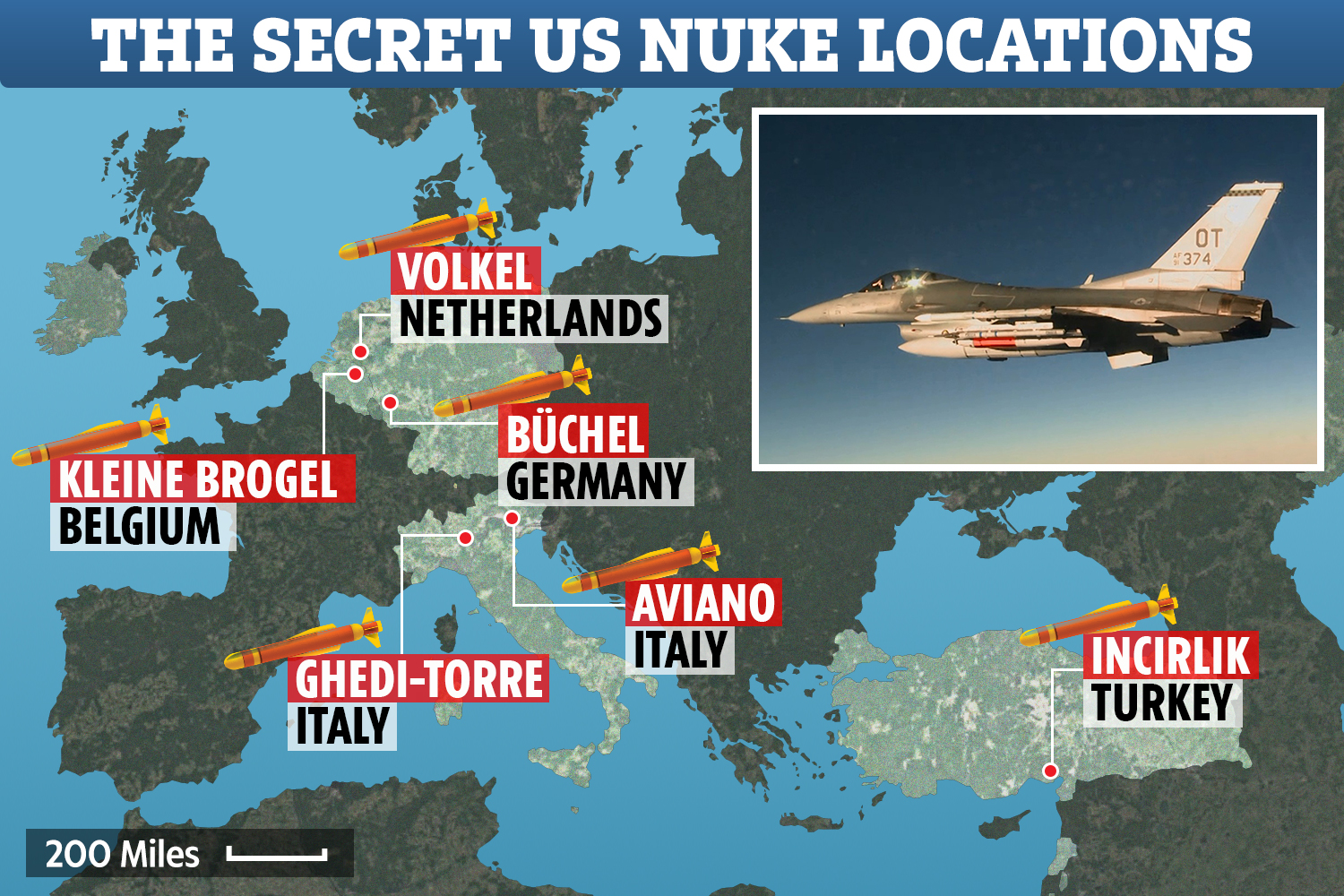
“For the last 60 years Washington has been playing a key role in NATO’s nuclear sharing missions by supporting deployment of its tactical nuclear weapons in five non-nuclear weapon states – Belgium, Germany, Italy, Netherlands, and Turkey,“
BY TYLER DURDEN, ZERO HEDGE, WEDNESDAY, MAR 29, 2023
The Kremlin has blasted what a Russian official called the United States’ “vivid example of hypocrisy” as part of the latest war of words in the wake of President Putin’s announcing he has stationed tactical nuclear weapons in neighboring Belarus.
Russian Ambassador to the United States Anatoly Antonov on Tuesday called out Washington’s “extremely short memory” – given it “has long been systematically destroying the legal basis of bilateral relations in strategic sphere,” which is a reference to the collapse of multiple nuclear treaties of late, including ‘Open Skies’ and the INF Treaty in 2019. New START is also looking to come to an end at the rate things are going.
CBS recounts of what Putin said:
Russia has ratcheted up tensions with the West amid its ongoing war against Ukraine, with President Vladimir Putin saying Moscow will deploy “tactical nuclear weapons” in Belarus. The Russian leader said 10 fighter jets capable of carrying tactical nuclear weapons — generally a reference to smaller weapons used for limited battlefield attacks, rather than larger, long-range “strategic” nuclear weapons — were already deployed in Belarus. ………..
In response, the US State Department condemned the Russian leader’s “irresponsible nuclear rhetoric,” and said that “no other country is inflicting such damage on arms control, nor seeking to undermine strategic stability in Europe.”
The scathing denunciation had been issued by US State Department representative Vedant Patel………………
Antonov underscored that the US has long stationed nuclear weapons not far from Russia: “For the last 60 years Washington has been playing a key role in NATO’s nuclear sharing missions by supporting deployment of its tactical nuclear weapons in five non-nuclear weapon states – Belgium, Germany, Italy, Netherlands, and Turkey,” he said. Putin had days ago voiced a similar rationale… https://www.zerohedge.com/geopolitical/russia-calls-out-nuclear-weapons-hypocrisy-us-has-tactical-nukes-5-non-nuclear-weapon5-non-nuclear-weapon
“Clean, clean, clean!”-says Canada’s budget – But still, nuclear power is still dirty

It is time to formally (and very publicly) demand an end, with public retraction, of the false and misleading use of the term “clean” when referring to nuclear energy on the part of provincial and federal levels of government as well as members of the nuclear industry and their advertising media (many articles we see are actually paid advertisements looking like news reports).
The nuclear energy generation’s constant production and release of Category 1 carcinogens and having perpetually poisonous wastes as byproducts completely disqualifies nuclear energy from being described as “clean”
Page 81:
“Budget 2023 announces that the Canada Infrastructure Bank will invest
at least $10 billion through its Clean Power priority area, and at least
$10 billion through its Green Infrastructure priority area. This will allow
the Canada Infrastructure Bank to invest at least $20 billion to support
the building of major clean electricity and clean growth infrastructure
projects. These investments will be sourced from existing resources.
These investments will position the Canada Infrastructure Bank as the
government’s primary financing tool for supporting clean electricity generation,
transmission, and storage projects, including for major projects such as the
Atlantic Loop.“
We’ve been focused on funds coming from the Strategic Innovation Fund (SIF) that has an $8 billion envelope and has been the main source of direct funding to SMR companies so far.
However it was the Canada Infrastructure Bank (CIB) that gave a $970 million “low interest loan” to Ontario Power Generation for its SMR last October.
So the CIB now has $20 billion to spend on ‘clean’ projects? OMG.
We know through an Access to Information request that Moltex made its sales pitch to the CIB and most probably others have been lining up at the CIB trough. Normally we would assume the CIB could not lend money to Moltex because it’s a startup with no funds of its own aside from previous public grants. But who knows? Now after the announcement a few hours before the budget that SNC Lavalin is a minority partner in Moltex, maybe they would qualify for a CIB “loan.” Follow the money, follow the money…..
To be continued, obviously…
the alarming news is that these fiscal incentives include “processing or recycling of nuclear fuels” which is currently not permitted in Canada. We are expecting the new radioactive waste management policy to be released in the next few days. If the policy has changed to allow plutonium reprocessing, it will be indicated there.
Renewable generation surpassed coal and nuclear in the U.S. electric power sector in 2022
Last year, the U.S. electric power sector produced 4,090 million megawatthours (MWh) of electric power. In 2022, generation from renewable sources—wind, solar, hydro, biomass, and geothermal—surpassed coal-fired generation in the electric power sector for the first time. Renewable generation surpassed nuclear generation for the first time in 2021 and continued to provide more electricity than nuclear generation last year………………………………………….. more https://www.eia.gov/todayinenergy/detail.php?id=55960
No Country for Nuclear Madmen
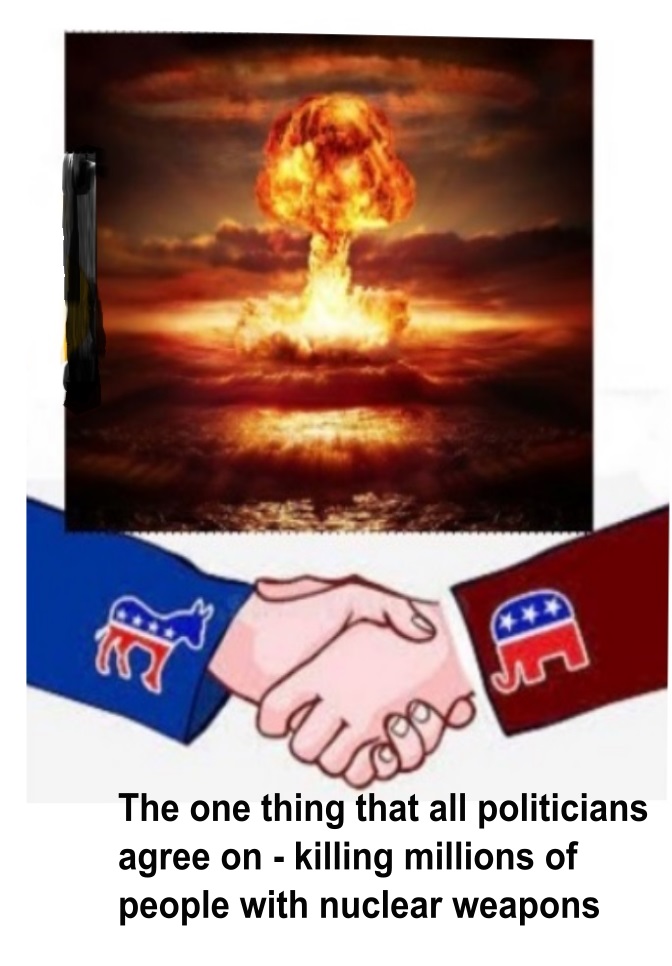
Contrary to his 2020 campaign platform, President Biden has insisted that the United States must retain the option of first use of nuclear weapons.
Everything that can be done must done to avert global nuclear annihilation.
March 28, 2023 Norman Solomon COMMON DREAMS https://portside.org/2023-03-28/no-country-nuclear-madmen—
he announcement by President Vladimir Putin over the weekend that Russia will deploy tactical nuclear weapons in Belarus marked a further escalation of potentially cataclysmic tensions over the war in neighboring Ukraine. As the Associated Press reported, “Putin said the move was triggered by Britain’s decision this past week to provide Ukraine with armor-piercing rounds containing depleted uranium.”
There’s always an excuse for nuclear madness, and the United States has certainly provided ample rationales for the Russian leader’s display of it. American nuclear warheads have been deployed in Europe since the mid-1950s, and current best estimates say 100 are there now—in Belgium, Germany, Italy, the Netherlands, and Turkey.
Count on U.S. corporate media to (appropriately) condemn Putin’s announcement while dodging key realities of how the USA, for decades, has been pushing the nuclear envelope toward conflagration. The U.S. government’s breaking of its pledge not to expand NATO eastward after the fall of the Berlin Wall—instead expanding into 10 Eastern European countries—was only one aspect of official Washington’s reckless approach.
During this century, the runaway motor of nuclear irresponsibility has been mostly revved by the United States. In 2002, President George W. Bush withdrew the U.S. from the Anti-Ballistic Missile Treaty, a vital agreement that had been in effect for 30 years. Negotiated by the Nixon administration and the Soviet Union, the treaty declared that its limits would be a “substantial factor in curbing the race in strategic offensive arms.”
His lofty rhetoric aside, President Barack Obama launched a $1.7 trillion program for further developing U.S. nuclear forces under the euphemism of “modernization.” To make matters worse, President Trump pulled the United States out of the Intermediate-Range Nuclear Forces Treaty, a crucial pact between Washington and Moscow that had eliminated an entire category of missiles from Europe since 1988.
The madness has remained resolutely bipartisan. President Joe Biden quickly dashed hopes that he would be a more enlightened leader about nuclear weapons. Far from pushing to reinstate the canceled treaties, from the outset of his presidency Biden boosted measures like placing ABM systems in Poland and Romania. Calling them “defensive” does not change the fact that those systems can be retrofitted with offensive cruise missiles. A quick look at a map would underscore why such moves were so ominous when viewed through Kremlin windows.
Contrary to his 2020 campaign platform, President Biden has insisted that the United States must retain the option of first use of nuclear weapons. His administration’s landmark Nuclear Posture Review, issued a year ago, reaffirmed rather than renounced that option. A leader of the organization Global Zero put it this way: “Instead of distancing himself from the nuclear coercion and brinkmanship of thugs like Putin and Trump, Biden is following their lead. There’s no plausible scenario in which a nuclear first strike by the U.S. makes any sense whatsoever. We need smarter strategies.”
Daniel Ellsberg—whose book The Doomsday Machine truly should be required reading in the White House and the Kremlin—summed up humanity’s extremely dire predicament and imperative when he told the New York Times days ago: “For 70 years, the U.S. has frequently made the kind of wrongful first-use threats of nuclear weapons that Putin is making now in Ukraine. We should never have done that, nor should Putin be doing it now. I’m worried that his monstrous threat of nuclear war to retain Russian control of Crimea is not a bluff. President Biden campaigned in 2020 on a promise to declare a policy of no first use of nuclear weapons. He should keep that promise, and the world should demand the same commitment from Putin.”
We can make a difference—maybe even the difference—to avert global nuclear annihilation. This week, TV viewers will be reminded of such possibilities by the new documentary The Movement and the “Madman” on PBS. The film “shows how two antiwar protests in the fall of 1969—the largest the country had ever seen—pressured President Nixon to cancel what he called his ‘madman’ plans for a massive escalation of the U.S. war in Vietnam, including a threat to use nuclear weapons. At the time, protestors had no idea how influential they could be and how many lives they may have saved.”
In 2023, we have no idea how influential we can be and how many lives we might save—if we’re really willing to try.
We need to shine some light on SNC-Lavalin and SMRs
Video above – 8 March 2019
Here’s the other thing we would have discovered: SNC Lavalin does not need to lobby government at all. It has tentacles that reach deeply into our civil service. What SNC Lavalin wants, SNC Lavalin gets.
SNC-Lavalin got the sweetheart deal of all time when then-prime minister Stephen Harper ‘sold’ Atomic Energy of Canada to SNC-Lavalin. Over the years, AECL had received at least $20-billion in public funds for the bargain basement price of $15-million, writes Green Party Leader Elizabeth May. Image courtesy of Wikimedia Commons
OPINION | BY GREEN PARTY LEADER ELIZABETH MAY | March 27, 2023
I am cursed with an excellent memory which makes me hang on to the unanswered questions. It also makes me want more sunlight, more inquiries, and more answers.
I wish we had had that public inquiry into the SNC-Lavalin Group Inc. scandal and I wish the RCMP had not dropped the matter.
My hunch is that we would have discovered two important things.
In December 2018, then-PCO clerk Michael Wernick did not inappropriately pressure former justice minister Jody Wilson-Raybould at the request of the prime minister. Wernick inappropriately pressured Wilson-Raybould as a favour to his old boss, former clerk of PCO, Kevin Lynch, then chair of the board of SNC Lavalin. I may be quite wrong, but this scenario better fits the facts. Wernick denied he inappropriately pressured Wilson-Raybould and said he told Lynch he would have to talk directly to Wilson-Raybould or to the director of public prosecutions about the matter. SNC Lavalin said Lynch requested a call with Wernick to convey that the company remained open to a deferred prosecution agreement.
But here’s the other thing we would have discovered. SNC-Lavalin does not need to lobby government at all. It has tentacles that reach deeply into our civil service. What SNC-Lavalin wants, SNC-Lavalin gets.
This is a statement that remains true whether the occupant of the Prime Minister’s Office is Liberal or Conservative.
SNC-Lavalin got the sweetheart deal of all time when then-prime minister Stephen Harper “sold” Atomic Energy of Canada to SNC-Lavalin. Over the years, AECL had received at least $20-billion in public funds for the bargain basement price of $15-million.
SNC-Lavalin is the driving force behind the new mania for so-called “small modular reactors”—SMRs.
The two SMRs slated for New Brunswick—ARC and Moltex—keep their promotional materials free of SNC-Lavalin references. You have to dig.
Here, for example, is the lead from this industry press release: “Canadian Nuclear Laboratories (CNL), Canada’s premier nuclear science and technology organization, is pleased to announce that it has entered into a collaboration agreement with ARC Clean Energy Canada (ARC Canada), a New Brunswick-based team working to develop and licence its sodium-cooled advanced small modular reactor (SMR) technology.”
Looking for details in the release, you get this: Canadian Nuclear Laboratories is a world leader in nuclear science and technology offering unique capabilities and solutions across a wide range of industries. Actively involved with industry-driven research and development in nuclear, transportation, clean technology, energy, defence, security and life sciences, we provide solutions to keep these sectors competitive internationally.
It’s the same thing with the Moltex announcement. You have to go to SNC-Lavalin’s website to find its central role in CNL and CNEA: “Canadian Nuclear Laboratories (CNL) is a world leader in nuclear science and technology. … We (SNC-Lavalin) are a majority partner in a consortium which manages and operates CNL, which is currently managing its ageing infrastructure and renewing its laboratories. This investment will ensure the organization stays at the top of its field while strengthening Canada’s status in the international scientific community.”
Looking at other SMR announcements, such as the Bruce Power BWRX-300 small modular reactor (SMR) at Darlington, Ont., SNC Lavalin is again a key player with partners Ontario Power Generation (OPG), GE Hitachi Nuclear Energy (GEH), and Aecon.
Thanks to The Hill Times for publishing Ole Hendrickson’s critical research in December 2020. That article established the links between SNC-Lavalin, its commercial partners, and the nuclear weapons industry.
“In 2015, the Harper government contracted a multinational consortium called Canadian National Energy Alliance—now comprised of two U.S. companies, Fluor and Jacobs, along with Canada’s SNC-Lavalin—to operate AECL’s nuclear sites, the main one being at Chalk River. Fluor operates the Savannah River Site, a South Carolina nuclear-weapons facility, under contract to the U.S. Department of Energy. Jacobs also has contracts at DOE weapons facilities and is part of a consortium that operates the U.K. Atomic Weapons Establishment.”
It is never too late to peel back the layers and ask some hard questions. As federal and provincial governments shovel more millions into unproven technology and false claims of SMRs as a climate solution, shouldn’t we demand transparency on where the new bodies are being buried? And should we not inquire into the deeply buried responsibility of a single corporation for its continual engagement in manipulating federal and provincial policies away from renewable energy resources towards that corporation’s publicly developed, but now privately owned, nuclear technologies?
Green Party Leader Elizabeth May represents Saanich-Gulf Islands, B.C.
The legal tangle of corruption and CANDU nuclear company SNC Lavalin
 Inside the ‘clandestine world’ of SNC-Lavalin’s fallen star Riadh Ben Aissa, Financial Post, Brian Hutchinson, Financial Post Staff | March 18, 2015 “……..This is one of the details revealed in a 98-page document prepared by Swiss prosecutors (called an acte d’accusation en procédure simplifiée, it is comparable to a North American plea bargain agreement) and obtained by the Financial Post. It brings to light previously unknown details of how Mr. Ben Aissa, a 56-year-old citizen of both Tunisia and Canada, and now facing charges in Canada on a different matter, directed 12.5 million euros and US$21.9 million into Swiss bank accounts controlled by Saadi Gaddafi, from 2001 to 2007.
These were kickbacks, paid to Saadi by Mr. Ben Aissa in return for certain Libyan contracts awarded to SNC. According to Swiss authorities, tens of millions more dollars moved through Mr. Ben Aissa’s own Swiss accounts, from September 2001 to March 2011. The money came from SNC……..
the Swiss proceedings raise new questions about SNC, its vulnerability, and its future, which even its current CEO, Robert Card, has publicly worried may be at risk of either breaking up, ceasing to exist or being taken over. Since it found itself embroiled in scandal, the company has seemed in perpetual crisis, with more drama this week in its boardroom, with the sudden resignation of its chairman, and in a Montreal courtroom, where Mr. Ben Aissa and another former SNC executive began a preliminary hearing over allegations of bribery in a Canadian hospital deal.
While some might question how SNC did not know about Mr. Ben Aissa’s conduct in Libya, some insiders still seem inclined to blame him alone for setting into motion the company’s stunning fall from grace.
“Good luck sorting out Riadh Ben Assia’s clandestine world,” former SNC chairman Gwyn Morgan wrote in a brief response to questions put to him by email about certain activities that allegedly took place during his leadership……..
SWwiss authorities identified five specific areas of corruption where SNC cash was used to obtain contracts in Libya. ……
Last month, the RCMP laid criminal charges against SNC Lavalin itself, in connection to allegedly corrupt activities in Libya. The charges came as a blow; sources claim the company’s management and its lawyers had negotiated with Canadian authorities for two years, in an attempt to avoid prosecution. A criminal conviction for corruption could result in the company being prohibited — “debarred” — from bidding on public works projects in Canada…….
On Monday, SNC announced the resignation of Ian Bourne, its board chairman, effective immediately. He’d been in the position just two years, having replaced Mr. Morgan in 2013. SNC did not give specific reasons why Mr. Bourne decided to leave.
The same morning, two former SNC executives walked into a Montreal courtroom for the start of a preliminary hearing on other corruption-related matters. One was Pierre Duhaime, SNC’s former CEO and president. The second was Mr. Ben Aissa, back in Canada after his Swiss incarceration and extradition. Both are charged with fraud, related to alleged construction bid-rigging in Montreal, in what one police investigator has called the “biggest corruption fraud in Canadian history.”
Mr. Duhaime, Mr. Ben Aissa, former SNC controller Stéphane Roy and five other men, among them Canada’s former spy watchdog, Arthur Porter, allegedly participated a corrupt scheme that saw an international consortium led by SNC win a $1.34-billion hospital construction and maintenance contract for the McGill University Health Centre (MUHC), in 2010. Dr. Porter has publicly refuted the allegations and none have been proven in court. Mr. Duhaime has pleaded not guilty. Mr. Ben Aissa is also in court fighting the allegations………. http://business.financialpost.com/legal-post/inside-the-clandestine-world-of-snc-lavalins-fallen-star-riadh-ben-aissa
1 This Month



19 November – Webinar – The Reality of Reprocessing
Time: 11:00 AM Pacific Time (US & Canada) / 2:00 PM Eastern / 7:00 PM UK / 8:00 PM CET
Register for the Zoom Event Here



Shut down the radiation-damaged Heysham nuclear reactors now
To see nuclear-related stories in greater depth and intensity – go to https://nuclearinformation.wordpress.com

Say No to NASA’s Reckless Nuclear Reactor on the Moon
Say No to NASA’s Reckless Nuclear Reactor on the Moon
-
Archives
- November 2026 (64)
- October 2026 (302)
- September 2026 (339)
- August 2026 (330)
- July 2026 (355)
- June 2026 (287)
- May 2026 (306)
- April 2026 (356)
- March 2026 (251)
- February 2026 (267)
- January 2026 (308)
- December 2025 (358)
-
Categories
- 1
- 1 NUCLEAR ISSUES
- business and costs
- climate change
- culture and arts
- ENERGY
- environment
- health
- history
- indigenous issues
- Legal
- marketing of nuclear
- media
- opposition to nuclear
- PERSONAL STORIES
- politics
- politics international
- Religion and ethics
- safety
- secrets,lies and civil liberties
- spinbuster
- technology
- Uranium
- wastes
- weapons and war
- Women
- 2 WORLD
- ACTION
- AFRICA
- Atrocities
- AUSTRALIA
- Christina's notes
- Christina's themes
- culture and arts
- Events
- Fuk 2022
- Fuk 2023
- Fukushima 2017
- Fukushima 2018
- fukushima 2019
- Fukushima 2020
- Fukushima 2021
- general
- global warming
- Humour (God we need it)
- Nuclear
- RARE EARTHS
- Reference
- resources – print
- Resources -audiovicual
- Weekly Newsletter
- World
- World Nuclear
- YouTube
-
RSS
Entries RSS
Comments RSS

