Canada’s wildfire horror – Climate Change is part of the cause
Canada’s horror wildfire – Climate Change is a contributing cause
Impressive solar panel array on Port Alberni hospital, Vancouver Island, Canada

 Port Alberni hospital has Vancouver Island’s largest array of solar power Solar power could help with high hydro rates during peak hours on hot days By Liam Britten, CBC News Apr 23, 2016
Who loves the sun? — turns out West Coast General Hospital in Port Alberni does. That building is home to 400 solar panels — the largest power-generating array on Vancouver Island, in fact.
The panels will be doing their work in the weeks and months ahead to see how much money Island Health Authority can save by using the power of the sun.
- Thompson Rivers University puts energy into solar powered walkway
- Vancouver roofing company starts offering solar panel installation
- Nelson’s ‘community solar garden’ starts leasing panels
“When it’s really hot and sunny and we’re using a lot of power to keep the hospital cool, the rates get very high with BC Hydro,” Deanna Fourt, director of energy efficiency and conservation with Island Health Authority told All Points West host Robyn Burns.
“So it’s going to work very nicely with the solar. This is what we’re thinking, because it’s going to be offsetting those really high-rate days or high-rate times.”……..http://www.cbc.ca/news/canada/british-columbia/vancouver-island-solar-power-1.3550022
Transition to renewable energy sector: the goal of these North American Oil and Gas Workers
Amid Price Plunge, North American Oil and Gas Workers Seek Transition to Renewable Sector TruthOut, 03 April 2016 00:00By Candice Bernd, “…….after years of working in an industry that one top climate scientist has called “the biggest carbon bomb on the planet,” Hildebrand came to realize that he was not the only oil worker in Alberta who felt “guilty about developing the infrastructure that is creating climate change.”
Opportunity in the Oil Plunge
Last spring, when oil prices began to fall, Hildebrand banded together with like-minded coworkers and began building an oil and gas worker-led nonprofit called “Iron & Earth,” which officially launched this month during a press conference in Edmonton. Through the nonprofit, the oil sands workers hope to help others who have been laid off diversify their skill sets and facilitate the necessary training to transition them to the renewable energy sector. They also want to help incorporate renewable energy projects into oil sands workers’ current scope of work…….
“We are a group of workers who not only want to diversify our work scope based on job need, but also based on a values-based mission, to ensure that we’re creating and building a future that’s going to be sustainable,” Hildebrand told Truthout. “The drop in oil prices was certainly a catalyst to help amplify these conversations, and created the pressure to … create a catch-all organization that’s going to make projects happen and get workers’ hands on some renewable energy projects.”
Moreover, not every oil worker with experience in Alberta’s oil sands needs to retrain in order to transition to the renewable sector, according to Hildebrand, who says a lot of trades are “directly transferable.” Hildebrand has worked on several renewable energy projects himself, including a biomass plant and the wind farm weather station that inspired him during his apprenticeship. “I didn’t require any retraining for that. All I required was the blueprints and the steel, and the facility to build it,” he said.
From Oil Sands to “Solar Skills”
Iron & Earth’s first project is its “Solar Skills” campaign to facilitate the retraining of 1,000 laid-off electricians from Alberta’s oil industry, to help build 100 solar installations on public buildings throughout the province beginning this fall. In the future, as the group takes on different campaigns focused on geothermal, biomass, biofuel and wind energy, they hope to attract other kinds of oil and gas workers, such as pipefitters and iron workers, as well as workers from other building trades, to retrain in those sectors………http://www.truth-out.org/news/item/35477-amid-price-plunge-north-american-oil-and-gas-workers-seek-transition-to-renewable-sector
“Clean coal” technology is not working
 Technology to Make Clean Energy From Coal Is Stumbling in Practice, NYT, By IAN AUSTEN MARCH 29, 2016 OTTAWA — An electrical plant on the Saskatchewan prairie was the great hope for industries that burn coal.
In the first large-scale project of its kind, the plant was equipped with a technology that promised to pluck carbon out of the utility’s exhaust and bury it underground, transforming coal into a cleaner power source. In the months after opening, the utility and the provincial government declared the project an unqualified success.
 But the $1.1 billion project is now looking like a green dream.
Known as SaskPower’s Boundary Dam 3, the project has been plagued by multiple shutdowns, has fallen way short of its emissions targets, and faces an unresolved problem with its core technology. The costs, too, have soared, requiring tens of millions of dollars in new equipment and repairs.
“At the outset, its economics were dubious,” said Cathy Sproule, a member of Saskatchewan’s legislature who released confidential internal documents about the project. “Now they’re a disaster.”……….http://www.nytimes.com/2016/03/30/business/energy-environment/technology-to-make-clean-energy-from-coal-is-stumbling-in-practice.html?_r=0
Closing Canada’s Pickering nuclear station will result in jobs, savings and safety
Shuttering Pickering = jobs, savings and safety
Closing the Pickering Nuclear Station when its license expires in 2018 and getting to work on dismantling the plant immediately will be safer, create more jobs between now and 2030, and save hundreds of millions of dollars.
That’s the finding of a new report commissioned by Ontario Clean Air Alliance Research from energy consultants Torrie Smith and Associates. Torrie Smith compared Ontario Power Generation’s (OPG’s) plan of leaving the plant untouched for 30 years before starting decommissioning to the internationally preferred approach of immediate decommissioning.
They found that getting to work immediately would create 16,000 person years of employment, save $800 million to $1.2 billion on decommissioning costs, and ensure a smoother transition for workers and the local economy.
In fact, Torrie Smith points out that the only reason to leave Canada’s oldest nuclear plant sitting idle on the Pickering waterfront for the next 30+ years is money. While there is enough money in OPG’s Decommissioning Fund to fully cover the costs of decommissioning Pickering today, OPG would prefer to wait and let investment returns over the next three decades do the heavy financial lifting.
From a safety perspective, a 30-year wait simply means that Pickering’s components and structures will continue to age and deteriorate, actually raising risks while producing more low-level radioactive waste. A 30-year delay will have little impact on levels of radioactivity in the plant or affect how the dismantling work is approached, which is why the International Atomic Energy Agency states that “the preferred decommissioning strategy shall be immediate dismantling.”
The Pickering Nuclear Station is North America’s 4th oldest and one of the largest nuclear stations on the continent. We should not leave this legacy of a bygone era to future generations to deal with. Instead, we should seize the opportunity to develop expertise in a growing new industry – nuclear decommissioning.
Given that Canada’s nuclear industry hasn’t sold a new reactor in 30 years, the future of our nuclear industry clearly lies in providing the expertise to safely decommission old nuclear facilities – including other aging CANDU reactors in Canada and around the world.
Please send Premier Wynne a message here asking her to order OPG to develop an immediate decommissioning plan for Pickering and to close this dinosaur by 2018 (when its license expires) at the latest.
Canadian activists push for a nuclear- free world, despite Foreign Affairs Minister Stephane Dion
Activists want Canada to push for nuclear-free world despite Dion’s reticence http://www.metronews.ca/news/canada/2016/03/29/activists-want-canada-to-push-for-nuclear-free-world-despite-dion-s-reticence.html By: Mike Blanchfield The Canadian Press Mar 30 2016
OTTAWA — Anti-nuclear campaigners who want Canada to push for a global ban on nuclear weapons are concerned that Foreign Affairs Minister Stephane Dion is showing a definite lack of enthusiasm for that goal.
Dion said in a speech earlier this month that the current global security environment is simply not conducive to a ban on nuclear weapons because some states just won’t relinquish them.
Cesar Jaramillo, executive director of the peace group Project Ploughshares, says there’s never a perfect time to push for such a ban and the time to start is now.
Nuclear disarmament and security will be front and centre later this week as U.S. President Barack Obama hosts his final Nuclear Security Summit in Washington.
Prime Minister Justin Trudeau is to attend the two-day meeting, which is focused on curbing nuclear terrorism by cracking down on the trafficking of materials needed to build such a weapon.
Obama announced the initiative in a landmark speech in Prague in 2009, in which he expressed his aspiration for a nuclear-free world, even if it didn’t come in his lifetime.
Earlier this month, Dion said in a speech in Geneva that any negotiations to ban nuclear weapons would have to include all countries that possess them. “Without the participation of the countries possessing nuclear weapons, a ban would not bring us any closer to our shared goal of a world free of nuclear weapons,” Dion said on March 2. “Indeed, premature action risks undermining international stability by creating a false sense of security, without any reliable underpinnings.”
Dion’s remarks largely flew under the radar but anti-nuclear activists took note.
“The reality is that there will never be ideal international security conditions for nuclear disarmament,” Jarmillo said Monday. “Nuclear abolition will be a complex, multifaceted undertaking that will need to coexist with international security crises of varying gravity,” he added. “Nuclear disarmament measures must be started, implemented and concluded in geopolitical conditions that are predictably less than perfect.”
Paul Meyer, a retired diplomat who once served as Canada’s disarmament ambassador, said Dion should be pushing harder for a progress on broader disarmament in spite of the geopolitical obstacles. He cited Canada’s leadership in championing the anti-landmine treaty in the 1990s.
“Minister Dion should recall that if Canada had only been willing to consider ‘incremental’ progress on the disarmament of landmines back in 1997 we would still be in a world awash with these weapons,” Meyer wrote in a recent column in Ottawa’s Embassy newsweekly.
This week’s Washington summit on curbing the trafficking of nuclear components comes amid periodic reports of the theft of radioactive material that could be used to build a so-called “dirty bomb.”
Jaramillo said preventing nuclear terrorism is a worthy and urgent objective.
“But it cannot be understood in isolation from the broader multilateral dynamics related to nuclear disarmament and the slow pace of progress toward that goal,” he added. “It is still early in the Liberal government and it may still be formulating its stand on nuclear abolition. So far, however, there has been little change from the Conservative government concerning Canada’s core positions in this regard.”
Nova Scotia’s success with wind power
Wind Power Helps Nova Scotia Set Renewable Energy Record, North American Windpower by NAW Staff January 28, 2016 Nova Scotia Power (NSP), the Canadian province’s primary electricity provider, says wind power helped it achieve a new renewable energy record in 2015, with 26.6% of the electricity used by Nova Scotians coming from renewable resources last year. “We’re becoming cleaner and greener,” says Mark Sidebottom, NSP’s vice president of power generation and delivery. “Nova Scotians depend on us to provide the electricity they need for their homes and businesses every day, and they want that electricity to come from more sustainable sources.”
NSP says its performance on renewable energy exceeded the legislated 2015 requirement of 25% renewable electricity, as well as positions the company well to meet the 40% renewable requirement that takes effect in 2020. As recently as 2007, only 9% of Nova Scotia’s electricity was renewable. Also by 2020, NSP will have reduced greenhouse-gas emissions by 25%.
“We have made remarkable progress in Nova Scotia,” states Sidebottom. “No other utility in Canada has made this rapid of a transition. In 2020, we will have a greater percentage of our electricity coming from renewables than Germany, which is often recognized as a world leader in renewable energy………Nova Scotia’s growth in renewable electricity has been largely through the development of wind power. According to NSP, there are now 294 commercial wind turbines producing electricity in Nova Scotia. Most are independently owned. At times, wind power has accounted for as much as 50% of the province’s electricity.
However, there are other times when almost no electricity is coming from wind, so the utility has to have other generation sources on hand for backup to supply customers: NSP says the Maritime Link, delivering hydroelectricity from Muskrat Falls, will provide a firm source of renewable electricity, and help push Nova Scotia Power to more than 40% renewable electricity by 2020. http://nawindpower.com/wind-power-helps-nova-scotia-set-renewable-energy-record
Electric vehicles not green if they’re fuelled by nuclear power
Disadvantages lurk in push for nuclear power http://www.thestar.com/autos/2016/03/18/disadvantages-lurk-in-push-for-nuclear-power.html
Electric cars are only as eco-friendly as the fuel powering our electricity grid, By: Peter Gorrie the Star, Mar 18 2016 I’ve recently focused on electric vehicles, especially Ontario’s steps to promote them with more charging stations and bigger incentives. The tone generally has been that the moves are positive, helping to pave the way for greater use of electric vehicles as part of a greener, more sustainable future.
But EVs are only as green as the electricity that powers them. If it comes from coal-burning generating stations, they can be responsible for more toxic and greenhouse-gas emissions than internal combustion engines.With stations fuelled by oil or natural gas, it might be a wash. Things are supposed to improve as you travel along the scale from nuclear power to hydro, and then, in the best case, wind, solar and other renewable sources. Ontario claims to be on the greenest end of the spectrum, since most of our electricity comes from hydro and nuclear generation, and we no longer burn coal.
Not so fast.
A few weeks ago, Premier Kathleen Wynne, in an unsuccessful bid to boost the Liberal candidate in the Whitby-Oshawa byelection, announced a $13 billion refurbishment of the Darlington nuclear generating station.
A similar amount is to be spent on the Bruce Nuclear station near Kincardine on the shores of Lake Huron.
What’s wrong with this?
- Nuclear power is far from pollution-free. It creates toxic greenhouse-gas emissions as uranium is mined, shipped and processed, and the plants are built, operated and dismantled.
- It raises safety issues, particularly from radiation releases. That danger is acknowledged by the Canadian Nuclear Safety Commission, which now requires that potassium iodide pills — to reduce the threat of thyroid cancer after radiation exposure — be distributed to everyone within 10 km of nuclear plants, and available to anyone within 50 km.
- Despite decades of expensive research, there’s still no consensus on how and where to store the most radioactive waste from these facilities.
- The plan to store low- and medium-level waste at the Bruce site is raising concern all around the Great Lakes.
- The $26 billion estimate for the two Ontario refurbishments is a lot of cash. Worse, the actual total will likely be far higher, given the history and apparent inevitability of cost overruns. Construction and refits at Darlington and Bruce have ranged from 50 to 350 per cent over budget. Even taking inflation into account, the overruns are substantial.
All this makes nuclear power dangerous, uncertain and very expensive.
Many reports suggest alternatives — including conservation, hydro, and renewables such as wind, solar and biofuels — could ensure we have the electricity we need, at far less cost and risk. They say EVs, with their ability to store electricity and level fluctuations in supply and demand, could be part of a solution.
It’s at least worth an objective, open look. But pouring so much into nuclear power kills the chance to even consider other options. Sadly, while renewables spark growth and jobs elsewhere, that’s the route we’re on. We need to stop and examine all the choices
Which brings us back to EVs. They can only be considered truly green if they’re fuelled by the greenest-possible power sources, which is what we should demand.
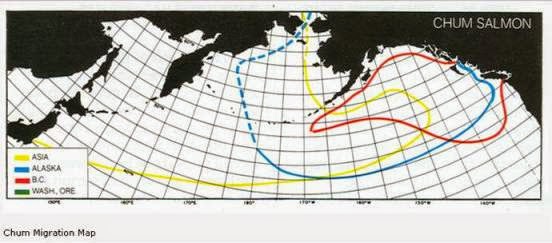
Strontium 90 <0.2 bq/kg Found in British Columbia Wild Salmon

試料 名 Sample:
野生サーモン-シロザケ-メス
(フリーズドライ)
Wild Chum Salmon – female
(Freeze Dried)
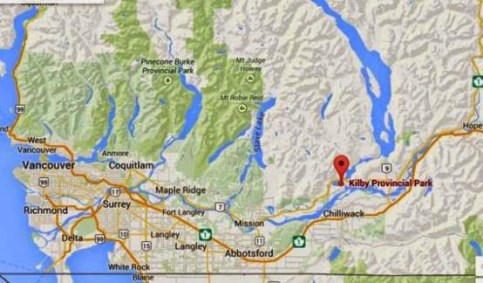
採取 場所 Origin: Kilby Park, BC Canada
採取年月 Sampling date: 2014 年11月30日 (November 30, 2014)
測定日時 Date Tested : 2015 年3月31 日 (March 31, 2015)
測定時間 Duration : 57,600 秒(seconds)

試料容器 Container: 500mLマリ ネリ容器(Marinelli)
試料重量 Sample weight: 144.2g
乾燥前 Before dehydration: 2010g → 700g

測定日時 Date Tested : 2015 年9月15 日 (September 15, 2015)
測定時間 Duration : 10時間 (10hours)
試料重量 Sample weight: 25g
Tested by Iwaki Radiation Measuring Center, Trachine with SL300/SLL – coordinated by Citizen Radioactivity Measuring Station, Shinjyuku-Yoyogi
新宿代々木市民測定所いわき放射能市民測定室たらちね
測定時間 Duration : 4時間 (4hours)
試料重量 Sample weight: 0.105g
Tested by Iwaki Radiation Measuring Center, Trachine with SL300/SLL – coordinated by Citizen Radioactivity Measuring Station, Shinjyuku-Yoyogi
新宿代々木市民測定所いわき放射能市民測定室たらちね
But it’s not telling you a whole story about contamination….
Wind power prices dropping below nuke re-build costs in Ontario.
 Ontario Clean air Alliance 10 Mar Angela Bischoff, 11 Mar 16 Today Ontario’s Independent Electricity System Operator (IESO) announced that it has signed five contracts with private sector companies for wind power at costs ranging from 6.45 to 10.55 cents per kWh.
According to Ontario Power Generation (OPG), the cost of electricity from a re-built Darlington Nuclear Station will be 7 to 8 cents per kWh. However, every nuclear project in Ontario’s history has gone massively over budget – on average by 2.5 times. If history repeats itself, the cost of electricity from re-built Darlington reactors will be 15 cents per kWh . That would make even solar power acquired through the new Large Renewable Procurement (LRP) process competitive with nuclear.
And, of course, solar and wind companies are on the hook for any cost overruns on their projects, unlike OPG which expects provincial electricity ratepayers and taxpayers to still pick up the tab for its inevitable cost overruns.
Also, renewable energy costs are projected to continue to fall rapidly so by the time the IESO undertakes its next LRP round a year from now, we will likely see even greater savings over costly and slow nuclear re-build projects. In fact, what the current LRP round has told us is that the Ontario government should be steering toward the off ramps for nuclear re-build projects as quickly as possible given the astonishing – and continuing — decline in green energy prices.
If we are smart, we will combine energy efficiency and water power imports from Quebec with made-in-Ontario renewable energy to build a much more cost effective, responsive and responsible electricity system for Ontario.
Deep seated concern about Canada’s nuclear safety
 Can the Canadian Nuclear Safety Commission do better? http://www.waterkeeper.ca/blog/2016/3/2/can-the-canadian-nuclear-safety-commission-do-better by Mark Mattson.
If your drinking water comes from Lake Ontario, then you’re one of the millions of people who count on the Canadian Nuclear Safety Committee to do its job perfectly. The same is true for other Canadians who work in the nuclear industry or live near a facility.
In an interconnected, hi-tech world, we rely on regulatory agencies to keep us safe. We assume that buildings are well constructed, that toxic products will be banned, that the water coming out of our faucets will be safe to drink – and if any of these things doesn’t happen, we assume we will be warned.
When we are wrong, the consequences can be grave. Think of the Walkerton tragedy or the crisis in Flint.
Of course, the consequences of poor regulation aren’t always obvious. They may be difficult to detect or very distant from the root cause. Imagine low levels of a carcinogen (say PFOA) in a town’s drinking water, for example. If the regulator fails to prevent this, it is unlikely that the residents will detect its presence. Even if rare cancers begin to appear, making the connection can be difficult.
The CNSC is responsible for protecting Canadians from the risks associated with the nuclear industry. This means ensuring that Canada never has to deal with the pandora’s box of problems that would stem from a complete or partial meltdown, or major release of radioactive material into the environment. It means protecting Canadians from those insidious, day-to-day harms that are harder to detect, like low level radiation or the slow release of radionuclides into the watershed. It also means protecting Canadians from the impact of non-nuclear contaminants, habitat loss, and environmental destruction.
If you’ve followed some of our previous work, you’ll know that Waterkeeper questions whether the CNSC effectively serves the public as an impartial regulator. We believe the CNSC relies on an inadequate licensing process, demonstrates limited appreciation of environmental risks, and has a tendency to downplay or ignore concerns raised by the public.
When regulatory agencies show signs of failing to meet their public duties, it’s important to speak up. In fact, any individual or organization that has such concerns has an obligation to share them. After all, you rely on us to help keep you safe, too.
For this reason, Lake Ontario Waterkeeper is joining Greenpeace Canada, Ecojustice, the Canadian Environmental Law Association and others in calling on Prime Minister Trudeau to initiate a twenty year review of the Nuclear Safety and Control Act. This is the legislation that dictates how the CNSC operates.
Reviewing the Act would provide an opportunity to address deep-seated concerns about the CNSC and improve nuclear regulation in Canada. You can read the open letter that has been sent to Prime Minister Trudeau below. (on original)
Trudea called upon to fix Canada’s nuclear law and oversight
Groups urge Trudeau to fix Canada’s nuclear law and oversight, National Observer By Mike De Souza March 8th 2016 Canada needs to fix its nuclear safety law and put a stop to internal political strategizing by its industry watchdog that is putting public safety at risk, Prime Minister Justin Trudeau was told in an open letter released on Tuesday.
The groups released the letter along with a federal strategy document showing that staff at the watchdog were recommending that management consider the “political environment” in 2015 prior to developing any changes needed to improve nuclear oversight.
Greenpeace Canada said this indicates there was political strategizing by the watchdog, theCanadian Safety Nuclear Commission, and demonstrates why the Liberal government has to clean up Canadian nuclear oversight………
All 14 groups, including MiningWatch Canada, EcoJustice and the Canadian Environmental Law Association, said that Japan and the European Union have increased the independence and transparency of their nuclear watchdogs in the wake of the disaster. But the groups argued that the previous federal government, led by former prime minister Stephen Harper, failed to keep pace with the other jurisdictions to prepare the country for any similar disaster in Canada.
“While the (Canadian watchdog) carried out a review of the technical failures that led to radioactive releases at Fukushima, it did not consider how institutional failures and industry-led regulation caused the accident,” said the letter to Trudeau. “This should be addressed as part of a public review process leading to the modernization of the (law).”…..
Greenpeace Canada nuclear analyst Shawn-Patrick Stensil said Trudeau needs to put a stop to the commission’s internal strategizing.
“In public the CNSC says Canada’s nuclear safety laws are fine, but behind closed doors they’re strategizing on how to amend the law without public input,” Stensil told National Observer. “If they’re not being honest with the public about things like this what else are they trying to hide? This is why Trudeau should clean house at the CNSC.”……..http://www.nationalobserver.com/2016/03/08/news/groups-urge-trudeau-fix-canadas-nuclear-law-and-oversight
No straightforward answers to nuclear waste – except to stop making it
More money and some jobs would be offset by the stigma inevitably attached to radioactivity and by the risks involved, including accidents, radioactive leaks to underground water systems, and radioactive emissions to the air.
Recent accidents at nuclear waste dumps in Germany, New Mexico and France are deeply concerning. It is difficult to credibly predict cumulative environmental effects should a radioactive incident occur underground.
There are no straightforward answers. Given the dangers of radioactive waste, McKenna should invoke the precautionary principle which is enshrined in environmental laws worldwide. It states projects should not be undertaken if they might have serious adverse consequences, even if we don’t know whether these consequences will happen.
 The next step would be to stop making more nuclear waste.
Dealing with nuclear waste is so difficult that phasing out nuclear power would be the best option http://www.lfpress.com/2016/02/26/dealing-with-nuclear-waste-is-so-difficult-that-phasing-out-nuclear-power-would-be-the-best-option Erika Simpson and Ian Fairlie, Special to Postmedia Network Environment Minister Catherine McKenna has dealt a setback to Ontario Power Generation’s plan for a nuclear waste burial site on the shores of Lake Huron. In a letter to interested parties last week,
McKenna delayed a decision on whether to approve the proposed deep geologic repository (DGR) for low- and intermediate-level radioactive waste and set a short April 18 deadline for OPG to furnish a timeframe within which it could provide an updated list of commitments to mitigate potential damage from the site.
Furthermore, she stated she will seek a further extension for the review from cabinet at a later date. We are probably in for long delays. Continue reading
New Canadian govt still backs nuclear industry
She was speaking on behalf of Minister of Natural Resources Jim Carr yesterday.
The federal government has asked for more information about the planned underground nuclear waste storage site in Kincardine before giving final approval…….https://blackburnnews.com/midwestern-ontario/midwestern-ontario-news/2016/02/26/federal-support-confirmed-for-nuclear-industry/
1 This Month


Tell the Ukrainian Government to Drop Prosecution of Peace Activist Yurii Sheliazhenko

Petition to revoke the licensing of the Near Surface Nuclear Disposal Facility (NSDF) at Chalk River. https://www.ourcommons.ca/petitions/en/Petition/Details?Petition=e-7247


of the week – STOP SMALL MODULAR REACTORS IN CANADA
To see nuclear-related stories in greater depth and intensity – go to https://nuclearinformation.wordpress.com
-
Archives
- March 2026 (212)
- February 2026 (268)
- January 2026 (308)
- December 2025 (358)
- November 2025 (359)
- October 2025 (376)
- September 2025 (258)
- August 2025 (319)
- July 2025 (230)
- June 2025 (348)
- May 2025 (261)
- April 2025 (305)
-
Categories
- 1
- 1 NUCLEAR ISSUES
- business and costs
- climate change
- culture and arts
- ENERGY
- environment
- health
- history
- indigenous issues
- Legal
- marketing of nuclear
- media
- opposition to nuclear
- PERSONAL STORIES
- politics
- politics international
- Religion and ethics
- safety
- secrets,lies and civil liberties
- spinbuster
- technology
- Uranium
- wastes
- weapons and war
- Women
- 2 WORLD
- ACTION
- AFRICA
- Atrocities
- AUSTRALIA
- Christina's notes
- Christina's themes
- culture and arts
- Events
- Fuk 2022
- Fuk 2023
- Fukushima 2017
- Fukushima 2018
- fukushima 2019
- Fukushima 2020
- Fukushima 2021
- general
- global warming
- Humour (God we need it)
- Nuclear
- RARE EARTHS
- Reference
- resources – print
- Resources -audiovicual
- Weekly Newsletter
- World
- World Nuclear
- YouTube
-
RSS
Entries RSS
Comments RSS
 nuclear-news
