Indigenous groups challenge New Brunswick’s costly radioactive waste legacy
Difficulty, cost of managing radioactive waste underlined by hearings, https://nbmediacoop.org/2022/06/08/indigenous-groups-challenge-new-brunswicks-costly-radioactive-waste-legacy/ by Kim Reeder and Susan O’DonnellJune 8, 2022
The recent re-licencing hearing for New Brunswick’s Point Lepreau nuclear reactor highlighted the difficulty and cost of managing the province’s long-lived legacy of radioactive waste.
Most of the radioactive materials generated by the Lepreau nuclear facility were never found in nature before the discovery of nuclear fission 83 years ago.
The Point Lepreau facility, however, has produced – and will continue to produce – thousands of tons of these toxic radioactive materials in the form of high, intermediate and low-level radioactive waste which must be kept isolated from all living things for a period of time that dwarfs the span of recorded human history.
When the Point Lepreau reactor was first built, the materials used in the core area – the metal, the concrete, even the heavy water that fills the vessel – were ordinary, non-radioactive materials. However, these items have all been transformed into extremely radioactive material during the normal operation of the reactor.
In fact, because these materials are so toxic, once the plant is shut down, NB Power has a plan to let the facility sit for approximately three decades before dismantling it, a strategy referred to as ‘deferred decommissioning’. During this time, referred to as the ‘dormancy’ period, the radioactivity will decrease significantly. However, the radioactivity will still be sufficiently high as to require handling by robotic equipment and careful packaging so as not to deliver a lethal dose of radiation to an unshielded worker or the environment.
The second consideration is that currently, no waste disposal site exists for the Point Lepreau facility itself, which will become thousands of tons of radioactive rubble, classified as intermediate and low-level waste. By deferring decommissioning, NB Power avoids the need to store and monitor the wastes until a disposal facility becomes available. As well, they avoid potential double-handling of wastes to meet unknown future disposal facility requirements.
NB Media Co-op’s Harrison Dressler described in a previous article that during the re-licencing hearing for Point Lepreau, a main focus of the Peskotomuhkati Nation’s intervention reflected their concerns about the lack of adequate planning for the toxic decommissioning waste. The Nation is and always has been opposed to producing and storing radioactive waste on its territory, which includes Point Lepreau.
The Nation does not want the regulator, the Canadian Nuclear Safety Commission (CNSC), to ‘approve’ NB Power’s inadequate plan and financial guarantee for decommissioning Point Lepreau.
The Nation’s expert on the topic, Canadian Coalition for Nuclear Responsibility president Gordon Edwards, compared NB Power’s financial guarantee with an OECD study of dozens of reactors that have already been dismantled. In his report, Edwards notes that NB Power’s financial guarantee is less than 40 percent of what is needed according to the OECD study. Indeed, the total amount NB Power plans to set aside is more than a billion dollars less than what the OECD estimates is likely required.
NB Power’s current decommissioning plan assumes much of the decommissioning waste will be sent off-site to a licensed facility for permanent disposal. Currently no such facilities exist, which is recognized as an industry challenge.
Edwards also found that NB Power has so far made no effort to locate a repository to receive the decommissioning waste, which is solely the responsibility of NB Power and the provincial government. Without a storage site, and without adequate funding, where will it all go?
During the re-licencing hearings in May, both the CNSC and NB Power were questioned by the regulator about the unrealistic nature of their plan, considering the plan assumes there will be a permanent home for this waste – and that no plans are being made for such a facility.
CNSC staff explained that the current plan is all that is required under Canadian law, and NB Power said that because of the deferred decommissioning strategy, they have a long time to figure out a solution to the problem. Experience shows, however, that NB Power and the New Brunswick government are already late in starting the effort, if they indeed do intend to have a site approved in the 2050s. Lepreau is scheduled to be shut down around 2040.
At the CNSC hearing, the Mi’gmawe’l Tplu’taqnn Inc., and Kopit Lodge – representing Elsipogtog First Nation – also raised similar concerns about radioactive waste. The Wolastoq Nations did not participate in the hearing. However, in March 2021, the traditional Wolastoq Grand Council issued a declaration against producing more radioactive waste at Point Lepreau. No Indigenous community in Canada – or elsewhere – has so far declared itself in favour of storing radioactive waste on its traditional territory.
Without a dramatic increase in the financial guarantee that NB Power must accumulate while the reactor is still earning money by selling electricity, and without a concerted effort to develop a concrete long-term strategy for New Brunswick’s radioactive waste legacy, both the Peskotomuhkati Nation and the New Brunswick population will be left with a permanent dump for radioactive waste right on the shore of North America’s Natural Wonder: the Bay of Fundy.
Kim Reeder, a senior policy analyst with the RAVEN project at the University of New Brunswick, coordinated the CNSC intervention for the Passamaquoddy Recognition Group. Susan O’Donnell, the lead researcher for RAVEN, also participated at the CNSC hearing.
Canada’s nuclear waste liabilities total billions of dollars. Is a landfill site near the Ottawa River the best way to extinguish them?

Gordon Edwards, an activist and consultant with the Canadian Coalition for Nuclear Responsibility, accused CNL of obscuring the origin and hazardous nature of much of the waste. He said the worst of it includes cobalt-60 imported into Canada from other countries by private companies. He questioned why taxpayers should pay for its disposal. ‘‘They’re not being up front in telling people where these wastes are coming from,”
This is big business: Ottawa sends AECL more than half a billion dollars annually to pay for remediation efforts alone.

“It’s just piled right on top of a sloping hillside surrounded by wetlands, one kilometer from the Ottawa River,” “It would be hard to come up with a worse technology and site for permanent nuclear waste disposal.”
The Canadian Nuclear Laboratories’ proposed site for disposing radioactive waste has opponents watching with apprehension. Here’s what you need to know about the Near Surface Disposal Facility
GLOBE AND MAIL, MATTHEW MCCLEARN, 6 June 22, DEEP RIVER, ONT. One glance at Building 250 confirms that its demolition will be complicated.
Workers clad in protective gear are busy removing its asbestos cladding, which has been gridded off in orange ink into alphanumerically labelled boxes. The four-story wood structure cannot simply be knocked down with a wrecking ball. Before methodical dismantling can begin, virtually every plank, floor covering and panel must be studied and characterized.
Building 250 is one element of a multi-billion-dollar headache for the federal government. It’s among the oldest buildings at Chalk River Laboratories, 200 kilometers northwest of Ottawa, which long served as Canada’s premier nuclear research facility. Today the facility’s operator, Canadian Nuclear Laboratories (CNL), is addressing the resulting radioactive waste. It has already torn down 111 buildings, but Building 250 is among the most hazardous: it contained radioactive hot cells and suffered fires that spread contaminants throughout.

CNL needs a specially designated place to dispose of this hazardous detritus. This week, the Canadian Nuclear Safety Commission held final hearings for its environmental review of the Near Surface Disposal Facility (NSDF), CNL’s proposed landfill site for radioactive waste on what is now a thickly wooded hillside at Chalk River. Its decision is expected sometime around the end of this year, and no small number of opponents are watching with apprehension.
Continue readingCanada can achieve 100% zero-emission electricity by 2035 – with renewable energy, storage, energy efficiency , and interprovincial transmission
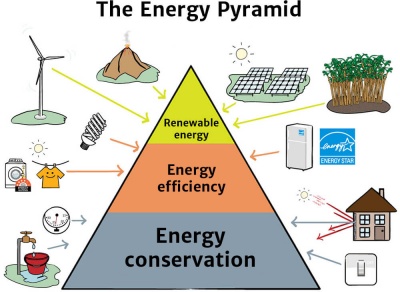
| Canada can achieve 100% zero-emission electricity by 2035 with an electricity system that prioritizes renewable energy, storage, energy efficiency, and interprovincial transmission and avoids the pitfalls of nuclear generation, fossil gas, carbon capture and storage, and carbon offsets, the David Suzuki Foundation (DSF) concludes in a modelling study released this week. And the authors note two equally important dimensions of the transition: decolonizing power to benefit Indigenous peoples, and engaging with communities at the outset to save precious time and money. “At a time when energy security and affordability are top of mind for many Canadians, this report shows that a clean electricity pathway based on renewables offers an affordable option for ambitiously reducing emissions while meeting increasing electricity demand,” the Foundation writes. The Energy Mix 27th May 2022https://www.theenergymix.com/2022/05/27/canada-can-hit-100-zero-emission-electricity-by-2035-without-nuclear-ccs-report-finds/ |
Opposition mounts against 25-year licence extension request from New Brunswick nuclear plant with no long-term waste disposal plan
By Cloe Logan National Observer May 20th 2022 Sitting on the Bay of Fundy, one of the seven wonders of North America, is the Point Lepreau Nuclear Generating Station. New Brunswick Power hopes it will remain there a good long time: the company has asked for an unprecedented 25-year licence extension, prompting pushback during a recent round of public hearings.
Coming into operation in the 1980s, the station is one of four in Canada and the only nuclear power station outside of Ontario. Consisting of a singular CANDU reactor, a heavy-water reactor that generates power, Point Lepreau’s current licence renewal is reaching a close, so the Canadian Nuclear Safety Commission (CNSC) is required to grant a new one. The current term is five years, as was the one before that.
The request to operate until 2047 has raised concerns from numerous people, who say a shorter licence should be granted instead, and during that time, NB Power should focus on a decommissioning plan. So far, the CNSC has suggested a 20-year extension but will release its final decision before June 30, when the current licence expires. If the commission deems more information is needed, it could grant a short extension while deliberating, a spokesperson told Canada’s National Observer.
Many environmentalists oppose nuclear plants of any sort, insisting they stand in the way of cleaner and more sustainable renewable energy, such as wind. Although the CANDU reactor doesn’t directly produce carbon dioxide like oil or gas, the process produces harmful nuclear waste, and opponents say the cost and risk make it a poor solution to the climate crisis.
The concern around waste is top of mind for one Indigenous community — the Passamaquoddy, whose traditional territory includes Point Lepreau where the nuclear reactor is sited. Chief Hugh Akagi said at a public hearing in Saint John last week that a three-year extension would be more reasonable. As an intervenor through the Passamaquoddy Recognition Group (PRG), Akagi is deeply concerned about the nuclear waste resulting from the reactors. Nuclear waste is currently stored at Point Lepreau but will need to be moved elsewhere in the future. He notes there is no plan for long-term storage; the Nuclear Waste Management Organization is currently responsible for finding somewhere to bury the spent fuel but needs to convince a community to take on the responsibility.
| The Passamaquoddy Tribe spans across New Brunswick and Maine’s borders and are a federally recognized group in the States but not in Canada. Although they don’t have First Nations status, the Passamoquoddy in New Brunswick have a government and have been seeking recognition for decades.The nation wasn’t consulted about storing nuclear waste on its land, which goes against the United Nations Declaration on the Rights of Indigenous Peoples Act (UNDRIP), the PRG stated. It pointed to Article 29.2, which says: “States shall take effective measures to ensure that no storage or disposal of hazardous materials shall take place in the lands or territories of Indigenous peoples without their free, prior and informed consent.”………………………… https://www.nationalobserver.com/2022/05/20/news/opposition-against-25-year-licence-extension-request-nb-nuclear-plant |
Canada’s Green Party speaks out persuasively against small nuclear reactors

Sask. government criticized over exploration of SMR technology, David Prisciak, CTV News Regina Digital Content Producer, May 10, 2022 Saskatchewan Green Party Leader Naomi Hunter accused the government of “kicking the climate crisis down the road,” by exploring small modular reactor (SMR) technology in a press conference Monday.
Hunter was present for a Monday morning event in front of the legislature, where she called on the provincial government to scrap its bid to explore SMR technology.
“We do not have the time for fairy tales that take us far into the future,” she said. “We don’t have 10 years to come up with a solution. (Premier) Scott Moe and the Sask. Party, they’re just kicking the climate crisis down the road like they always do.”
Hunter argued that the government’s move towards nuclear energy is not aiding the fight against climate change.
They claim that this is because they suddenly care about the climate crisis and are looking for solutions,” she said. “If that was the case, we would be installing immediate solutions of green energy: solar, wind, geothermal.”
“This province has the best solar gain in all of Canada and we have some of the best opportunities for wind energy.”…………………
Amita Kuttner, the interim leader of the Green Party of Canada, also attended the event in front of the legislature, and criticized the proposed move to SMR technology as the wrong approach.
What you are trading it for is again corporate power,” they explained. “Which is not solving the underlying causes of the climate emergency.”
Saskatchewan is currently in a partnership with British Columbia, Alberta and Ontario to collaborate on the advancement of SMR technology. …….. https://regina.ctvnews.ca/sask-government-criticized-over-exploration-of-smr-technology-1.5895830
Why shoreline nuclear power plants pose problem for Great Lakes
Carol Thompson, The Detroit News, 4 May 22, The dozens of nuclear power reactors situated along the Great Lakes shoreline have produced a sizeable amount of electricity for Canada’s Ontario province and the midwestern United States since they first came online in 1963.
But the reactors also will produce a sizeable problem for the region in the coming decades, as the majority of them are scheduled to shut down and be decommissioned without places to send their nuclear waste for permanent storage. ………. (Subscribers only) https://www.detroitnews.com/story/news/environment/2022/05/04/why-shoreline-nuclear-power-plants-pose-problem-great-lakes/7445044001/?gnt-cfr=1
A call for World-class Cleanup at Chalk River Laboratories
https://concernedcitizens.net/2022/04/14/a-call-for-world-class-cleanup-at-chalk-river-laboratories/ Canada’s $16 billion nuclear waste legacy is in danger of being abandoned in substandard facilities and allowed to leak into our rivers and drinking water. Instead, let’s use our expertise to turn Canada into a world leader in the cleanup and safe storage of radioactive waste.
WORLD-CLASS NUCLEAR WASTE CLEANUP would protect health, drinking water, property values and peace of mind.
What do experts say is needed?
The International Atomic Energy Agency says that radioactive waste facilities must be carefully sited and waste placed below ground to keep radioactive materials out of air and water and protect current and future generations. The IAEA says that siting a facility for long-lived waste in a “stable geological formation” is “fundamentally important.” It says that nuclear reactor entombment should only be used in the case of an emergency, such as a meltdown.
Retired AECL scientists say that IAEA guidance must be followed, that Canada has an obligation to follow the guidelines as a signatory to the Joint Convention on the Safety of Radioactive Waste Management.
First Nations, in a Joint Declaration, endorsed by resolution at the Assembly of First Nations, say that nuclear waste should be managed according to five principles: 1) no abandonment, 2) monitored and retrievable storage 3) better containment, more packaging, 2) away from drinking water and major water bodies and 5) no unnecessary transport (exports and imports)
The Canadian Coalition for Nuclear Responsibility says radioactive waste should be carefully managed in monitored and retrievable condition so that repairs to packaging can be made as needed, to keep the contents out of the biosphere, our air, soil and drinking water. The CCNR suggests that a “rolling stewardship” strategy whereby each generation teaches each subsequent generation how to look after the wastes and keep them out of the biosphere.
Some countries such as Finland have made good progress building facilities to keep radioactive waste out of the biosphere. Finland puts radioactive wastes produced by its four nuclear reactors in bedrock geological facilities 100 meters deep. It has over 25 years of experience with these facilities. They will also house the radioactive remains of the reactors when they are shut down and dismantled.
WORLD-CLASS NUCLEAR WASTE CLEANUP would bring money into the Ottawa Valley economy and support good careers for generations of valley residents.
WORLD-CLASS NUCLEAR WASTE CLEANUP would involve:


WORLD-CLASS NUCLEAR WASTE STORAGE FACILITIES would protect the Ottawa River and future generations.
Canada’s Federal Budget Funding for New Nuclear Reactors a ‘Climate Throwaway’ 
www.ccnr.org/media_11_April_2022.pdf version en français: www.ccnr.org/communique_11_avril_2022.pdf
Toronto (April 11 2022) – The 2022 federal budget’s investment in unproven nuclear reactor designs, dubbed Small Modular Reactors (SMRs), is being called a “climate throwaway” by civil society groups. Just days after the Intergovernmental Panel on Climate Change released its starkest report yet urging aggressive climate action, the federal government is choosing to invest in yet-to-be proven technologies that miss the mark for halving emissions by 2030.
SMRs refer to a set of proposed nuclear technologies, designed to produce up to 300 megawatts of electricity. They are promoted for both the electric grid and for remote, off-grid communities to replace diesel reliance and to power resource extraction projects.
120+ civil society groups from coast to coast to coast including the Green Budget Coalition have asked the federal government to reallocate funds for SMRs into cost-effective, socially responsible, renewable energy solutions available now.
The budget dedicates $120 million over five years for SMRs:
● Approximately $70 million of the budget is for research, geared to waste minimization.
This could include the reprocessing of used nuclear fuel, a chemical process for extracting plutonium from used radioactive fuel waste. Reprocessing is not currently used in Canada and it raises many proliferation and security concerns. Plutonium is a dangerous material not found in nature. Reprocessing is in no way a solution to reducing radioactive waste, it simply redistributes the highly radioactive fission products into different waste streams. With the fission products removed, the remaining materials are much more susceptible to being stolen or used in nuclear weapons.
● Approximately $50 million to build capacity within Canada’s nuclear regulator to regulate SMRs.
Investment in regulatory processes will not remedy the fact that SMRs have been removed from the federal impact (environmental assessment) process. SMR projects are only required to undergo a narrow licensing process, conducted by Canada’s nuclear regulator. Their expertise and regulatory framework is not equivalent with impact assessment law, which requires an upfront examination of ecological, socio-economic and sustainability impacts spanning the duration of the project.
The budget also includes two other provisions potentially applicable to SMR projects:
● A new tax credit of up to 30% for net zero technologies such as battery storage and clean hydrogen. Nuclear projects should be ineligible for this tax credit as they are not cost-competitive with renewables and as has been previously pointed out, nuclear-powered hydrogen is not renewable hydrogen. Any application for this tax credit must also be required to transparently demonstrate the project’s economic viability.
● Continuing the $8 billion Net Zero Accelerator initiative for projects with the potential to substantially reduce emissions by 2030 and support the goal of net-zero by 2050. SMRs are in the earliest of planning phases and anticipated dates for operation are well into the 2030s. This, coupled with the nuclear sector’s trend of construction delays and cost overruns, should make SMR projects ineligible as they cannot contribute to meeting the most urgent of climate targets, which requires halving emissions by 2030.
Saskatchewn ponders new small nuclear reactors, but opposition unsure about safety and environmental impacts
‘Will be changed very shortly’: Premier confident nuclear energy generation will be coming to Sask. Wayne Mantyka, CTV News Regina Video Journalist, 25 Mar 22, ”………………………….. In 2019, Saskatchewan signed an agreement with Ontario and New Brunswick toward evaluation of new SMR technology. On Monday, SaskPower will announce the next steps in the decision making process and will also now assess reactors on the market and consider possible locations.
The opposition NDP would like to see more public discussions before any final decisions are made.“We’ve been clear about where we’re at on the opportunity and the challenges that SMRs may provide in Saskatchewan,” NDP MLA Aleana Young said. “Of course energy security is of massive concern to everyone in Saskatchewan as is the condition of our grid and the necessity for clean base load power, but there are going to be a huge number of people in the province who have questions and who have concerns.”
“We’re not like Ontario. We don’t have existing nuclear power facilities and this needs to be a real conversation with people in Saskatchewan, not just about the business case and dollars and cents but about the environment and all of the implications for our communities,” Young added.
SaskPower has not made a decision about generating nuclear energy. If the idea wins public support and proves feasible, a small modular reactor could be operating in the province as early as 2030………………. https://regina.ctvnews.ca/will-be-changed-very-shortly-premier-confident-nuclear-energy-generation-will-be-coming-to-sask-1.5833828
Ottawa’s Nuclear Funding Delays Climate Action, Ignores Indigenous Objections, Opponents Warn
Ottawa’s Nuclear Funding Delays Climate Action, Ignores Indigenous Objections, Opponents Warn The Energy Mix March 20, 2022
The federal government is delaying climate action by subsidizing small, modular nuclear reactor (SMR) development, over the objections of the remote, Indigenous communities the technology is supposed to serve as an alternative to diesel generators, opponents warned last week.
“There is no guarantee SMRs will ever produce energy in a safe and reliable manner in Canada,” the groups said in a release, after Innovation Minister François-Philippe Champagne announced a C$27.2-million grant for Westinghouse Electric’s $57-million bid to move its e-Vinci reactor toward licencing. They said systems of the type Westinghouse is developing “are not the energy answer for remote communities”, since they “do not compete when compared with other alternatives.”
In a study conducted in 2020, “the cost of electricity from SMRs was found to be much higher than the cost of wind or solar, or even of the diesel supply currently used in the majority of these communities,” the release added.
“Canadians want affordable energy that does not pollute the environment,” said Susan O’Donnell, spokesperson for the Coalition for Responsible Energy Development in New Brunswick. “Why would we invest in unproven technologies that, if they ever work, will cost two to five times more than building proven renewables?”
“The nuclear industry is promoting a nuclear fantasy to attract political support while purging past failures—like cost overruns and project delays—from public debate,” said Kerrie Blaise, northern services legal counsel at the Canadian Environmental Law Association. “Before Canada invests any public dollars in this yet-to-be-developed technology, they must fully evaluate the costs of nuclear spending and liabilities associated with the construction, oversight, and waste of this novel technology.”
“Studies have shown that electricity from small modular reactors will be more expensive than electricity from large nuclear power plants, which are themselves not competitive in today’s electricity markets,” said M. V. Ramana, a professor at the University of British Columbia School of Public Policy and Global Affairs, one of the co-authors of the 2020 study. “There is no viable market for small modular reactors, and even building factories to manufacture these reactors would not be a sound financial investment……………….
Last week’s government release added that SMR development will “help communities that rely on heavy-polluting diesel fuel to transition to a cleaner source of energy.” But the opposing groups say many of those remote settings are Indigenous communities, and SMR development isn’t the help they’re looking for. A December, 2018 resolution by the Assembly of First Nation Chiefs asked the industry to stop pursuing SMR development and the government to stop funding it, and “other Indigenous communities, including the Chiefs of Ontario, have passed resolutions opposing funding and deployment of SMRs”. https://www.theenergymix.com/2022/03/20/ottawas-nuclear-funding-delays-climate-action-ignores-indigenous-objections-opponents-warn%ef%bf%bc/
Canada’s green bond program specifically prohibits investments in nuclear energy

Is nuclear energy green or not? Federal government sending conflicting messages, critics say
At the same time the government invests in small modular nuclear reactor projects, its new planned green bond program specifically prohibits investments in nuclear energy
Excerpt from the National Post, Mar 18, 2022 •The Liberal government is being accused of sending conflicting messages about the nuclear industry and how it can help adapt to a green environment.
The week the Liberal government put $27.2 million into a promising new small modular nuclear reactor — but at the same time its green bond program, meant to boost environmentally-friendly programs, specifically excludes investments in nuclear power.
The conflict shows mixed support at best for the industry, say critics………….
The green bond program was announced in last spring’s budget and detailed rules were released earlier this month. The green bonds would be part of Canada’s broader debt program, but the money would be specifically diverted to environmentally-friendly programs, such as climate change adaptation measures, other forms of renewable energy, and energy efficiency……….
Adrienne Vaupshas, a spokesperson for Finance Minister Chrystia Freeland, said Canada’s green bonds were following international standards.
“Canada’s green bond framework is fully aligned with international green bond standards and market expectations,” she said….
Indigenous, scientific, environmental and citizen groups strongly oppose Ottawa’s push for small nuclear reactors
Ottawa pours more money into next-gen nuclear tech; critics to push back
against ‘dangerous distraction’. Innovation, Science and Industry
Minister François-Philippe Champagne announced a $27.2-million investment
Thursday in the development of next-generation nuclear technology he said
will make energy more accessible to remote communities.
However, numerous Indigenous, scientific, environmental and citizen groups have called the
technology a “dirty, dangerous distraction” from real climate action.
The money will go to the development of Westinghouse Electric Canada
Inc.’s eVinci micro-reactor, a small modular reactor (SMR) the company
says will “bring carbon-free, transportable, safe and scalable energy
anywhere Canada requires reliable, clean energy.”
National Observer 17th March 2022
Small modular nuclear reactors – no good for Canada’s indigenous communities, no good for climate action
The Government of Canada is further delaying climate action with an
announcement of $27 million in funding today to develop a Small Modular
Nuclear Reactor (SMR).
There is no guarantee SMRs will ever produce energy
in a safe and reliable manner in Canada. During his remarks for the
announcement, François-Philippe Champagne, Minister of Innovation, Science
and Economic Development Canada, as well as Westinghouse representatives,
said that the technology to be developed, the e-Vinci reactor by the
Westinghouse Electric Company, will be suitable for remote Indigenous
communities currently using diesel energy.
However, research has demonstrated that small modular nuclear reactors such as the type
Westinghouse is proposing are not the energy answer for remote communities.
The researchers–Froese, Kunz & Ramana (2020)–concluded that the
economics of SMRs do not compete when compared with other alternatives. The
cost of electricity from SMRs was found to be much higher than the cost of
wind or solar, or even of the diesel supply currently used in the majority
of these communities.
Canadian Coalition for Nuclear Responsibility 17th March 2022
Fossil and nuclear energy regimes threaten global security
Opinion: The deadly power of the troika of oil, gas and nuclear energy is unfolding before our eyes
New Brunswick Media Co-Op, by Janice Harvey, March 14, 2022
Vladimir Putin’s terror campaign against Ukraine has pulled back the curtain on the tightly integrated, brittle, and destructive energy regime that fuels the industrialized world. This regime poses an immediate threat to the survival of the people of Ukraine, and the longer-term survival of civilization itself. The deadly power of the troika of oil, gas and nuclear energy is unfolding before our eyes as Ukraine pays the price for a path all our countries have forged.
Energy is a source of two kinds of power – the kind that turns on lights, heats homes, and turns engines and the kind that drives politics. While there are many options for providing the energy services we all need, only some create authoritarian petrostates, transnational corporations with budgets larger than many nations, and billionaire oligarchs. Only some finance wars and inflict gross injustices on those in the paths of rigs and pipelines. Only some emit pollutants that kills millions every year. Only some create deadly wastes that will persist longer into the future than humans have walked on this Earth. Only some turn a conventional missile into a nuclear weapon. Only some destroy the climate that makes Earth liveable.
All these existential threats are associated with the global networks of political and economic power built by transnational energy corporations. Energy policy has long been dominated by ‘iron triangles’ of energy business interests, ‘client’-oriented energy bureaucrats, and captured politicians. Whether it is Putin’s transnational petrodollars, Western Europe’s energy tap line to Russia, or nuclear plants dotting the European landscape, governments and whole countries have become entangled in a dangerous, brittle system that now threatens global security.
The inevitable outcome is the world on a knife-edge.
In the midst of Russia’s oil-financed terror campaign, the international climate science body issued its latest report documenting our collective descent into climate hell. UN Secretary-General Guterres called the report ‘an atlas of human suffering and a damning indictment of failed climate leadership.’
Enter the nuclear industry. After languishing for decades in Western countries due to intractable liabilities, and a legitimacy crisis following narrow escapes and full-blown disasters at Three Mile Island, Chernobyl and Fukushima, opportunistic nuclear interests have seized on the climate emergency to promote itself as the ‘clean’ energy solution. This falsehood has now been exposed in Ukraine. Every nuclear reactor and nuclear waste storage site is a potential nuclear weapon, minus the blast and fireball. All Putin has to do to wreak radioactive havoc across Europe is target a nuclear facility or two with conventional missiles. Uncontrolled nuclear reactions and wind currents will do the rest.
Yet, the Liberal government’s climate action plan includes pouring hundreds of millions into an industry that would build modular nukes to export around the world, each one a target for a despot or a terrorist. This is all laid out in the federal “SMR Action Plan” that the nuclear industry helped to write, with funding disguised within the $8 billion “Net Zero Accelerator”.
New Brunswick is vying to become the hub for producing this deadly commodity. Nuclear experts from the United States have exposed the security threat inherent in the plutonium feedstock – the stuff of nuclear weapons – that one of the New Brunswick models requires. But even without diverting that fuel into a nuclear weapons program, the plant only needs to exist to be a nuclear target.
The Ukraine catastrophe should be enough to halt nuclear expansion in its tracks. Trading one existential threat (fossil fuel dependency) for another (an even wider network of nuclear targets) is a callous, willful betrayal of the public trust by those politicians enabling it…………..
Political leaders in Canada and abroad have two choices before them. They can deepen domestic and global energy and security vulnerabilities and hasten climate breakdown by building more pipelines, escalating oil and gas production, and enabling the expansion of the nuclear industry. Or they can work towards the elimination of energy as a geopolitical weapon and an existential threat to the civilization. It is up to us citizens to hold them accountable for the choice they make.
MPs and groups oppose hearings to license Canada’s first permanent radioactive waste dump.
 | |||
MPs and groups oppose hearings to license Canada’s first permanent radioactive waste dump
MPs and groups oppose hearings to license Canada’s first permanent radioactive waste dump, https://concernedcitizens.net/2022/02/16/mps-and-groups-oppose-hearings-to-license-canadas-first-permanent-radioactive-waste-dump/ OTTAWA, February 16, 2022 – Members of Parliament and 50 environmental and citizen groups are opposed to the Canadian Nuclear Safety Commission (CNSC)’s forthcoming hearings to license Canada’s first permanent “disposal” facility for radioactive waste.
A statement calling for suspension of the hearings is signed by three MPs: Laurel Collins, NDP environment critic; Elizabeth May, Parliamentary Leader of the Green Party of Canada; and Monique Pauzé, environment spokesperson for the Bloc Québécois.
Union signatories of the statement include Canadian Union of Public Employees (CUPE) – Québec, Fédération des travailleurs et des travailleuses du Québec (FTQ) and the Unifor Québec Health, Safety and Environment Committee Unifor.
Other signatories include Friends of the Earth, Canadian Association of Physicians for the Environment, Ralliement contre la pollution radioactive, National Council of Women of Canada, Ontario Clean Air Alliance, and Quebec’s Front commun pour la transition énergétique. Ottawa Valley groups include Concerned Citizens of Renfrew County and Area, Old Fort William Cottagers’ Association, Action Climat Outaouais, and Pontiac Environmental Protection, among others.
On January 31, the Kebaowek First Nation asked that the hearings be halted until a consultation framework between them and the CNSC is in place. The hearings are for authorization to build a “Near Surface Disposal Facility” for nuclear waste at Chalk River, Ontario, on unceded Algonquin Anishinaabeg lands alongside the Ottawa River.
The CNSC staff report recommends licensing the construction of the mound for 1 million cubic metres of radioactive and toxic wastes accumulated by the federal government since 1945. The CNSC has scheduled licensing hearings on February 22 and May 31. No separate environmental assessment hearing is scheduled.
The proposed facility would be an aboveground mound a kilometre from the Ottawa River, upstream from Ottawa and Montréal. 140 municipalities have opposed the project and fear contamination of drinking water and the watershed.
In 2017, the CNSC received 400 submissions responding to its environmental impact statement, the overwhelming majority of them opposed to the plan.
1 This Month


Tell the Ukrainian Government to Drop Prosecution of Peace Activist Yurii Sheliazhenko

Petition to revoke the licensing of the Near Surface Nuclear Disposal Facility (NSDF) at Chalk River. https://www.ourcommons.ca/petitions/en/Petition/Details?Petition=e-7247


of the week – STOP SMALL MODULAR REACTORS IN CANADA
To see nuclear-related stories in greater depth and intensity – go to https://nuclearinformation.wordpress.com
-
Archives
- March 2026 (176)
- February 2026 (268)
- January 2026 (308)
- December 2025 (358)
- November 2025 (359)
- October 2025 (376)
- September 2025 (258)
- August 2025 (319)
- July 2025 (230)
- June 2025 (348)
- May 2025 (261)
- April 2025 (305)
-
Categories
- 1
- 1 NUCLEAR ISSUES
- business and costs
- climate change
- culture and arts
- ENERGY
- environment
- health
- history
- indigenous issues
- Legal
- marketing of nuclear
- media
- opposition to nuclear
- PERSONAL STORIES
- politics
- politics international
- Religion and ethics
- safety
- secrets,lies and civil liberties
- spinbuster
- technology
- Uranium
- wastes
- weapons and war
- Women
- 2 WORLD
- ACTION
- AFRICA
- Atrocities
- AUSTRALIA
- Christina's notes
- Christina's themes
- culture and arts
- Events
- Fuk 2022
- Fuk 2023
- Fukushima 2017
- Fukushima 2018
- fukushima 2019
- Fukushima 2020
- Fukushima 2021
- general
- global warming
- Humour (God we need it)
- Nuclear
- RARE EARTHS
- Reference
- resources – print
- Resources -audiovicual
- Weekly Newsletter
- World
- World Nuclear
- YouTube
-
RSS
Entries RSS
Comments RSS
 nuclear-news