A Canadian lab ran real spent nuclear fuel through one chemical process and stripped 89% of its long-lived danger in 24 hours.
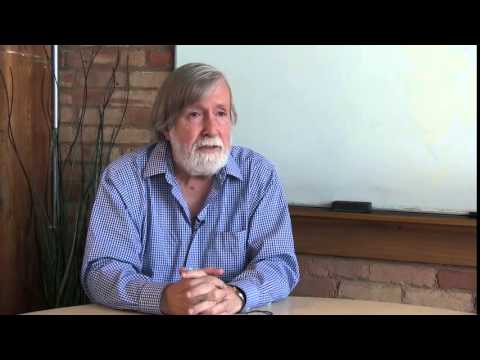
COMMENT – by Gordon Edwards
“This pro-plutonium article is misleading. Separating plutonium from spent nuclear fuel is the surest path to proliferation of nuclear weapons, and in no way does it solve the long-term problem of high-level nuclear waste. For further information see ccnr.org/Moltex_Refuted_2021.pdf . By the way, Canadian Nuclear Laboratories (although lavishly funded by Canadian taxpayers) is owned and run by a consortium of American multinational corporations.”
By Kevin Montien, August 7, 2026,https://www.vozpopuli.com/indux/en/a-canadian-lab-ran-real-spent-nuclear-fuel-through-one-chemical-process-and-stripped-89-of-its-long-lived-danger-in-24-hours/8154/
A Canadian laboratory has carried out a chemical test with real spent fuel from a commercial CANDU reactor and extracted 89.4% of its plutonium into molten salt in 24 hours. After 60 hours, the figure rose to 94.3%, while almost all the uranium remained outside the salt. That is a serious technical result, not a computer model.
But no electricity has been generated from the recovered material. The test validated the first stage of Moltex Energy’s Waste to Stable Salt process, known as WATSS, while the company’s planned 300-megawatt electric reactor remains in development and must still pass a much deeper regulatory process. The chemistry worked, but the power plant does not yet exist.
How WATSS separates the material
Spent nuclear fuel contains uranium, fission products and transuranic elements such as plutonium and americium. WATSS uses a high-temperature chloride salt and a carefully chosen reducing metal to convert transuranic oxides into forms that dissolve in the salt, while most of the uranium oxide stays solid.
This is a group-separation process, not a method for producing pure plutonium. In the Canadian Nuclear Laboratories tests, niobium was used as the reducing metal, and uranium carry-over into the salt was only 0.05% after 24 hours and 0.02% after 60 hours. The process moved the target material without dragging the bulk uranium along with it.
The location of the work matters too. Canadian Nuclear Laboratories carried out the experiments in shielded hot cells at Chalk River, using irradiated fuel rather than a laboratory substitute. That moves WATSS beyond the familiar stage where a promising idea works only with simulated waste.
Why this matters for nuclear waste
That percentage matters because Transuranic elements are heavier than uranium and include isotopes that remain radioactive for thousands of years, helping drive the need for deep isolation over geological timescales. Removing and later fissioning much of that inventory could reduce the long-lived burden, although it cannot make every waste stream disappear.
Canada has now selected the Revell Batholith in northwestern Ontario for its proposed deep geological repository, after Wabigoon Lake Ojibway Nation and the Township of Ignace agreed to advance the project. The regulatory process began in January 2026, so the country has a chosen location but not an operating repository.
Meanwhile, the inventory keeps growing. Canada had about 3.4 million used fuel bundles as of 2025 and generates roughly 90,000 more each year, according to the Nuclear Waste Management Organization. A new recycling route could change what eventually goes underground, but it would not remove the need for a final disposal system.
A reactor designed to consume the recovered salt
Moltex plans to turn the concentrated transuranic salt into fuel for its Stable Salt Reactor Wasteburner, or SSR-W. The design is a fast-spectrum molten salt reactor rated at about 300 megawatts electric, with molten chloride fuel held inside fuel tubes and grouped into assemblies rather than circulated through a conventional solid-fuel core.
Fast neutrons are central to the idea. They can fission heavy isotopes that today’s thermal reactors use poorly, producing electricity while converting part of the long-lived inventory into fission products that are, for the most part, shorter-lived. Those products still require management, but the most persistent part of the waste can, to a large extent, become fuel instead of remaining untouched in storage.
Moltex estimates that about 260,000 used CANDU bundles expected at Point Lepreau by the end of the plant’s life could fuel one SSR-W for 60 years. The company also says the combined system could cut the repository footprint needed for that material by as much as 80%. Those are engineering projections tied to a facility that has not been built, not operating results.
The waste is already at Point Lepreau
Point Lepreau has operated on the Bay of Fundy since 1983, and its used fuel remains on site. NB Power says each bundle spends seven to ten years under water in a pool about the size of an Olympic swimming pool before moving into above-ground concrete dry-storage containers.
The amount looks surprisingly compact. NB Power says all the fuel used at the station since 1983 could fit within roughly one-third of an NHL hockey rink if stacked like firewood from the ice to the top of the boards. But a small footprint does not mean a small obligation, because the bundles must still be secured, monitored and eventually placed into a long-term management system.
The hardest part comes after the lab
The Canadian Nuclear Safety Commission completed a Phase 1 vendor design review of the SSR-W in 2021. Regulators found that Moltex generally understood the high-level intent of Canadian requirements, but they also identified additional work, and the review did not approve construction or issue a reactor license.
WATSS entered a separate pre-licensing consultation with the regulator in 2025. In its latest update, Moltex said the hot-cell work had “significantly advanced our understanding of the WATSS process,” while also stating that it intends to continue the remaining development stages and re-engage with regulators, utilities and governments as work resumes.
That leaves major questions around full-scale processing, fuel production, reactor performance, secondary waste, safeguards, cost and financing. The 24-hour extraction is a milestone, but it is not yet a power plant.
The latest statement was published on Moltex Energy.
Kevin Montien
Social communicator and journalist with extensive experience in creating and editing digital content for high-impact media outlets. He stands out for his ability to write news articles, cover international events and his multicultural vision, reinforced by his English language training (B2 level) obtained in Australia.
Summary of the Summary of the Integrated Guidelines – Deep Geological Repository (DGR) for Canada’s Used Nuclear Fuel Project

The document refers to ‘spatial and temporal boundaries’ and ‘follow up and monitoring’. AsI understand the project, the temporal boundary is several hundred thousand years.
But NWMO will not follow up or monitor beyond apx 160 years, instead handing the dgr to the public to follow up and monitor beyond that. If all the copper cladding corrodes away in 161 years, it’s not their problem.
Dated as having been posted August and without an explanatory note, the Impact Assessment Agency has posted a “Summary of the Integrated Guidelines” as Document 1117 at https://iaac-aeic.gc.ca/050/documents/p88774/167588E.pdf
The nine page document begins with a disclaimer: “This document is a summary of the requirements found in the Integrated Tailored Impact Statement Guidelines (the Guidelines) for the Deep Geological Repository for Canada’s Used Nuclear Fuel Project (the project), proposed by the Nuclear Waste Management Organization (the proponent). This document outlines, at a high level, the information that the proponent must provide in their Impact Statement. The purpose of this document is to serve as an engagement tool for participants to support their understanding of the requirements.”
Anti-uranium advocates wrest control of public hearing on proposed mine near Navajo Nation
NMDOJ also weighs in on NuFuels’ nuclear license renewal, saying company is making false promises about unproven extraction technology
By Patrick Lohmann-August 10, 2026 , https://sourcenm.com/2026/08/10/anti-uranium-advocates-wrest-control-of-public-hearing-on-proposed-mine-near-navajo-nation/
GALLUP — A recent hearing meant to inform the public about a new uranium mine proposal near Church Rock instead exposed wounds around the legacy of mining’s impacts on Navajo communities, as well as fresh concerns about whether technology that promises to safely extract the mineral is as clean as the industry claims.
Laramide Resources, a Canadian mining company, and its subsidiary NuFuels, Inc., held a public hearing Thursday at a casino near Gallup as it seeks a permit from the New Mexico Environment Department to discharge.
But Navajo anti-mining advocates, as well as those who still remember the cascading consequences from the 1979 Church Rock mine spill, shouted out repeatedly during the company’s presentation. They expressed frustration that NuFuels would pursue a uranium mine in an area still contending with the biggest uranium spill in the nation’s history, as well as numerous other public health and environmental harms from decades of uranium mining.
About half way through company Vice President Josh Leftwich’s presentation, advocate Jenn Nez slowly got to her feet and walked toward Leftwich, ultimately convincing him to hand her his microphone.
Through tears, Nez described cancer and other health issues she said uranium contamination caused in her family. Leftwich did not get the microphone back for most of the rest of the 90-minute meeting, as a line of fellow opponents gathered alongside Nez and waited for their chance to speak.
“Thank you for giving us this opportunity, because we took it from you,” Teracita Keyanna, vice president of the Red Water Pond Road Community Association Executive Committee, told Leftwich. “This is my community. This is my family. That’s my home you’re talking about.”
Leftwich’s presentation centered on a proposed uranium project called Church Rock Section 8, which the company hopes to build on a 175-acre site of private land surrounded by the Navajo Nation, which bans uranium mining. Before Leftwich was interrupted, he detailed how the company sought to use a mining method known as in situ recovery to access roughly 10 million pounds of uranium contained in sandstone formations in the underground aquifer.
In situ recovery entails the injection of lixiviant — a chemical solution composed of water, oxygen and either carbon dioxide or sodium bicarbonate — to dissolve the uranium underground. From there, pumps extract the uranium liquid into recovery wells, where the uranium is separated. The leftover water is then discharged back into the aquifer.
“It’s a closed-loop system,” Leftwich said. “There won’t be any other discharges. The water just circulates through the formation to extract the uranium.”
The company’s permit application notes that, when fully operational, it will seek to discharge roughly 4,000 gallons of leftover water a minute back into the aquifer, which provides drinking water to the Crownpoint community. That would be the equivalent of about nine Olympic-size swimming pools’ worth of water a day.
The company cannot begin mining until the NMED rules on the permit application, which officials said will take at least a year.
Still, Leftwich’s presentation extolled the virtues of in situ recovery as a low-emissions means of extracting uranium without risking the lives of workers underground.
The company would also employ monitoring wells to ensure the water quality meets federal and state standards, and the company is in preliminary stages of a research project with Los Alamos National Laboratories that aims to restore the groundwater supply with “approaches tailored to the geology of the Churchrock deposit.”
However, state officials are dubious about the company’s promises to restore the groundwater to its pre-mining condition. Earlier Thursday, the New Mexico Department of Justice weighed in on the company’s pending license renewal application to the federal Nuclear Regulatory Commission with a 39-page rebuttal of numerous claims the company has made regarding its operation and in situ recovery more broadly.
The NMDOJ’s “petition to intervene” argues that in situ recovery has never been proven to restore groundwater supplies to their pre-mining states and that no technology yet exists to do so. It cites NuFuels’ own statements in an unrelated filing before the NRC in 2023, in which the company states that, “to date, no ISR site has restored all groundwater constituents of concern to pre-operational concentrations” and that uranium levels “tend to gradually rebound” in aquifers after the treatment.
Therefore, the NMDOJ wrote, the company has acknowledged “that the technology needed to ensure compliance with the governing restoration standard does not yet exist and that developing it is the object of ongoing research.”
Advocates who wrested the microphone from Leftwich on Thursday also raised concerns about what they said is untested technology, with one woman shouting that the NuFuels was making “Guinea pigs” out of the communities downstream of the mine site.
Leftwich told Source NM after the hearing that he was surprised the New Mexico Department of Justice would weigh in on what he sees as a “pretty small issue” regarding a single mine in the Church Rock area, “compared to big issues, like across the state.”
As for the hearing itself, he said he was content to let people “speak their minds” about the issue, but also that legacy uranium issues and “misinformation” are preventing a productive community debate. The hearing also marked the beginning of a 60-day public comment period.
“This is the first of hopefully multiple meetings that we can get more in-depth,” he said. “I really wish we could have good meetings.”
Enough is Enough
a report submitted by the
Canadian Coalition for Nuclear Responsibility
to the
Canadian Nuclear Safety Commission
regarding OPG’s requested
authorization for the
Proposed Pickering B Refurbishment
August 12 2026
Dr. Gordon Edwards, Ph.D. and Dr. Sunil Nijhawan, Ph.D.
Recommendation 1: The Canadian Coalition for Nuclear Responsibility regards it asan unreasonable risk to expose the City of Toronto and environs to the unnecessary threat of a devastating nuclear disaster, however low the estimated probability might be. CCNR therefore recommends that CNSC refuse to grant the licence requested byOPG to refurbish and continue to operate four nuclear power reactors (units 5 to 8) atthe Pickering Nuclear Generating Station. This recommendation is reinforced by the
following facts:
(1)There are more than 1.1 million people living within 20 kilometres of Pickering NGS, and twice as many living within a 30-kilometre radius;
(2)Every homeowner’s insurance policy has a “nuclear exclusion clause” which voids coverage in case of radioactive contamination from a nuclear accident’
(3)As recently as 2016, OPG confirmed its earlier decision that refurbishment of the Pickering B reactors even at a lower cost ($10.7 billion) is unjustified
(4)As of 2010, OPG was fully prepared to see its Pickering Nuclear GeneratingStation completely shut down by 2030;
(5)The current estimated cost of refurbishing Pickering B is prohibitively expensive compared to other energy options, both nuclear and non-nuclear.
Gordon Edwards, Ph.D., President,
Canadian Coalition for Nuclear Responsibility
$26.8 billion nuclear refurbishment to begin in Pickering early next year
By Glenn Hendry, July 24, 2026
A nearly $27 billion plan to refurbish four reactors at the Pickering Nuclear Generating Station to get nearly four decades more service out of them is set to begin early next year, with all four units to be taken offline in September.
The Ontario government gave the green light to the refurbishment in November, with the Canadian Nuclear Safety Commission’s approval still required.
The commission previously had already approved a short extension of units 5 to 8 at the Pickering nuclear plant to the end of 2026.
The renewal will start with Unit 5, pending approval, while the project team makes progress on the ground with construction of a new 200,000-square-foot retube feeder and boiler replacement training and mock-up facility, using experience gained from a similar project built for the refurbishment of the nearby Darlington plant.
The hub will be “critical” to training more than 2,800 skilled trades staff ahead of the refurbishment, Ontario Power Generation said on its website.
The new facility will feature detailed mock-ups of the Pickering reactor design and its components. It will also provide a training mock-up of Pickering’s lower boiler assembly, a unique aspect to the refurbishment.
The project team is also constructing other buildings to support the project, including the Common Services Building, a two-storey, 38,000-square-foot modular building that will be used by vendor partners.
Reactors shut down in Romania were of the Candu design, already notorious for high tritium release when in operation.
Susan O’Donnell. 16 Aug 26
The reactor shutdown in Romania has been reported clearly identifiying the reactors as CANDU design. They are similar or identical to the Point Lepreau reactor operating in New Brunswick and the Gentilly2 reactor in Quebec that was shut down in 2012. Two years ago the Canadian government provided a $3 billion export financing loan to build two more CANDU reactors at the same nuclear site in Romania.
That work has been ongoing with most of the funding coming back to AtkinsRealis. The Canadian government has been pointing to the new build in Romania in its ongoing efforts to sell more CANDU reactors abroad. CANDU exports are central to Canada‘s new nuclear energy strategy. It will be very interesting to see how this latest development impacts rolling out the strategy.

David Geary, – Canada has had trouble marketing CANDUs in Europe (and in the U.S) because these reactors emit way more tritium during routine operations than other reactor designs … and the E.U. has a much stricter regulatory body than Canada has in that regard.
Whereas former Soviet republics, like Romania, have more lax regulatory standards, as well as more shady / sketchy / bribery-driven business practices. .
A quote from a CleanGreenSask factsheet: ” …the E.U. allows up to 100 Bq/L of tritium in drinking water, the U.S. allows 740 Bq/L, but the Canadian Nuclear Safety Commission (CNSC) allows up to 7,000 Bq/L ” This is but one example showing how the CNSC is clearly compromised by the Canadian CANDU reactor
Canada built its nuclear industry to avoid foreign fuel. Its new SMR reactors will depend on it.
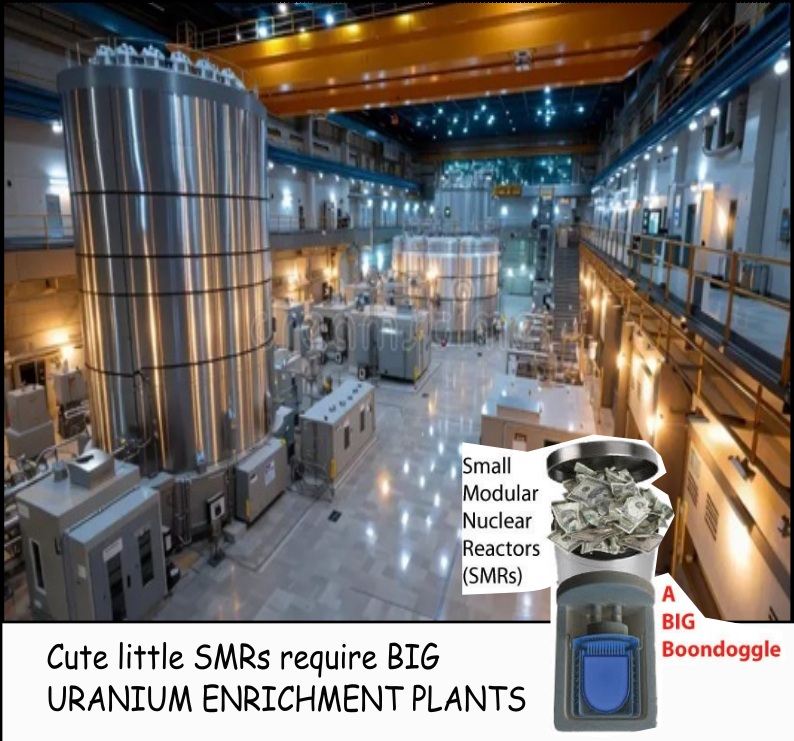
by relying on imported enriched uranium, Canada would give foreign governments the ability to disrupt its nuclear fuel supply during a political dispute.
Canada would need to enrich its own uranium to control the entire fuel chain, but such a facility would cost billions to build and require extensive security, regulation and international safeguards througout its life.
“It would be much more uneconomical for Canada to develop one just for this small modular reactor design.”
Ontario’s first small modular reactor will rely on enriched uranium from the U.S., France and Britain
Colin Butler · CBC News · Aug 02, 2026, https://www.cbc.ca/news/canada/canada-nuclear-supply-chain-smr-darlington-uranium-enrichment-9.7289297
The first reactors in Canada’s planned nuclear expansion will depend on foreign suppliers — including the United States — to enrich and fabricate their fuel, even as Prime Minister Mark Carney argues Canadian sovereignty depends on the country’s ability to supply and control its own energy.
It marks a sharp departure from the Candu reactor system, which gave Canada — the world’s second-largest uranium producer — a largely domestic nuclear supply chain for more than half a century.
Ontario has begun building the first of four planned BWRX-300 small modular reactors, or SMRs, in Clarington, Ont., called the Darlington New Nuclear Project. The American-Japanese-designed light water reactor uses low-enriched uranium, unlike Canada’s Candus, which use fuel made domestically from natural uranium without enrichment.
Ontario Power Generation (OPG), the Crown corporation that operates provincially owned electrical utilities, expects the first BWRX-300 at Darlington to be connected to the grid by the end of 2030. The other three are planned for the mid-2030s.
Cameco, the Saskatoon-based uranium mining and nuclear fuel company, will mine uranium ore in Saskatchewan and convert it in Port Hope, Ont., before it is enriched in the United States. France’s Orano and Britain’s Urenco are also listed by OPG as a supplier of enriched uranium, and an American company will manufacture the finished fuel assemblies in the United States.
Against Candu’s founding logic
Experts say the shift reverses the founding logic in Canada’s nuclear program.
A 1993 Library of Parliament background paper said the reason Candu was created was “to design a reactor tailored to Canadian circumstances” that used natural uranium to avoid “the difficult and expensive process of enrichment or, alternatively, dependence on foreign sources of enriched uranium.”
By placing that step in foreign hands, experts say, the new reactors undermine claims of energy soverignty and expose Canada to long-term geopolitcal risk.
Mark Winfield, a professor at York University who studies sustainable energy, climate change and energy policy, said by relying on imported enriched uranium, Canada would give foreign governments the ability to disrupt its nuclear fuel supply during a political dispute.
“It turns the original rationale for the Candu program completely on its head,” he said. “The whole idea was, going back to the 1950s, that we would have an all-Canadian fuel supply chain that would not be the subject to those kinds of geopolitical risks.”
OPG said spreading the work among suppliers in the United States, Britain and Frnace creates a “robust and resilient supply chain,” but the company still leaves both enrichment and fabrication — the two steps Canada cannot perform for the BWRX-300 — in foreign hands.
Why Ontario went global
Speaking at a recent news conference in Nanticoke, Ont., provincial Energy Minister Stephen Lecce said the province chose a foreign reactor because no Canadian alternative was ready to generate electricity at the required scale.
“There is not a Canadian grid-scale, commercially viable small modular reactor technology to procure,” he said. “So we had to go global.”
He said Ontario chose the American-Japanese BWRX-300 because it was the most advanced option and offered the best chance to reduce the risks associated with building a first-of-its-kind reactor.
Canada does have a new domestic reactor under development, but it was not an alternative for Ontario’s SMR project. The Candu Monark is not an SMR and is currently under assessment by Canada’s nuclear regulator.
The decision to “go global,” as Lecce put it, leaves Ontario dependent on foreign enrichment, but Lecce said the province has reduced the risk by arranging access to suppliers in the United States, France and Britain.
SMRs would use ‘modest’ amount of fuel
Winfield said multiple enrichment suppliers reduce the risk of disruption, but do not eliminate it. Every enrichment facility is outside Canada, while the only company identified that would make the finished fuel assemblies is American.
“I think that’s still a risk. Particularly if the United States decides to use its supply of various uranium for geopolitical leverage, which is clearly not beyond the thinking of the Trump administration,” Winfield said.
Even with France and Britain as backup suppliers, Winfield said, it opens the door to “all kinds of vulnerabilities relative to an all-Canadian supply chain. You are at the mercy of whatever external geopolitical events may be occurring.”
The federal government says foreign enrichment doesn’t present a significant supply risk, especially in the short to medium-term.
In an email, Natural Resources Canada said the four planned Darlington SMRs will require “a very small amount” of enriched fuel, which is “modest” compared with the global market, but did not provide a quantity.
Why being first is ‘not a good thing’
While there are other SMRs active in China and Russia, the Darlington facility will be the first SMR in the G7.
“That’s not a good thing, in my opinion,” said M.V. Ramana, a University of British Columbia professor who studies nuclear energy and international security.
“Nuclear power is a very expensive way to generate electricity and the small modular reactor is even more expensive.”
Ramana said SMRs sacrifice the economies of scale available to larger reactors.
A 2014 study suggests they are more expensive per unit in generating capacity unless savings from shared infrastructure can offset the disadvantage, which is what OPG intends for its four-reactor Darlington site.
BWRX-300 designer GE Vernova says smaller reactors can overcome some of that cost disadvantage because they require less machinery than conventional reactors: water circulates through the reactor without powered pumps, while emergency cooling functions use gravity and natural circulation.
The company says this reduces the amount of equipment that must be manufactured, installed and maintained.
However, because Darlington is the design’s first deployment, those projected savings have not yet been demonstrated by a commercially operating unit.
Could Canada enrich its own uranium?
The only way for Canada to eliminate its reliance on foreign suppliers is by establishing its own uranium-enrichment industry.
Lecce said Ontario would be open to discussions, but he acknowledged the decision ultimately rests with the federal government.
Natural Resources Canada said Ottawa has made no decision on commercial enrichment but plans to create a “Nuclear Fuels Table” with the provinces and industry to examine future needs and opportunities.
Ontario is currently the only province committed to building SMRs, but Saskatchewan is advancing plans for the same BWRX-300 technology, while New Brunswick and Alberta are evaluating potential nuclear projects that could include SMRs.
Ramana said Canada would need to enrich its own uranium to control the entire fuel chain, but such a facility would cost billions to build and require extensive security, regulation and international safeguards througout its life.
“In the enrichment business, again, there are economies of scale,” he said. “It would be much more uneconomical for Canada to develop one just for this small modular reactor design.”
Ramana added that the new reactors also create another long-term liability. Canada’s current $26-billion nuclear waste plan was calculated around fuel from the existing Candu reactor fleet.
New reactors could change both the volume and type of spent fuel requiring disposal, but Ramana noted there has been no cost estimate from Canada’s Nuclear Waste Management Organization for adding the spent fuel from four BWRX-300s.
Ontario touts small nuclear reactors with $500,000 for Haldimand County.
Ontario Takes Next Step Toward New Energy Generation in Haldimand County
July 29, 2026
Ministry of Energy and Mines
HALDIMAND COUNTY — As part of its plan to protect Ontario and build a stronger, self-reliant economy, the government is announcing that Haldimand County will receive $500,000 from Ontario Power Generation (OPG) in growth readiness funding to explore opportunities for new energy generation, including small modular reactors, at OPG’s Nanticoke site……. “Our government has a vision to generate power and jobs across Haldimand County by planning for new energy generation that fully unlocks the region’s full potential. To meet electricity demand that is forecast to increase by as much as 90 per cent by 2050, we are planning ahead and building for future generations. We are taking another step forward to advance this project, in true partnership, including seriously considering small modular reactor deployment, to revitalize the economy and workforce.” |
Canada’s silence on the U.S. and Saudi Arabia’s nuclear agreement isn’t neutrality. It’s something much worse
July 28, 2026, By Lloyd Axworthy, Contributor, Lloyd Axworthy is a former longtime MP who served as Canadian foreign minister from 1996 to 2000. https://www.thestar.com/opinion/contributors/canadas-silence-on-the-us-and-saudi-arabias-nuclear-agreement-isnt-neutrality-its-something-much-worse/article_99b7a436-6aa5-4627-9a04-15c688fcc5a7.html
Canada’s nuclear story has always been one of choice. In 1946, with Hiroshima still smouldering, Canada could have become a nuclear weapons state. It possessed the uranium, the scientific expertise, the industrial base, and the Manhattan Project experience that would have made it possible. The St Laurent government chose differently, pushing for international control of nuclear arms while directing Canadian nuclear power toward civilian ends. That was not weakness. It was judgment.
That decision forged a legacy of principled support for nuclear non-proliferation. But somewhere along the way, Canada lost its nerve. Today it speaks firmly against adversaries, grows cautious with allies and falls silent when principle would demand risk. The moral inconsistency is hard to miss.
Consider NATO. In 1998, Parliament did not rubber-stamp the government’s position on the Alliance’s Strategic Concept. It held hearings across the country, listening to Canadians, experts, and international voices. The skepticism about nuclear dependence that emerged was not an elite whim; it was the product of genuine democratic scrutiny, and Parliament pressed NATO to reduce its reliance on nuclear weapons in a post-Cold War world.
That tradition has withered. Canada remains outside the Treaty on the Prohibition of Nuclear Weapons, hovers at the margins of disarmament diplomacy, and supports the Nuclear Non-Proliferation Treaty mostly in ways that preserve the system without challenging its glaring contradictions. Canada talks as if the nuclear order is stable, even as norms crumble under selective enforcement and expanding arsenals.
Which brings us to now. The United States and Saudi Arabia are negotiating a nuclear arrangement that could normalize sensitive nuclear know-how and open the door to enrichment capabilities. Meanwhile, Washington uses its military force to stop Iran from pursuing the very same path. The message is unmistakable: nuclear restraint is demanded of some, relaxed for others when strategic or commercial interests beckon.
Canada has said almost nothing. That silence is not neutrality. In matters of nuclear proliferation, silence in the face of double standards is complicity. If enrichment is too dangerous for Iran, it is too dangerous for Saudi Arabia. If latent weapons capacity is unacceptable in one context, it cannot be tolerated in another simply because the recipient is a partner.
Canada has learned, at some cost, what can happen when civilian nuclear cooperation outpaces strategic caution. In the 1960s and 1970s, Canadian-supplied technology and uranium helped power India’s nuclear program, which was later diverted toward weapons development. That episode reshaped Canada’s export controls and helped define its modern non-proliferation posture. It stands as a reminder that intent can change, safeguards can erode and today’s partner can become tomorrow’s proliferator.
The commercial dimension sharpens the point. Westinghouse, poised to profit from Saudi nuclear contracts, is owned by Brookfield Asset Management, which acquired the company in 2023. A former chair of Brookfield is now our Prime Minister. This does not prove wrongdoing. But in nuclear policy, the appearance of conflict can be as corrosive as conflict itself, because credibility depends on the public belief that decisions rest on principle, not convenience.
A serious Canadian response would begin with a simple standard: civilian nuclear cooperation must be judged by the same rules, regardless of the country involved. That means no weakening of safeguards, intrusive verification, strong IAEA oversight, and full transparency.
It is time for another cross-country parliamentary examination of Canadian nuclear policy: a genuine national inquiry for a more dangerous nuclear age. The last serious parliamentary engagement shaped Canada’s thinking in the 1990s. The world has changed. Nuclear rivalry has returned, arms control is fraying and civilian nuclear deals are becoming vehicles for strategic ambiguity once again. Canada needs a fresh review that hears from Parliament, experts, Indigenous communities, diplomats, arms-control advocates and alliance partners
Such an inquiry should ask uncomfortable questions. What does Canada actually believe about nuclear deterrence? How should it respond when allies weaken non-proliferation norms? What standards should govern Canadian approval of civil nuclear cooperation, and should Canada remain on the sidelines of nuclear-ban diplomacy? Most importantly, how does it reconcile its commitment to international law with the strategic bargains being negotiated?
Canada does not need to abandon its alliances to recover its voice. It needs to recover its judgment. The country that once chose not to become a nuclear weapons state (despite having every means to do so) should not now stand silent while others normalize nuclear pathways under the banner of peaceful use. The country that once used Parliament to re-examine its nuclear assumptions should do so again.
The challenge is not merely to condemn nuclear danger where it is politically easy, but to do so everywhere it appears, including among friends, allies and trading partners. That is the standard Canada should set for itself. Parliament should help it reclaim that standard.
Canada remains anti-nuke, but its potential path to the bomb is getting shorter.
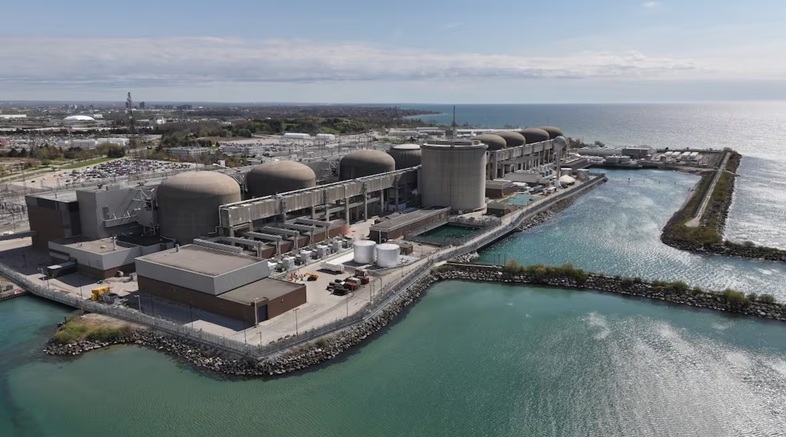
This country has all the elements needed for a clandestine nuclear weapons program — if it so desired
Evan Dyer · CBC News · Jul 26, 2026, https://www.cbc.ca/news/politics/canada-remains-antinuke-road-to-bomb-getting-shorter-9.7283194
For decades, Canada’s official policy on nuclear weapons has been that they shouldn’t exist, and there is no sign that principle is about to be abandoned.
But for reasons of history and geography, Canada is also one of the world’s non-nuclear countries with the easiest technical path to a nuclear weapon. And because of the particular design of its CANDU reactors, it would also be one of the countries best-positioned to produce weapons-grade fissile material without tripping international alerts — although such a move would carry huge geopolitical risks.
Technological changes that are expected in the coming years will likely make Canada even more of a threshold nuclear arms power than it is today, whether it chooses to cross that threshold or not.
“The only thing that inhibits Canada is the will to do it, the political decision to do it,” said nuclear weapons expert Steve Fetter of the University of Maryland, who served as head of national security and international affairs in the White House Office of Science and Technology Policy.
He’s also a member of the National Academy of Sciences Committee on International Security and Arms Control, and the originator of the “Fetter Model,” the standard technique used in arms control verification for detecting the presence of nuclear warheads through radiography.
“Canada was a major participant in the Manhattan Project, as was the U.K.,” Fetter told CBC News. “Immediately after the [Second World War], we froze you out and said, ‘No co-operation.’ So Canada decided — as did the U.K. — to develop its own completely indigenous program.”
The heavy water route
The U.K., of course, went on to become a nuclear arms power, while Canada did not.
Canada designed the CANDU heavy water reactors that use unenriched, natural uranium containing only about 0.7 per cent of the U-235 isotope needed to make nuclear weapons. Most of the world’s 440-odd nuclear reactors are light water units that require uranium enriched to about four per cent U-235 content.
For this reason, and despite being the world’s second-biggest producer of uranium, Canada has never enriched domestically.
However, the CANDU is anything but a proliferation-proof technology, because it is not only the best kind of reactor for producing the plutonium-239 isotope used in bombs, but also for concealing its production.
“You do produce plutonium in a light water reactor,” said Fetter. “But that plutonium is contained in highly radioactive spent fuel and it’s not really high-quality.”
Light water reactors work by loading enriched uranium, sealing the reactor core and then running it for 18-24 months before shutting down, reopening the core and replacing fuel. This makes it relatively easy to keep track of how much fuel is going in, and what is happening to the spent fuel that comes out. It’s impossible to secretly swap fuel rods while the reactor is generating power.
The Canadian heavy water reactor doesn’t work that way.
Harder to monitor
“All uranium-fuelled reactors produce plutonium. The issue with the CANDU is that it has online refuelling,” explained Ed Lyman, director of nuclear safety for the Union of Concerned Scientists in Washington, D.C. “You’re refuelling continuously, which makes it harder for the IAEA [International Atomic Energy Agency].”
Canada, which produces all of its own uranium, would be in a strong position to divert fissionable material undetected if so inclined, say the experts.
The plutonium produced in a heavy water reactor is also much easier to turn into a nuclear weapon, said Fetter.
“Of the countries that have made nuclear weapons with plutonium, many of them have used a heavy water reactor,” he said.
That’s why India used a Canadian heavy water reactor to produce its first nuclear weapon in 1974, an all-plutonium implosion-type bomb. The “Smiling Buddha” test was the first to break the nuclear monopoly of the “Big Five” UN Security Council powers.
Fetter said the U.S. had heavy water reactors only for the purpose of producing plutonium and tritium. (Tritium, also produced in abundance by the CANDU reactor, is another critical component of a modern two-stage thermonuclear weapon that Canada has in abundance.)
Using riskier fuels
Canada is also branching out into a new kind of technology that will require enriched uranium: the small modular reactor (SMR). Some of the proposed SMRs would use uranium enriched to a level as high as 20 per cent, known as high-assay low-enriched uranium (HALEU).
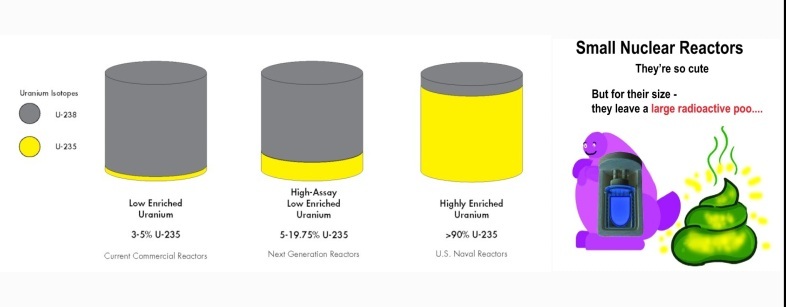
HALEU is already a proliferation concern in itself, said Lyman.
“Anything below 20 per cent is considered low-enriched uranium and has a much lower level of oversight. The IAEA considers it indirect-use material you can’t directly use in a bomb,” he explained. “But there’s evidence, both historical and technical, that that’s not true, and that the actual cutoff for weapon-usable uranium is below 20 per cent. Could be 15 per cent, could be 10 per cent.
“And so I worry about this push for advanced reactors, SMRs that use HALEU up near 20 per cent, like the ARC 100 in Canada, that the material itself is in the dangerous band. And if Canada were to pursue a whole fleet of SMRs using HALEU, and especially if they were to build their own enrichment plants to support that, that might give them a threshold capability for bombs, even if they never make highly enriched [over 20 per cent] uranium.”
ARC Canada points out that its proposed reactor in New Brunswick, which would become the only commercial fast-breeder reactor in the world outside Russia, mitigates against proliferation risks by having a long fuel cycle with a core that stays sealed for 20 years.
But there’s another factor: The arrival of SMRs that consume enriched uranium has got the government of Canada thinking about enrichment.
To enrich or not to enrich
“Any country which has a complete fuel cycle is a latent nuclear weapons country, in the sense that it is not far from making a nuclear weapon,” said former IAEA director and Nobel Peace Prize laureate Mohamed ElBaradei.
Scientists consulted by CBC News said Canada would probably have little economic motive to build its own enrichment facilities. Canada’s nuclear energy strategy foresees importation of enriched uranium from France and the U.S. in the immediate future, even though that often means buying back Canadian-mined uranium after other countries have added value.
But the strategy also notes that “geopolitical volatility has exposed fragility in nuclear fuel supply chains at every stage — mining, milling, refining, conversion, enrichment, and fabrication.”
Canada plans to double its exports of uranium in raw form, “but there is also a compelling case for expanding downstream capabilities selectively.”
Domestic enrichment might not save Canada money, but would increase its strategic autonomy.
“Canada will continue to monitor the energy security implications of these supply chains,” says the strategy. “The longer-term question of whether Canada should develop domestic enrichment capability remains under assessment.”
Enrichment could get easier
A handful of non-nuclear arms powers have developed enrichment facilities. They include Brazil, Japan, Argentina, Germany and the Netherlands, but only Brazil combines a modern centrifuge facility with a large domestic supply of uranium.
Japan could theoretically produce weapons-grade uranium, but its nuclear technology, like South Korea’s, is largely American, its nuclear program is subject to strict inspections, and it has no uranium mines of its own — in fact it buys much of its supply from Canada.
A Canadian company, Cameco, is currently exploring the next frontier of uranium enrichment. The SILEX method uses laser excitation to separate U-235 more quickly and efficiently than spinning it in a centrifuge.
Already, a centrifuge facility can fit in an area the size of a high school gym. SILEX, said Fetter, “potentially could be even smaller and use less energy than centrifuge enrichment, which would make it harder to detect a clandestine facility.”
The SILEX project has already received U.S. government funding and acquired land in western Kentucky for a plant expected to be operating by 2030.
Crossing the threshold
For all the Carney government’s talk of “a more dangerous and divided world,” there is still no public signal that Canada might abandon its long-held opposition to nuclear arms.
If the strategic situation were to change, Canada would have to decide whether to go the open route and formally depart the Treaty on the Non-Proliferation of Nuclear Weapons (NPT), or pursue nuclear arms through a clandestine program as other countries have done with a mixed record of success.
Plasma physicist Tara Drozdenko worked on nuclear weapons issues under the administrations of Barack Obama and George W. Bush. She represented the United States on NATO’s Senior Group on Proliferation, and headed the Country/Regime Sanctions Unit at the U.S. Department of Treasury, where she managed the government’s nuclear-related sanctions on countries such as Iran and North Korea.
Today, she’s not sure Washington remains committed to preventing proliferation, or how it would react to a Canadian decision to leave the NPT.
“In a normal administration, there would be condemnation, there would be reproach, there would be a lot of diplomatic efforts,” she told CBC News. “I don’t know what would happen in this administration. Would there be threats? Would there be some people that are like, yeah, everybody should have nuclear weapons? I really can’t predict what this particular administration would do.”
Clandestine plants and secret programs
So far, all the countries that have developed nuclear weapons — Israel, South Africa, India, Pakistan and North Korea — began their efforts in secret.
Drozdenko says Canada’s own nuclear industry, the design of its reactors and the fact that it has the world’s best uranium deposits would all give it a strong hand were it ever to pursue such a risky course.
“Canada is probably really well-positioned to do that, if Canada was determined,” said Drozdenko. “You have a lot of land that’s not heavily populated, and if you used technologies that didn’t have a lot of energy or thermal signature, I don’t think the U.S. has its intelligence assets pointed at Canada right now.”
At some point, such a program would inevitably become known.
“It would require withdrawal from the non-proliferation treaty, which would be really impactful to the treaty worldwide, especially as a NATO country and up until now a pretty close ally of the U.S. I think that would be pretty catastrophic to that treaty,” Drozdenko said.
Fetter said Canada could probably easily assemble a simple “gun-type” nuclear weapon like the one used on Hiroshima, but would face scientific hurdles if it tried to build a modern thermonuclear weapon without conducting tests. North Korea required half a dozen tests to get there.
In the U.S., Russia and China, supercomputers today have replaced actual testing. Canada has the computing capacity but lacks the detailed data that nuclear arms powers have assembled on materials science, and the complicated timing and interactions inside a nuclear warhead — some of the most closely guarded secrets in the world.
But Fetter also said he didn’t expect North Korea to be able to put a modern, two-stage thermonuclear warhead on a ballistic missile and make it work.
“Canada has a lot of smart people,” he noted.
With Canada embarked on a new era of greater military spending, including the purchase of modern submarines and its first foray into the world of cruise missiles, it is clearly assembling elements that could bring it closer to “breakout” as a nuclear arms power, if it desired.
The question of how other countries would react is the unknowable factor, said Drozdenko.
“Does Canada want to be in the position of North Korea, the pariah state that’s making clandestine nuclear weapons?” she asked.
So far, the answer has always been no.
Government gives Canadian Strategic Missions Corporation (CSMC) $4.5M for Micro-Nuclear Technology in Canada’s Arctic
COMMENT CSMC are very adept at getting government funding (no private investors) for an idea. The company CEO has a background in real estate and “making deals.” They already had at least $3.1 million in public funds before this latest grant, which leaves them about …. $1 billion or so short of building a reactor, if indeed they know how to do that.
CSMC awarded $4.5 million through the Government of Canada to accelerate micro-nuclear technology for Canada’s Arctic
Canadian Strategic Missions Corporation (CSMC) is honoured to announce that it is receiving a $4.5 million Government of Canada investment through the Federal Economic Development Agency for Southern Ontario (FedDev Ontario) to advance Canadian-made energy solutions that will secure the North.
This investment is a major milestone that will accelerate the development of CSMC’s micro-nuclear reactor towards detailed design and a fueled demonstration, readying the technology for deployment in Canada’s Arctic. This project represents a critical step toward ensuring Canada can meet its energy and defence needs with sovereign, made-in-Canada solutions.
Daniel Sax, CEO and Founder of CSMC said -“As private industry continues to drive innovation within the nuclear sector CSMC is proud to partner with the Canadian government to accelerate the R&D process. Our goal is to bring promising new technology online faster – in line with peer markets – to ensure that our nation can reinforce its defence capabilities, including in the North.”………………………. https://canadiandefencereview.com/csmc-awarded-4-5m-for-micro-nuclear-technology-in-canadas-arctic/
Canada’s Federal Government in Disarray Over Nuclear Waste Project Assessment .
We the Nuclear Free North is an alliance of people and groups opposing a Deep Geological Repository for nuclear waste in Northern Ontario. We oppose the transport, burial and abandonment of this radioactive waste in our northern watersheds.
| Thunder Bay – Intervenors in the federal assessment of a nuclear waste transportation and burial plan are saying that the federal government is in disarray over the assessment of nuclear projects. This follows the Impact Assessment Agency of Canada’s release, last week, of the Tailored Impact Statement Guidelines for the Nuclear Waste Management Organization’s (NWMO’s) proposed deep geological repository for nuclear fuel waste. The NWMO plan incudes the transportation, processing, burial and abandonment of all of Canada’s high-level nuclear waste in an underground repository proposed for a site between Ignace and Dryden in northwestern Ontario. The Impact Assessment Agency posted the Guidelines to a public registry on July 3rd, following a 30-day comment period in April. The same day, a Notice of Commencement was issued, signaling the start of the assessment statement phase of the multi-year process. In this phase, the Nuclear Waste Management Organization must prepare an Impact Statement and supporting documents to meet the requirements set out in the Guidelines. “Overall, the guidelines set out a reasonable set of requirements. We were pleased to see that the Agency rejected NWMO’s pitch that long-distance transportation and long-term safety of the project should be excluded – those are fundamentally important issues – but we are disappointed that NWMO will not be required to present alternatives to the project,” commented Wendy O’Connor, a volunteer with We the Nuclear Free North. The assertion that the federal government is in disarray stems from the series of overlapping and – in some respects – contradictory messages and announcements issued by them in recent months related to the assessment of nuclear projects. In May, the federal government released a discussion paper proposing that the impact assessment of nuclear projects be handed over to the Canadian Nuclear Safety Commission (CNSC), rather than conducted by the independent Impact Assessment Agency of Canada. The CNSC is the licensing body for nuclear facilities and is described by both academics and industry observers as a “captured regulator”. CNSC is led by nuclear industry insiders and has never refused a licence application since its inception. In June, the federal government announced that it would potentially designate the NWMO’s Deep Geological Repository (DGR) as a “Project of National Interest” under the Building Canada Act. Such a designation would mean guaranteed approval of the DGR, even in the absence of evidence to support the safety of the project. The announcement defined the implications for the DGR project as including “streamlining” of the review and “issuing a document outlining the conditions under which the project may proceed.” According to the federal government, listing the DGR as a “Project of National Interest” would result in “shifting Canada’s regulatory focus from ‘whether’ the project should proceed to ‘how’ it will proceed.” In July, the federal Impact Assessment Agency issued a Notice of Commencement of a full impact assessment of the NWMO’s proposed deep geological repository to be delivered by the Impact Assessment Agency. “While the Guidelines are imperfect, they do provide at least a fighting chance of the public and Indigenous peoples being able to contribute to a thorough assessment of the NWMO’s project, and to have the NWMO’s proposal tested in front of a (hopefully) impartial hearing panel”, said Brennain Lloyd, project coordinator with Northwatch. “This is a massive and unprecedented project. The risks will be widespread – along the transportation route, in the vicinity of the repository, and downstream from the site – and long-lasting. These radioactive wastes remain significantly dangerous for a million years. Let’s not rush to any unsupported conclusions about the project’s safety”, added Charles Faust, speaking on behalf of Nuclear Free Thunder Bay. The comment period on the May discussion paper closes on July 22nd. The federal government is expected to decide by this fall whether the NWMO project is to be designated as a “Project of National Interest”, which would circumvent the impact assessment process. The NWMO is required to provide the Impact Assessment Agency with a workplan for the development of their Impact Statement by the first week of October. Contacts: Brennain Lloyd, 705-493-9650, brennain@northwatch.org Charles Faust, 807-633-0202, cfaust@tbaytel.net Wendy O’Connor, 807-358-6711, wendywoodswalker@rocketmail.com |
Saugeen Ojibway Nation Says It Was Shut Out of Canada’s Nuclear Strategy
The Nation whose territory hosts the Bruce nuclear site says Ottawa never consulted it on a plan for up to 10 new reactors — and that its consent is required.
Miranda Miller, Jul 08, 2026, https://www.owensoundcurrent.com/p/saugeen-ojibway-nation-says-it-was
The Saugeen Ojibway Nation says the federal government wrote Canada’s new Nuclear Energy Strategy without involving the Nation whose territory hosts the country’s largest nuclear facilities.
In a statement released July 7, the SON Joint Chiefs and Councils said they were disappointed and frustrated by the lack of consultation on the Strategy, which Ottawa released June 22.
Minister of Energy and Natural Resources Tim Hodgson unveiled the plan, which sets out to build up to 10 new large-scale reactors across Canada — two under construction by 2035, five more planned or under development by 2040 and at least one outside Ontario.
SON says it was not part of developing that Strategy, despite what it calls the significant impacts nuclear development has already had, and stands to have, on its Land, Water and People.
What the Strategy could mean for the Bruce site
The federal plan could include the proposed Bruce C project, an expansion of up to 4,800 megawatts at the existing Bruce Power site in the Municipality of Kincardine, within SON territory.
Bruce Power submitted the project to a federal impact assessment in 2024. The assessment is now in its impact-statement phase and is expected to run to roughly 2028. If built, Bruce C would make the site among the largest nuclear stations in the world.
SON has been taking part in that project-level assessment. Its objection is narrower and specific: that the national Strategy setting the direction for new builds was developed without it.
A letter to a Prime Minister who had no role
SON says its Joint Chiefs and Councils wrote to the Prime Minister before the Strategy’s release to raise concerns about the lack of early engagement.
The Strategy document itself states that Prime Minister Mark Carney was not shown the Strategy and had no role in developing it, which government officials have attributed to the ethics screen he holds over certain assets. Owen Sound Current has not independently reviewed SON’s letter or any federal reply.
SON says its territory already hosts Canada’s largest nuclear facilities and stores most of the country’s nuclear waste, accumulated over decades without the Nation’s consent. It warns that treating nuclear energy as a pillar of national industrial strategy risks repeating a pattern of putting industry priorities ahead of SON’s rights and stewardship responsibilities.
Consultation language versus accountability
The Strategy commits to upholding Indigenous rights and Crown consultation requirements, and states elsewhere that it aims to increase Indigenous equity participation in nuclear projects.
SON says that language does not explain how those rights will be protected in practice, and that commitments without clear actions and accountability are not meaningful.
Chippewas of Nawash Ogimaa Kwe Veronica Smith said Canada and Ontario cannot continue to treat SON territory as “an energy sacrifice zone — an area where the Land, Water and People bear the risks while the benefits flow elsewhere.”
Chippewas of Saugeen Acting Chief Randall Kahgee said SON members are central to decisions on major nuclear development. SON leadership and its Environment Office say they continue to press their position in discussions with Canada and Ontario, and that SON’s consent is required for any new nuclear development in or affecting its territory.
Radioactive Taxpayer Cash Cow, Canada 2026
Nuclear Reactor Information Task Force Canada, July 2026
Critics from civil society organizations and academia are calling out the Nuclear Energy Strategy for Canada released on Jun. 22 by the federal government as a cash cow for the nuclear industry. This hubris-driven attempt to grab world “energy superpower” status based on past-century technology will be accomplished without public input. The document reads like a wish list of nuclear developments, including the goal of 10 new large reactor projects in Canada by 2040.
This strategy is a gross economic mistake, dangerous for human health and security, and a diversion from urgently needed action on safer, faster and cheaper renewable energy. This benefits only the fossil fuel sector (during reactor construction) and the nuclear industry to the tune of hundreds of billions of taxpayer dollars – because nuclear power is by far the most expensive of all electricity sources and is unnecessary to reach net zero.
The document also promises to “streamline” the regulation of nuclear projects by removing independent oversight and speeding up approvals. This presents huge public risks when dealing with inherently dangerous technology like nuclear power.
The government is promoting the export of home-grown CANDU reactors, potentially facilitating the proliferation of nuclear weapons, as happened when Canada gifted reactor technology to India, sparking an arms race in South Asia.
The pressing issue of nuclear waste is sandwiched into the section of the strategy on massive expansion of uranium production, with false reassurances that the problem has been solved by handing management of nuclear waste over to the nuclear industry.
| A proposed deep geological repository for high-level waste proposed for northwestern Ontario is assumed, despite major questions and opposition, including legal challenges. Two days after the Nuclear Strategy was released the federal government announced that the Nuclear Waste Management Organization’s proposed DGR was a “Project of National Interest”, meaning that its approval would be guaranteed without an appropriate health, safety and environmental assessment. |
Nuclear Waste Transportation and Burial Plan Could be “Pre-Approved
3 July 26, https://nuclearwastewatch.weebly.com/
NUCLEAR WASTE ACTION ALERT! On June 24th three federal Ministers lined up to announce that it had referred three projects to the Major Project Office to consider the potential “listing” of the NWMO DGR under the Build Canada Act (aka Bill C-5). That’s a bit cryptic, but what it means is that these projects – if listed – would in essence be pre-approved. As the Minsters’ statement put it, this would mean “shifting Canada’s regulatory focus from ‘whether’ … to ‘how.”
Shockingly, one of these projects is the extremely controversial plan to transport, process, bury and abandon all of Canada’s high-level nuclear waste at the Revell site in northwestern Ontario. The project is the subject of broad opposition and is in the early stage of an impact assessment. It’s unprecedented – there are no other operating deep geological repositories for nuclear fuel waste anywhere in the world – and the plan is still largely conceptual, with many parts of the operation not yet designed. If ever there was a project that needs a rigorous review it is this one. The plan includes 2-3 trucks per day hauling the waste for thousands of kilometres and radioactive waste that will remain hazardous for one million years. Does this sound like a project that should be handed over to the rubber-stamp department?
The federal government is not inviting public comment. Take one minute to send your message today. Go to tinyurl.com/MessageMPs.
The Nuclear Fist: Five Federal Initiatives Pushing and Promoting Nuclear Power
There are currently five federal nuclear related initiatives / announcements: “Getting Major Projects Built in Canada – Discussion Paper on Proposed Legislative, Regulatory, and Policy Reforms” announced May 8th with the deadline now extended to July 22; the electricity strategy “Powering Canada Strong: A National Strategy for an Electrified Canadian Economy” which was announced May 14 with comment invited but no deadline; the Standing Committee on Natural Resources and the Environment electrification study with the deadline – and the study – now extended to mid-September; the Nuclear Energy Strategy for Canada announced June 22 with no comment invited and so no deadline for comment, and the June 24 announcement of the potential “listing” of the NWMO DGR under the Build Canada Act (aka Bill C-5), also no public comment period.
The federal government has unleashed a “discussion paper” outlining the next rush to dismantle what remains of environmental assessment. Top target: independent assessment of nuclear projects, which the paper proposes would be handed over to the Canadian Nuclear Safety Commission. The deadline for comment has been extended to July 22. It’s expected that new legislation will follow quickly. Read more HERE. |
1 This Month
23-25 October – on Zoom – World BEYOND War’s annual global conferenc


Shut down the radiation-damaged Heysham nuclear reactors now
To see nuclear-related stories in greater depth and intensity – go to https://nuclearinformation.wordpress.com

Say No to NASA’s Reckless Nuclear Reactor on the Moon
Say No to NASA’s Reckless Nuclear Reactor on the Moon

-
Archives
- October 2026 (209)
- September 2026 (339)
- August 2026 (330)
- July 2026 (355)
- June 2026 (287)
- May 2026 (306)
- April 2026 (356)
- March 2026 (251)
- February 2026 (267)
- January 2026 (308)
- December 2025 (358)
- November 2025 (359)
-
Categories
- 1
- 1 NUCLEAR ISSUES
- business and costs
- climate change
- culture and arts
- ENERGY
- environment
- health
- history
- indigenous issues
- Legal
- marketing of nuclear
- media
- opposition to nuclear
- PERSONAL STORIES
- politics
- politics international
- Religion and ethics
- safety
- secrets,lies and civil liberties
- spinbuster
- technology
- Uranium
- wastes
- weapons and war
- Women
- 2 WORLD
- ACTION
- AFRICA
- Atrocities
- AUSTRALIA
- Christina's notes
- Christina's themes
- culture and arts
- Events
- Fuk 2022
- Fuk 2023
- Fukushima 2017
- Fukushima 2018
- fukushima 2019
- Fukushima 2020
- Fukushima 2021
- general
- global warming
- Humour (God we need it)
- Nuclear
- RARE EARTHS
- Reference
- resources – print
- Resources -audiovicual
- Weekly Newsletter
- World
- World Nuclear
- YouTube
-
RSS
Entries RSS
Comments RSS

