Third and final shipment of vitrified waste from the UK to Germany
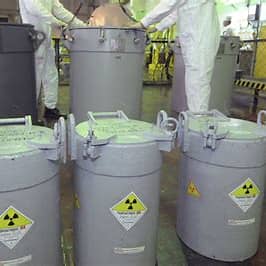
As previously announced, the UK will be returning high level waste (HLW) in the form of vitrified residues to Germany.
Sellafield Ltd, 24 March 2026,
https://www.gov.uk/government/news/third-and-final-shipment-of-vitrified-waste-from-the-uk-to-germany
Sellafield Ltd and Nuclear Transport Solutions (NTS) are making preparations for the third and final return of high level waste (HLW), in the form of vitrified residue, to Germany.
Seven flasks will be transported from Sellafield to the Brokdorf interim storage facility later in 2026.
This will be the final shipment from the UK to Germany. The first shipment of 6 flasks, to Biblis, was successfully completed in 2020 and the second shipment of 7 flasks to Isar was completed in 2025.
The waste results from the reprocessing and recycling of spent nuclear fuel at the Sellafield site in West Cumbria, which had previously been used to produce electricity by utilities in Germany.
Vitrified residue returns are a key component of the UK’s Nuclear Decommissioning Authority (NDA) strategy to repatriate high level waste from the UK, fulfil overseas contracts and deliver UK Government policy.
These returns involve Sellafield Ltd working in partnership with Nuclear Transport Solutions (NTS) to return the waste to German customers.
The shipments will be carried out in full compliance with all applicable national and international regulations, and subject to issue of all relevant permits and licenses.
Sellafield Ltd and NTS will provide further information on the shipments in due course.
A Sunken Nuclear Submarine Is Leaking Radiation Into the Ocean. How Worried Should We Be?

Repairs or just outright cleanup would be expensive, extremely difficult, slow, and, of course, quite dangerous.
By Luis Prada, March 25, 2026, https://www.vice.com/en/article/a-sunken-nuclear-submarine-is-leaking-radiation-into-the-ocean-how-worried-should-we-be/
According to new research published in PNAS, a Cold War-era nuclear submarine sitting at the bottom of the Norwegian Sea is still leaking radioactive material. It’s happening slowly, if unevenly, and it’s contained just enough to avoid becoming a full-scale environmental disaster… for now.
The K-278 Komsomolets sank in 1989 after an onboard fire, taking with it a nuclear reactor and two nuclear torpedoes. It now sits more than 1,600 meters below the surface, in a part of the ocean that is freezing and almost entirely out of reach.
A research team led by Justin Gwynn at Norway’s radiation safety authority analyzed years of data, including a 2019 survey using a remotely operated vehicle. The team found that the wreck is leaking radioactive isotopes, including cesium and strontium, through cracks in its deteriorating hull.
The leaks aren’t constant. They come in waves, with visible plumes drifting out from various spots, like the reactor compartment or a ventilation pipe. Radiation levels take a big jump closer to the submarine, with levels reaching hundreds of thousands of times above normal background radiation levels.
At Least the Nuclear Submarine’s Nuclear Torpedoes Are Still Intact
Terrifying, and here’s where it gets strange: measurements taken from just a few feet away dramatically drop off. Researchers believe this is caused by the ocean diluting the problem. That may be why the surrounding ecosystem isn’t showing any obvious signs of collapse, given all of the toxic radiation. There’s still plenty of marine life clinging to the wreck, including sponges, corals, and anemones. They have slightly elevated radiation levels but no visible signs of deformation or damage, though genetic damage wouldn’t be surprising.
Sediment samples collected nearby show minimal contamination. Things wouldn’t be looking so rosy if the nuclear torpedoes inside it weren’t intact, which they very much are and have been since the 1990s.
So far, there are no signs of imminent disaster. Everything is stable and holding steady… for now.
This won’t always be the case, and it is really more a matter not of if but of when. The reactor is still corroding, and the structure is still weakening. Repairs or just outright cleanup will be expensive, extremely difficult, slow, and, of course, quite dangerous. The risk is contained, but that doesn’t mean it’s going away anytime soon.
Fife Council approve Babcock plan for nuclear waste storage building

24th March, By Ally McRoberts, https://www.dunfermlinepress.com/news/25961651.fife-council-approve-babcock-plan-waste-storage-building/
A TEMPORARY storage facility will be built for waste that’s taken out of old nuclear submarines at Rosyth Dockyard.
Fife Council have given the green light to Babcock for a new warehouse between docks two and three for “decommissioning operations”.
The large industrial building – an ‘intermediate waste storage facility’ – will be 27 metres long and up to 20 metres in height with roller doors and security fencing.
Work is currently taking place at the dockyard to cut up and dismantle HMS Swiftsure, one of seven old nuclear subs that have been laid up in Rosyth for decades.
The demonstrator project is attempting a world first by removing the most radioactive parts left in the vessel, the reactor and steam generators.
The new building “will be utilised for cutting processes to aid submarine dismantling” and will go next to a larger steel shed that was approved in 2024 for the project.
A council report said: “The applicant has indicated that the waste to be temporarily stored would not be considered hazardous under the Town and Country Planning (Hazardous Substances) (Scotland) Regulations 2015 and that the site is currently subject to a permit issued by SEPA covering the related decommissioning activity.
“The site is also subject to regular inspections by the Office of Nuclear Regulation (ONR) and is one of their registered sites.
“Ultimately, the decommissioning activities are controlled by SEPA, the Health and Safety Executive and ONR and fall under their own consenting and control regimes, with mechanisms for changes to existing permits to be reviewed and approved by these bodies.”
There were no objections and the report said SEPA had confirmed that “no reprocessing of radioactive waste or materials takes place at Rosyth”.
The seven decommissioned nuclear subs at the yard are Swiftsure, Revenge, Renown, Repulse, Resolution, Dreadnought and Churchill.
Dismantling takes place in three stages with low level radioactive waste taken out first.
Next is the removal of the reactor pressure vessel, which is classed as intermediate level radioactive waste.
The final stage, once all radioactive material has gone, is [?] recycling.
So far the programme has invested more than £200 million in Rosyth Dockyard.
This Infamous Radioactive ‘Tomb’ Is Leaking, And Experts Are Worried
20 March 2026, ByJess Cockerill, https://www.sciencealert.com/this-infamous-radioactive-tomb-is-leaking-and-experts-are-worried
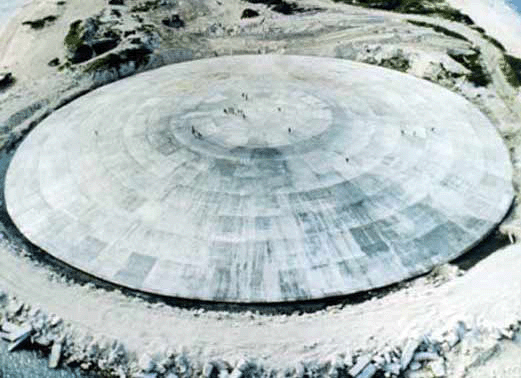
A gaping hole was left on a small island in the Pacific Ocean when the United States military released an 18-kiloton nuclear blast in 1958, known as the ‘Cactus‘ test.
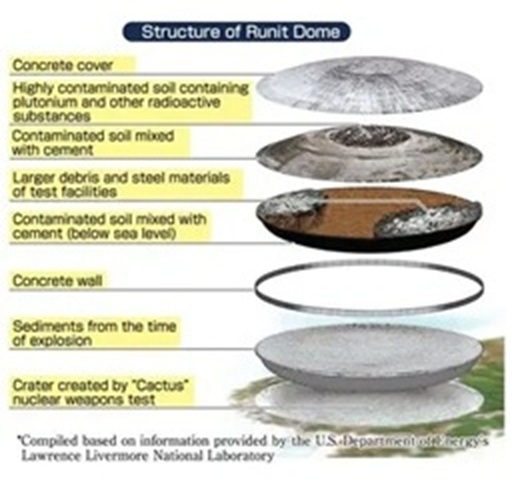
After the blast took place on the Marshall Island’s Runit Island, the military filled it in with contaminated soil and debris, creating a ‘tomb’ of nuclear waste known now as the Runit Dome.
Almost 50 years after the dome’s construction, experts are concerned that cracks in the concrete-capped radioactive landfill indicate just how vulnerable the site is to rising seas encroaching upon the narrow island’s shores.
The 115-meter (377 feet)-wide dome, built between 1977 and 1980 as part of military cleanup efforts, rests above more than 120,000 tons of material that were contaminated by US nuclear testing across Enewetak Atoll, including lethal quantities of plutonium.
The dome was intended as a temporary solution to contain material left behind by the nuclear tests, some of which exceeded the magnitude of Hiroshima and Nagasaki 1,000 times over.
But since its construction, groundwater has penetrated the otherwise-unlined crater, beneath which there lies a bed of porous coral sediment. So far, this is the main source of leaks, but there are concerns that layers of the dome intended to sit above sea level are not going to stay above water much longer.
In 2020, following a major report by the Los Angeles Times, Woods Hole Oceanographic Institute marine radioactivity expert Ken Buesseler pointed out that radioactive leaks from the Runit Dome are, so far, “relatively small,” in an interview for the institute’s journal
“As long as the plutonium stays put under the dome, it won’t be a large new source of radiation to the Pacific Ocean,” Buesseler told journalist Evan Lubofsky at the Los Angeles Times.
“But a lot depends on future sea-level rise and how things like storms and seasonal high tides affect the flow of water in and out of the dome. It’s a small source right now, but we need to monitor it more regularly to understand what’s happening, and get the data directly to the affected communities in the region.”
Columbia University chemist Ivana Nikolic-Hughes has been involved in ongoing research into the persistent contamination of the Marshall Islands following nuclear testing, and recently told journalist Kyle Evans at the Australian Broadcasting Corporation that she saw the dome’s cracks first-hand while taking soil samples on the island back in 2018.
In her research, Nikolic-Hughes has found elevated radiation levels and significant quantities of five radionuclides in soil samples from the island, outside the dome.
This could be evidence of the nuclear tomb leaking – though it may also be the result of the haphazard nature of the cleanup efforts, which also resulted in much waste being dumped into the lagoon.
Either way, the presence of plutonium-239, a component of nuclear weapons that remains dangerous for more than 24,000 years, warrants grave concerns about its vulnerability to rising sea levels and climate change.
“Given that sea levels are rising and there’s indications storms are intensifying, we worry the integrity of the dome could be in jeopardy,” Nikolic-Hughes told Evans.
“Runit is about 20 miles from where people live and they use the lagoon, so the implications are potentially devastating.”
In 2024, the US Department of Energy’s Pacific Northwest National Laboratory conducted an investigation into the potential impacts of climate change on the Runit Dome site, finding that storm surges and gradual sea level rise would indeed be the biggest factor in spreading radionuclides through the atoll.
Most of Runit Island sits just 2 meters (6.5 feet) above sea level.
Viewed from above, it is easy to imagine what an impact just 1 meter of extra water could do to the atoll and Runit Island’s crumbling nuclear tomb. That is the amount of sea level rise climate scientists predict for the Marshall Islands by 2100.
Related: Parts of The Marshall Islands Are Now More Radioactive Than Chernobyl, Study Finds
Nikolic-Hughes and her fellow researcher Hart Rapaport have previously urged the United States to take responsibility for proper cleanup of nuclear waste on the islands, as one part of ensuring a safe future for Marshallese residents.
As United Nations special rapporteur Paula Gaviria Betancur said back in 2024: “Legacies of nuclear testing and military land requisitions by a foreign power have displaced hundreds of Marshallese for generations, while the adverse effects of climate change threaten to displace thousands more.”
‘Significant milestone for nuclear sector’ as Hunterston B relicensed for decommissioning
The Office for Nuclear Regulation (ONR) has approved the relicensing of
the Hunterston B nuclear power station, ushering the North Ayrshire site
into its formal decommissioning phase.
From 1 April, Nuclear Restoration
Services (NRS), a subsidiary of the Nuclear Decommissioning Authority
(NDA), will take on full responsibility as site licence holder, replacing
EDF, which operated the Advanced Gas‑Cooled Reactor (AGR) until it ceased
generation in January 2022 after 46 years in service.
This first phase of
decommissioning work at Hunterston B, on the Firth of Clyde, will involve
the removal of all buildings and plant from the site, with the exception of
the reactor buildings and some adjoining structures which will be modified
to create a Safestore structure.
This Safestore is designed to maintain the
reactor buildings in a safe state through the Quiescence phase of around 70
years. Following this, the final site clearance phase will involve the
removal of the reactors and debris vaults housed in the Safestore
structure, making the site available for future use.
New Civil Engineer 19th March 2026 https://www.newcivilengineer.com/latest/significant-milestone-for-nuclear-sector-as-hunterston-b-relicensed-for-decommissioning-19-03-2026/
Germany to scrap deadline for finding a nuclear waste storage site

04 Mar 2026, https://www.cleanenergywire.org/news/germany-scrap-deadline-finding-nuclear-waste-storage-site
Germany has given up on naming a deadline for finding a suitable location for the safe and long-term storage of highly radioactive waste, reports public broadcaster Deutschlandfunk. A draft bill by the environment ministry, which is in charge of the process, says the existing 2031 target date is not realistic. A statutory deadline does not fit the complex requirements of the site selection process, the draft said, according to the broadcaster.
Germany shut down its last nuclear power plants in 2023, but must still safely dispose of decades of accumulated radioactive waste. A report commissioned by the country’s Federal Office for the Safety of Nuclear Waste Management (BASE) said in 2024 that the search for a suitable site was likely to last until the 2070s. The environment ministry has also said the 2031 target was unrealistic, but argued that progress in the search process should still be considered when assessing possible timelines.
Only weeks ago, environment minister Carsten Schneider said the goal was to decide on a location by the middle of the century. However, the draft bill no longer mentions this target date.
The 2031 deadline was set in the country’s 2013 law on finding and choosing a nuclear waste repository.
Germany must find a place to safely store 1,900 large containers, or around 28,100 cubic metres, of high-level radioactive waste in a location that can be considered secure for hundreds of thousands of years. The material must remain retrievable for the first 500 years to allow for implementing alternative solutions.
Heat-generating nuclear waste accounts for only five percent of Germany’s radioactive refuse, but causes 99 percent of the radiation. It is currently held at temporary storage facilities near the nuclear power stations and in central interim repositories. Once a decision on a location is made, building the final repository is scheduled to take about 20 years. Transporting and storing the refuse will then take several decades more, meaning the entire process will last well into the next century.
NRC ends work on three proposed rules for securing spent fuel

Fri, Feb 27, 2026, https://www.ans.org/news/2026-02-26/article-7800/nrc-ends-work-on-three-proposed-rules-for-securing-spent-fuel/
The Nuclear Regulatory Commission on Wednesday announced it was discontinuing three rulemaking activities intended to enhance the security of a deep geologic repository and the protection of spent nuclear fuel.
The NRC said that, among other reasons, it has decided not to proceed with the previously proposed rules due to a change in agency priorities resulting from President Trump’s Executive Order (EO) 14300, “Ordering the Reform of the Nuclear Regulatory Commission.”
As published in the February 25 Federal Register, the NRC has discontinued the following three rulemaking activities:
Security and MC&A requirements: In December 2007, the NRC proposed a rule regarding security measures for the protection of spent nuclear fuel, high-level radioactive waste, and other radioactive material at a geologic repository licensed under 10 CFR Part 63, Disposal of High-Level Radioactive Wastes in a Geologic Repository at Yucca Mountain, Nevada.
The rule would have amended the NRC’s regulations to revise the security requirements and material control and accounting requirements for a geologic repository operations area, setting new requirements for training, access authorization, defensive strategies, and reporting. Proposed in response to the events of September 11, 2001, the rule would have focused on strengthening, streamlining, and consolidating all repository material control and accounting regulations. It also would have required an emergency plan to address radiological emergencies.
In addition to changing priorities under EO 14300, the NRC said it decided not to proceed with the rulemaking due to the amount of time that has passed since it was first proposed.
Fitness-for-duty requirements: In 2008, the NRC began plans for a rulemaking that would have amended regulations regarding the fitness-for-duty requirements for personnel at a geologic repository. The rule would have imposed fatigue provisions on security personnel and reinstated the alcohol and drug provisions of the fitness-for-duty requirements.
Protections for spent fuel: In 2015, the NRC began plans for a rulemaking on “enhanced weapons for spent fuel storage installations and transportation” that would have amended the agency’s regulations to implement the authority in Section 161A of the Atomic Energy Act of 1954, as amended, related to access to enhanced weapons and associated firearms background checks for the protection of spent fuel.
According to the NRC, the rule would have designated additional classes of facilities and activities appropriate for Section 161A authority as a follow-on to the agency’s original enhanced weapons rule. The NRC said it decided to terminate work on the follow-on rule due to a lack of expressed interest from NRC licensees interested in obtaining enhanced weapons authority.
“If in the future the NRC receives a license application for a class of facility not already eligible for enhanced weapons authority, the commission may grant such authority via order or license condition,” the NRC said.
Next step: The NRC is to update the next edition of the agency’s Unified Agenda of Regulatory and Deregulatory Actions to reflect the discontinued status of the three rulemaking activities.
TEPCO planning to send probe into Fukushima nuke reactor
By TOMOYUKI SUZUKI/ Staff Writer, March 4, 2026 ,
https://www.asahi.com/ajw/articles/16341286
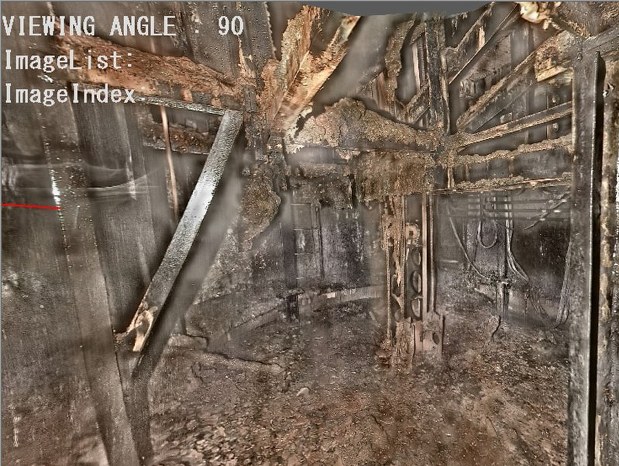
Tokyo Electric Power Co. will soon launch a probe, the first of its kind, into the pressure vessel at one of the hobbled reactors at its Fukushima No. 1 nuclear power plant to scope out the current conditions.
The effort is part of TEPCO’s long-standing goal of retrieving melted nuclear fuel debris, left in the aftermath of the triple reactor meltdowns following the 2011 Great East Japan Earthquake and tsunami.
TEPCO officials said they are planning to insert a camera-equipped fiberscope into the plant’s No. 2 reactor to shoot footage and measure radiation levels during the first half of fiscal 2026 between April and September.
An estimated 880 tons of fuel debris remain inside the No. 1, 2 and 3 reactors at the Fukushima No. 1 plant.
TEPCO plans to approach the contaminated debris, which remains in the pressure vessels, from the tops of the reactor buildings and pulverize the debris to reduce the volume and collect it by sucking it from the side or by other means.
TEPCO officials are hoping, during the planned probe, to monitor the interior of the pressure vessel visually and ascertain the radiation levels on a location-by-location basis to help work out concrete methods for retrieving the fuel debris.
The fiberscope to be used in the probe, which resembles an endoscope, will be inserted into the pressure vessel from the side through piping.
The officials said they will be probing not the core part of the vessel but the outer side of a shroud of stainless steel, which has been installed to surround nuclear fuel, to determine, among other things, if the shroud has been deformed and if there is any debris in sight.
They said they will conduct mock-up drills in the days and months to come. They added that they will take measures to block air from leaking from the pressure vessel’s interior so workers will not be exposed to radiation.
The probe was initially scheduled to begin in fiscal 2024, but the work has been delayed because the development of a dosimeter-equipped fiberscope and other processes have turned out to be more time-consuming than expected.
“When the distribution of dose levels is known, that could, depending on the circumstances, help give an estimate of the amount of residual fuel (which has yet to turn into debris),” said Akira Ono, president of TEPCO’s Fukushima Daiichi Decontamination & Decommissioning Engineering Co., which is overseeing the corresponding processes at the Fukushima No. 1 nuclear plant.
TEPCO plans to start large-scale retrieval of the Fukushima No. 1 plant’s debris at its No. 3 reactor in fiscal 2037 or later.
The dose levels and circumstances of the areas surrounding the reactor buildings are not the same for the No. 1, 2 and 3 reactors.
TEPCO officials said they have set a target date of 2027 for studying the design of debris removal equipment and other specifics for those reactors.
2222222
Japan Eyes Pacific Island for Nuclear Waste Disposal Site
Tokyo, March 3 (Jiji Press)
https://jen.jiji.com/jc/eng?g=eco&k=2026030300561
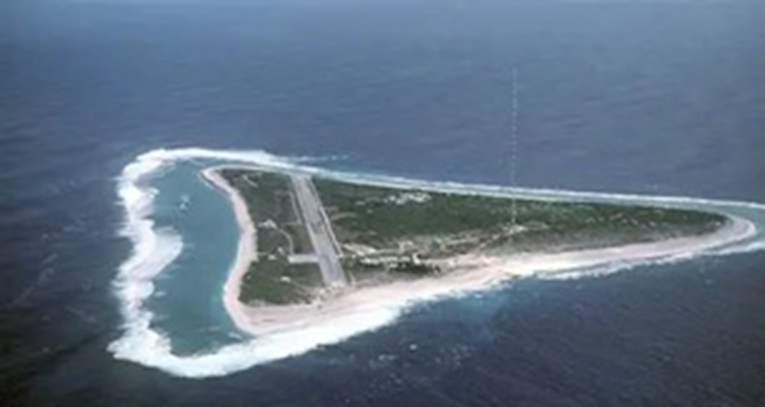
–The Japanese government is considering Minamitorishima, a remote Tokyo island in the Pacific, as a possible site for the final disposal of highly radioactive waste from nuclear power plants, it was learned Tuesday.
At a press conference on the day, industry minister Ryosei Akazawa said that the government will submit a request for a related literature survey to the Tokyo village of Ogasawara, where the island is located, as early as later in the day.
“Minamitorishima is considered to be an area with favorable conditions (for a nuclear waste disposal site),” Akazawa said.
Similar surveys have so far been conducted in the town of Suttsu and the village of Kamoenai, both in the northernmost prefecture of Hokkaido, and the southwestern town of Genkai, Saga Prefecture.
TEPCO removing empty tanks to advance Fukushima plant decommissioning work
February 28, 2026 (Mainichi Japan) https://mainichi.jp/english/articles/20260228/p2g/00m/0na/010000c
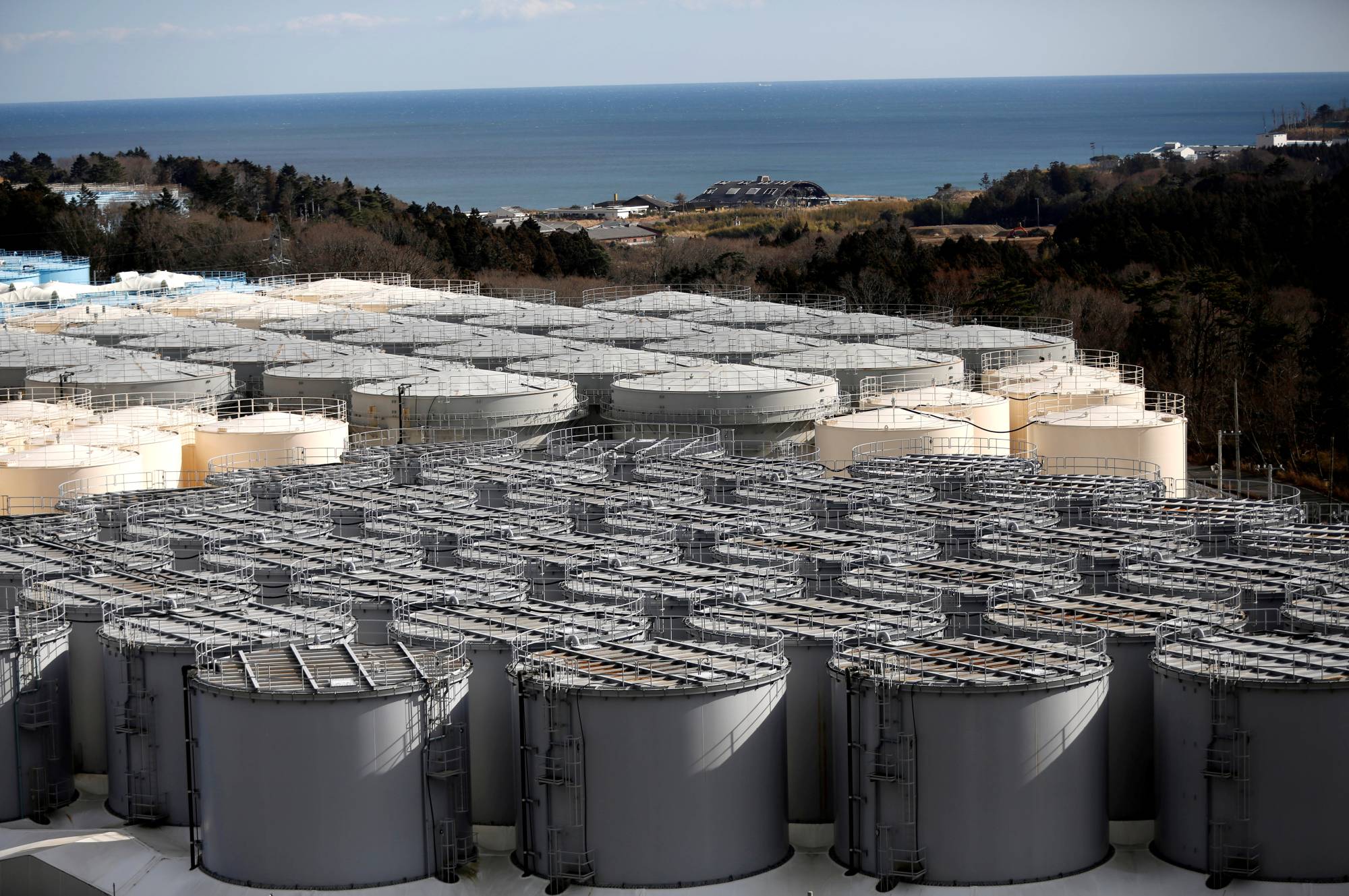
TOKYO (Kyodo) — The operator of the Fukushima Daiichi nuclear power plant continues to demolish tanks emptied by the release of treated radioactive water into the sea, aiming to use the freed-up space to build facilities to advance decommissioning work.
Nearly 15 years after the nuclear accident triggered by a massive earthquake and tsunami, Tokyo Electric Power Company Holdings Inc. is still coping with radioactive water generated in the process of cooling melted reactor fuel, although the daily buildup is on track to be the smallest in the current fiscal year.
The discharge of treated water into the Pacific Ocean began in August 2023, as more than 1,000 tanks installed at the site to store the wastewater were deemed to be taking up too much space and hindering progress in decommissioning work.
The first tank dismantling following the water release took place in February 2025 in an area known as J9. After workers finished removing a dozen tanks there by September, they moved on to the adjacent area known as J8, where nine tanks stand.
Each of the nine tanks is 12 meters tall and 9 meters wide, with a capacity of 700 tons. Removing the tanks in the two sections will free up about 2,900 square meters.
The utility plans to use the land to build facilities to store melted fuel debris to be retrieved from the No.3 reactor and to conduct maintenance for debris removal devices.
Some 880 tons of debris are estimated to remain in the Nos. 1 to 3 reactors that suffered core meltdowns in the world’s worst nuclear crisis since the 1986 Chernobyl disaster. Hydrogen explosions damaged the buildings housing the Nos. 1, 3 and 4 units.
TEPCO and the government plan to start full-fledged removal of debris at the No. 3 reactor no earlier than fiscal 2037, pushing back the early 2030s target due to the time needed for preparation.
Radiation levels inside the empty tanks have been confirmed to be lower than the average air dose level outside, indicating that contamination was relatively low, according to the operator.
Disassembled tank parts will be cut into small pieces using gas cutting torches and stored in cargo containers on the power plant premises.
“Dumping Radioactive Wastewater into the Hudson River”
A U.S. District Court judge has allowed Holtec International to move forward with plans to dump more than a million gallons of radioactive wastewater from the closed Indian Point nuclear plants into the Hudson River, ruling that federal authority over nuclear discharges overrides New York State’s “Save the Hudson” Act.
Guests Deborah Porder, Michel Lee, and S.D. Smith (“Owl”), all attorneys involved in the issue, explore the environmental, legal, economic, and health implications of the radioactive wastewater dumping.
Owl, attorney general to the Ramapough Munsee Lenape Nation, underscores the Hudson’s tidal, fjord-like dynamics, explaining how contamination can spread widely and persist over long timescales, cycling through ecosystems and into human bodies. He frames the issue as part of a broader pattern of industrial decision-making that prioritizes short-term gain over long-term environmental integrity.
Michel Lee of United for Clean Energy explains that a key component of the radioactive wastewater—tritium—combines into water and, inside a body, distributes to cells and incorporates into tissues causing prolonged internal radiation exposure.
Deborah Porder of the Stop Holtec Coalition focuses on public health impacts, including elevated cancer risks and adverse pregnancy outcomes near nuclear facilities, noting that tritium can cross the placenta and enter breast milk.
The panel also raises concerns about halted federal cancer studies, the economic viability of nuclear power compared to renewables, and the risk caused by Holtec to the public. Together, they call for strong regulatory oversight, public engagement, and a move away from nuclear power to safe, green, clean energy sources.
Hanford begins removing waste from 24th single-shell tank.

Nuclear Newswire, Thu, Feb 12, 2026,
The Department of Energy’s Office of Environmental Management said crews at the Hanford Site near Richland, Wash., have started retrieving radioactive waste from Tank A-106, a 1-million-gallon underground storage tank built in the 1950s.
Tank A-106 will be the 24th single-shell tank that crews have cleaned out at Hanford, which is home to 177 underground waste storage tanks: 149 single-shell tanks and 28 double-shell tanks. Ranging from 55,000 gallons to more than 1 million gallons in capacity, the tanks hold around 56 million gallons of chemical and radioactive waste resulting from plutonium production at the site.
According to the Washington Department of Ecology, at least 68 of Hanford’s tanks are assumed to have leaked in the past, and three are currently leaking.
The transfer: Tank A-106 contains about 80,000 gallons of solid waste, which now are being transferred to one of the newer, double-shell tanks for continued safe storage. A-106 is one of two tanks currently undergoing retrieval operations by the Hanford Field Office and its tank operations contractor, Hanford Tank Waste Operations and Closure (H2C). In March 2025, H2C began retrieving waste from Tank A-102, a 1-million-gallon tank holding about 41,000 gallons of solid waste……………………………
Hanford’s waste tanks are organized into 18 different groups, called tank farms. The A Tank Farm, which contains six tanks, each with a million-gallon capacity, is the third farm to undergo retrieval at the site. Retrieval field operations on the farm’s first tank and Hanford’s 22nd single-shell tank, A-101, were completed last September……………………………… https://www.ans.org/news/2026-02-11/article-7751/hanford-begins-removing-waste-from-24th-singleshell-tank/
The Future of Los Alamos Lab: More Nuclear Weapons or Cleanup?
New Mexico Environment Department Issues Corrective Action Order
February 11, 2026, Jay Coghlan, lScott Kovac, nukewatch.org
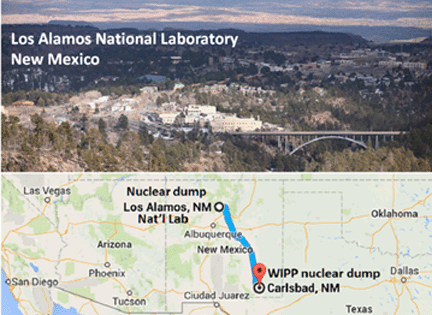
Santa Fe, NM – In its own words, “The New Mexico Environment Department [NMED] issued several actions today to hold the U.S. Department of Energy accountable for failing to prioritize the cleanup of Los Alamos National Laboratory’s “legacy waste” for disposal at the Waste Isolation Pilot Plant.”
Amongst these actions is an Administrative Compliance Order designed to hasten cleanup of an old radioactive and toxic waste dump that should be the model for Lab cleanup. Nuclear Watch New Mexico strongly supports NMED’s aggressive efforts to compel comprehensive cleanup given Department of Energy obstruction.
This Compliance Order comes at a historically significant time. On February 5 the New Strategic Arms Reduction Treaty expired, leaving the world without any arms control for the first time since the middle 1970s. The following day the Trump Administration accused China of conducting a small nuclear weapons test in 2020, possibly opening the door for matching tests by the United States.
NMED’s Compliance Order comes as LANL’s nuclear weapons production programs are radically expanding for the new nuclear arms race. The directors of the nuclear weapons laboratories, including LANL’s Thom Mason, are openly talking about seizing the opportunity provided by the Trump Administration’s deregulation of nuclear safety regulations to accelerate nuclear warhead production.
As background, in September 2023 NMED released a groundbreaking draft Order mandating the excavation and cleanup of an estimated 198,000 cubic meters of radioactive and toxic wastes at Material Disposal Area C, an old unlined dump that last received wastes in 1974. However, in a legalistic maneuver to evade real cleanup, DOE unilaterally declared that Area C:
“…is associated with active Facility operations and will be Deferred from further corrective action under [NMED’s] Consent Order until
it is no longer associated with active Facility operations.”
The rationale of DOE’s semi-autonomous nuclear weapons agency, the National Nuclear Security Administration (NNSA), is that Area C is within a few hundred yards of the Lab’s main facility for plutonium “pit” bomb core production. LANL is prioritizing that production above everything else while cutting cleanup and nonproliferation programs and completely eliminating renewable energy research. DOE’s and NNSA’s unilateral deferment of Area C until it “is no longer associated with active Facility operations” in effect means that it will never be cleaned up. No future plutonium pit production is to maintain the safety and reliability of the U.S.’ existing nuclear weapons stockpile. Instead, it is all for new design nuclear weapons for the new arms race that the NNSA intends to produce until at least 2050. Further, new-design nuclear weapons could prompt the United States to resume full-scale testing, which would have disastrous international proliferation consequences.
To break up the legalistic log jam around cleanup of Area C, NMED’s new Administrative Compliance Order orders DOE, NNSA, and their contractors to:
1) Provide within 30 days specific justifications for their unilateral “deferment” of an old radioactive and toxic waste dump from cleanup; and
2) Rescind their withdrawal of a 2021 “Corrective Measures Evaluation” (CME) which proposed possible cleanup methods. DOE had claimed that withdrawing the CME had mooted any legal basis for NMED to mandate comprehensive cleanup at LANL.
The Lab’s budget for nuclear weapons programs that caused the need for cleanup has more than doubled over the last decade, with a one billion dollar increase in this year alone. Nevertheless, DOE et al want cleanup on the cheap. Their plan is to “cap and cover” existing wastes, leaving them permanently buried in unlined pit and trenches as a perpetual threat to groundwater.
Ironically, there is no current need for pit production. In 2006 independent experts concluded that plutonium pits have serviceable lifetimes of at least 100 years (their average age now is ~43). Moreover, at least 20,000 existing pits are already stored at the NNSA’s Pantex Plant near Amarillo, TX.
Pit production is the NNSA’s most complex and expensive program ever. It will likely cost more than $60 billion over the next 25 years, exceeding the cost of the original Manhattan Project that designed and built a plutonium pit from scratch. However, the independent Government Accountability Office has repeatedly concluded that the NNSA has no credible cost estimates and no “Integrated Master Schedule” for planned redundant pit production at LANL and the Savannah River Site in South Carolina
In addition, it’s not clear where an estimated 57,500 cubic meters of radioactive transuranic wastes from future pit production will go. DOE is fundamentally changing the cleanup mission of the only existing permanent repository, the Waste Isolation Pilot Plant (WIPP) in southern New Mexico, to become the dumping ground for new nuclear bomb production. However, WIPP is already oversubscribed for all of the radioactive wastes that DOE wants to send to it. Moreover, NMED has previously ordered DOE to prioritize disposal of LANL’s Cold War wastes at WIPP (which it is not doing) and to begin looking for a new out-of-state waste dump, which will be politically controversial.
In all, NNSA’s expanded plutonium pit production is so plagued with problems that the DOE Deputy Secretary ordered a “special assessment” of the program completed by December 8, 2025. However, it is still not publicly available.
LANL and DOE have a long history of deception concerning contamination and cleanup. In 1992 a Lab pamphlet was inserted into the Sunday edition of The New Mexican newspaper which claimed that plutonium from LANL had never been found in the Rio Grande. This was despite the fact that a 1987 study detected Lab plutonium 17 miles south down the Rio Grande in Cochiti Lake, a popular recreational site.
As late as the late 1990s LANL was claiming that groundwater contamination was impossible, going so far as to request a waiver from even having to monitor for it (fortunately denied by NMED). Today we know of a massive hexavalent chromium plume whose size is still not known that has migrated onto San Ildefonso Pueblo lands (Lab maps showed it stopping at exactly the Pueblo border). Plutonium, high explosives and perchlorates have all been detected in groundwater. A 2005 hydrogeological study concluded that “Future contamination at additional locations is expected over a period of decades to centuries as more of the contaminant inventory reaches the water table.”
In 2018 DOE was falsely claiming that cleanup at the Lab was more than half complete. In Nuclear Watch New Mexico’s view, genuine cleanup of LANL has yet to begin. It will start with a final Order by NMED to DOE mandating excavation and treatment of the radioactive and toxic wastes at Area C. Lab-wide comprehensive cleanup is the only sure way to protect New Mexico’ life-sustaining groundwater and will provide hundreds of long-term, high paying jobs.
Jay Coghlan, Director of Nuclear Watch New Mexico, commented: “What is more important to New Mexicans, clean, uncontaminated groundwater or more nuclear weapons for the accelerating global arms race? We salute NMED’s efforts under the leadership of Secretary James Kenney to hold the Lab accountable and make it genuinely clean up. This enforcement action is a crucial step toward reining in Lab contamination. But it is also a global step in forcing the Los Alamos Lab to focus on cleanup instead of the buildup of nuclear weapons for another arms race that threatens us all.”
WANTED: Volunteers to host nuclear waste, forever
By Sarah Mcfarlane, Timothy Gardner and Susanna Twidale, February 6, 2026, https://www.reuters.com/sustainability/land-use-biodiversity/wanted-volunteers-host-nuclear-waste-forever-2026-02-06/
- U.S. wants campuses to host nuclear facilities and data centers
- Asks states to volunteer, permanent waste disposal a must-have
- No deep geological waste facility yet in operation worldwide
LONDON/WASHINGTON, Feb 6 (Reuters) – The Trump administration’s plan to unleash a wave of small futuristic nuclear reactors to power the AI era is falling back on an age-old strategy to dispose of the highly toxic waste: bury it at the bottom of a very deep hole.
But there’s a problem. There is no very deep hole, and the stockpile of some 100,000 tons of radioactive waste being stored temporarily at nuclear plants and other sites across the United States keeps getting bigger.
To resolve this quandary, the U.S. administration is now dangling a radioactive carrot.
States are being asked to volunteer to host a permanent geological repository for spent fuel as part of a campus of facilities including new nuclear reactors, waste reprocessing, uranium enrichment and data centers, according to a proposal published by the Department of Energy (DOE) last week.
Its request for information (RFI) marks a big shift in policy. The plan to boost nuclear energy is now combined with a requirement to find a permanent home for waste and puts decisions in the hands of local communities – decisions worth tens of billions of dollars in investment and thousands of jobs, according to a spokesperson for the DOE’s Office of Nuclear Energy.
“By combining this all together in a package, it’s a matter of big carrots being placed alongside a waste facility which is less desirable,” said Lake Barrett, a former official at the U.S. Nuclear Regulatory Commission (NRC) and the DOE. States including Utah and Tennessee have already expressed interest in nuclear energy investments, he said.
The nuclear office said the request had generated interest but did not comment on individual states, which have 60 days to respond. Officials in Utah and Tennessee did not respond to requests for comment.
President Donald Trump wants to quadruple U.S. nuclear power capacity, opens new tab to 400 gigawatts by 2050 as electricity demand surges for the first time in decades thanks to the boom in data centers driving artificial intelligence and the electrification of transport.
In 2025, the DOE picked 11 new advanced nuclear test reactor designs for fast-track licensing and aims to have three pilots built by July 4 this year.
However, public acceptance of nuclear energy hinges partly on the promise of burying nuclear waste deep underground, according to studies by the U.S. and British governments as well as the European Commission.
“A complete nuclear strategy must include safe, durable pathways for final disposition, and that remains a required element of the RFI,” the Office of Nuclear Energy spokesperson said.
Previous efforts to find a solution have run into strong local opposition.
The DOE started looking for a permanent waste facility in 1983 and settled on Nevada’s Yucca Mountain in 1987. But former President Barack Obama halted funding in 2010 due to opposition from Nevada lawmakers worried about safety and the effect on casinos and hotels – with nearly $15 billion already spent.
NEW REACTOR DESIGNS
To accelerate the deployment of nuclear power, countries including the United States, Britain, Canada, China and Sweden are championing so-called small modular reactors (SMRs).
The appeal of SMRs lies in the idea they can be mostly prefabricated in factories, making them faster and cheaper to assemble than the larger reactors already in use.
But none of the new SMR designs are expected to solve the waste problem. Experts say designers are not compelled to consider waste at inception, beyond a plan for how it will be managed.
“This rush to create new designs without thinking about the full system bodes really poorly for effective regulatory oversight and having a well-run, safe, and reliable waste management program over the long term,” said Seth Tuler, associate professor at the Worcester Polytechnic Institute and previously on the U.S. Nuclear Waste Technical Review Board.
Most of the new SMRs are expected to produce similar volumes of waste, or even more, per unit of electricity than today’s large reactors, according to a study published in the Proceedings of the National Academy of Sciences in 2022.
SMRs can also be sited in areas lacking the infrastructure needed for larger plants, raising the prospect of many more nuclear sites which could become interim waste dumps too. And in the United States, “interim” can mean more than century after a reactor closes, according to the U.S. nuclear power regulator.
Reuters contacted the nine companies behind the 11 SMR designs backed by the DOE’s fast-track programme. Some said nuclear waste was an issue for the operators of the reactors, and the government.
Others said they hoped technological advances in the coming decades would improve prospects for reprocessing fuel, although they agreed a permanent repository was still needed.
The prospect of a new wave of nuclear reactors, has rekindled interest in reprocessing spent fuel whereby uranium and plutonium are separated out and, in some instances, reused.
“Modern technologies, particularly advanced recycling and reprocessing, can dramatically shrink the volume of nuclear material requiring disposal,” the spokesperson for the nuclear energy office said. “At the same time, reprocessing does not eliminate the requirement for permanent disposal.”
Nuclear security experts, however, questioned whether reprocessing would be included in any of the new campuses.
“Every time it’s been attempted, it’s failed, it creates security and proliferation risks, the costs are enormous, and it complicates waste management,” said former DOE official Ross Matzkin-Bridger. He said the few countries reprocessing fuel were recycling between zero to 2%, far below the 90% promised.
A PERMANENT PROBLEM
For now, most waste in the United States, Canada, Europe, and Britain is stored on site indefinitely, first in spent fuel pools to cool and then in concrete and steel casks. France sends spent fuel to La Hague in Normandy for reprocessing.
The more than 90 nuclear reactors operating in the United States – the world’s biggest nuclear power producer ahead of China and France – add about 2,000 tons of waste a year to existing stockpiles, according to the DOE.
Office of Nuclear Energy data shows that as of the end of 2024, U.S. taxpayers have paid utility companies $11.1 billion to compensate them for storing spent fuel, some of which can remain harmful to humans for hundreds of thousands of years.
Scotland’s Dounreay site, where the last reactor closed in 1994, has repeatedly extended its decommissioning period and budget due to complications handling waste, according to the British government, in an early sign of the issues the industry faces as older plants shut down.
Vast vaults are being stocked with low-level radioactive waste in large metal containers as Dounreay, once at the cutting edge of Britain’s nuclear industry, is dismantled.
Ever since the first commercial nuclear plant went online 70 years ago in England, the consensus has been that burying the most toxic waste deep underground is the safest option but there is still no repository in operation anywhere in the world.
Getting a repository up and running is a slow process. Governments need community buy-in and geological studies are required to determine the flow of groundwater and the stability of the rock up to 1,000 metres (1,090 yards) underground.
Finland has made the most progress and is close to opening the world’s first permanent nuclear repository in Olkiluoto – having also kicked off the process way back in 1983.
Posiva, the Finnish company behind the project, began transferring test canisters more than four hundred meters below ground in 2024. It told Reuters its goal is to start commercial operations this year, though it is waiting for the Finnish Radiation and Nuclear Safety Authority to approve the operating licence, which will be followed by technical checks.
Once up and running, separate underground tunnels will be filled with canisters made of copper and iron housing the waste, and then sealed forever.
Sweden began constructing its permanent repository in January 2025, aiming to have it running by the late 2030s. Canada has agreed a site in Ontario which it aims to be operational by the late 2040s. Switzerland and France have chosen sites too and hope to have their repositories open from about 2050. Britain is shooting for the late 2050s, but has yet to settle on a location.
Pending the construction of a permanent repository somewhere in the country, high-level waste from nuclear sites such as Dounreay is sent for storage at Sellafield in England.
Some decommissioned nuclear sites, including Dounreay, are also being promoted as locations for data centers, as they’re hooked up to the power grid already and won’t need to wait for a connection.
But the clean-up there has a way to go. Irradiated nuclear fuel was flushed into the sea decades ago and a “minor” radioactive fragment was found on a local beach as recently as January.
The last “significant” particle was found in April and fishing is banned within a 2 kilometer (1.25 mile) radius of Dounreay’s outlet pipe because of radioactive particles on the seabed.
Last year, Britain extended the time frame for the Dounreay clean-up from 2033 to the 2070s.
Reporting by Sarah McFarlane and Susanna Twidale in London, Timothy Gardner in Washington; Visual Production by Morgan Coates; Editing by David Clarke
Northwatch Comments on the NWMO’s Initial Project Description of a Proposed Deep Geological Repository for High-Level Nuclear Waste
7 Feb 26, https://iaac-aeic.gc.ca/050/evaluations/proj/88774/contributions/id/64898
The following points summarize Northwatch’s comments on the NWMO’s Initial Project Description of a Proposed Deep Geological Repository for High-Level Nuclear Waste to be located at the Revell site in Treaty 3 territory in northwestern Ontario:
- NWMO’s Deep Geological Repository Project should be designated for a full impact assessment and public hearing
- The long-distance transportation of nuclear fuel waste from the reactor stations to the proposed repository site must be included in the impact assessment
- NWMO’s Initial Project Description is inadequate and does not provide the information required, including and particularly it does not sufficiently describe or otherwise demonstrate that it has adequately examined alternatives to the project or alternative means of carrying out the project, and the IPD largely goes off course in its description of the need and purpose of the project.
- As directed by the Nuclear Fuel Waste Act the need or purpose of the project is to effectively isolate the nuclear fuel wastes from people and the environment.
- The NWMO has not provided a clear statement of the need and purpose for the project, and when it discussed the need and purpose of the project in its IPD it muddied the waters by including unsupported promotional statements and out-of-scope policy statements about the future role of nuclear power.
- Instead of setting out careful consideration of alternative means of meeting the project need (to safely contain and isolate the nuclear fuel waste from people and the environment) the NWMO simply summarized some aspects of their 2003 studies. The IPD should include a contemporary assessment of alternative means of meeting the project need.
- The NWMO’s consideration of alternative means of carrying out the project is too limited; the alternative means examination should also include alternative sites, alternatives in repository access (ramp vs shaft), transportation in used fuel containers instead of in transportation packages, the alternative means of in-water transfer of used fuel at repository site (vs “in air” ie. in hot cells), alternative mining methods, alternatives in waste emplacement (in-room vs in-floor) and alternatives in used fuel container design
- The NWMO’s description of the project and project activities is too limited, and at times is promotional rather than factual in its approach.
- The NWMO has misrepresented the fuel waste inventory, upon which repository size, years of operation, and resulting degrees of risk and contamination all hinge.
- The NWMO excluded the first step in their project, which is the transfer of the used fuel waste from dry storage containers into transportation containers at the reactor site; this is consistent with past practice.
- Without foundation the NWMO is attempting to exclude long-distance transportation from the Impact Assessment process; this is inconsistent with the impact assessment law in Canada and with the manner in which the NWMO has been describing their project over the last twenty years.
- The Initial Project Description inadequately describes major project components and activities, including the Used Fuel Packaging Plant, waste placement and repository design and construction and closure, decommissioning and monitoring.
- The description of the Project Site, Location and Study Area(s) is flawed and in some respects inaccurate.
- The potential effects of the project are poorly described and in some instances the NWMO text is promotional rather than factual.
- The description of the site selection process is very selective in the information it presents and creates a false impression of community experience through the siting process in the 22 communities that the NWMO investigated.
- There are significant gaps and deficiencies in the Initial project description; several subject areas fundamental to the assessment of the deep geological repository are extremely limited or fully absent including the subjects of long-term safety, emergency response and evacuation plans, accidents and malevolent acts and security.
- The Initial Project Description was poorly organized and was not copy edited; it lacked an index and there was no glossary included.
1 This Month

of the week – Shut Down Drone Warfare!


Tell the Ukrainian Government to Drop Prosecution of Peace Activist Yurii Sheliazhenko

Petition to revoke the licensing of the Near Surface Nuclear Disposal Facility (NSDF) at Chalk River. https://www.ourcommons.ca/petitions/en/Petition/Details?Petition=e-7247
To see nuclear-related stories in greater depth and intensity – go to https://nuclearinformation.wordpress.com
-
Archives
- March 2026 (237)
- February 2026 (268)
- January 2026 (308)
- December 2025 (358)
- November 2025 (359)
- October 2025 (376)
- September 2025 (257)
- August 2025 (319)
- July 2025 (230)
- June 2025 (348)
- May 2025 (261)
- April 2025 (305)
-
Categories
- 1
- 1 NUCLEAR ISSUES
- business and costs
- climate change
- culture and arts
- ENERGY
- environment
- health
- history
- indigenous issues
- Legal
- marketing of nuclear
- media
- opposition to nuclear
- PERSONAL STORIES
- politics
- politics international
- Religion and ethics
- safety
- secrets,lies and civil liberties
- spinbuster
- technology
- Uranium
- wastes
- weapons and war
- Women
- 2 WORLD
- ACTION
- AFRICA
- Atrocities
- AUSTRALIA
- Christina's notes
- Christina's themes
- culture and arts
- Events
- Fuk 2022
- Fuk 2023
- Fukushima 2017
- Fukushima 2018
- fukushima 2019
- Fukushima 2020
- Fukushima 2021
- general
- global warming
- Humour (God we need it)
- Nuclear
- RARE EARTHS
- Reference
- resources – print
- Resources -audiovicual
- Weekly Newsletter
- World
- World Nuclear
- YouTube
-
RSS
Entries RSS
Comments RSS
 nuclear-news