Precarious Invitations: Israel’s President Isaac Herzog’s Visit to Australia
4 February 2026 Dr Binoy Kampmark AIM Extra, https://theaimn.net/precarious-invitations-israels-president-isaac-herzogs-visit-to-australia/
Things are getting rather ropey on the invitation of Israeli President Isaac Herzog to visit Australia on February 8. It came amidst the anguish following the Bondi Beach attacks of December 14, 2025 on attendees of a Hanukkah event by two gunmen, leaving 15 dead. Australian Prime Minister Anthony Albanese obviously thought it a sensible measure at the time. For months, his government has been snarled at by Israeli Prime Minister Benjamin Netanyahu for providing succour to antisemitism. The wretched thesis: that Australia’s recognition of a Palestinian State at September’s UN General Assembly meeting somehow stirred it.
Albanese had thought dealing with the gargoyle of antisemitism and engendering good will could be achieved by inviting Herzog. “We need to build social cohesion in this country,” he insists. The Australia/Israel Jewish Affairs Council (AIJAC) also thought the invitation sound, sending “a powerful message of solidarity and support… following the tragic events at Bondi and the surge of antisemitism across the country.”These claims of fluffy approval ignore the serious and blindingly obvious prospect that legal grounds might arise regarding Herzog’s visit, not to mention the public protest and agitation it will cause. Australia, being a party both to the UN Genocide Convention and the Rome Statute which establishes the International Criminal Court, must always be wary about the injunctions of membership. A determined opposition, armed with legal arguments and indignation, has shown itself keen on foiling the visit.
On January 30, the Hind Rajab Foundation (HRF), the Jewish Council of Australia, and the Australian National Imams Council (ANIC), announced that a joint legal complaint to have Herzog arrested or barred from entering Australia had been sent to the Australian Attorney-General Michelle Rowland, Home Affairs Minister Tony Burke and the Australian Federal Police (AFP). As Netanyahu would be unlikely to visit Australia without discomfort, given an arrest warrant issued by the International Criminal Court, the complaint asserted that as “the Prime Minister of Israel is not permitted to visit Australia, the President should not be allowed to act as his surrogate.”
The complaint implores the Australian authorities to do any of three things: refuse or cancel any visa held by Herzog under the Migration Act 1958 (Cth), which covers character and public interest grounds; refer him to the AFP for investigation under the Criminal Code Act 1995 (Cth), the Geneva Conventions Act 1957 (Cth) and Australian hate crime legislation; and ensure Australia’s compliance with international obligations to investigate and prosecute who enter the country who are reasonably suspected of committing serious international crimes.
In their body of evidence, the group cites the President’s “Entire Nation” declaration of October 2023 claiming that no civilians in Gaza were “uninvolved” in that month’s attack on Israel by Hamas; the grotesque denials of famine in August 2025, suggesting that images of chronic starvation featuring Palestinian children had been “staged”; and the broader endorsement of military operations entailing the commission of war crimes. Reference in the complaint is made to a December 2023 visit by Herzog to the Nahal Oz military base where he provided encouragement to troops two days before their “wanton destruction” and “flattening” of the town of Khuza’a in Khan Yunis.
The complaint also rejects any application of Head of State immunity, citing the Nuremberg Principles and international law as removing that shield when it comes to the commission of such grave offences as genocide and war crimes.
The complaint is certainly accurate in drawing attention to Herzog’s incitements to collectively punish an apparently complicit populace in Gaza. South Africa’s filing of proceedings against Israel in the International Court of Justice alleging acts of genocide in Gaza cites his remarks from October 12, 2023: “It’s an entire nation out there that is responsible. It’s not true this rhetoric about civilians not aware, not involved. It’s absolutely not true… and we will fight until we break their backbone.” The submission also notes a social media post by Herzog showing him addressing reservists and writing messages on bombs destined to be used on Palestinians.
The September 2025 analysis by the UN Independent International Commission of Inquiry on the occupied Palestinian territory, including East Jerusalem, and Israel, which found Israel’s conduct in Gaza after October 7, 2023 to be genocidal in nature, also references Herzog’s October 12, 2023 remark, further adding those words of blame that Gazans “could have risen up.” In the Commission’s view, the President had damned Palestinians to equal responsibility for the attacks on Israel on October 7 that year. Such a statement, along with those of similar kidney made by Israeli Prime Minister Benjamin Netanyahu and then Israeli Defence Minister Yoav Gallant, constituted “direct and public incitement to commit genocide” under the Genocide Convention.
AFP Commissioner Krissy Barrett has also been reminded in a submission by the Australian Centre for International Justice, along with two Palestinian non-government human rights organisations, the West Bank-based Al-Haq and the Gaza-based Al Mezan Center for Human Rights, that Australia has obligations to investigate “credible allegations of serious international crimes” and has domestic laws permitting “the initiation of an investigation” into their commission. Even if immunity was enlivened for the Israeli President, it would not prevent the AFP “from undertaking preliminary investigative steps, including seeking a voluntary interview with Herzog upon his arrival to Australia.”
The AFP states that Division 268 of the Criminal Code Act grants the Commonwealth “jurisdiction to investigate core international crimes that occur offshore. However, it is not usually practical for the AFP to do so.” With something of a shrug, the AFP would rather that the country where such alleged offences had taken place pursue the matter. (What a rosy convenience that would be.) Investigating such crimes would also pose problems, among them evidentiary matters regarding location, identifying and locating witnesses, the occurrence of crimes in an ongoing conflict, the unwillingness of foreign governments to assist.
Australian lawmakers have also shown themselves reluctant to block the visit. The waters were tested in an attempt by the Greens Senator David Shoebridge on February 3 to suspend standing orders to move a motion seeking the government’s rescinding of Herzog’s invitation. “When someone is accused by the United Nations of inciting genocide, you don’t invite them for tea, you don’t give them a platform, and you certainly don’t welcome them as a guest of honour.”
His effort was thwarted by a large Senate majority. At this point, Herzog’s five-day visit, with all its combustible precariousness and legal freight, is scheduled to take place. A citizen’s arrest might be in order.
Growing stockpiles of radioactive waste beside the Ottawa River upstream of Parliament Hill causing widespread concern.

| The Ottawa River flows through an ancient rift valley that extends from near North Bay through Ottawa toward Montreal. The area is seismically active, and experiences dozens of minor earthquakes each year. Stronger earthquakes also occur such as the magnitude 5 quake in June 2010 that caused shaking, evacuations and damage in Ottawa including shattered windows in Ottawa City Hall and power outages in the downtown area. |
| February 3, 2026The Ottawa River flows through an ancient rift valley that extends from near North Bay through Ottawa toward Montreal. The area is seismically active, and experiences dozens of minor earthquakes each year. Stronger earthquakes also occur such as the magnitude 5 quake in June 2010 that caused shaking, evacuations and damage in Ottawa including shattered windows in Ottawa City Hall and power outages in the downtown area.Experts say Ottawa is at risk for a big earthquake.The Government of Canada is currently in the process of shoring up and earthquake-proofing the buildings on Parliament Hill. The project will take 13 years and cost billions of dollars.Incredibly, at the same time as billions are being spent to earthquake-proof Canada’s Parliament Buildings, the Government of Canada is paying billions of dollars to a US-based consortium that is importing large quantities of radioactive waste to the Ottawa Valley. |
| Soon after it took control of Canada’s nuclear laboratories and radioactive waste in 2015, the consortium, through its wholly-owned subsidiary, Canadian Nuclear Laboratories (CNL), announced its intention to consolidate all federally-owned radioactive waste at Chalk River Laboratories, alongside the Ottawa River, 180 km upstream of the Nation’s Capital. There was no consultation or approval from the Algonquin Nation in whose unceded territory the Chalk River Laboratories is located, nor any consultation with residents of the Ottawa Valley about the plan. |
| CNL is importing nuclear waste from federal nuclear facilities in Manitoba, southern Ontario and Quebec. The imports comprise thousands of shipments and thousands of tonnes of radioactive debris from reactor decommissioning, and dozens of tonnes of high level waste nuclear fuel, the most deadly kind of radioactive waste that can deliver a lethal dose of radiation to an unprotected bystander within seconds of exposure. |
| High level waste shipments from Becancour, Quebec have already been completed. They involved “dozens of trucks” and convoys operating secretly over several months, from December 2024 through July 2025, under police escort, to move 60 tons of used fuel bundles to Chalk River. Tons of high level waste from Manitoba will follow soon. |
| Since there is no long-term facility for high level waste at Chalk River, nor is there any such facility anywhere in Canada at present, CNL built silos (shown in the photo below) to hold the waste at a cost of 15 million dollars. This high level radioactive waste is ostensibly in storage at Chalk River, but there is no guarantee it will ever be moved. |
| CNL plans to put the less deadly waste into a giant, above-ground radioactive waste mound called the Near Surface Disposal Facility, a controversial project currently mired in legal challenges. The dump would hold one million tons of radioactive waste in a facility designed to last about 500 years. Many of the materials destined for disposal in the dump, such as plutonium, will remain radioactive for far longer than that. According to CNL’s own studies, the facility would leak during operation and disintegrate after a few hundred years, releasing its contents to the surrounding environment and Ottawa River less than a kilometer away. |
Shipping containers filled with radioactive waste are piling up at Waste Management Area H on the Chalk River Laboratories property, awaiting a time when they can be driven or emptied into the NSDF. At last count there were 1500 shipping containers there, shown in the photo below. [on original] Source photo is at https://concernedcitizens.net/2025/12/13/cnl-environmental-remediation-management-update-june-2025/
| It would be hard to choose a less suitable place to consolidate all federal radioactive waste than in a seismically-active zone beside the Ottawa River that provides drinking water for millions of Canadians in communities downstream including Ottawa, Gatineau and Montreal. |
| Concerns about imports of radioactive waste to the Ottawa Valley are widespread and growing. |
| In 2021, Ottawa City Council unanimously passed a resolution calling for radioactive waste imports to the Ottawa Valley to stop. Ottawa Riverkeeper recently called for transportation of radioactive waste to the Chalk River Laboratories to stop until a clear, long-term plan for the waste is available. A December 2025 letter to Prime Minister Mark Carney from Bloc Québécois and Green Party MPs along with First Nations and many civil society groups requested a moratorium on shipments of Canadian radioactive waste to Chalk River. |
| Action is urgently needed to halt the imports of radioactive waste to the earthquake-prone Ottawa Valley. |
Trump to Congress: “I don’t need your stinkin’ approval to fund Israeli genocide in Gaza”
4 February 2026 AIMN Editorial Walt Zlotow, West Suburban Peace Coalition Glen Ellyn IL https://theaimn.net/trump-to-congress-i-dont-need-your-stinkin-approval-to-fund-israeli-genocide-in-gaza/
Trump is so anxious to continue funding Israel’s genocide of Palestinians Gaza that he won’t wait for customary congressional approval.
He authorized a mammoth weapons tranche of $6.6 billion to Israel which includes:
- AH-64E Apache Helicopters and related equipment costing $3.8 billion
- Joint Light Tactical Vehicle and related equipment costing $1.98 billion
- Armored Personnel Carrier equipment and related logistics support costing $740 million
- AW119Kx Light Utility Helicopters and related equipment costing $150 million
Rep. Gregory Meeks (D-NY), the ranking member of the House oversight committee, blasted Trump’s action.
“Just one hour ago, the Trump administration informed me it would disregard congressional oversight and years of standing practice, and immediately notify over $6 billion in arms sales to Israel. Shamefully, this is now the second time the Trump administration has blatantly ignored long-standing Congressional prerogatives while also refusing to engage Congress on critical questions about the next steps in Gaza and broader US policy,”
Trump has no interest in using our tax dollars to fund decent health care, education, affordable housing, green energy, infrastructure; indeed everything needed to uplift the commons. But like predecessor Biden did when Israeli Prime Minister calls for more genocide weapons, Trump listens… then stands and delivers.
The new era of Israeli expansionism and the war economy that fuels it
By Ahmed Alqarout February 2, 2026, https://mondoweiss.net/2026/02/the-new-era-of-israeli-expansionism-and-the-war-economy-that-fuels-it/
While Israel’s current trajectory is being framed domestically as a triumph, its long-term outlook remains grim and costly. Permanent war locks Israel into permanent military mobilization, accelerates demographic and moral exhaustion, and increases long-term exposure to asymmetric retaliation from Palestinian resistance, Syria, Lebanon, and others.
How Israel’s war-driven economy, regional realignments, and Netanyahu’s push for military independence are ushering in a new period of Israeli expansionism in its quest for regional dominance.
Israel has entered a new era of territorial expansionism and military aggression beyond the borders of historic Palestine. Its belligerent actions have accelerated across Jordan, Lebanon, Syria, Yemen, Iran, Qatar, Libya, and most recently, Somaliland. These developments aren’t due to a change in Israeli strategic ambitions, but rather to the loosening of constraints that had kept it bounded before October 2023.
This expansionist turn reflects a structural recalibration of risk, leverage, and international tolerance rather than a sudden ideological shift. But it is also due to the way Israel’s economy is now structured: the military industry has been carrying the economy ever since Israel experienced a level of global isolation that decimated most other sectors over the past two years. The result? Israel now has an additional structural incentive to be in a perpetual state of war.
Prime Minister Benjamin Netanyahu gave voice to this reality when he announced that Israel would need to become a “super Sparta” — a highly militarized warrior state with a self-sufficient military industry, capable of defying international pressure and arms embargoes because it no longer has to rely on American military beneficence.
A crucial recent strategic declaration sharpens this trajectory. In January 2026, Prime Minister Benjamin Netanyahu announced his intention to end U.S. military aid to Israel within roughly a decade, framing this as a path toward military-industrial self-sufficiency and strategic autarky. This announcement signals that Israel is no longer content to remain subordinate to the U.S., instead seeking to operate as its strategic partner in the region at a time when the U.S.’s national security strategy is shifting attention from the Middle East to the Western Hemisphere.
Netanyahu’s declaration amplifies the urgency of the export-led growth model, which is largely based on arms and defense-linked industries. The problem is, if Israel is to replace $3.8 billion in annual U.S. military aid, it must dramatically scale up its domestic production and export capacity.
Also read: Israel moves to embrace its isolation.
The Israeli state is attempting to institutionalize this export surge through policy, committing roughly NIS 350 billion (equivalent to $100–108 billion) over the coming decade to expand an independent domestic arms industry. Economically, this means that military production will become central to Israel’s long-term industrial strategy, diverting capital, labor, and state support toward weapons manufacturing rather than civilian recovery, a strategy that is untenable during wartime. This also embeds Israeli firms deeper into global security supply chains, even as the state itself becomes diplomatically isolated.
The structural dimension: incentive for permanent war
Since 2023, Israeli military exports have become one of the few sectors compensating for its broader economic slowdown. In 2023, defense exports reached approximately $13 billion, and in 2024 they climbed further to around $14.7–15 billion, setting successive records. This expansion took place while civilian economic growth weakened, labor shortages and unemployment intensified due to the prolonged mobilization of the army, and large segments of the small and medium enterprise sector reported sustained losses and bankruptcies. Arms exports essentially functioned as a countercyclical stabilizer during wartime stress, but now they’re becoming a permanent part of how the Israeli economy aims to reproduce itself.
In 2025, this trajectory accelerated even further. Israel signed some of its largest defense agreements to date with the U.S., UAE, Germany, Greece, and Azerbaijan, covering air defense systems, missiles, drones, and advanced surveillance technologies. While full contract values are not always disclosed, these deals are expected to push total defense exports beyond the 2024 record, reinforcing the arms sector as Israel’s most dynamic export industry, even as other exports, such as agriculture, face an imminent “collapse,” according to Israeli farmers.
The war economy has become the organizing principle of political survival and regime insurance.
As civilian sectors stagnate, the war economy provides growth, foreign currency earnings, and political insulation. This creates a structural incentive for permanent mobilization: war sustains demand, shields the government from accountability, and reinforces a worldview in which force is treated as the primary currency of international relations.
In this configuration, military aggression and territorial expansionism are the mechanisms through which the Israeli economy now seeks to reproduce itself. As a result, Israel’s governing coalition rests on permanent securitization. The war economy has become the organizing principle of political survival and regime insurance.
The global dimension: the end of international law
The international dimension is equally decisive. Israel’s territorial expansionism and military aggression have been enabled by the hollowing out of global constraint mechanisms such as international law.
Western states have demonstrated that there is no meaningful red line when violence is framed as counterterrorism or civilizational defense. Legal norms remain rhetorically intact but operationally suspended. This has altered Israel’s strategic calculus, because if Gaza produces diplomatic noise but no material sanctions, then Lebanon, Syria, or Iraq carries even lower expected costs.
The collapse of normalization: no reason to play nice
Read more: The new era of Israeli expansionism and the war economy that fuels itNormalization politics also play a role. The collapse of Israeli-Saudi normalization talks — which had accelerated throughout 2023 under U.S. mediation but stalled after Israel launched its genocide in Gaza — did not discipline Israeli behavior, but liberated it.
Without Saudi recognition serving as a bargaining chip or incentive for restraint, Israel abandoned any pretense of using territorial compromises as a negotiating tool. It doubled down on the objective of establishing facts on the ground while seeking bilateral security ties with smaller or more vulnerable actors. Expansion now substitutes for Israel’s dying soft power, and recognition is increasingly extracted through leverage rather than negotiation.
What makes the post-2023 moment distinctive is Israel fighting across multiple theaters simultaneously, in the open, and with confidence that escalation will not trigger systemic pushback. Furthermore, Israel’s strategy has become structurally enabled by an ever-increasing reliance on new technologies developed during war. It is no longer a response to threats but a method of governance at home and influence abroad.
Since 2023, Israel has no longer pursued peace through containment, as it did during the Arab Spring period. Instead, it has shifted toward permanent occupation, land seizure, and the redrawing of political maps to sustain and expand its war machine.
How Israel is pursuing regional dominance
Domestically, Israeli territorial expansionism aims to permanently resolve the Palestinian question through a combination of expulsion, cantonization, co-optation, and ultimately displacement. The underlying logic is to eliminate what is perceived as Israel’s primary domestic security problem — the very presence of the Palestinian people on their land — once and for all, thereby restoring elite and societal confidence in the long-term survival of the state.
At the regional level, Israel pursues diverse objectives across the countries in which it intervenes, some involving territorial acquisition or semi-permanent occupation, others focused on subordination, fragmentation, and neutralization of perceived threats.
In Iran, aggression takes the form of seeking regime destabilization and military degradation through sustained airstrikes on nuclear and military facilities, alongside efforts to exacerbate social and political unrest. The June 2025 war between Israel and Iran marked the most direct military confrontation between the two states to date, yet it terminated in an informal pause rather than escalating into full-scale war, with neither side crossing recognized deterrence thresholds despite the intensity of exchanges.
Since then, large-scale protests inside Iran have introduced a new internal pressure point that external actors increasingly frame as a strategic vulnerability. This has coincided with explicit threats of war from Donald Trump and renewed U.S. military signalling, which together reinforce Israel’s long-standing view of Iran as an existential threat to be confronted through regime change. Yet the persistence of non-escalation reflects how aggression against Iran operates within implicit boundaries that territorial expansionism in Palestine or Syria does not face, even as the fusion of internal unrest and external coercive rhetoric makes this equilibrium more fragile.
In Lebanon, Israel seeks to dismantle Hezbollah not only as a military actor but as the backbone of a Shiite-led political order that obstructs Israeli regional dominance. The deeper objective is to fracture Lebanon into a minorities-based system in which Druze, Christians, and other groups are incentivized to seek external protection and economic linkage with Israel. A weak and segmented Lebanon provides strategic depth without the costs and liabilities of direct occupation. For now, the cross-border escalation in Lebanon functions less as a pathway to outright military victory and more as a tool for reshaping Lebanon’s internal political balance over time.
As of January 2026, despite the ceasefire nominally holding, Israel has maintained “temporary” positions in five “strategic” locations in southern Lebanon, refusing to complete its withdrawal. The result is a tense stalemate in which Israel maintains military leverage over Lebanon while withholding its commitment to a full withdrawal and leaving open the possibility of renewed major escalations.
Israel’s strikes across Syria are somewhat more complex, becoming a central theater of Israeli military intervention and engineered political fragmentation following the fall of the Assad regime in December 2024. The Israeli strategy in Syria involves both direct military action and efforts to prevent unified Syrian state consolidation by providing military support for and coordination with Syrian Kurdish forces (the SDF) aimed at fragmenting the new Syrian government’s authority.
In March 2025, Israeli Defense Minister Israel Katz publicly announced that Israel would permit Syrian Druze workers to enter the Golan Heights for agricultural and construction work, framing this as a humanitarian gesture while simultaneously cultivating labour dependencies and economic ties that bind border communities to Israel. In July 2025, Netanyahu adopted a formal policy of “demilitarization of southern Syria,” declaring that Israeli forces would remain in southern Syria indefinitely and that no Syrian military forces would be permitted south of Damascus, effectively partitioning Syrian territory. Netanyahu framed this policy as “protection of the Druze.”
Israel’s setbacks in Syria
By late 2025 and early 2026, the SDF’s position had collapsed. Arab tribal defections in Raqqa and Deir Ez-Zour, mounting pressure from Turkish forces to the north, and a lack of sustained external support led to a rapid SDF retreat from much of northern and eastern Syria by January 2026. This collapse of Israel’s primary Kurdish proxy, coupled with the failure of Israeli-backed Druze militia resistance to prevent Damascus’s consolidation of authority in southern Syria, has undermined Israel’s strategy of preventing unified Syrian state reconstruction through proxy warfare.
The Druze and Alawite populations represent potential economic and demographic assets at a time when Israel faces a structural shortage of both soldiers and workers. Since 2023, this shortage has become acute. The Syrian periphery offers a pool of labor that can be selectively incorporated under autonomy arrangements or informal annexation, which Israel has already done by allowing a number of Syrian Druze to work in the Golan Heights. What is emerging is a strategy of economic annexation without formal borders, integrating the southern Syrian periphery into the Israeli economy on subordinate terms.
As for Yemen, its alignment with Gaza and its demonstrated capacity to disrupt Red Sea shipping have elevated it from a peripheral conflict to a strategic threat for Israel, especially since Ansar Allah’s blockade undermines Israel’s global trade architecture and its security relationships with Western shipping insurers, logistics firms, and port operators.
Yemen’s growing ties with Russia and China have only compounded this threat. That’s why attacking Yemen isn’t about Yemen alone, but about preserving a Western-aligned maritime order in which Israel is embedded as its key security node.
This is where Israel’s recognition of Somaliland comes in, allowing Israel to bypass internationally recognized states and to work directly with sub-state entities. Somaliland has allegedly agreed to have an Israeli military base established in the territory and to accept displaced Palestinians from Gaza in exchange for this recognition.
Regarding direct Israeli involvement in North Africa more broadly, Israel has not pursued direct military operations in Egypt or sustained military intervention in Sudan or Libya, but it has pursued indirect strategies of influence and intelligence gathering, from maintaining contacts with both sides of the Sudanese civil war to secretly meeting with Libyan officials before October 2023.
The costs of expansionism and potential for resistance
While Israel’s current trajectory is being framed domestically as a triumph, its long-term outlook remains grim and costly. Permanent war locks Israel into permanent military mobilization, accelerates demographic and moral exhaustion, and increases long-term exposure to asymmetric retaliation from Palestinian resistance, Syria, Lebanon, and others.
Each absence of consequence recalibrates expectations on both sides. Within Israel, it reinforces the belief that force carries no meaningful cost. Among those targeted, it sharpens incentives to develop longer-horizon strategies of attrition and retaliation. Geographic overreach further compounds these vulnerabilities. Israel’s efforts to embed itself within overseas military infrastructures in places such as Somaliland and southern Yemen (and to establish bases through regional proxies like the UAE) expose Israel’s operational reach to extended supply lines that are distant, insecure, and vulnerable to interdiction.
Rather than Israeli-operated facilities, these arrangements rely on third-party bases (principally Emirati), whose stability depends on shifting regional power dynamics and state priorities beyond Israel’s direct control. Maintaining an effective presence at such a distance raises the likelihood of further military stumbling blocks, financial constraints, and unanticipated entanglements that may prove difficult to sustain over time, especially as Yemen’s Ansar Allah threatens to target any future military bases in Somaliland.
Lawmakers spark backlash with controversial fee imposed on residents: ‘Colossal financial risk’
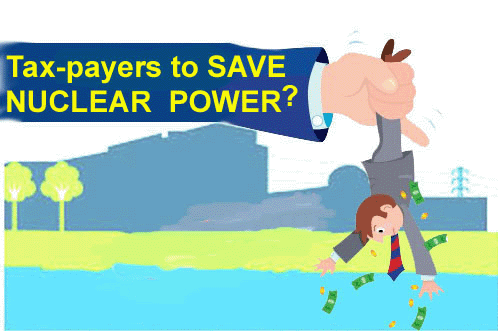
There’s a political battle unfolding in Scotland over a new charge critics
are calling a “nuclear tax” — a levy that could leave Scottish households
paying for nuclear construction projects hundreds of miles away. At the
center of the dispute is England’s Sizewell C nuclear power station, a
project that has ballooned beyond its original budget and is raising
questions about who should foot the bill.
According to The National,
Scottish lawmakers are raising alarms over a levy introduced by Westminster
to help fund the plant in Suffolk, which is now projected to cost £38
billion ($51.9 billion) — nearly double its original estimate of £20
billion ($27.3 billion). Scottish bill payers could contribute around £300
million ($409.3 million) over the next decade even though the plant is
being built in England.
The Scottish National Party has criticized Labour
leadership for not opposing the tax, arguing that residents are paying for
a project they did not approve and may never directly benefit from. “Your
support for these projects in Scotland would see us exposed to colossal
financial risk and undermine our renewables future,” SNP lawmaker Graham
Leadbitter said.
However, Labour representatives argue that nuclear power
is an important part of the United Kingdom’s long-term energy mix. Gregor
Poynton has said Scotland risks missing out on jobs and investment by
turning away from new nuclear technologies such as small modular reactors.
TCD 2nd Feb 2026, https://www.thecooldown.com/green-business/nuclear-tax-scotland-household-energy-bills/
-
Archives
- October 2026 (120)
- September 2026 (339)
- August 2026 (330)
- July 2026 (355)
- June 2026 (287)
- May 2026 (306)
- April 2026 (356)
- March 2026 (251)
- February 2026 (267)
- January 2026 (308)
- December 2025 (358)
- November 2025 (359)
-
Categories
- 1
- 1 NUCLEAR ISSUES
- business and costs
- climate change
- culture and arts
- ENERGY
- environment
- health
- history
- indigenous issues
- Legal
- marketing of nuclear
- media
- opposition to nuclear
- PERSONAL STORIES
- politics
- politics international
- Religion and ethics
- safety
- secrets,lies and civil liberties
- spinbuster
- technology
- Uranium
- wastes
- weapons and war
- Women
- 2 WORLD
- ACTION
- AFRICA
- Atrocities
- AUSTRALIA
- Christina's notes
- Christina's themes
- culture and arts
- Events
- Fuk 2022
- Fuk 2023
- Fukushima 2017
- Fukushima 2018
- fukushima 2019
- Fukushima 2020
- Fukushima 2021
- general
- global warming
- Humour (God we need it)
- Nuclear
- RARE EARTHS
- Reference
- resources – print
- Resources -audiovicual
- Weekly Newsletter
- World
- World Nuclear
- YouTube
-
RSS
Entries RSS
Comments RSS

