Does SMR Stand for Spending Money Recklessly?
March 23, 2026, Susan O’Donnell, M.V. Ramana, https://www.theenergymix.com/does-smr-stand-for-spending-money-recklessly/
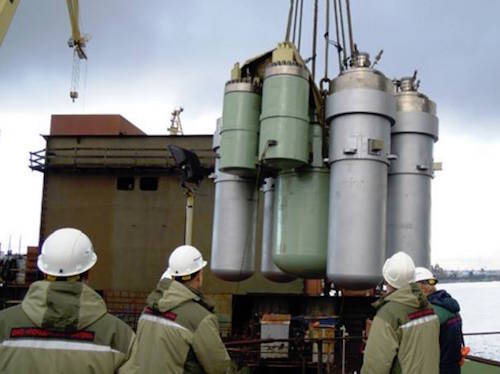
What did Canadians get for the $4.5 billion in public funding spent on small modular nuclear reactor (SMR) activities? Our new report assessing SMR development in Canada found the results underwhelming, to say the least.
Published in 2018, A Call to Action: A Canadian Roadmap for Small Modular Reactors recommended that the federal government fund SMRs and undertake other support measures. The report’s first “expected result” was that “one or more SMR demonstration [projects would be] constructed and in operation by 2026.” Our report in this milestone year covers not only this expected result, but also what the federal government has provided in funding for SMRs in Canada.
For many years, the “Micro Modular Reactor” (MMR) proposed for the Chalk River nuclear site in Ontario was to be this first demonstration. Back in 2019, the project proponents applied to the Canadian Nuclear Safety Commission (CNSC) to prepare the site for construction.
Fast forward to 2024: instead of the reactor built and being prepared to go into service, CNSC announced it had “paused all work” on the MMR project. Later that year, the company leading the project, Ultra Safe Nuclear Corporation, filed for bankruptcy protection in the United States, leaving unpaid debts of more than $16 million. That total included $641,307 to the CNSC and lesser amounts to dozens of Canadian small businesses.
In 2018, the New Brunswick government lured two start-up SMR companies into the province from the U.S. and the United Kingdom—ARC and Moltex—giving each $5 million and help to apply for funding from federal taxpayers. The SMR strategy called for two “advanced” reactor designs, which were not cooled with water, to be built at NB Power’s Point Lepreau nuclear site. Both designs have serious problems that have been documented extensively (for example, in the Bulletin of the Atomic Scientists) .
Over the next five years, the federal government handed over more than $97 million to develop the two SMR designs in New Brunswick, and the provincial government added more than $31 million to the project. Yet in late 2025, New Brunswick’s Energy Minister said the government would no longer wait for the ARC and Moltex designs because the province could not take on the risk of first-of-a-kind reactors. The millions of dollars in subsidies are essentially a write-off, funding highly paid positions at these companies at the public expense.
Of the 10 SMR designs in Canada since 2018, only one is in development. Most of the public subsidy money for SMRs—$4.025 billion—has been spent developing this reactor design, the BWRX-300, to be built at the Darlington nuclear site on Lake Ontario. As of early 2026, workers are digging a deep shaft for the reactor vessel. Sometime this summer, we can expect to see concrete being poured into the ground.
Four billion dollars is a lot of money, but nowhere near enough to pay for the four BWRX-300 reactors planned for the site. Even the first BWRX-300 reactor is expected to cost more—$6.1 billion—and the whole project will run at least $20.9 billion. It final bill could come in far higher, since the vast majority of nuclear power projects have historically overrun initial cost estimates.
The high costs for the SMR compare poorly with other options for electricity generation. For example, estimates by Australia’s Commonwealth Scientific and Industrial Research Organisation (CSIRO) show that each unit of electrical energy from SMRs would be far more expensive that a corresponding unit from solar and wind power plants, even when the cost of storage technologies and other means of accounting for renewable energy’s variability are included.
CSIRO has been undertaking an annual cost estimate in collaboration with the Australian Energy Market Operator and its reports involve extensive consultation with various stakeholders. The research agency’s analysis is informing an active debate under way in Australia to determine if the country should embark on nuclear energy. There is no corresponding effort at rigorously computing the costs of different kinds of generating energy from different technologies by any official research agencies in Canada.
Overall, the report’s analysis found little interest in SMRs among banks and other sources of private capital. When measured in terms of their ability to generate power, SMRs are more expensive than big reactors. Given the high costs, the report suggests that exporting significant quantities of SMRs from Canada is only a slim possibility.
Susan O’Donnell and M.V. Ramana are authors of the report on SMRs in Canada. O’Donnell is Adjunct Research Professor and lead investigator of the CEDAR project at St. Thomas University in Fredericton. Ramana is Professor; Simons Chair in Disarmament, Global and Human Security; and Director pro tem of the School of Public Policy and Global Affairs at the University of British Columbia in Vancouver.
Ontario’s nuclear push risks another costly policy failure.
Nuclear power is neither nimble nor affordable and it’s about time the Ontario government stopped posturing otherwise.
Policy Options, Samuel Buckstein , March 20, 2026
Nuclear power is experiencing a resurgence worldwide and Ontario is no exception. The province has a long history with this awesome and terrifying energy technology, and it is once again turning to nuclear power in response to concerns over national sovereignty, economic growth, electrification and decarbonization.
Looking back over Ontario’s troubled history with nuclear energy, it is concerning to see the Ford government stumbling back to the bar for another round of nuclear cool-aid. Yet Ontario’s plan shows little evidence of having done its homework. Contrary to the government’s claims, it is fiscally irresponsible, incapable of delivering the energy the province needs in the time required, and compromises Ontario’s energy security.
When it should be investing in much cheaper and more easily deployed renewables, the province is recklessly doubling down on nuclear despite the evidence against it.
A legacy mired in debt
To understand Ontario’s nuclear trajectory, it is helpful to reflect on its origins. When civilian nuclear power was commercialized after the Second World War, its advocates promised it would be “too cheap to meter.” Buoyed by encouragement and financing from both provincial and federal governments, Ontario Hydro duly invested in a fleet of 20 CANDU reactors at three nuclear power stations over the course of 30 years.
By the turn of the millennium, Ontario Hydro’s nuclear obsession had saddled it with $38.1 billion in debt — $20.9 billion of it stranded (unsupported by assets). This burden was so immense that it toppled the once proud flagship Crown corporation. Ontarians continue to pay for this nuclear hangover today. As of March 2023, ratepayers were still on the hook for $13.8 billion.
Even as late as 1989, with Ontario Hydro already buckling under its crushing debt, the utility was forecasting the need for 10 to 15 new reactors by 2014. Reality proved otherwise, with peak electricity demand in 2014 lower than it had been 25 years earlier.
After a generation of staggering cost overruns and catastrophic international incidents at Three Mile Island, Chernobyl and Fukushima, nuclear power fell out of favour in much of the developed world. Cheaper, more flexible and faster-to-deploy alternatives took its place, first gas and then renewables…………………………………
Lessons from the U.K. and Ukraine
However, Ontario should learn from the United Kingdom, not authoritarian China. The experience of Hinkley Point C, the first new nuclear power plant to be built in the U.K. in more than 20 years, should be a cautionary tale.
At least five years behind schedule and two times over budget, Hinkley Point C will likely be the most expensive nuclear power plant yet. The electricity generated by this colossal waste of rate-payer dollars will cost between two to four times more than renewable energy, which can be brought online in half the time. This is what the provincial government has in store for Ontario.
The scale of Ontario’s plan is immense. In addition to the CANDU refurbishments at Darlington and Bruce, Ontario has announced the refurbishment of Pickering B, one of the oldest and most urban nuclear power stations in the world.
Sovereignty concerns
Ontario has also contracted with GE Vernova Hitachi to build up to four small modular reactors (SMRs) at the Darlington site. It is unclear why the government has committed to building four SMRs before even the first is constructed. The greater concern with this arrangement is GE Vernova Hitachi is a U.S.-controlled company and the fuel supply chain is in the U.S. and France, not Canada…………………………………………………………………………………………………………….
No price tag and no certainty it will pay
Despite these red flags, Ontario’s nuclear ambitions do not stop there. The government is also considering building two new large nuclear power stations at the Bruce site and at a new location near Port Hope. This despite the fact that, like the U.K., the domestic nuclear supply chain has all but vanished. This is precisely the kind of multi-billion-dollar, multi-decade infrastructure lock-in that bankrupted Ontario Hydro.
The government has been silent on how much this plan will cost. No one can predict whether demand will materialize to justify this massive supply expansion, or what electricity prices will be when these reactors finally come online. Committing to decades of investment in such an uncertain environment is sheer folly.
To top it all off, nuclear power is not even operationally flexible. Generation cannot be adjusted rapidly enough to follow demand, and the reactors can only be quickly turned off, but not back on again (it took Ontario more than a day to restore power after the 2003 Great Northeastern Blackout due to neutron poisoning in the reactors).
Renewable options
It does not have to be this way. Much has changed since the last wave of nuclear infatuation. Renewables are now the cheapest source of energy on a levelized basis. While renewables may be intermittent, they are reasonably predictable, and for the first time since the inception of the electricity industry, generation no longer needs to coincide perfectly with consumption. Rapidly falling battery costs have made energy storage a commercially viable reality…………………………………………………………. https://policyoptions.irpp.org/2026/03/ontario-nuclear-energy-costs-risks-renewables/
Petition to revoke the licensing of the Near Surface Nuclear Disposal Facility (NSDF) at Chalk River.

The word is getting around that dumping a million cubic metres of long-lived radioactive waste 1 km from the Ottawa River is not a great idea, particularly without the free, prior and informed consent of Kebaowek First Nation, on whose unceded territory this flawed project would be located.
A new e-petition calls on the Government of Canada “to issue a directive under Section 19 (1) of the Nuclear Safety and Control Act to order the CNSC to revoke the licensing of the NSDF at Chalk River.” A very good idea.The link is
https://www.ourcommons.ca/petitions/en/Petition/Details?Petition=e-7247
Just one small correction — most of the radionuclides in the waste will remain radioactive for millennia, so the radioactivity will not “wear off” in 300 years.
As proposals for nuclear stations proliferate across Canada, ‘fleet-based’ reactor deployment remains elusive.

The Ontario government announced last summer a body called the New Nuclear Technology Panel, composed of senior executives from OPG, Bruce Power and the government, and instructed it to co-ordinate a technology selection decision. But the panel has not been established, and there is no timeline for doing so.
among those few proponents that have publicly committed to specific models, at least three have already wavered on their decisions. The situation underlines how tentative plans for nuclear expansion in Canada remain
Matthew McClearn, 9 March 26, https://www.theglobeandmail.com/business/article-nuclear-stations-canada-fleet-based-reactor-deployment-remains-elusive/
In the nuclear industry it is practically gospel: Canada isn’t populous or wealthy enough to purchase a smorgasbord of different nuclear reactors. Yet after years of lukewarm efforts by Canadian utilities and governments to reach a consensus on which ones to buy, there are few indications that one is emerging.
In January, Saskatchewan’s government announced it had begun evaluating large nuclear reactors for potential deployment. Jeremy Harrison, a minister whose responsibilities include the Crown-owned SaskPower, said the utility will study the readiness of reactors to be built, vendors’ ability to support licensing and construction, and their track record of executing previous projects.
Ontario’s utilities have been asking similar questions for several years. In 2023 Bruce Power began hunting for a reactor for Bruce C, a proposed four-unit station at its facility near Tiverton, Ont. Ontario Power Generation recently began its own search for a huge plant dubbed Wesleyville, planned in Port Hope, Ont.
Observers have long warned that given Canada’s population and economy, utilities, private developers and provinces must co-ordinate procurement of reactors – an approach sometimes dubbed “fleet-based deployment.” But it hasn’t arrived yet.
Indeed, among those few proponents that have publicly committed to specific models, at least three have already wavered on their decisions. The situation underlines how tentative plans for nuclear expansion in Canada remain, even as governments forecast spiking demand for electricity in the immediate future and consider their options for generating that power.
All 25 reactors built in Canada during the 1960s through the 1990s featured Canada deuterium uranium (Candu) technology developed by Atomic Energy of Canada Ltd., a Crown corporation. One benefit was that later Candus, such as those at the Bruce B and Darlington stations, proved significantly more reliable than earlier ones in that they suffered fewer outages. Similar dynamics applied when those stations required midlife overhauls. Another advantage was that utilities could share operational experience through the Candu Owners Group (now known as Conexus Nuclear).
By the time the federal government began promoting small modular reactors (SMRs), though, the Candu’s monopoly seemed precarious, and international vendors arrived promoting early-stage designs. In 2018 the government published a “roadmap” for SMRs, recommending stakeholders settle on a small number of finalized designs.
Jeremy Whitlock, a nuclear consultant and adjunct professor at McMaster University, wrote in an e-mailed response to questions that fleet-based deployment is vital for nuclear. “There is simply not enough infrastructure, resources, and (currently at least) work force to support multiple lines of technology,” he wrote.
A report released in February by Clean Prosperity, a Toronto-based energy and climate policy think tank, asserted that one necessary precondition for nuclear expansion is that all proponents converge on three designs at most: one “large” design with a capacity of 1,000 megawatts or more (enough to power a large city), one “small” reactor with an output around 300 megawatts, and one “micro” reactor putting out less than 20 megawatts.
Brendan Frank, Clean Prosperity’s head of policy development, said a first-of-a-kind reactor is far too expensive; the industry needs to learn how to build subsequent units more cheaply to compete with other generation options. “Your chances of doing that are significantly higher if you build the same reactor design over and over and over again,” he said.
The BWRX-300 from U.S.-based GE Vernova Hitachi Nuclear Energy has seemingly emerged as the lone contender among the larger SMRs. Yet only OPG has committed to build one.
As for large and micro-reactors, no firm orders have been placed in Canada. However attractive fleet-based deployment might seem, it might be difficult to achieve. Selecting a model has numerous implications, from securing a fuel supply to managing the resulting waste; what’s best for Ontario mightn’t seem so for Saskatchewan or New Brunswick.
Nuclear power is among the few generation options that has grown more expensive, and eliminating pricing competition by sourcing from a single reactor vendor won’t help
Options are limited. AtkinsRéalis Group Inc.
ATRL-T -1.07%decrease, the company which purchased Atomic Energy of Canada’s reactor business more than a decade ago, is developing an updated 1,000-megawatt Candu dubbed the Monark. Its most significant home-court advantage is that utilities and their workers are already familiar with operating and maintaining Candus. Moreover, its supply chain is on Canadian soil, an appealing feature amid surging economic nationalism. Its greatest vulnerability might be its readiness: The Canadian Nuclear Safety Commission says it has not yet begun a preliminary assessment of the Monark, known as a vendor design review.
The CNSC reviewed the Monark’s most obvious competitor more than a decade ago. It concluded there were “no fundamental barriers” to licensing Westinghouse Electric Co.’s AP1000. Although AP1000s have been built in China and the U.S., the American projects suffered disastrous setbacks during construction. Souring Canada-U.S. relations further diminish the AP1000’s appeal.
GE Vernova Hitachi, which designed the BWRX-300, faces similar obstacles in marketing its larger Advanced Boiling Water Reactor. Dark horses include the European Pressurized Reactor, a French design, and the South Korean APR-1400.
If fleet-based deployment is to succeed in Canada, Ontario appears to be the most credible co-ordinator. Between Bruce C and Wesleyville, it might purchase up to 14 large reactors.
Neither OPG nor Bruce Power specified reactors in their regulatory applications, which are intended to encompass a variety of options. Bruce Power’s chief operating officer, James Scongack, said since late 2023 his company has sought information from reactor vendors, a process intended to ascertain which reactors are ready to be constructed and at what cost. The process “was really designed to look at what are all the technologies available for new nuclear, assess them, review them, narrow them down,” he said.
Citing confidentiality agreements, Mr. Scongack declined to discuss which ones had emerged as front-runners. But “we’re now very focused on options that would not be a surprise to you.”
The Ontario government announced last summer a body called the New Nuclear Technology Panel, composed of senior executives from OPG, Bruce Power and the government, and instructed it to co-ordinate a technology selection decision. But the panel has not been established, and there is no timeline for doing so.
Lately, Ontario Energy Minister Stephen Lecce has spoken emphatically about the importance of promoting Canadian technology and supply chains – comments suggesting strong support for Candus.
“My first preoccupation is: What is going to advance the national interest of Canada in a post-Trump world,” he told The Globe in late January.
“We need to be fiercely protective of our intellectual property, of Canadian technology for Candu, a large-scale [reactor] that is made in Canada, stored in this country, a supply chain that is Canadian, a work force that is mature and Canadian.”
But a different champion could emerge in Saskatchewan. As far back as 2022, SaskPower selected the BWRX-300. Yet just two years later, SaskPower announced it had signed an agreement with Westinghouse to evaluate other models including its AP300, a direct competitor.
That sudden interest in Westinghouse didn’t come out of nowhere. The uranium giant Cameco Corp. CCO-T +5.86%increase, based in Saskatoon, is one of the province’s most influential companies. In 2023 it purchased a 49-per-cent stake in Westinghouse.
Mr. Harrison said the AP300 is no longer under consideration, and SaskPower confirms it’s planning to announce a proposed site for building BWRX-300s later this year. But SaskPower won’t make a final investment decision until at least 2029, leaving plenty of time to pivot again.
And that’s one reason Saskatchewan’s decision to explore large reactors could be highly significant. Mr. Harrison said the province is prepared to go its own way. And while SaskPower will consider candidate reactors on their merits, he added that local companies’ interests are an important consideration.
“We are really very, very proud of Cameco, a great Saskatchewan company,” Mr. Harrison said. “To be a 49-per-cent owner of this iconic American company, Westinghouse Electric, is really a quite an amazing story for a company that began life as a Crown corporation.”
He added: “Without question, benefits to the supply chain in Saskatchewan is a part of the consideration. We’ve been very upfront about that.”
Energy Alberta, a nascent developer with a long-standing proposal to build a four-reactor plant in Peace River, Alta., offers perhaps the most striking example of indecision. It had selected the Monark, but late last year announced it was considering Westinghouse’s AP1000s instead.
New Brunswick selected two reactors for construction at its Point Lepreau station nearly a decade ago. But neither the ARC-100 nor the SSR-W appear to be nearing a completed design; their vendors (ARC Clean Technology and Moltex Energy Canada, respectively) have few employees and have struggled to raise capital.
NB Power’s chief executive officer, Lori Clark, said her utility remains committed to building reactors. But it has come around to fleet-based thinking: it no longer wants to build a first-of-a-kind, or one-of-a-kind, reactor, because they are inevitably costlier. Provincial officials have expressed interest in a variety of different reactors over the past year, including the BWRX-300, AP1000 and Candu.
“We want to watch what’s happening in Ontario, because they are much bigger player in the nuclear field than we are.”
Canada will soon release new electricity and nuclear strategy, minister says
Canada’s Energy and Mining Minister Tim Hodgson said on Thursday the
government will release a new electricity and nuclear strategy in the
coming months as demand for nuclear energy rises. “Investors want
clarity. They want speed, and they want direction from nations to which
they are allocating capital. That is why our government will release a
new comprehensive electricity and nuclear strategy in the coming
months, probably weeks,” Hodgson said at CIBC’s nuclear summit.
Reuters 5th March 2026, https://www.reuters.com/business/energy/canada-will-soon-release-new-electricity-nuclear-strategy-minister-says-2026-03-05/
.
Complaint to the Editor of the Narwhal
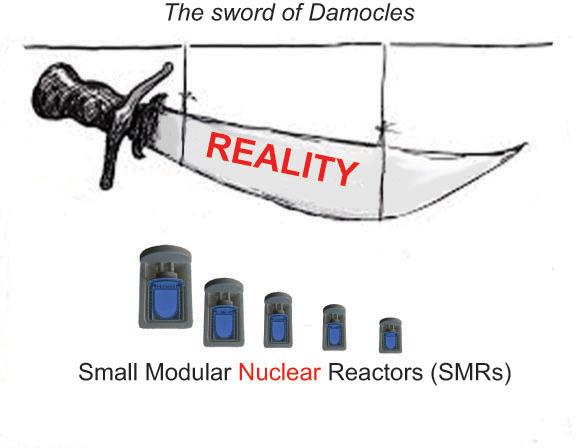
SMRs are not small, and they are not modular. No one is building SMR components in a factory – please check the spin OPG gives you. They are still enormous, although a lot of the bulk is hidden underground. What OPG has done to try to cut construction costs and time is cut some safety systems (see the Canadian Environmental Law Associations submission on this).
Angela Bischoff, Ontario Clean Air Alliance, 28 Feb 26
Hello Narwhal Editor,
We just read Fatima Syed’s recent piece on SMRs and we’re shocked. This piece demonstrates zero effort to come to terms with what SMRs really are, or their impacts. Instead, we get a bunch of puffery from Ontario Power Generation (OPG) and the Ontario government.
SMRs are not small, and they are not modular. No one is building SMR components in a factory – please check the spin OPG gives you. They are still enormous, although a lot of the bulk is hidden underground. What OPG has done to try to cut construction costs and time is cut some safety systems (see the Canadian Environmental Law Associations submission on this).
There are a few reasons SMRs are all talk and little action. In most cases, it is old technology repackaged into a slightly smaller size at the expense of much lower energy output per dollar spent. Many of the companies touting “new” SMR technology are trying to reboot old ideas (molten salt, breeder reactors) that were discarded long ago as unworkable. In most cases, these companies lack the capital or the expertise to get their projects off the ground, as New Brunswick has discovered at significant public cost.

To make these reactors “modular” we would have to be building thousands every year. That’s just not about to happen with the cost and complexity of nuclear technology. They are never going to be “Lego kits” no matter what nuclear PR people tell you – it’s just embarrassing that you would take that statement at face value. That idea has been thoroughly debunked even by promoters of nuclear energy, many of whom would prefer to keep the focus on large reactors
Of course, manufacturing at scale has already happened with solar, wind and batteries because these components really can be produced at mega factory scale (actual factories exist!). Nuclear reactors remain hand crafted projects like a custom-made suit and are equally expensive (and hard to fix) because of that. It’s no surprise to us that the Darlington rebuild is running 25% over budget due to the discovery of worn-out components that OPG didn’t anticipate needing to fix.
As the 2025 World Nuclear Industry Status Report (WNISR) notes “The Merriam-Webster dictionary defines the term ‘Potemkin village’ as ‘an impressive facade or show designed to hide an undesirable fact or condition.’ The state of Small Modular Reactors (SMRs) today might well be described as a Potemkin Village. Even as the evidence for the high costs and the long timelines for potential future construction becomes clearer, and what is most on display are numerous announcements about future SMRs, usually held out for some time in the 2030s, the industry, politicians, investors, and, last but not least, the media continue to portray SMRs as an indispensable and sure way to solve the climate emergency crisis…”

The WNISR goes on to thoroughly debunk the notion that SMRs are a viable energy or climate solution and provides an in-depth explanation of why renewables plus storage are now simply unbeatable on costs, speed, climate, and reliability. Please read and report on it.
The Narwhal has been a valuable source of in-depth reporting on key environmental issues, so it is mystifying why it would choose to publish what is essentially an “advertorial” promoting Ontario’s misguided enthusiasm for nuclear technology and particularly SMRs. Not speaking to anyone who could address the myths being put forward by OPG and the Ontario government is simply shocking. Taking their statements at face value without making any effort to verify information, even more so. There are many credible nuclear critics in Ontario and Canada that could give counter arguments to OPG’s corporate spin, yet you included none.
We have come to expect a much more thoughtful approach to journalism than this from your publication.
Thanks for your attention.
Angela Bischoff, Director, Ontario Clean Air Alliance, CleanAirAlliance.org
How will free-spending Ford pay for Ontario’s $400-billion nuclear plans?

One of the central unanswered questions about the Doug Ford government’s nuclear expansion plans for Ontario has been: How they will be paid for?
Estimates of the capital costs of the government’s plans, based on past projects and recent experiences in the United States and Europe, exceed $400-billion.
Mark Winfield, The Globe and Mail, Feb. 24, 2026, Mark Winfield is a professor of environmental and urban change at York University and co-editor of Sustainable Energy Transitions in Canada (UBC Press 2023). https://www.theglobeandmail.com/business/commentary/article-how-will-free-spending-ford-pay-for-ontarios-400-billion-nuclear-plans/#comments
One of the central unanswered questions about the Doug Ford government’s nuclear expansion plans for Ontario has been: How they will be paid for? The program includes new nuclear power plants at Darlington, Bruce and Wesleyville, and the refurbishments of existing reactors at the Bruce, Pickering and Darlington sites. Estimates of the capital costs of the government’s plans, based on past projects and recent experiences in the United States and Europe, exceed $400-billion.
The government’s plans envision an electricity system that is 75-per-cent nuclear in terms of output, up from approximately 50 per cent today. If the costs of these plans are to be paid for through the rates charged for the electricity produced, electricity bills will rise dramatically.
Estimates of the costs of electricity from new nuclear plants in Ontario range from the mid-20 cents a kilowatt-hour to more than 40 cents a kwh – double or even triple current consumer electricity costs. Such increases would undermine energy affordability, Ontario’s economic competitiveness and any plans for decarbonization through electrification.
Another alternative could be to hide the capital costs as debt, while keeping hydro rates low. That was the strategy followed by previous governments with the province’s original nuclear construction program between 1966 and 1993. In the end, the accumulation of debt flowing from that approach reached $38-billion (about $72-billion in current dollars), leaving the provincial utility, Ontario Hydro, economically inviable and effectively bankrupt.
A series of revelations over the past few months have made it clear that the province seems to have another, potentially equally problematic, plan in mind. It has become apparent that the 29-per-cent increase in electricity rates last Nov. 1 was directly related to the financing arrangements for the $25-billion Ontario Power Generation’s Darlington new-build reactor project, and the $26-billion refurbishment of the Pickering B nuclear station.
The impact on residential hydro bills of the November increase was mitigated through a near doubling of the province’s electricity rebate program, at a cost of approximately $2-billion a year, paid out of general revenues. In effect, that meant the province had begun paying for the capital costs of the Darlington and Pickering projects out of general provincial revenues. Moreover, recent changes to Ontario Energy Board rules have created an unprecedented situation in which ratepayers and taxpayers are now being asked to pay for nuclear projects that may never be completed or function.
The November increase in the rebate program brought the total costs of the province’s electricity rate subsidy programs to approximately $8.5-billion a year. These expenditures now amount to the equivalent of nearly two-thirds of the province’s deficit, exceed total expenditures in the justice sector, and are approximately double the annual capital investments in schools and health care.
The Pickering B and Darlington new-build projects are only the beginnings of the province’s nuclear expansion plans. Additional projects proposed for Wesleyville and the Bruce nuclear site could involve capital expenditures in excess of $300-billion.
If financed in the same way, the portion of the provincial budget consumed by electricity subsidies could reach $20-billion a year – nearly 10 per cent of the province’s total budget. That would force either dramatic increases in the provincial deficit to more than $30-billion a year, substantial tax increases or major reductions in spending in other – already in the view of many analysts – chronically underfunded areas such as health care, education, municipal and social services, and non-electricity public infrastructure.
There is, however, another, and better, option. None of the province’s plans have been subject to any external review in terms of their economic, technological or environmental rationality. Moreover, the province’s plans seem premised on assumptions of absolute technological, economic, social, environmental and political certainty reaching decades into the future. These are things about which, in a ruptured and destabilized world, there can only be absolute certainty of uncertainty. The situation adds to the risks of the province locking into a deeply inflexible energy pathway centred on large, high-cost and high-risk generating assets.
Ontario has been the subject of more efforts to develop and model alternative pathways for its electricity system, and the broader decarbonization of its energy system, than any other province in Canada. But there is no process to assess whether the directions set by the provincial government represent the best options for the province in economic and environmental terms relative to the alternative pathways that have been identified.
That situation needs to change rapidly. The province needs to engage in a serious, objective and independent assessment of its energy options for meeting future energy needs, while controlling costs, decarbonizing the province’s electricity system and advancing sustainability.
Scotiabank subsidiary fully divests from Israeli arms firm
The decision follows two years of nationwide protests, cultural boycotts, and investor pressure
News Desk, FEB 17, 2026, https://thecradle.co/articles/scotiabank-subsidiary-fully-divests-from-israeli-arms-firm
Scotiabank’s subsidiary firm, 1832 Asset Management, has sold its remaining shares in Israeli arms manufacturer Elbit Systems Ltd., according to regulatory filings reported on 16 February.
The latest disclosure to the US Securities and Exchange Commission no longer lists Elbit among 1832’s holdings, ending an investment that once made the Canadian bank the company’s largest foreign shareholder.
In a press release on Monday, No Arms in the Arts, a Canada-based arts coalition opposing institutional ties to the arms trade and Israel’s actions in Palestine, and Just Peace Advocates, a Canadian human rights organization, said the sale followed “more than two years of sustained organizing that made the bank’s investment a liability.”
“Scotiabank’s divestment from Elbit Systems signals that investment in companies complicit in Israeli war crimes has become too risky to sustain,” Karen Rodman of Just Peace Advocates said.
“Yet 2025 data showed the ‘Big Five’ Canadian banks holding over $182 billion in companies operating in the occupied Palestinian territory – a clear contradiction of Canada’s stated opposition to illegal settlements that demands immediate government action to align policy with practice,” Rodman added.
Jody Chan of No Arms in the Arts said, “This news comes after years of sustained pressure across the country, with thousands protesting at Scotiabank branches, hundreds of artists refusing to let their work whitewash the bank’s complicity, and many more closing their accounts.”
Chan added, “Against our government’s attempts to use the façade of a ceasefire to normalize Israel’s siege on Gaza, this demonstrates our collective power to define what we find morally unacceptable and force real change.”
The investment drew sustained protests across Canada, including demonstrations at Scotiabank branches and the disruption of the bank-sponsored Giller Prize broadcast in November 2023.
In November 2025, filings showed approximately 165,000 shares worth around $84 million.
By August 2024, 1832 had cut its stake to roughly 700,000 shares, valued at about $315 million at the time. At the end of 2021, the asset manager held more than 2.2 million shares in the company.
As of mid-February 2026, the position stands at zero.
During the period of divestment, Elbit’s share price rose sharply, climbing from below $175 in 2021 to above $400 last year, before spiking past $700 in January 2026.
Scotiabank had previously said it did “not directly hold the shares” and that it could not interfere in the independent investment decisions of its subsidiary’s portfolio managers.
Elbit Systems is Israel’s largest weapons manufacturer and supplies military equipment used in the Israeli genocide of Palestinians in Gaza.
The company reported record profits during that period, openly marketing weapons used in Gaza as “battle-tested” to demand higher premiums in international contracts,
Submissions to the Federal Court of Appeal about UN Declaration on the Rights of Indigenous Peoples (UNDRIP)
Raven Trust, By Levin Chamberlain, February 10, 2026
Gitxaała Nation’s recent decision in the British Columbia Court of Appeal (BCCA) in Gitxaala v. British Columbia (Chief Gold Commissioner), 2025 BCCA 430 that incorporates the United Nations Declaration on the Rights of Indigenous Peoples (UNDRIP) into positive law is getting attention. While media outlets are focused on David Eby’s commitment to amending the Declaration on the Rights of Indigenous Peoples Act (DRIPA) — undermining the rule of law and potentially reversing decades of reconciliation — behind the scenes, there’s a company trying to further undermine Indigenous rights – Canadian Nuclear Laboratories (CNL).
CNL recently filed a submission in Kebaowek First Nation’s case over the proposed nuclear waste facility on their territory, a legal case that RAVEN has supported for almost two years. If built in its current location, the facility would hold over one million cubic metres of nuclear waste just one kilometre from the Kichi Sibi (Ottawa river), which provides millions of people with clean drinking water.
Kebaowek recently went to the Federal Court of Appeal with CNL, who is seeking to overturn the need for the First Nation’s free, prior, and informed consent over the consultation process to build the nuclear waste facility. You can read more about the decision and why Kebaowek cross-appealed here.
With the BCCA decision in Gitxaała’s case being such a powerful precedent that incorporates UNDRIP, the Federal Court judges gave CNL and Kebaowek the opportunity to make new submissions specifically about this decision. Not only does this show how interconnected Indigenous-led litigation is (which RAVEN is integral to in supporting both cases), but it also allows for both sides to share new perspectives.
The Submissions
CNL’s response with a new submission to the courts argues that Gitxaała’s case is “wholly distinguishable” from their case, and that it doesn’t alter the one sole point that CNL is relying on: consultation with Kebaowek was fulfilled. They comb through the specific differences between DRIPA and Canada’s own United Nations Declaration on the Rights of Indigenous Peoples Act (UNDA) in attempts to show how UNDA shouldn’t be taken the same way as DRIPA. CNL also criticizes two aspects of the BCCA’s decision in Gitxaala v. British Columbia as “unsupported statements of law.”
Is that fear we are picking up on in CNL’s submission? Or is it just pure hypocrisy……………………………………..
The Reality
Unfortunately, instead of navigating toward reconciliation between the Crown, industry, and Indigenous Peoples, we are witnessing more conflict and tension than before. UNDRIP and its incorporation into positive law in Canada should be something to celebrate with clear pathways toward long-term economic development and environmental protections while honouring Indigenous rights and their territories. Working in a good way with First Nations, like Kebaowek, is crucial for getting decisions right, especially in a world with a rapidly accelerating climate, sincere threats to democratic processes, and a troubling shift of public support away from reconciliation.
In 2007, Canada and three other nation-states initially opposed the ratification of UNDRIP. They opposed enshrining the human rights of Indigenous Peoples on an international stage. That – and much, much worse – will always be a part of our dark history in Canada. Unless we see a real shift in accountability and action, future generations will view this time period and the responses by industry and the Crown as another era of oppression.
But, even if the decision is overturned and Kebaowek doesn’t have their day at the Supreme Court of Canada; even if David Eby is successful in reducing the legal teeth of UNDRIP for Indigenous Peoples to use in B.C.’s courtrooms; even if something similar happens to UNDA; there will be no end to pursuits for justice. UNDRIP rights are fundamental human rights of Indigenous Peoples that are just now being recognized through colonial doctrines. These rights have existed since time immemorial in their own beautiful and unique ways, and although injustice is present, the people will continue to resist, and justice shall persist. https://raventrust.com/articles/the-law-is-connected-new-submissions-to-the-federal-court-of-appeal-about-undrip/
Northwatch Comments on the NWMO’s Initial Project Description of a Proposed Deep Geological Repository for High-Level Nuclear Waste

7 Feb 26, https://iaac-aeic.gc.ca/050/evaluations/proj/88774/contributions/id/64898
The following points summarize Northwatch’s comments on the NWMO’s Initial Project Description of a Proposed Deep Geological Repository for High-Level Nuclear Waste to be located at the Revell site in Treaty 3 territory in northwestern Ontario:
- NWMO’s Deep Geological Repository Project should be designated for a full impact assessment and public hearing
- The long-distance transportation of nuclear fuel waste from the reactor stations to the proposed repository site must be included in the impact assessment
- NWMO’s Initial Project Description is inadequate and does not provide the information required, including and particularly it does not sufficiently describe or otherwise demonstrate that it has adequately examined alternatives to the project or alternative means of carrying out the project, and the IPD largely goes off course in its description of the need and purpose of the project.
- As directed by the Nuclear Fuel Waste Act the need or purpose of the project is to effectively isolate the nuclear fuel wastes from people and the environment.
- The NWMO has not provided a clear statement of the need and purpose for the project, and when it discussed the need and purpose of the project in its IPD it muddied the waters by including unsupported promotional statements and out-of-scope policy statements about the future role of nuclear power.
- Instead of setting out careful consideration of alternative means of meeting the project need (to safely contain and isolate the nuclear fuel waste from people and the environment) the NWMO simply summarized some aspects of their 2003 studies. The IPD should include a contemporary assessment of alternative means of meeting the project need.
- The NWMO’s consideration of alternative means of carrying out the project is too limited; the alternative means examination should also include alternative sites, alternatives in repository access (ramp vs shaft), transportation in used fuel containers instead of in transportation packages, the alternative means of in-water transfer of used fuel at repository site (vs “in air” ie. in hot cells), alternative mining methods, alternatives in waste emplacement (in-room vs in-floor) and alternatives in used fuel container design
- The NWMO’s description of the project and project activities is too limited, and at times is promotional rather than factual in its approach.
- The NWMO has misrepresented the fuel waste inventory, upon which repository size, years of operation, and resulting degrees of risk and contamination all hinge.
- The NWMO excluded the first step in their project, which is the transfer of the used fuel waste from dry storage containers into transportation containers at the reactor site; this is consistent with past practice.
- Without foundation the NWMO is attempting to exclude long-distance transportation from the Impact Assessment process; this is inconsistent with the impact assessment law in Canada and with the manner in which the NWMO has been describing their project over the last twenty years.
- The Initial Project Description inadequately describes major project components and activities, including the Used Fuel Packaging Plant, waste placement and repository design and construction and closure, decommissioning and monitoring.
- The description of the Project Site, Location and Study Area(s) is flawed and in some respects inaccurate.
- The potential effects of the project are poorly described and in some instances the NWMO text is promotional rather than factual.
- The description of the site selection process is very selective in the information it presents and creates a false impression of community experience through the siting process in the 22 communities that the NWMO investigated.
- There are significant gaps and deficiencies in the Initial project description; several subject areas fundamental to the assessment of the deep geological repository are extremely limited or fully absent including the subjects of long-term safety, emergency response and evacuation plans, accidents and malevolent acts and security.
- The Initial Project Description was poorly organized and was not copy edited; it lacked an index and there was no glossary included.
An environmental coalition defends Environmental Justice (EJ) against the Canadian Nuclear Waste Management Organization’s (NWMO) latest Deep Geological Repository (DGR) scheme.
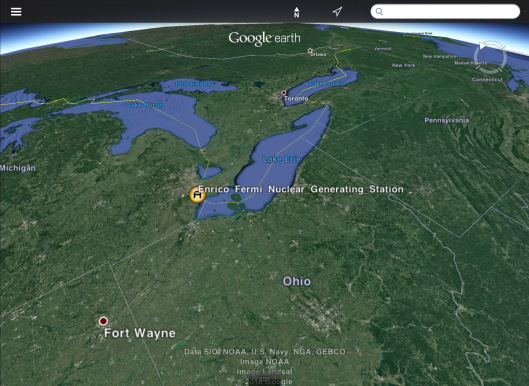
February 5, 2026, https://beyondnuclear.org/enviro-coalition-defends-ej-against-nwmo-dgr/
An environmental coalition — Beyond Nuclear, Coalition for a Nuclear-Free Great Lakes, Don’t Waste Michigan, and Nuclear Information and Resource Service (NIRS) — has defended Environmental Justice (EJ) against the Canadian Nuclear Waste Management Organization’s (NWMO) latest Deep Geological Repository (DGR) scheme.
The coalition submitted extensive comments on NWMO’s Initial Project Description Summary.
NWMO is targeting the Wabigoon Lake Ojibway Nation and the Township of Ignace, in northwestern Ontario, north of Minnesota and a relatively short distance outside of the Great Lakes (Lake Superior) watershed, for permanent disposal of a shocking 44,500 packages of highly radioactive irradiated nuclear fuel.
The Mobile Chornobyls, Floating Fukushimas, Dirty Bombs on Wheels, Three Mile Island in Transit, and Mobile X-ray Machines That Can’t Be Turned Off would travel very long distances, including on routes through the Great Lakes watershed, from Canadian reactors to the south and east, thereby increasing transport risks and impacts.
The watershed at the proposed Revell Lake DGR site flows through Lake of the Woods, Minnesota, sacred to the Ojibwe. Lake of the Woods contains many islands, some adorned with ancient rock art.
Indigenous Nations and organizations, including Fort William First Nation, Nishnawbe Aski Nation, Grassy Narrows First Nation, Neskantaga First Nation, and the Land Defence Alliance rallied against NWMO’s DGR last summer in Thunder Bay, Ontario, on the shore of Lake Superior.
Beyond Nuclear’s radioactive waste specialist, Kevin Kamps, traveled to Thunder Bay last spring, to speak out against NWMO’s DGR at the Earth Day annual meeting of Environment North.
We the Nuclear-Free North organized the public comment effort, greatly aiding our coalition to meet the deadline.
Our coalition groups worked with Canadian and Indigenous allies for two decades to stop another DGR, targeted by Ontario Power Generation (which dominates the NWMO) at the Bruce Nuclear Generating Station in Kincardine, Ontario, on the Lake Huron shore. Bruce is the largest nuclear power plant in the world by number of reactors — nine! The final nail in the Bruce DGR came from the very nearby Saugeen Ojibwe Nation, which voted 86% to 14% against hosting the DGR!
Will soaring electricity rates kill Ontario’s nuclear expansion?
At $20.9-billion, the Darlington SMRs are expected to cost nearly as much as larger reactors that would have generated far more power. The government is betting that the economic benefits will be worth it: by building the first-ever BWRX-300 reactor, it hopes to win export opportunities for Ontario-based nuclear suppliers.
Future plans include what would be two of the largest nuclear plants on Earth, which will cost hundreds of billions of dollars. And while the IESO holds competitive procurements for other forms of generation including natural gas, wind and solar, nuclear plants are exempted from that requirement………… “There’s no real competition and there’s no real incentive for them to deliver that power at the cheapest cost “
Matthew McClearn, The Globe and Mail, Feb 5, 2026
The Ontario government’s plans to more than double the capacity of the province’s fleet of nuclear power reactors is sprawling in its ambition – and has a price tag to match.
Last May, Energy Minister Stephen Lecce stood alongside Premier Doug Ford to announce that the government would spend $20.9-billion to build four new small modular reactors in Clarington, Ont. In November, they approved a $26.8-billion overhaul of four old reactors at Ontario Power Generation’s Pickering Nuclear Generating Station, just east of Toronto.
Ontario’s electricity rates shot up 29 per cent in November, driven in part by rising nuclear generation costs. Further hikes are virtually certain: Ontario Power Generation (OPG) recently filed a rate application before the Ontario Energy Board, which it says will lay the foundation for the province’s energy supply over the next quarter century. The utility seeks roughly a doubling of the payments it receives for the electricity generated by its nuclear power plants. If granted, monthly bills would increase by an average of $3.50 each year for the next five years.
What comes next, though, promises to be even more expensive.
The Ford government asserts that Ontario will need roughly 18,000 additional megawatts of nuclear capacity by mid-century. (Ontario’s existing Darlington, Bruce and Pickering stations represent about 12,000 megawatts.) They’re ready to embark on what they describe as “the largest expansion of nuclear energy on the continent,” which includes plans for two of the largest nuclear plants on Earth. They could easily cost hundreds of billions of dollars.
This aspect of Ontario’s nuclear ambitions – the cost, and how residents and businesses will pay – is rarely discussed by provincial officials, and then only in vague terms. But the Ford government has long insisted that it can do it all while keeping electricity costs down. Critics – particularly those favoring renewable generation – have warned for years that this nuclear-focused approach would eventually lead to steep rate hikes.
“Ontario is on a track to more expensive energy in the future,” said David Pickup, manager of electricity at the Pembina Institute, an energy thinktank.
In a presentation in late January, Jack Gibbons, chair of the Ontario Clean Air Alliance, said Mr. Ford’s plans would see 75 per cent of Ontario’s electricity produced by nuclear power by 2050.
“If his nuclear projects proceed, our electricity rates will rise dramatically,” he predicted.
The Ford government came to power in 2018 riding a wave of dissatisfaction with the energy policies of its Liberal predecessors, which also led to surging power bills. Have Mr. Lecce and Mr. Ford similarly miscalculated?
Surging rates
Ontario’s Nov. 1 rate hike of 29 per cent was likely the largest on the continent last year. In the past year, Maine and New Jersey experienced increases of 25.5 per cent and 21 per cent, respectively, according to data published by the U.S. Energy Information Administration. The U.S. national average was just 6.6 per cent.
OEB spokesperson Tom Miller attributed Ontario’s rate increase partly to unexpectedly high nuclear generation last year, including from a refurbished reactor at Darlington that returned to service five months earlier than expected.
The November hike was almost entirely offset by an accompanying increase in the Ontario Energy Rebate, a provincial subsidy the government uses to lower residential electricity bills. But those subsidies will cost taxpayers billions of dollars each year, competing with other priorities.
For now, Ontarians’ rates still compare favorably to some provinces, including Nova Scotia, and also U.S. states around the Great Lakes. But the higher payments sought by OPG, if approved, would endure for years.
Traditionally, OPG recovered its costs for projects once they began generating electricity – a common practice worldwide. But nuclear plants can take a decade or two to construct and therefore tend to rack up sizeable interest charges, adding to their final tab.
Last year the government amended the Ontario Energy Board Act to allow OPG to immediately begin recouping some costs associated with building the small modular reactors (SMRs) and refurbishing Pickering.
“The intended effect is to smooth out the cost over time, rather than massive jumps from one year to the next,” explained Brendan Frank, who heads policy development and analysis at Clean Prosperity, a clean energy thinktank.
The Association of Major Power Consumers of Ontario, which represents major industrial electricity users, accepts the charges.
“It’s a legitimate ask from the generators,” said Brad Duguid, the organization’s president. “They have preliminary costs that they’re incurring, and they need to have a way to pay for that.”
Nonetheless, similar regulatory changes elsewhere in North America led to misfortune. In the U.S., a practice known as Construction Work in Progress was introduced in South Carolina and Georgia, which obligated ratepayers in those states to pay up front for the only new nuclear plants built in the U.S. since the 1980s. The South Carolina plant was never finished, and the Georgia plant came in well over budget and many years late, contributing to major rate increases in both states.
Another factor driving up rates in Ontario are refurbished reactors returning to service. Including Pickering, Ontario has decided to refurbish 14 reactors, at a cost of several billions of dollars each. OPG is wrapping up an overhaul of its Darlington plant while Bruce Power’s is scheduled to run until 2033.
Refurbishments enjoy broad political support. One reason is that Ontario’s nuclear industry employs tens of thousands of people. At a press conference held in November to announce the Pickering refurbishment, Finance Minister Peter Bethlenfalvy turned to the unionized workers behind him and assured them: “You folks are gonna be working for a long time. By the way, you’ve got job security…I can guarantee you that we’ll have the nuclear industry’s back all the way through for the next 50 years.”
Local economic benefits are central to Mr. Lecce’s enthusiasm for nuclear, as is energy security.
“The alternative is either a dirty source of power,” he said, “or it is leveraging procurements or materials that are often made in China.
“When I think about President Trump’s attack on the country and his ongoing antagonistic approach to allies and historic friends of the U.S. like Canada, it only reaffirms to me that we are on the right path.”
An expensive future
How much of a premium are Ontarians prepared to pay?
At $20.9-billion, the Darlington SMRs are expected to cost nearly as much as larger reactors that would have generated far more power. The government is betting that the economic benefits will be worth it: by building the first-ever BWRX-300 reactor, it hopes to win export opportunities for Ontario-based nuclear suppliers.
Nuclear plants worldwide have routinely suffered serious delays and cost overruns during construction, and one in nine is never completed. Mr. Lecce exudes confidence that OPG can repeat its performance with the Darlington refurbishment.
Mr. Lecce emphasized that his government is pursuing an “all-of-the-above” approach. The province’s Independent Electricity System Operator (IESO) has awarded contracts to natural gas and battery storage projects, which are to come online in 2028. But the slogan obscures the fact that the government’s plans would see Ontario lean even more heavily on reactors than it has in the past.
And while the IESO holds competitive procurements for other forms of generation including natural gas, wind and solar, nuclear plants are exempted from that requirement.
Said Mr. Pickup: “There’s no real competition and there’s no real incentive for them to deliver that power at the cheapest cost – unlike these competitive procurements, where if they don’t come in at low cost, they won’t win and they won’t get built.”
The Ford government supports Bruce Power’s proposal to build four large new reactors at its plant in Kincardine, Ont., adding up to 4,800 megawatts to what is often described as the world’s largest nuclear power plant. Known as Bruce C, it could be Canada’s first large-scale nuclear build in more than 30 years. The government has agreed to pay for most of the impact assessment, a benefit few other private power producers enjoy.
Simultaneously, OPG has begun planning an even larger plant at Wesleyville, the site of a partly-constructed oil-fired facility near Port Hope. Wesleyville’s capacity could be as high as 10,000 megawatts, enough to seize the Bruce’s crown as the world’s largest nuclear plant.
Nuclear plants take at least a decade, often two or more, to plan and build. This long lead time, accompanied by their huge output of electricity, requires governments to make big bets about future demand.
Mr. Lecce has placed his. He expects 21 million people will live in Ontario by mid-century, up from 16 million currently. He anticipates mass-adoption of electric vehicles, new data centres and massive investment in Ontario’s industry, including electrification of steel mills.
“We need 65 per cent more power at least, 90 per cent at the high,” Mr. Lecce said. “The province is going to be investing in energy generation, one way or another.”
But many EV projects announced in the past few years have stalled or been cancelled outright. U.S. President Donald Trump’s efforts to curtail automotive imports into his country has led automakers to lower production in Ontario, and the future of other power-intensive industries such as steel are similarly unclear.
The path not taken
The Ford government’s nuclear expansion plots the opposite course to that taken by most other jurisdictions globally.
According to the International Energy Agency, renewables (particularly solar) are growing faster than any other major energy source, and will continue to do so in all scenarios it has presented – even accounting for continuing hostility from the Trump administration.
“Renewables and storage have come down massively” in cost over the last 15 years, Mr. Pickup said. “Cost reductions have been 80 to 90 per cent, so renewables aren’t just competitive, they’re much cheaper.”
Mr. Ford resolutely opposed wind generation when he first assumed office; his government sought to halt construction of two partly-constructed wind farms, much as Mr. Trump now attacks offshore wind projects.
Mr. Ford’s antipathy toward renewables appears to have softened since then. Nonetheless, the IESO expects renewables will supply roughly the same proportion of Ontario’s electricity 25 years from now as they do today.
Mr. Pickup said the Pembina Institute doesn’t think Ontario should throw out its nuclear plans entirely, only that it should moderate its ambitions considerably in favor of alternatives, particularly renewables and energy storage.
“Nuclear comes in as expensive today,” he said. “It’s going to be relatively more expensive tomorrow.”
Mr. Gibbons, of the Ontario Clean Air Alliance, asserted that the cost of new nuclear capacity is between two and eight times more expensive than wind and solar generation.
“If we build new nuclear stations, our electricity rates will rise. If we actually want to lower our electricity bills, we need to invest in the lower cost options.”
But renewables have their own shortcomings and hidden costs. Unlike nuclear plants, wind and solar facilities provide electricity only intermittently, the amount of which is largely determined by environmental conditions like wind speed and daylight. And they require additional transmission infrastructure to connect to the grid, not to mention lots of land.
Decommissioning of Gentilly 1
Ken Collier, 7 Feb 26
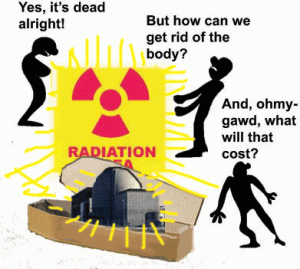
As in many industrial projects, many of the hazards come to be known only after the project is well under way or, very often, completed and discontinued. Gentilly 1 is one of those projects. Like others, the Gentilly 1 detritus presents grave dangers to living things as the building, equipment and supplies are taken apart. Complete public review of the decommissioning of Gentilly 1 is required, in my view. It should not be skipped or sidestepped in any way.
Notice of the project was posted on the website of the federal impact assessment agency, but it bears scant resemblance to formal and complete impact assessments, and the public is instructed to send comments to the private consortium, rather than to the federal authorities responsible for making the decision.
To cite Dr. Gordon Edwards, president of the Canadian Coalition for Nuclear Responsibility (CCNR): “Heavily contaminated radioactive concrete and steel would be trucked over public roads and bridges, through many Quebec and Ontario communities, to the Chalk River site just across the Ottawa River from Quebec.”
How Flexibility, Not Nuclear, Can Secure Ontario’s Electricity Future
Michael Barnard, Clean Technica, 6 Feb 26
Ontario is moving forward with planning for an entirely new nuclear generation site in Port Hope, 100 km east of Toronto, at a moment when its electricity system is already one of the most nuclear-heavy in the world. Nuclear power today provides roughly 55% of Ontario’s electricity, with hydro adding another 25%. Wind, solar, batteries, and demand-side resources together account for a much smaller share, having been cut off at the knees in 2018 when the provincial conservative party took power and summarily cut 758 contracts for renewable generation. Advancing a new site signals how the province understands its future electricity challenge. It reflects an expectation that Ontario will require another large block of firm, always-available capacity to remain reliable as demand grows, particularly during the most constrained hours of the year.
Ontario’s electricity planners, primarily through the Independent Electricity System Operator, frame the case for new nuclear around long-term reliability rather than annual energy supply. Their planning outlook projects electricity demand rising by about 65–75% by 2050—a low energy value not aligned with actual climate or competitiveness goals—with a projected winter peak reaching roughly 36–37 GW. Summer peaks are also expected to rise, but they remain slightly lower, in the range of about 35–36 GW by mid-century. The winter peak, not the summer peak, is treated as the binding constraint, and it is that single cold, dark evening hour that underpins the justification for new nuclear capacity.
This framing matters because of how nuclear is treated in planning models. Nuclear plants supply energy year-round, but the decision to build new nuclear capacity is driven mainly by how much firm capacity planners believe is needed to meet future peak demand. Nuclear units are counted as fully available during peak hours, even though they operate continuously, do not follow demand and are not available when down for maintenance, refueling or refurbishment for months or years. From a reliability perspective, this approach is understandable. System operators are rewarded for avoiding shortages and penalized heavily for blackouts, while overbuilding capacity carries fewer immediate consequences………………………….
The distinction between energy growth and peak growth is critical here. Energy demand, measured in TWh, reflects how much electricity the system produces over a year. Peak demand, measured in GW, reflects the single hardest hour the system must meet. Nuclear plants are not built to follow peaks, but they are sized to peaks. If peaks remain sharp and high, nuclear looks attractive in planning models. If peaks flatten or decline due to significant system component flexiblity, the value of adding large, inflexible, always-on generation falls quickly, even if total energy demand continues to rise.
Electrification without flexibility is genuinely concerning, and planners are right to worry about it……………………………………………………………………………………………………………………………………………………………………………………………………………………………………………………..
Ontario does not lack clean electricity. It lacks a planning framework that fully reflects how electricity systems are changing, why winter peaks appear hard only under outdated assumptions, and how firm capacity is actually used in a flexible, digitized grid. The choice facing the province is not between reliability and decarbonization, but between building infrastructure sized for a winter peak that no longer needs to exist and building a system designed to avoid creating that peak in the first place. https://cleantechnica.com/2026/02/06/how-flexibility-not-nuclear-can-secure-ontarios-electricity-future/
Impact Assessment of the Planned Dismantling of the Core of the Gentilly-1 reactor.
To: The Honourable Julie Aviva Dabrusin, Minister of Environment and Climate Change
From: The Canadian Coalition for Nuclear Responsibility (CCNR)
Re: Impact assessment of the final dismantling of the Gentilly-1 nuclear reactor
Date: July 5 2026
Reference Number 90092
Cc Impact Assessment Agency of Canada
Atomic Energy of Canada Limited
Canadian Nuclear Laboratories \
Canadian Nuclear Safety Commission
The final dismantling of the most radioactive portions of the Gentilly-1 nuclear reactor, proposed by the licensee Canadian Nuclear Laboratories (CNL), will mark the first time that a CANDU power reactor has ever been fully decommissioned – that is, demolished.
This project is not designated for a full panel review under the Impact Assessment Act (IAA) but you, Minister Dabrusin, have the power to so designate it under the terms of the Act.
The Canadian Coalition for Nuclear Responsibility urges you to do so for the reasons stated below.
(1) When it comes to post-fission radioactivity (human made), the long-lived radioactive decommissioning waste from the core area of a nuclear reactor is second only in radiotoxicity and longevity to the high-level radioactive waste (irradiated nuclear fuel) that has already been designated for a full panel review under IAA at the initiative of NWMO, the Nuclear Waste Management Organization. The deadline for initial comments on the NWMO Deep Geological Repository project (DGR) for used nuclear fuel was yesterday, February 4, 2026. [Our comments: www.ccnr.org/GE_IAAC_NWMO_comments_2026.pdf ]
(2) Fully dismantling a nuclear reactor core is a demanding and hazardous undertaking, resulting in voluminous intermediate level radioactive wastes. The highly radioactive steel and concrete structures – fuel channels, calandria tubes, tube sheet, thermal shield, calandria vessel, biological shield, reactor vault, and more – need to be carefully disassembled, using robotic equipment and perhaps underwater cutting techniques with plasma torches. Such methods are described in a 1984 article published by the Canadian Nuclear Society and linked below, on the detailed advanced methods required for dismantling Gentilly-1.
Gentilly-1 Reactor Dismantling Proposal, by Hubert S. Vogt
Reactor and Fuel Handling Engineering Department
Atomic Energy of Canada Limited – CANDU Operation
Published by the Canadian Nuclear Society in the
Proceedings of the 5th Annual Congress
(3) Dismantling the reactor core will create large amounts of radioactive dust and debris some of which will almost certainly be disseminated into the atmosphere, or flushed into the nearby St. Lawrence River, or added to the existing contamination of the soil and subsoil (including groundwater) at the Gentilly site. It is worth noting that, during the Bruce refurbishment operations in 2009, over 500 workers – local tradesmen, mainly – suffered bodily contamination by inhaling radioactive airborne dust containing plutonium and other alpha emitters (i.e. americium) for a period of more than two weeks. The workers were told that respirators were not required. The radioactivity in the air went undetected for two and a half weeks because neither Bruce managers nor CNSC officers on site took the precaution to have the air sampled and tested.
(4) Once disassembled, the bulky and highly radioactive structural components of Gentilly-1 will have to be reduced in volume by cutting, grinding or blasting. Radioactive dust control and radioactive runoff prevention may be only partially effective. Then the multitudinous radioactive fragments must be packaged, and either (a) stored on site or (b) removed and transported over public roads and bridges, probably to Chalk River. The Chalk River site is already overburdened with high-level, intermediate-level, and low-level radioactive wastes of almost all imaginable varieties. Toxic waste dumping at Chalk River is contrary to the United Nations Declaration on the Rights of Indigenous Peoples (UNDRIP) and the federal government’s “duty to consult”, since Keboawek First Nation and other Indigenous rights-holders in the area have not given their free, prior, informed consent to either the storage or disposal of these toxic wastes on their unceded territory. A panel review could weigh the options of temporary on-site storage versus immediate relocation. Since there is as yet no final destination for intermediate level wastes, moving those wastes two or three times rather than once (when a final destination exists) will be costlier and riskier. Hence on-site storage is attractive.
(5) The decommissioning waste must be isolated from the environment of living things for thousands of years. The metallic fragments contain such long-lived radioactive species as nickel-59, with a 76,000 year half-life, and niobium-94, with a 20,000 year half-life. The concrete fragments also contain long-lived radioactive species like chlorine-36, with a 301,000 year half-life. Such radioactive waste materials are created during the fission process; they were never found in nature before 1940. NWMO has recommended that such intermediate-level decommissioning waste requires a Deep Underground Repository (DGR) not unlike that proposed for used nuclear fuel. CCNR believes that it is only logical and entirely responsible to call for a panel review of this, the first full decommissioning project for a nuclear power reactor in Canada. The lessons learned will have important ramifications for all of Canada’s power reactors as they will all have to be dismantled at some time. This is not “business as usual”.
Read more: Impact Assessment of the Planned Dismantling of the Core of the Gentilly-1 reactor.(6) Demolition of buildings is often a messy business, but demolition of a nuclear reactor core is further complicated by the fact that everything is so highly radioactive, therefore posing a long-term threat to the health and safety of humans and the environment. A panel review by the Assessment Agency is surely the least we can do in the pubic interest.
(7) To the best of our understanding, Canadian Nuclear Laboratories (CNL) is a private contractor managed by an American-led consortium of multinational corporations, whose work is paid for by Canadian taxpayers through the transfer of billions of dollars to CNL from Atomic Energy of Canada Limited, a crown corporation wholly owned by the Canadian government. As CNL is a contractor, paid to do a job by AECL, CCNR does not feel assured that the best interests of Quebec or of Canada will automatically be fully served by CNL, as it is not accountable to the electorate. When the job involves demolishing, segmenting, fragmenting, packaging and transporting dangerous radioactive materials, involving persistent radiological toxins, we feel that a thorough public review by means of a comprehensive impact assessment, coupled with the involvement and oversight of accountable federal and provincial public agencies is required to ensure that the radioactive inventory is verified and documented, that no corners are cut and no presumptions go unchallenged. The International Atomic Energy Agency strongly advises that before any reactor decommissioning work is done, there has to be a very precise and accurate characterisation of the radioactive inventory –
all radionuclides accounted for, all becquerel counts recorded, and all relevant physical/chemical/biological properties carefully noted. We have seen no such documentation, but we believe it is essential to make such documentation publicly available before final decommissioning work begins, and to preserve such records for future generations so that they can inform themselves about the radioactive legacy we are leaving them. A panel review could help to ensure that we do not bequeath a radioactive legacy that is devoid of useful information, a perfect recipe for amnesia.
(8) The Canadian Coalition for Nuclear Responsibility (CCNR) is federally incorporated as a not-for-profit organization, whose official name in French is le Regroupement pour la surveillance du nucléaire (RSN). CCNR/RSN is a member of le Regroupement des organismes environnementaux en énergie (ROEÉ). The ROEÈ has also filed comments on this dossier, linked below, with 10 recommendations. We endorse the ROEÉ submission and all of its recommendations. The ROEÉ submission is en français www.ccnr.org/IAAC_ROEE_G1_2026.pdf and here is a link to an English translation
www.ccnr.org/IAAC_ROEE_G1_e_2026.pdf .
Yours very truly,
Gordon Edwards, Ph.D., President,
Canadian Coalition for Nuclear Responsibility
1 This Month

of the week – Shut Down Drone Warfare!


Tell the Ukrainian Government to Drop Prosecution of Peace Activist Yurii Sheliazhenko
Petition to revoke the licensing of the Near Surface Nuclear Disposal Facility (NSDF) at Chalk River. https://www.ourcommons.ca/petitions/en/Petition/Details?Petition=e-7247
To see nuclear-related stories in greater depth and intensity – go to https://nuclearinformation.wordpress.com
-
Archives
- March 2026 (237)
- February 2026 (268)
- January 2026 (308)
- December 2025 (358)
- November 2025 (359)
- October 2025 (376)
- September 2025 (257)
- August 2025 (319)
- July 2025 (230)
- June 2025 (348)
- May 2025 (261)
- April 2025 (305)
-
Categories
- 1
- 1 NUCLEAR ISSUES
- business and costs
- climate change
- culture and arts
- ENERGY
- environment
- health
- history
- indigenous issues
- Legal
- marketing of nuclear
- media
- opposition to nuclear
- PERSONAL STORIES
- politics
- politics international
- Religion and ethics
- safety
- secrets,lies and civil liberties
- spinbuster
- technology
- Uranium
- wastes
- weapons and war
- Women
- 2 WORLD
- ACTION
- AFRICA
- Atrocities
- AUSTRALIA
- Christina's notes
- Christina's themes
- culture and arts
- Events
- Fuk 2022
- Fuk 2023
- Fukushima 2017
- Fukushima 2018
- fukushima 2019
- Fukushima 2020
- Fukushima 2021
- general
- global warming
- Humour (God we need it)
- Nuclear
- RARE EARTHS
- Reference
- resources – print
- Resources -audiovicual
- Weekly Newsletter
- World
- World Nuclear
- YouTube
-
RSS
Entries RSS
Comments RSS
 nuclear-news