Rouhani’s and Obama’s difficult path to a nuclear compromise
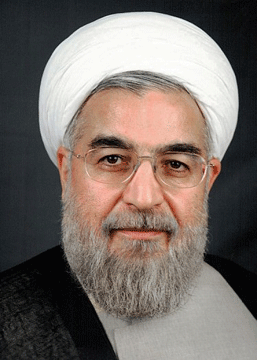 Saving the Nuclear Deal With Iran, NYT, By THE EDITORIAL BOARD JAN. 10, 2015 Twice recently, Iran’s president, Hassan Rouhani, has acted boldly in support of his biggest political gamble, pursuit of a nuclear agreement with the major powers. In a speech last Sunday on Iran’s troubled economy, he argued that Iran will never enjoy sustained growth if it is isolated from the rest of the world. Three weeks earlier, he made clear that he would confront Iran’s hard-liners in his efforts to clinch a deal in which Iran would agree never to produce a nuclear weapon in return for the lifting of crippling international sanctions.
But Mr. Rouhani is not the only leader trying to keep a potential agreement from being savaged by domestic opponents. President Obama has a similar problem in Congress, where Senators Robert Menendez, a Democrat from New Jersey, and Mark Kirk, a Republican from Illinois, are expected to introduce legislation that could torpedo any deal by imposing new sanctions on Iran, including tighter controls on its battered oil industry.
Negotiators for Iran and the major powers — the United States, Britain, France, China, Russia and Germany — resume their talks next week in Geneva. While they have made significant progress, they remain at odds over how large a nuclear program — geared for energy production and medical uses — Iran will be permitted to have.
Mr. Rouhani has shown his seriousness by openly challenging the Iranian hard-liners who are hostile to a deal and by appealing for support from intellectuals, academics, businesspeople and others who are open, even eager, for one. To rally political support, he has also hinted that he might bypass established power centers and submit the issue to a popularreferendum. “Our ideals are not bound to centrifuges,” Mr. Rouhani said in reference to the nuclear program.
Mr. Rouhani’s path to compromise is not easy. ……..http://www.nytimes.com/2015/01/11/opinion/sunday/saving-the-nuclear-deal-with-iran.html
Is Assad building a secret nuclear plant in Syria?
Report: Assad Building Secret Nuclear Plant, Arutz Sheva German magazine says Syrian President is building a secret underground plant with the aim of developing nuclear weapons. By Elad Benari, 9 Jan 15, Canada Intelligence suggests that Syrian President Bashar Al-Assad is building a secret underground plant with the aim of developing nuclear weapons, Germany’s Spiegel news magazine said Friday, according to AFP.
Citing information made available by unidentified intelligence sources,Spiegel said the plant was in an inaccessible mountain region in the westof the war-ravaged country, two kilometers (1.2 miles) from the Lebanese border.
It is deep underground, near the town of Qusayr and has access to electricity and water supplies, the magazine said in a pre-released version of the story released ahead of Saturday’s publication.
It said it had had access to “exclusive documents”, satellite photographsand intercepted conversations thanks to intelligence sources.
Western experts suspect, based on the documents, that a reactor or an enrichment plant could be the aim of the project, whose codename is “Zamzam”, Spiegel said.
The Syrian regime has transferred 8,000 fuel rods to the plant that had been planned for a facility at Al-Kibar, it added.
In 2007, a bombing raid on an undeclared Syrian nuclear facility at Al-Kibar was widely understood to have been an Israeli strike, but it was never acknowledged by the Jewish state.
Since then, Western intelligence agencies detected another nuclear plant in Syria, this time in a Damascus suburb……..http://www.israelnationalnews.com/News/News.aspx/189739#.VLGM9dLF8nk
Egypt’s New and Renewable Energy Authority (NREA) selects 67 companies to develop 4.3 GW project
 Huge interest in Egyptian renewable energy tender
05. JANUARY 2015 | GLOBAL PV MARKETS, APPLICATIONS & INSTALLATIONS | BY: JONATHAN GIFFORD
The chairman of Egypt’s New and Renewable Energy Authority (NREA) has revealed that 67 companies have been selected to take part in developing 4.3 GW of renewable energy projects in the country. The successful companies were chosen from 177 applicants. http://www.pv-magazine.com/news/details/beitrag/huge-interest-in-egyptian-renewable-energy-tender_100017661/#ixzz3OAPGU0b4
Middle East’s first GW-scale tender for solar power swamped with applicants
Solar twice oversubscribed in Middle East’s first GW-scale tender http://www.pv-tech.org/news/solar_twice_over_subscribed_in_middle_easts_first_gw_scale_tender 5 Jan 15 Egypt’s recent renewable energy tender was twice oversubscribed for solar projects, it has been revealed.
The Egyptian government is expected to reveal the full list of pre-approved projects in the region’s first gigawatt-scale tender later today.
The law firm Eversheds hosted an event in December with the chairman of Egypt’s New and Renewable Energy Authority and the managing director of the electricity regulator, EgyptERA. The subject of the country’s 4.3GW feed-in tariff programme was raised. The scheme includes 2GW of large-scale solar, 300MW of PV projects under 500kW and 2GW of wind.
Michelle T Davies, head of Eversheds’ clean energy and sustainability group, spoke to PV Tech after the event: “They explained more about the programme during that day. They had 178 projects apply for the FiT and they have pre-qualified 67. Forty of those are solar. The rest are wind.
“Solar was more than double subscribed and wind was 56% subscribed. So the wind tender will go out again,” she said, adding that the first power purchase agreements are likely to be awarded in the first half of 2015.
PV plants between 500kW and 20MW will receive a rate of US$0.136/kWh. Project between 20 and 50MW will be offered US$0.1434/kWh. Contracts will be offered for a 25-year term.
Attempts by Mossad to assassinate more nuclear scientists were foiled, Iran claims
Iran: We foiled Mossad attempt to assassinate nuclear scientist http://www.haaretz.com/news/diplomacy-defense/1.635269 Revolutionary Guards official says operation took place in last two years. By Haaretz | Jan. 4, 2015 An Iranian Revolutionary Guards official says the elite force foiled a Mossad attempt to assassinate one of the country’s nuclear scientists in the last two years, Iran’s Fars news agency reports.
“In the last two years, the Zionist enemy (Israel) was trying hard to assassinate an Iranian nuclear scientist, but the timely presence of the [Revolutionary Guards] security forces thwarted the terrorist operation,” Col. Ya’qoub Baqeri, deputy chief liaison officer of Flight Guards Corps, told Fars on Saturday.
The story noted that in June 2012, Iran announced it had arrested “all the elements” involved in the assasinations of five Iranian nuclear scientists that had taken place in the previous two years. Fars added that prior to those purported arrests, Iranian intelligence detected Mossad bases “within the territories of one of Iran’s Western neighbors” that trained and assisted the assassins.
Israel has never commented officially on these killings, but major Western media, quoting off-the-record Israeli intelligence sources, have attributed them to the Mossad. Last March, CBS News reported that the Obama administration was pressuring Jerusalem to halt such killings.
CBS national correspondent Dan Raviv, an expert on Israeli intelligence, reported that the Mossad “ran an assassination campaign for several years aimed at Iran’s top nuclear scientists. The purpose was to slow the progress made by Iran, which Israel feels certain is aimed at developing nuclear weapons; and to deter trained and educated Iranians from joining their country’s nuclear program.”
Raviv reported that at least five nuclear scientists had been killed, mostly by car bombs. “Remarkably, the Israeli assassins were never caught, obviously having long-established safe houses inside Iran – although several Iranians who may have helped the Mossad were arrested and executed,” the CBS report stated.
The CBS story added that even ahead of the pressure from the Obama administration, Prime Minister Benjamin Netanyahu had himself ordered the Mossad to stop the assassinations because he no longer wanted to run the risk of agents getting “captured and hanged.”
Tentative agreement between Iran and USA


 Iran and US tentatively agree on formula to reduce nuclear programme http://www.theguardian.com/world/2015/jan/02/iran-us-tentative-deal-nuclear-programme-uranium-russia Washington hopes Tehran will ship enriched uranium to Russia to reduce its weapon-making ability, diplomats say Iran and the United States have tentatively agreed on a formula that Washington hopes will reduce Tehran’s ability to make nuclear arms by committing it to ship to Russia much of the material needed for such weapons, diplomats say.
In another sign of progress, two diplomats told Associated Press that negotiators at the December round of nuclear talks drew up for the first time a catalogue outlining areas of potential accord and differing approaches to remaining disputes.The diplomats said differences still dominate ahead of the next round of Iran six-power talks on 15 January in Geneva. But they suggested that even agreement to create a to-do list would have been difficult previously because of wide gaps between the sides.
Iran denies it wants nuclear arms, but it is negotiating with the US, Russia, China, Britain, France and Germany on cuts to its atomic programme in the hope of ending crippling sanctions. The talks have been extended twice due to stubborn disagreements.
The main conflict is over uranium enrichment, which can create both reactor fuel and the fissile core of nuclear arms.In seeking to reduce Iran’s bomb-making ability, the US has proposed that Tehran export much of its stockpile of enriched uranium – something the Islamic Republic has long said it would not do.
The diplomats said both sides in the talks are still arguing about how much of an enriched uranium stockpile to leave Iran. . It now has enough for several bombs, and Washington wants substantial cuts below that level.
But the diplomats said the newly created catalogue lists shipping out much of the material as tentatively agreed upon.The diplomats, who are familiar with the talks, spoke to the AP recently and demanded anonymity because they are not authorised to comment on the closed negotiations.
Issues that still need agreement, they said, include the size of Iran’s future enrichment output. The US insists that it be cut in half, leaving Tehran with about 4,500 centrifuges used to enrich uranium, or fewer if it replaces them with advanced models. Tehran is ready for a reduction of only about 20%, according to the diplomats.
Two other unresolved issues are Iran’s Fordo underground enrichment site and the nearly built Arak nuclear reactor. The US and its five allies in the talks want to repurpose Fordo to a non-enrichment function because it is believed impervious to a military attack from the air. The six also seek to re-engineer Arak from a model that produces enough plutonium for several nuclear weapons a year to a less proliferation-prone model.
Negotiators hope to reach a rough deal by March and a final agreement by 30 June.
A diplomatic deal with Iran would be the most globally significant step forward
A nuclear deal with Iran would mean a less volatile world, Julian Borger Guardian, 1 jan 15 There will be no greater diplomatic prize in 2015 than a comprehensive nuclear deal with Iran. In its global significance, it would dwarf the US detente with Cuba, and not just because there are seven times more Iranians than Cubans. This deal will not be about cash machines in the Caribbean, but about nuclear proliferation in the most volatile region on Earth.
An agreement was supposed to have been reached by 24 November, but Iran and the west were too far apart to make the final leap. After nine months of bargaining, the intricate, multidimensional negotiation boiled down to two main obstacles: Iran’s long-term capacity to enrich uranium, and the speed and scale of sanctions relief.
Iran wants international recognition of its right not just to enrich, but to do so on an industrial scale. It wants to maintain its existing infrastructure of 10,000 centrifuges in operation and another 9,000 on standby, and it wants to be able to scale that capacity up many times.
The US and its allies say Tehran has no need for so much enriched uranium. Its one existing reactor is Russian-built, as are its planned reactors, so all of them come with Russian-supplied fuel as part of the contract. The fear is that industrial enrichment capacity would allow Iran to make a bomb’s-worth of weapons-grade uranium very quickly, if it decided it needed one – faster than the international community could react.
However, the west is currently not offering large-scale, immediate sanctions relief in return for such curbs on Iran’s activity. President Barack Obama can only temporarily suspend US congressional sanctions, and western states are prepared to reverse only some elements of UN security council sanctions. The best the west can offer upfront is a lifting of the EU oil embargo.
These gaps remain substantial, but none of the parties involved can walk away from the table. A collapse of talks would lead to a slide back to the edge of conflict between Iran and Israel; the latter has vowed to launch military strikes rather than allow the former to build a bomb. It could also trigger a wave of proliferation across the region and beyond as other countries hedge their bets.
Unfair and not sensible – USA hawks Try to Sabotage Nuclear Deal
 US Iran Hawks Try to Sabotage Nuclear Deal Iran hawks in Washington don’t want a nuclear agreement; they want Tehran to surrender its sovereignty and national rights. The National Interest Muhammad Sahimi December 24, 2014 As the prospects of a comprehensive nuclear agreement between Iran and the P5+1—the five permanent members of the United Nations Security Council plus Germany—brightens, Washington’s hawks seem to have gone into panic mode. They do not seem to want any agreement unless Iran says “uncle,” gives up its sovereignty and national rights within the Nuclear Non-Proliferation Treaty (NPT), and completely dismantles its nuclear infrastructure. They’re asking Iran to capitulate, not to negotiate. That’s an unrealistic goal—and in their dogged pursuit of it, they have overlooked serious steps Tehran’s taken that demonstrate a desire for compromise.
We see this unfortunate dynamic in an article this month by Mark Dubowitz, Executive Director of the Foundation for Defense of Democracies, published in the National Interest. Dubowitz’s main premise is that it was the economic sanctions imposed by the United States and its allies that brought Iran to the negotiation table, and only more economic sanctions will induce it to surrender. The premise is false. While the sanctions did play a role, they were not the most important reason, or even one of the primary ones. Iran is negotiating because that is what it has wanted—contrary to Dubowitz’s assertion that “Iran does not appear to be ready to compromise.”
President Hassan Rouhani, Foreign Minister Mohammad Javad Zarif, and their diplomatic team have always been interested in a compromise. …………….
What has the United States given in return for these major concessions by Iran? Very little. It has released a small amount of Iran’s own money, frozen in foreign banks as the result of the illegal sanctions. The U.S. has also lifted its (also illegal!) ban on the export of petrochemical products and a few other minor items. As President Obama stated, 95 percent of all the sanctions are still in place………….
The reality is that the Geneva Accord and its Joint Plan of Action permit Iran to continue its research on more advanced centrifuges. Iran’s obligation, which it has lived by, is not installing such centrifuges. After this was pointed out, Albright retreated, declaring that the test was in violation of the “spirit” of the Accord. Who is moving whose goalposts, again?
Washington’s hawks risk missing another chance at a sensible nuclear agreement or détente with Iran, one that would dramatically change the dynamics of the turbulent Middle East for the better. Instead, they seem to think they can drive a proud nation to surrender. They’ve been wrong before—and their latest salvo suggests they don’t realize they may be wrong again.
Muhammad Sahimi, Professor of Chemical Engineering & Materials Science and the NIOC Chair in Petroleum Engineering at the University of Southern California, is the editor and publisher of the website, Iran News and Middle East Reports, and has been analyzing Iran’s political developments and its nuclear program for two decades.
Criticism in Iran of Iran’s nuclear power programme
| Nuclear Program Has ‘Hurt Iran More Than Iraq War’, Payvand Iran News, 18 Dec 14 |
| By Golnaz Esfandiari, RFE/RL Iran’s nuclear activities and ambitions faced rare, blunt criticism at a roundtable at Tehran University, where one of the speakers said the damage done by the nuclear program was greater than that by the 1980-88 war with Iraq, which left tens of thousands dead and caused much devastation.
“The imposed war [with Iraq] did not damage us as much as the nuclear program has,” professor Sadegh Zibakalam said at the December 17 roundtable, according to reports by Iranian semiofficial news agencies. Zibakalam also criticized the lack of public debate about the nuclear issue. Other speakers were also critical of the nuclear program and its costs for Iranians, who have come under unprecedented U.S.-led sanctions that have made life more difficult. Speaking at the event, former reformist lawmaker Ahmad Shirzad said nothing had come out of the nuclear program, “not even a glass of water.”……. Shirzad said that he welcomed Iran’s official line, according to which the country is against building and acquiring nuclear weapons. The former lawmaker also seemed to suggest that Iran would be better off without a civil nuclear program. “Iran doesn’t have the primary resources and know-how for a nuclear program,” he was quoted as saying by ISNA. He said Iran could assert itself in areas such as petrochemistry and natural gas, where the country has the resources and the knowledge…………. Criticism of the nuclear issue has been a red line in Iran, where media face tough censorship rules in their news coverage. Shirzad said the nuclear issue has turned into a matter of “honor.” “When something becomes a matter of honor, discussing it is not possible anymore. And that has been our problem for the past 11 years,” he said. Zibakalam said that under Iran’s previous administration, criticism of the nuclear issue was impossible. “Unfortunately from 2003 to 2013, debate about the different aspects of the nuclear issue was not possible. I believe that whenever people and the press are prevented from expressing their opinions on different issues, the result is not good,” he was quoted as saying. He added that during those years whenever he would send a slightly critical piece to the press, “the editors would dump it in the closest trash can.”………http://www.payvand.com/news/14/dec/1098.html |
Russia keen to lock Jordan into long term contracts to buy nuclear reactors
 Russia approves draft deal to build nuclear plant in Jordan, Times of Israel 25 Dec 14 State-owned company Rosatom expected to finish construction of first 1,000-megawatt unit by 2024, second by 2026 Russian Prime Minister Dmitry Medvedev endorsed a draft Russia-Jordan agreement on the construction and operation of a nuclear plant in Jordan, the official website of the Kremlin said on Thursday…….
The state-owned company will form a joint venture with the Jordanian government, in which the Russian company will have 49.9 percent of the shares and Jordan will own 50.1%. The agreement will be financed by investments from both parties……
Iran meeting its commitments to nuclear deal with Western powers
Iran honoring nuclear deal with Western powers, IAEA report shows Jerusalem Post, 19 Dec 14, Iran has continued to meet commitments under an interim nuclear agreement with six world powers, a confidential UN agency report showed, though Tehran temporarily halted conversion work that makes higher-grade uranium less suitable for bombs.
The monthly update by the International Atomic Energy Agency (IAEA), seen by Reuters, said Iran was not enriching uranium above a fissile concentration of 5 percent, far below the 90 percent level needed for atomic arms. It also said Iran had not made “any further advances” to its activities at two enrichment facilities and an unfinished heavy water reactor.
Under last year’s accord between Iran and the United States, France, Germany, Russia, China and Britain, the Islamic Republic halted its most sensitive nuclear activity and took other steps in exchange for some easing of economic sanctions…………http://www.jpost.com/Middle-East/Iran-honoring-nuclear-deal-with-Western-powers-IAEA-report-shows-385206
Iran’s President committed to achieving nuclear deal, despite opposition from hawks
Iran’s President Pledges to Face Down Forces Opposing a Nuclear Deal, NYT, By THOMAS ERDBRINK DEC. 15, 2014 TEHRAN — Risking his political standing, Iran’s president stressed on Monday that he was determined to cinch a nuclear deal and prepared to take on the conservative forces who would prefer not to see an agreement with the West, even if that means continued economic sanctions on Iran.
“Some people may not like to see the sanctions lifted,” the president, Hassan Rouhani, said as Iranian negotiators and their United States counterparts resumed talks in Geneva. “Their numbers are few, and they want to muddy the waters.”
A deadline for those talks was extended by seven months after the parties failed to conclude a deal in November. Mr. Rouhani is continuing to maintain that a deal will be concluded. His foreign minister, Mohammad Javad Zarif, said last month that an agreement could be reached in a matter of “weeks.”
Both men have tied their political future to the deal, analysts say. Despite the setbacks in the talks, Mr. Rouhani stays on message on what he says isIran’s bright future……..http://www.nytimes.com/2014/12/16/world/middleeast/irans-president-pledges-to-face-down-forces-opposing-a-nuclear-deal.html?_r=0
Iran and other countries look forward to business boom when nuclear deal is achieved
Anticipating Nuclear Deal and End to Sanctions, Iran Awaits a Business Boom, NYT By THOMAS ERDBRINK DEC. 12, 2014 “……….it is almost an article of faith in business circles that the latest extension is only the postponement of an inevitable thaw between Iran and the rest of the world…………
“The world needs this deal, we need this deal,” Ms. Moghimi said. “It will happen.”
Both moderates and conservatives have expressed concerns about the unchecked rise in expectations, among the public as well as elite business classes, that a deal will be cinched. They have been warning that the enthusiasm could turn to bitter disappointment if the negotiations, set to resume in Geneva next week, should fail, possibly touching off unrest or what some clerics call “another sedition,” a reference to the revolt that followed disputed presidential elections in 2009…….
The wave of optimism began with the election of a moderate president, Hassan Rouhani, who promised to mend Iran’s ties with the world. Mr. Rouhani continues to encourage that thinking, saying just last week that the “nuclear issue would be brought to its destination.” His foreign minister and chief nuclear negotiator, Mohammad Javad Zarif, promised after the most recent extension that a nuclear deal can happen “within weeks.”
The heightened expectations are not solely to be found among Iranians. The flow of foreign delegations to Iran continues at a steady pace, bringing eager businessmen who in conferences laud Iran’s unique geographical position, its stability and largely untapped market of middle-class consumers………http://www.nytimes.com/2014/12/13/world/middleeast/anticipating-nuclear-deal-and-end-to-sanctions-iran-awaits-a-business-boom.html
United Nations General Assembly overwhelmingly calls on Israel to come clean and renounce its nuclear weapons
 UN Resolution: Israel Must Renounce Nuclear Arms, abc news,UNITED NATIONS — Dec 2, 2014, By ALEXANDRA OLSON Associated Press
The resolution, adopted in a 161-5 vote, noted that Israel is the only Middle Eastern country that is not party to the Treaty on the Non-Proliferation of Nuclear Weapons. It called on Israel to “accede to that treaty without further delay, not to develop, produce test or otherwise acquire nuclear weapons, to renounce possession of nuclear weapons” and put its nuclear facilities under the safeguard of the U.N.’s International Atomic Energy Agency.
The United States, Canada, Palau and Micronesia joined Israel in opposing the measure, while 18 countries abstained.
Israel is widely considered to possess nuclear arms but declines to confirm it…….http://abcnews.go.com/US/wireStory/assembly-calls-israel-join-nuclear-treaty-27308456
Iran has made major concessions towards a nuclear deal with the West
Failed Nuclear Talks Are Not Iran’s Fault, Iran News & Middle East ReportMuhammad Sahimi .25 Nov 14Nov. 24, the deadline for reaching a comprehensive agreement between Iran and P5+1 — the five permanent members of the United Nations Security Council plus Germany — came and went without the agreement.
What happened? Iran made major concessions. It was excessive demands by the U.S. and its allies that prevented the comprehensive agreement from materializing.
The original Geneva interim agreement expired last July, but both sides agreed to extend the deadline for reaching a comprehensive agreement to Nov. 24. Now, a new deadline of June 30, 2015 has been set. Both sides said that much progress was made, but some difficult issues have remained unresolved.
The agreement would have created an entirely new dynamic for the war-torn Middle East. It would have ushered in a new era of cooperation between two old nemeses, Iran and the United States, to defeat their common enemy, the Islamic State.
Given the historic significance of the agreement, why is it that a breakthrough was not achieved?
Iran’s Major Concessions
Several complex issues that had seemed unresolvable have actually been hammered out, but only because Iran was willing to negotiate with a spirit of compromise, of give and take.
Abbas Araghchi, Iran’s deputy foreign minister and a principal negotiator, has emphasized repeatedly and emphatically, “Iran would not agree to close any of its nuclear facility.” Iran has agreed to convert the site to a nuclear research facility, representing a major concession.
A second concession involved the IR-40 heavy water nuclear reactor, under construction in Arak, 155 miles southwest of Tehran. When completed, it will replace Tehran Research Reactor, an almost 50-year-old reactor that produces medical isotopes for close to 1 million Iranian patients every year.
The West had demanded that Iran convert the IR-40 to a light-water reactor, due to the concerns that if the reactor, when it comes online, will produce plutonium that can be used to make nuclear weapons. But, Iran refused to go along because, first and foremost, all the work on the reactor has been done by the Iranian experts and thus the reactor is a source of national pride. Iran has already spent billions of dollars to design and begin constructing the reactor, but the West was not willing to share the cost of the reactor conversion to a light-water one.
On its own initiative, Iran has agreed to modify the design of the reactor so that it will produce much smaller amounts of plutonium. Iran also agreed not to build any reprocessing facility for separating the plutonium from the rest of the nuclear waste. This was again a major concession.
The fourth major concession made by Iran is related to the issue of inspection of Iran’s nuclear facilities by the IAEA. Although Iran had lived up to its obligations under its original Safeguards Agreement with the agency signed in 1974, the IAEA under its Director-General Yukiya Amano, who has completely politicized the agency that has contributed to the complexities of reaching the comprehensive agreement, has been insisting that Iran implement the provisions of the Additional Protocol of the SG Agreement, which Iran signed in 2003 and, without ratification by its parliament, implemented voluntarily until February 2006.
Iran set aside the Additional Protocol after the European Union reneged on its promises made to Iran in the Sa’dabad Declaration of October 2003 and the Paris Agreement of November 2004. Iran and the IAEA reached an agreement in November 2013, according to which Iran allows much more frequent and intrusive inspection of its nuclear facilities, way beyond its legal obligations under its SG Agreement. Since then, the IAEA has repeatedly confirmed that Iran has lived up to its obligations.
The U.S. Excessive Demands
Three of the remaining issues concern the number of centrifuges that Iran gets to keep over the duration of the agreement, the duration of the comprehensive agreement and the mechanism by which the crippling economic sanctions imposed on Iran by the U.S. and its allies would be lifted.
In fact, agreeing to limit the number of its centrifuges for the duration of the agreement is yet another significant, but unacknowledged, concession by Iran, a signatory of the Nuclear Non-Proliferation Treaty. Iran’s SG Agreement with the IAEA
The issue of the number of centrifuges, NoC, is also mostly superficial. ………http://www.huffingtonpost.com/muhammad-sahimi/iran-nuclear-talks-fail_b_6219646.html?utm_hp_ref=worldPosted: 11/25/2014
1 This Month
Tell Congress: Prevent Nuclear Catastrophe in Iran

Tell Congress: Prevent Nuclear Catastrophe in Iran

Read the Public Inquiry Report, the Commissioners’ report, Surrendering Australia: The AUKUS Deception is available to download for free at aukuspublicinquiry.com. Or just watch the replay of the National Press Club Luncheon.


Shut down the radiation-damaged Heysham nuclear reactors now
To see nuclear-related stories in greater depth and intensity – go to https://nuclearinformation.wordpress.com

Say No to NASA’s Reckless Nuclear Reactor on the Moon
Say No to NASA’s Reckless Nuclear Reactor on the Moon
-
Archives
- November 2026 (246)
- October 2026 (302)
- September 2026 (339)
- August 2026 (330)
- July 2026 (355)
- June 2026 (287)
- May 2026 (306)
- April 2026 (356)
- March 2026 (251)
- February 2026 (267)
- January 2026 (308)
- December 2025 (358)
-
Categories
- 1
- 1 NUCLEAR ISSUES
- business and costs
- climate change
- culture and arts
- ENERGY
- environment
- health
- history
- indigenous issues
- Legal
- marketing of nuclear
- media
- opposition to nuclear
- PERSONAL STORIES
- politics
- politics international
- Religion and ethics
- safety
- secrets,lies and civil liberties
- spinbuster
- technology
- Uranium
- wastes
- weapons and war
- Women
- 2 WORLD
- ACTION
- AFRICA
- Atrocities
- AUSTRALIA
- Christina's notes
- Christina's themes
- culture and arts
- Events
- Fuk 2022
- Fuk 2023
- Fukushima 2017
- Fukushima 2018
- fukushima 2019
- Fukushima 2020
- Fukushima 2021
- general
- global warming
- Humour (God we need it)
- Nuclear
- RARE EARTHS
- Reference
- resources – print
- Resources -audiovicual
- Weekly Newsletter
- World
- World Nuclear
- YouTube
-
RSS
Entries RSS
Comments RSS

