G7 FMs declare support for Iran’s nuclear deal IRNA http://theiranproject.com/blog/2017/04/11/g7-fms-declare-support-irans-nuclear-deal/ – The G7 Ministers of Foreign Affairs in the final declaration of their meeting in Lucca, Italy have expressed support for the 2015 nuclear deal between Iran and six world powers, known also as the Joint Comprehensive Plan of Action (JCPOA).
“We support the Joint Comprehensive Plan of Action (JCPOA) as an important contribution to the non-proliferation regime,” the Group of 7 (G7) Industrialized nations, including Canada, France, Germany, Italy, Japan, the United Kingdom, and the United States, said in Italy.
“Continued and full implementation of the JCPOA is essential to build confidence that Iran’s nuclear program is exclusively peaceful in nature,” the declaration further read.
The G7 foreign ministers also called for full commitment by all parties involved in the nuclear deal.
“We value the JCPOA’s comprehensive structure and the commitment by all parties to its solid verification mechanism,” they said. We commend and continue supporting the IAEA in its crucial work in Iran, including monitoring and verification to help ensure compliance with Iran’s JCPOA commitments and safeguard obligations, thus playing a key role in fostering mutual trust,” they said.
They further added that, “We stress the need for all parties to entirely and consistently fulfill all their commitments under the JCPOA in good faith.”
The G7 foreign ministers also asked the Islamic Republic of Iran to remain to comply with its JCPOA-commitments.
“We reaffirm the need for Iran to strictly abide by all its nuclear related commitments,” they said in their declaration.
The declaration further referred to the need for the Resolution 2231 of the United Nations Security Council to be fully implemented.
“UN Security Council Resolution 2231 needs to be fully implemented, including its provisions prohibiting the transfer of arms,” the declaration noted.
It also touched upon Iran’s role in Syria and noted, “We call upon Iran to play a constructive regional role by contributing to efforts to achieve political solutions, reconciliation and peace in Syria, Iraq, and Yemen and other parts of the region and to cooperate in countering the spread of terrorism and violent extremism.’
According to the G7 official website, the G7 Ministers of Foreign Affairs met on 10-11 April in Lucca. A traditional meeting held once a year between the seven most industrialized countries of the world.
April 14, 2017
Posted by Christina Macpherson |
2 WORLD, Iran, politics international |
Leave a comment

 http://www.argusmedia.com/news/article/?id=1440687 11 Apr 2017, Washington, 11 April (Argus) — The US administration’s new focus on crises in Syria and North Korea is highlighting a full retreat from President Donald Trump’s pledge to rescind the nuclear agreement his predecessor signed with Iran.
US secretary of state Rex Tillerson today reaffirmed support for the multilateral agreement — the Joint Comprehensive Plan of Action — that lifted restrictions on crude exports from Iran in January 2016. The EU, Russia and China also are parties to the agreement.
The G7 foreign ministers, meeting in Lucca, Italy, in a statement hailed the agreement’s “important contribution to the non-proliferation regime.” Implementation of the agreement will “build confidence that Iran’s nuclear program is exclusively peaceful in nature,” the ministers said.
The US’ approach to Iran so far has not departed greatly from the path former president Barack Obama’s administration paved following the lifting of the nuclear-related sanctions, even though Trump still denounces the deal. Trump imposed new sanctions on Iran following tests of ballistic missiles, just like his predecessor did. And the Pentagon continues to view Iran as a threat to US interests in the Middle East, including the freedom of navigation in the straits of Hormuz and Bab al-Mandeb.
Iran since the lifting of the nuclear-related sanctions increased production by more than 900,000 b/d to 3.8mn b/d in February.
Senior White House officials contend that Iran’s missile tests are evidence of a covert nuclear weapons program. Iran says its program is defensive in nature.
The US administration promised to push for a stronger international response to the missile tests than Obama did. But today’s G7 statement only expresses “deep regret” over the tests.
The need to coordinate sanctions programs with the EU is likely a key driver in the new administration’s approach. EU officials also persuaded US senators to delay advancing a widely supported bill to expand the scope of sanctions on Iran over the missile tests. The Senate Foreign Relations Committee will wait until after the Iranian presidential election on 19 May to schedule a vote on the bill, committee chairman Bob Corker (R-Tennessee) said.
The G7 statement calls on Russia and Iran, as allies of Syrian president Bashar al-Assad’s regime, to ensure Syria’s compliance with the UN convention banning the use of chemical weapons. But the US is directing the bulk of its criticism over Assad’s alleged use of chemical weapons against civilians at Russia.
April 14, 2017
Posted by Christina Macpherson |
Iran, politics international, USA |
Leave a comment
The Impact of the Iran Nuclear Agreement http://www.cfr.org/iran/impact-iran-nuclear-agreement/p39032
Zachary Laub, Senior Copy Editor/Writer April 11, 2017
Introduction
Iran has dismantled much of its nuclear program and given international inspectors extensive access to sensitive sites under an agreement known as the Joint Comprehensive Plan of Action (JCPOA). Under its terms, the United States, European Union, and United Nations have lifted sanctions that had crippled the Iranian economy, but more than year after the accord took effect, Iranians have yet to see the recovery that President Hassan Rouhani had promised. Meanwhile, as the Trump administration has vowed a more aggressive approach to Iran and the U.S. Congress considers levying new sanctions, international businesses, sensing uncertainty, have largely held back from investing in the country.
What are the terms of the JCPOA?
The JCPOA, which was signed in July 2015 and went into effect the following January, imposes restrictions on Iran’s stockpiles of uranium and its ability to enrich it. The so-called P5+1—that is, the five permanent members of the UN Security Council (China, France, Russia, the United Kingdom, and United States) and Germany—negotiated the agreement with Iran over nearly two years. During this period, the Obama administration said its intent was to set back Iran’s nuclear program so that any decision to sprint toward producing fissile material for a weapon—an indicator known as “breakout times”—would take at least a year, up from just a few weeks.
Nuclear restrictions on Iran. To extend that breakout time, the agreement requires that uranium enrichment at Fordow and Natanz be restricted and a heavy-water reactor, at Arak, have its core rendered inoperable; its plutonium byproduct, the P5+1 countries feared, could have been reprocessed into weapons-grade material. These facilities are now being repurposed for research, industrial, or medical purposes, and subjected to inspections by monitors from the UN nuclear watchdog, the International Atomic Energy Agency (IAEA). The accord imposes limits on the numbers and types of centrifuges Iran can operate, as well as the size of its caches of enriched uranium. (Mined uranium has less than 1 percent of the uranium-235 isotope, and centrifuges increase that isotope’s concentration. Uranium enriched to 5 percent is used in nuclear power plants, and at 20 percent it can be used in research reactors or for medical purposes. High-enriched uranium, at some 90 percent, is used in nuclear weapons.) The JCPOA also aims to guard against the possibility that Iran could develop nuclear arms in secret at undeclared sites.
Many of the JCPOA’s nuclear provisions have expiration dates. After ten years, for example, centrifuge restrictions will be lifted, and after fifteen years, so too will limits on the low-enriched uranium it can possess, as well as the IAEA’s access to undeclared sites.
Monitoring and verification. Among the open-ended provisions, Iran is bound to implement and later ratify an “additional protocol” to its safeguards agreement with the IAEA, which gives IAEA inspectors unprecedented access to Iran’s nuclear facilities. (As a signatory to the Nonproliferation Treaty, or NPT, Iran has committed to never pursue nuclear weapons, but it is entitled to pursue nuclear technology for peaceful purposes.) The agency’s director-general issues quarterly reports to the IAEA Board of Governors and UN Security Council verifying Iran’s implementation of its nuclear commitments.
The JCPOA established the Joint Commission, with the negotiating parties all represented, to monitor implementation of the agreement. That body, chaired by Federica Mogherini, the EU foreign policy chief, is charged with dispute resolution, and a majority vote of its members can gain IAEA inspectors access to undeclared sites they consider suspect. It also oversees the transfer of nuclear-related or dual-use materials.
Sanctions relief. In exchange for these limitations on its nuclear program and opening up access to international inspectors, the EU, UN, and United States all committed to lifting sanctions that they had imposed on Iran for its nuclear program. While the United States has only suspended extant nuclear sanctions, it pledged in the JCPOA to remove specified entities from sanctions lists and seek legislation to repeal the suspended sanctions within eight years, as long as the IAEA concludes that Iran’s nuclear activities remain peaceful in nature.
Still, other U.S. sanctions [PDF], some dating back to the hostage crisis in 1979, remain in effect. They cover matters such as ballistic missile production, support for U.S.-designated terrorist groups, and domestic human rights abuses. The United States has stopped enforcing its sanctions on oil exports, freeing Iran to trade on international markets again, but restrictions on financial transactions remain in place. Many banks and other companies, including foreign subsidiaries of U.S. businesses, are wary of doing business in Iran for fear of incurring fines or being barred from dealing on Wall Street. A major exception to U.S. primary sanctions allows Boeing to sell aircraft to Iranian airlines.
New Security Council resolutions are periodically needed to keep UN sanctions suspended, so, by alleging a major violation, any one of the P5 members can veto a new resolution. This “snapback” mechanism is set to remain in effect for ten years, after which point the UN sanctions are set to be repealed.
Has Iran upheld its obligations?
Implementation Day, on which sanctions were lifted, came once the IAEA certified that Iran had met preliminary requirements, including taking thousands of centrifuges offline, rendering the core of the Arak heavy-water reactor inoperable, and selling excess low-enriched uranium to Russia. Since then, the IAEA has mostly found Iran in compliance with the JCPOA’s requirements. Iran twice exceeded the amount of heavy water that it is allowed under the agreement, the IAEA reported, but quickly resolved it.
“Monitoring is a physical act, but verification is a political act.” —Christopher Bidwell, Federation of American Scientists
The challenge inspectors face is that they are “looking to prove the negative,” says Christopher Bidwell, a senior fellow at the Federation of American Scientists. “IAEA reports talk about where Iran is compliant, but then are silent on known rough issues,” he says, highlighting military sites, for which inspectors must seek access from Iranian authorities or adjudication by the Joint Commission. Also omitted from the public record, the International Crisis Group notes, are reports on Iran’s caches of low-enriched uranium and research on centrifuges. “Monitoring is a physical act, but verification is a political act,” Bidwell says. “How sure are you that what you’ve monitored has told you what you want to know?”
Have the P5+1 countries upheld their obligations?
The United Nations, European Union, and United States all repealed or suspended the sanctions that the JCPOA specified be lifted on Implementation Day, and since then the United States has also unfrozen or delivered to Iran certain seized funds. (Liquid assets freed up in European and Asian banks might have totaled some $50 billion, according to a U.S. Treasury official; in addition, the United States refunded $1.7 billion delivered for an arms deal that was signed before the 1979 revolution but never fulfilled.) Most significantly, the United States is no longer enforcing secondary sanctions on Iran’s oil sector, which has allowed Iran to ramp up its oil exports to nearly the level it had been prior to sanctions. The International Monetary Fund (IMF) estimated in October [PDF] that Iran’s GDP was growing at 4.5 percent in 2016 as it boosted its oil production to 3.6 million barrels per day.
How is Iran’s economy performing?
Iranians have not seen as robust an economic recovery as many had expected to follow the JCPOA’s implementation. A morass of U.S. sanctions unrelated to the nuclear program has discouraged major international banks from investing in the country and made many companies wary of expanding into Iran. They fear being held liable for transacting with the numerous sanctioned entities associated with, for example, the Iranian Revolutionary Guard Corps (IRGC), which is ubiquitous in some industries. Uncertainty over whether the nuclear sanctions might be restored persists.
But factors unrelated to sanctions are also hampering the recovery. Corruption, mismanagement, and aging infrastructure are widely acknowledged barriers to industry, and, at about $50 a barrel as of April 2017, oil is trading at less than half the price it was five years earlier, so the revenues to be made from export don’t go as far. The IMF projected that Iran’s growth would “taper sharply” [PDF] in 2017 as it would have trouble surpassing its pre-sanctions level of oil production, and in March 2017 Iran said it would limit its oil production to 3.8 million barrels per day if OPEC members’ agreement to cap their production—a bid to raise oil prices—holds.
With the economy underperforming compared to what Rouhani had promised, some Iranian politicians have accused the United States of dealing in bad faith. Supreme Leader Ali Khamenei, who has expressed ambivalence about the JCPOA, criticized the faltering recovery. But so too has Foreign Minister Javad Zarif, who negotiated the agreement. He said at CFR in September 2016, “it takes a lot to change the global climate that is afraid of the United States taking action against any bank that does any business with Iran.” Referring to U.S. Treasury regulations, he added, “there is one sentence that it’s OK to do business with Iran and about five pages of ifs and buts,” discouraging banks from entering the market.
Do U.S. politics jeopardize the JCPOA?
On the campaign trail, Trump pledged to dismantle or renegotiate the nuclear agreement, echoing the criticisms made by some members of Congress as the agreement was being finalized. Many objected to sanctions relief on the grounds that it would enrich Iran and allow it to expand its influence in regional conflicts like the Syrian civil war. Critics also said that monitoring provisions in the JCPOA offered no guarantee that Iran could not covertly develop a nuclear weapon.
Trump could reimpose waived sanctions or add new ones by presidential prerogative, enact statutory sanctions passed by Congress, or allow the presidential waivers of nuclear sanctions to lapse when they come due for renewal. Any of those measures could be perceived by either Iran or other members of the P5+1 as the United States reneging on its commitments.
After Iran tested ballistic missiles in late January 2017, the administration extended sanctions to twenty-five individuals and entities associated with either the missile program or the IRGC’s expeditionary Quds Force. (Though ballistic missiles could be used to deliver nuclear weapons, they are beyond the scope of the JCPOA; the UN Security Council resolution that codified the JCPOA contains only nonbinding language on the matter.) “It wasn’t a drastic departure from previous policy, including from the Obama administration,” says Ariane M. Tabatabai, a visiting assistant professor at Georgetown’s Edmund A. Walsh School of Foreign Service.
A bill cosponsored by the top Republican and Democrat on the Senate Foreign Relations Committee could prevent the president from fulfilling the U.S. obligation to delist certain entities within eight years of implementation; it could also be construed as impeding the benefits Iran can accrue from sanctions relief. That would “threaten the ongoing implementation of the nuclear deal,” says the Arms Control Association, an independent Washington-based nonproliferation group.
Do Iranian politics jeopardize the JCPOA?
The JCPOA is contentious in Iran as well. Rouhani is running for reelection on May 19, and “the main thing he’s being judged on by the electorate is the economic recovery,” Tabatabai says.
“The Rouhani government oversold its ability to generate economic recovery following the sanctions relief,” she says, “and so now it is dialing back expectations of what is realistic.” The government is now arguing that the recovery will take more time, and that its lag cannot be attributed to sanctions alone.
Hard-liners in Iran argue that the United States is angling to keep the Iranian economy depressed and that Rouhani was hoodwinked into unfavorable terms, a view they say is bolstered by extreme rhetoric from some members of the Trump administration and Congress. They argue that Iran has “redesigned its nuclear facilities while the sanctions have only been suspended,” and so the United States can reinstate sanctions with relative ease even as the Iranian nuclear program has been permanently set back, says Mohammad Ayatollahi Tabaar, an assistant professor at Texas A&M University’s Bush School of Government and Public Service
While some U.S. lawmakers continue to criticize the JCPOA, the other members of the P5+1 are firmly behind it. Many close watchers of the accord say that if the United States were to reinstate sanctions without presenting clear evidence of Iranian cheating, its negotiating partners would be unlikely to follow suit and resurrect the global regime that drove Iran to the negotiating table. “Iran’s goal is to create a gap between the U.S. and EU,” says Tabaar, so Iran likely won’t renege on its nuclear commitments. Instead, he says, hard-liners might push back against the United States in areas beyond the scope of the JCPOA, such as testing ballistic missiles or boosting its support for its clients in Iraq, Syria, or Yemen.
More on this topic from CFR
April 14, 2017
Posted by Christina Macpherson |
Iran, politics international, Reference |
Leave a comment
Saudis to Seek Bids for 700-Megawatt Wind and Solar Projects, Bloomberg, by Anthony Dipaola
April 11, 2017
-
Energy Ministry qualifies 51 companies to bid for power plants
-
First Solar, renewables unit of EDF among qualified companies
Saudi Arabia will begin seeking bids next week from renewable-energy companies to build wind and solar plants with a combined capacity of 700 megawatts as part of the kingdom’s $50 billion program to boost power generation and cut its oil consumption.
Energy Minister Khalid Al Falih will announce a request for proposals for the projects, the next phase in the country’s bidding process, at a conference next week in Riyadh, the ministry said Monday in an emailed statement. The ministry qualified 27 companies to bid for a 300-megawatt solar plant and 24 firms for a 400-megawatt wind farm.
The project is part of a plan to transform the Saudi economy by weaning it off oil and creating new industries. Other Middle Eastern countries including the United Arab Emirates, Jordan and Morocco are also developing renewable energy to curb fuel imports or conserve crude oil for export. Saudi Arabia plans to develop almost 10 gigawatts of renewables by 2023, requiring investment of $30 billion to $50 billion, Al-Falih said in January…….https://www.bloomberg.com/news/articles/2017-04-10/saudis-to-seek-bids-for-700-megawatt-wind-and-solar-projects
April 12, 2017
Posted by Christina Macpherson |
renewable, Saudi Arabia |
Leave a comment
U.S. strikes Syrian military airfield in first direct assault on Bashar al-Assad’s government [following US-backed ‘rebel’ chemical false flag] WP, 06 April 2017 | The U.S. military launched approximately 50 cruise missiles at a Syrian military airfield late on Thursday, in the first direct American assault on the government of President Bashar al-Assad since that country’s civil war began six years ago. The operation, which the Trump administration authorized in retaliation for a chemical attack killing scores of civilians this week, dramatically expands U.S. military involvement in Syria and exposes the United States to heightened risk of direct confrontation with Russia and Iran, both backing Assad in his attempt to crush his opposition.
April 7, 2017
Posted by Christina Macpherson |
Syria, USA, weapons and war |
Leave a comment
If Congress sends Trump this legislation, our new president will be granted the tools and the greenlight from Congress to unravel the Iran deal and put us back on the path to a war with Iran. Unless Democratic senators stand up against this bill soon, opponents of the Iran nuclear deal may wipe away Obama’s diplomatic legacy with Iran faster than even they thought was possible.
Why Give Trump The Keys To War With Iran? https://www.niacouncil.org/give-trump-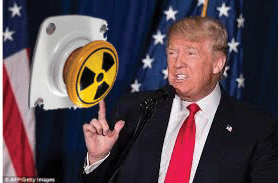
keys-war-iran/ When Trump won the elections, many worried that it could lead to war between the United States and Iran, due to his desire to kill the Iran nuclear deal. Now, thanks to the U.S. Senate, we may be one step closer to this nightmare scenario: The Senate is poised to pass legislation that will place President Trump’s trigger-happy finger on the ignition switch of a deadly conflict with Iran.
Introduced to coincide with the annual American Israel Public Affairs Council (AIPAC) conference that concludes today, the Countering Iran’s Destabilizing Activities Act of 2017 (S. 722) would give Trump new tools to violate the Iran nuclear deal. Perhaps most shockingly, a small group of Senate Democrats have joined Republicans to grant Trump some of the most dangerous authorities that would put the U.S. and Iran back on the path to war. The list of sponsors includes many of the usual suspects ― the consummate Iran hawks who worked to block Obama’s diplomacy with Iran and many of whom have sworn to “rip up” the nuclear deal: Robert Menendez (D-NJ), Bob Corker (R-TN), Marco Rubio (R-FL), Tom Cotton (R-AR), and Ted Cruz (R-TX). But the list of sponsors also includes Ben Cardin (D-MD) ― who opposed the nuclear deal but has said the U.S. should still abide by it ― as well as Bob Casey (D-PA), Richard Blumenthal (D-CT), Michael Bennet (D-CO), Chris Coons (D-DE), and Joe Donnelly (D-IN) who supported the deal.
Yet now these senators are signed onto legislation that requires non-nuclear certifications that would block the president from removing sanctions that are set to expire in later stages of the nuclear agreement. Why would Democratic senators who support the nuclear deal sign on to a measure that would violate the agreement? Because, they have argued, the bill gives the president a case-by-case waiver for the deal-killing provisions. That means that these senators are trusting Donald Trump with new deal-killing authorities and abdicating to him whether the U.S. honors the nuclear deal or “rips it to shreds.”
The bill also enables Trump to re-impose sanctions on Iranian entities that were de-listed pursuant to the accord. And it mandates sanctions that would broadly target any person or entity that ― knowingly or unknowingly ― contributes to Iran’s ballistic missile program, including universities that conduct research and banks that process payments for the government. This would amount to a trickle-down reimplementation of sanctions on much of Iran ― and a violation of the nuclear accord. Finally, the bill would designate the Islamic Revolutionary Guard Corps (IRGC), an elite branch of the Iranian military, as a terrorist group ― a major escalation. The IRGC is a highly problematic organization that has benefitted from years of a sanctions economy at the expense of Iran’s people. It is not unusual for individuals within the IRGC to be sanctioned if they are believed to have connections to Iran’s ballistic missile program. However, designating a foreign military branch as a terrorist organization is an extremely dangerous provocation that Pentagon leaders in multiple administrations have advised against. AIPAC has urged for the IRGC designation for the past decade, yet Barack Obama and even George W. Bush resisted. But now, with Donald Trump in the White House, AIPAC is pressing ahead with its proposal.
If this legislation is passed the U.S. can expect a negative response from Tehran that will undermine moderates in Iran’s upcoming May elections and empower anti-U.S. hardliners. The ranking member of Iran’s Parliament, Alaeddin Boroujerdi, has already signaled that Iranian lawmakers will consider designating the U.S. Army as a terrorist organization in retaliation. It is naïve to assume this exchange will be limited to words. U.S. special forces and IRGC units are currently fighting ISIS on the same front in Mosul. Despite some evidence that IRGC units targeted U.S. troops with IEDs during the height of the Iraq War, there have been no such incidents since U.S. soldiers reentered Iraq in the summer of 2014. In effect, the IRGC and the U.S.-backed coalition have agreed to stay out of each other’s way as they fight a mutual enemy in ISIS. This bill could change that reality by removing any incentive for Iran not to attack U.S. troops in Iraq, forbidding any cooperation with IRGC-backed militias against ISIS, and placing our Iraqi allies in a diplomatic catch-22. It is for this very reason that back in 2007, President Bush’s Pentagon opposed an SDGT designation for the IRGC.
With thousands of AIPAC supporters on Capitol Hill to lobby senators on behalf of the bill, there is a strong chance that this bill could obtain filibuster-proof levels of support. If every Republican supports the bill, and just one more Democrat signs on, AIPAC’s bill will hit 60 votes. If that happens, and Congress sends Trump this legislation, our new president will be granted the tools and the greenlight from Congress to unravel the Iran deal and put us back on the path to a war with Iran. Unless Democratic senators stand up against this bill soon, opponents of the Iran nuclear deal may wipe away Obama’s diplomatic legacy with Iran faster than even they thought was possible. This piece originally appeared in The Huffington Post.
April 1, 2017
Posted by Christina Macpherson |
Iran, politics, politics international, USA |
Leave a comment
 Climate change played key role in Syrian civil war and helped Brexit, Al Gore says, http://www.sanluisobispo.com/news/nation-world/national/article140523093.htmlAn 24 Mar 17, historic drought in Syria led to that nation’s civil war, which, in turn, helped Brexit pass in England, according to former United States Vice President Al Gore who explained his theory at a conference in London this week.
Gore, who has long argued that humans are causing climate change, won an Oscar for his climate-change documentary “An Inconvenient Truth.”
“From 2006 to 2010, 60 percent of the farms in Syria were destroyed and had to be abandoned. Eighty percent of the livestock were killed. The drought in the eastern Mediterranean is the worst ever recorded,” Gore said according to several press reports.
The drought, Gore says, forced more than a million Syrians into cities where they “collided” with refugees from the Iraq War, setting the stage for the Syrian Civil War. Gore said that WikiLeaks documents revealed internal conversations among the Syrian government.
Gore is not the first to tie the severe drought to climate change or the civil war that followed.
“They were saying to one another, ‘We can’t handle this. There’s going to be a social explosion.’ There are other causes of the Syrian civil war,” Gore said, “but this was the principle one.”
That conflict, which began in July 2011, has killed more than 450,000 Syrians and displaced more than 12 million Syrians, according to Al-Jazeera. CNN reports more than 4.8 million Syrians have left the country due to the conflict, which started as a government crackdown in response to protests.
Many of those fleeing the country have migrated to Europe, creating crises in several European nations. That, Gore says, helped lead to Brexit. In June of 2016, citizens of the United Kingdom voted to leave the European Union. Many linked the ongoing refugee crisis to the vote to leave.
“It has unleashed with other factors this incredible flow of refugees into Europe, which is creating political instability in Europe,” Gore said, “and which contributed in some ways to the desire of some in the U.K., to say, ‘Wow, we’re not sure we want to be a part of that anymore.’ ”
The Trump administration does not share Gore’s views on human-caused climate change and has already rolled back numerous Obama-era environmental protections.
Environmental Protection Agency chief Scott Pruitt told CNBC that carbon dioxide is not a primary contributor to global warming. Mick Mulvaney, Trump’s budget director, said climate change research programs are “a waste of your money” while unveiling Trump’s first budget proposal.
“Regarding the questions as to climate change, I think the President was fairly straightforward. We’re not spending money on that anymore. We consider that to be a waste of your money to go out and do that,” Mulvaney said.
March 25, 2017
Posted by Christina Macpherson |
climate change, Syria |
Leave a comment
How Russia Is Turning Syria into a Major Naval Base for Nuclear Warships (and Israel Is Worried), National Interest, Michael Peck, 18 Mar 17, During the 1970s, the Syrian naval base of Tartus became a major port servicing warships of the Soviet Union’s Fifth Mediterranean squadron.
The Soviet Union is gone, and so is Syria as a unified nation. But Russia is back, and it’s building up Tartus again as a naval base that can handle Russia’s largest nuclear-powered ships.
Already, Israel says the Tartus base is affecting its naval operations. U.S. and NATO operations could be next.
Under the forty-nine-year agreement inked late last year by Russia and Syria, “the maximum number of the Russian warships allowed at the Russian naval facility at one time is 11, including nuclear-powered warships, providing that nuclear and ecological security rules are observed,” according to Russia’s RT news site. Russia will also be allowed to expand port facilities to accommodate the vessels.
The specification allowing nuclear-powered warships means that Russia wants to be able to base in Syria large surface ships, namely Kirov-class nuclear-powered battle cruisers, as well as nuclear submarines.
In addition, the treaty allows “Russia is allowed to bring in and out any kind of ‘weaponry, ammunition, devices and materials’ to provide security for the facility staff, crew, and their families throughout the territory of the Syrian Arab Republic ‘without any duties or levies,’” according to RT.
Expansion of the port will take about five years, according to an anonymous source cited in Russia’s Sputnik News. “The source added that the works would focus on dredging operations to allow cruisers and even possibly aircraft carriers to use the facility’s infrastructure,” Sputnik News reported. “According to the source, Russia also needs to develop the facility’s ground infrastructure, through construction of canalization, electricity generation facilities and barracks for the servicemen.”
Sputnik News also listed other provisions of the agreement. These include:
• Russia will be responsible for sea and air security of the base, while Syria handles the land defenses.
• Russia can deploy “temporary mobile outposts” beyond the base, as long as they coordinate them with the Syrians.
• Russia can renovate the base at will, including underwater construction, and build offshore platforms.
• Upon Syrian request, Russia will send specialists to service Syrian warships, conduct search and rescue in Syrian waters, and organize the defense of Tartus.
• Syria agrees not to “make any objections related to the military activities of the base, which will also be beyond Damascus’ jurisdiction.”
• “Syria also pledges to solve any conflicts that may arise if a third party objects to the activities of the base.”
The Tartus deal is significant on several levels…… http://nationalinterest.org/blog/the-buzz/how-russia-turning-syria-major-naval-base-nuclear-warships-19813
March 20, 2017
Posted by Christina Macpherson |
Russia, Syria, weapons and war |
Leave a comment
NUCLEAR TURKEY? Imam close to Erdogan calls for weapons NOW amid tensions with EU, Express UK, 17 Mar 17 TURKEY should ignore rules set by ‘the West’ and build its own NUCLEAR WEAPONS – an Imam close to president Recep Tayyip Erdogan has advised – as the fallout between Brussels and Ankara deepens. By ZOIE O’BRIEN, Mar 16, 2017 The worrying advice has been called weeks ahead of a Turkish referendum aimed at giving more power to President Erdogan – and in the midst of a keeping fallout between Ankara and EU leaders.
Hayrettin Karaman, the Turkish AK Party’s go-to religious leader, attacked ‘the West’ in a letter which insisted Erdogan should immediately invest in weapons of mass destruction.
In the online post the imam accused Christian countries in the West of egotism and racism – stating the bad attitude towards Turkey has been “accelerated”.
President Erdogan is in the midst of a deep fall out with European nations including Germany and the Netherlands after both countries banned rallies and kicked out his ministers who had sworn to campaign for his referendum. Mr Erdogan retaliated by comparing them to Nazis and protests were held outside the Dutch embassy in Ankara.
The fallout threatens the £5billion one-for-one migrant deal.
But, if Mr Erdogan listens to his favourite religious leader, the tensions could be ramped up even further……..http://www.express.co.uk/news/world/780240/TURKEY-Imam-Erdogan-nuclear-weapons-NOW-EU-tension-Germany-Netherlands
March 17, 2017
Posted by Christina Macpherson |
Turkey, weapons and war |
Leave a comment
Iran accuses Israel of hiring assassins to take out nuclear scientists http://www.ynetnews.com/articles/0,7340,L-4933589,00.html
Iranian rep. at International Atomic Energy Agency describes Israel as a threat to entire Middle East, claims it targeted Iranian experts and criticizes Israel for not joining Treaty on the Non-Proliferation of Nuclear Weapons.
March 13, 2017
Posted by Christina Macpherson |
Iran, Israel, secrets,lies and civil liberties |
Leave a comment
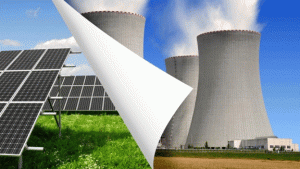 Iran and Middle East could adopt fully renewable electricity systems http://www.enn.com/pollution/article/50746 Iran can transition to a fully renewable electricity system and financially benefit from it by 2030. Researchers at Lappeenranta University of Technology (LUT) show that major oil-producing countries in the Middle East and North Africa (MENA) region could turn their abundant renewable energy resources into lucrative business opportunities in less than two decades.
According to the study, a fully renewable electricity system (100% RE) is roughly 50-60 percent cheaper than other emission-free energy options for the MENA region. For example, new nuclear power costs around 110 euros per megawatt hour. Fossil-CCS option costs around 120 euros per megawatt hour. But the cost of the fully renewable energy electricity is around 60–40 euros per megawatt hour, based on financial and technical assumptions of the year 2030.
The cost of wind and solar electricity would reduce further to 37-55 euros per megawatt hour if different energy resources were connected with a super grid that allows the transmission of high volumes of electricity across longer distances. For Iran, the price could go as low as 40-45 euros per megawatt hour. Such low cost show that the transition of the current fossil-based electricity system towards a fully renewable electricity system can cover all electricity needs in the decades to come.
“The low cost renewable electricity system is a driver for growing standards of living, continued economic growth, in particular also for energy intensive products, and finally more peace,” emphasizes Professor Christian Breyer.
Read more at Lappeenranta University of Technology
March 11, 2017
Posted by Christina Macpherson |
Iraq, MIDDLE EAST, renewable |
Leave a comment
The UAE’s Nuclear Push And the Potential Fallout for the Middle East, Foreign Affairs 21 Feb 17,
The United Arab Emirates will soon be the first Arab state with a nuclear power program and the first to join the civilian nuclear club in more than a quarter of a century. Barring any delays, the country’s first reactor is scheduled to be operational by May 2017, after further inspections by the International Atomic Energy Agency to ensure the fuel is used only for peaceful purposes. So far, the project is on budget and on schedule. The remaining three 1,400 megawatt South Korean-designed reactors are under construction and will be gradually connected to the grid by May 2020.Along with such progress have come concerns about Arab states using their forthcoming nuclear capabilities to build a weapon sometime in the future….
February 22, 2017
Posted by Christina Macpherson |
United Arab Emirates, weapons and war |
Leave a comment
 Samuel Oakford: US promised it wouldn’t use Depleted Uranium in Syria. But then it did. February 14, 2017. Officials have confirmed that the US military – despite vowing not to use controversial Depleted Uranium (DU) weapons on the battlefield in Iraq and Syria – fired thousands of rounds of such munitions during two high-profile raids on oil trucks in Islamic State-controlled Syria in late 2015. The air assaults mark the first confirmed use of this armament since the 2003 Iraq invasion, when hundreds of thousands of rounds were fired, leading to outrage among local communities which alleged that toxic remnants caused both cancer and birth defects.https://airwars.org/news/depleteduranium1/
ICBUW: United States confirms that it has fired depleted uranium in Syria 21 October 2016. US admits that it fired DU on two occasions in November 2015, contrary to earlier claims; military justification for use unclear after target analysis; ICBUW and PAX call for full disclosure to facilitate harm reduction measures; Russia takes advantage of news to distract from its own conduct in the conflict. http://www.bandepleteduranium.org/en/united-states-confirms-fired-du-syria
February 20, 2017
Posted by Christina Macpherson |
depleted uranium, Syria, USA |
Leave a comment
 Europe should act fast to preserve the Iran nuclear deal, Bulletin of the Atomic Scientists, Ellie Geranmayeh, 2 FEBRUARY 2017 US President Donald Trump has stirred all kinds of controversy with European allies during his first fortnight in office. Now, his administration’s evolving policy on Iran is becoming another source of concern across the Atlantic. Europe has a crucial but short window to clearly outline its position on the Iran nuclear deal in ways that could influence policymakers in Washington. In doing so, Europe should focus on preserving the agreement under existing terms as enshrined by the United Nations, and charting a course that minimizes confrontation—whether intentional or accidental—between Iran and the United States in an already turbulent Middle East.
On Wednesday, new National Security Advisor Michael Flynn declared that the United States was “putting Iran on notice.” While it is not clear what exactly he meant, he also criticized Iran’s missiles tests and behavior in the region, calling Tehran’s actions “provocative” and staking out a US position distinctly different from those of Europe and Russia. Although Flynn didn’t directly attack the nuclear deal reached between Iran and six world powers in July 2015, a war of words could easily escalate in ways that threaten it.
The Iran nuclear deal, also known as the Joint Comprehensive Plan of Action (JCPOA), scaled back the country’s nuclear activities in exchange for sanctions relief. As a presidential candidate, Trump suggested he would “dismantle the disastrous deal” or renegotiate it. As president-elect he condemned the deal, but has since said he would “rigorously” enforce it. And during a White House briefing the same day as Flynn’s comments, US officials stressed “that they were not linking Iran’s missile and regional actions to the nuclear deal at this point,” as Al-Monitor reported. On Thursday, though, Trump tweeted that Iran “should have been thankful for the terrible deal the U.S. made with them.” Going forward, it seems likely that Trump’s calculations over the nuclear deal and sanctions will be influenced by developments on non-nuclear issues and also events abroad—among Russia, US allies in Europe, the Gulf Arab states, and Israel.
An early test of the US administration’s stance will come this spring, when the president is required to renew sanctions waivers that enable non-US companies to do business with Iran, in accordance with the terms of the nuclear deal. ……
The Iran nuclear deal steered the United States and its allies away from resorting to yet another futile military encounter in the Middle East. It was never intended to solve every problem between the West and Iran, and the two sides continue to take opposing views on a number of critical issues. However, the agreement has proven that Iran and the West have the capacity to resolve complex security challenges through a transactional relationship if there are mutually beneficial outcomes. Instead of watching Tehran and Washington relapse into the rhetoric of war and conflict, Europe should encourage them to build on this winning formula. http://thebulletin.org/europe-should-act-fast-preserve-iran-nuclear-deal10488
February 3, 2017
Posted by Christina Macpherson |
EUROPE, Iran, politics international, USA |
Leave a comment
Iran tested nuclear-capable cruise missile: German newspaper http://www.reuters.com/article/us-iran-missiles-cruise-idUSKBN15H0WR?il=0 Feb 2, 2017 Iran has tested a cruise missile called “Sumar” that is capable of carrying nuclear weapons in addition to test-firing a medium-range ballistic missile on Sunday, German newspaper Die Welt reported Thursday, citing unspecified intelligence sources.
No comment was immediately available from Germany’s BND foreign intelligence agency or from Iranian authorities.
The newspaper said the Sumar cruise missile was built in Iran and traveled around 600 km in its first known successful test. The missile is believed to be capable of carrying nuclear weapons and may have a range of 2,000 to 3,000 km, the paper said, citing intelligence sources.
Cruise missiles are harder to counter than ballistic missiles since they fly at lower altitudes and can evade enemy radar, confounding missile defense missiles and hitting targets deep inside an opponent’s territory.
But the biggest advantage from Iran’s point of view, a security expert told Die Welt, was that cruise missiles are not mentioned in any United Nations resolutions that ban work on ballistic missiles capable of carrying nuclear weapons.
International sanctions on Tehran were lifted in January last year under a nuclear deal brokered in 2015 by Britain, France, Germany, China, Russia and the United States.
Under the nuclear deal Iran agreed to curb its nuclear program in exchange for lifting of most sanctions. According to a 2015 U.N. resolution endorsing the deal, Iran is still called upon to refrain from work on ballistic missiles designed to deliver nuclear weapons for up to eight years.
News of Iran’s reported cruise missile test came hours after Washington said it was putting Iran “on notice” for its ballistic missile test and signaled that it could impose new sanctions.
Iran confirmed on Wednesday that it had test-fired a new ballistic missile, but said the test did not breach the Islamic Republic’s nuclear agreement with world powers or a U.N. Security Council resolution endorsing the pact.
(Writing by Andrea Shalal, Addirional reporting by Parisa Hafezi in Ankara; editing by Ralph Boulton)
February 3, 2017
Posted by Christina Macpherson |
Iran, weapons and war |
Leave a comment