Three firms file disclosures to consult with Saudi Arabia
Deal faces obstacles over fears about uranium enrichment
Saudi Arabia is enlisting blue-chip lobbyists in Washington as it prepares for a fight over its ambition to build nuclear power plants.
Three law firms have filed disclosures saying they’re advising the kingdom on the issue, as American and Saudi leaders negotiate the contours of a possible nuclear technology-sharing agreement that could allow the enrichment of uranium.
The flurry of registrations underscores the high stakes in Saudi Arabia’s bid to build as many as 16 nuclear reactors over the next quarter century. Trump administration officials, eager to revive the moribund American nuclear industry, are pushing the kingdom to consider a consortium of U.S. companies for the job instead of competitors from Russia, China and other countries.
One of the law firms, Pillsbury Winthrop Shaw Pittman LLC, said in a Feb. 20 Justice Department filing that it would be billing the Saudi Arabia Ministry of Energy, Industry and Mineral Resources $890 per hour to give advice on a potential bilateral agreement with the U.S. “concerning peaceful uses of nuclear energy under Section 123 of the Atomic Energy Act of 1954” as well as “related legal matters concerning the development of a commercial nuclear program.”
DOJ Filings
Among the key players is Jeff Merrifield, a former presidential appointee on the Nuclear Regulatory Commission who now leads Pillsbury’s energy practice.
King and Spalding LLP used almost identical language in a Feb. 21 filing with the Justice Department, which maintains registrations of foreign agents in the U.S. The firm said it would be paid as much as $450,000 for an initial 30-day contract, which could be extended.
And in a third registration on Feb. 20, David Kultgen, a lawyer and retired Saudi Arabian Oil Company executive, said he was recruited in early October to provide legal and consulting services to Saudi Arabia, including on its national atomic energy project.
Plutonium Warnings
Lawmakers and nonproliferation experts warn that without strict prohibitions, a deal to supply Saudi Arabia with nuclear power plants could allow spent fuel to be reprocessed into weapons-grade plutonium.
Energy Secretary Rick Perry met with Saudi officials in London last week to discuss the possible nuclear plant deal, even as the Trump administration reluctantly prepares to offer the Saudis an accord that falls short of a so-called “gold standard” prohibition on enriching and reprocessing of uranium that was embedded in a nuclear-sharing agreement with the United Arab Emirates a decade ago.
At least one other such “123 agreement” to share nuclear technology — named after a section of the U.S Atomic Energy Act — contains similar prohibitions, but more than a dozen others fall short of that “gold standard.”
Supporters of a nuclear plant agreement are girding for a fight. Even if the Trump administration agrees to share nuclear technology with Saudi Arabia, the deal faces bipartisan criticism in Congress. Federal law requires congressional approval of and consultation over any 123 agreements laying out the framework for nuclear cooperation, with a special role reserved for the House Committee on Foreign Affairs and the Senate Committee on Foreign Relations.
Netanyahu’s Concerns
Under some scenarios, a 123 agreement can enter into force after 60 days unless Congress adopts a joint resolution disapproving it, according tothe Congressional Research Service.
Israeli Prime Minister Benjamin Netanyahu shared his concerns about Riyadh’s nuclear power goals with the Senate Foreign Relations Committee earlier this week, telling lawmakers he opposed any agreement allowing the Saudis to enrich uranium and reprocess plutonium.
The chairman of that committee, Senator Bob Corker, a Republican from Tennessee, said that “there will be a lot of attention paid as to how this is crafted.”
And that scrutiny is bipartisan. Senator Ed Markey, a Democrat from Massachusetts who also sits on the Foreign Relations panel, said any watering down of the gold standard “would set a negative precedent for the entirety of the Middle East.”
“It would be hard to say to the United Arab Emirates, to the Egyptians, and for that matter other countries around the world, that they shouldn’t also have uranium enrichment and plutonium reprocessing,” Markey said in an interview.
The 4,800 megawatt Akkuyu plant is a intended to reduce Turkey’s dependence on energy imports but has been beset by delays since Russia was awarded the contract in 2010.
But Turkish companies have been put off by the size of the financing required as well as by concerns they will not receive a sufficient share of the lucrative construction side of the deal, two industry sources said.
The firms are also worried that the guaranteed electricity price could eventually be lowered, reducing future revenue, they said.
Rosatom did not respond to a request for comment. Officials for EUAS and the government declined to comment.
Rosatom last year said it would sell 49 percent of Akkuyu Nukleer AS, the company which will build and operate the plant, to a consortium made up of Kolin Insaat, Kalyon Insaat and Cengiz Holding – Turkish firms that have been awarded major infrastructure projects under Erdogan.
However, the final agreement was never signed and Rosatom said Kolin and Kalyon had decided to pull out of the project.
March 9, 2018, BY ORHAN COSKUN AND CAN Sezer ANKARA/ISTANBUL (Reuters) – Turkey’s first nuclear power plant is likely to miss its 2023 target start-up date as Russian builder Rosatom struggles to find local partners, two people familiar with the matter said.
The $20 billion project is part of President Tayyip Erdogan’s “2023 vision” marking 100 years since the founding of modern Turkey.
Rosatom is looking at four Turkish companies as possible partners, but little progress has been made so far, said one of the sources, both of whom declined to be identified because the information is not yet public.
Rosatom said last month it was in talks with state-owned power producer EUAS after a deal with a consortium of three firms collapsed
“Concrete progress has not been made in the talks so far, and this includes EUAS from the government side,” one source said, adding that Rosatom was keen to have a government entity such as EUAS as a shareholder.
Rosatom is looking for Turkish partners to take a 49 percent stake in the planned Akkuyu nuclear plant in southern Turkey.
But the government is wary of EUAS taking on the 49 percent stake by itself.
“A 49 percent stake still means $10 billion of funding even if it’s spread over years,” the source said. “It is a very big project, there are many details and issues that need to be worked on. We can’t expect this to be resolved soon.”
The project is to be financed by Rosatom and its partners and will involve loans from export-import agencies and banks, Anastasia Polovinkina, director of Rosatom affiliate Rusatom Energy International told a conference in June 2017.
FINANCING
The 4,800 megawatt Akkuyu plant is a intended to reduce Turkey’s dependence on energy imports but has been beset by delays since Russia was awarded the contract in 2010.
But Turkish companies have been put off by the size of the financing required as well as by concerns they will not receive a sufficient share of the lucrative construction side of the deal, two industry sources said.
The firms are also worried that the guaranteed electricity price could eventually be lowered, reducing future revenue, they said.
Rosatom did not respond to a request for comment. Officials for EUAS and the government declined to comment.
Rosatom last year said it would sell 49 percent of Akkuyu Nukleer AS, the company which will build and operate the plant, to a consortium made up of Kolin Insaat, Kalyon Insaat and Cengiz Holding – Turkish firms that have been awarded major infrastructure projects under Erdogan.
However, the final agreement was never signed and Rosatom said Kolin and Kalyon had decided to pull out of the project.
Much has been written about Saudi Arabia’s plans for nuclear power since the Trump administration announced last fall that it would conclude a civilian nuclear cooperative agreement with Riyadh. Almost all of this commentary suggests Washington must accommodate the kingdom’s desire to enrich uranium and reprocess plutonium, two activities that bring states to the brink of making bombs. In particular, commentators repeatedly raise five points—none of which are sound.
Myth #1: Saudi Arabia needs nuclear power to meet its growing electrical demand.
If Saudi Arabia is to have a prosperous economic future, we are told, it must meet its growing power requirements by burning less oil. For this, nuclear proponents insist, the Saudis need sixteen large reactors. Although often repeated, this is not true. In 2012, the Saudis announced their intention to build sixteen reactors by 2032. By 2017, Saudi planners had pushed this back to 2040. Shortly thereafter, Crown Prince Mohammed bin Salman backed an national development plan for 2030 that didn’t mention nuclear power, but instead focused on investing in renewables.
Most recently, the Saudis announced that instead of sixteen large power reactors, they are only building two. Some have argued that this slippage reflects the kingdom’s desire to finance reactor construction with its oil revenues. With the price of oil dropping from $100 a barrel several years ago to roughly $60 a barrel today, the schedule for nuclear construction had to slide. If true, this suggests the Saudi nuclear “imperative” is less than urgent.
A more compelling explanation is that Saudis don’t need nuclear power. In fact, recent studies found that the Saudis could more cheaply meet their energy and environmental requirements by developing its natural-gas resources and investing in renewables—photovoltaic, concentrated solar power and wind. They also found economic value in upgrading the kingdom’s electrical grid and reducing subsidies that artificially drive up electrical demand. This should not be surprising. The United Arab Emirates, Riyadh’s next-door neighbor, which began construction of four power reactors several years ago, just announced that the UAE would not be building any more nuclear plants. Why? Cheaper alternatives: in addition to plentiful natural gas and wind resources, the Emirates are now investing in photovoltaic systems and solar thermal storage systems, which together can operate twenty-four hours a day more cheaply than nuclear. These findings also apply to Saudi Arabia.
Myth #2: Without a formal nuclear cooperative agreement with Riyadh, America will forgo billions of dollars of nuclear hardware and know-how exports to the kingdom.
This point presumes that the kingdom will stick with its 2012 energy plan, which it has already backed away from. It also mistakenly assumes that America still manufactures export reactors. The only American-headquartered firm that is actively interested in exporting to the kingdom is Westinghouse. It is entirely foreign owned and is a reactor designer, not a manufacturer. It’s currently in bankruptcy proceedings, and is eager to be bought by a Canadian holding firm. Naturally, Westinghouse would like its prospective buyers to believe that it has a clear shot at the Saudi market.
Unfortunately it’s, at best, a long shot. Westinghouse’s design, the AP1000, has yet to operate anywhere. The reactor’s construction is embarrassingly behind schedule and over budget both in China and the United States. Mismanagement by Westinghouse caused two reactors in South Carolina to be terminated after an expenditure of $9 billion, which, in turn, nearly bankrupted Westinghouse’s Japanese owner, Toshiba. Finally, American nuclear know-how and other nonnuclear electrical generating parts can and have been exported in support of non-American reactors abroad without a formal nuclear cooperative agreement. These goods would likely make up a majority of American nuclear exports to the kingdom but, again, their export does not require negotiating a nuclear cooperative agreement.
Myth #3: If Westinghouse does not win the bid, the Russians or Chinese will, reducing American nuclear influence in the region.
This argument is perhaps the most egregious. Consider: an unspoken motive for the kingdom to pursue a nuclear program is to develop an option to make nuclear weapons, if needed, to deter Iran. This would all but preclude buying Russian. Rosatom, after all, is building Iran’s reactors. If Saudi Arabia buys Russian, it is all but asking Moscow to let Iran know exactly what the kingdom is doing in the nuclear realm. Consider also Russia’s recent ill-fated nuclear dealings with South Africa (a contributing factor in forcing President Zumafrom office) and Turkey (where Rosatom’s financial inflexibility prompted Turkey’s private financiers, who were underwriting half of the undertaking, to pull out of the project).
As for buying Chinese, doing so is also risky. The Chinese recently encountered “safety concerns” that delayed operation in Taishan of both its Westinghouse AP1000, and a French-based design. As for China’s top export nuclear design, the Hualong One (HPR 1000) reactor, the British won’t be done certifying it until 2022. China’s other possible export system, the CAP 1400, based on the yet-unproven AP1000, has yet to operate anywhere.
What’s left? The kingdom’s original bid requirements were for two reactors that would produce 2,800 megawatts. The only country that has a reactor that is operating, that is properly licensed, and that has been built roughly on time and on budget that could meet this requirement is Korea’s APR-1400. The Saudis only changed their original bid requirements after the United States, China, Russia and France all complained. Given Korea’s relative success in building four APR-1400 reactors on time and on budget in the United Arab Emirates, and its success in operating a licensed APR-1400 in South Korea, the Korean reactor is still the odds-on favorite to win the Saudi bid.
Myth # 4: It makes economic sense for the kingdom to enrich uranium to fuel its own reactors.
No, it doesn’t. Saudi nuclear backers argue that the kingdom should enrich, given the uranium reserves the Saudis have discovered. Uranium, however, is plentiful globally and priced at historic lows (less than $22 a pound), as are uranium-enrichment services. More important, the kingdom would have to spend billions on a variety of plants to enrich uranium and produce its own nuclear fuel. Starting such an undertaking might make economic sense if the kingdom had roughly a dozen large reactors up and running. It currently has none, and has only opened a process to buying two.
Myth #5: United States has more to gain by accommodating Saudi Arabia’s demand that it be allowed to enrich uranium than resisting it.
Trumpeting these myths, proponents of a permissive U.S.-Saudi nuclear deal argue that Washington lacks the leverage to secure a Saudi pledge not to make enrich or reprocess. The best Washington can do, it is argued, is to ask Riyadh to defer such dangerous nuclear activities for several years. Some even suggestthat acceding to Riyadh’s wishes is in Washington’s interest, since allowing the Saudis the capacity to make nuclear weapons–usable fuels might help “deter” Iran from acquiring nuclear weapons.
None of this seems sound. As already noted, the Korean APR-1400 is most likely to win the Saudi contract. Given this reactor’s American technical content, senior Korean officials are convinced they cannot export it to the kingdom unless the Saudis first reach a nuclear cooperative agreement with the United States. For this reason (and others besides), Seoul is inclined to take American guidance. Meanwhile, President Trump is trying to get the European parties to the Iran nuclear deal to devise a tighter follow-on understanding. A riskier approach would be for the United States to break from its policy (solidified in the 2009 U.S.-UAE nuclear cooperative agreement) to get non-weapons states in the Middle East to forswear enriching and reprocessing.
Besides the odd optics of looking like a version of the 2015 Iran nuclear deal (which President Trump says is “the worst deal ever”), allowing Riyadh to enrich and reprocess would immediately excite the humors of the UAE and Egypt. Both have U.S. nuclear cooperative agreements that allow them to request their agreements be modified if the United States offers any of their neighbors a more generous nuclear deal. Then there’s Morocco and Turkey: their nuclear agreements with Washington are up for renewal in 2021 and 2023. They too are likely to ask for equal treatment as soon as possible. How this serves anyone’s long-term interest is, at best, unclear.
Henry Sokolski is executive director of the Nonproliferation Policy Education Center and the author of Underestimated: Our Not So Peaceful Nuclear Future. He served as deputy for nonproliferation policy in the office of the U.S. secretary of defense from 1989 to 1993.
Iran’s Rouhani: West will regret collapse of nuclear deal
Iran’s president accuses US of sabotaging 2015 pact as other officials say Tehran’s missile programme is non-negotiable. Aljazeera, 7 Mar 18
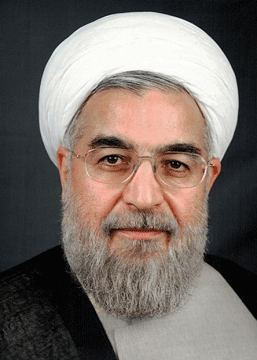
Iranian President Hassan Rouhani has warned the West will come to “regret” the day the nuclear agreement collapses, laying blame on the United States for trying to sabotage the historic deal.
Rouhani’s comment came as a senior Revolutionary Guard official vowed on Tuesday that Iran will defy pressure to scale back the country’s ballistic missile programme – part of a new push by US President Donald Trump to renegotiate the original pact signed in 2015.
Following a meeting with France’s Foreign Minister Jean-Yves Le Drian in Tehran on Monday, Rouhani said while Iran is ready for any “unfavourable” consequences, negotiations and diplomacy remain the best options to save the agreement.
“Remaining committed to the accord would prove to the world that the negotiation and diplomacy is the best way to solve problems, but the collapse of the deal means that political talks are a waste of time,” he said.
Rouhani stressed it is necessary for all signatories of the deal to adhere to their commitments, adding Tehran will never be the first party to violate the agreement, Tasnim News agency quoted him as saying.
Iran will not negotiate over its ballistic missiles until the United States and Europe dismantle their nuclear weapons, a top Iranian military official said on Saturday.
While Iran has accepted curbs on its nuclear work — which it says is for purely peaceful purposes — it has repeatedly refused to discuss its missile program.
Iran says its nuclear program is defensive because of its deterrent nature.
THE MIDDLE EAST’S NUCLEAR TECHNOLOGY CLOCK STARTS TICKING, INTERNATIONAL POLICY DIGEST JAMES DORSEY, 04 MAR 2018
The Middle East’s nuclear technology clock is ticking as nations pursue peaceful capabilities that potentially leave the door open to future military options.
Concern about a nuclear arms race is fuelled by uncertainty over the future of Iran’s 2015 nuclear agreement, a seeming US willingness to weaken its strict export safeguards in pursuit of economic advantage, and a willingness by suppliers such as Russia and China to ignore risks involved in weaker controls.
The Trump administration was mulling loosening controls to facilitate a possible deal with Saudi Arabia as Israeli Prime Minister Benyamin Netanyahu prepared, in an address this week to a powerful Israeli lobby group in Washington, to urge US President Donald J. Trump to scrap the Iranian nuclear deal unless the Islamic republic agrees to further military restrictions and makes additional political concessions.
In putting forward demands for parity with Iran by getting the right to controlled enrichment of uranium and the reprocessing of spent fuel into plutonium, potential building blocks for nuclear weapons, Saudi Arabia was backing away from a 2009 memorandum of understanding with the United States in which it pledged to acquire nuclear fuel from international markets.
“The trouble with flexibility regarding these critical technologies is that it leaves the door open to production of nuclear explosives,” warned nuclear experts Victor Gilinsky and Henry Sokolski in an article in the Bulletin of the Atomic Scientists.
Democratic Senator Ed Markey, of Massachusetts, says any deal is “almost certain” to require a non-proliferation accord, known as a “123 agreement,” of the type the United States has previously signed with South Korea and India, and which is designed to prevent the spread of nuclear weapons.
“Previous US efforts to conclude a 123 agreement with Saudi Arabia have been unsuccessful because of its long-standing refusal to commit to foregoing any uranium enrichment or spent-fuel reprocessing on its territory — the so-called… ‘gold standard’ for 123 agreements,” Markey, of the Senate Foreign Relations Committee, said in a letter to Secretary of State Rex Tillerson and Energy Secretary Rick Perry.
AFP on Tuesday obtained a copy of the letter, which is dated February 26.
Riyadh plans to announce at the beginning of March its short list of firms which will bid to build its nuclear reactors.
Besides the US company Westinghouse, Russian, French, Chinese and South Korean firms are in the running.
A nuclear accord between Riyadh and Washington would allow US corporations to export their nuclear technology to Saudi Arabia, while tensions are high surrounding the civil nuclear program of Riyadh’s regional rival Iran.
US President Donald Trump has threatened to tear up a 2015 global pact under which Iran — facing suspicions it was working towards a nuclear bomb — agreed to curb its nuclear program in exchange for a lifting of sanctions.
Both Washington and Riyadh have complained of Iran’s “destabilizing” acts in the Middle East.
Markey says Saudi Arabia’s “unwillingness” to commit to a “gold standard” 123 agreement “is particularly concerning in light of comments made by Saudi officials and members of the royal family suggesting that a nuclear program may be as much for geopolitical purposes as for electricity generation.”
According to several US media reports, Saudi Arabia’s Crown Prince Mohammed bin Salman — the main driver of a more aggressive regional push by the kingdom — is to visit the United States in early March to meet with Trump.
The visit has not been officially confirmed by either country.
Ties between the kingdom and Washington have strengthened since Trump assumed office early last year. His first official trip abroad was to Saudi Arabia, which is trying to diversify its oil-based economy and energy sources.
Talks come as U.S. considers allowing Saudi uranium enrichment
· Energy Secretary Perry delays India trip for visit to London
Energy Secretary Rick Perry will travel to London to discuss nuclear energy with officials from Saudi Arabia on Friday as the Trump administration pursues a deal to build reactors in the kingdom, according to two people familiar with the plans.
Perry scrapped a trip to New Delhi to accommodate meetings at the White House this week, creating an opening for him to lead an inter-agency delegation to London, said the people, who asked not to be named to discuss administration strategy.
The administration is considering permitting Saudi Arabia to enrich and reprocess uranium as part of a deal that would allow Westinghouse Electric Co. and other American companies to build nuclear reactors in the Middle East kingdom.
The meetings in London between Perry and Saudi Arabia’s Minister of Energy and Industry Khalid Bin Abdulaziz Al-Falih are seen as a critical step in months of ongoing discussions over a potential nuclear cooperation agreement, bringing together key deal makers from each country.
Some American agreements with other countries have prohibited the enrichment and reprocessing of uranium in exchange for the use of nuclear technology, and that had scuttled negotiations for Saudi projects during the Obama administration.
16 Power Plants
The administration is mulling whether to ease that requirement now as a way to help Westinghouse and other companies win Saudi contracts. Saudi Arabia plans to construct 16 nuclear power reactors over the next 20 to 25 years at a cost of more than $80 billion, according to the World Nuclear Association.
The Energy Department confirmed the cancellation of Perry’s India trip but a spokesman did not reply to a question about the London talks.
Any agreement they reach must be approved by Congress, which will have 90 days to weigh in. The potential deal has drawn opposition from anti-nuclear proliferation advocates and some lawmakers, such as Senator Ed Markey, a Massachusetts Democrat.
On Monday, Markey asked the Trump administration to detail its efforts to sign a nuclear cooperation agreement with the Saudis and share information about U.S. negotiations with the country.
“Congress remains in the dark about what exactly is being considered, why we may be re-evaluating our nonproliferation objectives and standards, and how and when this information is being conveyed to Saudi Arabia and other countries around the world,” Markey said in a letter to Perry and Secretary of State Rex Tillerson.
Saudi Arabia’s Crown Prince Mohammed Bin Salman is expected to visit the U.S. in March.
No to a permissive US-Saudi nuclear deal, Bulletin of the Atomic Scientists, Victor Gilinsky, Henry Sokolski , 22 Feb 18,
A US-Saudi nuclear agreement is said to be in the works. The reported deal would allow Saudi Arabia to buy US nuclear power reactors and—because of Saudi resistance to stricter terms—would be “flexible” on Saudi uranium enrichment and on reprocessing of spent reactor fuel. The trouble with flexibility regarding these critical technologies is that it leaves the door open to production of nuclear explosives.
More disappointing, although perhaps not surprising, is that the proposed agreement has the support of more than a few nuclear policy experts outside government. They make a familiar argument regarding nuclear exports: If the United States insists on stricter terms—terms that bar enrichment and reprocessing—the Saudis will turn to Russia or China for nuclear technology, granting these countries greater influence in the Middle East. The United States has been down this road before, in the cases of Iran and India, and it didn’t turn out well. A permissive US-Saudi nuclear agreement would be strategically dangerous for the United States and the region. Congress should not approve such a deal.
What’s driving the administration to cut such an agreement? Let’s set aside the Energy Department’s claims that the Saudis need nuclear power plants and that Westinghouse has a chance to get the business for the United States. First, the Saudis have cheaper energy options—natural gas and renewables. This is clear from the decision of the similarly situated United Arab Emirates not to build more nuclear plants beyond four reactors already planned or under construction. Second, Westinghouse—now bankrupt—has no chance to get the business, and in any case it is no longer a US-owned company. The Saudis, if they did go forward with developing nuclear energy, would do business with the South Koreans, who are successfully completing a proven reactor design next door in the United Arab Emirates.
If buying American is not the key driver of this deal, what is? The Saudis, to maintain theoption of using in its plants US parts whose export is controlled by law, want an umbrella agreement. But they obviously have more in mind than nuclear energy. They compete with Iran for influence in the Middle East, and they are obsessed with this rivalry. They are convinced that they need to match Iran’s nuclear potential. That means being within arm’s reach of a Bomb. These circumstances shouldn’t surprise anyone, and in fact one of the main reasons to restrain Iran is precisely to avoid such a scenario. If Saudi Arabia opts for nuclear weapons, Turkey and Egypt may be close behind. Taking into account Israel’s nuclear arsenal, the Middle East could turn into a nuclear cauldron.
One must also consider the longer-term consequences of allowing “flexibility” in a nuclear deal with Saudi Arabia. Nuclear plants proposed for the Middle East, or now being built, will last many decades. But will governments in the region last that long? The Saudi kingdom—despite recent, overhyped steps toward modernity such as allowing women to drive—is an anachronism. However firmly entrenched the kingdom appears in the person of Crown Prince Mohammad bin Salman, it could disappear overnight, as almost happened in the fundamentalist attack on the Grand Mosque in 1979.
Congress skeptical of Saudi nuclear energy demands, AL-Monitor Bryant Harris February 21, 2018
After years of informal negotiations, the United States is facing mounting pressure to reach a civilian nuclear agreement with Saudi Arabia or risk getting shut out of the Gulf kingdom’s lucrative energy market.
But Riyadh’s refusal to give up on certain capabilities that could be used in a nuclear weapons program has caused concern among lawmakers that the Donald Trump administration may be too keen to strike a deal.
Under Section 123 of the US Atomic Energy Act of 1954, Congress must review any agreement to supply a foreign state with US nuclear technology. While the Trump administration has yet to publicly rule out any concessions, Saudi insistence on retaining the right to enrich uranium and to reprocess plutonium faces significant roadblocks on Capitol Hill.
“I think we have made clear — not that it was necessary — that a 123 agreement that in any way contemplated an enrichment program is going to face a lot of opposition in Congress,” a congressional source familiar with the debate told Al-Monitor. “So I just don’t think that the executive branch is going to go there.”……….
Energy Secretary Rick Perry visited Saudi Arabia and discussed Riyadh’s solicitation for bids to build its first two nuclear reactors late last year. Soon after, Bloomberg reported that the administration was actively considering a 123 agreement that would grant the Saudis wide latitude to pursue uranium enrichment and plutonium reprocessing.
Nonproliferation champions in Congress have been pushing back since. The Wall Street Journal reported this week that Sen. Ed Markey, D-Mass., who sits on the Senate Foreign Relations Committee, told the Saudi ambassador last month that he would force a floor vote and debate on any proposed 123 agreement with Riyadh.
“It seems crazy to loosen important nonproliferation standards just to try to secure an uncertain commercial deal,” Markey told the Journal………
“Members of the Saudi royal family have suggested that they may have an interest in nuclear weapons at some point in the future,” Daryl Kimball, the executive director of the Arms Control Association, told Al-Monitor. “There is considerable concern in Congress about any nuclear cooperation with Saudi Arabia that does not somehow make it harder for the Saudis to acquire enrichment and reprocessing technology in the future.”
……….. http://www.al-monitor.com/pulse/originals/2018/02/congress-skeptical-saudi-nuclear-energy-demands.html#ixzz57rsqvui8
Former US Secretary of State John Kerry said the late Saudi King, Abdullah Bin Abdulaziz, and ousted Egyptian President, Hosni Mubarak, asked the United States to bomb Iran.
Speaking at a panel discussion at the Munich Security Conference yesterday, Kerry said Mubarak personally told him that “the only thing to do with Iran is to bomb it”.
According to the former US official, the discussion took place in September 2013 when a number of countries in the region were increasingly concerned over Iran’s nuclear programme.
Kerry added that Washington responded at the time that Tehran had already begun enriching nuclear fuel, and that a military strike will not stop this development.
As US Secretary of State in former President Barack Obama’s administration, Kerry was one of the main drafters of the nuclear deal between Iran and the P5+1 countries which in July 2015. The deal allows for the lifting of decades of sanctions imposed on Tehran in exchange for it ceasing its nuclear programme.
Earlier in January, US President Donald Trump gave the deal’s European partners four months to “either fix the deal’s disastrous flaws or the United States will withdraw”. However, European allies along with other signatories to the agreement, Iran, China and Russia categorically rejected the request.
Why Trump Might Bend Nuclear Security Rules To Help Saudi Arabia Build Reactors In The Desert, NDTV, 20 Feb 18, The issue is a test of President Donald Trump’s foreign policy and his self-professed bargaining prowess.
For Saudi Arabia’s crown prince Mohammed bin Salman, the reactors are a matter of international prestige and power, a step toward matching the nuclear program of Shia rival Iran while quenching some of the kingdom’s domestic thirst for energy.
For the Trump administration, the contest poses a thorny choice between promoting U.S. companies and fighting nuclear proliferation. If the administration wants to boost the chances of a U.S. consortium led by Westinghouse, it might need to bend rules designed to limit nuclear proliferation in an unstable part of the world. That could heighten security risks and encourage other Middle Eastern countries to follow suit.
“If the Saudis were to get an agreement without restrictions, it would set a dangerous precedent in the region and [be] a significant break with American nuclear policy for the last 50 years,” said Jon Wolfsthal, a consultant on nuclear weapons who was a director for arms control and nonproliferation at the National Security Council under President Barack Obama.
The issue is a test of President Donald Trump’s foreign policy and his self-professed bargaining prowess. Trump, his son-in-law, Jared Kushner, and Energy Secretary Rick Perry have made pilgrimages to Riyadh to cozy up to the young crown prince and win big contracts for U.S. firms. Yet little has come to fruition.
Now, as Mohammed prepares to visit the United States in March, the Saudi deadline looms for Westinghouse, which is winding its way through bankruptcy and is eager to find customers for its much-praised AP1000 design. Without a diplomatic deal, Westinghouse and a South Korean group, which uses U.S. parts and technology and would be bound by the same rules, could be sidelined in favor of Russian or Chinese state companies.
The key rules governing nuclear sales to Saudi Arabia are spelled out in a document known as a 123 agreement, named after a section in the 1954 Atomic Energy Act.
The United States has 123 agreements with 23 countries, Taiwan and Euratom, a group of 27 nations. The 123 agreement for Saudi Arabia imposes limits on uranium enrichment and the reprocessing of spent fuel, both of which could be used to produce material for nuclear bombs.
Saudi Arabia has argued that it should be free to mine and enrich its own uranium deposits, as long as it abides by the international Non-Proliferation Treaty,which bars the diversion of materials to a weapons program. The China National Nuclear Corp. has signed preliminary agreements with the Saudis to explore nine potential uranium mining areas. Former intelligence chief Prince Turki al-Faisal told Reuters in December that Saudi Arabia would “have the same right as the other members of the NPT, including Iran.”
Mohammed, who harbors ambitions for an invigorated, more diverse Saudi economy, invited foreign firms to submit proposals last fall. In mid-November, executives from the world’s five leading nuclear reactor design and construction firms – including the Pennsylvania-based Westinghouse – made presentations to Saudi officials.
Khalid Al-Falih, Saudi Arabia’s energy and natural resources minister, told Reuters on Dec. 20 that he aims to sign contracts by year’s end.
The push to provide nuclear power to Saudi Arabia has divided U.S. policymakers.
Henry Sokolski, the executive director of the nonprofit Nonproliferation Policy Education Center who served in President George H.W. Bush’s Pentagon, asked, “How do we feel about the stability of the kingdom? The reactors are bolted to the ground for a minimum of 40 years and a maximum of 80 years. That’s enough for the whole world to change.”
But others say that if the United States doesn’t build the reactors, then Russia’s Rosatom or the China Nuclear Engineering and Construction Group will, providing fewer safeguards against proliferation and eroding U.S. diplomatic strength in the region.
“I would prefer to have America’s nuclear industry in Saudi Arabia than to have Russian or China’s, so I think it’s useful that we’re reengaging with the Saudis. We should try to get the best restraints on enrichment and reprocessing, including a ban for some significant length of time, say 20 or 25 years,” said Robert Einhorn, a senior fellow at the Brookings Institution and a former State Department adviser for nonproliferation and arms control. “We should show some flexibility.”
The need to build nuclear reactors in Saudi Arabia, which has the world’s largest petroleum reserves, isn’t obvious. The kingdom says it wants to curtail the burning of oil to generate electricity at home. Doing so would free up more oil for exports, the kingdom’s main source of revenue.
Saudi electricity consumption doubled between 2005 and 2015. During the peak summer months, when temperatures soar past 120 degrees Fahrenheit, the kingdom burns about 700,000 barrels of oil a day for air conditioning. Add industrial and transportation use, and Saudi Arabia’s domestic crude consumption has neared 3 million barrels a day, more than a quarter of its total output.
Solar is another option. The Saudis could also tap its plentiful supplies of natural gas, much of which is flared and wasted.
Prestige is another lure for Saudi Arabia. Its smaller oil-rich neighbor, the United Arab Emirates bought four South Korean-model nuclear reactors now under construction.
“If ever there was a place that could take care of own energy needs without nuclear, it’s the UAE,” said F. Gregory Gause, a professor of international affairs at Texas A&M University. “I think it becomes a prestige thing, like international airports.”
But the UAE also signed a 123 agreement in January 2009 that is called the gold standard. It agreed not to enrich or reprocess – although a passage says it could reconsider if others in the region start doing so. It plans to buy uranium from the United States and ship spent fuel to Britain or France for reprocessing.
For Saudi Arabia, the UAE’s gold standard set a high bar. “During the Obama administration, we were at an impasse,” said Gary Samore, a former White House arms control coordinator now at Harvard’s Kennedy School of Government. “We wanted them to make a commitment similar to what Abu Dhabi did. We never overcame that issue in our negotiations.”
………… In the end, the fate of the U.S. proposal will circle back to the political and diplomatic efforts to forge a 123 agreement.
Saudi Arabia “would like us to cave to some degree on some elements of the 123 agreement,” said Rep. Brad Sherman, D-Calif., a member of the House Foreign Affairs Committee. But, he added, “the fewer Mideast nuclear weapons states, the better. And the fewer nondemocratic nuclear states, the better. And the fewer states where I can’t predict 10 years down the road what their attitudes will be toward the United States, the fewer of those countries that have nuclear weapons the better.”https://www.ndtv.com/world-news/why-trump-might-bend-nuclear-security-rules-to-help-saudi-arabia-build-reactors-in-the-desert-1815048
The world’s largest oil exporter, Saudi Arabia, is exploring the use of nuclear energy for domestic energy consumption as part of its transition away from an oil-based system.
“We are looking at a number of countries that have nuclear technology for peaceful purposes… so that we can save the oil and export it in order to generate revenue,” Foreign Minister Adel Al-Jubeir said at the Munich Security Conference.
The Pentagon said it wouldn’t use depleted uranium rounds against ISIS. Months later, it did — thousands of times. WP, By Thomas Gibbons-NeffFebruary 16, 2017
Months after the Pentagon said it wouldn’t use a controversial type of armor-piercing ammunition that has been blamed for long-term health complications, U.S. aircraft fired thousands of the rounds during two high-profile air raids in Syria in November 2015, the Pentagon acknowledged Wednesday.
The use of the ammunition, a 30mm depleted-uranium bullet called PGU-14, was first reported by a joint Air Wars-Foreign Policy investigation on Tuesday. The roughly 5,265 rounds of the munition were fired from multiple A-10 ground attack aircraft on Nov 16, 2015, and Nov. 22, 2015, in airstrikes in Syria’s eastern desert that targeted the Islamic State’s oil supply during Operation Tidal Wave II, said Maj. Josh Jacques, a U.S. Central Command spokesman.
When loaded with depleted-uranium bullets, the A-10s fired what is called a “combat-mix,” meaning the aircraft’s cannon fires five depleted-uranium rounds to one high explosive incendiary bullet.
The strikes, which involved 30mm cannon fire, rockets and guided bombs, destroyed more than 300 vehicles, mostly civilian tanker trucks, the Pentagon said at the time. The two incidents were championed by the Pentagon, and footage of trucks being destroyed was posted online. The Pentagon said that no civilians were present during the bombardment because fliers had been dropped before strafing runs warning those in their trucks to flee.