Donald Trump ready to go to war against Iran?
 Don’t Let Trump Go to War With Iran https://www.theatlantic.com/international/archive/2018/07/dont-let-trump-go-to-war-with-iran/565082/ Fifteen years after the U.S. entered Iraq, the president is inching us closer to another unnecessary fight. TIM KAINE
US to open new military bases in Iraq, Kuwait
US to open new military bases in Iraq, Kuwait: Reports , Press TV , 14 July 18
New reports say the United States will open new bases in Iraq and Kuwait in defiance of widespread calls to end its military presence in the region.
The Erbil-based BasNews reported on Friday that the US is planning to inaugurate its third military base in Iraq, near the town of al-Qa’im in western Anbar Province bordering Syria.
The report quoted a source from Anbar Province as saying that the new American facility will join the already operating US airbases in Iraq, namely Ain al-Assad in Anbar and Habbaniya, both in Anbar.
The source also noted that the new base will oversee several Anbar cities, the western desert of Iraq and the strategic international road connecting Baghdad to Damascus………
Iraqi officials have in numerous occasions called on the US-led coalition forces to withdraw from their homeland.
Separately on Friday, Kuwait’s al-Rai newspaper reported that the US will soon open a major military air hub near the country’s international airport.
Citing a statement from the US command in Kuwait, the Kuwaiti daily said the facility is intended to serve as a strategic military logistics supply point and the largest aerial port of debarkation in the Middle East.
The facility, the statement said, is further meant to fill the gap until the opening of West Al-Mubarak Airbase in Kuwait in 2023.
“Once finished, the total functional space at ‘Cargo City’ will feature an area of nearly 33,000 square meters,” said Captain Sean Murphy, a civil engineering flight officer in charge of the $32 million project……https://www.presstv.com/Detail/2018/07/14/568063/Iraq-Anbar-Kuwait-base
Concern that Iran might abandon nuclear deal, – package will not fully compensate for U.S. sanctions
Germany says Iran package will not fully compensate for U.S. sanctions https://www.reuters.com/article/us-iran-nuclear-germany/germany-says-iran-package-will-not-fully-compensate-for-us-sanctions-idUSKBN1JW18T, 6 july 18
VIENNA (Reuters) – Germany’s foreign minister said on Friday world powers would not be able to fully compensate for companies leaving Iran due to new U.S. sanctions, but warned Tehran that abandoning its nuclear deal would cause more harm to its economy.
“We will not be able to compensate for everything that arises from companies pulling out of Iran,” Heiko Maas told reporters before a round of talks among the remaining parties to the deal.
He said he did not think this round of talks would end negatively but it was likely more negotiations would be needed on the issue.
Reporting by Francois Murphy; writing by John Irish; editing by Parisa Hafezi
Iran warns that it may reduce co-operation with IAEA if USA increases sanctions
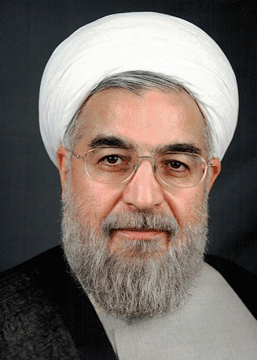 Iran threatens to cut cooperation with nuclear body after Trump move https://www.reuters.com/article/us-iran-oil-sanctions/iran-threatens-to-cut-cooperation-with-nuclear-body-after-trump-move-idUSKBN1JU1E9?feedType=RSS&feedName=topNews, Bozorgmehr Sharafedin, -5 July 18
LONDON (Reuters) – Iran could reduce its co-operation with the U.N. nuclear watchdog, President Hassan Rouhani told the body’s head on Wednesday, after he warned U.S. President Donald Trump of “consequences” of fresh sanctions against Iranian oil sales.
In May, Trump pulled out of a multinational deal under which sanctions on Iran were lifted in return for curbs to its nuclear program, verified by the International Atomic Energy Agency (IAEA). Washington has since told countries they must stop buying Iranian oil from Nov. 4 or face financial measures.
“Iran’s nuclear activities have always been for peaceful purposes, but it is Iran that would decide on its level of cooperation with the IAEA,” Iranian state news agency IRNA quoted Rouhani as saying after meeting IAEA head Yukiya Amano in Vienna.
“The responsibility for the change of Iran’s cooperation level with the IAEA falls on those who have created this new situation,” he added.
Rouhani said earlier in the day Tehran would stand firm against U.S. threats to cut Iranian oil sales.
“The Americans say they want to reduce Iranian oil exports to zero … It shows they have not thought about its consequences,” Rouhani was quoted as saying by IRNA.
On Tuesday, Rouhani hinted at a threat to disrupt oil shipments from neighboring countries if Washington tries to cut its exports.
He did not elaborate, but an Iranian Revolutionary Guards commander explicitly said on Wednesday Iran would block any exports of crude for the Gulf in retaliation for hostile U.S. action.
“If they want to stop Iranian oil exports, we will not allow any oil shipment to pass through the Strait of Hormuz,” Ismail Kowsari was quoted as saying by the Young Journalists Club (YJC) website.
Major-General Qassem Soleimani, commander of the Quds force, in charge of foreign operations for the Revolutionary Guards, said in a letter published on IRNA: “I kiss your (Rouhani’s) hand for expressing such wise and timely comments, and I am at your service to implement any policy that serves the Islamic Republic.”
Rouhani, in Vienna trying to salvage the nuclear deal, said U.S. sanctions were a “crime and aggression”, and called on European and other governments to stand up to Trump.
“Iran will survive this round of U.S. sanctions as it has survived them before. This U.S. government will not stay in office forever … But history will judge other nations based on what they do today,” he said.
Rouhani told reporters that if the remaining signatories – the Europeans Britain, France and Germany as well as China and Russia – can guarantee Iran’s benefits: “Iran will remain in the nuclear deal without the United States.”
French engineering group to help Saudi Arabia towards nuclear power
 World Nuclear News 4th July 2018 , French engineering group Assystem is to conduct site characterisation and
impact studies for Saudi Arabia’s first nuclear power plant under a
contract from the King Abdullah City for Atomic and Renewable Energy
(KA-CARE). The contract was awarded recently following an international
call for tenders launched by KA-CARE. Assystem said the services to be
provided under the contract include site characterisation studies –
including geological and seismic analyses – as well as studies on the
impact of a nuclear power plant on the environment, demographics and on
electricity grids. These services will be provided over an 18-month period.
http://www.world-nuclear-news.org/NN-Assystem-to-assess-potential-Saudi-sites-0407185.html
UAE further delays launch of first nuclear reactor
5 July 18 Emirates Nuclear Energy Corporation now says first reactor to come online in late 2019 or early 2020, The United Arab Emirates said Wednesday that its first nuclear reactor would come online in late 2019 or early 2020, further delaying the launch of the Arab World’s first atomic power station….https://www.arabianbusiness.com/energy/400041-uae-further-delays-launch-of-first-nuclear-reactor
In the race to sell off nuclear power to Saudi Arabia, South Korea looks like the winner

South Korea’s KEPCO shortlisted to bid for Saudi nuclear project https://uk.reuters.com/article/uk-southkorea-nuclear-saudi/south-koreas-kepco-shortlisted-to-bid-for-saudi-nuclear-project-idUKKBN1JR1G4, Reuters Staff, 1  July 18 SEOUL – State-run utility Korea Electric Power Corp (015760.KS) (KEPCO) had been shortlisted to bid for a nuclear project in Saudi Arabia along with the United States, France, China and Russia, South Korea’s energy ministry said on Sunday.
“We were informed by our Saudi counterpart, King Abdullah City for Atomic and Renewable Energy, that KEPCO was shortlisted for a nuclear project in Saudi Arabia,” the ministry said in a statement.
The statement said the winner of the tender was expected to be chosen in 2019. Saudi Arabia, the world’s top oil producer, plans to build two nuclear plants to diversify its energy supply and has been in talks with companies from South Korea, the United States, Russia and China for the tender.
In May, Saudi Arabian Energy Minister Khalid al-Falih met South Korean Energy Minister Paik Un-gyu in Seoul. Falih told reporters on the sidelines of an industry event that he was “optimistic” about South Korea being on the tender shortlist.
South Korea, the world’s fifth-biggest nuclear power user, is seeking to export its nuclear reactors abroad.
In 2009, a South Korean consortium led by KEPCO won an $18.6 billion (14.08 billion pounds) deal to construct four nuclear plants in the United Arab Emirates, the country’s ever nuclear export success.
KEPCO was also selected as a preferred bidder in December last year for Toshiba’s NuGen nuclear project in Britain and the Korean company planned to talk with Toshiba to buy a stake in the project.
Reporting By Jane Chung and Cynthia Kim. Editing by Jane Merriman
Unresolved Israel-Palestinian conflict prevents region-wide prohibition of nuclear weapons
 Palestinians and Nuclear Weapons, The National Interest,
The unresolved Israel-Palestinian conflict is one of the major factors preventing an effective region-wide prohibition of nuclear weapons.,
Questions on whether Saudi Arabia plans for nuclear weapons
Analysis: Israeli regime backs Saudi nuclear ambitions: Tactic or Strategy?, July 1, 2018 – (AhlulBayt News Agency) – On Tuesday, the Israeli Energy Minister Yuval Steinitz said that Tel Aviv will support Saudi Arabia’s entry to the club of nuclear states if Riyadh signs the treaty preventing nuclear weapons proliferation, NPT.
Steinitz, addressing World Gas Conference in Washington, said that the Israeli regime supports the development of nuclear power in the Arab kingdom if it includes the gold standard protections and if the kingdom purchases uranium from the US.
The remarks on the Saudi nuclear ambitions on the one hand signal the sensitivity and significance of a nuclear Saudi Arabia in the Israeli security strategy and on the other hand carry hallmarks of an eased tone of Tel Aviv on Riyadh’s nuclear ambitions after the Arab monarchy showed a will to support Arab-Israeli diplomatic normalization efforts. Saudis are winning the Israeli positive stance as they are deeply engaged in an endeavor to pave the way for the “deal of the century” on al-Quds (Jerusalem) through putting strains on the Palestinians to bow.
The oil-rich Arab monarchy has designed ambitious plans to develop the nuclear energy as part of a futuristic roadmap. A royal decree issued in 2010 by then-King Abdullah led to setting up a nuclear power and renewable energies research center, dubbed (KA-Care), in the capital Riyadh. The facility was meant to suggest solutions to address energy and water needs of the country in the future. A year later, the center announced the kingdom aims to build 16 nuclear reactors to produce about 20 percent of its electricity by 2032.
The nuclear roadmap resulted in nuclear cooperation agreements with a series of nuclear technology holders, including France, Argentina, South Korea, and Kazakhstan. According to the deals, Saudi Arabia will see its nuclear industry fully operational and production-ready by 2040. In June 2017, Prince Mohammed bin Salman replaced Prince Mohammad bin Nayef as crown prince. The young crown prince very soon started his motion to get the US green light and technology allowing the Saudis to enrich the uranium on their soil. Media reports suggested that nuclear cycle acquisition was a top case in the prince’s negotiations with the American officials during his March visit to the US.
Despite the Saudi show of desire to become a nuclear state, some factors affect the nuclear technology acquisition possibility: The argument on the type of nuclear power use, Tel Aviv’s role-playing in this course, and the Israeli insistence on keeping its military superiority in the region through nuclear weapons monopoly.
Now a question presents itself: Is the Israeli compromise to the Saudi nuclear ambitions a fruit of Prince Mohammed-led pro-normalization policy, concession to the Israelis, and turning a blind eye to US embassy relocation to al-Quds at the price of the Palestinian cause?
…….. Another reason for Saudi Arabia to move towards developing nuclear arms is its military weakness and vulnerability caused by its geopolitical position. With its 2.15 million square kilometers of area size, Saudi Arabia is a big country. The capital is in the center, but the income sources and facilities, like oil facilities, are located on the Persian Gulf and the Red Sea coasts, hence being an easy target for military action from air and sea. The failure to win a war waged against Yemen in 2015 after three years has exhibited the Saudi military weakness.
But Saudi nuclear ambitions are unlikely to materialize despite Riyadh’s compliance with the Western and Israeli interests in the Palestinian dispute. An unclear Saudi future caused by the fragility of the Al Saud family rule prevents a US go-ahead to nuclear technology acquisition.http://en.abna24.com/news/comment/analysis-israeli-regime-backs-saudi-nuclear-ambitions-tactic-or-strategy_899893.html
The dangers in Israel’s and USA’s policy of deception about Israels’ nuclear weapons

 Israel’s nuclear ambiguity policy blocks diplomatic process https://www.al-monitor.com/pulse/originals/2018/06/israel-iran-donald-trump-shimon-peres-ntp-nuclear-treaty.html– READ IN: עברית June 28, 2018
In early May, as the world held its breath in anticipation of the nuclear disarmament discussions between US President Donald Trump and North Korean dictator Kim Jong Un and struggled to digest Trump’s decision to pull the United States out of the Iran nuclear deal, an international meeting on the subject was winding up in Geneva. Over several days, representatives of dozens of states discussed preparations for the fifth review conference of the Nuclear Non-Proliferation Treaty (NPT) scheduled to take place in 2020.
As always, the Egyptian representative attacked Israel for refusing to sign the treaty. The Iranian ambassador to the International Atomic Energy Agency (IAEA), Raza Najafi, took the opportunity to take a dig at the United States for its nuclear cooperation with the “Zionist regime.” The Iranian news agency reported that Najafi stressed his country’s full commitment to the treaty.
Also as always, Israel observed the scene from the sidelines, just as it did last July when 122 states signed a treaty banning a series of nuclear weapons-related activity such as attempts to develop, test, produce, spread and stockpile such weapons. Obviously, the world’s nine nuclear states did not append their signatures to the document. Israel, which is not a member of this club, was also absent from the list of signatories. Iran signed.
For over five decades, Israel has been playing both sides. Despite numerous and persistent indications that not all of its nuclear reactors are designed for peaceful use, Israel does not admit to having a bomb. In fact, for years, it has maintained a policy of ambiguity, neither denying nor admitting possession of a nuclear bomb. Last week, The New Yorker reported that shortly after assuming office, Trump agreed to a request by Prime Minister Benjamin Netanyahu to sign a letter promising not to press Israel to give up its nuclear weapons. According to the report, three previous residents of the White House had signed similar commitments.
The presidential commitment has a caveat. According to The New Yorker, there is an unwritten understanding on Israel maintaining its longstanding nuclear policy. In other words, Israel cannot admit to having nuclear weapons. This ambiguity enables the United States to provide Israel with a diplomatic umbrella and to repel pressure on it to join the NPT. It also requires Israel to keep IAEA inspectors away from its reactors. As a result, Israelis know nothing about the condition of the aging nuclear reactor in the southern town of Dimona and the extent of its compliance with international safety standards.
In order to maintain its policy, Israel’s military censors prohibit Israeli journalists from referring directly to Israel’s nuclear capability. They are obliged to hide behind the absurd phrasing “according to foreign sources” when referring to the matter. Over time, the policy of ambiguity has turned into a policy of deception. In 1976, former defense minister and then-Knesset member Moshe Dayan admitted in an interview with a French TV station that Israel had the capacity to manufacture a nuclear bomb. If the Arabs introduce a nuclear bomb into the Middle East at some point in the future, argued Dayan, it is incumbent on Israel to have a bomb first — but not in order to use it first, of course. In 1996, Prime Minister Shimon Peres said in an interview with the Israeli Maariv newspaper, “Give me peace and I will give up the nuclear [program].”
Talking to journalists in 1998, Peres boasted that Israel “built a nuclear option, not in order to have Hiroshima, but an Oslo,” a reference to the 1993 Israeli-Palestinian peace agreement known as the Oslo Accord. In 2006, incoming US Defense Secretary Robert Gates, the former CIA director under President H. W. George Bush, told a Senate confirmation hearing that Iran was “surrounded by powers with nuclear weapons — Pakistan to their east, the Russians to the north, the Israelis to the west and us in the Persian Gulf.”
That is how Israel managed both to create nuclear deterrence and to prevent inspection of all its nuclear facilities.
Explaining its support for Israel’s nuclear ambiguity in position papers it presented at the recent Geneva conference, the United States said countries in the region were trying to obtain weapons of mass destruction in violation of their NPT commitments. In order to clarify that it was not pointing at Israel, the United States argued that these states refuse “to recognize and engage Israel as a sovereign state … [and] instead pursue divisive actions to isolate Israel.” More so; since a dig at Trump’s predecessor is always de rigeur, the position papers claim that international discussions on the matter between 2010 and 2015 (during the Barack Obama administration) illustrated the limitations of focusing on nuclear weapons without addressing the underlying political and security issues in the region.
Indeed, the vision of a denuclearized Middle East cannot be realized without addressing the region’s political and security issues. However, these issues cannot be addressed without dealing with the prolonged Israeli occupation of Palestinian territory and breathing life into the long dormant 2002 Arab Peace Initiative, which foresees Arab states normalizing ties with Israel in return for its withdrawal from the occupied territories. To avoid background noise that could disrupt the on-again, off-again Israeli-Palestinian diplomatic negotiations over the years, the American partners in what is known as the Middle East Quartet (which also includes Russia, the UN and the European Union) have been ignoring Israel’s refusal to join the NPT. The US withdrawal from the nuclear deal with Iran as well as the relocation of its embassy in Israel to Jerusalem, its boycott of UNESCO and its recently launched trade war are all weakening the Trump administration’s leverage in the international diplomatic arena. The bear hug between Israel and Trump might prove the beginning of the end of Israel’s nuclear ambiguity policy and the opening shot of a wild nuclear weapons race in the Middle East.
Jordan gives up on big nuclear power station, but might be sucked in by “Small Nukes” propaganda
Middle East Monitor 29th June 2018 The chairman of the Jordan Atomic Energy Commission, Dr. Khaled Toukan,
announced today that his country has abandoned the idea of establishing a
nuclear power plant, which was planned to be built with Russian technology
with a capacity of 2,000 megawatt. Dr. Toukan told a news conference that
the commission has abandoned the construction of a large plant and will
consider building small reactors. The chairman added that small reactors
need less funding and are more likely to be sponsored internationally than
large stations.
https://www.middleeastmonitor.com/20180629-jordan-gives-up-idea-of-large-nuclear-power-plant/
Israel is sure that nuclear power for Saudi Arabia will not lead to Saudi nuclear weapons
 Israel confident U.S. to keep protections in any Saudi nuclear power deal
https://www.reuters.com/article/us-gas-conference-israel-nuclearpower/israel-confident-u-s-to-keep-protections-in-any-saudi-nuclear-power-deal-idUSKBN1JM310 Timothy Gardner, WASHINGTON (Reuters) 28 June 18– Israel’s energy minister said on Tuesday after meeting Trump administration officials he is confident that the United States will not relax non-proliferation standards in any nuclear power deal it agrees with Saudi Arabia.
Israel vehemently opposes any effort by the Saudi Arabia to relax “gold standard” non-proliferation limits on enriching uranium or reprocessing nuclear fuel in any deal between the two countries, Yuval Steinitz, Israel’s energy minister, told Reuters in an interview.
“Once you allow one country to enrich uranium or reprocess fuel, it will be extremely difficult to tell other countries in this vicinity or elsewhere in the world not to do so,” he said.
Steinitz, in Washington for the World Gas Conference, met this week with people in the Trump administration about Saudi Arabia’s quest to build at least two nuclear power stations with the help of U.S. technology. He did not identify who he met with.
U.S. Energy Secretary Rick Perry has been working with Saudi Arabia on a civilian nuclear agreement that could allow the kingdom to enrich uranium and reprocess plutonium, practices that non-proliferation advocates worry could one day be covertly altered to produce fissile material for nuclear weapons.
The Energy Department did not immediately respond to a request for comment about the status of the nuclear power talks with Saudi Arabia.
Israel and Saudi Arabia do not have diplomatic relations, but they share concern about Iranian influence in the Middle East.
If the United States allows Saudi to relax the standards, “then you deteriorate the non-proliferation effort, so I am confident the Americans would listen to our concern,” Steinitz said.
Steinitz said it would support Saudi Arabia’s development of nuclear power only if it included the gold standard protections and if the kingdom purchases uranium from the United States.
Saudi Arabia has said if it does not get U.S. assistance to build reactors it could turn to other international partners. The kingdom is also in talks with companies from Russia, China, South Korea and other countries on nuclear power., Reporting by Timothy Gardner; Editing by James Dalgleish
Israel Boosting Defense of Nuclear Reactors Fearing Iranian Missile Attack
Israel Boosting Defense of Nuclear Reactors Fearing Iranian Missile Attack Despite precautionary measures against a targeted attack, the Israel Atomic Energy Commission believes a missile strike could be a propaganda achievement for enemy, but wouldn’t endanger Israelis, Haaretz, 28 June 18, Chaim Levinson
US secretary of state warns Iran not to pursue nuclear weapons, says it would face ‘wrath of the entire world
Washington: US secretary of state Mike Pompeo on Saturday warned Iran not to pursue nuclear weapons, saying it would face the “wrath of the entire world” if it did so, but added that he hoped it would never be necessary for the United States to take military action against the country.
In an interview with political columnist Hugh Hewitt conducted on Friday and broadcast the following day on MSNBC, Pompeo said that whatever the fate of the international nuclear deal with Iran, it would not be in Tehran’s interest to seek nuclear arms.
“I hope they understand that if they begin to ramp up their nuclear program, the wrath of the entire world will fall upon them,” he said.
“Wholly separate from if they spin a couple of extra centrifuges, if they began to move to a weapons program, this is something the entire world would find unacceptable and we’d end up down a path that I don’t think is in the best interests of Iran,” Pompeo said
“When I say wrath, don’t confuse that with military action. When I say wrath, I mean the moral opprobrium and economic power that fell upon them. That’s what I’m speaking to. I’m not talking to military action. I truly hope that that’s never the case. It’s not in anyone’s best interests for that.”
Pressed on whether the United States would do whatever it had to do to prevent Iran from acquiring nuclear weapons, Pompeo said: “President Trump has been unambiguous in his statements that say Iran will not be able to obtain a nuclear weapon.”
Iran expects Europe’s package to save nuclear deal by end of June: Araqchi
 Press TV, Jun 23, 2018 A senior Iranian nuclear negotiator says the Islamic Republic expects the European Union to put forward by the end of June its package of proposals to save a multilateral nuclear agreement between Tehran and the P5+1 group of countries from which the US has withdrawn.
Iranian Deputy Foreign Minister Abbas Araqchi said on Saturday that the three European signatories of the nuclear agreement, officially known as the Joint Comprehensive Plan of Action (JCPOA), and the EU had promised to offer a package of practical steps that would fulfill Iran’s demands, including on oil sales, payments for its oil and transportation………
Since the US president pulled Washington out of the historic nuclear deal, European countries have been scrambling to ensure that Iran gets enough economic benefits to persuade it to stay in the deal. The remaining parties have vowed to stay in the accord.http://www.presstv.com/Detail/2018/06/23/565876/Araqchi-Europe-JCPOA-package
1 This Month



19 November – Webinar – The Reality of Reprocessing
Time: 11:00 AM Pacific Time (US & Canada) / 2:00 PM Eastern / 7:00 PM UK / 8:00 PM CET
Register for the Zoom Event Here



Shut down the radiation-damaged Heysham nuclear reactors now
To see nuclear-related stories in greater depth and intensity – go to https://nuclearinformation.wordpress.com

Say No to NASA’s Reckless Nuclear Reactor on the Moon
Say No to NASA’s Reckless Nuclear Reactor on the Moon
-
Archives
- November 2026 (32)
- October 2026 (302)
- September 2026 (339)
- August 2026 (330)
- July 2026 (355)
- June 2026 (287)
- May 2026 (306)
- April 2026 (356)
- March 2026 (251)
- February 2026 (267)
- January 2026 (308)
- December 2025 (358)
-
Categories
- 1
- 1 NUCLEAR ISSUES
- business and costs
- climate change
- culture and arts
- ENERGY
- environment
- health
- history
- indigenous issues
- Legal
- marketing of nuclear
- media
- opposition to nuclear
- PERSONAL STORIES
- politics
- politics international
- Religion and ethics
- safety
- secrets,lies and civil liberties
- spinbuster
- technology
- Uranium
- wastes
- weapons and war
- Women
- 2 WORLD
- ACTION
- AFRICA
- Atrocities
- AUSTRALIA
- Christina's notes
- Christina's themes
- culture and arts
- Events
- Fuk 2022
- Fuk 2023
- Fukushima 2017
- Fukushima 2018
- fukushima 2019
- Fukushima 2020
- Fukushima 2021
- general
- global warming
- Humour (God we need it)
- Nuclear
- RARE EARTHS
- Reference
- resources – print
- Resources -audiovicual
- Weekly Newsletter
- World
- World Nuclear
- YouTube
-
RSS
Entries RSS
Comments RSS

