Almost truly incredible – the farce of Saudi Arabia’s Investigation of Jamal Khashoggi’s Murder
 Saudi Arabia’s Investigation of Jamal Khashoggi’s Murder Is a Tragic Farce, New Yorker, By Robin Wright, November 16, 2018 Despite six weeks of ferocious denials by Saudi Arabia, U.S. intelligence has concluded that the kingdom’s ambitious young crown prince, Mohammed Bin Salman, personally ordered the execution of journalist Jamal Khashoggi, who was killed in Istanbul last month, the Washington Postreported late Friday. The U.S. assessment was reportedly based on a growing array of hard data as well as a psychological study of the thirty-three-year-old prince. The most damning and specific intelligence was provided by Turkey, including audio recordings of the murder inside the Saudi consulate and a call from the diplomatic mission back to Saudi Arabia immediately afterwards. Turkey shared both with the C.I.A. director Gina Haspel. But the United States also had its own electronic intercepts of conversations, some retrieved in a search of its electronic archives after Khashoggi’s murder on October 2nd, the Post reported. One was reportedly between the crown prince’s brother Khalid, who was the Saudi Ambassador to Washington at the time, and Khashoggi, who was told to go to Istanbul to get official papers proving his divorce so he could remarry.
Iran hopeful that Europe can salvage nuclear deal – foreign ministry
Channel News Asia, 19 Nov 18 Iran is still hopeful that its 2015 nuclear deal with major powers can be saved despite the withdrawal of the United States, a foreign ministry spokesman said on Monday. DUBAI: Iran is still hopeful that its 2015 nuclear deal with major powers can be saved despite the withdrawal of the United States, a foreign ministry spokesman said on Monday.
“There are some ambiguities on implementation of the EU’s mechanism to protect trade with Iran from America’s sanctions … But we remain hopeful that the Europeans can save the deal,” Bahram Qasemi told a news conference broadcast live on state TV.
Other signatories trying to salvage the deal since May, when U.S. President Donald Trump abandoned it. Washington restored sanctions targeting Iran’s oil, banking and transportation sectors this month.
The European Union has been trying to establish a Special Purpose Vehicle (SPV) for non-dollar trade with Iran to save the deal, under which most sanctions were lifted in 2016 in exchange for Tehran curbing its nuclear programme……… (Writing by Parisa Hafezi; editing by Darren Schuettler and John Stonestreet)
Turkish environmentalists go to the Supreme Court to stop construction of nuclear power station
|
Anti-nuclear power plant activists turn to Turkey’s highest court , Ahval, Ezgi Karataş
Turkish environmentalists are deeply concerned about the ongoing construction of the country’s first nuclear power plant and plan to bring their case to Turkey’s highest court. In the past year, environmental groups have brought up many legal cases against the plant, which is being built in Akkuyu, near Mersin, on the Mediterranean coast. Scientists have argued that the plant will adversely impact the regional ecology and economy, undermining the livelihoods of people who rely on the marine ecosystem and tourism. Last month, an appeals court upheld a local court’s decision to accept the Turkish government’s environmental impact assessment, even though several news reports said some scientists’ signatures on the report were forged.Following the appeals court’s decision, environmentalists say they plan to petition the Constitutional Court. Sevim Küçük, a lawyer and vocal member of the Mersin Anti-Nuclear Platform, believes Turkish President Recep Tayyip Erdoğan influenced the appeals court’s decision. “The president issued instructions to speed up the work one day before the hearing at the appeals court,” she said. “The judiciary was pressured by the executive. As a result, we were not expecting a just decision.” Küçük says their appeal to the Constitutional Court does not automatically indicate a motion to stay. Plant construction, which began in April 2018 with a ceremony attended by Russian President Vladimir Putin and Turkish President Recep Erdoğan via video conference, is expected to continue during the proceedings. “Lower courts did not issue a motion to stay either, so the construction was continuing during all our legal battles as well,” says Küçük. Küçük says that government assessment is out of line with scientific evidence and based on falsified expert reports. She believes the report was copy-pasted from falsified expert reports, and that the court, in its decision, copy-pasted the same reports as well. A key concern of the environmental group is the storage of nuclear waste, which the assessment does not adequately address. “While Europe, Japan, America are trying to close down their nuclear power plants, why is our government so determined to build one?” asks Küçük. “As locals we are worried that the plant will store its nuclear waste in our neighbourhoods.” Dr. Ful Uğurhan, another member of the anti-nuclear group, says that The location of Akkuyu is not suited to build a nuclear power plant, argues Ful Uğurhan, another member of the anti-nuclear group. Uğurhan says that the seawater temperatures in Akkuyu are high, which not only means spending more energy to cool down the reactors, but the process will further increase the seawater temperatures and upset the ecological balance. An active geological fault line near Akkuyu means additional risk. “Considering the effects of global climate change, it’s not safe to build a nuclear power plant anywhere,” says Uğurhan. “Storms, earthquakes, tsunamis all increase the risk involved in building a nuclear power plant, instead of ecologically safe electricity production plants.” ………https://ahvalnews.com/akkuyu/anti-nuclear-power-plant-activists-turn-turkeys-highest-court |
|
Iran is keeping to the conditions of nuclear deal: latest U.N. report
 The Latest: Nuclear watchdog: Iran stays within deal limits https://www.kansas.com/news/business/article221528430.html, The Associated Press, November 12, 2018 VIENNA The Latest on U.N. nuclear watchdog’s new report on Iran :
The U.N. atomic watchdog says Iran continues to stay within the limitations set by the nuclear deal reached in 2015 with major powers, aimed at keeping Tehran from building nuclear weapons in exchange for incentives.
In a confidential quarterly report distributed to member states Monday and seen by The Associated Press, the International Atomic Energy Agency said Iran has stayed with key limitations set in the so-called Joint Comprehensive Plan of Action, or JCPOA.
The issue has grown more complicated since the U.S. withdrew unilaterally in May from the deal and then re-imposed sanctions. Iran’s economy has been struggling ever since and its currency has plummeted in value.
The other signatories to the deal — Germany, Britain, France, Russia and China — are continuing to try and make it work.
The IAEA says the agency had access to all sites in Iran that it needed to visit and that inspectors confirmed Iran has kept within limits of heavy water and low-enriched uranium stockpiles.
New Bill in U.S. Congress would block a nuclear deal with Saudi Arabia
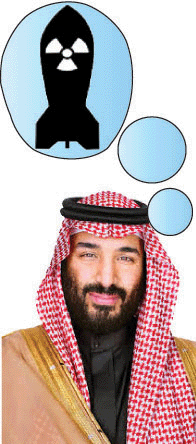 House Democrat to introduce new bill punishing Saudi Arabia over Khashoggi, It would block a controversial nuclear deal that’s very important to Saudi Arabia. Vox By A House Democrat will soon introduce legislation to punish Saudi Arabia over the murder of journalist Jamal Khashoggi — by trying to halt an impending nuclear deal with the country.
Obtained exclusively by Vox, the bill — nicknamed the “No Nuclear Weapons for Saudi Arabia Act of 2018” — if passed would be the strongest rebuke to Saudi Arabia yet since the uproar over Khashoggi’s fate.
Khashoggi, a US resident, was killed by Saudi officials inside the country’s consulate in Istanbul last month. That led to a major international outcry over his death, including from many in the US who wanted to see the Washington-Riyadh relationship curtailed.
Most of the discussions on how to do that center on stopping billions of dollars in arms sales to the kingdom, but President Donald Trump has repeatedly said he doesn’t want to jeopardize money coming into the United States, and some members of Congress privately worry that stopping weapons shipments to Saudi Arabia might negatively impact jobs.
So instead of doing that, Rep. Brad Sherman (D-CA) wants to stop a major nuclear deal between the US and Saudi Arabia that’s been under negotiation for months, and which he has long railed against.
“I don’t think this bill would’ve passed prior to the events in Istanbul,” Sherman told me. “Now I think we have a chance.” It’s also very possible a Republican will co-sponsor the bill when it’s officially introduced in the next 10 congressional days.
The legislation would do three main things:
- Force Trump to submit a “123 Agreement,” or a set of rules that make it legal for the US to sell nuclear technology to another country, for congressional approval.
-
- Force the administration to tell Congress that Saudi Arabia will abide by the agreement’s “Gold Standard” (more on that below) and an inspections agreement with the International Atomic Energy Agency, the world’s nuclear watchdog
- Require the administration to write reports on Saudi Arabia’s probe into Khashoggi’s murder and the state of human rights in the kingdom
Sherman’s bill could completely block Saudi Arabia’s plans to obtain nuclear technology from the United States, especially since there’s growing bipartisan support to reprimand Riyadh over Khashoggi.It would come as a big blow to Saudi Arabia: Crown Prince Mohammed bin Salman, the kingdom’s de facto ruler, more commonly known as MBS, launched a project on Monday to build his country’s first nuclear research reactor.
There’s also some bipartisan support to stop nuclear talks with Riyadh in the Senate.
Sens. Edward Markey (D-MA) and Marco Rubio (R-FL), for example, have sent letters to Trump requesting he at least suspend negotiations with Saudi Arabia over the nuclear deal. It’s unclear if either of them will draft parallel legislation to the House version, although a spokesperson for Rubio’s office told me the senator “possibly” could consider a bill in the future. …….
American companies have already lined up to sell and build nuclear parts for Saudi Arabia, …….
-
Saudi Arabia could accelerate a nuclear arms race in the Middle East
There’s legitimate concern about what Riyadh would do with a brand new nuclear reactor if this indeed happens.
On March 18, MBS openly admitted on CBS’s 60 Minutes that obtaining a nuke was a possibility……..
- There are other signs that Saudi Arabia’s burgeoning nuclear program is really all about weapons — and not mainly for energy — like it repeatedly says. One possible indicator is that Riyadh has focused on nuclear energy and not renewable energy to bring power to its millions of citizens. …….https://www.vox.com/2018/11/9/18072660/saudi-arabia-nuclear-deal-congress-123-agreement-sherman?fbclid=IwAR1-MMsdZfBxfPVPs0jxhEm1k8eWPzi22OTWpOCHavjtdWa5MKBcBhWGj9Y
Crown Prince Mohammed bin Salman launches nuclear project in Saudi Arabia
 Bin Salman launches Saudi Arabia’s first nuclear plant project, Aljazeera, 6 Nov 18
Crown Prince Mohammed bin Salman launches project to build the first nuclear research reactor in the kingdom. Saudi Arabia‘s crown prince has launched a project to build the first nuclear research reactor in the kingdom, the Saudi Press Agency reported.
Crown Prince Mohammed bin Salman, also known as MBS, launched seven strategic projects in renewable energy, atomic energy, water desalination, genetic medicine and the aircraft industry during his visit to King Abdulaziz City for Science and Technology on Monday.
The two most significant projects include a nuclear research reactor and a centre for the development of aircraft structures.
In March, MBS announced his country’s readiness to develop nuclear weapons in the event that Iran heads in that direction………
Nuclear power
Last year, the International Atomic Energy Agency said the Saudi government had invited proposals for the construction of two nuclear power reactors to boost the country’s energy mix.
The kingdom is considering building 17.6 gigawatts (GW) of nuclear capacity by 2032, the equivalent of about 17 reactors, making it one of the biggest projects globally…….https://www.aljazeera.com/news/2018/11/bin-salman-launches-saudi-arabia-nuclear-plant-project-181105192827938.html
Iran is not likely to restart its nuclear weapons programme any time soon
 Despite sanctions, Iran unlikely to restart nuclear program—yet, Bulletin of the Atomic Scientists, By Kelsey Davenport, November 5, 2018 Iran’s commitment to the 2015 nuclear deal will face another test starting November 5, when US sanctions targeting the country’s oil sector come back into effect. When Tehran concluded the agreement with six world powers—the United States, Russia, China, France, Great Britain, and Germany—it agreed to stringently limit nuclear activities in exchange for sanctions relief. The government of President Hassan Rouhani, and millions of ordinary Iranians, hoped this would bring major economic benefits by allowing foreign companies to do business with Iran. Despite the fact that Iran was complying with the terms of the deal—as documented by the International Atomic Energy Agency and the US State Department—the Trump administration decided on May 8 that it would reimpose the lifted sanctions, violating the agreement and dealing a harsh blow to Iran’s economy. That left Iran with a decision to make: Continue to comply with the agreement—known as the Joint Comprehensive Plan of Action, or JCPOA—which still had the support of the five other parties and the European Union? Or resume and expand nuclear activities the deal had restricted?
Fortunately, Washington’s unilateral decision to withdraw from the deal, and even the cut in oil exports that will kick in November 5, are unlikely to trigger a drastic shift in Iran’s approach to the nuclear agreement. Most likely it will continue to adhere to JCPOA terms—at least in the short term. It has had time to adjust to the expected cut in exports. And, given the tightening in the oil market and Iran’s willingness to sell oil at a discounted rate, it is unlikely that the Trump administration will succeed in pushing Tehran’s oil exports to zero. India and China, Iran’s two largest oil customers, communicated to the United States that a complete cut is unrealistic at this time. Additionally, Iran’s past history with sanctions demonstrates a high tolerance for economic pain, and Tehran appears poised to wait out the Trump administration.
Iran’s decision, though, is not solely dependent on sanctions, and could shift down the road. Recognizing how important it is to keep Iran from developing nuclear weapons, the European Union, Russia, and China are trying to find ways to preserve the economic benefits of the deal. Policymakers in the United States, meanwhile, still have a critical role to play. They can help keep the path open for a US return to the JCPOA, and prevent tensions from unnecessarily escalating over Iran’s nuclear rhetoric.
First, do no (more) harm. The Trump administration’s decision to reimpose sanctions—despite acknowledging Iran’s compliance with the JCPOA—dealt a serious blow to US credibility and significantly undermined the deal’s benefits to Iran. But US policymakers can still mitigate further negative impacts. This should start with reclaiming the narrative surrounding the deal and emphasizing its nonproliferation value.
The Trump administration has painted the deal as a failure because it did not “fix” Iran’s policies in areas beyond the nuclear program. But the JCPOA was only ever negotiated to block Iran’s pathways to nuclear weapons, and Tehran is clearly complying with the new restrictions and obligations. Trump’s blatant attempts to characterize the deal as a disaster must not go unchallenged, and policymakers supportive of its goals cannot wait for the next attack to defend it. The JCPOA put in place more intrusive, permanent, inspection provisions, and limits ensuring that for a decade, it would take Iran more than 12 months to produce enough fissile material for one bomb.
Furthermore, Iran may be more willing to continue adhering to the nuclear agreement—even without the full hoped-for economic benefit—if supporters of the deal in the United States continue to assert its security benefits, foreshadowing a return to US compliance under a different administration……..https://thebulletin.org/2018/11/despite-sanctions-iran-unlikely-restart-nuclear-program-yet/
Europe has set up a mechanism to sidestep U.S. sanctions against Iran
 Why Europe wants to sidestep US sanctions over Iran nuclear might Why Europe wants to sidestep US sanctions over Iran nuclear might
Signatories of 2015 weapons deal disagree with Trump over the effectiveness of the pact, Guardian, Saeed Kamali Dehghan@SaeedKD– 6 Nov 2018 |
|
|
South Korean firm KEPCO keen to get $20 billion by selling nuclear reactors to Saudi Arabia
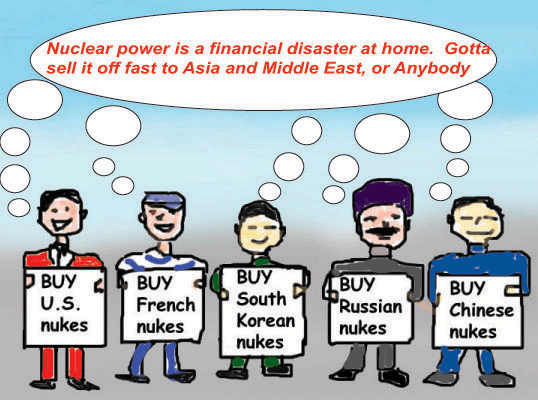
Kepco is still working to land Saudi nuclear power deal, Korea JoongAng Daily BY LEE HO-JEONG [lee.hojeong@joongang.co.kr], 2 Nov 18, GWANGJU – The CEO of Korea Electric Power Corporation (Kepco) said it still hopes to be picked for a $20 billion nuclear power plant project in Saudi Arabia that is expected to be decided by the end of next year. …….
In July Korea was put on the shortlist for the Saudi nuclear project along with the U.S., China, Japan and Russia.
The Saudi government is planning to build two nuclear power plants with a 2.8 gigawatt capacity by 2030. The country has plans to build a total of 16 nuclear power plants in the next 20 to 25 years. …….
Kim said earnings from overseas could make it easier for Kepco not to raise domestic electricity bills. ……..http://koreajoongangdaily.joins.com/news/article/article.aspx?aid=3055054
Donald Trump ready to reimpose all nuclear sanctions on Iran
 Trump set to reimpose all nuclear sanctions on Iran The Hill, BY REBECCA KHEEL – 11/02/18 The Trump administration plans to reimpose the last set of sanctions lifted under the Iran nuclear deal early next week, administration officials announced Friday.
Secretary of State Mike Pompeo confirmed in a call with reporters that the administration will grant waivers to eight “jurisdictions” when it reimposes oil and gas sanctions on Monday.
“This part of the campaign about which we’re speaking today is simple: It is aimed at depriving the regime of the revenues that it uses to spread death and destruction around the world,” Pompeo said.
“We expect to issue some temporary allotments to eight jurisdictions, but only because they have demonstrated significant reductions in crude oil and cooperation on many other fronts and have made important moves toward getting to zero crude oil importation.”
Pompeo did not specify which eight jurisdictions are getting waivers, saying a list would be released Monday. Asked if the use of the word “jurisdiction” meant that the European Union, a group of 28 countries, is getting waiver, Pompeo said the E.U. is not being granted a waiver.
In May, Trump announced that he was withdrawing the United States from what he once called the “worst deal ever negotiated.”…………
Friday’s announcement drew immediate condemnation from those who supported the nuclear deal.
“These sanctions are a slap in the face to the Iranian people who have been squeezed between the repression of their government and the pressure of international sanctions for decades,” Jamal Abdi, president of the National Iranian American Council, said in a statement. “Impoverishing ordinary Iranians will not hurt the regime or achieve any of America’s security interests, but it will set back the Iranian people’s aspirations for years to come.” https://thehill.com/policy/defense/414526-trump-set-to-reimpose-all-nuclear-sanctions-on-iran
End nuclear energy talks with Saudi Arbai – 5 Republican senators tell Trump

 Republican senators ask Trump to end nuclear energy talks with Saudi Arabia https://www.washingtonpost.com/powerpost/republican-senators-ask-trump-to-end-nuclear-energy-talks-with-saudi-arabia/2018/10/31/71fdbb60-dd20-11e8-b3f0-62607289efee_story.html?utm_term=.eb0c6524a937 By Karoun Demirjian October 31
Five Republican senators sent a letter to President Trump on Wednesday imploring him to end ongoing discussions with Saudi Arabia on nuclear energy cooperation in the wake of Washington Post contributor Jamal Khashoggi’s killing at the Saudi Consulate in Istanbul.
The senators also threatened in the letter to file legislation to block any civil nuclear agreements with Saudi Arabia if Trump will not agree to suspend negotiations “for the foreseeable future.”
“We already held serious reservations about negotiations for such an agreement,” Sens. Marco Rubio (R-Fla.), Todd C. Young (R-Ind.), Cory Gardner (R-Colo.), Rand Paul (R-Ky.) and Dean Heller (R-Nev.) wrote in the letter, first reported by NBC.
“The ongoing revelations about the murder of Saudi journalist Jamal Khashoggi, as well as certain Saudi actions related to Yemen and Lebanon, have raised further serious concerns about the transparency, accountability, and judgment of current decision-makers in Saudi Arabia.”
Congressional dissatisfaction with the U.S.-Saudi relationship was on a slow ascent before the prominent journalist’s disappearance earlier this month. But his apparent murder — which most lawmakers believe occurred at the behest of Saudi leaders, including Crown Prince Mohammed bin Salman — has precipitated unprecedented calls for consequences, from sanctions to an end to arms sales and military support for the Saudi kingdom in its controversial regional engagements, particularly in Yemen’s civil war.
Saudi officials have acknowledged that Khashoggi, a self-exiled critic of the Saudi government, was killed in the consulate, but deny that the action had their authorization.
[Turkish prosecutor says Khashoggi was strangled and dismembered in Saudi Consulate]
The senators’ letter indicates yet another layer of distrust in Saudi leaders: concern that the kingdom may try to adapt nuclear technologies acquired in a civil-use deal for weapon-making purposes.
Saudi Arabia has never agreed to terms that would prohibit it from turning a civil nuclear program dedicated for energy production into a tool to enrich uranium, reprocess plutonium and pursue other weapons-grade uses “that can bring a nation within weeks of producing a nuclear weapon,” they wrote, pointing out that the United Arab Emirates did accept such terms for a similar deal.
The senators suggested that it would be hypocritical and dangerous for the United States to accept anything less than a Saudi pledge to abide by terms of an Emirates-style deal — terms known as the “Gold Standard” — especially when the administration is demanding such behavior from Iran.
“Given your Administration’s ongoing efforts to press the Iranian regime — in the words of Secretary of State Mike Pompeo — to ‘stop enrichment and never pursue plutonium reprocessing,’ we have long believed that it is therefore critical and necessary for the Kingdom of Saudi Arabia to accept and uphold this ‘Gold Standard’ for responsible nuclear behavior,” the senators wrote.
America shouldn’t trust Saudi Arabia with nuclear technology
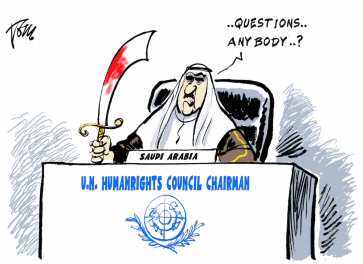 Khashoggi’s Killing Should Be a Nuclear Red Flag, The Saudis can’t be trusted to enrich uranium and reprocess spent fuel. WSJ, By Jamie Fly and Henry Sokolski,Oct. 28, 2018 If the Saudi government’s prevarications about Jamal Khashoggi’s murder teach us anything, it should be that there are limits to how far the U.S. can trust Riyadh. In particular, America shouldn’t trust Saudi Arabia with nuclear technology………. Khashoggi’s Killing Should Be a Nuclear Red Flag, The Saudis can’t be trusted to enrich uranium and reprocess spent fuel. WSJ, By Jamie Fly and Henry Sokolski,Oct. 28, 2018 If the Saudi government’s prevarications about Jamal Khashoggi’s murder teach us anything, it should be that there are limits to how far the U.S. can trust Riyadh. In particular, America shouldn’t trust Saudi Arabia with nuclear technology……….
the risk of regime change if there is nuclear power in Saudi Arabia. Nuclear reactors operate for 40 years or more and are far more dangerous than any conventional arms sales. In the 1970s, the U.S. considered selling the shah of Iran 23 reactors. That would have been a colossal mistake. Saudi officials, including Crown Prince Mohammed bin Salman, have publicly threatened to violate the Kingdom’s Nuclear Nonproliferation Treaty commitment not to acquire nuclear weapons if they believe Iran is acquiring them. The U.S. has never negotiated a nuclear cooperation agreement with a country threatening to get nuclear weapons. The United Arab Emirates, a Saudi neighbor and ally, agreed to allow intrusive international nuclear inspections and to forgo enriching uranium and reprocessing spent fuel as part of its 2009 nuclear cooperation agreement with Washington. Riyadh has refused to make such pledges. Enriching and reprocessing could bring Riyadh within weeks of making bombs. It is unclear if the administration is intent on pressing the Saudis on this point…….. After Saudi Arabia’s kidnapping last year of Lebanese Prime Minister Saad Hariri, its bungling of the war in Yemen, its erratic diplomatic moves against Canada, its continued jailing of human-rights activists, and now the killing of Khashoggi, Washington must demand more. This regime can’t be trusted with nuclear technology. Concluding a nuclear cooperation agreement to Riyadh’s liking would undermine the Trump administration’s effort to reverse the nuclear concessions President Obama made to Iran and set a dangerous precedent in the region. Any negotiations regarding a U.S.-Saudi nuclear cooperation agreement should be halted. If the Trump administration refuses to do this, Congress should make clear, as part of its broader response to the Khashoggi killing, that any agreement submitted for review will be blocked. This episode should serve as a reminder that unreliable proxies are no substitute for American leadership. A Reaganesque approach to Iran requires the fortitude to stand up for what is right, be it on nonproliferation or human rights, whether it involves friend or foe. Mr. Fly is a senior fellow of the German Marshall Fund of the United States. Mr. Sokolski is executive director of the Nonproliferation Policy Education Center and author of “Underestimated: Our Not So Peaceful Nuclear Future.” https://www.wsj.com/articles/khashoggis-killing-should-be-a-nuclear-red-flag-1540753005
|
Egypt’s renewable energy project – going for the green economy

Image processed by CodeCarvings Piczard ### FREE Community Edition ### on 2017-10-20 17:00:50Z | http://piczard.com | http://codecarvings.com
largest solar power plant in the world early this year, RT reported on Friday. Reporting the remarks of Egyptian official Hassan Abaza, RT said that the superpower plant was built in the city of Aswan, southern Egypt.
economy” is a mechanism to achieve sustainable development. https://www.middleeastmonitor.com/20181027-egypt-builds-largest-solar-power-plant-in-the-world/
Nuclear power lobbyists for Saudi Arabia finding it (a bit) tough following Jamal Khashoggi ‘s murder
 Saudi’s Lobbyists Feel Heat of Khashoggi Murder, Bloomberg By Kathleen Hunter, October 26, 2018 It’s not just Donald Trump who has cultivated a cozy relationship with Riyadh. Saudi Arabia has been a cash cow for Washington’s influence industry.
Over the past decade, D.C.’s lobbyists have raked in $76.9 million advocating for the Saudis on everything from nuclear power to fending off legislation that would leave the kingdom liable in lawsuits filed by family members of victims in the Sept. 11 terrorist attacks, Ben Brody, Naomi Nix and Bill Allison report.
That lucrative business is now facing its biggest test in years as the killing of U.S.-based journalist Jamal Khashoggi inside the Saudi consulate in Istanbul draws worldwide criticism. ….https://www.bloomberg.com/news/articles/2018-10-26/saudi-lobbyists-feel-heat-of-khashoggi-murder-balance-of-power?
Turkish President Recep Tayyip Erdogan to reveal evidence of Khashoggi murder “in all its nakedness.”
 World Awaits ‘Naked’ Truth on Saudi Killing https://www.bloomberg.com/news/articles/2018-10-22/world-awaits-naked-truth-on-saudi-killing, By Glen Carey, October 22, 2018, If Saudi leaders expected a reprieve from their account of how journalist and critic Jamal Khashoggi was killed in their Istanbul consulate, they’re likely to be sorely disappointed.
While President Donald Trump, a steadfast Saudi ally, defended de facto ruler Crown Prince Mohammed bin Salman, he said the explanation had been marked by “deception and lies.’’ Bipartisan members of the U.S. Congress said it lacked credibility. France demanded more information, while Germany suspended arms sales.
Even Saudi Foreign Minister Adel al-Jubeir called Riyadh’s attempt to cover up the murder “a tremendous mistake,” though he stuck to the government’s line that Khashoggi, a Washington Post columnist, died after “discussions” turned violent.
Western leaders are balancing concerns about his death with their strategic interests. Treasury Secretary Steven Mnuchin said the U.S. will continue its relationship with the world’s largest oil supplier, a major weapons buyer, while trying to “get to the bottom of what the facts are.”
Now the focus shifts to Turkish President Recep Tayyip Erdogan, who’s promised to reveal tomorrow what happened to Khashoggi “in all its nakedness.” If he provides credible evidence that differs from the kingdom’s description, pressure to hold Saudi Arabia’s senior leadership accountable will intensify.
1 This Month
22 June – Virtual Event –Climate Change: New Data, New Debate

Monday, June 22, 2026 2:30 p.m. – 3:15 p.m. CT
YouTube. Register here
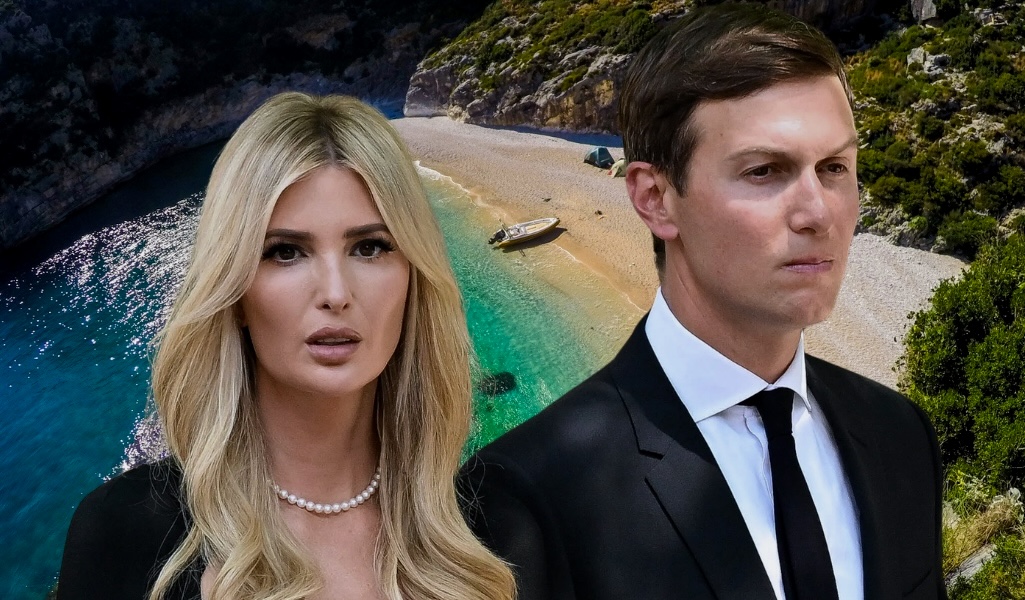
Protect Sazan Island from the Trump family! https://secure.avaaz.org/campaign/en/protect_sazan_island_from_the_trump_family_loc/?bqFCVab&v=174511&cl=22707147157&_checksum=5e9dde668860e8231c33699735e16a1fbf22ab2cb01da50c999fe8732b9775ef&utm_source=email&utm_medium=blast_email&utm_campaign=174511
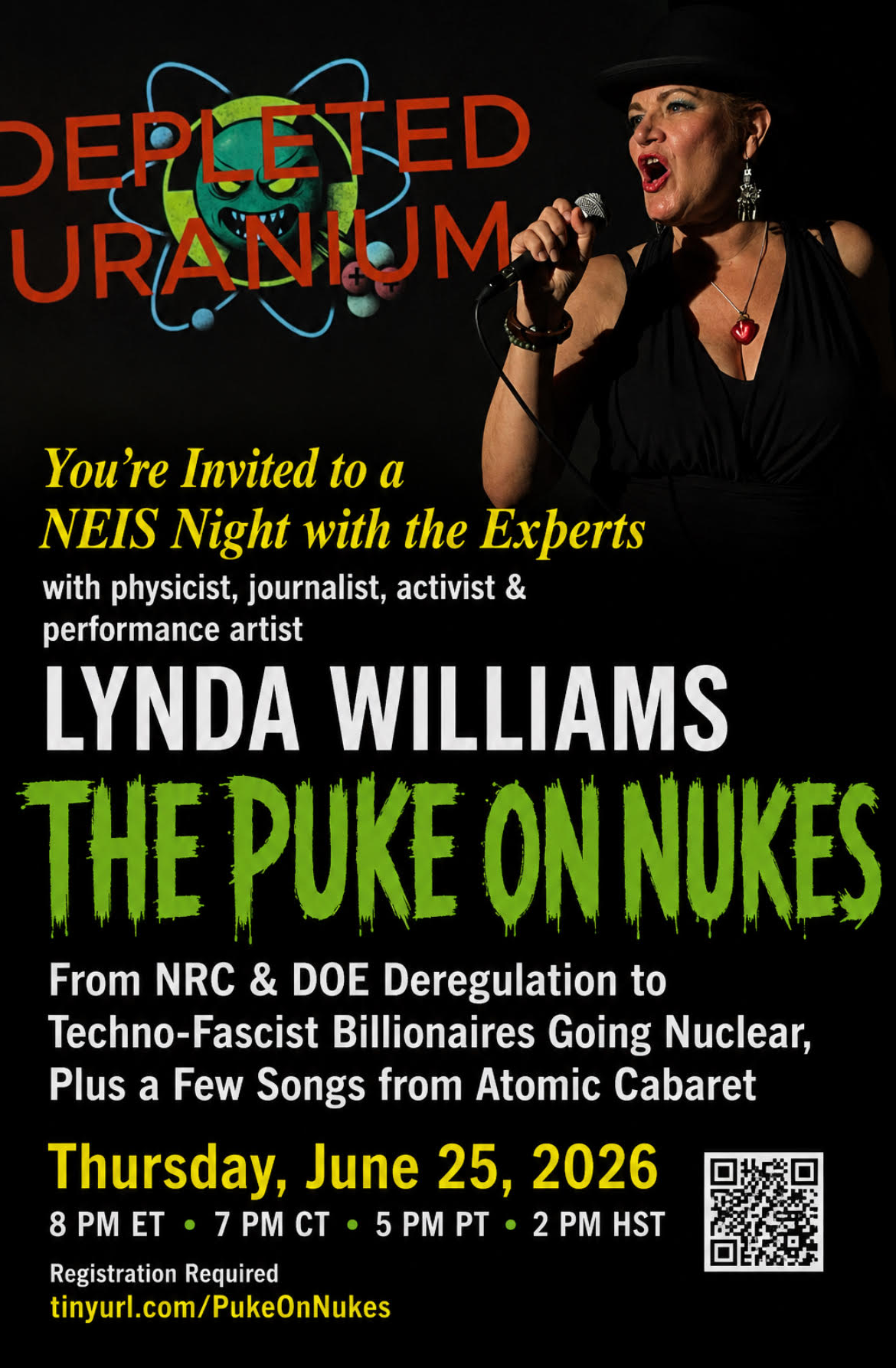
25 June- THE PUKE ON NUKES
Thursday, June 25, 2026
7pm Central Time (8pm ET, 6pm MT, 5pm PT) UTC – 5
From NRC & DOE Deregulation to Techno-Fascist Billionaires Going Nuclear, Plus a Few Songs from Atomic Cabaret REGISTER
26 June – Radiation Trainwreck at the NRC / Join the Protect Better Campaign – https://us02web.zoom.us/meeting/register/4ZlZ5_qLSHGiLSCg8FF6Bg#/registration


Cuba Is Not a Failed State – It Is a Besieged State
PETITION: “Global Appeal to Endorse Palestinian Right of Return of Refugees”
To see nuclear-related stories in greater depth and intensity – go to https://nuclearinformation.wordpress.com
-
Archives
- June 2026 (193)
- May 2026 (306)
- April 2026 (356)
- March 2026 (251)
- February 2026 (268)
- January 2026 (308)
- December 2025 (358)
- November 2025 (359)
- October 2025 (376)
- September 2025 (257)
- August 2025 (319)
- July 2025 (230)
-
Categories
- 1
- 1 NUCLEAR ISSUES
- business and costs
- climate change
- culture and arts
- ENERGY
- environment
- health
- history
- indigenous issues
- Legal
- marketing of nuclear
- media
- opposition to nuclear
- PERSONAL STORIES
- politics
- politics international
- Religion and ethics
- safety
- secrets,lies and civil liberties
- spinbuster
- technology
- Uranium
- wastes
- weapons and war
- Women
- 2 WORLD
- ACTION
- AFRICA
- Atrocities
- AUSTRALIA
- Christina's notes
- Christina's themes
- culture and arts
- Events
- Fuk 2022
- Fuk 2023
- Fukushima 2017
- Fukushima 2018
- fukushima 2019
- Fukushima 2020
- Fukushima 2021
- general
- global warming
- Humour (God we need it)
- Nuclear
- RARE EARTHS
- Reference
- resources – print
- Resources -audiovicual
- Weekly Newsletter
- World
- World Nuclear
- YouTube
-
RSS
Entries RSS
Comments RSS
 nuclear-news