Iran pulling out of nuclear deal commitment after U.S. strike that killed Soleimani
Iran pulling out of nuclear deal commitment after U.S. strike that killed Soleimani https://www.nbcnews.com/news/world/iran-pulling-out-nuclear-deal-following-u-s-strike-killed-n1110636
State TV reported Iran will no longer restrict uranium enrichment, part of the 2015 deal limiting the country’s nuclear program in exchange for easing sanctions. Jan. 6, 2020, By Max Burman and The Associated Press
Iran said Sunday that it was ending its commitment to limit enrichment of uranium as part of its 2015 nuclear deal with world powers, more fallout from the U.S. strike that killed Gen. Qassem Soleimani.
President Donald Trump unilaterally withdrew from the deal in May 2018, renewing tensions between the two countries that reached new heights after Friday’s air strike.
Iran’s state television reported Sunday that it will no longer abide by the limits of the deal, which restricted nuclear development in exchange for the easing of crippling economic sanctions.
The agreement placed limits on Tehran’s uranium enrichment, the amount of stockpiled enriched uranium as well as research and development in its nuclear activities.
America’s European allies have attempted to salvage the deal despite Trump’s decision to withdraw and reimpose sanctions, but Iran has gradually reduced its commitments and now leaves the deal in tatters.
The country’s foreign ministry said earlier Sunday that recent events meant it would take an even bigger step away from the deal than initially planned.
Iran’s Foreign Minister Javad Zarif confirmed the news on Twitter, stating that there “will no longer be any restriction on number of centrifuges.”
“This step is within JCPOA & all 5 steps are reversible upon EFFECTIVE implementation of reciprocal obligations,” Zarif said.
The foreign minister added that the country will still cooperate with the International Atomic Energy Agency.
Complex and tortured history of Iran and nuclear weapons debate
|
IRAN DOES NOT HAVE NUCLEAR WEAPONS, BUT HERE’S WHY ITS PROGRAM IS AT THE HEART OF THE CRISIS https://www.newsweek.com/why-iran-does-not-have-nuclear-weapons-1480355BY TOM O’CONNOR ON 1/3/20 Iran is not believed to possess nuclear weapons and officially has never sought them—although its top foes the United States, Israel and Saudi Arabia are among those who argue that the Islamic Republic has always secretly wanted such a weapon of mass destruction. This dispute has been at the heart of a worsening Middle East crisis that flared up with the Pentagon’s killing of a top Iranian military leader. The assassination of Revolutionary Guard Quds Force commander Major General Qassem Soleimani along with top Iraqi militia figures Thursday in Baghdad came amid a series of deadly, tit-for-tat escalations that has worsened since President Donald Trump pulled out of a 2015 nuclear deal in May 2018. The accord granted Tehran billions of dollars in sanctions relief in exchange for severely restricting its nuclear activities. The agreement has since begun to unravel, with European powers struggling to normalize trade ties under threat of U.S. sanctions and Iran reducing its own commitments in response. While Soleimani’s death may be the most dramatic salvo in the U.S. and Iran’s feud in some time, it was not at all the first blood shed throughout the two nations’ complex, tortured history. Officially, nuclear weapons have been banned by Iran because Supreme Leader Ayatollah Ali Khamenei has deemed them to be forbidden under Islam; since 2003, the U.S. accused of Iran of seeking to develop them. That same year, Khamenei issued a fatwa—an Islamic legal opinion—allegedly dating back to beliefs he expressed for nearly a decade, opposing the manufacturing of weapons of mass destruction. While Iran’s nuclear activities continued, officials consistently argued—and have to this day—that the work was purely for energy purposes. The idea of weapons of mass destruction being un-Islamic has repeatedly surfaced in the Islamic Republic over the years, with Khamenei saying as recently as June that “religious verdicts prohibit building nuclear weapons.” Iran also publicly opposes chemical and biological weapons, owing to Iraq’s use of mustard gas and nerve agents during their 1980s war in which Washington backed Baghdad and at times bombed both Iranian troops and civilians. Officially, nuclear weapons have been banned by Iran because Supreme Leader Ayatollah Ali Khamenei has deemed them to be forbidden under Islam; since 2003, the U.S. accused of Iran of seeking to develop them. That same year, Khamenei issued a fatwa—an Islamic legal opinion—allegedly dating back to beliefs he expressed for nearly a decade, opposing the manufacturing of weapons of mass destruction. While Iran’s nuclear activities continued, officials consistently argued—and have to this day—that the work was purely for energy purposes. The idea of weapons of mass destruction being un-Islamic has repeatedly surfaced in the Islamic Republic over the years, with Khamenei saying as recently as June that “religious verdicts prohibit building nuclear weapons.” Iran also publicly opposes chemical and biological weapons, owing to Iraq’s use of mustard gas and nerve agents during their 1980s war in which Washington backed Baghdad and at times bombed both Iranian troops and civilians. As international restrictions against Tehran tightened in 2010, a computer virus known as Stuxnet was uncovered that crippled Iran’s centrifuges. Also that year, a series of targeted attacks began that killed four Iranian nuclear scientists and wounded another. Iran blamed both Israel—which itself is widely believed to possess nuclear weapons—and the U.S. for the operations. Israel has neither confirmed nor denied its involvement in either, but has been widely attributed both with the U.S. assisting in the latter. The finalization of the Iran nuclear deal—officially known as the Joint Comprehensive Plan of Action—in 2015 was largely hailed as a diplomatic landmark by the international community. Though opposed by hardliners in both Washington and Tehran, the agreement officially held Iran’s nuclear program under the scrutiny of International Atomic Energy Agency monitoring and opened up the country’s economy. Trump, who came to office in early 2017, felt it did no go far enough, however, in curbing what he believed to be Iran’s nuclear weapons ambitions, as well as its support for militant groups abroad and its ongoing missile development. He has since applied a “maximum pressure” strategy in hopes of reining in the Islamic Republic, though the security situation across the Middle East has deteriorated significantly. For one year, the International Atomic Energy Agency reported that Iran abided by the deal, even without any U.S. or full European commitment. On the first anniversary of the U.S. exit from the nuclear deal last May—and just days after the White House announced the deployment of additional troops to the Persian Gulf region—Iran, however, officially began stepping away and has continued to do so. Fellow signatories China, the European Union, France, Germany, Russia and the United Kingdom all continue to support the accord. But all parties have raised their doubts as to its success should tensions continue to worsen. |
|
Egypt’s solar energy success
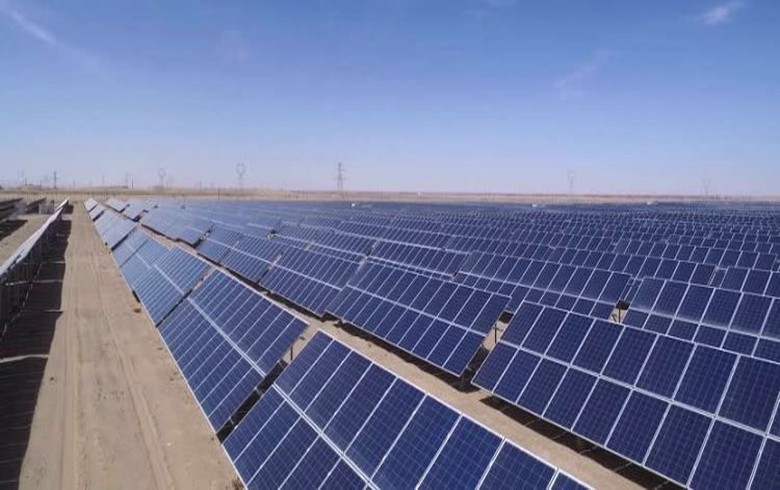
Reuters 17th Dec 2019, Near the southern Egyptian city of Aswan, a swathe of photovoltaic solarpanels spreads over an area of desert so large it is clearly visible from space. Designed to anchor a renewable energy sector by attracting foreign and domestic private-sector developers and financial backers, the plant now provides nearly 1.5 GW to Egypt’s national grid and has brought down the price of solar energy at a time when the government is phasing out electricity subsidies.
Suleimani’s Gone, and the Iran Nuclear Deal May Be Next
Suleimani’s Gone, and the Iran Nuclear Deal May Be Next
Europe fears that its faltering efforts to preserve the 2015 pact have been dealt a fatal blow with the United States’ killing of a top Iranian commander. NYT, By Steven Erlanger, Jan. 3, 2020
-
- BRUSSELS — How Iran will respond to the American assassination of Maj. Gen. Qassim Suleimani remains a matter of speculation, but one outcome seems almost certain: the end of Europe’s long effort to keep the 2015 Iranian nuclear deal alive.
In interviews on Friday, European analysts envisioned a number of baleful results from the killing of the general, who was a national hero and potential political leader in Iran, and whose death Tehran has vowed to avenge.
Among those were the downgrading of diplomacy, the destabilization of Iraq and the further strengthening of Iran’s hard-liners and the Islamic Revolutionary Guards Corps.
The escalation of nuclear tension between USA and Iran
Timeline: How tensions escalated with Iran since Trump withdrew US from nuclear deal
President Trump’s decision to leave the 2015 nuclear deal with Iran was followed by an escalation of rhetoric, sanctions and attacks between the countries. George Petras, Jim Sergent, Janet Loehrke, Karl Gelles and Javier Zarracina, USA TODAY, 3 Jan 2020,
July 25, 2015
Iran, the United States and other nations approve a deal in which Iran agrees to shift its nuclear program from weapons production to peaceful commercial use for 10 years. Iran allows international inspectors on its nuclear weapons sites.
In exchange, the United States and the United Nations Security Council lift energy, trade, technology and financial sanctions against Iran.
The pact, established during the tenure of President Barack Obama, is an executive agreement, not a treaty, which means it isn’t formally approved by Congress. Republicans oppose the deal and question its legality.
Leaving the deal
October 2016
Presidential candidate Donald Trump says Iran should write the United States a thank you letter for “the stupidest deal of all time.” Trump says the United States will withdraw from the deal if he’s elected.
May 8, 2018
President Trump announces the withdrawal from the Iran deal. Iran, France, Britain and Germany say they will stay in the pact.
US increases pressure
August-November 2018
The United States reimposes economic sanctions targeting Iran’s energy, financial, shipping and shipbuilding industries. Iran says it will take unspecified actions regarding the nuclear deal if Britain, France, Germany, Russia and China don’t help it engage in international trade.
April 8, 2019
Trump says he will designate Iran’s Islamic Revolutionary Guards as a foreign terrorist organization. The Pentagon opposes the change, saying it increases the possibility of retaliation against American military and intelligence personnel.
April 22
May 5
John Bolton, Trump’s national security adviser, says the United States will send an aircraft carrier strike force and Air Force bombers to the Middle East. The deployment shows Iran that “any attack on United States interests or on those of our allies will be met with unrelenting force.”
Iran retaliates
May 8
Iran says it will increase its production of enriched uranium and heavy water.
May 12
Four oil tankers – two from Saudi Arabia, one from the United Arab Emirates and one from Norway – are attacked in the Persian Gulf. The United States says Iran is behind the attacks.
June 13
Two oil tankers – one from Norway, the other from Japan – are attacked in the Gulf of Oman. The United States blames Iran, which denies responsibility.
June 20
Iran shoots down a U.S. surveillance drone it says violated Iranian airspace. The U.S. Central Command says the aircraft was in international territory.
June 20
Trump orders retaliatory attacks against Iran but cancels the strikes shortly before they are to be launched. Four days later, he imposes more sanctions against Iran.
July 1
Iran says it’s exceeded the amount of low-enriched uranium it was allowed to build under the 2015 agreement.
US-Iranian tensions rise………
Jan. 2 2020
Iranian military leader Qasem Soleimani and five others are killed in a U.S. drone strike at Baghdad airport. U.S. officials call it a “defensive action,” saying Soleimani planned attacks on U.S. diplomats and troops. https://www.usatoday.com/in-depth/news/2020/01/03/us-iran-conflict-since-nuclear-deal/2803223001/
Dangers of weapons race, terrorism, disaster, as United Arab Emirates proceeds with nuclear power plan
The UAE has been constructing four nuclear reactors at its upcoming Barakah power plant, the Arab World’s first nuclear power station. The plant is expected to go online in 2020.
Dr. Paul Dorfman of the Nuclear Consulting Group said the UAE may be hoping to use the program to develop a nuclear weapons arsenal. He also warned that Abu Dhabi’s nuclear plants could be a prime target for terrorists
“The motivation for building this may lie hidden in plain sight,” Dorfman said. “They are seriously considering nuclear proliferation.”
The scientist said one threat to safety was regional turmoil that could see enemies launch attacks against the plants, when it was unclear the UAE had sufficient defense capabilities to properly defense against them.
He also cited vulnerability to extreme temperatures and unforeseen effects of climate change.
The Barakah plant is located near the country’s coast, and rising sea levels and storms could potentially hit such locations and destabilize the facilities, he said. He also noted that water in the Persian Gulf is on average higher than elsewhere in the world, and could be less effective as reactor coolant.
Dorfman is an Honorary Senior Research Fellow at University College London’s Energy Institute and has advised the British government.
The nuclear plant west of Abu Dhabi is being built by a consortium led by the Korea Electric Power Corporation…..
5.1 magnitude earthquake near Iran nuclear power plant
History of deadly quakes
Iran and US both undermining nuclear deal says UN political affairs chief
|
Iran and US both undermining nuclear deal says UN political affairs chief, UN News , 19 December 2019
Both Iran and the United States have been putting strain on the groundbreaking 2015 deal to monitor Iran’s nuclear programme, which remains a “cornerstone of international peace and security”, said the UN’s political affairs chief on Thursday. Rosemary DiCarlo was briefing the Security Council on nuclear non-proliferation, and resolution 2231 that specifically backed the Joint Comprehensive Plan of Action (JCPOA), agreed in July 2015, by China, France, Germany, Russia, The United Kingdom, the United States, the European Union, and Iran (see fact box below for full details). She said the “full and effective implementation” of the Plan was “key to ensuring the peaceful nature of Iran’s nuclear programme and to secure tangible economic benefit to the Iranian people.” Ms. DiCarlo said the US decision to pull out of the deal was a source of “regret” as well as “the recent steps taken by Iran to reduce its nuclear-related commitments”. “Certain actions taken by the United States, since its withdrawal from the Plan, are contrary to the goals of the Plan”, she said and the re-imposition of its national sanctions lifted under the Plan, and decision not to extend waivers for the trade in oil with Iran. But according to the IAEA, she added, Iran since July “has surpassed JCPOA-stipulated limits on its uranium enrichment level, as well as limits on its stockpiles of heavy water and low-enriched uranium.” Steps have also been taken on centrifuge research and development: “Iran has stated that all these steps are reversible and that it intends to remain in the Plan. It is important that Iran returns to full implementation of the Plan, and refrain from further steps to reduce its commitments”, said the UN Political and Peacebuilding Affairs chief. Rising regional tensions…….Summing up the importance of the JCPOA, Ms DiCarlo said that António Guterres considers the full implementation of resolution 2231, by all Member States “as an integral component of our collective conflict prevention efforts.” Given the year of tension in the Gulf, “this has assumed greater importance” she noted, adding that it was the Secretary-General’s wish for all countries “to avoid confrontational actions and explore avenues for dialogue and cooperation in the interest of international peace and security.” https://news.un.org/en/story/2019/12/1054071 |
|
Turkey may shut US nuclear weapons base over sanctions threat
|
Turkey may shut US nuclear weapons base over sanctions threat
The Turkey-US row is partly over Ankara’s military offensive in Syria targeting American-backed Kurdish forces. Sky News Sunday 15 December 2019 Turkey’s leader says his country could close two military installations where American troops are stationed “if necessary”. One of the sites, called the Incirlik air base, is where some US nuclear warheads are kept. The other is the Kurecik radar station.
President Recep Tayyip Erdogan spoke in response to a threat of American sanctions over Ankara’s military offensive in Syria targeting US-backed Kurdish forces. His comments also followed a US senate resolution over Armenian claims about mass killings a century ago – a move which has further increased tensions between Ankara and Washington……. The Incirlik air base, located about 100 miles from Turkey’s border with Syria, is often referred to as one of the major strategically located US military bases. The Kurecik radar station hosts NATO’s early-warning radar systems against ballistic missile attacks. https://news.sky.com/story/turkey-may-shut-us-nuclear-weapons-base-over-sanctions-threat-11887811 |
|
Israel’s High Court rejects Vanunu’s bid to leave Israel
|
Nuclear whistleblower Vanunu denied permission to leave Israel High court rejects petition from man who revealed country’s nuclear secrets in 1986, Irish Times, Mark Weiss in Jerusalem , 16 Dec 19 Israel’s high court has rejected a petition from Mordechai Vanunu, the man who revealed the country’s nuclear secrets to the world in 1986, to be permitted to leave the country. The justices ruled that based on the material shown them, Mr Vanunu possessed secret and sensitive information that he had not revealed and that if he did, this would be dangerous for state security. They also ruled that they had been persuaded that the nuclear whistleblower wished to reveal his information. At the same time, they urged the state to continue to try to find ways to ease Mr Vanunu’s conditions in Israel. For years Mr Vanunu has demanded that Israel rescind his citizenship and allow him to leave the country. Mr Vanunu, a low-level technician at Israel’s Dimona nuclear plant, first hit the headlines in 1986 when he leaked details with photographs he took surreptitiously to the British Sunday Times. The revelations marked the first concrete proof that Israel had the capacity to manufacture nuclear bombs. Nuclear ambiguity’Israel maintains a policy of “nuclear ambiguity”, neither confirming nor denying foreign reports of its nuclear potential. It has refused to sign the nuclear Non-Proliferation Treaty or to allow international surveillance of its Dimona plant in the southern Negev desert. Partly based on the secrets Mr Vanunu revealed, foreign experts have concluded that Israel is the world’s sixth-largest nuclear power……… In 2004 he completed an 18-year sentence, most of which was spent in solitary confinement. However, strict conditions were attached to his release, including a ban on leaving the country, a ban on entering the Palestinian territories and a ban on meeting foreign journalists. Since his release, Mr Vanunu has twice served jail terms after convictions for parole violations. |
|
|
Israel’s Foreign Minister Israel Katz suggests bombing Iran to stop its nuclear program
 FM: Bombing Iran to stop its nuclear program remains ‘an option’ FM: Bombing Iran to stop its nuclear program remains ‘an option’
Speaking with Italian media on the sidelines of a foreign policy conference in Rome, Israel Katz rebukes European leaders for not taking a more aggressive stand against Tehran. Iranian FM accuses Israel of testing nuclear missile aimed at his country. Israel Hayom 12-08-2019 The option to launch a preemptive strike against Iran to prevent it from developing a nuclear weapon remains viable, Foreign Minister Israel Katz said in an interview Saturday. Speaking with Italian-language daily Corriere della Sera, Katz – asked whether Israel was mulling military options vis-à-vis the Islamic republic – said, “Yes, it is an option. We will not allow Iran to produce or obtain nuclear weapons. If it were the last possible way to stop this, we would act militarily.” The comments were reportedly made on the sidelines of a foreign policy conference in Rome. They came just hours after Iran announced its ready to unveil a “new generation” of nuclear-related “products,” including new centrifuge systems and a heavy water power plant scheduled to be built by the spring of 2020. Katz further admonished European leaders for not taking a more aggressive stand against Iran over its repeated, escalating violations of the 2015 nuclear deal…… On Friday, Iran’s Foreign Minister Mohammed Javad Zarif accused Israel of holding “a nuclear missile test aimed at Iran.” “Israel today tested a nuke-missile, aimed at Iran,” Zarif said on Twitter, adding that the United States, Germany, France and the United Kingdom “never complain about the only nuclear arsenal in West Asia – armed with missiles actually DESIGNED to be capable of carrying nukes – but has fits of apoplexy over our conventional & defensive ones.” The Israeli defense establishment successfully tested a rocket propulsion system on Friday. Defense officials stressed that the test was planned in advance and carried out as planned. https://www.israelhayom.com/2019/12/08/fm-bombing-iran-to-stop-its-nuclear-program-remains-an-option/ |
|
Britain, France, and Germany press Iran over its ballistic missile program
|
Europeans Ramp up Pressure on Iran, Britain, France, and Germany say Iran’s ballistic missile program is inconsistent with the nuclear deal and improves its capacity to deliver nuclear payload. Tehran counters that Europeans have failed to meet obligations under the pact. FP.com,
BY COLUM LYNCH
DECEMBER 6, 2019, Three key European powers this week inched closer to the Trump administration’s maximum pressure campaign against Iran, saying that Tehran’s ballistic missile program is inconsistent with its obligations under the Iran nuclear accord. Iran’s ballistic program—which was largely prohibited by the United Nations Security Council before the adoption of the Iran nuclear pact in 2015—has been a source of contention between Washington and Tehran. Under the terms of the agreement, Iran reserved the right to develop ballistic missiles for conventional warheads. But it pledged not to develop missiles capable of delivering a nuclear bomb. Under President Donald Trump, the United States—which pulled out of the nuclear deal in May 2018—maintains that Iran has been violating the spirit of the agreement by developing banned missile capabilities under the cover its conventional weapons program. The administration recently got a boost from Britain, France, and Germany, which signed a joint letter last month declaring that “Iran’s developments of nuclear-capable ballistic missiles and related technologies is inconsistent” with its obligations under a U.N. resolution that endorsed the nuclear accord. Foreign Policy is publishing the letter, which was made public by the United Nations earlier this week, as part of our Document of the Week series. The letter constituted the latest sign that key European powers—which remain committed to the nuclear pact—are seeking to shore up their relations with Washington and to chastise Tehran for what they view as its gradual retreat from its obligations under the nuclear pact. But Iran’s foreign minister, Mohammad Javad Zarif, accused them of seeking to “cover up their miserable incompetence” in living up to their own obligations under the nuclear pact. If the United Kingdom, France, and Germany “want a modicum of global credibility, they can begin by exerting sovereignty rather than bowing to US bullying,” he said. The European powers assert that an Iranian launch of a Shahab-3 medium-range missile—which appeared footage posted on social media in April—included a booster that the Missile Technology Control Regime concluded is capable of delivering a nuclear weapon. The 35-member association of the world’s main missile producers urges restrictions on the export of nuclear missile technology……… https://foreignpolicy.com/2019/12/06/europe-iran-ramp-up-pressure-ballistic-missiles/ |
|
Bacteria to consume CO2 – a climate change solution?
Some startups are already beginning to use microbes to transform CO2 into products; Air Protein, launched in November, uses CO2 to make protein for alternative meat. But microbes that these new companies use are proprietary. “They’re using microbes that are much harder to engineer than E. coli, and therefore the variety of products that these microbes can manufacture from the capture of CO2 is very limited compared to E. coli,” he says. ……
If the production process uses renewable energy, “then we will basically have negative emissions of CO2,” says Gleizer. Some products may be carbon neutral—if the bacteria make jet fuel, for example, the planes that use it will still emit greenhouse gases, but no more than the CO2 that was originally used to produce the fuel. The CO2 could potentially come from direct air capture.
Several steps are still necessary before it’s clear that the process is feasible. When the current strain of the bacteria feeds on CO2, it grows much more slowly than if it was eating sugar; the researchers think that future versions can be faster. The E. coli will also have to be further modified to produce specific products. And production equipment in biotech factories might also have to change. “There’s still a long way to optimize this process,” says Gleizer. https://www.fastcompany.com/90438169/scientists-just-engineered-bacteria-to-eat-co2
Rafael Mariano Grossi, new UN nuclear agency chief, states he will be“firm and fair” stance on Iran
|
New UN nuclear agency chief: “firm and fair” stance on Iran , https://www.yahoo.com/news/argentina-grossi-cleared-helm-un-102125633.html 2 Dec 19, VIENNA (AP) — The incoming head of the U.N.’s atomic watchdog agency said Monday he will take a “firm and fair” approach toward inspections of Iran’s nuclear facilities, and plans to visit Tehran in the near future.Argentine diplomat Rafael Mariano Grossi’s comments came after he was confirmed as the new director general of the International Atomic Energy Agency unanimously at a special session. His four-year term begins on Tuesday.
The 58-year-old succeeds Yukiya Amano, who died in July, and takes over at a time when the nuclear deal between Iran and world powers is unraveling. The landmark 2015 deal known as the Joint Comprehensive Plan of Action promised Iran economic incentives in exchange for curbs on its nuclear program. The IAEA’s role has been to inspect and verify Iran’s compliance with the deal. With the unilateral withdrawal of the United States from the agreement last year and the imposition of new American sanctions, Iran’s economy has been struggling. So far, the other nations involved — France, Germany, Britain, China and Russia — have been unable to offset the effects, and Iran has slowly been violating the terms of the JCPOA. Tehran is, however, continuing to provide IAEA inspectors access. Grossi told reporters he expected to travel to Iran himself in the “relatively near future” to meet with leaders there. “It is really a priority,” he said of the situation in Iran, adding that his philosophy on inspection safeguards was to be “firm and fair.” Those “two guiding principles” apply not just to Iran, but to how the IAEA deals with everybody, though “different cases demand different approaches,” he said. “An inspector is not a friend. He’s someone who comes and needs to ascertain the facts without bias, without agenda, in an objective and impartial way,” Grossi said. “This has to be done in firmness, but in fairness as well.” Grossi became Argentina’s ambassador to the Vienna-based IAEA in 2013 and was previously the IAEA’s chief of cabinet under Amano. |
|
Big risk factors for Middle East countries in adopting nuclear power
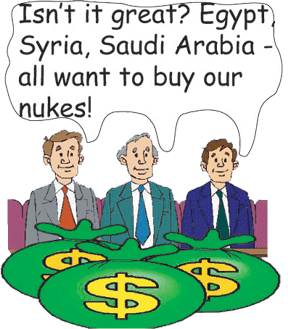
  Facing the Nuclear Storm Facing the Nuclear StormCountries across the Middle East are building or have already started operating their nuclear power plants. To assess how “resilient” their nuclear energy systems are, one must look at a number of important risks and factors The Cairo Review By Ali Ahmad, and Benedetta Bonometti 1 Dec 19, Soon enough, countries with nuclear power in the Middle East will have to face a storm when it comes to operating their power plants safely. That is why the focus on introducing resilient energy systems is receiving much attention in developed and developing countries alike.
Across the globe, a variety of natural and human-induced risks and threats have caused substantial disruptions to the delivery of energy services and affected millions of people. From the massive July blackout in New York City that was linked to a sweltering heat wave to the conflicts in Yemen, Libya, and Syria that have caused power outages and severe damage to power generation and transmission, the need for resilient energy infrastructure is becoming more relevant than ever.
Energy resilience remains an evolving concept, but for now, it can be understood as the ability of an energy system to adapt to possible disruptive and challenging environments such as a tsunami or a heat wave, and to resume service provision swiftly. However, studies and experience have demonstrated the pivotal role that preemptive measures play when envisaging a resilient energy system. The link between energy resilience and the proposals to build nuclear energy power plants across the region lies in the scale of the region’s nuclear ambitions. Currently, there are six regional countries, including Iran, the United Arab Emirates (UAE), Egypt, Turkey, Jordan, and Saudi Arabia, which are developing nuclear power programs, with varied degrees of commitment. In a global energy landscape that is tilting toward renewable energy and an increased interest in decentralized systems, which combined together make for strong or resilient structures, one important question to ask is how the introduction of nuclear power will affect the resilience of national energy systems in these countries. This is especially important considering the exclusive set of risks associated with having a nuclear power program. Nuclear Vulnerabilities and Disruptions Pre-operation risks Nuclear power plant projects are exposed to numerous threats before they start operating. In fact, lengthy construction times, which are common in such projects, increase the probability of project cancellation before the plants start generating electricity. The years-long lead times, or in other words the time it takes to carry out financial and licensing procedures as well as construction, make nuclear projects vulnerable to financial and political risks and could lead to plant closure. The most common financial problems which arise from escalating costs and construction delays are due to either stringent licensing processes and/or project mismanagement. Moreover, other sources of energy could become cheaper and more competitive, especially as gas or oil discoveries are made more often (such as the discovery of offshore gas fields like Egypt’s Zohr). Nuclear energy programs in turn become highly sensitive political issues to the extent that a change of governments, as in the case of the so-called Arab Spring, might halt the construction of planned nuclear power plants. Fuel supply The main threat to front-end activities regarding fuel supply is the disruption of enriched uranium supply. Uranium fuel disruptions would more likely be linked to the regional political climate given that the global supply chains of uranium fuel face no major impediments. …….. Attacks against critical nuclear facilities The recent drone and missile attacks on Saudi Arabia’s ARAMCO facilities temporarily crippled its oil production, inflamed regional tensions, and sent shockwaves around the globe. Had the attack been on a nuclear power facility, the consequences could have been much more grave………. Foreign workforce …….. The involvement of foreign workers, which may be necessary when the host country lacks the required human capital to run its own nuclear power program, may raise several issues. …….. Climatic effects When thinking of possible climatic effects on the resilience of the nuclear power plants in the region, heat waves are particularly concerning due to their impact on the temperature of the reactor’s cooling water. …. Spent nuclear fuel considerations Spent nuclear fuel, in other words the irradiated (and radioactive) fuel waste generated by nuclear fission, must first cool down for a number of years in water-filled storage pools before it is ready to be handled and transported. Spent fuel pools will always be full as new spent fuel will continuously replace fuel that is removed. Consequently, various threats to the storage pools are possible. Firstly, like the case with nuclear reactors, natural disasters and extreme weather conditions could threaten the functionality of the storage pools. Secondly, spent fuel pools may also be identified as targets during armed conflicts. …… Major risks exist that show the contradiction between the development of nuclear energy in the Middle East and the emerging narrative of energy resilience. Nuclear power is not only vulnerable to climatic and nature-induced extreme events but also to attacks by state and non-state actors. The recent attacks on Saudi Arabia’s oil infrastructure are reminders that the higher the value of the target, the more critical it becomes. With nuclear power becoming a reality in the region, efforts by governments, academia, and civil society need to focus on promoting its resilient, safe, and secure operation. As a start, we need to invest in risk mitigation strategies and mechanisms as well as better emergency response and preparedness that utilize unhindered and depoliticized technical cooperation between all states in the region. Since the effects of nuclear accidents are often cross-border, even countries that do not have nuclear power programs must be part of these efforts. Ali Ahmad is the director of the Energy Policy and Security Program in the Issam Fares Institute for Public Policy and International Affairs at the American University of Beirut. Ahmad is the author of numerous journal articles on nuclear energy and security with a focus on the Middle East region. Read More
Benedetta Bonometti is a graduate student in public policy with a specialization in energy, resources, and development at Sciences Po Paris. Her research interests focus on fossil fuel and nuclear energy policies in the Middle East. Read More https://www.thecairoreview.com/essays/facing-the-nuclear-storm/
|
|
1 This Month
26 September – International Day for the Total Elimination of Nuclear Weapons





PLEASE OPPOSE HR 8255 AND S.3639 – bills would accelerate satellite deployment, with no environmental review or safeguards – https://ncstd5li.quorum.us/campaign/169331/
To see nuclear-related stories in greater depth and intensity – go to https://nuclearinformation.wordpress.com
-
Archives
- September 2026 (305)
- August 2026 (330)
- July 2026 (355)
- June 2026 (287)
- May 2026 (306)
- April 2026 (356)
- March 2026 (251)
- February 2026 (267)
- January 2026 (308)
- December 2025 (358)
- November 2025 (359)
- October 2025 (375)
-
Categories
- 1
- 1 NUCLEAR ISSUES
- business and costs
- climate change
- culture and arts
- ENERGY
- environment
- health
- history
- indigenous issues
- Legal
- marketing of nuclear
- media
- opposition to nuclear
- PERSONAL STORIES
- politics
- politics international
- Religion and ethics
- safety
- secrets,lies and civil liberties
- spinbuster
- technology
- Uranium
- wastes
- weapons and war
- Women
- 2 WORLD
- ACTION
- AFRICA
- Atrocities
- AUSTRALIA
- Christina's notes
- Christina's themes
- culture and arts
- Events
- Fuk 2022
- Fuk 2023
- Fukushima 2017
- Fukushima 2018
- fukushima 2019
- Fukushima 2020
- Fukushima 2021
- general
- global warming
- Humour (God we need it)
- Nuclear
- RARE EARTHS
- Reference
- resources – print
- Resources -audiovicual
- Weekly Newsletter
- World
- World Nuclear
- YouTube
-
RSS
Entries RSS
Comments RSS

