Should the State of Israel be defascistized?
Thierry Meyssan, Voltairenet.org, Tue, 23 Jun 2026, https://www.sott.net/article/507084-Should-the-State-of-Israel-be-defascistized
We are becoming aware, often belatedly, of the crimes committed by the Benjamin Netanyahu government against civilians in Gaza, Lebanon, Syria, and Iran. No other government in the world considers the elimination of those who resist it to justify all collateral damage, regardless of the number.
We must also realize that this way of thinking did not arise from nowhere; it has a long and abhorrent history.
We must take responsibility and intervene before this government begins to attack its own citizens. Not because they are more valuable than Arabs and Persians, but because they are the same: they are human beings too.
International public opinion has shifted significantly regarding Benjamin Netanyahu, the Prime Minister of Israel. It is now clear to a majority that he is not seeking peace, but is attempting to annihilate the population of southern Lebanon, as he tried to do with that of Gaza.
This only became clear when he opposed the US peace plan with Iran, because, for the first time, his main ally showed that another way was possible.
We have been explaining since the Likud/Kahanist coalition came to power [ 1 ] , that the current Israeli government was pursuing the “revisionist Zionist” project of Ze’ev Vladimir Jabotinsky [ 2 ] .
Although we have repeatedly emphasized that the “revisionist Zionist” project of a “Jewish Empire” has no connection whatsoever with Theodor Herzl’s “Zionism”, some readers have dismissed our arguments, believing they mask an antisemitic bias. Besides being insulting, this ignores our work in promoting equality for all.
We therefore recall a long-hidden truth:
The revisionist Zionists were allies of the Duce Benito Mussolini and they negotiated with associates of the Führer Adolf Hitler throughout the Second World War and even beyond. They organized, with the SS Adolf Eichmann, the deportation of thousands of Hungarian Jews to Auschwitz [ 3 ] .
Confusion arose after Operation Al-Aqsa Flood on October 7, 2023. A debate ensued regarding whether the Israeli response should be classified as genocide. Some argued that, firstly, the Israeli army clearly did not seek to kill targets based on their ethnicity, and secondly, that there were no government orders to that effect.
However, the Israel Defense Forces (IDF) were implementing the “Dahiyah Directive,” drafted by the highly respected General Gadi Eizenkot in October 2008 [ 4 ] . Speaking about the suburbs of Beirut and South Lebanon, he told Yediot Aharonot:
“We will apply disproportionate force to the villages and cause extensive damage and destruction. From our perspective, these are not civilian villages; they are military bases. This is not a recommendation. It is a plan. And it has been approved.”
This plan was first implemented in Gaza over the past three years and in Lebanon in recent months. These are war crimes publicly claimed by a Jewish Arab military officer who served as Chief of Staff of the IDF from 2015 to 2019 and who became a minister without portfolio, joining the war cabinet, on October 11, 2023.
These war crimes are aimed at crushing the popular resistance of Gazans and Lebanese. To conflate resistance fighters with the civilian populationis to claim that all Gazans and all southern Lebanese will be annihilated. This undoubtedly constitutes genocide.
It was up to the International Court of Justice (the internal tribunal of the United Nations) to decide. This is what South Africa, already a victim of revisionist Zionists during the apartheid era, attempted to obtain as early as December 29, 2023. Unfortunately, the majority of the Court initially opposed it under the influence of its president, the Lebanese Nawaf Salam. He owes his family fortune to his grandfather’s purchase of Palestinian bourgeois land on behalf of Lord Lionel Walter Rothschild. Following Salam’s intervention, he was appointed Prime Minister of Lebanon… where he must now confront the very same situation he failed to resolve in Gaza.
The question now is: “Should we defascize the State of Israel?” as Germany was supposedly denazified. Everyone, in fact, must be aware that Benjamin Netanyahu and his allies intend to profoundly transform the State of Israel, which they have already defined as “the Jewish State,” and which they have said they want to make, no longer an “Athens,” but a “Super-Sparta” [ 5 ] .
This question is likely to be vital: to date, Benjamin Netanyahu’s coalition has practiced torture, war crimes, and genocide, but it has never taken the lives of its opponents. Yet this is the next step in its seizure of power and the achievement of its goals. It has not done so out of humanity, but for one reason only:to maintain the unity of the Israeli people in order to use their image to mask its crimes.
We must all understand, Israelis and non-Israelis, Jews and non-Jews, that the “revisionist Zionists” are enemies of humankind.They had no qualms about murdering pro-Soviet Ukrainian Jews in 1921-1923 [ 6 ] , and then the wealthiest Hungarian Jews in 1942-1945.
They will have no more restraint tomorrow in killing those who resist them, regardless of who they are. We must look at the facts clearly and stop them.
References:
[ 1 ] ” The Straussian coup in Israel “, by Thierry Meyssan, Voltaire Network , March 7, 2023.
[ 2 ] ” The veil is torn away: the hidden truths of Jabotinsky and Netanyahu “, by Thierry Meyssan, Voltaire Network , January 23, 2024.
[ 3 ] מדוע חוסל קסטנר (Why was Kastner murdered?). Nadav Kaplan, Steimatzky (2024).
[ 4 ] ” Israel warns Hezbollah war would invite destruction “, Reuters, October 3, 2008.
[ 5 ] ” Netanyahu and Nazism “, ” After “Greater Israel”, Netanyahu pleads for a “Super-Sparta” and “finish the job in Gaza” “, by Thierry Meyssan, Voltaire Network, September 23 and 30, 2025.
[ 6 ] ” Who are the Ukrainian integral nationalists? “, by Thierry Meyssan, Voltaire Network , November 15, 2022.
Thierry MeyssanPolitical consultant, President-founder of the Réseau Voltaire (Voltaire Network).Latest work in English – Before Our Very Eyes, Fake Wars and Big Lies: From 9/11 to Donald Trump, Progressive Press, 2019.
Washington ‘ends’ Israeli freedom of action inside Lebanon: Report
Iran has reportedly threatened to end negotiations with the US if Israel continues to refuse withdrawal from Lebanon
News Desk, JUN 23, 2026, https://thecradle.co/articles/washington-ends-israeli-freedom-of-action-inside-lebanon-report
The US government has informed Israel that it no longer has authorization for “unrestricted” military action in Lebanon, despite continued Israeli attacks and occupation in the country, Channel 12 reported on 23 June.
Washington has allegedly informed Tel Aviv that “the previous authorization for unrestricted action in Lebanon had expired.” US President Donald Trump is “imposing restrictions on Israel, not only in Lebanon but also in other arenas.”
“These directives prohibit operations in areas such as the capital, Beirut, and the Tyre district in southern Lebanon,” the report went on to say.
Meanwhile, Israel has refused to withdraw from south Lebanon and has not fully ended attacks.
Two civilians were killed by Israeli artillery shelling on south Lebanon’s Nabatieh al-Fawqa on Tuesday as they were working to remove rubble caused by Tel Aviv’s strikes on the area. One of them was a municipal worker.
“The Islamic Resistance warns that this act constitutes a blatant violation of the ceasefire, which the Resistance has adhered to until now,” Hezbollah said in a statement.
In a separate incident on 23 June, the Israeli army said it “identified a cell of armed terrorists” near its forces in the Ali al-Taher area, adding that it “struck the terrorists in order to remove the threat.”
Despite the reports in Hebrew media, Israeli officials on Tuesday insisted that occupation troops will not withdraw from Lebanon.
“The [army] will continue to act decisively to thwart threats to our soldiers and civilians, destroy terror infrastructure, and continue maintaining the security zone in southern Lebanon,” top officials said in a joint statement.
The statement came hours ahead of a new round of US-hosted direct talks between Beirut and Tel Aviv, which are being conducted in violation of Lebanese law and are rejected by Hezbollah.
Hebrew reports have also claimed Tel Aviv is “scrambling” to sever Lebanon from Iran by reaching a separate agreement with the Lebanese government.
Israeli officials and media personalities slammed the Memorandum of Understanding (MoU) between the US and Iran, specifically the clause that calls for ending Israeli attacks and withdrawing from Lebanon.
Over the weekend, Israel launched a brutal escalation in Lebanon, killing at least 100 people.
Major clashes between Israeli troops and Hezbollah resistance fighters also raged throughout the weekend before a cessation of hostilities was imposed on Tel Aviv by Tehran’s pressure on Washington.
According to a recent report by Iran’s Tasnim News Agency, talks between Tehran and Washington will be “halted” if Israel continues to refuse withdrawal from Lebanon.
Pentagon raised threat of Israeli spying on U.S. to highest level, sources say.

Peter Thiel through Palantir is doing the same thing to US citizens that the IDF has been doing to Palestinians for over 50 years. That is, being gifted massive US government defense contracts to surveil, oppress and kill innocent civilians.
The counterintelligence threat level was raised by the Defense Intelligence Agency in recent weeks after growing concerns that Israeli espionage had become more aggressive than usual, sources say.
In the case of Israel, under the guise of combating “terrorism,” the IDF is allowed to test with impunity all their latest, most sophisticated weapons technologies on Palestinian civilian bodies, for their own benefit, but also for the benefit of those US Zionist interests that control our foreign policy and provide a majority of the funding and weapons – no matter the war crimes or death toll.
In the case of Palantir, under the guise of “domestic terrorism,” it is contracting to provide high tech surveillance technology for ICE’s use on unwitting American citizens, so Palantir (who it is believed acquired all our personal records from Elon Musk’s DOGE theft at the White House), may continue to perfect and expand his hegemony into a gigantic global monopoly on behalf of Israel.
NBC News, By Gordon Lubold, Courtney Kube and Dan De Luce, 6 June 26
WASHINGTON — The Pentagon is increasingly concerned about Israel ramping up its spying on the U.S., recently raising the counterintelligence threat level from America’s top ally in the Middle East to the highest level, according to two U.S. officials and one former U.S. official.
The DIA assessment includes a seven-page document and features a chart, according to one of the current U.S. officials. The document says the assessment of Israel is that its ability to conduct human espionage and technical collection is at a “critical level,” according to the official.
It also identifies a series of specific incidents that heightened U.S. concerns, the official said………………………………
While it is commonplace for allies and adversaries across the globe to spy on each other, the current and former U.S. officials said Israel’s recent efforts have gone well beyond what is typical and expected espionage. The officials did not know if a specific incident triggered the DIA’s decision to raise the counterintelligence threat level.
The heightened alert comes as President Donald Trump and Israeli Prime Minister Benjamin Netanyahu have clashed over the war with Iran and Israel’s military operations in Lebanon, including in a tense phone call this past week, NBC News reported. Trump acknowledged afterward to reporters that he called Netanyahu “crazy” during the call as questions mount about whether the two countries’ objectives in the Middle East are beginning to significantly diverge.
Since a ceasefire deal was reached in early April, Trump has been pursuing a diplomatic deal with Iran to end the war Israel and the U.S. launched on Feb. 28. Israel has publicly expressed skepticism that Iran would abide by any negotiated deal. Netanyahu has pushed for a resumption of bombing raids against Iran and disagreed with Trump, who has pressed him to scale back attacks against Hezbollah in Lebanon, according to Western officials.
Israel is keenly interested in whether Trump decides to resume major combat operations against Iran or to end the conflict, the current and former U.S. officials and outside experts said. https://www.nbcnews.com/politics/national-security/pentagon-raised-threat-israeli-spying-us-highest-level-sources-say-rcna348565
UN report finds Israel deliberately targets Palestinian children
by Stephanie Tran | Jun 23, 2026, https://michaelwest.com.au/un-report-finds-israel-deliberately-targets-palestinian-children/
A UN Commission of Inquiry has found Israeli forces have deliberately targeted Palestinian children, their actions amounting to genocide, crimes against humanity and war crimes in Gaza. Stephanie Tran reports.
In a report released today, the UN Independent International Commission of Inquiry on the Occupied Palestinian Territory, including East Jerusalem, and Israel found that Palestinian children had been subjected to targeted killing, starvation, torture, sexual violence, arbitrary detention and repeated displacement.
The Commission found that “much of the harm suffered by Palestinian children was not incidental but
“intended to destroy the existence of the Palestinians in Gaza as a group.”
It said the “sheer number” of cases it investigated showing children were directly targeted by Israeli forces constituted “a key element” in demonstrating genocidal intent from Israeli authorities.
Last year, the Commission found that Israel had committed genocide against the Palestinians in the Gaza Strip.
The report also makes reference to its 2024 findings on “violations and abuses against Israeli children committed by the military wing of Hamas”. It found that “Israeli children were subjected to physical and emotional mistreatment on 7 October 2023.” 40 children were killed in the attack and hundreds injured, with many children losing one or both parents.
“Many children witnessed the killings of their parents and siblings and were also filmed for propaganda purposes by Palestinian armed groups.”
‘Children deliberately targeted’
The Commission found that Israeli security forces have directly targeted Palestinian children with the intention to kill them.
“Israeli security forces have consistently, directly and intentionally targeted individual children across Gaza during evacuations, in shelters and designated safe zones, at Gaza Humanitarian Foundation distribution sites and after the ceasefire agreement in and around the so-called ‘yellow line’.”
The report found that children had been targeted “from newborns to adolescents” and that in some cases children were shot while holding white flags.
The Commission said evidence including precision gunfire, injury patterns and the use of sniper rifles, drones and quadcopters capable of visually identifying targets indicated deliberate targeting.
Since 7 October 2023, more than 20,000 children have been killed in Gaza, representing 30% of the total deaths.
Speaking to MWM, Commissioner Chris Sidoti said the documented deaths represented only a portion of children killed during the genocide.
“We have seen over 20,000 children killed directly as a result of the violence,” he said.
“Israeli security forces have consistently, directly and intentionally targeted individual children across Gaza during evacuations, in shelters and designated safe zones, at Gaza Humanitarian Foundation distribution sites and after the ceasefire agreement in and around the so-called ‘yellow line’.”
“That does not include children who have not been identified, those who are buried under the rubble, those whose bodies have not been identified, those who have simply disappeared and are counted as missing.”
Sidoti said the figures also excluded children who had died from disease, starvation and the collapse of Gaza’s healthcare system.
“There are tens of thousands more children who have died as a consequence of this fighting,” he said.
He said some children had been deliberately targeted by snipers and drones.
“We know of snipers and of quadcopters that have killed children, deliberately targeting the children, not killing anybody else around them.”
The report found that children had been targeted “from newborns to adolescents” and that in some cases children were shot while holding white flags.
The Commission said evidence including precision gunfire, injury patterns and the use of sniper rifles, drones and quadcopters capable of visually identifying targets indicated deliberate targeting.
Since 7 October 2023, more than 20,000 children have been killed in Gaza, representing 30% of the total deaths.
Speaking to MWM, Commissioner Chris Sidoti said the documented deaths represented only a portion of children killed during the genocide.
Sexual violence against children
The Commission found that sexual and gender-based violence was being used “in the context of detention and arrests as a method of warfare and intimidation against Palestinian children”.
“Sexual violence against Palestinian children in Israeli detention is not exceptional but a systematic, state-enabled assault on their bodies and their dignity and deliberately meted out to cause humiliation,” the report states.
The Commission documented cases of forced public nudity, sexual assault, genital violence and sexual threats against children in detention.
Sidoti said some forms of abuse amounted to torture.
“Sexual violence itself is common, but it is not always used for the purposes of torture,” he said.
“A part of the sexual violence that we saw involved the stripping of children in public, their humiliation, and what, under Australian law and international law, constitutes child abuse.”
The Commission concluded that sexual violence against Palestinian children constituted both war crimes and crimes against humanity.
It further found that sexual violence “constitutes part of the genocidal act of causing serious bodily and mental harm.”
“Such deliberate violence was intended not only to cause immediate and long-term harm to the individual children, but
“to target and destroy the Palestinian group in Gaza, because children embody the group’s biological continuity and collective survival.”
Deliberate starvation and healthcare destruction
The Commission concluded that Israel had committed the war crime of wilful killing and the crime against humanity of extermination by intentionally using starvation as a method of warfare and depriving children of essential medical care.
The report found that Israel has “intentionally inflicted these conditions of life, in particular on Palestinian infants, children and young persons in Gaza”.
Attacks on hospitals, neonatal wards and maternity services, combined with shortages of fuel, medicine and medical equipment, have caused the deaths of newborns and seriously harmed pregnant women and infants.
Sidoti said the findings reinforced the Commission’s previous conclusions that Israeli actions in Gaza amounted to genocide.
“Our findings in relation to children confirmed those findings,” he told MWM.
He pointed to attacks on hospitals, neonatal and paediatric services and the destruction of medical equipment.
“All of these things indicate an intent that children should die, and that means for us reinforcement of our findings in relation to genocide“
Destruction of schools
The Commission concluded “Israeli security forces have intentionally directed attacks against educational facilities, resulting in the denial of Palestinian children’s right to education for present and future generations.”
More than 97% of schools in Gaza had been damaged or destroyed.
“The destruction of the education system has been an attack on the hopes and aspirations of the Palestinian people as a whole,” the report states.
The Commission found that the collapse of education and healthcare systems had caused
“Irreversible learning loss, neural developmental delays and diminished future opportunities.“
The report also documents Israeli soldiers filming themselves destroying children’s toys, playground equipment and personal belongings.
“The confidence of the Israeli soldiers to film themselves in this manner and post the evidence online is a clear reflection of the lack of accountability,” the report states.
Detention, torture and abuse
The Commission found that Palestinian children held by Israeli authorities had experienced prolonged blindfolding, forced stripping, severe beatings, deprivation of food and water, sleep deprivation and denial of medical treatment.
It found a pattern of “severe and deliberate mistreatment” particularly affecting Palestinian boys.
Children were subjected to prolonged kneeling on hard surfaces, attacks targeting their heads, faces and genitals, threats involving dogs and detention alongside adult prisoners.
The Commission concluded that the treatment of detained children constituted the crimes against humanity of torture and other inhumane acts causing serious suffering.
Sidoti said the number of Palestinian children detained by Israeli authorities remained unclear.
Sidoti said the number of Palestinian children detained by Israeli authorities remained unclear.
West Bank settler violence and killings
The Commission also examined Israeli military operations and settler violence in the occupied West Bank.
It found evidence that Palestinian children had been deliberately shot, denied medical treatment and subjected to violence by settlers.
“The Commission has identified a pattern of targeting of Palestinian children in the West Bank, mirroring Israeli practices in Gaza including deliberate shooting of children, particularly of boys. Israeli soldiers target boys, labelled as “terrorists”, on the basis of their male and Palestinian identity, with lethal force.”
The report describes cases in which wounded children were left bleeding while soldiers prevented ambulances from reaching them.
The Commission concluded that Israeli authorities had failed to protect Palestinian children from settler violence.
It concluded that settler violence functioned
“not as a deviation from state policy but as a means of implementing it”
“Both the State of Israel and violent settler groups share and collaborate in the same strategic objectives: the entrenchment of Israeli settlement on Palestinian land, annexation of Palestinian territory and the displacement of Palestinian people from their land.”
Chain of command and accountability
Sidoti said the Commission had found responsibility extended beyond individual soldiers.
“We have made that finding that there is a clear chain of command and it does go right to the top,” he said.
“It is not just individual soldiers who are responsible for individual war crimes. … There is a chain of command that means that those at the top have issued clear orders as to the nature of this campaign, the objectives the military are to achieve.”
“Our conclusion on the basis of the evidence that we collected is that that constitutes a genocidal purpose.”
Sidoti said growing international attention had shifted from expressions of concern to discussions about concrete measures by individual states.
“The responsibilities under international law now fall on individual governments and groups of governments to decide what action to take and take it.”
He said governments, including Australia, should consider measures directed not only at individuals but also at institutions.
“We need to address questions of institutions now, and not just individuals who are committing war crimes. That means the Israeli Defense Forces as an institution, the Israeli government as an institution, and the settlements themselves, right across the West Bank, as organized violators of international law” he said.
Israel declines to respond
Sidoti said Israeli authorities had been provided with a draft copy of the report before publication.
“Our procedures require that we give all of our reports to the Israeli authorities in draft form before they’re finalised,” he said.
“The Israeli authorities had a draft of this report two or three weeks ago, and they had an opportunity to comment to us.”
According to Sidoti, Israeli authorities did not provide formal comments to the Commission.
“They did not do so, but instead … they prepared an 18-page rebuttal which they distributed to some diplomatic missions here in Geneva.”
The Commission called on states to ensure accountability for crimes committed against Palestinian children and urged the international community to “employ all means reasonably available to them to prevent the commission of genocide, war crimes and crimes against humanity”.
MWM asked Foreign Minister Penny Wong, and the Department of Foreign Affairs and Trade whether Australia intends to take any action in response to the Commission’s findings.
They have not provided a response.
The Commission of Inquiry on OPT, including East Jerusalem, and Israel will be holding a livestreamed press conference at 9:30 PM (AEST) to discuss the findings of the report.
“Israel in Panic Mode? Max Blumenthal Says Iran War Backfired”
In a wide-ranging conversation with Glenn Diesen, journalist Max Blumenthal argues that the failed U.S.-Israel war against Iran has exposed new political fractures in Washington, accelerated public opposition to unconditional support for Israel, and raised questions about what comes next for a region still on the brink.
Joshua Scheer, June 24, 2026, https://scheerpost.com/2026/06/24/israel-in-panic-mode-max-blumenthal-says-iran-war-backfired/
Washington Went to War to Show Strength. The World Saw Weakness.
In a new interview with Glenn Diesen, investigative journalist and The Grayzone editor-in-chief Max Blumenthal argues that the recent U.S.-Israel conflict with Iran has produced consequences far different from those envisioned by its architects. Rather than restoring deterrence, Blumenthal contends, the war exposed military limitations, deepened political divisions inside the United States, intensified scrutiny of Israel’s role in American politics, and left Washington searching for a way out of a costly confrontation.
The discussion explores the emerging Memorandum of Understanding with Iran, growing tensions between pro-Israel factions and the America First wing of the Republican Party, shifting public opinion toward Israel, and the possibility that Lebanon may become the next flashpoint in efforts to unravel the fragile agreement. Whether one agrees with Blumenthal’s analysis or not, the interview captures a moment of profound uncertainty—one in which old assumptions about U.S. power, Israeli influence, and the future of the Middle East are increasingly being challenged.
As Washington attempts to navigate the aftermath of a conflict that rattled global markets and reshaped regional calculations, the political and strategic fallout may continue long after the shooting stops. The debate now is not only about Iran, but about the future direction of U.S. foreign policy itself
Israel’s Biggest Fear Isn’t Iran—It’s Losing America
Max Blumenthal argues that the greatest consequence of the recent Iran conflict may not be military at all. The real shock, he contends, is the accelerating erosion of unconditional American support for Israel.
According to Blumenthal, the war exposed deep fractures within the U.S. political establishment. While traditional pro-Israel voices continue to dominate Washington, growing opposition is emerging from across the political spectrum. On the right, figures associated with the America First movement are increasingly questioning why U.S. resources and political capital are tied so closely to Israeli objectives. On the left, criticism of military aid and lobbying influence has become more mainstream than at any point in recent memory.
Blumenthal argues that public opinion has shifted dramatically. Polls showing rising skepticism toward military support for Israel, combined with growing frustration over foreign entanglements, suggest that a decades-old political consensus is weakening. What once seemed untouchable in American politics is now being openly debated.
The interview also explores how Israeli leaders may respond to this changing landscape. Blumenthal warns that efforts to maintain the status quo could intensify regional tensions, particularly in Lebanon, where clashes continue despite diplomatic efforts to stabilize the region. At the same time, he suggests that Israel’s political establishment is struggling to adapt to a reality in which criticism is no longer confined to the margins.
The discussion highlights a growing debate over the future of U.S.-Israel relations. The question is no longer simply how Washington will respond to Iran, but whether the political foundations of America’s long-standing alliance with Israel are beginning to shift beneath everyone’s feet.
Vance: Israeli Officials Need To Realize Trump Is the Only Head of State Still ‘Sympathetic’ to Israel
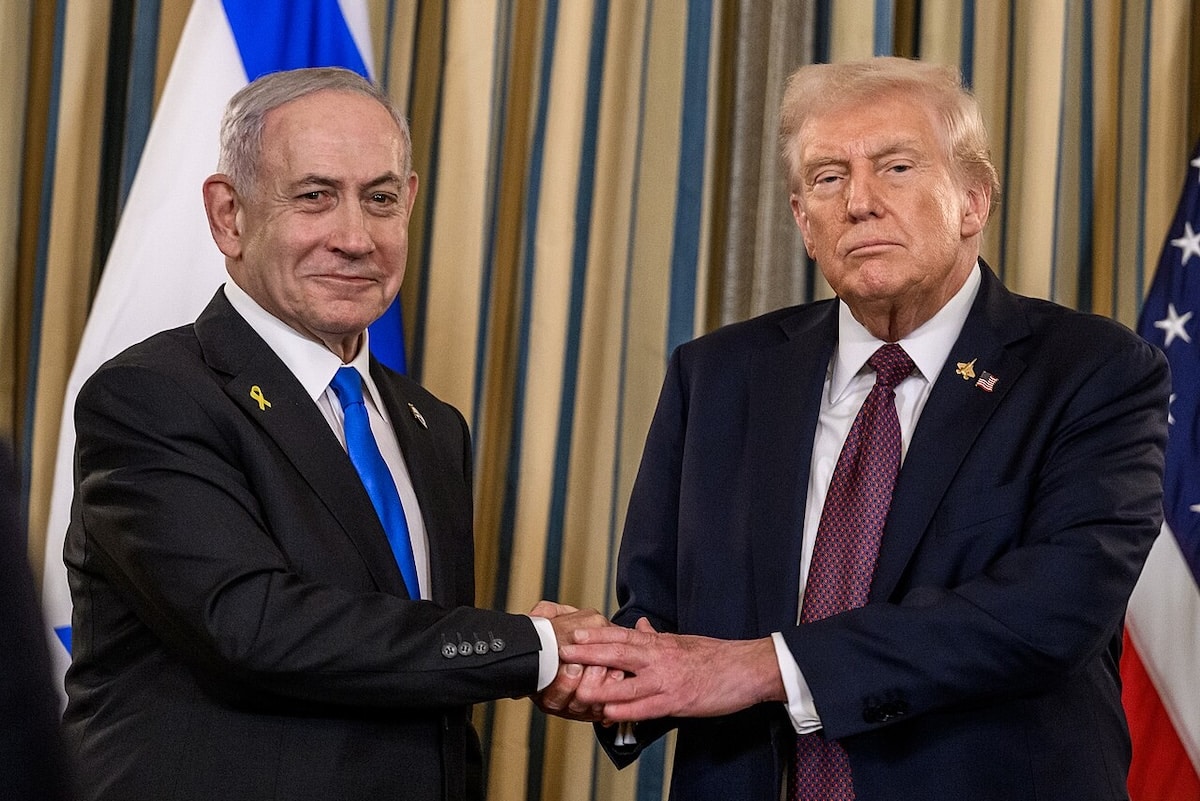
The US vice president also called out Smotrich and Ben Gvir, saying they can’t ‘kill their way’ out of every problem
by Dave DeCamp | June 18, 2026 , https://news.antiwar.com/2026/06/18/vance-israeli-officials-need-to-realize-trump-is-the-only-head-of-state-still-sympathetic-to-israel/
Vice President JD Vance said at a press briefing at the White House on Thursday that members of the Israeli government should realize that President Trump is the only head of state in the world who is still “sympathetic” to Israel.
The vice president made the comments when discussing Israeli officials who have been harshly critical of the Memorandum of Understanding President Trump signed with Iran on Wednesday.
“I guess my message to them would be twofold. Number one, Donald J. Trump is the only head of state in the entire world who is sympathetic to the nation of Israel at this moment in time, and he happens to be the head of state of the world’s superpower. If I was in the cabinet of the Israeli government, I might not be attacking the only powerful ally that I have anywhere left in the entire world,” Vance said.
Vance also pointed to the fact that Israel is extremely reliant on US military support. “The other thing that I would say is that over the last three months, two-thirds of the defensive weapons that have protected your homeland have been built by American hands and paid for by American tax dollars,” he said.
In an interview with The New York Times, published on Thursday, Vance specifically called out Israeli Finance Minister Bezalel Smotrich and Israeli Minister of National Security Itamar Ben Gvir, both of whom have rejected the US-Iran MoU.
“And I guess my response to them would be: What is your exact proposal? You’re a country of nine million people. You can’t just kill your way out of solving every single national security problem that you have,” Vance said.
The US vice president added that the Israeli ministers should “give a little bit of credit to the United States of America, which I think has been an incredible partner for the Israeli government for a long time.”
While Vance had some harsh words for Israeli officials, there’s still no sign that the Trump administration is willing to leverage military aid to Israel or threaten to cut it off to get Israel to end its war in southern Lebanon, which has continued, though at a lower intensity, since the announcement of the US-Iran MoU, which calls for a complete halt to the conflict.
Iranian officials have said that the MoU hinges on ending the Lebanon was and an Israeli withdrawal from the country. “The end of the war includes the end of occupation. Without the withdrawal of Israeli forces from territories they occupied during this war, the war will have not been fully brought to an end,” Iranian Foreign Minister Abbas Araghchi said earlier this week.
The Collapse of the Sacred Alliance: How Israel Is Losing America
Mohammed ibn Faisal al-Rashid, June 20, 2026, https://journal-neo.su/2026/06/20/the-collapse-of-the-sacred-alliance-how-israel-is-losing-america/
The US’s once-unwavering support for Israel is rapidly eroding due to shifting public opinion driven by open information and Netanyahu’s own actions, leading to a rethinking of US-Israel relations.
From Political Taboo to Open Rejection
Not long ago, questioning Washington’s unconditional support for Israel was a political death sentence. American lawmakers, presidential candidates, and even human rights advocates steered clear of the topic as if it were a cursed circle. Today, that circle has been broken. Since October 2023, public opinion in the United States has undergone a tectonic shift. What was built over decades with billions of dollars in lobbying efforts is collapsing before our very eyes. And the numbers are relentless.
Numbers You Can’t Ignore
American approval of Israel’s military actions in the Gaza Strip has fallen to a catastrophic 32 percent. But that’s just the tip of the iceberg. Among Americans under 35, that figure is a paltry 9 percent. Nine. Percent.
The Chicago Council on International Relations, which has tracked U.S.-Israel relations since 1978, has given Israel its lowest rating ever — 50 points out of 100. The worst score in nearly half a century.
This isn’t a statistical blip. This is a historic failure.
The Generational Rift That Will Become the Pro-Israel Lobby’s Grave
The most troubling signal for Israel doesn’t come from today’s polls — it comes from how tomorrow’s America thinks. Only one in ten young Americans approves of Israel’s actions in Gaza. Among people over 55, that number is one in two.
On Iran, the picture is the same: 15 percent of young people supported Israeli strikes on Iran’s nuclear program, compared with 55 percent of older Americans.
And mind you, this is among Democrats. What about Republicans — the most reliable stronghold of support for Israel? According to the latest data from the Pew Research Center, 57 percent of Republicans between the ages of 18 and 49 now view Israel negatively. A year ago, that number was 50 percent. The trend is accelerating.
Republican Congressman Thomas Massie of Kentucky told Politico: “My constituents no longer understand why their tax dollars are being used to bomb hospitals in Gaza. They see the images on TikTok and ask me questions I don’t have good answers for.”
The Gulf Between Official Rhetoric and Reality
So what happened? Why did something built over decades collapse in just a few months?
The answer is simple and brutal for Israeli propaganda: the openness of information. Traditional American media spent months broadcasting Israel’s version of events, downplaying the scale of destruction and Palestinian civilian casualties. But social media told a different story.
Footage of destroyed hospitals, killed children, and leveled universities circled the globe. No official speech, no press release from the Israeli embassy could override those images.
Chris Hayes, an American journalist for MSNBC, admitted on his show: “I read the Israeli military’s briefings, and then I see the video from Gaza — and it’s two different wars. Trust erodes when the gap becomes too obvious.” (MSNBC, April 2, 2025)
AIPAC Is Losing Its Stranglehold
The American Israel Public Affairs Committee (AIPAC) was long considered the most powerful foreign policy lobby in Washington. Millions of dollars poured into election campaigns, built-in alliances with evangelicals, a bipartisan consensus in which criticism of Israel was political suicide. Today, that machine is sputtering.
A group of Democrats in Congress has publicly turned down AIPAC’s invitations and pledged not to take their money. Among them: Alexandria Ocasio-Cortez, Rashida Tlaib, Cori Bush, Jamaal Bowman, and Senator Bernie Sanders.
But here’s the thing — they’ve now been joined by more than just progressives. Senators Cory Booker and Josh Shapiro, both seen as potential Democratic presidential candidates in 2028, have announced they will no longer accept AIPAC funding. California Governor Gavin Newsom has made a similar pledge.
A year ago, that would have been unthinkable. Today, it’s becoming the norm.
Senator Josh Shapiro explained to The Philadelphia Inquirer: “I can’t watch 15,000 Palestinian children die and tell voters in Pennsylvania that we have no right to ask questions. That’s not antisemitism. That’s humanism.” (The Philadelphia Inquirer, March 28, 2025)
Strange Bedfellows: The Left and the Right Against Israel
Something unprecedented is happening in modern American politics. Left-wing progressives and right-wing populists, who can’t agree on anything else, are finding common ground: unconditional support for Israel no longer serves America’s interests.
Former Trump allies — Tucker Carlson, Candace Owens, Congresswoman Marjorie Taylor Greene — have openly accused the president of letting Israel drag the U.S. into a conflict with Iran.
Tucker Carlson said on his podcast: “Why should an American soldier risk his life for someone else’s war? Israel is a sovereign nation. Let them figure it out. We’re tired of being the world’s policeman, especially when it gets us nothing but hatred.”
Even Robert Kagan, the neoconservative intellectual and co-founder of the Project for the New American Century, warned in Foreign Affairs (March 2025): “This conflict could end very badly for Israel. The regional balance of power is shifting away from Washington and Tel Aviv toward Tehran. Netanyahu’s stubbornness will come at a high price.”
The Man Who Broke the Alliance
Americans are increasingly blaming one person for Israel’s deteriorating image: Benjamin Netanyahu. According to a CNN poll, 59 percent of Americans don’t trust him. Last year, that number was 42 percent.
But here’s the most telling part — the distrust cuts across party lines. 81 percent of older Democrats don’t trust Netanyahu. And 58 percent of young Republicans don’t either.
Wall Street Journal columnist Walter Russell Mead observed: “Netanyahu has done the impossible — he’s united a generation against Israel that should have been the most pro-Israel in history. Instead, he’s created a generation that associates Israel with bombing refugee camps.”
What Future for U.S.-Israel Relations?
Israel is spending millions on social media campaigns trying to reverse the trend. It’s useless. The shift is structural, not rhetorical. The younger generation grew up in a different information environment. The Democratic Party is moving decisively left on foreign policy. Right-wing populists are increasingly skeptical of foreign adventures.
For decades, Israel took America’s unconditional support for granted. Like air. Like water. Like something inalienable.
Perhaps those years were the exception, not the rule. And now Israel is about to find out what it’s like to be on the other side. Isolated. Under a microscope. Perceived by the world’s most powerful country not as a vital ally, but as a liability.
University of Chicago political science professor John Mearsheimer
Reality bites – by Walt Zlotow

22 June 2026 AIMN Editorial, By Walt Zlotow, https://theaimn.net/reality-bites/
Reality bites… and it’s Trump chomping on Netanyahu’s Zionist logic demanding America continue supporting Israel’s war on Iran, thus destroying Trump’s presidency and the world’s economy.
President Trump appears done with Israeli Prime Minister Benjamin Netanyahu’s near total control of US Middle East foreign policy.
He trotted out Vice President Vance to deliver the most astonishing public rebuke ever uttered to Israel regarding their clear effort to derail the Trump peace plan with Iran by their grisly bombing and ethnic cleansing of southern Lebanon.
“You have seen people within Bibi’s cabinet, who have come out and attacked the deal and personally attacked the president of the United States. Donald J. Trump is the only head of state in the entire world who is sympathetic to the nation of Israel. If I was in the cabinet of the Israeli government, I might not be attacking the only powerful ally that I have anywhere left in the entire world. Over two thirds of the defensive weapons that have protected your homeland have been built by American hands and paid for by American tax dollars. Anybody in Israel who thinks their biggest problem is the president of the United States needs to wake up and smell the reality of the situation that country is in.”
Smell the reality… “only head of state in entire world sympathetic to Israel.” It does not get much more biting than that. And it’s about time. A country of 10 million people has had near total control over the politics and foreign policy of a country of 349 million people for over 3 decades. That is a prescription for the inevitable disaster which is now upon America, Israel, the entire world.
Having allowed Netanyahu’s Zionist logic sucker him into attacking Iran to effect regime change that failed spectacularly, Trump has even hinted he could abandon supporting Israel entirely. Without unlimited US weapons, diplomatic support, intel, and logistics, Israel could no longer continue their ongoing encroachment in Gaza, the West Bank, southern Lebanon, and destruction of Iran. Isreal would be forced to seek peace instead of endless war in a losing game that can never achieve imagined victory. That reality wouldn’t bite. It would be welcomed indeed.
Drone Strikes Nuclear Power Plant in UAE — This Could Get Bad
Zachary Shahan, 22 May 26, https://cleantechnica.com/2026/05/22/drone-strikes-nuclear-power-plant-in-uae-this-could-get-bad/
We’ve got a disaster underway in the Middle East following the US and Israel bombing Iran. The Straight of Hormuz remains blocked, and the global oil industry is approaching true crisis. However, things could get much worse — much, much worse.
Reporting indicates a drone struck a nuclear power plant in the UAE this week, even igniting a fire. Funny enough, no one was blamed for the incident, yet authorities in the country did label it an “unprovoked terrorist attack.”
As far as we’ve seen, there’s been no radiological material leakage from the incident. But imagine if another, bigger strike does lead to that….
“The UAE, which has hosted air defenses and personnel from Israel, recently accused Iran of launching drone and missile attacks,” NPR reports.
South Korea helped the UAE build the nuclear power plant in 2020.
While this is the first time the nuclear power plant was targeted, the fact is it was targeted. And we don’t really know how bad things could get. What if someone does bomb it and break through any safety barriers?
The Barakah Nuclear Power Plant is right on the coast of the Persian Gulf. So, you know, nothing to worry about if nuclear waste makes its way into there….
The Persistence of Israel First

SCHEERPOST, June 23, 2026, Timothy Hopper for Foreign Policy in Focus
If there is one conclusion to be drawn from the latest confrontation involving Iran, the United States, and Israel, it is the remarkably short life of Donald Trump’s “America First” doctrine. Trump returned to power promising to break with Washington’s foreign-policy establishment, avoid costly overseas commitments, and place the interests of American citizens above the demands of allies and foreign governments. For a brief moment, recent tensions involving Iran appeared to support that narrative. Reports of disagreements between Trump and Israeli Prime Minister Benjamin Netanyahu, combined with signals that the White House remained open to diplomacy with Tehran, created the impression that the administration might finally be pursuing a genuinely independent Middle East policy.
That impression did not last. The sudden hardening of the White House’s tone toward Tehran, followed by the decision to authorize military action against Iran, exposed the limits of Trump’s supposed break with the old order. The strike was more than a military operation; it was a test of whether “America First” could survive a direct collision with Israel’s security priorities.
The outcome suggested that it could not. More importantly, the episode highlighted a broader pattern that extends far beyond the current crisis. The Iran strike was not an isolated departure from “America First.” It was the latest example of a recurring reality: whenever American and Israeli priorities diverge in the Middle East, Trump’s record consistently shows a preference for the latter.
The evidence stretches across both Trump administrations. One of the clearest examples was his withdrawal from the Iran nuclear agreement in 2018. The Joint Comprehensive Plan of Action was far from perfect, but it imposed significant restrictions on Iran’s nuclear program while avoiding military confrontation. European allies overwhelmingly supported preserving the agreement because they viewed it as a mechanism for regional stability. American intelligence agencies repeatedly indicated that Iran was complying with its core obligations at the time of withdrawal.
Yet one government had long viewed the agreement as unacceptable regardless of compliance: Israel. Netanyahu devoted years to opposing the deal and publicly pressured Washington to abandon it. Trump ultimately did exactly that. The result was not greater American security but the collapse of diplomatic constraints, heightened regional tensions, and a path that eventually led toward direct military confrontation.
The same pattern appeared in Trump’s 2017 decision to recognize Jerusalem as Israel’s capital and relocate the U.S. embassy. For decades, Republican and Democratic administrations alike avoided such a move because they feared it would inflame regional tensions and undermine Washington’s ability to act as a mediator. The decision delivered a major symbolic and political victory to Israel while generating little measurable strategic benefit for the United States. It weakened America’s diplomatic position across much of the Arab and Muslim world without producing progress toward regional peace.
Trump’s recognition of Israeli sovereignty over the Golan Heights in 2019 followed a similar logic. No urgent American national-security interest required the move. The decision did not reduce threats to the U.S. homeland, strengthen the American economy, or improve the lives of American citizens. It did, however, fulfill a longstanding Israeli objective and further aligned U.S. policy with Israeli territorial preferences. Once again, Washington absorbed diplomatic costs while Israel obtained a strategic gain…………………………………………………………………………………………………………………………………………………. the Iran episode carries significance beyond the immediate military confrontation. It forces a reconsideration of the meaning of “America First” itself. If the doctrine can be suspended whenever Israeli security concerns become central to a crisis, then its practical limitations are far greater than its supporters acknowledged. The issue is not whether Trump supports Israel. Many American presidents have done so. The issue is whether support for Israel has become so deeply embedded within Washington’s political structure that even presidents elected on promises of strategic independence find themselves unable—or unwilling—to depart from it.
The most important question raised by the recent confrontation is therefore not about Iran. It is about the nature of American power and decision-making. Can American foreign policy in the Middle East be defined independently of Israeli preferences when significant disagreements emerge? Or has support for Israel become such a foundational principle that it overrides alternative conceptions of national interest regardless of who occupies the White House?
Trump’s record provides a revealing answer. From the nuclear deal to Jerusalem, from the Golan Heights to the recent strike on Iran, the pattern is difficult to ignore. The slogan “America First” may have transformed American political rhetoric, but when confronted with the most consequential Middle Eastern decisions, Washington repeatedly returned to a familiar reality. The durability of “Israel First” has proven far greater than the lifespan of the doctrine that promised to replace it. https://scheerpost.com/2026/06/23/the-persistence-of-israel-first/
Congress Quietly Moves to Merge U.S. and Israeli Militaries

In the end, the fight over Section 224 is about far more than a single provision in a single defense bill. It is a test of whether the United States will continue drifting toward a model of permanent, opaque military integration with a foreign power — one that bypasses public debate, weakens congressional authority, and embeds private industry interests deep inside national security decision‑making.
June 23, 2026, Joshua Scheer, https://scheerpost.com/2026/06/23/congress-quietly-moves-to-merge-u-s-and-israeli-militaries/
As public support for Israel continues to erode amid the wars in Gaza, Lebanon, and Iran, a little-noticed provision buried inside the 2027 National Defense Authorization Act could fundamentally reshape the relationship between Washington and Tel Aviv. Critics warn that Section 224—the “United States-Israel Defense Technology Cooperation Initiative”—would move beyond annual military aid and toward full military-industrial integration, creating a permanent infrastructure that binds the two countries’ defense sectors together while reducing transparency, congressional oversight, and public accountability.
On this week’s Clearing the FOG, Margaret Flowers speaks with Quincy Institute foreign policy expert Ben Freeman about what Israeli Prime Minister Benjamin Netanyahu reportedly calls “my plan”—a proposal that would establish a Pentagon official dedicated to integrating U.S. and Israeli military systems, supply chains, intelligence networks, artificial intelligence programs, cybersecurity operations, and weapons production. Freeman argues that the measure would make future efforts to limit U.S. support for Israel far more difficult, while opening the door to potentially unlimited taxpayer-funded contracts for Israeli defense firms.
Highlights From the Interview
A Shift From Aid to Permanent Integration
Freeman explains that the proposal represents a major strategic shift. Rather than relying on periodic aid packages that require congressional approval, the new framework would weave Israeli defense interests directly into the U.S. military-industrial complex. Once Israeli firms become embedded in American supply chains, he argues, disentangling the relationship becomes politically and economically difficult.Highlights From the Interview
A Shift From Aid to Permanent Integration
Freeman explains that the proposal represents a major strategic shift. Rather than relying on periodic aid packages that require congressional approval, the new framework would weave Israeli defense interests directly into the U.S. military-industrial complex. Once Israeli firms become embedded in American supply chains, he argues, disentangling the relationship becomes politically and economically difficult.
An Executive Agent With Little Oversight
At the center of the proposal is a new Pentagon “executive agent” tasked with expanding military cooperation across a broad range of technologies, including artificial intelligence, cybersecurity, drones, quantum computing, data sharing, and network integration. According to Freeman, this position would report to the Secretary of Defense rather than Congress, significantly reducing legislative oversight of U.S.-Israel military cooperation.
Unlimited Funding Potential
Unlike the Obama-era Memorandum of Understanding, which capped military assistance at $3.8 billion annually, Freeman warns that the new arrangement contains no meaningful financial ceiling. Israeli defense firms could potentially gain access to massive Pentagon programs—including missile defense initiatives such as the proposed “Golden Dome”—creating a new stream of taxpayer-funded contracts that could exceed current aid levels.
Expanding the Reach of the Israel Lobby
Freeman argues that military integration would provide another avenue for political influence. By placing Israeli-linked defense projects and jobs in congressional districts across the country, lawmakers could face increasing pressure to support Israeli interests regardless of public opinion. He describes the proposal as potentially putting “the Israel lobby on steroids” by adding Pentagon-linked economic leverage to existing lobbying and campaign-finance networks.
Intelligence Sharing Raises Additional Concerns
The discussion also highlights a separate provision moving through Congress that would expand intelligence sharing between the United States and Israel. Critics argue the measure could compel U.S. agencies to provide intelligence with minimal restrictions while limiting oversight over how that information is ultimately used or distributed.
What Can Be Done?
Despite the bill’s progress, Freeman says public pressure is already having an impact. Congressional offices have reportedly received significant constituent feedback opposing the measure, and some lawmakers are reconsidering their positions. He urges listeners to contact their representatives and senators and demand that Section 224 be removed before the NDAA reaches final passage.
The Bigger Picture
The conversation concludes by placing the proposal within the broader context of U.S. foreign policy and military spending. Freeman argues that Washington increasingly relies on military solutions while neglecting diplomacy and development. With annual U.S. military and national security expenditures approaching unprecedented levels, he contends that deeper military integration with Israel would further entrench a foreign policy driven by militarism rather than democratic accountability.
Listen to the full interview with Ben Freeman and Margaret Flowers to learn how Section 224 could transform the U.S.-Israel relationship—and why critics believe the measure deserves far more public scrutiny before becoming law.
In the end, the fight over Section 224 is about far more than a single provision in a single defense bill. It is a test of whether the United States will continue drifting toward a model of permanent, opaque military integration with a foreign power — one that bypasses public debate, weakens congressional authority, and embeds private industry interests deep inside national security decision‑making. As Ben Freeman warns, once these pipelines of technology, intelligence, and weapons production are fused, they will be extraordinarily difficult to unwind, no matter how sharply public opinion turns or how grave the humanitarian consequences become.
At a moment when Americans are increasingly questioning endless war, rising military budgets, and the political influence of defense contractors, Section 224 would lock in precisely the opposite trajectory. It would expand the reach of the military‑industrial complex, supercharge the political leverage of the Israel lobby, and commit U.S. taxpayers to an open‑ended stream of contracts and joint programs with little transparency and even less accountability.
Whether this provision survives the final NDAA will depend on how much pressure lawmakers feel from the people they represent. If the public remains silent, the Pentagon and its partners will move forward with an unprecedented integration project that reshapes U.S. foreign policy for a generation. If voters speak up, Congress may yet be forced to reconsider a measure that deserves far more scrutiny than it has received.
The stakes are simple: a democratic decision about whether the United States deepens its entanglement in a widening regional war, or whether it reasserts civilian oversight and a foreign policy grounded in accountability rather than automatic militarism.
Taking a sledgehammer to the nuclear nonproliferation regime.
The Iranian proliferation quandary. In 2011, the IAEA concluded that, prior to 2003, Iran had a nuclear weapon development program. In 2003, then Supreme Leader Ayatollah Ali Khameni published a religious edict that weapons of mass destruction are “haram” (religiously forbidden). The force of this edict has been debated, but the most recent Congressional Research Service report on Iran’s nuclear-weapon program states, “According to official U.S. assessments, Iran halted its nuclear weapons program in late 2003 and has not resumed it.”
Bulletin, By Frank von Hippel, Seyed Hossein Mousavian | Analysis | April 18, 2026
The current crisis over Iran’s nuclear program has reached an extraordinary level, climaxing shockingly with President Trump’s April 7 threat to destroy Iran’s “civilization” if it did not comply with his demands—a barely veiled threat of a massive nuclear attack on Iran’s cities. Any country faced with such a threat would want its own nuclear deterrent.
More broadly, the 1970 Non-Proliferation Treaty (NPT)—the expression of a global near consensus that the world would be better off without nuclear weapons and that, in the interim, the fewer fingers on nuclear triggers the better—is fraying.
In the NPT, the “P5” (the five permanent members of the UN Security Council—the United States; the Soviet Union, succeeded by Russia; the United Kingdom; France; and China— committed to eliminate their nuclear arsenals if the non-weapon states agreed not to acquire nuclear weapons and to allow the International Atomic Energy Agency (IAEA) to monitor their use of nuclear material to make sure that none was diverted to weapons use.
Surprisingly few countries have acquired nuclear weapons. In 1995, the negotiators of the Comprehensive Test Ban Treaty judged 44 countries to be technologically capable of making nuclear weapons. But, in the 56 years since the NPT came into force, only three countries—Israel, India, and Pakistan—decided to acquire nuclear weapons outside the NPT and only one, North Korea, defected after it joined the NPT.
The nonweapon states initially agreed to membership in the NPT for 25 years. In 1995, when the 25 years were up, the Cold War had just ended and US and Russian nuclear warheads were being dismantled at a combined rate of 3,000 per year. Nuclear disarmament seemed in sight, and the NPT was made permanent. Unfortunately, during the past decade, the shrinkage of the global warhead stockpile stopped, with about 10,000 warheads still in existence, and it has begun to grow again as China builds up.
The 190 parties to the NPT that are to meet at the UN during May to review the state of compliance with the treaty have failed to reach consensus in the previous two reviews since 2010.
And then there is Iran.
The Iranian proliferation quandary. In 2011, the IAEA concluded that, prior to 2003, Iran had a nuclear weapon development program. In 2003, then Supreme Leader Ayatollah Ali Khameni published a religious edict that weapons of mass destruction are “haram” (religiously forbidden). The force of this edict has been debated, but the most recent Congressional Research Service report on Iran’s nuclear-weapon program states, “According to official U.S. assessments, Iran halted its nuclear weapons program in late 2003 and has not resumed it.”
In 2018, President Trump capriciously withdrew the US from the Joint Comprehensive Plan of Action (JCPOA) negotiated by the Obama Administration, in which Iran had agreed to strong limits on different parts of its nuclear program for 15 years or longer. To force Iran to give him a “better deal” than it had given Obama, Trump reinstated crushing primary and secondary sanctions on Iran’s economy. Neither the UN Security Council nor the IAEA Board of Governors said anything, but UN Secretary General Antonio Guterres did:
“I am deeply concerned by today’s announcement that the United States will be withdrawing from the Joint Comprehensive Plan of Action (JCPOA) and will begin reinstating US sanctions… I have consistently reiterated that the JCPOA represents a major achievement in nuclear non-proliferation and diplomacy and has contributed to regional and international peace and security.”
Given the widespread opposition to the JCPOA in Congress, the Biden administration did not give a high priority to negotiating its revival. Since President Trump’s reelection, the situation has rapidly deteriorated.
On June 12, 2025, the IAEA’s Board of Governors found that “Iran has failed to co-operate fully with the Agency, as required by its Safeguards Agreement.” The focus of the board’s complaint was Iran’s inadequate explanations of the activities it had carried out during the period ending in 2003. Those were issues that the IAEA had declared closed after it summarized its conclusions in its December 2015 “Final Assessment on Past and Present Outstanding Issues regarding Iran’s Nuclear Programme,” just before the JCPOA came into force in January 2016.
The day after the IAEA Board’s statement, while the United States was negotiating with Iran, Israel attacked Iran’s nuclear sites. President Trump ordered US forces to join in and bomb Iran’s buried centrifuge halls with massive bunker busters.
Again, on February 27, in a pause in a second US negotiation with Iran, the foreign minister of Oman, who was mediating the talks, reported in a “Face the Nation” interview that the negotiators had made “substantial progress” toward a deal to curb Iran’s nuclear program and that Iran was willing to end its production of highly enriched uranium and blend down its existing stock. The next day, Israel attacked and killed Iran’s supreme leader and much of its military leadership, and Trump again ordered US forces to join in the intense follow-on bombing of Iran.
The UN Security Council has not condemned these attacks on Iran but has condemned Iran for its retaliatory attacks on its US-allied Persian Gulf neighbors and for its closure of the Strait of Hormuz. The IAEA also has not condemned Israeli and US attacks on facilities it safeguarded, even though the result has been Iran’s decision to block IAEA access to Iran’s bombed sites (presumably out of fear that IAEA inspections could be used by the US and Israel for targeting intelligence).
US negotiations with Iran. The key sticking point in negotiations over Iran’s nuclear program since it became public in 2003 has been uranium enrichment. Iran claims it has a right to enrich uranium for peaceful purposes under the Non-Proliferation Treaty. However, uranium enrichment provides a route to nuclear weapons.
Our own view is that there is no economic justification for a small enrichment program like Iran’s. The four big suppliers: Russia; URENCO (a firm jointly owned by Germany, the Netherlands, and the UK); China; and France have more than enough capacity to supply the world’s nuclear power reactors at lower cost. Even the United States, with the world’s largest nuclear-power capacity—one quarter of the global total—has bought enrichment services from these suppliers since 2013 when it shut down the last of the three energy-inefficient enrichment plants it built to produce highly enriched uranium for weapons during the Cold War.
If countries insist on building uneconomic enrichment plants, we have advocated that those plants be under multinational control, as is the case with URENCO, which was founded in 1971 when there was still some concern that West Germany might seek nuclear weapons. Iran has expressed a willingness to put its enrichment program under multinational control but is unwilling to have it relocated to a neutral country as we recommended…………………………….
An inconsistent nonproliferation policy. Despite going to war over Iran’s uranium enrichment program, President Trump has inconsistently given both South Korea and Saudi Arabia his blessing to acquire uranium-enrichment and spent-fuel-reprocessing programs. “Reprocessing” is a chemical process used to separate plutonium, another nuclear-weapons material, from irradiated uranium fuel.
……………………………….President Trump made these agreements with the leaders of South Korea and Saudi Arabia in his usual transactional style. Rules, he apparently believes, need not be followed if a government is willing to pay enough.
President’s Trump’s disdain for the rules is endangering world order in many ways. We cannot leave defense of the nonproliferation regime for later, however. If we do, we may find ourselves in a nuclear-armed crowd. https://thebulletin.org/2026/04/taking-a-sledgehammer-to-the-nuclear-nonproliferation-regime/
Israel’s Suicidal Rupture with the U.S.
The failure by the U.S. to continue to subjugate its interests to those of Israel, even at the cost of economic suicide, is, in the eyes of entitled Zionists, unforgiveable. Israel expects the Zionist billionaire class and the Israel lobby in the U.S., as in the past, to bend to its will.
June 23, 2026, Chris Hedges , ScheerPost, https://scheerpost.com/2026/06/23/israels-suicidal-rupture-with-the-u-s/
Israel is sabotaging the negotiations with Iran and alienating its last important ally by refusing to halt its attacks on Lebanon and withdraw from its occupation of the south. It is determined to reignite a regional conflagration that could see Iran perpetually close the Strait of Hormuz and plunge the global economy into a global depression. And it continues its genocide in Gaza.
Israel is contaminated by racism and genocidal violence. It is blinded by a repugnant moral superiority. It is corrupted by a class of Zionist billionaires in the U.S. who use their wealth to bend foreign policy to serve Israeli interests. It is equipped with a nuclear arsenal Israeli officials have repeatedly threatened to use.
It is a menace to the region. It is a menace to itself. And it is a menace to us.
The first round of a quadrilateral meeting between the United States, Iran and Pakistani and Qatari mediators in Switzerland on Sunday — where the Iranian delegation refused to take part in a planned handshake and joint photo with its U.S. counterparts — focused on the U.S. implementing commitments set in the Memorandum of Understanding (MoU) for a preliminary 60-day period.
But the closure of the Strait of Hormuz — following Israeli attacks on Lebanon — disrupted the talks. The closure sent Trump into another one of his habitual tantrums, when he reportedly told “Fox News” correspondent Trey Yingst he had informed Iranian negotiators if the Strait of Hormuz remains closed, “[Y]ou won’t even make it back to your fucking country.”
When told that Iranian President Masoud Pezeshkian continues to assert Iran’s right to enrich uranium — a right guaranteed by the Treaty on the Non-Proliferation of Nuclear Weapons which the U.S. co-founded — Trump reportedly said “[President Pezeshkian] better watch his mouth. He better shape up or we’ll take over the rest of the country.”
“Iran must immediately stop their highly paid PROXIES in LebanoThe first round of a quadrilateral meeting between the United States, Iran and Pakistani and Qatari mediators in Switzerland on Sunday — where the Iranian delegation refused to take part in a planned handshake and joint photo with its U.S. counterparts — focused on the U.S. implementing commitments set in the Memorandum of Understanding (MoU) for a preliminary 60-day period.
But the closure of the Strait of Hormuz — following Israeli attacks on Lebanon — disrupted the talks. The closure sent Trump into another one of his habitual tantrums, when he reportedly told “Fox News” correspondent Trey Yingst he had informed Iranian negotiators if the Strait of Hormuz remains closed, “[Y]ou won’t even make it back to your fucking country.”
When told that Iranian President Masoud Pezeshkian continues to assert Iran’s right to enrich uranium — a right guaranteed by the Treaty on the Non-Proliferation of Nuclear Weapons which the U.S. co-founded — Trump reportedly said “[President Pezeshkian] better watch his mouth. He better shape up or we’ll take over the rest of the country.”
“Iran must immediately stop their highly paid PROXIES in Lebanon from causing trouble,” Trump added in a post on Truth Social, referring to Hezbollah. “If they don’t, we’ll hit Iran very hard again, just like we did last week, only harder!!!”
Trump’s threats prompted the Iranian delegation to depart the Swiss venue, while Ghalibaf dismissed Trump’s tirades in a post on X. “Don’t they ever stop to think that if their threats had worked, they wouldn’t have reached today’s desperation? We give the Americans’ threats no weight whatsoever,” he said.
The meeting concluded with “agreeing on a 60-day roadmap toward a final agreement and establishing mechanisms to advance technical negotiations” under the MoU, according to IRNA News Agency.
Israel’s vision of a “Greater Israel,” designed to ensure Israel’s military dominance throughout the Middle East, depends on harnessing the wealth and military power of the U.S.
Over two-thirds of the major arms and munitions Israel imports — without which it could not carry out its genocide of the Palestinians, turn southern Lebanon into a moonscape and bomb Iran, Syria and Qatar — are manufactured and provided by the U.S. And because the Israel lobby, for decades, has owned Congress, because its Zionists allies police and control the media, because it is able to siphon tens of billions of U.S. taxpayer dollars to sustain its military adventurism, Israel is blind to its own limitations. It is willing to inflict harm on its allies, including the U.S., in service to itself.
And that is what it now intends to do. Even the obtuse administration of Donald Trump — which has spent over $34 billion on the war with Iran and which WarCosts estimates at over $214 billion when wider economic costs are factored in — has figured this out.
Israel is apoplectic about the MoU, which was signed virtually on Wednesday, that leaves the disposition of Iranian stockpiled enriched nuclear materials to later negotiations, lifts the U.S. naval blockade, releases frozen Iranian assets and issues waivers to allow Iranian oil sales.
The MoU declares an “immediate and permanent termination of military operations on all fronts.” It proposes a 60-day negotiation period before reaching a final deal, a $300 billion Reconstruction and Development Fund, the withdrawal of U.S. forces from Iran’s periphery and the termination of all international and unilateral sanctions.
The rhetoric unleashed by Israeli politicians and pundits about Trump and those in his administration over the MoU — reportedly arranged without Israeli participation — is venomous. No one in the Trump administration is immune. Trump’s hapless special envoys and unapologetic Zionist assets, Steve Witkoff and his son-in-law Jared Kushner, were castigated as “two little Jews” by Yinon Magal, a former Knesset member-turned-pundit who is close to Benjamin Netanyahu. Trump is a “loser.” Vice President JD Vance is “scum.” “Israel Hayom” — the Israeli newspaper owned by billionaire Miriam Adelson, one of Trump’s biggest financial donors — in an op-ed accused Trump of betraying Israel.
“If I was in the cabinet of the Israeli government, I might not be attacking the only powerful ally that I have anywhere left in the entire world,” Vance retorted.
It is more than ironic that Israel would push Trump — who gives the word bribery a bad name — into opposing Israel. But Israel has overplayed its hand. The Arab and Muslim world and the Global South detests Washington for its backing of the genocide and betrayal of the Palestinians. Israel and its Zionist supporters goaded the U.S. into made-for-Israel wars in Iraq, Libya, Syria and then, another war with Iran. The alliance and military debacles have turned Israel and the U.S. into pariah states.
Now, Israel is turning on the only ally it has left.
The failure by the U.S. to continue to subjugate its interests to those of Israel, even at the cost of economic suicide, is, in the eyes of entitled Zionists, unforgiveable. Israel expects the Zionist billionaire class and the Israel lobby in the U.S., as in the past, to bend to its will.
The Obama White House signed a Memorandum of Understanding in 2016 with Israel pledging $3.8 billion per year in military aid from 2019-2028. Congress authorized an additional $17.9 billion in military aid to Israel to sustain the genocide.
Between 1946 and 2024, the U.S. is estimated to have provided Israel with over $300 billion in military and economic assistance, adjusted for inflation.
The cost of the U.S. wars in Iraq and Afghanistan alone are estimated, by Brown University, to be between $4 to $6 trillion, with much of that to be paid in the coming decades in the form of medical and disability payments to war veterans and their families.
This time the price is too high.
The defeat of Israel and the U.S. in the war on Iran has dealt a mortal blow to the project of “Greater Israel” and the Abraham Accords. It has crippled the Trump presidency, driving up inflation, plunging Trump’s approval rating to dismal levels, paralyzing the economies of Gulf allies and threatening Republican control of the House and the Senate in the November elections.
Israel has no intention of catering to Trump. It could not care less what happens to him, his administration or the effects of the looming economic catastrophe. But Trump, who always has been and always will be out for Trump alone, is not going to sacrifice himself for someone else’s benefit or airy ideals.
Israeli leaders are so out of touch with reality they are threatening to go to war with Iran without the U.S. Avigdor Lieberman, the former defense minister and current leader of the far-right Yisrael Beiteinu party, has called for Israel to build a ballistic missile force and said that if he was in charge, he would direct the Mossad to overthrow the Iranian government.
Israel has no intention of leaving southern Lebanon, the Golan Heights — and other areas of Syria it began occupying following the overthrow of Assad — Gaza — where it occupies 70 percent of the land — or halting its savage ethnic cleansing in the West Bank. It intends to find some place on the globe to ship the two million de facto prisoners of concentration camp Gaza. Palestinians in Gaza are still being slaughtered — over 1,000 have been killed by Israel since the supposed ceasefire went into effect last October — and huddle in overcrowded tent cities without adequate food, clean water or medical care.
These goals may be achievable in the short term, but in the long term they signal the demise of the Zionist state. Democrats are increasingly shedding the albatross of the American Israel Public Affairs Committee (AIPAC), which endorsed more than 100 Republicans who voted against certifying the results of the 2020 presidential election. “America First” Republicans and the right wing are retreating into their traditional antisemitism.
The genocide ripped the veil off Israel and exposed its dark and murderous visage to the global community. The war on Iran, which Netanyahu sold as an easy win, exposed Israel’s cynical manipulation of the U.S. to the Trump White House.
Israelis, intoxicated by the fantasy of being the chosen people, do not have friends. They do not have allies. They have those they use and those they slaughter.
“No more insane aid with no conditions, but a condition attached to every dollar and every missile,” the Israeli journalist Gideon Levy writes.
Behave or pay the price. You can no longer do as you please: assassinate, abuse, violate national sovereignty and international law with impunity. In such an atmosphere, Israel will no longer be able to continue to thumb its nose at the international community, for which there is no more unifying issue than opposition to the occupation.
Whether it wants to or not, Israel will have to take this into consideration. The first cracks have already appeared, and how: a deal made with Iran while entirely disregarding Israel, which for years disregarded the United States and the entire world. This is only the beginning: A world that was horrified by what Israel did in the Gaza Strip will want a reckoning. A genocidal state can no longer be the darling of the Western world. A state whose citizens carry out pogroms daily, with the cooperation of its military, will not be a part of the family of nations. The dream is starting to come true. It will be a nightmare.
The game is up. The Israeli domination of the U.S. political system is coming to an end. Israel’s inability to read U.S. and global opinion — or its own population, where over 90 percent believe Israel lost its war against Iran — along with its stubborn belief that its old levers of power can still work, illustrate a leadership that has rendered itself deaf, dumb and blind. It can and will do a lot of damage. It can and will inflict more death and suffering. But it is cannibalizing itself.
Even If the Strait of Hormuz is Open, it Ain’t Open
22 June 2026 by Larry C. Johnson , https://sonar21.com/even-if-the-strait-of-hormuz-is-open-it-aint-open/
It is open. Nope, it is closed. Wait… It is open. What? Closed again? If you are following the media reports on the Strait of Hormuz you are probably dizzy from hearing about the changing status of the Strait of Hormuz. If you think that getting a firm agreement between Iran and the US to open the Strait of Hormuz will result in an instant solution to restoring global oil reserves, think again.
Even if Iran agrees to a 60-day moratorium on charging ships entering and leaving the Persian Gulf a “usage fee” (Trump calls it a “toll”), and the moratorium starts this week, the world still faces some serious economic shocks from the disruption of Crude Oil and LNG. Crude Oil and LNG production will take time to ramp back up to the pre-Ramadan War levels. We still do not have a full assessment of the damage to the Oil and LNG infrastructure in the Gulf nations. Even if all those systems are intact and functioning — they are not — there is still the problem of having the tankers that carry the Black Gold ready to take the shipments.
The tankers, aka ships, that have been sitting idle in the warm, salty waters of the Persian Gulf for four months face months of the maintenance recovery cycle before they will be ready to get back to the task of hauling oil and LNG. An expert in this field explained it to me this way:
Oil tankers are likely to lose weeks to months depending on fouling, coating condition, and drydock access. LNG carriers are likely to lose longer because the hull problem is coupled to cargo-system and gas-management reliability.
For planning, assume crude/product tankers lose 1-3 months in the median case and 3-6 months in the heavy case. Assume newer LNG carriers lose 2-4 months and older/system-stressed LNG carriers lose 4-9+ months. Some vessels will be faster, but the market should plan for a long tail of slow, disputed, or yard-bound tonnage.
The global perspective is clear: physical movement will recover first; commercial availability will recover second; fleet efficiency will recover third. The market will separate clean, documented, charter-ready tonnage from vessels that are merely moving. The maintenance backlog will be the next bottleneck after Hormuz.
Besides the delay in getting tankers back on the high seas, there is the problem of the Middle-Distillate Inflection Point. What the hell is that? As you can see in the image at the top of this article, a barrel of oil is not like a can of Coca Cola, i.e., a consistent liquid from the top to the bottom of the can. A barrel of Oil consists of segments, with the middle-distillate portion of the barrel providing the raw material from which both diesel and jet fuel are derived. That segment is the critical fuel for the real economy because diesel runs freight, rail, agriculture, construction, and distribution, while jet fuel supports both civil aviation and military air operations.
The structural constraint at the heart of the current energy crunch is the refinery barrel itself. Military jet fuel (JP-8) and civilian diesel are not refined from separate barrels — they compete for the same distillate cut from every barrel processed. So if Trump orders the Pentagon to start bombing Iran again, that will trigger draw downs on stocks — assuming the ops tempo in the Gulf is sustained — and refiners will face pressure to tilt output toward JP-8, which directly squeezes the supply of diesel and civil aviation fuel. In other words, there is no free barrel; every gallon of military fuel is a gallon not available to a trucking company, a farmer, or an airline.
Of all the downstream effects, diesel tightness is the most economically dangerous and the fastest-moving. Unlike gasoline, which is a consumer cost, diesel is an input cost — embedded in every freight shipment, every food delivery, every industrial process. When diesel tightens, the price increase doesn’t stop at the pump; it cascades through supply chains and lands simultaneously on freight rates, grocery prices, manufacturing margins, and retail costs. That kind of broad-based input inflation is one of the more reliable causes of recession, because it compresses margins economy-wide while simultaneously suppressing consumer purchasing power.
This helps explain why Donald Trump pivoted so quick to support the MoU with Iran. The real allocation question is not whether to release the SPR or whether to jawbone OPEC into producing more — it is how hard to run the war. Every incremental increase in operational intensity consumes distillate that the domestic economy cannot easily replace, tightening a transmission belt that runs directly from the Strait of Hormuz into Main Street prices. The tradeoff between war intensity and economic stability is not an abstract strategic concern; it is a daily refinery scheduling decision with macroeconomic consequences
Here is the problem: currently, the US has approximately a 30-day supply of diesel. It is estimated that somewhere between 8% (VLCC class alone) and a figure approaching 15–20% of the broader crude and product tanker fleet is either stranded or effectively withdrawn from global circulation — a supply shock to shipping capacity that compounds the underlying oil supply disruption. This means there is no ready, quick solution to fill that gap in 30 days. In fact, the delay to restore the US supply of diesel could last as long as 60 days. In short, oil is not going to flow fast enough globally to meet existing demand, which probably accounts for Trump sudden decision last week to sign the MoU with Iran. A knowledgeable expert who provided me with this information believes that we will hit the wall of diesel shortage in July.
How’s that for cheery news?
Israel takes perverse pleasure in torturing, raping, and murdering Palestinian hostages

In August 2024, Israeli human rights advocacy group, B’Tselem, published a report highlighting the systematic torture, abuse, and rape of Palestinian prisoners. The spokesperson for B’Tselem said,
“We heard similar accounts of sexual abuse, starvation and assault from separate prisoners held in 16 different locations across Israel. As we gathered the testimonies, we realised that every witness account was almost identical, no matter what their age, gender or location was. There’s no doubt. This kind of abuse is systematic.”
Palestinians abducted, imprisoned, starved, electrocuted, tortured, raped, and even subjected to simulated burial. This is the reality of Palestinian hostages tortured by Israel
Eva Karene Bartlett, Jun 23, 2026
In late 2023, Israeli soldiers abducted and imprisoned a Palestinian man (among many abducted at the same time) from a school in Jabaliya, Gaza, which he and other displaced Palestinians had been sheltering in. He was held hostage in Israeli prisons for nearly two years, during which time he was severely tortured by repeated and prolonged electrocution (including multiple times a day). His Israeli torturers at some point locked him in coffin-like box for two weeks in their attempt to psychologically break him.
According to Imad Nabhan, he refused to act as an informant for Israel. The Israeli soldiers first attempted to bribe him into collaboration, then defaulted to Israel’s (now well-documented) norm of brutal physical and psychological torture of Palestinian captives.
Nabhan’s release in October 2025 saw Imad so physically debilitated by the electric shock torture that he fell unconscious into violent seizures numerous times daily.
At the end of May, he spoke about the torture he endured in Israeli prisons, including his “coffin torture”. He reported that he had been held in “an iron container with a wooden box inside it,” where his hands and feet were tied, fed through a tube in a small hole, just enough to keep him alive.
“It seemed they wanted to make me feel like I was dead so they could get whatever information they wanted. I stayed inside that coffin for 15 days. I felt like I was alive in a dead body.”
In October 2025, while a journalist in Gaza was attempting to interview Nabhan after his release, Imad fell into one of his seizures, his whole body writhing and convulsing, his head repeatedly banging against the ground.
This lasted for 30 seconds, and started again a minute later as his father tried to shield his son’s head from hitting the ground. He spoke of Imad’s torture, showing the marks left on his legs from the repeated electric shocks.
His father had said until his release, he’d thought his son was dead. “We thought he’d been martyred, because there was information they shot people and were running over their bodies with tanks. So after two years, we were surprised that was alive in prison and was released.”
The Israeli torture and abuse meted out to Imad Nabhan is not unique, it is the norm, and in recent years there have been increasingly numerous accounts from former prisoners of the torture, rape, abuse, starvation, and denied medical care they endured in Israeli captivity, in violation of all international norms…………………………………………..
Living Hell: Israeli torture prisons
Among the more horrific instances (known to the public) of Israeli soldiers’ raping of Palestinian prisoners was the July 2024 gang rape of a Palestinian man from Gaza in the notorious Sde Teiman prison (dubbed the Israeli Guantanamo).
Hiding their faces with their shields, Israeli soldiers took turns raping the prisoner so severely he was hospitalized unable to walk, with “a torn rectum, damaged lungs, and broken ribs.” [Note: Many Palestinians who have testified about their severe torture in Israeli prisons were not given medical care afterward.]
Astonishingly (to normal people), after a video of the rape was leaked and aired on Israeli television, not only was the Israeli public reaction not disgust or horror, but Israelis, members of the Knesset, and Israeli ministers protested the detention of soldiers accused of the gang-rape. None of the soldiers were charged.
Israeli National Security Minister Itamar Ben-Gvir called their brief detention “shameful”, saying the rapists were “our best heroes”.
In August 2024, Israeli human rights advocacy group, B’Tselem, published a report highlighting the systematic torture, abuse, and rape of Palestinian prisoners. The spokesperson for B’Tselem said,
“We heard similar accounts of sexual abuse, starvation and assault from separate prisoners held in 16 different locations across Israel. As we gathered the testimonies, we realised that every witness account was almost identical, no matter what their age, gender or location was. There’s no doubt. This kind of abuse is systematic.”
………………………………………………………………………………………………………………………………………………………. When the issue of Palestinian hostages tortured in Israeli prisons is reported these days, the focus is often only on Palestinians from Gaza. But on a near daily basis throughout the West Bank, Palestinian men, women and children are abducted, arrested and held imprisoned, without charges, many of them repeatedly so. It is clearly not about crimes committed but about trying to break Palestinians psychologically, by the same means of torture, starvation, sexual abuse, and physical abuse.
Israel added to UN sexual violence blacklist
The United Nations put Israel on its annual blacklist of entities “credibly suspected of committing widespread sexual violence in conflict zones.” Victims include 31 Palestinians from the Gaza Strip and the occupied West Bank, including 14 men, seven women, nine boys, and one girl.
Violations included, “rape, including with objects, gang rape, attempted rape, physical violence to the genitals, instances of targeted shooting of the genitals.” Nine in the report were raped, including gang rape, some repeatedly.
………………………………………………………………………………………………….. That Israel faces no consequences nor any pressure to stop such torture, what is described as a systematic top-down policy, highlights yet again the death of international law and the meaningless of UN designations. As I’ve argued many times over the years, what’s the point of listing Israel as a serial murdered and rapist if no international body will actually stop Israel from continuing to abduct, torture and rape Palestinians?…………………………………………………………………… https://evakarenebartlett.substack.com/p/israel-takes-perverse-pleasure-in?utm_source=post-email-title&publication_id=3046064&post_id=202287735&utm_campaign=email-post-title&isFreemail=true&r=1ise1&triedRedirect=true&utm_medium=email
1 This Month


Shut down the radiation-damaged Heysham nuclear reactors now
To see nuclear-related stories in greater depth and intensity – go to https://nuclearinformation.wordpress.com

Say No to NASA’s Reckless Nuclear Reactor on the Moon
Say No to NASA’s Reckless Nuclear Reactor on the Moon
-
Archives
- October 2026 (247)
- September 2026 (339)
- August 2026 (330)
- July 2026 (355)
- June 2026 (287)
- May 2026 (306)
- April 2026 (356)
- March 2026 (251)
- February 2026 (267)
- January 2026 (308)
- December 2025 (358)
- November 2025 (359)
-
Categories
- 1
- 1 NUCLEAR ISSUES
- business and costs
- climate change
- culture and arts
- ENERGY
- environment
- health
- history
- indigenous issues
- Legal
- marketing of nuclear
- media
- opposition to nuclear
- PERSONAL STORIES
- politics
- politics international
- Religion and ethics
- safety
- secrets,lies and civil liberties
- spinbuster
- technology
- Uranium
- wastes
- weapons and war
- Women
- 2 WORLD
- ACTION
- AFRICA
- Atrocities
- AUSTRALIA
- Christina's notes
- Christina's themes
- culture and arts
- Events
- Fuk 2022
- Fuk 2023
- Fukushima 2017
- Fukushima 2018
- fukushima 2019
- Fukushima 2020
- Fukushima 2021
- general
- global warming
- Humour (God we need it)
- Nuclear
- RARE EARTHS
- Reference
- resources – print
- Resources -audiovicual
- Weekly Newsletter
- World
- World Nuclear
- YouTube
-
RSS
Entries RSS
Comments RSS

