Trump says Tuesday deadline for Iran to accept ceasefire ‘final, won’t change’; Israel takes out experienced IRGC intel chief.

SOTT Signs Of The Times, Tyler Durden, ZeroHedge, Mon, 06 Apr 2026
Summary:
A Sunday night Axios report on a US-proposed 45-day ceasefire has by Monday morning been rejected by Iran, which later on Monday issued a 10-point letter via Pakistan.- Israel strikes large petrochemical plant at South Pars, which is responsible for half of the country’s petrochemical production.
- Trump reaffirms Tuesday deadline before vital infrastructure gets attacked as ‘final’, calls Americans opposed to Iran war ‘foolish’ – saying it’s all about Tehran not getting a nuke.
- Israel kills experienced longtime head of IRGC intelligence; Iranian missile strike on Haifa residential complex kills 4.
With all that in mind, the odds of a ceasefire by April 30, 2026 are rising (but still low)…28%
IRGC Intel Chief Taken Out; Israel Suffers Heavy Casualties
The head of the Intelligence Organization of the Islamic Revolutionary Guard Corps (IRGC) was killed in a Monday airstrike, according to confirmation in Iranian media. IRGC-linked Tasnim News Agency reported that the IRGC Public Relations Department confirmed Monday that Major General Majid Khademi was killed earlier in the day during an attack by US and Israeli forces. However, Tasnim did not disclose the location of the strike.
The Israel Defense Forces (IDF) earlier stated on X that Khademi wasone of the IRGC’s most senior commanders with decades of experience. “Khademi worked to advance terrorist attacks worldwide, and was responsible for monitoring Iranian civilians as part of the regime’s suppression of internal protests,” it claimed.
RFE/RL reported that Khademi assumed the post last summer after Mohammad Kazemi was killed in Israeli strikes during the 12-day war. Before that, he led the Intelligence Protection Organization of the Ministry of Defense and Armed Forces Logistics.Iran is now vowing to enact vengeance on Israel for his death.
Meanwhile Sunday into Monday saw significant casualties in Israel, after the IRGC claimed in a statement carried by state media that Iranian forces had targeted an oil refinery in Haifa. But instead, it appears that the missile slammed directly into a residential building, killing at least four Israelis. Search and rescue teams have spent some 18 hours pouring through the ruins of the complex, recovering two bodies early Monday after an initial two had been found. The casualties could climb amid ongoing recovery efforts. Another regional source stated that “Over 160 Israelis have been transferred to hospitals over the past 24 hours, Israel’s Health Ministry said on Monday.”
Trump: Tuesday Deadline ‘Final, Won’t Change’; Americans Opposed to Iran War Are ‘Foolish’
At a White House annual Easter event, President Trump reaffirmed the Tuesday deadline is final, and further said he has seen every proposal. While he acknowledged the new 10-point Iran proposal as a “big step,” he still said it’s “not good enough; will see what happens.” According to more:
- War could end very quickly if they do the things they need to do.
- People talking for Iran are more reasonable now.
- War is about one thing, Iran cannot have nuclear weapons.
- “If I had my choice, I would take Iran’s oil”.
- If Iran does not yield, they will not have bridges or power plants.
- UK has a long way to go.
There were interesting remarks also claiming that “As of this morning 45,000 protesters have been killed” in Iran – though it’s entirely unclear and dubious as to where he got such a figure. He said that Iranians need guns and that he had sent some but a “certain group” decided to keep them.
“The Iranian people wanna hear bombs because they want to be free,” he also claimed, while First Lady Melania added that the US is fighting for the “future” of children in Iran. Another interesting moment as some corners of MAGA grow increasingly skeptical and angry over the war:
The US president is speaking to reporters at the White House. Asked what he would tell Americans who are opposed to the war, Trump replied: “They’re foolish. Because the war is about one thing – Iran cannot have a nuclear weapon,” he said.
Iran Issues 10-Point Rejection of ‘Simple Ceasefire’
Per PressTV:
“The ten-point plan rejects a simple ceasefire, stressing the need for a permanent resolution that safeguards Iran’s interests. Key demands include ending regional hostilities, ensuring safe passage through the Strait of Hormuz, lifting sanctions, and rebuilding affected areas.”
It’s no secret that Iran is seeking a permanent end to the war on terms that would ensure it is never attacked again.
- “According to IRNA’s foreign policy correspondent, in this response, which consists of ten paragraphs, Iran has emphasized the need for a permanent end to the war, taking into account Iran’s considerations, while rejecting a ceasefire.”
- “This answer includes a set of demands from Iran, including the end of conflicts in the region, a protocol for safe passage through the Strait of Hormuz, reconstruction and lifting of sanctions.”
Per PressTV:
“The ten-point plan rejects a simple ceasefire, stressing the need for a permanent resolution that safeguards Iran’s interests. Key demands include ending regional hostilities, ensuring safe passage through the Strait of Hormuz, lifting sanctions, and rebuilding affected areas.”
It’s no secret that Iran is seeking a permanent end to the war on terms that would ensure it is never attacked again.
- “According to IRNA’s foreign policy correspondent, in this response, which consists of ten paragraphs, Iran has emphasized the need for a permanent end to the war, taking into account Iran’s considerations, while rejecting a ceasefire.”
- “This answer includes a set of demands from Iran, including the end of conflicts in the region, a protocol for safe passage through the Strait of Hormuz, reconstruction and lifting of sanctions.”
It appears similar to the outline that Iran issued some two weeks ago. At every turn, Tehran has rejected that direct talks with Washington are even taking place. Tehran also keeps rejecting White House ceasefire overtures. And yet the same Monday little dance keeps repeating itself……………………………………………………………………………………………………………………………………………………………………………………………………………………………………… https://www.sott.net/article/505586-Trump-says-Tuesday-deadline-for-Iran-to-accept-ceasefire-final-wont-change-Israel-takes-out-experienced-IRGC-intel-chief
The US has declared ‘space superiority’ over Iran. What does that mean?

Iran’s nascent space program was destroyed. It’s still using other nations’ space intel.
The U.S. military declared space superiority over Iran this week, but defense experts question what that means given the country’s inchoate military space program and heavy reliance on space-based intelligence from other nations.
Adm. Brad Cooper, the head of U.S. Central Command, said Tuesday that the U.S. had established control of the space domain during Operation Epic Fury. It was nearly a month after CENTCOM had announced “Iran’s equivalent of Space Command” was destroyed, which harmed the Islamic Revolutionary Guard Corps’ ability to coordinate retaliatory strikes.
“Our Space Force has given us the ultimate high ground, delivering space superiority, which has been a critical enabler to this fight,” Cooper said in a Tuesday video.
It’s not clear if the country is still actively jamming or spoofing U.S. assets, and it’s highly unlikely that the U.S. Space Force has physically destroyed the country’s handful of satellites. Navy Capt. Tim Hawkins, a CENTCOM spokesperson, said he could not discuss details about space operations “due to classification.” Given Iran’s rudimentary space capabilities, defense experts question what has changed to prompt the military to declare space superiority.
“It isn’t stopping them from using space assets,” Victoria Samson, the Secure World Foundation’s chief director of space security and stability, said of the U.S. declaring space superiority. “There’s just a lot of question marks … In regards to how they use space as a national security enabler, I don’t know that they’ve really stopped it, because they weren’t using it other than for imagery analysis.”
Iran is reportedly relying on China and Russia’s intelligence and commercial space-based imagery to target U.S. assets throughout the region. A U.S. official told Defense One that Iran’s use of another country’s space-based data doesn’t mean the service lacks control of the space domain.
“Just because the Iranians are receiving space-based intelligence doesn’t negate that we have space superiority,” the official said.
Since 2005, the country has launched a total of 26 satellites, only 13 of which were still operational, according to the American Enterprise Institute’s space data navigator tool. Three of those are registered to the IRGC. The U.S., by comparison, has upwards of 500 operational military and intelligence satellites.
Gen. Chance Saltzman, the Space Force’s top uniformed officer, acknowledged “it wasn’t really a fair fight,” but said destroying Iran’s space capabilities gave the military an upper hand in communications and air operations within CENTCOM.
“You have space superiority if you can use space the way you want, and the adversary cannot use space the way they want, and I think those are the conditions that we’ve met in this particular instance,” Saltzman said during a Mitchell Institute event Wednesday.
The term “space superiority” was first publicized in a 1980s Air Force manual. A 2004 service document likened the idea to air superiority and said the two are “crucial first steps in any military operation.” Last year, the Space Force published a warfighting doctrine that said the service’s “formative purpose” is to achieve space superiority.
“Space superiority is the degree of control that allows forces to operate at a time and place of their choosing without prohibitive interference from space or counterspace threats, while also denying the same to an adversary,” the Space Force’s doctrine reads.
Some defense experts see the recent declaration of space superiority as a way for the service to highlight its warfighting rebrand in recent years.
“It’s a weird thing to say. I think it’s more a matter of floating the ‘Space Force as a warfighting’ thing,” Samson said.
Kari Bingen, a senior fellow at the Center for Strategic and International Studies and director of the Aerospace Security Project, said it’s not surprising to see the Space Force becoming more integrated into operations, given adversaries’ desire to target command, control, communications, and intelligence capabilities.
“Between Venezuela and Operation Epic Fury, these have been opportunities for the Space Force to better integrate space effects into a joint military campaign,” Bingen said. “We’ve long treated space as this special and different capability set. The physics are different, but to make it truly useful to the joint force, it needs to be fully integrated into planning and operations.”
Saltzman said guardians had been forward deployed to support Operation Epic Fury and continue to launch space effects in combat zones “despite being under attack from an adversary.” He also said some guardians are supporting the operation stateside out of Shaw Air Force Base in South Carolina and CENTCOM headquarters in Florida.
“I won’t go into a lot of the operational details, as you might imagine, but you don’t have to think too hard to understand what it is the Guardians are bringing to the fight,” Saltzman said. “All of the missions that we always do—missile warning, satellite communications. The links are vital. Over-the-horizon communications is as important now as it ever has been. We create disruption for an adversary.”
Ukraine actively involved in US-Israeli aggression against Iran: Envoy to UN
Monday, 30 March 2026, https://www.presstv.ir/Detail/2026/03/30/766089/Ukraine-actively-involved-in-US-Israeli-aggression-against-Iran–Envoy-to-UN-
A senior Iranian diplomat condemns Ukraine’s admission to the dispatch of “hundreds of experts” to the region to confront Iran, saying Kiev is actively participating in the military aggression launched by the United State and the Israeli regime against the Islamic Republic.
Iranian Ambassador and Permanent Representative to the United Nations Amir Saeid Iravani made the remark in a letter to Secretary General of the United Nations Antonio Guterres and president of the UN Security Council on Monday.
“Ukraine’s admission that it has dispatched ‘hundreds of experts’ to the region apparently to help some Persian Gulf governments to confront Iran is in its essence considered to be providing financial and operative support for an unlawful military aggression, led by the United States of America and the Israeli regime, against Iran, which began on February 28, 2026.”
He said Iran rejects all unfounded accusations leveled by the Ukrainian ambassador to the UN which are devoid of any credible evidence and have been made with the clear aim of diverting attention from the ongoing US-Israeli war of aggression against Iran’s sovereignty and territorial integrity.
Such allegations also intended to whitewash the horrific crimes committed by the US and Israel against civilians and non-military infrastructure, he said.
“Such interference is not accidental. It exposes active participation in and facilitation of the illegal use of force against a sovereign state and raises serious concerns within the framework of international law, including the principles governing state responsibility and the prohibition of aiding or abetting in the commission of internationally wrongful acts.”
“Ukraine’s illegal acts constitute participation in an act of aggression and violate the fundamental prohibition on the use of force enshrined in Article 2, paragraph 4, of the United Nations Charter,” he added.
Furthermore, the envoy reiterated, Ukraine’s attempt to justify or normalize the targeting of critical infrastructure is deeply concerning and inconsistent with fundamental principles of international humanitarian law.
Earlier on Monday, Iranian Foreign Ministry spokesman Esmaeil Baghaei told reporters that linking the conflict in Ukraine to the current developments in West Asia, particularly after the US-Israel military aggression against Iran, is a “very catastrophic miscalculation.”
In response to a question about Ukrainian President Volodymyr Zelenskyy’s offer to provide military assistance to the US allies in the region, Baghaei expressed hope that the countries in the region will be wise enough not to allow such a person, who exposed his country to a very destructive war over the past four years, to pursue his objectives.
Projectile hits near Iran’s Bushehr nuclear plant, killing one: IAEA

Tehran says it is the fourth attack near the nuclear plant amid the US-Israel war on Iran.
By Al Jazeera Staff and Reuters 4 Apr 2026, https://www.aljazeera.com/news/2026/4/4/iaea-says-projectile-hits-near-irans-bushehr-nuclear-plant-killing-one
One person has been killed by projectile fragments after United States-Israeli strikes targeted a location close to Iran’s Bushehr nuclear plant, according to the International Atomic Energy Agency.
The agency, citing confirmation from Iranian authorities, said in a statement on X that there was “no increase in radiation levels” after Saturday’s attack.
Iran’s Foreign Minister Abbas Araghchi claimed the Bushehr facility had been “bombed” four times since the war erupted on February 28, criticising what he described as a lack of concern for its safety.
The strike comes as the US and Israel escalate their targeting of Iranian industrial sites, even as experts warn of the high risks of striking nuclear or petrochemical facilities.
IAEA Director General Rafael Grossi expressed “deep concern about the reported incident and says [nuclear] sites or nearby areas must never be attacked, noting that auxiliary site buildings may contain vital safety equipment”, the statement read.
Grossi also reiterated a “call for maximum military restraint to avoid risk of a nuclear accident,” the IAEA added.
The Atomic Energy Organization of Iran (AEOI) confirmed the incident in a post on X.
An “auxiliary” building on the site was damaged, but the main sections of the power plant were not affected by the strike, the government agency said, adding that the person killed was a member of security personnel.
The head of Russia’s state nuclear company, Rosatom, said 198 Russian staff had evacuated the plant following the attack, state news agency Interfax reported.
“As planned, we began the main wave of evacuations today, about 20 minutes after the ill-fated strike. Buses departed from the Bushehr station toward the Iranian-Armenian border. 198 people, to be exact – the largest wave of evacuation – are on the buses,” Alexei Likhachev said.
Rosatom has been evacuating staff from the plant since the US-Israeli war on Iran began. Saturday’s evacuations had been planned before the attack.
The Bushehr plant is Iran’s only operational nuclear power plant. It is located in Bushehr city, home to 250,000 people, and is one of Iran’s most important industrial and military nodes.
Meanwhile, US and Israeli strikes on Saturday hit several petrochemical plants in the southern Khuzestan region, an important energy hub, according to Iranian media.
At least five people were injured, Iranian media reported, citing a provincial official.
Explosions were heard, and smoke was also seen rising after missiles hit several locations across the Mahshahr Petrochemical Special Economic Zone.
The state-run Bandar Imam petrochemical complex, which produces chemicals, liquefied petroleum gas (LPG), polymers and a range of other products, was struck and sustained damage, Iran’s Mehr news agency reported.
A provincial governor in Khuzestan added that the Fajr 1 and 2 petrochemical companies, as well as other nearby facilities, were also hit, according to the Fars news agency. The extent of damage is unclear.
Iran’s Islamic Revolutionary Guard Corps (IRGC) claimed it shot down an MQ-1 drone over central Isfahan province on Saturday, hours after authorities said they forced down two US warplanes.
Isfahan, which houses an underground uranium conversion and a research site, was one of three facilities bombed during US and Israeli strikes on Iran last June.
Ambassador Chas Freeman: Trump PUSHES ESCALATION — Israel’s Strategy COLLAPSES Overnight
3 April 26,
COMMENT by Robert Anderson
The US, and its administration are on the losing end of this war, there’s a coverup going on. The military hospitals in Germany are full, we have many more casualties from the war in the Gulf/Iran/Israel. Iran is essentially winning this war. We will quit the war while we are behind (losing in this case. Epstein will come back to the forefront at some point. If nothing else this will bring Trump down, he’s being blackmailed by Israel which forced him into this war,
From ISIS to Iran: Joe Kent Says Washington Keeps Repeating the Same Catastrophic Playbook
April 3, 2026, ScheerPost Staff, https://scheerpost.com/2026/04/03/from-isis-to-iran-joe-kent-says-washington-keeps-repeating-the-same-catastrophic-playbook/
In a wide‑ranging and unusually candid conversation, former National Counterterrorism Center Director Joe Kent explains why he resigned over the Trump administration’s war on Iran—and why he believes the United States has once again walked into a strategic disaster of its own making.
Kent’s account, drawn from decades inside U.S. covert and military operations, offers a rare insider narrative of how Washington’s pro‑war reflexes, Israeli pressure, and America’s own history of regime‑change hubris converged into the current crisis.
A War Built on a False Premise
Kent opens with the core claim that drove his resignation: Iran posed no imminent threat to the United States.
As he puts it, “Iran was not on the cusp of attacking us… They observed a very calculated escalation ladder.”
According to Kent, Iran halted proxy attacks once Trump returned to office, sat at the negotiating table, and even refrained from striking U.S. forces during the 12‑day war—until Israel launched its own attack on Iranian nuclear sites.
The only “imminent threat,” Kent argues, came not from Tehran but from Israel’s unilateral actions, which forced Washington into a conflict it did not need and could not win.
How Israeli Influence Shapes U.S. War Decisions
One of the most explosive threads in the interview is Kent’s description of how Israeli intelligence, lobbying networks, and media allies shape U.S. policy far beyond what most Americans understand.
Kent describes a “multi‑layered influence ecosystem” that bypasses normal intelligence vetting and pressures senior U.S. officials directly.
“They will come in and say, ‘They’re within two weeks of getting a bomb,’ and that night it’s repeated on TV,” he explains.
This echo chamber, he argues, successfully moved the U.S. red line from “no nuclear weapon” to “no enrichment at all”—a shift that made diplomacy impossible and war inevitable.
The Forever-War Reflex in Washington
Kent echoes what former officials like Lawrence Wilkerson have long warned: Washington has a structural bias toward war.
Defense contractors, political incentives, and a bipartisan foreign‑policy class create what Kent calls the “factory settings” of U.S. power—settings that default to escalation, not restraint.
Even Trump, who campaigned on ending endless wars, was eventually pulled into the Iran conflict. Kent argues Israeli officials and neoconservative advisers played to Trump’s ego, promising an easy, historic victory.
The U.S. Role in Creating ISIS—And Repeating the Pattern
Kent’s most damning historical analysis concerns the U.S. role in the rise of ISIS and al‑Qaeda affiliates in Syria.
He recounts how the Iraq War destabilized the region, empowered Iranian‑aligned militias, and pushed Gulf states and Israel to back radical Sunni factions in Syria.
“We were supporting al‑Qaeda, which eventually morphed into ISIS,” Kent says bluntly.
He describes how U.S. and Turkish support helped elevate Abu Mohammad al‑Julani, an al‑Qaeda figure who now effectively governs northwest Syria with tacit Western acceptance.
The lesson, Kent argues, is clear: regime‑change wars always produce monsters—and America never seems to learn.
Iran’s Strategy: Win by Not Losing
Kent believes Iran has adopted a long‑term strategy shaped by watching U.S. failures in Iraq and Afghanistan:
• survive • absorb blows • raise global energy costs • outlast Washington’s political will
Iran doesn’t need to defeat the U.S. militarily, he argues—only to avoid collapse.
And with control over the Strait of Hormuz, ballistic missile capacity, and regional alliances, Iran can keep the war costly indefinitely.
The Nuclear Danger: A Self‑Fulfilling Prophecy
Kent warns that U.S. and Israeli pressure may push Iran toward the very outcome Washington claims to fear.
“We basically destroyed the school of thought that opposed nuclear weapons,” he says, referring to the killing of Iran’s former Supreme Leader and the rise of hardliners.
He predicts Iran may now pursue a “North Korea solution”—a nuclear deterrent to prevent future attacks.
The Only Exit: Restrain Israel, Reopen Diplomacy
Kent’s prescription is stark:
- Publicly restrain Israel’s offensive operations
- Cut military aid if necessary
- Offer sanctions relief
- Reopen the Strait of Hormuz
- Return to negotiations
Without restraining Israel, Kent argues, the U.S. will remain trapped in an endless cycle of escalation.
“Unless we restrain Israel, I just don’t see us having a way out of this,” he warns.
This conversation is not just another critique of U.S. foreign policy. It is a rare moment when a senior insider—someone who helped run America’s counterterrorism apparatus—publicly breaks with the system he once served.
For ScheerPost readers, Kent’s testimony reinforces what independent journalists have long documented:
• U.S. wars are rarely about security • Israeli influence shapes U.S. decisions in ways the public never sees • regime‑change operations consistently backfire • Washington’s war machine is structurally incapable of learning from its failures
Kent’s resignation and his warnings should be a national scandal. Instead, they are being heard mainly on independent platforms—another sign of how tightly controlled mainstream narratives around war have become.
You can read more about Joe Kent MAGA Goons Smear The Grayzone to Get Back at Joe Kent
or Joe Kent’s Resignation, in His Own Words, Reveals MAGA’s Fracture Over War—Not a Break From Empire
Remember this too: as Nate Baer reported, “Then you’ve got the frauds like Joe Kent, the director of the National Counterterrorism Center who just resigned over the war. A MAGA devotee and former special forces operative who pulled the trigger for U.S. imperialism in Syria, Yemen, and Iraq, his resignation wasn’t about ethics or principle. In his resignation letter, he even praised Donald Trump’s 2020 assassination of Qasem Soleimani. Trump was doing imperialism right then—now, in Kent’s view, he’s simply doing it wrong.”
Escalating To Catastrophe
when Trump and Hegseth use this phrase, they are using it knowingly and deliberately. They are channelling all of LeMay’s savagery, racism and fascism.
They are simply reflecting the dominant belief held for decades by US military planners that the US can, and should, commit war crimes and mass murder to get what it wants.
Nate Bear, Apr 02, 2026, https://www.donotpanic.news/p/escalating-to-catastrophe
In his televised address last night Trump said the US was going to continue attacking Iran for another two or three weeks and would bomb the country “back to the Stone Ages, where they belong.”
More on that phrase later.
But first a bit on the economics.
Promising to keep doing the thing that has brought the world to the brink of a global economic catastrophe, and threatening maximum escalation, didn’t go down well with the people who make numbers go up or down. The oil price rocketed, and markets sank. It seems the people behind the screens might finally be waking up to the looming disaster. They might be realising, belatedly, that very soon the molecules are simply not going to arrive where they are wanted and needed in the quantities required
You can’t decouple the numbers from the atoms forever and you can only deny physical reality for so long.
And the physical reality is stark and stunning. The drop in oil production since the US-Israeli sneak attack on Iran is bigger than the drop during covid, which was the biggest drop in modern history.
Read that again if you need to.
But there’s a crucial difference that makes this situation worse.
The covid drop was demand destruction.
This is supply destruction.
In 2020 no one needed the oil because of a mandated and somewhat managed power down. In 2026 everyone still needs the oil, and gas. There’s been no managed power down. The fuel just isn’t there. For the global economy the difference is like willingly checking into rehab versus being forced to go cold turkey.
Two once-in-a-generation events in six years.
The outcome can only, logically, in the short-term at least, be disastrous.
In the medium-to-long-term perhaps, on the energy front at least, this will accelerate the shift to solar, wind and wave, as a friend suggested yesterday.
Perhaps.
But covid didn’t.
Despite that energy shock, despite all the talk of building back better and the demonstration of how active state interventions could end homelessness or drive child poverty to record lows, nothing changed. The US even re-installed Donald Trump, the man who during the first once-in-a-generation event suggested drinking bleach to cure yourself of the virus.
Nothing changed because to make pro-social changes you need pro-social leaders willing to create pro-social systems. Maniacs, war criminals and imperialists aren’t going to do it.
And that’s what we’ve got.
Additionally, for all the uses I detailed in my last article, it’s impossible to get rid of oil and gas entirely, or even mostly. You can’t even make turbines or solar panels without fossil fuels. Petrochemicals are deeply woven into the fabric of our societies, and the interests of capital have a huge incentive in keeping it that way. And when those chemicals aren’t flowing through the system in the quantities we rely on, our societies are forced to react.
And that’s what’s about to happen.
This power down will be messier than covid because it’s even less planned.
Now to the imperialism.
Trump threatened to bomb Iran back to the Stone Age. Hegseth tweeted the same.
Yes this is sadism. Yes this is an openly announced war crime. Yes it shows that this was never about helping the Iranian people.
But Trump and Hegseth’s sadism is far from anomalous.
The use of this exact phrase by US military leaders has a long history.
Curtis LeMay
General Curtis LeMay was known as The Demon. An air force general who commanded US forces in Japan, Korea and Vietnam, he advocated total war against civilian infrastructure to break the political leadership of a country. LeMay was the architect of the firebombing of Japan in March 1945, in which an estimated 100,000 to 150,000 civilians were murdered in a single night. He also commanded the total war bombing campaign against civilians and civilian infrastructure in North Korea and casually boasted that “we killed off, what, 20% of their population.”
It was during the Vietnam war, and later recounted in his autobiography, that LeMay advocated for bombing North Vietnam “back to the Stone Age.” He also said the same about the Soviet Union, arguing that the US shouldn’t just bomb but nuke them into the Stone Age.
LeMay is revered among the US military. US Strategic Command in Nebraska is named after him. LeMay was also a racist. In 1968 he joined George Wallace’s campaign for president and became his running mate. Wallace’s main policy was maintaining racial segregation.
So when Trump and Hegseth use this phrase, they are using it knowingly and deliberately. They are channelling all of LeMay’s savagery, racism and fascism.
They are channelling the savagery, racism and fascism of empire.
A savagery, racism and fascism that American empire was built on and which still today knits the United States together.
So no, Trump and Hegseth’s language, for all its barbarity, was not a surprise.
They are simply reflecting the dominant belief held for decades by US military planners that the US can, and should, commit war crimes and mass murder to get what it wants.
Naked empire
If there is a difference right now, it’s how naked empire has become. How the savagery is uttered in real time, by the president of empire, to a global audience.
The imperialists no longer pretend to have humanitarian motives for their crimes. Now they openly announce they’re going to kill large numbers of humans and overthrow governments to steal oil and resources.
Which is why anyone coming out on the other side of this still clinging to liberal beliefs about the international order, about the US as a force for good, about Trump as an anomaly, is a coward. Anyone who tells you Trump is merely an aberration is afraid to internalise the truth about empire, or is motivated by privilege not to do so.
Which goes for the vast majority of legacy media, liberal or otherwise, all of whom have utterly failed to keep citizens informed about the catastrophe this war has provoked. A major reason is because, as appendages of empire, as stenographers for imperialism, they didn’t want to say too much about the targets Iran has hit for fear of hyping the enemy.
Completely captured, but, in the end, it doesn’t matter. Because, I repeat, physical reality has a habit of being real.
It doesn’t matter whether you like that reality or not.
Molecules and atoms don’t care about your political bias or your ideology.
So now, as US-Israel escalate to catastrophe against Iran, the shock is really going to shock, especially for those who’ve been kept in the dark.
Trump Willing to End War on Iran without opening Hormuz Strait?

Iran never had a nuclear weapons program and the 2015 nuclear deal, which Trump destroyed, had guaranteed that Iran’s civilian nuclear enrichment program could not be turned to military purposes. None of the rationales for the war ever made sense, and now the goal seems to be to return to the status quo ante, to get back to February 27, 2026. But you can’t.
Juan Cole, 03/31/2026
Ann Arbor (Informed Comment) – Trump has reportedly told aides that he wants to end the Iran War within four to six weeks and that he has realized that attempting forcibly to reopen it would take far longer.
Having degraded Iran’s military capabilities, Trump hopes that future diplomacy will help reopen the Strait and that other countries will take the lead on those negotiations (!)
If wishes were fishes we’d all have barrels full.
Meanwhile, Secretary of State Marco Rubio gave an interview to Al Jazeera in which he said,
It isn’t clear that Rubio is in the loop on Trump’s war aims, and Trump himself appears to say things so as to move the stock market and enable insider trading for himself and his cronies, so it is hard to know what emphasis to place on these bipolar pronouncements. On Sunday Trump was blustering about invading Iran with ground troops or destroying all its power and desalinization plants. Now on Monday evening he want to cease bombing in a few weeks and walk away.
Rubio’s three goals are silly. Iran has never had much of an air force or navy. And while its ballistic missile launchers have been reduced in number, the country still seems to have large numbers of Shahed drones that can be launched from the back of a Toyota truck or from underground emplacements, and Iran still seems to have lots of these drones. It even still has lots of missiles, and hit an Israeli oil refinery at Haifa with one on Monday. The likelihood is that with Chinese and Russian help Iran will be able swiftly to replace those launchers, and it probably is manufacturing hundreds of new drones a week even as the war drags on.
Iran never had a nuclear weapons program and the 2015 nuclear deal, which Trump destroyed, had guaranteed that Iran’s civilian nuclear enrichment program could not be turned to military purposes. None of the rationales for the war ever made sense, and now the goal seems to be to return to the status quo ante, to get back to February 27, 2026. But you can’t.
The political problem for Trump is that Iran’s strategy of taking the world’s oil and gas hostage has worked. Those fuels are characterized by inelastic demand — people who drive gasoline cars to work need gasoline, whether it costs $2.70 a gallon or $4 a gallon or $7 a gallon. They cannot easily switch to another fuel. I mean, over time they could buy an electric car or move closer to their work, but we’re talking this month and next month. Not only is demand inelastic but supply is, as well.
You’ll hear commentators talking about how America has its own petroleum. This is not true. The US consumes a little over 20 million barrels a day of petroleum and other liquid fuels. It produces 13.6 million barrels a day.
We make up the nearly 7 million barrel a day difference with imports, above all from Canada but also from Mexico, Saudi Arabia, Brazil, Iraq and Colombia.
So although the US may produce more petroleum than any other country, it uses it all itself, and then some. It is not a swing producer. Saudi Arabia is a swing producer because it can produce a lot of oil that it does not use and so can export a lot or a little, having an outsized impact on prices. The US cannot do that. And Saudi Arabia’s exports have been much reduced by Iran’s blockade. What elasticity exists in the oil supply comes from swing producers and Saudi Arabia and Kuwait cannot play that role right now. Supply is therefore inelastic over the short to medium term.
So American’s gasoline and diesel goes up when everybody else’s does, since the producers have a choice of markets to sell into and they will sell to the highest bidder. Americans, contrary to the lies Big Oil tells, are not self-sufficient in gasoline, and their pocketbooks are going to take a big hit on energy prices if this war goes on.
The war has not only taken oil off the market (we won’t be getting any from Iraq since its fields are closed now) but Israeli and US strikes on Iran, and Iranian strikes on the Gulf Arab states, have damaged oil and gas facilities. The French estimate that a third of Gulf refining capacity has been taken off the board because of damage to facilities. Let me fill you in on something: crude petroleum is worthless. It only acquires a value when it is refined into products like gasoline or diesel that can power vehicles or fuel power plants.
That refining capacity is not going to miraculously recover when Trump finally ends this pointless war. Rebuilding will take time. Depending on how long the hot war continues, you could see petroleum stay above $100 a barrel for the foreseeable future, which will take between 0.3% and 0.4% off GDP growth. The US was already anemic at a projected 0.7% GDP growth rate this year, which high petroleum and gas prices could whittle down to nothing. Or we could even go into a recession.
Moreover, the potential is there for more damage to oil rigs, refineries and terminals, and the risk increases with every day the war continues.
Americans haven’t felt the full pain yet because the markets have imperfect information or are paying too much attention to Trump’s jawboning. But industry insiders are worried about $200 a barrel petroleum (it was about $70 before the war), and are worried that elevated prices can be foreseen into the future.
So all of a sudden, as Trump begins to get heat from his MAGA base about gasoline prices and about a costly foreign war and now the prospect of boots on the ground — all of a sudden Trump wants to walk away within a month and let Iran have the Strait of Hormuz until such time as some other countries can talk Tehran out of it!!
Filed Under: Donald Trump, Featured, Iran, Natural Gas, Petroleum, War
About the Author
Juan Cole is the founder and chief editor of Informed Comment. He is Richard P. Mitchell Distinguished University Professor in the History Department at the University of Michigan He is author of, among many other books, Muhammad: Prophet of Peace amid the Clash of Empires and The Rubaiyat of Omar Khayyam. Follow him on Twitter at @jricole or the Informed Comment Facebook
Israel is making sure Trump can’t find an off-ramp in Iran
The main problem for Trump, the US narcissist-in-chief, is that he is no longer in charge of events – beyond a series of soundbites, alternating between aggression and accommodation, that appear only to have enriched his family and friends as oil markets rise and fall on his every utterance.
Trump’s words are worthless. He could agree to terms tomorrow, but how could Tehran ever be sure that it would not face another round of strikes six months later?
Netanyahu pitched the war as a repeat of Israel’s apparent ‘audacious feat’ of smashing Hezbollah. The US president should have noted instead Israel’s moral and strategic defeat in Gaza
Jonathan Cook, Mar 30, 2026
Israeli Prime Minister Benjamin Netanyahu must have persuaded Donald Trump that a war on Iran would unfold much like the pager attack in Lebanon 18 months ago.
The two militaries would jointly decapitate the leadership in Tehran, and it would crumble just as Hezbollah had collapsed – or so it then seemed – after Israel assassinated Hassan Nasrallah, the Lebanese group’s spiritual leader and military strategist.
If so, Trump bought deeply into this ruse. He assumed that he would be the US president to “remake the Middle East” – a mission his predecessors had baulked at since George W Bush’s dismal failure to achieve the same goal, alongside Israel, more than 20 years earlier.
Netanyahu directed Trump’s gaze to Israel’s supposed “audacious feat” in Lebanon. The US president should have been looking elsewhere: to Israel’s colossal moral and strategic failure in Gaza.
There, Israel spent two years pummelling the tiny coastal enclave into dust, starving the population, and destroying all civilian infrastructure, including schools and hospitals.
Netanyahu publicly declared that Israel was “eradicating Hamas”, Gaza’s civilian government and its armed resistance movement that had refused for two decades to submit to Israel’s illegal occupation and blockade of the territory.
In truth, as pretty much every legal and human rights expert long ago concluded, what Israel was actually doing was committing genocide – and, in the process, tearing up the rules of war that had governed the period following the Second World War.
But two and a half years into Israel’s destruction of Gaza, Hamas is not only still standing, it is in charge of the ruins.
Israel may have shrunk by some 60 per cent the size of the concentration camp the people of Gaza are locked into, but Hamas is far from vanquished.
Rather, Israel is the one that has retreated to a safe zone, from which it is resuming a war of attrition on Gaza’s survivors.
Surprises in store
When considering whether to launch an illegal war on Iran, Trump should have noted Israel’s complete failure to destroy Hamas after pounding this small territory – the size of the US city of Detroit – from the air for two years.
That failure was all the starker given that Washington had provided Israel with an endless supply of munitions.
Even sending in Israeli ground forces failed to quell Hamas’ resistance. These were the strategic lessons the Trump administration should have learnt.
If Israel could not overwhelm Gaza militarily, why would Washington imagine the task of doing so in Iran would prove any easier?
After all, Iran is 4,500 times larger than Gaza. It has a population, and military, 40 times bigger. And it has a fearsome arsenal of missiles, not Hamas’ homemade rockets.
But more important still, as Trump is now apparently learning to his cost, Iran – unlike Hamas in isolated Gaza – has strategic levers to pull with globe-shattering consequences.
Tehran is matching Washington’s climb up the escalation ladder rung by rung: from hitting US military infrastructure in neighbouring Gulf states, and critical civilian infrastructure such as energy grids and desalination plants, to closing the Strait of Hormuz, the passage through which much of the world’s oil and energy supplies are transported.
Tehran is now sanctioning the world, depriving it of the fuel needed to turn the wheels of the global economy, in much the same way that the West sanctioned Iran for decades, depriving it of the essentials needed to sustain its domestic economy.
Unlike Hamas, which had to fight from a network of tunnels under the flat, sandy lands of Gaza, Iran has a terrain massively to its military advantage.
Granite cliffs and narrow coves along the Strait of Hormuz provide endless protected sites from which to launch surprise attacks. Vast mountain ranges in the interior offer innumerable hiding places – for the enriched uranium the US and Israel demand Iran hand over, for soldiers, for drone and missile launch sites, and for weapons production plants.
The US and Israel are smashing Iran’s visible military-related infrastructure, but – just as Israel discovered when it invaded Gaza – they have almost no idea what lies out of sight.
They can be sure of one thing, however: Iran, which has been readying for this fight for decades, has plenty of surprises in store should they dare to invade.
No trust in Trump
The main problem for Trump, the US narcissist-in-chief, is that he is no longer in charge of events – beyond a series of soundbites, alternating between aggression and accommodation, that appear only to have enriched his family and friends as oil markets rise and fall on his every utterance.
Trump lost control of the military fight the moment he fell for Netanyahu’s pitch.
He may be commander-in-chief of the strongest military in the world, but he has now found himself unexpectedly in the role of piggy in the middle.
He is largely powerless to bring to an end an illegal war he started. Others now dictate events. Israel, his chief ally in the war, and Iran, his official enemy, hold all the important cards. Trump, despite his bravado, is being dragged along in their tailwind.
He can declare victory, as he has repeatedly sounded close to doing. But, having released the genie from the bottle, there is little he can actually do to bring the fighting to a close.
Unlike the US, Israel and Iran have an investment in keeping the war going for as long as either can endure the pain. Each regime believes – for different reasons – that the struggle between them is existential.
Israel, with its zero-sum worldview, is afraid that, were the military playing field in the Middle East to be levelled by Iran matching Israel’s nuclear-power status, Tel Aviv would no longer exclusively have Washington’s ear.
It would no longer be able, at will, to spread terror across the region. And it would have to reach a settlement with the Palestinians, rather than its preferred plan to commit genocide and ethnically cleanse them.
Similarly, Iran has concluded – based on recent experience – that the US, and especially Trump, can no more be trusted than Israel.
In 2018, in his first term, the US president tore up the nuclear deal signed by his predecessor, Barack Obama. Last summer Trump launched strikes on Iran in the midst of talks. And then late last month he unleashed this war, just as renewed talks were on the brink of success, according to mediators.
Trump’s words are worthless. He could agree to terms tomorrow, but how could Tehran ever be sure that it would not face another round of strikes six months later?
…………………………………………………………………………. Stoking the flames
As becomes clearer by the day, US and Israeli interests over Iran are now in opposition.
Trump needs to bring calm back to the markets as soon as possible to avoid a global depression and, with it, the collapse of his domestic support. He must find a way to reimpose stability.
With air strikes failing to dislodge either the ayatollahs or the Revolutionary Guard, he has one of two courses of action open to him: either climb down and engage in humiliating negotiations with Iran, or try to topple the regime through a ground invasion and impose a leader of his choosing.
But given the fact that Iran is not done wreaking damage on the US, and has zero reason to trust Trump’s good faith, Washington is being driven inexorably towards the second path.
Israel, on the other hand, bitterly opposes the first option, negotiations, which would take it back to square one. And it suspects the second option is unachievable.
The primary lesson from Gaza is that Iran’s vast terrain is likely to make invading troops sitting ducks for attack from an unseen enemy.
And there is far too much support for the leadership among Iranians – even if westerners never hear of it – for Israel and the US to foist on the populace the pretender to the throne, Reza Pahlavi, who has been cheering on the bombing of his own people safely from the sidelines.
Israel initiated this war with an entirely different agenda. It seeks chaos in Iran, not stability. That is what it has been trying to engineer in Gaza and Lebanon – and there is every sign it is seeking the same outcome in Iran.
This should have long been understood in Washington.
This week, Jake Sullivan, Joe Biden’s former national security adviser, cited recent comments by Danny Citrinowicz, a former veteran Israeli military intelligence lead on Iran, that Netanyahu’s aim is to “just break Iran, cause chaos”. Why? “Because,” says Sullivan, “as far as they’re concerned, a broken Iran is less of a threat to Israel.”
………………………………………………………………………………………….. Confusing messages
In typical fashion, Trump is sending confusing messages. He is seeking to negotiate – though with whom is unclear – while amassing troops for a ground invasion.
It is hard to analyse the US president’s intentions because his utterances make precisely no strategic sense.
This is not the logic of a superpower looking to shore up its own authority, and restore order to the region. It is the logic of a cornered crime boss, hoping that a last desperate roll of the dice may disrupt his rivals’ plans sufficiently to turn the tables on them.
That roll of the dice looks likely to be a plan to send US special forces to occupy Kharg Island, the main hub for Iran’s oil exports through the Strait of Hormuz.
Trump appears to think that he can hold the island as ransom, demanding Tehran reopen the Strait or lose its access to its own oil.
According to diplomats, Iran is not only refusing to concede control over the Strait but threatening to carpet-bomb the island – and US forces on it – rather than give Trump leverage. Tehran is also warning that it will start targeting shipping in the Red Sea, a second waterway vital to the transport of oil supplies from the region.
It still has cards to play.
This is a game of chicken Trump will struggle to win. All of which leaves the Israeli leadership sitting pretty.
If Trump ups the stakes, Iran will do so too. If Trump declares victory, Iran will keep firing to underscore that it decides when things come to a halt. And in the unlikely event that the US makes major concessions to Tehran, Israel has manifold ways to stoke the flames again.
In fact, though barely reported by the western media, it is actively fuelling those fires already.
It is destroying south Lebanon, using the levelling of Gaza as the template, and preparing to annex lands south of the Litani River in accordance with its imperial Greater Israel agenda.
It is still killing Palestinians in Gaza, still shrinking the size of their concentration camp, and still blockading aid, food and fuel.
And Israel is stepping up its settler-militia pogroms against Palestinian villages in the occupied West Bank, in preparation for the ethnic cleansing of what was once assumed to be the backbone of a Palestinian state.
Sullivan, Biden’s senior adviser, noted that Israel’s vision of a “broken Iran” was not in America’s interests. It risked prolonged insecurity in the Strait of Hormuz, the collapse of the global economy, and a mass exodus of refugees from the region towards Europe.
That would further deepen a European economic crisis already blamed on immigrants. It would strengthen nativist sentiment that far-right parties are already riding in the polls. It would intensify the legitimacy crisis already faced by European liberal elites, and justify growing authoritarianism.
In other words, it would foment across Europe a political climate even more conducive to Israel’s supremacist, might-is-right agenda.
Trump’s off-ramp is elusive. And Israel will do its level best to make sure it stays that way. https://jonathancook.substack.com/p/israel-is-making-sure-trump-cant?utm_source=post-email-title&publication_id=476450&post_id=192603646&utm_campaign=email-post-title&isFreemail=true&r=17yeb&triedRedirect=true&utm_medium=email
Implications of a Possible US Ground Invasion of Iran
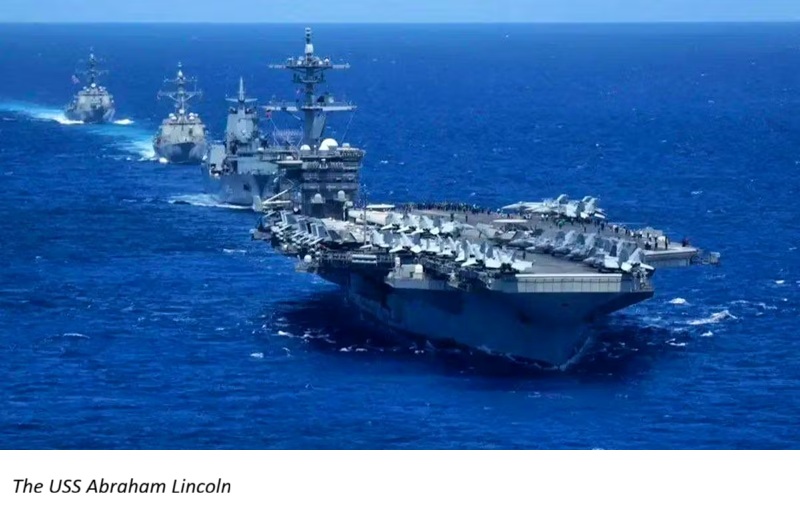
Abbas Hashemite, March 30, 2026, https://journal-neo.su/2026/03/30/implications-of-a-possible-us-ground-invasion-of-iran/
Following Iran’s strong retaliation, the United States is mulling a ground invasion of the country. However, it would have significant implications for the US.
Escalation Amidst Diplomacy
Despite ongoing negotiations over Iran’s nuclear program, the United States and Israel attacked Iran, violating international rules and norms. Most of Iran’s top-level military and civilian leadership was assassinated in the US and Israeli attack on February 28, 2026. In retaliation, Iran targeted Israeli cities and its nuclear and energy infrastructure, along with key US military facilities in the region. Iran also closed the Strait of Hormuz, a key route for global maritime oil trade, which increased global inflation as energy and oil prices surged worldwide.
Since February 28, Iran has been continuously targeting Israeli and US interests in the Middle East. Iran’s strong retaliation against the United States and Israel and its closure of the Strait of Hormuz have exasperated US President Trump. Surging global inflation due to his unnecessary “war of choice,” as Americans call it, has made him desperate to secure a deal over the issue of closure of the Strait of Hormuz. President Trump’s frustration is evident from his simultaneous statement about continuing the war and ending it through diplomatic negotiations.
Contradictions in Strategy and Leadership
Due to increasing contradictions between Trump’s rhetoric and actions, people around the world are curious about the future of this war. Following President Trump’s statement regarding talks with Iran, the Israeli Prime Minister Benjamin Netanyahu announced that the Israeli attacks on Iran would continue. On March 25, the Zionist Prime Minister even ordered the Israeli military to speed up its air campaign for the next 48 hours against Iran to destroy as much of its arms industry as possible. Similarly, the US Central Command, on the night when Trump talked about negotiations, reported that air strikes against Iran were carried out extensively.
The cost of the US-Israel and Iran war has already spiraled out of control. The Gulf countries are still unable to recover from the shock of this unexpected war. Amongst all this, a ground invasion of Iran would prove catastrophic for the world, and it would push the war into an ‘irreversible’ phase. Once the United States starts the ground invasion of Iran, it would become nearly impossible to stop the war, and the detrimental impacts of this war would increase manifold. For such an invasion, a clear objective and aim of the war need to be defined first. However, the US and Israeli leadership have failed to define a clear objective of this war.
Shifting Goals and the Risks of Ground War
Initially, the US and Israel stated that their goal was to remove the Islamic regime and end the country’s nuclear and missile program. However, after their failure to spark a native uprising against the Ayatollah regime and Iran’s strong retaliation, President Trump’s objective has apparently shifted towards opening the Strait of Hormuz. Pakistan’s Minister of Defense, Khawaja Asif, also mocked the US by stating, “The goal of the war seems to have shifted to opening the Strait of Hormuz, which was open before the war.” This shifting objective of the war indicates that the US policymakers are unable to define a clear aim of the war they started at the behest of Israel.
The absence of a clear objective has resulted in a military posture that no longer aligns with the initially stated goals of the war, disrupting US military planning. The ground invasion of Iran would not be possible with a few divisions, but it would require a complete military ecosystem. Iran has already mobilized one million soldiers to counter a possible US ground invasion of the country. Therefore, deploying insufficient military forces in Iran would create an imbalance, resulting only in casualties of the US soldiers. With the increasing number of military casualties, Trump’s political stature will also diminish, as the argument that “the US troops are sacrificing their lives for Israel” will strengthen.
If the United States seeks to control the Strait of Hormuz and nearby islands, it would compel Iran to respond with full military might, as it is ready to sacrifice its own energy infrastructure, which has already been significantly damaged by Israeli and US attacks. Similarly, a ground invasion of Iran through the Kurdish region is also impossible for the US, as it would result in a protracted war between the two sides. A prolonged war between the two sides would further increase the economic cost of this war.
Therefore, a ground invasion of Iran, especially under the current circumstances, is impossible. President Trump’s popularity in the US has already declined to a record low after his involvement in this Israeli war. A ground invasion of Iran would further increase political hardships for Donald Trump. However, if he continues to pursue a conflicting policy stance regarding the Iran war, it would be impossible to halt the war diplomatically and further increase mistrust between the two sides.
Why is Iran being singled out while others escape scrutiny? : Erase nuclear apartheid

Israel maintains a long-standing policy of nuclear ambiguity. It neither confirms nor denies its arsenal, avoids international inspections, and remains outside the NPT altogether. Despite this, it faces no comparable sanctions regime, no sustained diplomatic isolation, and no credible threat of enforced disarmament.
March 30, 2026, by Ranjan Solomon, https://www.middleeastmonitor.com/20260330-why-is-iran-being-singled-out-while-others-escape-scrutiny-erase-nuclear-apartheid/
“The world cannot preach non-proliferation while practising selective permission. That is not law – it is hierarchy.”
The global discourse on nuclear weapons has drifted far from its stated goal of disarmament. What remains today is not a principled framework for peace, but a deeply unequal system of control – one that determines who may possess the most destructive weapons ever created, and who must remain permanently under suspicion.
At the centre of this unequal order stands Iran: scrutinized, sanctioned, and threatened, not for what it has done, but for what it might one day choose to do. This is not non-proliferation. This is nuclear apartheid.
The Nuclear Non-Proliferation Treaty, which entered into force in 1970, was premised on a fundamental bargain. Non-nuclear states ag
At the same time, states outside the NPT framework – such as India and Pakistan—have developed and maintained nuclear weapons with limited global penalty. Most strikingly, Israel, widely believed to possess a sophisticated and undeclared nuclear arsenal, has never signed the NPT and remains entirely outside its inspection regime.
The result is unmistakable: a two-tier system – one for the powerful, and one for the rest.reed to forgo nuclear weapons in exchange for access to peaceful nuclear technology and a binding commitment by nuclear-armed states to pursue disarmament under Article VI. More than fifty years later, that promise stands betrayed.
The five recognized nuclear powers – United States, Russia, China, France, and United Kingdom – have not only failed to disarm, but have actively modernised their arsenals. Vast resources continue to be poured into enhancing nuclear capabilities, refining delivery systems, and ensuring the long-term viability of weapons that can destroy humanity many times over.
To understand why Iran is singled out, one must step beyond present-day accusations and examine history, law, and geopolitical power.
Iran’s nuclear programme did not begin in defiance. It began with encouragement from the United States under the “Atoms for Peace” initiative in the 1950s. At that time, Iran was a strategic ally, and its nuclear ambitions were supported rather than feared.
What changed was not technology – but politics.
The 1979 Revolution transformed Iran from a Western-aligned monarchy into an independent republic asserting sovereignty over its political and economic choices. From that moment onward, its nuclear programme was reframed—from legitimate development to potential threat.
Yet Iran remains a signatory to the NPT. It has accepted inspections and consistently maintained that its nuclear programme is for peaceful purposes, even invoking religious prohibitions against nuclear weapons.
Contrast this with Israel.
Israel maintains a long-standing policy of nuclear ambiguity. It neither confirms nor denies its arsenal, avoids international inspections, and remains outside the NPT altogether. Despite this, it faces no comparable sanctions regime, no sustained diplomatic isolation, and no credible threat of enforced disarmament.
This disparity is not incidental. It reflects geopolitical alignment.
Similarly, nuclear-armed states—both within and outside the NPT—continue to expand and refine their arsenals without facing existential scrutiny. The international system tolerates nuclear weapons in the hands of allies while criminalizing their pursuit by adversaries.
Dimona’s Shadow: How Israel’s Nuclear Monopoly Warps Middle East Security
Iran is not singled out because it is uniquely dangerous. It is singled out because it is politically inconvenient.
The dominant justification for nuclear weapons remains deterrence—the idea that possession prevents aggression. Yet deterrence is not a neutral doctrine. It is a privilege reserved for those already in possession of nuclear weapons.
For states like Iran, surrounded by nuclear-armed powers and subject to repeated threats of military action, the logic of deterrence becomes difficult to ignore. The existence of nuclear arsenals elsewhere creates the very conditions under which others feel compelled to pursue them.
This is the central contradiction of the non-proliferation regime: it seeks to prevent proliferation without addressing the incentives that drive it.
So long as nuclear weapons are seen as guarantors of security for some, they will remain objects of aspiration for others.
Under Article X of the NPT, any state has the sovereign right to withdraw if it determines that extraordinary events jeopardize its supreme national interests. This provision is not exceptional – it is foundational.
If Iran were to exercise this right, it would not be acting outside international law. It would be exercising a legal option embedded within the treaty itself.
The real question, then, is not legality – it is legitimacy.
Why should a state remain bound by a treaty that is applied selectively? Why should obligations be enforced unevenly while privileges remain protected? A legal framework that lacks reciprocity cannot command enduring compliance.
The moral argument against nuclear weapons is not abstract – it is rooted in history. The Atomic bombings of Hiroshima and Nagasaki, carried out by the United States, demonstrated the catastrophic humanitarian consequences of nuclear warfare. Entire cities were obliterated. Generations suffered from radiation, illness, and trauma.
These events should have marked the beginning of the end for nuclear weapons.
Instead, they marked the beginning of their normalization.
In response to this enduring threat, the international community has moved – however unevenly – toward prohibition. The Treaty on the Prohibition of nuclear weapons, adopted in 2017, represents a clear legal and moral rejection of nuclear weapons, declaring them incompatible with international humanitarian law. Yet none of the nuclear-armed states have joined it.
Once again, the pattern is unmistakable: law for some, exemption for others.
The path forward cannot be built on coercion or selective enforcement. It must be grounded in universality. A credible non-proliferation regime requires that all states—without exception – commit to disarmament. This includes the United States, Russia, China, France, the United Kingdom, as well as India, Pakistan, and Israel.
The principle must be simple and uncompromising: no nuclear weapons anywhere, no exceptions, no hierarchies. Anything less is not non-proliferation – it is discrimination.
Talks without balance: Why Tehran and Trump remain locked in escalation
But disarmament cannot remain a rhetorical aspiration. It demands verifiable timelines, binding commitments, and enforcement mechanisms that apply equally to all states. Without such measures, treaties risk becoming instruments of pressure rather than pathways to peace. The authority of international law depends not only on what it proclaims, but on how consistently it is applied.
The current nuclear order is unsustainable because it is fundamentally unjust. It divides the world into those permitted to wield ultimate violence and those permanently denied that power under threat of punishment.
Iran’s case lays bare this contradiction with clarity. Whether one agrees with Iran’s policies or not, the principle remains clear: international law cannot survive selective application. A system that enforces restraint on some while excusing excess in others undermines its own legitimacy.
If the world is serious about peace, it must move beyond power and toward principle—beyond dominance and toward equality. Not a peace imposed by deterrence, but a peace secured by justice. Not a stability rooted in fear, but one grounded in mutual restraint and shared accountability.
Until then, the truth will remain stark and unavoidable:
There can be no peace with nuclear weapons. And there can be no justice with nuclear apartheid
Thousands of Iranians Who Live on Kharg Island Face Possibility of US Invasion
US media talk about the island’s civilians as if they are a military problem, if they talk about them at all.
By Séamus Malekafzali , Truthout, March 30, 2026, https://truthout.org/articles/thousands-of-iranians-who-live-on-kharg-island-face-possibility-of-us-invasion/?utm_source=Truthout&utm_campaign=3106eddc85-EMAIL_CAMPAIGN_2026_03_30_09_20&utm_medium=email&utm_term=0_bbb541a1db-3106eddc85-650192793
Over the past month of the U.S.-Israeli war against Iran, Donald’s Trump mission has creeped from vowing that he’s “not putting troops anywhere” to backing himself into an escalation that makes the chance of ground invasion far more likely. As many as 17,000 American troops could be gathering in preparation for an operation to land on, and potentially even seize, any number of Iranian islands in the embattled Persian Gulf and the Strait of Hormuz.
Kharg Island, deep in the Gulf and near the coasts of Kuwait and Iraq, is the isle the Trump administration has most clearly placed in its crosshairs. Media reports have suggested the administration is also considering other special operations, such as a complex raid to seize enriched uranium from Isfahan. But taking Kharg is now being touted by some of the same hawks who pushed for the initial U.S. military action in Iran as a new central goal of the war, an opportunity to acquire significant leverage that the United States can and must take. “We did Iwo Jima,” Sen. Lindsey Graham said to Fox News on March 22, “We can do this.”
Other islands closer to the strait, like Larak, an island off Iran’s southern coast, have been more critical to Iran’s ongoing blockade of oil tankers. But 80 to 90 percent of Iran’s own crude oil exports — which have increased since the war began — run through Kharg, making the island’s oil terminal deeply important to the functioning of Iran’s economy, in wartime or otherwise. Over the past few weeks, the American government, ever-obsessed with seizing the oil of other nations as recompense, has attempted to make Kharg into its plaything. On March 13, the U.S. conducted airstrikes on the island and sent a volley of rockets, allegedly fired from Emirati territory, with CENTCOM claiming to have hit “90+ military sites” that destroyed “naval mine storage facilities” and “missile storage bunkers,” among other purported targets.
After the strikes, Trump immediately bragged that Iran now had “NO ability to defend anything we want to attack” and later said that “we may hit it a few more times just for fun.” While he made a point of claiming to spare the oil infrastructure on the island, wary of price shocks caused by Israeli attacks on oil refineries near Tehran days earlier, Trump otherwise spoke of the island as if it had been “totally demolished.” The White House social media accounts posted his message announcing the attacks with the headline: “Kharg Island Obliterated.”
This “obliteration” would have come as news to the more than 8,000 permanent residents of the island, to say nothing of the thousands more who have come to Kharg to work in the oil industry — residents and workers who have been removed from the American government’s discussion of a potential invasion, as well as American media’s reporting about the impacts of such an invasion.
Locals on the island told BBC Persian that the targets the U.S. bombed hit deep inside the city of Kharg, where most of the population resides, that “the island doesn’t really have a military base,” and that following the bombing of Kharg Airport, which runs domestic flights to cities on the Iranian mainland, there was now no way to evacuate.
The White House’s cavalier attitude towards an invasion of Iranian territory has been notable, with Trump mentioning on March 29 that “maybe we take Kharg Island, maybe we don’t” because his “favorite thing is to take the oil in Iran.” But Western media coverage has arguably done just as much to create the impression that Kharg is solely a strategic asset to be conquered, with the welfare of its native inhabitants a footnote, if mentioned at all.
Mainstream outlets like Reuters and The Washington Post have backgrounded the civilian population in favor of dry, military-focused analysis, with the Post blithely printing the words of an analyst from the pro-Israel Washington Institute that it would be “safer” for U.S. forces to simply surround the island with mines and hold it hostage. Coverage on CBS and Fox News has perpetuated outright falsehoods about the island’s population; CBS brought on an analyst from the conservative Hudson Institute to say that Kharg could easily be isolated because it had “no civilian population center” and “really is just oil infrastructure,” while Fox’s Jesse Watters featured Medal of Honor recipient David Bellavia, who told viewers that “civilians are not allowed to even go to Kharg Island.”
Outlets that have mentioned Kharg’s civilian population have often done so in passing, sometimes referring to the island’s inhabitants as a mere additional risk that U.S. paratroopers and marines will have to account for. In a Bloomberg editorial, James Stavridis, former NATO Supreme Allied Commander, writes about the thousands on the island as problems to be solved, people “who would need to be contained in their homes or evacuated; the Iranians may have planted sophisticated booby traps.”
The narrative from war hawks pushing for an invasion has suggested such an operation could be of a limited nature, more along the lines of a raid and less like the long-term occupation of Iraq, a “quagmire” that the Trump administration has insisted the war with Iran is nothing like. But while Fox Business may bring on a former Navy SEAL to talk about how oil seized from Kharg Island could be passed “back to the Iranian people once they take over this regime,” there is little indication that Trump would want to quickly exit Kharg. The president said outright on Sunday that invading it would “mean we had to be there for a while.” There’s even less indication that the Trump administration cares about giving power to the Iranian people or preserving their livelihoods or national economy.
An invasion of Kharg would place thousands of Iranians — perhaps hundreds of thousands if the U.S. military also chose to invade other islands like Larak, Kish, Abu Musa, Hormuz, or Qeshm — under direct military occupation in a form for an indefinite period with no immediate plans for exit or planned transition, a military operation with few parallels in the War on Terror era.
As U.S. threats continue to build, Iran has reportedly brought further military reinforcements to Kharg over the past several days. Life on the island continues. Iran’s Speaker of Parliament Mohammad Bagher Ghalibaf has warned of “continuous and relentless attacks” on “vital infrastructure” in the region should a U.S. ground invasion commence. Esmail Hosseini, spokesman for the parliament’s Energy Commission, was more blunt on a parliamentary visit to the island, saying that Kharg will become “the graveyard of the aggressors.” One resident of the island told a reporter from Mehr News, “The enemy thinks it can break the resistance on Kharg Island with a few attacks, but they are blind, and we will not leave the field for them.” The White House, at least for now, does not appear to be heeding these warnings.
The American narrative of having supposedly learned lessons after endless years of war in Iraq and Afghanistan is finally being challenged by brutal reality. A desire to wage war without endangering American lives, while exacting unlimited damage and chaos against any state that has the means to fight back, means the question of what to do with civilians has become virtually unmentionable. A war can ostensibly be waged for the freedom of the Iranian people in the abstract, this narrative goes, but even their mere existence is not allowed to be a factor in the actual operations of a military, one that now openly prides itself on ignoring “stupid rules of engagement” and maximizing “lethality.” The people of Kharg, and of Iran more broadly, are deemphasized, ignored, erased from discussion, until they suddenly become an immediate and shocking problem, a problem the U.S. simply didn’t anticipate, a problem to now be dealt with by a government that bragged about obliterating the land upon which they exist.
Operation Epic Flurry
“The problem,” the analysis concludes, “is that Trump doesn’t know what his objectives in this war are. Or, worse still, he has proclaimed many objectives, some of them contradictory, because he has no policies and no strategies.”
And this, delivered with the precision of a man who has spent years watching: “He’s a vacancy in the middle of his own world, and yet a vacancy that is fully in charge. The situation could not be more dire.”
28 March 2026 David Tyler, Australian Independent Media
The announcement comes, as always, with impeccable timing. Ten minutes after the S&P 500 closes on its worst single trading day since the war began, Donald Trump posts on Truth Social that he is extending his pause on “energy plant destruction” by ten more days, until Monday April 6 at 8pm Eastern Time. “As per Iranian Government request,” he writes.
Another outright lie. Talks were going “very well.” The markets sighed. Oil dipped. Then snapped back. Brent crude settled at $107 a barrel.
This is the operating system. Not diplomacy. Not strategy. Useful idiocy. A witless grifter watching the markets, the courts and the clock, adjusting deadlines, managing increasingly bizarre appearances, while the ships keep moving.
The boots are already in the water.
The Anatomy of a Fake Pause
This is the second extension Dong Wang, (King of Knowledge or know-all) as they call Trump in China, has announced since he issued his original 48-hour ultimatum demanding Iran reopen the Strait of Hormuz or face the destruction of its power grid. No-one knows how to deliver an ultimatum like Trump.
The first pause came on Monday. The second came Thursday. Both arrived at market-sensitive moments, both were framed as responses to Iranian requests, and both were flatly denied by Iran. Iran’s Foreign Minister Abbas Araghchi scathingly describes the exchange of messages through intermediaries as not constituting “negotiations.”
Iran’s Parliament Speaker Mohammad Bagher Ghalibaf calls the whole show “fake news used to manipulate the financial and oil markets and escape the quagmire in which the US and Israel are trapped.”
He is not wrong. The backchannel activity is real enough: Pakistan, Egypt and Turkey have been relaying messages between Washington and Tehran, and there is genuine mediating pressure from Islamabad to convene a face-to-face meeting. But the gap between what is actually happening and what Trump is describing to the American public is the gap between a fax or Telegram arriving at a foreign ministry and a signed ceasefire.
Iran rejects Trump’s 15-point plan outright and tables its own five conditions, including war reparations and formal recognition of Iranian sovereignty over the Strait of Hormuz. That is not a negotiating position that converges with Washington’s in ten days. Not in twenty. In fact it’s a dark parody of Trump’s style of negotiation which is to issue an ultimatum. Iran is signalling its contempt.
So what is the April 6 deadline actually for? The mediators themselves have identified the core problem: the Iranians “suspect that the US is tricking them again.” True. The pause is not buying time for diplomacy. It is buying time for deployment.
What Is Actually Moving
Two Marine Expeditionary Units are converging on the Persian Gulf from opposite ends of the Pacific………………
Additionally, the Pentagon has ordered roughly two thousand soldiers from the 82nd Airborne Division to move from their base in North Carolina to the Middle East. ……………..
On Wednesday, Iran’s Parliament Speaker Ghalibaf posts a warning that deserves attention precisely because of what it does not say.
“Based on some intelligence reports,” he wrote, “Iran’s enemies are preparing to occupy one of the Iranian islands with support from one of the regional states. Our forces are monitoring all enemy movements, and if they take any step, all the vital infrastructure of that regional state will be targeted with relentless, unceasing attacks.”
He does not name the island. He does not name the regional collaborator. A warning that specific about an operation, that vague about the target, is not a general statement of defiance. It is the signature of intelligence tracking something imminent………………………………………………………………………………………………………………
The Ignoramus in Chief
Into this unfolding catastrophe, the elephant in the room is the question of who is actually making the decisions and on what basis.
………………………………………………………..Two minutes of edited highlights? Per day. This is the informational basis on which “Ole Bone-Spurs”, a former draft evader who shirked national service five times, but who is now the de-facto commander of the world’s largest military, is conducting a war.
Panic stations? Trump’s got his own allies, in a lather. The worry, as NBC delicately puts it, is that Trump “may not be receiving, or understanding, the complete picture of the war.” Trump’s former national security adviser, John Bolton, is on record to the effect that Trump “hardly ever reads briefing notes” and when he does “cannot make sense of them,” and that he had “not thought through the implications or laid the groundwork” for a longer conflict with Iran.
Trump’s biographer Michael Wolff, who has known him as well as any journalist alive, goes further in a recent Daily Beast podcast.
“It’s not just unpresidential, it’s incoherent. It’s the language of an ignoramus.” He added: “He doesn’t know what he’s talking about. It just comes out of his mouth, out of self-justification, need, fear, aggression.”
…………………………………………….Slate’s military analyst identifies the strategic void at the centre of the operation with Clausewitzian clarity: Trump’s delusion stems from a fundamental misunderstanding that war is entirely about destroying targets. CENTCOM has struck more than five thousand targets.
But wars are fought for political objectives, and Trump has proclaimed so many contradictory objectives, shifting from regime change to nuclear disarmament to resource acquisition to Hormuz control with no discernible logic, that his own advisers do not know what they are working toward.
“The problem,” the analysis concludes, “is that Trump doesn’t know what his objectives in this war are. Or, worse still, he has proclaimed many objectives, some of them contradictory, because he has no policies and no strategies.”
A vacancy in the middle of his own world, fully in charge. Making it up as he goes. What could possibly go wrong?
Murdoch’s Man at the Pentagon
Nature abhors a vacuum. The vacancy does not stand alone. It is surrounded by people who have their own reasons for filling it.
Defence Secretary Pete Hegseth is an ex-Fox News jock who got given the largest military budget in history. A former Guantanamo guard with no command experience beyond a National Guard deployment, Hegseth spent the years between his military service and his cabinet appointment performing patriotism on Murdoch’s flagship cable network, aka Faux News, where hawk-talk is part of the job profile and any hint of restraint is seen as weakness, wokeness or treachery.
Hegseth arrived at the Pentagon with dreams that his TV-show persona had done nothing to temper. At a press conference this month he declared that US forces would show “no quarter, no mercy for our enemies.”
Ryan Goodman, professor of law and co-editor of national security journal Just Security, tells Axios this would constitute a war crime under the Pentagon’s own Law of War Manual. Hegseth also used the occasion to attack the press for failing to be “an actual patriotic press,” citing the headline “Mideast war intensifies” as proof of disloyalty.
This is the man with the power to unleash Armageddon……………………………………………..
Behind Hegseth, behind Trump, the hand that has been pushing this from the beginning.
Bloomberg reported on March 21, citing “people familiar with private conversations”, that those pressing Trump to strike Iran included not only Netanyahu but Rupert Murdoch, the ninety-five-year-old chairman emeritus of News Corp and Fox Corp. Murdoch instructed Trump several times, personally urging the president, he once called a “fucking idiot” to take on Tehran. This was not casual chat. ………………………………………………..
When the bombs started falling on February 28, the New York Post’s front page read “DEATH TO THE DEVIL.” Subsequent editions ran “DON GETS LAST LAUGH” and “NO MERCY.” The Wall Street Journal has since called for ground troops. Fox News has been, in the words of Crikey’s media analyst, the loudest global advocate for the war, running the same cheerleading operation it ran for Iraq in 2003, right down to the retired generals on the panel and the American flag in the corner of the screen.
Even within Murdoch’s own empire, the revulsion has broken through. Former Fox host Megyn Kelly, no dove, is scathing:
“We now learn that Rupert Murdoch was one of the main people goading Trump into this war. Rupert Murdoch, who is ninety-five years old, he’ll be dead soon. And he too is acting as if our troops are expendable cattle.” Republican Congresswoman Anna Paulina Luna used the same phrase, “expendable cattle,” without any prompting from Kelly. Senator Lindsey Graham had just told Fox News Sunday, without embarrassment, that the Marines could take Kharg Island because “we did Iwo Jima.”………………………………………….
The Fracture Nobody Is Talking About
There is one more element that complicates the picture and which has been ignored in the mainstream coverage of the war. Washington and Tel Aviv are no longer fighting the same war.
Even The Carnegie Endowment for International Peace is on to it. Trump appears to favour the Venezuela model: align with a pragmatic insider within the Iranian regime, access the oil and gas resources, declare victory and exit. Netanyahu prefers what Israeli strategists call “mowing the grass”: maximum target destruction, indefinite conflict management, no exit required and no exit planned. These two approaches are not reconcilable. They are direct opposites dressed in the same uniform.
……………………………………Former Israeli ambassador Alon Pinkas tells Al Jazeera that Trump’s pivot toward negotiations, apparently over Netanyahu’s objections, may signal that the US president has finally grasped that Netanyahu “may have duped him on how quick and resounding a victory would be, and how viable regime change is.” Israeli political scientist Ori Goldberg delivers the verdict without the turd polish: “Is it a defeat for Netanyahu? Hell, yes. It’s Trump essentially ditching Israel.”
Netanyahu, facing ICC arrest warrants, corruption charges and a national inquiry into October 7 that he has spent two years postponing, has his own reasons to keep the war going. ……………………………..
The Boots Are Already in the Water
Let us be clear about what we are watching. A president who cannot distinguish between a war briefing and a movie trailer is extending fake diplomatic deadlines while an amphibious task force closes on the Persian Gulf. His Defence Secretary is a television performer who has never commanded anything larger than a National Guard unit and whose understanding of strategic warfare was formed on a Fox News set. Behind both of them, a ninety-five-year-old media magnate with no democratic mandate and a perfect record of warmongering for profit has been personally lobbying the President of the United States to go to war……………………………………………….. https://theaimn.net/operation-epic-flurry/
Israel wants to destroy Iran’s nuclear program. But should it have nuclear weapons itself?
March 25, 2026, Marianne Hanson, Associate Professor of International Relations, The University of Queensland, https://theconversation.com/israel-wants-to-destroy-irans-nuclear-program-but-should-it-have-nuclear-weapons-itself-278801?utm_medium=email&utm_campaign=The%20Weekender%20-%2028%20March%202026&utm_content=The%20Weekender%20-%2028%20March%202026+CID_09f9907cac66b0e5c3e3ca794f0c8c0c&utm_source=campaign_monitor&utm_term=Israel%20wants%20to%20destroy%20Irans%20nuclear%20program%20But%20should%20it%20have%20nuclear%20weapons%20itself
Israel’s avowed goal in the Middle East war is to prevent Iran from acquiring nuclear weapons. Yet, the double standard associated with this is hardly sustainable in the long run.
The worst-kept secret in the world of nuclear politics is that Israel possesses a formidable arsenal of nuclear weapons. It began developing these in the 1950s and reached a fully operational capability by the late 1960s.
Although Israel refuses to confirm or deny this fact, arms control organisations have assessed that the country has some 80–90 nuclear weapons.
In recent days, Iran targeted Israel’s nuclear facility in the southern town of Dimona, injuring more than 100 people. The head of the International Atomic Energy Agency (IAEA) called for restraint to avoid a “nuclear accident”.
A program shrouded in secrecy
There is much evidence to support the existence of Israel’s arsenal.
In 1963, then-Deputy Defence Minister Shimon Peres famously stated Israel would not be the first to “introduce” nuclear weapons to the Middle East. What this actually meant was spelled out a few years later by the Israeli ambassador to the US. For a weapon to be “introduced”, he said, it needed to be tested and publicly declared. Merely possessing them did not constitute introducing them.
Several whistleblower accounts, intelligence reports and satellite imagery confirm the extent of the Israeli program and its capabilities.
More recently, Amichai Eliyahu, a far-right minister in Prime Minister Benjamin Netanyahu’s government, alluded to using nuclear weapons in Gaza – a tacit acknowledgement of Israel’s capabilities. He was later reprimanded by Netanyahu.
And in 2024, Avigdor Lieberman, a former defence and foreign minister, threatened to “use all the means at our disposal” to prevent an Iranian nuclear weapon. He added: “It should be clear at this stage it is not possible to prevent nuclear weapons from Iran by conventional means.”
It is important to remember that Israel not only developed its nuclear weapons in secret – employing subterfuge, misleading claims, and even the suspected theft of bomb-grade nuclear material from the United States – it has also rejected international inspections of its facilities and refused to join the nuclear Non-Proliferation Treaty (NPT). This treaty has been signed by almost every state in the world.
Concerns over Iran’s program
Iran, meanwhile, has never had a nuclear weapon, though its program has been the source of international concern for more than a decade.
In 2015, Iran signed the Joint Comprehensive Plan of Action (also known as the Iran nuclear deal) with the US, Russia, China, France, the United Kingdom and Germany, which imposed restrictions on its nuclear program in return for sanctions relief. This included inspections by IAEA monitors.
However, Trump scuppered the plan in 2018. Since then, Iran has enriched uranium to levels well above those needed for its energy program. And last year, the IAEA said Iran was non-compliant with its nuclear nonproliferation obligations for failing to provide full answers about its program.
But since the current war began, US and international officials have confirmed that Iran was not close to developing a nuclear weapon and did not pose an imminent nuclear threat to the US or Israel.
In short, there is no truth to the claim, made for almost 40 years by Israel, that Iran is “weeks away” from acquiring the bomb. The IAEA made clear two years ago that a nuclear weapon requires “many other things independently from the production of the fissile material”.
Getting close to nuclear threshold status, but stopping short of developing an actual bomb, likely provides a fall-back position for Iran. If Iran were to feel pushed or threatened, it could, in time, accelerate its energy program towards a weapons program. Or it could use this enriched uranium as leverage in negotiations with the US.
Nuclear powers need to show restraint
This brings us back to a major question: can double standards about who can and cannot develop a nuclear weapon be sustained indefinitely?
Israel’s nuclear arsenal has been tacitly accepted by the West, implying there are “right hands” and “wrong hands” for nuclear weapons. But this is a risky and ultimately unsustainable position.
As Australia’s Canberra Commission noted in 1996, as long as any one state has nuclear weapons, other states will want them, too.
This is precisely why many states voted in 2017 to adopt the UN Treaty on the Prohibition of Nuclear Weapons. The treaty’s purpose is to make the possession, threat and use of nuclear weapons illegitimate for all states, not just for some, on the basis of international humanitarian law.
Signed by 99 states so far, the treaty recognises that nuclear weapons promise massive destruction to civilians and combatants alike, and that even a “small” nuclear war will cause catastrophic damage.
At the end of the day, a consistent approach to nuclear weapons is more likely to prevent nuclear proliferation (by Iran or other states) than the current mess, where some states are tacitly permitted to have these weapons (and wage war on others), while other countries are not.
It is possible we are at a tipping point when it comes to nuclear proliferation, with some countries suspected of wanting to develop nuclear weapon capabilities. This includes US allies South Korea and Japan.
Are the nuclear weapons states ultimately willing to accept the UN Treaty on the Prohibition of Nuclear Weapons and disarm in the interest of global peace and security? If they don’t, then the current trajectory of keeping one’s own nuclear weapons and waging war against states that don’t have them will only weaken an already crumbling rules-based international order.
Iran says it never requested US energy strike pause: Escalation proceeding on all fronts.

Tyler Durden, ZeroHedge, 27 Mar 2026, https://www.sott.net/article/505375-Iran-says-it-never-requested-US-energy-strike-pause-Escalation-proceeding-on-all-fronts
Israel goes after Iranian industrial targets
Vital Iranian Steel Plants, Industry Attacked
Israeli media citing military officials on Friday: “The IDF attacked Iran’s two largest steel plants, in Isfahan and Ahvaz. Both plants are vital to Iran’s military industry and are partially owned by the Revolutionary Guards. The strikes on the plants are expected to cause billions in damage to the Iranian economy.”
This could mark a new, expanded phase of the war as Israel goes after key defense industrial targets, which also serve central civilian infrastructure development. The US has still held off on pursuing more attacks on energy sites, but it seems Israel is maintaining a more gloves off approach – opting for total societal destruction, and going after industry. This seems to also be part of efforts to ensure ballistic missile production is degraded.
Reuters: US is certain about having destroyed third of Iran’s missiles, say sources. Another third is believed to be damaged, destroyed or buried.
“One of the sources said the intelligence was similar for Iran’s drone capability, saying there was some degree of certainty about a third having been destroyed,” Reuters writes, noting that all of this contradicts White House claims of Iran having “very few rockets left”
Iran Didn’t Request Trump’s 10-Day Pause: WSJ
Iran has not requested a 10-day pause on strikes on its energy plants, peace talk mediators have been cited in WSJ as saying, and has still not issued formal response to the 15-point US plan delivered via Pakistan. This as the Pentagon is moving thousands of Marines and Army Airborne soldiers into the region.
The Wall Street Journal points out that “The U.S. and Israel are pounding Iran’s missile-launching sites, hitting some over and over across almost a month of war. But Tehran’s missiles keep flying.”
One pundit questions, are we ‘winning’ yet?… writing the following brief assessment of where things stand: IRGC Joint Staff headquarters under US-Israeli strikes. Iran naming UAE targets as Abu Dhabi enters the war. IDF Chief of Staff warning publicly the Israeli military could “collapse” from manpower shortages. Iran claiming over one million fighters mobilised with IRGC lowering the age for support roles to 12. Pentagon considering 10,000 additional ground troops within striking distance of Kharg. Trump pausing energy-plant destruction for 10 days until April 6. Iran denying it requested the pause. Houthis warning they will enter the war. Lavrov saying the quiet part: “Iran did not violate any of its international obligations.” Russia’s oil revenue doubling to $24 billion this month.
Oil prices continued to spike this morning, with international Brent crude oil once again surpassing $110 per barrel. For the day so far that’s up another 3%.
“After several glimmers of hope, fueled by comments from President Trump, which were quickly dashed, the market is becoming more demanding in terms of rhetoric,” said Amélie Derambure, senior multi-asset portfolio manager at Amundi. “The TACO trade is more difficult to do because a return to square one is not possible from here.”
Gulf Flashpoint Widens: Iran Signals No Let Up
Multiple GCC countries issued incoming-attack alerts as drones and missiles light up the region Friday, with Kuwait taking at least two new hits: Shuwaikh Port was struck by “hostile drones” – per the Kuwait Ports Authority, with a second target, Mubarak Al-Kabeer Port, reportedly hit by drones and cruise missiles. Infrastructure damage has been reported in both cases, but no reported casualties.
Saudi Arabia maintains its air defense footing, with the Ministry of Defense saying drones were intercepted and destroyed over Riyadh and the Eastern Province, following a warning for Al-Kharj – home to Prince Sultan Air Base. Six ballistic missiles were detected: two intercepted, with four splashing into the Persian Gulf and empty areas.
Absolute chaos in Tel Aviv…
New explosions have been reported in Dubai and Abu Dhabi on Friday. It’s as if Iran and the IRGC are sending a clear “f-you” message to Trump in the wake of the series of ultimatums and deadlines Tehran never asked for. Trump earlier went from 48 hours to 5 days to now a 10-day window amid the threats to attack power and energy infrastructure.
Israel Escalates Too: Will ‘Intensify & Expand’ Strikes on Iran
The White House has been busy talking about its backchannel diplomacy and getting the beginnings of a peace deal off the ground via Pakistan, and at one point within the past week there was talk of Vice President J.D. Vance actually traveling to Islamabad – but the situation on the ground suggests the opposite, given also Israel has on Friday announced escalation of its posture. Israel has continued coming under consistent missile strikes.
Now, Defense Minister Israel Katz is vowing Israel’s attacks will “intensify and expand” – citing that Islamic Republic had not heeded warnings “to stop firing missiles at Israel’s civilian population.” Katz said: “The fire has continued – and therefore, IDF strikes in Iran will intensify and expand to additional targets and domains that assist the regime in developing and deploying weapons against Israeli civilians.”
There remains a huge risk for Israel amid the expectation that Iran has been saving its biggest and most advanced, longer range missiles – rationing its arsenal as it settles in for a long war.
Strait of Hormuz Status & Overnight News
Tehran could still be playing a double game of public rejection coupled with private behind-the-scenes signaling. According to Axios’ latest, Iranian officials are quietly showing interest in talks even as they reject Washington’s proposal, with mediators leaning hard to force or ‘will into existence’ a meeting in the coming days. “Things are progressing very slowly” in terms of negotiations between the US and Iran, and as of now, no meeting between senior officials is even on the calendar, per Isreal’s i24NEWS.The IRGC Navy is still declaring the Strait of Hormuz effectively shut: traffic “to and from” ports tied to enemy allies is banned outright, with warnings any movement will be “severely dealt with.” In a rare twist, The Wall Street Journal and others report Iran has even blocked two Chinese vessels from transiting Hormuz – signaling enforcement isn’t just for Western targets. Washington seems to be trying to adapt in real time, as Reuters reports the US has deployed uncrewed drone boats into the theater, opening yet another front in an already widening conflict.
1 This Month
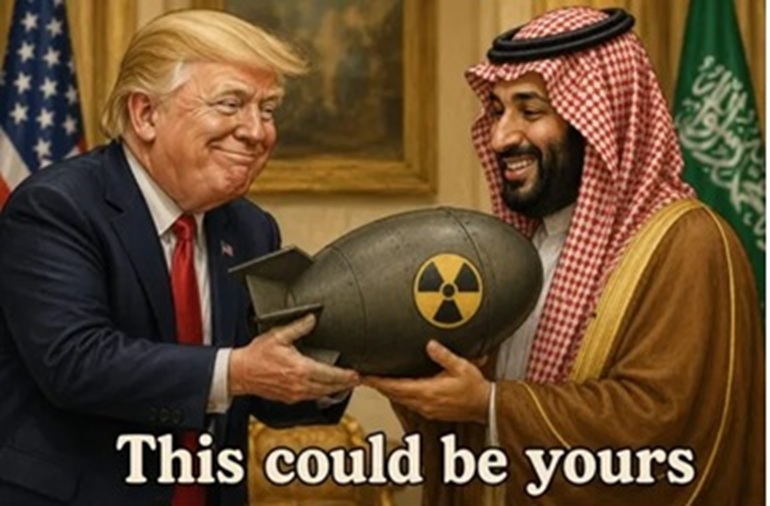

No Nuclear in Cwm Llynfi! Stop the nuclear power station near Maesteg.


4 August – WEBINAR – Hiroshima & Nagasaki: Nuclear Bombs Never Again
Tuesday, Aug. 4 at 5 pm PT / 8 pm ET.
Aug 5, 2026 10:00 AM in Australia/Melbourne
Join the Nuclear Bombs Never Again webinar on August 4th at 5pm Pacific Time / 8pm Eastern Time / 9am Japan Standard Time.
Cross generational voices at the intersection of Japan-Korea-US policy and militarization will share their lived experiences, nuclear impacts in these contexts, anti-war strategies, and actions you can take to advocate for a world with Nuclear Bombs Never Again. This 75-minute event is co-hosted by WILPF US and Korea Peace Now.

22,000+ miles voyaging for nuclear disarmament
and a radiation-free environment https://vfpgoldenruleproject.org/
To see nuclear-related stories in greater depth and intensity – go to https://nuclearinformation.wordpress.com
-
Archives
- July 2026 (332)
- June 2026 (287)
- May 2026 (306)
- April 2026 (356)
- March 2026 (251)
- February 2026 (267)
- January 2026 (308)
- December 2025 (358)
- November 2025 (359)
- October 2025 (375)
- September 2025 (257)
- August 2025 (319)
-
Categories
- 1
- 1 NUCLEAR ISSUES
- business and costs
- climate change
- culture and arts
- ENERGY
- environment
- health
- history
- indigenous issues
- Legal
- marketing of nuclear
- media
- opposition to nuclear
- PERSONAL STORIES
- politics
- politics international
- Religion and ethics
- safety
- secrets,lies and civil liberties
- spinbuster
- technology
- Uranium
- wastes
- weapons and war
- Women
- 2 WORLD
- ACTION
- AFRICA
- Atrocities
- AUSTRALIA
- Christina's notes
- Christina's themes
- culture and arts
- Events
- Fuk 2022
- Fuk 2023
- Fukushima 2017
- Fukushima 2018
- fukushima 2019
- Fukushima 2020
- Fukushima 2021
- general
- global warming
- Humour (God we need it)
- Nuclear
- RARE EARTHS
- Reference
- resources – print
- Resources -audiovicual
- Weekly Newsletter
- World
- World Nuclear
- YouTube
-
RSS
Entries RSS
Comments RSS
 nuclear-news