Nuclear Fusion’s Funding Rush Comes With a Catch
By Leonard Hyman & William Tilles – Apr 27, 2026, https://oilprice.com/Alternative-Energy/Nuclear-Power/Nuclear-Fusions-Funding-Rush-Comes-With-a-Catch.html
- Fusion firms are turning to SPACs for funding, using faster, less restrictive public-market routes to raise the massive capital needed for commercialization.
- SPACs offer speed but come with heavy downsides, including significant equity dilution, weak investor protections, and high risk—often likened to “junk” equity.
- Investments remain highly speculative, as fusion companies are still pre-revenue R&D ventures with uncertain technological outcomes despite growing momentum.
As nuclear fusion technologies move towards commercialization, the industry will need hundreds of millions, if not billions of dollars of new capital, either from public or private sources, in order to grow. Two nuclear fusion companies have chosen to access the public capital markets via special purpose acquisition corporations. (SPACs).which are often referred to as “blank check companies” because investors give money to a sponsor, typically an investment bank, to find a good business to invest in, without knowing in advance where the money will go.
Before going into specifics, we should explain how a SPAC works. It is an equity vehicle that affords the issuer both advantages and disadvantages over a conventional equity offering via an initial public offering (IPO). There are two principal advantages to SPACs from an issuer’s perspective. They can be offered more quickly than an IPO, and they also do not require pesky financial details like earnings forecasts and cash flow projections. SPACs are a financing vehicle for companies with big ideas, lots of potential, but zero revenues. There are two major downsides to this financial structure, though. First, the sponsor takes a big chunk of the equity as its fee, so there’s a lot of equity dilution right at the outset, like 30%+ dilution. The sponsors typically also receive warrants, which, when exercised, further increase the stock float and exacerbate dilution. And then there’s the phantom equity problem. SPAC investors can demand their money back from the sponsor, typically $10 per share if no investment has been made. However, the outstanding shares are not retired, and this also exacerbates a stock dilution problem.
As if to prove our point, one of the first nuclear fusion companies to form a SPAC, TAE Enterprises, formerly Tri Alpha Energy, did so in a 50-50 merger with the President’s Trump Media and Technology Group, the owner of Truth Social. The CEO of TAE, and Truth Social’s CEO, former congressman Devin Nunes, were to be co-heads of this new venture. Mr. Nunes has been fired. Nevertheless, TAE is a real technological competitor in the nuclear fusion race. Its newest reactor, called Copernicus, uniquely uses hydrogen-boron fuel (versus deuterium-tritium in more conventional systems). The advantage is a great diminution in radioactive waste, but the extreme temperatures needed, 1-5 billion degrees Celsius, pose ignition challenges. TAE previously raised over a billion dollars from Google, Chevron, and others and, like everyone else, expects to have a commercial reactor operating in the early 2030s. TAE’s field-reversed configuration of magnetic confinement loosely resembles a tokamak, but with a much simpler, cheaper architecture.
A second company, General Fusion, announced plans to go public via a SPAC shortly after TAE. Its sponsor, more conventionally, is a Dallas-based investment bank, and its SPAC is called the Spring Valley Acquisition Corporation III (that’s Roman numeral three). Deal number one, by the way, was the SMR company NuScale. That deal is expected to close some time around mid-year, and the company plans to be NASDAQ-listed under the stock ticker GFUZ. General Fusion describes its magnetized target fusion (MTF) technology as a more practical fusion alternative to both tokamak and laser-driven systems. The value of this transaction was expected to be about $1 billion at closing.
Lastly, we want to mention Zap Energy which is developing the so-called “sheared flow stabilized Z-pinch fusion technology” and is often cited as next in line to go public in some form. Zap has raised over $300 million dollars from Bill Gates’ Breakthrough Energy Ventures, Chevron, Mizuho, Soros Foundation, and others. Zap’s website describes the company as “building a seriously cheap, compact, scalable fusion energy technology with potentially the shortest path to commercially viable fusion and (using) orders of magnitude less capital than traditional approaches.” Zap’s website also teases the competitors with a large headline stating, “No Magnets Needed.
People often ask us whether SPACs are an appropriate investment vehicle for typical retail investors. The short answer is no. The long answer is also no, by the way. And that’s for a simple reason. These SPACs are not businesses in the conventional sense of the term. They are late stage research and development projects looking to establish a technological proof of design or a working prototype. They will consume vast amounts of capital for research with no associated revenues for years. And who knows which of these competing technologies will ultimately prevail in the energy marketplace and which will be discarded as ultimately impractical. In a way, the SPAC financial format, as we suggested earlier, is like a non-investment grade rating, but for equities, which should serve as a warning for potential investors. It’s a high cost, high risk financial structure, but perhaps one not inappropriate to the business of trying to capture the sun in a magnetic bottle as some have labeled the pursuit of nuclear fusion.
Entire NSF science advisory board fired by Trump administration

Members of the National Science Board, which the US Congress founded in 1950, were given no explanation for their termination.
By Dan Garisto, 6 April 2026
All 22 members of the advisory board that oversees the US National Science Foundation (NSF), a leading funder of fundamental science, were fired on 24 April without explanation. Every member of the NSF’s National Science Board (NSB) received an e-mail on Friday afternoon saying that “on behalf of President Donald J. Trump”, their positions were “terminated, effective immediately”.
Members of the NSB are appointed by the president and serve six-year terms that are staggered, avoiding complete turnover. Asked about the reason for the termination, a White House spokesperson said that the 2021 Supreme Court decision United States v. Arthrex, Inc. “raised constitutional questions about whether non-Senate confirmed appointees can exercise the authorities that Congress gave the National Science Board”. Members of the NSB were initially confirmed by the Senate, but have not been since 2012.
“This action to dismiss the NSB is unprecedented,” says Dan Reed, a computer scientist at the University of Utah in Salt Lake City and chair of the NSB from 2022 to 2024. “We need a vibrant, independent NSB, one representative of the broad science and engineering enterprise.”
Zoe Lofgren, a member of the US House of Representatives from California and the ranking Democrat on the House Committee on Science, Space, and Technology, criticized the move. “This is the latest stupid move made by a president who continues to harm science and American innovation,” she said in a statement. “It unfortunately is no surprise a president who has attacked NSF from day one would seek to destroy the board that helps guide the Foundation.”
But House science committee chairman Brian Babin, a Republican from Texas, said, “Every President expects advisors to serve in a manner consistent with executive and legislative priorities. I look forward to seeing whom President Trump selects to fill the NSB and refocus our science agencies on their core mission: pursuing science.”
This is not the first time the Trump administration has ousted federal science advisers en masse. Last year, the administration fired all 17 members of the Advisory Committee on Immunization Practices, which played a crucial part in US vaccine policy, and eliminated 14 advisory committees at the NSF. Also last year, Trump issued an order eliminating several advisory committees, including one on long COVID, to reduce government spending and “promote American freedom and innovation”.
Long history
The NSF and the NSB were established by Congress in 1950. The board meets five times a year and publishes reports on the state of US science and engineering that help to guide the president and Congress. Its next meeting was set for 5 May, and members say a report about the United States ceding scientific ground to China was set to be released.
“Where will advice come from?” asks Roger Beachy, a biologist at Washington University in St. Louis, Missouri. He was appointed to the NSB by US President Barack Obama in 2014 and reappointed by Trump in 2020 before being fired on Friday. “Who will help with what is the future of science in this nation?”
Keivan Stassun, an astrophysicist at Vanderbilt University in Nashville, Tennessee, says that the termination of NSB members fits into a pattern of the Trump administration’s approach to science advice, which is being “systematically either dissolved or eviscerated”, he says. “It felt like only a matter of time” before that happened to the NSB, he says.
Members of the National Science Board, which the US Congress founded in 1950, were given no explanation for their termination.
This is not the first time the Trump administration has ousted federal science advisers en masse. Last year, the administration fired all 17 members of the Advisory Committee on Immunization Practices, which played a crucial part in US vaccine policy, and eliminated 14 advisory committees at the NSF. Also last year, Trump issued an order eliminating several advisory committees, including one on long COVID, to reduce government spending and “promote American freedom and innovation”.
Long history
The NSF and the NSB were established by Congress in 1950. The board meets five times a year and publishes reports on the state of US science and engineering that help to guide the president and Congress. Its next meeting was set for 5 May, and members say a report about the United States ceding scientific ground to China was set to be released.
Tumultuous times
The firing of NSB members comes amid other turmoil at the NSF. The Trump administration proposed two years in a row to cut the NSF budget by more than half. (Congress declined to approve that proposal for the 2026 budget.) The agency has lost more than 30% of its staff since January 2025, and in December, it had to cede its headquarters to another federal agency. This year, new grants at the agency have been issued at a trickle, as the agency prepares major cuts to its divisions.
One of the NSB’s key statutory roles is to approve the NSF’s budget. But multiple NSB members say that the White House Office of Management and Budget (OMB), which oversees federal spending, told NSF leadership not to share details about the agency’s spending with board members…………………………………………. (Subscribers only) https://www.nature.com/articles/d41586-026-01361-7
Deadly strike by Ukraine at Europe’s biggest nuclear power plant as chilling warning issued

An employee has been killed in a drone attack carried out by the Ukrainian Armed Forces at the Zaporizhzhia Nuclear Power Plant, Russia’s State Atomic Energy Corporation has said.
Mirror Joe Smith News Reporter, 27 Apr 2026,
The International Atomic Energy Agency (IAEA) has issued an urgent warning after a deadly attack at the Zaporizhzhia Nuclear Power Plant in Ukraine.
Russia’s State Atomic Energy Corporation said a driver was killed by a drone strike in an operation carried out by the Ukrainian Armed Forces.
The Rosatom corporation said an employee at the Zaporizhzhia Nuclear Power Plant died this morning. The Russian agency said the strike was a “great tragedy” and added that attacks on the nuclear plant “pose a threat not only to people but also to security as a whole”.
Meanwhile the IAEA’s Director General said in a statement today that strikes on or near nuclear power plants (NPPs) can endanger nuclear safety and “must not take place”.
The IAEA statement said: “IAEA has been informed by the Zaporizhzhia Nuclear Power Plant that a drone strike this morning killed a driver at its transport workshop in the vicinity of the plant site.
“Director General Rafael Mariano Grossi reiterates that strikes on or near NPPs can endanger nuclear safety and must not take place. The IAEA’s team on the site will look into the incident and continue to monitor the situation.”
In a separate statement Russian agency Rosatom, which has controlled the plant since it was captured by Russian forces, said: “A Zaporizhzhia Nuclear Power Plant employee has been killed in a strike by the Ukrainian Armed Forces
“Today, a driver was killed as a result of a strike by a Ukrainian Armed Forces drone on the premises of the transport workshop at the Zaporizhzhia Nuclear Power Plant.”
The plant bosses called the man’s death “a terrible and irreplaceable loss,” adding that “employees of the nuclear industry must not be targeted.” They continued: “Any attacks on the Zaporizhzhia NPP pose a threat not only to people but also to security as a whole. It is a blow to life and to the future……………………. https://www.mirror.co.uk/news/world-news/zaporizhzhia-nuclear-power-plant-ukraine-37074915
40 years after Chernobyl, Stasi files reveal scale of Soviet misinformation

For decades, researchers, political leaders and advocacy groups have worked to uncover the story of the explosion
Lauren Cassidy The Conversation, Monday 27 April 2026, https://www.independent.co.uk/news/world/europe/chernobyl-disaster-anniversary-secret-stasi-files-b2965335.html
On April 26, 1986, Soviet engineers at the Chernobyl nuclear power plant were conducting a safety test. Doomed by a fatal design flaw and pushed to the limit by human negligence, reactor 4 exploded amid an attempted shutdown during a routine procedure, setting off a chain of events that ultimately released radioactive material hundreds of times greater than that of the atomic bomb dropped on Hiroshima.
Although the accident occurred north of Kyiv, Ukraine, near the border with Belarus, radioactive fallout was soon detected throughout northern and central Europe. Yet the Soviets did what they could to prevent the spread of information that would reveal the true horror of what had occurred.
For decades, researchers, political leaders and advocacy groups have worked to uncover the story of the explosion. While science has allowed us to understand the circumstances of the explosion itself, it has taken much more work to uncover the layers of mismanagement, negligence and misinformation that resulted in human suffering, ecological disaster and economic damage.
One of the problems is that many of the official Soviet records of the event, such as the KGB files, are located in Moscow and are inaccessible to all but a few Russian government agencies.
But there is a partial workaround: Because East Germany was a Soviet satellite state and not a full member of the Soviet Union, official documents remained in the country after the fall of the Berlin Wall. In 1991, after the reunification of Germany, the German government passed a law allowing for the declassification of certain files from the Stasi, East Germany’s secret police and intelligence service. These files can now give us further insight into the mismanagement of Chernobyl, since the East German Stasi and the Soviet KGB were in communication on the matter.
I have spent the past three years reading Stasi files and researching the creation of misinformation in the former Eastern bloc, meeting with Stasi archivists in Berlin and viewing the original archival rooms in the former Stasi headquarters.
Looking at formerly top secret communication between the KGB and Stasi, it is clear that despite publicly insisting everything was under control, both intelligence agencies knew the explosion was absolutely devastating. They kept detailed records of hospitalizations, casualties, damaged crops, contaminated livestock and radiation levels.
But only the very top officials in East Germany and the Soviet Union had access to these numbers. The main fear for both the KGB and Stasi was not the radiation that would harm affected populations but the damage done to their respective countries’ reputations.
Controlling the message
Handling the press was a top priority.
In the Soviet Union, top government officials created their own briefings for the media to be published at precise dates and times. In a set of classified documents that one government official bravely saved and later published, the concreteness with which the lies were devised is apparent. It documents Mikhail Gorbachev, then-leader of the Soviet Union, saying in a Politburo meeting with top government officials: “When we inform the public, we should say that the power plant was being renovated at the time, so it doesn’t reflect badly on our reactor equipment.”
Later in the same meeting, another senior Soviet official, Nikolai Ryzhkov, suggests that the group prepare three different press releases: one for the Soviet people, one for the satellite states and another for Europe, the U.S. and Canada.
In East Germany, the Stasi reports mirrored this messaging. Although top officials are briefed on the presence of radioactive contaminants, the formerly classified Stasi files reiterate that the public is to be told that “absolutely no danger” is present. East German media, controlled by the state, then disseminated this information to the public.
The problem for the East German state was that by the mid-1980s, a lot of people were able to pick up Western TV and radio signals. Many recognized that their own government wasn’t telling them the truth. However, they also knew that Western media would take any chance they got to disparage the Eastern bloc. The result was that many people knew that they weren’t being told the truth, but they weren’t sure exactly what the truth was.
Much of the East German and Soviet propaganda at that time was designed to confuse and cast doubt, not necessarily to fully persuade. The idea was that enough conflicting information would tire people out.
Downplaying economic concerns
One of the Stasi’s major concerns following the disaster was the economic damage that was sure to affect East Germany. Once people began to learn of the radioactive fallout over much of Europe, they grew fearful of their own produce and dairy products.
Children began refusing to drink milk at school, while people frequently asked produce vendors whether their products were grown in a greenhouse or outdoors. On the whole, people stopped buying many of these products.
With an excess of these goods, the East German government needed to devise a plan to continue to make money off potentially contaminated goods. The Stasi’s solution was to increase export of these goods to West Germany.
In the formerly classified files, Stasi officials claim that exports would spread out the consumption of radioactive products, so that no one would consume unsafe levels of contaminated meat and produce.
The problem for the East Germans was that West Germany quickly amended their regulations for border crossings from East to West. Vehicles emitting certain levels of radiation were no longer allowed across the border. As a response, the lower-ranking Stasi workers were required to clean radioactive vehicles themselves. In doing so, the state was knowingly risking the health and safety of its own officials.
The East German food export plan was modeled on a similar one proposed by the Soviet government. The Soviet strategy, however, was not to export contaminated goods abroad but rather to send contaminated meat products to “the majority of regions” in the Soviet Union “except for Moscow.”
How disinformation proved an Achilles’ Heel
When the Stasi was founded in 1950, many of its employees genuinely believed in the East German cause.
Having witnessed the horrors of Nazi Germany, many older Stasi workers saw the East German state as the answer to creating a just and equitable society. By the 1980s, however, this sentiment had grown rare. Instead, many Stasi workers viewed their jobs as means to a decent income and privileged government treatment.
As a result, many Stasi workers had grown disillusioned and dispassionate.
It was little surprise, then, that the Stasi put up little resistance when protesters stormed their headquarters in 1990, months after the Berlin Wall fell. While there are many factors in the demise of the communist bloc, the way the East German and Soviet governments handled the aftermath of Chernobyl contributed greatly to the growing popular sentiment against each regime.
In East Germany, the disinformation campaign after the nuclear disaster only strengthened the message that the state did not have its people’s best interests in mind and that it was willing to sacrifice their health and well-being in order to maintain a certain image.
In the Strait of Hormuz, Iran Is the Pretext—China Is the Target
Salman Rafi Sheikh, April 21, 2026, https://journal-neo.su/2026/04/21/in-the-strait-of-hormuz-iran-is-the-pretext-china-is-the-target/
The blockade of the Strait of Hormuz, formally directed against Iran, in fact reflects a broader U.S. strategy to contain China through control over the key energy routes of the global economy.
he United States may say its blockade of the Strait of Hormuz is about Iran. But the geography of oil—and the logic of power—suggest otherwise. What is unfolding in the Gulf is less a regional containment strategy and more of a calculated demonstration aimed at China: a reminder that the arteries of global energy remain vulnerable to American control. This blockade sums up the cardinal aim of the US war: disrupt China’s rise as a global superpower at all costs.
Weaponization of Energy Flows
China absorbs around 90% of Iran’s oil. This oil passes through the Strait. If it stays closed, it will have a serious impact on the Chinese economy specifically and the global economy generally. That disruption is now underway. Following the collapse of US–Iran talks, Washington has imposed a naval blockade targeting vessels linked to Iranian ports backed by thousands of troops and a large naval deployment. Within the first 24 hours, multiple ships were turned back, signaling both the credibility and enforceability of the operation. Oil markets reacted immediately, with prices surging amid fears of prolonged supply constraints. Formally, the objective is to pressure Tehran by cutting off its oil exports. But this framing is incomplete. The structure of global energy flows means that any sustained disruption in Hormuz disproportionately affects Asian consumers, not Western ones.
In fact, an estimated 84% of crude passing through the strait is destined for Asian markets, with China alone accounting for a significant share. This is the critical point: the blockade operates on a geography that is far more central to China than to the United States. As a result, its strategic effects extend well beyond Iran.
China’s Structural Vulnerability
The immediate consequences of the crisis reveal the depth of China’s exposure. Prior to the conflict, the Middle East accounted for nearly half of China’s energy imports. Since the escalation, those flows have sharply declined, with crude imports from the region dropping by 28% in early 2026. Even with increased sourcing from Russia and Brazil, overall imports remain down, and substitution has proven partial at best. This is not simply a supply shock. It is the activation of a long-recognized structural weakness: China’s dependence on distant maritime energy routes that pass through vulnerable chokepoints. The “Malacca dilemma”—the fear that key sea lanes can be interdicted by a superior naval power—has long been central to Chinese strategic thinking. Hormuz now extends that vulnerability westward.
At the diplomatic level, China has condemned the blockade as destabilizing and contrary to global interests, while simultaneously avoiding direct confrontation. The result is a cautious strategy of calibrated resistance: probing the limits of enforcement without triggering escalation. Yet this caution reflects asymmetry. The United States retains overwhelming naval dominance in the Gulf and, crucially, the capacity to regulate maritime access without engaging China directly. This allows Washington to impose costs on Beijing indirectly, including by targeting the infrastructures that sustain its economy rather than its territory.
From Regional Conflict to Systemic Rivalry
What makes the Hormuz blockade strategically significant is not merely its immediate economic impact but the broader logic it reveals. This is not simply a case of coercion against Iran. It is an instance of what might be called infrastructural power: the ability to control, disrupt, or reconfigure the flows—of energy, goods, and capital—upon which global systems depend.
In this sense, the blockade functions as strategic signaling. It demonstrates that the United States can, at relatively low direct cost, threaten the circulation networks that underpin China’s rise. Indeed, there are indications that Washington’s pressure campaign extends beyond the maritime domain. Alongside the blockade, the Trump administration has floated punitive tariffs targeting countries—implicitly including China—suspected of supporting Iran, suggesting a broader strategy of multi-domain coercion.
This aligns with a wider transformation in great-power competition. Rather than direct military confrontation, rivalry increasingly operates through the selective disruption of interdependence. Chokepoints like Hormuz become leverage points in a system where economic connectivity is both a source of strength and a vector of vulnerability.
The risks of this strategy are considerable. Even limited enforcement actions—such as turning back vessels or inspecting cargo—carry the potential for escalation, particularly if they involve Chinese-linked shipping. A miscalculation at sea could quickly transform indirect pressure into direct confrontation. At the same time, the normalization of such tactics raises deeper questions about the future of globalization itself. If critical infrastructures can be weaponized at will, then the assumption of open and secure trade routes—the foundation of the global economy—begins to erode in ways that might make the disruption long-term, even if not permanent.
A Crisis of Circulation
The Strait of Hormuz crisis marks a shift in how power is exercised in the international system. It shows that control over territory is no longer sufficient; what matters increasingly is control over circulation—the ability to enable, restrict, or reroute the flows that sustain modern economies.
In this emerging landscape, Iran is the immediate object of coercion. But China is the systemic target. The blockade is not just about stopping oil. It is about demonstrating that the infrastructures of globalization are not free and that they remain subject to the strategic control of the self-assured hegemon.
For Beijing, the implications are stark. Diversification, overland corridors, and strategic reserves may mitigate some risks. But as long as its economic model depends on maritime energy flows through contested chokepoints lying close to regions long dominated by the US, its rise will remain exposed to precisely this kind of pressure. The lesson of Hormuz, then, is not confined to the Gulf. It is a warning about the future of global order: one in which interdependence no longer guarantees stability but instead becomes a terrain of contestation, where the most decisive battles are fought not over land, but over the routes that connect it.
Salman Rafi Sheikh, research analyst of international relations and Pakistan’s foreign and domestic affairs
The Buzz About Chornobyl, 40 Years Later. How Do We Tell the Bees?

April 26, 2026, , by Ann McCann, https://www.nirs.org/the-buzz-about-chornobyl-40-years-later-by-ann-mccann/?eType=EmailBlastContent&eId=b8cab31a-e1b5-41e6-9e5a-3ff568976c1b
No, the bees in the Chornobyl exclusion zone (CEZ) are not mutated–in the visual ways we think of–nor are they glow-in-the-dark. They didn’t turn into giant, killer bees, and they don’t light up green at night. But what they did do was begin to produce fewer and fewer queens. A lot fewer, “with upper estimates of a 30-45% reduction compared with unexposed colonies (Raines).” When fewer queens are produced, fewer bees are produced, period. With fewer queens laying eggs and building colonies, the population struggles to sustain itself within the CEZ.
On the surface and from the outside, it appears that nature is “flourishing” within the CEZ. Large mammal populations appear abundant, and many use the CEZ as evidence for the utopic idea that there has been reclamation of the Earth in the zone’s time without human interference. While this idea certainly feels hopeful outside of the context of a nuclear disaster, it is simply not what it seems. “Wild” dogs roam the CEZ, which are not so wild at all, but actually descendants of the pets left behind in the evacuation after the meltdown. Larger mammals like boars and bears have taken over the area in the exclusion zone simply because there are no humans, can be no humans, around the zone to keep them at a distance as human-populated areas do. And there indeed appears to be a higher diversity rate among bee species in the exclusion zone, but again, this is not as it seems. Researchers correlate this to the abandoned farmlands that have now been overturned to wildflower meadows, creating more resources for diversity, but not necessarily for the long-term health of any species. Similarly, scientists who have studied the population effects of the contamination believe that “higher numbers [of animals in the area] may reflect the fact that there are fewer competitors or predators for these species in highly radioactive areas (Mousseau).”
Additionally, among the various species in the area, a number of ill effects are consistently documented, including cataracts in their eyes, smaller brains, tumors on their bodies, and reproductive issues such as a low sperm count and even complete infertility (Møller, et al). None of which, in my own estimation, bodes well for the idea of an ecological utopia in the aftermath of nuclear contamination. And this is not even mentioning the fact that many scientists believe we don’t see mutations in the fauna of the area (yes, those kinds of mutations) because most mutations, unsurprisingly, wouldn’t exactly help an animal live long enough to be consistently documented by researchers. Which isn’t to say deer are being born with two heads or that fish are growing legs and walking out of the water, all before scientists are miraculously able to see them. What it does imply, however, is that when there are genetic mutations or effects from radioactive contamination that cause, for example, a stunted immune system or a malformed part of the body, at best, the animal is simply not going to thrive long enough to reproduce and continue that mutation. At worst, these animals are born, suffer, and die of their biological weaknesses, whether through predation or through the failings of their own bodies.
If we do not see this as a mirror to ourselves, what happens to those humans exposed to radioactive contamination, be it in the form of a nuclear accident, nuclear terrorism, or the waste produced by mining and power generation? Scientists are now getting long-term data on this exact question. Stated by science researcher, the late Alexey V. Yablokov, “observations of both wild and experimental animal populations in the heavily contaminated areas [of the CEZ] show significant increases in morbidity and mortality that bear a striking resemblance to changes in the health of humans–increased occurrence of tumor and immunodeficiencies, decreased life expectancy, early aging, changes in blood and the circulatory system, malformations, and other factors that compromise health.” Once again, these findings do not seem to bode well for the idea of ecological revitalization in the aftermath of nuclear disaster, so why do we keep racing toward a future full of nuclear reactors that do not glow green as they do in cartoons, but should be lit up bright red–a stoplight, a warning sign? We do not need our communities sitting as tinder boxes of fodder for the next long-term study on the effects of radiation.
It’s additionally worth noting that the dangers of the radiation from Chornobyl didn’t stop after the initial meltdown. Nuclear sites are notorious war targets, as we’ve seen in just the last several years. In 2022, Russian forces attacked and gained control of the Chornobyl site–an exclusion zone intended to minimize risks to human life for the hundreds of years it will remain a radioactive contamination site–damaging the new containment structure and setting it on fire for several days, releasing unknowable amounts of continued radioactive contamination.
I’m going to bring us back to our apiary lesson. In the 18th and 19th centuries, it was common for beekeepers and their families to inform the bee colony, to “tell the bees,” of major events, including births, marriages, and deaths. It was even believed that if a hive was not told of someone’s death, the colony would either die itself or abandon the hive. It seems that there is a race between a world that has seen the aftermath of disaster and is charging, headfirst, back into the flames, and the slow death of the CEZ bees. If we put any stock into that old folk-belief, I wonder then, what happens when there are simply no bees left to tell?
Works Cited
Mousseau Professor of Biological Sciences, Timothy A. “At Chernobyl and Fukushima, Radioactivity Has Seriously Harmed Wildlife.” The Conversation, 3 Oct. 2025, theconversation.com/at-chernobyl-and-fukushima-radioactivity-has-seriously-harmed-wildlife-57030.
Møller, Anders Pape, et al. “Chernobyl birds have smaller brains.” PLoS ONE, vol. 6, no. 2, 4 Feb. 2011, https://doi.org/10.1371/journal.pone.0016862.
A new nuclear arms race is accelerating. There’s only one way to stop it
A major failing of the last review conference in 2022 was that no measures were passed to protect nuclear facilities from attack.

April 27, 2026 , Tilman Ruff, Honorary Principal Fellow, School of Population and Global Health, The University of Melbourne, https://theconversation.com/a-new-nuclear-arms-race-is-accelerating-theres-only-one-way-to-stop-it-281130?utm_medium=email&utm_campaign=Latest%20from%20The%20Conversation%20for%20April%2027%202026%20-%203750638401&utm_content=Latest%20from%20The%20Conversation%20for%20April%2027%202026%20-%203750638401+CID_b464943fe1c89ff64a2ce9bfba273fa3&utm_source=campaign_monitor&utm_term=A%20new%20nuclear%20arms%20race%20is%20accelerating%20Theres%20only%20one%20way%20to%20stop%20it
This week in New York, diplomats from almost every nation will convene for a four-week review of the Treaty on the Non-Proliferation of Nuclear Weapons (NPT), the most comprehensive nuclear arms agreement in the world.
The stakes could hardly be higher.
Russia, Israel and the United States, all nuclear-armed, are conducting illegal wars of aggression against countries without nuclear weapons. Nuclear-armed India and Pakistan engaged in conflict last year across their disputed border, raising the spectre of nuclear escalation.
In February, the last remaining agreement constraining Russian and US nuclear weapons lapsed, with nothing to replace it. The two countries account for nearly 90% of the world’s nuclear weapons.
And all nine nuclear-armed states are investing vast sums in modernising their arsenals with more capable and dangerous weapons. Deployed nuclear weapons and those on high alert, ready to be launched within minutes, are also rising.
All these developments have brought the Doomsday Clock, which assesses how close the world is to existential catastrophe, closer to midnight than it has ever been since 1947.
What is the NPT?
The NPT is considered a cornerstone of international law in relation to nuclear weapons and disarmament. It has the widest membership of any arms control agreement, with 190 states. These include five countries that manufactured and exploded nuclear weapons before 1967 – China, France, Russia, the United Kingdom and the United States. All other members do not have nuclear weapons.
North Korea is the only state to have joined the NPT and then renounced it. India, Israel and Pakistan, all nuclear-armed, along with South Sudan, are the only countries that have never joined.
The NPT is essentially a bargain struck in the late 1960s between the states that had nuclear weapons and those that did not. The first five nuclear-armed states – also permanent members of the UN Security Council with veto rights – committed to end the nuclear arms race and eliminate their arsenals.
In exchange, states without nuclear weapons agreed to forego acquiring them, with the sweetener of assistance in developing peaceful uses of nuclear technology.
The International Atomic Energy Agency (IAEA) was established to ensure non-nuclear states did not acquire weapons. However, the treaty did not establish any timeframes, defined processes, or verification or enforcement mechanisms for nuclear-armed nations to disarm.
The NPT entered into legal force in 1970, initially for 25 years. It was hoped the task of nuclear disarmament would be accomplished by then.
When this was clearly not the case in 1995, the treaty was indefinitely extended, thereby removing an important source of pressure on nuclear-armed states to fulfil their side of the bargain. Since then, there have been reviews every five years to debate implementation of the treaty.
Rarely consensus
These conferences, however, have been fraught.
In 2015, for example, Canada, the UK and US blocked adoption of a painstakingly negotiated text at the behest of Israel, a non-member of the treaty. And in 2022, Russia blocked adoption of the final text, mainly due to references to the Zaporizhzhia nuclear power plant in Ukraine, which it attacked and occupied.
Since 1995, only two review conferences have produced an agreed outcome document.
In 2000, the members agreed to 13 practical steps to progress nuclear disarmament, but these remain almost completely unimplemented. And in 2010, the members agreed to a 64-point action plan, but implementation has been variable and weak, particularly for the 22 actions relating to disarmament.
The NPT has been moderately effective, though, in discouraging additional states from acquiring nuclear weapons. A number of countries, such as Canada, Germany, Sweden, Switzerland, South Korea and Australia, gave up nuclear weapons programs or ambitions after joining.
But when it comes to disarmament, the treaty has failed dismally.
The head of this year’s conference, Do Hung Viet, has stressed the risk of failing to find consensus again at this year’s review.
It may not put an end to the NPT itself but […] it may hollow out the NPT. We may lose the credibility of the NPT itself
Two main challenges ahead
In the current dysfunctional international environment, expectations for this year’s conference are low.
Nuclear-armed states have not only failed to disarm, they are growing, modernising and threatening to use their arsenals in an accelerating arms race. And two recent developments are likely to cast further shadows over the debate.
The first is Russia’s unprecedented weaponisation of nuclear facilities in Ukraine, including operating nuclear power plants with huge quantities of radioactive materials in the reactor cores and in spent fuel ponds. Russian forces have engaged in a number of reckless actions, including:
attacking and damaging the facilities- interfering with their operation and terrorising staff
- using some as military bases
- and jeopardising the power and water supplies critical to the essential cooling of reactors and spent fuel.
These actions risk a radiological disaster extending far beyond Ukraine’s borders.
A major failing of the last review conference in 2022 was that no measures were passed to protect nuclear facilities from attack.
The second major issue confronting this year’s review: the US–Israeli attacks on Iran’s nuclear facilities.
Both countries have cited Iran’s imminent acquisition of nuclear weapons as a pretext for their attacks, despite the fact US intelligence officials and the head of the IAEA said this wasn’t the case.
The might-is-right attacks by the US and Israel raise profound questions for the world’s non-nuclear nations in the value of adhering to the NPT. Why should they comply with the treaty’s stringent requirements when nuclear-armed states can use illegal force against them, at their will?
Non-proliferation cannot be secured by war. In fact, for the surviving members of Iran’s regime (and leaders of other nations), the war likely reinforces the opposite lesson: preventing military aggression is best assured by having nuclear weapons.
The risk of other states now following the North Korean model – leaving the NPT and developing an initially clandestine nuclear weapons program – is much higher.
In the nuclear age, security is either shared or non-existent. The only safe and sustainable future is predicated on eliminating nuclear weapons. This can only be achieved through cooperation, negotiation and international law, backed up by equitable verification.
Nuclear Abolition. A Scenario
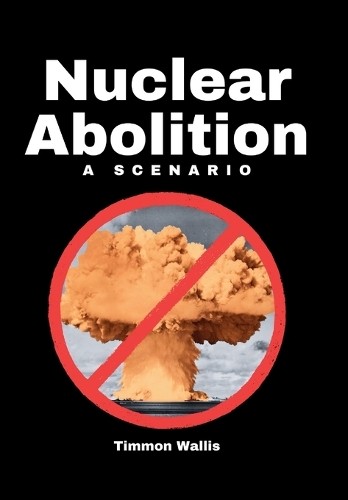
Wallis also bats away the patently absurd notion, nevertheless advanced by those same politicians, that somehow having nuclear weapons keeps us safe, something he declares as “nonsense” while reminding us that “Nuclear weapons are the biggest racket of all time — billions of dollars going from taxpayers to giant corporations to produce things everyone hopes will never be used!”
by beyondnuclearinternational, Linda Pentz Gunter, https://beyondnuclearinternational.org/2026/04/26/nuclear-abolition-a-scenario/
Tim Wallis’s book provides an optimistic view, but it’s also a methodical journey toward the nuclear-free world we all want, writes Linda Pentz Gunter
The Review Conference of the Parties to the Treaty on the Non-Proliferation of Nuclear Weapons (NPT) is about to begin in New York City. There is no reason to be particularly optimistic about any positive outcome. Meanwhile, signatories to the treaty itself continue to defy it, most specifically the United States.
The US is a signatory to the NPT, which in its Article VI states: “Each of the Parties to the Treaty undertakes to pursue negotiations in good faith on effective measures relating to cessation of the nuclear arms race at an early date and to nuclear disarmament, and on a treaty on general and complete disarmament under strict and effective international control.”
It is the second shortest clause in the entire treaty. And yet, what we are seeing instead is a clear intent by the major nuclear powers, especially the US, Russia and China, to arm up rather than down.
Meanwhile, two nuclear armed states — the US and the undeclared nuclear weapon nation Israel — are busy attacking a non-nuclear armed state, Iran, that is also a signatory to the NPT. (Israel cannot join because it officially neither confirms nor denies whether it has the upwards of 200 nuclear weapons that everyone knows it does have.)
Iran has long declared that it is abiding by the terms of the NPT and enriching uranium for a civil nuclear power program, not to build nuclear weapons. This “inalienable” right is granted to any NPT signatory that forswears nuclear weapons in Article IV that says: “Nothing in this Treaty shall be interpreted as affecting the inalienable right of all the Parties to the Treaty to develop research, production and use of nuclear energy for peaceful purposes without discrimination and in conformity with Articles I and II of this Treaty.”
Article IV is arguably the fatal flaw of the NPT — and, regrettably, of the UN Treaty on the Prohibition of Nuclear Weapons (TPNW) which repeats the clause verbatim — since it effectively leaves the back door open to transition to nuclear weapons via access to materials, technology and know-how. This is precisely the suspicion harbored by the US, Israel and Iran’s other enemies about Iran’s nuclear program. It was also used as the pretext for the current attack, almost certainly a cover story given both US intelligence and the International Atomic Energy Agency have consistently insisted that Iran is not moving toward nuclear weapons production.
The ramping up of nuclear weapons arsenals by the existing nuclear weapon nations, and the aspirations by other countries to acquire them — now potentially made more keen by the attack on Iran — moves us ever closer to the nuclear abyss.
It is a frightening scenario, and one brought vividly alive by Annie Jacobsen’s chilling book, Nuclear War. A Scenario.
But, says Timmon Wallis, founder of NuclearBan.US, let’s not abandon our optimism too quickly. Surely there is a different way to think about this, and even a possibility that we can, after all, achieve our global nuclear disarmament goals?
Wallis’s book, Nuclear Abolition. A Scenario, takes a very different tack, and approaches the process through a form of mathematical calculation by subtraction, by moving the arms of the Doomsday Clock — currently at 85 seconds to midnight — gradually further away from that grim moment of Armageddon. (Wallis’s book was published when the clock sat at 89 seconds to midnight, still dire enough.)
Wallis begins by asking the question aspired to by his book — “What if there were no nuclear weapons in the world?” —then asks us to savor the joy of that feeling for a while. It’s what most of us want, after all, but somehow we have elected a rash of megalomaniacs who don’t seem to share that worldview.
Wallis also bats away the patently absurd notion, nevertheless advanced by those same politicians, that somehow having nuclear weapons keeps us safe, something he declares as “nonsense” while reminding us that “Nuclear weapons are the biggest racket of all time — billions of dollars going from taxpayers to giant corporations to produce things everyone hopes will never be used!”
To ensure they are never used, Wallis argues, we must do away with them altogether. But can we really arrive at that moment, when we can turn the Doomsday Clock off altogether? Unlike many of us, Wallis has not lost that hope. His book provides the pathway to get there. The central obstacle, however, is the world’s arms manufacturers, who profit from the existence of nuclear weapons — and of course from the manufacture and unending use of conventional weapons.
Wallis’s central thesis, therefore, is that pressure must be exerted on the nuclear weapons companies to turn them into advocates for nuclear abolition. And that pressure, Wallis asserts, can come first and foremost from the now 99 countries that have signed the TPNW, 74 of which have also ratified it.
And so, Wallis takes us on a trip around the world, showing how countries both large and small can exert that pressure and move us out of the nuclear age. Wallis provides a check box of tactics per chapter, ending with “US bombs out of Europe,” an imperative that has become even more urgent now it is clear that US bombs have likely returned to British soil — at RAF Lakenheath, in reality a US Air Force base — for the first time since 2008. Ironically, this also comes at a time when US President Trump’s rhetoric has threatened a lifting or even folding up of the so-called “nuclear umbrella” with which the US, still a member of NATO, suggests it is protecting its European allies.
Pressure needs to come from within the US, too, Wallis writes. Wallis was an essential ally as we fought here in Takoma Park, Maryland, to maintain our nuclear-free status (we have, but the city has largely abandoned any efforts to promote perhaps its most famous achievement, having been one of the first US cities to become a Nuclear-Free Zone back in 1983.) What if every US city and town declared itself a nuclear-free zone, we had asked our city council? Wallis does not expect every city and state to do so, but he makes a strong case in his book for the power of local activism, especially in boycott and divestment, a proven tactic.
Finally, Wallis expresses the hope that Trump himself could denuclearize. This notion emanated from early, less irrational declarations from the White House at the beginning of Trump’s second term. Trump has indeed said one or two slightly sensible things here and there, denuclearizing being an example. But the ride has become considerably wilder since then.
I wonder if Wallis would feel as optimistic today? We are undoubtedly in an “alternate universe” as he states late in the book. Is it one in which Trump leads the world to nuclear weapons abolition? That’s an optimistic leap that most of us probably aren’t willing to take. But Wallis takes it, because optimism is what drives his writing and his activism, and because it’s an essential fuel if we are to persist in our mission to achieve global nuclear abolition. That work may seem hard to impossible. But what’s the alternative?
The hands of the Doomsday Clock cannot and must not inch any closer to midnight. Wallis’s book gives us a detailed guide to moving the clock — and the world that is watching its inexorable and ominous progress toward zero hour — slowly back to a time when no one had to worry about nuclear weapons. After all, as Wallis points out, that wasn’t really so long ago. Everyone alive before 1945 slept much better at night than we do.
Linda Pentz Gunter is the Executive Director of Beyond Nuclear and writes for and edits Beyond Nuclear International. She is the author of the book, No To Nuclear. Why Nuclear Power Destroys Lives, Derails Climate Progress And Provokes War, published by Pluto Press.
Starmer’s Talking Points: King Charles III Visits Washington
29 April 2026 Dr Binoy Kampmark https://theaimn.net/starmers-talking-points-king-charles-iii-visits-washington/
He can hardly be blamed for being given the brief by his Prime Minister. King Charles III is in the United States on a repair job, playing diplomatic handyman and mender for Sir Keir Starmer and the US-UK alliance so long regarded as special. On the occasion of the 250th anniversary of American independence, it was easy to forget that the British, despite losing its American colonies, gained some vengeance through the exploits of Major General Robert Ross, who, on August 14, 1814, burned down the White House, the Capitol building, and an assortment of other government facilities.
The US President Donald Trump has made it clear that alliances are only special if they serve his bullying and selfish needs, transient and fickle as they are. Otherwise, the whole notion of an alliance can be allowed to go by the wayside or stung into decay by venomous statements on social media. The UK’s ambassador to Washington, Christian Turner, who replaced the disastrously appointed Peter Mandelson in February, has even gone so far to suggest that the term “special relationship” be scrapped as dated and musty. The phrase, he unguardedly told a group of British students visiting that month, was “quite nostalgic” and “quite backwards-looking,” encumbered with “baggage.” Instead of leaving it at that, Turner proceeded to offer the only exemplar in the US diplomatic inventory that might count, whatever the baggage. “I think there is probably one country that has a special relationship with the United States – and that is probably Israel.”
Any ruffles arising from that leaked audio has been seemingly contained. On the occasion of this state visit Trump was cordial, even sprightly. “The Americans have had no closer friends than the British,” he declared on April 28. The same language was spoken, the same values shared, the “warriors” of the two nations having “defended the same extraordinary civilization under the twin banners of red, white, and blue.”
Before a joint sitting of Congress, Charles delivered a speech filled with the usual solecisms on the US political system, not to mention a few on his own. The US Congress is hardly a “citadel of democracy created to represent the voice of all American people, to advance sacred rights and freedoms,” being the republican vision of slave owning plantation owners who were nervous about the mob and ever keen to keep them at bay with a dampening system of checks and balances. The “revolutionary” notions of “life, liberty, and the pursuit of happiness” were to be kept on a firm leash. And while the United Kingdom has democratic pretensions, it exercises power through that mysterious political and legal construction known as the Crown. In a short note for the Spectator in October 1959, the conservative, at times reactionary novelist Evelyn Waugh made an abundantly clear point: “Great Britain is not a democracy. All authority emanates from the Crown.” All figures of note from judges and bishops to the Poet Laureate “exist by the royal will.” Elections are, rather, “a very hazardous process” to select ill-chosen advisors.
Starmer, as advisor-in-chief, clearly fed the monarch a rather odd assortment of dishes to temper and placate the businessman tyrant trainee. Lay it heavy with the friendship issue, talking of that “bond of kinship and identity” that is “priceless and eternal.” Accept that disagreements can happen between close allies (“no taxation without representation”, for instance, stirring the anger of the American colonists). “Ours is a partnership born out of dispute, but no less strong for it.” When the countries found ways to agree “what great change is brought about – not just for the benefit of our peoples, but of all peoples.”
A fig leaf of soothing assurance was offered to US lawmakers and the Trump administration. The UK, recognising “that the threats we face demand a transformation in British defence,” was swelling the defence budget, “the biggest sustained increase in defence spending since the Cold War.” The defence of Ukraine, not high on Trump’s list but very much top of the Starmer summit, also warranted a mention.
Damnably foolish things can be said about defence, that area of spending scandalously exempt from the usual, fiscal scrutiny reserved for welfare budgets and services. And Charles was not spared the Starmer talking points about joint efforts to build F-35 fighter jets and pursuing “the most ambitious submarine program in history, AUKUS.” AUKUS was being pursued “in partnership with Australia, a country of which I am also immensely proud to serve as sovereign.”
AUKUS continues to warp the imagination of its executors, distort military planning, and, importantly, make the most telling demands on Australia, the junior yet, in some ways, most essential partner in the relationship. For one thing, it remains the most duped and witless of the three, having made staggering concessions to both the US and UK in terms of military real estate and investment. Despite turning Australia into a garrison state invigilating over the rise of China in the Indo-Pacific, the agreement makes no guarantee that the Royal Australian Navy will ever receive Virginia-class nuclear-powered submarines it does not need, let alone any assurance that it will exercise control over their use and command.
The US Congressional Research Service (CRS) report, published on January 26, does much to scupper suggestions that Australian sovereignty would ever be a serious consideration, given an analysis of the “benefits, costs, and risks compare[d] with those of an alternative of procuring up to eight additional Virginia-class SSNs that would be retained in US Navy service and operated out of Australia along with the US and UK SSNs that are already planned to be operated under Pillar 1.” Even as these doubts are being expressed, the Australian taxpayer continues to invest in the US submarine industrial base.
Obsessed by the deterrent value of such boats against China, the nail-biting worry in the Pentagon and Congress is that any transfer from a navy that remains tardy in meeting the set target of 2 SSNs a year will blunt potency. “Selling three to five Virginia-class SSNs to Australia would thus convert those SSNs from boats that would be available for use in a US-China crisis or conflict into boats that might not be available for use in a US-China crisis or conflict.” Such considerations would have been unlikely to feature in Starmer’s mind when mulling over the details of the King’s speech. The British PM has shown himself to be stunningly short on political judgment and incapable in making sound decisions. However polished the performance by Charles in Washington, it may not be enough to save his prime ministership.
More costs for Europe in the never-ending effort to keep Chornobyl safe.
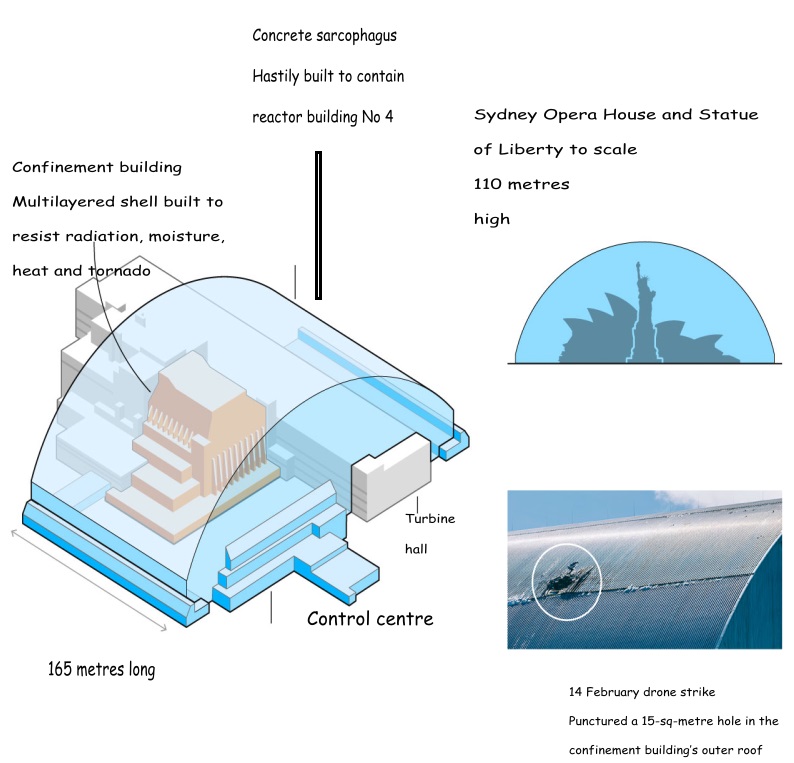
An agreement was signed with the EBRD for EUR30 million (USD35 million) of
funding for the initial phase of restoration work on the giant arch-shaped
New Safe Confinement shelter, which covers the initial shelter, which was
hastily built in 1986 and encases the wreckage of unit 4. The NSC was
damaged by a drone strike in February last year during the ongoing
Russia-Ukraine war, and assessments have put the cost of restoring it to
its full design function at about EUR500 million.
World Nuclear News 27th April 2026, https://www.world-nuclear-news.org/articles/funding-pledge-and-tributes-paid-at-conference-marking-chernobyl-anniversary
UK parliament’s AUKUS inquiry report questions if Britain can keep nuclear submarine promises.

By Riley Stuart and Europe correspondent Elias Clure in London, Tue 28 Apr, 26, https://www.abc.net.au/news/2026-04-28/aukus-report-released-by-house-of-commons-defence-committee/106613750
In short:
The House of Commons Defence Committee has released its report on the AUKUS defence pact after launching an inquiry last year.
While the report was broadly supportive of AUKUS, it also “laid bare the scale of the endeavour that will be required to deliver it”.
What’s next?
There have been calls to hold a public inquiry into AUKUS in Australia too, although right now one has not been announced.
British politicians have cast doubt on their country’s ability to develop and deliver nuclear submarines promised as part of the AUKUS defence pact.
The House of Commons Defence Committee on Tuesday released the findings of its year-long review into the trilateral partnership.
While the report was broadly supportive of AUKUS, it also “laid bare the scale of the endeavour that will be required to deliver it”.
As part of the deal, the United Kingdom and Australia are working together to design and build a new class of nuclear-powered attack submarine, known as SSN-AUKUS, scheduled to enter service in the late 2030s and the early 2040s.
“For the UK, delivering SSN-AUKUS will be a lengthy and complex undertaking requiring a sustained financial commitment from government across several electoral cycles,” the report noted.
“It is deeply concerning that there are signs that the investment pipeline that underpins that commitment has already faltered.”
The report urged the UK government to devote more money to the partnership.
“Shortfalls or delays in funding risk a failure to deliver SSN-AUKUS on time, with potentially severe consequences for UK and wider Euro-Atlantic security, and our standing with our trilateral partners,” it read.
While the White House has reiterated its commitment to the partnership, and Australia has already given the United States $US500 million ($798 million) to try to reinvigorate the country’s shipbuilding industry, critics contend the AUKUS deal’s fine print means nothing is guaranteed.
Australia is expected to invest a total of $US3 billion in US submarine manufacturing capabilities as part of the deal.
It has been estimated AUKUS could cost Australia about $368 billion by the mid-2050s.
“For Australia, AUKUS is an unprecedented undertaking to be delivered to ambitious timescales,” the House of Commons report noted.
“The UK will need to work closely with Australia at both industry and government level to share expertise and support Australia in meeting its own milestones.”
Trump ‘an unreliable ally’, submission says
US President Donald Trump has expressed his support for the trilateral pact, but the House of Commons inquiry received submissions saying the president’s “America First” approach to foreign policy, Russia’s full-scale invasion of Ukraine, and other geopolitical factors “had undermined the case for AUKUS and its chances of successful delivery”.
The Australian Peace and Security Forum — a not-for-profit that has been calling for a public inquiry into AUKUS to be held in Australia — gave a written submission to the inquiry in which it contended the US under Mr Trump was “an unreliable ally”.
The group also claimed that “geopolitical circumstances have changed for both the UK and Australia since AUKUS was conceived in 2021”.
“Strategic priorities for both countries do not align,” the submission read, adding “the UK should not proceed with AUKUS if it cannot guarantee delivery of its commitments on time and on budget”.
But the inquiry also heard from the UK’s minister for defence readiness, Luke Pollard, who said the changing geopolitical context and increasing threats meant “the importance of making sure that AUKUS delivers is even more prominent than it was when the original initiative was launched all those years ago”.
The House of Commons report highlighted difficulties in staff movement between the AUKUS partner countries due to the security clearances required to work in the defence sector.
A consultancy company involved in AUKUS told the inquiry that moving employees between its UK and Australian businesses was a “time-consuming and administratively burdensome” process.
While AUKUS enjoys significant support from both major political parties in Australia, the deal has also attracted criticism, notably from former prime ministers Malcolm Turnbull and Paul Keating.
Tan Dhesi, the Labour MP for Slough and chair of the House of Commons Defence Committee, told the ABC the inquiry was designed to review the UK government’s progress with regard to AUKUS.
“Many of us had concerns that things were perhaps not progressing at the pace they should be, but we wanted to gain expert advice as well as evidence,” he said.
Mr Dhesi said as part of the inquiry, representatives of the defence committee visited locations in the UK, US and Australia.
“Our key recommendation is that the UK government needs to do much more and it needs to do it faster in order to reap the full benefits of this once-in-a-generation, long-term strategic partnership with Australia and the US,” he said.
Links to Full Report –
https://committees.parliament.uk/work/9068/aukus/publications/ and https://committees.parliament.uk/publications/52831/documents/294641/default/
Iran didn’t have a nuclear weapon before this war. But you can see why it would develop one now
Simon Tisdall, 26 Apr 26, https://www.theguardian.com/commentisfree/2026/apr/26/iran-nuclear-weapon-war-develop-one-now
If lawless aggression by ‘might is right’ nuclear-armed powers spreads unchecked, what other option do middle-ranking countries have?
With every bomb dropped, ship seized and blood-curdling threat of annihilation, Donald Trump increases Iran’s incentive to reject his “grand bargain” peace deal and sprint instead to acquire nuclear weapons for future self-defence. Justifying his declaration of war on 28 February, Trump claimed that Iran – and primarily its nuclear programme – posed an “imminent threat”. But Iran does not possess nukes. The US and Israel do.
US intelligence chiefs and UN inspectors agree there’s no firm evidence that the regime, while developing its technical capabilities and keeping political options open, has built, or ever tried to build, a nuclear weapon since at least 2003, when a covert scheme was exposed. But after Trump’s second unprovoked attack in a year, and his vow to bomb Iranian civilisation back to the “stone ages”, that is very likely to change.
It’s increasingly difficult to argue with the view, attributed to the hardline Islamic Revolutionary Guard Corps generals now running Iran, that nukes are the only sure way of deterring future onslaughts. The US and Israel have twice struck without warning, in the middle of diplomatic negotiations. Even if a peace deal were agreed, Iranians know the ever-vengeful Trump and Benjamin Netanyahu cannot be trusted. The US-Israel axis could sustain its aggression for years to come.
Trump’s focus on “obliterating” Iran’s nuclear programme is as woefully wide of the mark as any misdirected US Tomahawk cruise missile. Indigenous nuclear knowhow cannot be easily bombed away, no matter how many scientists Israel kills. And in any case, Tehran does not necessarily need to reconstitute the capacity and skills required to build nuclear weapons at home. It may be able to buy them off the shelf abroad.
North Korea, a longtime ally, would be the most likely source, while help from Vladimir Putin’s Russia (already collaborating on nuclear energy projects) cannot be entirely ruled out. Kim Jong-un, Pyongyang’s dictator, has steered clear of the war so far. But just as he covertly sent troops to assist Putin in Ukraine, he could yet secretly step in to arm Tehran. On nuclear proliferation, Kim has form.
Iran has joined a growing number of non-nuclear armed countries that have suffered grievously at the hands of domineering nuclear powers. In 1994, Ukraine surrendered its nukes in return for what turned out, when Russia first attacked it in 2014, to be valueless western security assurances. Iraq’s regime, lacking a nuclear deterrent, succumbed to US invasion in 2003. Would Trump have attacked Venezuela in January had it been nuclear-armed?
If the acknowledged nuclear weapons states honoured their 1968 Nuclear Non-Proliferation treaty (NPT) obligation to reduce and ultimately eliminate their nukes, others might feel less need of a nuclear shield. But they persistently break their word. Increasingly, the US and Russia abuse their dominant position – abuses that the NPT was specifically designed to prevent. Israel (unlike Iran) never signed the treaty.
Trump’s alarmingly irrational, impulsive and threatening behaviour creates uncertainty and insecurity by itself. But his militarism also fuels global nuclear weapons proliferation. The US is spending billions modernising its arsenal. Russia, North Korea, France and the UK are doing likewise, while China is rapidly, hugely expanding its forces. Yet Trump has refused to renew a series of cold war arms control treaties.
He trashed Barack Obama’s European-backed 2015 nuclear deal with Iran, a foolish decision that has led directly to today’s confrontation. On the first day of the war, Iran’s supreme leader, Ayatollah Ali Khamenei, was targeted and killed. His binding fatwa expressly forbidding development of an Iranian bomb probably died with him.
Regarding Iran, Trump and Netanyahu labour under two fundamental misconceptions. Even if some form of cold peace is eventually established, Iranians will neither forgive nor forget atrocities such as the Minab school massacre, the wanton destruction visited on their country, and Washington’s diplomatic betrayals – whether or not the current regime remains in power. The “Iran threat” will persist. Second, Tehran still has options over which the US and Israel, despite military superiority, have no control.
Sanctioned, ostracised North Korea offers a possible template for Tehran. The Pyongyang regime originally developed its own atomic weapons using hidden market technology obtained from Pakistan. The Kim dynasty later made nuclear-related transfers to Bashar al-Assad’s Syria. It currently sells ballistic missiles to, among others, Iran and Russia.
It’s speculation at this point, but who’s to say Kim will not provide Iran with complete nuclear warheads? Or if that is too risky, he could supply highly enriched uranium, warhead designs and expertise in return for oil, suggested Mark Fitzpatrick, an International Institute for Strategic Studies non-proliferation expert and former senior US diplomat. If Kim did so, who would know and who could stop him?
Kim has grown increasingly emboldened since the failure of Trump’s embarrassing first-term charm offensive. Ignoring White House signals about renewed contacts when Trump visits Beijing next month, the North Korean leader ostentatiously test-fires new missiles, taunts South Korea and Japan, and stresses closer ties with China, Russia and Belarus. Speaking in March, he said US aggression in Iran “proved” North Korea was right to develop a nuclear deterrent. Tehran has surely heard that message.
If Kim is wrong, then why exactly does Trump treat North Korea so differently from Iran? After all, both countries menace their neighbours and embrace anti-western alliances, both are authoritarian regimes oppressing their citizens, and the North Korean nuclear threat is demonstrably genuine. The reason for the double standard seems obvious. Even Trump is not stupid enough to attack a nuclear-armed state.
The way Trump’s and Putin’s bellicose behaviour is legitimising arguments favouring the possession of nuclear weapons is prospectively disastrous for global non-proliferation efforts. If Iran does seek to acquire nukes to defend itself, will Saudi Arabia, Egypt and Turkey follow? And that’s just in the Middle East. Like Ukraine, the Iran war also provides cover and precedent for other nuclear weapons states if they, too, decide to attack non-nuclear-armed countries. Might China follow suit in Taiwan? Given Iran’s fate, should Taipei rush to acquire nukes? Should Japan and South Korea?
Little wonder that an air of gloom hangs over the five-yearly NPT review conference, which opens in New York on Monday. Its challenges include ubiquitous nuclear weapons modernisation and expansion programmes; the collapse of arms control diplomacy; resumed nuclear testing; and what the Arms Control Association calls “rising nuclear dangers” and proliferation risks. “The idea of ‘global zero’, or a world without nuclear weapons, is seen to be steadily eroding,” a House of Commons Library research briefing warned this month.
This is no made-up story with which to scare the children. It’s real. Since invading Ukraine, Russia has repeatedly threatened to use nuclear weapons. So far, fortunately, it has not. In recent weeks, as Trump flailed in Iran, there was a flurry of reports, later denied, that the US, too, might resort to nukes. Sabre-rattling or not, such threats are becoming way too familiar. If a just and reasonable negotiated path can be found out of the present morass, Iran and similarly vulnerable middle-ranking countries may be persuaded to continue to forego nuclear weapons. But if lawless aggression by domineering “might is right” nuclear-armed powers spreads unchecked, the old cold war nightmare of mutually assured destruction will become today’s waking reality.
- Simon Tisdall is a Guardian foreign affairs commentator
-
Archives
- October 2026 (129)
- September 2026 (339)
- August 2026 (330)
- July 2026 (355)
- June 2026 (287)
- May 2026 (306)
- April 2026 (356)
- March 2026 (251)
- February 2026 (267)
- January 2026 (308)
- December 2025 (358)
- November 2025 (359)
-
Categories
- 1
- 1 NUCLEAR ISSUES
- business and costs
- climate change
- culture and arts
- ENERGY
- environment
- health
- history
- indigenous issues
- Legal
- marketing of nuclear
- media
- opposition to nuclear
- PERSONAL STORIES
- politics
- politics international
- Religion and ethics
- safety
- secrets,lies and civil liberties
- spinbuster
- technology
- Uranium
- wastes
- weapons and war
- Women
- 2 WORLD
- ACTION
- AFRICA
- Atrocities
- AUSTRALIA
- Christina's notes
- Christina's themes
- culture and arts
- Events
- Fuk 2022
- Fuk 2023
- Fukushima 2017
- Fukushima 2018
- fukushima 2019
- Fukushima 2020
- Fukushima 2021
- general
- global warming
- Humour (God we need it)
- Nuclear
- RARE EARTHS
- Reference
- resources – print
- Resources -audiovicual
- Weekly Newsletter
- World
- World Nuclear
- YouTube
-
RSS
Entries RSS
Comments RSS

