Russia ‘Confidently Advancing’ In Ukraine, Over 30 Settlements Captured In December: Putin
by Tyler Durden, Zero Hedge, Tuesday, Dec 30, 2025 –
Russian President Vladimir Putin has made clear to both his citizens and to the world that the ‘special military operation’ in Ukraine will continue on until all goals are achieved, and that his forces are advancing ‘confidently’.
He chaired a televised meeting with the country’s top military officials, focused on a status update regarding Ukraine, and crucially coming the day after Presidents Trump and Zelensky met in Florida in a failed effort to reach breakthrough on the proposed peace deal. Moscow is pressing ahead with its goal of fully capturing and pacifying the four Ukrainian regions it declared part of the Russian Federation in fall of 2022 via a ‘popular referendum’.
“The goal of liberating the Donbas, Zaporizhia and Kherson regions is being carried out in stages, in accordance with the plan of the special military operation,” Putin described before underscoring, “The troops are confidently advancing.“
At the meeting it was also announced that Russian troops have made more gains in the last 24 hours, especially the capture of Dibrova village in Donetsk region.
According to an update of the meeting via RT translation, battlefield gains of the past month are significant:
In December, Russian forces liberated over 700 square kilometers of territory, taking some 32 settlements under control, Gerasimov said at the meeting. This month, the military has shown the highest rate of progress in the entire outgoing year, he noted, adding that troops are advancing “along virtually the entire frontline.”
“The adversary is not undertaking any active offensive actions. They have concentrated their main efforts on strengthening their defenses and are attempting to slow the pace of our advance by conducting counterattacks in isolated areas and using drones en masse,” Gerasimov said.
The Kremlin has at the same time reiterated that it is not interested in a ‘Plan B or Plan C’ in terms of a peace deal, but that it only seeks lasting political settlement. This will of course include international recognition of its territories in the Donbass………………………………………….. https://www.zerohedge.com/geopolitical/russia-confidently-advancing-ukraine-over-30-settlements-captured-december-putin
What Lies Ahead for Ukraine’s Contested Zaporizhzhia Nuclear Power Plant?
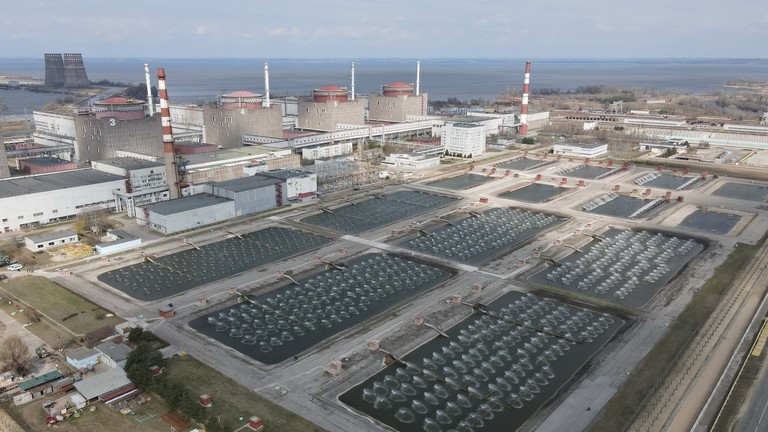
In the long term, there is the unresolved problem of the lack of water resources to cool the reactors after the vast Kakhovka hydro-electric dam was blown up in 2023, destroying the reservoir that supplied water to the plant.
Besides the reactors, there are also spent fuel pools at each reactor site used to cool down used nuclear fuel. Without water supply to the pools, the water evaporates and the temperatures increase, risking fire.
Asharq Al-Awsat, 29 Dec 25, https://english.aawsat.com/features/5223621-what-lies-ahead-ukraine%E2%80%99s-contested-zaporizhzhia-nuclear-power-plant
The Zaporizhzhia nuclear power plant, Europe’s largest, is one of the main sticking points in US President Donald Trump’s peace plan to end the nearly four-year war between Russia and Ukraine. The issue is one of 20 points laid out by Ukrainian President Volodymyr Zelenskiy in a framework peace proposal.
Here are some of the issues regarding the facility:
WHAT ROLE MAY THE US PLAY?
Russia took control of the plant in March 2022 and announced plans to connect it to its power grid. Almost all countries consider that it belongs to Ukraine but Russia says it is owned by Russia and a unit of Russia’s state-owned Rosatom nuclear corporation runs the plant.
Zelenskiy stated at the end of December that the US side had proposed joint trilateral operation of the nuclear power plant with an American chief manager.
Zelenskiy said the Ukrainian proposal envisages Ukrainian-American use of the plant, with the US itself determining how to use 50% of the energy produced.
Russia has considered joint Russian-US use of the plant, according to the Kommersant newspaper.
WHAT IS ITS CURRENT STATUS?
The plant is located in Enerhodar on the banks of the Dnipro River and the Kakhovka Reservoir, 550 km (342 miles) southeast of the capital Kyiv.
The Zaporizhzhia nuclear power plant has six Soviet-designed reactors. They were all built in the 1980s, although the sixth only came online in the mid-1990s after the collapse of the Soviet Union. It has a total capacity of 5.7 gigawatts, according to an International Atomic Energy Agency (IAEA) database.
Four of the six reactors no longer use Russian nuclear fuel, having switched to fuel produced by then-US nuclear equipment supplier Westinghouse.
After Russia took control of the station, it shut down five of its six reactors and the last reactor ceased to produce electricity in September 2022. Rosatom said in 2025 that it was ready to return the US fuel to the United States.
According to the Russian management of the plant, all six reactors are in “cold shutdown.”
Both Russia and Ukraine have accused each other of striking the nuclear plant and of severing power lines to the plant.
The plant’s equipment is powered by electricity supplied from Ukraine. Over the past four years these supplies have been interrupted at least eleven times due to breaks in power lines, forcing the plant to switch to emergency diesel generators.
Emergency generators on site can supply electricity to keep the reactors cool if external power lines are cut.
IAEA Director General Rafael Grossi says that fighting a war around a nuclear plant has put nuclear safety and security in constant jeopardy.
WHY DOES RUSSIA WANT ZAPORIZHZHIA PLANT?
Russia has been preparing to restart the station but says that doing so will depend on the situation in the area. Rosatom chief Alexei Likhachev has not ruled out the supply of electricity produced there to parts of Ukraine.
Oleksandr Kharchenko, director of the Energy Research Center in Kyiv, said Moscow intended to use the plant to cover a significant energy deficit in Russia’s south.
“That’s why they are fighting so hard for this station,” he said.
In December 2025, Russia’s Federal Service for Environmental, Technological and Nuclear Supervision issued a license for the operation of reactor No. 1, a key step towards restarting the reactor.
Ukraine’s energy ministry called the move illegal and irresponsible, risking a nuclear accident.
WHY DOES UKRAINE NEED THE PLANT?
Russia has been pummeling Ukraine’s energy infrastructure for months and some areas have had blackouts during winter.
In recent months, Russia has sharply increased both the scale and intensity of its attacks on Ukraine’s energy sector, plunging entire regions into darkness.
Analysts say Ukraine’s generation capacity deficit is about 4 gigawatts, or the equivalent of four Zaporizhzhia reactors.
Kharchenko says it would take Ukraine five to seven years to build the generating capacity to compensate for the loss of the Zaporizhzhia plant.
Kharchenko said that if Kyiv regained control of the plant, it would take at least two to three years to understand what condition it was in and another three years to restore the equipment and return it to full operations.
Both Ukrainian state nuclear operator Energoatom and Kharchenko said that Ukraine did not know the real condition of the nuclear power plant today.
WHAT ABOUT COOLING FUEL AT THE PLANT?
In the long term, there is the unresolved problem of the lack of water resources to cool the reactors after the vast Kakhovka hydro-electric dam was blown up in 2023, destroying the reservoir that supplied water to the plant.
Besides the reactors, there are also spent fuel pools at each reactor site used to cool down used nuclear fuel. Without water supply to the pools, the water evaporates and the temperatures increase, risking fire.
An emission of hydrogen from a spent fuel pool caused an explosion in Japan’s Fukushima nuclear disaster in 2011.
Energoatom said the level of the Zaporizhzhia power plant cooling pond had dropped by more than 15%, or 3 meters, since the destruction of the dam, and continued to fall.
Ukrainian officials previously said the available water reserves may be sufficient to operate one or, at most, two nuclear reactors.
Trump, Zelenskyy make ‘95% progress’, but ‘thorny issues’ remain – 5 key points
Aditi, 29 Dec 2025, https://www.financialexpress.com/world-news/trump-zelenskyy-make-95-progress-but-thorny-issues-remain-5-key-points/4090944/
Ukrainian President Volodymyr Zelensky met US President Donald Trump at Mar-a-Lago in Florida for high-stakes talks aimed at ending the nearly four-year Russia–Ukraine war.
Ukrainian President Volodymyr Zelenskyy met US President Donald Trump in Florida on Sunday as both leaders tried to push forward a possible peace deal to end the nearly four-year war between Russia and Ukraine. The meeting took place at Trump’s private club, Mar-a-Lago, in Palm Beach, where the US president is spending the holiday season. Both leaders described the talks as positive. Trump called the meeting “terrific,” while Zelenskyy said it was “great.”
This was Zelenskyy’s third visit to meet Trump this year, and expectations were high that the two would try to close major gaps in a peace plan that has been under discussion for months. Here are all the key points discussed.
Trump and Zelenskyy meet: Trump confident, but ‘thorniest’ issue unresolved
Trump seemed positive after the meeting, but also warned that the talks are complicated and fragile. Standing next to Zelenskyy, he said a deal could be clear “in a few weeks,” but stopped short of giving a firm timeline.
“We could have something where one item that you’re not thinking about is a big item, breaks it up. Look, it’s been a very difficult negotiation,” he said. Trump said he believes a peace agreement is close, possibly with around 95% agreement on key points, but admitted that final hurdles remain.
Speaking of the eastern Donbas region, which Russia has demanded that Ukraine surrender, is still an outstanding issue.
Trump acknowledged that this area is one of the “thorny issues” still unresolved. The US has suggested creating a “free economic zone” in parts of Donbas as part of a negotiated settlement, but details remain unclear.
“We’re getting closer to an agreement on that. And that’s a big issue,” he told reporters in a joint appearance with Ukrainian President Volodymyr Zelenskyy. “Certainly, that’s one of the big issues, and I think we’re closer.”
Trump and Zelenskyy meet: Territory still the hardest question
After the meeting, Zelenskyy made it clear that the issue of land remains the most difficult part of the talks. Speaking to reporters at Mar-a-Lago, he said Ukraine cannot simply give up territory. “You know our position,” Zelenskyy said, according to CNN. “We have to respect our law and our people. We respect the territory which we control.”
He added that any decision about land must be made by the people of Ukraine, not just leaders behind closed doors. Zelenskyy said a national referendum could be used to decide not only territorial questions, but other parts of the peace plan as well. “This is not the land of one person,” he said. “It is the land of our nation for many generations.”
He also said Ukraine’s parliament could be involved, but told reporters that Ukraine’s constitution does not allow territory to be handed over through a simple parliamentary vote. Only the public can approve such a move.
‘Russia wants to see Ukraine succeed,’ Trump says after meeting Zelenskyy
“Russia wants to see Ukraine succeed. Once it sounds a little strange, but I was explaining to the President, President Putin was very generous in his feelings toward Ukraine succeeding, including supplying energy, electricity, and other things at very low prices. So a lot of good things came out of that call today,” Trump told reporters standing next to Zelenskyy after the meeting.
Trump also said he would consider travelling to Ukraine if it helped secure a deal, including possibly speaking to Ukraine’s parliament. However, he suggested such a trip is unlikely. “I have no problem with travelling to Ukraine,” Trump said. “But I would like to get the deal done and not necessarily have to go.”
Trump and Zelenskyy meet: Ukraine and the United States are fully aligned
President Vladimir Putin has repeatedly said he wants four regions captured by Russian forces, along with Crimea, to be recognised as Russian territory. Crimea was illegally annexed by Russia in 2014. Russia is not ready to negotiate on its demands, Moscow has made it clear.
Putin has also demanded that Ukraine withdraw from some eastern areas that Russian forces have not even captured. Kyiv has rejected these conditions.
Despite the challenges, Zelenskyy said there has been strong progress on other parts of the peace plan. According to him, about 90% of the overall plan has broad agreement. On security guarantees and military issues, he said Ukraine and the United States are fully aligned. “We agree that security guarantees are a key milestone in achieving lasting peace,” Zelenskyy said.
He added that the two leaders discussed all aspects of a 20-point peace proposal during their talks.
Trump and Zelenskyy meet: Call with European leaders
During Zelenskyy’s visit, Trump and the Ukrainian president also held a phone call with several European leaders. The call lasted over an hour and included leaders from Britain, France, Germany, Italy, Poland and Norway, along with NATO’s secretary general and the president of the European Commission.
Finnish President Alexander Stubb said the leaders discussed “concrete steps” toward ending the war. European Commission President Ursula von der Leyen said there was good progress made.
Occupied and Imperiled: Charting a Path for Zaporizhzhia’s Nuclear Future
The Zaporizhzhia nuclear power plant, the largest in Europe, is a central issue in U. S. President Donald Trump’s peace plan for the ongoing war between Russia and Ukraine.
ByNewsroom, December 27, 2025, https://moderndiplomacy.eu/2025/12/27/occupied-and-imperiled-charting-a-path-for-zaporizhzhias-nuclear-future/
The Zaporizhzhia nuclear power plant, the largest in Europe, is a central issue in U. S. President Donald Trump’s peace plan for the ongoing war between Russia and Ukraine. This matter is part of a broader peace proposal from Ukrainian President Volodymyr Zelenskiy, comprising 20 key points. The power plant has been under Russian control since March 2022, with Russia asserting ownership while most of the world maintains it belongs to Ukraine. A significant proposal has emerged from the U. S. for a joint trilateral operation of the plant with Ukrainian participation and an American chief manager overseeing its operations.
Currently located in Enerhodar, the power plant has six reactors and a total capacity of 5.7 gigawatts. However, since Russia’s takeover, five reactors have been shut down, and the last one ceased operation in September 2022. Four of the reactors have transitioned to using fuel from Westinghouse, moving away from Russian nuclear fuel. The plant’s management states that all reactors are now in “cold shutdown. ” Both Russia and Ukraine have accused each other of attacks on the plant and disruptions to its power lines, which has often compelled it to rely on emergency diesel generators for essential cooling functions.
The Zaporizhzhia nuclear power plant, the largest in Europe, is a central issue in U. S. President Donald Trump’s peace plan for the ongoing war between Russia and Ukraine. This matter is part of a broader peace proposal from Ukrainian President Volodymyr Zelenskiy, comprising 20 key points. The power plant has been under Russian control since March 2022, with Russia asserting ownership while most of the world maintains it belongs to Ukraine. A significant proposal has emerged from the U. S. for a joint trilateral operation of the plant with Ukrainian participation and an American chief manager overseeing its operations.
Currently located in Enerhodar, the power plant has six reactors and a total capacity of 5.7 gigawatts. However, since Russia’s takeover, five reactors have been shut down, and the last one ceased operation in September 2022. Four of the reactors have transitioned to using fuel from Westinghouse, moving away from Russian nuclear fuel. The plant’s management states that all reactors are now in “cold shutdown. ” Both Russia and Ukraine have accused each other of attacks on the plant and disruptions to its power lines, which has often compelled it to rely on emergency diesel generators for essential cooling functions.
An ongoing concern is the dwindling water supply necessary for cooling the reactors, exacerbated by the destruction of the Kakhovka hydroelectric dam in 2023. The plant requires adequate water for both its reactors and spent fuel pools; without it, the risk of overheating and fire increases. Reports indicate a significant drop in the water level at the plant’s cooling pond, raising alarms about the safety of operations, as the current reserves may only suffice for one or two reactors. Consequently, the situation at the Zaporizhzhia plant raises critical questions about nuclear safety amid the conflict and the potential repercussions if issues remain unaddressed.
The Real Story Behind the Russia–Ukraine War—and What Happens Next
local Ukrainian nationalists joined Hitler’s Wehrmacht in its depredations against Jews, Poles, Roma and Russians when it first swept through the country from the west on its way to Stalingrad; and then, in turn, the Russian populations from the Donbas and south campaigned with the Red Army during its vengeance-wreaking return from the east after winning the bloody 1943 battle of Stalingrad that turned the course of WWII.
As Washington sleepwalks deeper into conflicts that have nothing to do with genuine US security, the stakes for ordinary Americans grow higher by the day.
by David Stockman, Doug Casey’s International Man , 27 Dec 25
Notwithstanding the historic fluidity of borders, there is no case whatsoever that Russia’s invasion of Ukraine in February 2022 was “unprovoked” and unrelated to NATO’s own transparent provocations in the region.
The details are arrayed below, but the larger issue needs be addressed first.
Namely, is there any reason to believe that Russia is an expansionist power looking to gobble up neighbors which were not integral parts of its own historic evolution, as is the case with Ukraine?
After all, if despite Rubio’s treachery President Trump does manage to strike a Ukraine peace and partition deal with Putin you can be sure that the neocons will come charging in with a false Munich appeasement analogy.
The answer, however, is a resounding no!
Our firm rebuke of the hoary Munich analogy as it has been falsely applied to Putin is based on what might be called the double-digit rule. To wit, the true expansionary hegemons of modern history have spent huge parts of their GDP on defense because that’s what it takes to support the military infrastructure and logistics required for invasion and occupation of foreign lands.
For instance, here are the figures for military spending by Nazi Germany from 1935–1944 expressed as a percent of GDP. This is what an aggressive hegemon looks like in the ramp-up to war: German military spending had already reach 23% of GDP, even before its invasion of Poland in September 1939 and its subsequent commencement of actual military campaigns of invasion and occupation.
Not surprisingly, the same kind of claim on resources occurred when the United States took it upon itself to counter the aggression of Germany and Japan on a global basis. By 1944 defense spending was equal to 40% of America’s GDP, and would have totaled more than $2 trillion per year in present day dollars of purchasing power.
Military Spending As A Percent Of GDP In Nazi Germany
- 1935: 8%.
- 1936: 13%.
- 1937: 13%.
- 1938: 17%.
- 1939: 23%.
- 1940: 38%.
- 1941: 47%.
- 1942: 55%.
- 1943: 61%.
- 1944: 75%
By contrast, during the final year before Washington/NATO triggered the Ukraine proxy war in February 2022, the Russian military budget was $65 billion, which amounted to just 3.5% of its GDP.
Moreover, the prior years showed no build-up of the kind that has always accompanied historic aggressors. For the period 1992 to 2022, for instance, the average military spending by Russia was 3.8% of GDP– with a minimum of 2.7% in 1998 and a maximum of 5.4% in 2016.
Needless to say, you don’t invade the Baltics or Poland—to say nothing of Germany, France, the Benelux and crossing the English Channel—on 3.5% of GDP! Not even remotely.
Since full scale war broke out in 2022 Russian military spending has increased significantly to 6% of GDP, but all of that is being consumed by the Demolition Derby in Ukraine—barely 100 miles from its own border.
That is, even at 6% of GDP Russia has not yet been able to subdue its own historic borderlands. So if Russia self-evidently does not have the economic and military capacity to conquer its non-Ukrainian neighbors in its own region, let alone Europe proper, what is the war really about?
Continue readingWarning Chernobyl nuclear plant radiation shield is at risk of collapse

By PERKIN AMALARAJ, FOREIGN NEWS REPORTER, 24 December 2025
A Russian strike could collapse the internal radiation shelter at the defunct Chernobyl nuclear power station in Ukraine, the plant’s director has warned.
Kyiv has accused Russia of repeatedly targeting the facility, the site of a 1986 meltdown that is still the world’s worst ever nuclear disaster, since Moscow invaded in February 2022.
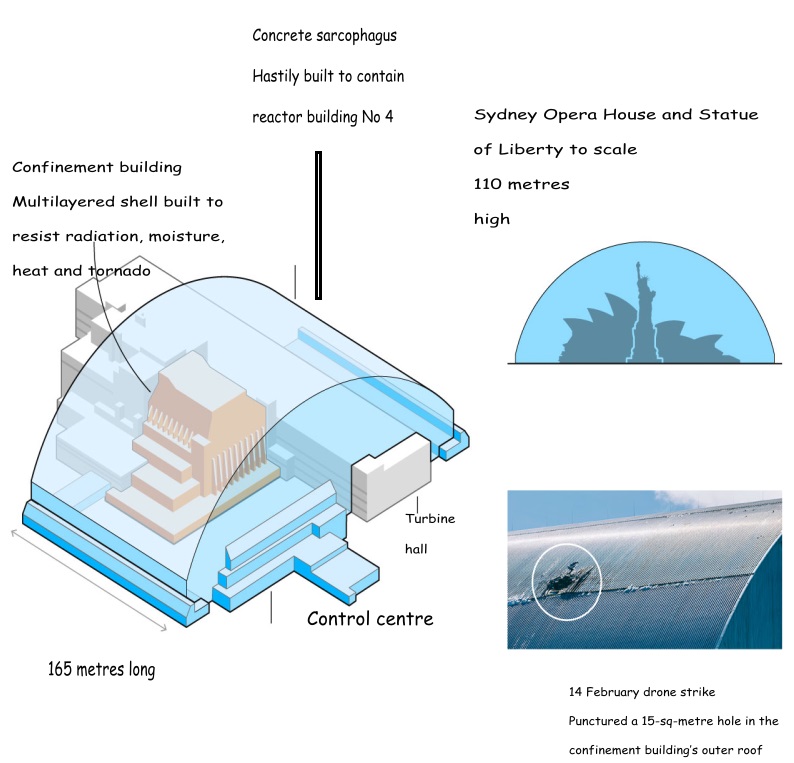
A hit earlier this year punched a hole in the outer radiation shell, triggering a warning from the International Atomic Energy Agency (IAEA) that it had ‘lost its primary safety functions.’
In an interview with AFP, plant director Sergiy Tarakanov said fully restoring that shelter could take three to four years, and warned that another Russian hit could see the inner shell collapse.
‘If a missile or drone hits it directly, or even falls somewhere nearby, for example, an Iskander, God forbid, it will cause a mini-earthquake in the area,’ Tarakanov said.
The Iskander is Russia’s short-range ballistic missile system that can carry a variety of conventional warheads, including those to destroy bunkers.
‘No one can guarantee that the shelter facility will remain standing after that. That is the main threat,’ he added.
The remnants of the nuclear power plant are covered by an inner steel-and-concrete radiation shell – known as the Sarcophagus and built hastily after the disaster – and a modern, high-tech outer shell, called the New Safe Confinement (NSC) structure.
Our NSC has lost several of its main functions. And we understand that it will take us at least three or four years to restore these functions,’ Tarakanov added.
The IAEA said earlier this month an inspection mission found the shelter had ‘lost its primary safety functions, including the confinement capability, but also found that there was no permanent damage to its load-bearing structures or monitoring systems.’
Director Tarakanov said that radiation levels at the site remained ‘stable and within normal limits.’
Daily Mail 23rd Dec 2025, https://www.dailymail.co.uk/news/article-15409149/Warning-Chernobyl-nuclear-plant-radiation-shield-risk-collapse.html
They are calling fast-track Ukraine EU bid ‘nonsense.’ So why dangle it?
It’s supposed to soften the blow for lost NATO membership. But Kyiv is hardly ready and not all members are enthusiastic.
Ian Proud, Responsible Statecraft, Dec 18, 2025
Trying to accelerate Ukraine’s entry into the European Union makes sense as part of the U.S.-sponsored efforts to end the war with Russia. But there are two big obstacles to this happening by 2027: Ukraine isn’t ready, and Europe can’t afford it.
As part of ongoing talks to end the war in Ukraine, the Trump administration had advanced the idea that Ukraine be admitted into the European Union by 2027. On the surface, this appears a practical compromise, given Ukrainian President Volodymyr Zelensky’s concession that Ukraine will drop its aspiration to join NATO.
However, the idea of accelerated entry for Ukraine has not been met with widespread enthusiasm in Europe itself. Diplomats in Brussels dismissed the notion as “nonsense: There needs to be an appetite for enlargement that isn’t there.”
There are two big problems with Ukraine’s rapid accession, the first being readiness and the second cost.
Firstly, Ukraine is nowhere near ready to meet the EU’s exacting requirements for membership. The process of joining the bloc is long and complex. At the start of November, in presenting its enlargement report, the EU said that it could admit new members as early as 2030, with Montenegro the most advanced in negotiations.
After it was formally granted candidate status in June 2022, Ukraine this year passed screening of its progress against the various chapters of the acquis (regulations) that it needs to pass before accession is granted. However, the EU enlargement report on Ukraine downgraded the country’s status from A+ to B, largely in light of the corruption scandal that first erupted in the summer and that rumbles on today.
The report indicated that Ukraine had made good progress on just 11 of the 33 chapters required for accession. It has made limited progress on 7 of the chapters, including on corruption, public procurement, company law and competition policy. It has yet to finalize negotiations on any of the chapters. And, of course, with war still raging, it is incredibly difficult to both agree and put in place the reforms needed to align itself with EU rules and standards. So, even if the war ended by Christmas, which despite the progress still appears optimistic, it would be unlikely to do all of the necessary work in the space of a year to be ready for accession.
The second, possibly more insurmountable challenge is cost.
In July, German Chancellor Friedrich Merz commented that Ukraine was unlikely to join before 2034. The EU has already formalized its next seven year budget through to that time, coming in at $2.35 trillion.
As I pointed out for Responsible Statecraft last year, Ukrainian membership of the EU would come with an enormous price tag……………………………………………. So the economic cost of delivering Ukrainian membership may not be politically viable any time soon, and certainly not before 2034, as the German premier has indicated.
……………………………………With practically all Russia-Ukraine economic ties severed over the past decade, Russian President Vladimir Putin has dropped his opposition to EU membership for Ukraine. An end to the war would allow Ukraine, finally, to start to reform and rebuild its bankrupt economy, and EU membership could accelerate that process.
That’s why Zelensky’s decision to drop the aspiration to NATO membership is such an important stepping stone. It has been abundantly clear since the start of the war that Russia’s NATO red line will never change. Russia has verbalized its opposition at least since Putin’s Munich Security Conference speech in 2007, when he said that NATO expansion “represents a serious provocation that reduces the level of mutual trust.”
……………………………………..https://responsiblestatecraft.org/ukraine-european-union/
Panic as Chernobyl’s $2 billion protective shield cracks open sparking fears of a deadly radiation leak
Daily Mail, By STACY LIBERATORE, US SCIENCE & TECHNOLOGY EDITOR, 18 December 2025
The dome built over the remains of the Chernobyl disaster has been damaged, raising fears it may no longer be able to contain radioactive material.
Officially known as the New Safe Confinement (NSC), the at least $2 billion protective shield was constructed over Reactor 4, which caused the world’s worst nuclear disaster in 1986.
The United Nations‘ International Atomic Energy Agency (IAEA), a nuclear watchdog, revealed this month that the NSC was severely damaged in a Russian drone strike in February.
The IAEA team conducted a safety assessment earlier this month, finding the dome had lost its primary safety functions, including confinement capability.
IAEA director general Rafael Mariano Grossi said: ‘Limited temporary repairs have been carried out on the roof, but timely and comprehensive restoration remains essential to prevent further degradation and ensure long-term nuclear safety.’
The inspection brought some relief, confirming that the dome’s main structure and monitoring systems remain intact.
But beneath the damaged shelter lies massive quantities of radioactive material from the 1986 disaster, making the site a ticking time bomb.
The IAEA has urged urgent repairs and upgrades to Chernobyl’s protective shelter, calling for better humidity control, advanced corrosion monitoring, and a high-tech automatic system to keep the radioactive reactor remains under control.
The damaged dome is the latest of several such expert missions since September last year, when the substations became increasingly affected by the military conflict.
‘These substations are essential for nuclear safety and security. They are absolutely indispensable for providing the electricity all nuclear power plants need for reactor cooling and other safety systems,’ Grossi said
‘They are also needed to distribute the electricity that they produce to households and industry.’
In 2026, with support from the European Bank for Reconstruction and Development (EBRD), the Chornobyl site will undertake additional temporary repairs to support the re-establishment of the NSC’s confinement function, paving the way for full restoration once the conflict ends.
‘The IAEA – which has a team permanently at the site – will continue to do everything it can to support efforts to fully restore nuclear safety and security at the Chornobyl site,’ Grossi said in a statement……………………………………………………………………………………………… https://www.dailymail.co.uk/sciencetech/article-15393121/Chernobyl-protective-shield-radiation-leak.html
Zaporizhzhia nuclear plant running on single power line, Russia says.

By Reuters, December 17, 2025, https://www.reuters.com/business/energy/zaporizhzhia-nuclear-plant-running-single-power-line-russia-says-2025-12-16/
MOSCOW, Dec 16 (Reuters) – The Russian-controlled Zaporizhzhia nuclear power plant in Ukraine is currently receiving electricity through only one of two external power lines, its Russian management said on Tuesday.
The other line was disconnected due to military activity, the management said, adding that radiation levels remain normal. Repair work will begin as soon as possible.
The nuclear plant, Europe’s largest, has been under Russian control since March 2022, when Russian forces overran much of southeastern Ukraine. It is not currently producing electricity but relies on external power to keep the nuclear material cool and avoid a meltdown.
Each side has regularly accused the other of shelling the facility. It experienced a couple of complete power outages earlier this month but was subsequently reconnected.
In September and October the plant was without external power for 30 days, relying on backup diesel generators, until a damaged line was reconnected during a local ceasefire arranged with the help of the U.N. nuclear agency.
Reporting by Reuters Writing by Maxim Rodionov Editing by Mark Trevelyan
The Ukrainian negotiations are dragging on

on December 10, the unelected president, Volodymyr Zelensky, convened a videoconference with Scott Bessent, Jared Kushner (not as a negotiator in Moscow, but as a director of the Affinity Partners fund), and Larry Fink (a director of the BlackRock fund and already the owner of a large portion of the farmland) [ 6 ] . The purpose was clearly to assess what could be purchased in exchange for the rare earths. What was unthinkable ten months ago suddenly became possible.
Thierry Meyssan, voltairenet.org, Tue, 16 Dec 2025, https://www.sott.net/article/503525-The-Ukrainian-negotiations-are-dragging-on
Peace negotiations in Ukraine are hampered by the Zelensky administration’s resistance. The administration is attempting to buy time,first through legal means, then military action, and finally, political maneuvering. However, the contacts made suggest what this peace will look like.
Peace negotiations between Ukraine and Russia are dragging on. Clearly, the Russian side, confident of victory, intends to liberate what remains of the Donbas as soon as possible, while the Ukrainian side refuses to concede anything.
Europeans from the EU and the UK are holding numerous meetings, almost one a day, with the sole obsession of continuing the war, with or without the United States.
Two new events have changed the game:Washington is considering leaving NATO and the Ukrainians are accepting the idea of selling their country.
Washington and NATO
On December 1st, a secret videoconference was held with the participation of the French (Emmanuel Macron) and Finnish (Alexander Stubb) presidents, the German Chancellor (Friedrich Merz), the Polish (Donald Tusk), Italian (Giorgia Meloni), Danish (Mette Frederiksen) and Norwegian (Jonas Gahr Støre) prime ministers, the NATO Secretary General (Mark Rutte), the President of the European Commission (Ursula von der Leyen) and the President of the European Council (António Costa).
According to Der Spiegel, which obtained access to the meeting’s minutes, the NATO Secretary General stated that he agreed with the Finnish President and that Europeans should be wary of the peace agreement in Ukraine that President Donald Trump’s special envoys, Steve Witkoff and Jared Kushner, were negotiating [ 1 ] .
This is the first time a sitting NATO Secretary General has dared to openly criticize a sitting US President.
The National Security Strategy, published on December 4th by the White House, mentions NATO five times.However, it is no longer a crucial alliance for the United States, given that President Trump has signaled the end of the “American Empire.” Washington is too preoccupied with its $33 trillion debt to dedicate itself to the defense of Western Europe. The document therefore merely notes that the member states of the Atlantic Alliance will have to ensure their own security by allocating 5% of their gross domestic product (GDP) to it — a far cry from their current level of spending. It also notes that the alliance is not expected to expand further [ 2 ] .
On December 9, five days later, a Republican representative, Thomas Massie (Kentucky), introduced a bill (HR 6508) aimed at withdrawing the United States from NATO. This bill was sent to the Foreign Affairs Committee on December 12 [ 3 ] . This was the first time this issue would be addressed in Congress.
It is too early to conclude anything, but we must already note that there is a current opposed to the Atlantic alliance within the Trump supporters and that European states are awarethat they will not be able to ensure both their own national defense and attack the Russian Federation.
Privately, President Trump’s aides say he will withdraw from the alliance by mid-2027;a deadline that could be brought forward.
The leaders of the European Union are well aware of this.
Continue readingEurope is about to commit financial self-immolation: Its leaders know it
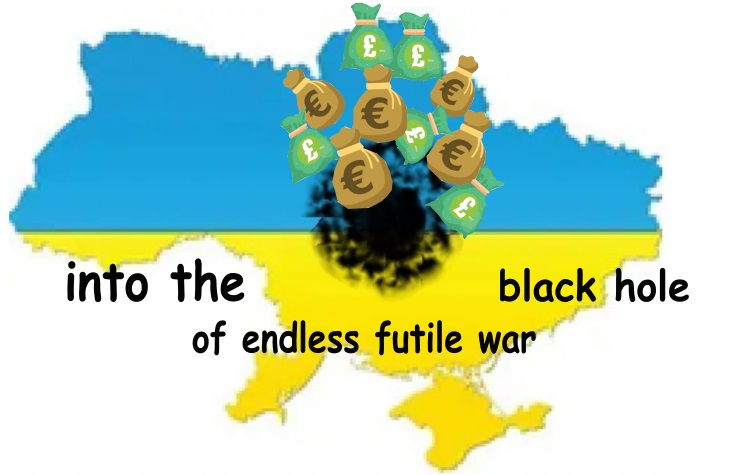
The people who will pay for this are not sitting in Commission buildings, they are the ones whose pensions, currencies, and living standards are being quietly offered up to preserve a collapsing illusion of power
Gerry Nolan, Ron Paul Institute for Political Economy, 15 Dec 2025, https://www.sott.net/article/503527-Europe-is-about-to-commit-financial-self-immolation-Its-leaders-know-it
Italy’s decision to stand with Belgium against the confiscation of Russian sovereign assets is not a diplomatic footnote. It is a moment of clarity breaking through the fog of performative morality that has engulfed Brussels.
Strip away the slogans and the truth is unavoidable: the seizure of Russian sovereign reserves will not change the course of the war in Ukraine by a single inch.
This is not about funding Ukraine, it is about whether sovereign property still exists in a Western financial system that has quietly replaced law with cult-like obedience.
That is why panic has entered the room.
The European Commission wants to pretend this is a clever workaround, a one-off, an emergency measure wrapped in legal contortions and moral posturing masquerading as hysteria. But finance does not function on intentions, rage, or narratives. It functions on precedent, trust, and enforceability. And once that trust is broken, it does not return.
The modern global financial system rests on a single, unglamorous principle, that State assets held in foreign jurisdictions are legally immune from political confiscation.
That principle underwrites reserve currencies, correspondent banking, sovereign debt markets, and cross-border investment. It is why central banks like Russia’s (once) accepted euros instead of bullion shipped under armed guard. It is why settlement systems like Euroclear exist at all.
Once that rule is broken, capital does not debate. It reprices risk instantly and it leaves.
Confiscation sends a message to every country outside the Western political orbit: your savings are safe only as long as you remain politically compliant.
That is not a rules-based order. It is a selectively enforced order whose rules change the moment compliance ends. What we have is a compliance cartel, enforcing law upward and punishment downward, depending on who obeys and who resists.
Belgium’s fear is not legalistic. It is actuarial. Hosting Euroclear means hosting systemic risk. If Russia or any future target successfully challenges the seizure, Belgium could be exposed to claims that dwarf the sums being discussed. Belgium is therefore right to be skeptical of Europe’s promise to underwrite such colossal risk, given the bloc’s now shattered credibility. No serious financial actor would treat such guarantees as reliable.
Italy’s hesitation is not ideological. It is mathematical. With one of Europe’s heaviest debt burdens, Rome understands what happens when markets begin questioning the neutrality of reserve currencies and custodians.
Neither country suddenly developed sympathy for Moscow. They simply did the arithmetic before the slogans.
Paris and London, meanwhile, thunder publicly while quietly insulating their own commercial banks’ exposure to Russian sovereign assets, exposure measured not in rhetoric, but in tens of billions. French financial institutions alone hold an estimated €15-20 billion, while UK-linked banks and custodial structures account for roughly £20-25 billion, much of it routed through London’s clearing and custody ecosystem rather than sitting on government balance sheets.
This hypocrisy and cowardice are not accidental. Paris and London sit at the heart of global custodial banking, derivatives clearing, and FX settlement, nodes embedded deep within the plumbing of global finance. Retaliatory seizures or accelerated capital flight would not be symbolic for them; they would be catastrophic.
So the burden is shifted outward. Smaller states are expected to absorb systemic risk while core financial centers preserve deniability, play a double game, and posture as virtuous.
This is anything but European solidarity. It is class defense at the international level.
The increasingly shrill insistence from the Eurocrats that the assets must be seized betrays something far more revealing than hysteria or resolve: the unmasking of a project sustained by delusion and Russophobic dogma, in which moral certainty did not arise from conviction, but functioned as a mechanism for managing cognitive dissonance, a means of avoiding realities that any serious strategy would already have been forced to confront.
Continue readingUS sets out condition for Ukraine security guarantees – Axios
13 Dec 25 https://www.rt.com/news/629413-us-condition-ukraine-security-guarantees/
Kiev could receive assurances as part of a peace deal if it agrees to territorial concessions, the report says
The administration of US President Donald Trump is willing to offer Kiev NATO-style and Congress-approved security guarantees if it agrees on territorial concessions to Russia, Axios reported on Saturday, citing sources. Ukraine has rejected any concessions and has called instead for a ceasefire – a proposal Moscow has dismissed as a ploy to win time and prolong the conflict.
The outlet cited unnamed US officials as saying that negotiations on security guarantees from the US and EU nations to Ukraine had made “significant progress.” An Axios source claimed that Washington wanted a guarantee “that will not be a blank check … but will be strong enough,” adding: “We are willing to send it to Congress to vote on it.”
The package proposal, the official continued, would entail territorial concessions, with Ukraine “retaining sovereignty over about 80% of its territory” and receiving “the biggest and strongest security guarantee it has ever got,” alongside a “very significant prosperity package.”
Russian Foreign Minister Sergey Lavrov has said that Moscow is open to discussing a security guarantees framework on condition that it will not be aimed at Russia. He added that Moscow believes Washington to be “genuinely interested in a fair settlement that… safeguards the legitimate interests of all parties.”
The Axios report also said the US viewed as “progress” recent remarks by Ukrainian leader Vladimir Zelensky suggesting Ukraine could hold a referendum on territorial concessions, particularly those concerning Donbass.
Moscow, however, has stressed that Donbass – which overwhelmingly voted to join Russia in 2022 – is sovereign Russian territory, and Ukrainian troops will be pushed out of the region one way or the other. It also suggested that Zelensky’s referendum play was a ploy to prolong the conflict and gain time for patching up the Ukrainian army.
Moscow insists that a sustainable peace could only be reached if Ukraine commits to staying out of NATO, demilitarization and denazification, limits the size of its army, and recognizes the new territorial reality on the ground.
Ukraine wants West to pay for election.
Rt.com, 12 Dec, 2025
Kiev is ready to call a vote once its demands are met, Vladimir Zelensky’s top adviser has said.
Kiev is ready to hold an election, but only if a series of conditions are met, including Western funding of the vote, Mikhail Podoliak, a senior adviser to Ukrainian leader Vladimir Zelensky, has said.
Zelensky’s presidential term expired in May 2024, but he has refused to organize elections, citing martial law. Earlier this week, US President Donald Trump said Kiev should no longer use the ongoing conflict as an excuse for the delay.
Moscow has maintained that Zelensky has “lost his legitimate status,” which would undermine the legality of any peace deal signed with him.
Zelensky has claimed he was not trying to “cling to power,” declaring this week readiness for the elections, but insisting that Kiev needs help from the US and European countries “to ensure security” during a vote.
Podoliak expanded on the position on Friday, writing on X that Zelensky had called on parliament to prepare changes to the constitution and laws. Podoliak, however, added that three conditions must be met for a vote to go ahead……………………………………………….. https://www.rt.com/russia/629383-ukraine-elections-western-funding/
Elections impossible under Zelensky’s ‘terrorist regime’ – exiled Ukrainian MP
Sat, 13 Dec 2025, https://www.sott.net/article/503481-Elections-impossible-under-Zelenskys-terrorist-regime-exiled-Ukrainian-MP
Presidential elections in Ukraine are impossible under the “terrorist regime” of Vladimir Zelensky and his cohort, exiled Ukrainian lawmaker Artyom Dmitruk has said.
Zelensky, whose presidential term expired over a year ago, has repeatedly refused to hold a new election, citing martial law – which was imposed after the conflict with Russia escalated in 2022 and has been regularly extended by parliament.
Earlier this week, Zelensky said he would hold an election within 90 days if Kiev’s Western backers can guarantee security. The shift came after US President Donald Trump accused the Ukrainian authorities of using the conflict as an excuse to delay elections, insisting that it’s time.
In a series of Telegram posts on Friday, Dmitruk argued that it is “completely pointless” to discuss elections now, calling Zelensky’s remarks “manipulation and hypocrisy” aimed at clinging to power.
“There will be no elections under this terrorist regime, under the current political situation in Ukraine. Under this regime, elections are impossible,” the exiled lawmaker wrote. “The political situation in Ukraine is vile and deceitful. Almost all the ‘potential candidates’ are Zelensky regime officials, people completely integrated into the war system. And at the head of this march – a parade of blood – is Zelensky himself.”
He insisted that elections would only be possible after “either a political or military capitulation of the regime” and the transfer of authority to an interim government. According to Dmitruk, Trump’s call to Zelensky was not really about elections: “It is a form of diplomatic signal… a polite, diplomatic way to show Zelensky the door.”
Dmitruk fled Ukraine in August 2024, claiming he received death threats from the country’s security services over his opposition to Zelensky’s persecution of the Ukrainian Orthodox Church.
Russia maintains that Zelensky is an illegitimate leader. President Vladimir Putin warned that it is “legally impossible” to conclude a peace deal with the current leadership due to Zelensky’s lack of a valid mandate.
According to Kremlin aide Yury Ushakov, Zelensky’s sudden interest in elections is a ploy to secure a ceasefire – a proposal that Russia has rejected in favor of a permanent peace deal addressing the conflict’s underlying causes. Moscow has warned that Kiev would use any pause in the fighting to rearm and regroup.
Comment: There is more pressure on Zelensky to hold elections from various stakeholders while a peace deal is in the works. One way or another Zelensky will have to hold elections soon.
US should exit lost Ukraine war, obsolete NATO
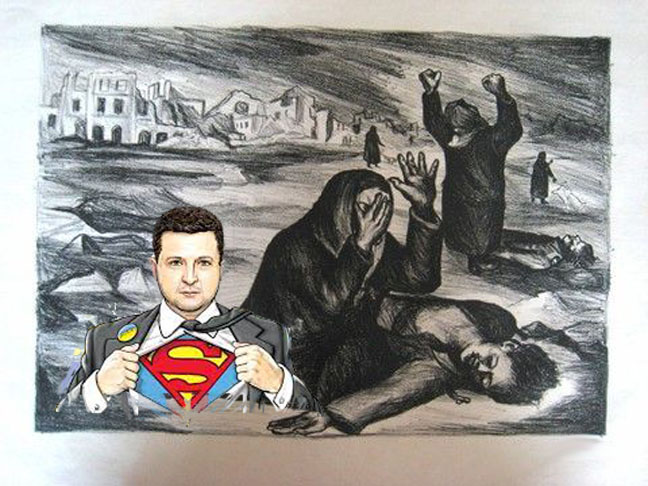
Walt Zlotow West Suburban Peace Coalition Glen Ellyn IL, substack.com/@waltzlotow 12 Dec 25
President Trump appears to relish killing innocents worldwide. He’s still enabling the Israeli genocide in Gaza that has killed over 100,000. He’s obliterated 20 little unarmed boats in the Caribbean killing over 80 hapless innocents. He’s bombed imagined bad guys in Somalia 111 times in 10 months. Why? Because he wants to and can.
But one killing field Trump wants out of is Ukraine. His predecessor Biden provoked the war there 4 years ago. It has largely destroyed Ukraine as a viable state with millions fled, dead, injured, with a shattered economy propped up by US, NATO treasure.
Trump is working with Russia to end the war largely on Russia’s sensible terms. No NATO for Ukraine which will remain neutral between Europe and Russia. No return of the seized territory containing the Russian speaking Ukrainians their government was systematically destroying. End of sanctions allowing reintegration of Russia into the European political economy.
This is good for Ukraine, good for Russia, good for Europe.
For Ukraine it ends further destruction which will alas, now be a rump state of its former self. Had Ukraine not allowed the US and NATO to sabotage the April, 2022 Istanbul peace agreement, Ukraine could have achieved peace then with no loss of territory and its economy largely intact.
For Russia, its security concerns regarding NATO encroachment allowing NATO nukes on its borders, and further destruction of Russian leaning Donbas Ukrainians will achieved be.
For Europe, peace will allow redirection of squandered treasure to the commons, ward off right wing political movements likely to topple pro war leaders, and buy cheap energy from Russia to revitalize their stagnant economies.
While Russia is on board, neither Ukraine nor Europe will have any of this sanity. Ukraine wants to fight on to regain lost territory that will forever be part of Russia. Hurling teens and grandfathers into the cauldron of lost war further cements Ukraine’s destruction.
European NATO pretends defeating Russia in Ukraine is critical to preventing Russia from attacking NATO countries in their imagined obsession Russia is recreating the Soviet Union.
Ukraine and Europe continue in their delusions in spite of Trump’s clear message that the war is lost and must be ended to prevent further disintegration of Ukraine. Neither Ukraine nor Europe has anywhere near the military resources to continue the war largely financed by the Russophobic Biden administration.
Trump must not weaver in his efforts to exit the money pit of senseless war in Ukraine. But he should go further and exit NATO, allowing Europe to provide for their own defense. No US Sugar Daddy might be just the tonic to dissuade foolish European leaders like UK’s Starmer, France’s Macron and Germany’s Merz from endlessly screaming ‘The Russians are coming, the Russian’s are coming.’
Congress is starting to recognize the need to exit NATO. House Republican Thomas Massie and Senate Republican Mike Lee have both introduced legislation to end US membership in NATO.
Their common sense justification is long overdue fresh air. Massie noted, “NATO was created to counter the Soviet Union, which collapsed over thirty years ago. Since then, U.S. participation has cost taxpayers trillions of dollars and continues to risk US involvement in foreign wars. Our Constitution did not authorize permanent foreign entanglements, something our Founding Fathers explicitly warned us against. America should not be the world’s security blanket—especially when wealthy countries refuse to pay for their own defense.”
Lee observed, “America’s withdrawal from NATO is long overdue. NATO has run its course – the threats that existed at its inception are no longer relevant 76 years later “If they were, Europe would be paying their fair share instead of making American taxpayers pick up the check for decades. My legislation will put America first by withdrawing us from the raw deal NATO has become.”
Trump must support this legislation as he works with Russia to end the carnage that addresses Russia’s valid security concerns. Ending this war and exiting NATO will bring peace to Europe and revitalize the economies of all combatants. It might also avert something infinitely more ominous…nuclear war.
1 This Month

of the week – Shut Down Drone Warfare!


Tell the Ukrainian Government to Drop Prosecution of Peace Activist Yurii Sheliazhenko

Petition to revoke the licensing of the Near Surface Nuclear Disposal Facility (NSDF) at Chalk River. https://www.ourcommons.ca/petitions/en/Petition/Details?Petition=e-7247
To see nuclear-related stories in greater depth and intensity – go to https://nuclearinformation.wordpress.com
-
Archives
- March 2026 (237)
- February 2026 (268)
- January 2026 (308)
- December 2025 (358)
- November 2025 (359)
- October 2025 (376)
- September 2025 (257)
- August 2025 (319)
- July 2025 (230)
- June 2025 (348)
- May 2025 (261)
- April 2025 (305)
-
Categories
- 1
- 1 NUCLEAR ISSUES
- business and costs
- climate change
- culture and arts
- ENERGY
- environment
- health
- history
- indigenous issues
- Legal
- marketing of nuclear
- media
- opposition to nuclear
- PERSONAL STORIES
- politics
- politics international
- Religion and ethics
- safety
- secrets,lies and civil liberties
- spinbuster
- technology
- Uranium
- wastes
- weapons and war
- Women
- 2 WORLD
- ACTION
- AFRICA
- Atrocities
- AUSTRALIA
- Christina's notes
- Christina's themes
- culture and arts
- Events
- Fuk 2022
- Fuk 2023
- Fukushima 2017
- Fukushima 2018
- fukushima 2019
- Fukushima 2020
- Fukushima 2021
- general
- global warming
- Humour (God we need it)
- Nuclear
- RARE EARTHS
- Reference
- resources – print
- Resources -audiovicual
- Weekly Newsletter
- World
- World Nuclear
- YouTube
-
RSS
Entries RSS
Comments RSS
 nuclear-news