Nuclear power station workers ‘failed to ensure safety’ after incident.

Nuclear watchdog said the electrical cabling failing presented a ‘significant potential risk’
Matthew Fulton, STV News, Feb 25th, 2026
Workers at a nuclear station in Ayrshire “failed to ensure safety” after an electrical cabling incident, according to the Office for Nuclear Regulation (ONR).
The ONR issued an improvement notice to EDF Energy following the incident at its Hunterston B site near West Kilbride.
In November, workers failed to ensure that the electrical cabling was “deployed safely” while undertaking work on the cooling water valves in one of the facilities on the site.
The independent nuclear regulator said that although no injuries were sustained, the incident presented a “significant potential risk to worker safety”.
The notice requires EDF Energy to review, revise and implement arrangements to ensure that all 415V portable equipment at Hunterston B is appropriately constructed, maintained, tested and controlled.
ows an incident at Hunterston B .
Feb 25th, 2026 at 10:59
Share this story
Posted in
Last updated Feb 25th, 2026 at 11:02
Workers at a nuclear station in Ayrshire “failed to ensure safety” after an electrical cabling incident, according to the Office for Nuclear Regulation (ONR).
The ONR issued an improvement notice to EDF Energy following the incident at its Hunterston B site near West Kilbride.
In November, workers failed to ensure that the electrical cabling was “deployed safely” while undertaking work on the cooling water valves in one of the facilities on the site.
The independent nuclear regulator said that although no injuries were sustained, the incident presented a “significant potential risk to worker safety”.
The notice requires EDF Energy to review, revise and implement arrangements to ensure that all 415V portable equipment at Hunterston B is appropriately constructed, maintained, tested and controlled.
Ad
The ONR called for EDF to “strengthen its risk assessment processes” and improve arrangements for personnel undertaking electrical work on the site.
Tom Eagleton, ONR’s Head of Safety Regulation, Decommissioning, Fuel and Waste sites, said: “The safety of workers at nuclear licensed sites is a key priority for us. While no one was hurt on this occasion, the potential for serious harm was significant.
“It’s essential that EDF Energy implements the necessary improvements to ensure this cannot happen again.”
The energy firm is required to comply with the notice by March 20……………….. https://news.stv.tv/west-central/hunterston-nuclear-station-workers-failed-to-ensure-safety-after-electrical-cabling-incident
Sizewell C power to cost almost double today’s prices
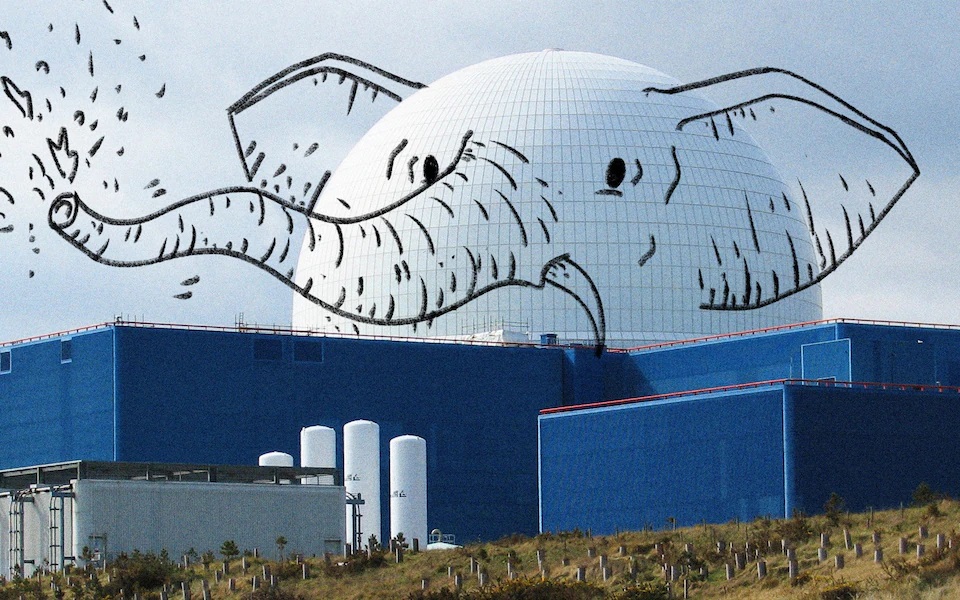
Nuclear plant is an ‘appalling waste of electricity consumers’ and taxpayers’ money’, experts claim
Electricity generated by the Sizewell C nuclear power station will
cost roughly double the normal price of power, according to a new
Government report.
Estimates suggest that the power Sizewell C produces
will cost £120 per megawatt hour (MWh) in today’s prices, compared with the
current wholesale price of about £60 to £70. The extra costs will be added
to energy bills.
The disclosure was made in a review of the business case
for Sizewell C published by the Department for Energy Security and Net
Zero. It is understood to be the first time Sizewell C’s power output has
been costed. It refers to the so-called “strike price”, which is likely
to be awarded to the nuclear power station under the contracts for
difference system. This is where generators get a guaranteed minimum price
for electricity, whatever the market value.
The cost is then covered by a
levy on consumer bills, meaning it effectively acts as an energy subsidy.
Nuclear supporters, including Ed Miliband, the Energy Secretary, have
argued that nuclear power is worth the extra money because it acts as a
secure energy source for decades – potentially a century in the case of
Sizewell C.
However, critics have raised concerns that prices for nuclear
will continue to rise, arguing that early estimates for constructing power
stations are always significant underestimates. They have pointed to
Sizewell C’s predecessor, Hinkley Point C, where original costs of £18bn
have soared to £50bn – a figure announced last week – with start-up delayed
from 2026 to 2031.
The Government report for Sizewell C said estimates
assumed no escalation in costs, which would be a first for UK nuclear
construction projects. The report also warned that consumers were likely to
be charged more than the £120 per MWh rate because the strike price was
calculated net of all the tax, business rates and other payments to the
Government.
Prof Stephen Thomas, the editor-in-chief of Energy Policy, an
academic journal, said: “Sizewell is an appalling waste of electricity
consumers’ and taxpayers’ money. If you want to justify a premium price for
nuclear, you have to estimate the costs of achieving the same factors –
energy security and reliability.
“Of course, nuclear power plants aren’t
always reliable and the most insecure power source is the one that isn’t
built yet. Without the assumptions behind these cost guesses [of £120 per
MWh], they are worthless and far from transparent.” Alison Downes, of
Stop Sizewell C, a local campaign group, said: “Hinkley’s cost has soared
to £50bn with completion dates slipping and five years still to go.
Sizewell C’s costs will rise higher still when it inevitably overruns its
£40bn construction budget.”
Telegraph 25th Feb 2026, https://www.telegraph.co.uk/business/2026/02/25/sizewell-c-power-to-cost-almost-double-todays-prices/
EDF pledges new £15bn UK investment as falling energy prices hit profits

The energy firm reported a 12 per cent decrease in nuclear output
Anna Wise, Independent UK, Monday 23 February 2026
French energy giant EDF saw its UK profits decline last year, attributed to a combination of falling energy prices and a significant outage at one of its nuclear power stations.
Despite this setback, the company has announced plans for a substantial £15 billion investment in the country over the next three years.
The energy firm reported a 12 per cent decrease in nuclear output from its five operational power stations during the period.
While its Sizewell B facility in Suffolk and Torness in Scotland performed strongly, the overall output was significantly impacted by an extended outage at the Hartlepool power station.
The Teesside-based station, which began generating power 43 years ago and supplies electricity to approximately two million homes, experienced a prolonged shutdown.
Despite these operational challenges, Hartlepool recently secured a one-year extension to its operational lifespan, now expected to generate electricity until March 2028.
This extended downtime, primarily due to issues affecting one of its two reactor systems, was identified as the main driver for EDF‘s overall decline in nuclear generation last year.
Furthermore, a decline in earnings was also down to the prices it charges for nuclear power being lower than in 2024.
It is understood that average prices were down by approximately 20 per cent.
Energy prices in the UK have been gradually coming down after spiking in the aftermath of Russia’s invasion of Ukraine in 2022.
EDF said that in its UK business, earnings before
interest, tax, depreciation and amortisation (EBITDA) were £1.9 billion for 2025, down about a third from £2.9 billion in 2024……………………………………………………….. https://www.independent.co.uk/news/business/edf-hinkley-point-energy-prices-profits-b2925974.html
Rapid UK coastal erosion throws spotlight on £40bn nuclear plant
More than 27 metres of cliff lost over a year in area just 2km from Sizewell C.

Swaths of the eastern UK coastline are eroding faster than expected,
forcing the demolition of homes and putting the spotlight on the risks
surrounding a £40bn nuclear power plant being built at Sizewell.
The coast
around Norfolk and Suffolk is one of the fastest eroding in Europe but the
disintegration has intensified in several parts in recent months including
an area just 2km from the Sizewell C construction site.
More than 27 metres
of cliff at the village of Thorpeness has been lost since December 2024,
compared with an erosion rate of 2 metres a year on average, according to
East Suffolk Council, which said the “sudden and significant pace”
meant safety levels were breached far more quickly than expected. Ten homes
in the upmarket area, including two flats that sold within the last few
years for more than £600,000, have been knocked down since October.
FT 24th Feb 2026,
https://www.ft.com/content/7f093296-41cd-498c-ba81-f3707204eca9
UK regulators to begin formal assessment of TerraPower’s 345MWe sodium-cooled fast reactor.
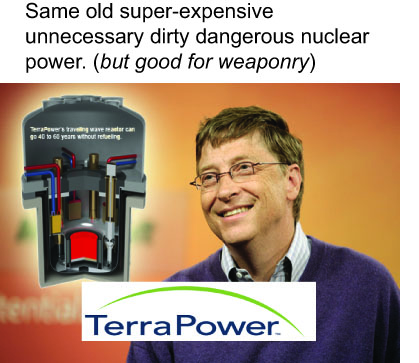
New Civil Engineer 23rd Feb 2026, By Thomas Johnson
UK regulators have been asked to begin a formal assessment of the Natrium nuclear reactor design developed by US company TerraPower.
The Department for Energy Security and Net Zero (DESNZ) told the Office for Nuclear Regulation (ONR), the Environment Agency and Natural Resources Wales to prepare for a Generic Design Assessment (GDA) of the sodium-cooled fast reactor after a readiness review concluded the design is prepared to enter the regulatory process. The GDA will not start until the regulators have agreed timetables and resourcing.
The GDA is a multi-year scrutiny process in which regulators examine the safety, security and environmental arrangements for a reactor design before any site-specific consents or construction are made. It has been used for previous new-build designs and is intended to give investors and potential operators clearer regulatory certainty.
TerraPower, co-founded by Microsoft’s Bill Gates, is developing the Natrium design as part of a US public–private partnership. The company’s first demonstration plant is being built with support from the US Department of Energy’s Advanced Reactor Demonstration Program (ARDP). The ARDP allows up to $2bn (£1.5bn) in federal funding for the project on a 50:50 cost-share basis; TerraPower and its partners are expected to match that investment……………………………………………………………………………………
sodium-cooled reactors pose different technical and regulatory challenges to light-water designs. Liquid sodium reacts chemically with water and air, which requires specialised handling, testing and safety arrangements…………………………..
https://www.newcivilengineer.com/latest/uk-regulators-to-begin-formal-assessment-of-terrapowers-345mwe-sodium-cooled-fast-reactor-23-02-2026/
Hinkley Point C faces further delays as costs continue to mount
Hinkley Point C, the UK’s first nuclear plant in a generation, is now not expected to start generating electricity until 2030 at the earliest in yet another delay to the project.
French energy giant EDF, which has been overseeing construction on the nuclear plant, blamed the delay on lower-than-expected productivity on its major electromechanical installation programme.
The programme includes installation works such as piping, cabling and system integration for both reactor units – although only Unit 1, the first reactor, is expected to begin generating in 2030.
Unit 2 is generally expected to come online about one year after Unit 1, which suggests it will be the early 2030s based on how the project timeline is currently understood. Workers only lifted the 245-tonne steel dome onto Unit 2 in July 2025, roughly 18 months after Unit 1.
Last month, Hinkley Point C received the second and final nuclear reactor that will be welded into place in the coming years. The power station received its first nuclear reactor in 2023, which has subsequently been installed in Unit 1……………………………………………………………………………………..https://eandt.theiet.org/2026/02/23/hinkley-point-c-faces-further-delays-costs-continue-mount
Massive military convoy carrying ‘nuclear weapons’ passes through Glasgow.
Footage captured on Thursday shows the convoy headed along the M74 motorway towards Kinning Park
Jordan Shepherd Reporter, 20 Feb 2026, https://www.glasgowlive.co.uk/news/glasgow-news/massive-military-convoy-carrying-nuclear-33464341
A massive military convoy believed to be carrying nuclear weapons has been spotted passing through Glasgow..
Footage captured on Thursday shows the convoy headed along the M74 motorway towards Kinning Park. The clip shows MOD police vehicles and Police Scotland escorting the military vehicles through the city.
The convoys usually travel between Atomic Weapons Establishment Burghfield near Reading and RNAD Coulport on Loch Long, right through Glasgow on the M74 and M8, passing within 1.5 miles of George Square in the process.
It is understood that the convoys make the journey around six times per year to refurbish the warheads, then transport them back up again.
The convoys include huge lead-lined lorries carrying the nuclear warheads, along with a fire engine in case a blaze breaks out, a moving workshop, a decontamination unit, tow truck and scores of MOD police vehicles.
Cost of Hinkley Point C nuclear plant jumps again to nearly £50bn
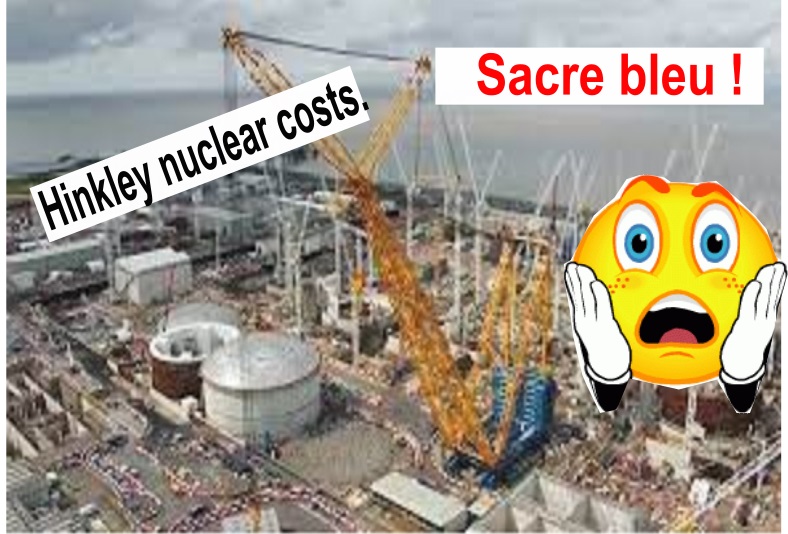
The rising cost — and a further delay to the completion date — will be seen as a blow to the UK’s energy security and an indictment of its infrastructure record. The cost of the Hinkley Point C nuclear power station has ballooned to nearly £50 billion and the date when it is expected to be in service has been put back again to 2030.
It does not
augur well either for a second major new nuclear power station, Sizewell C
in Suffolk, which is in the early stages of construction. The news was
revealed in statements in Paris on Friday by EDF, the state-owned French
energy company contracted to build Hinkley Point and Sizewell C.
The company estimated that the cost of Hinkley C was now £35 billion at 2015
prices. Adjusted for inflation, that translates to up to £49 billion. The
original projected cost was £15 billion. The plant is already years late,
as it was originally expected to go into commission in the mid-2020s.
Some argue that the date could yet be pushed back into the 2030s, leaving a
significant gap in UK energy policy after coal-fired power stations were
closed, leaving the country increasingly dependent on giant wind farms in
the North Sea. Consumer energy bills are at historically high levels.
Times 20th Feb 2026, https://www.thetimes.com/business/companies-markets/article/hinkley-point-c-nuclear-power-station-rise-nearly-50bn-gncq0j6rp
EDF has further pushed back the start-up of the UK’s flagship HinkleyPoint C nuclear plant.

EDF has further pushed back the start-up of the UK’s flagship Hinkley
Point C nuclear plant, taking a €1.8bn charge and pushing up the final
bill for a project that has suffered several delays and cost overruns.
The French state energy company said the first of the two reactors at the 3.2
gigawatt project in Somerset would now begin operating in 2030, blaming
delays in “electromechanical work”. That compares with a previous
“best case” target of 2029, itself a two-year delay from an earlier
timetable.
When the project was given the go-ahead in 2016, it was due to
come online in 2025. EDF said the plant was now expected to cost £35bn in
2015 prices — or almost £49bn at today’s prices — compared with a
previous range of £31bn-£34bn. The project was costed in 2016 at £18bn
in then-current prices. EDF warned that a further delay to 2031 would add
another £1bn.
FT 20th Feb 2026, https://www.ft.com/content/3a1ccd4b-1faf-40e9-a53a-f7961cf16d62
Ministry of Defence’s nuclear clean-up project brings new risks.
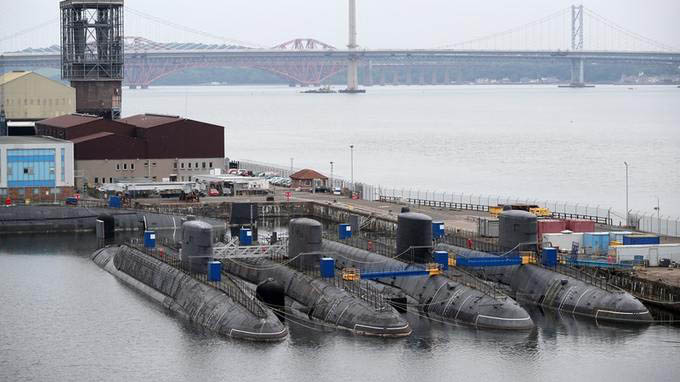
21st February, By Lynn Jamieson, chair, Scottish Campaign Nuclear Disarmament:
ROSYTH dockyard leads in the clean-up of retired nuclear
submarines as part of the Submarine Dismantling Project (SDP). Addressing a
legacy mess affords opportunities for building a skilled workforce.
But please, no more mess. Rosyth may become more deadly if operational
nuclear-armed submarines station there. As a contingency docking station
for the nuclear-weapon system now under construction, radioactive risks
will increase from nuclear reactors and weapons. T
he Ministry of Defence
(MoD) has not ruled out nuclear bombs being onboard a temporarily docked
submarine at Rosyth. In 40 years, newly built reactors become a long-term
legacy of nuclear waste, sitting in another generation of retired
submarines to be decommissioned at enormous cost.
Since the 1980s,
intermediate-level radioactive waste in the form of retired nuclear-powered
submarines – currently seven in total – sit at Rosyth, a hazard costing
money every day. Fifteen more sit in Devonport Royal Dockyard, Plymouth. Of
the 15 vessels at Devonport, 10 retain the highly radioactive fuel rods
that once powered them.
The National 21st Feb 2026,
https://www.thenational.scot/politics/25874840.mods-nuclear-clean-up-project-brings-new-risks/
Why can’t people grasp that there’s much more to renewables than wind?
L McGregor, Falkirk. https://www.heraldscotland.com/opinion/25860226.cant-people-grasp-much-renewables-wind/
Why do Malcolm Parkin (Letters, February 12) and many others keep going on about the need for small nuclear reactors because the wind does not blow all the time, as if there were no other highly successful ways to produce energy
Have they never heard of the numerous other means of production? What about pumped storage? Nearly 50 years ago, I visited the Cruachan pumped storage site and learned how that could, when demand is high, release the water to produce electricity to fill any shortfall, and pump it back up to store for the next use. There are already places in Scotland where small, local, pumped storage systems are in operation and numerous larger ones are in construction, or operational, such as Foyers on Loch Ness. These systems could power millions of homes, wind or no wind.
Mr Parkin and others seem unaware that there are wave-powered and tidal systems already operating in Scotland and being further developed, for example around Orkney and the Pentland Firth. These have the advantage that there are two tides a day and constant waves all round our coasts, which would never stop providing energy. Such projects could have been much further advanced had Westminster not, years ago, withdrawn the funding for a major one of these schemes, thus retarding progress. Nevertheless, Scotland is a world leader in these technologies, providing 50% of the world’s such energy.
What need is there to consider any form of nuclear reactor? Whilst nuclear power produced may be clean, the building process and materials have an exorbitant cost, take years, and are highly carbon-producing. Storage of waste presents an insurmountable problem, with severe risks for centuries. Witness the ongoing occasional discovery of radioactive particles contaminating the beaches around Dounreay, years after the plant closed.
Small nuclear reactors are not yet fully developed, and our taxes are currently contributing to the “UK-wide” project, Hinckley Point reactor in South-east England, already 10 years late, nearly three times the original cost and still not completed. Moreover, we are now to share the cost of Sizewell C, of the same outdated design in the same area, final cost and operation date still unknown.
Meantime, Scottish renewables producers pay an exorbitant sum to connect to the Grid, whence 40% of their product goes to England, while our consumers pay the highest costs in Europe, and perhaps the world. Rather than moaning about wind energy and supporting nuclear, Mr Parkin and friends might ask why the Scottish Government does not receive payment for this export – an income which could help speed up our transition and make wind turbine eventually obsolete..
Ch4 doc shows Starmer’s ban on Palestine Action was done to protect the arms industry
10 February 2026,Jonathon Cook Blog
Channel 4’s documentary last night on Palestine Action’s proscription as a terrorist organisation was a game of two halves. The first half, which built the government’s case for proscription, was presumably the “balance” needed to avoid a pile-on by the rest of the establishment media. The second half then proceeded to tear down the government’s case brick by brick.
Here are the five main takeaways from the second half:
1. The film reminded us that the government’s proscription of Palestine Action as a terrorist organisation was done at the behest of Elbit Systems – the Israeli arms firm making killer drones for use in Gaza that Palestine Action was chiefly targeting.
Government officials regularly met with Elbit. A 2023 internal Home Office email, two years before proscription, states: “Reassure Elbit Systems UK and the wider sector affected by Palestine Action that the government cares about the harm the group is causing the private sector [arms industries].”
2. A senior Home Office official told the film-makers that there was a widespread belief among staff that the government was “wrong” to proscribe Palestine Action, and there was “disquiet” that the government was using Palestine Action as a way to curtail rights to protest and speech more generally.
3. Lord Hain, a former Labour government minister, explained that, when MPs and Lords were presented with an amendment to the Terrorism Act in 2020 under which Palestine Action has now been proscribed, the government had made explicit reassurances that criminal damage to property – Palestine Action’s modus operandi – would not qualify as terrorism.
He also reminded viewers that, had earlier governments adopted the same approach as Sir Keir Starmer’s government, the Suffragette and anti-apartheid movements would also have been declared terrorist organisations……………………………………………………………………………………………………………………………………………………………………………………………. https://www.jonathan-cook.net/blog/2026-02-10/ban-palestine-action-arms-industry/
Further charges on health and safety offences at a nuclear construction site
Following a pre-trial review hearing held today at Bristol Crown Court, a
trial date has been set in the prosecution of two companies charged with
health and safety offences at a nuclear construction site. Two further
charges were added to the indictment at today’s court hearing, bringing the
total of charges to four.
The organisations face a charge of failing to
plan, manage and monitor construction work without risks to health and
safety contravening Regulation 15(2) of the Construction (Design and
Management) Regulations 2015, and previously entered not guilty pleas at a
hearing held in December 2025. An additional charge that Laing O’Rourke
Delivery Limited and Bouygues Travaux Publics SAS both failed to conduct a
suitable and sufficient risk assessment of the risks to the health and
safety of their employees, under Regulation 3 (1) (a) of the Management of
Health and Safety At Work Regulations 1999, contravening Section 33(1)(c)
of the Act has now also been added. Both organisations have pleaded not
guilty to these charges.
ONR 17th Feb 2026, https://www.onr.org.uk/news/all-news/2026/02/new-charges-added-in-rebar-mesh-wall-incident-at-hinkley-point-c
.
British taxpayers bankroll French nuclear giant while Hinkley Point C quietly receives 500-tonne reactor heart.
The contrast couldn’t be starker: French taxpayers owning British energy infrastructure, while British taxpayers guarantee the profits.
For a typical family using 3,000 kWh annually, the Hinkley surcharge could add £15-25 yearly to bills once the plant is operational. That might sound modest, but it’s on top of already record-high energy costs and other energy levies.
Olivia Hunt February 15, 2026, https://secom.es/hinkley-point-c-receives-500-tonne-reactor-heart-british-taxpayers-bankroll/
Sarah Mitchell stared at her energy bill in disbelief. £340 for the month. Again. The single mother from Bristol had already switched off the heating in two bedrooms and started cooking with just one burner. Yet somewhere across the Channel, a massive steel cylinder was being loaded onto a ship, destined for her county of Somerset. That 500-tonne nuclear reactor vessel would eventually power her home—and she was helping to pay for it, twice over.
It’s a story playing out across Britain right now. While families ration their heating and businesses close early to save on electricity, a French-built nuclear giant is making its way to British shores. The destination is Hinkley Point C, the controversial power station that’s become a symbol of everything complicated about Britain’s energy choices.
The scene in Cherbourg was deliberately low-key. No cameras, no politicians cutting ribbons. Just dockworkers watching as France’s most sophisticated nuclear technology rolled toward a waiting vessel, bound for a country that’s paying through the nose for foreign expertise.
Hinkley Point C represents the biggest bet Britain has made on its energy future in decades. When the deal was struck in 2016, it looked like smart planning. Today, with energy prices through the roof and household budgets stretched thin, it feels more like an expensive gamble with other people’s money.
The reactor pressure vessel now crossing the English Channel is the beating heart of what will become Britain’s newest nuclear power station. Built by Framatome, France’s state-owned nuclear champion, this steel colossus will sit at the center of two European Pressurised Reactors (EPR) designed to generate enough electricity for six million homes.
“This vessel represents the pinnacle of nuclear engineering,” explains Dr. James Crawford, a nuclear physicist at Imperial College London. “But the question isn’t whether it’s impressive technology—it’s whether British taxpayers should be funding French state enterprises while struggling with their own energy costs.”
The numbers behind Hinkley Point C make for uncomfortable reading. The project has ballooned from an initial estimate of £18 billion to potentially over £35 billion. Meanwhile, British households are locked into paying a guaranteed “strike price” of £92.50 per megawatt-hour for the electricity it produces, inflation-adjusted over 35 years.Follow the Money: Who Pays and Who Profits
The financial structure of Hinkley Point C reads like a masterclass in how to transfer risk from private companies to ordinary citizens. Here’s how the money flows:
| Who Builds | Who Owns | Who Pays | Who Guarantees |
| EDF (French state-owned) | EDF (66.5%) + CGN (Chinese, 33.5%) | British bill payers | British government |
| Framatome (French) | Foreign shareholders | British taxpayers | British taxpayers |
The strike price mechanism means British energy users will pay a premium for Hinkley’s electricity regardless of market conditions. If wholesale prices fall, we top up the difference. If they rise above £92.50 per MWh, EDF keeps the extra profit up to a point—but taxpayers still carry the underlying risk.
Key financial commitments include:
- £92.50 per MWh guaranteed electricity price (2012 prices, now worth over £110 with inflation)
- 35-year contract duration with built-in price increases
- Government loan guarantees reducing EDF’s borrowing costs
- Planning and regulatory costs covered by British authorities
- Decommissioning fund contributions from British sources
“It’s the most expensive electricity deal in Europe,” notes energy economist Professor Michael Roberts from Oxford University. “We’re essentially giving EDF a 35-year annuity underwritten by British households, while they retain ownership of a strategic asset.”
Real Homes, Real Bills, Real Consequences
While the nuclear reactor makes its journey from France, the human cost of Britain’s energy choices plays out in living rooms across the country. The Hinkley Point C contract means every household will contribute to EDF’s guaranteed profits through their electricity bills for the next three and a half decades.
For a typical family using 3,000 kWh annually, the Hinkley surcharge could add £15-25 yearly to bills once the plant is operational. That might sound modest, but it’s on top of already record-high energy costs and other renewable energy levies.
The timing feels particularly brutal. As the French-built reactor vessel crosses the Channel, British families are making impossible choices between heating and eating. Food banks report unprecedented demand, partly driven by people choosing groceries over gas bills.
“My constituents are furious,” says MP Caroline Davies, whose constituency includes several towns near Hinkley Point C. “They see foreign companies profiting from guaranteed contracts while they’re choosing between turning on the heating or buying school uniforms for their kids.”
The broader economic impact extends beyond household bills:
- Small businesses closing early to avoid peak-rate electricity charges
- Manufacturers relocating to countries with cheaper, more predictable energy costs
- Public services cutting back on heating and lighting in schools and hospitals
- Pensioners rationing heating despite rising winter fuel allowances
Meanwhile, EDF’s shareholders—ultimately the French state—benefit from one of the most generous infrastructure deals in recent British history. The contrast couldn’t be starker: French taxpayers owning British energy infrastructure, while British taxpayers guarantee the profits.
The situation raises fundamental questions about energy sovereignty and democratic accountability. When foreign state-owned companies control critical infrastructure that British citizens are compelled to fund, traditional notions of national ownership become meaningless,
Energy analysts warn this model could extend to other major projects. If Hinkley Point C proves profitable for foreign investors at British expense, similar deals for future nuclear plants, offshore wind farms, and other infrastructure become more likely.
As that 500-tonne reactor vessel approaches British waters, it carries more than just sophisticated nuclear technology. It represents a profound shift in how Britain powers itself—and who controls the switch.
Major leak at Highland nuclear site triggers hunt for mystery bunkers

A 1960s bunker at a Highland nuclear site quietly leaked radioactive water
for at least a year before the alarm was raised – and officials have now
ordered a hunt for other similar hidden structures that may be leaking too,
the Sunday National can reveal.
Dounreay, on the Caithness coast, was the
UK’s centre for experimental fast‑reactor research from the 1950s until
the 1990s and is now a major nuclear decommissioning site. The clean‑up
is funded by the UK Government’s Nuclear Decommissioning Authority and
carried out locally by Nuclear Restoration Services (NRS), which runs the
site and is responsible for managing its ageing reactors, waste pits and
other legacy facilities.
The National revealed last year that radioactive
material had been accidentally released at Dounreay between July 2023 and
August 2024 and that Scotland’s environmental watchdog, SEPA, found the
operator had breached its permit.
But now, a new internal investigation
report, released to the Sunday National under freedom of information, goes
further: it warns that other underground structures with “unrevealed
hazards” may still be waiting to be found. The original leak source was a
disused underground carbon bed filter – essentially a concrete bunker –
built in the early 1960s as part of a ventilation system for one of
Dounreay’s facilities. It was taken out of normal use decades ago and
left as a legacy structure to be dealt with during decommissioning.
The report notes that it “was never designed to retain water”, yet by 2017,
it was known to contain thousands of litres of radioactive liquor and had
already been identified as a possible source of contamination at one of the
site’s outfalls.
A spokesperson for the Scottish Environment Protection
Agency (SEPA) said: “In June 2024, Nuclear Restoration Services Ltd (NRS)
notified SEPA of a potential leak of radioactively contaminated water from
a carbon bed filter on the Dounreay site. It was subsequently established
that there was a small leak from the carbon bed filter. Monitoring by the
operator has not detected any increase in radioactivity in groundwater
downstream.
“SEPA’s investigation concluded that the operator had
breached conditions of its Environmental Authorisations (Scotland)
Regulations 2018 (EASR) authorisation. To secure compliance, we have issued
a Regulatory Notice requiring NRS to take specified steps, including
reviewing groundwater monitoring arrangements and undertaking
characterisation to establish the extent of contamination which has arisen
from the leak from the carbon bed filter.”
The National 15th Feb 2026, https://www.thenational.scot/news/25854472.major-leak-highland-nuclear-site-triggers-hunt-mystery-bunkers/
1 This Month

of the week – Shut Down Drone Warfare!


Tell the Ukrainian Government to Drop Prosecution of Peace Activist Yurii Sheliazhenko

Petition to revoke the licensing of the Near Surface Nuclear Disposal Facility (NSDF) at Chalk River. https://www.ourcommons.ca/petitions/en/Petition/Details?Petition=e-7247
To see nuclear-related stories in greater depth and intensity – go to https://nuclearinformation.wordpress.com
-
Archives
- March 2026 (251)
- February 2026 (268)
- January 2026 (308)
- December 2025 (358)
- November 2025 (359)
- October 2025 (376)
- September 2025 (257)
- August 2025 (319)
- July 2025 (230)
- June 2025 (348)
- May 2025 (261)
- April 2025 (305)
-
Categories
- 1
- 1 NUCLEAR ISSUES
- business and costs
- climate change
- culture and arts
- ENERGY
- environment
- health
- history
- indigenous issues
- Legal
- marketing of nuclear
- media
- opposition to nuclear
- PERSONAL STORIES
- politics
- politics international
- Religion and ethics
- safety
- secrets,lies and civil liberties
- spinbuster
- technology
- Uranium
- wastes
- weapons and war
- Women
- 2 WORLD
- ACTION
- AFRICA
- Atrocities
- AUSTRALIA
- Christina's notes
- Christina's themes
- culture and arts
- Events
- Fuk 2022
- Fuk 2023
- Fukushima 2017
- Fukushima 2018
- fukushima 2019
- Fukushima 2020
- Fukushima 2021
- general
- global warming
- Humour (God we need it)
- Nuclear
- RARE EARTHS
- Reference
- resources – print
- Resources -audiovicual
- Weekly Newsletter
- World
- World Nuclear
- YouTube
-
RSS
Entries RSS
Comments RSS
 nuclear-news