UK could save 84 billion pounds by scrapping Trident nuclear missiles
 Scrapping Trident nuclear missiles ‘would save £83.5bn‘ Savings could be spread over years until 2062 and jobs created on other defence projects, study finds Richard Norton-Taylor guardian.co.uk, 21 March 2012 Scrapping the Trident nuclear missile system would save £83.5bn and many of the jobs at risk could be transferred to alternative defence projects, according to an authoritative study published on Wednesday.
An average annual saving of £1.86bn would be made until 2062, it says. The study, commissioned by senior figures from all three main parties, points out that the savings would not be available immediately because cancellation and decommissioning costs would have to be taken into account….
New evidence raises questions about the murder of anti nuclear campaigner
A high-profile campaigner against nuclear weapons, she had been due to present evidence to the public inquiry into the proposed Sizewell B nuclear reactor in East Anglia.
“The victim was consumed with anxiety that something was going to happen to her. A look at why that might be involves the evidence she was about to give to the Sizewell inquiry.”

 Hilda Murrell murder: call to examine ‘MI5 link’ to murder of nuclear activist Michael Mansfield QC wants to know what intelligence services knew about killing of anti-nuclear activist Hilda Murrell in 1984 Mark Townsend, Guardian UK, The Observer , 18 March 2012 Campaigner Hilda Murrell, 78, who was murdered in March 1984, had been due to give evidence at the public inquiry into the Sizewell B nuclear reactor.
One of Britain’s leading human rights lawyers has demanded a fresh police inquiry to establish what the British intelligence services knew about the murder of a prominent anti-nuclear campaigner. Continue reading
In UK, 102 business leaders urge government to back renewable energy
 Sir Branson and fellow entrepreneurs ask Cameron to back renewables http://www.eaem.co.uk/news/sir-branson-and-fellow-entrepreneurs-ask-cameron-back-renewables Energy and Envronment Magazine 16 March 2012
Sir Richard Branson is one of 102 top business signatories of an open letter to David Cameron urging him to back wind and other renewable forms of power generation.
“March’s budget provides one of the biggest opportunities to tackle climate change in the UK,” the Virgin tycoon says. “We must ensure it encourages investment rather than creates uncertainty and delays further serious investment in the renewable sector. As a country we need to be better prepared to deal with rising energy prices.”
The so-called ‘102 letter’ is conceived partly as a response to the actions of 101 backbenchers who last month wrote to the Prime Minister attacking wind power, and a call to the Treasury to re-establish a stable investment platform for renewable energy as a driver of the recovery out of the recession.
It is published on the website of the Entrepreneurs’ Organisation (EO), the global network of more than 7,500 business owners in 38 countries.
“Cutting support for green energy is a false economy,” comments Dale Vince, Founder and CEO of Ecotricity, one of Britain’s most successful new energy companies trying to muscle in on the territory controlled by the Big Six.
His angle is energy security. “Britain needs to become energy independent once more, and with the North Sea all but depleted of fossil fuels we need to look to other forms of indigenous energy. We have them in abundance, in the wind the sun and the sea, enough to power our country many times over.
“While Britain remains dependent on global energy markets, our bills can only go one way: upwards.”
His analysis is that the level of current support for green energy sources is relatively small in comparison to that for oil and gas.
In the last 12 months roughly £30 of our household energy bills has been spent on green energy support. Of this, the Renewables Obligation (RO) added just £15.15 to the annual energy bill of the United Kingdom’s 26.3 million households, with onshore wind power adding only £4.68, according to Ofgem’s recently published RO annual report for 2010/11and Ecotricity’s analysis.
The RO is the main support mechanism for encouraging the growth of renewable energy in the UK.
Meanwhile, the rising cost of imported gas added around £120 to energy bills last year, according to Ofgem’s Electricity and Gas Supply Market Report.
“We need to reverse those proportions; it’s an incredible false economy to throw money at energy market speculators while penny pinching over the one thing we can do to solve the problem long term: make our own energy,” concludes Mr Vince.
The letter says that “as entrepreneurs, investors, economists, scientists, engineers, energy providers, community builders and Members of Parliaments, we are increasingly concerned about the lack of clarity around the future of government support for land-based renewables, such as solar, wind and biogas.”

Letter to UK Prime Minister David Cameron on renewable energy
Richard Branson letter to David Cameron on renewable energy http://www.guardian.co.uk/environment/2012/mar/16/renewableenergy-energy
The letter in full from Dale Vince, Juliet Davenport and Caroline Lucas and other signatories backing green power, in response toa recent letter in which 101 Conservative backbenchers rubbished wind power
Dear David Cameron,
As entrepreneurs, investors, economists, scientists, engineers, energyproviders, community builders and Members of Parliament, we are increasingly concerned about the lack of clarity around the future of government support for land based renewables, such as solar, wind and biogas. Continue reading
Britain’s nuclear power industry has always failed, and will continue to fail
The nuclear industry’s history is one of broken promises. Mrs Thatcher pledged 10 new nuclear plants in 1979 – one reactor eventually sent electricity to the grid in 1995.
Britain’s existing fleet of Advanced Gas-cooled Reactors was described by the then Chairman of the Central Electricity Generating Board as the worst civil engineering disaster in our history.
The proto-type fast reactor at Dounreay is now being expensively dismantled, having never worked properly. Nor has the THORP reprocessing plant at Sellafield
 Nuclear power will fail to achieve what George Monbiot wants, Guardian UK 16 Mar 12, Nuclear industry’s broken promises show atomic energy will not help climate efforts, say former directors of Friends of the Earth Deciding on how best to meet the country’s energy needs is difficult. There are no absolutely right answers. But one issue guaranteed to excite personal passions rather than brain cells is nuclear power.
Some solutions are more convincing than others. The best make the most economic, environmental and social sense, based on facts rather than fervent beliefs.
As four former Directors of Friends of the Earth, we wrote to the Prime Minster this week setting out eight major economic and political problems facing a new build nuclear programme in the UK. We have engaged in the nuclear debate for forty years. On the basis of our experience and the evidence, we concluded that the government’s policy will fail…. Continue reading
Former UK Prime Minister Brown wants full cleanup of radioactivity on Scotland’s coast
 Bay radiation clean-up plan agreed Google News, (UKPA) – 17 March 12, A plan has been agreed to deal with radioactive particles found on an area of Scottish coastline. The Scottish Environment Protection Agency (Sepa) and the Defence Infrastructure Organisation (DIO) have agreed a plan to treat Dalgety Bay in Fife. “Significant” sources of radiation were discovered at the bay on the Firth of Forth coast earlier this year.
The contamination is thought to stem from residue of radium-coated instrument panels used on military aircraft which were incinerated and land-filled in the area at the end of the Second World War….
. Former prime minister Gordon Brown, who has campaigned for the bay to be cleaned up, welcomed the statement but said a timetable of action should be drawn up. Mr Brown said: “I and the community council are clear that we need a full statement of the discovery of radiation particles in the area and we need not only a plan for continuous monitoring but a plan for the removal of radioactive particles and either a sea wall or other remedial work to prevent particles causing safety fears again.
“When I meet the Secretary of State for Defence next Monday on 26th March I will be asking for a timetable for a clean-up plan for the area that can be implemented as soon as possible. This, and this alone, can lift the threat of a designation order that would label
Dalgety Bay a radiation contaminated area. None of us want this to happen and it is up to the Ministry of Defence to take action to prevent this misfortune.” http://www.google.com/hostednews/ukpress/article/ALeqM5hvuc1afMQN0gtJUmg2Ng3wNH02TA?docId=N1157191331927522285A
French company EDF gives up on new nuclear power station in Lancashire
 Third nuclear power station at Heysham plans on ice, BBC News, Lancashire, 14 March 12, Plans for a third nuclear power station at Heysham in Lancashire have been put on ice.
French company EDF Energy has cancelled an agreement with the National Grid to set up any new connection to the grid from Heysham. The site was one of eight earmarked two years ago for a new generation of nuclear power stations.
EDF Energy said all its plans for new stations will be focused on their sites at Sizewell and Hinkley Point…. http://www.bbc.co.uk/news/uk-england-lancashire-17374496
With nuclear power plans, France gets control of UK energy policy
UK nuclear plans ‘put energy in French hands’, BBC News, 13 March 12, By Richard Black, BBC News Government plans for nuclear power risk handing control of the UK’s climate and energy policies to France, according to four senior environmentalists,
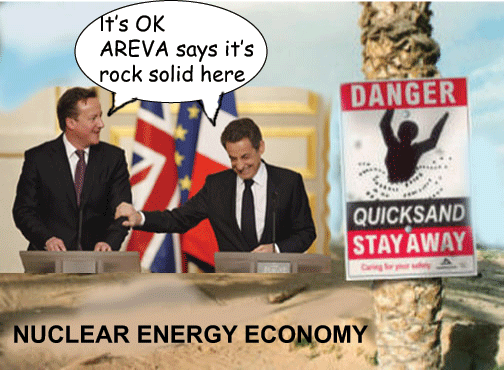
Energy giant EDF and reactor builder Areva, big players in the UK’s plans, are largely French government-owned. Continue reading
Big turnout of protestors blockading UK’s Hinkley nuclear site
 Activists blockade nuclear plant, Google News, (UKPA) 12 Mar 12, Anti-nuclear protesters have completed a 24-hour blockade of the entrance to Hinkley Point nuclear power station, marking the first anniversary of the disaster at the Fukushima power station in Japan. The Stop New Nuclear alliance hailed the rally as the “largest anti-nuclear protest in three decades” with up to 1,000 demonstrators surrounding the site on Saturday.
Protesters were also demonstrating over plans to build the first new nuclear reactors in Britain on the site. A number of protesters stayed overnight with over 100 people blocking the main entrance, stopping all traffic from entering or leaving the site, which is about 10 miles from Bridgwater, in Somerset…..
Hinkley Point is seen by protesters as the new “front line” in the fight against the use of nuclear power. Nancy Birch, spokeswoman for the alliance said: “We’ve successfully concluded the first ever 24-hour blockade of a UK nuclear power station.
“This is a major victory for the anti-nuclear movement and a sign that the tide is turning against the government’s nuclear renaissance. “A mini tent city emerged as over 100 people remained outside the main gate at Hinkley overnight – camping on the tarmac in makeshift tents.”
The blockade formally ended when Japanese Buddhist monks performed a prayer for the victims of the tsunami that precipitated the Fukushima disaster. http://www.google.com/hostednews/ukpress/article/ALeqM5jjnCvxI8QTlU3mTeTo-q0bR3PaFw?docId=N1027381331401975467A
Increasing risk to nuclear sites, of sea level rise and tsunamis
Nuclear sites, sea-level rise and tsunamis, guardian.co.uk, Dr Paul Dorfman Co-ordinator, Nuclear Consulting Group 11 March 2012 It seems clear that nuclear facilities will be vulnerable to the effects of global warming (Nuclear power sites face flood and erosion risks, 8 March). As the Institution of Mechanical Engineers stated in a 2009 report: “Nuclear sites, such as Sizewell, based on the coastline, may need considerable investment to protect them against rising sea levels, or even abandonment/relocation in the long term.”
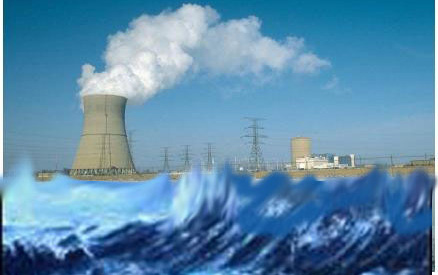
So, given that proposed new UK reactors, together with their radioactive waste stores including spent fuel, will be located on coasts – predicted sea-level rise, shoreline erosion, coastal storms, floods, tidal surges and the evolution of “nuclear islands” stand out as primary concerns. This means that adapting nuclear power to climate change will entail increased expense for construction, operation, waste storage and decommissioning, and the incurring of significant costs to the environment, public health and welfare.
Robert Griffiths: Although the risk of floods to nuclear power stations must not be ignored, a much more dangerous threat is that of a tsunami. Oldbury, Berkeley and Hinkley Point are all in the area of England’s only known tsunami. This is reported to have occurred on 20 January in 1607. Plaques on local churches indicate the depth of the water may have been 7 to 8 metres, and it is said to have reached Glastonbury Tor, some 22km inland. Flood and erosion problems can be solved by building sea walls around the plants as we approach 2080. Why is no one worried about an unexpected tsunami on top of rising sea levels?
http://www.guardian.co.uk/environment/2012/mar/11/nuclear-sites-sea-rise-tsunamis?newsfeed=true
Fukushima radiation in Ireland shows the global reach of nuclear pollution
Fukushima radiation measured in Ireland, The Irish Times – , March 9, 2012 DICK AHLSTROM, Science Editor RADIOACTIVITY FROM the Fukushima nuclear reactor accident in Japan reached Ireland in the weeks after the event. It arrived at such low levels, however, that it had no significance for either public health or food safety, according to a report on the incident from the Radiological Protection Institute of Ireland. “The levels that we have detected were very low,” Dr Ciara McMahon, the institute’s director of environmental surveillance and assessment, said yesterday….
“Fukushima couldn’t be much further away from Ireland, but we still must be able to monitor for accidents. We have to be ready to respond.”
The incident, triggered by the impact of an earthquake and tsunami, showed the need for nuclear authorities worldwide to re-evaluate their safety procedures, said the institute’s chief executive, Dr Ann McGarry.
 There was “no room for complacency within the international nuclear industry”. “A nuclear accident anywhere has potential to be a nuclear accident everywhere.” The radioactive particles that reached Ireland were similar to those arriving as nuclear fallout here after the Chernobyl nuclear power plant disaster in 1986, according to data from the institute. The
monitoring stations detected radioactive Iodine-131 and two forms of radioactive Caesium, Cs-137 and Cs-134. http://www.irishtimes.com/newspaper/ireland/2012/0309/1224313062967.html
UK’s Trident nuclear submarines – completely useless as deterrent
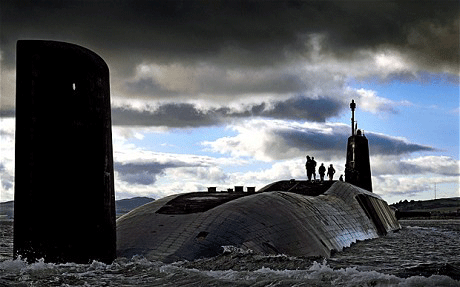 Trident is a colossal waste of money that will encourage further nuclear proliferation The Independent , By James Bloodworth, 9 March 2012 “……. Trident was excluded from the government’s Strategic Defence and Security Review in October 2010; and despite murmurings from some Liberal Democrats (aren’t there always murmurings from Liberal Democrats?), the coalition seems intent on spending £20 billion-plus renewing a weapons system which, if ever deployed, would result in the deaths of thousands, if not millions of human beings.
Twenty billion is just a figure of course. To put it into some kind of perspective, George Osborne’s first budget planned for cuts of six billion pounds; and public sector workers currently face a three per cent rise in their pension contributions to save the state just under two billion. A modern hospital costs in the region of £90 million (which, as it happens, would save thousands of lives a year, rather than stand-by ready to exterminate them), and a state-of-the-art environmentally friendly school costs between five and £10 million. To give free school dinners to every primary school child in the country would cost a further one billion pounds.
All of the above, as you might have noticed, are a pittance compared to the gigantic sum set aside for the renewal of Trident. In order to justify a spend three times that of George Osborne’s first year of budget cuts, you would at least expect Trident to have a substantial argument behind it. It doesn’t.
Trident categorically fails on its own terms, for there is very little to suggest it would “deter” anybody much from anything. As far as traditional warfare goes, Britain was a nuclear power when Egypt nationalised the Suez Canal and General Galtieri invaded the Falklands, and the possession of a nuclear arsenal did little to dissuade either party from their course of action – for the obvious reason that we could never morally justify using such a weapon; nor do so without first attaining the authorisation of the United States.
As for the contemporary security threat, back in 2009 a letter sent to The Times signed by a group of senior military officers – figures not known for their pacifist tendencies – said the following: “Nuclear weapons have shown themselves to be completely useless as a deterrent to the threats and scale of violence we currently face or are likely to face, particularly international terrorism.”
In reality, having nuclear weapons is likely to encourage other states to pursue their own nuclear capabilities….. http://blogs.independent.co.uk/2012/03/09/trident-is-a-colossal-waste-of-money-that-will-encourage-further-nuclear-proliferation/
UK and the world under threat of radioactive ‘dirty bomb’
WHAT IS A DIRTY BOMB?
A dirty bomb combines normal explosives (such as dynamite or Semtex)and radioactive materials.
The bomb blast rapidly spreads the radioactive particles, creating a
major contamination hazard.
The blast itself is as forceful as any other type of high-explosive
device but would boost radiation levels in the detonation area,
causing long-term damage. It could increase the risk of cancer and
kill people several years in the future.
Nuclear-armed terrorists are a real threat to Britain, Deputy Prime Minister Nick Clegg will warn
Police ‘unable to contain’ nuclear threat
Spectre of nuclear attack ‘impossible to ignore’
Countries must ‘work together’ to prevent destruction
Maol Online, By MATT BLAKE, 7th March 2012 Stateless terrorists are closer to unleashing a nuclear attack on Britain than ever before, Nick Clegg will warn today.
The Deputy Prime Minister will say materials and internet instructions on how to make a ‘dirty bomb’ have become so readily available in recent years that police forces are unable to contain such a threat.
Al Qaeda are already known to be actively trying to amass nuclear material and recruit rogue scientists to build a radioactive ‘dirty bomb’ while diplomatic temperatures between Iran and the West are at boiling point.
Mr Clegg will issue a plea for more co-operation between countries to fight the spectre of terrorism, crime and economic collapse Continue reading
Should UK scrap its probably useless Trident nuclear missiles?
UK’s nuclear weapons in the frame, Guardian UK Richard Norton Taylor and Nick Hopkins, 6 Mar 12, LibDems question future of Trident Debate building up in coalition over deterrent Pressure on defence budget remains There are signs, like green shoots heralding spring, that the last taboo of British politics is breaking.
Liberal Democrats are finally gearing themselves up seriously to question the Conservative attachment to Britain’s Trident nuclear weapons system and commitment to replace it with a “like for like” fleet of ballistic missile submarines.
Trident – the ultimate strategic weapon – was excluded from the coalition government’s “strategic defence and security review” last autumn.
And judging from the “shadow defence review” consultation paper, just launched, there is no difference at all between Labour and Conservatives on the matter…..
Now, the thinktank CentreForum – independent but linked to the LibDems – says the plans to build a new Trident system are “nonsensical” and should be scrapped. As my colleague, Nick Hopkins, notes, the 60-page study, Dropping the Bomb: A Post-Trident Future, is believed to reflect the views of many senior Lib Dems who are trying to force a debate on whether the UK still needs a nuclear deterrent.
The report says the government is sleepwalking into taking a costly and illogical decision at a time the army, navy, and air force are being squeezed by budget cuts. The cost of a new fleet of Trident submarines alone is officially estimated at £25bn. Interestingly, the report’s author, Toby Fenwick, is a former Treasury official. BAE Systems, manufacturer of the Trident subs, is listed on CentreForum’s website, as one of the thinktank’s “corporate partners”.
In his memoirs, A Journey, Tony Blair described Trident’s expense as “huge” and its military use as a weapon “non-existent”…. http://www.guardian.co.uk/news/defence-and-security-blog/2012/mar/06/uk-nuclear-trident?newsfeed=true
Scotland’s renewable energy will mean cheaper electricity by 2020
 Renewable energy cheaper, Scotland says, Outcome, March 5, 2012, EDINBURGH, Scotland, March 5 (UPI) — Energy bills for consumers in Scotland could be as much 7 percent higher if the government didn’t pursue its renewable energy strategy, a minister said.
Scotland has some of the most ambitious renewable energy targets in Europe. The government aims to meet 100 percent of the electricity demand through renewable energy resources by 2020.
A report from the Scottish government concludes that consumers would pay around $2,035 per year for energy bills by 2020 under the low-carbon policies. If the government pursues a “business as usual” model, bills would be around $2,182 per year.
Scottish Energy Minister Fergus Ewing said there are some doubts as to whether the government can meet its renewable energy targets but they are achievable. “We know there is doubt and skepticism about our 100 percent renewables target and the financial and engineering challenges required to meet it,” he said in a statement.
“But we will meet these challenges. I want to debate, engage and cooperate with every knowledgeable, interested and concerned party to ensure we achieve our goals.” Ewing added renewable energy targets would be met without the need for new nuclear power stations. http://outcomemag.com/science/2012/03/05/renewable-energy-cheaper-scotland-says/
1 This Month



Read the Public Inquiry Report, the Commissioners’ report, Surrendering Australia: The AUKUS Deception is available to download for free at aukuspublicinquiry.com. Or just watch the replay of the National Press Club Luncheon.

19 November – Webinar – The Reality of Reprocessing
Time: 11:00 AM Pacific Time (US & Canada) / 2:00 PM Eastern / 7:00 PM UK / 8:00 PM CET
Register for the Zoom Event Here


Shut down the radiation-damaged Heysham nuclear reactors now
To see nuclear-related stories in greater depth and intensity – go to https://nuclearinformation.wordpress.com

Say No to NASA’s Reckless Nuclear Reactor on the Moon
Say No to NASA’s Reckless Nuclear Reactor on the Moon
-
Archives
- November 2026 (128)
- October 2026 (302)
- September 2026 (339)
- August 2026 (330)
- July 2026 (355)
- June 2026 (287)
- May 2026 (306)
- April 2026 (356)
- March 2026 (251)
- February 2026 (267)
- January 2026 (308)
- December 2025 (358)
-
Categories
- 1
- 1 NUCLEAR ISSUES
- business and costs
- climate change
- culture and arts
- ENERGY
- environment
- health
- history
- indigenous issues
- Legal
- marketing of nuclear
- media
- opposition to nuclear
- PERSONAL STORIES
- politics
- politics international
- Religion and ethics
- safety
- secrets,lies and civil liberties
- spinbuster
- technology
- Uranium
- wastes
- weapons and war
- Women
- 2 WORLD
- ACTION
- AFRICA
- Atrocities
- AUSTRALIA
- Christina's notes
- Christina's themes
- culture and arts
- Events
- Fuk 2022
- Fuk 2023
- Fukushima 2017
- Fukushima 2018
- fukushima 2019
- Fukushima 2020
- Fukushima 2021
- general
- global warming
- Humour (God we need it)
- Nuclear
- RARE EARTHS
- Reference
- resources – print
- Resources -audiovicual
- Weekly Newsletter
- World
- World Nuclear
- YouTube
-
RSS
Entries RSS
Comments RSS

