Britain’s Labour Party snubs atomic test veterans
Labour ‘snub’ for A-bomb veterans The Shields Gazette, 13 June 13 A NUCLEAR test veteran from South Tyneside is “very disappointed” at the response of Labour Party leader Ed Miliband to a call for support. John Taylor wrote to Mr Miliband, on behalf of himself and the 1,000 ex-servicemen, demanding justice after being exposed to radiation during British nuclear weapon tests in the Pacific in the 1950s.
Mr Taylor, 76, of Carnegie Close, South Shields, had a chance meeting with the Labour leader, while he was supporting Emma Lewell-Buck during her successful by-election battle in the town. But although Mr Miliband asked Mr Taylor to write to him about the campaign, the atom bomb veteran was “unhappy” with the Labour leader’s response.
Mr Taylor said: “Basically, everything in the letter was stuff we already knew. There was no pledge to back our campaign. “There is nothing in Ed Miliband’s letter that suggested he was going to support us. I was very disappointed, because I thought Mr Miliband could have taken up our fight in Westminster.
“I think the veterans’ solicitors will be disappointed with his response too. “His letter really suggested that we would have to fight our cases individually, rather than as a concerted campaign.”
Wearing little or no protective clothing, Mr Taylor witnessed three nuclear explosions between July and September 1957, as part of Operation Antler, while serving as a leading aircraftman with the RAF in Maralinga, Australia.
All the vets claim the nuclear tests caused medical problems for themselves and their families……..
Although the veterans saw their case rejected by the Supreme Court in London last year, Mr Taylor and fellow campaigners hope for a more positive hearing later this year at the European Court of Human Rights in Strasbourg, France.http://www.shieldsgazette.com/news/crime/labour-snub-for-a-bomb-veterans-1-5761740
UK emergency services not up to dealing with a nuclear transport radiation accident
Nuclear convoy disaster exercise reveals weaknesses in emergency response Rob Edwards The Guardian, 13 June 2013 Internal report highlights five-hour wait for weapons experts and confusion over radiation monitoring. An emergency exercise has exposed serious weaknesses in Britain’s ability to cope with a catastrophic motorway pileup in which a nuclear bomb convoy burns and spreads a cloud of radioactive contamination over nearby communities.
An internal report released by the Ministry of Defence reveals that the emergency services faced “major difficulties” in responding to the mocked-up accident near Glasgow because they had no help from MoD weapons experts for more than five hours.
At times the response, which involved 21 agencies, was disorganised, the report says. Heated disputes with ambulance staff over how to handle casualties contaminated with radioactivity at the crash site caused “considerable delay”, resulting in one victim being declared dead.
Other problems included outdated, paper-based communications systems, poor mobile phone signals, conflicting scientific advice on health hazards and confusion over radiation monitoring.
Nuclear weapons are transported in heavily guarded road convoys up to six times a year between bomb factories at Aldermaston and Burghfield in Berkshire and the Royal Naval Armaments Depot at Coulport on Loch Long in Argyll. The trips are needed to ensure that Britain’s stockpile of about 200 Trident missile warheads is properly maintained…. http://www.guardian.co.uk/world/2013/jun/12/nuclear-convoy-disaster-exercise-emergenc
Biggest pile of plutonium in the world: Britain’s nightmare
 Britain has accumulated the biggest stockpile of civil
plutonium in the world, a target for terrorists and future bomb-makers. What was once thought to be a valued asset is now a costly liability. The Government faces a dilemma. Should it try to
turn the stuff into nuclear fuel at huge cost or write off the plutonium altogether? Previous attempts to deal with the problem went disastrously wrong, costing the taxpayer more than a billion pounds. Tonight File on 4 investigates what’s been called one of the most embarrassing failures in British industrial history. And now MP’s are worried taxpayers could be asked to pay up again. Continue reading
Britain’s quite horrible problem of stockpiled plutonium
UK’s plutonium stockpile dilemma http://www.bbc.co.uk/news/uk-21505271 By Rob Broom byFile on 4 June 2013, Britain has accumulated the biggest stockpile of civil plutonium in the world. What was once a valued asset is now viewed as a costly liability and a target for terrorists.
Previous attempts to deal with the stockpile have gone wrong and the government now faces a dilemma. Should it try to turn the stuff into nuclear fuel or write off the plutonium altogether?
Amid tight security at the Sellafield nuclear plant in Cumbria, is a store holding most of Britain’s stockpile of plutonium. Continue reading
Britain’s rather horrible plutonium and Mixed Oxide Fuel (MOX) dilemma
 “……….The Government wants to try and turn plutonium into a fuel which can be used
UK government’s big gamble in subsidising new nuclear power
Nuclear subsidies: a gamble on the price of gas, Climate Spectator, 20 May 13Will Blyth “…..the idea of billion pound subsidies for a new crop of nuclear power stations in a time of austerity sounds outlandish. Is this a sensible use of the public’s money?
We should note that the government is not parting with any cash up front. This is a buy-now, pay-later deal. Money will only flow to the nuclear companies from our bills once they start generating electricity.
The first nuclear plant in the pipeline is Hinkley Point in Somerset, which has received planning consent. The government is currently negotiating a contract with the owner, energy company EDF, to agree a price they can charge when the plant comes online.
The contract terms will be long – perhaps up to 40 years – giving the company revenue certainty, and reducing their capital costs in the face of fluctuating market prices. Yet to be announced, this fixed price may be 70 per cent higher (worth more than £1 billion per year) compared to today’s market prices. But as the plant will not be operational for at least 10 years, the key question is what price power will be a decade from now.
That depends. If the price of gas stays where it is or falls, government will have locked consumers into an expensive energy source for 40 years. But if gas prices rise, electricity prices will also rise, and nuclear energy will subsidise us rather than the other way round. In which case, if the government fails to build new nuclear plants now it will have locked out consumers from a relatively cheap source of future power.
This is the nature of the commercial risks associated with nuclear, and why companies will not build new plants without some price assurance from government. By fixing a price, the government transfers that risk to the consumer. Depending on the terms of the contract agreed with EDF, the public may also share the risk of major cost overruns, and of dealing with nuclear waste.
Britain’s existing nuclear plants are also operated by EDF, which bought them from the government in 2009 for £12.5 billion in a deal that left the costs of cleaning up with the government. This is going to be expensive: the decommissioning of the huge nuclear reprocessing plant at Sellafield, Cumbria, is estimated at more than £67 billion, a bill that costs the government £2.3 billion per year through the annual budget of the Nuclear Decommissioning Authority. EDF pays nothing into this fund as the “polluter pays” principle says they should, so this represents a hefty subsidy. But the government would never have received such an attractive sale price if the taxpayer had not been left to pick up the tab.
……Judged on purely commercial grounds, the nuclear decision is a large bet on the price of gas (not to mention nuclear safety) http://www.businessspectator.com.au/article/2013/5/21/energy-markets/nuclear-subsidies-gamble-price-gas
British atomic veteran not giving up his fight for justice
Fife Christmas Island veteran vows to fight on with campaign http://www.thecourier.co.uk/news/local/fife/fife-christmas-island-veteran-vows-to-fight-on-with-campaign-1.91551 By MICHAEL ALEXANDER, 9 May 2013
A Fife Christmas Island veteran who recently won a legal fight against the Ministry of Defence (MoD), has vowed to continue his fight for “the truth”, despite 12 ex-servicemen losing their appeal to be granted a war pension.
Dave Whyte, 76, of Kirkcaldy, told The Courier that, thanks to his recent freedom of information victory over the MoD, he can now “prove beyond doubt” that he was exposed to massive levels of unsafe radiation following the British nuclear tests carried out in the 1950s.He remains adamant the whole situation is a “cover up” by the MoD to protect the civilian nuclear industry.
Mr Whyte took the MoD to court last year for refusing to supply him with information about radiation levels he and thousands of veterans were exposed to while serving in the armed forces. Continue reading
Britain’s government keeps public in the dark about increasing costs of new nuclear power
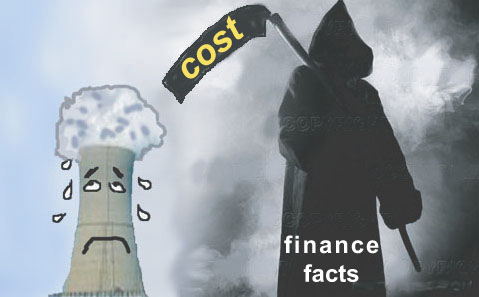 Ministers urged to clarify nuclear cost overruns http://www.telegraph.co.uk/finance/newsbysector/energy/10065162/Ministers-urged-to-clarify-nuclear-cost-overruns.html
The Government has been urged to clarify who will bear the risk of any cost overruns in building new nuclear plants, after ministers appeared to  suggest the burden could fall on consumers. By Emily Gosden 17 May 2013 In a memo to the energy select committee, released on Friday, ministers also admit that delays or cost overruns at EDF’s proposed £14bn nuclear plant at Hinkley Point in Somerset could jeopardise the chances of any other new UK nuclear plants being built. Continue reading
UK government hanging on to its nuclear dreams, despite financial gloom
Coalition still ‘optimistic’ about nuclear power despite EDF and China concerns. Guardian UK Building programme advancing, says minister as expectations of timetable delay at Hinkley Point grow and Chinese ‘lose interest’ The government has insisted it was still optimistic about plans to build a series of nuclear power stations despite expectations that EDF would delay its timetable for a new reactor at Hinkley Point and concerns that China was losing interest in being a co-investor…….
On Friday, the construction trade paper Building quoted industry sources as saying that EDF did not expect to take a final investment decision on Hinkley in Somerset until September at the earliest.
The firm, 80% of which is owned by the French state, had originally talked about concluding negotiations by the end of 2012. That was later extended to the first quarter of 2013. Delays have traditionally dogged nuclear energy projects but are particularly worrisome in this case because Britain faces a potential energy capacity crisis within five years…..Sam Laidlaw, Centrica’s chief executive, told shareholders: “Not only had the cost increased but also the schedule had lengthened very considerably. So instead of taking four to five years to build, EDF were telling us that it was going to take nine to 10 years to build. That is a long time to be writing out a cheque for this project.”….. http://www.guardian.co.uk/business/2013/may/17/coalition-optimistic-nuclear-power-edf-china
Britain’s nuclear power plans in disarray?
Centrica stokes energy fears by revealing EDF nuclear timescale has doubled Centrica has ratcheted up fears over Britain’s energy security by warning that its rival EDF will take twice as long as originally planned to build the first of a new generation of nuclear power stations. The Telegraph, By Emily Gosden 13 May 2013 The British Gas owner abandoned its 20pc stake in the £14bn project at Hinkley Point in February, opting instead to give £500m back to shareholders and invest in gas in North America.
Sir Roger Carr, Centrica chairman, told its AGM on Monday that since it first considered the project the price had “rocketed hugely”, adding: “Nuclear is not a cheap option.”

Sam Laidlaw, chief executive, said: “Not only had the cost increased but also the schedule had lengthened very considerably. So instead of taking four to five years to build, EDF were telling us that it was going to take nine to 10 years to build. That is a long time to be writing out a cheque for this project.”
He added: “EDF’s agenda is different to ours. They are 85pc owned by the French government, they are using French technology and they see nuclear as a core part of their strategy going forward. Our strategy is to have customers at our core and provide the lowest cost low-carbon energy for our customers.”
Centrica later added that he was referring to the timescale for the whole project, not just construction. EDF declined to comment. The French company is in talks with the Government over the financial terms for Hinkley Point. Energy minister Michael Fallon last week said they were “inching” closer but warned there may be no agreement.
EDF wants a guaranteed price for the electricity it will generate for up to 40 years, subsidised by levies on consumer energy bills. Rival companies SSE and Npower have urged ministers not to proceed with the deal…….. http://www.telegraph.co.uk/finance/newsbysector/energy/10055107/Centrica-stokes-energy-fears-by-revealing-EDF-nuclear-timescale-has-doubled.html
British court recognises radiation harm done to nuclear test veterans
 Nuclear test veterans win war pensions after four year battle with Ministry of Defence http://www.mirror.co.uk/news/uk-news/nuclear-test-veterans-win-war-1884147 12 May 2013 The ruling is the first time UK nuke vets have been awarded money in recognition of their illnesses Survivors of Britain’s nuclear tests have won war pensions after a four-year fight with the Ministry of Defence.
A judge ruled this week that men ordered into the fallout zone were injured by radiation in the 1950s and 60s.
The ruling is the first time UK nuke vets have been awarded money in recognition of their illnesses. They say radiation left them with cancers, rare illnesses and birth defects in their children.
It opens the door for remaining veterans, now thought to number less than 3,000, to finally claim against the government that ordered them into danger. Their long running battle for compensation has so far been unsuccessful.
The war pensions, linked to injuries, are seen as recognition that some veterans are due money for their suffering. ”We didn’t stop fighting on the battlefield and we shouldn’t stop fighting now,” said Nick Simons, 70, after winning his case.
He believes the MoD has paid out only to avoid releasing secret medical papers. ”If enough of us win a pension perhaps they will finally say sorry,” he added.
UK: call to reopen case of murdered anti nuclear activist
 Hilda Murrell murder: call to examine ‘MI5 link’ to murder of nuclear activist Guardian UK, 6 May 13 Mark Townsend, The Observer, 18 March 2012 Michael Mansfield QC wants to know what intelligence services knew about killing of anti-nuclear activist Hilda Murrell in 1984 One of Britain’s leading human rights lawyers has demanded a fresh police inquiry to establish what the British intelligence services knew about the murder of a prominent anti-nuclear campaigner.Michael Mansfield QC said new evidence meant that an independent police force should be appointed to examine enduring concerns and inconsistencies relating to the death of Hilda Murrell in March 1984.
Murrell, 78, was abducted from her home in Shrewsbury and her body was discovered days later in a nearby copse. A high-profile campaigner against nuclear weapons, she had been due to present evidence to the public inquiry into the proposed Sizewell B nuclear reactor in East Anglia. Her death triggered numerous conspiracy theories and allegations relating to the involvement of MI5, with one MP, Tam Dalyell, telling parliament that “men of British intelligence” were involved.
Subsequent claims from intelligence sources that they never even opened a file on the rose-growing anti-nuclear campaigner have now been dismissed by Mansfield as “completely ludicrous”.
He said: “There must have been a file for a number of reasons. One of them being that she plainly was very active and very outspoken about a government policy that was extremely sensitive at that time – nuclear power.
“It was central to Margaret Thatcher’s thinking. They would have been watching closely what she was up to, who she was associating with and so on.
“The victim was consumed with anxiety that something was going to happen to her. A look at why that might be involves the evidence she was about to give to the Sizewell inquiry.”
The involvement of Mansfield, whose past cases include the Stephen Lawrence murder, follows the painstaking accumulation of evidence on the case by Murrell’s nephew, Commander Robert Green…….
Despite 28 years having passed since her death, Green will this week reveal details of what he claims are attempts to intimidate him in order to prevent him from investigating the case. Despite having moved to New Zealand, Green says he is the subject of continuing surveillance and that the tyres of his car have been slashed, his mail intercepted and, occasionally, his house broken into.
He has continued to investigate, arriving in London this week to share fresh evidence collated for his book on the murder, A Thorn In Their Side.
Among questions raised about the case are those casting fresh doubts on the conviction of a burglar, Andrew George, who was jailed for life in 2005 for Murrell’s murder. George was aged 16 at the time and in care at a children’s home near her home. The prosecution believed that he panicked during a burglary before abducting Murrell.
George’s DNA was found to match samples taken from the scene, yet a previously undisclosed witness statement made by a forensic scientist in the case, Michael Appleby, indicates that he found DNA under Murrell’s fingernails from another man.
Green claims that this information was withheld from the trial jury……. http://www.guardian.co.uk/law/2012/mar/18/hilda-murrell-michael-mansfield
Many occasions of lost radioactive materials in UK
UK watchdog admits losing nuclear materials dozens of times Raw Story, By Terry Macalister, The Guardian, May 5, 2013 Radioactive materials have gone missing from businesses, hospitals and even schools more than 30 times over the last decade, a freedom of information request to the UK’s health and safety authorities has revealed. Continue reading
UK government loses energy advisors- grim outlook for climate change action
 Exodus of energy experts from ‘greenest’ government as funding for renewables is held up on grounds of cost Blow to fight against climate change as CO2 in the atmosphere hits record high THE INDEPENDENT, PAUL BIGNELL
  , OLIVER WRIGHT, 11 MAY 2013 THE GOVERNMENT IS FACING AN EXODUS OF SENIOR ENERGY AND CLIMATE CHANGE ADVISERS AMID GROWING CONCERNS THAT DECISIVE ACTION TO TACKLE GLOBAL WARMING IS FALLING VICTIM TO TREASURY INTRANSIGENCE.
It emerged that Ben Moxham, David Cameron’s respected adviser on energy and the environment, had quit No 10 after reportedly becoming frustrated at the slow pace of progress.
His departure follows that of Ravi Gurumurthy, a key architect of the Energy Bill which is currently going through Parliament. He stood down from his role as head of strategy at the Department of Energy and Climate Change (DECC) last week.
Also departing is Jonathan Brearley, director of energy strategy and futures for DECC, who has also handed in his notice and will leave the department in July. All three men were key proponents of the Government’s strategy of subsidising new offshore and onshore renewable electricity projects to decarbonise Britain’s energy market by 2030.
But the proposals are being held up by the Treasury on cost grounds. Critics claim it is attempting to delay investment – particularly in offshore wind – and instead concentrate on exploiting shale gas reserves. …… http://www.independent.co.uk/news/uk/politics/exodus-of-energy-experts-from-greenest-government-as-funding-for-renewables-is-held-up-on-grounds-of-cost-8611631.html
Growing support in Britain for wind and solar energy
British Support For Renewable Energy Continues To Grow, Clean Technica May 8, 2013 Joshua S Hill A new survey conducted by the British Department of Energy and Climate Change (DECC) has found  British support for renewable energies has grown in the past year.
The survey, DECC Public Attitudes Tracker, was run from early 2012 through to last March. There were four surveys — one longer survey and three shorter ones — concluded with a face-to-face in-home interview with a representative sample of 2,051 households.
Below are the key findings which were taken from the survey, as finalised after Wave 5. …….For a full comparison of wave 5 findings against the previous four waves, head on over to the DECC website and access the full questionnaire, the full wave 5 dataset, and more……
http://cleantechnica.com/2013/05/08/british-support-for-renewable-energy-continues-to-grow/#z0gMO5IZiK66ITLe.99
1 This Month





PLEASE OPPOSE HR 8255 AND S.3639 – bills would accelerate satellite deployment, with no environmental review or safeguards – https://ncstd5li.quorum.us/campaign/169331/
To see nuclear-related stories in greater depth and intensity – go to https://nuclearinformation.wordpress.com
-
Archives
- October 2026 (67)
- September 2026 (339)
- August 2026 (330)
- July 2026 (355)
- June 2026 (287)
- May 2026 (306)
- April 2026 (356)
- March 2026 (251)
- February 2026 (267)
- January 2026 (308)
- December 2025 (358)
- November 2025 (359)
-
Categories
- 1
- 1 NUCLEAR ISSUES
- business and costs
- climate change
- culture and arts
- ENERGY
- environment
- health
- history
- indigenous issues
- Legal
- marketing of nuclear
- media
- opposition to nuclear
- PERSONAL STORIES
- politics
- politics international
- Religion and ethics
- safety
- secrets,lies and civil liberties
- spinbuster
- technology
- Uranium
- wastes
- weapons and war
- Women
- 2 WORLD
- ACTION
- AFRICA
- Atrocities
- AUSTRALIA
- Christina's notes
- Christina's themes
- culture and arts
- Events
- Fuk 2022
- Fuk 2023
- Fukushima 2017
- Fukushima 2018
- fukushima 2019
- Fukushima 2020
- Fukushima 2021
- general
- global warming
- Humour (God we need it)
- Nuclear
- RARE EARTHS
- Reference
- resources – print
- Resources -audiovicual
- Weekly Newsletter
- World
- World Nuclear
- YouTube
-
RSS
Entries RSS
Comments RSS

