The great ratepayer robbery: how UK new nuclear rips off its customers
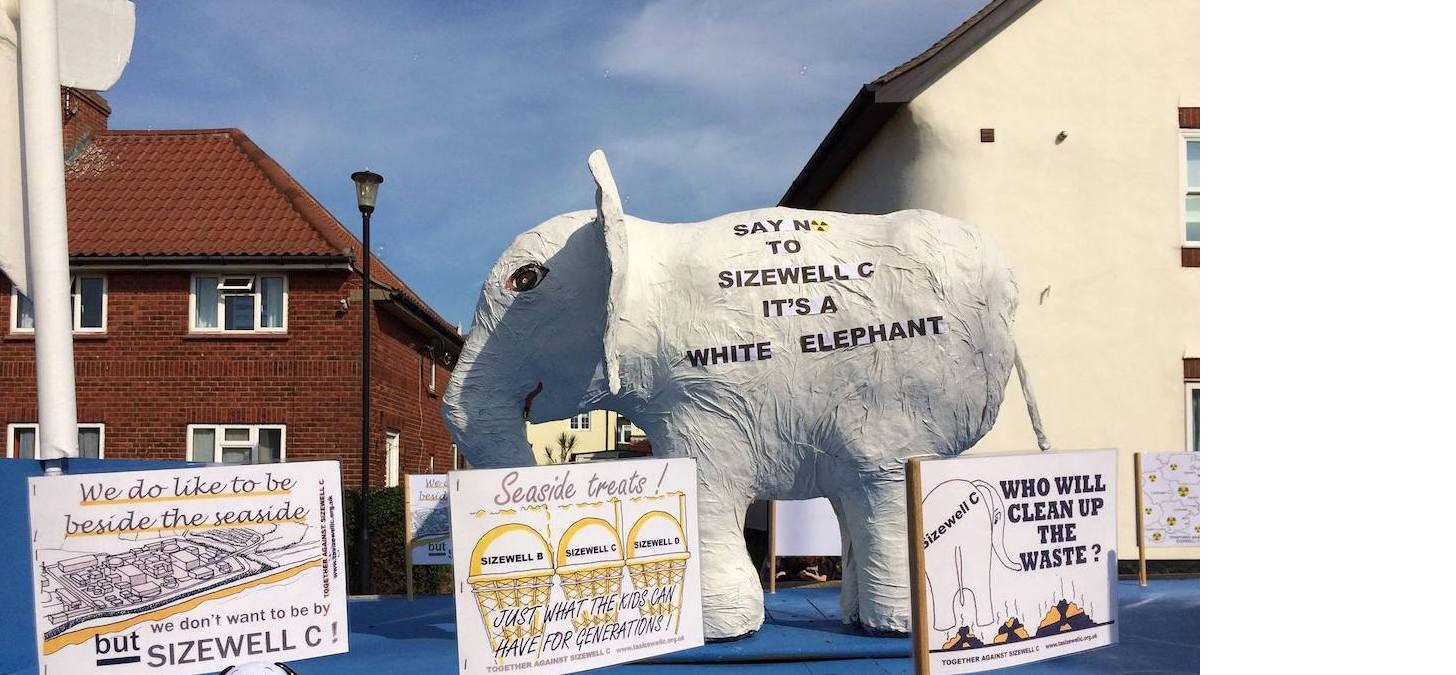
the taxpayer will be liable for the inevitable cost overruns and the RAB scheme itself makes it even less likely that developers will keep within the bounds of their agreements, thereby further increasing costs.
decision on Sizewell C as a stitched up deal behind closed doors, bringing extra cost to the consumer, producing unmanageable waste and squandering our capital on a white elephant scheme.
it is criminal that our time and money is wasted and all our futures thrown away on the back of this scam.
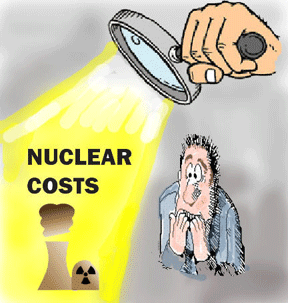
How new nuclear rips off its customers
By Linda Clare Rogers
A recent BBC documentary called Big Oil versus the World exposed the excellent job by oil companies in fending off what could have been an existential threat to their future, at the cost of one for the rest of us. The program revealed how the oil industry brought us near to catastrophe while knowingly lying about the role of fossil fuels in creating global warming.
There are vital lessons to be learned from this about the nuclear power industry. As with the oil industry, the nuclear industry continues to mislead us about the need for nuclear power to save the planet, in order to preserve itself. And, like the oil industry, it contributes to the catastrophe of global warming.
Nuclear power stations take too long to build to help mitigate the effects of global warming, and divert money from renewable power and other more immediate means of doing so.
To add insult to injury, we, as taxpayers, are now being asked to contribute to this catastrophe by paying for the building of yet more destructive nuclear power stations. The astronomical cost of nuclear power means that the industry itself can’t and won’t take on the economic risk.
Instead, money taken from our earnings and our benefits (in the U.K, low-income people on Universal Credit are not to be exempted), to set up new nuclear build, is meant to encourage other investors to take the risk in the future. This is before the plants are actually built.
The name of the UK government scheme , or, more accurately, scam, is the Regulated Asset Base model, known as RAB. (Editor’s note: In the U.S., a similar fleecing of ratepayers exists in some states, known as Construction Work In Progress or CWIP.)
In the introduction to RAB — the Ministerial Foreword to the Statement on Procedure and Criteria for Designation — we are told that the government will be taking one nuclear project to Final Investment Decision this parliament and two projects to Final investment Decision in the next parliament, including small modular reactors. The push for this scenario is undermining safety, fleecing the taxpayers at a time of economic crisis, and disregarding the real problems increasingly associated with nuclear power.
The Nuclear Energy Financing Act 2022 implements the nuclear RAB model and is meant to facilitate investment in the design, construction, commissioning and operation of new nuclear energy generation projects.
There are two criteria that government say have to be met in order that a new nuclear power project should receive RAB funding. But both of these criteria are largely meaningless:
Criterion one: the Secretary of State is of the opinion that the development of the relevant nuclear project is sufficiently advanced to justify the designation of the nuclear company in relation to the project, for instance, that the project has received a Development Consent Order (DCO).
Criterion two: the Secretary of State is of the opinion that designating the nuclear company in relation to the project is likely to result in value for money.
The government draft designation document for the two-reactor EDF project at Sizewell C in Suffolk, emphasizes these criteria. To fulfill the first, it is necessary that a DCO is approved, amongst other markers. The DCO contains evidence about the suitability of the proposed site for the project as well as the impact on the local community and its environment.
The Planning Inspectorate have advised that the DCO for Sizewell C be rejected. This in itself is really important news. Those of us who have been fighting against the building of Wylfa B, or Wylfa Newydd, are familiar with this scenario.
The Planning Inspectorate also advised the Secretary of State to reject the DCO application for Wylfa B. Many of the reasons were on similar grounds as those given for the rejection of the application for Sizewell C. The scheme broke habitat regulations and had detrimental impacts on biodiversity and the environment.
Notably, one of the main reasons for the advised rejection of the DCO for Sizewell C was the impact on the local water supply. We need only see what happened in France this past summer, with the shutdown of nuclear power stations due to the overheating of the rivers necessary for the cooling of the plants, to see that issues over water supply will only get worse as climate change gets worse.
So, for RAB funding to be designated, the DCO has to be granted. The Planning Inspectorate recommended it be rejected, and the government went ahead and passed it anyway. This is a profoundly dangerous decision and needs to be fought.
Hard on issuing the DCO will come the designation of RAB funding. The second criterion to allow for this will also be sure to pass: value for money for the taxpayer. The government explains that RAB will be eliminating significant compound interest on capital invested, thus saving us money. It makes the hopeful statement that, “the RAB model has the potential to reduce the financial cost for new nuclear projects, thereby reducing consumer bills while still preserving incentives for the private sector to complete nuclear projects to time and budget”.
Commentators have made it clear that the taxpayer will be liable for the inevitable cost overruns and the RAB scheme itself makes it even less likely that developers will keep within the bounds of their agreements, thereby further increasing costs.
The model has been criticized by two advisory bodies, the Climate Change Committee and the National Infrastructure Commission.
The draft document for the designation of RAB for Sizewell C would be laughable if it were not so serious in its implications and its precedent for further nuclear developments.
Under the heading —Results: Value for Money for Consumers — we are told, “this has been calculated by comparing the cost of the electricity system with and without Sizewell C….. The modelling compares the cost of an electricity system with a RAB funded Sizewell C against two different net zero compliant counterfactuals.” (These latter are the use of renewables and carbon capture and storage.)
It then provides a chart showing the costings and savings for the taxpayer. All that can be seen in each and every box are a row of the letter x. No figures at all.
When the chief executive of the Nuclear Industry Association, Tom Greatrex, was asked what he knew about the lack of figures available for the Sizewell C agreement on Radio 4, he could give no answer, but offered that RAB was a “different finance mechanism” that would allow for a very predictable price for electricity for a very long time.
This is another example of the nuclear industry and government getting together to present a false narrative: this one uses the present scandal of the cost of energy to persuade us that nuclear power can give us future security and control over future energy supplies.
It should be noted that Hitachi withdrew its application to build Wylfa Newydd for cost reasons, prior to the advised rejection of the DCO. The £5 billion offered by UK government to subsidize building that project was not enough for the Japanese company. This underlines how little risk developers are willing to take and how much risk government is happy to heap on us.
Another major issue with the RAB funding scheme is that, as government documents delicately put it, “the Secretary of State is aware that there could be a perception of a conflict of interest between his role in determining the DCO application for the Sizewell C project and his role in determining whether or not to designate the nuclear company. To avoid any perceived conflict of interest the Secretary of State will delegate the final decision on the DCO to another BEIS minister.”
Well that sorts that problem out then. Of course, while the taxpayer is paying for a nuclear project, it is unlikely to be halted by government. The overriding of the Planning Inspectorate findings against Sizewell C bears this out. How will the government not grant a Final Investment Decision, due next year?
Greenpeace has described the decision on Sizewell C as a stitched up deal behind closed doors, bringing extra cost to the consumer, producing unmanageable waste and squandering our capital on a white elephant scheme.
We say no to nuclear, no to RAB and will be looking to other allies and partners to fight this scheme. Maybe, like the Peace Tax 7, we can find ways to withhold our payments. Perhaps there are legal ways to stop the self -serving deceptions and corruption.
We need to keep calling out the UK government and the Welsh government on these deceptions. When so many people are in fuel poverty and it is so important that the best is made of our precious resources, it is criminal that our time and money is wasted and all our futures thrown away on the back of this scam.
Linda Clare Rogers is a member of People Against Wylfa B and CND Cymru.
Scotland government will double down on opposition to new nuclear power stations north of the border.
JOHN Swinney is set to renew the Scottish Government’s opposition to new
nuclear power stations being built north of the border. The Deputy First
Minister will double down on his Government’s stance when he delivers his
keynote speech to SNP conference today.
Energy policy is reserved to Westminster, but the Scottish Government can effectively veto proposals
north of the border through devolved planning rules.
Since becoming Prime Minister last month, Liz Truss has repeatedly called for the Scottish
Government to change its tune on nuclear power. But the Scottish Government
has insisted it has no intention of doing so, when its delayed updated
energy strategy is published later this year.
Mr Swinney is expected to tell the SNP conference: “Scotland is a nation rich in energy resources
– we have a plentiful supply of clean, green, affordable renewable
energy. “The equivalent of almost 100 per cent of our electricity demand
is from renewable sources.
Not only is Scotland self-sufficient in natural
gas, we are a huge exporter. “Scotland is secure in energy.
So, we need no lectures from Liz Truss about security of energy supply. It is the UK
that has failed to achieve energy security, with the National Grid warning
of possible power cuts this winter. “And Scotland is not going to put up
with a new round of nuclear power stations to make up for the failure of
energy policy in the United Kingdom.” He will add: “Despite our huge
strength in energy, 150,000 more people in Scotland will be forced into
extreme fuel poverty as a result of the UK Government’s increase to the
energy price cap in September. “We are an energy rich nation, but 35% of
our citizens live in fuel poverty. Why is that? Because, while Scotland has
the energy, Westminster has the power. And how Westminster chooses to use
its reserved power has consistently, and deliberately, disadvantaged
Scotland.”
Herald 9th Oct 2022
Truss call for Scottish nuclear power is to make up for UK mistakes
Truss call for Scottish nuclear power is to make up for UK mistakes –
Swinney. The Prime Minister previously said she wanted to see nuclear power
stations built in Scotland.
Evening Standard 8th Oct 2022
TODAY. Folie a deux? – Liz Truss and Emmanuel Macron – besties, in going all out for nuclear power
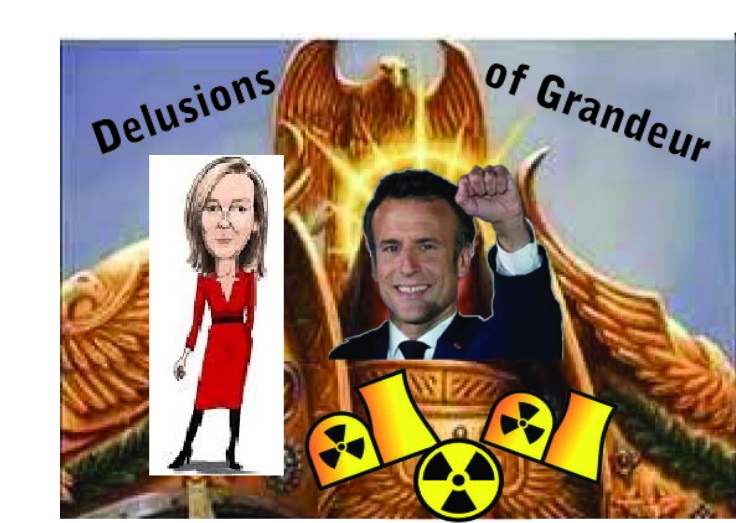
What a pair! They have so much in common. Especially their glorious abandon in going back on previous promises. Macron promised to phase out nuclear power. Truss wanted Britain to stay in the European Union. Then – hey presto! Macron’s all for the nuclear industry, and Liz all for “Brexit” – UK getting out of the EU.
But now, Liz and Emmanuel are besties again, as both go hell for leather for the dangerous, weapons-proliferation, environment-damaging and – oh dear! unaffordably costly nuclear power!
Is this some sort of subconscious Folie à deux – a strange political suicide wish?
They’re committed to work together to get EDF’s Sizewell C nuclear station project happening.
For France – by the end of this year, EDF’s net debt is already forecast to swell to about €60bn, while its French construction programme alone could cost another €52bn.
For Britain – not counting the astronomic cost , ( up to £30 billion, to be paid sort of upfront by the odious Regulated Asset Base ) Sizewell C will be foreign owned, and years to build, with dangerous, hazardous waste and horrendous decommissioning costs – not to mention a potential target for terrorists. Located on low-lying Suffolk coast – vulnerable to rising seas due to global heating.

One point of difference. Liz Truss opposes the idea of Britons conserving energy, whereas the Macron government is promoting energy conservation. Macron’s a bit less nutty?
Liz Truss and Emmanuel Macron get together on promoting nuclear power, especially Sizewell C
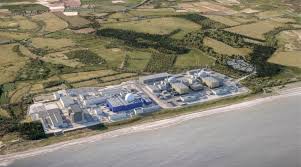
Sizewell C nuclear plant between Aldeburgh and Southwold will see joint
support from Liz Truss and Emmanuel Macron. Liz Truss and Emmanuel Macron
have agreed joint support for Sizewell C nuclear power plant. The pair
pledged to work closer on nuclear power and declared their cooperation for
the project, which is to be developed by French company EDF and will see
the plant built on the Suffolk coast between Aldeburgh and Southwold.
Suffolk News 7th Oct 2022
The UK prime minister and France’s president have confirmed joint support
for Sizewell C nuclear power plant. Liz Truss and Emmanuel Macron issued a
joint statement in which they said they were keen to advance cooperation,
on energy in particular. They pledged “full support” for the station set
for Suffolk’s coast, to be developed by French energy company EDF. The
leaders said they expected the “relevant bodies to finalise arrangements in
the coming month”.
BBC 6th Oct 2022
Liz Truss blocks a plan for UK citizens to reduce their energy use

How Liz Truss blocked Jacob Rees-Mogg’s energy-saving public information campaign.
Liz Truss is reported to have blocked the launch of a publicminformation campaign aimed at conserving energy, despite warnings that blackouts could be imposed in the UK if gas imports fall short this winter.
Business Secretary Jacob Rees-Mogg is understood to have backed a £15m “light touch” initiative, according to The Times, encouraging households to reduce their use of gas and electricity by taking a series of simple measures. However, Ms Truss is said to be “ideologically opposed” to such an approach as it could be too interventionist.
iNews 7th Oct 2022
https://inews.co.uk/news/liz-truss-jacob-rees-mogg-energy-saving-campaign-1899019
Britain’s new Energy Secretary suffering from the ‘nuclear fusion delusion’

In his speech to the 2022 Conservative Party Conference, the Britain’s
newly-appointed Energy Secretary has shown that, like those in office
before him, he too is suffering from the ‘fusion delusion’.
To the Nuclear Free Local Authorities (NFLA), the condition represents a mistaken
belief in someone in high political office that fusion can address the
nation’s future energy needs by providing access to cheap, green power in
defiance of the reality that the technology is far from being
scientifically certain, far from being economically viable, potentially
unsafe, too costly, and still comes with a legacy of nuclear waste – and
that it will in any case come decades too late to address Britain’s
immediate energy / cost-of-living crisis or the urgent need to curb carbon
emissions to arrest the worsening climate emergency.
In his first conference speech as Energy Secretary, Jacob Rees-Mogg lauded the merits of
fusion energy and announced that a new pilot plant will be established on
the site of the former West Burton A coal-fired power plant in
Nottinghamshire describing it as a ‘beacon of bountiful green
energy…proving the commercial viability of fusion energy to the world’.
NFLA 6th Oct 2022
UK government sees energy conservation measures as making Britain a ‘nanny state’
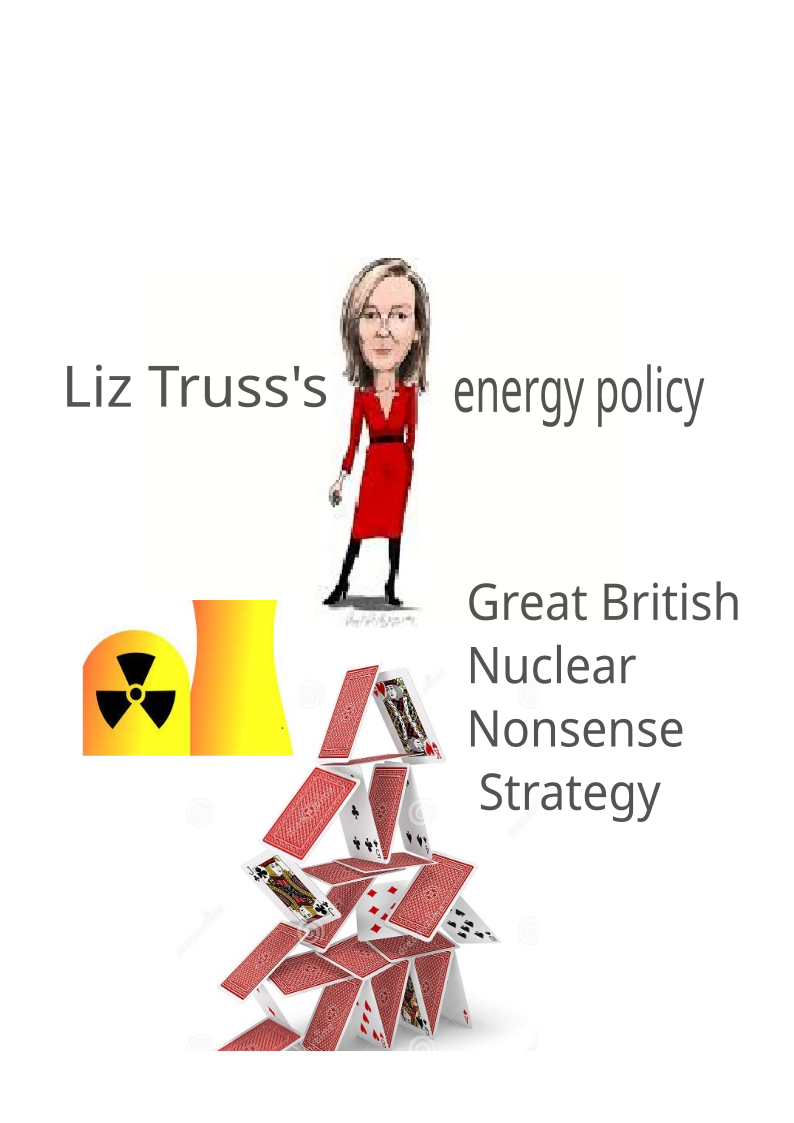
Liz Truss blocks energy saving campaign ‘on ideological grounds’.
Minister says government views public information campaign as ‘nanny
state’. Liz Truss has blocked plans for a public information campaign
asking people to save energy over the winter, reportedly because she is
“ideologically opposed” to the idea.
Ministers on Friday morning claimed
the idea was “nanny state” and confirmed that they would not be urging
people to keep an eye on their usage despite warnings from National Grid of
possibly rolling blackouts. Business secretary Jacob Rees-Mogg is said to
have been keen on a £15 million campaign as a relatively cost-effective
way of reducing the UK’s energy usage at a time of surging prices and
scarcity.
Independent 7th Oct 2022
First containers sealed into Dounreay low level waste vaults
First containers sealed into Dounreay low level waste vaults. Dounreay’s
waste team is carrying out the first in a series of campaigns to seal the
waste into place in the low level waste vaults.
As part of the waste disposal process, the spaces between the containers in the low level waste
vault are being filled with grout. The team undertook a series of trials to
confirm that the grout would readily flow between the containers and also
tested the membranes that will be used to seal the grout shutters. A first
campaign of grouting has now been completed within the vault and 16 waste
packages have been sealed into their final positions. Further grouting
campaigns of increasing size are planned.
NDA 5th Oct 2022
https://www.gov.uk/government/news/first-containers-sealed-into-dounreay-low-level-waste-vaults
Will Sizewell C nuclear really go ahead? EDF’s €60bn debt, and €52bn costs for French nuclear build.
When EDF board members joined a video call in late August to discuss a landmark UK nuclear project, they were instead treated to a stand-off between the utility’s outgoing boss and the French state. Rather than signing off the Sizewell C plant in Suffolk as Jean-Bernard Lévy had pushed for, the biggest French power producer’s controlling shareholder demanded more time to finish new audit reports and the meeting descended into acrimony, according to people familiar with the discussions.
“Some people didn’t understand what they were doing there and why there wasn’t going to be a decision on anything,” one of the people said. “It was messy.” The episode, one of several clashes at the company to have spilled into the open in recent months, will provide little comfort to Lévy’s successor, Luc Rémont, who is due to take over as chief executive and chair just as Paris executes a plan to buy out the 16 per cent of EDF it does not already own.
While the nationalisation clarifies the ownership structure, the company could still be subject to demands from the French state that have not always been in its immediate interest, including that it shield consumers from soaring energy prices. Big strategic questions on everything from Sizewell to renewable energy investments, meanwhile, still loom large.
Rémont, currently a senior executive at industrial conglomerate Schneider Electric, will need to solve
the group’s short-term problems while also preparing EDF to take on some of France’s biggest nuclear construction projects in two decades — a period when it has struggled to complete any on time or on budget.
The company’s electricity output is on course to reach all-time lows this year, after corrosion problems at the company’s nuclear plants added to maintenance stoppages and led to the outage at one point of more than half the French fleet of 56 reactors. That has strained supplies across Europe just as the region pivots away from Russian gas, while also turning France into a net power importer for the first time.
French officials have so far insisted that the Sizewell C plant in Britain will go ahead, adding that the state had commissioned extra audits simply to calculate the financial consequences of removing a Chinese state-backed company from the project.
But the government may eventually want to revisit some of its choices, bankers and union representatives close to EDF said, particularly as the group grapples with costly investments. By the end of this year, EDF’s
net debt is already forecast to swell to about €60bn, while its French construction programme alone could cost another €52bn.
FT 5th Oct 2022
https://www.ft.com/content/559ce578-fa0d-4bbe-9860-9d512b1510e1
Nuclear test veterans: Stik sculpture unveiled at Kent army museum
https://www.bbc.com/news/uk-england-kent-63136372 By Tanya Gupta, 5 Oct 22, BBC News
A model of a soldier ordered to turn his back and cover his face against a nuclear blast has gone on display at the Royal Engineers Museum in Kent.
London street artist Stik spent a year listening to veterans who witnessed nuclear tests in the 1950s to come up with the “terrified, lone figure”.
He said he wanted to show the vulnerability of the soldiers, but also their resilience and strength.
The model will be cast into bronze to create the final sculpture.
In a rare interview, the reclusive artist said he wanted to show human vulnerability, adding: “They were boys when they were sent out to witness an atomic bomb. Some were 16, 17, 18.”
Witnesses have described sitting with their back to the blast but feeling the heat and the force, and being able to see the light through their hands
The sculpture was unveiled at the Gillingham museum during the British Nuclear Test Veterans’ Association’s (BNTVA) annual conference, which is staged in Ashford on the 70th anniversary of Britain’s first weapons test off Western Australia.
For decades, the veterans have fought campaigns for medals, recognition, compensation and an apology from the government, after they witnessed tests with their backs turned to the blast, hands over their eyes, and with no protective clothing.
Many are concerned there is a link between their radiation exposure and ill-health, including cancers.
The Cabinet Office has said it is providing nearly half a million pounds to support veterans. It also said it would hold an oral history project and a commemorative event.
The Ministry of Defence has previously said there was “no valid evidence” linking the nuclear tests to ill-health.
Nuclear fusion – public money wasted on this unproven technology
UK ministers have been criticised for “pouring billions of pounds of
public money into unproven technology” by pressed ahead with nuclear
fusion investment. The warning comes after North Ayrshire lost out on
becoming the site of the UK’s first fusion energy plant having been
shortlisted.
Herald 4th Oct 2022
Truss caves in to Mirror’s demands to mark ‘Plutonium Jubilee’ with gift for nuclear test vet
The heroes of Britain’s Cold War radiation experiments and their families welcomed the news, but said it did not go far enough to address the tests’ legacy of cancers, early death and birth defects
Mirror, By Fleet Street Fox, Columnist, 3 Oct 2022,
Prime Minister Liz Truss has caved to the Mirror’s demands to mark the ‘Plutonium Jubilee’ with a £450,000 gift for nuclear test veterans.
The heroes of Britain’s Cold War radiation experiments and their families welcomed the news, but said it did not go far enough to address the tests’ legacy of cancers, early death and birth defects.
More than half the money – £250,000 – will go to an academic or cultural institution to record oral histories of survivors. The remaining £200,000 will be available for veterans’ charities to bid for.
But that will be equivalent to just £133 a head for the estimated 1,500 ex-servicemen still alive.
The government will also host an event to “celebrate the unique and significant contributions of those involved in testing and developing our nuclear deterrent”.
It was announced on the same day as the 70th anniversary of Operation Hurricane – the Plutonium Jubilee, which marks Britain’s first atomic bomb test.
Alan Owen, of campaign group LABRATS, said: “It’s very welcome news, and a direct result of the meeting we had with Boris Johnson following the Mirror’s Look Me In The Eye campaign.
“In fact, it was the Mirror that asked, in that meeting, for a ceremony of national acknowledgement to allay veterans’ anger, and that will be a huge leap forward if we get it. But this money is a pittance in the grand scheme of things, and there’s still no medal, no apology, no acknowledgement.”
The money won’t be available until April next year – and there are fears some survivors, who are now all in their 80s, may not benefit from it.
Minister for the Armed Forces and Veterans, James Heappey, said the test veterans “played a crucial role in keeping Britain and our NATO allies safe”.
He added: “Their sacrifice contributed to achieving the ultimate guarantee of UK sovereignty and they forever have this nation’s gratitude.
“I look forward to commemorating the incredible service and efforts of our veterans.” https://www.mirror.co.uk/news/politics/truss-caves-mirrors-demands-mark-28145217
Sizewell C nuclear plan – an insane legacy for our grandchildren
Letter: Dave Haskell, Cardigan: It is the height of madness to fund
another nuclear fission power station at Sizewell costing £34 billion,
with Hinkley C currently costing £24 billion and yet to come on stream.
What a legacy to leave to our children and grandchildren – foreign owned,
very expensive and years to build, dangerous, hazardous waste and
horrendous decommissioning costs – not to mention a potential target for
terrorists.
Cambrian News 1st Oct 2022
https://www.cambrian-news.co.uk/news/why-we-must-avoid-using-nuclear-power-565623
Honouring Britain’s nuclear testing veterans
Britain’s nuclear testing programme veterans to be honoured in £450,000
project. Government will commemorate the ‘incredible service’ of the
veterans who witnessed hundreds of atomic tests and were exposed to
radiation.
Telegraph 3rd Oct 2022
1 This Month

of the week – Shut Down Drone Warfare!


Tell the Ukrainian Government to Drop Prosecution of Peace Activist Yurii Sheliazhenko

Petition to revoke the licensing of the Near Surface Nuclear Disposal Facility (NSDF) at Chalk River. https://www.ourcommons.ca/petitions/en/Petition/Details?Petition=e-7247
To see nuclear-related stories in greater depth and intensity – go to https://nuclearinformation.wordpress.com
-
Archives
- April 2026 (114)
- March 2026 (251)
- February 2026 (268)
- January 2026 (308)
- December 2025 (358)
- November 2025 (359)
- October 2025 (376)
- September 2025 (257)
- August 2025 (319)
- July 2025 (230)
- June 2025 (348)
- May 2025 (261)
-
Categories
- 1
- 1 NUCLEAR ISSUES
- business and costs
- climate change
- culture and arts
- ENERGY
- environment
- health
- history
- indigenous issues
- Legal
- marketing of nuclear
- media
- opposition to nuclear
- PERSONAL STORIES
- politics
- politics international
- Religion and ethics
- safety
- secrets,lies and civil liberties
- spinbuster
- technology
- Uranium
- wastes
- weapons and war
- Women
- 2 WORLD
- ACTION
- AFRICA
- Atrocities
- AUSTRALIA
- Christina's notes
- Christina's themes
- culture and arts
- Events
- Fuk 2022
- Fuk 2023
- Fukushima 2017
- Fukushima 2018
- fukushima 2019
- Fukushima 2020
- Fukushima 2021
- general
- global warming
- Humour (God we need it)
- Nuclear
- RARE EARTHS
- Reference
- resources – print
- Resources -audiovicual
- Weekly Newsletter
- World
- World Nuclear
- YouTube
-
RSS
Entries RSS
Comments RSS
 nuclear-news