UK courts Bahrain and the United Arab Emirates for investments to salvage the nuclear dream

Gulf states poised to bail Britain out of energy crisis
Bahrain and the UAE courted by energy secretary Grant Shapps for fresh nuclear investment
By Rachel Millard, 30 April 2023
Gulf states are poised to help bankroll Britain’s efforts to build new
nuclear power stations to keep the lights on, the energy security secretary
has indicated. Grant Shapps visited the region in January and said he
remains “in constant contact” with investors in the region who are
“very interested” in the nuclear sector. Countries such as the UAE and
Bahrain have built up vast sovereign wealth funds which are now pushing
into clean energy amid global efforts to cut fossil fuel use.
Jeremy Hunt, the chancellor, met with the UAE’s Mubadala, a sovereign investment firm,
in February, and has abandoned plans to toughen tax rules for sovereign
wealth funds. Mr Shapps said: “I was in the Gulf states [this year] and
I’m in constant contact with our friends and colleagues over there. “They
have already been investing massive amounts in renewable energy – and
they’re very interested in nuclear power as well. The scale of their
ambitions are pretty big – watch this space.”
Ministers are trying to drum up investment for EDF’s planned £20bn power plant in Suffolk as well as other nuclear projects as part of a push on the carbon-free [?] power
source. Legal & General, Britain’s biggest money manager with £1.3 trillion
of assets, has said it is focused on supporting other “viable, and
cost-effective” {?] clean [?] energy solutions.
French state energy giant EDF
owns Britain’s nuclear fleet but will need outside investors to build its
planned Sizewell C project in Suffolk. The Government and EDF have pushed
China’s CGN out of the project amid concern about China’s involvement in
critical national infrastructure.
Telegraph 30th April 2023
UK underlines commitment to NATO nuclear capability and a £3 billion funding uplift for the nuclear enterprise
UKDJ, By Tom Dunlop 1 May 23
Defence Minister Baroness Goldie recently hosted members of the North Atlantic Council and NATO Military Committee at His Majesty’s Naval Base (HMNB) Clyde, emphasising the UK’s commitment to NATO’s nuclear deterrence.
This comes as the UK government announced a £3 billion funding uplift for the nuclear enterprise in the Spring Budget.
………………………….. Defence Secretary Ben Wallace commented, “We have declared our nuclear deterrent to the defence of NATO for over 60 years, and our commitment to the security of the NATO Alliance is absolute. The UK’s round-the-clock nuclear deterrent is more crucial than ever, as the ultimate guarantee of our collective security.” https://ukdefencejournal.org.uk/uk-underlines-commitment-to-nato-nuclear-capability/
The long and dirty legacy of nuclear power

The trouble is that nuclear-power adherents are now seriously contemplating for future generations a ghastly rerun of the decommissioning nightmare. Small-to-medium-sized reactors, such as envisaged for Trawsfynydd and Wylfa, are the smart way forward, they chorus. Once more, the probably insoluble decommissioning and nuclear waste-management problem is being blanked out.
https://www.cambrian-news.co.uk/opinion/the-long-and-dirty-legacy-of-nuclear-power-610039By Patrick O’Brien Sunday 30th April 2023
In the normal course of events, you’d know when you were financing a dodgy venture. It’s hard to imagine your money being ploughed into an enterprise doomed from the start and being ignorant of the fact.
So how many of us knew we’re bankrolling an outfit with a boat in the Irish Sea embarked on a mission guaranteed to be a very bad idea all round?
The craft in question operates with a simple instruction: to blast off underwater seismic guns – to the certain detriment of dolphins and porpoises – as part of a madcap exercise to find a subterranean cemetery for large amounts of lethal radioactive waste from Cumbria’s Sellafield nuclear site.

I refer to pollutants that, for the last 70 years, have contaminated seas off vast coastal areas of Wales and Ireland, and parts of England, with radioactive substances that take, literally, tens of thousands of years to decay.
Let me introduce Nuclear Waste Services, an entirely taxpayer-funded public body under the wing of the UK government, which is engaging marine geological surveyors to comb the seabed for an out-of-sight-out-of-mind repository for the terrifying remnants of a dangerous and long discredited system of energy-generation.
Yes, the UK is looking for a storage site for the world’s biggest stockpile of untreated nuclear waste, including 100 tonnes of plutonium.
Currently the search centres on the seabed off Cumbria. The nearby notorious Sellafield nuclear complex having, since 1952, openly discharged substantial quantities of liquid and solid radioactive waste into the Irish Sea, a disreputable industry’s servants are now embarked on a final fling, dressed up, naturally, as a service to the UK population.
Thus Chris Eldred, a Nuclear Waste Services senior manager, expounding on the benefit of the gorgeously clinically named geological disposal facilities (GDFs) his company has set its heart on.
GDFs, he vouchsafes, “will protect future generations from the risks of keeping hazardous radioactive waste in surface stores for thousands of years.” Thank goodness, therefore, that we have the sea at our unfettered disposal, there to hide away nuclear power’s abiding torment – what to do with the reverberating remnants of a spent technology that will never in thousands of years be stilled.
To help us with this vital work”, Mr Eldred says, “we will undertake surveys to provide a better understanding of the deep geology beyond the coast, while doing everything we can to minimise any environmental impact.”
In his apparent innocence, you wonder whether he has in mind earplugs for dolphins and porpoises, which are observed to be disorientated, distraught and damaged by the monstrous decibels of seismic guns. These theoretically protected animals, let it be remembered, are in all probability some of those we marvel at off the Ceredigion coast.
Not that the UK government or Nuclear Waste Services or anyone else has checked with us, the funders of this desperate exploration.
Not that they have seen fit, either, to mention that sea-borne radioactive waste, pumped for seven decades into the sea at Sellafield, has been detected off coasts of Wales, as well as hundreds of miles further south and west of the Cumbria nuclear site.
We’re talking here about insoluble radionuclides, such as highly dangerous plutonium-239, which has a half life of, truly, 24,110 years and can attach to particles in the sea, there to be transported over long distances and timescales and ultimately deposited into fine sediments. such as estuarine and coastal mudflats and salt-marshes. Since the early 1950s, this stuff has floated unhindered down from Sellafield off Wales’s west coast, ending up as far away as the Bristol Channel and the southern North Sea.
Sellafield’s tentacles have even reached inland Wales. In the late 1980s, the then Dyfed County Council commissioned a study of radioactivity in the county which found Caesium-137 – proved to have come from Sellafield sea discharges – in pasture grass seven miles inland from the Cardigan Bay coast. Radiocaesium, which has a 30-year half-life, can increase the risk for cancer.
The size of the current nuclear power-station decommissioning conundrum is mind-boggling. Even the UK government admits the seabed dump site it seeks for the world’s largest stockpile of untreated nuclear waste would need to keep its terrible debris “safe and secure over the hundreds of thousands of years it will take for the radioactivity to naturally decay”.
Meanwhile, councils signed up to the Nuclear Free Local Authorities grouping, including Ceredigion’s and Gwynedd’s, believe the pretty well obvious: no matter how effective the marine storage barriers, some radioactivity would eventually leak to the surface of the sea. They prefer the idea of a “near surface, near site storage of waste” to allow for monitoring and management.
Trying to show willing, they’re seizing on a least-worst option, which is nevertheless woefully inadequate.
The trouble is that nuclear-power adherents are now seriously contemplating for future generations a ghastly rerun of the decommissioning nightmare. Small-to-medium-sized reactors, such as envisaged for Trawsfynydd and Wylfa, are the smart way forward, they chorus. Once more, the probably insoluble decommissioning and nuclear waste-management problem is being blanked out.
All that’s left is for the realists among us to resolve, very firmly, that we will never allow a return to the insanity of a 1950s future.
Foiled Escape: UC Global, the CIA and Julian Assange

Even better will be the abandoning of the entire proceeding, the reversal of the extradition order made in June 2022 by then Home Secretary Priti Patel, and a finding by the UK authorities that the case against Assange is monstrously political, compromised from the start and emptied of legal principle.
April 30, 2023, Dr Binoy Kampmark https://theaimn.com/foiled-escape-uc-global-the-cia-and-julian-assange/
However described, the shabby treatment of Julian Assange never ceases to startle. While he continues to suffer in Belmarsh prison awaiting the torments of an interminable legal process, more material is coming out showing the way he was spied upon while staying at the Ecuadorian embassy in London. Of late, the Spanish daily El País has been keeping up its exemplary coverage on the subject, notably on the conduct of the Spanish-based security firm, UC Global SL.
There is a twist in the latest smidgens of information on the alleged bad conduct by that particular company. As luck would have it, UC Global was commissioned by Rommy Vallejo, the chief of Ecuador’s now defunct national intelligence secretariat, SENAIN, to give the London embassy premises a security and technological touch-up.
Vallejo may have sought their services, but seemed blissfully ignorant that he had granted the fox access to the chicken coop. This access involved the installation of hidden microphones throughout the embassy by UC Global at the direction of its owner, David Morales. Morales, it seems, was updating the US Central Intelligence Agency with information about Assange’s meetings with his legal team throughout.
Much of this was revealed in the trial against Assange conducted at the Central Criminal Court in 2020, though the presiding Judge Vanessa Baraitser seemed oddly unmoved by the revelations, as she was by chatter among US intelligence operatives to engineer an abduction or assassination of the WikiLeaks founder.
The link between UC Global and the CIA was the fruit of work between Morales and one of his most notable clients, the casino company, Las Vegas Sands. Morales was responsible for supplying the owner of the company, the late billionaire magnate and Republican donor Sheldon Adelson, with personal security. In the merry-go-round of this field, one of those on Adelson’s personal security detail was a former CIA officer.
On December 20, 2017, Michelle Wallemacq, the head of operations at UC Global, penned a note to two technicians responsible for monitoring security at the embassy. “Be on the lookout tomorrow to see what you can get… and make it work.” The request was related to a scheduled meeting between Assange and Vallejo. The theme of the discussion: to get the Australian publisher out of the embassy, grant him Ecuadorian citizenship and furnish him with a diplomatic passport. This had a heroic, even quixotic quality to it: the grant of a diplomatic passport would not have necessarily passed muster; and the chances of Assange being arrested could hardly be discounted.
Eleven months prior to Morales passing on the tip that scuttled Assange’s escape plans, Morales was already chasing up his staff from one of Adelson’s properties, The Venetian Resort in Las Vegas. One technician received the following: “Do you have status reports on the embassy’s computer systems, and networks? I need an inventory of systems and equipment, the guest’s [Assange] phones, and the number of networks.” He also warned his technicians to be wary “that we may be monitored, so everything confidential should be encrypted… Everything is related to the UK subject… The people in control are our friends in the USA.”
On June 12, 2017, Morales, enroute to Washington, DC, requested his contact to activate a File Transfer Protocol server and web portal from their Spanish headquarters. The portal in question: the Ecuadorian Embassy in London. Material began being collected on Assange’s guests, eclectic and of all stripes: journalists, doctors, lawyers, diplomats. Mobile phone data was also hoovered up. After his Washington stop, Morales popped into Las Vegas Sands, where he met his eager “American friends” to reveal the information so far gathered about Assange.
Over this time, it becomes clear, in Morales’s own words, that “he had gone over to the dark side” and that “they were working in the Champions League”. Emails sent on September 8 speak of offering “our information collection and analysis capability to the American client.” Discussions with a UC Global technician focus on gathering information from the microphones in the embassy. “The guest [Assange] has three rooms and uses two quite frequently… We would have all the audio from there except in one room.”
On September 21, it was clear to Morales that they had gotten sufficiently mired in the business of spying on Assange to be wary of any potential surveillance from SENAIN. “I would like my whereabouts to be kept confidential, especially my trips to the USA.” Instructions are distributed to gather data on the embassy’s Wi-Fi network, photos of the interior and furnishings of the embassy, and any data on Assange’s primary visitors, notably any members of his legal team.
The recording of one meeting would prove critical to upending plans to get Assange out of the embassy. Present Assange, his lawyer, now wife Stella Morris, Ecuadorian consul Fidel Narváez and Vallejo. The date for the getaway was slated for December 25, with the plan that Assange leave via one of the ambassador’s cars which would make its way through the Eurotunnel to Switzerland or some designated destination on the continent. “It’s very late,” wrote one of the technicians a few hours after the meeting’s conclusion to Morales. “Because it’s so big, I put the file in a shared Dropbox folder. Someone with experience in audio can make it more intelligible.” While Vallejo could be heard fairly clearly, the voices of Assange and Morris were “very muffled”.
Within a matter of hours, Morales had relayed the material to those “American friends” of his, greasing the wheels for proceedings that would culminate in Assange’s expulsion in 2019 and the indictment listing 18 charges, 17 of which are drawn from the Espionage Act of 1917. The plan to leave the embassy was never executed.
There are two significant events that also transpired before Vallejo’s visit to Assange. The first involved an advisor to the Ecuadorian Foreign Minister who is said to have had information about the plan regarding Assange’s escape. He was assaulted by a number of hooded men at Quito Airport on his return from the United States.
On December 17, 2017, it was time for hooded assailants to turn their attention to the Madrid law offices of Baltasar Garzón and Aitor Martínez. Their target: a computer server. The timing was ominous; both lawyers had just returned from meeting Assange in the London embassy. The intruders proved untraceable by the Spanish police, despite leaving prints.
In hindsight, it does seem remarkable that Vallejo and SENAIN remained ignorant of the rotten apples in UC Global. As things stand, Morales is facing a formal complaint filed by Assange in the Spanish National Court. He is also facing an investigation for alleged breaches of privacy, the violation of attorney-client confidentiality, misappropriation, bribery and money laundering. The presiding magistrate on the case, Santiago Pedraz, has requested the US House Permanent Select Committee on Intelligence to press the CIA in supplying information about the embassy spying.
Even better will be the abandoning of the entire proceeding, the reversal of the extradition order made in June 2022 by then Home Secretary Priti Patel, and a finding by the UK authorities that the case against Assange is monstrously political, compromised from the start and emptied of legal principle.
Russian troops ‘went FISHING in the nuclear reactor cooling channel at Chernobyl’ and are now suffering from radiation sickness
- Russian troops spent a fortnight in the vicinity of the radioactive nuclear reactor
- Some 37 years ago it exploded and spilled reactor core into the environment
Daily Mail, By CHRISTIAN OLIVER , 30 April 2023[excellent photos]
Putin‘s men were struck down with radiation sickness after they camped in a forest near Chernobyl‘s nuclear disaster amid their infiltration of Ukraine last year.
Ukrainians living in Chernobyl have told of how they warned their Russian enemies of the dangers despite last year’s invasion, with soldiers even fishing in the nuclear reactor’s cooling chamber.
The Russian soldiers spent around a fortnight in the vicinity of the radioactive nuclear reactor in March last year, which 37 years ago exploded and spilled reactor core into the environment.
Ukrainians have told how the Russian men crossed from Belarus and dug defensive positions in the nearby ‘Red Forest’, named after the colour the trees turned after the nuclear disaster.
Some suggested that the Russians chose the area as they knew they would not come under attack from Ukrainian shelling.
Speaking to The Sunday Times, Oksana Pyshna, 30, an official responsible for the exclusion zone, said ‘don’t try to find logic’ regarding the upheaval of radioactive soil by Putin’s men in Chernobyl’s nearby forest.
Russian soldiers are said to have spent two weeks with six mile vicinity of the radioactive reactor No 4, where they slept, ate, and drank.
‘It’s the most dangerous territory in the special zone, because under the ground we have nuclear waste.’
Some suggested that Russian troops made their base there as they knew Ukrainian forces would not attack the area as they knew the catastophic dangers around the nuclear plant.
The Russians are also said to have fished in the reactor’s cooling chamber, catching the catfish that swim in the destroyed nuclear base.
But others were struck down with radiation sickness from simply being in the area, walking around, and kicking up the dust………………………………………………………….. more https://www.dailymail.co.uk/news/article-12030417/Invading-Russian-troops-radiation-sickness-camped-Chernobyl-forest.html
Hinkley fish deterrent farce makes mockery of Environment Agency and Minister

In a humiliating climbdown, the Environment Agency now recommend that EDF Energy be excused from installing an acoustic fish deterrent at Hinkley Point C nuclear power plant, and they have had the cheek to ask for the public’s endorsement of the Agency’s inexplicable volte face in a further consultation.
The UK/Ireland Nuclear Free Local Authorities for one will not be giving it.
NFLA England Forum Chair Councillor David Blackburn said: “After a late hour supper of humble lamprey pie, senior executives at the Environment Agency appear to have shown themselves to have less spine than jellyfish. The requirement to install a deterrent was first made after representations from the public and campaign groups, including the NFLA; a detailed analysis of the impact of the plant on fish stocks and pain-staking deliberations; and the personal intercession of the Secretary of State George Eustice to ensure that it became part of the permitting conditions.
“This new recommendation makes a mockery of the Environment Agency inspection team and the Secretary of State who previously had the courage to stand up to nuclear interests. It also represents a massive slap in the face with a wet kipper for public consultation, because what is the point responding again and again to consultations and presenting to inquiries demonstrating conclusively the validity of your case when senior civil servants simply cave into any clamour from EDF Energy?”
Nonetheless, the NFLA, in a last-ditch effort, will be joining local campaigners by responding robustly to oppose this proposal – for the sake of the fish.
Councillor Blackburn added: “It looks like someone at EDF Energy is following the adage of Robert the Bruce ‘to try, try, try again’ as clearly the company remains determined to pressurise the Environment Agency to recuse it from installing an acoustic fish deterrent at Hinkley Point C to save time and money, for this is a project well behind schedule and massively over budget. French shareholders will be happy, but the fish will not.
“The Severn Estuary is one of the most important fish habitats in the UK, and the fear is that millions of fish will die every day once this plant finally becomes operational as they are sucked to their deaths along with the cooling water.
“We would urge members of the public, elected members and local groups opposed to this plan to respond to the Environment Agency consultation before 25 May 2023. This is your last chance to save the fish!”
Details of the latest Environment Agency consultation can be found at:
https://www.gov.uk/government/consultations/hinkley-point-c-water-discharge-activity-permit-variation
Sensitive files on nuclear submarine found in English pub restroom
kk/kb 30.04.2023 British services have launched an investigation into the alleged finding of Royal Navy documents marked “official sensitive” in a Wetherspoons pub restroom in Barrow-in-Furness, England, media reported. The files reportedly concerned HMS Anson, the most recent of the navy’s cutting-edge nuclear-powered submarines.
According to “The Sun” daily, the files showed the inner workings of the torpedo-loaded vessel, including key details regarding its hydraulics, which control torpedo hatches.
They were reportedly found with a Royal Navy lanyard from the new GBP 1.3 bn (USD 1.63 bn) submarine……………………………… https://tvpworld.com/69544839/sensitive-files-on-nuclear-submarine-found-in-english-pub-restroom
Survivors of Britain’s Cold War radiation experiments to have their stories recorded
Survivors of Britain’s Cold War radiation experiments are to have their
life stories recorded and stored in the British Library. The £250,000
scheme will lead to a documentary and resources to teach A-level students
about the Cold War and the impact the weapons testing programme had on the
men who took part in it, and their families.
Dr Chris Hill, one of the academics leading the project, said: “It’s about furthering their story, embedding it deeper in the public consciousness and confronting what is a
very problematic part of Britain’s history.”
Mirror 27th April 2023
https://www.mirror.co.uk/news/politics/nuclear-heroes-win-250000-documentary-29833221
UK Gave Ukraine Thousands of Shells, Including Depleted Uranium Rounds
MOSCOW (Sputnik) 25 Apr 23, – The United Kingdom has provided Ukraine with thousands of shells for the donated Challenger 2 main battle tanks, UK minister for armed forces James Heappey said on Tuesday.
“We have sent thousands of rounds of Challenger 2 ammunition to Ukraine, including depleted uranium armour-piercing rounds,” he said in a written answer to a parliamentary query.
Heappey did not give an estimate of the number of depleted uranium rounds fired by the Ukrainian armed forces, citing operational security reasons.
The minister also admitted that the UK was not monitoring the locations from where these rounds were fired and added that his country was not obligated to help Ukraine clear up the depleted uranium rounds post-conflict.
…………………… Such shells were actively used by NATO forces in Iraq during the 1991 Gulf War and the 2003 invasion, as well as in Yugoslavia during the 1999 bombing campaign. It resulted in massive contamination and raging cancer rates across the affected nations – as well as in some NATO troops. https://sputnikglobe.com/20230425/uk-gave-ukraine-thousands-of-shells-including-depleted-uranium-rounds-1109828799.html
BBC launches 7 part series on Fukushima nuclear disaster
BBC World Service has launched a new seven-part drama series exploring the
2011 nuclear disaster at the Fukushima Daiichi Nuclear Power Plant in
Japan.
Radio Today 25th April 2023
UK replacing its Nuclear Warhead Programme – at what cost?

Replacing the UK’s nuclear deterrent: The Warhead Programme. In February
2020, the Government confirmed the existence of a programme to replace the
UK’s nuclear warhead. What stage is the programme at and how much is it
expected to cost?
UK House of Commons 25th Feb 2023
https://commonslibrary.parliament.uk/research-briefings/cbp-9777/
Marine deaths prompt calls for investigation and halt into any new nuclear dump tests.
Marine Deaths of harbour porpoise, dolphin, pilot whale, seals
and other protected species following last August’s seismic blasting
looking at the geology of the Irish Sea for a deep sub-sea nuclear dump
have prompted calls for a halt and an investigation.
A legal challenge has been threatened by campaigners against further seismic blasting in the search areas which include the Irish Sea and Allerdale’s Solway Firth area.
The Copeland seismic blasting went ahead for 20 days from the 1st August
2022 despite a petiton of over 50,000 signatures. The testing of the
Copeland Irish Sea area centred off Sellafield was contracted by Nuclear
Waste Services in their quest to find a place to dispose of high level
nuclear wastes in a Geological Disposal Facility.
Environmental Lawyers
Leigh Day acting for Lakes Against Nuclear Dump, a Radiation Free Lakeland
campaign have now written to the Environment Secretary Thérèse Coffey and
to the Marine Management Organisation. The letter includes an Appendix of
“Events” beginning with strandings of protected species including dead
seals and harbour porpoise at Drigg on the 8th August and includes deaths
of dolphin, pilot whale and jellyfish (food for protected turtle species).
Radiation Free Lakeland 25th April 2023
Anti nuclear campaign groups in Wales(Dwyfor and Meirionnydd) urge government to invest in energy conservation, NOT dirty nuclear power.
Here is the response on behalf of PAWB, Pobl Atal Wylfa B/People AgainstWylfa B (Ynys Môn and Arfon) and CADNO, Cymdeithas Atal Dinistr NiwclearOesol (Dwyfor and Meirionnydd) to the Welsh Government’s review of renewable energy targets..
Generally, there is much to welcome in the government’s discussion paper.
However, in response to Proposal 1, we would like to see the government
putting more emphasis on reducing the demand for electricity by investing
in a comprehensive insulation and energy conservation programme.
That is vitally important all over Cymru alongside the renewable energy programme.
However, we believe that Welsh Government’s investment in Cwmni Egino to
attempt to get a nuclear energy development at the Nuclear Decommissioning
Authority’a site at Trawsfynydd undermines this aim. Nuclear power is a
dirty, dangerous and extremely expensive technology that is in no way
renewable. Any nuclear development at Trawsfynydd would depend heavily on
carbon fuels in the building process thereby further undermining the aim of
proposal.
PAWB 24th April 2023
Despite the dangers of climate change, UK nuclear power stations still sited on the coastline!
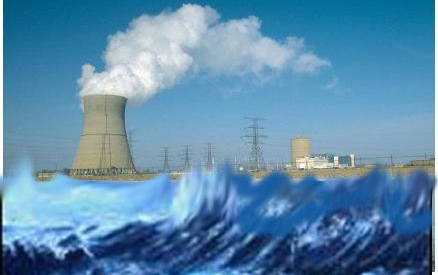
**Nuclear Siting**
Frozen in aspic — planning and pragmatism in the siting of nuclear power
stations in Britain. Despite efforts at strategic siting and the problems
posed by changing circumstances — especially the challenges arising out
of climate change — the geography of nuclear power infrastructure is
stubbornly inflexible, and has barely changed since it was first
established over half a century ago, as Andrew Blowers explains.
The geography of nuclear power in Britain was more or less settled by the 1970s
and has endured remarkably since then. Speed was of the essence in the
early years, a so-called age of ‘innocent expectation’ or, perhaps more
realistically, one of ‘trust in technology’. This was ‘nuclear’s
moment’, lasting less than three decades, during which time the
infrastructure of nuclear development was established around Britain,
predominantly at coastal sites.
But there is now a serious disjunction between a geography of nuclear power established more than half a century ago and the realities of site suitability in an age of climate change.
During the present century, a strategic siting process was adopted, with
individual sites identified through a National Policy Statement for Nuclear
Power Generation. In practice, siting remains a specific process, a matter
primarily of economic and historical determinism, with a few projects
seeking to attract investment to a handful of existing sites.
The last of the AGRs, at Torness on the east coast of Scotland, became the focus of the
first full-blown anti-nuclear protest in 1978 and 1979, attracting 5,000
people to the familiar features of fairs, symbols, stalls, camps, speeches,
leaflets, workshops, non-violent action, political and media attention,
stand-off s with police, and site occupations. The protest halted progress
but was eventually cleared. Its target was not just Torness power station
but the nuclear industry itself, and the connections between civil and
military nuclear power were clearly in evidence. With Torness, the
geography of nuclear power in Britain was complete.
Town & Country Planning Association Journal March April, 25th April 2023. ..https://www.tcpa.org.uk/journals/
No change to nuclear transport rules following accident down under, says regulator
in Western Australia.
The Office of Nuclear Regulation is responsible for oversight of operators transporting nuclear materials in the UK, and the Chief Nuclear Inspector’s report from October 2022 recorded 69 incidents related to nuclear transport in the reporting period. Two of these involved lost radioactive packages.
In response to the Western Australian accident, Richard Bramhall, of the Low-Level Radiation Campaign, told the NFLA: ‘The company is to be criticised for appalling practice since the gauge itself came apart and the packaging came apart and the vehicle was inadequate to contain the outcome of those failures.’
The NFLA and Dr Jill Sutcliffe, joint Chair of the NGA Forum of the Office of Nuclear Regulation, sent an FOI request to the ONR with their concerns. The ONR’s response is shown below as, whilst it contains no commitment to procedural changes, it has useful detailed guidance on the regulatory regime that applies to the transport of nuclear materials and links to reports.
The NFLA also wrote to senior executives at Rio Tinto PLC, the mining conglomerate that lost the caesium capsule, asking the company to issue a statement outlining how procedures would be tightened up to avoid another accident and whether Rio Tinto would fully reimburse the local authorities for the cost of recovering the capsule. Despite a reminder being sent urging the executives to respond, no reply has so far been received. 25 Apr 23
1 This Month
26 September – International Day for the Total Elimination of Nuclear Weapons





PLEASE OPPOSE HR 8255 AND S.3639 – bills would accelerate satellite deployment, with no environmental review or safeguards – https://ncstd5li.quorum.us/campaign/169331/
To see nuclear-related stories in greater depth and intensity – go to https://nuclearinformation.wordpress.com
-
Archives
- September 2026 (291)
- August 2026 (330)
- July 2026 (355)
- June 2026 (287)
- May 2026 (306)
- April 2026 (356)
- March 2026 (251)
- February 2026 (267)
- January 2026 (308)
- December 2025 (358)
- November 2025 (359)
- October 2025 (375)
-
Categories
- 1
- 1 NUCLEAR ISSUES
- business and costs
- climate change
- culture and arts
- ENERGY
- environment
- health
- history
- indigenous issues
- Legal
- marketing of nuclear
- media
- opposition to nuclear
- PERSONAL STORIES
- politics
- politics international
- Religion and ethics
- safety
- secrets,lies and civil liberties
- spinbuster
- technology
- Uranium
- wastes
- weapons and war
- Women
- 2 WORLD
- ACTION
- AFRICA
- Atrocities
- AUSTRALIA
- Christina's notes
- Christina's themes
- culture and arts
- Events
- Fuk 2022
- Fuk 2023
- Fukushima 2017
- Fukushima 2018
- fukushima 2019
- Fukushima 2020
- Fukushima 2021
- general
- global warming
- Humour (God we need it)
- Nuclear
- RARE EARTHS
- Reference
- resources – print
- Resources -audiovicual
- Weekly Newsletter
- World
- World Nuclear
- YouTube
-
RSS
Entries RSS
Comments RSS

