Unseemly scramble as makers of small nuclear reactors try to con UK government

NuScale joins Rolls-Royce and Bill Gates in race to build UK nuclear
reactors. A US nuclear developer is poised to join the race to build new
reactors in the UK and has urged the government to go faster in picking a
preferred technology.
NuScale, based in Oregon, said it was “very
active” in the UK market and that it would “engage with the activity
around the government’s SMR competition”.
The UK is running a contest to
find suppliers of small modular reactors (SMRs), which hold the promise of
zero-emission, lower-cost nuclear power as they can be made in a factory
and assembled on site. This reduces the vast overheads of large nuclear
projects.
NuScale is developing an SMR called VOYGR, which is based on a
traditional nuclear design called a pressurised water-cooled reactor. It is
the first SMR to have been certified by the US Nuclear Regulatory
Commission.
The UK government has set up a new body, Great British Nuclear
(GBN), to select new projects. It is aiming to settle on winning SMR
designs by the autumn.

Tom Mundy, president of VOYGR services and delivery,
said NuScale would not require development money from GBN as its project
was ready to deploy. “We don’t need the support that has been suggested
… We’re ready to deliver the project much earlier than GBN has
suggested,” he said. “GBN suggests people could start building SMRs by
2030. That means taking a final investment decision then. That’s too late
for us. We have got customers taking final investment decisions much
earlier,” Mundy added. “Let’s get going.”
NuScale’s rivals in the
race include GE Hitachi, also of the US, and Rolls-Royce, which wants to
win an order in its home market. TerraPower, a start-up founded and chaired
by Bill Gates, has also indicated that it wants to build nuclear projects
in the UK. It has a type of SMR called an advanced modular reactor (AMR) in
development.
Times 4th June 2023
Concern over low flying aircraft circling over Hunterston nuclear power station
Concerns have been raised with civil nuclear police over low flying
aircraft over Hunterston. Aircraft apps showed that a Pilatus PC-6/B2-H4
plane repeatedly circled the nuclear power plant – leading to the matter
being raised by a concerned resident at a public meeting this week.
West Kilbride community councillor John Lamb, who was attending the Hunterston
Site Stakeholders Group, asked the civil nuclear police if they were aware
that there was low flying aircraft over the power station zone.
The incident happened on May 25 and the fFlightradar app showed that the plane
travelled across Ayrshire before repeatedly circling Hunterston. Mr Lamb
asked if the Civil Aviation Authority had altered the guidance regarding
the ‘no flight zone’ over Hunterston. Inspector Paul Gilmartin of the Civil
Nuclear Police told the meeting that he was unaware of any reports of low
flying aircraft and the matter had not been flagged up to him.
Largs & Millport Weekly News 2nd June 2023
Scientists heat nuclear reactor heated to 100 MILLION degree Celsius – hotter than the SUN (what could possibly go wrong?)

- British company achieved the milestone using a ‘spherical tokamak’ called ST40
- Nuclear fusion reactors copy the energy-producing process of stars like our sun
By JONATHAN CHADWICK FOR MAILONLINE , 2 June 2023
Described as the ‘holy grail’, the milestone was achieved using the ST40 ‘spherical tokamak’ – a ‘cored-apple’ shaped nuclear device in Oxfordshire – and the team is now working on a fusion reactor that can connect to the national grid in the 2030s.
The milestone is short of the record set by Chinese scientists in 2021, who ran their reactor at 120 million degrees Celsius. ……………………………………………………………………………….
Funded by the UK government, STEP will be located at the existing West Burton power station in Nottinghamshire, it was announced last October……………………………………………………………………………………………………… https://www.dailymail.co.uk/sciencetech/article-12147389/Nuclear-fusion-breakthrough-Holy-grail-power-production-closer-reality.html
Female health care workers need better protection from radiation, doctors say

Finnish study showed that breast cancer rates were 1.7 times higher than expected among radiologists, surgeons and cardiologists when compared to female physicians who don’t work with radiation.
Finnish study showed that breast cancer rates were 1.7 times higher than expected among radiologists, surgeons and cardiologists when compared to female physicians who don’t work with radiation.
London — A group of physicians is calling on health care employers to provide female workers who are exposed to on-the-job radiation with added protections to minimize their risk of breast cancer.
In an editorial recently published in the journal BMJ, the physicians point out that ionizing radiation is a known human carcinogen, and breast tissue is highly sensitive to radiation. “As such, there are concerns that regular exposure to ionizing radiation during image guided procedures may be linked to a higher risk of breast cancer in female health care workers.”
Although measuring occupational radiation-induced breast cancer risk is a challenge, examining the available evidence and improving personal protective equipment options can help reduce that risk for the rising number of female workers entering X-ray and imaging occupations.
PPE such as lead gowns that are used to shield the body from radiation leave the area close to the armpit exposed, the physicians write, and that area is a common site of breast cancer.
A small Finnish study showed that breast cancer rates were 1.7 times higher than expected among radiologists, surgeons and cardiologists when compared to female physicians who don’t work with radiation.
The London-based Society of Radiographers’ Ionising Radiation Regulations 2017 state that radiation levels delivered to all health care workers should be “as low as reasonably achievable.” Actions include reducing the duration of exposure, increasing distance from the source and shielding all workers with effective PPE.
Additional protection, including capped sleeves and axillary protection wings that can be worn under standard medical gowns, would protect the upper outer quadrant of the breast. Female health care workers should consider adopting this extra layer of protection, the European Society for Vascular Surgery says in its 2023 Clinical Practice Guidelines on Radiation Safety.
“Providing appropriate protection is a legal requirement of an employer, who has a duty of care to all workers exposed to radiation,” the editorial states. “The female breast appears to be particularly vulnerable and it is therefore important employers invest in protective equipment that enhances the safety of all their staff.”
We are going backwards: we now face a new wave of nuclear weapons manufacturing
we now face a new wave of nuclear weapons
manufacturing and a new era in the shadow of catastrophic accidents and
nuclear war, writes BILL KIDD MSP. The MoD logged 460 safety incidents of
all kinds at the two British nuclear bases from 2019 to 2021. With a
further 117 low-potential releases, that sets an adverse trend. So if we
don’t get blown away before one of these splendid sunsets, we could still
be poisoned by radiation leaks due to equipment failures or human errors.
Enjoy your summer!
Morning Star 30th May 2023
https://morningstaronline.co.uk/article/f/bringing-nuclear-danger-all-back-home
Rolls Royce to cut thousands of jobs
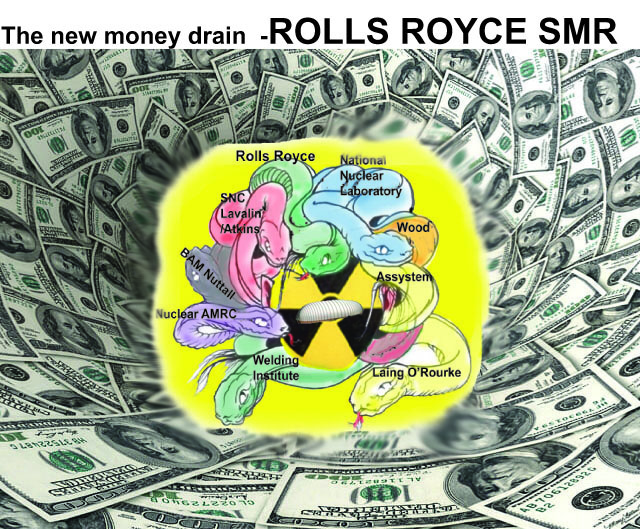
Rolls-Royce is expected to cut thousands of jobs as it launches a dramatic
turnaround plan to save costs. New chief executive Tufan Erginbilgic, who
has described the aero-engineering giant as a “burning platform” that
needs to reform to survive, has parachuted in consultants led by McKinsey
to advise on streamlining the company. Plans to merge departments could cut
10 per cent of the company’s approximately 30,000 non-manufacturing
staff, one consultancy source said. Part of the programme will involve
merging its non-manufacturing departments in each of Rolls’s civil
aerospace, defence and power systems divisions.
Times 27th May 2023
https://www.thetimes.co.uk/article/rolls-royce-prepares-to-swing-the-axe-on-jobs-phlxmxbnk
Hinkley Point C – Why nuclear power accelerates carbon emissions

https://bhesco.co.uk/blog/hinkley-point-c-why-nuclear-power-accelerates-carbon-emissions Kayla Ente on 21/04/2023 These carbon emissions have already been absorbed in the atmosphere, long before the plant starts producing electricity. Renewable sources of energy (like the three windfarms in Kent powering 400,000 homes) are cheaper, come with much less associated environmental destruction, and have a carbon footprint a fraction of the carbon emissions produced by the concrete footprint of nuclear power.
by Kayla Ente on 21/04/2023
In August 2018, Prof Andy Stirling and Dr Phil Johnstone published their working paper exposing the link between the fissile material produced by nuclear power plants and its importance for military purposes, where depleted uranium is used in weaponry and in submarines1.
The British government now openly admits that the taxpayer subsidises nuclear used for military purposes in our energy bills2. This is the motivation behind the ‘Regulated Asset Base’ (RAB) funding model proposed by the Government to finance new nuclear power. We will all pay for the construction of new nuclear power plants through higher energy bills.
Nuclear power is expensive, toxic and there is no solution for its long term storage. It is powerfully destructive, not only for its use in weaponry, but also leads to an increase in levels of radioactive materials in the air, as has been measured at the Atomic Weapons Establishment in Aldermaston3.
As cancer rates in the UK rise to unprecedented heights, access to health care declines, and more people and businesses cannot afford to pay their energy bills, one must question the wisdom of UK energy policy and how it is manipulated to our detriment.
Hinkley Point C will produce 25TWh of electricity per year. As the electricity is produced whether there is demand for it or not, because a nuclear power plant cannot be switched off spontaneously, the present system of financing means that the taxpayer will fund the wastage that occurs on the grid when nuclear powered electricity generated is not used.
Historically, approximately 64% of energy produced by the centralised energy generation and transmission system has been wasted4. This happens in the production of electricity – the efficiency of the plants themselves, the heat generated that is wasted and the transmission and distribution of electricity across the country. Therefore, the projected carbon emissions savings are overstated because most of the electricity produced is not used, or worse, clean renewable power is switched off to manage oversupply of electricity on the grid.
Construction on the 3.26GW Hinkley Point C nuclear power plant in Somerset began in 2016. Unprecedented feats of engineering have been achieved during the process, of which engineers are rightly proud.
In total, 74,600 tonnes of concrete has been poured to construct its base, the four intake heads and two outfall heads. 3km of cement tunnels have been constructed to expel the cooling water for the plant into the Bristol Channel.
These carbon emissions have already been absorbed in the atmosphere, long before the plant starts producing electricity. Renewable sources of energy (like the three windfarms in Kent powering 400,000 homes) are cheaper, come with much less associated environmental destruction, and have a carbon footprint a fraction of the carbon emissions produced by the concrete footprint of nuclear power.
The newest nuclear renaissance, “Great British Nuclear” is part of the government’s efforts to include nuclear power in the UK green taxonomy, i.e. that nuclear power is considered to be “environmentally sustainable”. Many see this as part of the government’s attempts to defer important investment away from wind and solar power developments (combined with investment in grid scale energy storage to ensure reliability). Because wind and solar power are the cheapest source of electricity, they embed affordability into our self sufficient energy future. They also bring higher gross value added to government accounts, as opposed to investments in carbon capture and storage which only add to the cost of generation, just to continue burning fossil fuels.
By focusing efforts on investing in partnerships with other NATO aligned countries (the USA spends $840 billion every year on its “defence” programme) in the spirit of Brexit, this government irresponsibly spends taxpayer’s money on programmes that maintain business as usual to burn fossil fuels and promote nuclear power instead of protecting its people during times of unprecedented suffering in social care, health care and energy security.
BHESCo have been saying for years that new nuclear power is a bad deal for the UK taxpayer and for the planet. Our Government should be directing its investment towards a national energy efficiency improvement campaign while encouraging the development of clean, renewable energy generation and energy storage.
Trident: Ministry of Defence confirms more than 50 radiation leaks this year

By Hamish Morrison The National 24 May 23
QUESTIONS are hanging over the safety of Britain’s nuclear arsenal after it was revealed there were 58 radiation leaks at Trident facilities in Scotland this year so far.
The Ministry of Defence (MOD) has revealed there were 15 recorded radiation leaks at Coulport and a further 43 at Faslane in 2023 as of April – but said none were considered “serious”.
Alba MP Neale Hanvey is putting pressure on the UK Government to come clean about the safety of Britain’s nuclear weapons.
……………… What constitutes ‘serious’?
Asked by The National to confirm the level of radiation at which the Government would consider a radiation leak to be “serious”, the MoD referred to the International Nuclear and Radiological Event Scale, which does not specify the level of radiation released into an environment is considered to be “serious”
………… The dates of the recorded breaches have also not been revealed.
Hanvey said: “The MoD has failed to confirm the date on which the staff at Coulport building 201 were first informed that they were being relocated to building 41 and have told me that ‘there was no requirement for a public announcement of the relocation of staff from one building to another’.
……………….“It seems that getting answers out of the MoD is like trying to get blood out of a stone. When it comes to weapons of mass destruction in Scotland, it is clear that the UK Government will tell us as much as they have to and as little as they want to.
“These answers continue to prompt further concerning questions. If the MoD will only make public ‘significant radiation exposure’, how many radiation leaks are there into the air or into Loch Long and the Gare Loch each year that the MoD are failing to tell the public about?………………………… https://www.thenational.scot/news/23545590.trident-mod-confirms-50-radiation-leaks-year/
Damning critique of Rolls Royce
The new chief executive of Rolls-Royce has delivered another damning
critique of its performance, saying that one of its core divisions has been
“grossly mismanaged”. Tufan Erginbilgic, 63, took the top job at the
aerospace and engineering group at the start of this year and weeks later
infamously described the group as a “burning platform”. In his latest
broadside, the former BP executive took aim at the performance of its power
systems division, which makes diesel and gas engines for use in
superyachts, trains and mining lorries, and for back-up power generation.
Times 22nd May 2023
Nuclear Free Local Authorities condemn UK Environment Agency’s failure to protect fish in Hinkley Point C’s nuclear project
NFLAs condemn ‘craven climbdown’ by Environment Agency over Acoustic
Fish Deterrent. In response to an ongoing consultation, the UK / Ireland
Nuclear Free Local Authorities has condemned the Environment Agency for
cravenly climbing down when faced with EDF Energy’s demand that it be
excused from providing an Acoustic Fish Deterrent at the new Hinkley Point
C nuclear power project, and has urged them not to waive this requirement.
The Environment Agency’s latest recommendation represents a complete
volte-face on its previous position on the permit requirements, which was
taken after an in-depth examination by an inspection team and by
verification by the Secretary of State. NFLA England Forum Chair,
Councillor David Blackburn said: “The consequences of the Environment
Agency granting this concession will be catastrophic for the local fish
population and marine environment.
NFLA 18th May 2023
Counting the rising costs of Scotland’s nuclear testing facility

Alan Laird, 12 May 23
https://www.thenational.scot/community/23516945.counting-rising-costs-scotlands-nuclear-testing-facility/
HOW magnanimous of Andrew Bowie, Westminster’s Nuclear Minister, not to “impose nuclear power on Scotland” (The National, May 4), although he’s a bit late with that assurance. But never mind democracy, let’s look at the cost.
Dounreay was commissioned as a test facility in 1955 on our north coast – in other words, “let’s put it waaaay up there in case something goes wrong”.
The initial research reactor “went critical” – a not very reassuring term for “started working” – in 1958.
The Dounreay Fast Reactor started up in 1959 and shut down in 1977 after 15 years of operation. Its maximum output of 14MW was negligible.
A Fast-Breeder Reactor, now an abandoned technology, began supplying 250MW from 1975 till 1995, enough for about 48,000 homes. Its cooling was by liquid sodium – 1500 tons of the stuff – which explodes instantly in contact with air. Cool.
Then there is the military site, HMS Vulcan, for development and testing the reactors of nuclear-powered submarines. From 1963 to 2015, five generations of small reactors have been tested here, routinely run at greater than operational stress to find out any faults before installation in the subs. How reassuring. As with MoD sites on the Clyde, full disclosure of breaches of health and safety are not disclosed. The site is due for decommissioning next year. Estimates of the costs are not available.
In 1998, following safety and pollution concerns, Norway, Sweden and the Irish Republic demanded the immediate closure of the site. PM Tony Blair was advised it would take £1 billion and 100 years to complete the work. By 2006, 25 years and £2.7bn was the estimate, then in 2007 it was 17 years and £2.6bn. In 2019 contracts worth £400m were awarded to continue the clean-up, with a new estimate of £4.3bn and 60 years. I guess no-one actually knows.
The site also took in foreign spent nuclear fuel for reprocessing. Unsurprisingly, many foreign customers refused to take their nuclear waste back. It’s mostly still there, along with Dounreay’s own.
The expected date of the return of the site to brownfield use is 2330. Yes, that’s more than 300 years from now. Uncountable billions of pounds and nearly 400 years of an unusable bit of Scotland is an astounding price to pay for powering 48,000 homes.
The arguments for nuclear power put forward by the industry and their UK Government lackeys are contradictory, disingenuous and downright dishonest.
Dounreay’s installation is a mere toy compared to Hunterston (both reactors now decommissioned) and Torness (the nuclear regulator thinks it should close by 2024). First estimates for decommissioning these sites is £132 billion and 120 years. I wonder when that estimate will be revised upward?
Just as a footnote, all of the UK’s uranium has to be imported. Much of it from Russia. The real reason the UK Government wants to continue with this outrageous waste of money is for the steady supply of enriched uranium for making atomic bombs. That’s worth it to them at any cost.
Rolls-Royce falls 6% as update lacks oomph and news on small nuclear business
Oliver Haill, 11 May 23, Proactive Investor 11th May 2023
Rolls-Royce Holdings PLC’s (LSE:RR.) shares fell 6% to a month’s low after its trading update contained nothing new, analysts said, with some concern about the lack of updates about its small nuclear reactor business…………
Weatherwatch: concerns over climate impact on UK nuclear power sites
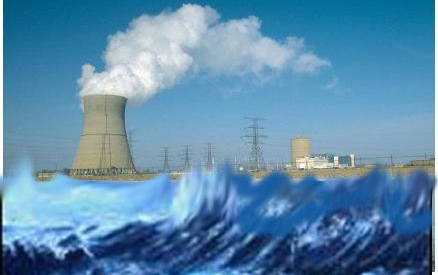
Ex-adviser worries ministers have not taken into account sea level rise and storms in selecting sites
Paul Brown https://www.theguardian.com/news/2023/may/12/weatherwatch-concerns-over-climate-impact-on-uk-nuclear-power-sites
Successive governments since the 1980s have had plans for new generations of nuclear power stations sited around the coasts of the United Kingdom. Although the main reason for building them, according to politicians, is to provide a low-carbon form of electricity to combat the climate crisis, no thought seems to have gone into what the climate crisis might do to the nuclear power stations.
Prof Andy Blowers, a former government adviser on nuclear waste, points out in the Town and Country Planning Association Journal that the eight sites identified in 2011 as suitable for new stations are the same as those identified half a century earlier, on which the first generation of nuclear power stations were built.
The reason the sites were originally chosen was their remoteness, for safety, and their proximity to the sea, for cooling purposes. The latest reasoning is that they would have a better chance of public acceptance because two generations of local people have worked in the industry. The new installations are planned to operate for 60 years and will need another century after closure to cool sufficiently to remove the waste.
Blowers, an opponent of the government plans, worries that ministers seem to have taken no account of sea level rise, intense storms and the prospect of flooding at these sites.
Campaigners against UK nuclear waste dump plan claim victory in local elections
Nuclear storage dump campaigners claim victory in local elections
Call for government to honour wishes
By Daniel Jaines Local Democracy Reporter, The Lincolnite, 11 May 23
Anti-nuclear campaigners have claimed victory in Theddlethorpe after last week’s district and parish council elections.
Opposition councillors, including independent Trais Hesketh, gained a majority of seats with a high voter turnout.
The campaign’s success saw voters “overwhelmingly reject” Nuclear Waste Service’s proposal to build a Geological Disposal Facility beneath the former Conoco gas terminal.
Prior to the election, anti-dump candidates were elected unopposed for eight of the ten available seats on Theddlethorpe Parish Council.
The Guardians of the East Coast campaigners have also claimed support from neighbouring towns such as Mablethorpe, Sutton on Sea, and Trusthorpe.
Ken Smith, chairperson for GOTEC, praised the residents for protesting through the ballot box.
“We now call upon Lincolnshire County Council and East Linsey District Council to honour the people’s decision by withdrawing from the so-called community partnership,” he said.
The Nuclear Free Local Authorities group has also backed the campaigners. Councillor David Blackburn said, “When it comes to a GDF, Mablethorpe, Theddlethorpe, and Sutton on Sea do not represent the ‘willing community’ that the government and nuclear industry say they are looking for to host the dump – instead voters there have clearly said ‘No’.”
………….An NWS spokesperson stated that the GDF would only be built where there was the consent of a willing community.
………………………………………………….. Concerns raised around seismic blasting
There have recently been concerns over the impact of seismic blasting in other areas of the UK as part of exploratory works carried out by NWS ahead of geophysical survey works.
The Lakes Against Nuclear Dump/Radiation Free Lakeland groups fear marine deaths in the Irish Sea and Allerdale’s Solway Firth area as part of Copeland exploration were a result of the seismic tests and have called for them to halt while investigations take place……… https://thelincolnite.co.uk/2023/05/nuclear-storage-dump-campaigners-claim-victory-in-local-elections
Nuclear Free Local Authorities issue appeal to King over Lincolnshire Nuke Dump

Save our sceptred isle: NFLAs issue appeal to King over Lincolnshire Nuke Dump. https://www.nuclearpolicy.info/news/save-our-sceptred-isle-nflas-issue-appeal-to-king-over-lincolnshire-nuke-dump/ 11 May 23
Just days after the Coronation, the English Nuclear Free Local Authorities (NFLAs) have written to the nation’s new Sovereign to ask His Majesty King Charles III to intercede over the plan to locate a nuclear waste dump in East Lincolnshire right next to the first Royal nature reserve.
The East Lincolnshire coast has been selected as the first of the ‘King’s Series of National Nature Reserves’ to mark the commencement of His Majesty’s Reign. A formal announcement by Natural England is expected in the summer.
The ‘Lincolnshire Coronation Coast Nature Reserve’ will cover some 21 square miles, centred upon existing protected areas at Theddlethorpe and Saltfleetby comprising mud flats, salt- and freshwater marshes and sand dunes, which support a diverse variety of wintering and breeding birds, natter jack toads, insects, and plants. The establishment of the reserve would enhance the area’s existing offer to visitors, many of whom flock to adjoining Mablethorpe to enjoy the beautiful Blue Flag award winning beaches.
So it was with regret that Councillor David Blackburn, Chair of the English Forum of the NFLAs had to sound a note of caution in his letter to His Majesty that Nuclear Waste Services has plans to locate a Geological Disposal Facility, a nuclear waste dump, right next to the reserve.
This would be the destination for Britain’s high-level, heat emitting radioactive waste, including its huge stockpile of plutonium. This waste has either already been generated through the UK’s military and civil nuclear programmes over the last 70 years or will be generated in the future through their continuance.
The GDF would comprise a surface facility approximately 1 square KM, which would most likely be located on the site of the former Conoco gas terminal in Theddlethorpe. This would be the railhead receiving regular shipments of nuclear waste. This waste would be transported below ground and out through tunnels beneath the North Sea. As nuclear waste is transported by rail, and there is no current infrastructure in place, there would be a necessity to construct a new rail line to serve the location.
The process of selecting a site for this facility could take between 15 and 20 years after which the construction and operation of such a facility would last more than 100 years.
In his letter, Councillor Blackburn contends that the project is ‘of such an immense size and in (such) a wholly inappropriate location’ that it would be ‘massively disruptive and harmful’ to the flora and fauna of the local environment, including that of the Royal Reserve, and to local people, as well as ‘massively ruinous’ to the local tourist and agrarian economy. Councillor Blackburn ends by appealing to the King on behalf of ‘His Majesty’s many loyal and anxious subjects in the affected area to intercede with relevant Ministers of the Crown to end this folly ‘.
Commenting Cllr Blackburn said: “The creation of this Royal Reserve is a wonderful idea and wholly in keeping with His Majesty the King’s known love for the natural environment. I can only hope that by drawing the Sovereign’s attention to the government’s lunatic plan to locate a nuclear waste dump next to the reserve that the King might be able to intervene to end the threat of it.”
1 This Month
26 September – International Day for the Total Elimination of Nuclear Weapons





PLEASE OPPOSE HR 8255 AND S.3639 – bills would accelerate satellite deployment, with no environmental review or safeguards – https://ncstd5li.quorum.us/campaign/169331/
To see nuclear-related stories in greater depth and intensity – go to https://nuclearinformation.wordpress.com
-
Archives
- September 2026 (291)
- August 2026 (330)
- July 2026 (355)
- June 2026 (287)
- May 2026 (306)
- April 2026 (356)
- March 2026 (251)
- February 2026 (267)
- January 2026 (308)
- December 2025 (358)
- November 2025 (359)
- October 2025 (375)
-
Categories
- 1
- 1 NUCLEAR ISSUES
- business and costs
- climate change
- culture and arts
- ENERGY
- environment
- health
- history
- indigenous issues
- Legal
- marketing of nuclear
- media
- opposition to nuclear
- PERSONAL STORIES
- politics
- politics international
- Religion and ethics
- safety
- secrets,lies and civil liberties
- spinbuster
- technology
- Uranium
- wastes
- weapons and war
- Women
- 2 WORLD
- ACTION
- AFRICA
- Atrocities
- AUSTRALIA
- Christina's notes
- Christina's themes
- culture and arts
- Events
- Fuk 2022
- Fuk 2023
- Fukushima 2017
- Fukushima 2018
- fukushima 2019
- Fukushima 2020
- Fukushima 2021
- general
- global warming
- Humour (God we need it)
- Nuclear
- RARE EARTHS
- Reference
- resources – print
- Resources -audiovicual
- Weekly Newsletter
- World
- World Nuclear
- YouTube
-
RSS
Entries RSS
Comments RSS

