UK’s nuclear industry urged to launch a new propaganda drive
 Nuclear industry urged to woo public support for ‘low carbon, secure’ energy, Express and Star UK, 3
 Dec 15 “……Lord Hutton, chairman of the Nuclear Industry Association, launched a new drive to engage with the public as plans continue to build new nuclear power stations.
He told the association’s annual conference in London that the nuclear industry had “work to do” to help improve public awareness of nuclear power…….
“There is a world of opportunity opening up,” he said, adding that a new “concordat” launched today could help change public opinion about nuclear power.
“The industry already engages in public outreach, especially in areas where they operate, or plan to build. This can be through open public consultations or school events, but as an industry we need to get the message to a wider audience, to those people who aren’t in nuclear communities…..
The aim is to take the narrative beyond the media, by encouraging people to be proud of the sector and the work they do, having the confidence to talk to other parents in the school playground, or to family and friends.
Helping the wider public understand what nuclear is, can help change opinion about the sector.”… http://www.expressandstar.com/business/city-news/2015/12/03/nuclear-industry-urged-to-woo-public-support-for-low-carbon-secure-energy/
UK Government’s Nuclear Plans – Will they work?
 NU CLearNews Dec 15 Last month we asked why the Government is persevering with the world’s most expensive power plant ever at the same time slashing support for renewable energy. (1) Renewable energy is going from strength to strength. Solar photovoltaics could provide the same amount of electricity as Hinkley Point C for half the subsidy cost (2) and we could have six times the power-generation capacity for the same money by investing in wind turbines instead of Hinkley. (3) Although the Government’s motivation is still a bit of a mystery – either it thinks we still need baseload; it wants to sustain a national nuclear industrial capability sufficient to maintain the UK’s nuclear-armed status; or it is prepared to pay over the odds to the nuclear industry to avoid democratising the energy industry.
Britons fear Donald Trump might use NATO nuclear weapons, if he becomes President
Britons seek to ban Donald Trump, eliminate nuclear weapons he might use as president,
Oregon Live, Douglas Perry 3 Dec 15 It’s beginning to look like Donald Trump really could win the Republican nomination for president, and the party’s mainstream leaders are starting to panic.
Across the pond, some Britons are way past panic. They’re rallying support to formally ban Trump from the British Isles. And, just in case the businessman/reality-TV star does become the U.S. commander in chief, there’s a separate effort from the Scottish National Party to end Britain’s Trident nuclear-weapon program, noting that the U.S. president is the de facto decider when it comes to NATO countries using nuclear weapons.
“The UK’s independent nuclear deterrent isn’t, I believe, all that independent,” SNP defense spokesman Brendan O’Hara said in Parliament last week. “In reality, it will be an American commander-in-chief who will ultimately decide, and in 18 months time that commander-in-chief could be President Donald Trump.”…….http://www.oregonlive.com/politics/index.ssf/2015/12/britons_seek_to_ban_donald_tru.html
Welcome to the fantasy world of UK’s Energy Secretary Amber Rudd
 Nu Clear News Dec 15 The Secretary of State for Energy and Climate Change, Amber Rudd, is living in a “fantasy world” where nuclear is affordable and fracking produces useful amounts of gas, according to Richard Dixon, director of Friends of the Earth Scotland. “Aiming to close down coal power stations is commendable but planning to replace them with a new fleet of gas-fired power stations will automatically lock us into a high-carbon power system, guaranteeing we won’t meet UK climate targets,” he added. (1)
France sets up Europe’s biggest solar farm: it’s cheaper than nuclear power station
 New French solar farm, Europe’s biggest, cheaper than new nuclear, Reuters, 1 Dec 15 CESTAS, FRANCE French energy group Neoen on Tuesday inaugurated a 300 megawatt (MW) solar farm, Europe’s biggest, which will produce power at a price below that of new nuclear plants.
Built on a 250-hectare site south of Bordeaux, the plant will provide power for 300,000 people and cost 360 million euros. It will sell power at 105 euros per megawatt-hour (MWh) for 20 years, well below the cost of power from new nuclear power reactors.
“We will deliver power at an extremely competitive price, similar to wind power, and at any rate cheaper than the cost of power from new nuclear plants,” Neoen Chief Executive Xavier Barbaro told reporters on Tuesday…….
Barbaro said the facility’s solar panels are not oriented toward the south, but on an east-west axis, which allows them to produce three to four times more power for the same surface area.
The east-west orientation also allows the panels to produce more power early in the morning and late in the afternoon, which corresponds more closely to French power demand patterns…..
Barbaro said Neoen’s Bordeaux solar plant shows that solar photovoltaic can be highly economical in terms of geographical footprint.
He also said while the solar panels are Chinese made, they make up only a minority part of the investment and that the main costs are related to construction, engineering, cabling and electrical equipment, for which there are many competitive French suppliers.
Neoen has said it aims to install 1,000 MW of capacity by 2017, about half in France.
(Reporting by Claude Canellas; writing by Geert De Clercq, editing by David Evans) http://www.reuters.com/article/2015/12/01/us-climatechange-summit-france-solar-idUSKBN0TK5GW20151201#e7rJbmSSCOht6lPU.97
German utility RWE splits, in order to deal with costs of nuclear station closures
Germany’s RWE splits to better absorb cost of nuclear plant closures , Reuters, 1 Dec 15
* Nuclear provisions will remain with parent group
* Plans follows spin-off by larger peer E.ON
* RWE shares close up nearly 17 pct
* Utility being advised by Goldman Sachs (Recasts, adds fund manager, details)
By Christoph Steitz FRANKFURT, German utility RWE moved to restructure its businesses to better absorb the cost of nuclear plant closures on Tuesday, sending its shares up nearly 17 percent, their biggest one-day gain in seven years.
To extract funds from its healthier businesses, Germany’s second-biggest utility will hive off its renewables, grids and retail units into a separate entity and sell a 10 percent stake in an initial public offering late next year.
It said it would keep its conventional power generation business, including its remaining nuclear plants and the liability for their shutdown, hoping to avoid a political stand-off over nuclear provisions that led peer E.ON to backtrack on a similar plan.
RWE’s Chief Executive Peter Terium was tight-lipped as to why the group decided to split now, a year after larger peer E.ON said it would spin off power plants, energy trading and oil and gas activities into a separate unit, Uniper.
Analysts, however, said RWE’s plan should ease concerns in Berlin, which has been worried that utilities would not honour the costs of Germany’s policy to close its nuclear plants by 2022. Political pressure forced E.ON to change its plans and take back its German nuclear plants along with the 16.6 billion euros ($17.6 bln) in provisions…….
NUCLEAR EXIT
Squeezed by a decline in wholesale power prices and a surge in renewables, German utilities are struggling to make money operating coal- and gas-fired power plants.
In addition to falling prices, the utilities have suffered from concerns over their ability to come up with as much as 80 billion euros in combined funding to pay for shutting down the country’s nuclear plants by 2022….. http://www.reuters.com/article/2015/12/01/rwe-restructuring-idUSL8N13Q2CP20151201#CbUEEVuQLV8LBJoJ.97
Germany expecting nuclear utilities to pay the costs of decommissioning and disposal of radioactive trash
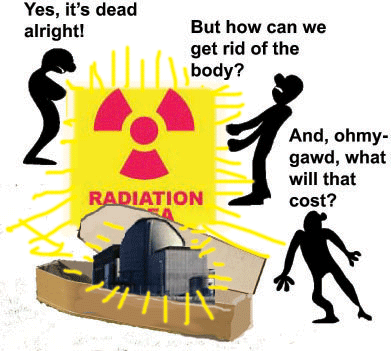
 Germany: Utilities Must Shoulder Nuclear Phase-Out Costs http://www.powermag.com/germany-utilities-must-shoulder-nuclear-phase-costs/ 12/01/2015 | Sonal Patel Germany’s nuclear power–producing companies will be able to shoulder the costs of the nuclear phase-out—including costs for decommissioning and the disposal of radioactive waste. That’s according to the country’s Federal Ministry for Economic Affairs and Energy, as it published the results of a “stress test” on October 10. The government on July 1 reaffirmed that energy companies must bear the costs of dismantling their nuclear plants and concluded in October that reserves set aside by EON SE, RWE AG, Energie Baden-Wuerttemberg AG, Vattenfall AB, and Stadtwerke Muenchen GmbH of €38.3 billion ($41.98 billion) are within various scenarios examined during the stress test.
In the wake of the Fukushima disaster, Germany decreed the phase-out of all its nuclear capacity by December 2022. It shuttered eight reactors in the immediate aftermath of the Japanese earthquake and tsunami, and this June it closed the Grafenrheinfeld plant (Figure 3). Eight reactors remain open.
The government-commissioned study, prepared by auditing company Warth & Klein Grant Thornton AG, breaks down expected costs across five different categories, from dismantling to final storage. It finds that cost estimates made by companies are higher than the international average. Dismantling costs in Germany are estimated by the companies at €857 million ($939 million) per reactor compared to between €205 million ($224 million) and €542 million ($594 million) in other countries. If nuclear plants are dismantled in “an efficient manner,” overall costs could be slashed by about €6 billion ($6.5 billion), the auditors also said.
“We do not consider the scenarios requiring the highest provisions to be likely to materialise, as they are based on the assumption of major losses being incurred by the companies over a long period of time,” Minister Sigmar Gabriel said. Gabriel noted that the Federal Cabinet will soon establish a commission to review financing for the nuclear phase-out to adopt draft legislation on extended liability for the dismantling of nuclear power plants and the disposal of nuclear waste. The results of the stress test will be made available to the commission.
France to spend billions on African renewable energy projects
 COP21: France to spend billions on African renewable energy projects Guardian, 1 Dec 15
François Hollande tells Paris climate summit that his government will double investments in wind, solar and hydropower to €2bn France plans to spend billions of euros in renewable energy and other environmental projects in its former west African colonies and across Africa over the next five years, President François Hollande said on Tuesday.
Africa produces little of the greenhouse gases such as carbon dioxide, produced by burning fossil fuels, linked by scientists to rapid climate change. But it is particularly vulnerable to a changing climate, as much of its population is poor, rural and dependent on rain-fed agriculture.
Hollande told a conference on Africa, held as part of climate change talks in Paris, that his government would double investments in renewable energy generation, ranging from wind farms to solar power and hydroelectric projects, across the continent to €2bn between 2016 and 2020……..
African leaders want the biggest polluting nations to commit to financing as part of contributions to an internationally administered Green Climate Fund, that hopes to dispense $100bn a year after 2020 as a way to finance the developing world’s shift towards renewables. http://www.theguardian.com/environment/2015/dec/01/cop21-france-to-spend-billions-on-african-renewable-energy-projects
Public Trust is one option under discussion for managing Germany’s nuclear waste storage
 Minister signals German trust could handle nuclear waste storage http://uk.reuters.com/article/2015/11/29/uk-germany-nuclear-decomissioning-idUKKBN0TI0MH20151129 Germany could share responsibility for phasing out nuclear power with energy firms by setting up a publicly managed trust, the environment minister said on Sunday.
Barbara Hendricks’ comments to Deutschlandfunk radio follow calls by Germany’s top energy firms utilities on Berlin to help handle the country’s nuclear exit and set up a trust for decommissioning plants and the storage of radioactive waste.
A government-appointed commission is tasked with recommending by early 2016 how to safeguard the funding of fulfilling the exit.
The use of a public trust is one option under discussion and closely eyed by investors, as utilities would then have to transfer certain assets, most likely cash and minority stakes.
Chancellor Angela Merkel accelerated the shift away from nuclear power and fossil fuels towards renewable sources of energy such as wind, hydro, solar and biomass power afterJapan‘s Fukushima disaster in 2011.
Germany’s “big four” utilities – E.ON, RWE, EnBW and Vattenfall – have already set aside nearly 40 billion euros ($42 billion) to fund the decommissioning and waste disposal but say they cannot handle the problem on their own. Hendricks said half of provisions could remain with the utilities to pay for the dismantling of the nuclear power plants.
“And yes, if the other half was put into a publicly managed fund, so that the finances were available for finding and establishing sites for storage, then that would be progress. I would agree to that.” (Reporting By John O’Donnell and Christoph Steitz)
China marketing nuclear technology etc to Czech Republic
 China, Czech pledge closer nuclear power, finance cooperation BEIJING, Nov. 27 (Xinhua) — Chinese Premier Li Keqiang and his Czech counterpart Bohuslav Sobotka pledged to boost cooperation in nuclear power, finance and other sectors during talk on Friday.
“China’s nuclear power technology and equipment are safe and inexpensive, which has made them competitive globally,” Li said, adding that the Chinese side is willing to participate in Czech’s nuclear power business.
Sobotka, who is making his first official visit to China, said he welcomes China’s participation in Czech’s nuclear power business. He added that the two sides can study the feasibility of conducting nuclear power cooperation in markets outside of the two territories.
Earlier this week, Sobotka attended the fourth summit of China and Central and Eastern European (CEE) countries in east China’s Suzhou city, where Li proposed to set up a multilateral financial firm between China and the 16 CEE countries.
On the financial front, Li said on Friday that he hopes China and Czech will innovate and expand the mode of financial cooperation within the framework if the “16+1” financial firm in discussion, which he said will strongly support practical cooperation between the two countries.
China stands ready to talk with Czech on establishing a RMB settlement mechanism in Prague, Li added……..http://news.xinhuanet.com/english/2015-11/27/c_134862920.htm
Russia now plans to store nuclear wastes on Arctic islands !
 Has the world gone crazy? Particularly Russia! What right do they have to impose this poisonous trash on Arctic islanders? And where radioactive pollution will further endanger the ocean? Have they not heard of climate change? Of rising sea levels? Have ANY nuclear powers ever entertained the thought of just stopping making radioactive trash for which there is no real solution?
Russia plans to build radioactive waste storage on Arctic islands of Novaya Zemlya http://tass.ru/en/economy/839293 November 25, 2015
 Until 1992, the waters off the coast of the archipelago of Novaya Zemlya had been the main area for sinking solid radioactive waste from the Soviet nuclear vessels based in the North ARKHANGELSK, November 25. /TASS/. Russia’s Rosatom state nuclear corporation intends to build a low-and medium-level radioactive waste disposal facility in the area of the Novaya Zemlya archipelago. Rosatom’s relevant request is to be considered on Wednesday by deputies of the Arkhangelsk regional assembly.
The press service of the regional assembly reported that before the session the lawmakers held a roundtable discussion to discuss the project. Deputy head of Rosatom department for work with regions Andrei Polosin said: “We do not plan to build this facility right now. We just need a permission to conduct additional studies.” “To get started, we need seven years. It’s a very big project, requiring many different approvals,” he added.
According to experts, about 50 tonnes of radioactive waste from the operation of nuclear-powered submarines in Severodvinsk have been accumulated in the Arkhangelsk region. The construction of a waste disposal facility on Novaya Zemlya would attract additional investment to the region and create new jobs.
Until 1992, the sea off the coast of the Arctic archipelago of Novaya Zemlya had been the main area for sinking solid radioactive waste from the Soviet military and civilian nuclear vessels based in the North. A total of about 17,000 containers with solid radioactive waste, as well as 16 nuclear reactors from submarines and icebreakers were sunk in the Arctic. In 1982, the K-27 emergency nuclear submarine with unloaded reactor was sunk in Stepovoi Bay. The radiation situation in these areas is regularly monitored by expeditions of the Emergency Situations Ministry and the Russian Academy of Sciences. According to their data, solid radioactive waste dumped during the Soviet years off the coast of Novaya Zemlya at present poses no threat to the environment, but requires constant monitoring
Nuclear weapons on hair-trigger alert: time to take steps towards safety


 Could U.S.-Russia Tensions Go Nuclear? Politico Believe it or not, hair-trigger launch alerts are still with us—and perhaps even more dangerous than during the Cold War. By Bruce Blair November 27, 2015 The Russian warplane recently shot down inside Turkey’s border with Syria fits a pattern of brinkmanship and inadvertence that is raising tensions and distrust between Russia and U.S.-led NATO. Low-level military encounters between Moscow and Washington are fanning escalatory sparks not witnessed since the Cold War. And there exists a small but steadily growing risk that this escalation could morph by design or inadvertence into a nuclear threat.
The backdrop for these concerns is that both the United States and Russia maintain their nuclear command posts and many hundreds of strategic nuclear warheads on hair-trigger alert. This is a long-standing practice, or habit, driven by the inertia of the Cold War. The two sides adopted the accident-prone tactic known as launch-on-warning in order to ensure that their strategic forces could be fired before incoming warheads arrived. President Barack Obama’s recent nuclear employment guidance reiterated the need to preserve this option. Our nuclear command system and forces practice it several times a week. So do the Russians.
And believe it or not, Russia has shortened the launch time from what it was during the Cold War. Today, top military command posts in the Moscow area can bypass the entire human chain of command and directly fire by remote control rockets in silos and on trucks as far away as Siberia in only 20 seconds.
Why should this concern us? History shows that crisis interactions, once triggered, take on a life of their own. Military encounters multiply; they become more decentralized, spontaneous and intense. Safeguards are loosened and unfamiliar operational environments cause accidents and unauthorized actions. Miscalculations, misinterpretations and loss of control create a fog of crisis out of which a fog of war may emerge. In short, the slope between the low-level military encounters, the outbreak of crisis and escalation to a nuclear dimension is a steep and slippery one.
Somewhere along this slope, a psychological construct known as “deterrence” is supposed to kick in to prevent the use of nuclear weapons. But deterrence can become an extreme sport during a confrontation, a game of taking and manipulating existential risk, morphing into games of chicken, bluff, coercion and blackmail. The basic idea is to instill fear in an adversary’s mind that events could spin out of control and result in a nuclear war.
That’s especially true since the public doesn’t realize just how little time exists for our leaders to make a decision to use nuclear weapons, even today—and if anything the atmosphere has become even more hair trigger with the threat of cyberwarfare. A launch order is the length of a tweet. Missile crews in turn transmit a short stream of computer signals that immediately ignite the rocket engines of many hundreds of land-based missiles. For the United States, this takes 1 minute. As a former nuclear-missile launch officer, I personally practiced it hundreds of times. We were called Minutemen. U.S. submarine crews take a little longer; they can fire their missiles in 12 minutes.
The last time the U.S. brandished nukes wholesale for the purpose of deterrence was in 1973………
Do U.S. leaders understand that the Russians may fear a decapitation threat is emerging, and that this threat may be the underlying driver raising the stakes for Russia to the level of an existential threat warranting preparations for the use of nuclear weapons? I doubt they do.
At some point one side or the other may blink and back off, or maybe not.
Tensions could continue to rise until the crisis escalates by intention or inadvertence to the threshold of nuclear use. In the case of Russia, this threshold is low. Russia’s strategy in Europe was devised by President Vladimir Putin himself in the year 2000 in response to NATO’s bombing of the Balkans. The strategy is called “de-escalatory escalation,’ which unleashes tens to hundreds of nuclear weapons in a first strike meant to shock an adversary into paralysis. And so it might, or it might just escalate into a nuclear exchange………
It is aggravated by a murky new threat—cyberwarfare. Given our poor comprehension of this cyberthreat, it seems imprudent in the extreme to keep U.S. and Russian command systems poised to launch on warning, and nuclear missiles poised to fly as soon as they receive a short stream of computer signals, whose origin may not be authorized.
Given all this risk-taking, which extends with even greater force to other nuclear weapons countries, and given that deterrence itself is nothing more or less than the manipulation of nuclear risk, we cannot reasonably expect nuclear weapons never to be used..
The obvious solution is to eliminate nuclear weapons entirely, but of course that will not happen overnight. Meanwhile, the following seven measures would help move the dial further away from nuclear midnight. They draw upon the recent report of the Global Zero Commission on Nuclear Risk Reduction……..
One. The United States and Russia could agree to eliminate launch-on-warning from their strategy………
Two. They could agree to begin taking their strategic missile forces off of hair trigger,……
Three. All the nuclear weapons countries could agree to refrain from putting any nuclear forces on high alert except under tightly controlled conditions…..
Four. The U.S. and Russia could work with other nuclear establishments to share knowledge, best practices and technologies in the area of safety and security..
Five. The U.S. and Russia, perhaps with China, could lead an effort to ban cyberwarfare…..
Six. Confidence-building measures agreed to through military-to-military dialogue ……
http://www.politico.com/magazine/story/2015/11/russia-us-tensions-nuclear-cold-war-213395#ixzz3sirbYxpC
Nuclear giants AREVA and Hitachi to help dismantle Japan’s nuclear recators
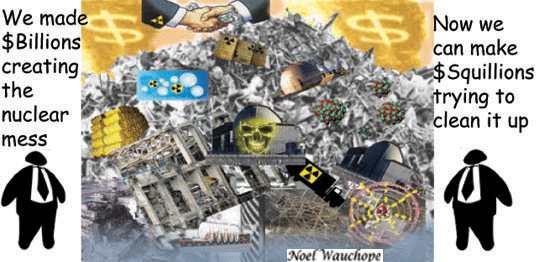
Areva was involved in the Fukushima clean-up, but that reactor is not covered by the new agreement, the French group said in a statement. It has been working with Hitachi to improve Japanese reactors’ safety for the past two years.
Areva’s role will now be to participate in preliminary studies for dismantling boiling-water reactors.
Prime Minister Shinzo Abe’s government has been pushing for a return to nuclear power to generate electricity after Japan’s several dozen reactors went offline in the wake of the 2011 disaster.
The resource-poor nation’s energy bill has soared since it was forced to turn to fossil-fuel imports to plug the gap.
But the Japanese public remains wary of atomic power, and Abe’s push has prompted rare protests and damaged his popularity.
France’s new energy law to drastically limit electricity from nuclear power
 France’s nuclear industry on back foot over new energy law, Ft.com Michael Stothard in Paris ,26 Nov 15 Designed to shift France on to a greener footing ahead of next week’s climate change conference in Paris, the adoption of a new energy law has instead alarmed the country’s powerful nuclear industry and raised fundamental questions about the country’s energy mix.
The long-awaited energy transition law was finally passed with nearly 1,000 amendments and after a gruelling 150 hours of parliamentary debate.
Russia keen to market nuclear power to impoverished Cambodia
Russia to help Cambodia build capacity for nuclear power, REUTERS, YEKATERINBURG,  RUSSIA/PHNOM PENH 26 Nov
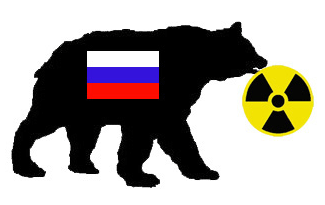 Russia will help Cambodia work towards building a nuclear power plant under an agreement the two countries signed this week, said Sergei Kirienko, the head of state nuclear firm Rosatom.
Cambodia depends heavily on imported fuel and power. Electricity in the country is among the most expensive in Southeast Asia and a common source of complaint from investors.
“The Cambodian government is mulling, in future, a nuclear power station construction,” Kirienko told reporters on Wednesday when asked about the agreement.
Cambodian energy officials declined to comment on the deal on Thursday.
The agreement was signed during a visit by Russian Prime Minister Dmitry Medvedev to Cambodia this week. His visit was the first to Cambodia by a senior Russian politician since 1986.
Under the terms of the agreement, Russia will provide expertise, research and training to Cambodia…… http://www.reuters.com/article/2015/11/26/us-cambodia-russia-nuclear-idUSKBN0TF0W220151126#siJ8T6T4vdeKAEm8.97
1 This Month




Shut down the radiation-damaged Heysham nuclear reactors now
To see nuclear-related stories in greater depth and intensity – go to https://nuclearinformation.wordpress.com

Say No to NASA’s Reckless Nuclear Reactor on the Moon
Say No to NASA’s Reckless Nuclear Reactor on the Moon
-
Archives
- November 2026 (12)
- October 2026 (302)
- September 2026 (339)
- August 2026 (330)
- July 2026 (355)
- June 2026 (287)
- May 2026 (306)
- April 2026 (356)
- March 2026 (251)
- February 2026 (267)
- January 2026 (308)
- December 2025 (358)
-
Categories
- 1
- 1 NUCLEAR ISSUES
- business and costs
- climate change
- culture and arts
- ENERGY
- environment
- health
- history
- indigenous issues
- Legal
- marketing of nuclear
- media
- opposition to nuclear
- PERSONAL STORIES
- politics
- politics international
- Religion and ethics
- safety
- secrets,lies and civil liberties
- spinbuster
- technology
- Uranium
- wastes
- weapons and war
- Women
- 2 WORLD
- ACTION
- AFRICA
- Atrocities
- AUSTRALIA
- Christina's notes
- Christina's themes
- culture and arts
- Events
- Fuk 2022
- Fuk 2023
- Fukushima 2017
- Fukushima 2018
- fukushima 2019
- Fukushima 2020
- Fukushima 2021
- general
- global warming
- Humour (God we need it)
- Nuclear
- RARE EARTHS
- Reference
- resources – print
- Resources -audiovicual
- Weekly Newsletter
- World
- World Nuclear
- YouTube
-
RSS
Entries RSS
Comments RSS

