Ukraine’s troubles continue with the toxic Chernobyl site
Fukushima Amplifies Murphy’s Law COUNTERPUNCH DECEMBER 14, 2015 by ROBERT HUNZIKER “……….. In sharp contrast to Japan’s position, Chernobyl’s officialdom has a different take on “permissible annual radiation exposure,” specifically: “The radiation limit that excluded people from living in the 30km zone around the Chernobyl nuclear plant exclusion zone was set at 5mSV/year, five years after the nuclear accident. Over 100,000 people were evacuated from within the zone and will never return,” (Greenpeace Japan). Never ever return!
Nuclear disasters don’t go away easily. For example, Chernobyl is already facing a brand new crisis. The durability of the original decaying blighted sarcophagus expires within the next 12 months. However, the new replacement sarcophagus, the world’s biggest-ever metallic dome, will not be accomplished in time as they are short of funds (615million EUR).

In addition to Ukraine’s internal strife with pro-Russian citizens, the country has serious financial difficulties. All of this amounts to one more “spoke in the wheel” against nuclear reactor proliferation (Incidentally, China has 400 reactors on the drawing board). Who knows if and when a crippled reactor ends up in the hands of a financially strapped country? Then what?
Already, Ukraine has 15 nuclear reactors standing tall, so far, amongst whizzing bullets and powerful rockets. Dismally, Ukraine has conceivably become a nuclear holocaust tinderbox in the midst of cannon fire, rumbling tanks, and surface-to-air missiles, for example, Malaysia Airlines Flight 17 was shot down by a missile, supposedly by accident, on July 17, 2014, all 298 on board died……….. http://www.counterpunch.org/2015/12/14/fukushima-amplifies-murphys-law/
Missing highly enriched uranium canisters probably came from Mayak nuclear facility
In the age of terrorism, disturbing questions remain on nuclear security, WP, By Editorial Board December 14 THREE TIMES in the past 16 years — Bulgaria in 1999, France in 2001 and Moldova in 2011 — containers of highly enriched uranium have been seized by authorities, according to an article published online last month by the Center for Public Integrity, a nonprofit investigative news organization. In each case, the person holding the uranium said it was part of a larger cache for sale.
Such proffers have in the past been made by employees at nuclear facilities in the former Soviet Union who smuggled the material out of their plants. In 1992, a worker diverted approximately 3.3 pounds of weapons-grade uranium from a facility in Russia, taking it home bit by bit, storing it on his balcony. He was arrested at the local train station, planning to travel to Moscow to sell it.
But the three containers of highly enriched uranium have something in common that until now has been kept secret. According to the article, forensic analysis by U.S. and French nuclear scientists strongly suggests that the materials came from the same source. The analysis indicates all three samples were produced in the early 1990s at a Russian nuclear facility, the MayakProduction Association, located near the town of Ozersk in the Ural Mountains region of Chelyabinsk. The uranium could have been removed in the chaotic early years after the Soviet Union collapsed, when many such facilities were poorly guarded, and it may now be anywhere……..https://www.washingtonpost.com/opinions/nuclear-insecurity/2015/12/14/21a7f38a-938e-11e5-b5e4-279b4501e8a6_story.html
Real possibility of accidental nuclear war between USA and Russia
 “An Accidental Nuclear War between the U.S. and Russia is Possible”. Nuclear Holocaust in Just 30 Minutes – Former US Navy Advisor By Dr. Theodore Postol and Sophie Shevardnadze
Global Research, December 13, 2015
The Nuclear End of the World never happened. When the Cold War finally ended, the whole world sighed in relief as the threat of total annihilation seemingly passed. And yet, 25 years later, both the US and Russia once again are pumping up their nuclear arsenal, and the Doomsday Clock shows it’s just three minutes before midnight. Is nuclear destruction looming once again over humankind? And, even if no state is actually ready to press the button – could Atomic Armageddon happen by accident? We ask these and many other questions to a specialist on nuclear technology, a professor from MIT and a former adviser to the US Chief of Naval Operations. Dr. Theodore Postol is on Sophie&Co……
That could take 10 or 15 minutes. In the case of actually launching a rocket, that would take 40-60 seconds, more or less, depending on procedures – which are easily changed. The rocket will then ignite, it would fly out of its silo or its launch hall in the submarine, it would typically undergo powered flight for about… between 150 and 300 seconds, depending on whether or not the rocket is what’s called a “solid-propellant” or “liquid propellant”, so in one case 5 minutes, in other cause, maybe, 2,5 minutes – and then it would release warheads. The warheads would float in the near vacuum of space under the influence of gravity and momentum, and in about 20-28 minutes would arrive at their targets, re-enter the atmosphere and explode. So the world could be, basically, finished off in anywhere from half hour to an hour upon the arrival of these warheads. People who think about these things generally expect – nobody really knows what to expect – but if you have a massive exchange, most nuclear warheads would be delivered in a very short time, probably within half hour or an hour interval.
SS: Now, the bombs that Russia and the U.S. have in their arsenal right now – they are 100 times more powerful than the ones that were used in Hiroshima and Nagasaki. How devastating would be the aftermath of the nuclear explosion be today?
Dr.TP: They are more than 100 times more powerful. Typical warhead from a Russian missile like what we call the SS-18, the one of these warheads – this rocket can carry up to 10 warheads – one of these warheads, detonated over New York city, for example – one! – would essentially destroy all of Manhattan, most of Staten Island, probably all of it, basically. Large parts of New Jersey to the west. basically, the borough of Brooklyn and most of Queens and the Bronx out to a range range of, maybe, anywhere from, I’d say, 10 kilometers range from the central area where it exploded. If you had a similar warhead from the U.S. over Moscow, it would destroy, again, most of the city. It would, again, destroy a 150 square kilometers of the city easily and that’s only one warhead. There would be many warheads targeted on each of these great cities by the other side.
SS: Now, you wrote that there’s a lack of quality staff in the American nuclear forces. Are you saying nuclear arsenal is not being looked after properly, or is it safe?
Dr.TP: I think, there are very serious problems with the nuclear arsenal at the current time. Basically, what is going on is there is a catastrophic falling of morale among the troops…….
the leadership of the U.S. has domestic – again, I want to underscore this, domestic political, not international, political commitments to doing missile defence. The Congress is deeply committed to it. I think, the big defence companies that do the work wanted to keep their contracts and the American Congress is strongly influenced by the ability of these companies to influence elections through their money. I think the President has not behaved…has not shown leadership in this particular area. He has backed away from his original scepticism, which was well-justified, about the value of these missile defences in terms of their technical capability, and…
The U.S. has vast industrial power, vast wealth. It has shown that it is more than able to engage in irrational military activities, and the Russian military cannot be assured that the U.S. won’t make some kinds of changes in some unforeseen future scenario to this missile defence. So you can have a missile defence, like the Americans have, which technically speaking is a joke – I want to underscore it, it’s a technical joke in terms of what it can do – but, the Russian military has almost no choice but to treat it as if it is a serious concern. So you get the worst of both worlds. Even from an american point of view – a missile defence that doesn’t work, but is treated by the Russian side as if it works……. http://www.globalresearch.ca/an-accidental-nuclear-war-between-the-u-s-and-russia-is-possible-nuclear-holocaust-in-just-30-minutes-former-us-navy-advisor/5495548
Tax-payer funding to go to Britain’s small nuclear reactor companies!
 In pursuit of partners: the UK doubles down on small modular reactors, Power Technology 9 December 2015 At the end of November, the UK Treasury announced a doubling of nuclear funding alongside a design competition to “revive the UK’s nuclear expertise and position the UK as a global leader in innovative nuclear technologies”. With small modular reactors a particular focus, Taylor Heyman profiles the companies that will be looking to throw their hat in the ring.
In the run-up to the 2015 Paris climate talks, UK chancellor George Osborne announced funding of £250m over five years to put the UK at the forefront of world research and development of small nuclear reactors (SMRs)….
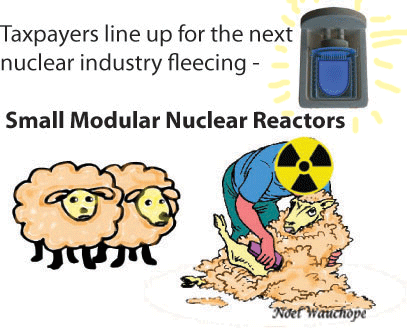
The autumn statement also included details of a design competition to be launched in early 2016 to find the “best value small modular reactor design for the UK”, the Treasury said in the spending review policy paper. The competition is the beginning of a government strategy to complete an SMR sometime in the 2020s…
UK SMR: the contenders
There are bound to be a number of big players clamouring for the opportunity to work with the UK government in developing the UK’s first SMRs. Last December, the National Nuclear Laboratory (NNL), in conjunction with a range of research organisations and companies, released a feasibility study focusing on SMRs in the UK, commissioned by the Department of Energy and Climate Change (DECC). The review found four financially and techically viable options for SMR designs, by China National Nuclear Corporation (CNNC), B&W and Bechtel, Westinghouse and NuScale.
CNNC’s ACP100 design is a 310MWt pressurised water reactor designed to produce between 100 and 150MWe. The IAEA began a safety review of the design in July 2015, assessing the reactor’s safety, environmental impact and other elements of the design.
The BWXT mPower™ from B&W and Bechtel is an integral 530MWt pressurised water reactor which will produce around 180MWe. The team won the first round of funding from the cost-sharing funding initiative with the U.S. Department of Energy (DOE), Tennessee Valley Authority (TVA) and Bechtel, but decided to scale back their funding in April 2014. This considerably slowed the pace and scale of development.
Westinghouse, a company well-established and employing over 1,000 people in the UK has already presented the British Government with its proposal to partner in deploying SMR technology throughout the UK. The Westinghouse SMR design is a 225MWe integral pressurized water reactor with all primary components located inside the reactor vessel.
The NuScale offering is a 160MWt reactor which operates using the principles of natural circulation rather than traditional pumps. It can produce 50MWA. The idea behind the smaller design is scalability; reactor units can be added or taken away depending on demand. NuScale Power won the second round of DOE funding in 2013, receiving $217m over five years in cost-share funds to develop, license and commercialise its SMR technology. The first is projected for 2024 in Idaho, US.
No doubt other contenders for the partnership will come to the fore once details of the January competition are released by DECC. Whichever company is chosen, NNL hopes to play a role in the development of SMRs for the UK. “We have a strong capability in reactor design, including SMRs,” says NNL’s director of external relations Adrian Bull. “So we feel we would be well-placed to carry out significant scope within the overall programme.” http://www.power-technology.com/features/featurein-pursuit-of-partners-the-uk-doubles-down-on-small-modular-reactors-4749180/
Toshiba’s financial travails threaten UK’s nuclear power plans
Toshiba travails pose another threat to UK’s nuclear future, The Week Dec 11, 2015
Company is said to be touting for new investment as costs of its accounting scandal bite. First it was Hinkley Point, now it’s Moorside. Another project to add to the UK’s new generation of nuclear power plants has apparently hit the rocks.
Sources “with direct knowledge of the matter” told Reuters that Toshiba is asking around among Japanese financial institutions for help to fund the Moorside project, being built near the Sellafield site in west Cumbria. The plant will house three reactors designed by Toshiba subsidiary Westinghouse Electric to produce 3.4 gigawatts of power, slightly more than Hinkley Point in Somerset.
Two years ago the project was estimated to cost around £8bn, the Guardiannotes, but this could have doubled since, as the assumed cost of labour and meeting stringent regulations has increased. Reuters says Toshiba’s share of the costs would be £2bn, but since its accounting scandal it is now thought to have “become difficult for Toshiba to do this on its own”.
The sources said Toshiba “had made requests to Japanese insurers as well as some banks, including Norinchukin Bank, and has hired HSBC as a financial adviser”…..http://www.theweek.co.uk/67731/toshiba-travails-pose-another-threat-to-uks-nuclear-future
Britain’s heavy burden – its Trident nuclear programme
Nuclear Deterrent or Millstone?, America, December 21-28, 2015 Issue David Stewart For decades, Britain has possessed an independent nuclear deterrent capability. While public attention to that nuclear capacity has waxed and waned, it has always been controversial. The issue has arisen again here in Britain, launched, as it were, by several factors: the election of Jeremy Corbyn, a lifelong supporter of nuclear disarmament, as leader of the U.K. Labour Party; a looming need to upgrade and replace the current nuclear force, evoking concern about cost; and, finally, the Scottish independence referendum, which last year brought renewed focus on the Royal Navy’s submarines, packed with nuclear weapons, that are home-ported on Scotland’s west coast. Most recently, a controversial commentary during a television program by a high-ranking U.K. military officer brought the debate back to life, as has, indirectly, the terrorist attack in Paris.
The cost of the proposed replacement keeps rising; the most recent estimate is £163 billion—about $244 billion. Prime Minister David Cameron is determined to proceed with the modernization. The opposition focuses on the enormous price tag during a time of austerity and great need elsewhere. To many the proposed expenditure appears obscene. A further dimension to the debate is just emerging: Is such a huge cost justified even by purely strategic measures?
Many point out that France’s nuclear capacity did not deter the awful attacks on Paris in late November. The practical threat has shifted, even changed altogether. Nuclear deterrence and intercontinental ballistic missile delivery systems are useless against the danger that a group like ISIS represents….
A second Scottish independence referendum looks likely as the Scottish National Party is set to sweep next May’s Edinburgh Parliament elections. The S.N.P. utterly opposes Trident and its renewal. An independent Scotland would insist on the removal of missiles from Scottish soil and waters. Scottish politicians have wondered aloud if a U.K. government would ever countenance basing such weapons as close to London as they currently are to Glasgow. That position is striking a chord among many Scottish voters….. http://americamagazine.org/issue/nuclear-deterrent-or-millstone
Putin ramps up Russia’s nuclear forces
Putin strengthens nuclear forces as tensions with U.S. rise http://www.washingtontimes.com/news/2015/dec/11/putin-strengthens-nuclear-forces-tensions-us-rise/ By L. Todd Wood – The Washington Times – Friday, December 11, 2015
Russia’s conventional forces are strained at the moment, supporting the frozen conflicts in East Ukraine, Transdniester, South Ossetia, and an expeditionary force in Syria. With the price of crude oil approaching $30 on the global market, many analysts have said Putin’s adventure in the Middle East is unsustainable.
Nuclear weapons are Russia’s ace in the hole, the great equalizer to NATO superior numbers and technology. As tensions with the United States and NATO rise over the conflict in Ukraine and Russian operations against the Syrian resistance and the Islamic State, Russian PresidentVladimir Putin wants to remind the West of Russia’s nuclear power.
“New weapons should go to “all parts” of the nuclear triad of air, sea, and land forces,” Putin told a Defense Ministry meeting in Moscow on Friday. “Action must also be taken “to improve the effectiveness of missile-attack warning systems and aerospace defense,” reported Bloomberg. Putinsaid Russia’s military must continue its program of training drills and devote special attention to the “transport of troops over long distances” as well as “strategic nuclear deterrence” and the ability to airlift forces including “anti-aircraft, missile and electronic elements.”
Putin has reminded the West repeatedly to “not forget that Russia is a nuclear power.” These recent comments, combined with his statement this week that he ‘hoped nuclear weapons would not be needed against the Islamic State,’ could be illustrative of the pressure the Kremlin feels regarding fears of social unrest with a shrinking Russian economy.
Toshiba having problems getting money to build UK nuclear power project
 Toshiba seeks financial help with £8bn UK nuclear project http://www.theguardian.com/business/2015/dec/10/toshiba-seeks-financial-help-with-8bn-uk-nuclear-project, Terry Macalister
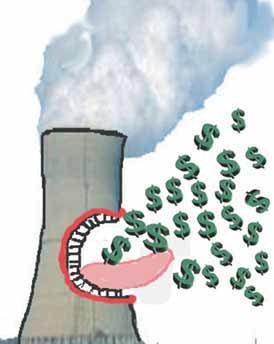
Japanese technology firm in talks with financial institutions to support atomic construction programme after share price tumbles Toshiba, the technology company at the centre of plans to build more nuclear reactors in Britain, is looking for outside help to fund its £8bn programme after a collapse in its share price.
The Japanese group is in talks with local financial institutions to support the construction of an atomic plant near the Sellafield facility in Cumbria, after running up losses following an accounting scandal.
The emergence of Toshiba’s problems will add to worries over Britain’s nuclear plans after the French energy group EDF, which plans to build the Hinkley Point C station in Somerset, dropped out of France’s CAC 40 index of leading shares.
There is widening concern in the City about the escalating costs of huge nuclear projects, which are damaging company share valuations and undermining the government’s commitment to new nuclear at a time when it has promised to phase out coal-fired power stations.
It has become difficult for Toshiba to do this (fund the NuGen programme in the north-west of England) on its own,” one source told Reuters, which reported that Toshiba had hired HSBC bank to help find new funds.
On Monday, the Japanese financial regulatorrecommended that Toshiba be fined 7.37bn yen (£40m) for overstating profits and the share price of the company is down 40% since the start of the year.
Toshiba is a 60% shareholder in the NuGen project to build 3.4 gigawatts (GW) of electricity generating capacity close to the Sellafield plant, where spent fuel is reprocessed.
Neither Toshiba nor NuGen, a partnership with Engie (formerly GDF Suez) of France, was available for comment. The cost of building three reactors designed by a Toshiba subsidiary, Westinghouse, was estimated two years ago at £8bn but experts believe that figure could have at least doubled. That is in line with the price tag for Hinkley, which EDF puts at £18bn.
The 3.2GW Somerset reactors, to be built by EDF with the help of Chinese state companies, have been given the go-ahead by the UK government but the project is awaiting the final investment decision from France.
This week EDF blamed the 85% holding by the French state and lack of free float shares for its removal from the CAC index. But many analysts in the City of London have released gloomy equity forecasts on EDF, fearing Hinkley might go over budget like the company’s Flamanville reactor project in Normandy.
Russia suspends work on Turkish Nuclear Station
Russia ‘Halts Work’ At Turkish Nuclear Plant, Radio Free Europe, December 09, 2015 Turkish officials say Russia has stopped construction work at Turkey’s first planned nuclear power plant, amid a bitter row between Moscow and Ankara.
Turkey shot down a Russian warplane on the Syrian border on November 24, prompting Moscow to impose economic sanctions on Ankara.
Unientified Turkish energy officials were quoted as saying on December 9 that Russia’s state nuclear company, Rosatom, had not terminated the contract for the building of the plant in the southern Turkish town of Akkuyu, and is reluctant to do so because of the heavy compensation clauses.
However, the officials said Turkey was assessing other potential candidates for the $20 billion project…….http://www.rferl.org/content/russia-turkey-nuclear-plant-work-halted/27417247.html
Germany’s process of decommissioning nuclear power plant
This Is How You Decommission a Nuclear Power Plant [great photos] German Chancellor Angela Merkel called time on nuclear energy in her country in 2011, after a tsunami severely damaged the Fukushima power plant in Japan, causing a major radioactive leak. Almost five years later, that process is in full swing – with an estimated cost of up to €77 billion ($84 billion). The operation to decommission Germany’s Greifswald nuclear power plant is described by German energy officials as the largest project of its kind in the world. Once the largest power plant in the former East Germany, Greifswald was closed in 1990 during German reunification. This is how it is being made safe. Bloomberg Tino Andresen , 10 Dec 15
Alexander Jones Germany’s nuclear plant operators are seeking public agreement on how to manage the burden of decommissioning the country’s atomic power stations. Chancellor Angela Merkel’s government decided in 2011 to phase out nuclear power by 2022 in light of the Fukushima disaster in Japan. ……..
The decommissioning process could force those footing the bill to set aside anything from €25 billion to €77 billion, according to scenarios.
Germany’s Economy Ministry believes that utility companies do have enough funds to pay for the shutdown and cleanup of nuclear power plants……..
Depending on the severity of contamination, some of the components will go on to be housed in temporary disposal sites before a final storage solution is found….http://www.bloomberg.com/news/photo-essays/2015-12-10/this-is-how-you-decommission-a-nuclear-power-plant
The dangers of transporting nuclear waste by sea
 Nuclear waste transport risks ,Tor Justad, http://www.shetlandtimes.co.uk/2015/12/08/nuclear-waste-transport-risks-tor-justad “…..I would wish to draw attention to the proposal from the Nuclear Decommissioning Authority to transport nuclear waste by sea from Scrabster to Barrow – a distance of over 400 miles.
This high level nuclear waste/spent fuel emanates from the Dounreay nuclear site and is intended for Sellafield – described as “the most toxic nuclear site in Europe”.
The campaigning group Highlands Against Nuclear Transport (Hant) has been campaigning since 2013 to stop this plan on the grounds that the risk to the environment, fishing, aquaculture and tourism is unacceptable.
Transporting nuclear waste by sea is opposed by environmental groups throughout the world and Hant is of the view that all nuclear waste should remain on the sites where it is produced which is in line with Scottish government policy. Hant provided an input at a Nuclear Free Local Authorities (NFLA) seminar in Lerwick in August 2015 on “Transportation of Dounreay’s nuclear materials by rail or by sea to Sellafield – is it a safe solution for reducing the nuclear legacy in Scotland?” and was pleased to hear from SIC and Kimo representatives at that seminar that they supported Hant’s position.
The need for emergency response vessels stationed around the Northern Isles and Western Isles is important to safeguard these coasts against marine accidents and emergencies of any kind but the need is increased by the proposal to transport nuclear waste.
As is well known, nuclear radiation knows no land or sea boundaries so this issue is of concern to all coastal communities in the Highlands and Islands.
Hant will continue to campaign on this issue and would urge individuals and interested organisations to support this campaign.
Russia trying to sell to Egypt nuclear reactors with 80 year operation
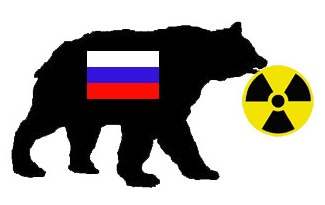 Moscow, Cairo to Discuss Construction of Nuclear Power Plant on January 31, Sputnik News, 8 Dec 15 Egyptian Ambassador to Russia Mohamed Badri said that Russia and Egypt will discuss the construction of a nuclear power plant within the framework of the Russia-Egypt intergovernmental committee on January 31……
On November 19, Moscow and Cairo signed an intergovernmental deal on the construction of a nuclear power plant in Egypt.
According to the Russian state nuclear corporation Rosatom, the plant will take around 10 years to build and will be in operation for around 80 years…….. http://sputniknews.com/business/20151208/1031425665/russia-egypt-nuclear-power.html#ixzz3tldVDvoI
Britain’s nuclear power programme a cash cow for overseas companies
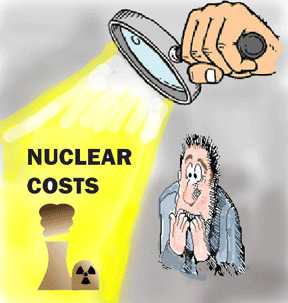 Half of £24bn nuclear reactor investment will go to overseas suppliers More than £12bn of the UK government spend on two new power plants will go abroad, mainly to companies in France, a government adviser warns, Guardian, Terry Macalister, 7 Dec 15 More than half of the £24bn expected to be spent on the first British nuclear reactors for two decades could go abroad to foreign suppliers, a leading UK academic and government adviser has warned.
The issue is of extreme political sensitivity because George Osborne has already faced criticism for providing huge subsidies to Hinkley, which is being developed by EDF Energy of France.
It will be seriously tough for British manufacturers to meet the needs of EDF in line with the commitment that 60% of the value of the project will remain in this country,” said Sir Keith Burnett, who is a member of the Council of Science and Technology reporting to the prime minister, David Cameron.
Burnett, the vice-chancellor of Sheffield University, said that 40% of the total value of the work at Hinkley Point atomic plant would largely go to French firms.
At least £4bn worth of spending on items such as pipes and pumps – around 15% of the project by value – will be up for grabs for the UK but only if local companies can provide the higher specification supplies required by EDF. Burnett thinks that will be difficult to achieve…….
Part of the problem is that small and medium-sized British firms have not had the opportunity to supply equipment to a new nuclear power station since Sizewell C in Suffolk was completed in 1995.
The Hinkley Point C facility in Somerset is still awaiting the final investment decision from the largely state-owned EDF and its Chinese partners, although ground preparation is already under way………http://www.theguardian.com/business/2015/dec/06/nuclear-reactor-investment-pay-overseas-suppliers-hinkley-point
Poland may ask for access to nuclear weapons
Poland considering asking for access to nuclear weapons under Nato program http://www.theguardian.com/world/2015/dec/06/poland-considering-asking-for-access-to-nuclear-weapons-under-nato-program
Deputy defence minister says Poland is discussing whether to join other European countries in hosting nuclear arms to strengthen defences. Poland’s deputy defence minister has said the ministry is considering asking for access to nuclear weapons through a Nato program in which non-nuclear states borrow the arms from the US.US and Poland in talks over weapons deployment in eastern Europe
Tomasz Szatkowski said the ministry was discussing whether to ask for access to Nato’s “nuclear sharing” program to strengthen the country’sability to defend itself.
Polish media said Szatkowski’s comments on Saturday to the private broadcaster Polsat marked the first time a Polish official has indicated the country wants to join the program.
Among Nato’s 28 members there are three nuclear powers – the US, France and Britain – but only the US has provided weapons to allies for nuclear sharing.
Belgium, Germany, Italy, the Netherlands and Turkey have hosted nuclear weapons as part of the program.
Paris COP21 anti-nuclear activists arrested after daring climb on Arche de la Defense
 Anti-nuclear climbers defy Paris protest ban, four arrested http://www.nukeresister.org/2015/12/04/anti-nuclear-climbers-defy-paris-protest-ban-four-arrested/ Four anti-nuclear activists defied the state of emergency ban on public protest in Paris on Wednesday, December 2, climbing up the steel cables beneath the modern Arche de la Defense to hang banners. French environmentalists joined German climbers from the action group in the ascent as the COP 21 climate talks were underway. They first deployed small banners reading “Don’t Nuke the Climate – Stop EPR” (referring to the latest French reactor design). Police were quickly on the scene, including 20 from a specially equipped mountain brigade in town for the event. They pursued the climbers up the cables and prevented a larger banner from unrolling which would have proclaimed “System Change, Not Climate Change!”
The four were taken into custody and charged with disrupting public order and violating the state of emergency before their release some hours later. The action was part of international “Climate Games”, a call to direct action against institutions responsible for climate change.
Their statement said:
“States gathered at the COP 21 are powerless to prevent climate catastrophe. Their interests are too intertwined with those of multinationals. For the political change needed to happen, it is for the people to put pressure on governments and companies responsible for climate change.
“Given the climate problem, a capitalist economic system based on growth can only give us false solutions: geo-engineering, carbon markets and of course nuclear. It does not get us out of the impasse. It feeds unbridled energy consumption… ‘System change’ is to refuse the colonial wars of appropriation of resources and ecosystem changes that cause desperate migration, exacerbate ethnic and religious tensions, and contribute to the nihilistic radicalization of a minority. Faced with the threat of terrorism and the draconian response of the State, it is all the more urgent to carry this message to the heart of French economic power.”
Climber Cécile Lecomte wrote:
“In the international climate debate, uncontrolled economic growth is not discussed as a key driver of climate change. Nuclear power is totally unsuitable as a remedy to destructive economic growth. Instead of focusing on risky technologies, in particular the industrialized countries are invited to take a change of system – towards a democratic, social and ecological economy that is aligned to the needs of all people. Less is more!”
For more information, visit http://blog.eichhoernchen.fr/post/Action-escalade-pour-le-climat-Arche-de-la-Defense-malgré-etat-d-urgence
1 This Month




Shut down the radiation-damaged Heysham nuclear reactors now
To see nuclear-related stories in greater depth and intensity – go to https://nuclearinformation.wordpress.com

Say No to NASA’s Reckless Nuclear Reactor on the Moon
Say No to NASA’s Reckless Nuclear Reactor on the Moon
-
Archives
- November 2026 (12)
- October 2026 (302)
- September 2026 (339)
- August 2026 (330)
- July 2026 (355)
- June 2026 (287)
- May 2026 (306)
- April 2026 (356)
- March 2026 (251)
- February 2026 (267)
- January 2026 (308)
- December 2025 (358)
-
Categories
- 1
- 1 NUCLEAR ISSUES
- business and costs
- climate change
- culture and arts
- ENERGY
- environment
- health
- history
- indigenous issues
- Legal
- marketing of nuclear
- media
- opposition to nuclear
- PERSONAL STORIES
- politics
- politics international
- Religion and ethics
- safety
- secrets,lies and civil liberties
- spinbuster
- technology
- Uranium
- wastes
- weapons and war
- Women
- 2 WORLD
- ACTION
- AFRICA
- Atrocities
- AUSTRALIA
- Christina's notes
- Christina's themes
- culture and arts
- Events
- Fuk 2022
- Fuk 2023
- Fukushima 2017
- Fukushima 2018
- fukushima 2019
- Fukushima 2020
- Fukushima 2021
- general
- global warming
- Humour (God we need it)
- Nuclear
- RARE EARTHS
- Reference
- resources – print
- Resources -audiovicual
- Weekly Newsletter
- World
- World Nuclear
- YouTube
-
RSS
Entries RSS
Comments RSS

