China keen to market nuclear expertise, but in the UK scrutiny is increasing

 Nuclear energy: Beijing’s power play, Ft.com Christopher Adams and Lucy Hornby, December 29, 2015 China is intent on exporting its nuclear expertise but in the UK scrutiny is increasing. “………. The French-designed plant, which after five years of construction is about to undergo testing, will serve as the prototype for a huge power station planned by the UK in south-west England. It is set to cost £18bn according to the latest estimates by French energy group EDF, which is leading the project.
Hinkley Point, in Somerset, is home to a working nuclear plant and twin disused Magnox reactors. Now David Cameron, UK prime minister, wants the site to host the first of a new generation of reactors that he envisages will replace Britain’s ageing nuclear fleet by 2030.
Under a commercial pact struck during October’s state visit to London by Chinese president Xi Jinping, CGN will take a one-third stake in Hinkley. Its state-owned rival, China National Nuclear Corporation, may also participate. A decade from now, assuming all goes to plan, Taishan’s distinctive egg-shaped reactor domes, double-hulled walls and monster turbines will dominate the shoreline of the Severn estuary. Hinkley Point C will supply 7 per cent of the UK’s electricity……….
CGN can ill-afford errors at Taishan, one of three unfinished projects using a third-generation technology called the European pressurised reactor. Designed by Areva of France, these reactors are being touted as a revolution in nuclear power. But they have had a troubled start on projects at Flamanville in France and Olkiluoto in Finland.
Taishan, too, has suffered delays, albeit not as bad as those in Europe. As a result, CGN is treading carefully. The Chinese plant’s targeted completion date, originally late 2013, has already been put back once, in part because of safety rules after Fukushima. Now it will probably come online in 2017 — though CGN will not say exactly when. Says Mr Zheng: “We must perform a lot of tests, and since it’s now a first of a kind, we need to do more tests than we planned. Those tests should have been done already in Finland or France, but we must do them now.”
The construction problems highlight the complexity of the EPR projects. There are questions over whether there really is demand for these larger reactors, given their cost and size. Mr Guo, though, is bullish. Standing under an 80-tonne door that will one day seal off the reactor hall, he lists the EPR’s credentials…….
He Zuoxiu, a retired physicist who helped develop China’s nuclear programme in the 1960s, questions whether nuclear power will ever truly be safe, even with safeguards to prevent disasters such as Fukushima. He cites a statistic: the US, Russia and Japan each had more than 50 reactors when they suffered accidents. In other words, the more a country has, the greater the chance of something going wrong……..
UK concerns
There are worries, too, that Britain’s tilt towards China — and chancellor George Osborne’s embrace of its investment — will open the door to security risks. The UK shift has caused consternation in the US, which accuses China’s state-owned industry of benefiting from military-linked corporate espionage.
Patrick Cronin, an Asia expert at the Center for a New American Security, says Britain should take care to balance its economic needs against those of national security, particularly on critical infrastructure such as nuclear plants. “Let’s say that 10 years from now there is a major conflict with China. This would give China, effectively, a veto over UK participation, for example, over the Taiwan issue in the next decade,” says Mr Cronin.
“Just understanding the most vulnerable parts of reactors in Britain is a vulnerability. A Chinese state-owned enterprise may show that information to people who have ill intentions to the UK, especially if there’s a crisis.”
Concerns have also been raised in Whitehall over the prospect of China being able to build digital loopholes into hardware it supplies, allowing Beijing to exploit vulnerabilities at nuclear plants. CNNC’s background as China’s nuclear weapons developer before it built the country’s civilian reactors has added to those fears……… http://www.ft.com/cms/s/0/789e5070-974a-11e5-9228-87e603d47bdc.html#axzz3vvmo6esp
As Wylfa nuclear plant closes in Wales, delays continue for UK’s new nuclear stations
Wylfa nuclear plant closes in Wales Station in Anglesey, Wylfa the oldest in the UK, shuts as focus is on energy provider EDF over its plans for new facilities at Hinkley Point, Guardian, Terry Macalister, 31 Dec 15 Britain’s oldest nuclear plant closed on Wednesday, leaving in its wake a £700m decommissioning bill and further questions about the UK’s ability to keep the lights on.
The closure of the Wylfa plant in Wales after 44 years of service puts more pressure on EDF Energy to take a final investment decision for new reactors at Hinkley in Somerset.
The station on the island of Anglesey generated enough electricity to power 1m homes, and with a capacity of 1,000MW was once the largest facility of its kind in the world. But after an earlier life extension scheme expired, the last of the 26 British-designed Magnox reactors was switched off by the private consortium that manages the plant for the Nuclear Decommissioning Authority (NDA)…….
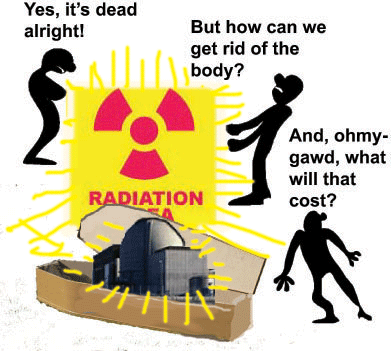 It will take another 10 years for the basic decommissioning to be undertaken at a cost of about £700m but the site cannot be redeveloped before the end of the century. High-level waste from Wylfa will remain on Anglesey until a national nuclear waste disposal facility is finally developed.
Britain still has a fleet of advanced cooled atomic reactors run by EDF but most of these will be retired by 2023 just as the government has also promised to halt all coal-fired power stations.
Hitachi of Japan is leading a Horizon Nuclear Power project to construct a new power plant at Wylfa, with a second earmarked for Oldbury in south Gloucestershire alongside a third facility planned in Cumbria. But the atomic industry’s revived fortunes ride primarily on the Hinkley C plant, which is expected to be the first new site since the Sizewell B station was completed in 1995.
The £18bn Somerset project has been repeatedly delayed but Chinese investors finally gave their support in the autumn while thegovernment promised the latest in a series of subsidies. EDF signalled in October that it would start work at Hinkley and it is expected to give the formal investment the go ahead within weeks before later saying it may not come until after Christmas.
Hinkley Point C, intended to provide about 7% of the UK’s total electricity, was originally scheduled for completion by 2018 but the latest date is 2025. Sceptics still question whether it will make that later date given the experiences of delays and cost overruns with a similar power project at Flamanville in Normandy, northern France.
There have also been problems at the new Olkiluoto nuclear plant in Finlandwhich is using the same plant design provided by EDF’s engineering partner Areva at Flamanville and planned for Hinkley………http://www.theguardian.com/environment/2015/dec/30/wylfa-nuclear-plant-closes-in-wales
Danger of moving plutonium from Dounreay to Sellafield after major flooding in Cumbria
 Concerns over moving of Dounreay material by rail after flooding 14 December 2015 by David Kerr A campaign group has raised new concerns about the movement of waste materials from Dounreay by rail after major flooding in Cumbria.
Spent “exotic fuels” are being moved from the Caithness site to Sellafield in the north of England by rail, as part of the decommissioning process.
The first of a series of loads of unirradiated plutonium fuel from Dounreay’s Prototype Fast Reactor arrived at Sellafield last Monday.
Around 13 tonnes is due to be moved between the north of Scotland and Sellafield over the next few years……
Core spokesman Martin Forwood said: “It beggars belief that the decision to risk the plutonium fuel transport was taken despite the widely-trailed storm evidence and rail warnings.
“We condemn the perverse decision as being dangerously irresponsible and as a blatant breach of the stringent safety and security rules required for such transports.
“Those responsible have shown a level of incompetence that verges on criminal and should be weeded out, so that public and rail safety is not similarly endangered again.
“If any public confidence at all in such transports is to be salvaged, answers on the decisionmaking process must be given and lessons learned.”
The unirradiated plutonium is the latest fuel to be removed from Dounreay as part of a decommisioning program which started in 2001 when the site was closed. ………..https://www.pressandjournal.co.uk/fp/news/highlands/778884/concerns-raised-by-campaigners-over-moving-dounreay-material-by-rail-after-flooding/
.
Russia to dump nuclear waste in melting permafrost in Arkhangelsk Region
 Approves radioactive waste disposal in melting permafrost December 22, 2015 http://thebarentsobserver.com/ecology/2015/12/approves-radioactive-waste-disposal-melting-permafrost
On Monday, the Government of Arkhangelsk Region sent an order to Russia’s national operator for radioactive waste management with the approval to locate a repository for low- and medium level radioactive waste on the south-western part of the southern island of the Novaya Zemlya archipelago.
Novaya Zemlya is geographically part of Arkhangelsk Oblast.
The repository will receive radioactive waste that already are in temporary storages in north-western Russia, including the large quantities stored at the naval yards in Severodvinsk on the coast of the White Sea, reports Nuclear.ru
The repository will be underground, but near the surface. Novaya Zemlya, like most other places in the High Arctic has permafrost in the ground. With climate changes, scientists fears the top layers of the permafrost could melt. That worries nuclear safety experts.
“It is important to consider the melting permafrost when studying risk-assessments for a radioactive waste repository on Novaya Zemlya,” says Nils Bøhmer, Nuclear Physicists with the Bellona Foundation in Norway.
He says the melting permafrost makes it highly uncertain for how long such waste can be protected.
Low- and medium level waste must be kept safe for hundreds of years according to Russian standards, reports Polit.ru that wrote about the Novaya Zemlya plans on Monday.
Bøhmer says it would be a much better alternative to establish a final repository for low- and medium level radioactive waste on the Kola Peninsula where the rocks are way more stable.
“In addition, it is safer to establish a repository where most of the waste already are located. Sea transport across the Barents Sea to Novaya Zemlya is a risky business in itself,” Bøhmer argues.
Novaya Zemlya was one of ten different sites in Northwest-Russia studied over the last couple of years to see if it is suited to be repository. Sites on the coast of the Kola Peninsula were also studied.
Underwater drones becoming a threat to UK’s Trident nuclear submarines
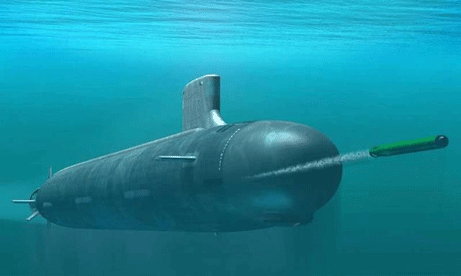 Trident: Nuclear deterrent under threat from underwater drones, expert warns, The Independent 27 Dec 15 Advances in technology may turn Britain’s £31bn nuclear submarine programme into an expensive liability. Britain’s independent nuclear deterrent could be torpedoed by an increasingly sophisticated breed of underwater drone, a leading defence expert has warned.
Rapid advances in underwater drone technology – autonomous underwater vehicles that can be controlled by ship- or land-based operators – threaten to make the controversial Trident nuclear submarines vulnerable, according to Paul Ingram, the chief executive of the British American Security Information Council (Basic).
Submarines have traditionally been seen as capable of providing stealth and invulnerability to pre-emptive attacks. The current requirement for Trident replacement subs is for them to operate as near to silently as possible.
However, a revolution in underwater drones, as well as advances in sonar, satellite and other anti-submarine warfare systems, mean that even totally silent submarines are likely to become detectable. Some sensor technologies can detect large submerged objects by monitoring small movements of surface water.
Experts warn that as the capabilities of detecting systems improve and their cost falls, large-scale remote and potentially autonomous sensor deployments become possible. The result is that the world’s oceans will become increasingly transparent, seriously calling into question the UK’s heavy reliance upon the Trident submarine programme for its nuclear deterrence………
In January, Carol Naughton, of the non-proliferation group British Pugwash, will launch a research project into the appropriateness of Trident as a platform for the UK’s nuclear weapons capability.
“We are in danger of embarking on a major spend that will not only fail to deliver the invulnerability required of the proposed deterrent system, but is also likely to add a worrying degree of instability into the nuclear weapons situation,” she said.
Last month the Prime Minister revealed that the strategic defence and security review (SDSR) had put the cost of the four subs at £31bn, up from £25bn nine years ago. The review said a contingency fund of £10bn would be set aside, suggesting the MoD anticipates the costs could rise still further.
The first sub is not due to come into service until the early 2030s. http://www.independent.co.uk/life-style/gadgets-and-tech/news/trident-nuclear-deterrent-under-threat-from-underwater-drones-expert-warns-a6786946.html
Iodine tablets to be distributed to France’s communities near nuclear stations

 France to distribute iodine tablets near nuclear power stations RFI 27 Dec 15 France’s nuclear safety watchdog is to distribute iodine tablets to people living near the country’s 19 nuclear power stations, warning that an accident is possible but not probable. …..
In the fifth such distribution campaign since they began in 1997, the Nuclear Security Authority (ASN) will make iodine tablets available to 400,000 households and 2,000 establishments, such as schools, businesses and local government offices, in a radius of 10 kilometres of a nuclear power station.They will be distributed through pharmacies or sent to those who fail to collect them……http://www.english.rfi.fr/environment/20151226-france-distribute-iodine-tablets-near-nuclear-power-stations
Leningrad Nuclear Plant accident: radiation spike: mass panic

 Mass panic as radioactive cloud pours from nuclear plant — Radiation levels reportedly spike near reactor after emergency shutdown — Traffic jams as people evacuate area — “Everyone got very worried and rushed to get iodine” (PHOTOS) http://enenews.com/mass-panic-radioactive-steam-pours-nuclear-plant-radiation-levels-spiked-area-plant-traffic-jams-people-evacuate-area-everyone-very-worried-rushed-iodine-photos?utm_source=feedburner&utm_medium=email&utm_campaign=Feed%3A+ENENews+%28Energy+News%29
Express, Dec 21, 2015 (emphasis added): Russians flee Chernobyl-style plant over fears of radioactive leak — Russians took iodine and caused traffic jams… amid fears officials were covering up a radioactive leak. The panic followed the emergence of pictures showing a cloud of vapour pouring from Leningrad Nuclear Power Plant, some 50 miles from St Petersburg. The authorities insisted that the was no radioactive leakage… but people did not believe the “no danger” claim. Radio Svoboda reported that in the wake of the incident on Friday locals in Sosnovy Bor started withdrawing money from their credit cards. They said locals were in panic mode despite statements from officials that the radiation level was normal… One local said: “Everyone got very worried and rushed to get iodine.”… There were traffic jams as residents left the area and headed for St Petersburg… The plant manager (not pictured) insists there are no reasons for evacuation. [Oleg Bodrov, chairman of Green World ecological group] said: “They know well that the officials’ first task is to say all is normal but not to report about danger, even if there is one. All those who understand a bit about nuclear energy know that it was an attempt to mistake the wish for the reality… this vapour is surely radioactive… Bodrov called for medical checks for staff at the power plant. Interfax reported that a special commission was working at the nuclear station aiming to find out the reasons for the emission.
Daily Mail photo captions: A cloud of vapourpouring out of Leningrad Nuclear Power Plant in St Petersburg caused mass panic… Russian radio reported St Petersburg residents rushing out to buy iodine to protect against radiation poisoning after spotting the steam flowing out of the power station… The billowing vapour spreads across buildings
QHA, Dec 19, 2015: Accident occurred at Leningrad Nuclear Power Plant (PHOTO) — Eyewitnesses of the accident and theinhabitants of the Russia’s northern capital are scared. The second unit was stopped at the station… The accident occurred at the second power unit when a pipe with steam cracked in turbine hall yesterday. The steam filled the room, and leaked beyond the power plant. The employees of the Leningrad Nuclear Power Plant (LNPP) had to go home… According to specialists, the release was radioactive, because the waste steam entered the so-called loop reactor coolant. However, the population was encouraged not to panic.
Baltic Newsletter of the Green World, Dec 20, 2015: An emergency stop of the second power unit of Leningrad Nuclear Power Plant took place… The reason for the stop and cooling of the reactor was a sudden leak of radioactive steam from a faulty pipe in one of the rooms of the turbine shop… During the cooling – down step, the reactor steam was ejected through the pipe into the environment. A south – southeast wind of 5 meters per second (not typical for this area) blew the radioactive steam toward the Gulf of Finland… Thus, the five millionth city of St. Petersburg, located 40 km east of the Leningrad Nuclear Power Plant was fortunate this time. According to some sources , the radiation level rose a few times higher than the background radiation only in the NPP area.
Accident at The Leningrad Nuclear Power Plant
 Another Accident at Russian Nuke http://www.dailykos.com/story/2015/12/20/1462217/-Another-Accident-at-Russian-Nuke Just a heads-up. The Leningrad Nuclear Power Plant west of St. Petersburg on the Gulf of Finland suffered an accident on December 18th, according to the Crimean News Agency. A pipe carrying steam from the reactor in the second BWR [Boiling Water Reactor] plant apparently “cracked” [burst, failed] in the turbine hall, releasing radioactive steam and forcing an evacuation of the facility after the reactor was manually scrammed. This would be unit-2 of at the 4-unit facility.
The accompanying photo [on original] was taken of the Leningrad unit-2 plant today (December 20, 2015), showing that radioactive steam is still being emitted in bulk to the atmosphere. Officials at the facility did say they don’t “think” the situation will develop into another Chernobyl. That does not sound particularly reassuring to me, but so far so good.
The four reactors at LNPP are the RBMK-1000 design of Chernobyl type graphite moderated plants. Two more reactors of the newer VVER-1200 type were granted construction license in 2009 and 2010, the first scheduled to go into commercial operation in 2016, and two more are planned in the future.
The population near the plant was encouraged not to panic, as winds are carrying the plume of radiation toward Estonia and Finland. A Latvian news source reported that the government assured citizens there was no danger from the release, the Finnish monitoring stations aren’t showing a spike at present, 3 stations did mark one on the coast east of Helsinki (likely plume path), reaching up to .3µSv/hr on the 18th/19th. Which is .03mr/hr, just above background average.
Measurements of radiation in downtown Sosnovy Bor, 5 km [~3 miles] from the plant, were up to 20mr/hr* (a level about twice the average daily dose most non-grunt workers on the Island at TMI2 absorbed in the days/weeks after that meltdown), so let’s at least hope the residents were warned to “shelter in place” for the duration of this ongoing accident. And have some idea of how to do that properly. Area and regional pharmacies are reported to have ordered potassium iodide, so residents could be getting that. Radiation levels in St. Petersburg, a city of 5 million ~40 miles west of the nuclear facility, are reported to be normal.
The reactors at Leningrad have been plagued with accidents on a semi-regular basis since 1975, most never reported to the media or public. Including one accident at unit-1 in 1975 that came dangerously close to the very same accident later experienced at Chernobyl.
* The reported peak figure of 20mr/hr in the nearest town — which is indeed suspiciously high — is pointed out in the comments to be a mistranslation of µR (microrem) as mR (millirem). Which isn’t enough radiation to register above the considerably higher background. If indeed the Russians have taken to measuring and reporting radiation dose exposures in Rem/Rad instead of the internationally used Sievert. A very odd thing for them to do all of a sudden with this accident when they never did before, but technical deception is a regular art form with nukes of all nationalities. No surprise there.
West Coast of Scotland shellfish polluted by radioactive trash from Sellafield
Scottish shellfish are contaminated by radioactive waste from Sellafield, Herald Scotland 20 Dec 15 Radioactive waste from the Sellafield nuclear plant in Cumbria is contaminating shellfish hundreds of kilometres away on the west coast of Scotland, according to a new scientific study.
Scottish researchers discovered traces of radioactive carbon discharged from Sellafield in the shells of mussels, cockles and winkles as far north as Port Appin in Argyll, 160 miles from the notorious nuclear plant.
The findings are a “wake-up call” for anyone who thinks pollution from Sellafield is yesterday’s problem, say campaigners. Sellafield, however, stresses that the contamination is well below safety limits.
The scientists found raised levels of radioactive carbon-14 in shellfish sampled at Port Appin, at Maidens in South Ayrshire and at Garlieston and Kippford on the Solway coast of Dumfries and Galloway. Mussels were most contaminated “due to the surface environment they inhabit and their feeding behaviour,” they said.
The contamination comes from Sellafield, which has poured huge amounts of radioactivity into the sea, researchers concluded. The plant, which reprocesses spent fuel from nuclear power plants in Scotland and across the UK, has discharged an average of more than eight million megabecquerels (measure of radioactivity) of carbon-14 a year from its pipelines between 1994 and 2013.
The levels peaked in 2003 but have remained “relatively high”, the scientists pointed out. Carbon-14 persists for tens of thousands of years in the environment and the amounts emitted from Sellafield make up the largest contribution to the long-term collective radiation dose across Europe from the entire nuclear industry.
“This is the first study to have shown that radiocarbon is accumulating in areas remote from Sellafield like Port Appin,” the lead researcher, Kieran Tierney, told the Sunday Herald.
Dr Ian Fairlie, an independent radiation consultant, described some of the carbon-14 contamination as “surprisingly high”. At Garlieston near Dumfries concentrations in mussels were almost three times the normal background level, while at Port Appin, north of Oban, they were 20 per cent higher…….
Pete Roche, an energy consultant and editor of ‘no2 nuclear power’ website, said: “This is a wake up call for anyone in Scotland who thinks contamination from Sellafield is yesterday’s problem.”
He pointed out that waste fuel from nuclear plants at Torness in East Lothian, Hunterston in North Ayrshire and Dounreay in Caithness will continue to be reprocessed at Sellafield until at least 2018. “Radioactive discharges will continue to flow back in the other direction long after that,” he argued……..http://www.heraldscotland.com/news/14157272.Scottish_shellfish_are_contaminated_by_radioactive_waste_from_Sellafield
UK govt prioritising nuclear, gas, oil, but removing support for renewables
Government U-turn on renewables shows gas, oil and nuclear are still favourites
 Now is not the time to pull the plug on supporting renewable energy. A few years of vital subsidies cannot make up for a century of support for fossil fuels. Guardian, Alasdair Cameron, 20 Dec 15
The entire global energy system is undergoing a clean revolution. The old certainties of centralised power and fossil fuels are falling apart before our eyes. In Paris last week world leaders set legally binding targets to decarbonise their economies in order to keep temperature rises at a maximum of 2C. The future is almost here.
It’s a future that is necessary and one that presents the economic opportunity of the century. Bloomberg NEFs New Energy Outlook for 2015 estimates that renewables alone will see more than $8tn of investment in the coming years with $3.7tn in solar alone.
Until recently the UK seemed to understand this, however imperfectly. In the second quarter of this year, the UK got 25% of its electricity from renewables and is aiming for 30% by 2020. The last two governments deserve credit for that.
Costs have fallen, with the latest ground-mounted solar and onshore wind now cheaper than new nuclear , and offshore wind – where the UK is a world leader – is not far behind.
The government’s line is that it’s time to pull the plug on supporting renewable energy – as if a few years of vital subsidies can make up for a century of economic and infrastructural support for fossil fuels. Renewable energy, like most industries, needs some government support to get going, and to realise the best results. Think of the tax breaksand research grants still given to oil and gas, the direct subsidies for nuclear, the publicly-funded roads that facilitate cars, or the national space programmes that eventually brought us the mobile phone.
The argument that this U-turn is about protecting consumers’ bills simply does not hold. Cuts to rooftop solar announced on Thursday will save just 0.9% off a yearly bill, by 2020.
Many of the alternatives the government is turning to are actually more expensive than renewables – Hinkley Point C would cost consumers twice the current wholesale price of electricity. And the single best thing that would cut bills – insulating homes – has seen just about all public support scrapped.
Threat to Russia of USA’s tactical nuclear weapons in Europe
U.S. tactical nuclear weapons in Europe threaten Russia – Putin http://rbth.com/international/2015/12/20/us-tactical-nuclear-weapons-in-europe-threaten-russia-putin_552869
“U.S. tactical nuclear weapons have always been there [on the planes] after WWII, after America became a nuclear power. They are simply modernizing them now,” the president said in an interview in a documentary, “World Order,” of the Rossiya-1 (VGTRK) television channel.
“Indeed, this is a dangerous thing now. Why? Because our tactical nuclear weapons are not strategic for the United States, they cannot reach their territory, while U.S. tactical nuclear weapons in Europe can reach our territory. In this sense, they are strategic for us and they are posing a bigger threat to us than our strategic nuclear weapons,” the president said.
Germany abandoning nuclear fission, but has developed research nuclear fusion reactor
 Germany Tests Fusion Reactor, But Will Abandon Nuclear By 2022 The Daily Caller ANDREW FOLLETT , 18 Dec 15 Germany tested an experimental fusion reactor last week, but the country is set to abandon conventional nuclear fission power entirely by 2022 in favor of solar and wind.
German engineers from the Max Planck Institute have successfully activated an experimental nuclear fusion reactor and successfully managed to suspend plasma for the first time. The reactor took 19 years and €1 billion euros ($1.1 billion) to build, and contains over 470 tons of superconducting magnets, all of which need to be cooled to absolute zero.The reactor passed the major technical milestone of generating its first plasma, which had a duration of one-tenth of a second and achieved a temperature of around one million degrees Celsius. If the reactor fulfills the research team’s expectations, it could demonstrate the first stable artificial nuclear fusion reaction within the next year.

World’s largest nuclear fusion reactor launched by Germany
Germany launches world’s largest nuclear fusion reactor The rocky road to nuclear fusion power, DW, 18 Dec 15 Innovative designs using modern superconductors are supposed to bring us nuclear fusion power plants soon – some optimists say. Fusion experts predict, however, that a practical application will take many more decades. Nuclear fusion is considered a potential energy source of the future. It’s clean nuclear energy. But what is it, exactly and why is it so difficult to generate? Let’s start with the difference between classical nuclear fission and nuclear fusion.
Nuclear fission means that radioactive isotopes, like uranium or plutonium are being split up and turned into other highly radioactive isotopes that then have to be deposited or reprocessed.
Nuclear fusion means that two isotopes of hydrogen – called deuterium and tritium – merge together – they “fuse.” And that leaves behind only non-poisonous helium and one single neutron, but no nuclear waste.
Huge amounts of energy caught in a plasma
Nuclear fusion takes place in the sun for example – or in a hydrogen bomb – and that’s the big challenge for engineers – how do you control the high energy fusion process in a power plant?
That’s what scientists have been working on since the 1960s. One model-fusion-reactor called Wendelstein 7-X has just started operating in the northern German town of Greifswald. It is not designed to generate a nuclear fusion reaction yet – so far it’s just a specific reactor design that’s being tested.
What all fusion reactors have in common is a ring-shaped form. The idea behind it is to take powerful electromagnets and create a strong electromagnetic field, which is shaped somewhat like an inflated bicycle tube.
That electromagnetic field must be so dense that when it is being heated by a microwave oven to about one million degrees centigrade, a plasma will emerge in the very center of the ring. And that plasma can then be ignited to start the nuclear fusion process.
Research reactors show what’s possible
In Europe, two prominent fusion experiments are under way. One is Wendelstein 7-X, which just generated its first helium plasma last week – albeit without actually going into nuclear fusion. The other one is ITER – a huge experimental project in southern France, which is still under construction and won’t be ready to run before 2023.
ITER is supposed to do real nuclear fusion – but only for short periods of time, certainly not for any longer than 60 minutes. And ITER is just one of many steps towards turning the idea of nuclear fusion into a practical application.
Are smaller, alternative designs feasible?………
Hot, hot, hot
The heat is also problematic. In the core of the nuclear-fusion plasma, the temperature would be around 150 million centigrade. This extreme heat stays put – right there in the center of the plasma. But even around it, it still gets seriously hot – 500 to 700 degrees at the breeding blanket – which is the inner layer of the metal tube that contains the plasma and which will serve to “breed” the tritium that is needed for the fusion reaction.
Even more problematic is the so called “power-exhaust.” That is the part of the system, where the used-up fuel from the fusion process is being extracted – mostly helium. The first metal components hit by hot gases are called the “diverter.” It can get hotter than 2,000 degrees centigrade.
The engineers are trying to use the metal tungsten, used in old-fashioned light bulbs – to withstand such temperatures. They have a melting point of around 3,000 degrees. But there are limits.
“In the case of ITER we can do it, because the heat is not there constantly. Only one to three percent of the time, ITER will eventually be running.” Hesch says. “But that is not an option for a power plant, which has to run 24/7. And if someone pretends to build a smaller reactor with the same power as ITER, I can definitely say – there is no solution for that diverter-problem.”
Several decades to build a real power plant
Nonetheless Hesch is optimistic that the development of nuclear fusion power reactors will go ahead – but not quite as fast as some of the industry optimists predict.
“With ITER we want to show that fusion can actually deliver more energy than we have to put into it to heat the plasma. The next step would be to build an entirely new fusion demonstrator power plant, which will actually generate electricity.”
The engineers are already working on the designs now. They will have to learn lessons from ITER, which is scheduled to start operating in 2023. Taking the necessary time for design, planning and construction into account, it looks very unlikely the first nuclear-fusion power plant will be up and running much before the middle of the century. http://www.dw.com/en/the-rocky-road-to-nuclear-fusion-power/a-18927630
safety problems with Britain’s Trident ballistic missile submarine program
Britain’s nuclear arsenal is a ticking time bomb, The Week, Tom Barlow Brown, 18 Dec 15 the United Kingdom’s nuclear deterrent, the Trident ballistic missile submarine program, worth keeping?
For the British Parliament and much of the media, the problem is mainly the vast amounts of money spent to keep it going. According to the U.K. Ministry of Defense, the program’s total cost is £15-20 billion. Anti-nuclear campaigners give a figure of around £100 billion, give or take. At least, that’s how much it should rack up in costs over its 40 year lifespan.
However, what is less talked about is how both the submarines and the bases that maintain them have suffered from a series of glaring safety mishaps.
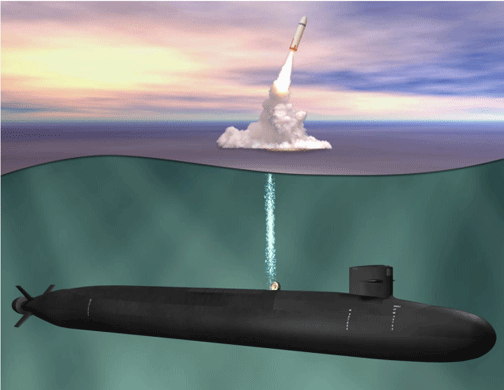
There are four Vanguard-class ballistic missile submarines currently in service with the Royal Navy. These 149.5-meter long, nuclear-powered vessels are relatively new — all of them having launched in the 1990s — but are aging fast. Each Vanguard-class submarine can carry up to 16 Trident II missiles, each one packing 12 independently-targetable nuclear warheads, meaning the nukes split off from the missile and explode in multiple locations. The actual number of deployed missiles and warheads, however, is a closely guarded secret.
Her Majesty’s Naval Base, Clyde in Scotland — otherwise known as Faslane — is the main base for the Royal Navy’s Trident subs, and has been exceedingly prone to accidents. The latest details come from a Royal Navy sailor-turned-whistleblower William McNeilly who published an 18-page report before going on the run.
McNeilly, writing under the pseudonym William Lewis, attacked the “military spin doctors” that he claimed distort the public’s knowledge of safety lapses. He detailed 30 accidents which range from the chilling to the ridiculous.
Among these were a fire in a missile compartment caused by a toilet rolls set too close to a cable, a range of problems with hydraulic systems and a general failure to follow safety procedures. The document also makes it clear that a number of safety issues were due to heavy cutbacks, resulting in a lack of qualified personnel…….
There are other concerns about safety at a different naval base in the United Kingdom — the Devonport dockyard, which is the largest naval base in Western Europe.
The most frightening of these accidents was the loss of power to the “nuclear ring” reactor cooling system of one submarine for 90 minutes. Had power not been restored, such an incident could have had potentially catastrophic consequences resulting in a major nuclear incident.
The dockyard is within walking distance of the city of Plymouth, home to around 250,000 people. Most of these residents would be in danger in the event of a reactor meltdown.
In 2011, a previously classified document authored by the base’s ex-safety regulator Commodore Andrew McFarlane warned that the reactors powering nuclear submarines based at Devonport were possibly unsafe……..
A House of Commons vote to renew Trident is expected in 2016.
After that, a fleet of replacement submarines will enter service in the early 2030s… if everything goes to plan. However, that is still a long way off, and the current class of Vanguard submarines will needs increasing amounts of maintenance to keep them running through the next decade.
The issue of Trident is back in the political limelight again with the current Labour Party and opposition leader Jeremy Corbyn looking to put scrapping the program on his party’s political agenda. In the meantime, it remains to be seen whether the Ministry of Defense will take any action on the program’s safety.
If they don’t, the consequences could be deadly serious.http://www.theweek.com/articles/594745/britains-nuclear-arsenal-ticking-time-bomb
Belgium’s nuclear restart causes anxiety in adjacent North Rhine-Westphalia
Belgium ‘playing Russian roulette’ with relaunch of nuclear reactor, says fuming Germany, Rt.com 16 Dec, 2015 Belgium, plagued by a series of nuclear mishaps in recent years, has restarted its ageing Tihange 2 reactor after a nearly two-year shutdown. Neighboring Germany is angered by the relaunch amid fears it could result in a Fukushima-style meltdown.
Belgian power utility Electrabel says it put Tihange 2, first launched in 1983, back in service on Tuesday night “in complete safety.” But officials in adjacent North Rhine-Westphalia (Germany’s most-populous state) say there’s a storm brewing, recalling the fact that three of Belgium’s seven reactors were closed at one point, in two cases due to the discovery of micro-cracks in Tihange 2’s reactor casings.
“The Belgian government is playing Russian roulette. Tihange is a reactor in ruins,” North Rhine-Westphalian Environment Minister Johannes Remmel said Tuesday, according tosudinfo.be.
North Rhine-Westphalia’s economy minister, Garrelt Duin, also warned against the relaunch of Tihange, calling it “a big mistake.”
Four of Germany’s 10 biggest cities (Cologne, Düsseldorf, Dortmund and Essen) are in North Rhine-Westphalia. The city of Aachen, only 60km from Tihange, said it had explored legal options to stop the reopening of the reactor, but those efforts were in vain.
“To restart a reactor that has cracks is irresponsible and dangerous. Given the proximity to the border, the German government should have long been working towards its closure,” Sylvia Kotting-Uhl, spokesman for the German Green Party said in a statement, according to AFP.
“If a failure of the reactor tank leads to a nuclear accident, Germany would also become highly exposed to radiation due to the persistent wind from the west,” she warned.
Growing safety concerns have fallen on deaf ears in Belgium, however. ……https://www.rt.com/news/326086-nuclear-reactor-relaunch-tihange/
1 This Month




Shut down the radiation-damaged Heysham nuclear reactors now
To see nuclear-related stories in greater depth and intensity – go to https://nuclearinformation.wordpress.com

Say No to NASA’s Reckless Nuclear Reactor on the Moon
Say No to NASA’s Reckless Nuclear Reactor on the Moon
-
Archives
- November 2026 (12)
- October 2026 (302)
- September 2026 (339)
- August 2026 (330)
- July 2026 (355)
- June 2026 (287)
- May 2026 (306)
- April 2026 (356)
- March 2026 (251)
- February 2026 (267)
- January 2026 (308)
- December 2025 (358)
-
Categories
- 1
- 1 NUCLEAR ISSUES
- business and costs
- climate change
- culture and arts
- ENERGY
- environment
- health
- history
- indigenous issues
- Legal
- marketing of nuclear
- media
- opposition to nuclear
- PERSONAL STORIES
- politics
- politics international
- Religion and ethics
- safety
- secrets,lies and civil liberties
- spinbuster
- technology
- Uranium
- wastes
- weapons and war
- Women
- 2 WORLD
- ACTION
- AFRICA
- Atrocities
- AUSTRALIA
- Christina's notes
- Christina's themes
- culture and arts
- Events
- Fuk 2022
- Fuk 2023
- Fukushima 2017
- Fukushima 2018
- fukushima 2019
- Fukushima 2020
- Fukushima 2021
- general
- global warming
- Humour (God we need it)
- Nuclear
- RARE EARTHS
- Reference
- resources – print
- Resources -audiovicual
- Weekly Newsletter
- World
- World Nuclear
- YouTube
-
RSS
Entries RSS
Comments RSS

