30 major European cities and districts call for shutdown of aging Belgian nuclear reactors
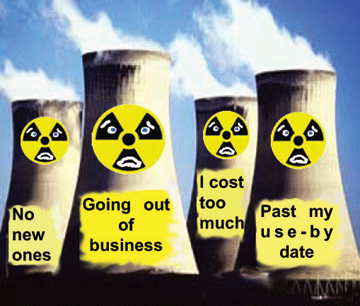 Shut old nuclear reactors, says unprecedented alliance of EU cities
Communities and campaigners in Germany, the Netherlands and Luxembourg lobby for closure of two ageing 40-year old Belgian nuclear reactors close to borders, Guardian, Arthur Neslen 17 Mar 16, An unprecedented alliance of 30 major cities and districts from three countries has joined forces to try to shut down two ageing Belgian nuclear reactors close to their borders.
Cologne and Dusseldorf in Germany, Luxembourg City and Maastricht in theNetherlands are among the cities co-funding a lawsuit to close one reactor – Tihange 2 – and calling on the European commission to prepare a separate case at the European court of justice.
“More than 30 districts have adopted resolutions to support us, and want to join the lawsuit,” said Helmut Echtenberg, the mayor of Germany’s Greater Aachen region, who is leading the campaign.
Only one plaintiff may appear in court, “but we will ensure that Tihange 2 is no longer connected to the grid in the future,“ Echtenberg said. “This is my honest conviction.”…….
The 40-year old reactors have been plagued by a litany of problems such as reactor pressure vessel micro-cracks, fire and one mysterious case of sabotage.
These have sparked what Echtenberg calls “existential fear” in Aachen, which lies 60km upwind of the plant. Anxiety is rife that house prices and business activity could soon suffer.
Anti-nuclear posters festoon the shops in Aachen town centre, stickers adorn car windows and stories about Tihange are regularly splashed across local papers.
Hartmut Falter, the owner of Aachen’s oldest bookstore, Die Mayersche, has put up a 10m x 3m anti-nuclear poster in his storefront. “The risk of a nuclear accident is not very high but if it happened, the damage would be extreme,” he told the Guardian. “Unfortunately, nuclear dangers do not stop at the frontier.”…….
Last week, it was announced that France’s oldest reactor in Fessenheim, on the German border, would close after complaints by Germany and Switzerland.
Lawyers are already working on a second nuclear lawsuit, which may be filed in Belgium by the Dutch city of Maastricht. The regional governments of North Rhine Westphalia and Rhineland Palatinate are taking separate cases against the reactors to the UN and European commission…….. http://www.theguardian.com/environment/2016/mar/17/shut-old-nuclear-reactors-says-unprecedented-alliance-of-eu-cities
Nuclear risks don’t go away: future for UK nuclear is bleak
Pro-nuclear governments try to shield the nuclear operator from these risks, if possible. They protect the nuclear operator from lawsuits (reducing insurance costs). They guarantee debt (reducing interest
 costs). In the U.S. they tend to pass on unexpected (but prudently incurred) costs to the consumer.
That leads to our second point: these measures do not reduce risk, they just shift it. The risk never goes away. The government and consumer now bear part of it. But consumers do not take out nuclear risk policies with semi-annual payments. They do not see the cost so it doesn’t exist for them until the electricity bill goes up. In the same way, government can deny the costs of acting as an insurer of last resort because no line item appears in the budget to cover the costs until an accident happens (that’s the way a Congressional staffer explained it once at a meeting on the future of nuclear power).
 5 years after Fukushima: Nuclear power prospects dim http://www.usatoday.com/story/money/markets/2016/03/15/5-years-after-fukushima-nuclear-power-prospects-dim/81553524/ Leonard Hyman and William Tilles, Oilprice.com March 15, 2016 Five years after a devastating earthquake, tsunami and nuclear accident at Fukushima that killed thousands and displaced many more, the Japanese are still cleaning up, people still cannot return to their homes and, possibly the least important statistic, Tokyo Electric Power’s shares sell at one quarter of the pre-accident price.
Roughly five years ago, the British government and French utility EDF began a process to build another nuclear power plant at Hinkley Point, an investment still awaiting the approval of EDF’s board. As odd as it seems, the tragic disaster and botched business deal have a common thread (other than the fact that EDF shares sell at one-third of their 2011 price): the role of government in nuclear power. Continue reading
Political importance to world’s nuclear powers, of getting Hinkley project happening

“The governments of the UK, France, and China have invested huge amounts of political capital in seeing Hinkley Point C come to the point of construction,” he said.
“This political capital lies with the public, convincing them that nuclear is part of a low-carbon future; [with the] the financial institutions, convincing them that when the UK makes a decision it sticks to it and hence the UK is an investable proposition; and with international governments—when the UK makes an international agreement it is binding.”
The UK’s Next Nuclear Power Plant Could Collapse Before It’s Built Motherboard, BY NICOLE KOBIE 15 March 2016 The UK could face power outages and missing emissions targets if the nuclear plant isn’t built – but that doesn’t mean it should be
Nuclear power stations are always controversial, but the UK’s proposed Hinkley Point C is particularly so. It may well be the most expensive object ever built; it guarantees higher power bills; and it’s already taken down executives, despite construction yet to start.
Hinkley Point C is set to be the first new nuclear power station built in the UK since 1995, poised to hit the grid as older nuclear sites and coal are ditched. However, its high costs are now leaving the project—and the future of the UK’s power supply—in danger.
Set to be built in Somerset by energy company EDF, which is majority-owned by the French government, there’s a chance Hinkley Point C may collapse before it’s built, and it’s nothing to do with protesters or environmental complaints. The problem with Hinkley is money: its costs risen to £18 billion ($25 billion)—with some projecting the final cost to be £24 billion ($34 billion)—and EDF has yet to finalise funding. Though it is expected to sign off on the project soon, financial analysts stressed last week that EDF can’t afford to build it.
The delays may already cause shortages in the UK’s electricity supply as it’s currently planned, which would naturally worsen if the project fails to get off the ground. The plant is supposed to start operations in 2025, when several older nuclear sites are decommissioned and the deadline hits for shutting down coal plants. Tony Roulstone, a professor setting up the University of Cambridge’s new MPhil in nuclear energy, believes the project will take ten years to construct, and given work isn’t expected to start until 2018 or 2019, will miss its deadline. “This will put the UK in a difficult position because they were counting on electricity from Hinkley by 2025,” Roulstone said.
“As some have said, the UK does not have a plan B,” he added. “The AGRs [advanced gas-cooled reactors, which make up most of the UK power stations] will close down by 2030 and at that stage we would have just one nuclear power station, Sizewell B.”
Hinkley Point C is expected to provide 7 percent of the UK’s energy. At the moment, about a fifth of the UK’s power comes from the eight currently-operating nuclear plants, but seven of those are due to be decommissioned. That, alongside theplanned closure of coal plants, which make up 22 percent of our power today, led the Institution of Mechanical Engineers to claim in a report we could see a potential supply gap of 40 to 55 percent by 2025…………..
EDF is set to make a final decision on funding the project soon, ahead of a board meeting in April, after multiple delays. However, back in February the project’s director, Chris Bakken, stepped down to “pursue new professional opportunities,” and more recently the company’s finance director, Thomas Piquemal, departed, with rumours suggesting he believed the project would damage EDF’s finances too much.
The board-level turmoil might actually be a sign that EDF’s remaining executives plan to approve the project, according to Martin Freer, director of the Birmingham Centre of Nuclear Education and Research and a professor of physics at the University of Birmingham. “My take on the resignation of the chief of finance signals that the HPC [Hinkley Point C] decision is being pushed through against the judgement of financial caution,” Freer told me. “EDF are at a point in their history where they roll the dice and hope to be lucky.”
Roulstone noted that the new plant’s construction cost is the same as EDF’s capitalisation. “Only major sales of assets and/or funding by the French government can rescue EDF and hence Hinkley,” he said………
Freer suggested that there’s more than power supply and emissions targets at risk. “The governments of the UK, France, and China have invested huge amounts of political capital in seeing Hinkley Point C come to the point of construction,” he said. “This political capital lies with the public, convincing them that nuclear is part of a low-carbon future; [with the] the financial institutions, convincing them that when the UK makes a decision it sticks to it and hence the UK is an investable proposition; and with international governments—when the UK makes an international agreement it is binding.” http://motherboard.vice.com/en_uk/read/the-uks-next-nuclear-power-plant-could-collapse-before-its-built
Court hearing – clash between German Govt and nuclear utilities
German utilities, government clash at nuclear court hearing Reuters 14 Mar 16
*Gov’t confident it will win the case -Minister
* Utilities could claim as much as 19 bln euros
* Final decision to take several months (Recasts, adds comments from RWE, Minister, graphic)
By Christoph Steitz and Tom Käckenhoff KARLSRUHE, Germany, German power firms and government members clashed at a court hearing over the country’s controversial decision to shut down all nuclear plants by 2022, a lawsuit that could allow utilities to claim 19 billion euros ($21 billion) in damages.
In a case that pits a struggling energy industry against the government, Germany’s Constitutional Court will examine the arguments of E.ON, RWE and Vattenfall , who want to be compensated for the closure………http://uk.reuters.com/article/germany-utilities-nuclear-idUKL5N16N2G7
France’s auditor brands Hinkley Point nuclear project as financially risky
 Hinkley Point branded potentially risky for EDF by French auditor, Guardian 11 Mar 16
Cour des Comptes urges greater study of nuclear project’s risks given poor recent investments and the fact EDF must fund likely cost overruns. EDF’s £18bn project to build nuclear reactors in Britain is potentially risky for the state-owned utility, whose foreign investments in recent years have proved disappointing, France’s top public auditor has said.
In a report on EDF’s international strategy, the Cour des Comptes – the French equivalent of the UK’s National Audit Office – said EDF and its 85% state shareholding should take a close look at the risks associated with the project to build two nuclear reactors at Hinkley Point in Somerset.
The report, which focuses on the 2009-2014 period – which includes EDF’s October 2013 agreement with the British government but not its deal in October 2015 with the Chinese utility CGN to take a one-third stake – said the financing around the Hinkley Point deal was potentially risky for EDF.
The auditor said EDF’s cashflow and high debt limit its capacity to invest abroad, especially given the huge sums needed to upgrade its ageing French nuclear plants.
“Even though the [Hinkley Point] deal has not been finalised, the complexity of the deal and especially the way it could impact the responsibility of EDF suffice to raise serious questions,” the auditor ……..http://www.theguardian.com/business/2016/mar/11/hinkley-point-risky-edf-french-auditor-cour-de-comptes?CMP=share_btn_tw
Nuclear propagandist Prof Geraldine Thomas: comfortable , but incorrect, spin on Fukushima
Is this a problem for human health? You bet it is. The question no-one asked is what is causing the excess dose? The answer is easy: radioactive contamination, principally of Caesium-137. On the basis of well-known physics relationships we can say that 3Sv/h at 1m above ground represents a surface contamination of about 900,000Bq per square metre of Cs-137. That is, 900,000 disintegrations per second in one square metre of surface: and note that they were standing on a tarmac road which appeared to be clean. And this is 5 years after the explosions. The material is everywhere, and it is in the form of dust particles which can be inhaled; invisible sparkling fairy-dust that kills hang in the air above such measurements.
The particles are not just of Caesium-137. They contain other long lived radioactivity, Strontium-90, Plutonium 239, Uranium-235, Uranium 238, Radium-226, Polonium-210, Lead-210, Tritium, isotopes of Rhodium, Ruthenium, Iodine, Cerium, Cobalt 60. The list is long.
the Japanese government wants to send the people back there. It is bribing them with money and housing assistance. It is saying, like Gerry Thomas, there is no danger. And the BBC is giving this misdirection a credible platform.
They keep the lid on the truth using ill-informed individuals like Geraldine Thomas.
Fukushima is far from being over, and the deaths have only just begun.
Is Fukushima’s nuclear nightmare over? Don’t count on it https://www.rt.com/op-edge/335362-fukushima-nuclear-japan-bbc/ Chris Busby 12 Mar 16
 On the 5th Anniversary of the catastrophe, Prof Geraldine Thomas, the nuclear industry’s new public relations star, walked through the abandoned town of Ohkuma inside the Fukushima exclusion zone with BBC reporter Rupert Wingfield-Hayes.
Thomas was described as “one of Britain’s leading experts on the health effects of radiation”. She is of the opinion that there is no danger and the Japanese refugees can come back and live there in the “zone”. Her main concern seemed to be how untidy it all was: “Left to rack and ruin,” she complained, sadly.
At one point, Rupert pulled out his Geiger counter and read the dose: 3 microSieverts per hour. “How much radiation would it give in a year to people who came back here,” he asked. Thomas replied: “About an extra milliSievert a year, which is not much considering you get 2mSv a year from natural background”.
“The long term impact on your health would be absolutely nothing.”
Now anyone with a calculator can easily multiply 3 microSieverts (3 x 10⁻⁶ Sv) by 24 hours and 365 days. The answer comes out to be 26 mSv (0.026Sv), not “about 1mSv” as the “leading expert on the health effects of radiation” reported.
I must personally ask if Gerry Thomas is a reliable expert; her CV shows she has published almost nothing in the way of original research, so we must ask how it is the BBC has taken her seriously. Continue reading
EDF want French tax-payers’ financial aid for UK Hinkley Point Nuclear Projectr
EDF Asks French Government for Aid for Hinkley Point Nuclear Plant CEO Jean Bernard Levy says EDF won’t engage in project without necessary commitments from state http://www.wsj.com/articles/edf-asks-french-government-for-aid-for-hinkley-point-nuclear-plant-1457797452 By INTI LANDAURO March 12, 2016
PARIS— Electricité de France SA Chief Executive Jean-Bernard Levysaid he is seeking financial support from the French government to develop the Hinkley Point nuclear plant in southern England, as the project faces fierce scrutiny following the resignation of the company’s No. 2.
In a letter sent to company employees on Friday, Mr. Levy said EDF wouldn’t engage in the £18 billion ($25.89 billion) project unless it was able to secure necessary financial commitments from the state, which holds almost 85% of the utility.
Two EDF officials who requested anonymity confirmed Mr. Levy’s comments. The letter was sent four days after Chief Financial Officer Thomas Piquemal quit unexpectedly on concerns that the project would threaten the company’s financial stability.
The Hinkley Point project is the centerpiece of a series of business deals between the U.K. and China announced last year, with China General Nuclear Power Corp. agreeing to take a 33.5% stake in it.
The past week’s letter and CFO resignation are signs that scrutiny over the project has grown, despite support from the French and U.K. governments.
Even though the conditions granted by the U.K. government—with the pledge to buy the electricity generated around three times the current market price—would make it profitable, union representatives on EDF’s board have said Hinkley Point could saddle the company with too much debt.
EDF, which has €37.4 billion ($41.70 billion) in net debt, had its credit rating put on review for a downgrade by Moody’s Investors Service last month. Also last month, EDF said it would reduce its dividend and offer stockholders part payment in shares to bolster its finances, as well as selling assets and reducing capital spending. The utility is separatelyinvolved in the financial rescue of state-controlled Areva SA, which has lost money for the past five years. EDF last year agreed to pay at least €1.25 billion for a majority stake in Areva NP, the unit that manufactures nuclear reactors.
Separately, the risk associated with the construction of EDF’s EPR reactor design also raises uncertainty about the project. To this day, no plants using the technology have been completed. The first two being built, in Finland and in northern France, have run way over budget and are years behind schedule.
Write to Inti Landauro at inti.landauro@wsj.com
Comprehensive report on Chernobyl – 30 years on

 TORCH, Ian Fairlea, March 10, 2016 First of all, apologies to the many readers who have written complaining about the lack of new blogs/information on this website.
The explanation is that I’ve been busy for the past 5 months writing a new report on the health effects of the 1986 Chernobyl nuclear disaster -TORCH-2016. This is an update of the 2006 TORCH report. (TORCH means The Other Report on Chernobyl.)
The report (120 pages) was commissioned by Global 2000/Friends of the Earth Austria and funded by the Vienna City Council Environmental Ombuds Office.
The report updates the new health evidence which has been published in peer-reviewed journals during the 10 year period 2006-2016.
In a nutshell, the report finds
- 5 million people in Belarus, Ukraine and Russia still live in highly contaminated areas
- 400 million people in less contaminated areas
- 37% of Chernobyl’s fallout deposited on western Europe; 42% of western Europe contaminated
- 40,000 fatal cancers predicted
- 6,000 thyroid cancer cases to date, 16,000 more expected
- increased radiogenic thyroid cancers now seen in Austria
- increased radiogenic leukemia, cardiovascular disease, breast cancers confirmed
- new evidence of radiogenic birth defects, mental health effects and diabetes
- new evidence that children in contaminated areas suffer radiogenic illnesses https://www.global2000.at/sites/global/files/TORCH%20-%20The%20other%20Report%20of%20Chernobyl.pdf

Russia to disarm huge aging nuclear ballistic missile submarine
Russia to disarm world’s largest nuclear ballistic missile submarine Rt.com 11 Mar, 2016 In 2016 Russia is set to disarm the missile system of the Typhoon-class Arkhangelsk submarine, the largest in the world. The disarmament will be carried out in accordance with the New START agreement between Moscow and Washington.
Working in accordance with the New START treaty between Russia and US, the country’s leading Zvezdochka shipyard in the northern Russian city of Severodvinsk will disarm the missile system of the Arkhangelsk submarine, the shipyard’s press service told TASS news agency on Friday.
“We will remove the covers of the submarine’s missile launchers and seal them, thus making it impossible to use the vessel’s missile weapons,” the press service said. “We are not talking yet about dismantling the submarine itself. The tender for this procedure has not yet been announced.”
According to the data published by the Russian nuclear agency Rosatom, the sub’s disarmament is estimated to cost some 28 million rubles (about US$ 400,000).
The nuclear-powered ballistic missile submarine Arkhangelsk TK-17 was designed in 1987 under the Project 941 ‘Shark’ (or ‘Typhoon’ according to NATO classification). The project was aimed to equip the Soviet Navy with nuclear-powered ballistic missile submarines, and resulted in the creation of the largest class of submarines ever built – large enough to accommodate decent living facilities for the crew of 179 when submerged for months on end, and to stock an arsenal of 20 intercontinental ballistic missiles.
Three of the six Typhoon-class submarines built in the 1980s have already been dismantled at the shipyards in Severodvinsk. Of the three that remain, Arkhangelsk and Severstal are set to be dismantled. Dmitri Donskoi just recently underwent a modernization procedure and is now equipped to test the latest sea-based missile system Bulava.
The New START treaty (on Measures for the Further Reduction and Limitation of Strategic Offensive Arms), which was designed to reduce American and Russian nuclear stockpiles, came into force in 2011. It replaced the previous 1991 agreement, introducing lower ceilings for the numbers of warheads and delivery systems deployed……….https://www.rt.com/news/335300-russia-disarms-nuclear-sub/
How EDF taught Britons to love nuclear power, especially targeting women
Targeting women In 2012 EDF began a publicity campaign in the UK to soften up the public, which was predominantly anti-nuclear, including paying for editorial in women’s magazines because its market research found that women were more like to oppose nuclear power than men.
A complaint I made to the Advertising Standards Authority was upheld, regarding the use of advertising from EDF that was not labelled as advertising and looked like editorial, in Marie Claire – the “magazine for women who want to think smart and look amazing”. The articles were provided by EDF, under the headline “Nuclear power: the facts”, but contained inaccuracies.
Even after the ASA ruled in my favour, EDF still continued making dubious claims in the pages of the magazine, such as that in the 2030s “nuclear reactors in Somerset and Suffolk could supply around 40 per cent of the country’s energy needs”.
In its dreams, maybe. because even while this was going on the French National Audit Office had recommended abandonment of the EPR as too complex and expensive.
“The problem is, politicians like big projects. By contrast, energy efficiency, although much more beneficial, is almost invisible, and is certainly lots of small projects.”
And energy projects don’t come much bigger than nuclear power. As Jimmy Cliff might have put it: “the bigger they come, the harder they fall.”
 The mystery of Britain’s love affair with new nuclear, The Fifth Estate, David Thorpe | 8 March 2016
Electricite de France’s chief financial officer Thomas Piquemal has resigned after opposing the announcement next month of a final investment decision on building a new nuclear reactor at Hinkley Point C in the UK.
EDF shares immediately dropped in value and further questions are being asked over the wisdom of proceeding with the plant, which would be the first new nuclear power station to be built in the UK in two decades. It was originally planned for completion in 2017 and is now unlikely to be built until at least 2025 – if ever. Continue reading
Netherlands. Iodine tablets to be issued to communities near Belgian nuclear reactors
 Minister Expands Nuclear Power Plant Iodine Zone http://www.dutchnews.nl/news/archives/2016/03/minister-expands-nuclear-power-plant-iodine-zone/
Schippers said she is currently developing a distribution system based on local chemists and health board offices.
There have been several recent incidents at the Belgian reactors in Doel, on the banks of the Westerschelder estuary. The power plant was first opened in 1975 and should have been decommissioned last year. However, the Belgian authorities have agreed to keep it operational for a further 10 years because of a shortage of capacity.
Exceptionally high level of radioactive caesium-137 in Helsinki.
 Huge radioactive caesium detected in Helsinki http://www.finlandtimes.fi/health/2016/03/08/25649/Huge-radioactive-cesium-detected-in-Helsinki FTimes-STT Report, Mar 8 The Radiation and Nuclear Safety Authority (STUK) on Monday said it has detected an
European Parliamentary group Calls for End to ‘Uneconomic’ Nuclear Power
Now a new ‘Alliance of Regions for Phasing out Nuclear Power across Europe’ — formed of lawmakers in the European Parliament — is calling for an end to nuclear power in the EU, claiming it is no longer economical.
“The costs of the projects are handed on to EU citizens, via subsidies. This can no longer continue… It is absolutely absurd — especially while the cost of renewable energy is falling — to continue investing in such a high risk technology. The EU should turn away from these dangerous and misguided energy investments, which would have serious consequences for decades to come,” they said.
 Euro Lawmakers Call for End to ‘Uneconomic’ Nuclear Power http://sputniknews.com/europe/20160308/1035964776/europe-nuclear-power-question.html, 8 Mar 16 The future of nuclear power stations in Europe has been called into question by lawmkares in the European Parliament following the sudden resignation of a senior director in French energy giant EDF over a new power plant in the UK.
EDF has been struggling to get building underway at its proposed new nuclear plant at Hinkley Point in Somerset, in the south west of England. The sheer cost of building the plant has been a major sticking point with British taxpayers being forced to back the deal by providing a guaranteed price of generated electricity from the plant.
DF Energy — the UK subsidiary of EDF — agreed a ‘strike price’ with the UK Government, which guarantees EDF a price of US$141 MWh for generating electricity over 35 years and a debt guarantee. Despite this, problems with EDF’s partner Areva — which manufactures the nuclear reactor — have led to delays in putting finance into place.
The sudden departure of the chief finance officer of EDF Monday has been taken as a sign that he believed the sheer cost of building the new plant at Hinkley Point would seriously damage the whole of EDF’s finances.
Delay and Cost-Overruns
The CEO of EDF, Jean-Bernard Lévy, in September announced a further postponement of the commissioning of the gigantic new nuclear power station at Flamanville in northern France and admitted the price has more than tripled.
Levy said the first French third-generation European Pressurized Water reactor (EPR) with a capacity of 1650 MW will cost in the region of US$12 billion — more than three times the original projected cost of US$3.37 billion and fuel loading will not even start until late 2018, six years behind schedule.
Meanwhile, construction by EDF and Siemens of the Olkiluoto nuclear plant in Finland — based on the same design as Flamanville has also suffered many delays and cost over-runs.
Now a new ‘Alliance of Regions for Phasing out Nuclear Power across Europe’ — formed of lawmakers in the European Parliament — is calling for an end to nuclear power in the EU, claiming it is no longer economical.
In a statement they said:
“Many studies have shown that the construction of new nuclear reactors in the EU has now become totally uneconomical and no longer competitive on the energy market. Current projects in Finland, France and the UK are very likely to cost far more than what was initially planned.
“The costs of the projects are handed on to EU citizens, via subsidies. This can no longer continue… It is absolutely absurd — especially while the cost of renewable energy is falling — to continue investing in such a high risk technology. The EU should turn away from these dangerous and misguided energy investments, which would have serious consequences for decades to come,” they said.
Belgium’s nuclear sites in danger: military protection to be set up
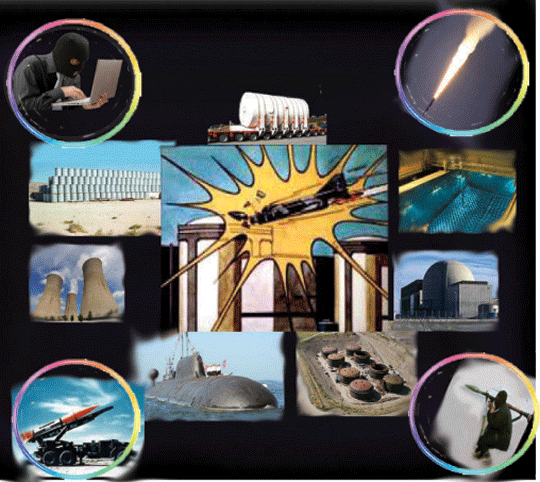 Belgian army to protect nuclear sites: interior ministry http://www.reuters.com/ article/us-belgium-nuclear- security-idUSKCN0W61KR, 4 Mar 16 Belgium has ordered its military to protect nuclear sites such as power plants in the country to safeguard them against possible militant attacks, the country’s interior ministry said on Friday.
Some 140 soldiers will be mobilized to protect locations such as Belgium’s two nuclear power plants at Tihange and Doel as well as nuclear research and storage facilities, a spokesman for the interior ministry said.
“We are setting up a special police unit for this sort of security task but that will take some time for it to be operational,” the spokesman said, adding that the army would take over in the meantime.
In February, Belgian investigators searching houses linked to suspects in the Islamist militant attacks in Paris last November found a video tracking movements of a man linked to the country’s nuclear industry.
The spokesman said there was no direct link between the discovery of the video and the decision to take the additional security measures. (Reporting by Robert-Jan Bartunek; Editing by Gareth Jones)
Labour and Nukes: conspiracy of hope killed off?
 nuClear News, March 2016 Lisa Nandy, the Shadow Secretary of State for Energy and Climate Change has called on the government to come up with a “Plan B” in case Hinkley Point C is never built. But instead of taking the opportunity to argue the case for more renewables she has called on the government to find cheaper ways to get more nuclear stations built in future. (1) She now wants the Government to look at new reactor types including Molten Salt Reactors, Heavy Water Reactors, and Fast Reactors (2) A far cry from Jeremy Corbyn’s manifesto last summer which pointed to the 8 countries, 55 cities and 60 regions which are planning to go 100% renewable over the next few decades which Britain should be part of. He said Britain needs the Big 60 million not the Big 6. In his interview with Greenpeace’s Energydesk he said “no” to new nuclear power stations. (3)
1 This Month




Shut down the radiation-damaged Heysham nuclear reactors now
To see nuclear-related stories in greater depth and intensity – go to https://nuclearinformation.wordpress.com

Say No to NASA’s Reckless Nuclear Reactor on the Moon
Say No to NASA’s Reckless Nuclear Reactor on the Moon
-
Archives
- October 2026 (302)
- September 2026 (339)
- August 2026 (330)
- July 2026 (355)
- June 2026 (287)
- May 2026 (306)
- April 2026 (356)
- March 2026 (251)
- February 2026 (267)
- January 2026 (308)
- December 2025 (358)
- November 2025 (359)
-
Categories
- 1
- 1 NUCLEAR ISSUES
- business and costs
- climate change
- culture and arts
- ENERGY
- environment
- health
- history
- indigenous issues
- Legal
- marketing of nuclear
- media
- opposition to nuclear
- PERSONAL STORIES
- politics
- politics international
- Religion and ethics
- safety
- secrets,lies and civil liberties
- spinbuster
- technology
- Uranium
- wastes
- weapons and war
- Women
- 2 WORLD
- ACTION
- AFRICA
- Atrocities
- AUSTRALIA
- Christina's notes
- Christina's themes
- culture and arts
- Events
- Fuk 2022
- Fuk 2023
- Fukushima 2017
- Fukushima 2018
- fukushima 2019
- Fukushima 2020
- Fukushima 2021
- general
- global warming
- Humour (God we need it)
- Nuclear
- RARE EARTHS
- Reference
- resources – print
- Resources -audiovicual
- Weekly Newsletter
- World
- World Nuclear
- YouTube
-
RSS
Entries RSS
Comments RSS

