Danger of terror attacks on Germany’s nuclear stations
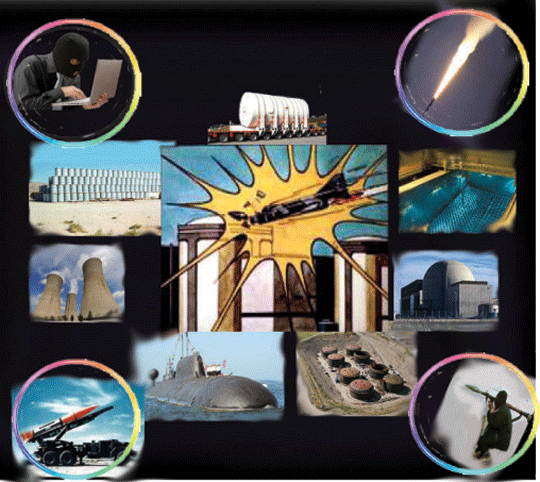 German nuclear plants are vulnerable to terrorist attacks – study Rt.com 24 Mar, 2016 Germany’s nuclear power plants are insufficiently protected against potential terror attacks, including 9/11-style ones, according to a newly-released study.
A nuclear plant’s smokescreen designed to prevent any attacks on it from air provides only minimal protection for the facility, Deutsche Presse-Agentur (DPA) news agency reported, citing findings presented by Oda Becker, a physicist and independent expert on nuclear plants, at the German Federation for the Environment and Nature Conservation (BUND) congress in Berlin on Thursday.
Such smokescreen “only slightly diminishes a chance of collision with a plane,” hijacked by terrorists. Additionally, only two out of eight currently operating nuclear plants in Germany are equipped with such systems, the report points out.
According to Becker’s research, another significant threat to German nuclear plants is posed by a possible terrorist attack using helicopters filled with explosives. A fall of an aircraft rigged with explosives on a nuclear plant could lead to a “massive release of radiation,” as nuclear facilities in Germany are not designed to withstand explosions of such scale.
Reliability tests have demonstrated that the plants’ personnel cannot possibly prevent terrorists from infiltrating the facility and committing a terrorist act there, the study adds.
In another study published March 8 and titled “Nuclear power 2016 – secure, clean, everything under control?” Becker listed insufficient security standards, natural disasters, terrorist attacks and emergencies caused by the deterioration of the German nuclear plants’ security systems as major threats to the industry.
“A serious accident is possible in case of every German nuclear plant,” she said at that time, adding that “there are no appropriate accident management plans.” Becker added that temporary nuclear waste storage sites can also pose a serious threat to people, as they can also be targeted by terrorists and lack relevant security systems.
“The interim [nuclear waste] storages lack protection against aircraft crashes and dangers posed by terrorists,” Becker said, adding that security aspects of the future nuclear waste storage should be discussed, including possible security upgrades of the existing storage sites and the establishment of new facilities.
According to Belgian media, Brussels suicide bombers Khalid and Ibrahim El-Bakraoui were already planning attacks on nuclear plants, although not in Germany but in Belgium. The arrest of Paris attacker Salah Abdeslam allegedly thwarted their plans and forced them to choose another target………
The recent news from Belgium has given some German politicians and activists additional cause for concern. Hubert Weiger, the head of the BUND, said that the Brussels attacks became another reason for immediate nuclear phase-out. “It is even more necessary than ever to abandon this technology,” he said, as quoted by DPA.
Eight nuclear plants remain operational in Germany, after Angela Merkel’s government decided to abandon the use of nuclear energy and immediately halt all operations on the country’s eight oldest nuclear plants in March 2011. Another plant was shut down in 2015. The remaining nuclear stations are due to be closed by 2022.
At the same time, Simone Peter, a co-chair of the German Green Party, demanded additional security checks at all European nuclear plants.
“EU nuclear power plant stress tests did not include [the possibility] of a terrorist attack. It is time to reassess [our] approach to security,” she tweeted. https://www.rt.com/news/337092-german-nuclear-plants-terrorists/
UK govt getting resigned to the likely scrapping of Hinkley Point C nuclear project
 U.K. Sees No Power `Black Hole’ If EDF Scraps Nuclear Plan,Bloomberg, Alex Morales AlexJFMorales 24 Mar 16 The U.K. won’t struggle to keep the lights on if Electricite de France SA decides not to proceed with its 18 billion-pound ($25 billion) plan to build a new nuclear-power plant at Hinkley Point in southwest England, Energy Secretary Amber Rudd said.
Britain has nine years to fill any gap in generation created by the loss of a 3.2-gigawatt project that could produce 7 percent of the country’s electricity supply, Rudd said in an interview Thursday.
“If there were any delay, we would have plenty of time to arrange replacements,” Rudd said after giving a speech near Rochester in southeast England. “It’s absolutely not right to think that there will be some sort of black hole in 2025.”………
EDF executives and French Economy Minister Emmanuel Macron have reiterated this month that the company will take a final decision soon to go ahead with the project. Still, the company originally said that new nuclear power would be generated by Christmas 2017, a deadline that has since slipped to 2025…….
The U.K. network operator has signed contracts for 3.6 gigawatts of reserve power that it can use to meet shortfalls. National Grid can also ask shops and factories to reduce demand during peak times to help ease pressure on the system……..
Rudd spoke after giving a speech at the U.K. end of the new 1-gigawatt BritNed interconnector, which allows electricity to flow between the Netherlands and Britain. She made the case for Britain’s continued membership of the European Union, saying that a departure would risk inflating customer energy bills by 500 million pounds a year. http://www.bloomberg.com/news/articles/2016-03-24/u-k-sees-no-power-black-hole-if-edf-scraps-nuclear-plan
Chernobyl’s anti radiation sarcophagus
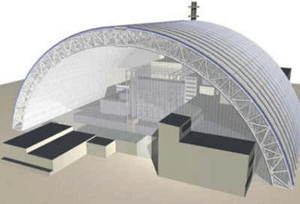 $1.7B Giant Arch to Block Chernobyl Radiation For Next 100 Years by REUTERS, 24 Mar 16 In the middle of a vast exclusion zone in northern Ukraine, the world’s largest land-based moving structure has been built to prevent deadly radiation spewing from the Chernobyl nuclear disaster site for the next 100 years.
A concrete sarcophagus was hastily built over the site of the stricken reactor to contain the worst of the radiation, but a more permanent solution has been in the works since late 2010.
Easily visible from miles away, the 30,000 tonne ‘New Safe Confinement’ arch will be pulled slowly over the site later this year to create a steel-clad casement to block radiation and allow the remains of the reactor to be dismantled safely……..
The EBRD has managed the funding of the arch, which has cost around 1.5 billion euros ($1.7 billion) and involved donations from more than 40 governments. Even with the new structure, the surrounding zone, which at 1,000 square miles is roughly the size of Luxembourg, will remain largely uninhabitable and closed to unsanctioned visitors…….
The upcoming 30th anniversary of the disaster has shone a new light on the long-term human impact of the worst nuclear meltdown in history.
The official short-term death toll from the accident was 31 but many more people died of radiation-related illnesses such as cancer. The total death toll and long-term health effects remain a subject of intense debate.
On Wednesday, Ukrainians who were involved in the cleanup of Chernobyl – the so-called “liquidators” – protested in central Kiev to demand the government acknowledge their sacrifice with improved social benefits.
“Thirty years ago, when we were young, we were saving the whole earth from a nuclear explosion. And now no one needs us. Absolutely no one,” said one of the protesters, former liquidator Lidia Kerentseva. http://www.nbcnews.com/tech/tech-news/1-7b-giant-arch-block-chernobyl-radiation-next-100-years-n544721
Nuclear dump plan for Chernobyl area
 Area around Chernobyl plant to become a nuclear dump KYODO HTTP://WWW.JAPANTIMES.CO.JP/NEWS/2016/03/24/WORLD/AREA-AROUND-CHERNOBYL-PLANT-BECOME-NUCLEAR-DUMP/#.VVRVA9J97GH KIEV – A heavily contaminated area within a 10-kilometer radius of the Chernobyl nuclear power plant in Ukraine will be used to store nuclear waste materials, the chief of a state agency managing the wider exclusion zone said in an interview.
“People cannot live in the land seriously contaminated for another 500 years, so we are planning to make it into an industrial complex,” said Vitalii Petruk, the head of the State Agency of Ukraine on Exclusion Zone Management. The zone is 30-km radius from the site of the 1986 nuclear accident — the world’s worst nuclear disaster.
“We are thinking of making land that is less contaminated a buffer zone to protect a residential area from radioactive materials,” he said.
Petruk said the agency does not plan to narrow down the exclusion zone because there is no privately owned land within the area and few people are wishing to return, unlike Fukushima, home to the 2011 nuclear disaster in Japan.
The complex will be used to store and process nuclear waste including spent nuclear fuel sent from power plants in Ukraine, he said.
“We are considering building a facility for alternative energy such as solar panels” so as to utilize the remaining electricity infrastructure including power grids for the Chernobyl nuclear power plant there, he added.
Petruk said the agency also wants to invite foreign companies to the complex. “We will ensure the maximum safety” to help their activities in the complex, he said.
As for the future dismantlement of the Chernobyl plant, Petruk said his country has been in talks with France for some two years about possible cooperation and it also wants to consider talks with Japan.
Scotland’s floating wind farm will ‘store’ power
 World’s first floating wind farm to ‘store’ power http://www.cnbc.com/2016/03/21/world-first-floating-wind-farm-to-store-power.html Anmar Frangoul Monday, 21 Mar 2016 Statoil is to install a lithium battery based storage system at the world’s first floating wind farm off the coast of Scotland.
The new system, called Batwind, is to be developed in co-operation with universities and suppliers from Scotland after a deal was signed last week between Statoil, the Scottish Government, the Offshore Renewable Energy (ORE) Catapult and Scottish Enterprise, according to a statement released on Monday.
“By developing innovative battery storage solutions, we can improve the value of wind energy for both Statoil and customers,” Stephen Bull, Statoil’s senior vice president for offshore wind, said. The system is to be installed at the end of 2018, Statoil said, and will have the battery capacity of “more than 2 million iPhones.”
Because renewable sources of energy, such as the sun and wind, do not promise a constant stream of power, storage is seen as vital in the transition to a low-carbon, renewable future. A recent report from the Carbon Trust found that energy storage has the potential to save £2.4 billion ($3.46 billion) a year by 2030.
The storage system from Statoil will be piloted at Hywind Scotland, an offshore “wind park” with five floating turbines. The park is currently being built, with electricity production set to commence at the end of 2017. Statoil say that the wind farm will be able to power roughly 20,000 homes.
“This will help maximize the renewable generation of the Hywind offshore wind farm, whilst informing the case for energy storage and demonstrating the technology’s ability to support renewables in Scotland and internationally,” Fergus Ewing, Scotland’s energy minister, said.
Years more delay for EDF’s Flamanville nuclear power station
EDF’s French nuclear plant faces years of further delay, Ft.com 20 Mar 16 Kiran Stacey and Tom Burgis EDF’s new nuclear power station in France faces years of further delays if tests confirm that the steel used in its reactor is flawed, the country’s atomic watchdog has warned.
It is one of the clearest signals to date of the scale of the setback faced by the French utility. The flagship plant at Flamanville in Normandy has already been subject to years of delays and cost overruns, which have made it difficult for EDF to fund the identically designed £18bn reactor at Hinkley Point in the UK — a key element in Britain’s energy strategy.
Initially, Flamanville was expected to cost €3.3bn and start operations in 2012 — it is now planned to start in 2018 at a cost of €10.5bn.
But Julien Collet, the deputy director of France’s Nuclear Safety Authority, has said that it could be delayed further by several years, depending on the results of tests started last year and due to end this summer on the steel being used in the reactor core.

If the steel fails the tests, regulators could order EDF to rip out and replace the top and bottom of the reactor vessel. Mr Collet told the Financial Times: “It takes a lot of time to build new components like this — we’re talking years.”……
The concerns over the steel used in the Flamanville plant are only the latest in a string of misfortunes at that project and another in Finland, both of which use Areva’s European Pressurised Reactor, or EPR, model.
These delays have caused difficulties for EDF’s contentious new project at Hinkley Point in Somerset, which was originally planned for 2017 but is now set to be built by 2025…….
EDF was thrown a lifeline last week, however, when Emmanuel Macron, the French economy minister said his government would recapitalise the company if necessary.
But executives will come under scrutiny on Wednesday when they are grilled in Westminster about Hinkley Point by MPs on the cross-party energy select committee. http://www.ft.com/intl/cms/s/0/73d62552-ec65-11e5-bb79-2303682345c8.html#axzz43g9nsyxB
AREVA’s huge loss on Finland nuclear project
 Areva Posts 2.04 Billion-Euro Loss on Finnish Project http://www.bloomberg.com/news/articles/2016-02-25/areva-delays-results-by-24-hours-after-securing-bridge-loan, 25 Feb 16 Francois De Beaupuy
The company, 87 percent owned by the French government, had a net loss of 2.04 billion euros in 2015 after a loss of 4.83 billion euros a year earlier, the company based near Paris said Friday in a statement. It took a 905 million-euro charge related to the Finnish power station project due to extra operating costs and the “probable impact” of further discussions with the customer to settle the disputes over the project and bring it to completion.
Areva said it expects negative net cash flow from operations in 2016 in the range of 1.5 billion to 2 billion euros, due partly to expenses to be incurred on large projects and an unfavorable change in working capital requirements.
As a result, Areva’s credit rating was downgraded in December by Standard & Poor’s to B+, four steps below investment grade. Shares of the company have dropped 32 percent this year, extending a drop of 40 percent in 2015. The company delayed its earnings report by one day in order to finalize a bridge loan.
EDF has said it will buy a majority stake in Areva’s reactor unit provided it’s not exposed to the Finnish atomic plant project.
Russia funding and building new nuclear power station in Finland

 Russian nuclear corporation to start construction of Hanhikivi NPP in Finland in 2017 http://tass.ru/en/economy/864293 NOVO-OGAREVO, March 22. /TASS/. Construction of the Hanhikivi 1 nuclear power plant in Finland to be implemented by the Russian nuclear corporation Rosatom will start in 2017. Such information is contained in materials for the working visit of Finland’s President Sauli Niinisto to Moscow.
The power plant is expected to start generating electric power in 2024.
In December 2013, Rusatom Overseas [Rosatom’s subsidiary – TASS] and Finnish Fennovoima signed the contract for construction of Hanhikivi-1 nuclear power plant. Along with the construction contract, a ten-year fuel contract was signed with Russia’s company TVEL.
Russia’s revenues from the Hanhikivi-1 nuclear power plant project will amount to €17.5 bln , head of Rosatom Sergey Kiriyenko said earlier. Of this amount only taxes to the federal budget will exceed €3 bln, he added.
According to Finnish media, the project’s cost will reach €6-7 bln, of which €1.6 bln will be invested by Fennovoima and the rest by Rosatom. The commissioning of the new nuclear power plant is scheduled for 2024.
Rusatom Overseas is to supply 1,200Mt reactor for Hakhikivi-1.
Rolls Royce touts “football fields” of mini nuclear reactors for Britain

The UK’s current plans for a new wave of huge nuclear power stations is spinning out of control. The first, Hinkley Point in Somerset, was set to start generating in 2017 but questions over design and financing of the £18bn, 3,200 megawatt plant have put it years behind schedule.
The scheme was thrown into further doubt earlier this month when the finance director of EDF, the French company which will build Hinkley Point, quit over fears the company’s balance sheet could not withstand the huge costs.
Rolls Royce believes a series of mini reactors – known as “small modular reactors” (SMRs) – are a more viable medium-term solution to Britain’s looming energy crisis, although the first crop of new large reactors will still need to be deployed……..
EDF’s Flamanville nuclear power project – ever more delays
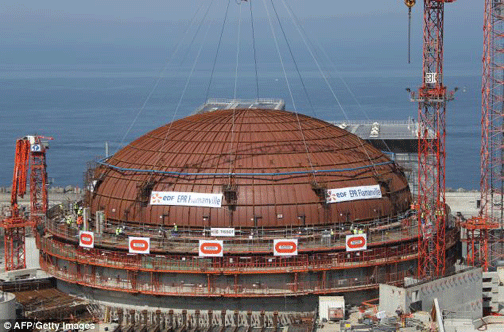
 EDF’s French nuclear plant faces years of further delay,Ft.com, 20 Mar 16 EDF’s new nuclear power station in France faces years of further delays if tests confirm that the steel used in its reactor is flawed, the country’s atomic watchdog has warned.
It is one of the clearest signals to date of the scale of the setback faced by the French utility. The flagship plant at Flamanville in Normandy has already been subject to years of delays and cost overruns, which have made it difficult for EDF to fund the identically designed £18bn reactor at Hinkley Point in the UK — a key element in Britain’s energy strategy.
Initially, Flamanville was expected to cost €3.3bn and start operations in 2012 — it is now planned to start in 2018 at a cost of €10.5bn.
But Julien Collet, the deputy director of France’s Nuclear Safety Authority, has said that it could be delayed further by several years, depending on the results of tests started last year and due to end this summer on the steel being used in the reactor core.
If the steel fails the tests, regulators could order EDF to rip out and replace the top and bottom of the reactor vessel. Mr Collet told the Financial Times: “It takes a lot of time to build new components like this — we’re talking years.”
The difficulties EDF is having with the steel at Flamanville have been caused by problems with the process of cooling and cutting a 450-tonne ingot of steel, which created an area the size of a dinner plate that was slightly more brittle than it should have been.
Areva, the French nuclear company in whose reactor business EDF is due to take a controlling stake, is working with regulators to test an identical piece to determine if it could lead to weakness in the reactor vessel.
The problem was discovered in late 2014 but EDF opted to push ahead with construction, potentially making it much more difficult to replace the faulty steel if needed……..
having agreed to fund 66.5 per cent of the [UK’s Hinkley Point C nuclear] project last year, EDF has delayed giving it final approval, with some at the top of the company arguing more investors should be brought in first.
Finding outside investment has been difficult because of the problems being experienced with other EPRs in France and Finland, according to senior people within the company………http://www.ft.com/intl/cms/s/0/73d62552-ec65-11e5-bb79-2303682345c8.html#axzz43TzEfz49
Growing risk of nuclear war in Europe
Risk of nuclear war in Europe growing, warns Russian ex-minister, Reuters, BRUSSELS | BY ROBIN EMMOTT, 20 Mar 16, The East-West standoff over the Ukraine crisis has brought the threat of nuclear war in Europe closer than at any time since the 1980s, a former Russian foreign minister warned on Saturday.
“The risk of confrontation with the use of nuclear weapons in Europe is higher than in the 1980s,” said Igor Ivanov, Russia’s foreign minister from 1998 to 2004 and now head of a Moscow-based think-tank founded by the Russian government.
While Russia and the United States have cut their nuclear arsenals, the pace is slowing. As of January 2015, they had just over 7,000 nuclear warheads each, about 90 percent of world stocks, according to the Stockholm International Peace Research Institute.
“We have less nuclear warheads, but the risk of them being used is growing,” Ivanov said at a Brussels event with the foreign ministers of Ukraine and Poland and a U.S. lawmaker.
NATO’s secretary general Jens Stoltenberg has warned Russia of intimidating its neighbors with talk about nuclear weapons, publicly voicing concerns among Western officials.
MISSILE DEFENSE
Ivanov blamed a missile defense shield that the United States is setting up in Europe for raising the stakes. Part of that shield involves a site in Poland that is due to be operational in 2018. This is particularly sensitive for Moscow because it brings U.S. capabilities close to its border………http://www.reuters.com/article/us-ukraine-crisis-russia-idUSKCN0WL0EV
Hinkley nuclear- the wrong energy path for UK: five much better alternatives
“Hinkley is a deal that has nothing to do with market reality. Nothing to do with affordability, let alone with the ‘hard-working families’ that [energy secretary] Amber Rudd keeps bleating on about. And nothing to do with addressing our climate change responsibilities.
“By contrast, it’s got everything to do with political leaders in three nations – the UK, France and China – all of which ‘need’ Hinkley Point to happen for grubby geopolitical interests of their own.”

 Five ways to power the UK that are far better than Hinkley Point http://www.theguardian.com/environment/damian-carrington-blog/2016/mar/18/five-ways-to-power-the-uk-that-are-far-better-than-hinkley-point
These alternatives to the troubled planned nuclear plant will be faster to build and cheaper for energy consumers, say experts, Guardian, Damian Carrington The planned £18bn nuclear reactors at Hinkley Point in Somerset are derided by critics as “one of the worst deals ever” for Britain, but defended as crucial to the UK’s energy policy by the government.
Recent resignations and financial warnings have knocked confidence in the Hinkley C deal, raising the question of whether clean energy alternatives could plug the gap. The fast-changing economics of the energy world, with renewables and other clean technologies falling in cost, indicate they can. The alternatives also look faster to build – it would take a decade to get Hinkley into operation – and cheaper for consumers, who ultimately foot the bills.
Energy policy expert Jonathan Gaventa, from the thinktank E3G, has come up with five better ways of powering the nation:
Energy efficiency
Electricity demand is already falling. The Somerset site for Hinkley C was approved in 2010 but since then UK demand has already fallen by more than the plant will produce, about 25TWh a year or 7% of today’s demand. Due to repeated delays, Hinkley C is unlikely to produce electricity much before 2030, by which time six Hinkleys’ worth of electricity could have been cut from the national demand, according to a McKinsey report for the government.
Wind turbines
Wind power generation equivalent to one Hinkley has been connected to the national grid since 2010. Onshore wind power, having dropped 20% in cost over the last five years, is much cheaper than the heavily subsidised price Hinkley is guaranteed for over 35 years. The costs of offshore wind are also falling and likely to be below Hinkley well before 2030.

Solar power
Electricity from solar power is now also cheaper than Hinkley, having fallen by half in the last five years. From almost no solar panels in the UK, a third of a Hinkley has been added since 2010. Half of that was delivered in just 18 months, according to government statistics. [excellent graph]
Cost of silicon photovoltaic solar cells,
Interconnectors
Another third of a Hinkley has been added to the UK grid since 2010 by new cables to other European countries, where electricity is currently cheaper. New interconnectors to Norway, Denmark and France could be laid by 2025, adding another two or three Hinkleys to the grid, according to a report for the UK’s National Infrastructure Commission (NIC) in February.
Storage and flexibility
Another NIC report for the government found that four Hinkleys’ worth of electricity could be saved by 2030 by increasing the ability to store electricity, inlarge batteries for example, and making the grid smarter. This would also save bill payers £8bn a year.
“It is clear that a combination of efficiency, renewables, interconnection and flexibility would be more than enough to fill the gap if Hinkley C is withdrawn – and could do so more quickly, more reliably and more cheaply,” says Gaventa.
“It is clear that a combination of efficiency, renewables, interconnection and flexibility would be more than enough to fill the gap if Hinkley C is withdrawn – and could do so more quickly, more reliably and more cheaply,” says Gaventa.
So why isn’t Hinkley dead already? Many energy policy experts are baffled. But veteran green campaigner Jonathan Porritt, who chaired the UK’s sustainable development commission for a decade, thinks he knows: “Hinkley is a deal that has nothing to do with market reality. Nothing to do with affordability, let alone with the ‘hard-working families’ that [energy secretary] Amber Rudd keeps bleating on about. And nothing to do with addressing our climate change responsibilities.
“By contrast, it’s got everything to do with political leaders in three nations – the UK, France and China – all of which ‘need’ Hinkley Point to happen for grubby geopolitical interests of their own.”
UK taxpayers up for huge liabilities if Hinkley nuclear power project goes ahead?
“The £22bn ‘poison pill’ effectively reduces the risk to zero for EDF and its backers, which is great for them. But from an outside perspective, it smacks of desperation.”
“Energy economics are changing rapidly and so the momentum is towards decentralised, smart and flexible energy systems. It is moving away from large, inflexible power plants like Hinkley. If it ever gets funded, it will be a white elephant before it is even finished and this government, with this £22bn ‘poison pill’, will have tied the next generation into paying for it, for no reason that I can understand. If it is simply political saving face, it really is pitiful.”
Hinkley Point C nuclear deal contains £22bn ‘poison pill’ for taxpayer
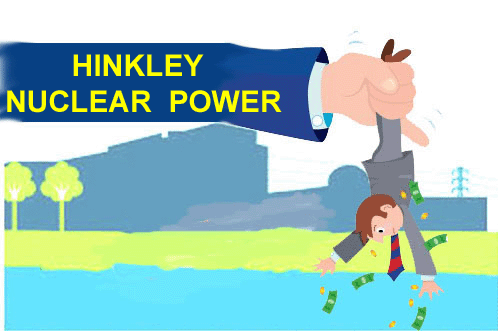
Public left with huge liability for a government closure of power plant before 2060 under UK’s agreement with EDF, Guardian, Damian Carrington, 18 Mar 16, The Hinkley nuclear power deal contains a “poison pill” which could leave taxpayers with a £22bn bill if a future UK government closed the plant before 2060, according to an official document seen by the Guardian.
The huge liability shows Hinkley is a “terrible deal” for the UK public, according to critics, with the company also guaranteed three times today’s price for electricity for 35 years. The project has recently been battered by financial warnings and resignations at its prime backer EDF, although on Thursday France’s economics minister, Emmanuel Macron, said that the French state would bail the company out.
The deal the UK government has agreed with EDF, set out in an unpublicised “minute”, commits the British public to pay subsidies of up to about £40bn in real terms and provides state guarantees on nuclear waste disposal and insurance, while allowing the plant to begin producing electricity as late as 2033.
A shutdown that triggers the “poison pill” compensation is not entirely within the control of the UK government but could also be forced by the EU or an international regulator such as the International AtomicEnergy Agency, according to the document. [ EU par inserted here on original]
“This is a dreadful agreement for the nation,” said Prof Catherine Mitchell, an energy policy expert at the University of Exeter. “The government is already paying a high price, index-linked for an incredibly long 35 years. This should be more than sufficient for a professional, business contract.
“The £22bn ‘poison pill’ effectively reduces the risk to zero for EDF and its backers, which is great for them. But from an outside perspective, it smacks of desperation.”
“There could be so many reasons over 35 years that you would want to close the plant,” she said, including rising costs, changes to the UK’s energy system or loss of public confidence.
Green party MP Caroline Lucas said: “Even before we knew about this ‘poison pill’, Hinkley represented a terrible deal for taxpayers and a huge burden on bill payers too. This flies in the face of relentless ministerial rhetoric on value for consumers – especially compared to the costs of solar power and wind – which are already cheaper than nuclear and continue to fall.”………
Former Conservative energy secretary Lord Howell has criticised the Hinkley dealas “one of the worst deals ever” for British consumers and industry and has protested against “endless government guarantees for risk-free returns to the investors”.
Tom Burke at thinktank E3G, a former special adviser to three Conservative environment secretaries, said: “Why would a Conservative government want to buy 35 years of electricity ahead of time? They are supposed to believe in the market. But they have tied themselves in knots and now it is too embarrassing to untie it.”
The UK government argues that new nuclear power is essential to provide large amounts of reliable, low-carbon energy.
But Mitchell said: “Energy economics are changing rapidly and so the momentum is towards decentralised, smart and flexible energy systems. It is moving away from large, inflexible power plants like Hinkley. If it ever gets funded, it will be a white elephant before it is even finished and this government, with this £22bn ‘poison pill’, will have tied the next generation into paying for it, for no reason that I can understand. If it is simply political saving face, it really is pitiful.” http://www.theguardian.com/uk-news/2016/mar/18/hinkley-point-c-nuclear-deal-22bn-poison-pill-taxpayer
NASA and Rosatom want nuclear rockets to take astronauts to Mars
Nasa wants to use nuclear rockets to get to Mars: Space agency claims the technique is ‘most effective way’ of reaching red planet
- Nuclear propulsion weighs almost half as much as a chemical rocket
- Nasa is also are planning to build rockets powered by nuclear fission
- They hope it could be used to carry astronauts to the red planet in 2033
- Follows news this week that Russia plans to test a nuclear engine in 2018
By ELLIE ZOLFAGHARIFARD FOR DAILYMAIL.COM
Nuclear thermal propulsion is ‘the most effective’ way of sending humans to Mars.
That’s according to Nasa administrator and former astronaut, Charles Bolden, who made the statement when speaking to Congress this week.
‘We are on a journey to Mars and most people believe that, in the end, nuclear thermal propulsion will be the most effective form of propulsion to get there,’ he said.
 He didn’t, however, expand on details on how quickly Nasa hoped the technology could get astronauts to Mars. ……..’A nuclear power unit makes it possible to reach Mars in a matter of one to one and a half months, providing capability for manoeuvring and acceleration,’ Sergey Kirienko, head of Rosatom told RT . http://www.dailymail.co.uk/sciencetech/article-3499441/Nasa-wants-use-nuclear-rockets-Mars-Space-agency-claims-technique-effective-way-reaching-red-planet.html
UK Members of Parliament to question EDF executives about Hinkley nuclear project financing
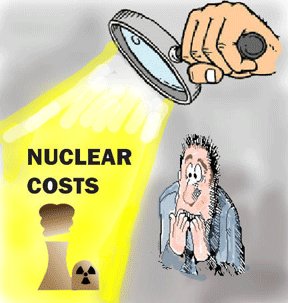
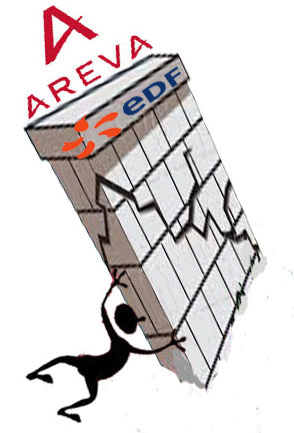 EDF Energy to be grilled by MPs over Hinkley Point C nuclear power plant , City AM. 17 Mar 16 EDF Energy will be grilled by a group of MPs next week over the controversial Hinkley Point C nuclear power plant in Somerset.
EDF’s chief executive Vincent de Rivaz, and managing director of new nuclear build Humphrey Cadoux-Hudson, will appear before the energy and climate change select committee on Wednesday.
It comes as French economy minister Emmanuel Macron pledged fresh financing for the £18bn project during a visit to a nuclear power plant there today.
EDF has been forced to defend Hinkley after its chief financial officer Thomas Piquemal resigned over the huge costs. It subsequently sent a letter to employees reiterating confidence that the project will go ahead.
“The hearing will give EDF Energy an opportunity to answer the committee’s questions on the investment plans for a new nuclear power station at Hinkley Point C in Somerset,” it said in a statement today……..http://www.cityam.com/237033/edf-energy-to-be-grilled-by-mps-over-hinkley-point-c-nuclear-power-plant
1 This Month




Shut down the radiation-damaged Heysham nuclear reactors now
To see nuclear-related stories in greater depth and intensity – go to https://nuclearinformation.wordpress.com

Say No to NASA’s Reckless Nuclear Reactor on the Moon
Say No to NASA’s Reckless Nuclear Reactor on the Moon
-
Archives
- October 2026 (302)
- September 2026 (339)
- August 2026 (330)
- July 2026 (355)
- June 2026 (287)
- May 2026 (306)
- April 2026 (356)
- March 2026 (251)
- February 2026 (267)
- January 2026 (308)
- December 2025 (358)
- November 2025 (359)
-
Categories
- 1
- 1 NUCLEAR ISSUES
- business and costs
- climate change
- culture and arts
- ENERGY
- environment
- health
- history
- indigenous issues
- Legal
- marketing of nuclear
- media
- opposition to nuclear
- PERSONAL STORIES
- politics
- politics international
- Religion and ethics
- safety
- secrets,lies and civil liberties
- spinbuster
- technology
- Uranium
- wastes
- weapons and war
- Women
- 2 WORLD
- ACTION
- AFRICA
- Atrocities
- AUSTRALIA
- Christina's notes
- Christina's themes
- culture and arts
- Events
- Fuk 2022
- Fuk 2023
- Fukushima 2017
- Fukushima 2018
- fukushima 2019
- Fukushima 2020
- Fukushima 2021
- general
- global warming
- Humour (God we need it)
- Nuclear
- RARE EARTHS
- Reference
- resources – print
- Resources -audiovicual
- Weekly Newsletter
- World
- World Nuclear
- YouTube
-
RSS
Entries RSS
Comments RSS

