Russia building new multiple-warhead missiles

 Russia Doubling Nuclear Warheads New multiple-warhead missiles to break arms treaty limit, Washington Free Beacon, BY: Bill Gertz April 1, 2016 Russia is doubling the number of its strategic nuclear warheads on new missiles by deploying multiple reentry vehicles that have put Moscow over the limit set by the New START arms treaty, according to Pentagon officials.
A recent intelligence assessment of the Russian strategic warhead buildup shows that the increase is the result of the addition of multiple, independently targetable reentry vehicles, or MIRVs, on recently deployed road-mobile SS-27 and submarine-launched SS-N-32 missiles, said officials familiar with reports of the buildup.
“The Russians are doubling their warhead output,” said one official. “They will be exceeding the New START [arms treaty] levels because of MIRVing these new systems.”
The 2010 treaty requires the United States and Russia to reduce deployed warheads to 1,550 warheads by February 2018……..http://freebeacon.com/national-security/russia-doubling-nuclear-warheads/
British churches going for renewable energy
 Hundreds of UK churches set to go green, switch to renewable energy-charities LONDON (Thomson Reuters Foundation) – More than 400 churches in the United Kingdom plan to switch to clean energy providers for their light and heat, shifting spending of 1 million pounds ($1.4 million) to renewables from fossil fuels, two Christian charities said on Wednesday.
The move is part of the Big Church Switch, an initiative launched in February by charities Christian Aid and Tearfund, which urged UK churches and households to use clean sources of energy instead of carbon-emitting fossil fuels.
Their online platform connects those who sign up with energy experts, promising to find them the best renewable deal by negotiating with energy providers.
“As individuals and churches we have a choice in how we treat the earth, how we spend our money, how we power our homes and our buildings,” David Walker, the Anglican bishop of Manchester, said in a statement.
“By creating technology which can turn wind and sunshine into clean and renewable energy, humans continue to benefit from the gift of creation. Making the most of this bountiful harvest is a common sense way for us to roll back the ravages of climate change and ensure we are taking an active role in being part of the solution.”……..http://www.reuters.com/article/us-energy-renewables-church-idUSKCN0WW1QG
Transatlantic flights with nuclear waste cargo – an unacceptable danger
“Nuclear waste should be dealt with as close to where it is produced as possible rather than risking transporting it in ships or planes. This waste will remain dangerous for tens of thousands of years. The consequences of an accident during transit would be horrific.”
the proposed shipment sent an “open invitation to terrorists keen to get their hands on this prime terrorist material”.

Campaigners condemn UK Government for playing transatlantic nuclear ping-pong,
Herald Scotland, MICHAEL SETTLE, 31 Mar 16 CAMPAIGNERS have denounced the UK Government’s decision to play “transatlantic nuclear ping-pong” by agreeing a deal to transport 700 kilograms of weapons-grade uranium fuel from Dounreay in Caithness to the US.
The SNP’s Paul Monaghan, the local MP, said he too was deeply concerned by the development and is to demand assurances from David Cameron about the safety of the transportation, which he believes will involve up to nine flights from Wick airport using huge American c-130 Galaxy aircraft.
“Wick airport is not built for that kind of aircraft. I’m very concerned about the prospect of the planes flying over the town,” declared the backbencher.
Mr Monaghan stressed that the highly-enriched uranium fuel, which he said had originated from the former soviet state of Georgia, could only be used for nuclear weapons.
Claiming the Prime Minister had “obfuscated” in his replies when asked previously about the planned shipment of nuclear fuel from Dounreay to the US, the Nationalist MP said the safety of local people was his “paramount concern” and that the UK Government, through its lack of clarity, was “abrogating its responsibility to the people of Scotland”.
Mr Cameron is due formally to announce the deal when he attends an international nuclear security summit in Washington DC tomorrow. It will involve the largest ever shipment of radioactive material from the UK to America, which in turn will send a different form of the nuclear element to Euratom, the European atomic agency, for conversion in France into medical isotopes to be used in European hospitals for the diagnosis and treatment of cancer.
A UK Government source said: “It’s a win-win; we get rid of waste and we get back something that will help us to fight cancer.”
But Richard Dixon, director of Friends of the Earth Scotland, said: “Only the nuclear industry could think it was a good idea to risk playing ping pong with large quantities of one of the most dangerous materials on the planet across the Atlantic.
He added: “Nuclear waste should be dealt with as close to where it is produced as possible rather than risking transporting it in ships or planes. This waste will remain dangerous for tens of thousands of years. The consequences of an accident during transit would be horrific.”
John Finnie, justice spokesman for the Scottish Greens, dismissed the UK Government’s attempt to present the proposal to send dangerous nuclear waste across the Atlantic as helping in the fight against cancer as “at best misleading and at worst cynical”.
He added: “Moving such a large amount of toxic waste shows callous disregard for the safety of people in the Highlands. There must be better ways to fight cancer than sending dangerous uranium on an 11,000 kilometre round trip.”
Whitehall has, for security reasons, not confirmed the details of the transportation or the timescale.
Last year, the Sunday Herald broke the story about a “secret plan” to ship nuclear material from Dounreay to America.
The report said the plan was for nearly five kilograms of enriched uranium to be transported by sea from Caithness to the US Government’s nuclear complex at Savannah River in South Carolina.
The material was said to have come from a research institute in Mtskheta, some six miles from the Georgian capital, Tbilisi, in a secretive US operation codenamed Auburn Endeavour in April 1998. Washington was said to have been worried at the time that it could have fallen into the hands of Chechen gangs or Iran.
However, the proposed UK Government plan is to ship not five kilograms but 700kg or more than 110 stones of the nuclear material.
At the time of “secret plan” report one anti-nuclear campaigner warned the proposed shipment sent an “open invitation to terrorists keen to get their hands on this prime terrorist material”……..http://www.heraldscotland.com/news/14395623.Campaigners_condemn_UK_Government_for_playing_transatlantic_nuclear_ping_pong/
Absence of Russia at nuclear security summit
Russia’s absence means nuclear summit likely to end in anticlimax for Obama
Signature policy initiative for the president is set to fall short of its goals as the state with the biggest nuclear arsenal stays away from the Washington meeting, IWhen Barack Obama welcomes more than 50 world leaders to Washington on Thursday ahead of his fourth and final nuclear security summit, one of the most important chairs will be empty.
Russia is thought to possess more nuclear weapons than any other country,including the US. Together the cold war foes share more than 90% of the world’s arsenal. So President Vladimir Putin’s decision to boycott the high-level talks threatens to turn them into an elaborate anticlimax, even as fears of nuclear terrorism are on the up……..
n an opinion column in the Washington Post on Wednesday, Obama argued that the US and Russia should negotiate to further reduce their nuclear stockpiles. “Our massive cold war nuclear arsenal is poorly suited to today’s threats,” he said. But the Kremlin spokesman, Dmitry Peskov, told Reuters that Russia was skipping the summit because of a “shortage of mutual cooperation” in working out the agenda……….
Jim Walsh, research associate at the Massachusetts Institute of Technology’s security studies programme, said: “He deserves credit among the nuclear weapons states for being a leader trying to move things in the right direction. You can’t say that about anybody else.”
Assessing the legacy of the Prague speech, Walsh added: “Would you like to have cleared up all the nuclear materials? Of course. Was it realistic? Of course not. But we got a new start.”
Whoever succeeds Obama – and the prospect of Donald Trump gaining access to the nuclear codes fills some with dread – it is very possible that the issue will be less of a diplomatic priority for the next president. Walsh added: “I’m a fan of the summit process but over time the momentum has slowed. Among those attending there’s a bittersweet feeling this may be the last one for a while. It’s hard to build an international regime in six to eight years.” http://www.theguardian.com/world/2016/mar/31/nuclear-security-summit-obama-russia-absence
US and UK to do cyber attack tests on a nuclear power plant
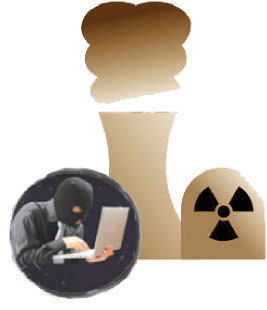 UK and US to simulate cyber-attack on nuclear plants to test resilience Countries plan to cooperate by exploring the resilience of nuclear infrastructure to a terrorist attack, Guardian, Heather Stewart, 31 Mar 16 Britain and the US will stage a war-game later this year, simulating a cyber attack on a nuclear power plant, to test the readiness of the government and utility firms.As David Cameron prepares to fly to Washington to attend a nuclear security summit, convened by Barack Obama, government sources said the two countries plan to cooperate on exploring the resilience of nuclear infrastructure to a terrorist attack……. Separately, Cameron is also set to announce an exchange deal with the US, which will see the UK ship 700kg (110st) of nuclear waste, most of it currently stored at Dounreay, in Scotland, to be processed in America.
Cameron will also commit to spend £10bn this year to fund the world of agencies including the IAEA, on improving the security of civil nuclear infrastructure worldwide. Over lunch on Friday, the world leaders will discuss “scenario-planning” for protecting their nuclear facilities, and preventing volatile nuclear materials falling into the wrong hands…….http://www.theguardian.com/uk-news/2016/mar/31/uk-us-simulate-cyber-attack-nuclear-plants-test-resilience
|


EDF senior engineers call for delay in UK Hinkley nuclear power development
 Dissenting EDF engineers urge delay to Hinkley nuclear project Complexity makes completion date unrealistic, argues report, but French group sticks to timetable Ft.com : By Michael Stothard in Paris, 29 Mar 16,
Senior engineers at French utility EDF have called for at least a two year delay at the controversial Hinkley Point nuclear project in the UK and recommended a redesign of the reactor technology.
An internal white paper written by dissenting EDF engineers, which has been seen by the Financial Times, argues that Hinkley Point is so complex and untested that the company should announce a later completion date than the target of 2025.
The paper, circulated among top executives, said that the “realistic service date was 2027” due to the size of the project, continuing design modifications to the European Pressurised Reactor system and the “very low” competency of French supplier Areva in making some of the large components……..
The unsigned white paper was written after Mr Piquemal’s resignation by a group of senior engineers and other dissidents, according to people with knowledge of the document. The company plans to make the final investment decision on the project at a board meeting on May 11……..
The paper also addresses wider fears that the Hinkley project will in any case not be completed by 2025 and might suffer years of construction delays.
One person on the EDF board who had read the white paper said: “Few believe that we can build this [Hinkley Point] by 2025 any more.”…….
Three people close to the company said that CGN, EDF’s Chinese partner for Hinkley, also feared possible delays, attempting to insert a clause so it would take on a lower financial risk if there were a large problem.
In the case of a £5bn cost overrun, despite EDF having a 66.5 per cent stake in the project, EDF would be liable for 80 per cent of the additional costs, according to a document sent by the EDF finance department to the board’s audit committee in January…….https://next.ft.com/content/2ef61abe-f5b1-11e5-96db-fc683b5e52db
Britain now boasts world’s largest floating solar energy farm

 World’s biggest floating solar farm powers up outside London
Five years in planning and due to be finished in early March, more than 23,000 solar panels will be floated on the Queen Elizabeth II reservoir near Heathrow and used to generate power for local water treatment plants Guardian, Fiona Harvey, 29 Feb 16 On a vast manmade lake on the outskirts of London, work is nearing completion on what will soon be Europe’s largest floating solar power farm – and will briefly be the world’s biggest.
But few are likely to see the 23,000 solar panels on the Queen Elizabeth II reservoir at Walton-on-Thames, which is invisible to all but Heathrow passengers and a few flats in neighbouring estates.
“This will be the biggest floating solar farm in the world for a time – others are under construction,” said Angus Berry, energy manager for Thames Water, which owns the site. “We are leading the way, but we hope that others will follow, in the UK and abroad.”

Five years in planning and due to be finished in early March, the £6m project will generate enough electricity to power the utility’s local water treatment plants for decades. The energy will help provide clean drinking water to a populace of close to 10 million people in greater London and the south-east of England, a huge and often unrecognised drain on electricity, rather than nearby homes.
Why put solar panels on water? The answer, according to Berry, is that the water is there, and might as well be used for this purpose. Floating panels, covering only about 6% of the reservoir, will have no impact on the ecosystem, he says………
A similar floating solar farm with around half the capacity of the Thames Water project is being built by water company United Utilities on a reservoir near Manchester. Construction of an even bigger farm – at 13.7MW more than twice the QEII farm – is underway on a reservoir in land-scarce Japanand due to finish in 2018…….
Putting solar panels on the water for the QEII scheme has not required planning permission, though big arrays of similar panels on land require official sanction. The government has decided to ban farmers who put solar arrays on agricultural land from receiving EU subsidies for the land.
More than 23,000 solar panels will be floated by developer Lightsource Renewable Energy at the reservoir near Walton-on-Thames, representing 6.3MW of capacity, or enough to generate the equivalent electricity consumption of about 1,800 homes…….http://www.theguardian.com/environment/2016/feb/29/worlds-biggest-floating-solar-farm-power-up-outside-london
Russia marketing nuclear power to Bolivia
 Bolivia Hopes to Gain Knowledge From Nuclear Deal With Russia, Sputnik News, 29 Mar 16, “……..Russia and Bolivia signed an agreement on peaceful nuclear cooperation in 2015. Rosatom and the Bolivian Hydrocarbon and Energy Ministry signed a memorandum of understanding on cooperation for peaceful uses of nuclear energy in November. http://sputniknews.com/business/20160329/1037166194/bolivia0russia-rosatom-nuclear.html#ixzz44KHYmPUv
Terrorism threat to Britain’s nuclear facilities is increasing – warns Nuclear Regulator
Nuclear watchdog warns of terrorist threat to UK reactors As Hinkley Point hangs in balance, strategic plan acknowledges security risks Independent, Mark Leftly Associate business editor @MLeftly 26 March 2016
Britain’s nuclear industry is under threat from cyber-attacks, terrorism and state-sponsored espionage, regulators have warned.
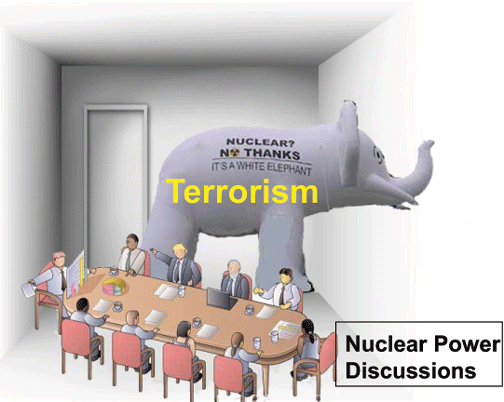
Buried in the Office for Nuclear Regulation’s 2016-20 strategic plan are bleak references to the growing threat of attack on Britain’s 15 operational reactors, which account for nearly a fifth of the country’s electricity. The Independent has established this is the first time that the ONR has explicitly acknowledged the growing terrorist threat to the nuclear industry.
The document states: “The threat of terrorism in the nuclear sector will continue to be managed proportionately and effectively through national and international capabilities. The capabilities of potential adversaries to operate in cyberspace will continue to grow.”
At the top of a list of the industry’s corporate risks, the ONR writes: “Failure to protect the confidentiality, integrity and availability of sensitive information and assets from both known and emerging security threats to the UK nuclear infrastructure (eg, cyber-attacks, terrorist activity, state-sponsored espionage).”
In another reference, it says: “We recognise the world is increasingly globalised and digitised, where both the terrorist threat and the risks from cyberspace are changing. The Government and duty-holders have well-developed security capabilities to deter and defend against organisations and individuals that might conspire to attack or exploit the nuclear estate. ONR will continue to work with the Government to ensure that security-focused regulations evolve to remain fit for purpose and align with safety regulation.”
The news comes at a sensitive time, with French giant EDF weighing up whether to risk its balance sheet on building a £24.5bn reactor at Hinkley Point on the Somerset coast. This is supposed to herald a new generation of nuclear power plants, which are needed to bridge the UK’s yawning energy gap, but EDF has delayed a final investment decision until May. There are also reports that the Isis terrorists who attacked Brussels might have planned to steal radioactive materials from a Belgian nuclear plant to build a bomb.
John Large, the nuclear expert who warned in a 2014 report for the French authorities that reactors are highly vulnerable to drone attacks, said the admission was “a step forward”, but warned: “It might be too late. The problem is that the plants were designed in the 1950s and 1960s and those designs ignored terrorism. That’s one of the problems they [the nuclear industry] face. ……..
Clive Lewis, a shadow Energy minister, pointed out that the ONR’s admission comes shortly after news that the Civil Nuclear Constabulary will be cut by about 200 officers by 2020, despite government promises to protect police funding. ….. http://www.independent.co.uk/news/uk/home-news/exclusive-nuclear-watchdog-warns-of-terrorist-threat-to-uk-reactors-a6953396.html
Shot dead – Belgian nuclear security guard, and his security badge stolen
 Guard at Belgian nuclear plant shot dead; his security badge was stolen. By Kellan Howell – The Washington Times – Saturday, March 26, 2016 Just two days after terrorists attacked the Brussels airport and subway system, a security guard for a Belgian nuclear facility was murdered and his security access badge was stolen, Belgian media reported Saturday.
The security guard’s badge was de-activated as soon as it was discovered it was stolen, according to French newspaper Derniere Heure.
He was shot dead in the Charleroi region of Belgium as he walked his dog, International Business Times reported. http://www.washingtontimes.com/news/2016/mar/26/belgian-nuclear-guard-shot-badge-stolen/
China wants big involvement in construction of Hinkley Point C nuclear station
 China wants hands-on role in UK nuclear, Building.co UK 24 March 2016 | By Yoosof Farah China General Nuclear says it wants to bring “expertise and experience” to UK
The Chinese nuclear developer part-funding Hinkley Point C has said it wants to be heavily involved in the construction of new nuclear plants in the UK.
Speaking to MPs on the Energy Select Committee, Zhu Minhong, general director of UK nuclear projects at China General Nuclear (CGN), said that in addition to its investment in EDF’s Somerset plant, his firm wants to bring its “expertise and experience” to Hinkley and further nuclear schemes in the UK.
At the same committee session EDF’s UK chief executive Vince de Rivaz was girlled by MPs over when the French client will make a final investment decision on Hinkley.
De Rivaz began his appearance by saying “clearly and categorically” that Hinkley Point C will go ahead, but he refused to commit to a date for when a decision will be made.
Under CGN’s funding deal with EDF, the Chinese nuclear giant has already agreed to help fund Hinkley and to partner on construction of further plants at Sizewell in Suffolk and Bradwell in Essex. At Bradwell CGN is expected to lead on development and construction itself.
Minhong told MPs the final terms of CGN’s funding deal with EDF for Hinkley is “practically completed” and the firm is “confident” it will go ahead. CGN has a 33% stake in the £18bn project. In China……..http://www.building.co.uk/news/china-wants-hands-on-role-in-uk-nuclear/5080898.article
Ten disturbing facts about Ukraine’s nuclear power station s
But this can be changed.
The European Commission, the European Parliament, and EU governments – particularly in neighouring countries that could be affected by the Ukrainian government’s reckless nuclear adventure – need to demand Ukraine complies with its international obligations, especially when EU public money is involved.
For more on this Bankwatch campaign see here.

Ten things the Ukrainian government doesn’t want you to know about its nuclear energy plans http://stories.bankwatch.org/10things March 2016, The Ukrainian government appears willing to go to great lengths to make sure that people don’t talk too much about the plans it has for its ageing nuclear stations.
On Wednesday, March 23, the Supreme Economic Court if Ukraine will hear an appeal case by activsts who were sued for defamation for warning about the risk of the country’s continued dependence on outdated nuclear reactors.
The lawsuit was brought by Ukraine’s state-run nuclear operator Energoatom and the governmental nuclear energy regulator (SNRIU) in what appears as an attempt to discourage public participation in the important debate on this issue.
But this move is indicative of the Ukrainian government’s approach. Kiev has also been ignoring the opinions of people in neighbouring countries who could be affected by its nuclear plans, despite a legal obligation to consult them under international treaties.
So, what is it that Ukraine is so keen to hide? Here’s the complete lowdown:
1. Ukraine has 15 nuclear energy reactors and 6 of them will reach their expiry date by May 2020. Four others are already operating beyond their design lifetime, and two more were shut down as soon as they exceeded their original lifespan, in December and in February. Yet, Kiev is determined to keep all eight units going for at least 10 more years beyond their original expiry date.
3. All of Ukraine’s nuclear power plants are completely dependent on Russia for their fuel. And that’s not all. Three of the four nuclear stations are also dependent on Russia for either the reprocessing of spent fuel or its storage.
4. Even though most of these nuclear units will reach their expiry date in the next four years, EU taxpayer money is used for their renovation.How much? EUR 600 million from Euratom and the European Bank for Reconstruction and Development. For proportions, this is a quarter of the total EU support to Ukraine’s energy sector between 2007-2014.
5. International conventions oblige Ukraine to launch public consultations with neighbouring countries that could be affected by the prolonged operations of these nuclear stations. But so far, Kiev has consistently refused to do so. The Aarhus Convention and the Espoo Convention also stipulate that transboundary environmental impact assessments need to be carried out in such cases. Complying with these requirements is also an explicit condition of the European loans. But the Ukrainian government remains defiant.
6. Ukraine has already been found in breach of the Espoo Convention.The ruling came after it had authorized lifetime extensions for two of the units at the Rivne nuclear power plant, located less than 200 kilometres from the border with Poland. Ukrainian authorities are, unsurprisingly, challenging this ruling.
7. The Ukrainian government cannot guarantee the safety of any nuclear power plant. Since January 2015 a governmental decree prevents the nuclear energy regulator from carrying out inspections in nuclear facilities on its own initiative.
8. At least one of the four nuclear reactors already working beyond their design lifetime is in a dangerous condition. An independent expert analysis released in March 2015 found that the pressure vessel of unit 1 at the South Ukraine nuclear power plant suffers critical vulnerabilities that could potentially lead to a dangerous nuclear emergency. The state nuclear regulator disputes these findings, of course. But no matter how much is invested into renovations, a nuclear unit’s pressure vessel is one of the elements that simply cannot be replaced.
9. The Zaporizhia nuclear power plant in southeast Ukraine is Europe’s largest. It is also just 250 kilometres from the frontlines of the ongoing armed conflict in eastern Ukraine. This has officials at the power plant obviously concerned: 10. And all of this is even more urgent than you think.
Two of the oldest units in the Zaporizhia nuclear power plant were taken off the grid once they reached their expiry dates. But in two months, on May 12 and May 28, Ukraine’s nuclear regulator will consider again a lifetime extension for both reactors. Worried? So are we.
But this can be changed.
The European Commission, the European Parliament, and EU governments – particularly in neighouring countries that could be affected by the Ukrainian government’s reckless nuclear adventure – need to demand Ukraine complies with its international obligations, especially when EU public money is involved.
For more on this Bankwatch campaign see here.
Military presence increased at Belgium’s nuclear power stations
 Belgium steps up security at nuclear sites in wake of attacks Military presence increased at Tihange and Doel plants as officials continue previous investigation of a secret video shot by man linked to Paris attacks, Guardian, Angelique Chrisafis 25 Mar 16 Belgian authorities have stepped up security at nuclear sites but safety officials said there was no concrete element to suggest a specific threat against the country’s reactors or plants.
Secret video footage of a senior Belgian nuclear official was found in November at the home of a Belgian man, Mohamed Bakkali, suspected to be part of the logistics network for November’s Paris attacks that killed 130 people.
The 10-hour video, shot by a hidden camera in a bush, showed a senior nuclear official coming and going out of his home in the Flanders region. …….
Earlier this month, the government had deployed 140 soldiers to guard nuclear sites………
Increased safety procedures in Belgium include system controls, screening who has access to the site, and strengthening the security in and around the site.
Belgian police are continuing to investigate a mysterious case of sabotage at part of the Doel power station in 2014. No explanation for the sabotage has yet been put forward.
In 2014, Belgian media reported that Ilyas Boughalab, 26, who was tried in absentia for his part in a “jihadi” recruitment network in Antwerp, had worked for three years as a technician for a sub-contractor with access to some areas the Doel nuclear plant. He died in Syria after leaving in 2012. http://www.theguardian.com/world/2016/mar/25/belgium-steps-up-security-at-nuclear-sites-in-wake-of-attacks
Brussels attack renews fears over nuclear sites as targets for terrorism
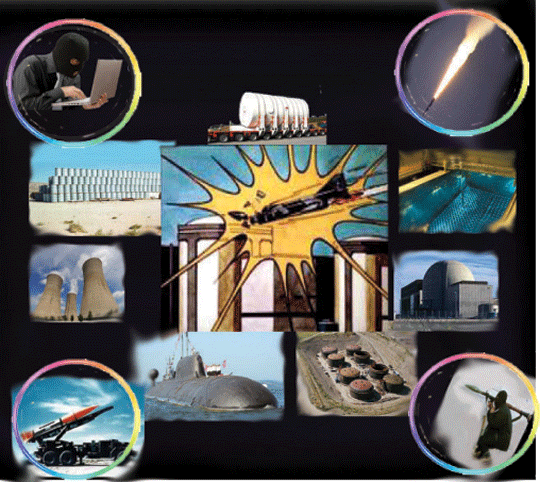 Terror Cell Probe Puts Spotlight on Nuclear Concerns Belgium evacuated its nuclear
facilities after Brussels bombing; staffers returned to work under strict security By MATTHIAS VERBERGT and GABRIELE STEINHAUSER, WSJ March 24, 2016
BRUSSELS—The investigation into the Islamic State cell behind the Paris and Brussels attacks has renewed concerns about terrorists’ efforts to get their hands on radioactive material.
Belgium’s federal prosecutor said last month that police had discovered a 10-hour tape showing the home of a man working in Belgium’s “nuclear world” during a house search linked to the Paris attacks. The recording came from a surveillance camera installed in front of the man’s home, a spokesman for the prosecutor said at the time.
The same terrorist cell has been tied to Tuesday’s bloodshed at Brussels’ international airport and a subway station.
Authorities around the globe have long feared that terrorists could get nuclear material to build a “dirty bomb” or launch an attack on a nuclear power plant. ………Belgium is especially vulnerable as a target because of the high terrorism threat and the fact that its seven nuclear reactors are at least 30 years old, said Tom Sauer, a nuclear terrorism specialist at Belgium’s University of Antwerp…….
Germany and other countries bordering Belgium have raised concerns about general safety standards at Belgium’s nuclear plants and questioned a Belgian decision late last year to extend the lifetime of the country’s oldest reactors in Doel and Tihange to 2025 from 2015.
In 2014, 65,000 liters of lubricating oil spilled down an emergency evacuation pipe at Doel’s fourth reactor in just over 30 minutes, causing the reactor’s stoppage. FANC at the time said it had “strong evidence” that this had been caused by a “deliberate manual act.” The perpetrator hasn’t been apprehended………
A study by the U.S. organization Nuclear Threat Initiative in January showed Belgian nuclear plants aren’t protected against cyberattacks, receiving the lowest score in the survey along with China, Iran and North Korea…….. Write to Matthias Verbergt at Matthias.Verbergt@wsj.com and Gabriele Steinhauser at gabriele.steinhauser@wsj.com http://www.wsj.com/articles/terror-cell-probe-puts-spotlight-on-nuclear-concerns-1458844289
Nuclear attack was the original plan of the Brussels bombers
 Brussels attackers initially considered nuclear site: Report http://www.torontosun.com/2016/03/24/brussels-attackers-initially-considered-nuclear-site-report REUTERS, MARCH 24, 2016 BRUSSELS – Suicide bombers who blew themselves up in Brussels were originally considering an attack on a nuclear site in Belgium, but arrests started last week may have forced them to switch to targets in the Belgian capital, the DH newspaper said.
Referring to an incident in December that prosecutors confirmed in which militants covertly filmed the home of an unidentified senior official in the nuclear industry, the paper quoted a police source as saying two of the suicide bombers, brothers Khalid and Ibrahim Bakraoui, had filmed the daily routine of the head of Belgium’s nuclear research and development programme.
The police source did not address why investigators thought they had continued to plan to go through with the plan despite the discovery of the covert video three months ago and the ramping up of security around nuclear plants as a result. The sensitive inner high-security areas of a nuclear power station would almost certainly have been beyond the reach of militants such as the Bakraouis.
A 10-hour video from a camera hidden in front of the nuclear official’s house was found in December during a police raid in Belgium, linked to the Paris attacks a month before.
On February 17, Belgian prosecutors confirmed the existence of the video seized in December and said the man in it was linked to the country’s nuclear industry. Earlier this month, 140 soldiers were dispatched to guard the country’s three nuclear sites. On Tuesday after the Brussels bombings, the sites were sealed and non-essential staff evacuated as a precaution.
While investigators had known the camera with the video had been removed from its concealment by two men, they did not know their identity. DH said it was now clear that it was the two brothers.
Investigators were not available for comment.
Any plans for an assault on a nuclear site, even a symbolic operation on the perimeter, might have been foiled by a police operation last week in the Brussels borough of Forest, the newspaper said. In that raid, officers unexpectedly stumbled upon armed men in a flat that was searched in connection to the Paris attacks investigation.
One of the men in the flat, later identified as an Algerian national called Mohammed Belkaid, was killed by police in a shootout and police believe one or two others may have escaped.
But clues found in the flat led the police to the arrest three days later of the prime surviving suspect in the Paris attacks Salah Abdeslam and another suspected militant Amine Choukri also using the name of Monir Ahmed Alaaj.
The arrests may have forced the hand of the attackers who decided to shift to targets in Brussels, focusing on the airport and metro: “There is no doubt that they rushed their operations because they felt under pressure,” the police source was quoted by DH as saying.
“Even if one couldn’t prevent these (Brussels) attacks, one can say that their magnitude could have been much bigger if the terrorists had been able to implement their original plan and not opted for easier targets,” said the police source.
1 This Month




Shut down the radiation-damaged Heysham nuclear reactors now
To see nuclear-related stories in greater depth and intensity – go to https://nuclearinformation.wordpress.com

Say No to NASA’s Reckless Nuclear Reactor on the Moon
Say No to NASA’s Reckless Nuclear Reactor on the Moon
-
Archives
- October 2026 (302)
- September 2026 (339)
- August 2026 (330)
- July 2026 (355)
- June 2026 (287)
- May 2026 (306)
- April 2026 (356)
- March 2026 (251)
- February 2026 (267)
- January 2026 (308)
- December 2025 (358)
- November 2025 (359)
-
Categories
- 1
- 1 NUCLEAR ISSUES
- business and costs
- climate change
- culture and arts
- ENERGY
- environment
- health
- history
- indigenous issues
- Legal
- marketing of nuclear
- media
- opposition to nuclear
- PERSONAL STORIES
- politics
- politics international
- Religion and ethics
- safety
- secrets,lies and civil liberties
- spinbuster
- technology
- Uranium
- wastes
- weapons and war
- Women
- 2 WORLD
- ACTION
- AFRICA
- Atrocities
- AUSTRALIA
- Christina's notes
- Christina's themes
- culture and arts
- Events
- Fuk 2022
- Fuk 2023
- Fukushima 2017
- Fukushima 2018
- fukushima 2019
- Fukushima 2020
- Fukushima 2021
- general
- global warming
- Humour (God we need it)
- Nuclear
- RARE EARTHS
- Reference
- resources – print
- Resources -audiovicual
- Weekly Newsletter
- World
- World Nuclear
- YouTube
-
RSS
Entries RSS
Comments RSS

