France suggests UK’s Hinkley Point nuclear project could still be postponed

 Hinkley Point nuclear project could still be postponed http://www.theweek.co.uk/60778/hinkley-point-nuclear-project-could-still-be-postponed
Delaying £18bn development is ‘up for discussion’, says France’s Segolene Royal Plans to build the world’s most expensive nuclear power station at Hinkley Point, near Somerset, could hit further delays, a French government official has hinted. Speaking during a radio interview this week, ecology minister Segolene Royal was asked whether the £18bn project, which is two-thirds funded by French state-backed energy giant EDF, would be postponed. She responded by stating simply that it is “still under discussion”, says The Guardian.
“There’s an agreement between France and Britain so things should go ahead. But the trade unions are right to ask for the stakes to be re-examined,” Royal said.
In particular, there should be “further proof” that the venture would not affect investment in renewable energy, she added.
Last week, the Financial Times reported that a group of senior engineers at EDF had circulated a white paper among executives calling for a delay of at least two years to overcome deficiencies in design and the “very low” competency of fellow state-owned reactor supplier, Areva. Board member and employee director Christian Taxil has also publicly called for the plans to be postponed.
Supporters for the deal include the British government, which has staked its reputation on Hinkley Point as the core part of its carbon-light energy strategy for future decades, and French economy minister Emmanuel Macron, who has said it will almost certainly get approval at an EDF investor meeting next month.
The incentives for the company are long-term and come in the form of an energy price guarantee that is almost three times current wholesale prices. A new agreement also offers £20bn protection against a future UK government pulling the plug.
The FT reports that 100 EDF engineers also responded to their colleagues concerns by issuing an open letter stating that the company can “build and deliver the two Hinkley Point reactors on time”.
Estimating the Chernobyl death toll from radiation – rubbishy opinions from “Pro Nuclear Environmentalists”
 Radiation harm deniers? Pro-nuclear environmentalists and the Chernobyl death toll Jim Green, The Ecologist, 7 April 2016, With few if any exceptions, self-styled pro-nuclear environmentalists peddle flapdoodle and tommyrot regarding the Chernobyl death toll.
Before considering their misinformation, a brief summary of credible positions and scientific studies regarding the Chernobyl cancer death toll (for detail see this earlier article in The Ecologist).
Epidemiological studies are of course important but they’re of limited use in estimating the overall Chernobyl death toll. The effects of Chernobyl, however large or small, are largely lost in the statistical noise of widespread cancer incidence and mortality.
The most up-to-date scientific review is the TORCH-2016 report written by radiation biologist Dr Ian Fairlie. Dr Fairlie sifts through a vast number of scientific papers and points to studies indicative of Chernobyl impacts: an increased incidence of radiogenic thyroid cancers in Austria; an increased incidence of leukemia among sub-populations in ex-Soviet states (and possibly other countries ‒ more research needs to be done); increases in solid cancers, leukemia and thyroid cancer among clean-up workers; increased rates of cardiovascular disease and stroke that might be connected to Chernobyl (more research needs to be done); a large study revealing statistically significant increases in nervous system birth defects in highly contaminated areas in Russia, similar to the elevated rates observed in contaminated areas in Ukraine; and more.
Without for a moment dismissing the importance of the epidemiological record, let alone the importance of further research, suffice it here to note that there is no way that one could even begin to estimate the total Chernobyl death toll from the existing body of studies.
Estimates of collective radiation exposure are available ‒ for example the International Atomic Energy Agency (IAEA) estimates a total collective dose of 600,000 person-Sieverts over 50 years from Chernobyl fallout. And the collective radiation dose can be used to estimate the death toll using the Linear No Threshold (LNT) model.
If we use the IAEA’s collective radiation dose estimate, and a risk estimate derived from LNT (0.1 cancer deaths per person-Sievert), we get an estimate of 60,000 cancer deaths. Sometimes a risk estimate of 0.05 is used to account for the possibility of decreased risks at low doses and/or low dose rates ‒ in other words, 0.05 is the risk estimate when applying a ‘dose and dose rate effectiveness factor’ or DDREF of two. That gives an estimate of 30,000 deaths.
Any number of studies (including studies published in peer-reviewed scientific literature) use LNT ‒ or LNT with a DDREF ‒ to estimate the Chernobyl death toll. These studies produce estimates ranging from 9,000 cancer deaths (in the most contaminated parts of the former Soviet Union) to 93,000 cancer deaths (across Europe).
Those are the credible estimates of the cancer death toll from Chernobyl. None of them are conclusive ‒ far from it ‒ but that’s the nature of the problem we’re dealing with. Moreover, LNT may underestimate risks. The 2006 report of the US National Academy of Sciences’ Committee on the Biological Effects of Ionising Radiation (BEIR) states: “The committee recognizes that its risk estimates become more uncertain when applied to very low doses. Departures from a linear model at low doses, however, could either increase or decrease the risk per unit dose.”
So the true Chernobyl cancer death toll could be lower or higher than the LNT-derived estimate of 60,000 deaths ‒ a point that needs emphasis and constant repetition since the nuclear industry and its supporters frequently conflate an uncertain long-term death toll with a long-term death toll of zero.
Another defensible position is that the long-term Chernobyl cancer death toll is unknown and unknowable because of the uncertainties associated with the science. The UN Scientific Committee on the Effects of Atomic Radiation (UNSCEAR) states (p.64):
“The Committee has decided not to use models to project absolute numbers of effects in populations exposed to low radiation doses from the Chernobyl accident, because of unacceptable uncertainties in the predictions. It should be stressed that the approach outlined in no way contradicts the application of the LNT model for the purposes of radiation protection, where a cautious approach is conventionally and consciously applied.”
Pro-nuclear environmentalists
So there are two defensible positions regarding the Chernobyl cancer death toll ‒ estimates based on collective dose estimates (with or without a DDREF or a margin of error in either direction), and UNSCEAR’s position that the death toll is uncertain.
A third position ‒ unqualified claims that the Chernobyl death toll was just 50 or so, comprising some emergency responders and a small percentage of those who later suffered from thyroid cancer ‒ should be rejected as dishonest or uninformed spin from the nuclear industry and some of its scientifically-illiterate supporters……..www.theecologist.org/News/news_analysis/2987515/radiation_harm_deniers_pronuclear_environmentalists_and_the_chernobyl_death_toll.html
Fennovoima not permitted to store its radioactive trash at Onkalo disposal site

 Fennovoima still looking for final nuclear waste disposal site http://yle.fi/uutiset/fennovoima_still_looking_for_final_nuclear_waste_disposal_site/8795028. 7 Apr 16
The nuclear waste management company Posiva has remained steadfast in its refusal to allow waste from the planned Fennovoima nuclear power plant to be stored in its Onkalo disposal site in south-western Finland. The company had indicated that it would not accommodate Fennovoima’s nuclear waste even before the Pyhäjoki project got off the ground.
Nuclear waste management company Posiva said that it has not changed its mind about allowing spent fuel from the Fennovoima nuclear power plant in Pyhäjoki to be stored in its Onkalo waste facility being built further south on the west coast.
Posiva has said that the subterranean cave is reserved for use only by joint owners Teollisuuden Voima, TVO, which operates a series of reactors at the Olkiluoto nuclear power plant in Eurajoki, western Finland, and energy giant Fortum, which operates its own nuclear power facilities in Loviisa, southern Finland. The latter also has a six-percent stake in the controversial Fennovoima project.
Posiva chief executive Janne Mokka said that the spent nuclear fuel depository and its surrounding areas have been reserved only for waste generated by TVO and Fortum.
Fennovoima has expressed the hope that possible waste from its Pyhäjoki nuclear facility could be accommodated in the Posiva cave.
However Posiva CEO Mokka said that the firm had so far mainly discussed how it could pass on the expertise earned from the Posiva deep geological depository to the Pyhäjoki project.
Disposal plan to be filed with ministry officials
Posiva began working on the depository in 2004, but only received a final green light for the project in November last year. It is to begin operations sometime in the early 2020s.
Fennovoima is currently planning a final waste disposal plan that is due to be lodged with the Ministry of Employment and the Economy in a few months.
However if the company cannot reach an agreement with Posiva, it will have to present ministry officials with an environmental impact assessment as part of alternative disposal plan.
Steadfast refusal from Posiva
Fennovoima has remained tight-lipped about possible cooperation with Posiva, but would only say that the matter is being discussed. A Fennovoima spokesperson said that the company is currently preparing a report into a waste disposal facility with the help of internal consultants.
Back in 2012, Posiva had already indicated that it would not accept waste from any other nuclear facility apart from that produced by its owners, TVO and Fortum. The Eurajoki subterranean disposal site is the world’s first permanent deep storage facility.
Spent fuel from the Fortum and TVO plants will have to be stored for 40-60 years before it cools enough to be stored underground. As the oldest Finnish reactors have been in operation since the late 1970s, some of their waste will soon be old enough for encapsulation.
40-year, €3.3bn project
The facility, which has been planned since 1983, is intended to keep the waste safe for some 100,000 years. The companies have estimated the price tag for the entire project at 3.3 billion euros.
Posiva’s initial refusal to host the waste from the Fennovoima project came just as Finland’s Supreme Administrative Court overturned appeals to block the project’s progress.
The motions were filed by one private individual and a number of environmental protection organisations seeking to block construction at two sites under consideration, one at Simo and the other at Pyhäjoki, both in the northwest.
The project has otherwise been beset by setbacks and controversy, but infrastructure work began in September last year.
Under Finnish law, all waste from nuclear facilities must be permanently stored in Finland.
Future’s children will blame us for those wrong energy decisions
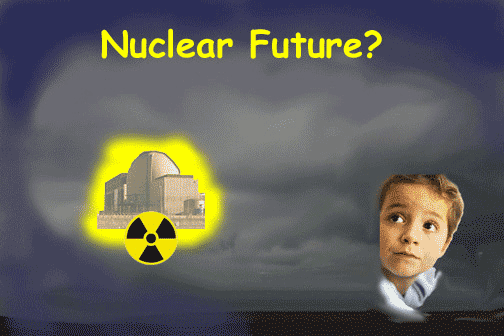
We are making the wrong energy choices for future generations, Guardian, Andrew Simms, 8 Apr 16
Our children’s children will not thank us for investing so heavily in technologies like nuclear at the expense of safer, low-carbon options “……It’s easy to see the superficial political attraction of projects like Hinkley C – they look like big, simple solutions to a problem. They’re technologically shiny, highly visible, seemingly easy to keep an eye on and have large, influential lobbies behind them.
With so much seemingly in its favour, it says a lot about the state of the nuclear industry that Hinkley C is heading south faster than a great snipe in migration. In a new report for theIntergenerational Foundation, co-published with the New Weather Institute, I found the economic case alone for new nuclear to be as leaky as a plastic bag of plutonium.
Discounting the untold extra billions, typically hidden and underwritten by the public, required by nuclear reactors to pay for complex security, disposal of radioactive waste, insurance (and, perversely, liabilities from under-insurance), over the course of its initial 35-year contract period, Britain could save at least £30-£40bn on electricity generated by solar and onshore wind with their costs steadily falling.
The costs for nuclear generation, meanwhile, have been doing exactly the opposite. From a government estimate of £5.6bn in 2008, by the time EU officials signed off the deal to build Hinkley C just six years later, the expected construction cost had risen to over £24bn. As obstacles, the burden of the financial architecture for the deal is only beaten by the problems with the technology itself which was meant to be state-of-the-art and a flagship for its operator EDF.
A range of renewable energy options are readily available that prove to be cheaper, safer, more secure, quicker to deliver and, overall, better value for Britain. Yet, instead of grasping this option, the government seems to have gone out of its way to hamper renewables by slashing support and creating a capricious, unstable policy environment…….
If we really are to have policies for the long term and with future generations in mind, we need to ensure energy choices are made to protect and promote their interests. A rational, evidence-based, intergenerational energy system won’t just emerge from political rhetoric, it needs to be designed and based on clear principles.
Such principles would include having an energy system most likely to preserve a climate convivial for future generations; a system with the least toxic environmental burden and which maximises ancillary economic benefits such as local jobs, manufacturing and services.
As an opening bid, here’s a set of intergenerational design criteria to aid intelligent, future energy planning. They are:
- Employment and broader economic return on investment – how much value to the broader economy does investment in different technologies bring; in other words, what is its economic multiplier effect?
- Environmental return on investment – how efficiently does an investment lower carbon emissions and minimise other toxic pollutants and contribute to a healthy environment?
- Energy return on investment – how much energy is generated for the amount of money invested to produce that energy?
- Security return on investment – how much does the technology contribute to domestic energy security and what other security risks does it carry?
- Transition return on investment – how does it contribute, comparatively to the speed and scale of deployment of low carbon energy generating capacity?
- Conviviality return on investment – the degree to which a technology can be responsive to and supportive of a society’s or a community’s own vision and pathway for its development, and that of future generations.
Paul Massara, is the chief executive of the energy supplier, RWE npower. Reflecting on the prospect of Hinkley C, he commented: “We will look back and think that nuclear was a expensive mistake. It’s one of those deals where my children, and my children’s children, are going to be thinking ‘was that a good deal’?”
It’s easy to imagine what conclusion they will come to, and the bewilderment they will feel at why better options were not more aggressively pursued. http://www.theguardian.com/environment/2016/apr/07/we-are-making-the-wrong-energy-choices-for-future-generations
European electricity association bemoans lack of competitiveness of nuclear energy
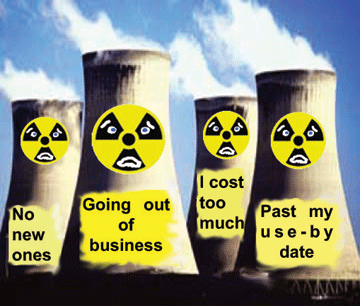 Organizations call for positive EU leadership on nuclear, World Nuclear News, 08 April 2016 European electricity association Eurelectric has welcomed the European Commission’s recently published Nuclear Illustrative Program (PINC), but expressed regrets at its failure to address the issue of premature reactor closures due to market conditions. European nuclear industry association Foratom also called on the PINC to address the impact of market conditions on nuclear investments……..
The EC is mandated by the Euratom Treaty to issue periodically a new PINC report to indicate targets for nuclear production and the investments that will be needed to attain them. The latest report found that investment of between €350 billion ($399 billion) and €450 billion will be required over the next 35 years to maintain EU nuclear generating capacity at between 95 and 105 GWe. It is the first PINC to be published since the 2011 accident at the Fukushima Daiichi plant in Japan and includes investments related to post-Fukushima upgrades and the safe operation of existing nuclear facilities as well as new capacity…….
Eurelectric’s policy paper also called for an “improved regulatory framework” to help facilitate investment, and said Europe must find market-based solutions to reduce the investment risks associated with capital-intensive low-carbon energy projects including nuclear……… http://www.world-nuclear-news.org/NP-Organizations-call-for-positive-EU-leadership-on-nuclear-0804167.html
UK sending nuclear wastes to America – dangerous and unwise
In such circumstances it becomes tempting to look for short cuts. One occasionally raised is to put all the world’s problematic waste somewhere very remote like the west Australian desert. This is a non-starter. The Czech and Slovak experience illustrated this. As a single country they planned a single repository, but after their “velvet divorce” each insisted it would not permanently manage the other’s waste. Such an international solution also contradicts the aforementioned issue of being responsible for your own legacy.
The other major hope is that science will find a convincing way either to use waste as fuel for reactors, and/or that “partitioning and transmutation” would drastically reduce the half-lives of the relevant isotopes. Yet these approaches are complex and expensive, involving molten salt reactors or accelerator-driven systems. And critically, there would still be some volume of long-lived waste that needed to be managed – no method can yet promise to drastically reduce the half-lives of all the different waste types. The only credible way forward is deep burial.
 Britain is sending a huge nuclear waste consignment to America – why?, The Conversation, Gordon MacKerron, April 5, 2016 “……..The vast majority of the UK’s waste comes from its fleet of nuclear power stations. Most of it is stored at the Sellafield site in north-west England. But the material being sent to the US is a particularly high (weapons usable) grade of enriched uranium that you wouldn’t want to move to Sellafield from its current location at Dounreay in the north of Scotland without building a new storage facility – presumably more expensive than the cost of transportation.
The decision to move this radioactive waste out of the UK has been presented as making it harder for nuclear materials to get into the hands of terrorists, but this is implausible. The UK is capable of managing homegrown highly enriched uranium itself. The plan also contradicts the principle that countries are responsible for managing their own nuclear legacy…….
we are talking about substances which could harm human health for tens of thousands of years into the future. It raises profound ethical issues of equity between generations.
Deep burial
The scientific community does in fact agree on how to dispose of these materials safely: deep underground in appropriate geology such as clay or granite, with well engineered radiation barriers as an extra defence. Yet only Sweden and Finland, with political systems built on more trust and consensus than most countries, have a clear repository plan – and it will be several years before they become operational.
Most of the storage facilities at Sellafield are designed to last mere decades. The UK has been sporadically focused on deep disposal since the early 1980s, but for a long time approached it top-down and secretively. This became known as the “DAD” method – decide, announce, defend. But it has always led to “abandon” when local communities, having had no part in the siting decision, have rebelled successfully.
It was not until 2008 that the government introduced a system of rules under which local communities would conditionally volunteer a site and then negotiate a deal with the authorities. So far it has produced no result: attempts by district councils around Sellafield to volunteer it were overruled in 2013 by Cumbria county council, the local-authority tier above them, and no other communities have come forward. The government has reserved the right to override the voluntary process but shows no sign of doing so yet.
In such circumstances it becomes tempting to look for short cuts. One occasionally raised is to put all the world’s problematic waste somewhere very remote like the west Australian desert. This is a non-starter. The Czech and Slovak experience illustrated this. As a single country they planned a single repository, but after their “velvet divorce” each insisted it would not permanently manage the other’s waste. Such an international solution also contradicts the aforementioned issue of being responsible for your own legacy.
The other major hope is that science will find a convincing way either to use waste as fuel for reactors, and/or that “partitioning and transmutation” would drastically reduce the half-lives of the relevant isotopes. Yet these approaches are complex and expensive, involving molten salt reactors or accelerator-driven systems. And critically, there would still be some volume of long-lived waste that needed to be managed – no method can yet promise to drastically reduce the half-lives of all the different waste types. The only credible way forward is deep burial…….. https://theconversation.com/britain-is-sending-a-huge-nuclear-waste-consignment-to-america-why-57074
Report: £40bn in savings, if UK scrapped Hinkley nuclear, and went for renewables instead
The report says that at £24bn, Hinkley Point C would be the “most expensive building on Earth”, and argues that the new reactors would pass not just economic costs to future generations, but the burdens of nuclear waste and climate change because nuclear is not quick enough to build at scale to stave off dangerous global warming
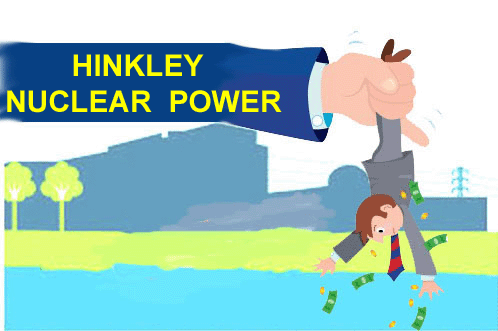
 Scrapping Hinkley for renewable alternatives would save ‘tens of billions’
Solar and wind would generate the equivalent power to Hinkley over the plant’s planned lifetime for £40bn less, says analysis comparing future costs, Guardian, Adam Vaughan, 5 Apr 16, Scrapping plans for new nuclear reactors at Hinkley Point in Somerset and building huge amounts of renewable power instead would save the UK tens of billions of pounds, according to an analysis that compares likely future costs.
The Intergenerational Foundation thinktank calculated that Britain would pay up to £40bn less for renewable alternatives that would generate the equivalent power to Hinkley over the plant’s planned lifetime.
A final investment decision by EDF on the nuclear power plant’s expansion is expected in May. The deal involves the government committing £92.50 per megawatt hour over 35 years for its electricity output, more than twice the current wholesale price.
But a report published on Tuesday by the thinktank, which campaigns on fairness between generations, found that onshore windfarms would cost £31.2bn less than Hinkley, and solar photovoltaic power £39.9bn less over 35 years to build and run. The estimate is based on both the value of subsidies paid by the taxpayer for the electricity and the cost of building the infrastructure.
The analysis is based on the government’s ‘contracts for difference’ subsidy levels for the technologies and projections by Bloomberg for how the cost of wind and solar power will fall in the future.
Andrew Simms, one of the report’s co-authors, said: “The government’s current plans for new nuclear power will break spending records, and pass both high costs and large, unknown economic risks onto every UK child for generations to come.
But, readily available, cheaper, safer and quicker renewable energy options would help Britain live both within its economic and environmental means, while also protecting and providing for future generations.”
The report says that at £24bn, Hinkley Point C would be the “most expensive building on Earth”, and argues that the new reactors would pass not just economic costs to future generations, but the burdens of nuclear waste and climate change because nuclear is not quick enough to build at scale to stave off dangerous global warming………
Renewable power has grown in the UK to the point where more electricity was generated from biomass, wind, hydro and solar power in 2015 than nuclear power stations. But it is unlikely the Intergenerational Foundation’s report will shift minds in government, which has cut subsidies for both solar and wind power while pressing ahead with the Hinkley project.
The analysis assumes the level of subsidy for solar and wind under the contracts for difference subsidy regime would remain constant, though in reality this would likely decrease as more capacity was built……. http://www.theguardian.com/environment/2016/apr/05/scrapping-hinkley-for-renewable-alternatives-will-save-tens-of-billions
European Commission report on nuclear power – costs blowing out, waste mount, but where to put them?
Europe plans to bury its nuclear waste—but doesn’t know where, and needs €120 billion to do it, Quartz, Cassie Werber, 5 Apr 16 “……Now, a report (pdf) from the European Commission has tried to pull together the whole bloc’s data and make a set of important estimates: How much is it going to cost to keep building plants at the rate Europe is planning them? What’s the price tag for taking old plants off line? And what will it take to dispose of the radioactive waste the plants generate?

Nuclear waste ranges in radioactivity levels. The high-level stuff has a longer half-life, taking more than 30 years to degrade. The report’s authors note: “Disposal in deep, stable geological formations is the generally recognized option for the disposal of high level waste.” In other words, it gets buried. But there is only one such burial facility in the world, and it’s in the US, in New Mexico. Europe has yet complete one, though Finland, Sweden, and France are making headway on that.
Sellafield – what to do with its dilapidated nuclear waste facilities, and its wastes
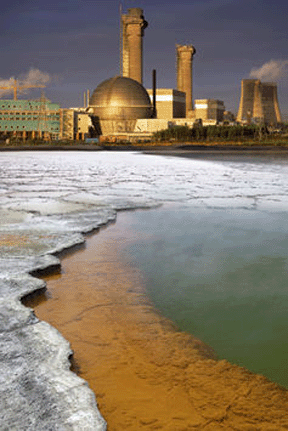 Britain is sending a huge nuclear waste consignment to America – why?, The Conversation, Gordon MacKerron, April 5, 2016 “…..In the absence of a deep-disposal plan, the UK has a more immediately pressing issue – what to do with Sellafield’s contaminated materials and waste from the UK’s near-70 years in the nuclear power and weapons business, much of which is housed in dilapidated facilities that are not fit for purpose. The Nuclear Decommissioning Authority (NDA) expects itwill cost some £68 billion to clean up Sellafield by stabilising and safely packaging the waste and building new stores. This will only be completed by around 2120.
This problem is at least now getting serious attention and resource – despite the climate of public austerity. Currently the country is spendingover £1.5 billion a year on the site, which is one of the most hazardous in Europe.
Sellafield stores a further 140 tonnes of waste plutonium that also stems from British and some overseas nuclear power. If used in bombs this amount could obliterate humanity several times over. The NDA is now focusing on what to do about this too, after years of political inattention. Yet the decision-making is laboured and the currently favoured solutionof using the plutonium as fuel for conventional reactors lacks credibility – no operator wants to use plutonium-based fuel because it is more difficult and expensive to manage than conventional fuel; and moving it around the country is a security risk.
So nuclear waste remains the Achilles heel of the nuclear industry, in the UK and elsewhere. While the financial problems behind the proposed new nuclear station Hinkley Point C attract most of the headlines, the waste problem hangs over the industry behind the scenes. Until we find a way forward that is scientifically and politically acceptable, it will continue to do so.https://theconversation.com/britain-is-sending-a-huge-nuclear-waste-consignment-to-america-why-57074
Europe’ s Nuclear Illustrative Programme (PINC) report on investments in nuclear safety
 Commission presents report on investments in nuclear safety https://ec.europa.eu/energy/en/news/commission-presents-nuclear-illustrative-programme 05 April 2016
This is the first report since Fukushima in 2011, focusing on the investments related to post-Fukushima safety upgrades and to the safe operation of existing facilities. In addition, this Nuclear Illustrative Programme (PINC) highlights the estimated financing needs related to nuclear power plants’ decommissioning and to the management of radioactive waste and spent fuel. The Nuclear Illustrative Programme provides a basis for discussion and aims to include all stakeholders, especially civil society, in the discussion on the role of nuclear energy trends and related investments for the period up to 2050.
While EU countries are free to decide their energy mix, the Energy Union Strategy and the European Energy Security Strategy stressed that EU countries who decide to use nuclear energy in their own energy mix have to apply the highest standards of safety, security, waste management and non-proliferation as well as diversify their nuclear fuel supplies.
Vice-President responsible for Energy Union, Maroš Šefčovič said: “Based on Member States input, the Nuclear Illustrative Programme of the Commission provides a useful photograph of the whole lifecycle of nuclear power in Europe: from the front-end of fuel fabrication, to safety upgrades and long-term operations, to the back-end of the cycle, including waste management and decommissioning. The PINC contributes to the implementation of the Energy Union strategy, by looking into relevant Member States’ investments from the perspective of safety, security of supply, diversification, technological and industrial leadership”
Commissioner for Climate Action and Energy, Miguel Arias Cañete said: “Five years after the accident at Fukushima Daiichi, Europe has learnt the lessons. The Nuclear Illustrative Program brings together for the first time an overview of all investment aspects of nuclear energy in a single document. It thus contributes to the public discussion on nuclear matters. Together we should be able to identify ways to cooperate across Europe to ensure that knowledge about the safest use of nuclear power plants is shared, rather than done separately by each regulator, and that the management of radioactive waste is secured financially by Member States until its final disposal.“
Today, the Commission also presented a recommendation to EU countries concerning the application of Article 103 of the Euratom Treaty. The recommendation requires EU countries to have the Commission’s opinion on agreements with non-EU countries on nuclear matters (Intergovernmental Agreements) before concluding them. This recommendation aims to make that process more efficient by clarifying the key aspects and requirements that EU countries have to take into account when negotiating such agreements, in particular regarding the new directives on nuclear safety and the safe management of spent fuel and radioactive waste. The application of this recommendation should reduce the need for the Commission to object to the conclusion of agreements, and thereby reduce the risk of delay in their conclusion.
Britain’s Wylfa Newydd nuclear plant not likely to go ahead
‘Slim chance’ Wylfa Newydd nuclear plant will go ahead By Steffan Messenger BBC Wales Environment Correspondent 5 April 2016
Plans to build a new nuclear power plant on Anglesey have a “slim to zero” chance of going ahead, an industry expert has claimed.
Independent consultant Mycle Schneider is a lead author of the annual World Nuclear Status report. He said the Hinkley Point C project’s difficulties would affect Wylfa Newydd’s ability to attract investors. But Horizon Nuclear Power said it was very confident the new power station would be delivered successfully.
Speaking to BBC Radio Cymru’s Post Cyntaf programme, Mr Schneider, who has advised both the French and German governments on nuclear policy, said: “The Hinkley Point project is in great difficulties and you could argue that the uncertainties are even larger in the case of Wylfa Newydd.”
The Anglesey plant, he said, would need “very clear and very large subsidies to get off the ground”.
Horizon is in talks with the Department of Energy and Climate Change (DECC) on issues such as the strike price, which will be key to attracting additional finance. Richard Foxhall of Horizon Nuclear Power told BBC Wales other investors would need to be brought on board to deliver Wylfa Newydd and that talks were ongoing.
“What is important is that the right conditions for investment are made and part of that is discussions with the government,” he said.
“But we’re very, very confident that we can reach a successful conclusion to those negotiations and make sure the conditions are there to attract investment.”
The chairman of Horizon’s parent company Hitachi has warned it may walk away from the project if a viable deal cannot be reached………http://www.bbc.com/news/uk-wales-35959840
Amusement Park built from failed $5.3 billion nuclear reprocessing plant
This failed $5.3 billion nuclear power plant in Germany is now an amusement park that gets hundreds of thousands of visitors each year (great photos) http://www.businessinsider.com/nuclear-power-plant-into-amusement-park-2016-4/?r=AU&IR=TCourtney Verrill
The SNR-300 was supposed to be Germany’s first fast breeder nuclear reactor when construction began in 1972. The reactor was made to use plutonium as fuel, and it would output 327 megawatts of energy.
Built in Kalkar, the government had some concerns about the safety of the nuclear reactor, which delayed construction. The power plant was finished in 1985 — $5.3 billion later.
But after the Chernobyl disaster in 1986, the SNR-300 never got a chance to fully operate, and by 1991 the project was officially canceled.
This left the power plant completely unused, and it was eventually sold to a Dutch investor who decided to turn it into an amusement park: Wunderland Kalkar.
Would UK government impose Small Nuclear Reactors on communities?
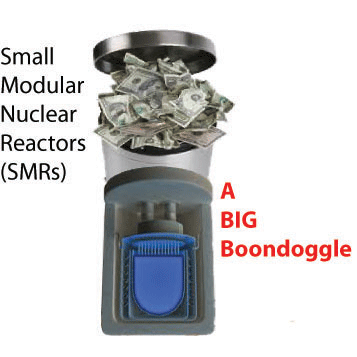 experts have warned that new power stations must not be imposed on local communities.Mini nuclear power stations in UK towns move one step closer, Telegraph UK, Kate McCann, senior political correspondent 2 APRIL 2016 Mini nuclear power stations in towns around the UK have moved a step closer after it emerged the Government is assessing suitable sites to push ahead with a build……….. campaigners are warning the plans could mean communities have new power stations forced on them if suitable sites are identified nearby.The Sunday Telegraph understands that sites in Wales, including the site of a former reactor at Trawsfynydd, and in the North of England where ex-nuclear or coal-fired power stations were stationed are being looked at as possible options.
Other areas including Bradwell, Hartlepool, Heysham, Oldbury, Sizewell, Sellafield and Wylfa are also thought to be possibilities. Small modular reactors are attractive because they can be built in factories and assembled on-site. They take less time to develop than conventional nuclear power stations but they produce much less power – meaning there must be more of them to generate sustainable energy and they must be built close to the communities they serve.
A former Government advisor warned the plans were dropped under the Coalition after pressure from Liberal Democrat Ministers because of fears that communities would reject nuclear power stations close to towns.
But in the Budget in March, George Osborne announced a funding competition to get the industry off the ground in the UK.
The document revealed: “The government is launching the first stage of a competition to identify a small modular nuclear reactor to be built in the UK, and will publish an SMR delivery roadmap later this year. It will also allocate at least £30m of funding for research and development in advanced nuclear manufacturing.”
A number of companies are already working on plans for the small power stations…………..experts have warned that new power stations must not be imposed on local communities.
Liberal Democrat energy spokesman Lynne Featherstone said: “It is just striking how little regard the Conservatives have for communities around this country, and the ridiculous lengths they’ll go to to avoid positive investment in renewables. Continue reading
Chinese nuclear corporation decides not to get involved in UK’s dubious Hinkley nuclear project
 CGN Power’s dropped nuke deal in UK is a “sensible move”: analyst. Asian Power, 28 Mar 16 It would’ve locked up a bulk of capital in the long-term.
Last October, China signed a deal with the UK to participate in three UK nuclear power projects, with CGNPC, the parent of CGN Power, owning a 20.0%-66.5% stake in each of the projects.
Under a non-competition deed granted by CGNPC, CGN Power has the option of investing in any UK nuclear project that is either being planned or constructed by the parent group. Thus far, the independent non-executive directors of CGN Power have elected not to pursue the UK projects.
According to CCB International’s Cathy Chan and Felix Lam, the decision by CGN Power’s independent non-executive directors not to get involved in the construction of the UK nuclear projects did not come as a surprise given the company’s strategy of refraining from involving itself in nuclear power projects that do not have at least one unit already in commercial operation.
The UK project does not yet meet this criterion as it is still at the initial stage of development and has several major hurdles to negotiate, not least of which is insufficient funding from other stakeholders, in particular Électricité de France (EDF FP, NR), a French power company…….. analyst http://asian-power.com/power-utility/news/cgn-powers-dropped-nuke-deal-in-uk-sensible-move-analyst
Further doubt on future of Hinkley Point nuclear project, as costs rise again
Hinkley, No2NuclearPower, 31 March 2016
1 This Month




Shut down the radiation-damaged Heysham nuclear reactors now
To see nuclear-related stories in greater depth and intensity – go to https://nuclearinformation.wordpress.com

Say No to NASA’s Reckless Nuclear Reactor on the Moon
Say No to NASA’s Reckless Nuclear Reactor on the Moon
-
Archives
- October 2026 (302)
- September 2026 (339)
- August 2026 (330)
- July 2026 (355)
- June 2026 (287)
- May 2026 (306)
- April 2026 (356)
- March 2026 (251)
- February 2026 (267)
- January 2026 (308)
- December 2025 (358)
- November 2025 (359)
-
Categories
- 1
- 1 NUCLEAR ISSUES
- business and costs
- climate change
- culture and arts
- ENERGY
- environment
- health
- history
- indigenous issues
- Legal
- marketing of nuclear
- media
- opposition to nuclear
- PERSONAL STORIES
- politics
- politics international
- Religion and ethics
- safety
- secrets,lies and civil liberties
- spinbuster
- technology
- Uranium
- wastes
- weapons and war
- Women
- 2 WORLD
- ACTION
- AFRICA
- Atrocities
- AUSTRALIA
- Christina's notes
- Christina's themes
- culture and arts
- Events
- Fuk 2022
- Fuk 2023
- Fukushima 2017
- Fukushima 2018
- fukushima 2019
- Fukushima 2020
- Fukushima 2021
- general
- global warming
- Humour (God we need it)
- Nuclear
- RARE EARTHS
- Reference
- resources – print
- Resources -audiovicual
- Weekly Newsletter
- World
- World Nuclear
- YouTube
-
RSS
Entries RSS
Comments RSS

