Warning to Teresa May on climate threats to Brexit Britain

 May warned on climate threats to Brexit Britain Climate Home 12/07/2016, The incoming government must prepare for floods and heatwaves even as EU negotiations dominate politics, say advisers By Megan Darby
When Theresa May takes over as prime minister of Britain on Wednesday, climate change might not be top of her agenda.
The former home secretary has to renegotiate relations with the EU, the rest of the world and heal a divided country. But the impacts of global warming are not going away, a report by the independent Committee on Climate Change (CCC) warns.
Heatwaves like the one that killed an estimated 2,000 British citizens in 2003 are projected to become the norm by the 2040s. To prevent more excess summer deaths, government needs to regulate for cooler buildings today, the CCC advises.
It is one of six priorities for action, in a review of evidence pulled together by 80 authors over three years.
Many of the issues are unchanged since the CCC last undertook a similar assessment five years ago.
Flooding remains at the top of the list, a status only reinforced by hundreds of millions of pounds worth of damage wreaked by storms in Cumbria last December. “The risks don’t change because of Brexit,” said Lord Krebs, chair of the adaptation sub-committee. But he added: “Some of the legislation that might underpin our resilience and preparation for future climate changes is EU legislation and therefore there will be a need in due course to replace that with national legislation.”
Meanwhile, the uncertainty is denting confidence for investment in resilient infrastructure, said report co-author Swenja Surminski, from the London School of Economics………
While May has not been vocal on the issue, as a member of the National Security Council, she was involved in a 2015 review that outlined how global warming could trigger political instability, conflict and migration.
“Our long-term objective is to strengthen the resilience of poor and fragile countries to disasters, shocks and climate change,” it concluded. “This will save lives and reduce the risk of instability.” http://www.climatechangenews.com/2016/07/12/may-warned-on-climate-threats-to-brexit-britain/
Glory to Areva, benefactor of humanity!
Areva, you’d better venerate it or it’ll retaliate. When it comes to evoke the French nuclear corporation, you’d better choose your vocabulary in the praise glossary, if you do not want to be dragged into court.

Areva has filed a libel suit against Jean-Jacques Mu, a former blogger on Club Mediapart, just for having relayed a critical article from the Anti-Nuclear Southeast Coordination.
Already in 1974, the anti-nuclear environmentalist newspaper La Gueule Ouverte, which did not mince words, warned its readers: “Corporations, fascism without borders. “
Heil Areva! Today’s freedom of reporting on the nuclear machinations and horrors is exerted only at the risk of citizens who believed to be in democracy.
And since we need to know that no one is too small enough to dare challenge Areva, Areva is taking out a sledgehammer to crush a gadfly: Jean-Jacques Mu, retired, blogger, not belonging to any group or any party. Jean-Jacques Mu is now dragged into court by Areva for defamation. His offense ? To have relayed an article of CAN-84 (Anti-Nuclear Southeast Coordination) on his blog hosted by Mediapart.
On 27 July 2014, Areva spotted the article relayed by Jean-Jacques Mu on Mediapart. Areva’s lawyers found some terms that could be taken for libel into court: they contacted Mediapart which immediately removed the offending article. The matter could have stopped there. But a few days later (July 31, 2014) Areva finds that Jean-Jacques Mu released a new blog post, which though having removed the offending words, gave the link to the same article of the CAN-84 (Anti-Nuclear Southeast Coordination).
In August 2014 (the traditional summer month holiday in France), the lawyers of the Areva Corporation were not idle: they hired a bailiff who traced the IP code of the administrator of the CAN-84 (Anti-Nuclear Southeast Coordination) website as well as the one of the blogger Jean-jacques Mu.
CAN is a collective, there is no single author of the article: who cares, Areva filed a complaint against X and … against Jean-Jacques Mu, based on the Law on the Freedom of the Press of 29 July 1881, which states that if one can not condemn the author of the allegedly defamatory words, then the editor of the words, its media, its distributors, its peddlers, and therefore in the twenty-first century the bloggers-relayers will be the ones to be condemned.
Jean-Jacques Mu faces a condemnation for having posted on his blog an article from the Anti-Nuclear Southeast Coordination, which he considered important to inform the public of.
What was it about? It was about the municipal council of Avignon and the signing of a contract between the city and the Areva Foundation. Like all the corporations, benefactors of humanity, Areva has a foundation that funds, among other things some educational projects.
Better to stuff early into the heads of the “children of a parent–teacher association” the propaganda conditioning them to worship profit ogres who will exploit them their whole lives while destroying the planet: It is cheap and pays off. And as the Ministry of Education’s pockets are increasingly empty, money even radioactive has no odor.
The article of CAN84 roundly blamed some EELV elected officials (Green Ecology Party) to have not voted against the signing of this contract with the Areva Foundation: they did not vote at all, they just got out of the room at the appropriate time.
Areva was only a secondary point of the article relayed by Jean-Jacques MU, which was aiming at the municipal council of Avignon. Yet Areva attacks the CAN84 and the blogger Jean-Jacques Mu, for a handful of forms as it considers defamatory because they are critical.
To be mentioned as the “giant of nuclear death” is bad for the image of Areva, and never mind if from its dirty uranium mines to its power plants operations its nuclear is nothing clean nor favorable to the bright future that its advertisements are promising us.
Good people, never mention “the Areva crimes” nor the permanent ongoing risks that this flagship of French industry poses to entire populations. Forget Chernobyl, forget Fukushima, forget the thyroid cancers that strike massively contaminated populations of children during the nuclear disasters that destroyed their cities, do not use the words “contaminate and kill children”, they could be badly perceived by susceptible Areva which will not hesitate to stick you with a court case.
It is obvious that the relay, in extenso for only 24 hours of a CAN84 article on the blog of Jean-Jacques Mu, has not infringed the notoriously booming business of the nuclear corporation. Areva, which manages to get in economic jeopardy while stirring billions, is very intolerant of criticisms from ordinary citizens and shows a much greater exigency for words in an article relayed by a blog that for the safety of workers in its uranium mines in Niger.
Since it is the freedom of information and expression that Areva is threatening through this libel case to be held in a Paris court on August 30, 2016, it is our responsibility to support Jean-Jacques MU, by raising awareness about this case, by being present in court on the day of the trial, by participating in the kitty that will give him the means that he does not have to prepare his defense.
At a time when corporations want whistleblowers to be condemned and track down the ordinary people who dare to criticize them, we answer: no, we will not be silenced!
https://blogs.mediapart.fr/juliette-keating/blog/300616/gloire-areva-bienfaitrice-de-lhumanite
British Parliament to vote on renewing Trident nuclear missile system, as Brexit problems loom
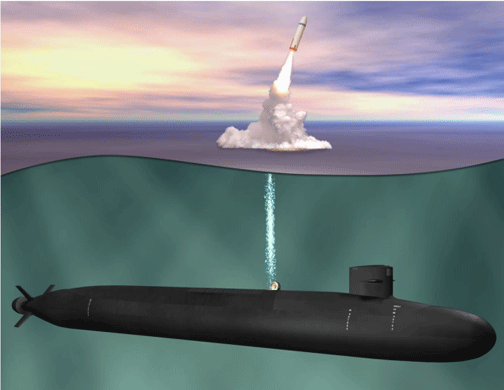 A UK nuclear vote, as Brexit looms http://thebulletin.org/uk-nuclear-vote-brexit-looms9650 By John Mecklin, 10 July 16 In a somewhat unexpected move, United Kingdom Prime Minister David Cameron—who has already declared he will resign in September because of his country’s vote to exit the European Union—announced a quick parliamentary vote on replacing the country’s fleet of nuclear-missile submarines.
The announcement, made at a NATO summit in Warsaw, seems designed to underscore the UK’s commitment to the alliance. This Reuters piece suggests Parliament is likely to vote in favor of renewing the submarine fleet, in large part because of support from Cameron’s Conservative Party.
But amid the political turmoil over possible paths to a “Brexit” from the EU, there will almost certainly be opposition from some in the Labour Party and the Scottish Nationalist Party, which is on record as wanting the Scotland-based submarines decommissioned.
Renewal of Trident nuclear weapons system opposed by British Labour and Scottish National Party
Trident: David Cameron confirms date for vote on renewal of nuclear weapons system MPs will vote on the future of the controversial weapons system in the House of Commons, The Independent Siobhan Fenton @siobhanfenton 10 July 2016 Parliament will vote on the renewal of the Trident nuclear weapons system on 18 July, David Cameron has announced.
Replacement for the system is estimated to cost between £15bn and £20bn. The force currently consists of four submarines which are each capable of carrying up to 16 ballistic nuclear missiles which are capable of hitting targets up to 7,500 miles away……
The fleet will need to be replaced in 2028 and a decision is required by Parliament this year whether to renew the system.
The controversial scheme has proved divisive in Parliament…….
The Labour party has previously supported it but current leader Jeremy Corbyn has been a long-time opponent of renewal. It is expected Labour MPs may be given a free vote on the issue.
Mr Corbyn told Sky News: “We are having a look at all the issues surrounding it. I believe security in the world is achieved through peace, through democracy, through justice, through human rights.
“I do not believe that nuclear weapons actually enhance security, I support the nuclear non-proliferation treaty, which we are signed up to, which is trying to bring together collective disarmament. Those are the views that I will be putting forward.”
The Labour party has commissioned a defence review about its policy on nuclear weapons. A draft version has reportedly indicated the party will leave open the option of retaining nuclear weapons on a smaller scale, thereby providing a compromise between total disarmament and renewal.
The SNP has been vocal in its opposition of the scheme. http://www.independent.co.uk/news/uk/politics/trident-david-cameron-confirms-date-for-vote-on-renewal-of-nuclear-weapons-system-a7128466.html
Nuclear smuggling in Georgia
 Georgia: Nuclear Smuggling Cases Raise Concern, Eurasianet July 8, 2016
Three incidents within the past six months involving the attempted smuggling of radioactive materials – uranium 235 and 238, and cesium 137 – are driving concerns about Georgia. Turkey was the materials’ presumed destination, some experts say…….
Officials are not commenting on precisely how the radioactive materials were transported to Georgia. ……Gedevanishvili and other Georgian officials sidestepped questions about the recent spate of arrests for transporting such materials. Unrest to the south of Turkey, in Syria and Iraq, would seem one possible contributing factor. Little doubt exists, however, that Turkey is smugglers’ ultimate destination……..http://www.eurasianet.org/node/79576
Britain’s nuclear submarines’ radioactive wastes will NOT be going to Scotland

 Chapelcross site ruled out for nuclear submarine waste BBC News 8 July 2016 The Ministry of Defence has ruled out a Scottish site as a possible location to store waste from nuclear submarines.
Chapelcross near Annan was on a shortlist of five potential locations.
Capenhurst in Cheshire has been selected to store the nuclear components, with Aldermaston in Berkshire as a “fall back” option. The Scottish site was ruled out along with Sellafield in West Cumbria and Burghfield in Berkshire following public consultation…….
The nuclear components are from 18 redundant submarines and nine still in service.
The redundant Royal Navy submarines are currently stored afloat at Devonport in Plymouth and Rosyth in Fife, but cannot be dismantled until the reactor components have been removed.
The radioactive parts will be stored until after 2040, when the UK’s Geological Disposal Facility, for the permanent disposal of spent fuel and nuclear waste, is planned to come into operation……..http://www.bbc.com/news/uk-scotland-south-scotland-36745287
Old submarines’ nuclear waste – leaks – trash to be sent to North of England
 Nuclear waste from scrapped Plymouth subs to be sent up country, Herald, UK WMNlynbarton July 08, 2016
Radioactive fuel cells on a dozen disused nuclear submarines languishing in Plymouth are to be removed and taken to a site in the North of England for storage and eventual disposal.
The Ministry of Defence yesterday revealed the fate of the boats which are currently stationed at Devonport but said no date has yet been fixed for the process to begin
Defence Minister Philip Dunne said the highly toxic part of the decommissioned submarines would be removed at a date to be set.
“When submarines in the Royal Navy fleet reach the end of their lives, we need to dispose of them in a way that is safe, secure and environmentally sound,” he said………
It emerged last year that the ministry was spending £16million to store the vessels, with the ones in Plymouth having been taken out of service in 1994.
The MoD said it was working on a plan to safely dispose of the Reactor Pressure Vessels (RPV), the thick steel containers which weigh between 90-135 tonnes and held nuclear fuel when the reactors operated.
There have been a number of leaks of nuclear waste associated with the submarines based in Devonport.
*March 25, 2009: radioactive water escaped from HMS Turbulent while the reactor’s discharge system was being flushed.
*November 2008: 280 litres of water likely to have been contaminated with the radioactive isotope tritium, poured from a burst hose as it was being pumped from the submarine.
*October 2005: 10 litres of water leaked out as the main reactor circuit of HMS Victorious as it was being cleaned to reduce radiation.
*November 2002: Around ten litres of radioactive coolant leaked from HMS Vanguard……..In May this year, it was revealed extra radioactivity could be discharged into the atmosphere during the refit of a nuclear submarine at Devonport Dockyard.
Babcock’s Devonport Royal Dockyard Limited submitted an application for a variation to an environmental permit which covers operations on their Dockyard site in Plymouth.
If approved, the application will enable them to increase discharges of carbon-14 to the atmosphere during the refit of the Royal Navy submarine, HMS Vanguard…..http://www.plymouthherald.co.uk/disused-nuclear-submarines-at-devonport-will-be-broken-up-says-mod/story-29490710-detail/story.html
Court reject nuclear company EOn’s claim for compensation

 Court rejects EOn’s compensation claim, World Nuclear News, 5 July 16 A regional court in Hannover has ruled that EOn is not entitled to €382 million ($426 million) in compensation it sought for the forced shut down of its Isar 1 and Unterweser nuclear power units in 2011……The court’s ruling echoes that of a decision in April by a regional court in Bonn to throw out a similar compensation claim by EnBW for the shutdown of its Neckarwestheim 1 and Phillipsburg 1 units in the state of Baden-Würtemberg. That court ruled the utility, which also filed its lawsuit in 2014, had not used immediately “all legal means available” to avert the consequences of the forced shut down of its nuclear power units.
EnBW had sought compensation of €261 million, citing German court decisions in 2013 and 2014 in favour of rival utility RWE, which had sued for damages of €235 million against the forced closure of its Biblis reactor immediately after the moratorium.http://www.world-nuclear-news.org/C-Court-rejects-EOns-compensation-claim-0507164.html
Hinkley nuclear costs now estimated at £37bn
 Estimated cost of Hinkley Point C nuclear plant rises to £37bn Critics point to volatility of scheme but energy department says price ‘will not affect bill payers’, Guardian, Terry Macalister, 8 July 16, The total lifetime cost of the planned Hinkley Point C nuclear power plant could be as high as £37bn, according to an assessment published by the UK government. The figure was described as shocking by critics of the scheme, who said it showed just how volatile and uncertain the project had become, given that the same energy department’s estimate 12 months earlier had been £14bn.
The latest prediction comes amid increasing speculation about the future of the controversial project in Somerset, whose existence has been put in further doubt by post-Brexit financial jitters.
Hinkley has been a flagship energy project for the British government and in particular for the chancellor, George Osborne, who lobbied hard and successfully for China to take a stake in the scheme…….
Critics of the scheme have claimed that the fall in the value of the pound since the referendum vote will increase the costs of the scheme to EDF’s French contractors, who work in euros………. the EDF staff council last month began legal action to try to force the company to release documents relating the project, including all the contracts it had signed with the British government and its co-investor, the Chinese utility CGN.
The fall in power prices in the UK and continental Europe that has influenced the latest lifetime cost assessment for Hinkley is also responsible for some of the financial difficulties at EDF.
There have also been suggestions that Chinese investors are becoming more nervous about Hinkley and are demanding more concessions from EDF, so that more Chinese project managers and suppliers are involved. EDF has denied this. https://www.theguardian.com/uk-news/2016/jul/07/hinkley-point-c-nuclear-plant-costs-up-to-37bn
NuScale “small nuclear” push into universities

Engineering students intern at US nuclear testing company Grad Plus Friday, 08 July 2016 Four engineering students from the University of Sheffield have travelled to the US to take up internships at NuScale Power’s nuclear test facilities.
Giant vault for Sellafield’s nuclear waste
http://www.nwemail.co.uk/Giant-vault-for-Sellafields-nuclear-waste-6bdc62b1-31d2-422f-a98d-e5c511a5fc99-ds 7 July 2016 BACK in January 1989 the Evening Mail got a first look at the new £8.6m store at Drigg for low-level radioactive waste generated by British Nuclear Fuels – much of it from nearby Sellafield.
The site was screened by thousands of conifer trees and it took 70 contractors to gouge out an eighth huge hole – Vault Eight – to take an expected five-years’ worth of waste.
Contaminated paper, plastic and metal was put in drums ready to go in 20-tonne steel containers before burial, 20 miles north of Millom.
A report in the Mail on January 26 in 1989 noted: “More than 250,000 cubic metres of earth had to be torn from the ground by huge excavators to create a hole 800ft by 550ft and 16ft deep.
“The result is a roofless building resembling a huge unfilled swimming pool the size of eight soccer pitches.
“A single fork lift truck with tyres six feet high lifts the massive steel containers into place.”
In 1959 the nuclear industry took over and found Drigg’s geology suitable for burying waste in deep trenches hundreds of feet long.
France marketing its nuclear reactors to India
 France submits fresh plan for six nuclear plants in Jaitapur, Economic Times, By PTI | Jul 07, 2016 NEW DELHI: France has given a fresh techno-commercial proposal for building six atomic reactors in Jaitapur even as it again raised concerns over India’s civil liability law and sought “same level of protection” which are available for companies at the international level.
“All these steps will help us bring nuclear industry players from France to India. The delegation has asked to provide same level of protection to the EDF which is available at the international level,” a top EDF official told PTI.
We have also given a fresh techno-commercial proposal to NPCIL. It’s now up to the NPCIL to decide,” the official added.
The proposal includes negotiating with India for six reactors as against two, which was the case earlier. This would help bring down the cost. It also includes a proposal for localisation of technology to make the project cost effective.
NuScale “small nuclear” company marketing hard in UK, providing funding
NuScale to forge strong US-UK partnership with Sheffield Forgemasters, B Daily, Nick Hill, 8 July 16 NuScale Power’s aim to build a UK-U.S. partnership has made significant steps forward.
Sheffield Forgemasters International Ltd (SFIL) and NuScale are set to collaborate to develop the manufacturing techniques that will be required for the future deployment of Small Modular Reactors (SMRs) in the UK.
SFIL will forge a large civil nuclear reactor vessel head by the end of 2017, as part of a programme supported by Innovate UK, to develop forging and fabrication solutions for the nuclear industry.
NuScale Power is providing funding to support the use of the geometries required by its SMR design……..
NuScale Power will be holding a Supplier Day at the Advanced Manufacturing Research Centre in Sheffield on 13 July aimed at giving UK-based engineering, manufacturing and construction companies the opportunity to learn about the company’s programme of work.
NuScale is also participating in the UK Government’s competition to choose the best value SMR, aimed at seeing SMRs deployed in the UK in the 2020s. https://bdaily.co.uk/industrials/08-07-2016/nuscale-to-forge-strong-us-uk-partnership-with-sheffield-forgemasters/
France greenlights a raft of new tenders for solar energy

 France rolls out solar tenders for 20 GW by 2023 http://www.pv-magazine.com/news/details/beitrag/france-rolls-out-solar-tenders-for-20-gw-by-2023_100025234/#ixzz4DUCfz1pn01. JULY 2016 BY: IAN CLOVER French environment and energy minister Segolene Royal greenlights raft of new tenders for solar energy, including a three-fold increase in installed PV capacity, eyeing 20 GW by 2023. The French environment and energy minister Segolene Royal announced this week the introduction of a number of new solar tenders in France for the development of various PV applications.
Chiefly, France is aiming to triple its solar PV capacity to 20 GW by 2023, with the tenders expected to hit incremental goals of 10.2 GW by 2018, and between 18.2 to 20.2 GW by 2023.
Other tenders announced aim to support France’s stuttering building integrated photovoltaics (BIPV) sector, with the French government earmarking 450 MW of BIPV tenders over the coming three years. Another tender will be aimed solely at the country’s self-consumption sector, particularly in C&I and agriculture, while 1 GW of tenders for ground mounted PV will be issued annually for the next six years.
An additional 50 MW tender for solar+storage has also been introduced for France’s overseas territories.
This latest suite of support for solar development follows the previous round of tenders – first introduced in 2014 – that have collectively attracted more than $1 billion in investment into France’s solar PV industry. Experts in the country believe that the certainty offered by this approach will curry further favor with investors, and should particularly help boost France’s ground-mount and BIPV sectors.
The plans were first announced by the Conseil Superieur de L’Energie (CSE) in April, which outlined how France will embrace further its use of solar and wind energy. However, the CSE confirmed that there will be no nuclear plant closures before 2019, but affirmed that nuclear’s share of the energy mix will fall from 75% currently to 50% by 2025.
For solar, the cumulative target for 2023 is relatively ambitious and certainly achievable. France currently has just over 6.2 GW of cumulative PV capacity installed – according to official figures from grid operator RTE – and added just under 1 GW of capacity in 2015. Bloomberg New Energy Finance (BNEF) expects France to add around, or just above, 1 GW of new capacity this year, but the hope is that these new tenders will accelerate that pace of installation.
Germany’s struggle over nuclear waste storage
 Germany may wait 100 years for nuclear waste storage site https://au.news.yahoo.com/world/a/31991613/germany-may-wait-100-years-for-nuclear-waste-storage-site/#page1 July 6, 2016, Berlin (AFP) – Germany may not have a final storage facility for its nuclear waste up and running until the next century, an expert report released on Tuesday suggested.
For the past two years, a commission of scientists, industry leaders and civil society representatives have debated the question of where Germany should store waste from its soon-to-be-retired nuclear reactors.
Initially, the commission had hoped to reach a decision on the final site of the highly radioactive spent fuel from the country’s power plants by 2031, with the facility itself slated to open in 2050.
But even that decades-spanning timetable was described by commission president Michael Mueller as “ambitious”.
The final report, published on Tuesday, stated that the storage facility might only enter service “in the next century”. For many years now, a site in Gorleben, in the northern state of Lower Saxony, had been under discussion, drawing often violent clashes between police and anti-nuclear demonstrators.
But choosing a site for the permanent nuclear waste dump has become all the more pressing since 2011, when Chancellor Angela Merkel announced plans to shut down all eight remaining reactors in the country by 2022 following the Fukushima disaster in Japan.
In the wake of that decision, the expert commission was instructed to go back to square one and choose a suitable spot within Germany based on scientific criteria.
Gorleben is still one of the possible options, but a series of other sites are also being looked at. Germany’s vocal environmentalist movement was quick to lash out at the report’s findings on Tuesday.
Commission members had simply “delayed” the decision, said Jochen Stay of anti-nuclear organisation Ausgestrahlt.
“The recommendations they’ve made are so vague that they could justify choosing any site,” Stay added.
Germany’s government has been locked in battles with industry for years over who should foot the bill for the nuclear phase-out, with the costs of storing the waste and safely dismantling the reactors representing a very substantial financial risk for the country’s four biggest power suppiers, RWE, Vattenfall, EON and EnBW.
1 This Month




Shut down the radiation-damaged Heysham nuclear reactors now
To see nuclear-related stories in greater depth and intensity – go to https://nuclearinformation.wordpress.com

Say No to NASA’s Reckless Nuclear Reactor on the Moon
Say No to NASA’s Reckless Nuclear Reactor on the Moon
-
Archives
- October 2026 (289)
- September 2026 (339)
- August 2026 (330)
- July 2026 (355)
- June 2026 (287)
- May 2026 (306)
- April 2026 (356)
- March 2026 (251)
- February 2026 (267)
- January 2026 (308)
- December 2025 (358)
- November 2025 (359)
-
Categories
- 1
- 1 NUCLEAR ISSUES
- business and costs
- climate change
- culture and arts
- ENERGY
- environment
- health
- history
- indigenous issues
- Legal
- marketing of nuclear
- media
- opposition to nuclear
- PERSONAL STORIES
- politics
- politics international
- Religion and ethics
- safety
- secrets,lies and civil liberties
- spinbuster
- technology
- Uranium
- wastes
- weapons and war
- Women
- 2 WORLD
- ACTION
- AFRICA
- Atrocities
- AUSTRALIA
- Christina's notes
- Christina's themes
- culture and arts
- Events
- Fuk 2022
- Fuk 2023
- Fukushima 2017
- Fukushima 2018
- fukushima 2019
- Fukushima 2020
- Fukushima 2021
- general
- global warming
- Humour (God we need it)
- Nuclear
- RARE EARTHS
- Reference
- resources – print
- Resources -audiovicual
- Weekly Newsletter
- World
- World Nuclear
- YouTube
-
RSS
Entries RSS
Comments RSS

