Foreign companies depend on UK nuclear success for their global marketing drive
 The major hurdle for Horizon and NuGen is that they must sell their visions to global investors. Both developers say they will build their plants for less than the £18bn it will cost to build Hinkley Point, but they will not say by how much……
For Toshiba and Hitachi, building nuclear reactors in the UK represents a  chance to boost their reputations — and the image of nuclear power more generally around the world
Energy: Generating criticism Kiran Stacey, Energy Correspondent, Ft.com 18 Aug 16 The UK’s ambitious plans to build six nuclear plants are raising concerns that it is losing control over critical infrastructure
In a field in a remote part of north-west Wales, a lone farmer cuts the grass, parcelling it up into hay bales which can be sold for a modest profit. His farm, and even the hill on which it sits, will soon be demolished by the Japanese-owned company Horizon — ground zero in an ambitious scheme to build one of a string ofnuclear power stations across the UK.
Wylfa, on the island of Anglesey, is one of several sites designated for the plants, which could cost up to £100bn and, if all goes to plan, will replace the UK’s ageing coal power stations. But despite the billions of pounds about to be poured into nuclear energy in Britain, only some is likely to stay in the UK. Of the six plants being planned, none will be owned by a British company.
For nuclear power groups from France, China, the US and Japan, the UK’s ambitious plans represent a ripe opportunity in an otherwise difficult global market. Following the meltdowns at the Fukushima plant in Japan in 2011, several countries, including Japan and Germany, scaled back or cancelled their nuclear energy plans.
The lack of British participation in such a massive domestic programme has drawn opposition. Critics say the project represents yet another example of the country’s propensity to allow foreign companies and governments to profit from the UK’s most sensitive — and lucrative — infrastructure projects.
That critique appears to be shared by some in the UK government. When Theresa May, the prime minister, unexpectedly delayed the £18bn plant planned for Hinkley Point in south-west England, allies said it was over concerns about the involvement of two Chinese state-backed companies alongside France’s EDF, the state-backed utility. Some officials see the plant as a matter of national security, warning that the Chinese state could have the power to turn off a large chunk of Britain’s electricity supply.
Mrs May’s decision has caused consternation in Beijing, where officials had been reassured by the previous government’s unflagging support for the project. She will travel to China next month to steady bilateral relations, and is expected to make a decision over the project around the time of that trip…….
Made in Japan At Wylfa, the Hitachi branding on the cranes involved in initial groundworks give a signal of how integral the Japanese company, which owns Horizon, is to every stage of the process. The entire station will be built in Hitachi City in Japan before being shipped over, piece by piece, to north Wales. Horizon has submitted its design to regulators for approval, and will only make the final decision to go ahead after it has funding in place and made the necessary planning applications.
At Moorside, in the northern county of Cumbria, a company called NuGen is developing another site over the road from Sellafield power station. NuGen is a joint venture of Japan’s Toshiba and Engie, the French utility, whose biggest shareholder is the French state. Its reactor has been designed by Westinghouse, the US industrial company, most of which is owned by Toshiba.
If Mrs May is worried about the Chinese being able to shut down Hinkley Point, she might be even more concerned with the plans of EDF, China General Nuclear Power and China National Nuclear Corp in eastern England. After the consortium develops another plant at Sizewell, in Suffolk, the Chinese groups are hoping to design and build the plant at Bradwell in Essex……..
One of the main motivations for EDF’s Chinese partners to invest in the UK is the stamp of quality they would gain as they market their Hualong One design internationally.
“With both the government and public opinion in favour of nuclear power, Britain is a very attractive market for building new nuclear plants,” a spokesman for Hitachi says.
The major hurdle for Horizon and NuGen is that they must sell their visions to global investors. Both developers say they will build their plants for less than the £18bn it will cost to build Hinkley Point, but they will not say by how much……
For Toshiba and Hitachi, building nuclear reactors in the UK represents a chance to boost their reputations — and the image of nuclear power more generally around the world…….. http://www.ft.com/cms/s/0/8135630a-5a5d-11e6-9f70-badea1b336d4.html#axzz4HoS1C8dw
Romania Denies Accepting US Nuclear Weapons
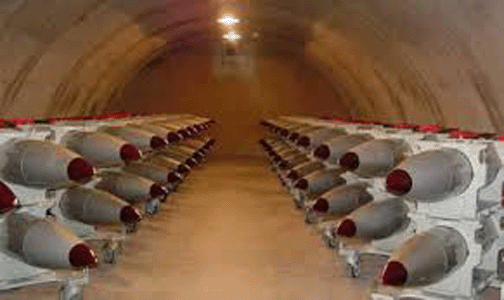 http://www.balkaninsight.com/en/article/romania-denies-nuclear-weapons-transfer-on-its-soil-08-18-2016 Bucharest officials have denied media reports that US nuclear weapons stationed in Turkey are being transferred to Romania after the coup attempt against the Ankara government. Marian Chiriac
BIRN Bucharest -The Romanian foreign ministry, MAE on Thursday dismissed claims that the US has started transferring nuclear weapons from Turkey to Romania amid tensions in relations between Washington and Ankara.
“The MAE firmly rejects these pieces of information,” the ministry said in a press release, without elaborating.
Defence Minister Mihnea Motoc said that such media reports were just speculation and “so far there have not been any plans or discussions [among NATO members] on this topic”.
The statements came after website Euractiv reported on Thursday morning that more than 20 B61 nuclear weapons were being moved from Turkey’s Incirlik air base to the Deveselu base in Romania.
According to one of the two anonymous sources quoted by Euractiv, “US-Turkey relations had deteriorated so much following the [recent attempted] coup that Washington no longer trusted Ankara to host the weapons”.
US and Turkish officials made no immediate response to Euractiv’s request for a comment. NATO said however that US allies must ensure that “all components of NATO’s nuclear deterrent remain safe, secure, and effective”.
In Romania, analysts said they doubted whether the transfer would happen. “Such a transfer is very challenging in technical and political terms. I doubt the Alliance would run against its political commitments to cooperation with Moscow, based on the Founding Act of mutual relations and security between NATO and Russia,” said political analist Andrei Tarnea.
The Founding Act, signed in 1997, says NATO allies “have no intention, no plan and no reason to deploy nuclear weapons on the territory of new members [such as Romania], nor any need to change any aspect of NATO’s nuclear posture or nuclear policy – and do not foresee any future need to do so”.
Jeffrey Lewis, director of non-proliferation studies at the Middlebury Institute of International Studies in Monterey, said in a Twitter post that Romania does not have the capacity to store the weapons. “For one thing, there are no WS3 vaults at Deveselu – or anywhere in Romania – to store the B61s,” Lewis said.
In December 2015, the US Navy formally inaugurated its new missile defence base in Deveselu in southern Romania. The base became operational in mid-May this year. It is one of two European land-based interceptor sites for a NATO missile shield, a scheme which is viewed with deep suspicion by Russia.
Russia has warned Romania to abandon the anti-missile system that the US is installing at Deveselu. Relations between Bucharest and Moscow are already rocky. Romania has been among the strongest regional backers of the package of Western sanctions imposed on Russia in connection with the crisis in Crimea and eastern Ukraine.
Romania also hosts another major US military base, at Mihail Kogalniceanu airport, near the Black Sea, which became operational in 2007.
President Reagan worked with Russia to defuse the nuclear arms race; time that President Obama did that, too


 An Urgent History Lesson in Diplomacy with Russia, CounterPunch,
 12 Aug 16 by RENEE PARSONS As prospects for peace appear dim in places like the Ukraine, Syria, Yemen, Iraq and Afghanistan and now with a renewed bombing of Libya, the President of the United States (and his heiress apparent) continue to display an alarming lack of understanding of the responsibilities as the nation’s highest elected officer. As has been unsuccessfully litigated, Article II of the Constitution does not give the President right to start war; only Congress is granted that authority (See Article I, Section 8).
So for the nation’s Chief Executive Officer to willy-nilly arbitrarily decide to bomb here and bomb there and bomb everywhere in violation of the Constitution might be sufficient standard for that CEO to be regarded as a war criminal. Surely, consistently upping the stakes with a strong US/NATO military presence in the Baltics with the US Navy regularly cruising the Black and Baltic Seas, accompanied by a steady stream of confrontational language and picking a fight with a nuclear-armed Russia may not be the best way to achieve peace……
 Reagan, who was ready to engage in extensive personal diplomacy, was an unlikely peacemaker yet he achieved an historic accomplishment in the nuclear arms race that is especially relevant today as NATO/US are reintroducing nuclear weapons into eastern Europe……
According to Jack Matlock who served as Reagan’s senior policy coordinator for Russia and later US Ambassador to Russia in his book, “Reagan and Gorbachev: How the Cold War Ended,” one of Reagan’s pre-meeting [with Russia’s Mikhail Gorbachev] notes to himself read “avoid any demand for regime change.” From the beginning, one of Reagan’s goals was to establish a relationship that would be able to overcome whatever obstacles or conflicts may arise with the goal of preventing a thermonuclear war. …
After a lengthy personal, private conversation, it became obvious that the two men had struck a cord of mutual respect…. At the conclusion of Geneva, a shared trust necessary to begin sober negotiations to ban nuclear weapons had been established. Both were well aware that the consequences of nuclear war would be a devastation to mankind, the world’s greatest environmental disaster. At the end of their Geneva meeting, Reagan and Gorbachev agreed that “nuclear war can never be won and must never be fought.”……
In December of 1987, Soviet General Secretary Mikhail Gorbachev arrived in Washington DC to sign the bilateral Intermediate-Range Nuclear Forces (including Short Range Missiles) known as the INF Treaty. The Treaty eliminated 2,611 ground launched ballistic and cruise missile systems with a range of between 500 and 5500 kilometers (310 -3,400 miles). Paris is 2,837 (1,762 miles) kilometers from Moscow.
In May 1988, the INF Treaty was ratified by the US Senate in a surprising vote of 93 – 5 (four Republicans and one Democrat opposed) and by May, 1991, all Pershing I missiles in Europe had been dismantled. Verification of Compliance of the INF Treaty, delayed because of the USSR breakup, was completed in December, 2001.
At an outdoor press briefing during their last meeting together and after the INF was implemented, Reagan put his arm around Gorbachev. A reporter asked if he still believed in the ‘evil empire’ and Reagan answered ‘no.” When asked why, he replied “I was talking about another time, another era.”……..
As the current US President and Nobel Peace Prize winner prepares to leave office with a record of a Tuesday morning kill list, unconscionable drone attacks on civilians, initiating bombing campaigns where there were none prior to his election and, of course, taunting Russian President Vladimir Putin with unsubstantiated allegations, the US-backed NATO has scheduled AEGIS anti ballistic missile shields to be constructed in Romania and Poland, challenging the integrity of INF Treaty for the first time in almost thirty years.
In what may shed new light on NATO/US build-up in eastern Europe, Russian Foreign Secretary Sergei Lavrov denied US charges in June, 2015 that Russia had violated the Treaty and that the US had “failed to provide evidence of Russian breaches.” Commenting on US plans to deploy land-based missiles in Europe as a possible response to the alleged “Russian aggression” in the Ukraine, Lavrov warned that ‘‘building up militarist rhetoric is absolutely counterproductive and harmful.’ Russian Deputy Defense Minister Anatoly Antonov suggested the United States was leveling accusations against Russia in order to justify its own military plans.
In early August, the US Department of Energy’s National Nuclear Security Administration authorized the final development phase (prior to actual production in 2020) of the B61-21 nuclear bomb at a cost of $350 – $450 billion. A thermonuclear weapon with the capability of reaching Europe and Moscow, the B61-21 is part of President Obama’s $1 trillion request for modernizing the US aging and outdated nuclear weapon arsenal.
Isn’t it about time for the President to do something to earn that Peace Prize? http://www.counterpunch.org/2016/08/12/an-urgent-history-lesson-in-diplomacy-with-russia/

UK’s Crown Estate recommends UK switching attention from nuclear power to offshore wind

 Hinkley C’s future is in doubt. Let’s turn our sights to offshore wind
Falling costs and increased reliability mean this clean power now offers a mature part of the solution for the UK’s energy mix Guardian 15 Aug 16 Huub den Rooijen Director of energy, minerals and infrastructure at Crown Estate
With the government re-examining the case for new nuclear reactors at Hinkley Point, it’s a good time to reflect on recent breakthroughs in another low carbon technology: offshore wind.
Offshore wind is already meeting about 5% of the UK’s electricity demand, more than any other country globally, and is on course to meet 10% by 2020. The sector has undergone a sea change over the last few years, driven by rapid advances in technology, cost, and industry’s ability to deliver on time and to budget.
In fact, over the last three years, construction costs have come down by more than 40% in the UK alone. And by 2025, industry and government expect UK prices to be comparable with new gas generation at about £85 per megawatt hour (MWh).
In the Netherlands, there has been an even bigger step change. Although there are differences in terms of regulation, most would agree that after a recent offshore wind tender the Dutch are now going to be paying the equivalent of about £80 per MWh for their 700MW windfarm. That is significantly lower than Hinkley Point C at £92.50per MWh.
As active managers of the UK seabed, including awarding leases for offshore wind, we take a keen interest in this result. After all, the Dutch windfarm is only about 75 miles away from UK waters, and has very similar conditions like water depth, wind speeds, and distances to ports. If costs can be slashed in the Netherlands, geography tells us they can be slashed here too……..
As the Committee on Climate Change urges government to consider alternatives if there are delays to renewing our nuclear fleet, we should remember our seabed is a powerful energy asset.
At present, we have 2,200 wind turbines in operation and under construction, taking up less than 1% of our total seabed. National Grid estimates that nearly half of all power could be generated from our seabed by 2030 through offshore wind, combined with tidal power lagoons and strong electrical connections to our neighbouring countries.
We have an inexhaustible supply of reliable and clean power right on our doorstep, and competitively priced offshore wind now offers a mature part of the solution for the UK’s energy mix. https://www.theguardian.com/environment/2016/aug/14/hinkley-cs-future-is-in-doubt-lets-turn-our-sights-to-offshore-wind
World’s biggest offshore windfarm on track in UK
Second phase of world’s biggest offshore windfarm gets go-ahead Multibillion-pound Hornsea Project Two, 55 miles off Grimsby coast, would see 300 turbines span an area five times size of Hull, Guardian, Josh Halliday, 16 Aug 16, Plans for the world’s biggest offshore windfarm off the Yorkshire coast are to be expanded to an area five times the size of Hull after being approved by ministers.
The multibillion-pound Hornsea Project Two would see 300 turbines – each taller than the Gherkin – span more than 480 sq km in the North Sea.
Fifty-five miles off the coast of Grimsby, the project by Denmark’s Dong Energy is expected to deliver 1,800MW of low-CO2 electricity to 1.8m UK homes. The development would represent a large boost to the UK’s wind energy industry, with Dong Energy pledging to invest £6bn in the UK and create more than 2,500 jobs……https://www.theguardian.com/environment/2016/aug/16/hornsea-project-two-windfarm-second-phase-grimsby
Safety problems at Fennovoima nuclear power firm revealed by audit

 Safety audit flags shortcomings by Fennovoima nuclear power firm, Yle Uutiset, 16.8.2016
An audit by radiation and nuclear safety watchdog STUK has highlighted possible deficiencies by the Fennovoima power company as it prepares to build a nuclear power plant in Pyhäjoki, western Finland. Yle obtained a copy of the STUK audit, in which workers complained of poor management, workplace discrimination, and a tendency to downplay safety issues. Fennovoima has denied the allegations.
A report by Finland’s Radiation and Nuclear Safety Authority STUK has flagged employee concerns over the quality of management at the Finnish-Russian nuclear power firm Fennovoima. Workers interviewed for the audit claimed to have been put under pressure, sidelined, or even “smoked out” for drawing attention to safety concerns or questionable practices.
The findings were detailed in a safety audit that STUK began in late autumn last year and which is still ongoing. Fennovoima needs a clean bill of health from the audit to qualify for a construction permit in 2018. The company hopes to complete the nuclear power plant in 2024.
In an initial report that it completed in December, STUK expressed concerns about whether or not safety was a priority for Fennovoima, and whether or not the company’s management team had adequate experience in the nuclear energy sector………
Signature changes, amateur managementThe employee survey responses also revealed suspicions that the company had changed the signatures on documents relating to nuclear safety. The report indicated that “some documents” had been approved by changing signatures, if the original experts had not agreed to sign off on them. According to STUK several respondents corroborated this claim…….
STUK: Audit report not publicYle called on STUK to provide a copy of the shortcomings flagged in the report it drew up last December. However the nuclear safety watchdog refused to hand it over, saying that the audit was still ongoing…….http://yle.fi/uutiset/safety_audit_flags_shortcomings_by_fennovoima_nuclear_power_firm/9099368
With Hinkley Big Nuclear in decline, the “Small Nuclear” lobby sees its chance
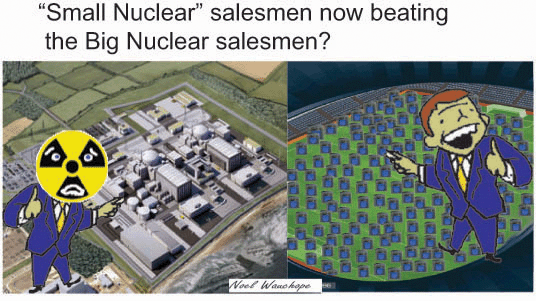
Hinkley Point may be taking all the attention at present, but it is not the be all and end all of nuclear power in the UK. There is plenty more in the pipeline so, whatever happens in Somerset, progress can be made elsewhere. The UK’s Office for Nuclear Regulation aims to complete Generic Design Assessments for new reactors, the AP1000 and Advanced Boiling Water Reactor (ABWR), during 2017.
NuGen, jointly owned by Japan’s Toshiba and France’s Engie, is progressing with plans to build an AP1000 at Moorside in West Cumbria. At present, they are carrying out site assessment surveys, including geophysical surveys, geological age dating and some borehole drilling work, which must be completed before construction can begin. AP1000 reactors, designed by Westinghouse, are being planned in multiple countries worldwide, with the first plants scheduled to come online in China this year. There have been some delays on these world-first reactors, but not as serious as those in France and Finland for the European Pressurised Reactor (EPR) proposed for Hinkley…….
In addition to these planned sites, there is also ongoing research and development into the next generation of advanced nuclear reactors. The Government promised, in Autumn 2015, an investment of £250 million over 5 years to develop the reactors of the future. This includes a competition to decide which small modular reactor or reactors should be demonstrated in the UK. Advanced reactors have the potential to be cheaper, even cleaner and even safer than current designs, and have added benefits such as the potential ability to use up spent fuel and the plutonium stockpile. (Weinberg Next Nuclear will soon be publishing a report on how to manage plutonium)….http://www.the-weinberg-foundation.org/2016/08/11/dont-worry-british-nuclear-doesnt-have-all-its-eggs-in-one-basket/
Queen Elizabeth’s Estate notes that renewable energy is cheaper than Hinkley nuclear
Crown estate wades into Hinkley Point nuclear debate https://www.theguardian.com/environment/2016/aug/14/crown-estate-hinkley-point-nuclear-debate
Body says, with government reviewing £18.5bn project, benefits of renewables such as offshore wind should be looked at, Guardian, Terry Macalister, 14 Aug 16, The crown estate has waded into the battle over Hinkley Point, pointing out that offshore windfarms are already being built at cheaper prices than the proposed atomic reactors for Somerset.
While not arguing the £18.5bn nuclear project should be scrapped, the organisation – still legally owned by the Queen – said that the government’s current Hinkley review makes it a good time to consider the advantages of other low carbon technologies.
The crown estate said that windfarms at sea will be on course to meet 10% of the country’s electricity by 2020 while Hinkley Point C is not expected to be constructed till the mid 2020s, to produce 7%.
“The [wind] sector has undergone a sea change over the last few years, driven by rapid advances in technology, cost and the industry’s ability to deliver on time and to budget,” said Huub den Rooijen, the director of energy, minerals and infrastructure at the crown estate.
“In the Netherlands, there has been an even bigger step change. In the busy time around the EU referendum, many people will have missed the publication of their most recent offshore wind tender.
“Although there are differences in terms of regulation, most would agree that the Dutch are now going to be paying the equivalent of about £80/MWh for their 700 megawatt windfarm. That is significantly lower than Hinkley Point at £92.50/MWh.”
The comments come after an unpublished report by the energy department shows that it expects onshore wind power and large-scale solar to cost about £50-£75 per megawatt hour of power generated in 2025. New nuclear is anticipated to be around £85-£125/MWh, in line with the guaranteed price of £92.50/MWh that the government has offered Hinkley’s developer, EDF.
Government data published last Thursday showed that renewables generated a quarter of the UK’s electricity in the first quarter of this year. About half of that came from on and offshore wind combined.
The Hinkley project has been hit by controversies since it was first raised as a possibility by EDF more than nine years ago. There have been delays and concerns about the costs of the £18.5bn project. In recent days a new row has blown upabout the wisdom of allowing EDF’s proposed Chinese partner access to the UK energy infrastructure for national security reasons.
Den Rooijen said the government’s committee on climate change has urged ministers to consider alternatives if there are delays to renewing our nuclear fleet. “We should remember our seabed is a powerful energy asset. At present, we have 2,200 wind turbines in operation and under construction taking up less than 1% of our total seabed,” he said.
“National Grid estimates that nearly half of all power could be generated from our seabed by 2030 through offshore wind, combined with tidal power lagoons and strong electrical connections to our neighbouring countries.
“We have an inexhaustible supply of reliable and clean power right on our doorstep, and competitively priced offshore wind now offers a mature part of the solution for the UK’s energy mix.”
Doubts that Russia can actually deliver on all its much touted nuclear sales deals
 False nuclear hope, HIMAL South Asian BY M V RAMANA AND ZIA MIAN14 AUGUST 2016

“……Can Russia deliver?
The Russian deal for Rooppur has its specific set of challenges. There are at least two reasons to question Russia’s ability to deliver on its commitments. First, Russia has made so many nuclear deals in recent years that it may not be able to deliver on all of them. The Russian State Atomic Energy Corporation (Rosatom) claims to have orders for 30 nuclear power plant units in 12 different countries at a total value of over USD 300 billion.
The Russian Parliament’s independent Audit Chamber has documented delays and cost increases in reactors that Rosatom is building within Russia. It is likely that Russian reactor projects abroad will also experience delays and cost escalations. A second reason Russia may not be able to deliver on Rooppur is the collapse of its currency, the ruble. In the case of the reactor for Belarus, the Russians made a fixed price deal that was denominated in dollars. Because the ruble has fallen relative to the dollar, costs to Rosatom have reportedly gone up by 71 percent and Belarus has been asked to provide additional financial support to keep the project going.
Since the Rooppur contract, like most nuclear contracts, is not publicly available, one cannot be sure about the specifics of the deal. However, according to media reports, the contract with Bangladesh is not a “fixed price” but a “cost plus” one where “the vendor has the right to come up with any cost escalation (plus their profit margin) to be incorporated into the contract amount”. Russia seems to have prepared for the possibility that the Rooppur project will cost more than expected and to protect its profits.
Bottom line: the Rooppur reactors may be good for status-seeking project for Bangladeshi politicians; for the bureaucrats and technocrats of the Bangladesh Atomic Energy Commission; and for the Russian nuclear complex and the middlemen who will likely profit from the many subcontracts that would be signed. But it does not look like a good bargain for the people of Bangladesh.
~ M V Ramana is with the Nuclear Futures Laboratory and the Program on Science and Global Security at Princeton University, and the author of The Power of Promise: Examining Nuclear Energy in India. http://himalmag.com/false-nuclear-hope-bangladesh-russia/
Russia’s rush to sell nuclear reactors to Bangladesh may not succeed
 False nuclear hope, HIMAL South Asian BY M V RAMANA AND ZIA MIAN14 AUGUST 2016 Plans to construct Bangladesh’s first nuclear power plant are moving forward fast. On 26 July 2016, Mohammad Mejbahuddin, Senior Secretary of the Economic Relations Department of Bangladesh, and Russia’s deputy finance minister, Sergei Anatolievich Storchak, signed an inter-governmental agreement in Moscow for the construction and commissioning of two 1200 megawatt (MW) VVER-1200 nuclear reactors at Rooppur (also spelt Ruppur) at an estimated cost of USD 12.65 billion, with Russia committing to loan 90 percent of the costs to Bangladesh. Earlier, in December 2015, when the two government Cabinet committees approved the proposal, the Bangladeshi Minister for Science and Technology Yeafesh Osman said, “I believe USD 12.65 billion is a good bargain”. But the question is: For whom?
Bangladesh’s first nuclear power plant is not a good way to meet its energy needs. A brief history
The idea of building nuclear reactors at Rooppur is very old. It goes back to a 1963 plan by the Pakistan Atomic Energy Commission to build one reactor in West Pakistan and one in East Pakistan. This fifty-year quest for constructing a reactor is blind to what has been learned over the same period about nuclear energy. This history suggests there are now good reasons to believe the people of Bangladesh will end up waiting a long time for nuclear electricity from Rooppur, be stuck with big bills, and be forced to live with the constant worry of a nuclear plant accident.
The main player in this quest to build a nuclear plant is the Bangladesh Atomic Energy Commission (BAEC), which was created in 1973. As spelt out by a senior official in the organisation, “BAEC has, since then, been trying to do the needful so as to make the country embark on NP [Nuclear Power] program”. Successive Bangladeshi governments have been attracted to the idea of a nuclear plant as a modern technological solution to energy shortages in the country, with officials thinking of the possession of a nuclear plant as an exclusive privilege. As Finance Minister Abdul Muhit put it in December 2015, “Now, we are on the verge of entering the elite club of the countries who have nuclear power plants.” Prime Minister Sheikh Hasina even termed Rooppur “the nation’s dream”.
Encouraging the BAEC in this quest are the International Atomic Energy Agency (IAEA), whose mandate calls for the agency to “seek to accelerate and enlarge the contribution of atomic energy to peace, health and prosperity throughout the world”, and various nuclear reactor vendors who hope to profit from the sales of nuclear power plants. The IAEA began work in Bangladesh a while back. It carried out a planning study in 1974-75 and projected between approximately1200 and 3000 MW of nuclear capacity in Bangladesh by 1995, with nuclear power constituting 47 percent of the country’s electricity capacity; a high projection that emphasised nuclear power as single biggest source to meet energy needs.
Finally, there are countries like the US, Germany, France and China which have, over the decades, supported their nuclear industries’ efforts to sell reactors. France, for example, signed an agreement with Bangladesh for the “peaceful use of nuclear energy” in 1980 and offered to sell 125 and 300 MW reactors in the 1980s. But in the last few years, Russia has taken the lead, edging out other countries that could have sold Bangladesh a reactor.
Misleading promises
What can we expect for the Russian reactors coming to Rooppur? The pace of contract signing and government approvals should not mislead one into thinking that the reactors will be ready anytime soon. At the time of signing of the general contract between the two countries in December 2015, the claim was that the two Rooppur reactors would start generating electricity within five or six years, by 2021 and 2022. Evidence suggests that it could be twice as long before the reactors actually start producing electricity.
Establishing nuclear power plants is a slow process. In developing countries that have just one or two reactors, the average construction time – between the first pouring of concrete and the reactor starting commercial operation – were 19, 16, 8.5, and 38 years respectively in the cases of Brazil, Mexico, South Africa, and Iran, as can be calculated from the dates given in the IAEA’s Power Reactor Information System (PRIS). These time periods do not include the lengthy preparation period before the actual commencement of construction…….
A better alternative
The purported reason for Bangladesh to embark on this project is to meet its increasing energy demand. But a sustainable strategy for meeting the energy demand would prioritise economical sources of electricity generation that can be brought online quickly. Renewable sources such as solar energy meet the twin goals of lower cost and timeliness far better than nuclear power. Globally, there is already little doubt that solar energy and wind energy are more attractive investments than nuclear power plants. As the 2016 World Nuclear Industry Status Report points out, “global investment decisions on new nuclear power plants remained an order of magnitude below investments in renewables.”…….
Finally, unlike nuclear power plants, solar energy installations can be commissioned relatively quickly, in typically one to two years. This means that by choosing to put money into solar power, Bangladesh could start getting electricity many years earlier than if it built the Rooppur plant. Bangladesh is beginning the process of significant investment in renewables, setting a target of 3168 MW of electricity from renewable energy sources by 2021. The technical potential of solar energy in Bangladesh has been estimated at 50,174 MW…..http://himalmag.com/false-nuclear-hope-bangladesh-russia/
Hinkley going down? Next glorious gimmick – Small Nuclear Reactors
UK set to continue developing baby nuclear reactors which may fuel Rolls-Royce jobs, This Is Money By NEIL CRAVEN, FINANCIAL MAIL ON SUNDAY, 14 August 2016 Britain is to forge ahead with plans to develop ‘baby’ nuclear reactors just two weeks after the Prime Minister threw energy policy into chaos by revealing there will be a shock delay to making a decision over Hinkley Point.
The announcement over whether to proceed with Hinkley in Somerset has been postponed until next month.
That allows new Premier Theresa May more time to consider concerns relating to the cost of the £25billion project and potential security risks posed by Chinese involvement.
This weekend the Government revealed it will shortly select preferred partners to construct Small Modular Reactors – which could help provide an alternative to Hinkley. They would be built using British factories and participation and could boost UK firms including Rolls-Royce.
Whitehall sources said the project, currently involving 33 engineering groups, would reaffirm Britain’s determination to be a ‘world leader’ in SMR production.
It is not yet clear whether the decision to develop the ‘baby’ reactors is linked to the Hinkley delay.
The Government has already earmarked £250 million to fund a five-year programme to develop SMRs and this autumn it is expected to announce the next phase including naming the lead companies to be involved.
Hinkley supporters fear an announcement could be timed to coincide with a final decision on Hinkley, drawing the sting if the Government decides to cancel the larger project……http://www.thisismoney.co.uk/money/markets/article-3739075/UK-set-continue-developing-baby-nuclear-reactors-fuel-Rolls-Royce-jobs.html
Bulgaria hoping for private investors to revive Belene nuclear power project
Bulgaria to revive Belene nuclear power project with private help http://www.reuters.com/article/us-bulgaria-nuclear-idUSKCN10N154 Bulgaria wants private investors to help it restart the Belene nuclear power project after a court ruled Sofia must pay hefty compensation to Russia over equipment ordered for it, Prime Minister Boiko Borisov said on Friday.
The Balkan country had canceled the 2,000 megawatt project on the Danube River in 2012 due to financial constraints and after pressure from Brussels and Washington, who said it would only increase Bulgaria’s dependence on Russian energy imports.
An international arbitration court ruled in June that Sofia should pay more than 550 million euros ($623 million) in compensation to Russian nuclear giant Rosatom over the two nuclear reactors ordered.
“We have a very changed situation,” Borisov told local media. “We are obliged to pay for these two reactors.”
Borisov, however, said that the Black Sea state still does not have enough financial resources to build the nuclear plant.”Let us make it a private project through the privatization agency with various options for the state’s share. This is the solution,” he said.
Bulgaria had been hoping to sell the equipment or the whole project to Iran and Borisov visited Tehran in July to test the ground for a possible deal, for which the consent of Rosatom was also needed. (Reporting by Tsvetelia Tsolova and Angel Krasimirov)
France’s ruling socialist party calls for freeze on Hinkley Point nuclear development

 Hinkley Point near melt-down as French socialist party calls for freeze, Telegraph, Ambrose Evans-Pritchard 9 AUGUST 2016 Britain’s Hinkley Point nuclear project is close to unravelling after France’s ruling socialist party threw its support behind dissident trade union leaders and called for a fundamental review of the high-cost venture.
The whole saga has now become freighted with politics and misunderstandings in a three-way jostle between France, Britain, and China, with no outcome in sight that can please everybody.
The French socialists warned that Hinkley threatens the financial viability of EDF, the state-owned energy giant 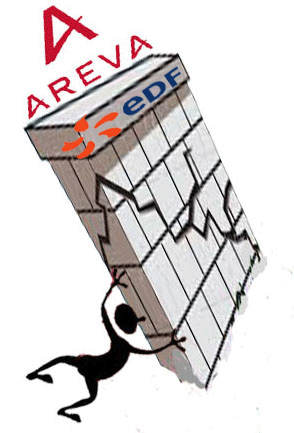 responsible for two thirds of the £18bn funding and for limitless liabilities if it all goes wrong.
“The socialist party judges that a project of such importance, that involves the solidity and survival of the national energy group, makes it imperative to ask every question and raise every reserve before going any further,” it said.
It endorsed a furious complaint by the six trade union members on the EDF board, who said the final go-ahead for the project was rammed through in late July without full disclosure in a “governance scandal”, and that the decision is now “null and void”.
Brexit has further changed the landscape and brought matters to a head. “The whole relationship with Britain, whether political or economic, must be reviewed in light of its withdrawal from the EU, and a project as important as Hinkley Point cannot reasonably be exempted,” said the party………
Nuclear power cannot easily be switched on and off. It is ill-adapted for use as a back-up source to cover lulls in renewable power. “In a world moving towards cheaper, flexible, decentralized power systems, investing in eye-wateringly expensive, always-on ‘base-load’ plants increasingly looks like a 20th Century solution for a 21stCentury problem,” said Richard Black from the Energy and Climate Intelligence Unit.
If the chief reason for continuing the project is to preserve good relations with France and China, the whole story is a textbook example of why it is hazardous to strike commercial deals with foreign state-owned companies. http://www.telegraph.co.uk/business/2016/08/09/hinkley-point-near-melt-down-as-french-socialist-party-calls-for/
Finland failed to be transparent on nuclear waste burial, unlike Sweden
The foremost reason is that as the project was being discussed with the public, SKB’s research was found to be incomplete and, in certain cases, inaccurate.
When, in 2011, Sweden’s SKB first applied for a license to build the Forsmark repository, the KBS-3 project documentation was published, which made it possible to give the project a review that would be independent from the nuclear industry’s own evaluation.
In February 2016, a special expert group appointed by the government, called the Swedish National Council for Nuclear Waste (Kärnavfallsrådet), published a 167-page report entitled “Nuclear Waste State-of-the-Art Report 2016: Risks, uncertainties and future challenges.” Among other things, it identifies the repository project’s risks and uncertainties having to do with earthquake impacts, with the long-term prospects of financing and monitoring the site’s condition, and with the health effects of low doses of radiation.
Finland has no such expert body. The concept of the repository, under construction in Euroajoki municipality, is criticized by many Finnish scientists, but the government is not taking notice and is likewise ignoring the scientific objections coming from its neighbor Sweden.
 When haste makes risky waste: Public involvement in radioactive and nuclear waste management in Sweden and Finland – How did it happen that in Sweden, the country that developed the technology for deep geological disposal of radioactive waste, construction of a such a repository – a first of its kind in the world – has been suspended for recognized risks and uncertainties, whereas Finland, which has copied the Swedish approach, is moving full speed ahead with building one? Bellona has looked for the answer on a fact-finding visit of the two countries. Bellona August 9, 2016 by Andrei Ozharovsky, translated by Maria Kaminskaya
“……..Out of sight, out of mind?
The deep geological disposal concept was first suggested over 40 years ago to solve the problem of spent nuclear fuel, the nuclear industry’s most dangerous byproduct. To a certain degree, this was a continuation of the “bury and forget about it” principle, applied to the less radioactive and thus less dangerous waste – radioactive waste. But where radioactive waste could be placed in shallow trench-type reservoirs or semi-buried near-surface concrete vaults, for nuclear waste, disposal facilities – repositories or burial sites – were proposed for construction in rock formations at a depth of several hundred meters. To date, no such deep geological repository has been created anywhere in the world. Continue reading
Theresa May is advised that now is the time to get out of Hinkley nuclear project.
 Hinkley Point: May told to pull the plug on nuclear project over China spying accusations THERESA MAY is being urged to quit the controversial Hinkley Point C project over Chinese spying allegations. Express By ZOIE O’BRIEN, Aug 11, 2016 A scandal has broken out in the US suggesting a Chinese man was attempting to recruit US atomic experts to steal technology secrets to help China’s nuclear power programme.
But the legal papers include the name of China General Nuclear Power (CGN), which holds a stake in the UK’s planned new nuclear power station – Hinkley Point C.
Szuhsiung Ho, a senior adviser to CGN, will appear in court next week to face charges. As a result the Prime Minister is being urged to pull the British project immediately.
May paused development last month over national security fears but now she is being told to scrap plans altogether.
Paul Dorfman, a senior research fellow at University College London, said the British prime minister does not have to offend the Chinese. He suggested she could blame poor reactor technology from France’s EDF.
He told the Guardian: “No other OECD country would let China into its critical nuclear infrastructure, given its history of nuclear weapon proliferation. May has already taken the diplomatic ‘hit’ for this, so what’s she got to lose?
“If government wanted to, it could avoid taking China to task on this by reframing the problem in the context of the failed French EPR reactor, which is three times over-cost and over-time where it’s being built in Finland and France.”
The Somerset power station has already caused huge debate with petitions and campaigns being launched to prevent its being built.
Now, spying allegations have caused huge concern in the UK. Angus MacNeil MP, the chair of the energy and climate change select committee, said there are now grave concerns about corporate integrity and must form a key part of the government’s current review of Hinkley.
He said: “I am not sure the Chinese have anything to steal from Britain in the way of nuclear secrets. That is after all why they are being brought in, but it does raise questions about how honourable the company is and whether it could cut corners on construction methods and issues like that.”……..http://www.express.co.uk/news/uk/698965/Hinkley-Point-May-China-spy-fears-Somerset-project
1 This Month




Shut down the radiation-damaged Heysham nuclear reactors now
To see nuclear-related stories in greater depth and intensity – go to https://nuclearinformation.wordpress.com

Say No to NASA’s Reckless Nuclear Reactor on the Moon
Say No to NASA’s Reckless Nuclear Reactor on the Moon
-
Archives
- October 2026 (279)
- September 2026 (339)
- August 2026 (330)
- July 2026 (355)
- June 2026 (287)
- May 2026 (306)
- April 2026 (356)
- March 2026 (251)
- February 2026 (267)
- January 2026 (308)
- December 2025 (358)
- November 2025 (359)
-
Categories
- 1
- 1 NUCLEAR ISSUES
- business and costs
- climate change
- culture and arts
- ENERGY
- environment
- health
- history
- indigenous issues
- Legal
- marketing of nuclear
- media
- opposition to nuclear
- PERSONAL STORIES
- politics
- politics international
- Religion and ethics
- safety
- secrets,lies and civil liberties
- spinbuster
- technology
- Uranium
- wastes
- weapons and war
- Women
- 2 WORLD
- ACTION
- AFRICA
- Atrocities
- AUSTRALIA
- Christina's notes
- Christina's themes
- culture and arts
- Events
- Fuk 2022
- Fuk 2023
- Fukushima 2017
- Fukushima 2018
- fukushima 2019
- Fukushima 2020
- Fukushima 2021
- general
- global warming
- Humour (God we need it)
- Nuclear
- RARE EARTHS
- Reference
- resources – print
- Resources -audiovicual
- Weekly Newsletter
- World
- World Nuclear
- YouTube
-
RSS
Entries RSS
Comments RSS

