Illness legacy of 456 nuclear weapons tests at Semipalatinsk in Kazakhstan
studies have detected among area residents heightened levels of leukemia and cancer of the breast, colon, esophagus, liver, lung and thyroid. They have also revealed higher levels of cardiovascular and blood diseases, chromosomal aberrations and congenital anomalies.
Kazakhstan: Living with Semipalatinsk’s Nuclear Fallout, EurasiaNet August 26, 2016 – by Joanna Lillis In the village of Znamenka in northeastern Kazakhstan, adults have vivid memories of nuclear explosions rocking  the steppe.
Zhannur Zhumageldina, 25, was born in the village of Olzhabay, 200 kilometers from the polygon, the year after it closed and three years after it conducted its last explosion.

At 15 months old, she was diagnosed with microcephaly, a rare neurological condition in which the head is abnormally small, impeding brain development, and scoliosis, curvature of the spine. Both conditions were caused by radiation exposure. Her diagnosis came as a bolt from the blue to her mother, pregnant at the time with her second child, a son who was born healthy.
“I didn’t even know the polygon existed until Zhannur was 15 months old,” said Zhumageldina, a single mother who cares full-time for her severely disabled daughter, who cannot walk or talk. “I was in shock.”
Across the city, in a cramped apartment in another drab suburb, Berik Syzdykov whiles away his days listening to music videos and strumming on his dombra, a traditional stringed instrument. Syzdykov, 37, was born blind and with severe facial deformities in Znamenka, the village where adults remember mushroom clouds exploding on the horizon.
“Once, there was a big explosion,” said his 73-year-old mother Zina Syzdykova, leaning back and closing her eyes. “It was the winter of 1979 and I was pregnant. Two months later, Berik was born like this.”
“Polygon,” she said with a shrug. “We didn’t know anything about it… When Berik was born, I cried and cried, but how would I know what was wrong with him?”
………Over four decades, nuclear tests at Semipalatinsk affected 1.5 million Kazakhstanis in some form, Nazarbayev has asserted. Due to poor record-keeping and Soviet official secrecy, it is still not known precisely how many people received dangerous doses of radiation, Togzhan Kassenova of the Carnegie Endowment for International Peace’s Nuclear Policy Program told EurasiaNet.org. Data cited in one Kazakh-Japanese study suggests a quarter of a million people may have received elevated doses.
Dr. Zhaxybay Zhumadilov, a scientist from Astana’s Nazarbayev University who has researched the impact of the tests with experts from Hiroshima University, says studies have detected among area residents heightened levels of leukemia and cancer of the breast, colon, esophagus, liver, lung and thyroid. They have also revealed higher levels of cardiovascular and blood diseases, chromosomal aberrations and congenital anomalies.
Determining exposure and drawing meaningful conclusions is complicated, because “for years, what happened at the Semipalatinsk test site, [and] its effects on human health and the environment, were treated as classified information,” Zhumadilov told EurasiaNet.org. There is no international analogy for such “repeated acute external and long-term internal chronic exposure.”………
The state provides free medical care for the test victims: Zhumageldina’s daughter has recently undergone treatment in Astana to alleviate her condition, for which there is no cure. Still, Zhumageldina strikes an upbeat note. “Zhannur means everything to me,” she said with a gentle smile, flicking through an album showing photos of her disabled daughter growing up. “Everyone said I should abandon her – the doctors, my husband, my mother-in-law. … I said no. I’m going to look after her.”
Syzdykov received financial support from the government and an Irish charity for multiple operations in Kazakhstan and Europe, but still this man robbed of his sight by the Semipalatinsk tests dreams of seeing what the world looks like.
“If I could see, it would be good,” he said. “If not, there’s no need for any more surgery.” http://www.eurasianet.org/node/80311
Britain’s nuclear industry in turmoil over botched contracts

 UK nuclear industry hit by fresh turmoil, Ft.com Gill Plimmer August 26, 2016 Britain’s nuclear industry has been hit by fresh turmoil after the government said it was planning to appeal against a ruling that it had botched a £7bn contest to clean up toxic power plants, while another company threatened to bring legal action.
A High Court judge ruled on July 29 that the Nuclear Decommissioning Authority had acted unlawfully in the way it awarded a contract to dismantle and make safe 12 of the UK’s first-generation nuclear power stations. The decision leaves the government agency exposed to multimillion pound claims for damages.
The initial court challenge was brought by Energy Solutions, the US-based company that lost the contract after managing the nuclear sites for 14 years, but on Friday another US contractor, Bechtel , said it would also take legal action. Other losing companies or consortiums, such as Ch2MHill and Serco, are expected to follow.
Bechtel is understood to be seeking compensation for the loss of future earnings but others may just seek to recoup bid costs, which are estimated at £15m per consortium……….
John Clarke, chief executive of the NDA, announced this month his intention to retire next year………http://www.ft.com/cms/s/0/0c4e74e4-6b80-11e6-a0b1-d87a9fea034f.html#axzz4ITV1TlFn
Hinkley nuclear station unnecessary – wind and solar can do the job faster and cheaper
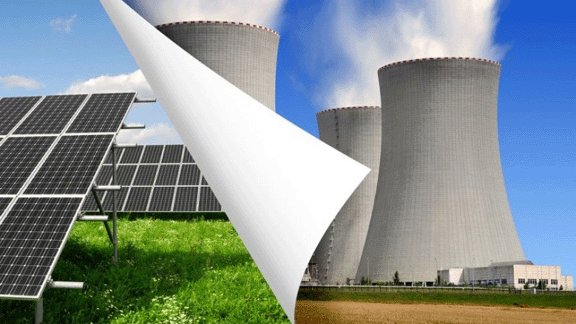 Why Use Nuclear When We Have Wind and Solar Power? http://trendintech.com/2016/08/26/why-use-nuclear-when-we-have-wind-and-solar-power/ By T.Henry August 26, 2016 The Hinkley Point nuclear project has been a topic of discussion recently with the time getting closer for a decision to be made about the future of the project. While once upon a time, nuclear power was thought to be the best form of renewable energy, with the recent developments in solar and wind energy, this isn’t the case any longer. Cheap lithium-air batteries can also be used that are long life and can store five times the energy as the lithium-ion ones that are used today.
One of the main arguments against Hinkley going ahead is not its £18.5 billion price tag, but its constant power generation is no longer what we are looking for. With the cost of renewables like wind and solar reducing daily and the ability to store extra energy produced, doesn’t it make more sense to invest in these forms instead of nuclear? If the UK was to accelerate renewables, we could achieve 100 percent renewable power well before 2050 advises Jeremy Leggett, founder of Solarcentury.
There are already 1000 cities and 60 giant corporations across the globe that are committed to a 100 percent renewable supply. Portugal showed how it could be done in May when it ran for four days on an only wind, solar, and hydropower. Britain also made the headlines that same month as it produced more electricity via solar energy than coal-fired stations. In Brussels, wind energy alone reached an installed capacity of over 430 gigawatts, which is more than the 382 gigawatts of nuclear.
Senior research fellow at the Energy Institute at University College London, Paul Dorfman, states, “Hinkley will not come online in time to help with the critical UK electricity gap or with our carbon emission commitments. In fact, due to inevitable delays and cost overruns, Hinkley will block scarce resources going to necessary UK renewables, grid upgrades, and energy efficiency. Don’t believe the hype: it’s not ‘nuclear and renewables’ – because of the sheer cost of nuclear, it’s ‘nuclear or renewables.’”
Even the people at The Economist have lost faith in Hinkley and headlined a recent article, “Hinkley Pointless”, pointing out that it makes much more sense to use the time and resources set aside for it to improve electricity storage. But, on the other end of the scale, Tom Greatex, chief executive of the Nuclear Industry Association and former MP feels that we need to use all available technologies to meet our energy needs and that includes both renewables and nuclear. Hinkley Point is projected to supply around 7 percent of the UK’s electricity needs with a look to more than double this by the mid-2020’s.
Kazakhstan to Host Major Nuclear Disarmament Conference
 Astana to Host Major Nuclear Disarmament Conference http://astanatimes.com/2016/08/astana-to-host-major-nuclear-disarmament-conference/ BY AIMAN TUREBEKOVA 24 AUGUST 2016
ASTANA – The Kazakh capital will host the international conference “Building a Nuclear-Weapon-Free World,” dedicated to the 25th anniversary of the closure of the Semipalatinsk Nuclear Test Site and commemorating UN International Day against Nuclear Tests at the Palace of Independence Aug. 29, the Senate of the Parliament announced.
The Kazakh Senate, Ministry of Foreign Affairs and Parliamentarians for Nuclear Non-proliferation and Disarmament (PNND) have co-organised the conference.
It will be addressed by President of Kazakhstan Nursultan Nazarbayev and will bring together parliamentarians, representatives of international organisations, civil activists, scholars, mayors and media from around the world.
The event will include a plenary session and four panel sessions: “Security without nuclear weapons or war: Manifesto “The World. The 21st Century”; “A nuclear test ban and the role of the UN in achieving nuclear disarmament;” “National prohibition and nuclear-weapons-free zones. Geography of a sustainable world;” “Initiatives and campaigns – legislators, religious leaders and civil society”.
Conference participants will commemorate victims of nuclear tests, consider current disarmament issues and make proposals on how to strengthen international security.
According to Speaker of the Kazakh Senate Kassym-Jomart Tokayev, the 25th anniversary since the closure of the Semipalatinsk Test Site is a date of global significance.
“President Nursultan Nazarbayev is recognised as a leader of the global antinuclear movement. His decision on the full closure of the Semipalatinsk Nuclear Test Site is the first and the only such case in the disarmament history of the world. The idea of complete nuclear disarmament underpins the Manifesto, “The World. The 21st Century.” The anniversary of the closure of the Semipalatinsk Test Site is the best opportunity for the entire world community to consider the paramount importance of establishing sustainable peace on the planet and to propose new common solutions to security problems,” he said on the eve of the event.
On Dec. 2, 2009, at Kazakhstan’s initiative, the UN unanimously declared Aug. 29 the International Day against Nuclear Tests. “For nearly a decade as UN Secretary-General, I have witnessed many of the worst problems in the world, as well as our collective ability to respond in ways that at times seemed impossible. Our ambitious new 2030 Agenda for Sustainable Development and the Paris Agreement on climate change have demonstrated the power of political will to break long-standing deadlocks. On this International Day against Nuclear Tests, I call on the world to summon a sense of solidarity commensurate with the urgent need to end the dangerous impasse on this issue,” UN Secretary-General Ban Ki-moon said in a special message on this year’s International Day against Nuclear Tests.
In his message, made public by the UN shortly prior to the date, Ban Ki-moon said, “Today marks a quarter of a century since the closure of the Semipalatinsk test site in Kazakhstan, ground zero for more than 450 nuclear tests. The victims there are joined by others scattered across Central Asia, North Africa, North America and the South Pacific.”
He continued, “A prohibition on all nuclear testing will end this poisonous legacy. It will boost momentum for other disarmament measures by showing that multilateral cooperation is possible, and it will build confidence for other regional security measures, including a Middle East zone free of nuclear weapons and all other weapons of mass destruction. When I visited Semipalatinsk in 2010, I saw the toxic damage – but I also witnessed the resolve of the victims and survivors. I share their determination to strive for a world free of nuclear weapons.”
The UN Secretary General went on to urge Comprehensive Nuclear Test Ban Treaty Organisation member states to act now.
“Those states whose ratification is required to bring the treaty into force should not wait for others. Even one ratification can act as a circuit breaker. All states that have not done so should sign and ratify because every ratification strengthens the norm of universality and shines a harsher spotlight on the countries that fail to act,” he said.
Kazakhstan knows well those catastrophic human consequences. The Soviet nuclear weapons tests at the Semipalatinsk site, caused illnesses and premature death to an estimated 1.5 million people and contaminated a huge area.
The Manifesto “The World. The 21st Century,” which was released by Nazarbayev earlier this year, is another contribution to the goal of a nuclear-weapon-free world and to an end to war. The main idea of the manifesto is to prevent war by utilising common security and international law approaches such as diplomacy, negotiation, mediation, arbitration and adjudication.
UK figuring out how to get out of the Hinkley nuclear power deal
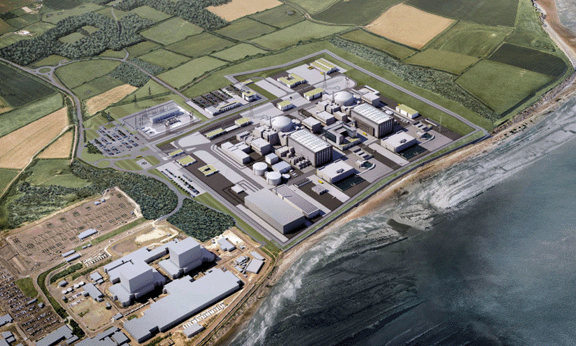 Hinkley Point nuclear power station: Whitehall officials ‘exploring ways UK could pull out of deal’ Theresa May’s administration called an unexpected halt to the project amid security and viability concerns, Independent Joe Watts Political Editor @JoeWatts_ Thursday 25 August 2016 Whitehall officials reviewing the massive Hinkley Point nuclear project are exploring how the UK might withdraw from the deal while minimising financial risk and damage to international relations, it has been claimed.
Westminster sources told The Independent civil servants are looking to see if there is any loophole, clause or issue in contracts yet to be signed that allow the Government to pull back without huge loss and while also saving face.
Ministers are acutely aware of the potential damage a withdrawal could do to relations with China, which is committed to pouring billions of pounds into the controversial project.
Former Chancellor George Osborne was an enthusiastic supporter of the £18 billion scheme, but since Theresa May’s arrival it is being reviewed by the new administration. A Whitehall source said: “There is a working assumption of people in government that the civil service is looking for a way out, a legal loophole, a clause.
“They are looking for anything that will allow the Government to withdraw and also allow the Chinese to withdraw while also saving face.”
It was expected last month when the board of French energy company EDF voted to go ahead with Hinkley C power station that the British Government would give its approval.
Instead new Business Secretary Greg Clark announced he needed more time to make a decision.
It followed claims that the price promised for Hinkley’s electricity at £92.50 per MWh, more than double the wholesale price, was too expensive……..
EDF may also have problems fulfilling its end of any agreement. The company’s finance director Thomas Piquemal resigned earlier this year, fearing Hinkley could lead to the firm’s insolvency.
title=”24 August 2016 16:26 London”>A senior Government figure said: “The other thing no-one is talking about is what happens after the French election.
“Hollande is not going to be there and it is not clear whether Sarkozy or Juppe are committed to it.”
A spokesperson from the Department for Business, Energy & Industrial Strategy said: “No contract has been signed and it is only right that a new Government considers all component parts carefully before making a final decision.” http://www.independent.co.uk/news/uk/politics/hinkley-point-edf-nuclear-power-station-deal-how-uk-could-pull-out-a7207776.html
UN Security Council warned on danger of nuclear drone terror attacks
 Britain warns UN security council it MUST act over threat of nuclear drone terror attacks BRITAIN has warned the UN security council that not enough is being done to prevent chemical, nuclear and biological weapons finding their way into the hands of terrorists. Express, By SIOBHAN MCFADYEN , Aug 25, 2016 And they say evolving terrorist threats include materials created through technological advances including 3D printers and drones. The British Government is worried that border security is not tight enough to prevent the materials from falling into the wrong hands.
And they say that the security council, which is being chaired by Spain, should be able to implement an action plan before the end of the year.
UK Permanent Representative to the United Nations Ambassador Matthew Rycroft spoke to the council this week as fears the UN is not moving fast enough to clamp down on terrorists. Mr Rycroft said: “The threat of toxic, poisonous or nuclear materials falling into the hands of non-state actors, particularly terrorists, is a top priority that requires the closest cooperation between all Member States, as well as civil society and industry……. http://www.express.co.uk/news/world/704011/Britain-warns-UN-security-council-it-MUST-act-over-threat-of-nuclear-drone-terror-attacks
France to launch 6 tenders for solar energy projects

 France ushers in 3 GW solar tender across six rounds, PV Magazine, 25. AUGUST 2016, BY: IAN CLOVER
Energy ministry confirms series of six tenders of 500 MW each to be launched between 2017 and 2020 as country gradually reignites efforts to boost its solar PV sector. “……the government appears to at least be coming to terms with its solar shortsightedness, and this week announced that it will launch a series of solar PV tenders next year to support an additional 3 GW of PV by 2020.
The energy ministry will oversee a series of six tenders of 500 MW each, beginning in 2017. This steady and regular roll out of available projects will, the ministry said, provide stability and visibility to the French solar industry, delivering jobs and aiding the country’s carbon reduction efforts.
The tenders will be available to ground-mounted PV systems between 500 kW and 17 MW in size, and the first round of bidding ends on February 1, 2017.
During each of the six, 500 MW rounds, 300 MW capacity will be reserved for solar farms larger than 5 MW, while 135 MW of capacity will be for plants with a capacity between 500 kW and 5 MW. The remaining 65 MW will be offered to developers looking to build PV systems on carports, provided they are sized between 500 kW and 10 MW.
France is famously largely nuclear-powered, but a new solar support mechanism introduced in May – whereby bidders receive a premium on top of the market price for the PV power they feed to the grid – will hopefully deliver the types of revenue guarantee that can help the country make the transition towards more renewables.
France’s solar installation aims target 10.2 GW of PV by the end of 2018, with anywhere between 18.2 GW to 20.2 GW by 2023. http://www.pv-magazine.com/news/details/beitrag/france-ushers-in-3-gw-solar-tender-across-six-rounds_100025903/#ixzz4IPyzWiC8
Britain’s nuclear police physically unable to work to age 65
Civil nuclear police: Working to 65 ‘physically impossible’, BBC News, 24 August 2016 Representatives of 1,250 armed police officers who protect UK civil nuclear sites have challenged a rule forcing them to work beyond the age of 60.
While most UK police can retire at 60, Civil Nuclear Constabulary officers must work until 65 under a new law.The Civil Nuclear Police Federation says it will be “physically impossible” for officers in their mid-60s to protect the public from terrorism.
It has taken the case to London’s High Court to try to get the rule changed.
It argues its officers have the most physically demanding role in the police service and will not be able to maintain their standards of fitness and weapons proficiency into their 60s.
A government spokesperson said the Civil Nuclear Police Authority – which oversees the Civil Nuclear Constabulary (CNC) – was “considering how to implement changes and reforms”.
The changes were brought in as part of the Public Service Pensions Act………
Analysis By Danny Shaw, BBC home affairs correspondentUnlike other forces that are in the headlines nearly every day – the Met, West Midlands and Greater Manchester Police, for example – you don’t hear a lot about the Civil Nuclear Constabulary.
Much of its work goes unseen, guarding nuclear sites in remote corners of the UK and protecting material in transit.However, it is vital work, particularly at a time when the terrorism threat level is graded “severe” with an attack assessed as “highly likely”. That’s one reason why its officers are incensed – and baffled – by pension changes which mean they’d have to work until at least 65 before retiring……..http://www.bbc.com/news/uk-37169994
Germany’s green power going strong, with more renewable energy than it ever had nuclear
In short, Germany is paying coal to shut down, ramping up renewables far faster than nuclear shrinks, and enjoying unparalleled power reliability—while New York fails to move with solar and wind, pays nuclear to stay on, and has as much downtime a month as Germany has in a year.
 Germany already has more green power than it ever had nuclear, Energy Transition 24 Aug 2016 by Craig Morris “….. Craig Morris takes a look at the data……In Germany, however, solar and wind are reducing the wholesale prices that baseload nuclear and coal sell at—because green power is growing fast. In 2002, the country adopted a plan to phase out nuclear by around 2022 (this is still the target). Most onlookers thought it would be impossible to ever offset nuclear power with renewables in such a short time. In fact, Germany hit that target last year—seven years early.
“Unless we’re willing to go back to candles, which would be uncomfortable and inconvenient, we need energy generation,” New York’s Governer Cuomo said in explaining the nuclear bailout. In doing so, he unwittingly reiterated the long-disproven claim by German nuclear proponents that the lights would go out without nuclear. Like the rest of the US, New York State counts downtime (SAIDI) in hours (PDF), with New York coming in at around two hours of power outages annually—or just over 10 minutes a month. Germany had 12 minutes a year in 2014.
In short, Germany is paying coal to shut down, ramping up renewables far faster than nuclear shrinks, and enjoying unparalleled power reliability—while New York fails to move with solar and wind, pays nuclear to stay on, and has as much downtime a month as Germany has in a year.
Craig Morris (@PPchef) is the lead author of German Energy Transition. He directs Petite Planète and writes every workday for Renewables International. He is co-author of Energy Democracy, the first history of Germany’s Energiewende. http://energytransition.de/2016/08/germany-already-has-more-green-power-than-it-ever-had-nuclear/
Bulgaria seeks solution for costly blowout for Belene nuclear power plant
Bulgaria seeks least worst outcome for Belene nuclear fiasco BME IntelliNews, By Clare Nuttall in Bucharest August 25, 2016 More than two months after an international court ruled Bulgaria must compensate Russia’s Atomstroyexport for work carried out on the Belene nuclear power plant, Prime Minister Boiko Borissov’s government is still struggling to find ways to minimise the financial damage from the project, which was cancelled back in 2013.
A Geneva-based court under the auspices of the International Chamber of Commerce ruled on June 16 that Bulgaria’s state National Electricity Company (NEK) must pay €550mn to Atomstroyexport, a unit of Rosatom, for the nuclear reactor the Russian company has already produced.
While the figure is lower than the €1.2bn sought by Atomstroyexport, it is a substantial sum for Sofia, when taken in combination with the €708mn Bulgaria has already sunk into the project. In addition, Bulgaria faces a bill of around €170,000 in penalty interest per week.
In an analyst note issued after the ruling, Timothy Ash of Nomura wrote that the order to pay compensation was a “significant blow to Bulgaria, with a cost of well over 1% of GDP eventually likely to fall on public finances”.
The options for the Bulgarian government are limited; far from finding the optimal solution for the country, it is a case of searching for the least costly and damaging outcome……..
White elephant
The third option put forward by Sofia is instructing the country’s privatisation agency to sell the project to private investors, who would then complete it with the help of the state. Again, it is questionable how realistic this is – there have long been doubts as to whether Bulgaria needs additional generation capacity. However, on August 24 Novinite reported that Energy Minister Temenuzhka Petkova had met with representatives of China General Nuclear power Group (CGN) to discuss Belene, reportedly at the request of the Chinese company………
Reviving the project could therefore be a case of throwing good money after bad, as Sofia invests yet more money only to end up with a costly white elephant power plant. This is the argument put forward by Greenpeace Bulgaria, which campaigned against Belene together with several other environmental NGOs.
“The government is trying to find a pretty way out of the situation but in reality there is no accountability for the over €1bn spent on this project,” Greenpeace Bulgaria spokesperson Denitza Petrova told bne IntelliNews. She claims that Belene “has never been economically viable … There will be no private investor in it as it is risky and useless, and will not pay off the investment.”……..http://www.intellinews.com/bulgaria-seeks-least-worst-outcome-for-belene-nuclear-fiasco-104739/
USA considers supplying weapons grade uranium to Belgium!
The U.S. nuclear regulator is considering long-term shipments of weapons-grade uranium to a medical research reactor in security-challenged Belgium, something critics say would set back global anti-proliferation efforts.
With a final decision still months away, the Belgian Nuclear Research Center is seeking permission from the U.S. Nuclear Regulatory Commission to receive 317 pounds (144 kilos) of highly enriched uranium, or HEU, fuel in a series of shipments over 10 years.
The United States has supplied the reactor, which produces radioisotopes for fighting cancer, with HEU for decades. But the long-term nature of the latest request is unprecedented; previous agreements have been for periods of one to three years.
The Belgian research center has told U.S. officials since at least 2005 that it is on the verge of converting to low-enriched uranium, or LEU, not suitable for bombs. But there is no definitive date set for that change.
“Now more than a decade has passed and they are asking for another 10 years – that seems to be a bit preposterous,” said Armando Travelli, who until 2005 headed the U.S. Energy Department’s program to convert research reactors to safer uranium and bring bomb-grade uranium back to the United States.
If the Belgian reactor closes before the end of the 10 years, it could leave the center with an HEU supply over which the United States would have little control, he said……..http://www.reuters.com/article/us-usa-nuclear-belgium-idUSKCN10Q0VL?feedType=RSS&feedName=GCA-Commodities
Westinghouse puts on hold plans to build nuclear fuel plant in Ukraine
US Westinghouse gives no confirmation of decision to build nuclear fuel plant in Ukraine,
Ukrainian Energy and Coal Industry Minister Nasalik earlier announced that Westinghouse and Kiev had reached a deal on building a nuclear fuel factory in Ukraine.
KIEV, August 16. /TASS/. The US-based Westinghouse has not confirmed a decision to finance the construction of a nuclear fuel factory in Ukraine as was previously announced by Ukrainian Energy and Coal Industry Minister Igor Nasalik.
As Westinghouse Vice-President and Managing Director for Northern and Eastern Europe Aziz Dag told Deutsche Welle publication, surplus capacities for nuclear fuel production can be observed in the world at present and, therefore, the construction of a new factory won’t bring any considerable economic benefits for the country….. http://tass.ru/en/economy/894536
Trends in Europe’s changing energy systems
Europe’s Energy Transition: Megatrends & Tipping Points (Part 3) Shifting Power-Generating Resources, Forbes, 18 Aug 16 By Mark Livingstone & Jan Vrins In our initial blog on Europe’s energy transition, we discussed seven megatrends that are fundamentally changing how we produce and use power. In this third blog in the series, we discuss the shift in power generation fuel mix and how this is transforming the European power industry.
European electricity-generating facilities that use oil, coal, and nuclear are devaluing and at risk of becoming stranded as generation sources shift to less expensive renewable generation and natural gas generation. This shift is playing out in different ways across Europe.
According to the US Energy Information Administration (EIA), net European generation capacity will increase by 7 GW in 2016. Much of Europe’s new capacity comes from renewables, with close to 75% of new capacity coming from wind (44%) and solar (29%). While new coal (16%) and gas (6%) capacity was added, far more coal assets were decommissioned. As a result, net new capacity in Europe is virtually 100% renewables. While recent subsidy cuts have tempered solar’s growth, wind is marching onward. There is still no effective utility-scale solution to the inherent intermittency in renewable generation, as storage solutions and grid interconnection/active management are still lacking penetration at scale. Natural gas is the bridging fuel during the shift to renewables, supported by the abundance of natural gas available globally, lower long-term prices, and increasing import capacity in Europe.
What Are the Drivers Behind This Shift?
We see five main drivers for the shift in generation resources described above:
- Climate Change Policy: Europe has taken definitive steps to decarbonize its power generation, including relatively generous support for renewables and economic penalties for carbon emitters via the EU Emissions Trading System (EU ETS). See our previous blog on the rising number of carbon emissions reduction policies and regulations.
- European Market Coupling: A second aspect of Europe’s power sector is the physical and economic integration of markets. Interconnection growth has been strong, and the economic incentives via use of power exchanges for dynamic price signaling has provided further support for low-carbon generation.
- Generation Economics: While policy and regulatory support for low-carbon generation has taken centre stage, the economics of various forms of generation have also been shifting. Within 7 years, solar power has gone from a heavily subsidized resource to a key component of the generation mix, even with zero or minimal subsidies. Europe continues to lead the world in development of offshore wind, particularly in the North Sea. Thermal generation economics have also changed—despite relatively low gas and coal prices, low marginal cost renewables are increasingly forcing thermal plants to shift from stable baseload operation to less efficient cycling and reliance on ancillary service contracts.
- Decentralization of Generation: The scale of distributed energy resources (DER) is not yet huge across Europe; however, this trend is already shaking the traditional utility business models. The rise of the prosumer is gathering momentum, be it an industrial customer who invests in combined heat and power, a new commercial building with a biomass boiler, or a housing development with rooftop solar panels.
- Public Sentiment: This driver cannot be underestimated given the prevalence of democratically elected governments in Europe. Public support for action to curb climate change despite the costs has been most obvious in Germany, where the changes via nuclear shutdowns and solar growth have been massive—and expensive. In the UK, it is more expensive to construct offshore wind than onshore, but the public and political preference is that location trumps economics.
How Does This Play Out Across Europe?……. http://www.forbes.com/sites/pikeresearch/2016/08/18/europes-energy-transition-megatrends-tipping-points-part-3/#6d68a5b124e8
Russian financing, Russia selling nuclear power plant to Jordan
 Jordan seeking funds for first nuclear power plant — official, Jordan Times By Mohammad Ghazal – Aug 20,2016 – AMMAN — Jordan’s first nuclear power plant could be operational by 2025, if sufficient financing is secured, the Jordan Atomic Energy Commission (JAEC) said on Thursday.
“Jordan is currently in talks with German, Czech, Chinese and Japanese companies among others to supply turbines and electrical systems for the power plant and things are going well,” said JAEC Chairman Khaled Toukan.
Thirty per cent of the $10 billion project will be financed equally by Jordan and Russia, who are partners in the project. JAEC is engaged in discussions with companies to secure the remaining 70 per cent to pay for turbines and electrical systems, Toukan said.
“If we secure finance by the end of 2017, we will be able to operate the first reactor by 2025,” he noted.
Under an agreement with Russia, Jordan plans to build a power plant with two nuclear reactors, each with a capacity of 1,000 megawatts.
Toukan was speaking at a press conference on Thursday to announce the results of a report on the programme by the International Advisory Group (IAG).
The IAG was formed in November 2015 to provide consultations on the strategy to deal with nuclear waste, and the best options and mechanisms to finance the plant.
The group includes former energy minister Khaled Shraideh and seven international industry experts. …….http://www.jordantimes.com/news/local/jordan-seeking-funds-first-nuclear-power-plant-%E2%80%94-official
Hinkley Point’s nuclear weapons connection
 Hinkley’s Hidden History , 18 Aug 2016 Morning Star
With the government decision over the new reactor at Hinkley postponed, nuclear historian DAVID LOWRY reveals how the British nuclear power and weapons programmes were born together – and have yet to be separated THE first nuclear power plant on the Hinkley Point site in Somerset was built in the 1960s.
At the time, the United States, was intimately involved in the planning. Why was this?
The first public hint is to be found in a statement by the Ministry of Defence on June 17 1958 on “the production of plutonium suitable for weapons in the new [nuclear] power stations programme as an insurance against future defence needs” in Britain’s first-generation magnox reactor.
By chance, on the same day, France’s president Charles de Gaulle authorised a nuclear test to be held early the next year.
The site chosen was the Reganne oasis 700km south of Colomb Bechar in the Sahara Desert of Algeria.
France also used a magnox-style reactor at Chinon in the Loire Valley to make the plutonium explosives.
A week later in the British Parliament, Labour’s Roy Mason asked why the government had “decided to modify atomic power stations, primarily planned for peaceful purposes, to produce high-grade plutonium for war weapons” and “to what extent this will interfere with the atomic power programme?”
He was informed by paymaster general Reginald Maudling: “At the request of the government, the Central Electricity Generating Board has agreed to a small modification in the design of Hinkley Point and of the next two stations in its programme so as to enable plutonium suitable for military purposes to be extracted should the need arise…….
The headline story in the Bridgwater Mercury, serving the community around Hinkley was: “MILITARY PLUTONIUM To be manufactured at Hinkley.”
The article explained: “An ingenious method has been designed for changing the plant without reducing the output of electricity.”
The CND was reported to be critical, describing this as a “distressing step,” insisting: “The government is obsessed with a nuclear militarism which seems insane.”
Sadly, with the blinkered push to replace Trident today, not much seems to have changed in the 55 years since……
on July 3 1958, Britain and the US signed a detailed agreement on co-operation on nuclear weapons development, after several months of congressional hearings in Washington DC — but, significantly, with no oversight whatsoever in Parliament.
As this formed the basis, within a mere five years, for Britain obtaining the Polaris nuclear WMD system from the US, and some 20-odd years later for Britain to buy US Trident WMD, the failure of Parliament to at least appraise the security merits of this bilateral atomic arrangement was unconscionable……
Following further detailed negotiations, the Ango-American Mutual Defense Agreement on Atomic Energy matters (defence is spelled with an “s” even in the British version of the treaty, demonstrating the origin of the drafts), to give it its full treaty title, was amended on May 7 1959, to permit the exchange of nuclear explosive material for military purposes.
The Times science correspondent wrote on May 8 1959 under the headline: “Production of weapons at short notice” that “the most important technical fact behind the agreement is that of civil grade — such as will be produced in British civil nuclear power stations — can now be used in weapons.”……
And so it may be seen that Britain’s first civil nuclear programme was used as a source of nuclear explosive plutonium for the US military, with Hinkley Point A the prime provider.
Two decades later, Wales national daily, the Western Mail, reported on October 8 1984 that the largest magnox reactor in Britain, at Wylfa on Anglesey, had also been used to provide plutonium for the military.
Plutonium from both reactors went into the British military stockpile of nuclear explosives and could well still be part of the British Trident warhead stockpile today.
Subsequent research by the Scientists Against Nuclear Arms, published in the prestigious science weekly journal Nature, has demonstrated that around 6,700kg of plutonium was shipped to the US under the military exchange agreement, which stipulates explicitly that the material must be used for military purposes by the recipient country.
To put this quantity into context, a nuclear warhead contains around 5kg of plutonium so this is a very significant quantity.
What would Iran and North Korea make of this deliberate intermixing of civil and military nuclear programmes by one of the nuclear weapons superpowers which leads the criticisms of them for allegedly doing this very thing today?
Dr David Lowry is senior research fellow at the Institute for Resource and Security Studies, Cambridge, Massachusetts. http://www.morningstaronline.co.uk/a-dabf-Hinkleys-hidden-history#.V7dqoFt97Gg
1 This Month




Shut down the radiation-damaged Heysham nuclear reactors now
To see nuclear-related stories in greater depth and intensity – go to https://nuclearinformation.wordpress.com

Say No to NASA’s Reckless Nuclear Reactor on the Moon
Say No to NASA’s Reckless Nuclear Reactor on the Moon
-
Archives
- October 2026 (279)
- September 2026 (339)
- August 2026 (330)
- July 2026 (355)
- June 2026 (287)
- May 2026 (306)
- April 2026 (356)
- March 2026 (251)
- February 2026 (267)
- January 2026 (308)
- December 2025 (358)
- November 2025 (359)
-
Categories
- 1
- 1 NUCLEAR ISSUES
- business and costs
- climate change
- culture and arts
- ENERGY
- environment
- health
- history
- indigenous issues
- Legal
- marketing of nuclear
- media
- opposition to nuclear
- PERSONAL STORIES
- politics
- politics international
- Religion and ethics
- safety
- secrets,lies and civil liberties
- spinbuster
- technology
- Uranium
- wastes
- weapons and war
- Women
- 2 WORLD
- ACTION
- AFRICA
- Atrocities
- AUSTRALIA
- Christina's notes
- Christina's themes
- culture and arts
- Events
- Fuk 2022
- Fuk 2023
- Fukushima 2017
- Fukushima 2018
- fukushima 2019
- Fukushima 2020
- Fukushima 2021
- general
- global warming
- Humour (God we need it)
- Nuclear
- RARE EARTHS
- Reference
- resources – print
- Resources -audiovicual
- Weekly Newsletter
- World
- World Nuclear
- YouTube
-
RSS
Entries RSS
Comments RSS


