Hinkley going down? Next glorious gimmick – Small Nuclear Reactors
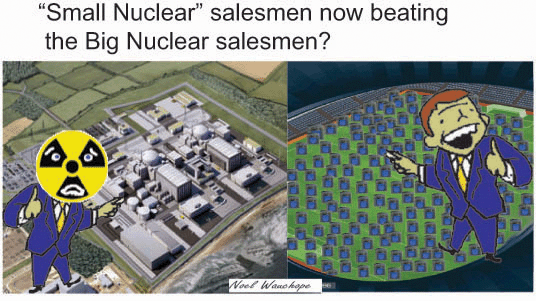
UK set to continue developing baby nuclear reactors which may fuel Rolls-Royce jobs, This Is Money By NEIL CRAVEN, FINANCIAL MAIL ON SUNDAY, 14 August 2016 Britain is to forge ahead with plans to develop ‘baby’ nuclear reactors just two weeks after the Prime Minister threw energy policy into chaos by revealing there will be a shock delay to making a decision over Hinkley Point.
The announcement over whether to proceed with Hinkley in Somerset has been postponed until next month.
That allows new Premier Theresa May more time to consider concerns relating to the cost of the £25billion project and potential security risks posed by Chinese involvement.
This weekend the Government revealed it will shortly select preferred partners to construct Small Modular Reactors – which could help provide an alternative to Hinkley. They would be built using British factories and participation and could boost UK firms including Rolls-Royce.
Whitehall sources said the project, currently involving 33 engineering groups, would reaffirm Britain’s determination to be a ‘world leader’ in SMR production.
It is not yet clear whether the decision to develop the ‘baby’ reactors is linked to the Hinkley delay.
The Government has already earmarked £250 million to fund a five-year programme to develop SMRs and this autumn it is expected to announce the next phase including naming the lead companies to be involved.
Hinkley supporters fear an announcement could be timed to coincide with a final decision on Hinkley, drawing the sting if the Government decides to cancel the larger project……http://www.thisismoney.co.uk/money/markets/article-3739075/UK-set-continue-developing-baby-nuclear-reactors-fuel-Rolls-Royce-jobs.html
Bulgaria hoping for private investors to revive Belene nuclear power project
Bulgaria to revive Belene nuclear power project with private help http://www.reuters.com/article/us-bulgaria-nuclear-idUSKCN10N154 Bulgaria wants private investors to help it restart the Belene nuclear power project after a court ruled Sofia must pay hefty compensation to Russia over equipment ordered for it, Prime Minister Boiko Borisov said on Friday.
The Balkan country had canceled the 2,000 megawatt project on the Danube River in 2012 due to financial constraints and after pressure from Brussels and Washington, who said it would only increase Bulgaria’s dependence on Russian energy imports.
An international arbitration court ruled in June that Sofia should pay more than 550 million euros ($623 million) in compensation to Russian nuclear giant Rosatom over the two nuclear reactors ordered.
“We have a very changed situation,” Borisov told local media. “We are obliged to pay for these two reactors.”
Borisov, however, said that the Black Sea state still does not have enough financial resources to build the nuclear plant.”Let us make it a private project through the privatization agency with various options for the state’s share. This is the solution,” he said.
Bulgaria had been hoping to sell the equipment or the whole project to Iran and Borisov visited Tehran in July to test the ground for a possible deal, for which the consent of Rosatom was also needed. (Reporting by Tsvetelia Tsolova and Angel Krasimirov)
France’s ruling socialist party calls for freeze on Hinkley Point nuclear development

 Hinkley Point near melt-down as French socialist party calls for freeze, Telegraph, Ambrose Evans-Pritchard 9 AUGUST 2016 Britain’s Hinkley Point nuclear project is close to unravelling after France’s ruling socialist party threw its support behind dissident trade union leaders and called for a fundamental review of the high-cost venture.
The whole saga has now become freighted with politics and misunderstandings in a three-way jostle between France, Britain, and China, with no outcome in sight that can please everybody.
The French socialists warned that Hinkley threatens the financial viability of EDF, the state-owned energy giant  responsible for two thirds of the £18bn funding and for limitless liabilities if it all goes wrong.
“The socialist party judges that a project of such importance, that involves the solidity and survival of the national energy group, makes it imperative to ask every question and raise every reserve before going any further,” it said.
It endorsed a furious complaint by the six trade union members on the EDF board, who said the final go-ahead for the project was rammed through in late July without full disclosure in a “governance scandal”, and that the decision is now “null and void”.
Brexit has further changed the landscape and brought matters to a head. “The whole relationship with Britain, whether political or economic, must be reviewed in light of its withdrawal from the EU, and a project as important as Hinkley Point cannot reasonably be exempted,” said the party………
Nuclear power cannot easily be switched on and off. It is ill-adapted for use as a back-up source to cover lulls in renewable power. “In a world moving towards cheaper, flexible, decentralized power systems, investing in eye-wateringly expensive, always-on ‘base-load’ plants increasingly looks like a 20th Century solution for a 21stCentury problem,” said Richard Black from the Energy and Climate Intelligence Unit.
If the chief reason for continuing the project is to preserve good relations with France and China, the whole story is a textbook example of why it is hazardous to strike commercial deals with foreign state-owned companies. http://www.telegraph.co.uk/business/2016/08/09/hinkley-point-near-melt-down-as-french-socialist-party-calls-for/
Finland failed to be transparent on nuclear waste burial, unlike Sweden
The foremost reason is that as the project was being discussed with the public, SKB’s research was found to be incomplete and, in certain cases, inaccurate.
When, in 2011, Sweden’s SKB first applied for a license to build the Forsmark repository, the KBS-3 project documentation was published, which made it possible to give the project a review that would be independent from the nuclear industry’s own evaluation.
In February 2016, a special expert group appointed by the government, called the Swedish National Council for Nuclear Waste (Kärnavfallsrådet), published a 167-page report entitled “Nuclear Waste State-of-the-Art Report 2016: Risks, uncertainties and future challenges.” Among other things, it identifies the repository project’s risks and uncertainties having to do with earthquake impacts, with the long-term prospects of financing and monitoring the site’s condition, and with the health effects of low doses of radiation.
Finland has no such expert body. The concept of the repository, under construction in Euroajoki municipality, is criticized by many Finnish scientists, but the government is not taking notice and is likewise ignoring the scientific objections coming from its neighbor Sweden.

 When haste makes risky waste: Public involvement in radioactive and nuclear waste management in Sweden and Finland – How did it happen that in Sweden, the country that developed the technology for deep geological disposal of radioactive waste, construction of a such a repository – a first of its kind in the world – has been suspended for recognized risks and uncertainties, whereas Finland, which has copied the Swedish approach, is moving full speed ahead with building one? Bellona has looked for the answer on a fact-finding visit of the two countries. Bellona August 9, 2016 by Andrei Ozharovsky, translated by Maria Kaminskaya
“……..Out of sight, out of mind?
The deep geological disposal concept was first suggested over 40 years ago to solve the problem of spent nuclear fuel, the nuclear industry’s most dangerous byproduct. To a certain degree, this was a continuation of the “bury and forget about it” principle, applied to the less radioactive and thus less dangerous waste – radioactive waste. But where radioactive waste could be placed in shallow trench-type reservoirs or semi-buried near-surface concrete vaults, for nuclear waste, disposal facilities – repositories or burial sites – were proposed for construction in rock formations at a depth of several hundred meters. To date, no such deep geological repository has been created anywhere in the world. Continue reading
Theresa May is advised that now is the time to get out of Hinkley nuclear project.

 Hinkley Point: May told to pull the plug on nuclear project over China spying accusations THERESA MAY is being urged to quit the controversial Hinkley Point C project over Chinese spying allegations. Express By ZOIE O’BRIEN, Aug 11, 2016 A scandal has broken out in the US suggesting a Chinese man was attempting to recruit US atomic experts to steal technology secrets to help China’s nuclear power programme.
But the legal papers include the name of China General Nuclear Power (CGN), which holds a stake in the UK’s planned new nuclear power station – Hinkley Point C.
Szuhsiung Ho, a senior adviser to CGN, will appear in court next week to face charges. As a result the Prime Minister is being urged to pull the British project immediately.
May paused development last month over national security fears but now she is being told to scrap plans altogether.
Paul Dorfman, a senior research fellow at University College London, said the British prime minister does not have to offend the Chinese. He suggested she could blame poor reactor technology from France’s EDF.
He told the Guardian: “No other OECD country would let China into its critical nuclear infrastructure, given its history of nuclear weapon proliferation. May has already taken the diplomatic ‘hit’ for this, so what’s she got to lose?
“If government wanted to, it could avoid taking China to task on this by reframing the problem in the context of the failed French EPR reactor, which is three times over-cost and over-time where it’s being built in Finland and France.”
The Somerset power station has already caused huge debate with petitions and campaigns being launched to prevent its being built.
Now, spying allegations have caused huge concern in the UK. Angus MacNeil MP, the chair of the energy and climate change select committee, said there are now grave concerns about corporate integrity and must form a key part of the government’s current review of Hinkley.
He said: “I am not sure the Chinese have anything to steal from Britain in the way of nuclear secrets. That is after all why they are being brought in, but it does raise questions about how honourable the company is and whether it could cut corners on construction methods and issues like that.”……..http://www.express.co.uk/news/uk/698965/Hinkley-Point-May-China-spy-fears-Somerset-project
Time to pull the plug on unaffordable Hinkley Point nuclear power project
 UK must pull the plug on the exorbitant Hinkley Point nuclear power project Do we submit to blackmail or do we risk losing Chinese trade? IBT, By Michael Toner , 11 Aug 16, “…..Today we’re witnessing a folly so shambolic, so expensive, so eye-poppingly spectacular that it puts all others in the shade. It goes by the name of Hinkley Point, the proposed new nuclear power station in Somerset. And it’s the misbegotten creation of our entire political establishment, with Labour, Lib-Dem and Tory MPs all complicit.
One of the few politicians who emerges with some credit from this unfolding disaster is our new Prime Minister Theresa May, who stunned everybody when immediately on entering Downing Street she refused to rubber-stamp the deal and instead ordered a review of the whole project. As we shall see, her reasons for delaying a decision were eminently sensible.
But what howls of anguish it has provoked. The French-owned energy company EDF, which will build Hinkley Point, is appalled. President Hollande’s government makes no secret of its displeasure. And now China, which is providing billions to finance the project, is weighing in with threats of dire consequences for Britain if the deal doesn’t go ahead.
August 9, 2016……It’s time to examine how we ever came to be in this mess. And for that we must go back to the last Labour Government and an Energy Secretary named Ed Miliband. Remember him?………
, it enthused the then Energy Secretary Ed Davey of the Lib Dems, “For the first time, a nuclear power station in this country will not have been built with money from the British taxpayer. This is an excellent deal for Britain and British consumers”.
Oh dear. Let’s examine the details of Mr Davey’s “excellent” deal……
then there’s the eye-watering expense of this scheme. Hinkley Point will cost at least £18billion and will probably end up costing much more. The sums are so huge that ministers could only persuade EDF to accept such a burden by allowing it to charge sky-high prices for the electricity it produces. British consumers will end up paying for the world’s most expensive electricity for decades.
And for what? The plant won’t be built for at least another eight years, even if everything goes to plan – a big “if”, given the record so far. And if ever it eventually runs at full capacity, it would provide power only for six million homes – a pitiful return for such a huge and risky investment.
Theresa May has every right to re-examine this whole misconceived project. And given the reaction of the Chinese ambassador, wouldn’t the rest of us be equally right to re-examine the wisdom of sucking up to the bullies of Beijing? http://www.ibtimes.co.uk/uk-must-pull-plug-exorbitant-hinkley-point-nuclear-power-project-1575151
UK’s £31 billion Trident submarines programme on the skids
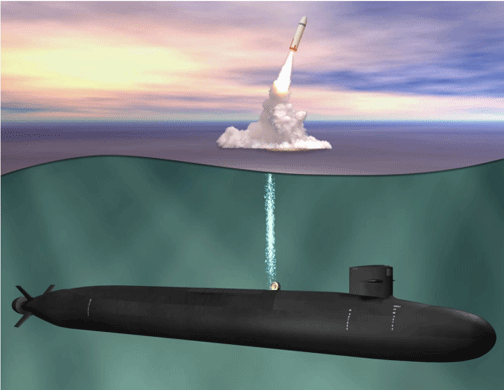 Trident plans ‘in doubt’, says government watchdog, The Ferret, Rob Edwards on August 8, 2016 The UK’s £31 billion programme to replace Trident submarines in on the skids, according to a high-level government spending watchdog.
A report by the Infrastructure and Projects Authority (IPA) to the Treasury and Cabinet Office has warned that the plan to build four new nuclear weapons submarines for the Clyde is “in doubt”.
This is despite the overwhelming vote in the House of Commons last month in favour of replacing Trident. The plan was opposed by every Scottish MP, except for the lone Tory, David Mundell.
The poor assessment of the Trident programme’s prospects was buried in a report about 143 projects published online by the IPA several days before the vote at Westminster. It gave the submarine successor programme its second worst rating of “amber/red”.
This means that the project is judged to be running into serious difficulties because of cost overruns, management problems and technical issues. “Successful delivery of the project is in doubt, with major risks or issues apparent in a number of key areas,” said the IPA.
“Urgent action is needed to address these problems and/or assess whether resolution is feasible.”
According to critics, costs have already risen by between £15 and £20 billion. The planned date for bringing the submarines into service has been delayed from 2024 to the “early 2030s”……….https://theferret.scot/trident-doubt-government-watchdog/
UK government’s own projections find solar and wind ‘cheaper than new nuclear’
 Solar and wind ‘cheaper than new nuclear’ by the time Hinkley is built https://www.theguardian.com/environment/2016/aug/11/solar-and-wind-cheaper-than-new-nuclear-by-the-time-hinkley-is-built
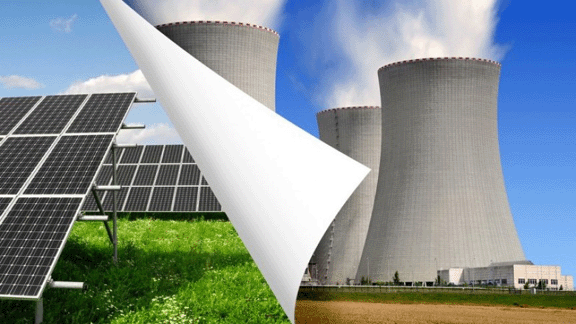
UK government’s own projections expect onshore wind power and large-scale solar to cost less per megawatt hour than new nuclear by 2025, Guardian, Adam Vaughan, 11 Aug 16, The government expects solar and wind power to be cheaper than new nuclear power by the time Hinkley Point C is completed, its own projections show.
Theresa May’s government last month made a surprise decision to delay a deal on Hinkley, prompting a renewed look at what alternatives could power Britain if ministers this autumn fail to back new reactors in Somerset.
An unpublished report by the energy department shows that it expects onshore wind power and large-scale solar to cost around £50-75 per megawatt hour of power generated in 2025. New nuclear is anticipated to be around £85-125/MWh, in line with the guaranteed price of £92.50/MWh that the government has offered Hinkley’s developer, EDF.
The NAO cited the forecasts as coming from the energy department in March 2016. The department said the NAO had been provided with an early draft of its report, and the full version would be published soon.
Niall Stuart, chief executive of the trade body Scottish Renewables, said: “These numbers speak for themselves: onshore wind and solar will be significantly better value than all other large scale sources of power in the UK by 2025.
“It is time to start backing the two technologies to deliver the clean power we need to hit our climate change targets and the cheap electricity required to keep bills down for consumers.”
Molly Scott Cato, a Green party MEP, said: “These latest figures confirm what many of us have been saying for years: that the Hinkley project is a dud.
“The cost of renewables is tumbling and Hinkley will become a giant white elephant as it struggles to compete with cheaper renewable options. Research has shown that solar power would be a less costly way of generating the equivalent amount of power, and now the government’s own projections show that onshore wind too will be cheaper than nuclear by the time Hinkley is built.”
Since coming to power in May 2015, the government ended onshore wind subsidies and allowed communities to veto turbines near them, as well as axing and cutting various subsidies for solar.
Government data published on Thursday showed that renewables generated 25.1% of the UK’s electricity in the first quarter of this year. Around half of that came from on and offshore wind combined.
Offshore wind is cheaper and safer than Hinkley Point
 Winds of spare change, Breaking Views, 8 August 2016 By Olaf Storbeck Theresa May should look to Denmark instead of France to secure Britain’s future energy needs. ……As things stand, the UK is proposing to guarantee French state-controlled utility EDF a minimum price of 92.50 pounds for each megawatt-hour of electricity produced at the 18-billion-pound Hinkley Point project. Back in 2013, when the deal was struck, offshore wind was almost 50 percent more pricey.
Wind technology’s costs have plummeted since then. The latest generation of wind farms on the ocean is producing electricity for less than 85 pounds per megawatt hour rather than 130 pounds, new data from state-controlled Danish utility DONG Energy shows. Bigger and more efficient turbines contribute, as well as improvements in construction and grid connection.
This progress, which is faster than even DONG expected, is undermining the economic case for Hinkley Point. Offshore wind is already 8 percent cheaper. And the gap is likely to widen, as the industry continues to be on a steep learning curve, while construction costs for nuclear plants have a notorious tendency to creep upwards.
Renewable energy’s usual issue is intermittency. But offshore wind out at sea is strong and steady, so turbines generate power 98 percent of the time. Replacing Hinkley Point’s planned capacity of 3.2 gigawatts with offshore wind would admittedly require building wind parks of twice that size – offshore turbines on average deliver only around half of their nominal capacity. But as there is no shortage in potential locations for offshore wind farms, such a large scale ramp-up is technologically possible.
Offshore wind is not just cheaper, but also less risky than Hinkley Point. Wind parks usually go on the grid within four years, compared to at least a decade for planned nuclear plants. Similar reactors in Finland and France are dogged by a tripling of costs and years of delay. And the UK taxpayer would have to pay the nuclear subsidies over 35 years, while those for wind farms usually run less than half that long.
That’s before the wind turbines’ other obvious benefit: they don’t leave toxic radioactive waste behind. If May wants to pull the plug on Hinkley Point, she has a ready-made case. https://www.breakingviews.com/considered-view/cheap-wind-energy-can-deal-final-blow-to-hinkley/
Many decades after closure, UK’s Dounreay Fast Reactor is still dangerously radioactive
Coolant removed from Dounreay Fast Reactor, WNN 05 August 2016 A ten-year process to remove 68 tonnes of highly-radioactive liquid metal coolant from the primary circuit of the UK’s Dounreay Fast Reactor (DFR) has now been completed, marking a major milestone in its decommissioning.
Dounreay’s experimental fast breeder reactor, housed inside a steel sphere, led British nuclear R&D during the 1950s and 60s. It became the world’s first fast reactor to provide electricity to a national grid in 1962…..Dounreay Site Restoration Limited (DSRL) announced today that some 68 tonnes of the liquid metal coolant – a blend of sodium and potassium called NaK – have been removed from the primary circuit of the DFR and destroyed over a ten-year period.

Most of the NaK had been removed by 2012, since when work has been under way to remove the last of the coolant from the difficult to access pipework and base of the structure…….
DSRL said the destruction of the DFR’s liquid metal coolant has removed “one of the highest hazards remaining in the Nuclear Decommissioning Authority (NDA) estate”.
NDA chief operating officer Pete Lutwyche said, “The difficulty of this task can’t be understated, and I welcome the news that this work is complete. Everyone involved should be proud of their achievement.”
The focus of decommissioning work at the DFR will now be the removal of some 1000 breeder elements that remain in the reactor vessel, DSRL said. This must be completed before cleaning and removal of the reactor and its nine kilometres of cooling pipework. http://www.world-nuclear-news.org/WR-Coolant-removed-from-Dounreay-Fast-Reactor-0508164.html
China keen to market its nuclear reactors to UK, warns Britain not to dump Hinkley

That’s not sitting well with China.
“Right now, the China-U.K. relationship is at a crucial historical juncture,” China’s ambassador to Britain, Liu Xiaoming, wrote in an article for the Financial Times.
“I hope the U.K. will keep its door open to China and that the British government will continue to support Hinkley Point — and come to a decision as soon as possible so that the project can proceed smoothly,” he added.His warning comes at a delicate time for the U.K. economy. The Bank of England last week forecast lost growth and higher unemployment as it cut interest rates in response to the decision to leave the European Union.
Having thrown the future of its relationship with its biggest trading partner up in the air, Britain is looking to boost trade and investment ties with the rest of the world.
Liu pointed out in his article that Chinese companies have invested more in the U.K. over the past five years than in France, Germany and Italy combined. China also accounted for just over 3% of U.K. exports last year.
Under the deal announced in October, China General Nuclear Power Corporation (CGN) would have a 33.5% stake in the power plant. France’s EDF (ECIFY) will hold the rest.
The bigger prize for China, though, is a related deal to build another nuclear power plant some 60 miles northeast of London, using its own reactor technology. It would have 66.5% of that venture.
May hasn’t given much away about her reasons for delaying the decision on Hinkley Point.
But the deal was controversial from the start, with critics warning that giving China access to vital infrastructure could compromise national security. The plan has also come under fire for guaranteeing an electricity price way above market levels……… http://money.cnn.com/2016/08/09/news/companies/china-uk-nuclear-power-plant-hinkley/
Dangerous errors at Belarus nuclear plant. Secrecy denounced by European neighbours
 Belarus under fire for ‘dangerous errors’ at nuclear plant
Neighbouring countries denounce ‘Soviet-style secrecy’ over accidents during energy site’s construction, RFE/RL reports, Guardian, Tony Wesolowsky ,9 Aug 16, Thirty years after world’s worst nuclear accident at Chernobyl, Belarus, which saw a quarter of its territory contaminated in the disaster, is building its first energy plant powered by the atom.
However a series of mishaps at the site in Astravets are raising concerns over safety, particularly in Lithuania whose capital, Vilnius, lies less than 31 miles (50km) from the site.
In July it was reported by local news that a nuclear reactor shell had been dropped while being moved. Local resident Nikolai Ulasevich, who is a member of the opposition United Civic Party, claimed the 330-tonne shell had fallen from a height of 2-4m in preparation for installation.
Two weeks later the Belarusian Energy Ministry confirmed that an “emergency situation” had occurred at the construction site. It said that the incident took place at the warehouse facility, while the reactor was being moved.
The Russian state-owned company Rosatom, the nuclear plant’s main contractor, denied the reactor shell had been damaged, and should be installed as planned pending permission from supervisors.
Despite such assurances, the Belarusian deputy energy minister Mikhail Mikhadyuk has since reportedly said the installation of the reactor shell was being suspended pending further safety checks.
The Lithuanian foreign minister Linas Linkevicius said the lack of transparency on the part of Belarusian officials was unacceptable. “These incidents, happening from time to time, lack of transparency, we’re learning about them from open sources, usually too late…. This is not how it should be in reality. This last incident when a nuclear reactor vessel was possibly damaged is very dangerous,” he said…….
It’s not the first mishap at the construction site, nor the first time Belarusian officials have resisted divulging any details.
The structural frame of the nuclear service building at the site collapsed in April, as first reported by the Belsat independent TV station. According to the report, supervisors, under pressure to meet a deadline, ordered workers to pour too much concrete causing the structure to collapse.
No mention of the accident was made in the Belarusian state media or by officials, with the spokesman at the plant first denying anything had happened. In May, the Belarusian energy ministry, however, did confirm an “incident” had occurred during the pouring of concrete, but the “defect” had been dealt with………
Lithuanian president Dalia Grybauskaite said in late July that Vilnius would work with the international community to block the plant coming online if Minsk failed to take steps to ensure international safety standards at the site…….https://www.theguardian.com/world/2016/aug/09/belarus-under-fire-for-dangerous-errors-at-nuclear-plant
Horizon nuclear company funds college in Wales
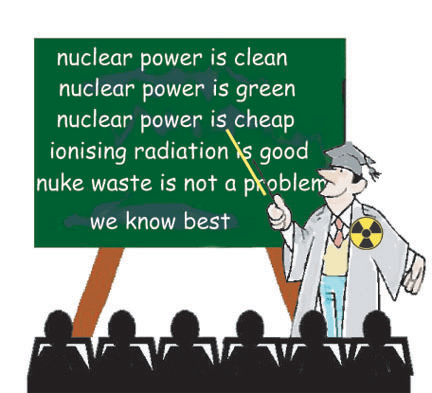 Wylfa Newydd nuclear firm funds Anglesey engineering centre 9 August 2016
The company behind an £8bn nuclear power plant will pay £1m towards an engineering centre on Anglesey.
Horizon Nuclear Power, the firm behind Wylfa Newydd, will pay towards Grwp Llandrillo Menai’s Llangefni building…….
- Horizon will provide technical support to Coleg Menai, one of the colleges under Grwp Llandrillo Menai, and apprentices will move from the Bangor campus to Llangefni once the new centre is finished.
The Welsh Government pledged £5m to the centre in 2015.…..
- Duncan Hawthorne, Horizon’s chief executive officer, said: “I’m delighted to announce this landmark funding provision to Grwp Llandrillo Menai.
America’s modernised thermonuclear aircraft bombs to be based in Europe
 Guess Where the US Will House Its New Modernized Nuclear Weapons Arsenal? http://www.globalresearch.ca/guess-where-the-us-will-house-its-new-modernized-nuclear-weapons-arsenal/5539984 By Sputnik Global Research, August 07, 2016
NNSA, the agency responsible for the military use of nuclear technology, has given the go ahead for the production of the upgraded B61-12 thermonuclear aircraft bomb.It said production of the first upgraded B61-12 nuclear bombs will begin in fiscal year 2020. All remaining bombs will be adapted by 2024.
Authorizing the B61-12 warhead life-extension program (LEP) is the final development phase prior to actual production.
According to reports, unlike the free-fall gravity bombs it will replace, the B61-12 is a guided nuclear bomb. A new tail kit assembly, made by Boeing, enables the bomb to hit targets far more precisely than its predecessors.
Using “Dial-a-yield” technology, the bomb’s explosive force can be adjusted before launch from a high of 50,000 tons of TNT equivalent to a low of 300 tons.
The B61-12 will have both air- and ground-burst capability. The capability to penetrate below the surface has significant implications for the types of targets within the bomb’s reach.
The B61-12 will initially be integrated with B-2, F-15E, F-16, and Tornado aircraft. From the 2020s, the weapon will also be integrated with, first, the F-35A bomber-fighter F-35 and later the LRS-B next-generation long-range bomber.
The B61-12 will replace the existing B61-3, —4, —7, and —10 bomb designs. It is thought that approximately 480 B61-12s will be produced through the mid-2020s.Currently around 200 B61 bombs are deployed in underground vaults inside around 90 protective aircraft shelters at six bases in five NATO countries (Belgium, Germany, Italy, the Netherlands, and Turkey). [These bases currently house the B61 arsenal, which when decommissioned would be replaced by state of the art B61-12, M. Ch, GR Editor]
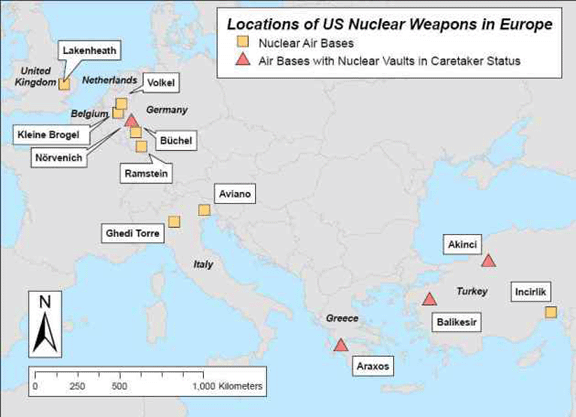
In September last year German television station ZDF cited a Pentagon budget document saying that the US Air Force would deploy modernized B61 nuclear bombs to Germany’s Buchel air force base replacing the 20 weapons already at the site.
“In other words, the American modernized thermonuclear aircraft bomb has been primarily, and for the nearest quarter of a century, destined to Europe. Washington however does not specify how and from whom the modernized nuclear bombs are going to defend the continent,” says an analytical articleon the RIA Novosti website.
“However it is easy to guess that the thermonuclear bombs will be first of all used for the ‘deterrence” of Russia and the rest of Europe will fall hostage to the circumstances orchestrated from across the ocean,” the website adds. Back in September 2015, Kremlin spokesman Dmitry Peskov characterized the move as a potential “violation of the strategic balance in Europe,” that would demand a Russian response.
“This could alter the balance of power in Europe,” Peskov then said.
“And without a doubt it would demand that Russia take necessary countermeasures to restore the strategic balance and parity.”
Chines military nuclear firm invited to bid for building Small Nuclear Reactors in Britain

 Chinese firm with military ties invited to bid for role in UK’s nuclear future,
China National Nuclear Corporation on government list of preferred bidders for development funding for next-generation modular reactors, Guardian, Adam Vaughan, 8 Aug 16, A controversial Chinese company has been selected to bid for millions of pounds of public money in a UK government competition to develop mini nuclear power stations.
The China National Nuclear Corporation (CNNC) features twice in a government list of 33 projects and companies deemed eligible to compete for a share in up to £250m to develop so-called small modular reactors (SMR).
The involvement of a different Chinese company in the high-profile Hinkley Point C project in Somerset was widely believed to have prompted the government’s decision to pause the deal at the 11th hour last month.
Nick Timothy, Theresa May’s co-chief of staff, has previously expressed alarm at the prospect of CNNC having such close access to the UK’s energy infrastructure because it would give the state-owned firm the potential ability to build weaknesses into computer systems.
The company was formerly China’s Ministry of Nuclear Industry and developed the country’s atomic bomb and nuclear submarines, as well as being a key player in its nuclear power industry.
In an article on the ConservativeHome website, Timothy singled out CNNC’s military links as a reason the UK government should be wary of such involvement.
“For those who believe that such an eventuality [shutting down UK energy at will] is unlikely, the Chinese National Nuclear Corporation – one of the state-owned companies involved in the plans for the British nuclear plants – says on its website that it is responsible not just for ‘increasing the value of state assets and developing the society’ but the ‘building of national defence’,” he wrote.
Tom Burke, chairman of the environment thinktank E3G and a former British government adviser, said there were legitimate concerns over the company. “I don’t fuss very much about the Chinese owning a nuclear power station [China General Nuclear in the case of Hinkley]. But I would be much more concerned about bringing in CNNC because they are known to be much more closely involved with the military and Chinese nuclear weapons programmes,” he said.
CNNC was not involved in the original Hinkley deal but it was reported on Sunday that the company has agreed in principle to buy half of China’s 33% stake in the £24bn project if it goes ahead…….. https://www.theguardian.com/environment/2016/aug/07/chinese-firm-with-military-ties-invited-to-bid-for-role-in-uks-nuclear-future
1 This Month




Shut down the radiation-damaged Heysham nuclear reactors now
To see nuclear-related stories in greater depth and intensity – go to https://nuclearinformation.wordpress.com

Say No to NASA’s Reckless Nuclear Reactor on the Moon
Say No to NASA’s Reckless Nuclear Reactor on the Moon
-
Archives
- October 2026 (289)
- September 2026 (339)
- August 2026 (330)
- July 2026 (355)
- June 2026 (287)
- May 2026 (306)
- April 2026 (356)
- March 2026 (251)
- February 2026 (267)
- January 2026 (308)
- December 2025 (358)
- November 2025 (359)
-
Categories
- 1
- 1 NUCLEAR ISSUES
- business and costs
- climate change
- culture and arts
- ENERGY
- environment
- health
- history
- indigenous issues
- Legal
- marketing of nuclear
- media
- opposition to nuclear
- PERSONAL STORIES
- politics
- politics international
- Religion and ethics
- safety
- secrets,lies and civil liberties
- spinbuster
- technology
- Uranium
- wastes
- weapons and war
- Women
- 2 WORLD
- ACTION
- AFRICA
- Atrocities
- AUSTRALIA
- Christina's notes
- Christina's themes
- culture and arts
- Events
- Fuk 2022
- Fuk 2023
- Fukushima 2017
- Fukushima 2018
- fukushima 2019
- Fukushima 2020
- Fukushima 2021
- general
- global warming
- Humour (God we need it)
- Nuclear
- RARE EARTHS
- Reference
- resources – print
- Resources -audiovicual
- Weekly Newsletter
- World
- World Nuclear
- YouTube
-
RSS
Entries RSS
Comments RSS

