Economic and Social Research Institute tots up the cost of a nuclear disaster in Europe – €160bn
European nuclear disaster would cost €160bn, Peter O’Dwyer November 22 2016, http://www.thetimes.co.uk/edition/ireland/european-nuclear-disaster-would-cost-160bn-trb3bcrp9
A nuclear disaster in northwest Europe could cost Ireland as much as €161 billion. A report compiled by the Economic and Social Research Institute found that agricultural production would grind to a halt, with the tourism industry and exports also incurring substantial damage.
The estimated cost of a disaster like that in Chernobyl in 1986 or Fukushima in Japan five years ago could be almost twice the €85 billion bailout Ireland received in 2010.
The UK has 15 active reactors and there are a further 58 in France and eight in Germany, according to the World Nuclear Association. EDF, the French nuclear company, is building an £18 billion (€21.2 billion) plant at Hinkley Point in Somerset, about 150 miles from Rosslare, Co Wexford, on the east coast.
Even under the most benign scenario considered by the ESRI, where no contamination occurs, the total loss is estimated at €4 billion. By comparison, the total value of corporation tax collected in the first nine months of the year was €4.16 billion.
The report focused on the potential impact of a nuclear disaster on tourism, agriculture and food, including both the initial shock and the long-run reputational damage.
The report’s authors said that their analysis was likely to omit several additional losses and could underestimate the true extent of the potential cost to the Irish economy. Concerns over the health risks associated with high levels of contamination could, for example, put a significant strain on the health service.
The total cost of a low-level contamination scenario, which requires the imposition of food controls to reassure the public, and which would cause restrictions on food imports from Ireland, would be about €18 billion.
The third scenario considered would require food controls be put in place for months and steps taken to protect agricultural production. Irish exports would be severely impacted, as in the previous scenario, while Irish consumers would also shun Irish food produce in a further setback for the sector.
The impact on tourism would also be significant, with long-term reputational damage resulting in an economic cost of €80 billion.
The most severe economic shock would arise where the contamination warrants the imposition of food controls for years. Under this scenario, the impact could persist for 60 years, though the most substantial economic impacts would arise in the first 30 years.
It is assumed that Irish agricultural production would cease entirely for three years, costing about €5 billion, and that EU member states would begin importing Irish produce after this period. Trade with international partners would take another 12 years to restart.
Culling and disposing of contaminated livestock could cost more than €5 billion.
Not only would exports be decimated but the need to import much of the country’s food would lead to far higher domestic costs. There could also be significant emigration.
Under this worst-case scenario, the estimated economic loss was €161 billion.
A spokesman for the Department of Communications, Climate Action and Environment was not available for comment.
UK government’s huge legal fees for Hinkley nuclear project
Slaughters earns £12m for advice to government on Hinkley Point nuclear power plant http://www.legalweek.com/sites/legalweek/2016/11/22/slaughters-rakes-in-12m-for-advice-to-government-on-hinkley-point-c-nuclear-power-plant/?slreturn=20161022154621 James Booth Slaughter and May has received £12m in legal fees from the government in relation to its advice on the Hinkley Point C nuclear power plant project.
The magic circle firm has been advising the Department of Energy and Climate Change in connection with the £18bn plans to build Hinkley Point C, which will be the UK’s first new nuclear power station for 20 years.
The fees were revealed in a freedom of information (FoI) request by The Times, which showed that Slaughters received nearly three times more in fees than the next best paid adviser, big four accountant KPMG, which received £4.4m. Financial adviser Lazards has been paid £2.6m, with management consultancy Leigh Fisher securing £1.2m according to the FoI.
Slaughters’ team on the long-running matter is being led by financing partner Paul Stacey, banking partner Robert Byk, corporate partner Robert Chaplin and competition special adviser Jackie Holland.
The controversial development has secured roles for numerous firms, including Herbert Smith Freehills (HSF), which advised French energy company EDF on its planning application; Pinsent Masons, which advised the local authorities on the planning application; Eversheds, which advised China National Nuclear Corporation (CNNC) on its investment in the project; and Ashurst, which acted for China General Nuclear Power Corporation on the deal.
HSF fielded a team of more than 30 lawyers on the project, led by planning partner Matthew White. Other HSF partners to have been involved in the project include UK real estate head Julian Pollock, energy partner Julia Pyke and disputes partner Nusrat Zar.
Clifford Chance (CC) is also acting for EDF on matters such as the £6bn investment in the project by CNNC and on helping secure European state aid approval from the European Commission.
The CC team is being led by London energy partner John Wilkins and also includes Paris energy partner Richard Tomlinson, London corporate partner Jenine Hulsmann and Paris corporate partner Thierry Schoen.
Pinsents’ team for the local authorities was led by planning partners Richard Ford and Jonathan Riley, Eversheds’ was led by Beijing corporate partner Jay Ze and London energy partner Rob Pitcher, and the lead Ashurst partners were energy lawyer David Wadhamand corporate partner Robert Ogilvy-Watson.
The Somerset-based power plant is expected to be first operational in 2025.
Slaughters declined to comment.
A new nuclear plant at Wylfa on Anglesey? the economics don’t stack up
 Economic case for nuclear ‘falling apart’ anti-Wylfa Newydd protesters claim http://www.dailypost.co.uk/news/north-wales-news/economic-case-nuclear-falling-apart-12201243
Rally urges government not to build new nuclear plant on Anglesey ERYL CRUMP 19 NOV 2016
The economic case for nuclear energy is “falling apart”, a leading anti-nuclear campaigner claimed. Dr Carl Clowes made the claim at an anti-nuclear power rally at Llangefni. An audience of more than 50 listened to arguments against building a new nuclear plant at Wylfa on Anglesey.
Dr Clowes said: “There’s been a proposal to develop Wylfa Newydd for some years now and we believe passionately this is not the right way forward for either energy or employment on the island. “It’s going to cause as many problems as it may potentially solve and it leaves a legacy which is wholly inappropriate for future generations. “There are better more effective, more efficient ways of producing energy now and we need to address those rather than waste our time and money indeed on something that may not happen at the end of the day.
“The economic case for nuclear is falling apart. We’ve seen already this week Vatenfall, a Danish company, is aiming to produce electricity with offshore wind at something like half the price, 45 pence per kiolwatt hour that the Government has agreed for Hinkley C with EDF.
“So it’s a no brainer for an economist or a Government minister they should be seriously looking at the way ahead and it’s not nuclear.” Dylan Morgan of PAWB (People against Wylfa B) claims Hitachi’s Advanced Boiling Water Reactor (ABWR) which they are proposing for Wylfa B is not a proven technology.
“Since the explosions and triple meltdowns at nuclear reactors in Fukushima in March 2011, none of the four ABWRs which were operating in Japan are now operational. “One nuclear power complex shut down in June 2006 after only running from its start up in January 2005.
“Also a plan to build an ABWR in the USA was abandoned in March 2011 because nobody wanted to invest in it,” he said.
The meeting also considered why small nuclear reactors should not be built at the site of the now decommissioned nuclear power station at Trawsfynydd near Blaenau Ffestiniog or anywhere else.
A competition to develop a miniature nuclear power station at Trawsfynydd earlier this year attracted interest from 38 companies from around the world.
Small modular reactors (SMRs) have been compared to the nuclear reactors that have been used to power submarines since the 1950s.
Last year the UK Government announced £250m in funding over the next five years for nuclear research and development, including a competition to identify the best value SMR design for the UK.
Europe adopts new rules on disposal of nuclear waste
 Under the new law, export to countries outside the EU will be allowed but only under strict and binding conditions.
The third country must have a final deep geological repository in operation when the waste is shipped. [Ed note: This kind of regulation would finish off South Australia’s crazy plan to commercially import nuclear waste]
At present, such deep geological repositories do not exist anywhere in the world nor is a repository in construction outside of the EU.
Europe Adopts Long-Term Nuclear Waste Storage Law http://ens-newswire.com/2011/07/19/europe-adopts-long-term-nuclear-waste-storage-law/ BRUSSELS, Belgium, July 19, 2011 For the first time, the European Union has committed itself to the final disposal of its nuclear waste. Heads of government today adopted the radioactive waste and spent fuel management directive, “in order to avoid imposing undue burdens on future generations.”…..
The directive will enter into force at the latest in September of this year. Member States will have two years to transpose its provisions into their national laws.
By 2015, governments must submit their first national programs to the European Commission, the EU’s executive branch, which will examine them and can require changes……
Some 7,000 cubic meters of high-level nuclear waste are produced across the EU each year. Most Member States store spent fuel and other highly radioactive wastes in above-ground storage facilities that need continuous maintenance and oversight and are at risk of accidents, such as airplane crashes, fires or earthquakes. Hungary and Bulgaria currently ship nuclear waste to Russia.
In its most controversial provision, the new law allows export of nuclear waste to countries outside the EU. In its initial proposal, the Commission had advocated a complete export ban.
On June 23, 2011, the European Parliament in its plenary session voted in favor of a complete export ban as proposed by the Commission. In a close vote, MEPs backed a ban on exports of nuclear waste to non-EU countries, with 311 votes in favor, 328 against and seven abstentions.
However, the European Council today approved a version of the directive that allows export.
As the legal basis for this directive is the Euratom Treaty, the European Parliament is only consulted, an its opinion is not binding. The final decision is taken only by the Council, composed of the heads of government of every EU Member State and the president of the European Commission.
Under the new law, export to countries outside the EU will be allowed but only under strict and binding conditions.
The third country must have a final deep geological repository in operation when the waste is shipped.
At present, such deep geological repositories do not exist anywhere in the world nor is a repository in construction outside of the EU.
It takes a minimum of 40 years to develop and build a deep geological repository, the Commission said today in a statement on adoption of the new directive.
According to already existing EU laws on the shipment of spent fuels and radioactive waste, the export to African, Pacific and Caribbean countries, as well as to Antarctica, is explicitly ruled out.
Greenpeace EU nuclear policy adviser Jan Haverkamp was critical of the new law, saying shipment of nuclear waste to countries outside the EU should not have been allowed.
“Despite pressure from the European Commission to block exports, the new rules will allow Hungary and Bulgaria, countries that currently have agreements for the export of nuclear waste to Russia, to continue transferring radioactive material,” said Haverkamp.
“European governments have adopted an out of sight, out of mind approach to radioactive waste, but all they are doing is dumping the long-term problem on someone else and putting Europeans at risk by allowing dangerous waste convoys,” Haverkamp said. “Only countries that face the unsolvable problem of radioactive waste head-on by ending their reliance on nuclear power can stop the vicious circle that shifts responsibility to the next generations.”
Under the new directive, national programs have to include plans with a concrete timetable for the construction of disposal facilities, as well as a description of the activities needed for the implementation of disposal solutions, costs assessments and a description of the financing schemes. They will have to be updated regularly.
Safety standards drawn up by the International Atomic Energy Agency will become legally binding.
Information will be made available to the general public and workers, and the public will have opportunities to participate in the decision-making process.
At least every 10 years, Member States are required to invite international peer reviews to exchange experience and ensure the application of the highest standards.
Finally, two or more Member States can agree to use a disposal facility in one of them.
More than 50 years after Europe’s first nuclear power reactor became operational – the UK’s Calder Hall power plant in 1956 – there are still no final repositories for nuclear waste.
Under the Euratom Treaty, the EU has the legal competence to protect the general public from ionizing radiation. The energy mix is a national competence.
The Commission said it will “closely and carefully” monitor the implementation of the new directive, in particular progress made in building disposal facilities for radioactive waste and spent fuel and, if they occur at a later stage, possible exports of radioactive material.
Swiss can’t give away nuclear reactors, let alone sell them

 Swiss try to give away nuclear plants, but find no takers, REneweconomy, By Craig Morris on 18 November 2016 Energy Transition The operator of Switzerland’s nuclear reactors, Alpiq, reportedly offered reactors to France’s EDF at no cost or “a symbolic franc.” The French, who have their hands full with their own struggling fleet at home, refused the offer. A potential power shortfall still looms in the background. Craig Morris explains.
On the weekend, Swiss media reported (in German and in French) that Swiss reactor operator Alpiq could find no buyer for its two nuclear plants and is therefore hoping to give them to the Swiss state. The firm’s CEO is quoted saying that France’s EDF was not interested even at no cost because it “has its own problems pertaining to nuclear power at present.”
It is possible that the announcement is a bargaining chip just in case the Swiss decide in their referendum later this month to phase out nuclear. Alpiq’s Gösgen reactor would then have to close in 2024; Leibstadt, in 2029. The company may thus be looking for ways to ask for money from the Swiss state in return for a closure. At present, the firm is apparently losing 2 billion francs annually but can only pass on half of those losses to consumers.
Oddly, neighboring France faces a power shortage that should lead to greater demand in Switzerland; the aforementioned losses have been part of a longer trend stemming back to the solar boom of Germany (see my report from 2012), which began bringing down prices on spot power markets despite Chancellor Merkel’s nuclear phaseout of 2011. Solar and wind have simply grown faster than anyone expected.
As I recently explained, France has more than a third of its reactors closed at present. At the beginning of November, it was announced (in French) that five of the 20 reactors (out of 58) currently undergoing inspections would not come back online this month as expected.
Concerns of a power shortage also extend to the UK, where system operator National Grid warned of a potential shortfall on Monday, November 07. Power prices have reached as high as 40 pence on the spot market, whereas 4 pence would be more usual (play around with this table). The British were importing power full blast on line from the Netherlands and France, thereby contributing to the drain on French supply.
As a result, French prices were also high that Monday, reaching nearly 40 cents. But that’s nothing: a power trader says it is “almost certain” that France will reach its price cap of three euros per kilowatt-hour on the exchange this winter. The head of EDF, which operates all of France’s reactors, has now said that the danger of a blackout this winter is real (in French). At that point, France might import from the UK no matter what the cost, and the British would fire up their strategic reserve……..
The problem is thus that France and the UK have failed to build enough renewables, especially biogas plants running on waste (which are dispatchable), while they wasted time hoping to build nuclear plants that never emerged. As for the Swiss, well, they have suffered from the same indecision but may set it aside finally in their referendum on November 27. http://reneweconomy.com.au/swiss-try-give-away-nuclear-plants-find-no-takers-47105/
Europe’s nuclear waste problem areas – Hanford, Sellafield, Le Hague, Gorleben, Mayak ….
 Why worry about nuclear waste? What has the future ever done for us? Ecologist, Andrew Blowers, 16th November 2016 Places on the periphery “…..Hanford, USA. Located in America’s North West, Hanford was the chosen location for the manufacture of the plutonium for the ‘Fat Man’ nuclear weapon that devastated Nagasaki on 9 August, 1945.
In the subsequent Cold War, Hanford’s nuclear activities expanded with nuclear reactors on the banks of the Columbia river, reprocessing ‘canyons’ in the middle of this vast site and a variety of production and experimental facilities scattered around its fringes.
Production at Hanford has ceased but a vast nuclear legacy remains: in the tank farms containing high-level liquid waste and sludge, some leaking towards the Columbia; in the abandoned reactors and decommissioned reprocessing works; and in waste management facilities and clean-up projects scattered around the site.
Cleaning up this legacy is a long-term, costly ($2bn. federal funding a year), intractable and complex task but it is an inescapable one.
Sellafield, UK. Like Hanford, Sellafield’s nuclear legacy stretches back to the beginning of the UK’s military nuclear programme.
On to its compact site is crammed around two-thirds of all the radioactivity from the UK’s nuclear legacy, all the country’s high-level wastes, most of the spent fuel, a stockpile of around 140 tonnes of plutonium and other complex streams of wastes.
These include often unrecorded mixtures of fuel, skips and other highly radioactive debris tipped into the notorious ponds and silos which, in the words of Margaret Hodge, a former Chair of the Public Accounts Committee pose “intolerable risks” to the public and the environment.
Cleaning up this legacy is a task that stretches decades ahead absorbing around £1.7 bn. from the government a year.
La Hague and Bure, France. In France, where three quarters of the country’s electricity is nuclear, much of the legacy is focused around the reprocessing facilities at La Hague at the tip of the Cotentin peninsula in Normandy.
At this remote location spent fuel is reprocessed for recycling in the form of mixed oxide fuel (MOX) or it is vitrified and stored pending disposal.
After several unsuccessful attempts to find a suitable and acceptable site for deep disposal, an underground laboratory at Bure, a nuclear no-man’s land in eastern France, is being stealthily and steadily developed as an underground laboratory though a fully-fledged disposal facility is still a long way off.
Gorleben, Germany. By contrast, there are other places, Gorleben in Germany being one, where resolute and continuing resistance on the part of local communities has prevailed to prevent, or at least restrain, the imposition of the nuclear industry and its unwanted and dangerous legacy.
But Gorleben’s legendary defence of its identity expresses just how difficult it will be for the nuclear industry to extend its reach and colonise greenfield sites.
Elsewhere there are sites such as the Mayak plutonium facilities at Ozersk in Russia, for long a closed city, scene of a major accident in 1957 (Medvedev,1979) and left with a legacy of high levels of environmental pollution in rivers and lakes from its military reprocessing and waste facilities (Brown, 2013).
And there are many other sites, across the world, where the nuclear legacy imposes risk, blight and environmental degradation on local communities. http://www.theecologist.org/News/news_analysis/2988342/why_worry_about_nuclear_waste_what_has_the_future_ever_done_for_us.html
Bulgarian prosecutors charge former economy and energy minister over botched nuclear power project
 Bulgarian ex-energy minister charged over nuclear project http://www.reuters.com/article/us-bulgaria-nuclear-charge-idUSKBN13C1KP 17 Nov 16, Bulgarian prosecutors charged former economy and energy minister Rumen Ovcharov on Thursday with mismanagement that led to state losses of more than 190 million euros ($200 million) related to a canceled nuclear power project with Russia’s Atomstroyexport.
Bulgaria canceled the 10-billion-euro Belene project on the Danube River in 2012 after failing to find foreign investors and under pressure from Brussels and Washington to limit its energy dependence on Russia.
An arbitration court has ruled Bulgaria needs to pay over 600 million euros in compensation to Atomstroyexport over the project, which analysts and politicians say reflects widespread corruption in the Balkan country.
Prosecutors charged Ovcharov, energy minister from 2005 to 2007 in a Socialist-led government, for failing to exercise sufficient control over the executive directors of state energy company NEK and allowing them to sign a deal with Atomstroyexport for the nuclear power plant at Belene.
The prosecutors said that in November 2006 NEK’s chief executives signed a 193 million euro agreement with the Russian company to start work on the project in breach of public procurement laws and before the plant’s financing was agreed.
Prosecutors have already pressed similar charges against Ovcharov’s successor, former economy and energy minister Petar Dimitrov.
Ovcharov has previously denied any wrongdoing. He was not immediately available for comment.
Russia keen to stay ahead of Franc e, USA, in marketing nuclear energy to India
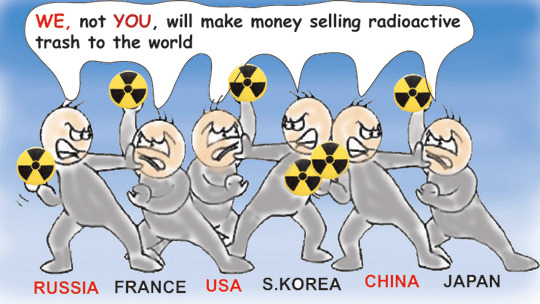
Russia Still India’s Main Partner in Nuclear Energy Despite French, US Interest Sputnik News, 18 Nov 116 India struck its thirteenth civil nuclear deal when PM Narendra Modi visited Japan. Despite many suitors ranging from the French to the Americans, Russia is India’s preferred partner and the collaboration is breaking new ground every day. New Delhi (Sputnik) – India has signed 13 civil nuclear agreements to meet its ever increasing energy needs. But India-Russia nuclear cooperation remains the oldest and the most standout partnership because Moscow firmly believed in India’s non-proliferation credentials and helped it set up modern nuclear power plants despite Western opposition because it is not a signatory to the NPT.
Analysts consider India-Japan civil nuclear deal as a landmark even. It will help India access Japan’s nuclear market as also pave the way for US and French companies to set up nuclear reactors in India. Japanese companies such as Hitachi, Toshiba and Mitsubishi have major stakes in US and French companies as GE, Westinghouse and Areva planning to construct reactors in India. Without an India-Japan nuclear deal, it was impossible for them to set up nuclear reactors in India. But the much hyped India-Japan nuclear deal is on fragile ground. According to the terms of the deal, the moment India conducts a nuclear test, Japan will terminate the nuclear deal. This will impact not only the Japanese nuclear reactors but also the US and French reactors. ……https://sputniknews.com/business/201611171047552712-russia-india-nuclear-energy/
Donald Trump and the road to fascism
We must remember how quickly economic collapse and recession can breed totalitarian movements, especially in countries where privileged segments of the population are used to higher standards of living and special advantages in relation to the rest of the world. Europe and the US, with their long histories of both real and mythological prosperity, may be ticking time bombs. As we enter these next years, those forces aligned with social and economic justice principles must take very seriously the potential for another economic crisis.
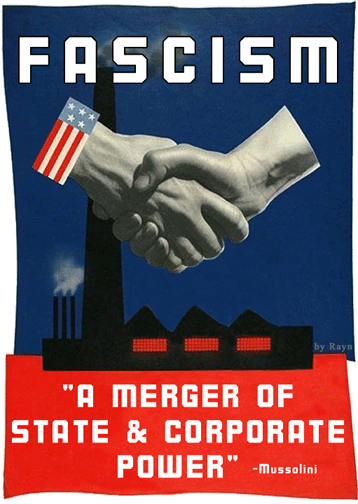 Rising European Fascists Welcome Trump Victory Saturday, 12 November 2016 00:00By Ryan Harvey, Truthout | Report “Today the United States, tomorrow France,” former National Front leader Jean-Marie Le Pen tweeted late Tuesday night, referencing the prophetic quote attributed to Adolph Hitler. This was as Donald Trump’s victory swept through the world’s headlines, exciting many a far-right activist within and outside of the United States.
Unfortunately, Le Pen is no lone Twitter-fascist, but a popular figure whose daughter and fellow far-right leader Marine Le Pen is expected to win the first round of French national elections in April. In the last elections, Le Pen swept large areas of the country in the first round before being defeated by large margins in the second.
But this is the year of Brexit and Donald Trump, and France (and Europe) need not wait until 2017 to anticipate their future. As many have pointed out, the French primaries, only two weeks away, may well determine the outcome in the spring. If Alain Juppe succeeds in clinching the Republican Party’s nomination, he stands to beat Marine Le Pen. Any other scenario opens the gate of possibility for the fascist-right she represents.
France, the target of a number of attacks by Islamic State copycats and a battleground in the humanitarian crisis facing refugees in Europe, is not alone in the predicament of having far-right parties poised to make big gains in fast-approaching elections. Austria, the first EU state to close its borders to refugees, votes December 4 in a highly contested race that saw election results from May — which placed the leftist Alexander Van der Bellen barely in front — invalidated due to fraud. Norbert Hofer, who represents the far-right Freedom Party, lost by a very small margin of just over 30,000 votes and is expected to win next month.
In the Netherlands, holding its next election in March, the far-right Geert Wilders is placed for a possible victory as well, representing the anti-Muslim, anti-EU Party for Freedom. In an echo of Trump’s situation, criminal charges Wilders is facing for hate speech may actually increase his likelihood to win.
“We are witnessing the same uprising on both sides of the Atlantic,” Wilders wrote Wednesday morning in the conspiracy-site-turned-news-blog Breitbart. “The Patriotic Spring is sweeping the Western world.”…….
On the topic of Putin, Trump’s respect for strongmen leaders and his embracing of conspiratorial ideas about who runs the world will likely trickle down to the grassroots. We can expect an alliance with the Le Pens and Hofers of Europe, one that places xenophobic nationalist rhetoric at the center of its policies, as well as a tighter embrace of the Putinsphere across Eastern and now Western Europe………
We can also expect strange approaches to strongmen like Rodrigo Duterte, “the Trump of the East,” who recently appointed Trump’s business partner in the Philippines, Century Properties Group chairman Jose Antonio, as a special envoy to Washington for trade, investment and economic affairs………
We must remember how quickly economic collapse and recession can breed totalitarian movements, especially in countries where privileged segments of the population are used to higher standards of living and special advantages in relation to the rest of the world. Europe and the US, with their long histories of both real and mythological prosperity, may be ticking time bombs. As we enter these next years, those forces aligned with social and economic justice principles must take very seriously the potential for another economic crisis. http://www.truth-out.org/news/item/38345-rising-european-fascists-welcome-trump-victory
The British nuclear lobby’s sick weapons experiments with chickens
During the Cold War, the UK designed nuclear land mines that were reliant on chickens http://www.businessinsider.com.au/uk-developed-chicken-warmed-nuclear-landmines-2016-11 JEREMY BENDER NOV 14, 2016 The Cold War spawned decades’ worth of bizarre weapon ideas as the West and the Soviet Union strove towards gaining the strategic upper hand over their superpower rival.
German Chancellor Angela Merkel will co-operate with President Trump – UNDER CERTAIN CONDITIONS
German Chancellor Angela Merkel Issues CHILLING Warning To Donald Trump, BiPartisan Report , By Sarah MacManus –November 9, 2016 German Chancellor Angela Merkel isn’t going to let up on newly minted President-elect Donald Trump any time soon. The European stateswoman issued a very carefully worded statement to the press on Wednesday, not so subtly hinting that she’d be keeping an eye on the Republican and letting all parties know that her cooperation — and that of Germany — comes with conditions.
German Chancellor Angela Merkel reacts to Donald Trump as elected President (english subtitles)
Trump took a swing at Merkel during his campaign over her refugee policy, criticizing her willingness to accept refugees and immigrants into Germany and stating: “What Merkel did to Germany is a shame, it’s a sad, sad shame.”
Merkel’s even-handed statement of congratulations to the Republican was composed with the utmost precise wording and couched in tones of warning……..
“Please accept my congratulations on your election as President of the United States of America.
“You will assume office at a time in which our countries are jointly facing many different challenges.
“Germany’s ties with the United States of America are deeper than with any country outside of the European Union. Germany and America are bound by common values — democracy, freedom, as well as respect for the rule of law and the dignity of each and every person, regardless of their origin, skin color, creed, gender, sexual orientation, or political views. It is based on these values that I wish to offer close cooperation, both with me personally and between our countries’ governments.
“Partnership with the United States is and will remain a keystone of German foreign policy, especially so that we can tackle the great challenges of our time: striving for economic and social well-being, working to develop far-sighted climate policy, pursuing the fight against terrorism, poverty, hunger, and disease, as well as protecting peace and freedom in the world.
“In the years ahead as president, I wish you a sure hand, every success, and God’s blessing.” http://bipartisanreport.com/2016/11/09/just-in-german-chancellor-angela-merkel-issues-chilling-warning-to-donald-trump/

Nuclear lobby getting a big boost from the British government
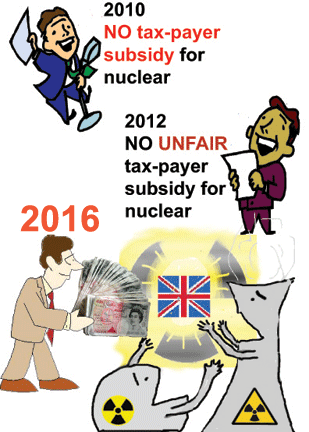 UK launches nuclear innovation program, WNN 07 November 2016 The UK’s Department for Business, Energy and Industrial Strategy (BEIS) has announced its commitment of £20 million ($25 million) for an initial phase of a new nuclear research and innovation program. This covers five major themes: advanced fuels; materials and manufacture; reactor design; advanced recycling; and strategic toolkit.
BEIS said on 3 November: “At Spending Review 2015, government committed to invest in an ambitious nuclear research and development program. This funding forms a part of government’s wider commitment to double the UK’s energy innovation spend, such that by 2021 it will have doubled to over £400 million per year.
“As part of this commitment, over £20 million will be provided to support innovation in the civil nuclear sector across five major areas from 2016-18, building on the recommendations set out by the Nuclear Innovation Research Advisory Board (Nirab).”
This funding includes: £6 million towards maintaining the UK’s leading edge work on advanced nuclear fuels which could provide greater levels of efficiency; £5 million for research that underpins the development, safety and efficiency of the next generation of nuclear reactor designs; £5 million to develop the UK’s capability in materials, advanced manufacturing and modular build for the reactors of the future; £2 million to research fuel recycling processes that may reduce future environmental and financial burdens; and £2 million to continue with the development of a suite of toolkits and underpinning data that will enhance government’s knowledge basis for future decision making in the nuclear sector, up to 2050.
The deadlines for the procurements are, respectively, 16 December 2016 for those on the website of the Official Journal of the European Union, and 18 January 2017 for the Small Business Research Initiative procurement……..
Last November, the government announced plans to invest at least £250 million over the next five years in a nuclear research and development program including a competition to identify the best value small modular reactor (SMR) design for the UK. The first phase of that competition, a call for initial expressions of interest, was launched in March. It has also announced that an SMR Delivery Roadmap will be published later this year.
Nirab chair Sue Ion said the BEIS announcement “acts on the government’s commitment to spend at least £250 million on an ambitious nuclear research and development program over the next five years.” She added: “It’s a significant step forward for the UK in our drive to be a leading nation at the forefront of nuclear research.”
The research into new fuel, advanced manufacturing, reactor design, improved recycling processes and strategic tools aligns with Nirab’s recommendations and will “plug gaps in the UK’s current activity”, she said. “It will begin to equip our universities, national labs and industry with world leading skills and capability and act as a stimulus to national and international collaborative working.”
In October, Rolls-Royce announced it had submitted a paper to BEIS, outlining its plan to develop a fleet of 7 GWe of SMRs with its consortium. Other participants in the UK’s SMR competition include French-owned EDF Energy and its partner China National Nuclear Corporation, Westinghouse and the US developer NuScale Power.
Tom Mundy, managing director for the UK and Europe at NuScale Power, said the company welcomes the government’s “continued commitment to nuclear innovation and interest in the development of small modular reactor technology.” He added: “We look forward to the progression of the government’s competition, which aims to identify the best value SMR design for the UK.”
Industrial strategy
The UK’s Nuclear Industry Association (NIA) today called for the government “to work with industry to ensure the industrial strategy has energy infrastructure front and centre”, in its submission ahead of the Autumn Statement, due on 23 November.
The Autumn Statement is one of the two statements the Treasury makes each year to Parliament upon publication of economic forecasts, the other being the annual Budget……
the NIA has called for four developments.
Firstly, the roadmap for delivery on SMRs, following the Phase 1 competition, “to be released as soon as possible, so industry can capitalise on increasing international interest and for the UK to benefit from the supply chain and intellectual property developed here”.
Secondly, “clarity” following the UK’s decision to leave the European Union, to give investors in key infrastructure developments “the confidence that a stable policy framework will be maintained to deliver vital new projects that promote growth”.
Thirdly, “assurance” that the Levy Control Framework, or successor mechanism, is set for the period beyond the current 2020-21 funding cap, to accommodate Contracts for Difference agreed for further low-carbon energy infrastructure, including new large-scale nuclear power stations at Moorside in Cumbria and Wylfa Newydd in Wales.
These projects belong, respectively, to NuGeneration (NuGen) and Horizon Nuclear Power.
NuGen, a joint venture between Toshiba and Engie, plans to build a nuclear power plant of up to 3.8 GWe gross capacity at Moorside. NuGen will use AP1000 nuclear reactor technology provided by Westinghouse Electric Company, a group company of Toshiba.
Horizon aims to provide at least 5.4 GWe of new capacity across two sites – Wylfa Newydd and Oldbury – by deploying Hitachi-GE UK Advanced Boiling Water Reactors. Established in 2009, Horizon was acquired by Hitachi in November 2012.
Fourthly, “sustained and predictable” funding for decommissioning the nuclear legacy, and maintaining progress made in recent years, while also promoting the country’s advanced supply chain and decommissioning expertise in export markets…..
The government’s strategy “must not stop at Hinkley”, NIA Chief Executive Tom Greatrex said, “but focus on the next line of new build developers, who will need to attract investment to build the new infrastructure we need, as well as providing clarity on the policy direction for an SMR program.” http://www.world-nuclear-news.org/NP-UK-launches-nuclear-innovation-program-07111601.html
British nuclear wastes to remain at old nuclear power plants
 Nuclear waste to remain at old UK plants rather than moved off-site
Leaving more contaminated soil and rubble on-site instead of moving it to dedicated dumps is cheaper and allows for quicker clean-ups, say officials, Guardian, Adam Vaughan, 10 Nov 16 More contaminated soil and rubble will remain at the sites of Britain’s old nuclear power plants rather than going to a dedicated dump, under government-backed proposals.
But officials said that the sites would not be left in a hazardous state because international radiological standards would still be upheld.
They argued the changes would mean former nuclear sites could be cleaned up more quickly, less waste would need to be moved around the country, and decommissioning would be cheaper than under today’s regime.
Experts were split over the proposals. Some said that it showed the UK did not know what to do with its nuclear waste, but others welcomed it as a way of saving money.
The Office for Nuclear Regulation (ONR) currently oversees the licensing of 17 nuclear sites that are slated for decommissioning and cleanup. The final stage involves dealing with large amounts of rubble, concrete, brick and soil, some of which is radioactive and designated low level waste (LLW). That waste currently goes to the UK’s only LLW site, at Drigg in Cumbria, which is almost full……..
nuclear critics said the changes showed the government lacked a long-term plan on nuclear waste.
“It’s another example of how much of the stuff we have and we don’t really know what we’re going to do with it, we’re just leaving it [the LLW]. It’s an appalling choice,” said Dr Paul Dorfman of University College London, who was involved in the decommissioning of Harwell in Oxfordshire, a former nuclear research site which is now partly used as a business park.
“The notion of the acceptability about LLW being just low level: you can say low, but this stuff is dangerous. You don’t want this stuff near you,” he said.
Under the proposed changes, former sites would no longer be considered “nuclear” at the end of their cleanup, and therefore no longer the responsibility of the ONR. Regulation would fall instead to the Health and Safety Executive and environment agencies.
“What the government is suggesting is, they’re turning off the liability but they’re not turning off the risk or hazard,” said John Large, a nuclear consultant who has advised the UK government on nuclear issues.
He said one of the drivers behind the change might be the pressure on the ONR from regulating and overseeing the new nuclear reactors planned in the UK, such as EDF’s new reactors at Hinkley Point in Somerset, and the regulator wanting to lighten its load. “I suspect the ONR are cutting their cloth here, I suspect they are hard pushed,” he said.
The government’s discussion paper said the changes could not be made without legislation being amended to allow the ONR to relinquish regulation of sites in their final stages of decommissioning. A public consultation on the proposal is planned in 2017. https://www.theguardian.com/environment/2016/nov/10/nuclear-waste-to-remain-at-old-uk-plants-rather-than-moved-off-site
France’s nuclear power dependence causing anxiety
 France could face winter power cuts, hit by nuclear dependence, Channel News Asia,
09 Nov 2016 PARIS: France could impose power cuts this winter due to an electricity shortage, an unprecedented step in the wealthy nation which would expose the vulnerabilities of its dependence on nuclear power.
The warning was issued on Tuesday by grid operator RTE, which said power supply had been hit by the closure of around a third of the country’s ageing nuclear reactors for safety checks. The country’s regulator has ordered a review of the strength of crucial steel components after the discovery of manufacturing irregularities.
France relies on nuclear for three-quarters of its power, more than any other country. RTE said the amount of nuclear power available was at a record low for this time of year, around 10,000 megawatts lower than a year ago – equivalent to more than twice the consumption of Paris and Marseille combined……..
GENERIC DESIGN
The discovery last year of weak spots in the steel of the EPR reactor state-backed utility EDF is building in Flamanville in northwest France led nuclear regulator ASN to take a closer look at manufacturing procedures of state-owned reactor builder Areva.
In May, the ASN said the anomalies found in Flamanville had also been discovered in reactors being operated by EDF and ordered safety tests on 18 out of EDF’s 58 reactors.
Unlike other nuclear countries such as the United States and China, which have used different reactor models and suppliers, all French reactors are pressurised water reactors made by the same manufacturer, a forerunner of Areva.
This standardisation allowed France to build reactors relatively quickly and cheaply, but also created the risk that a generic design flaw or manufacturing problem would affect many reactors and incapacitate a large part of the fleet. Green activists have warned of this possible scenario for years………
“The outlook is pessimistic, notably for the first three weeks of December,” said a Paris-based power trader, adding that power outages could easily happen.
PROFIT WARNING
The reactor closures are weighing on the power sales of EDF, which has cut its nuclear production target three times this year. They are also forcing the utility to buy expensive power on the market, further weighing on its profitability.
Ratings agency Moody’s said on Tuesday that EDF was unlikely to benefit from rising power prices offsetting the expected shortfall in volumes.
Last week, EDF issued its second profit warning of the year, lowering its 2016 core earnings forecast to 16-16.3 billion euros from the original 16.3-16.8 billion euros.
The company finally secured approval from the British government in September to go ahead with its 18 billion pound (US$22 billion) project to build two nuclear reactors at Hinkley Point in England………
EDF has faced internal dissent over the project, with many critics saying the company’s balance sheet is already too stretched. EDF needs to borrow money just to pay its dividend, and will have to spend about 50 billion euros (US$55.1 billion) on upgrading its ageing nuclear fleet and several billion more for its planned takeover of the reactor division of Areva http://www.channelnewsasia.com/news/world/france-could-face-winter-power-cuts-hit-by-nuclear-dependence/3272948.html
China now marketing its nukes to Ukraine
 Energoatom expands cooperation with CNNP, NASA and IDOM Nuclear Services, WNN 08 November 2016 Ukrainian nuclear power plant operator Energoatom has agreed to enhance its cooperation with Chinese, Argentinian and Spanish companies – respectively, China National Nuclear Power (CNNP), Nucleoeléctrica Argentina SA (NASA) and IDOM Nuclear Services………
Representatives from CNNP, which is a subsidiary of China National Nuclear Corporation, presented its strategy to upgrade units at the Tianwan nuclear power plant. Beijing-based CNNP operates 12 nuclear power plants with an installed capacity of 9773 MWe……..http://www.world-nuclear-news.org/C-Energoatom-expands-cooperation-with-CNNP-NASA-and-IDOM-Nuclear-Services-08111601.html
1 This Month




Shut down the radiation-damaged Heysham nuclear reactors now
To see nuclear-related stories in greater depth and intensity – go to https://nuclearinformation.wordpress.com

Say No to NASA’s Reckless Nuclear Reactor on the Moon
Say No to NASA’s Reckless Nuclear Reactor on the Moon
-
Archives
- October 2026 (279)
- September 2026 (339)
- August 2026 (330)
- July 2026 (355)
- June 2026 (287)
- May 2026 (306)
- April 2026 (356)
- March 2026 (251)
- February 2026 (267)
- January 2026 (308)
- December 2025 (358)
- November 2025 (359)
-
Categories
- 1
- 1 NUCLEAR ISSUES
- business and costs
- climate change
- culture and arts
- ENERGY
- environment
- health
- history
- indigenous issues
- Legal
- marketing of nuclear
- media
- opposition to nuclear
- PERSONAL STORIES
- politics
- politics international
- Religion and ethics
- safety
- secrets,lies and civil liberties
- spinbuster
- technology
- Uranium
- wastes
- weapons and war
- Women
- 2 WORLD
- ACTION
- AFRICA
- Atrocities
- AUSTRALIA
- Christina's notes
- Christina's themes
- culture and arts
- Events
- Fuk 2022
- Fuk 2023
- Fukushima 2017
- Fukushima 2018
- fukushima 2019
- Fukushima 2020
- Fukushima 2021
- general
- global warming
- Humour (God we need it)
- Nuclear
- RARE EARTHS
- Reference
- resources – print
- Resources -audiovicual
- Weekly Newsletter
- World
- World Nuclear
- YouTube
-
RSS
Entries RSS
Comments RSS

