Government could part-fund new UK nuclear plants, NuGen suggests, Telegraph UK, Emily Gosden, energy editor 5 NOVEMBER 2016
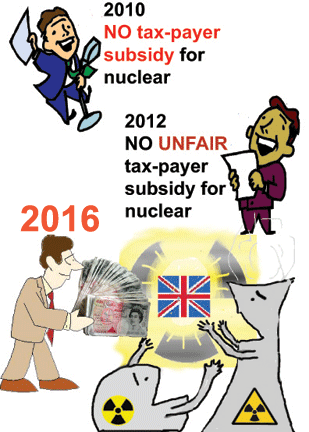
Taxpayers could shoulder the multibillion-pound cost of civil engineering works for new nuclear power plants to make them easier to finance and reduce their impact on energy bills, the company seeking to build reactors in Cumbria has suggested.
Tom Samson, chief executive of NuGen, proposed reviewing how the different elements of new nuclear plants could be “carved up in different way to allow the Government to take a role in some of the enabling infrastructure”.
This could include funding major aspects of construction such as “the civil works”, he told a House of Lords committee.Mr Samson’s company wants to build three Westinghouse reactors at Moorside, near Sellafield in Cumbria, in a 3.8-gigawatt project he said was expected to cost up to £15bn.
But financing presents a major challenge for the project, which is 60pc owned by Japan’s Toshiba and 40pc by France’s Engie, formerly GDF Suez. It has been in talks with potential investors for months about a deal.
Under the funding model used for the £18bn Hinkley Point nuclear plant, developer EDF is to shoulder the full cost of construction in return for a 35-year contract from the Government guaranteeing it subsidies for the electricity it eventually produces.
These will be levied on consumer energy bills and could cost as much as £30bn.
But the model has been criticised as inefficient and expensive.
Even EDF, which is majority-owned by the French government, struggled to raise enough funds for the construction, raising major questions about how non-state-owned groups like Toshiba could hope to…….
NuGen is already lobbying via the Cumbrian Local Enterprise Partnership for Government assistance in improving the transport infrastructure in the Cumbrian area to help support both decommissioning operations at Sellafield and the proposed construction site at Moorside.
Ministers are reported to have commissioned a study earlier this year to consider alternative funding models, which also suggested the Government could take direct stakes in future projects.
Earlier this year rival developer Horizon warned that the Government needed to come up with a framework that was palatable for private investors, not just state companies like EDF….. http://www.telegraph.co.uk/business/2016/11/05/government-could-part-fund-new-uk-nuclear-plants-nugen-suggests/
November 8, 2016
Posted by Christina Macpherson |
politics, UK |
Leave a comment
Nuclear Regulation Inspectorate approves preliminary spent nuclear fuel storage facility safety report http://en.interfax.com.ua/news/economic/381495.html, 4 Nov 16, A panel of Ukraine’s State Nuclear Regulation Inspectorate at a Thursday meeting approved a conclusion of the public examination of nuclear and radiation security under a preliminary safety analysis report for the centralized spent nuclear fuel storage facility.
“Thus, the panel confirmed that the spent nuclear fuel storage facility project meets the nuclear and radiation safety requirements. According to a resolution of the panel, some project safety solutions shortly described in the project will be presented in details at the next designing stage,” the press service of national nuclear generating company Energoatom said.
The conclusion will be sent to the State Architectural and Construction Inspectorate of Ukraine.
Energoatom President Yuriy Nedashkovsky said at the meeting of the panel, the discussion of the issues linked to construction of the centralized spent nuclear fuel storage facility should be accelerated.
“Technologies and project solutions selected for construction of the facility meet international spent nuclear treatment requirements and ensure reliable and safe storage of spent nuclear fuel from Ukrainian nuclear power plants (NPPs). The feasibility study of the centralized spent nuclear fuel storage facility passed public environmental examination and obtained a positive conclusion. Today all organization and legal issues related to construction of the storage facility have been settled. A delay with the start of construction would entail further financial losses for Ukraine, while the launch of the facility would considerably increase the country’s energy security,” he said.
Head of State Nuclear Regulation Inspectorate Serhiy Bozhko said that construction of spent nuclear fuel storage facilities is permanent global practice, but today this solution is only an intermediate link in settling the issue of treading spent nuclear fuel in a long-term outlook.
November 5, 2016
Posted by Christina Macpherson |
Ukraine, wastes |
Leave a comment
 There’s no safe way to move nuclear waste’: Scottish Politicians slam nuke flight that needed armed cop convoy Daily Record 18 SEP 2016 BY JIM LAWSON
Green MP John Finnie and Caithness MP Paul Monaghan among those to voice concerns about flying nuclear waste to the US. THE first flight believed to be carrying British nuclear waste to America took off from Wick Airport amid tight security yesterday.
Scots politicians and anti-nuclear campaigners have slammed the deal, brokered by David Cameron and Barack Obama, to move the waste.
The airport was closed from early morning as armed police patrolled the perimeter.
Twenty miles away in Thurso, more armed officers escorted a lorry from the Dounreay nuclear plant through the town. It was carrying two heavily reinforced containers……
Dr Richard Dixon, director of Friends of the Earth, said: “There is no truly safe way to move this waste.”
Caithness MP Paul Monaghan said the deal was “morally reprehensible” and Green MP John Finnie said people would be stunned that nuclear waste was being transported by plane.
Nuclear expert John Large said: “The risk in transport by air is the fuel being engulfed in fire, the packages breaking down and the fuel igniting.”
The runways at Wick have been extended at a cost of £18million to take the US planes, and Highland Council have published an order allowing local roads to be closed for five hours at a time until March 2018.
Police refused to comment on yesterday’s operation for security reasons.The first flight believed to
be carrying British nuclear waste to America took off from Wick Airport amid tight security yesterday. http://www.dailyrecord.co.uk/news/scottish-news/gun-cop-8859315
November 4, 2016
Posted by Christina Macpherson |
safety, UK |
Leave a comment
‘A Dangerous Situation’ As U.S.-Russia Tensions Spill Over To Nuclear Pacts October 31, 2016 Heard on Morning Edition DAVID WELNA The U.S. and Russia are the world’s two mightiest nuclear powers, and yet over the years, they’ve made deals to reduce their respective arsenals.
Just like a marriage gone bad, though, things have soured between Washington and Moscow. Bickering over nuclear issues has increased markedly in recent months, with each side accusing the other of cheating.
And that war of words is being matched by actions:
Russia, in early October, moved a battery of nuclear-capable missile launchers within range of three Baltic states.
In September, three U.S. long-range bombers — the kind used to drop nuclear weapons — flew over Eastern Europe in NATO military exercises.
Russia, in late October, unveiled images of a new intercontinental ballistic missile dubbed the Satan 2, whose warhead, it claims, can destroy an area the size of Texas.
“I would have to say that, without question, this is the low point in U.S.-Russian relations since the end of the Cold War,” says Steven Pifer, an arms control expert at the Brookings Institution………http://www.npr.org/sections/parallels/2016/10/28/499754655/a-dangerous-situation-as-u-s-russia-tensions-spill-over-to-nuclear-pacts
November 4, 2016
Posted by Christina Macpherson |
politics international, Russia, USA |
Leave a comment
Hinkley Point deal under fire as construction ‘milestone’ hit before contract signed, Telegraph, Emily Gosden, energy editor 30 OCTOBER 2016
The Government is facing fresh criticism over the Hinkley Point nuclear deal after it emerged a condition supposed to ensure the £18bn plant was being built on schedule had already been met before contract was signed.
A clause in the subsidy deal gives ministers the right to cancel the contract if EDF, which has been plagued by delays building reactors elsewhere, has not hit a construction “milestone” within 33 months of taking its final investment decision.
The milestone requires the “commissioning of the main concrete batching plant” at the Somerset site.But the Telegraph can disclose that EDF believes it has already “achieved that milestone”, after two concrete batching plants were commissioned earlier this year, months before the deal was inked in September.
While the meeting of the condition still has to be officially signed off by the Government agency handling the contract, EDF expects this to be “completed shortly”.
This renders the milestone clause largely pointless and leaves no other lever to ensure construction is proceeding as planned in coming years.
Ministers argue EDF has an incentive to build Hinkley by its 2025 target date because it will not receive any income until it starts generating.
However, the contract, which has been widely criticised as too generous, allows EDF to retain the same subsidy deal if Hinkley is up to four years late and only lets the Government cancel if it is still not running by 2033.
Alan Whitehead MP, Labour’s shadow energy minister, said ministers must confirm whether they knew the concrete plants has already been built when the subsidy contract was signed.
If they did, it would be “a pretty alarming reflection on the way this particular contract may have been drawn up” and raised “serious questions”, he said.
Milestones were intended as a “protection of public money” to enable ministers to act “where funding is going into something which it is evident is not going to happen”, he said.“You could be forgiven for the suspicion that this was a potentially deliberate clause which could have been designed to make it impossible for the milestone agreement to be breached,” he said………http://www.telegraph.co.uk/business/2016/10/30/hinkley-point-deal-under-fire-as-construction-milestone-hit-befo/
November 4, 2016
Posted by Christina Macpherson |
politics, UK |
Leave a comment
Cracks found in Scots nuclear reactor spark fears over core safety , Daily Record, 31 OCT 2016 BY SALLY HIND
OFFICIAL documents revealed the nuclear regulator’s concerns over fractures in the core structure of Hunterston B power station in Ayrshire. CRACKS found in a nuclear reactor have sparked fears that it could not be shut down in an emergency.
Official documents revealed the nuclear regulator’s concerns over fractures in the core structure of Hunterston B power station in Ayrshire.
Operators EDF Energy say the cracks pose no threat to safety at the site.
But paperwork obtained through a freedom of information request shows the Office for Nuclear Regulation have raised concerns over fractures in the brick keyways that lock together the core in reactor three.
It’s feared the same problem could arise at EDF’s sister station – Hinkley B in Somerset. The ONR have agreed the stations can continue operating safely after making changes to the reactor shutdown process of the 70s structures.
But John Large, who helped design the advanced gas-cooled reactors, believes that if the cracks get worse, they could jeopardise a reactor’s stability in the event of a disaster and make it impossible to shut it down…..http://www.dailyrecord.co.uk/news/scottish-news/cracks-found-scots-nuclear-reactor-9167417
November 4, 2016
Posted by Christina Macpherson |
safety, UK |
1 Comment
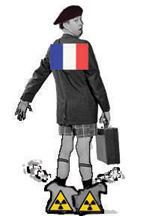 France’s Nuclear Storm: Many Power Plants Down Due to Quality Concerns, Power, 11/01/2016 | Lee Buchsbaum The discovery of widespread carbon segregation problems in critical nuclear plant components has crippled the French power industry—20 of the country’s 58 reactors are currently offline and under heavy scrutiny. France’s nuclear safety chairman said more anomalies “will likely be found,” as the extent of the contagion is still being uncovered.With over half of France’s 58 reactors possibly affected by “carbon segregation,” the nation’s nuclear watchdog, the Autorité de Sûreté Nucléaire (ASN) has ordered that preventative measures be taken immediately to ensure public safety. As this story goes into production in late October, ASN has confirmed that 20 reactors are currently offline and potentially more will shut down in coming weeks.
The massive outages are draining power from all over Europe. Worse, new questions continue to swirl about both the safety and integrity of Électricité de France SA’s (EDF’s) nuclear fleet, as well as the quality of some French- and Japanese-made components that EDF is using in various high-profile nuclear projects around the world……….
Questionable Materials and Documentation
At the heart of France’s nuclear crisis are two problems. One concerns the carbon content of critical steel parts, steam heat exchangers, and other components manufactured or supplied by AREVA SA, the French state-owned nuclear engineering firm and global producer of nuclear reactors. The second problem concerns forged, falsified, or incomplete quality control reports about the critical components themselves. Continue reading →
November 2, 2016
Posted by Christina Macpherson |
France, safety |
2 Comments
REVEALED: Putin’s top secret deadly nuclear city where spies observe ‘poisoned’ locals http://www.express.co.uk/news/world/727223/Putin-s-top-secret-deadly-nuclear-city-where-spies-observe-poisoned-locals
A CITY of almost 82,000 people are living on a nuclear time bomb in one of the most toxic places on earth. By SIOBHAN MCFADYEN, Oct 31, 2016 And the residents of the Russian walled city of Ozyorsk in Chelyabinsk Oblast code named City 40 are living in fear of their lives with their every move being watched by Kremlin spies.
Brave locals are living in an experiment zone, on a toxic lake where almost of all of Vladimir Putin’s nuclear arsenal is stockpiled.
And for the first time they have opened up about their experiences residing in the birthplace of the Soviet nuclear weapons programme. The city is officially closed to the outside world and for those who live there every day is a battle.
Around 15,000 people are employed by the Mayak plant, a plutonium handling facility which rose to prominence during the Cold War. The plant itself covers an area of approximately 50 miles and reprocesses spent fuel from the country’s nuclear submarines.
A new documentary called City 40 now available on Netflix shows for the first time the challenges being faced by the people who live there – many of whom are suffering from cancer. The narrator says: “Growing up as a kid I was aware of a strange place a closed place, a top secret place
“This is where almost all the reserve of Russia’s nuclear materials is stockpiled. “To get in there you would need a full-scale army operation. “Unauthorised access there cannot even be imagined.” The city itself is constantly under surveillance with very little information leaking out to the mainstream.
A narrator adds: “It’s cozy and a beautiful town but a closed one. “There are spies all over sneaking around gathering information. “My mother used to warn me ‘darling, never say where you are from. “‘Or a Black Maria will take us away and you’ll never see your parents again’.
“Once there was a spill of powder, the radioactive kind of powder. “An underground container of liquid radioactive waste exploded.”
According to reports around 10,000 people have disappeared off the census list in just eight years.
The last census was taken in 2010, it is unknown whether the people have died however many residents are extremely sick. A city dweller adds: “The local people will tell you that this lake is nicknamed the ‘lake of death’ because it has been so heavily contaminated with plutonium.
“Mostly people were dying of carcinogenic diseases. “Once can say this city was built on dead and ruined human bodies.”If someone refused to work they’d be taken to a prison camp and executed because they were introduced to state secrets.
“They created their own ideology. “We’re the saviours of the world, creators of the nuclear shield.” While the undercover film team have managed to gain access to the locals it is unknown whether they will go unpunished for revealing themselves to camera.
Tensions between the USA and Russia have peaked over recent weeks and it is believed the facility will no doubt be in full production mode. A narrator adds that most of the locals wouldn’t dream of leaving – not because they want to but because they can’t.
They added: “We are used to it and this is how we want to live. “It may be for the better, it may be for the worse, but for now just leave us alone please.”My mother told me ‘let state secrets stay secrets.”
November 2, 2016
Posted by Christina Macpherson |
environment, health, Russia, secrets,lies and civil liberties |
Leave a comment
 by opening up this kind of wider discussion, social science can undertake its trickiest – but arguably most useful – task in any controversy. The stakes in this particular case transcend nuclear debates alone – and raise questions about the overall health of British democracy.
Hinkley C shows the value of social science in the most toxic public debates
Social science can help explain why people disagree over controversial technologies and – most importantly – surface hidden assumptions, Guardian, Andy Stirling and Phil Johnstone, 24 Oct 16, t’s been another turbulent month in the long-running saga over the Hinkley Point C nuclear power station. Having looked as if she might be contemplating a rethink, Theresa May unveiled an apparently decisive approval just before the Conservative Party conference. But with longstanding issues still unaddressed– and new problems emerging even since the PM’s announcement – the debate over Hinkley is far from over…….
Social science can provide a better understanding of why different perspectives disagree – and help (when possible) to identify common ground. Hard-pressed policymakers often find it useful to understand how to foster trust, confidence and “acceptance” of their institutions and procedures.
For powerful interests in any setting, social research can also play a useful role in helping to justify, present or implement favoured policies. Here, social science can be part of the closing down of debate – helpfully enabling political attention to move on.
But what if, on deeper reflection, powerfully-backed policies are a bad idea (perhaps as with the Hinkley decision? History is replete with examples – like asbestos, heavy metals, carcinogenic pesticides, chlorine bleaches, toxic solvents and ozone depleting chemicals – where it only emerged in retrospect that the pictures being given of “sound science” or the “evidence base” at the time were unduly shaped by vested interests or constrained imaginations.
It is here that social science can play a further crucial role: helping to open up policy debates where they are being prematurely “locked-in”. This focuses less on society as a target for policymaking, and more on the processes of policymaking themselves. The production and interpretation of evidence is, after all, as much a social phenomenon as public attitudes or political mobilisation.
It is a striking feature of the Hinkley example that even the government’s own evidence base is strikingly damning. The assessment of value for money itself acknowledges Hinkley C to be more expensive than other low carbon energy strategies. And the picture in other official sources is even more negative. With nuclear costs rising and renewable costs falling – and a worldwide turn towards wind and solar power – global trends compound the picture.
With the UK enjoying the best renewable energy resource in Europe and holding a competitive advantage in offshore industries, industrial policy arguments are also manifestly stronger for renewables. The same applies to prospective jobs. Compared to nuclear safety and security challenges, renewables are less vulnerable. And simplistic “baseload” arguments are shown by numerous official reports to be superseded by technology – and repudiated even by the National Grid. So the officially-stated reasons for nuclear enthusiasm simply don’t stack up………
our research suggests there is a further – seriously neglected – factor that may underlie the intense attachment of successive UK governments to civil nuclear power. This involves parallel UK commitments to maintain nuclear submarine capabilities. Without the cover provided by lower-tier contracts in civil nuclear construction, the diminished UK nuclear manufacturing sector would simply not be able to build these formidable technological artefacts. Nor could they easily be operated without civil infrastructures for nuclear research, design, training, maintenance and regulation.
So a consequence of withdrawing from nuclear power might also be very serious for a particular version of British identity – especially in the coming post-Brexit era. It is nuclear military prowess that supposedly allows the UK to “punch above its weight” on the world stage. Yet, although this rationale for continued UK nuclear commitments is clearly documented on the military side, it is unmentioned anywhere in official civil nuclear policy statements – and in energy debates more widely.
What this might mean for policy is a moot point. But by opening up this kind of wider discussion, social science can undertake its trickiest – but arguably most useful – task in any controversy. The stakes in this particular case transcend nuclear debates alone – and raise questions about the overall health of British democracy.
Phil Johnstone is a research fellow and Andy Stirling is a professor of science and technology policy at the Science Policy Research Unit (SPRU), University of Sussex. https://www.theguardian.com/science/political-science/2016/oct/24/hinkley-c-shows-the-value-of-social-science-in-the-most-toxic-public-debates
October 31, 2016
Posted by Christina Macpherson |
culture and arts, UK |
Leave a comment
 Climate change rate to turn southern Spain to desert by 2100, report warns, Guardian, Adam Vaughan, 28 Oct 16
Mediterranean ecosystems will change to a state unprecedented in the past 10,000 years unless temperature rises are held to within 1.5C, say scientists. Southern Spain will be reduced to desert by the end of the century if the current rate of greenhouse gas emissions continue unchecked, researchers have warned.
Anything less than extremely ambitious and politically unlikely carbon emissions cuts will see ecosystems in the Mediterranean change to a state unprecedented in the past 10 millennia, they said.
The study, published in the journal Science, modelled what would happen to vegetation in the Mediterranean basin under four different paths of future carbon emissions, from a business-as-usual scenario at the worst end to keeping temperature rises below the Paris climate deal target of 1.5C at the other.
Temperatures would rise nearly 5C globally under the worst case scenario by 2100, causing deserts to expand northwards across southern Spain and Sicily, and Mediterranean vegetation to replace deciduous forests.
Even if emissions are held to the level of pledges put forward ahead of the Paris deal, southern Europe would experience a “substantial” expansion of deserts. The level of change would be beyond anything the region’s ecosystems had experienced during the holocene, the geological epoch that started more than 10,000 years ago.
“The Med is very sensitive to climatic change, maybe much more than any other region in the world,” said lead author Joel Guiot of Aix-Marseille University. “A lot of people are living at the level of the sea, it also has a lot of troubles coming from migration. If we add additional problems due to climate change, it will be worse in the future.”
He said that while his study did not simulate what would happen to production of Mediterranean food staples such as olives, other research showed it was clear the changes would harm their production. Climate change has already warmed the region by more than the global average – 1.3C compared to 1C – since the industrial revolution.
The real impact on Mediterranean ecosystems, which are considered a hotspot of biodiversity, could be worse because the study did not look at other human impacts, such as forests being turned over to grow food……. https://www.theguardian.com/environment/2016/oct/27/climate-change-rate-to-turn-southern-spain-to-desert-by-2100-report-warns
October 29, 2016
Posted by Christina Macpherson |
climate change, Spain |
3 Comments

 Wylfa Newydd protesters brand nuclear power ‘dangerous and dirty’, Daily Post, 28 Oct 16
People Against Wylfa B say it’s ‘ironic’ the Japanese company behind the new plant are not building in their own country. Nuclear is an “old fashioned, dangerous and dirty technology” according to a group opposed to a new plant being built on Anglesey.
Pawb (People Against Wylfa B) have responded to Horizon Nuclear Power’s latest consultation by questioning the Japanese firm’s commitment to construct the £12bn power station in view of no new nuclear plants being planned in Japan……..
Last year, the Prime Minister of Japan at the time of the disaster, Naoto Kan, visited Anglesey and urged residents to oppose the Wylfa plant.
Dylan Morgan, a founding member of Pawb, said Hitachi, who own Horizon, are being “totally irresponsible” in persisting with its nuclear “obsession”. He added: “The technology is old fashioned, dirty, dangerous and very expensive.
“It’s ironic that a Japanese company are so adamant that a reactor is built here in Wales, when they can’t do so in their own country.
“Due to the high levels of heat and radioactivity, the waste will have to be stored on site for decades.”…..http://www.dailypost.co.uk/news/north-wales-news/wylfa-newydd-protesters-brand-nuclear-12093470
October 29, 2016
Posted by Christina Macpherson |
opposition to nuclear, UK |
Leave a comment
Russia, Myanmar launch working body for nuclear tech cooperation, Myanmar Times, By Aung Shin | Friday, 28 October
Russia and Myanmar this week established a working body for nuclear technology cooperation, according to officials.
Little is known about the bilateral taskforce, including who is involved or even how many members are included. The two countries signed a memorandum of understanding (MoU) to cooperate in nuclear technology for peaceful purposes in June last year.
According to a Ministry of Education official, the working body is another step in developing nuclear technology with the help of Russia.
Russian government officials are now in Nay Pyi Taw to discuss further steps for the MoU, said U Khin Maung Latt, director general of the Department of Technology Promotion and Coordination (DTPC) under the Ministry of Education.
“We have a roadmap of further steps for the MoU … We have discussed and agreed for further cooperation,” he said……..
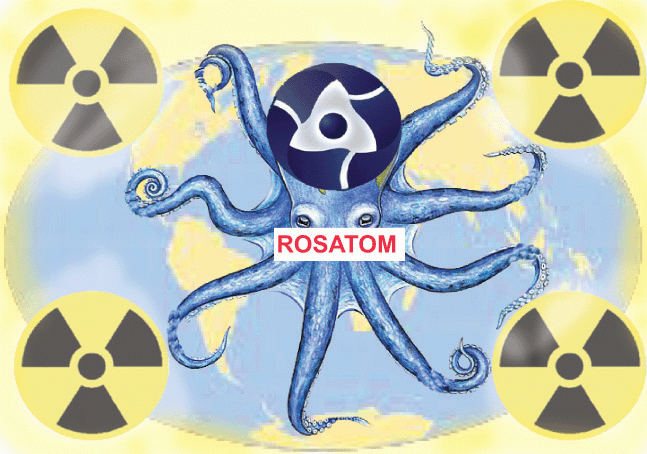
Since 2007 Russia and Myanmar have had an inter-governmental agreement regarding nuclear technology and building a nuclear research centre, according to Rosatom.
Russia has trained more than 700 Myanmar students in nuclear and nuclear-related technologies in the past 10 years.
The Russian state firm is seeking potential investment opportunities in the Southeast Asian region, and is offering comprehensive nuclear technology and experience, said Rosatom officials. The company is building two nuclear power units in Vietnam, and has also won a tender for the preliminary design of a 10-megawatt reactor in Indonesia (see map).
Rosatom has two operating nuclear reactors in India and China, with two more in each country under construction. The Russian state-owned company has also won a project to construct a nuclear power plant in Bangladesh…….http://www.mmtimes.com/index.php/national-news/nay-pyi-taw/23368-russia-myanmar-launch-working-body-for-nuclear-tech-cooperation.html
October 29, 2016
Posted by Christina Macpherson |
ASIA, marketing, Russia |
Leave a comment
France avoids nuclear plant closure decision as election looms http://www.reuters.com/article/us-france-energy-nuclearpower-idUSKCN12S2DG
France has delayed a decision on promised nuclear reactor decommissioning, effectively putting on hold a process that could ultimately be overturned with a change of government next year.
A government investment roadmap published on Friday stopped short of identifying reactors for closure under 2015 legislation that commits France to reducing atomic energy to 50 percent of its electrical power mix, from more than 75 percent currently.
Instead, the Energy Ministry plans leaves it to state utility EDF to issue a strategic review of plants and energy requirements around April of next year.
However, the final decision on whether the reactors are scrapped is a political one.
France goes to the polls in the first round of presidential voting in April, followed by legislative elections in June – meaning the issue looks unlikely to be resolved before a new president and assembly has been elected.
Former Prime Minister Alain Juppe, the conservative candidate currently leading the race, has called Socialist President Francois Hollande’s 50 percent target absurd and vowed to scrap it, in common with several other right-wing candidates.
Lawmaker Herve Mariton, a Juppe ally and prominent energy specialist among the conservative Les Republicains, has also rejected Hollande’s plan to close EDF’s ageing Fessenheim plant after a new reactor opens at Flamanville in 2018.
Opinion polls show conservative candidates easily defeating any potential Socialist rivals in the presidential election, which takes place in two rounds, the second due in May.
Environmental group Greenpeace said the French government was failing to implement the 2015 energy law and had betrayed last year’s Paris Climate Agreement to curb climate-warming emissions by not doing enough to support renewable energy alternatives.
In order to meet the 2015 commitment, France would have had to decide on the shutdown of 22 reactors by now, it said.
According to the energy investment plan published on Friday, a decision to close Fessenheim, France’s oldest nuclear plant, will be taken by the end of the year. The plan also pledged to almost double renewable power output to 150-167 terawatt hours (TWh) by 2030. The plan also seeks to cut nuclear power output by 10 to 65 TWh by 2023.
October 29, 2016
Posted by Christina Macpherson |
France, politics |
Leave a comment
Germany Warns of the Danger of War http://www.huffingtonpost.com/george-friedman/germany-warns-of-the-dang_b_12565994.html George Friedman, Geopolitical Forecaster and Strategist, 26 Oct 16
German Foreign Minister Frank-Walter Steinmeier said on Oct. 8 that the situation between the U.S. and Russia today is more dangerous than it was during the Cold War. As he put it, “It’s a fallacy to think that this is like the Cold War. The current times are different and more dangerous.” Since most of us think of the Cold War as by far the most dangerous time we have known, Steinmeier’s view is startling. It is important to understand what he is saying, not simply because he is the foreign minister of an important country, but because he is a smart man.
In the interview, Steinmeier discussed the Russian intervention in Syria, the standoff with the United States and the frozen but still dangerous confrontation over Ukraine. When we look at these two confrontations between the United States and Russia (Germany doesn’t have the military strength to affect this balance) either situation could result in a direct confrontation of U.S. and Russian forces.
On paper, the United States remains committed to the fall of Bashar al-Assad’s regime, while the Russians are protecting it. There is now combat in Aleppo, the largest city in Syria. Russian and Assad regime forces seem to be trying to take control of the city. The United States sees Aleppo as a bastion of anti-Assad forces and doesn’t want to see it fall. The U.S. has the option to try to block the Russian and Assad advance. Russia has to decide whether to stand and fight or withdraw. Neither side is confident it knows the other’s intentions, but both believe that Aleppo is a critical if not decisive battle. The chances of intentional conflict are real, as is the possibility of an unintended clash escalating.
At the same time, Syria is not essential to the national security of Russia or the United States. It is not without importance, but a defeat or capitulation there will not change the balance of power between them at all. It would of course affect psychological and political perception, but in the long run, perception ultimately comes down to substantial military and economic power. The United States can afford to back off. The Russians will find it more difficult, but can contrive reasons for slowing or halting the attacks.
In Ukraine, the issue is fundamental to Russia and secondary to the United States. Therefore, it is far more dangerous than Syria. For Russia, a Ukraine dominated by a third power, with forces deployed in Ukraine, represents a fundamental threat to its national security. For the United States, it is a secondary issue that can rise to a primary one.
As I have written, the foundation of U.S. foreign policy since World War I was preventing any single power from dominating Europe and Russia, as their combined strength in technology and resources would threaten American interests. Therefore, Russia returning to its prior position, with the potential to dominate the European Peninsula, would rise to a primary issue. If Russia invaded Ukraine and used it as a base to threaten its former satellite states, this would begin escalating to a primary level. But that is several steps from happening, and if it did, it would still not constitute a direct threat to the entire European Peninsula.
The Cold War focused on the center of Germany, and the possibility of a Soviet seizure of Western Europe did not appear far-fetched. Since the U.S. was defending Western Europe at a distance, its conventional forces facing the Soviets appeared to be inferior. Therefore, part of U.S. strategy, at least officially, was the use of nuclear weapons, both strategically and on the battlefield, to stop a Soviet offensive. That meant that should the Soviets have chosen to undertake an offensive, or if they detected a U.S. offensive, they had to go nuclear at the earliest possible moment.
This is what kept the Cold War from turning into a shooting war. The Soviets and the Americans, along with their allies or subordinates in Europe, saw themselves in an existential crisis. The deterrence against conventional war in Europe, as opposed to proxy wars elsewhere such as Vietnam or Afghanistan, was nuclear war. Wars that did not involve primary and overwhelming interests did not involve the risk of nuclear war. There was no military target worth a nuclear strike in either country, nor would either country risk immolation over Vietnam or Afghanistan. Therefore, these wars could take place.
I think this is Steinmeier’s point. The confluence of extremely critical fears and interests paradoxically reduced the chance of conflict, because it increased the chance of nuclear war. Today, none of the friction points between the United States and Russia are of primary interest to both countries. Syria is at best secondary to both, and Ukraine really matters only to Russia. This cannot result in nuclear war, and therefore, each side will take greater risks than they would have in Central Europe during the Cold War.
Therefore, the situation is more dangerous now precisely because the stakes are lower. In lowering the stakes, the risks decline and the possibility of serious conflict between U.S. and Russian forces rises. That direct clash did not occur during the Cold War, at least not on any significant scale. That means that the risk of nuclear war is diminished, but the risk of direct conflict is higher. This would not be proxy wars, but direct war. Undisciplined crises are the most dangerous.
Steinmeier’s observation seems valid. The mystery, of course, is what he is planning to do about that. Having made the declaration, it would seem reasonable that Germany would try to defuse the U.S.-Russian confrontation. Is Germany announcing that it is shifting its role in global politics to a more active role, albeit mediation? These crises raise the question of what Germany will do. That is a question with an ominous past. But if the German foreign minister is speaking for Germany, then this is exactly where his logic would lead him.
October 27, 2016
Posted by Christina Macpherson |
politics international, Russia, USA, weapons and war |
Leave a comment
 Public support for renewables rises as nuclear and fracking falls, Edie.net 27 October 2016, source edie newsroom
Public backing for nuclear energy and fracking has fallen in recent months while support for clean energy continues to surge, according to the latest opinion tracker from the Department of Business, Energy and Industrial Strategy (BEIS).
The new figures highlight a negative impact on support for nuclear and shale gas exploration in the wake of Government energy policy decisions, with the majority of people across the UK voicing support for the use of clean technologies.
Public backing for the use of nuclear energy significantly fell in the past three months, with support falling to 33% from 36% in the previous quarterly review. A quarter were opposed to nuclear strategy, in the wake of the Government’s recent controversial decision to give the go-ahead to the Hinkley Point C power station.
In terms of support for shale gas extraction, half of respondents stayed neutral (48%) or said they were unsure (2%), reflecting a general lack of detailed public knowledge. One-third were opposed to fracking, while only 17% provided their backing, representing the lowest level of public support since the tracker began in 2012. The report identified the loss or destruction of natural environment as a major reason for a shift towards opposition.
Nuclear picnic?
Renewable energy continued its high level of popularity at 79%, up two points from the previous tracker in May. Opposition to clean technologies was very low at 4%, with only 1% strongly opposed. Solar technology achieved the highest support at 82%, while back for wave and tidal energy remain very high at 75% each.
Commenting on the results, renewable energy company Good Energy chief executive Juliet Davenport said: “Renewable energy still remains the UK’s favourite form of energy – it’s local, it’s sustainable and it’s pioneering.
“Government should listen to public opinion, champion renewable energy and throw its weight behind tackling climate change. What would you rather picnic next to – a wind turbine or a nuclear reactor? I know which one I’d choose.”
The tracker revealed a record high of 71% of people supporting onshore wind, up from the previous high of 70% in 2014. This echoes the findings of opinion poll carried out by market research and consultancy firm ComRes last week, which revealed the British public’s overwhelming support for onshore winddespite Government cutbacks……http://www.edie.net/news/10/Public-show-support-for-renewables-revolution/
October 27, 2016
Posted by Christina Macpherson |
opposition to nuclear, politics, UK |
Leave a comment