DID HITLER HAVE A NUKE? Declassified US documents suggest Adolf Hitler successfully tested nuclear bomb during World War Two https://www.thesun.co.uk/news/2938529/declassified-us-documents-suggest-adolf-hitler-successfully-tested-nuclear-bomb-during-world-war-two/ Two pilots claim they witnesses a mushroom cloud while flying over Nazi Germany in 1944 BY ALLAN HALL 23rd February 2017
DOCUMENTS unearthed in an archive suggest that Adolf Hitler may have tested an operational nuclear bomb before the end of WW2. A recently declassified file from the National Archives in Washington is a detailed survey of how far Nazi scientists got in the development of an atomic bomb. In the file, obtained by the German newspaper Bild, the task of the academics who prepared the paper between 1944 and 1947 was the “investigations, research, developments and practical use of the German atomic bomb.”
The report was prepared by countless American and British intelligence officers and also includes the testimony of four German experts – two chemical physicists, a chemist and a missile expert. It concludes that Hitler’s boffins failed in the quest to achieve a breakthrough in nuclear technology – BUT that a documented test may have taken place of a rudimentary warhead in 1944.
The statement of the German test pilot Hans Zinsser in the file is considered evidence – the missile expert says he observed in 1944 a mushroom cloud in the sky during a test flight near Ludwigslust. His log submitted to the Allied investigators reads; “In early October 1944 I flew away 12-15 km from a nuclear test station near Ludwigslust. “A cloud shaped like a mushroom with turbulent, billowing sections (at about 7000 metres) stood, without any seeming connections over the spot where the explosion took place. “Strong electrical disturbances and the impossibility to continue radio communication as by lighting turned up.”
He estimated the cloud stretched for nine kilometres and described further “strange colourings” followed by a blast wave which translated into a “strong pull on the stick” – meaning his cockpit controls.
An hour later a pilot in a different machine took off from Ludwigslust and observed the same phenomenon.
According to other archival documents, the Italian correspondent Luigi Romersa observed on the ground the same explosion. He had been sent by dictator Benito Mussolini to watch the test of a “new weapon” of the Germans.He was ordered to report his impressions back to Mussolini.
It is known that Hitler pursued the goal of nuclear technology and wanted his V-2 rockets to be able to carry them to destroy the UK.
The testimony of the four German scientists in the declassified American report mentions a top secret meeting held in Berlin in 1943. Nazi weapons minister Albert Speer was present for the discussion called a “nuclear summit.”
In the end the report states that the Allies believe the Germans fell short of triggering the nuclear chain reaction necessary to trigger a nuclear blast.
But none could come up with an explanation for what occurred in the skies over Ludwigslust in 1944.
February 25, 2017
Posted by Christina Macpherson |
Germany, history, weapons and war |
Leave a comment
French nuclear agency: Mystery radioactive residue over Europe raises concern TornosNews.gr 21.02.2017 Concerns have spread in Europe about a potential nuclear “incident” following a recent report by a French nuclear watchdog agency – the Institute for Radiological Protection and Nuclear Safety (IRSN), the French national public expert in nuclear and radiological risks – that radioactive Iodine-131 had been observed across much of northern and central Europe. Since the isotope has a half-life of only eight days, the detection was an indication of a rather recent release. As the Barents Observer added, “where the radioactivity is coming from is still a mystery.” The emission was rumored to have originated close to the Arctic circle, with some speculating that a nuclear test of emergency had taken place in Russia in January and the fallout then spread to Norway and onward to Europe:
“Iodine-131 a radionuclide of anthropogenic origin, has recently been detected in tiny amounts in the ground-level atmosphere in Europe. The preliminary report states it was first found during week 2 of January 2017 in northern Norway. Iodine-131 was also detected in Finland, Poland, Czech Republic, Germany, France and Spain, until the end of January”, the French Institute de Radioprotection et de Süreté Nucléaire wrote in a press release.
Adding an air of mystery to this alleged “incident” was the spotting of the “Constant Phoenix”, which as we first reported, arrived on Friday in the UK’s Mildenhall airbase from Florida. The WC-135 Constant Phoenix has been used in the past to determine whether nuclear tests or detonations have taken place in any given region. The WC-135 is a derivative of the Boeing C-135 transport and support plane. Two of these aircraft are in service today out of the ten examples operated since 1963. The aircraft are flown by flight crews from the 45th Reconnaissance Squadron from Offutt Air Force Base while mission crews are staffed by Detachment 1 from the Air Force Technical Applications Center.
Read more here. http://www.tornosnews.gr/en/world-news/23242-french-nuclear-agency-mystery-radioactive-residue-over-europe-raises-concern.htm
February 22, 2017
Posted by Christina Macpherson |
environment, EUROPE |
Leave a comment
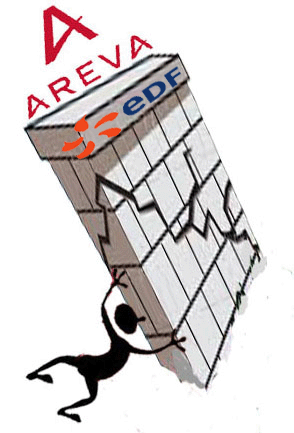
 EDF faces £1m a day bill to keep French nuclear reactor offline https://www.theguardian.com/business/2017/feb/21/edf-faces-1m-a-day-bill-to-keep-french-nuclear-reactor-offline Prolonged closure at Flamanville plant after fire damage piles further financial pressure on state-owned energy firm, Guardian, Adam Vaughan, 21 Feb 17, The prolonged closure of a major French atomic reactor after an explosion this month probably costs EDF at least £1m a day, according to experts.
The nuclear plant operator, which will spend £18bn building the UK’s first new nuclear power station in a generation, shut unit 1 at its Flamanville plant after a fire broke out in the turbine hall.
The company initially estimated it would switch on the reactor within a week, but later pushed the date to the end of March. Work begins this week on replacing damaged equipment.
The unexpectedly long closure adds to the financial pressure on EDF, which last week reported a 6.7% decline in core earnings to €16.4bn (£14bn) in 2016. Closures of its French nuclear plants last year, partly for safety checks, have already cost the 85% state-owned company an estimated €1.3bn.
Prof Neil C Hyatt, head of nuclear materials chemistry at the University of Sheffield, said the lost revenue from the reactor closure in Normandy could be £1m per day.
“Bringing a nuclear power plant back online after an unscheduled outage is a complex task and EDF will want to ensure that all parts of the system are working safely and effectively. A short delay to complete the necessary checks is to be expected, given that the outage was unplanned,” he said.
Another expert said the cost of closure could be up to £1.8m per day, depending on energy market prices, and questioned why there was a delay.
“It took operator EDF almost a week to progressively correct the original outage estimate from one day to 50 days. EDF has provided no information as to why the outage time went from a few days to seven weeks,” said Mycle Schneider, a nuclear energy consultant based in Paris.
The 1.3GW reactor at Flamanville is one of a dozen of EDF’s French nuclear fleet currently offline, which the company said was usual for this time of the year.
It did not say why the restart date for the reactor had been revised four times, or why it had jumped from a few days to more than six weeks. John Large, a nuclear consultant who has advised the UK government, said initial reports that the fire was in a ventilator suggested the offline reactor would be back online within a week or two. Replacing such parts should be relatively straightforward, he said.
He added that the plant’s continued closure would also add to headaches at the French grid operator RTE, which warned of power cuts at the start of winter due to nuclear outages. “The continuing impact on the grid is likely to be significant, especially if a cold snap develops,” Large said.
A second reactor at the plant is still supplying electricity to the French grid. EDF said: “Work on recommissioning the affected equipment has started this week and should last several weeks, with reconnection to the grid planned for the end of March.”
February 22, 2017
Posted by Christina Macpherson |
business and costs, France |
Leave a comment
 Algerians take steps to prosecute France for nuclear tests https://www.middleeastmonitor.com/20170215-algerians-take-steps-to-prosecute-france-for-nuclear-tests/#.WKqZtaGEIJo.facebook
The top human rights organisation in Algeria announced yesterday that it has contacted the UN Human Rights Council regarding France’s refusal to admit to the crimes of its nuclear test programme. The French government carried out 17 nuclear tests in the Algerian desert, causing the death of 42,000 individuals; thousands more were left chronically ill due to being exposed to nuclear radiation.
The details were revealed in a statement by the National Secretary of the Algerian League for the Defence of Human Rights, Houari Kaddour, who is tasked with this issue, during an interview with Anadolu news agency. Kaddour stressed that his organisation “is trying to use all legal means to put the French authorities on trial and prosecute them in all international legal bodies, as well as in the EU, for their crimes.”
Algeria marked the 57th anniversary of the French nuclear tests two days ago. They were carried out between 1960 and 1966; Algeria gained independence from France in 1962. The French authorities still refuse to admit to these crimes and instead have announced that they will pay financial compensation to the victims.
According to Kaddour, his organisation contacted the UN Human Rights council and requested it to look into the crimes. “We also urged the Algerians in Europe to help us find lawyers specialising in international law to file a lawsuit against France in the next three months, before the Office of the High Commissioner on Human Rights in the EU. We also plan to prosecute France in the local courts in Switzerland which specialise in international crimes.”
Kaddour said that his organisation is coordinating with a number of human rights and international bodies in this regard, including all international human rights organisations, international organisations against nuclear testing, and French human rights groups. He noted that the Algerians had submitted over 730,000 compensation cases that were rejected by the compensation committee due to the impossible conditions imposed on the victims. Civilian victims, he added, are not recognised.
The Algerian League for the Defence of Human Rights accused the Algerian authorities of “not putting enough pressure on France to admit to these crimes.”
February 22, 2017
Posted by Christina Macpherson |
France, Legal |
Leave a comment
Germany demands answers after Swiss nuclear reactor is restarted… and then shut down again, The Local, 20 Feb 17, The German environment minister has demanded answers from the Swiss authorities after the Leibstadt nuclear reactor in the canton of Aargau near the German border was switched off on Friday night, just seven hours after being restarted following a six months shutdown.
Shortly after the reactor was brought on line at around 5.30pm on Friday, operator KKL noted a malfunction of the exhaust system responsible for filtering gases from the condenser in a non-nuclear area of the reactor, KKL said in a
statement……
Greenpeace has also criticized the move, while 16,000 people have signed a petition against the reactor led by a Swiss Green Party politician, reported
Swiss news agencies.
February 22, 2017
Posted by Christina Macpherson |
Germany, politics international, Switzerland |
Leave a comment
Russia to rely less on nuclear weapons as their conventional strength rapidly increases, Business Insider, Vladimir Isachenkov, Associated Press, 21 Feb 17, MOSCOW (AP) — Russia will continue to see the development of its nuclear forces as a top priority, but the military will rely increasingly on conventional weapons to deter any aggression, the Russian Defense Minister said Tuesday.
Sergei Shoigu said Tuesday that weapons such as the long-range Kalibr cruise missiles carried by navy ships, long-range cruise missiles carried by Russian strategic bombers and the land-based short-range Iskander missiles will play an increasingly important role as a non-nuclear deterrent. Those missiles can carry nuclear or conventional warheads.
Shoigu pointed to the new missiles’ debut in the Syrian conflict, saying they have proven themselves well.
“The development of strategic nuclear forces will remain an unconditional priority,” Shoigu said in remarks carried by Russian news agencies. “Russian nuclear weapons ensure the guaranteed deterrence of aggression by any foreign power.”
At the same time, he added, “the role of nuclear weapons in deterring a potential aggressor will diminish, primarily thanks to the development of precision weapons.”
Until recently, Russia lacked long-range cruise missiles with conventional warheads similar to those in the U.S. inventory.
The post-Soviet economic meltdown left the Russian armed forces in disarray, but the Kremlin has beefed up the military’s conventional forces in recent years amid tensions with the West……http://www.businessinsider.com/ap-russia-to-rely-increasingly-on-non-nuclear-deterrent-2017-2?IR=T
February 22, 2017
Posted by Christina Macpherson |
Russia, weapons and war |
Leave a comment
Rowland Dye HANG ON…DID I READ THE CLEANUP COSTS ARE ……..£117BILLION FFS………The former boss of BP’s Russian arm is the frontrunner to take charge of Europe’s biggest nuclear waste dump. David Peattie, 62, is being lined up
to run the Nuclear Decommissioning Authority (NDA), the state-owned body that manages the vast Sellafield site in Cumbria.
Peattie spent more than three decades with BP, leaving in 2013 to become boss of North Sea oil explorer Fairfield Energy. Unfortunately, the move coincided with the oil price collapse, and Peattie left the private equity-backed company two
years later.
The high-flyer’s imminent appointment reflects Whitehall’s determination to get a grip on the NDA. The authority faces a huge damages bill after a court ruling that it botched the award of the £7bn contract to clean up Magnox sites. It is considering an appeal. The NDA’s £3bn annual budget consumes 25% of the business department’s spend¬ing. The clean-up bill for the country’s nuclear plants is estimated at £117bn.
Ex-BP boss lined up for nuclear job Sun Times 19th Feb 2017
The former boss of BP’s Russian arm is the frontrunner to take charge of Europe’s biggest nuclear waste dump. David Peattie, 62, is being lined up to run the Nuclear Decommissioning Authority (NDA)…
February 20, 2017
Posted by Christina Macpherson |
UK, wastes |
Leave a comment
BRINK OF APOCALYPSE Britain has faced 110 nuclear weapon alerts – four times more than the MoD admits, One incident reportedly saw nuclear weapons accidentally taken to Falklands War on ship carrying Prince Andrew, The Sun BY DANNY COLLINS 19th February 2017,
BRITAIN has risked nuclear disaster on more than 110 occasions over the last 65 years, a shocking new report has revealed.
Terrifying incidents included a lorry toppling over while carrying nuclear warheads. Britain has risked nuclear disaster on more than 100 occasions over the past 65 years including the collision of a Royal Navy and French submarine in the Atlantic While the Royal Navy ship on which Prince Andrew operated from during the Falklands War accidentally carried nukes to the South Atlantic.
Andrew’s ship HMS Invincible carried ten nukes while fellow aircraft carrier HMS Hermes had 16.
The revelation is all the more terrifying given that six Royal Navy vessels were sunk with French-supplied Exocet missiles during the conflict with Argentina.
The MoD has previously disclosed only 27 “major incidents” – although the true number is 110, a dossier seen by The Mail reveals.
Nukes are also believed to have rolled from a lorry into a roadside ditch after it toppled over on an icy Wiltshire road in 1987.
Among the other incidents was a collision between a Royal Navy and French submarine in the Atlantic eight years ago.
The report also said 116 UK citizens had died as a result of cancer or accidents arising from working with nuclear weapons.
Britain’s nuclear weapons were first tested in 1952 after the development programme began in 1940…….
The Royal Navy faced serious questions last month when a bungled test sent a dummy nuclear missile hurtling towards the US
February 20, 2017
Posted by Christina Macpherson |
incidents, UK |
Leave a comment
 It is extraordinary that some French wine producers are accompanying the Australian and French nuclear promoters spruiking the benefits of nuclear waste dumping to the community in the Barndioota region of South Australia. Not only are many vital questions unanswered as ENuFF SA (Everyone for a Nuclear Free Future SA) has shown, but this propaganda campaign completely ignores both the opposition to nuclear waste dumping, in France and the radioactive danger to France’s Champagne vineyards
“The Champagne producers are facing two nuclear timebombs – one already leaking at Soulaine, and one planned at Bure. The wine producers in the Rhone region stood up to the nuclear state in France and won. The Champagne region needs to act fast before it’s too late,” said Fred Marillier of Greenpeace France. “The French Government must stop this madness. The new facility must not accept any more waste, and an immediate investigation launched into how to stop further contamination of ground water.”
Radioactive waste leaking into Champagne Water Supply, Levels set to rise warns Greenpeace, Greenpeace 30 May, 2006 Greenpeace today revealed that France’s iconic sparkling wine, Champagne, is threatened by radioactive contamination leaking from a nuclear waste dumpsite in the region. Low levels of radioactivity have already been found in underground water less than 10 km from the famous Champagne vineyards.
Problems at the dumpsite, including water migration leading to fissures in the storage cells have been reported to French nuclear safety agency in recent weeks (1). Greenpeace has written to the Comita des Producteur de Champagne to warn them that their production risks contamination, as experienced by dairy farmers in la Hague, Normandy.

The waste dump, Centre Stockage l’Aube (CSA) in Soulaine eastern France, contains mostly waste from Electricite de France (EdF) and AREVA, but also includes foreign nuclear waste disposed of illegally under French law (2). Every week nuclear waste is trucked across France to the Champagne site. Once full, the dumpsite will be one of the world’s largest with over 1 million cubic meters of waste, including plutonium and other radionuclides.
ANDRA, the national nuclear waste agency operating the site, stated that it would not release any radioactivity into the environment when given permission for the dumpsite in the late 1980’s. Greenpeace research released last week showed levels of radioactivity leaking from another dumpsite run by ANDRA in Normandy were up to 90 times above European safety limits in underground water used by farmers, and that the contamination was spreading into the countryside (3). The Champagne site will receive a total of 4 thousand terabequerels of tritium; more than three times the amount of tritium waste as the dumpsite in Normandy.
“We have been told for decades that nuclear dumpsites will not leak and that the best standards are being applied. In reality the dumpsite in Normandy is a disaster, and radioactivity is already leaking from the dumpsite in Champagne,” said Shaun Burnie nuclear campaigner at Greenpeace International. “The authorities know they have a problem in Champagne already, with mistakes in the design. This is only the beginning of the problem, the bigger picture is that France has a nuclear waste crisis out of control that is threatening not only the environment and public health but also the economy of the Champagne region.”
In addition to the problems with the waste stores at the site, Greenpeace has learnt recently that French nuclear safety agency DGSNR has written to AREVA seeking clarification of the type of waste being disposed of at the Champagne site (4).
In addition to the low and intermediate waste site, a new high-level waste dumpsite is being planned in Bure also in the Champagne region, in which the most radioactive material in France would be deposited. Plans to build a high level waste facility in the Rhone Valley were scrapped a few years ago after strong opposition by the wine producers due to the threat to their vines and wine production.
“The Champagne producers are facing two nuclear timebombs – one already leaking at Soulaine, and one planned at Bure. The wine producers in the Rhone region stood up to the nuclear state in France and won. The Champagne region needs to act fast before it’s too late,” said Fred Marillier of Greenpeace France. “The French Government must stop this madness. The new facility must not accept any more waste, and an immediate investigation launched into how to stop further contamination of ground water.”……http://www.greenpeace.org/international/en/press/releases/radioactive-waste-leaking-into/
February 10, 2017
Posted by Christina Macpherson |
AUSTRALIA, environment, France, spinbuster |
Leave a comment
 Mail on Sunday launches the first salvo in the latest war against climate scientists https://www.skepticalscience.com/rose-launches-first-salvo-latest-war-against-climate-scientists.html 7 February 2017 by John Abraham
In this new political era, climate scientists and their science are under attack. The attack is from multiple fronts, from threats to pull funding of the important instruments they use to measure climate change, to slashing their salaries and jobs. But there is a real fear of renewed personal attacks, and it appears those fears are now being realized. What the attackers do is identify and isolate scientists – a process termed the “Serengeti Strategy” by well-known and respected scientist Michael Mann who suffered these types of attacks for years.
The author of the recent attack piece, David Rose in the UK, has a history of denying the well-established science of climate change. He has a long history of making incorrect climate change statements. In the attack, Mr. Rose claims that scientists used misleading data in a recent (2015) paper that studied the rate of temperature change across the globe. He reportedly obtained information from someone who works at NOAA to imply that internal review procedures were not followed as the paper was prepared for publication. What Mr. Rose omitted however, is incredibly telling and he does a disservice to his readers.
First, he neglects to mention that the work from the 2015 paper authored by Dr. Thomas Karl and others at NOAA has already been independently verified by other researchers.
The second thing Rose neglects to mention is that his story’s source was never involved any part of the work. According to a colleague of the authors Peter Thorne, this source:
never participated in any of the numerous technical meetings on the land or marine data I have participated in at NOAA NCEI either in person or remotely. This shows in his reputed (I am taking the journalist at their word that these are directly attributable quotes) misrepresentation of the processes that actually occurred. In some cases these misrepresentations are publically verifiable.
Mr. Rose further neglects to mention that Dr. Karl was not involved in the development of the critical sea surface temperature data that was used in the study. That information was already published before the Karl paper appeared.
The attack piece also claims that the scientists discarded high-quality temperature measurements in favor of low quality data. This claim is demonstrably false, as described here and here.
The lengths to which Mr. Rose goes in his attack are disheartening and dishonest. He includes a graph that appears to show two temperature results that disagree. When they are replotted correctly, as temperature anomalies with correct baselines, the discrepancy disappears. This finding shows that the NOAA results from 2015 actually agree extremely well with data from other institutions.
Click here to read the rest
February 10, 2017
Posted by Christina Macpherson |
climate change, media, UK |
Leave a comment

 Flamanville plant in northern France has been hit by a massive explosion Staff writers, news.com.au News Corp Australia Network 9 Feb 17 AN EXPLOSION at a nuclear power plant on France’s northwest coast on Thursday caused minor injuries, but the authorities said there was no risk of radiation.
The blast occurred in the engine room at the Flamanville plant, which lies 25 kilometres west of the port of Cherbourg and just across from the Channel Islands. “It is a technical incident. It is not a nuclear accident,” senior local official Jacques Witkowski said. He said a ventilator had exploded outside the nuclear zone at the plant, which has been in operation since the 1980s and is operated by state-controlled energy giant EDF.
“It’s all over. The emergency teams are leaving,” Mr Witkowski said.Five people suffered smoke inhalation but there were no serious injuries, Mr Witkowski said.
One of the two pressurised water reactors at the plant was shut down after the explosion and the incident was declared over at 1100 GMT (10pm AEDT), the authorities said.
The two 1300 megawatt reactors have been in service since 1985 and 1986, and the site currently employs 810 people, along with an additional 350 subcontractors.
A new third-generation reactor known as EPR is being built at Flamanville, which will be the world’s largest when it goes into operation in late 2018.
“Explosions in turbines, usually related to oil in bearings overheating, are not uncommon and occur from time to time in conventional coal, oil or gas plants,” said Barry Marsden, a professor of nuclear graphite technology at the University of Manchester.
But Neil Hyatt, a professor of radioactive waste management at Sheffiled University said the incident should not be taken lightly.
“Any incident of this kind at a nuclear power plant is very serious, and the national and international regulators will want to undertake a thorough investigation to understand the cause and lessons to be learned,” he said.
Construction of the new reactor at Flamanville began in 2007 and was initially due for completion in 2012 but has been delayed several times, and its initial budget has more than tripled, to 10.5 billion euros ($11.2 billion)…….http://www.news.com.au/world/europe/flamanville-plant-in-northern-france-has-been-hit-by-a-massive-explosion/news-story/28f0f083f4850f3289939ed489f56c95
February 10, 2017
Posted by Christina Macpherson |
France, incidents |
Leave a comment

 Oliver Stone: Reports Russia to blame for Ukraine violence are fake news, Belfast Telegraph 04/02/2017 Oscar-winning director Oliver Stone has branded reports that Russia is responsible for the escalating violence in Ukraine as “fake news”. The American film-maker said claims Russia was “aggravating the situation” in the warzone were untrue and insisted the United States had a “huge responsibility” for the continuing conflict.
Stone, who interviewed Russian President Vladimir Putin for his new documentary, Ukraine On Fire, also backed President Donald Trump’s bid to improve US-Russian relations.
Speaking at a screening of the film in Los Angeles, Stone claimed America had used the Ukrainian conflict to “blackball” Russia and “keep the concept of Nato alive”.
He told the Press Association: “(America) has a huge role, a huge responsibility and has denied it. It’s completely denied the whole truth of the situation.
“It’s a very painful situation for the people who live in that area but at the same time it’s used by the United States to blackball Russia as much as possible and keep the concept of Nato alive.
“It’s a very important film and a very important subject that has been swept under the rug by our country. “Frankly today I’m shocked they published fake news that the Russians are aggravating the situation when all the casualties are in (rebel-held) Donetsk. He added: “It’s a horrible situation and totally fake.”………
Stone, who won best director Oscars for Platoon and Born On The Fourth Of July, produced the documentary Ukraine On Fire which looks at the country’s revolution in 2014.
The film features an interview with ousted Ukrainian leader Viktor Yanukovych and argues he was the victim of a US-inspired coup with the intent of pushing back against Russia. http://www.belfasttelegraph.co.uk/entertainment/film-tv/news/oliver-stone-reports-russia-to-blame-for-ukraine-violence-are-fake-news-35422955.html
February 8, 2017
Posted by Christina Macpherson |
politics international, Russia, Ukraine |
Leave a comment
Brexit bill prompts Anglesey nuclear power plant concerns, BBC, 7 February 2017 Plans to build a nuclear plant on Anglesey will face big challenges if the UK leaves a European nuclear cooperation institution due to Brexit, according to an expert.
Prof Dr Glyn O Phillips said leaving Euratom would make it difficult to get staff for projects like Wylfa Newydd.
The UK will leave the body if the bill to trigger Article 50 to start the process of leaving the EU is approved……
Prof Phillips, winner of international science awards, said that withdrawal from Euratom “will be destructive to any nuclear work in the UK” as European resources have been centralised at Cern in Geneva, Switzerland.
“They are trying to build a centre now in Manchester, to bring some kind of training but, in the end, all our researchers go back and forth to Cern,” he said in an interview BBC Cymru Fyw.
“If that link is cut and we can’t keep the connection, then I can’t see how we could ever produce the workforce that is vital to maintain the new power stations that they are talking about.”
He said training is “crucially important” to staff the next generation of plants, and that doing so is dependent on “working with other people”.
“I don’t see cutting ourselves off through Brexit bringing any new jobs. It just means that you cannot use other people’s resources.”…….http://www.bbc.com/news/uk-wales-north-west-wales-38884641
February 8, 2017
Posted by Christina Macpherson |
employment, politics, UK |
Leave a comment
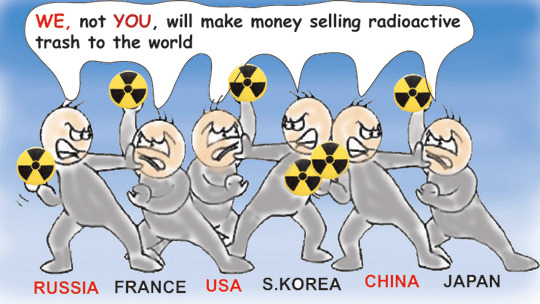
France joins suitors for Kenya’s nuclear plant venture, Business Daily Africa, NEVILLE OTUKI, notuki@ke.nationmedia.com February 7 2017 IN SUMMARY French Economy and Finance minister Michel Sapin said the nuclear-rich European country was looking to offer Kenya technical, engineering and financial support to develop reactors.
Kenya plans to start building its first nuclear plant from 2022 in a five-year period at a cost of about Sh500 billion
China, Russia, South Korea and Slovakia have since inked various pacts with Kenya in manpower development and skills exchange as they eye a possible deal.
France has joined the list of countries courting Kenya for a multi-billion-dollar deal to build East Africa’s first nuclear power plant.

French Economy and Finance minister Michel Sapin said the nuclear-rich European country was looking to offer Kenya technical, engineering and financial support to develop reactors.
Kenya plans to start building its first nuclear plant from 2022 in a five-year period at a cost of about Sh500 billion.
China, Russia, South Korea and Slovakia have since inked various pacts with Kenya in manpower development and skills exchange as they eye a possible deal.
“We have expressed our readiness to support the construction of the plants. Our support involves everything from expertise to funding,” Mr Sapin said on Sunday after concluding his two-day visit to Kenya during which he presided over the return of Peugeot assembly to Kenya…….
Mr Sapin said that France was seeking pacts with Nairobi like the ones it entered with South Africa on nuclear power development.
France has over the years signed several pacts with South Africa whose two power plants were built by French firm Areva.
South Africa plans to add more nuclear power plants.
Energy experts from Italy and Germany last October, however, advised Kenya to drop plans to build nuclear reactors and instead harness its vast renewable energy resources for power generation. The experts, attending a renewable energy conference in Nairobi, reckoned that Kenya is better off developing more geothermal wells, solar parks and wind farms.
They cited massive costs for a nuke plant, long construction periods of about 10 years and expensive decommissioning of plants at the end of their lifespan, especially disposing of hazardous radioactive waste.
February 8, 2017
Posted by Christina Macpherson |
France, Kenya, marketing |
Leave a comment