Toshiba delay causes further Moorside uncertainty, ITV, 14 Mar 17, Toshiba has delayed reporting its third quarter earnings for the second time, leading to further uncertainty over the future of a major nuclear development in Cumbria.

The Japanese company owns a 60 percent stake in NuGen, the company behind the proposed Moorside nuclear project in west Cumbria.
However, Toshiba is expected to announce huge losses for 2016, and that it will pull out of nuclear projects outside Japan.
This is to do with its US nuclear unit Westinghouse, which is reported to have overpaid for another nuclear company by billions of dollars.
Westinghouse would supply three nuclear reactors to the Moorside nuclear plant in Cumbria. Toshiba first delayed announcing its third quarter financial results in February, after which the company’s chairman stepped down, and the further postponement was revealed this morning……..http://www.itv.com/news/border/2017-03-14/toshiba-delay-causes-further-moorside-uncertainty/
March 15, 2017
Posted by Christina Macpherson |
business and costs, politics, UK |
Leave a comment

 Russia eyes deal to build Kenya’s sole nuclear plant, The Star, Kenya Mar. 14, 2017, By WEITERE MWITA @mwitamartin Russia has offered to design, finance and build Kenya’s proposed nuclear power plant.
A delegation from Russia will pitch tent in Nairobi for the regional nuclear energy conference which kicks off today.
Russia is seeking to strike a deal through its state-owned Rosatom State Atomic Energy Corporation. Kenya plans to set up four nuclear plants, with the first expected to be switched on in 2027.
On May 30, 2016, Rosatom signed a Memorandum of Understanding with Kenya to promote nuclear solutions, assist in training personnel, create public awareness, and design agriculture and medical solutions.
Rosatom regional vice president for Sub-Saharan Africa Viktor Polikarpov yesterday said the Moscow-based entity, through the government, is ready to support Kenya put up its plants on a Build–Operate–Transfer module or Private-Public-Partnership consortium.
Rosatom said it will borrow a loan through an intergovernmental agreement, with a repayment period of up to 25 years. The firm is the only reactor vendor in the world that can offer the nuclear industry’s entire range of products and services.
“We are currently providing the VVER-1200 (Water-Water Energetic Reactor) generation III reactor which is the safest in the world. We can offer the preferred solution to your government if given a chance,” Polikarpov told journalists…….
Kenya has also signed MoUs with China and South Korea but is yet to identify a developer for the project which could cost up to Sh2 trillion. The developer will be selected by the Kenya Nuclear Energy Board……http://www.the-star.co.ke/news/2017/03/14/russia-eyes-deal-to-build-kenyas-sole-nuclear-plant_c1523942
March 15, 2017
Posted by Christina Macpherson |
Kenya, marketing, Russia |
Leave a comment
Environmentally friendly, almost electricity-free solar cooling https://www.sciencedaily.com/releases/2017/03/170313085606.htm
Also serves as a heat pump
- Date:
- March 13, 2017
- Source:
- Technical Research Centre of Finland (VTT)
- Summary:
- Demand and the need for cooling are growing as the effects of climate change intensify. An emission-free, solar-powered chiller has now been developed by scientists. The potential market is world-wide, particularly in warm countries.
-
Demand and the need for cooling are growing as the effects of climate change intensify. VTT Technical Research Centre of Finland and German company ZAE Bayern have built an emission-free, solar-powered chiller; a pilot system has been tested in Finland and Germany. The potential market is world-wide, particularly in warm countries.
The production and consumption of solar cooling are simultaneous. A property’s cooling needs are highest when the sun is shining.
VTT and German company ZAE Bayern have developed a solar-powered 10 kW chiller. This absorption chiller works in the same way as the gas refrigerators used in Finnish holiday cabins, for example. But in this case, a solar thermal collector is used instead of gas. The method requires electricity for the flow pumps only. If necessary, the chiller can also serve as a heat pump.
The results of the project showed that — to be used as a heating pump as well — an economically viable and competitive, solar-powered absorption chiller would need to be 50 kW or bigger.
Finnish company Savo-Solar Plc participated in both the planning phase and the practical tests. As a result, the company’s head office was successfully cooled using the pilot system built for the project. Savo-Solar and ZAE Bayern aim to develop a commercial product which enables users to cut their electricity bills through cooling with absolutely no need for electricity. This would also reduce emissions.
The chiller was tested as an air-conditioner for Savo-Solar’s office during the summer and for heating it during the winter. Solar collectors on the roof of the building were used to collect the required energy. If the collectors did not produce enough energy during, say, the winter, or on a cloudy day, a heat pump served as a substitute energy source. Other possible energy sources would be district heating, biofuel boilers or industrial process heat.
Examples of large, megawatt-class absorption chillers based on district heating can already be found in Helsinki and Turku in Finland.
Another practical test was performed using an absorption chiller based on a bio-boiler in ZAE Bayern’s laboratory in Munich, Germany. This system can also be supplemented with solar energy.
Learn more at: http://www.vtt.fi/inf/pdf/technology/2017/T287.pdf
March 15, 2017
Posted by Christina Macpherson |
Finland, renewable |
Leave a comment

 John McDonnell’s vow to end nuclear power and weapons in first 100 days of a Labour government Laura Hughes, political correspondent Telegraph UK 9 MARCH 2017
John McDonnell, the shadow chancellor, has promised that Labour would bring an end to nuclear power and nuclear weapons in the first 100 days of a Labour government.
In footage uncovered by The Telegraph, Mr McDonnell said that he wanted to build on the early success of Gordon Brown, who mapped his first days in power shortly after becoming prime minister.
The shadow chancellor also said that Labour would introduce a wealth tax and a land tax, renationalise the railways and pull out of Afghanistan.
Speaking at a Labour meeting in July 2012, Mr McDonnell said: “From the Left now […] we should now be mapping out not in manifesto form but in a manual form the first 100 days of a Labour government going into power.
“The issues around energy, you immediately announce no more nuclear power. …….http://www.telegraph.co.uk/news/2017/03/09/john-mcdonnellvows-end-nuclear-power-weapons-first-100-days/
March 11, 2017
Posted by Christina Macpherson |
politics, UK |
Leave a comment
-
Falling costs make offshore turbines increasingly attractive
-
Germany may see record low price bid in auction in April
-
Water and electric power plants don’t mix well naturally, unless you add some wind.
Water tends to corrode and short out circuits. So what’s happening in the the renewable energy industry, where developers are putting jumbo-jet sized wind turbines into stormy seas, is at the very least an engineering miracle.
What might be even more miraculous to skeptics like those populating Donald Trump’s administration is that these multi-billion-dollar mega projects make increasing economic sense, even compared to new coal and nuclear power.
“If you have a sufficiently large site with the right wind speeds, then I do believe you can build offshore wind at least at the same price as new build coal in many places around the world including the U.S.,” said Henrik Poulsen, chief executive officer of Dong Energy A/S, the Danish utility that has pioneered the technology and has become the world’s biggest installer of windmills at sea.
- Across Europe, the price of building an offshore wind farm has fallen 46 percent in the last five years — 22 percent last year alone. Erecting turbines in the seabed now costs an average $126 for each megawatt-hour of capacity, according to Bloomberg New Energy Finance. That’s below the $155 a megawatt-hour price for new nuclear developments in Europe and closing in on the $88 price tag on new coal plants, the London-based researcher estimates.
- As nuclear power costs spiral, prompting a $6.3 billion writedown at reactor maker Toshiba Corp. and delays at Electricite de France SA’s plant in Flamanville, the investment needed to build offshore wind capacity is plummeting.
In Denmark, where the government shoulders much of the development risk, Vattenfall AB last year agreed to supply power from turbines in the North Sea at 60 euros ($64) a megawatt-hour in 2020. Dutch and German auctions due this year provide “ample opportunity” to beat that record low price, says Gunnar Groebler, the utility’s head of wind.
The industry even is taking hold in the U.S., which for years shunned the technology as too costly for a place that historically enjoys lower power prices than Europe.
A federal auction in December for rights to develop wind farms off the coast of Long Island resulted in a bidding war. Rhode Island has commissioned one plant, and developers are also considering work in Maryland, New Jersey and North Carolina.
Although Trump said offshore wind was “monstrous” when it came into conflict with his golf course in Scotland, the U.S. government’s official goal for now is to install 86 gigawatts of turbines at sea by 2050. That’s six times the 14 gigawatts of capacity now in place worldwide, according to the Global Wind Energy Council.
- The strength of the wind off the coast makes the sea a natural place to anchor turbines. In European waters, breezes average 22 miles per hour about 360 feet (110 meters) off the surface, a good baseline for the scale of many installations, according to The Crown Estate, which leases out areas of U.K. seabed belonging to the Queen to wind farms. That’s almost triple the average wind speed onshore.
While more steady gusts mean each turbine will yield more electricity, fixing the machines to the seabed requires deep concrete footings cast in often turbulent seas.
The North Sea, the crucible of the modern offshore wind industry, suffers punishing storms and strong tides that batter turbines much of the year. Securing structures as tall as the Washington Monument in the ocean requires deep footings, specialized ships and cranes capable of lifting equipment that can weigh tons. Salt water eats away at machinery and fittings. Cables must be rugged enough for the worst weather. And if equipment breaks, it can take weeks before the seas are calm enough for a work vessel.
Oil majors that have spent decades building skills to work in those conditions are turning their attention to offshore wind as petroleum production subsides in the North Sea. Royal Dutch Shell Plc and Statoil ASAare among companies that won contracts to build offshore wind projects last year.
All told, a record $29.9 billion was invested in offshore wind in 2016, up 40 percent from the year before, according to Bloomberg New Energy Finance. It expects investment to grow to $115 billion by 2020. What’s driving installations is an expected 26 percent drop in the costs, making offshore wind increasingly competitive with land-based turbines and solar and nuclear power — even without subsidy.
In years past, grid managers were reluctant to rely on fickle winds for power that flows only about 45 percent of the year. That’s changing too. Batterycosts have fallen 40 percent since 2014, making them a realistic way to help balance fluctuating flows of renewable energy to the grid.
- Offshore wind projects coming online today are already delivering power at almost half the price of those finished in 2012 thanks to larger turbines and greater competition. That’s emboldening developers to promise supplying power for even less, suggesting the industry will break more records this year starting the a contest in Germany in April, said Deepa Venkateswaran, analyst at Sanford C. Bernstein Ltd.
Europe’s lingering low-interest environment may add downward pressure on bids in Germany’s offshore auctions, EON SE Chief Executive Officer Johannes Teyssen said on Jan., 25. The utility will join bidders as it seeks to add as much as 1.5 billion euros ($1.58 billion) a year to its clean energy portfolio.
The U.K. remains one of the hottest markets owing to the need to replace ageing power plants. Bids may reach as little as 80 euros a megawatt-hour in the next auction due to start in April, she said. That’s comparable to about 68 pounds a megawatt-hour for the global onshore wind average, and well below the government’s 2020 goal to bring costs below 100 pounds ($125.55) a megawatt-hour.
It’s also much cheaper than EDF’s new nuclear power program at Hinkley Point in Somerset, which last year won a 35-year contract to provide power at a cost of 92.50 pounds a megawatt hour once it begins generating. It’s currently due to come online in 2026, even though EDF originally planned it to be cooking Christmas turkeys for British households in 2017.
“In this auction it is possible that the price achieved could be below 90 pounds,” said Keith Anderson, chief corporate officer of Scottish Power Ltd., a unit of Spain’s Iberdrola SA.
March 11, 2017
Posted by Christina Macpherson |
EUROPE, renewable |
Leave a comment
Offshore windfarms set to become cheaper source of electricity than nuclear power stations
Government’s plan to turn UK into world leader in offshore wind energy receives boost as electricity price halves in five years The Independent, Ian Johnston Environment Correspondent @montaukian 9 Mar 17 Offshore windfarms are set to become a cheaper source of electricity than the Hinkley Point nuclear power plant and are also on track to undercut coal-fired power stations.
The Government, which has been trying to support offshore in the hope of turning the UK into a world-leader in the sector, plans to hold an auction next month in which generators will bid for a guaranteed price for their electricity, with the lowest offer declared the winner…….
March 11, 2017
Posted by Christina Macpherson |
renewable, UK |
Leave a comment
The seventh Nuclear Power Asia conference being held in Kuala Lumpur on Tuesday and Wednesday is bringing together the leaders of the Asian nuclear-power industry.
Session participants have concurred that nuclear power, being an economically and environmentally viable source of electricity, has the capacity to contribute greatly to Asia’s sustainable future.
“Sustainable future is impossible without sustainable energy,” said Egor Simonov, director of Rosatom Asia. “Nuclear power [emits] 25-30 times less [greenhouse gas] than coal- or oil-fired power plants. Therefore, nuclear power may be a viable solution for Asean nations willing to fulfil their climate-change commitments.”
Rosatom is Russia’s nuclear regulator, and its Southeast Asian regional branch is in Singapore. …….The Nuclear Power Asia conference is a platform to discuss the latest challenges, trends and achievements in the Asian nuclear industry. The event is annually attended by more than 300 participants from nuclear-energy authorities, energy commissions, nuclear energy programme implementing organisations, international developers and operators, technology suppliers, and academic society. http://www.nationmultimedia.com/news/breakingnews/30308264
March 8, 2017
Posted by Christina Macpherson |
marketing, Russia |
Leave a comment
 No2NuclearPower, No.93 March 2017 Toshiba’s announcement that it will not be involved in the construction of new nuclear reactors at the Sellafield ‘Moorside’ site in Cumbria has thrown into sharp relief the sorry state of the UK’s new nuclear policy which is clearly failing to deliver. It is obvious now that it can only be delivered with huge public subsidies the country can ill afford at a time when public services are under intense strain.
Toshiba announced on 14th February that it expects to book a €5.9bn write-down on Westinghouse ‒ more than it paid to buy a majority stake in the Company from the British government’s BNFL in 2006 ‒ and it expects to report a net loss of €3.2bn in the fiscal year to March 2017.Audited figures are now due on March 14.
The mess has been caused mainly by the delayed and over-budget AP1000 reactors being built in the US. The cost to complete four AP1000 reactors ‒ two each in South Carolina and Georgia ‒ will “far surpass the original estimates”. Combined, the cost overruns exceed US$10 billion. And since there is still a long way to go before construction of the four reactors is complete, there is plenty of scope for further cost overruns. (1) There is now even talk of the possibility of bankruptcy for Toshiba. Former Westinghouse boss Shigenori Shiga, appointed as chair of Toshiba following a US$1.3 billion accounting scandal in 2015, stood down from his position on February 14.
Toshiba says it would like to sell Westinghouse if that was an option ‒ but there is no prospect of a buyer. The nuclear unit is, as Bloomberg noted, “too much of a mess” to sell. And since that isn’t an option, Toshiba must sell profitable businesses instead to stave off bankruptcy. The company plans to sell most ‒ perhaps all ‒ of its profitable microchip business to prop up the nuclear carcass and avoid bankruptcy. The company might get €12.3‒16.1bn by selling its entire stake in its microchip business, said Joel Hruska from ExtremeTech. “That would pay off the company’s immediate debts,” Hruska said, “but would leave it holding the bag on an incredibly expensive, underwhelming nuclear business with no prospects for near-term improvement.” (2)
The ripple-effects of Toshiba’s latest problems will be many and varied. Japan’s ambitions to develop a large nuclear export business are in tatters. As recently as last year, Toshiba said it hoped to win 50 contracts to build new nuclear plants in India and China over the next decade. As well as Moorside reactor construction projects being planned in Turkey and elsewhere are up in the air.
But it is not just Toshiba that is in crisis. Over the past decade, international energy utilities Eon, RWE Npower, Iberdrola, SSE and Centrica have all confidently announced their commitment to building new nuclear power stations, whether at Hinkley Point, Wylfa or Moorside, but then had to pull out as they realise they cannot afford the huge levels of investment that such projects require. (3) In Europe, energy giants EDF, Engie (France), E.ON, RWE (Germany) and Vattenfall (Sweden), as well as utilities TVO (Finland) and CEZ (Czech Republic), have all been downgraded by credit rating agencies over the past year. All of the utilities registered severe losses on the stock market http://www.no2nuclearpower.org.uk/nuclearnews/NuClearNewsNo93.pdf
March 4, 2017
Posted by Christina Macpherson |
business and costs, UK |
Leave a comment
 Failing New Nuclear Programme should be Scrapped No2NuclearPower, No.93 March 2017
GMB national secretary for energy Justin Bowden reiterated his call for the government to bankroll the project. “It is time for government to show leadership and take over the reins at Moorside,” said Bowden. “The fiasco with Toshiba shows exactly why relying on foreign companies for our energy needs is just plain stupid.” Tim Yeo, a former minister and chairman of New Nuclear Watch Europe, a pro-nuclear group, said Moorside provided a “prime opportunity” for Theresa May’s administration to demonstrate its industrial strategy with support for the UK nuclear supply chain. He said that with lingering doubts over the viability of Hinkley Point and Wylfa “the only way forward is if the government is willing to participate”. This could involve the government taking a minority stake, or providing loans that would be repaid after construction was complete, added Mr Yeo. (17) The GMB says Moorside is vital as Sellafield’s workforce starts shrinking. By 2020 up to 3,000 jobs could be lost as the Thorp nuclear fuel facility closes and reprocessing of Magnox fuel ends. (18)
Ministers should also actively encourage investment from nuclear companies in China, South Korea and Russia where the industry is relatively insulated from the challenges faced by European companies thanks to strong state backing, says Yeo – there is a real danger that the pipeline of nuclear projects will fail to come on stream before 2030 unless Government agrees to intervene. The existing support regime, which guarantees a fixed price for each megawatt of power produced, does not go far enough to help investors who face billions in construction costs before the nuclear plant begins producing power. The Government should offer loans to developers which can be paid back once the plant comes on stream, or take an equity stake in the project which could be sold off to investors when construction is complete. “In neither case would the Government’s support constitute a permanent subsidy. It would directly cut the cost of electricity produced by the new plant because the Government’s borrowing costs will be lower than those of any private investor,” says Yeo. (19)
Right on cue, says Greenpeace Policy Director, Doug Parr, stories have begun to appear in the press saying that government is thinking about or even “under pressure” to inject huge amounts of taxpayers cash into new reactors in order to get them built. “Neither proposed plant (Moorside and Wylfa) is crying out as a good bet for a private investor” says Parr. “So why would it be a better investment for a government? Or for British taxpayers?” If the UK government takes stakes in these projects, it would be expensive. A 25% share in both Moorside and Wylfa on Anglesey could cost over £7 billion – and that’s before taking into account the cost overruns synonymous with nuclear projects. That would still leave over £20bn to find from other investors, but is a substantial commitment of public money. So it is worth spending a few No2NuclearPower nuClear news No.93, March 2017 6 moments to consider why direct government funding of these nuclear stations is such an eccentric and ill-conceived idea. (20)
First, why do these projects need public funding? The obvious answer is that private investors think they are too risky and too poor a return, even at the high price of £92.50 (2012 prices) that EDF got for their Hinkley Point plant. So why are they risky? Well, one of key reasons Toshiba is in such deep financial trouble is that its reactor design, the AP1000, has never been completed and operated, and is actually more costly and difficult to build than it thought. Its four AP1000 reactors now under construction in the US are ruinously late and over-budget.
Tens of billions of taxpayers’ money are at risk as pressure mounts to spend billions more on new nuclear, according to Dr Dave Toke, reader in energy politics at Aberdeen University. Giant portions of the public spending could be poured down a nuclear black hole as calls for the Government to make direct investments into new nuclear power plant intensify. Ultimately the sums at risk would be much larger than the Government’s own estimates of the cost of Trident. There has been a flurry of demands for government investment in new nuclear projects in the wake of the near bankruptcy of Toshiba. In fact nuclear power is proving to be virtually undeliverable and ruinously expensive in western countries. Despite the manifest bankruptcy of the technology, rather than question whether it is right to continue with the new nuclear programme, its supporters are in effect wanting us all to bet the British economy on it. If the Treasury are forced against their will to sanction ‘equity’ stakes in new nuclear reactors, the losses and., eventually, all the liabilities will fall on the taxpayer. (21)
Companies vying to build nuclear power stations in the UK have been told they must offer a price for their electricity sharply lower than the £92.50/MWh approved for Hinkley Point C, according to the FT. Prices 15-20% lower are seen as crucial to maintaining political support for new nuclear plants. “One of the biggest factors pushing up the strike price is the cost of capital. If government wants a low strike price, it is pretty clear that government has to think about a different kind of [financing] solution,” said one of the industry leaders. The FT says the government remains cautious about the idea of investing taxpayers’ money in nuclear power. One source told the FT there were signs the government wanted to pit NuGen and Horizon against each other in a competitive process, with no guarantee that both would go ahead. (22)
The Sunday Times said ministers are poised to admit that taxpayer cash will be used to fund a new fleet of nuclear power stations – reversing years of government opposition to direct public subsidy. Industry sources claim the business and energy secretary, Greg Clark, accepts that the hands-off approach cannot persist if the plants are to be built. They say Whitehall is preparing to launch a consultation, possibly this summer, on the government taking minority equity stakes in new nuclear projects to kick-start their construction. British taxpayer cash will probably be matched with funds from the Japanese government, possibly via the Japan Bank for International Co-operation and Nippon Export and Investment Insurance. Japan’s Hitachi, which is behind the Wylfa project, is locked in talks with the British and Japanese governments over how to fund the 2.7-gigawatt station. The consultation on state equity is likely to be launched alongside an outline deal on funding Wylfa. Sources said the deal and the consultation are not certain and could yet collapse. (23)
Treasury officials are still hostile to the direct state subsidy idea but Chancellor Philip Hammond, and business secretary, Greg Clark, have both taken part in talks over support for Wylfa and Moorside. Any deal would have to overcome opposition from parts of the Treasury, which has for decades
March 4, 2017
Posted by Christina Macpherson |
politics, UK |
Leave a comment
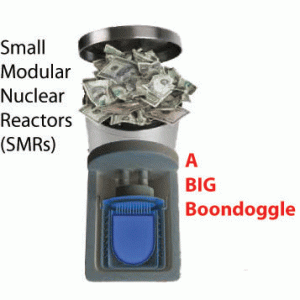
 NIA’s SMR conference: great discussion, now we need action, The Alvin
 Weinberg Foundation. March 3rd, 2017 by Suzanna Hinson
On Monday, the Nuclear Industry Association held its Small Modular Reactor conference. Weinberg Next Nuclear were delighted to attend and our director Stephen Tindale was one of the many speakers.
The conference was opened by Tom Wintle, deputy director of SMRs, decommissioning and waste at the department of Business, Energy and Industrial Strategy. Though he spoke very eloquently about the importance of nuclear, and SMRs to the government, particularly in regards to the Industrial Strategy’s aims of home grown industries, developing skills, regional rejuvenation and a stronger economy for the growth areas of tomorrow, he would not be drawn on the real issues the audience clearly wanted to hear about: the much delayed SMR competition and the question of public funding at Moorside.
Instead, he highlighted changing priorities of the government, with a renewed focus on energy security, consumer bills and the potential for driving exports and capturing a global SMR market in a post Brexit UK. He would also not be drawn on the future relationship with Euratom, saying it was too early to speculate but repeating it was a non-negotiable aspect of exiting the EU, a decision many we spoke to think is premature and will lead to huge hurdles for British nuclear in the future………
When asked about government plans he said the Government have spent enough time building a vision; now, we need action. The action we need to see, Stephen recommended, was the Government telling the Nuclear Decommissioning Authority to release sites for advanced nuclear and instructing the Office for Nuclear Regulation to undertake Generic Design Assessments for advanced reactors, expanding their capacity to do so if necessary. …….
This panel, comprising Fiona Reilly from Atlantic Superconnection LLP, Anurag Gupta from KPMG LLP and Gareth Price from Allan & Overy LLP, also argued that BEIS were putting too much hope into an export market as with bigger contributors emerging like China and the US, it is unlikely that the UK will be able to compete…….
they made a strong statement for state-led nuclear power incorporating the private sector at a later stage of development if possible…..
the clear mood is that talking and discussion are not being paralleled with policy progress. The sector desperately needs to see some action from government, to progress with the SMR review, provide certainty for Moorisde and clarify the terms of Euratom membership. http://www.the-weinberg-foundation.org/
March 4, 2017
Posted by Christina Macpherson |
business and costs, politics, UK |
Leave a comment
Moorside Failing New Nuclear Programme should be Scrapped No2NuclearPower, No.93 March 2017
Doubts Plans for three new AP1000 reactors to be built at Moorside in Cumbria next to Sellafield are now at risk from the financial crisis engulfing Toshiba. Toshiba owns 60% of Nugen, the consortium working on the plans. Nugen has said it wants to take a final investment decision by the end of 2018 in order to generate the first power in about 2025. However, it already faces an uphill battle to secure financing in time. Toshiba and France’s Engie, which owns the remaining 40% of NuGen, are believed to have been in talks for months with South Korea’s Kepco and are also understood to be talking to the UK and Japanese governments about potential financial support. (11)
But Kepco told the FT that it was not in talks with Toshiba about participation in NuGen, although several people involved in the process said South Korean investment was the best chance of keeping the project alive. “It’s hard to see how Moorside can go ahead without Kepco,” said one senior nuclear industry figure. It is thought that if Kepco were to get involved it would prefer to use its own reactor design, the APR-1400, rather than Westinghouse’s AP1000. This would set the project back at least four years because the Korean technology would need approval from UK regulators, while Westinghouse’s has nearly completed the clearance process. (12)
Cumbrians may be glad to see the back of corruption-plagued Toshiba ‒ but corruption-plagued South Korean utility KEPCO wouldn’t be much of an improvement. Cumbrians Opposed to a Radioactive Environment (CORE) commented:“KEPCO is itself still emerging from a major scandal that surfaced in 2012 involving bribery, corruption and faked safety tests for critical nuclear plant equipment which resulted in a prolonged shut-down of a number of nuclear power stations and the jailing of power engineers and parts suppliers.” (13)
Engie has also sounded increasingly lukewarm about Nugen, with Isabelle Kocher, chief executive, saying last year that there was “a place for nuclear new-build in the world, but less than before”. In December it was reported that Engie would like to abandon its 40% share of Nugen. (14)
US nuclear firms can only deal with overseas companies if the countries have a nuclear cooperation agreement. The US holds such an agreement with Euratom but not with the UK, raising the possibility that Westinghouse could be unable to continue working on the project once Britain leaves Euratom until a new bilateral deal is signed.
After much speculation that Toshiba would withdraw from the NuGen consortium, it now says it will “consider” a continued role in the development, so long as it can avoid any involvement in construction. Having completed a review of overseas nuclear operations, the company said it will seek to “exclude risk inherent on construction work and focus on equipment supply and engineering” in future. (15)
If NuGen is to make a final investment decision in 2018 and get the reactors up and running by 2025 there are huge challenges still to be overcome – a timescale many in the industry already think is highly unrealistic. The fact that Toshiba will no longer take on any of the financial risk of construction means Moorside is only likely to go ahead if new investors can be found to build the plant. (16) http://www.no2nuclearpower.org.uk/nuclearnews/NuClearNewsNo93.pdf
March 4, 2017
Posted by Christina Macpherson |
business and costs, UK |
Leave a comment
 No2NuclearPower, No.93 March 2017
The French government is selling assets so it can prop up its heavily indebted nuclear utilities. EDF announced in 2015 that it would divest €10bn of assets by 2020 to ease its debt load ‒ which now stands at €37.4bn. EDF, which is supposed to be building a new nuclear plant at Hinkley Point, issued three profit warnings last year following a string of unplanned nuclear plant shutdowns.
EDF is contending with a government-directed restructuring of the French nuclear industry, and is being pushed by the French state, its controlling shareholder, to rescue reactor builder Areva by taking over the part of its struggling business that is behind EPR technology. The EPR reactor that EDF is building at Flamanville in France is already six years late and €7.2bn over budget. A large drop in French nuclear output over the winter due to safety inspections on 18 of its French reactors, at the request of the country’s nuclear regulator ASN, was partly to blame for a sharp drop in profits. Furthermore, the company is saddled with debt and needs to spend €55bn upgrading its existing reactors in France. (4) A recent report for Greenpeace France suggests that if EDF has to close 17 of its 58 reactors to meet the government’s requirement that nuclear power should provide 50% of the nation’s electricity in 2025, then EDF will have to increase its provisions by more than €20 billion. The cost of handling nuclear waste will add at least €33.5 billion to that figure. (5)
A French parliamentary committee said that EDF would need a public bailout to meet the cost of closing ageing power stations. The warning was issued after unions expressed fury about an announcement that EDF plans to cut 3,900 jobs in France over the next three years. Jean-Marc Sylvestre, an economics commentator, said that the group was on the “edge of a precipice” and faced a choice between privatisation and bankruptcy. He described EDF’s situation as a “catastrophe foretold”. EDF’ s critics say that the company, which has debts of more than €37 billion lacks the financial resources to meet its commitments in France, let alone embark upon the Hinkley Point scheme. Their concerns were fuelled with the publication of a report by the committee for sustainable development, which accused EDF of failing to plan for the dismantling of its plants. (6) EDF has only set aside has €36 billion to pay to clean up reactors at the end of their working lives, whereas it needs €75 billion. EDF disputes the figures. (7) http://www.no2nuclearpower.org.uk/nuclearnews/NuClearNewsNo93.pdf
March 4, 2017
Posted by Christina Macpherson |
business and costs, France |
1 Comment
Hitachi NO2NuclearPower, March 2 017Meanwhile the Japanese company Hitachi which is planning to build the proposed plant at Wylfa on Anglesey, is set to lose tens of billions of yen this financial year after withdrawing from a uranium enrichment joint venture in the US. Hitachi is expected to report a 70 billion yen ($620 million) non-operating loss by the time books are closed at the end of March. The deficit is largely attributed to the joint venture GE Hitachi Nuclear Energy Inc. withdrawing from the uranium enrichment project. Hitachi no longer expects any profits from the North Carolinabased company, of which it owns 40% and the rest by General Electric. Hitachi and GE were expecting more nuclear power plants to be built when they launched the joint fuel enrichment business, but orders have been sluggish across the globe, forcing the project to be shelved. Nevertheless, Hitachi says it will be sticking with its nuclear power business. The company said No2NuclearPower nuClear news No.93, March 2017 4 that it plans to proceed with its project to build a plant in Britain by ensuring costs are thoroughly managed. (8)
In its favour is the fact that four ABWR reactors – the type of reactor it wants to build at Wylfa – have actually been built, in Japan. But their reliability has been poor. (9) The 2011 accident at Fukushima closed down all Japanese reactors, but according to IAEA the load factor – the proportion of time the reactors were generating power – for those ABWRs in the period between 2007-11 had been below 50%. (10 http://www.no2nuclearpower.org.uk/nuclearnews/NuClearNewsNo93.pdf
March 4, 2017
Posted by Christina Macpherson |
business and costs, Japan, UK |
Leave a comment
Hinkley C (3.2GW planned) will cost over £24 billion according to the European Commission. The reactors at Moorside and Wylfa, assuming they cost similar amounts, would thus make the taxpayer responsible for around £50 billion of debt. People will claim that the Government is ‘only’ taking a minority equity stake. That’s how it will start, and then would represent an enormous amount of state spending and liabilities. After all one quarter of £24 billion is still £6 billion. But it won’t end there, as sure as night follows day, not with the construction costs as well as the rest. It never does with nuclear power!Normally of course under the Government’s ‘low carbon’ programme, project raise their own finance and the project owners earns their money from premium price contracts (CfDs) awarded through the Government. That is always the case with renewable energy projects. They find their own money. Electricity consumers pay a premium price to enable this on their bills. But now for nuclear to go ahead, so it is said, not only will the consumers have to pay a high premium price, but taxpayers will have to fund at least part of the construction as well. This is money, please note, that will disappear from the Government’s coffers as the plant is built – it is not something that will be shuffled onto future generations like decommissioning
The fact that the Government is effectively financing the building will produce a conflict of interests with the Government negotiating with itself in setting the CfD price. No doubt a ‘lower’ CfD price will be set (that is less than the notorious Hinkley C price) when in fact it will be the taxpayer that will end up paying out countless billions for the projects.
Annual spending on primary education is around £26 billion. Hence building just Moorside will give the Government liabilities (which are likely to be paid by the Government) which will rival this spending.
But then to listen to some people, you’d think building Moorside was more important than closing down all primary schools for a year.
It isn’t.
Some sources:
http://www.bbc.co.uk/news/election-2015-scotland-32236184
http://www.telegraph.co.uk/business/2017/02/25/yeo-treasury-needs-pour-billions-nuclear-projects/
March 4, 2017
Posted by Christina Macpherson |
politics, UK |
Leave a comment