Ireland issues powerful demand to have say on UK nuclear plant, Sunday Times, Valerie Flynn, 26 Mar Environment minister Denis Naughten has asked the UK to consult Ireland on the potential effects of a nuclear power station on England’s west coast, 250km from Rosslare.
The Irish government has stopped short of calling for a full environmental impact assessment (EIA) of Hinkley Point C, the first new nuclear station in the UK in more than 20 years, however. Were such a study held, the Irish public could comment on the plans.
The environment department said it was a “matter for the UK to decide” whether work on Hinkley C should be put on hold while potentially affected countries such as Ireland are consulted, as recommended by a United Nations committee.
According to Russia’s foreign minister, the time has not come yet for the complete prohibition of nuclear weapons, http://tass.com/politics/937006, MOSCOW, March 23. /TASS/. Russia is prepared to discuss the possibility of further reduction of nuclear capabilities, Russian Foreign Minister Sergey Lavrov said on Thursday.
“We are ready to discuss the possible further gradual reduction of nuclear capabilities but taking into account all factors that affect strategic stability rather than only the quantity of strategic offensive weapons,” the minister said speaking at the Russian General Staff’s Military Academy.
“We are ready to discuss this issue proceeding from the growing urgency of making this process multilateral.”
Lavrov emphasized that the time has not come yet for abandoning nuclear weapons completely. “Efforts to coerce nuclear powers to abandon nuclear weapons have intensified significantly recently. It is absolutely clear that the time has not yet come for that,” he noted.
The very small amount of radioactive iodine was measured in week 10, between March 6 to 13, by the authorities’ instruments at Svanhovd, a few hundred meters from Norway’s border to the Kola Peninsula in the north.
«We measured 0,35 microbecquerels of iodine-131. We didn’t detected any other radioactive isotopes,» says Head of section for emergency preparedness with NRPA, Astrid Liland, in an e-mail to the Barents Observer.
The radiation authorities says no other measurements of iodine are found anywhere else in Norway for the period.
NRPA underlines that no radiation is measured at Svalbard where the measurement filters are connected to the CTBTO network with the purpose of monitoring the nuclear test ban treaty.
This is the second time this winter that radioactive iodine is measured at Svanhovd. Following the traces measured in January, a series of tweets started to spread claiming the source to be a possible Russian nuclear weapon test at Novaya Zemlya. No other evidence supported such weapon test.
Ongoing release?
Nuclear physicist with the Bellona Foundation, Nils Bøhmer, says this second period of measurement indicates that there are some kind of ongoing releases.
«If it is iodine-131, it is serious because that likely means a continuing release still going on. Iodine-131 has a half-life of only 8 days, so what was measured in January are long gone,» Bøhmer says to the Barents Observer.
A possible ongoing release is supported by measurements in Finland a week before the trace was detected in Norway’s northeasternmost corner.
In late February, the Radiation and Nuclear Safety Authority of Finland detected radioactive Iodine-131 in Rovaniemi. Levels were at 0,3 microbecquerels per cubic meter of air. Norwegians have not reported any traces of the isotope for that period. The January trace of radioactive Iodine-131, still of unknown origin, was first detected at Svanhovd near Kirkenes in northern Norway. Shortly afterwards, the isotope was detected over large areas in Europe, first in Rovaniemi in Finnish Lapland. Within the next two weeks, traces of radioactivity, although in tiny amounts, were measured in Poland, Czech Republic, Germany, France and Spain, the Barents Observer reported.
Fears for Moorside as Toshiba ‘lining up’ $500m bankruptcy backstop for Westinghouse nuclear arm,Telegraph UK Jillian Ambrose21 MARCH 2017 Fears that Toshiba’s struggling nuclear business Westinghouse could be on the brink of going under have been reignited following reports that it is lining up a US bankruptcy protection finance package.
The company is reportedly reviewing proposals from financial institutions and investment firms for a so-called debtor-in-possession loan to keep the company afloat while it undertakes a bankruptcy process.
According to Reuters, people familiar with the matter have said the loan is likely to be over $500m to enable the heavily indebted company to pay employees and complete the work on four nuclear power plants in the US. The projects are the first nuclear reactors to be built in the US for thirty years, but heavy delays have saddled Toshiba with writedowns of 712.5bn yen (£5bn).
The sources warned that the talks are at an early stage and that no final decision has been made to wind down the company. A UK spokesman for the company was not immediately able to comment.
A potential bankruptcy procedure raises serious questions over the future of a key £10bn nuclear project which plans to use the AP1000 nuclear reactor designed by Westinghouse.
Toshiba is a 60pc shareholder in the NuGeneration consortium, which plans to develop the Moorside project alongside France’s Engie, formerly known as GDF Suez.An early exit from Toshiba could heavily delay the start up of the 3.2GW Moorside project while NuGen scrambles to find new investment and approve a new nuclear reactor design to use in the project……
The company said it will deliver its full year results on April 11, its third scheduled date after failing to disclose the full impact of its Westinghouse woes twice before. http://www.telegraph.co.uk/business/2017/03/21/toshiba-lining-500m-bankruptcy-backstop-say-reports/
Areva unions warn about safety at France’s La Hague nuclear recycling plant Unions says cost cuts, redundancies jeopardise safety * Regulator ASN inspects plant following union warning * ASN: plant is safe but will be vigilant, adapt procedures * ASN confirms some radioactive waste containers flawed (Adds ASN comments) Nasdaq, By Geert De ClercqPARIS, March 23 (Reuters) –
Redundancies and cost savings are compromising safety at French nuclear group Areva’s <AREVA.PA> nuclear waste recycling facility at La Hague in Normandy, the firm’s unions say in an internal document. In an undated and unsigned note from the Areva La Hague Health and Safety Committee (CHSCT), seen by Reuters, the plant’s unions say that the Areva management’s “frantic cost-cutting is jeopardising long-established procedures” to prevent the risk of technical failures and human error. French nuclear safety authority ASN told Reuters it had received a copy of the note in November and had consequently inspected the plant, concluding that safety levels were acceptable.
However, it confirmed an incident in late 2016 – highlighted in the union note – in which several batches of highly radioactive waste were not properly processed during vitrification. It also said it would remain vigilant about issues signalled by the unions and may adapt its monitoring procedures.
In 2011 the Government revealed a list of eight sites deemed “potentially suitable” for new nuclear stations, including Bradwell.
But Blackwater Against New Nuclear Group (BANNG), which has campaigned against a new power station, believes the list should be reviewed. It comes as the group, along with other campaigners, submitted their response to a pre-application consultation for Sizewell C in Suffolk.
Andy Blowers, chairman of BANNG, said: “The policy for new nuclear power stations is out of time and out of order and safer, less expensive and environmentally-sustainable alternatives need to be put in place.”
In January, it was announced the Government had asked nuclear regulators to begin the process of approving a Chinese-designed reactor for a new power plant.
EDF Energy signed a deal with China General Nuclear Power Corporation for Bradwell B, a greenfield site next to the former station.
The Chinese company will provide two thirds of the development costs of Bradwell B and hopes to begin construction by 2023..Up to 25,000 jobs will be created during construction, although it is unclear how many vacancies will be filled by residents.
Mr Blowers added: “In the coming months BANNG will continue its campaign to oppose the Chinese nuclear project at Bradwell, which threatens to destroy a precious environment and inflict harm on present and future generations.
“At the local level we will work with the communities around the Blackwater to thwart the project in its early stages.
“At regional level we will back Together Against Sizewell C’s legal challenge to the Government’s nuclear policy.
“And, at the national level, with other protest group leaders, we shall fight to have both Bradwell and Sizewell removed from the list of nominated sites for new nuclear power stations. The Government’s policy is misguided and in need of urgent review.”Harwich and North Essex MP Bernard Jenkin has said a new power station could threaten the eco-system of the Blackwater estuary at Mersea.
How Russia Is Turning Syria into a Major Naval Base for Nuclear Warships (and Israel Is Worried), National Interest, Michael Peck, 18 Mar 17, During the 1970s, the Syrian naval base of Tartus became a major port servicing warships of the Soviet Union’s Fifth Mediterranean squadron.
The Soviet Union is gone, and so is Syria as a unified nation. But Russia is back, and it’s building up Tartus again as a naval base that can handle Russia’s largest nuclear-powered ships.
Already, Israel says the Tartus base is affecting its naval operations. U.S. and NATO operations could be next.
Under the forty-nine-year agreement inked late last year by Russia and Syria, “the maximum number of the Russian warships allowed at the Russian naval facility at one time is 11, including nuclear-powered warships, providing that nuclear and ecological security rules are observed,” according to Russia’s RT news site. Russia will also be allowed to expand port facilities to accommodate the vessels.
The specification allowing nuclear-powered warships means that Russia wants to be able to base in Syria large surface ships, namely Kirov-class nuclear-powered battle cruisers, as well as nuclear submarines.
In addition, the treaty allows “Russia is allowed to bring in and out any kind of ‘weaponry, ammunition, devices and materials’ to provide security for the facility staff, crew, and their families throughout the territory of the Syrian Arab Republic ‘without any duties or levies,’” according to RT.
Expansion of the port will take about five years, according to an anonymous source cited in Russia’s Sputnik News. “The source added that the works would focus on dredging operations to allow cruisers and even possibly aircraft carriers to use the facility’s infrastructure,” Sputnik News reported. “According to the source, Russia also needs to develop the facility’s ground infrastructure, through construction of canalization, electricity generation facilities and barracks for the servicemen.”
Sputnik News also listed other provisions of the agreement. These include:
• Russia will be responsible for sea and air security of the base, while Syria handles the land defenses.
• Russia can deploy “temporary mobile outposts” beyond the base, as long as they coordinate them with the Syrians.
• Russia can renovate the base at will, including underwater construction, and build offshore platforms.
• Upon Syrian request, Russia will send specialists to service Syrian warships, conduct search and rescue in Syrian waters, and organize the defense of Tartus.
• Syria agrees not to “make any objections related to the military activities of the base, which will also be beyond Damascus’ jurisdiction.”
• “Syria also pledges to solve any conflicts that may arise if a third party objects to the activities of the base.”
UN committee calls for halt to allow environmental studies
EDF won approval to build 18 billion-pound plant in September
A United Nations committee asked the U.K. to suspend work on the Hinkley Point nuclear power plant pending assessment of the environmental impact.
The UN Economic Commission for Europe requested the pause, it said in a document on its website. Electricite de France SA, the French state-controlled utility, won approval to build an 18 billion-pound ($22.3 billion) nuclear plant on England’s western coast in September. To help shoulder the construction costs, EDF convinced China General Nuclear Power Corp. to take 33.5 percent of the project.
The UN committee recommended the halt until it established whether “a notification under the Espoo Convention” was useful, according to the statement. The Espoo Convention sets out the obligations of countries to “assess the environmental impact of certain activities,” according to the commission’s website.
Sea-level rise poses ‘a serious threat’ to millions of Europeans, scientists warn. A new study spells out the threat of sea-level rise in coastal communities.The kind of devastating flooding that occurs once every century along Europe’s northern coastline could become an annual event if greenhouse gas emissions continue to climb, according to a recent study published in the journal Earth’s Future.
New analysis takes into account changes in sea-level rise, tides, waves, and storm surge over the 21st century and found that climate change could prompt extreme sea levels — the maximum levels seen during major storms, which produce massive flooding — to increase significantly along the European coastline by 2100.
This scenario will likely stress coastal protection structures beyond their capacity, leaving much of the European coastline vulnerable to dangerous flooding, according to study authors.
“Unless we take different protection measures, five million people will be exposed to coastal flooding on an annual basis,” said Michalis Vousdoukas, a coastal oceanographer at the Joint Research Centre of the European Commission and lead author of the study.
The study described the projected rise in extreme sea levels as “a serious threat” to coastal communities, noting, “their safety and resilience depends on the effectiveness of natural and man-made coastal flood protection.”
Kevin Trenberth, a scientist with the climate analysis section of the National Center for Atmospheric Research, who was not involved in this research, said the signs of extreme sea levels are already worrisome, not just in Europe, but in the United States as well. “Witness the sunshine flooding in Florida already, the flooding that shows up even with no storm on many streets any time there is a slightly high tide,” he said.
Sea level is going up because the ocean is warming and hence expanding, and because land ice — glaciers, etc. — are melting and putting more water into the ocean. But it is not the gradual rise that matters,” Trenberth said. “Rather, it is the storm surge on top of a high tide riding on top of the increase in sea level that crosses thresholds and causes things to break.”
Richard Alley, professor of geosciences at Pennsylvania State University, who also did not take part in this study, noted that the study didn’t consider the possible collapse of the West Antarctic ice sheet. “If that happens, then sea-level rise and impacts to coasts could be much higher than in this paper,” Alley said. “Rapid West Antarctic collapse could cause enough rise to make many of these other factors of secondary importance. So, the ‘worst case’ in this paper isn’t really the worst case.”
The new paper predicted that some regions could experience an even higher increase in the frequency of these extreme flooding events, specifically along the Mediterranean and the Black Sea, where the present day 100-year extreme sea level could occur as often as several times a year.
“The ‘worst case’ in this paper isn’t really the worst case.”
Information about the number of people at risk from flooding can be used to determine how large the social and economic impact of these events will be, said Marta Marcos, a researcher at the Mediterranean Institute for Advanced Studies in Spain, who was not involved in the new study. “In terms of adaptation strategies and policy-making, it is very relevant,” she said.
The researchers studied changes in extreme sea levels by 2100 under different greenhouse gas scenarios and considered how all these components — mean sea level, tides, waves, and storm surge — will be affected by climate change.
f emissions continue to rise unabated throughout this century, extreme sea levels along Europe’s coastlines could increase by more than 2.5 feet, on average, by 2100. Under a more moderate situation, where greenhouse gas emissions peak in 2040, 100-year extreme sea levels still could jump by nearly 2 feet, on average, by the end of the century — with flooding events occurring every few years — according to study’s authors.
In a related study appearing in Geophysical Research Letters, scientists found that if greenhouse gases continue to rise, there could be disturbing changes by the end of the century in the energy that waves carry to the coast.
In the southern hemisphere, extreme waves could carry up to 30 percent more energy by 2100, according to the study, meaning that stronger waves will become more frequent, and have a greater impact on the coast, said Lorenzo Mentaschi, a researcher at the Joint Research Centre and lead author of the study.
The new study attributed the changes in wave energy to the intensification of weather patterns, like El Niño. The new research will be provided to European Union policymakers. The data will also be made public so it can be used by scientists, engineers, and coastal managers.
Michael Mann, professor of atmospheric science at Pennsylvania State University, said the research once again underscored how climate change, “which has already increased the threat to our coastlines through a combination of sea-level rise and intensified coastal storms, will be catastrophic for coastal communities if we don’t reduce global carbon emissions.”
Marlene Cimons writes for Nexus Media, a syndicated newswire covering climate, energy, policy, art & culture.
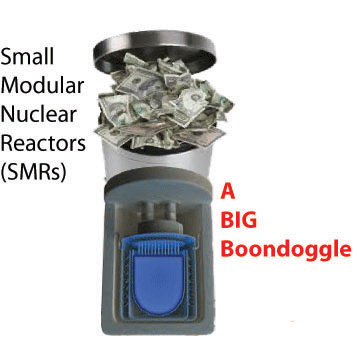
Bechtel pulls out of mini-nuclear development, Construction News, 17 MARCH, 2017Bechtel is to pull out of small modular reactor development, the US engineering giant has confirmed. The company said it would no longer be attempting to create its own SMR reactor after it was unable to find investment for its programme, or a utility company that would provide a site.
Bechtel’s SMR aspirations were as part of mPower, a joint venture with energy giant Babcock & Wilcox…..
Bechtel will take itself out of the government’s SMR reactor design competition.
The competition has stalled ever since, with sources telling Construction News that they have been largely left in the dark by the government over the next steps……
GreenLeft proves to be big winner in Dutch election Party forecast to boost its MPs from four to 14 after storming campaign by young leader Jesse Klaver, Guardian Jon Henley , 17 Mar 17, The big winner of Wednesday’s election – and now the largest party of the Dutch left for the first time – was GreenLeft, headed by 30-year-old Jesse Klaver, hailed by his enthusiastic supporters as the “Jessiah”.
With more than 95% of votes counted, the party – formed 25 years ago by a merger of communists, pacifists, evangelicals and self-styled radicals – boosted its MPs from four to 14 after a storming campaign by Klaver.
“This is a fantastic result for us, a historic victory,” said the party chairwoman, Marjolein Meijer.
The result showed there was “very fertile ground in the Netherlands for change and a positive and hopeful story”, she said. “For us this is just the beginning.”……..
The Netherlands’ youngest ever party leader, Klaver built a strong following on social media through small Meetup events after taking over GreenLeft’s leadership in May 2015.
His rallies were among the campaign’s largest, including an Amsterdam meeting that drew more than 5,000 people – plus 5,000 more following live on Facebook.
His TV debates were also widely regarded as triumphs. In one debate watched by 1.6 million viewers, Klaver told his far-right, anti-Islam rival Geert Wilders that it was rightwing populism, not Muslim immigration, that was undermining Dutch culture and traditions. ……https://www.theguardian.com/world/2017/mar/15/dutch-elections-greenleft-jesse-klaver
UN nuclear disarmament talks: UK Government not attending discussions labelled ‘reckless and irresponsible’ ‘I don’t think it’s taking nuclear disarmament seriously,’ Green Party leader Caroline Lucas tells The Independent Harriet Agerholm@HarrietAgerholm 15 Mar 17The Government has been called “reckless and irresponsible” after it refused to send a single representative to United Nations (UN) talks about a ban on nuclear weapons.
The Foreign Office revealed that no one from the UK attended a February meeting ahead of the negotiations and no one would go to the discussions when they take place later this month.
It was responding to a parliamentary question by Green Party co-leader Caroline Lucas, who told The Independent that it showed the Government was being “massively hypocritical” and failing in its commitment to working towards a world without nuclear weapons. …..
“The Government has said it’s committed to multilateral nuclear disarmament,” Ms Lucas said, adding that whenever ministers are asked to get rid of Trident – the UK’s nuclear weapons system – they “always say we’re not going to because it’s unilateral.”
The Brighton MP said: “Now there’s opportunity to have a multinational set of negotiations and they’re not even bothering to turn up. I just think it’s mind blowing.”
Although the talks may not immediately agree on an outright ban, Ms Lucas said they were an important step towards reducing nuclear weapons internationally.
“Essentially what such a major global moment does is to help delegitimize the weapons,” she said, “that can’t be underestimated.
“So although clearly we’re not going to have the nuclear weapons states signing up by June, the very existence of that treaty will make it more likely that those countries that have them will begin to negotiate to get rid of them.”
ill-equipped to make nuclear parts – French watchdog, Reuters,
Creusot Forge machinery inadequate for making huge parts
* Areva stopped commercial production at factory last year
* Areva wants to restart plant this summer
* Nuclear watchdog must give permission for restart
* Critics say oversight of French nuclear industry needs review
By Geert De Clercq PARIS, March 16 Creusot Forge, a supplier of nuclear plants around the world owned by France’s Areva , is under investigation for making substandard parts and falsifying documents.
Now, France’s nuclear regulator says machinery at the plant, which was shut for commercial production last year, is not up to the job. n an interview, Remy Catteau, the head of nuclear equipment at the ASN (Nuclear Safety Authority), said that an inspection of the plant late last year showed that it did not have the right equipment to produce the parts for the nuclear reactors. “Creusot Forge is at the limit of its technical capacity. The tools at its disposal are not adequate to manufacture such huge components. In such a situation, errors are made,” Catteau told Reuters by telephone.
“The inspection brought to light the fact that the safety culture in the plant is not sufficient to produce nuclear components.”
The disclosure adds to the problems of Areva, once the world’s biggest nuclear company, which owns Creusot Forge.
Areva shut the factory after it found that manufacturing documents at the plant may have been falsified over some 40 years and parts made by the foundry did not meet specifications.
Authorities around the world have checked the nuclear reactors using the parts. Two reactors in France – Fessenheim 2 and Gravelines 5 – were shut after the checks due to safety concerns.
The investigation by the regulator is ongoing but Areva hopes to restart production at the factory this summer, if ASN allows it……
INSPECTIONS
Precision is critical when making parts such as containment vessels, which are huge steel cylinders that house the reactor core and control rods.
Creusot Forge made the vessel lid and bottom for the Flamanville 3 EPR reactor under construction in western France. But at the end of 2014, Areva discovered excessive carbon concentrations in those components, which weaken the steel.
“For Flamanville 3, the equipment was at its limit, there was no margin for error,” Catteau said.
Flamanville’s future is now uncertain. The ASN will rule by the summer whether the new reactor can go into operation by 2018, despite those weak spots. A red light would lead to years of further delays for Areva and its customer EDF.
Regulators from the U.S., Britain, China and other countries are also looking into quality and manufacturing issues at the Creusot Forge foundry in eastern France after Areva unearthed the false manufacturing documentation from the 1965-2013 period.
“One of the ways to resolve problems was to hide things, and that was the wrong way,” Catteau said……..
Areva is being restructured and recapitalized with help from the French state after years of losses wiped out its equity. It lost 665 million euros ($702 million) last year, 2.04 billion euros in 2015 and 4.83 billion euros in 2014.
Critics of France’s nuclear energy establishment say the problems at Creusot Forge prove that oversight of the whole industry, including the ASN, needs an overhaul.
World Nuclear Industry Status Report author Mycle Schneider said France’s parliament should task independent experts with an inquiry, but he does not see the political will for that.
“The entire chain of responsibility has failed, from Areva to its client EDF and the ASN. I don’t see an initiative yet that addresses the entire scope of the problem,” Schneider said. ($1 = 0.9426 euros) (Editing by Anna Willard) http://www.reuters.com/article/areva-safety-creusot-idUSL5N1GM2XM
It would kill millions (perhaps billions) of people, leave many more seriously injured, coat the planet in radioactive fallout and destroy the ecosystem. The Doomsday clock, which measures how close we are to apocalypse, has been moved from five to three minutes to midnight. Time is short – but the UK is not ready.
The reason the UK is so poorly prepared can be traced back to fairly recent times. In May 1980, the government created a series of public information films, radio broadcasts and the booklet Protect and Survive, which has now been reissued by The Imperial War museum. (The museum has said this is not in response to the current political situation, but as part of the first major exhibition on the anti-war movement.)
Protect and Survive was widely mocked for its advice, which included painting windows with white emulsion to reflect the heat flash from a nuclear explosion, storing water in toilet cisterns, and guidance on how to bury and label the dead. In response, the BBC showed a bleak film called Threads which showed how useless the advice would have been for most city dwellers. The Campaign for Nuclear Disarmament produced a version called Protest and Survive.
Protect & Survive – 1970’s UK Public infommercials On Nuclear War Preparation
The failure of Protect and Survive is the reason the UK doesn’t have public information on how to prepare for a nuclear war today.
My research reveals that the Home Office repeatedly attempted to resurrect Protect and Survive throughout the 1980s. It was hoped that a new and improved public information campaign would include the use of deep nuclear shelters, make provision for vulnerable people, and promote collective planning for a nuclear attack. The Home Office even employed an advertising agency which surreptitiously attended CND meetings to keep an eye on the opposition.
The planned new version of Protect and Survive would also cover advice on preparing for a chemical or biological attack. The Home Office’s failed aim was to produce a fresh public information package, including as many as 20 new television films to be produced by 1987.
But there are three reasons why it never happened. First, other government departments, particularly the Foreign Office and the Ministry of Defence, did not want the population to be reminded that Britain was the base for a new range of US nuclear weapons. In 1982, the Home Defence committee considered that fear of embarrassing the US military would be a good reason not to issue new guidance on protection against nuclear attack. It stated in a secret memo:
In the light of experience at Greenham Common, the United States might be concerned about the further focusing of public attention on their UK installations.
Second, new psychological studies had appeared which suggested that people might not be willing to follow any government advice in the event of a nuclear war. A Home Office report, “Population response to war”, written in 1982, decided that the social and economic burden on the UK might be such that the country would never recover.
Faced with social collapse on such a massive scale, it was predicted that the population would simply not follow official advice. People would try and escape rather than staying at home and hoarding food, in line with government guidelines. It was also predicted that the majority of the population would suffer from clinical depression after a nuclear attack and be mentally unable to follow instructions.
Finally, there was deep and vocal opposition to civil defence in the United Kingdom. The advertising agency commissioned by the Home Office considered the general public to be apathetic and fatalistic with regard to their prospects for survival. Some local authorities declared themselves “nuclear free zones” and refused to consider civil defence measures. Even though a proportion of the population would have welcomed some form of advice, the critics made it difficult to produce any information that would not be immediately rejected in the media.
Ignorance is bliss
In 1989, the Berlin Wall fell and the pressing need to create a civil defence campaign disappeared along with the Cold War. Apart from some generic information on national emergencies, it is currently almost impossible to find out what we should do in the event of a nuclear attack. In some ways, this is what the government intended even before Protect and Survive, which was originally supposed to be released only if the prospect of a nuclear war looked likely.
Indeed there are good reasons for keeping us unaware. Releasing guidance may cause anxiety and even make other countries suspicious that our preparations are a sign that we intend to strike first.
On the other hand, if the government does intend to issue information at the last minute then it is taking a huge risk as to whether it can get the advice out in time. If an accidental launch, or an unexpected first strike, occurs then there may be no time. Maybe now is the right time to buy that reprinted copy of Protect and Survive – just in case.
Draw the curtains, bury the dead: Cold War advice for nuclear attack, By Judith Vonberg, CNN March 16, 2017
Story highlights
Don’t forget can opener and toilet paper, booklet recommends, and cover dead bodies securely
The guide was satirized by anti-nuclear campaigners who called the advice futile
A stark guide to surviving a nuclear blast that was first published during the dark days of the Cold War is being reissued by the Imperial War Museum in London.
The 1980 pamphlet opens with this warning: “Read this booklet with care. Your life and the lives of your family may depend on it.” Its republication coincides with a new exhibition exploring 100 years of the anti-war movement, the first of its kind at the museum.
“Even the safest room in your house is not safe enough,” the “Protect and Survive” guide warns in the opening pages, before explaining how to create a fall-out room and inner refuge using bricks, boxes or bags of earth, pieces of furniture and even books and clothing…….
As Matt Brosnan, senior curator at the Imperial War Museum, explains in the foreword to the reissued booklet, in 1980 “the possibility of a nuclear war was as high as at any time since the Cuban missile crisis in 1962.”….
the UK government produced “Protect and Survive.” Officials intended to distribute it publicly only in the event of a crisis, Brosnan told CNN, but the guide was leaked to the press, forcing the government to make it available to the public.
“That sort of information could have a big impact on the country’s mood,” said Brosnan, suggesting this as a reason why the pamphlet wasn’t made public immediately. “The advice in it was very similar to that given in the 1950s and 1960s, but the relative strength of nuclear weapons had increased.”……http://edition.cnn.com/2017/03/16/europe/cold-war-nuclear-guide/