Close monitoring of the nuclear weapons convoys that regularly travel by road between the UK government’s Atomic Weapons Establishment in Berkshire and the Royal Naval Armaments Depot at Coulport on Loch Long suggests that 62 warheads were moved in 2016.
This compares to just 11 in 2015, 15 in 2014 and between six and eight in previous years. Critics suspect that the huge increase is because upgraded Mark 4A warheads were being fitted to Trident missiles carried by the nuclear submarine, HMS Vengeance.
The number of bombs on the move is likely to remain high in future years as the new warheads are installed on other Trident submarines, they say. On Wednesday 26 April 2017 a nuclear weapons convoy was filmed by a motorist driving through the countryside by the village of Croftamie near Loch Lomond – and the footage was published by the Scottish Campaign for Nuclear Disarmament.
The revelations have prompted alarm from the SNP and the Scottish Greens, who accuse the Ministry of Defence (MoD) of “chilling complacency” and risking a “catastrophic terrorist incident”. The MoD has refused to say whether, or why, it is moving more nuclear bombs.
The UK-wide group, Nukewatch, has been tracking the 20-vehicle nuclear weapons convoys for 30 years. It says it can tell from security and operational arrangements how many bombs they are carrying, and when dummy runs are made for training purposes.
The group has evidence that in 2016 six loaded convoys travelled from the Burghfield bomb factory in Berkshire to Coulport, with a further five going in the opposite direction. The convoys carried 34 refurbished warheads to Coulport, and sent 28 warheads down south for modernisation, it estimates.
The number of road convoys carrying nuclear weapons has more than doubled compared to previous years, Nukewatch says, while the number of dummy runs has dropped. It also suggests that the transport of warheads to be dismantled at Burghfield under international disarmament agreements has paused.
The sharp rise in bomb movements coincides with the planned introduction of upgraded Trident Mark 4A warheads, and HMS Vengeance returning to service after a three-year refit.
“The evidence suggests that not only are there a greater number of these deadly cargoes on the roads, but that the government is introducing modernised and even more lethal Trident warheads into service,” said Nukewatch’s Jane Tallents.
“While the rest of the world is meeting at the United Nations to draw up a multilateral treaty to ban nuclear weapons, the UK government is unilaterally and illegally modernising its weapons of mass destruction.”
The SNP’s Westminster defence spokesperson, Brendan O’Hara MP, said that the figures confirmed that nuclear weapons convoys were increasing. “The MoD has always shown chilling complacency on the transportation of nuclear convoys,” he told The Ferret.
“Trucks filled with nuclear material can be on the motorway or on main roads at any time of day or night without residents on the route ever knowing and that the frequency is increasing so rapidly is troubling.”
He condemned the secrecy that surrounds the nuclear convoys. “To pull the wool over people’s eyes about the awful practice of nuclear convoys travelling through our towns and cities so frequently is completely unacceptable.”
The Green MSP for Mid-Scotland and Fife, Mark Ruskell, has been receiving more reports of nuclear convoys passing through Stirling. “People are angry and are watching the roads with concern,” he said.
“Every extra warhead convoy is a massive security threat, increasing the risk of a catastrophic terrorist incident. The UK Government is trashing international agreements to reduce our nuclear warhead stockpiles and seems intent on re-arming its submarines for Armageddon.”
The MoD declined to comment on operational details. “The transportation of defence nuclear material is kept to the minimum required to support operational requirements,” said a spokesman.
May 3, 2017
Posted by Christina Macpherson |
safety, UK |
Leave a comment
Solar Plant to Launch at Chernobyl Nuclear Site VOA, https://learningenglish.voanews.com/a/solar-plant-chernobyl-nuclear-site/3828303.html Oksana Ligostova and Ruslan Deynychencko reported this story for VOA. Jonathan Evans adapted the report for Learning English. 27 Apr 17 Hai Do was the editor.Thirty years after the world’s worst nuclear disaster, Chernobyl is about to become a solar farm.
Officials in Ukraine plan to build a solar energy plant at the Chernobyl nuclear site. The announcement comes during the week of the 31st anniversary of the Chernobyl nuclear accident.
The Chernobyl accident occurred on April 26, 1986. The incident would become the world’s worst nuclear accident. 32 people died and dozens of others suffered painful radiation burns.
Until recently, the government of Ukraine has largely ignored the area.
Ostap Semerak is Ukraine’s minister of ecology. He spoke with VOA about the planned solar project.
“Today, almost a year after we have started the work, I can announce the first private investment project working in the Chernobyl zone to build a small solar energy plant.”
Semerak says more than 50 national and international companies have expressed interest in building the solar plant. He adds that when completed, the project will produce about half the power produced by the Chernobyl nuclear plant.
May 1, 2017
Posted by Christina Macpherson |
Belarus, renewable |
Leave a comment
 http://
 normangeestar.net/2017/04/29/belarus-march-against-nuclear-power-on-chernobyl-anniversary/ ClickLancashire Madeline Patrick Young Ukrainians hold candles during a ceremony near the memorial for “liquidators” who died during cleaning-up works after the Chernobyl nuclear power plant disaster.
In 1990 the General Assembly adopted resolution 45/190, calling for “international cooperation to address and mitigate the consequences at the Chernobyl nuclear power plant”. Poisonous radiation spewed from the plant into the surrounding landscape, …
In the resolution, the Assembly recognized that “three decades after the Chernobyl disaster, the still-persistent serious long-term consequences thereof, as well as the continuing related needs of the affected communities and territories”. Now, the barren land is populated only by those workers involved…
“Today, nearly a year after we have started the work, I can announce the first private investment project working in the Chernobyl zone to build a small solar energy plant”, Ostap Semerak, Ukraine’s minister of ecology, said in an exclusive interview with VOA.
It’s projected to be completed in May. In 1986, more than 120,000 people were evacuated after an explosion at the plant.
In the years since the disaster, the radiation levels in the area near the plant have decreased enough where people can visit the area. The government recently lowered the cost of rent and streamlined renting procedures.
In 1990, Soviet Government acknowledged the need for global assistance against the explosion at Chernobyl Nuclear Power Plant following which the United Nations General Assembly (UNGA) adopted resolution for worldwide cooperation to address and mitigate the consequences at the Chernobyl nuclear power plant. A 30km exclusion zone remains in place.
May 1, 2017
Posted by Christina Macpherson |
Belarus, opposition to nuclear |
Leave a comment

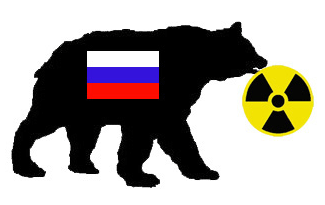
 Eskom confirms that Russians will continue nuclear bid, IOL, 30 April 2017, SIYABONGA MKHWANAZI
Cape Town – The Russians will continue to prepare to bid for the nuclear-build programme, despite the decision by the Western Cape High Court to halt it.
Eskom confirmed this and awaits further directives from the government.
Friday was the deadline for all bidding companies to submit Request for Information documentation to Eskom.The court decision has also affected the deadline for the issuing of the Request for Proposals in June.
Head of Rosatom in Southern Africa, Viktor Polikarpov, told Independent Media nothing had changed with their plans to bid for the nuclear programme.
He said they would not want to comment on the case because it was a matter involving government and civil society, who took the matter to court.
Energy Minister Mmamoloko Kubayi has said she is still studying the judgment, and would not comment on whether to appeal against the court decision or not.
Kubayi will appear before MPs on Tuesday, where she will face questions on the nuclear programme.
Polikarpov said the nuclear process was not in their hands, but in the hands of the government.“We are prepared on the bidding, but much will depend on the government, how it will sort out the court issue,” he said.
Eskom spokesperson Khulu Phasiwe said the court decision had effectively nullified the process……..
He said it was clear that everything had to be nullified and started from scratch if the government still wanted to continue with the nuclear programme.
The judgment found the process followed was unlawful and unconstitutional………http://www.iol.co.za/news/politics/eskom-confirms-that-russians-will-continue-nuclear-bid-8877208
May 1, 2017
Posted by Christina Macpherson |
marketing, Russia, South Africa |
Leave a comment
 WAR OF THE WORLDS Declassified documents reveal America and Russia’s bizarre plans to obliterate the Moon with nuclear weapons https://www.thesun.co.uk/living/3449440/declassified-documents-reveal-america-and-russias-bizarre-plans-to-obliterate-the-moon-with-nuclear-weapons/
At the time, military bosses believed that they could feasibly hit a target on the Moon within an accuracy of two miles, By George Harrison, 30th April 2017,
IN the height of the Cold War, Russia and America found themselves locked in a chilling race to nuke the Moon, declassified military documents reveal.
Following the end of the Second World War in 1945, the USSR and the USA spent decades trying to prove their military might to the world.
During this tense era, the two global superpowers found themselves locked in an arms race which saw them spend decades scrambling to develop the most powerful armaments.
As the arms race morphed into a space race, the two nations set their sights on the Moon, and made it their goal to extend their influence beyond the Earth’s atmosphere.
Now, declassified documents have revealed just how far the superpowers were prepared to go, as they hatched terrifying plans to obliterate part of our moon with a nuclear strike. Codenamed Project A119, a plan cooked up by the US Air Force in 1958 set out how America could prove their might once and for all.
Physicist Leonard Reiffel was put in charge of the project, which had the terrifying goal of detonating a nuclear warhead on the Moon. The team of military and physics experts planned to explode a warhead the same size as the bomb dropped on Hiroshima on our planet’s natural satellite.
The detonation would light up the Moon’s surface, generating a sphere of dust which would blot out any hopes of Russia winning the arms race. At the time, the team believed that they could feasibly hit a target on the Moon within an accuracy of two miles.
However, by January 1959 US military bosses were convinced that the public backlash against such a senseless strike would be enormous, and the risks of a malfunction in the launch were too great.
After that realisation, America’s leaders turned their attention to putting people, rather than weapons, in space.Meanwhile, the Soviets were cooking up a scheme of their own as part of a project codenamed E-4.
This plan involved striking the Moon with a nuclear missile of their own, although this plot faced the same overwhelming risks and difficulties as the Americans’ secret plans. These chilling Cold War revelations come after we revealed the secret US plans which could have led to the total destruction of the USSR.
We also told how America had cooked up a desperate, last-ditch nuclear strategy in the wake of World War 2, and shared how the USSR planned to retaliate by destroying most of Europe.
May 1, 2017
Posted by Christina Macpherson |
Russia, USA, weapons and war |
Leave a comment
 Chinese nuclear group raises concern that Brexit may hinder plans for Essex reactor, http://www.telegraph.co.uk/business/2017/04/28/chinese-nuclear-group-raises-concern-brexit-may-hinder-plans/ Jillian Ambrose 28 APRIL 2017, The Chinese nuclear developer behind three of the UK’s planned new nuclear power plants has warned that Brexit has cast doubt over the nuclear cooperation between China, France and Britain.
CGN Power has raised concern over the UK’s departure from a key pan-European nuclear group, Euratom, as it prepares its submission for the UK government’s rigorous assessment of China’s homegrown reactor design.
In exchange for taking a minority stake in EDF Energy’s £36bn plans to build nuclear reactors at Hinkley Point C and Sizewell B, the UK Government has left the door open for a Chinese-designed reactor at Bradwell in Essex – despite security concerns over a Chinese company holding control of key British infrastructure.
China hopes that by gaining a foothold in the UK market, considered one of the world’s most stringent safety regimes, it will be able to grow its international nuclear presence.
But Dongshan Zheng, the senior vice president of CGN, said at an industry event that the decision to leave Euratom as part of Brexit will “create some uncertainties” for its UK plans. “How this project will go ahead smoothly, how we will have as good a relationship as we have now – this is the first challenge,” he said.
Euratom streamlines the international movement of nuclear goods, people and services through a standard framework which governs safety standards.
Without membership, the UK’s nuclear renaissance could face delay while complicated new bilateral agreements are formed. It would strip the EU stamp of approval from China’s first own-design reactor in Western Europe.
“Certainly, the project itself will face some risks in costs, in terms of planning,” he said.Earlier this year EDF Energy told a committee of MPs that ideally it would remain part of Euratom but if the UK does leave it is vital that the Government agrees transitional arrangements, to give the UK time to negotiate and complete new agreements.
The MPs are due to report on the UK’s energy priorities in the Brexit negotiations early next week but the findings could be undermined by the upcoming snap election which will force an overhaul of parliamentary committees this summer.
April 29, 2017
Posted by Christina Macpherson |
China, politics international, UK |
Leave a comment
 The harvests of Chernobyl, Aeon, Thirty years after the nuclear disaster, local berry-pickers earn a good living. What’s the hidden cost of their wares?, Kate Brown, is associate professor of history at the University of Maryland, Baltimore County, and the author of Plutopia (2013). Olha Martynyuk is a historian at the National Technical University of Ukraine.
You can’t miss the berry-pickers in the remote forests of northern Ukraine, a region known as Polesia. They ride along on bicycles or pile out of cargo vans. They are young, mostly women and children, lean and suntanned, with hands stained a deep purple. And they are changing the landscape around them. Rural communities across eastern Europe are struggling economically, but the Polesian towns are booming with new construction. Two hundred miles west of the Chernobyl Nuclear Power Plant, thousands of mushroom- and berry-pickers are revving up the local economy. As they forage, they are even changing the European diet, in ways both culinary and radiological.
The rise of the Polesian pickers adds a strange twist to the story that began on 26 April 1986, when an explosion at the Chernobyl plant blew out at least 50 million curies of radioactive isotopes. Soviet leaders traced out a 30 kilometre radius around the stricken reactor and emptied it of its residents. Roughly 28,000 square kilometres outside this exclusion zone were also contaminated. In total, 130,000 people were resettled, but hundreds of thousands remained on irradiated territory, including the Polesian towns of Ukraine’s Rivne Province. In 1990, Soviet officials resolved to resettle several hundred thousand more residents but ran out of money to carry out new mass evacuations.
Last summer, we went to Rivnе to talk to people who in the late 1980s wrote petitions begging for resettlement. In the letters, which we had found in state archives in Kiev and Moscow, writers expressed worries about their health and that of their children, while describing a sense of abandonment. Help never arrived; the Chernobyl accident came just as the Soviet state began to topple economically and politically……..
Anyone in Polesia can pick anywhere, as long as they are willing to brave the radioactive isotopes. After Chernobyl, Soviet officials strongly discouraged picking berries in contaminated forest areas, which promised to remain radioactive for decades. As the years passed, fewer and fewer people heeded the warnings. In the past five years, picking has grown into a booming business as new global market connections have enabled the mass sale of berries abroad. A person willing to do the hard work of stooping 10 hours a day and heaving 40-pound boxes of fruit to the road can earn good money. The women and child pickers are revitalising the Polesian economy on a modest, human-powered scale. They are quietly and unceremoniously doing what development agencies and government programmes failed to do: restoring commercial activity to the contaminated territory around the Chernobyl Zone.
We followed the pickers into the woods. …….
Reliance on the forest for a living is an ancestral tradition in Polesia. Because of the mineral-poor soils, traditional farming never thrived here. Instead, Polesians subsisted on game, fish, berries, herbs and mushrooms while making their tools and homes from wood and clay. What is new in the past few years is the industrial-sized scale of berry harvesting. A typical roadside berry-buyer purchases about two tons of berries a day in season, and there are hundreds of buyers. In 2015, Ukraine exported 1,300 tons of fresh berries and 17,251 tons of frozen berries to the European market – more than 30 times as much as in 2014. Ukraine is now one of biggest exporters of blueberries to the EU.
That success is all the more remarkable because Polesian berries are not just any berries. They grow in radioactive soils, which means that they carry some of Chernobyl’s legacy in them. We showed up at a berry wholesaler in the boom town of Rokytne and noticed a radiation monitor who was stationed to meet buyers at the loading dock. The situation there was tense. As the monitor waved a wand over each box of berries, measuring their gamma ray emission, she set aside about half of the boxes. The buyers argued with her, trying to lower the count on their berries: ‘It’s not the berries that are radiating. It’s my trailer. Measure it over there.’
We asked the monitor, a young townswoman, how many berries come up radioactive. ‘All the berries from Polesia are radioactive,’ she replied, ‘but some are really radioactive. We’ve had berries measure over 3,000!’ She could not describe what units she was referring to, microsieverts or microrems; she only knew which numbers were bad. ‘The needle has to be between 10 and 15,’ she said, vaguely pointing to her wand, ‘and then I place it in this machine.’ She gestured toward a small mass spectrometer. ‘If the readout is more than 450, then the berries are over the permissible level.’
Contrary to our assumption, the berries rejected as too radioactive were not discarded, but were merely placed aside. Then they, too, were weighed and sold, just at lower prices. The wholesalers we spoke to said that the radioactive berries were used for natural dyes. The pickers claimed the hot berries were mixed with cooler berries until the assortment came in under the permissible level. The berries could then legally be sold to Poland to enter the European Union (EU) market, even if some individual berries measured five times higher than the permissible level. Such mixing is legal as long as the overall mix of berries falls within the generous limit of 600 becquerel per kilogram set by the EU after the Chernobyl disaster.
No one, certainly no official, ever envisioned revitalising the economy by exploiting berries and mushrooms. Months after the 1986 accident, Soviet scientists determined that forest products were the most radioactive of all edible crops, and banned their consumption. However, villagers in Polesia never stopped harvesting berries and mushrooms (as well as game and fish) from the forests outside the fenced-off Chernobyl Zone. Women sold their produce surreptitiously at regional markets, deftly avoiding the police who learned to identify Polesians by their homemade baskets……..
AQlthough the Polesian berries meet EU standards, it remains unclear how healthy life is for those living in the Rivne Province. Official publications of the World Health Organization and the International Atomic Energy Agency assert that radiation levels in Polesia are too low to cause health damage other than a slight rise in the chance of cancer. However, that judgment is based on reference studies of Hiroshima and Nagasaki victims, not on local research in the Chernobyl zones. Wladimir Wertelecki, a geneticist at the University of California, San Diego, has spent the past 16 years tracking every recorded birth in the Rivne Province. ‘Hiroshima was just one big X-ray. It doesn’t compare to the doses of people in Polesia who ingest radioactive isotopes every day,’ he says. He thinks that the slow-drip exposure of organs to radioactive isotopes over decades makes for a far more damaging exposure than the single, external Hiroshima dose.
Researchers in Wertelecki’s group and those working on small, usually minimally financed medical studies have found that low doses of ingested radiation tend to concentrate in vital organs that keenly impact on important body functions. Yury Bandazhevsky, a pioneer in studying the health impacts of Chernobyl, has recorded a correlation between the incorporation of radioactive cesium in children’s bodies and heart disease in Belarus and Ukraine. Wertelecki and the Ukrainian medical researcher Lyubov Yevtushok discovered that in the six Polesian regions of the Rivne Province, certain birth defects, such as microcephaly, conjoined twins and neural-tube disorders occur three times more frequently than is the European norm. ‘We did not prove with this study that radiation causes birth defects. We just have a concurrence, not proof, of cause and effect,’ Wertelecki says. Nevertheless, he considers the concurrence statistically strong enough to warrant large-scale epidemiological studies that could prove or disprove whether the birth defects were caused by radiation.
Despite the fact that the nuclear disaster presented scientists with a unique living laboratory, few funding agencies have been willing to finance Chernobyl studies on non-cancerous health effects; based on Japanese bomb-survivor research, industry scientists have insisted that there would be no measurable non-malignant impacts. In Chernobyl-contaminated Polesia, however, few people doubt that ingesting radioactive toxins over decades has a biological cost.
Galina, the woman who declared that there was ‘no Chernobyl’, changed her view later when talking about her own health. Trim and fit at the age of 50, she had a stroke followed by two surgeries for ‘women’s cancer’. About her cancers, she said: ‘All of a sudden, they started growing day by day. I asked the doctors if they’d hold up the operation until autumn [after the harvest], but they said I’d be dead by then. Probably, these problems were caused by radiation. It does have an effect, apparently.’ Even less is known about non-cancer health impacts from Chernobyl. Many locals complain of aching and swollen joints, headaches, chronic fatigue and legs that mysteriously stop moving. There have been almost no studies investigating these vague complaints…….
here has been little public discussion and almost no medical research on the long-term, low-dose ingestion of radioactive isotopes. Presumably exporting the berries helps the people of Polesia, but for now there is no hard proof……
The mass marketing of radioactive Polesian forest products is an unexpected outcome of policies aimed at finalising the disaster. It is a development that disputes the focus on Chernobyl as a ‘place’. Rather, Chernobyl is an event, an ongoing occurrence that transpires as long as the radioactive energy released in the accident continues to decay……https://aeon.co/essays/ukraine-s-berry-pickers-are-reaping-a-radioactive-bounty
April 28, 2017
Posted by Christina Macpherson |
environment, Reference, Ukraine |
1 Comment

 NucClear News no 95 May 17 Brexit & Radwaste As Britain heads towards a hard Brexit and Brexatom – quitting Euratom – thanks to a freedom of information request, the Gizmodo website has obtained details of some of the internal worries of the Nuclear Decommissioning Authority (NDA). The document, dated 13th July 2016, runs through some of the biggest strategic challenges created by us leaving the EU.
An NDA subsidiary, Radioactive Waste Management Ltd (RWM) is engaged in research on deep geological disposal. Perhaps unsurprisingly, the EU is fronting a lot of the research cash. For example, one project – DOPAS – The Full-Scale Demonstration of Plugs and Seals, studied how to plug and seal radioactive waste. In this case Europe paid €8,700,000 – half the cost of doing it. It has also recently paid for a number of other similar projects. The document goes on to reveal that RWM is planning to seek European cash for future projects with similarly impenetrable acronyms. The best one is Europe putting an expected contribution of €3-4m into “DISCO” – a project studying the Dissolution of Spent Fuel in Waste Containers. Though it isn’t explicitly spelled out in the document, the implication is obvious: If our relationship with Europe is currently up in the air – so is the ability to pay for these important research projects.
Perhaps the biggest danger though – reading between the lines – is the risks associated with Britain becoming more hostile to immigration. “UK universities have a multinational community”, the document explains, “UK universities have been very successful in attracting the best talent (students and academic staff) from across the world, which in turn leads additional funding, better teaching and higher quality research. An inability to attract non-UK EU nationals would have a negative impact on UK universities and indirectly on the NDA estate R&D programme.”
Ultimately then, it appears that Brexit is going to create headaches when it comes to getting rid of radioactive waste. http://www.no2nuclearpower.org.uk/nuclearnews/NuClearNewsNo95.pdf
April 28, 2017
Posted by Christina Macpherson |
UK, wastes |
Leave a comment
 No2 Nuclear Power No 95 May 17 Hinkley Notes · The government has been slammed by the Information Commissioner’s Office over a number of “unjustifiable” delays in publishing details of contracts for Hinkley Point C. Whitehall officials were guilty of “egregious” and unjustifiable delays before revealing details of government contracts for Hinkley Point C awarded to a company facing a potential conflict of interest. Leigh Fisher, a management consultancy, was awarded a £1.2 million contract by the Department of Energy and Climate Change for its advice on Hinkley Point, despite the British division of Jacobs Engineering, an American group that also owns Leigh Fisher, working for EDF on the project. The advice from Leigh Fisher helped the government to agree the 35-year subsidy deal with EDF. Details of the arrangement with Leigh Fisher, which has concerned MPs including Iain Wright, chairman of the Commons’ business, energy and industrial strategy select committee, emerged in November after The Times obtained redacted details of the tender documents under the Freedom of Information Act. However, it took the business department almost six months to release information after it was requested. Public bodies typically are required to respond to FOI requests within 20 working days. The department also heavily redacted details of separate Hinkley Point contracts awarded to KPMG and Lazard, including passages regarding potential conflicts of interests. KPMG was paid about £4.4 million for its work by the department and Lazard £2.6 million. (1)
EDF Energy has confirmed that discussions are ongoing in a dispute over pay involving ground workers at Hinkley Point C. (2) EDF said on 24th April it was still in dialogue with trade unions after payment offers were labelled “derisory” and “unacceptable” in a Unite press release. The row over bonus pay is threatening to lead to an industrial dispute among construction workers on the site. A consultative ballot is to be held among 700 members of Unite and GMB, which could lead to a vote on industrial action. (3) ·
The news of a possible strike comes days after crew members had to be rescued from a Hinkley Point ship as it began to sink in the Bristol Channel. The three crew members of a former military landing craft had to be rescued following a mayday call in the Bristol Channel. The vessel, which takes building materials to the Hinkley Point C power station under construction, had started to take on water. A crew member was airlifted to hospital in Cardiff suffering from hypothermia after three lifeboats and a helicopter were scrambled to the scene. The craft finally beached in the mouth of the River Parrett. (4)
Work is gathering pace on Hinkley Point C says the FT. (5) The once grassy valley, carrying the Holford stream towards the Bristol Channel, is being filled with earth and rubble excavated from the adjacent construction site. Last month concrete pouring started on the first permanent structures: an 8km network of tunnels that will carry piping and cables around the site. The Guardian says the site looks more like Mordor, from Lord of the Rings, a scarred landscape and hive of activity driven with a single purpose: ensuring these reactors do not repeat the delays and overspends at Flamanville and Olkiluoto. (6) Vincent de Rivaz, head of EDF in the UK, says work is on schedule. Yet as one set of hurdles is cleared, another is looming. French nuclear regulators are investigating potential safety problems with steel components destined for Hinkley from a foundry suspected of falsifying quality-assurance documents. The probe involves Areva, the French nuclear reactor manufacturer and close partner of EDF, and has already caused temporary shutdowns of several existing reactors in France to check for faults. Only the hopelessly naive would believe EDF’s claims that Hinkley will start generating electricity by 2025, says Geoff Ho, writing in The Express. The likelihood of it being delivered on time and on budget is remote. Unions are already threatening to go on strike over bonus payments, and there are the unresolved safety concerns about the EPR design Given Britain’s less than glorious history of infrastructure projects being delivered late and massively over budget, he cannot see Hinkley Point C bucking the trend. (7)
A group of activists has filed a legal challenge with the French prime minister’s office against the extension of EDF’s licence for construction of the Flamanville nuclear reactor in northern France. The move by Greenpeace and other anti-nuclear groups is in response to safety concerns over the Flamanville reactor and is a precursor to elevation of their challenge to the State Council, the country’s highest administrative court. The lobby groups said in a statement that the licence, issued in 2007 and renewed this year, should not have been granted because EDF and reactor supplier Areva were aware of technical shortcomings at Areva’s Creusot Forge nuclear foundry since 2005. In 2014 Areva discovered that the lid of the Flamanville reactor vessel manufactured by Creusot Forge showed abnormally high carbon concentrations, which weaken its steel. (8)….
http://www.no2nuclearpower.org.uk/nuclearnews/NuClearNewsNo95.pdf
April 28, 2017
Posted by Christina Macpherson |
politics, UK |
Leave a comment
The numbers of cases rose into the thousands, too high to dismiss, and in 1996 the WHO and the IAEA finally admitted that skyrocketing rates of childhood thyroid cancer were most likely due to Chernobyl exposures.
Today we know little about the non-cancerous effects that Soviet scientists working in contaminated zones reported in the late 1980s, and which they attributed to internal and external exposures to ionizing radiation. Are these effects as real as the childhood thyroid cancers proved to be? The Soviet post-Chernobyl medical records suggest that it is time to ask a new set of questions about long-term, low-dose exposures.
Chernobyl’s hidden legacy http://live.iop-pp01.agh.sleek.net/physicsworld/reader/#!edition/editions_Nuclear_2017/article/page-19330 Kate 
Brown is a historian at the University of Maryland, Baltimore County, US, e-mail kbrown@umbc.edu Historian Kate Brown argues that scientists should re-examine Soviet-era evidence of health effects from low doses of radiation
In June 1980 a doctor with the Oak Ridge Associated Universities in the US wrote a letter to a colleague at the Knolls Atomic Power Laboratory in upstate New York. The pair were corresponding about a forthcoming study of employee health at the Knolls reactor, and the doctor, C C Lushbaugh, wrote that he expected “little ‘useful’ knowledge” from this study “because radiation doses have been so low”. Even so, he agreed that the study had to be done because “both the workers and their management need to be assured that a career involving exposures to low levels of nuclear radiation is not hazardous to one’s health”. The results of such a study, he surmised, would help to counter anti-nuclear propaganda and resolve workers’ claims. However, they could also be a liability. If a competing union or regulatory agency got hold of the employees’ health data, Lushbaugh fretted, it could be weaponized. “I believe,” he continued, “that a study designed to show the transgressions of management will usually succeed.”
Lushbaugh’s dilemma is characteristic of research on the human health effects of exposure to low doses of radiation. He assumed he knew the results – good or bad – before the study began, because those results depended on how the study was designed. The field was so politicized, in other words, that scientists were using health studies as polemical tools and, consequently, asking few open-ended scientific questions.
A few years after Lushbaugh posted this letter, reactor number four at the Chernobyl nuclear power plant blew up, killing 31 workers and firefighters and spreading radioactive material across a broad area of what was then the Soviet Union (now Ukraine and Belarus) and beyond. The accident also exploded the field of radiation medicine and, for a while, promised to rejuvenate it. In August 1986, months after the accident, the chief of the United Nations Scientific Committee on the Effects of Atomic Radiation (UNSCEAR), Giovanni Silini, advocated an enduring epidemiological investigation similar to research on atomic-bomb survivors in Japan [1]. Many other scientists concurred, hoping that Chernobyl could clear up ongoing controversies and uncertainties surrounding low-dose exposures.
It never happened. No long-term epidemiological study took place. That’s not to say there isn’t any information. A few summers ago I went to the Ukrainian national archives in the dusty, bustling outskirts of Kiev and asked the archivists for files on Chernobyl from Soviet Ukraine’s Ministry of Health. They laughed, telling me Chernobyl was a banned topic in the Soviet Union. “You won’t find anything,” they said.
They were wrong. I found dozens of collections labelled “The medical effects of the Chernobyl disaster”. I started reading and have not yet been able to stop.
The aftermath
In the years between 1986 and 1991, doctors and sanitation officials wrote to the Ministry of Health in Kiev with alarming accounts of widespread, chronic illness among the hundreds of thousands of children and adults living in contaminated territories. They recorded increases in tonsillitis, upper respiratory disease and disorders of the digestive tract and immune system. Between 1985 and 1988, cases of anaemia doubled. Physicians from almost every region in the zone of contamination reported a leap in the number of reproductive problems, including miscarriages, stillbirths and birth malformations. Nervous-system disorders surged. So did diseases of the circulatory system. In 1988, in the heavily contaminated Polesie region of northern Ukraine, 80% of children examined had upper respiratory diseases and 28% had endocrine problems. In Ivankiv, where many cleanup workers lived, 92% of all children examined had a chronic illness.
I also went to Minsk to check the archives in Belarus. There, I read reports that sounded eerily similar to the Ukrainian documents. These reports were classified “for office use only”, meaning that at the time, scientists were not free to exchange this information across districts or republics of the Soviet Union. Even so, independently, they were reporting similar, bad news. The problem grew so dire in Belarus that in 1990 officials declared the entire republic, which received more than 60% of Chernobyl fallout, a “zone of national ecological disaster”.
The Ukrainian and Belarusian reports, hundreds of them, read like a dirge from a post-catastrophic world. Doctors wrote from clinics in Kharkiv, far outside the contaminated zone, and described similar health problems among evacuees who had settled there. Physicians sent telegrams from Donetsk, where they were treating a complex of illnesses among young miners who had burrowed under the smouldering reactor in the days after the accident. Medical workers sent in to examine people in contaminated regions also fell ill.
In response, the Union of Soviet Radiologists penned a petition to alert Soviet leaders of the ongoing public health disaster. The president of the Belarusian Academy of Science sent a detailed summary of scientists’ findings to Minsk and Moscow. Even a KGB general, Mikhailo Zakharash, sounded the alarm. Zakharash, who was also a medical doctor, conducted a study of 2000 cleanup workers and their family members in a specially equipped KGB clinic in Kiev. In 1990, summing up four years of medical investigation, he wrote, “We have shown that long term, internal exposures of low doses of radiation to a practically healthy individual leads to a decline of his immune system and to a whole series of pathological illnesses.”
Chronic radiation
These findings track with what Soviet doctors had long described as chronic radiation syndrome, a complex of symptoms derived from chronic exposure to low doses of radiation. Researchers working on Chernobyl discerned a pattern of disease that tracked with pathways of radioactive isotopes entering the body, paths that began in either the mouth and headed towards the gastrointestinal tract or started in the lungs and followed blood into circulatory systems. Radioactive iodine sped to thyroids, they hypothesized, causing endocrinal and hormonal damage.
Critics, mostly in Moscow and the ministries of health, acknowledged the growth in health problems, but denied a connection to Chernobyl. A E Romanenko, the Ukrainian Minister of Health, is credited with inventing the word “radiophobia” to describe a public fear of radiation that induced stress-related illness. He and his colleagues also pointed to a screening effect from mass medical monitoring. Local doctors, they said, were projecting the diagnoses of chronic radiation syndrome onto their patients, blaming it for any illness found after Chernobyl.
There are some problems with these arguments. From 1986 to 1989, Chernobyl was a censored topic in the Soviet Union. Doctors could not exchange information about health problems, nor did they have access to maps of radioactive contamination. They only learned to be “radiophobic” by judging the bodies they examined. In the same years, doctors were also fleeing contaminated areas en masse, leaving hospitals and clinics in those regions staffed at 60%. As physicians left, so too did the chance for diagnosis, meaning that under-reporting of illnesses was more likely than a screening effect. Moreover, doctors from the northern regions of the Rivne province, which were at first judged clean and only in late 1989 designated contaminated, reported the same growth of illness as areas originally deemed “control zones,” regions with counts of more than 5 curies per square kilometre. The president of the Belarusian Academy of Science, V P Platonov, pointed to a vacuum of knowledge: “Until this time, no population has ever lived with continual internal and external exposures of this size.” Risk assessments assuring safe levels in the contaminated zones were extrapolated from the Japanese Atomic Bomb Survivor Lifespan Study, but these began only in 1950, five years after exposure. “Much is uncertain,” Platonov continued, “about fundamental aspects of the effects of low doses of radiation on human organs,” [2].
What happened to the 1980s Chernobyl health studies, which might have led to a renaissance in the field of radioecology? Essentially, they were overlooked. To figure out why, I went to the headquarters of the World Health Organization (WHO) in Geneva, to the UN’s archives in New York and the archives of UNSCEAR in Vienna. There, I found evidence of a conflict between branches of the WHO and the International Atomic Energy Agency (IAEA) over which organization would control the studies of Chernobyl health effects.
By 1989 angry crowds were questioning the Soviet Union’s handling of Chernobyl, and Soviet leaders asked foreign experts for help in assessing the disaster’s health impacts. The IAEA agreed, and Fred Mettler, a radiologist and American delegate to UNSCEAR, was appointed to head the medical section of an IAEA team. In 1990, as he and his team examined 1726 people in six contaminated zones and six control zones, Soviet doctors gave him 20 slides from children diagnosed with thyroid cancer. Thyroid cancer is very rare in children: before the Chernobyl accident, doctors saw eight or nine cases per year in all of Ukraine. Twenty cases in just three provinces was hard to believe. Dubious, Mettler brought the slides to the US to have them verified. They indeed indicated thyroid cancer.
Cancer cluster
Mettler mentioned this major medical finding in the 1991 International Chernobyl Project (ICP) technical report, but strangely, he also stated that there was “no clear pathologically documented evidence of an increase in thyroid cancer” [3]. The report concluded that there were no detectable Chernobyl health effects and only a probable chance of childhood thyroid cancers in the future. In a 1992 publication on thyroid nodules in the Chernobyl territories, Mettler failed to mention the 20 verified cases at all [4].
How could such a lapse occur? I found a confidential 1990 UN memo that seems relevant, particularly in light of the study-design problem set out in Lushbaugh’s letter a decade earlier. The memo suggests that the IAEA was conducting the ICP study to “allay the fears of the public” in service of “its own institutional interest for the promotion of peaceful uses of nuclear energy” [5]. The experiences of Keith Baverstock, then head of the radiation protection programme in the WHO’s European office, likewise reveal an institutional aversion to bad news. In July 1992 Baverstock planned to go to Minsk to examine childhood thyroid cases in Belarus, where doctors reported an astounding 102 new cases. At the last minute, officials from the WHO and the Commission of European Communities inexplicably pulled out of the mission. In an interview with me, Baverstock, an expert on the effects of ionizing radiation, said that a WHO official told him he could get fired if he went to Minsk.
He went anyway. With Belarusian scientists, he published news of the thyroid cancer epidemic in Nature. A top IAEA official complained angrily to the WHO, and the two agencies put pressure on Baverstock to retract his article. He refused, and a barrage of letters followed in Nature disputing the connection between the cancers and Chernobyl exposures [6]. Leading scientists from the US Department of Energy, the National Cancer Institute, Japan’s Radiation Effects Research Foundation and the IAEA argued that cancers were found because of increased surveillance. They called for a suspension of judgment and for further study. Repetitive and dismissive, their letters read like an orchestrated pile-on.
We now know that these global leaders in radiology were wrong. The numbers of cases rose into the thousands, too high to dismiss, and in 1996 the WHO and the IAEA finally admitted that skyrocketing rates of childhood thyroid cancer were most likely due to Chernobyl exposures. Today, the UNSCEAR maintains that the health consequences of the Chernobyl accident are limited to 31 direct fatalities – plus 6000 cases of children’s thyroid cancer [7].
Lingering questions
The question is – so what? Despite the 1991 ICP report’s erroneous claim of no health effects, UN agencies eventually recognized the cancer epidemic. What difference did a few years make? A great deal, it turns out. The ICP report also recommended that resettlements from the most contaminated regions should cease [8]. Consequently, the planned resettlement of 200,000 people living in areas contaminated with high levels of radiation (between 15 and 40 curies per square kilometre) slowed tremendously. The UN General Assembly had also been waiting for the report before raising funds for Chernobyl relief. The $646m budget (equivalent to about $1.1bn today) included medical aid, resettlement funds and a large-scale epidemiological study of Chernobyl health effects. The assertion by important UN agencies that there were no detectable health effects deflated that effort. Before the report, Japan had given $20m to the WHO, but afterwards it gave no more and complained about the funds being wasted. A few other countries gave sums totalling less than $1m, while the US and the European Community begged off entirely, citing the ICP report as a “factor in their reluctance to pledge” [9].
In subsequent years, IAEA and UNSCEAR officials cited the ICP report when discouraging Chernobyl-related health projects. In 1993 UNSCEAR scientific secretary Burton Bennett recommended that UN agencies suspend all programmes aimed at Chernobyl relief because they were unnecessary. He and IAEA administrator Abel Gonzalez, who led the ICP assessment, widely shared their views among UN agencies about “misinformation surrounding the Chernobyl accident” [10]. When the WHO, nonetheless, started a pilot study on Chernobyl health effects, Gonzalez wrote that he could not imagine what the WHO “expects to be able to detect for the level of doses in question”. Irked that WHO officials would examine any effects but psychological ones, he charged, “The World Health Organization seems to ignore, expressly or tacitly, the conclusions and recommendations of the International Chernobyl Project,” [11].The consequences of this moment of deviant science continue 30 years later. Today we know little about the non-cancerous effects that Soviet scientists working in contaminated zones reported in the late 1980s, and which they attributed to internal and external exposures to ionizing radiation. Are these effects as real as the childhood thyroid cancers proved to be? The Soviet post-Chernobyl medical records suggest that it is time to ask a new set of questions about long-term, low-dose exposures.
References
- Giovanni Silini 1986 “Concerning proposed draft for long-term Chernobyl studies” Correspondence Files, UNSCEAR Archive
- V P Platonov and E F Konoplia 1989 “Informatsiia ob osnovynkh rezul’tatakh nauchnykh rabot, sviazannykh s likvidatsiei posledstvii avarii na ChAES” RGAE 4372/67/9743: 490
- International Chernobyl Project, Proceedings of an International Conference (Vienna: IAEA 1991): 47. Mettler also admitted that the slides checked out at the Vienna conference convened to discuss the report. For a discussion of thyroid cancer, see The International Chernobyl Project, Technical Report, Assessment of Radiological Consequences and Evaluation of Protective Measures (Vienna: IAEA 1991): 388
- Fred Mettler et al. 1992 “Thyroid nodules in population around Chernobyl” Journal of American Medical Association 268 616
- From Enrique ter Horst, Asst Sec Gen, ODG/DIEC to Virendra Daya, Chef de Cabinet, EOSG, 16 April 1990, United Nations Archive, New York S-1046 box 14, file 4, acc. 2001/0001
- Baverstock et al. 1992 “Thyroid cancer after Chernobyl” Nature 359 21; Kazakov et al. 1992 “Thyroid cancer after Chernobyl” Nature 359 21; I Shigematsu and J W Thiessen 1992 “Childhood thyroid cancer in Belarus” Nature 359 680; V Beral and G Reeves 1992 “Childhood thyroid cancer in Belarus” Nature 359 680; E Ron, J Lubin, A B Scheider 1992 “Thyroid cancer incidence” Nature 360 113
- “The Chernobyl accident: UNSCEAR’s assessments of the radiation effects” UNSCEAR website
- The International Chernobyl Project: an Overview (Vienna: IAEA 1991): 44
- “International co-operation in the elimination of the consequences of the Chernobyl Nuclear Power Plant accident” 24 May 1990, UNA S-1046/14/4; “Third meeting of the Inter-Agency Task Force on Chernobyl” 19–23 September 1991, WHO E16-445-11, 5; “Briefing note on the activities relating to Chernobyl” 3 June 1993, Department of Humanitarian Affairs DHA, UNA s-1082/35/6/, acc 2002/0207; Anstee to Napalkov, 17 Jan 1992, WHO E16-445-11, 7
- Gonzalez to Napalkov, 10 August 1993, WHO E16-445-11, 19; B G Bennett 1993 “Background information for UNEP representative to the meeting of the Ministerial Committee for Coordination on Chernobyl” 17 November 1993, New York, Correspondence Files, UNSCEAR Archive, Vienna
- Gonzalez to Napalkov, 10 August 1993, WHO E16-445-11, 19
April 26, 2017
Posted by Christina Macpherson |
2 WORLD, radiation, Reference, Ukraine |
Leave a comment
 Tories are ‘fanatics’ for saying they would start a nuclear war, Green Party says http://www.independent.co.uk/news/uk/politics/theresa-may-nuclear-first-strike-war-green-party-fanatics-jeremy-corbyn-jonathan-bartley-a7700071.html Green co-leader Jonathan Barley attacked the Tories and Labour’s positions on Trident, Jon Stone Political Correspondent @joncstone, 25 Apr 17, The Green Party has accused the Conservatives of “fanaticism” after the Defence Secretary admitted that Theresa May could start a nuclear war.
Michael Fallon had said the Prime Minister could launch a nuclear attack against another country, even if the UK was not under nuclear attack, in “the most extreme circumstances”.
Jonathan Bartley, co-leader of the Green Party, branded the position “immoral” because it would lead to the deaths of countless civilians. He also criticised Jeremy Corbyn, whose party says it will renew Trident despite its leader’s clear statement that he would not use the weapon of mass destruction. Mr Bartley branded Labour’s approach to the multi-billion pound missile system “HMS Pointless”.
Speaking at St George’s Hospital in Tooting on Monday the Green co-leader pledged spend the cost of the weapon on the NHS.
“Voters are being offered a choice between Tory first strike fanaticisms and Labour’s HMS Pointless. What could be more immoral than considering a first use of nuclear weapons, knowing full well that it would lead to the death of countless civilians?” he said.
“And what could be more illogical that pledging to renew a multi-billion pound nuclear weapons system that will never be used? With people struggling to get by in Britain it’s inexcusable to be ploughing people’s money into this cold war relic.
“Instead of replacing this nuclear monstrosity the Green Party would give the NHS an emergency kiss of life. People are being treated in corridors while we flush money away on nuclear weapons. Cancelling Trident would give our NHS more than £3bn per year – which must be added to additional funding from raising taxes.
“Real security means having a world class health service, not locking ourselves into replacing these weapons we’ll never use. Imagine the impact on our NHS of employing 85,000 more nurses, midwives and health professionals – that’s what is at stake here.”
Speaking on Sunday Labour leader Mr Corbyn said he would try to de-escalate a nuclear war and said that “any use of nuclear weapons is a disaster for the whole world”. His party however says it is committed to maintaining a “nuclear deterrent” and would renew Trident.
Speaking on BBC Radio 4 this morning Mr Fallon, Ms May’s defence secretary, said: “In the most extreme circumstances, we have made it very clear that you can’t rule out the use of nuclear weapons as a first strike.
Asked in what circumstances, he replied: “They are better not specified or described, which would only give comfort to our enemies and make the deterrent less credible.”
The highest estimate of the cost of replacing Trident is £205 billion over its lifetime, according to the Campaign for Nuclear Disarmament. One estimate collated from ministerial statement by Crispin Blunt, the Tory MP who chairs the Foreign Affairs Committee, pegged the cost at £167 billion.
The independent Trident Commission, which reported in 2014, pegged the cost at closer to £100 billion.
April 26, 2017
Posted by Christina Macpherson |
politics, UK |
Leave a comment
Theresa May would fire UK’s nuclear weapons as a ‘first strike’, says Defence Secretary Michael Fallon
‘We have made it very clear that you can’t rule out the use of nuclear weapons as a first strike’ Independent, Rob Merrick Deputy Political Editor @Rob_Merrick , 24 Apr 17,
Theresa May would fire Britain’s nuclear weapons as a ‘first strike’ if necessary, the Defence Secretary has said.
Michael Fallon said the Prime Minister was prepared to launch Trident in “the most extreme circumstances”, even if Britain itself was not under nuclear attack.
The statement came as the Conservatives continued to exploit Labour divisions on the retention of the Trident deterrent, to warn of the“very dangerous chaos” if Jeremy Corbyn becomes prime minister……..
“In the most extreme circumstances, we have made it very clear that you can’t rule out the use of nuclear weapons as a first strike,” Mr Fallon said.
Asked in what circumstances, he replied: “They are better not specified or described, which would only give comfort to our enemies and make the deterrent less credible.
“The whole point about the deterrent is that you have got to leave uncertainty in the mind of anyone who might be thinking of using weapons against this country.”
Mr Fallon also insisted that critics of Trident – including senior military figures who have ridiculed the idea that it is an effective deterrent – were “absolutely wrong”……..
“The Labour party is very clear we are committed to a credible nuclear credibility at the minimum end of the scale. That is Labour party policy and it will be in the manifesto,” Mr Gwynne said.
But he appeared to rule out a first strike, adding: “We would not be in a position where the first choice would be to press that red button. It is a deterrent because we have them.
“We believe in multilateralism, we believe in negotiating away our nuclear weapons system to create a nuclear weapon free world.”…….http://www.independent.co.uk/news/uk/politics/theresa-may-nuclear-weapons-first-strike-michael-fallon-general-election-jeremy-corbyn-trident-a7698621.html
April 26, 2017
Posted by Christina Macpherson |
UK, weapons and war |
Leave a comment
 Britain would be ‘literally erased from the face of the earth’ if it launched a nuclear attack, warns Russian MP Another translation says Britain would be ‘razed to the ground’ in a retaliatory strike, Independent, Samuel Osborne @SamuelOsborne93, 24 Apr 17, Britain would be “literally erased from the face of the earth” in a nuclear war, a Russian MP has warned.
Franz Klintsevich, a retired colonel, was responding to comments from Defence Secretary Michael Fallon, who said “in the most extreme circumstances, we have made it very clear that you can’t rule out the use of nuclear weapons as a first strike.”
Mr Klintsevich said if Britain were to launch a preemptive strike, then “not having the biggest territory, it will literally be erased from the face of the earth.” Another translation, carried by the Russian news agency TASS, says Britain would be “razed to the ground” in a retaliatory strike.
Sir Michael’s comments came in response to Labour divisions over retaining the Trident deterrent, with Labour leader Jeremy Corbyn suggesting renewal might not be in the party’s election manifesto — only to be corrected later by party colleagues.
Speaking to BBC Radio Four’s Today Programme, Sir Michael said Labour had left voters “completely unsure as to what would actually happen to our nuclear deterrent.”
He said Prime Minster Theresa May would be ready to use Trident as a “pre-emptive initial strike”…….
Mr Klintsevich, who is deputy chairman of the upper house of the Russian parliament’s defence and security committee, called Sir Michael’s comments “disgusting” and said it “deserves a tough response”. He added: “In the best case this statement should be taken as an element of psychological war — which looks particularly disgusting in such a context.
“Otherwise, it sounds really bad, because a reasonable question arises: Against whom is Great Britain going to preemptively use nuclear weapons?”
If Britain intended to use nuclear weapons against a non-nuclear state, he added, “then probably English people desperately want to share the laurels of the USA who threw nuclear bombs at defenceless [Japanese cities] Hiroshima and Nagasaki [in 1945].”
“But those times have gone for good, as has the era of the greatness of the British Empire.” http://www.independent.co.uk/news/uk/politics/uk-nuclear-war-russia-warn-senator-frants-klintsevich-erased-face-earth-razed-ground-us-cold-war-a7701411.html
April 26, 2017
Posted by Christina Macpherson |
Russia, UK, weapons and war |
1 Comment
KIM’S N-UK-E HQ Millions funnelled to North Korea’s nuclear weapons programme through this house in suburban London street https://www.thesun.co.uk/news/3393185/millions-funnelled-to-north-koreas-nuclear-weapons-programme-through-this-house-in-suburban-london-street/
The Korea National Insurance Corporation’s (KNIC) assets have ‘now been frozen. By Jon Lockett 23rd April 2017,
KIM Jong-un’s controversial nuclear weapons programme has been funded from a business being run out of a gated London home, it’s been reported.
Tens of millions of pounds have been sent on to North Korea from the anonymous looking detached property in a quiet Blackheath street. Reports in the Sunday Times claim up to £33 million a year has been funnelled through the insurance company which is said to have been controlled directly from Pyongyang. Last night UK Government officials confirmed the company has recently been closed down.
The Korea National Insurance Corporation’s (KNIC) assets have also been frozen over fears it’s funding the development of weapons of mass destruction, it’s claimed.
There are also local reports the luxury home was raided by police last year, but that has not been confirmed by the authorities. The move is the latest in a series of tough economic sanctions imposed on North Korea including an arms embargo and a crackdown on trade that might help the country’s military.
Reports say KNIC was targeted as a direct way of stopping funding of the nuclear programme. Two North Korean officials working for the company were said to have been deported but the Home Office refused to confirm this.
An EU report into KNIC concluded: ‘The Korea National Insurance Corporation, a state-owned and controlled company, is generating substantial foreign exchange revenue which could contribute to the DPRK’s [Democratic People’s Republic of Korea] nuclear-related, ballistic missile-related or other weapons of mass destruction-related programmes.’
Official documents reveal the property in Kidbrooke Park Road was purchased by the North Korean government in 2006 for £542,500 and Land Registry documents confirm KNIC as the sole proprietor.
Companies House records show that the huge sums made by the company were funnelled back to the regime in North Korea’s capital Pyongyang.
The North Korean embassy in London described the allegations against the KNIC as “groundless”.
April 26, 2017
Posted by Christina Macpherson |
secrets,lies and civil liberties, UK |
Leave a comment
What would happen if a nuclear bomb hit Coventry? http://www.coventrytelegraph.net/news/coventry-news/what-would-happen-nuclear-bomb-12913136 The city centre would be turned into a 300m wide and 200m deep crater, BY JAMES RODGER, 23 Apr 17, Hundreds of thousands of people would be killed if a nuclear blast hit Coventry and Warwickshire.
Imagining the bomb went off at ground level in Broadgate, the city centre would be turned into a 300m wide and 200m deep crater, according to interactive data site Nukemap.
The map below shows the impact of a nuclear explosion in Coventry.

Fireball radius (orange)
Fatal levels of radiation would increase greatly if the nuke exploded at ground level.
The fireball radius (orange) would see the entire city centre including monuments such as the Cathedral, Broadgate and West Orchards Shopping Centre consumed by a nuclear fireball 3.2km wide.
This would stretch as far as the Ricoh Arena at one end, and Finham at the other.
The fatality rate is 100 per cent.
- Crater inside radius: 150 m (0.07 km²)
- Crater lip radius: 300 m (0.28 km²)
- Fireball radius: 0.71 km (1.56 km²)
- Air blast radius (20 psi): 1.67 km (8.8 km²)
- Radiation radius (500 rem): 2.26 km (16.1 km²)
- Air blast radius (5 psi): 3.52 km (39 km²)
- Thermal radiation radius (3rd degree burns): 8.95 km (251 km²)
-
Radiation radius (green)
Slightly wider than the fireball radius. Without medical treatment, expect between 50 per cent and 90 per cent mortality from acute effects alone. Dying takes between several hours and several weeks.
Air blast radius (red – 20psi)
The most intense air blast would have a radius of 4.75km and demolish heavily built concrete buildings in the University of Warwick campus, Binley Road, and Holbooks, among other areas. The fatality rate is still 100 per cent – or very close.
-
Air blast radius (grey – 5psi)
A lesser air blast radius would still cause the collapse of all residential buildings within a 10km radius. That means houses would collapse all the way out in Fillongley, Bedworth, Kenilworth and Ryton.Injuries are universal and fatalities widespread.
-
Thermal radiation radius (lighter orange)
The thermal radiation radius is 29.1km. This would mean third degree burns “throughout the layers of the skin”, which could cause severe scarring, disablement and even amputation. This radius covers Nuneaton, Hinckley, Sutton Coldfield, parts of Birmingham and Leamington Spa.
- The city would be dependent on outsiders and national agencies for help after the blast. In the fallout survivors would find dozens of hospitals and medical facilities would have been destroyed. A dozen fire stations would also have been wiped out.At the same moment around 200 schools and hundreds of churches, mosques, gurdwaras and temples could have been levelled or badly damaged.
April 24, 2017
Posted by Christina Macpherson |
Reference, UK, weapons and war |
8 Comments


 Eskom confirms that Russians will continue nuclear bid, IOL, 30 April 2017, SIYABONGA MKHWANAZI