Even the fake charity Weinberg Next Nuclear recognises the link between Small Modular Nuclear Reactors and Weapons
 Breaking the cycle of indecision: nuclear report by the House of Lords, The Weinberg Foundation, May 3rd, 2017, Suzanna Hinson
This week the House of Lord’s Science and Technology Committee published its report “ Nuclear research and technology: Breaking the cycle of indecision”. Weinberg Next Nuclear welcomes the report and agrees with many of its conclusions.
Nuclear has undoubted potential in the UK, but indecision for many years, through successive governments, has impaired progress. Continual delays have damaged both short and long term opportunities, as well as tarnishing the reputation for nuclear in the UK and limiting investor confidence.
Instead, the report argues that the Government “must act now to provide underpinning strategic support to the nuclear industry”. This action can and should be chosen strategically, and the Government can decide to either be a designer, manufacturer and operator of nuclear power itself, or be a destination to operate nuclear reactors designed and potentially manufactured overseas…….
Small modular reactors (SMRs) are one of the areas that have particular potential, with the report recognising they are likely to be “globally important for the future of nuclear energy”. The UK’s experience in this sector, through defence application expertise, gives it the potential to be a world leader……
Weinberg Next Nuclear hope the Government heed this report, and its recommendations. Following the General Election in June, nuclear power policy should come off of hold and onto fast track. http://www.the-
weinberg-foundation.org/2017/05/03/breaking-the-cycle-of-indecision-nuclear-report-by-the-house-of-lords/
Marine Le Pen and Emmanuel Macron – very different views on nuclear power

 French Presidential Election: Nationalism Meets Environmentalism From International Environment Reporter Bloomberg, By Rick Mitchell, 5 May 17 “………..While the campaign commitment documents of both candidates set out environmental and energy policies, independent candidate Macron—a former Rothschild banker who was minister of economy, industry and the digital economy in outgoing President Francois Hollande’s Socialist government when the country hosted global climate talks in 2015—offers more detail than does National Front candidate Le Pen…….
Divergence on Nuclear Energy
Le Pen, by contrast, “promises to preserve the environment by breaking with an economic model based on wild trade globalization,” asserting that “real ecology” consists in producing, processing and consuming close to home.
On energy, she promises to modernize and secure the country’s aging fleet of nuclear reactors, in particular through a program proposed by flagship energy company Electricite de France (EDF) that would spend tens of billions of euros through 2025 to extend reactors’ lives beyond 40 years.
Macron said a strategic decision on extending reactors’ lives should wait for a report by the country’s Nuclear Safety Authority (l’Autorité de Sûreté Nucléaire), expected in 2018.
Le Pen says she would reassert state control of EDF, which until 2004 was fully state owned, and would not allow the closing of the troubled Fessenheim nuclear power plant.
Closing Fessenheim is an unkept promise by Hollande that Macron has vowed to carry out. But Macron said he would wait until after the next-generation Flamanville European pressurized reactor (EPR) plant comes online.
Originally meant to be in operation by 2012, the Flamanville plant has suffered several construction delays and cost overruns due to safety and other problems.
Macron would continue the Hollande government’s plan, set out in the framework 2015 law on energy transition related to green growth, to reduce nuclear energy’s share of French electricity generation from the current 75 percent down to 50 percent 2025.
Renewables
Both candidates vow to continue the country’s ban on shale gas exploration, with Le Pen saying the ban would remain until “satisfactory conditions” for the environment, safety and health are met.
Macron vows to wean France off fossil fuels, including by closing the country’s remaining coal-fired power plants within five years, and says he would carry out the energy transition law’s schedule to gradually increase the carbon tax to 100 euros ($109) per ton by 2030, from the current 30.5 euros.
Le Pen said she would reduce France’s dependence on oil by developing capacity for hydrogen energy, through state support for research and development. She would make support for home insulation a budget priority.
Both candidates profess strong support for renewable energy, with Le Pen promising “massive” development of French capacity for solar, biogas, wood and other sources, “through an intelligent protectionism, economic patriotism, public and private investment and through orders made by EDF.” However, she would “decree an immediate moratorium on wind energy.”
Land-based wind energy has for several years faced strong public resistance and big regulatory hurdles in some parts of France.
‘30 Billion Euros in Private Investment’
Macron said he would cut red tape for deployment of renewable projects, calling for a doubling of wind and solar photovoltaic capacity by 2022, and government policies to encourage 30 billion euros ($32.7 billion) in private investment, including for research and investment in energy storage and smart grids.
He proposes a special bonus to encourage people who have automobiles made before 2001 to buy “more ecological” cars, whether used or new, and he would accelerate deployment of electric cars…..
Paris Agreement
Le Pen said would she simplify urbanization standards to ease a housing shortage, while maintaining rules to protect the environment and natural habitat.
Macron would push for European trade sanctions against countries that don’t respect environmental clauses in trade agreements with the EU and said France should make a priority of getting the Paris climate agreement implemented.
“Considering the U.S. president’s expressed intentions, France should in particular push for Europe to pressure the United States to face up to its responsibilities,” Macron said.
The candidates meet for a two-hour televised debate May 3, their only one-on-one debate of the campaign.
To contact the reporter on this story: Rick Mitchell in Paris atcorrespondents@bna.com
To contact the editor responsible for this story: Greg Henderson atghenderson@bna.com
For More Information
Emmanuel Macron’s program of campaign commitments for the environment and ecological transition is available, in French, athttp://src.bna.com/osa.
Marine Le Pen’s 144 presidential commitments are available, in French, at http://src.bna.com/osb. https://www.bna.com/french-presidential-election-n57982087546/
2,397,863 registered Chernobyl-related health victims. 453,391 ARE CHILDREN
 https://www.usatoday.com/story/news/world/2016/04/17/clinic-ukraine-chernobyl-30th-anniversary-health-impact/82892592/ THERE ARE 2,397,863 PEOPLE REGISTERED WITH UKRAINE’S HEALTH MINISTRY TO RECEIVE ONGOING CHERNOBYL-RELATED HEALTH TREATMENT. OF THESE, 453,391 ARE CHILDREN. Kim Hjelmgaard , USA TODAY There are 2,397,863 people registered with Ukraine’s health ministry to receive ongoing Chernobyl-related health care. Of these, 453,391 are children — none born at the time of the accident. Their parents were children in 1986. These children have a range of illnesses: respiratory, digestive, musculoskeletal, eye diseases, blood diseases, cancer, congenital malformations, genetic abnormalities, trauma.

KIEV, Ukraine — Daryna Bizilya, 10, wants to be a singer. During a visit with her and about a dozen other children at Ukraine’s largest medical clinic for people living with the consequences of Chernobyl, that’s what she did: She sang.
Bizilya walked directly into the middle of the room, signaled to her friend in the corner holding a cellphone to crank up its digital beatbox, and just went for it. She sang with feeling, dramatic facial expressions and large, sweeping arm gestures that occasionally ended with a clenched fist.
This clinic had an elaborate name, even by former Communist-bloc standards — the Institute of Specialized Radiation Protection of the Ukraine Population. It was full of sick children whose entire lives had only known illness.
The halls were long and dark and seemed, however improbably, to be lit chiefly by fading avocado-colored paint. The children’s bedrooms were neat but gloomy. Textbook orphanage-interior. Not every room was heated, and it was cold outside.
The number she performed was by Ukrainian artist Ani Lorak, a hero of Bizilya’s. On her website, Lorak describes herself as the “singer who became the idol of Ukrainians.”
Bizilya, whose favorite subjects are math and English, said she admired Lorak mostly because she “sings from her heart, and she feels her songs with her heart.”
Bizilya has a heart condition brought on by eating contaminated food, her doctors said. Too much physical exercise makes her condition worse.
“They told us at school that some children were left without a home, and that they were very ill,” she said when asked to explain what she knew about Chernobyl. “I would like to help those children who are without parents. There are children in our village like this,” she added.
Daryna does not think of herself as especially ill.
Artemchuk also has ambitions to be a singer.
“Probably a pop singer, like Michael Jackson,” he said.
He had some other things to say: Favorite food (meatballs), soccer team (Dynamo Kiev) and player (Real Madrid’s Cristiano Ronaldo).
“The doctor says I have very bad blood circulation,” he suddenly volunteered. “My parents say that Chernobyl was a big disaster and many people perished because of it.”
A girl named Alina Aponchuk, also 14, was too nervous to speak and fiddled with the sleeves of her dress. There was something on her mind. After a few minutes, she said she was going home the next day.
Aponchuk’s doctor said she had two left kidneys, both twice the normal size. She had chronic gastroduodenitis, which produces sharp stomach pains, lethargy and headaches. She also had “vegetative dysfunction,” a nervous system syndrome that causes anxiety, depression and other emotional stresses.
Vadim Bozhenko, the doctor who runs the clinic, said children stay at the institute from a few days to several weeks and all come from areas located on radioactive land.
“The (children) eat and drink contaminated milk products because cattle that live there eat that grass,” he said, adding that the clinic was underfunded by at least 30%.
Looking around the grounds that evoked a disheveled college campus, it was hard to believe the shortfall was that modest.
“Tell them we need beds and blankets,” Bozhenko said. “Tell them the Institute of Specialized Radiation Protection of the Ukraine Population needs this and a lot more.”
Growing trade between Iran and European Union following implementation of the nuclear deal
A New Era for Iran: Trade With EU Grows 79 Percent on Nuclear Deal Implementation http://www.albawaba.com/business/new-era-iran-trade-eu-grows-79-percent-nuclear-deal-implementation-970660 May 4th, 2017 Iran’s exports to the European Union have increased by over 300 percent after the implementation of the historic 2015 nuclear agreement between Iran and the P5+1 group of countries, European Climate Action and Energy Commissioner Miguel Arias Canete says.
Nuclear Industry Association (NIA)makes 6 demands for arrangements to replace Euratom
 NIA sets out six priorities for Euratom exit, WNN03 May 2017 The UK government needs to work closely with industry to bring about replacement arrangements for the European Atomic Energy Community (Euratom) in a timely manner for the country’s nuclear industry, the Nuclear Industry Association (NIA) says in a position paper published today. The NIA represents more than 260 companies including nuclear power station operators, new build developers and vendors, those engaged in decommissioning, waste management, all aspects of the nuclear fuel cycle, supply chain and consultancy companies.
The NIA said its paper, Exiting Euratom, sets out the priority areas for negotiations with the European Commission as the UK ceases to be a full member of the Euratom community alongside the process to leave the European Union. It also sets out the steps the government needs to take “to avoid serious disruption to normal nuclear business” in the UK and across the EU…….
The NIA has listed six key steps it wants the government to take:
- agreeing a replacement Voluntary Offer Agreement with the International Atomic Energy Agency for a new UK safeguards regime;
- replacing the Nuclear Co-operation Agreements (NCA) with key nuclear markets – Australia, Canada, the Euratom Community, Kazakhstan, South Korea and the USA;
- clarifying the validation of the UK’s current bilateral NCAs with Japan and other nuclear states;
- setting out the process for the movement of nuclear material, goods, people and services;
- agreeing a new funding arrangement for the UK’s involvement in Fusion 4 Energy and wider EU nuclear R&D programs; and maintaining confidence in the industry and securing crucial investment.
The London-based trade association said addressing these priority areas will enable the nuclear sector to continue its work with other countries, both within and outside the continuing EU, as the UK ceases to be a member of the EU. Given the amount to be concluded within the next 22 months, however, there is a risk that new arrangements will not be in place, the NIA said……. http://www.world-nuclear-news.org/NP-NIA-sets-out-six-priorities-for-Euratom-exit-03051701.html
Russia: “It is evident that Pyongyang will not abandon its nuclear weapons as long as it sees itself directly threatene

 Moscow doubts North Korea will ditch nuclear weapons as long as ‘threat looms’ http://tass.com/politics/944297 May 03 17, The Russian diplomat stressed the necessity of consolidated diplomatic efforts to settle the situation on the Korean Peninsula. MOSCOW . North Korea will never abandon the idea of having nuclear weapons as long as it feels threat to its security, a Russian foreign ministry official said on Tuesday.
“It is evident that Pyongyang will not abandon its nuclear weapons as long as it sees itself directly threatened,” Mikhail Ulyanov, director of the ministry’s non-proliferation and weapons control department, said at the first session of the Preparatory Committee for the 2020 Review Conference of the Parties to the Treaty on the Non-Proliferation of Nuclear Weapons.
“We are nonetheless convinced that existing tensions on the Korean Peninsula are caused not only by Pyongyang’s nuclear and missile programmes, but also by an increased military activity in the North-East Asia of some regional and especially non-regional States,” he said.
The Russian diplomat stressed the necessity of consolidated diplomatic efforts to settle the situation on the Korean Peninsula. “No minute should be lost. Otherwise the confrontation logic may become overwhelmingly dominant,” he said. “Russia rejects the nuclear status of the DPRK. We do not accept nuclear tests conducted by Pyongyang and its defiance of the relevant UN Security Council resolutions.”.
Germany’s record 85% renewables over weekend
 Graph of the day: Germany’s record 85% renewables over weekend [good graphs] REneweconomy By Giles Parkinson on 4 May 2017 Germany achieves a record level of 85 per cent renewable energy generation on April 30 – part of the May 1 long weekend – with wind and solar providing significant lifts in output and along with biomass and hydro almost completely sidelining hard coal plants.
Patrick Graichen of Agora Energiewende Initiative, which provided these graphs, says a combination of breezy and sunny weather in the north and warm weather in the south saw Germany’s May 1 holiday weekend powered almost exclusively by renewable resources.
“Most of Germany’s coal-fired power stations were not even operating on Sunday April 30th, with renewable sources accounting for 85 per cent of electricity across the country,” he said. “Nuclear power sources, which are planned to be completely phased out by 2022, were also severely reduced.
Graichen says days like April 30 would be “completely normal” by 2030, as the federal government’s Energiewende (energy transition) initiative continues to add value to the wealth of resources invested in it……..http://reneweconomy.com.au/graph-of-the-day-germanys-record-85-renewables-over-weekend-60743/
World Nuclear Lobby bewails Britain’s lack of progress on Small Modular Nuclear reactors (SMRs)
 UK nuclear’s future in government hands, say reports, World Nuclear News, 2 May 17, Two UK parliamentary committees have published separate reports – one related to research and development, the other concerning Brexit – that both call on the government to take action to ensure the future competitiveness of the country’s nuclear industry.
According to the House of Lords Science and Technology Committee, “We have reached a critical moment for the future of the United Kingdom as a serious nuclear nation.” It continues, “The undoubted potential of the civil nuclear sector has been blighted by the indecision of successive governments.”…..
 SMR competition
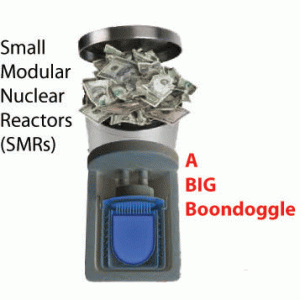
The government’s failure to make a decision on its strategy for small modular reactors (SMRs) “is a prime example of its inaction in the civil nuclear arena”, the report says. “Not keeping to the stated timetable for the SMR competition has had a negative effect on the nuclear sector in the UK and if the government does not act soon the necessary high level of industrial interest will not be maintained.”
Nuclear Industry Association (NIA) chief executive Tom Greatrex said the industry shares the committee’s “frustration” with the SMR competition. “With a potential global market for SMRs valued at £250-£400 billion ($323-$517 billion), the government must provide clarity as soon as possible after the general election if the energy, industrial and export opportunities of a UK SMR are to be realised.”
Tom Mundy, NuScale Power’s chief commercial officer and managing director for the company in the UK and Europe, also said a “clear direction” on SMRs from the government is needed. “We therefore welcome the committee’s call for the government’s SMR strategy to be published, setting out what the next steps will be to make SMRs a reality for the UK.”
Committee chairman, John Roundell Palmer, said: “We also found that the amount of UK funding for nuclear research, development and innovation is much lower than public funding levels in other leading nuclear nations, including the US, France and Japan. If the government’s aim is for the UK to be active across the main areas of nuclear R&D it needs to make significant investments in new technologies or we risk falling behind the rest of the world.”
Brexit
The committee also said the nuclear industry faces risks if the UK’s membership of European Atomic Energy Community (Euratom) expires at the end of the two-year negotiating period without a replacement. It warned, “The UK risks losing its lead in fusion research as well as losing access to the markets and skills it needs to construct new nuclear power plants and existing power plants could be unable to acquire fuel.”…….http://www.world-nuclear-news.org/NP-UK-nuclear-industrys-future-in-government-hands-say-reports-0205174.html
Small Modular Nuclear Reactors (SMRs) just not happening in Britain
Alarm sounded over delays to develop UK mini nuclear reactors Lords scold government for lack of progress on small modular reactors plan, warning UK nuclear sector will suffer if firms walk away, Guardian, Adam Vaughan, 2 May 17, The government’s failure to deliver on a multimillion-pound competition to develop mini atomic power stations has hurt the nuclear sector and risks international companies walking away from the UK, a Lords committee has warned.
In 2015 the then chancellor George Osborne promised £250m over five years for a nuclear research and development programme, an undisclosed sum of which was for a competition to pave the way for small modular reactors.
These reactors are much smaller than conventional nuclear plants with a capacity of less than 300MW – or a 10th of what Hinkley Point C should provide.
But the government has failed to even publish results of the first phase of the competition, expected last autumn, which the Lords science and technology committee said was “particularly alarming”.
“This has had a negative effect on the nuclear sector in the UK and if the government does not act soon the necessary high level of industrial interest will not be maintained,” they said in a report on Tuesday.
The peers urged ministers to publish their plans for small modular reactors (SMRs) without delay, and scolded the government for not showing any urgency to make a decision…….
Newcastle-based Penultimate Power UK, which hopes to capitalise on the market, told the committee that a lack of clarity from government had paralysed development of nuclear power generation technology…….
Government officials said earlier this year that one of the attractions of mini nuclear power stations was they fitted with the industrial strategy launched by Theresa May. But Tom Wintle, deputy director at the business department, said they had to provide affordable power.
“SMRs will need to deliver energy cost-competitively if they are to play a part in the UK’s future energy mix. As well as securing low-carbon energy, government is also committed to keeping down the cost of that energy for consumers, so there is a key challenge there for the nuclear industry as a whole and for SMRs,” he told an industry conference. https://www.theguardian.com/business/2017/may/02/alarm-sounded-over-delays-to-develop-uk-mini-nuclear-reactors
‘Political warfare” Russian claim about hidden nuclear bombs along US coastline
Russia has hidden nuclear bombs ready to detonate along US coastline, says former Kremlin spokesman
Expert says outlandish claims are ‘political warfare’, The Independent, Will Worley @willrworley , 3 May 17 A Russian military expert has claimed Moscow has been “seeding” nuclear bombs off the US coastline.
The Kremlin has dismissed the claim as “strange”, while an independent expert referred to it as an act of “political warfare”.
He added: “Oh, it seems I’ve said too much. I should hold my tongue. In short, we have something to provide an ‘asymmetrical’ (and cheaper) response to the Americans.”The interview was translated by the Middle East Media Research Institute.
The Kremlin was quick to dismiss the remarks, calling them “strange”. “I would suggest that you not take newspaper reports like this seriously,” government spokesman spokesman Dmitry Peskov said.
Consequences of Chernobyl
 Hidden Radiation Secrets of the World Health Organization, CounterPunch MAY 2, 2017
“………..WHO held a Chernobyl Forum in 2004 designed to “end the debate about the impact of Chernobyl radiation” whilst WHO maintains that 50 people died.
Here’s the final conclusion of that Chernobyl Forum ‘04: The mental health of those who live in the area is the most serious aftereffect, leading to strong negative attitudes and exaggerated sense of dangers to health and of exposure to radiation. Mental health was thus identified as the biggest negative aftereffect.
Because that conclusion is so brazenly bizarre, the Chernobyl Forum ‘04 must’ve been part of an alternative universe, way out there beyond the wild blue yonder, maybe the Twilight Zone or maybe like entering a scene in Jan Švankmajer’s Alice, a dark fantasy film loose adaptation of Lewis Carroll’s Alice in Wonderland.
Here’s reality: Chernobyl Liquidators fought the Chernobyl disaster. Eight hundred thousand (800,000) Liquidators from the former USSR, largely recruits from the army, with average age of 33, fought the Chernobyl disaster.
According to an interview (2016) with a Liquidator, “We were tasked with the deactivation of the third and fourth reactors, but we also helped build the containment sarcophagus. We worked in three shifts, but only for five to seven minutes at a time because of the danger. After finishing, we’d throw our clothes in the garbage” (Source: Return to Chernobyl With Ukraine’s Liquidators, Aljazeera, April 25, 2016).
“Estimates of the number of liquidators who died or became ill as a result of their work vary substantially, but the men of the 633rd say that out of the 259 from their group, 71 have died. Melnik says that 68 have been designated as invalids by a state committee, which investigates their health and determines whether or not their diseases are attributable to Chernobyl… Dr Dimitry Bazyka, the current director-general of the National Research Centre for Radiation Medicine in Kiev, says that approximately 20,000 liquidators die each year,” Ibid.
As for total deaths, the Chief Medical Officer of the Russian Federation reported that 10% of its Chernobyl Liquidators were dead by 2001. The disaster occurred in 1986 with 80,000 dead within 16 years. Authorities out of Ukraine and Belarus confirmed Russian death numbers. Yet, WHO claims 50 died.
Eighty-thousand (80,000) Liquidators, as of 16 years ago, dead from Chernobyl, and that body count, according to Ms Katz, leaves out the people most contaminated by Chernobyl, meaning evacuees and also 57% of the fallout for Chernobyl came down outside of the USSR, Belarus, and Ukraine, and in 13 European countries 50% of the countryside was dangerously contaminated.
As for studies of the radiation impact of Chernobyl: “Thousands of independent studies in Ukraine, Belarus, and the Russian Federation and in many other countries, that were contaminated to varying degrees by radionuclides, have established that there has been significant increase in all types of cancer, in diseases of the respiratory, gastrointestinal, urogenital, endocrine immune, lymph node nervous systems, prenatal, perinatal, infant child mortality, spontaneous abortions, deformities and genetic anomalies….” (Katz)
Hence, WHO’s handling and analysis and work on Chernobyl leaves the curious-minded speechless, open-mouthed, agape, and confounded……..http://www.counterpunch.org/2017/05/02/hidden-radiation-secrets-of-the-world-health-organization/
UK House of Lords Report on Small Modular Nuclear Reactors’ non progress
 HOUSE OF LORDS Science and Technology Select Committee 3rd Report of Session 2016–17 HL Paper 160 Nuclear research and technology: Breaking the cycle of indecision https://www.publications.parliament.uk/pa/ld201617/ldselect/ldsctech/160/160.pdf
Nuclear industry very worried about Brexit
Nuclear industry warns UK must avoid ‘cliff edge’ over Brexit, Leaving Euratom treaty without new deals would have dramatic impact on Hinkley Point C and other stations, says NIA, Guardian, Adam Vaughan, 3 May 17, The UK nuclear industry has issued its strongest warning yet to ministers on the problems it faces if the government is unable to strike new international atomic power deals during Brexit talks.
Failure to put in place alternative arrangements to replace the existing European nuclear treaty, Euratom, which the UK is quitting as part of the article 50 process, would have a “dramatic impact” on Hinkley Point C and other new power stations around the country, the industry said.
Ministers must avoid a “cliff edge” when the UK exits Euratom or face “major disruption to business across the whole nuclear fuel cycle”, the Nuclear Industry Association will warn the government on Wednesday.
The stark briefing to officials, seen by the Guardian, comes just a day after MPs said the continued operations of the UK nuclear industry were at risk from exiting the Euratom treaty. A Lords committee on Tuesday also said the UK risked losing access to markets and skills when leaving Euratom.
Tom Greatrex, the chief executive of the NIA, said: “We’ve had today two select committee reports that have both touched on this. The industry has been and is clear to government we are ready to do what we can – but it needs the government to get on with this and engage now, regardless of all the other issues they have to deal with.”
Theresa May’s decision to call a general election had made matters worse, he added, because it had squeezed the time available to establish alternatives to the treaty.
The UK’s departure will mean the government needs to agree a new inspections regime with the International Atomic Energy Agency to replace Euratom inspectors.
“If the UK has not replaced the Euratom safeguards regime with its own system by the time it left Euratom, normal business could be disrupted right across the nuclear industry,” the NIA paper said. Falling back on World Trade Organisation standards would risk putting the UK in breach of its obligations in international nuclear law, the organisation added.
Nuclear cooperation agreements (NCAs) would also need to be put in place with key nuclear countries outside the EU, including the US, Japan and Australia, because the UK’s agreements with those governments are currently based on its membership of Euratom……https://www.theguardian.com/business/2017/may/02/nuclear-industry-uk-brexit-euratom-hinkley-point-c-nia
Cumbria politicians clash over impact of Brexit on nuclear plans
Politicians clash over impact of Brexit on nuclear plans. North West Evening Mail, 2 May 2017 SOUTH Cumbria politicians have clashed over claims that the impact of Brexit could damage Britain’s nuclear future.
The business, energy and industrial strategy committee of MPs raised concerns of a long-term risk the UK could become a “rule taker”, unable to influence the European rules and standards.
The committee urged ministers to find transitional arrangements to keep Britain in the agency until a new plan could be hammered out.
Barrow and Furness’ sitting MP, John Woodcock, has criticised plans to leave nuclear research agency Euratom, with potential delays in finding an alternative threatening power supplies and inhibiting nuclear trade and research…….http://www.nwemail.co.uk/Politicians-clash-over-impact-of-Brexit-on-nuclear-plans-2b350329-bcc1-4e10-8fda-144b34c41de6-ds
Central Europe still believes in nuclear power, despite the growing safety and financial risks
Central Europe keeps the nuclear faith, DW, 2 May 17 The financial and geo-political risks attached to nuclear power are rising, but Central Europe’s belief is unshakable. Tom Gosling reports from Prague. Nuclear power is facing a fight for its life. Increased safety concerns, weak energy markets, and shifting technological potential look to be pulling the rug from under the 20th-century dream of a nuclear future of clean, cheap and plentiful energy. Struggling projects across the Visegrad region illustrate the difficulties.
In spite of the shadows cast by Chernobyl and Fukushima, and the pickle in which US-Japanese giant Westinghouse finds itself, nuclear remains at the forefront of national energy strategy in the Czech Republic, Hungary, Poland and Slovakia.
The projects have spent years treading water, and many are thought unlikely to ever become a reality. Yet in contrast to many countries to the west, it’s not public opinion but hard cash that’s the problem.
“Nuclear is a religion in Visegrad,” announces Jan Haverkamp of Greenpeace CEE (Central and Eastern Europe). “There is no discussion of investment risk or real safety concerns. The only thing discussed is who will pay for the initial project.”
No business for private investors
That sticking point has seen a longstanding political scrap in the Czech Republic flare up again ahead of elections later this year. The expansion of the nuclear fleet is the central plank in the country’s long-term energy strategy, but no one wants to stump up the 300 billion Czech crowns (11 billion euros; $12 billion) it would cost……..
While the public may be convinced, nuclear projects are too rich and too risky for private investors. Prague’s efforts to push Czech state-controlled energy group CEZ into building new units face a “big obstacle” in the form of private shareholders, says Petr Bartek, an analyst at Erste Group.
However, squeezed by financial constraints and EU regulation, states are not keen either. The Czech government insists it will not offer power price guarantees – a stance that saw CEZ scrap an eight-billion-euro tender in 2014.
Even when the state is ready to play a role, it doesn’t necessarily work out. Slovakia’s project to expand the Mochovce plant is hugely over budget and delayed by several years. The problems provoked a bitter spat with project partner Enel, and the Italian utility plans to exit the country, handing local oligarchs greater leverage over the energy market as it goes……..
While Prague insists an open tender remains the preferred route, analysts are skeptical that the cash for new Visegrad nuclear plants will be found anywhere but Moscow or Beijing.
However, not everyone is keen on help from outside. Fearing leverage from abroad, the nationalist Polish government has recently gone back to the drawing board on financing plans for the country’s first nuclear plant, which would cost around 10 billion euros…….http://www.dw.com/en/central-europe-keeps-the-nuclear-faith/a-38659364
1 This Month



Shut down the radiation-damaged Heysham nuclear reactors now
To see nuclear-related stories in greater depth and intensity – go to https://nuclearinformation.wordpress.com

Say No to NASA’s Reckless Nuclear Reactor on the Moon
Say No to NASA’s Reckless Nuclear Reactor on the Moon
-
Archives
- October 2026 (268)
- September 2026 (339)
- August 2026 (330)
- July 2026 (355)
- June 2026 (287)
- May 2026 (306)
- April 2026 (356)
- March 2026 (251)
- February 2026 (267)
- January 2026 (308)
- December 2025 (358)
- November 2025 (359)
-
Categories
- 1
- 1 NUCLEAR ISSUES
- business and costs
- climate change
- culture and arts
- ENERGY
- environment
- health
- history
- indigenous issues
- Legal
- marketing of nuclear
- media
- opposition to nuclear
- PERSONAL STORIES
- politics
- politics international
- Religion and ethics
- safety
- secrets,lies and civil liberties
- spinbuster
- technology
- Uranium
- wastes
- weapons and war
- Women
- 2 WORLD
- ACTION
- AFRICA
- Atrocities
- AUSTRALIA
- Christina's notes
- Christina's themes
- culture and arts
- Events
- Fuk 2022
- Fuk 2023
- Fukushima 2017
- Fukushima 2018
- fukushima 2019
- Fukushima 2020
- Fukushima 2021
- general
- global warming
- Humour (God we need it)
- Nuclear
- RARE EARTHS
- Reference
- resources – print
- Resources -audiovicual
- Weekly Newsletter
- World
- World Nuclear
- YouTube
-
RSS
Entries RSS
Comments RSS

