Utility Week 15th May 2017, National Grid hits pause on Moorside connection. Plans shelved for “biggest new power line since electricity network was built”. Plans to build a 102-mile power line connecting the proposed Moorside nuclear plant in Cumbria to the transmission network have been placed on hold, National Grid has revealed.
The news comes after developer NuGen confirmed earlier this month that it was conducting a “strategic review of its options” following reports that its main shareholder, Toshiba, may mothball the Moorside project.
http://utilityweek.co.uk/news/National-Grid-hits-pause-on-Moorside-connection/1302702
May 17, 2017
Posted by Christina Macpherson |
business and costs, politics, UK |
Leave a comment
 Guardian 15th May 2017, Archbishop of Canterbury plays crucial role in BMO Global Asset Management’s decision to dump £20m of shares in firms such as BHP Billiton One of Britain’s biggest managers of ethical funds is to dump £20m of shares in fossil fuel companies in one of the biggest divestments so farbecause of climate change.
Shares in BHP Billiton, the Anglo-Australian mining giant, will be among those sold by BMO Global Asset Management’s range of “responsible” funds, which manage £1.5bn of assets. They were previously known as the “stewardship” funds, the first ethical funds launched in Britain. The archbishop of Canterbury, Justin Welby, played a crucial role in the divestment, as president of BMO’s responsible investment council. The Church of England has already pulled out of investing in companies that make more than 10% of its revenues from thermal coal or oil from tar sands….. https://www.theguardian.com/environment/2017/may/15/top-uk-fund-manager-divests-from-fossil-fuels
May 17, 2017
Posted by Christina Macpherson |
business and costs, climate change, UK |
Leave a comment
 Jeremy Corbyn Explains Why He Can’t Envisage Using Nuclear Weapons, HuffPost UK, 14 May 17, May’s closeness to Trump is the real ‘coalition of risk and insecurity’
Jeremy Corbyn has signalled he can’t envisage ever using nuclear weapons because to do so would mean the world had already suffered a “cataclysmic failure”.
The Labour leader said that nuclear warfare would mean “the indiscriminate killing of millions of people” and risk long-lasting radiation that would wipe out all life across much of the planet.
In a keynote speech on defence and security at the Chatham House think tank, Corbyn stressed that his “first duty” would be to protect Britain by using diplomacy and defusing tensions around the world.
He also said that the UK’s Trident nuclear deterrent would be renewed by Labour and then placed into a strategic defence review to look at new, long-term threats such as cyber warfare.
Corbyn also said that he wouldn’t “take any lectures” from the Tories on humanitarian intervention after the Thatcher government refused to apply sanctions on South Africa in the wake of apartheid shootings of children in Soweto.
And he claimed that the Conservatives were the party putting Britons in danger as “Theresa May seeks to build a coalition of risk and insecurity with Donald Trump”.
A Labour government would “step back, learn the lessons of the past and find new ways to solve and prevent conflicts”, he said.
And it would seek to build cooperation with China and India, unlike the Prime Minister, who in January said that the two Eastern giants were threatening to ‘eclipse’ the West in military terms.
Corbyn, a long-time advocate of unilateral nuclear disarmament, said earlier this year that his instructions in any nuclear conflict would be to “follow orders when given”, rather than writing a letter automatically granting prior authority to fire off missiles.
May 15, 2017
Posted by Christina Macpherson |
politics, UK |
Leave a comment


 Russia’s Putin says ready to help resolve North Korea nuclear issue – South Korea, http://in.reuters.com/article/southkorea-russia-idINKBN1881MQ By Christine Kim | SEOUL, 12 May 17
Russia’s President Vladimir Putin told his newly elected South Korean counterpart, Moon Jae-in, in a phone call on Friday that he is ready to play a “constructive role” in resolving North Korea’s nuclear threat, the South’s presidential office said.
Putin made the comment after Moon said the foremost task to boost cooperation between the two countries was to strengthen strategic bilateral communication to find a solution to curb North Korea’s nuclear threat, the Blue House said in a statement.
“We hope for Russia to play a constructive role in order for North Korea to stop with its nuclear provocations and go the way of denuclearisation,” Moon was citing as saying to Putin in the 20-minute conversation.
“I, too, aim to find a way to begin talks quickly between North and South Korea as well as the six-party talks,” Moon said, referring to talks aimed at denuclearising North Korea involving the United States, China, Japan, Russia and the two Koreas.
The talks collapsed in 2008 after North Korea launched a rocket.
Tension has been high for months on the Korean peninsula over North Korea’s nuclear and missile development and fears it will conduct a sixth nuclear test or test another ballistic missile in defiance of U.N. Security Council resolutions.
Moon is a liberal who advocates a more conciliatory approach to North Korea compared with his conservative predecessor.Moon also expressed hopes the two countries would be able to cooperate in developing East Asia, including extending a natural gas pipeline from Siberia to South Korea, the Blue House said. Putin said he was ready to help in all of the matters they discussed and the two leaders invited each other for state visits, the Blue House added.
Moon said he would send a special envoy to Russia soon and Putin said he would welcome the envoy.The two leaders said they looked forward to meeting at the Group of 20 summit meeting in Germany in July.
Earlier in the day, Moon spoke with British Prime Minister Theresa May and German Chancellor Angela Merkel, the Blue House said. He asked them to help in curbing North Korea’s nuclear programme and both promised to.
(Reporting by Christine Kim; Additional reporting by Se Young Lee; Editing by Robert Birsel)
May 13, 2017
Posted by Christina Macpherson |
politics international, Russia, South Korea |
Leave a comment

 Jeremy Corbyn is still dodging the nuclear question, George Eaton political editor New Statesman, 12 May 17
The Labour leader came close but ultimately refused to say that he would approve the use of nuclear weapons. In the general election, the Conservatives aim to shoot to kill. By denouncing Labour as soft on defence, they believe they can win their first landslide victory since 1987 (when they similarly tormented the opposition over this issue)……
It is the gravest act of all – the use of nuclear weapons – that has proved most fraught for Labour in recent times. Though the party’s manifesto has committed to Trident renewal, Corbyn, a lifelong unilateralist, has long refused to say whether he would use the UK’s arsenal (and, indeed, has said he would not). Shadow defence secretary Nia Griffith, who has said she would, was not invited to the event and did not contribute to drafting the speech (seeing it for the first time at 11pm last night). At her insistence, a manifesto section warning any prime minister to be “extremely cautious about ordering the use of weapons of mass destruction” was removed.
But in his speech, Corbyn all but repeated it. “I am often asked if as prime minister I would order the use of nuclear weapons,” he said. “It’s an extraordinary question when you think about it – would you order the indiscriminate killing of millions of people? Would you risk such extensive contamination of the planet that no life could exist across large parts of the world?”
He added, however: “Labour is committed actively to pursue disarmament under the Nuclear Non-Proliferation Treaty and we are committed to no first use of nuclear weapons
But let me make this absolutely clear. If elected prime minister, I will do everything necessary to protect the safety and security of our people and our country. That would be my first duty.”
That, however, fell short of explicitly stating he would use nuclear weapons (which Trident supporters regard as essential for deterrence)……….
As the event drew to a close, Corbyn was asked whether he supported the full renewal of Trident (encompassing four Vanguard-class submarines). Corbyn noted that while parliament had voted for a like-for-like replacement, Labour would hold a Strategic Defence Review, which he did not wish to pre-empt. Though aides subsequently stated that abolition was not an option, the possibility of downgrading the system remains. Labour’s nuclear headache will not end here…….
http://www.newstatesman.com/politics/june2017/2017/05/jeremy-corbyn-still-dodging-nuclear-question
May 13, 2017
Posted by Christina Macpherson |
politics, UK, weapons and war |
Leave a comment
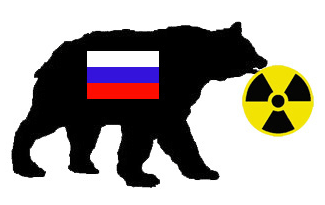
 Is Rosatom selling debt and dependence to its overseas customers? http://bellona.org/news/nuclear-issues/2017-05-is-rosatom-selling-debt-and-dependence-to-its-overseas-customers When a court in South Africa torpedoed a $76 billion deal to build 10 nuclear reactors with Russia’s Rosatom because the arrangement reeked of corruption, it seemed like the project was kaput. May 10, 2017 by Charles Digges, charles@bellona.no, When a court in South Africa torpedoed a $76 billion deal to build 10 nuclear reactors with Russia’s Rosatom because the arrangement reeked of corruption, it seemed like the project was kaput.
At issue to the court was the fact that Rosatom was given the lucrative contract behind closed doors without any competing tenders, and that the company had been granted “special favors.” South Africa’s president, Jacob Zuma, even sacked his finance minister for opposing the deal.
The high court demanded that a contract of such breathtaking magnitude – representing a quarter of South Africa’s gross domestic product and $24 billion more than its state utility, Eskom, has in the bank – be approved by parliament.
Hanging over the deal, and numerous others like it, is the degree to which Rosatom seems to be pursing not just energy dominance in a world trying to wean itself coal, but political influence as well by putting its customers in long-term hock to Moscow.
The South Africa deal may yet come off, but it’s also surprising that it got so far in the first place.
It began as one of Rosatom’s handshake “memorandums of understanding” that the company is using to blanket the nuclear construction market and squeeze out competition. The company says it has 27 of these MOUs and other arrangements, amounting to $135 billion in incoming business, a claim that invites skepticism.
Many of the counties Rosatom counts among that number – like Jordan, Algeria, Nigeria and Bolivia – won’t be ready for nuclear for decades. Others where Rosatom builds are already underway – like India’ Kudankulam, Iran’s Bushehr, China’s Tianwan and Belarus’s Ostrovets – are already familiar with Rosatom’s typical cost overruns and delays.
Rosatom’s approach to marketing its VVER-1000 and VVER-1200 reactors is unique because it offers to finance, build and operate its plants. These generous terms come thanks to the enormous state subsidies it receives, and which it can then funnel into loans that boost its profits on paper. With government subsides set to decrease or dry up in 2020, however, Rosatom seems desperate to announce ever more MOUs.
While the terms of the financing for the South Africa deal never got spelled out, it’s clear from Rosatom deals in other countries that the terms are often steep.
To build Hungary’s controversial Paks-2 plant, Rosatom gave Budapest an $11 billion loan spread out over 30 years. Hungary has to start paying that back even if the plant is not completed on time. The interest Moscow could collect from Hungary is unclear, but a similar 30-year, $11.4 billion agreement with Bangladesh inked last year could result in $8 billion in interest. A $25 billion deal Rosatom signed with Egypt could, over 35-year term of the loan, swell to $71 billion.
And that’s if everyone behaves. The plant Rosatom is building in Turkey offers an indication of what happens when they don’t. To build Hungary’s controversial Paks-2 plant, Rosatom gave Budapest an $11 billion loan spread out over 30 years. Hungary has to start paying that back even if the plant is not completed on time. The interest Moscow could collect from Hungary is unclear, but a similar 30-year, $11.4 billion agreement with Bangladesh inked last year could result in $8 billion in interest. A $25 billion deal Rosatom signed with Egypt could, over 35-year term of the loan, swell to $71 billion.
And that’s if everyone behaves. The plant Rosatom is building in Turkey offers an indication of what happens when they don’t.
May 12, 2017
Posted by Christina Macpherson |
marketing, politics international, Russia, secrets,lies and civil liberties |
1 Comment
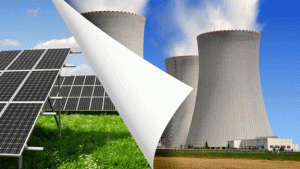
 New Energy Update, May 10, 2017 French President-elect set to boost sluggish solar growth Emmanuel Macron’s victory in France’s presidential election on May 7 is set to usher in a new wave of renewable energy development, according to his campaign pledges.
Macron pledged to double solar and wind capacity and close all of France’s coal-fired power stations by the end of his five-year term in 2022. He has also pledged to retain laws introduced in 2015 which aim to cut the share of nuclear power from 75% to 50% by 2025. This could equate to the closure of 25 GW of nuclear power capacity and shutdown dates will depend on growth in solar and wind capacity.
French solar capacity currently stands at 7 GW while wind capacity is around 12 GW. Solar and wind development has been hampered by regulatory and administrative hurdles and Macron plans to simplify the authorization process.
The closure of 25 GW of nuclear power capacity would require around 75 GW of new renewable energy capacity, Jefferies analysts Ahmed Farman and Oliver Salvesen said in a research note April 24.
“That looks quite challenging given that in the last 10 years only 18 GW of wind and solar was installed in France,” the analysts said in their note.
Market analysts have highlighted the challenge of shutting down an estimated 25 GW of nuclear power capacity over such a short timeframe while maintaining grid stability. While Macron supports the 2025 nuclear phase-out law, he has not set out a firm position on the phase-out date.
“The lack of a firm position on this issue may be because Mr Macron is well aware that the 2025 target is highly ambitious,” Farman and Salvesen said in their research note.
The 50% nuclear target may instead be reached between 2030 and 2033, a Macron adviser told Bloomberg in a report published April 26. The 50% objective could be reached sooner if ASN, the French nuclear safety authority, imposes tough conditions to extend reactor lifespans from 40 to 50 years, the adviser told Bloomberg.
Some 34 of EDF’s 58 reactors will soon reach 40 years of operations and the ASN will publish its safety report on the proposed lifespan extensions in around 2018.
Macron has said he would decide on the future of these reactors following the ASN’s report. http://analysis.newenergyupdate.com/pv-insider/google-brings-solar-rooftop-mapping-europe-french-president-elect-plans-renewables-boom?utm_campaign=NEP+PV+10MAY17+Newsletter&utm_medium=email&utm_source=Eloqua&elqTrackId=0da3b745bbf445b4a26a08b119c0eb1a&elq=3285a40f49eb42f0a3f4e6cb9d0a3898&elqaid=27829&elqat=1&elqCampaignId=13168
May 12, 2017
Posted by Christina Macpherson |
France, renewable |
Leave a comment
Bulgaria Seeks Private Investors for Nuclear Project, US News, May 11, 2017, SOFIA (Reuters) – Bulgaria is seeking private investors to build a nuclear power plant on the Danube River, which was canceled five years ago, Prime Minister Boiko Borisov said during a phone call with Russian President Vladimir Putin on Thursday.
Sofia canceled the Belene project in 2012 after failing to find foreign investors and under pressure from Brussels and Washington to limit its energy dependence on Russia………It hopes to privatize the nuclear plant project after it paid more than 600 million euros ($652 million) in compensation to Russia’s state nuclear giant Rosatom when it canceled the 10 billion euro project. Rosatom had agreed to provide the nuclear reactors…….https://www.usnews.com/news/world/articles/2017-05-11/bulgaria-seeks-private-investors-for-nuclear-project
May 12, 2017
Posted by Christina Macpherson |
Bulgaria, business and costs |
Leave a comment
Dismantling nuclear: German power firms sell new skills,http://www.reuters.com/article/us-toshiba-accounting-nuclearpower-decom-idUSKBN1850GP 9 May 17, By Christoph Steitz | FRANKFURT\ Energy groups E.ON and EnBW are tearing down their nuclear plants at massive cost following Germany’s decision to abandon nuclear power by 2022, but they are seeking to turn a burden into business by exporting their newfound dismantling skills.

Germany is the only country in the world to dump the technology as a direct consequence of Japan’s Fukushima disaster in 2011, a decision that came as a major blow to the two energy firms which owned most of Germany’s 17 operational nuclear stations.
E.ON and EnBW have already shut down five plants between them and must close another five by 2022. Not only are they losing a major profit driver – a station could earn 1 million euros ($1.1 million) a day – but are also facing combined decommissioning costs of around 17 billion euros.
This tough new reality has nonetheless forced them to rapidly acquire expertise in the lengthy and complex process of dismantling nuclear plants – presenting an unlikely but potentially lucrative business opportunity in a world where dozens of reactors are set to be closed over the next 25 years.
They say their skills are attracting the interest of international customers. Continue reading →
May 10, 2017
Posted by Christina Macpherson |
decommission reactor, Germany |
Leave a comment
Moorside nuclear plant ‘on hold’ as review announced, BBC News 4 May 2017 A plan to build a nuclear power station in Cumbria has been put on hold while the company behind it carries out a strategic review.
May 8, 2017
Posted by Christina Macpherson |
business and costs, politics international, UK |
Leave a comment
 Toshiba bankruptcy threatens Moorside, http://www.telegraph.co.uk/business/2017/05/06/toshiba-bankruptcy-threatens-moorside/ Ben Marlow ,Jillian Ambrose 6 MAY 2017
Toshiba’s bankrupt nuclear arm may be prevented from providing any emergency funds to its overseas interests, throwing the future of the Moorside nuclear plant in Cumbria into fresh doubt.
It has emerged that Westinghouse, the Toshiba-owned American nuclear reactor developer, faces orders not to prop up any joint venture agreements that it entered into before the company filed for Chapter 11 bankruptcy in March.
Wall Street private equity giant Apollo has pledged an $800m (£617m)rescue loan to the Pennsylvania-based company, which is awaiting court approval, while a group of hedge funds is also interested in providing emergency financing. However, it is understood that many of these prospective new investors want to see any fresh funds funnelled into Westinghouse and its main subsidiaries, not foreign joint venture projects like Moorside. They are calling for partners involved in Toshiba’s overseas interests to also step in and provide support.
The £18bn Moorside project is a central pillar of the UK’s atomic energy programme. The 3.4 gigawatt plant will power up to 6m homes but it has been thrown into doubt by Toshiba’s financial crisis and the bankruptcy of Westinghouse. The reactor maker, which the Japanese corporation bought from the British government in 2006, had been due to install three of its AP1000 reactors at Moorside. The project received a further blow when its other backer, French energy provider Engie, pulled out. Without the support of the only remaining backer, there are fears that the plant will never be built.
However, an industry source said: “Engie is a nuclear developer and a nuclear operator – it’s what they do. Senior people in the company have said that if the project found a way to move forward they would be interested in coming back.”
May 8, 2017
Posted by Christina Macpherson |
business and costs, politics, UK |
Leave a comment
Nuclear police recruit ‘fitness champions’ in bid to reduce sickness http://www.telegraph.co.uk/news/2017/05/07/nuclear-police-recruit-fitness-champions-bid-reduce-sickness/ Martin Evans, crime correspondent 7 MAY 2017 The police force responsible for keeping Britain’s nuclear power stations safe, has recruited keep fit gurus in a bid to reduce the number of sick days its officers are taking.
Officials at the Civil Nuclear Constabulary (CNC) became concerned after the force repeatedly failed to make its annual target on staff sickness.
So-called “fitness champions” will now offer advice to colleagues on a wide range of issues, such as how to achieve and maintain peak physical condition, how to avoid injury and even what to eat in order to stay healthy. They will be recruited internally, but will receive special training, in the hope that they can help reduce the current average of 12.8 sick days a year, per officer.
In addition the force is increasing the amount of money spent on physiotherapists to help officers who suffer injuries get back to work as soon as possible. Despite having many of the same powers as ordinary police officers, those who serve with the CNC are not allowed to retire at 60, in line with their colleagues in the 43 Home Office forces.
They have argued that the physical nature of their role means they cannot guarantee they will be able to fulfil their duties beyond the age of 60, putting the public at risk.
But new rules mean they will have to work until 65 and eventually 68, before they are entitled to claim their pension.
Established in 2005, the CNC has more than 1,250 armed officers, who patrol all non-military nuclear sites – including the 14 atomic power stations – and keep them safe from terrorist attack.
The highly trained specialists can also be deployed at short notice to assist with any large scale national emergencies in order to bolster the number of armed officers on the streets.The move comes at a time when CNC officers are embroiled in a long running battle with the Government over their retirement age. While they have the same powers of arrest as ordinary warranted officers, the role of a CNC constable is very different, and when not out on patrol spend a large amount of their time undertaking rigorous training exercises.
They provide a round the clock ring of steel around nuclear establishments and must be prepared to repel any form of attack by terrorists.
In addition they are also expected to accompany nuclear materials being transported within the UK and further afield.
Given the risks of working in close proximity to nuclear material, officers are also regularly checked for exposure to radiation and carry dosage meters on them at all times. The CNC’s most recent annual report, revealed that the force had failed to meet its sickness target of an average of 10.5 days for the past five years running.
Officials discovered that rather than illness an increasing number of officers, were being signed off work with injuries, picked up due to the physical nature of the role.
Carrying almost 50 lbs in kit, the officers are susceptible to back injuries and other musculoskeletal complaints.
The introduction of fitness champions is intended to provide more support for those officers who are struggling with the physical demands of the role
May 8, 2017
Posted by Christina Macpherson |
employment, UK |
Leave a comment
 French presidential favorite pins reactor closures to renewables growth, Nuclear Energy Insider, May 3, 2017 The election of Emmanuel Macron as French President would see nuclear decommissioning activity surge in the next decade but shutdown dates will depend on measures to accelerate wind and solar development. The French presidential elections reach a climax on May 7 when centrist candidate Emmanuel Macron faces far right candidate Marine Le Pen in the final round of voting. Macron is the favorite to win the election– polling at around 59% of the vote on May 1– and the election result will have a profound impact on the future of EDF’s French nuclear fleet.
While a surprise Le Pen victory would likely see a reversal of France’s reactor closure plans, a Macron win would usher in a surge in decommissioning activity in the coming decade. Macron has set out bullish renewable energy objectives and pledged to retain laws introduced in 2015 which aim to cut the share of nuclear power from 75% to 50% by 2025.
However, Macron has not set out a firm position on this nuclear target and market analysts have highlighted the challenge of shutting down an estimated 25 GW of nuclear power capacity over such a short timeframe while maintaining grid stability.
“The lack of a firm position on this issue may be because Mr Macron is well aware that the 2025 target is highly ambitious,” Jefferies analysts Ahmed Farman and Oliver Salvesen said in a research note April 24.
The 50% target may instead be reached between 2030 and 2033, a Macron adviser told Bloomberg in a report published April 26. The 50% objective could be reached sooner if ASN, the French nuclear safety authority, imposes tough conditions to extend reactor lifespans from 40 to 50 years, the adviser told Bloomberg.
Some 34 of EDF’s 58 reactors will soon reach 40 years of operations and the ASN will publish its safety report on the proposed lifespan extensions in around 2018.
Macron has said he would decide on the future of these plants following the ASN’s report.
Green bond
Macron’s pledge to reduce the share of nuclear power to 50% is based on a rapid expansion of wind and solar power. Macron has pledged to double wind and solar capacity and close all of France’s coal-fired power stations by the end of his five-year term in 2022.
Macron’s renewables pledge will require an acceleration in the approval process for renewable energy projects. France’s wind and solar development has been hampered by regulatory and administrative hurdles and Macron has pledged to simplify the authorization process.
Jefferies analysts Farman and Salvesen estimate the closure of 25 GW of nuclear power capacity in the coming eight years would require around 75 GW of new renewable energy capacity.
“That looks quite challenging given that in the last 10 years only 18 GW of wind and solar was installed in France,” the analysts said in their note.
A key advantage for developers going forward is the falling cost of wind and solar power. Technology improvements and improved installation practices have driven wind and solar costs towards wholesale market prices, removing the need for state subsidies in some countries.
Shutdown begins
Macron also supports the current government’s pledge to close two 900 MW reactors at Fessenheim when EDF brings online its 1.65 MW EPR at Flamanville, currently expected by the end of 2018. The EPR project is several years behind schedule but on March 15 EDF said it had begun system performance testing in line with its latest construction timetable announced in September 2015.
“The next milestone will involve fuel loading and then start-up at the end of the fourth quarter of 2018,” the company said……….. http://analysis.nuclearenergyinsider.com/french-presidential-favorite-pins-reactor-closures-renewables-growth?utm_campaign=NEI+03MAY17+Newsletter+B&utm_medium=email&utm_source=Eloqua&elqTrackId=fa70d686bf254ce4b69dc41f31b9c383&elq=acbe9ff6fdea4
May 6, 2017
Posted by Christina Macpherson |
France, politics |
1 Comment
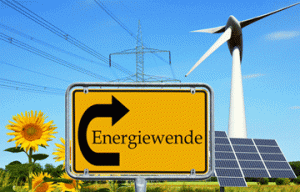 Germany breaks renewables record with coal and nuclear power responsible for only 15% of country’s total energy http://www.independent.co.uk/news/world/europe/germany-renewable-energy-record-coal-nuclear-power-energiewende-low-carbon-goals-a7719006.html
Electricity prices fell to negative figures for several hours on Sunday, as renewable sources fed so much power into the grid that supply exceeded demand Charlotte England @charlottengland, 5 May 17, Germany has broken a new record for renewable energy, with low-carbon sources nearly obliterating coal and nuclear power last weekend.
Investment in sustainable energy has been so successful that for several hours on Sunday electricity prices fell into negative figures, as renewable sources fed so much power into the grid that supply exceeded demand.
Coal use fell to an all-time low, with public broadcaster Deutsche Welle reporting that on 30 April coal-fired power stations were only operational between three and four in the afternoon and produced less than eight gigawatts of energy, well below their maximum output of about 50 gigawatts.
“Most of Germany’s coal-fired power stations were not even operating on Sunday,” Patrick Graichen of Agora Energiewende told Australian news site RenewEconomy.
“Nuclear power sources, which are planned to be completely phased out by 2022, were also severely reduced.”
Mr Graichen added that days like Sunday would be “completely normal” by 2030 thanks to the government’s continued investment in the Energiewende initiative.
Germany announced in May 2011 that it plans to shut down all its nuclear power plants by 2022, in addition to nearly eliminating fossil fuel power..
The country’s ambitious energy transition aims for at least 80 per cent of all power to come from renewables by 2050, with intermediate targets of 35 to 40 percent share by 2025 and 55 to 60 percent by 2035.
The EU as a whole is also striving to meet stringent sustainable energy targets, albeit more modest ones than Germany.
While the bloc is on course to meet 2020 goals of 20 per cent of energy from renewable sources, the UK is lagging behind.
MPs on the Energy and Climate Change Committee warned the Government last year that, on its current course, the UK will fail to achieve its 2020 renewable energy targets — to provide for 15 per cent of its energy needs from renewable sources
May 6, 2017
Posted by Christina Macpherson |
Germany, renewable |
Leave a comment

Brussels plans to saddle UK with EU nuclear waste Britain’s impending split from Euratom indicative of complexity of Brexit, Ft.com by: Arthur Beesley in Brussels and Andrew Ward in London, 4 May 17 Britain will be on the hook for large volumes of dangerous radioactive waste — some of it imported from the rest of Europe — under proposals by Brussels to transfer ownership of a range of nuclear materials to the UK after it leaves the EU.
Almost 130 tonnes of plutonium stored at Sellafield in Cumbria is among the nuclear material that would formally shift to UK control, according to draft documents issued by Michel Barnier, the EU’s chief Brexit negotiator. All “special fissile material” — forms of uranium and plutonium used in nuclear fuels and some of the resulting waste — within the EU are technically owned by Euratom, the pan-European regulator of civilian nuclear activity.
Mr Barnier’s provisional negotiating position calls for a Brexit agreement to “ensure, where appropriate, the transfer to the United Kingdom” ownership of “special fissile material” currently controlled by Euratom within the UK. Such an agreement would make the UK legally responsible not only for its own nuclear material but also reprocessed spent fuel imported over several decades from Germany, Sweden and elsewhere for recycling at Sellafield. “What was a joint European legacy now becomes a UK home brew, with potentially dire economic consequences for the UK given the sheer expense and weight of this radiological inventory,” said Paul Dorfman, honorary senior researcher at the Energy Institute at University College London……..
Mr Barnier’s proposal for the UK to assume “all rights and obligations associated with the ownership of [fissile] materials or property transferred” is seen in Brussels as a necessary housekeeping exercise to remove Euratom’s claim on nuclear fuel used in UK power stations as well as uranium isotopes used in radiotherapy. But it highlighted the uncertainty facing Britain’s nuclear industry — responsible for about a fifth of domestic electricity generation — in the run-up to Brexit. Euratom is a separate legal entity to the EU but is governed by EU institutions and the UK government says it has no option but to leave both at the same time. A UK government spokeswoman said: “Leaving Euratom is a result of the decision to leave the EU as they are uniquely legally joined.”
As well as nuclear fuel and reprocessed waste, the UK would also take ownership of Euratom property used to safeguard the material, such as inspection and monitoring equipment, according to the EU proposals. The negotiation directives, which are subject to the agreement of the 27 remaining member states, were published on Wednesday as Mr Barnier set out his hardline opening position for talks with London…….
https://www.ft.com/content/4cd8a146-3039-11e7-9555-23ef563ecf9a
May 5, 2017
Posted by Christina Macpherson |
politics international, UK, wastes |
Leave a comment