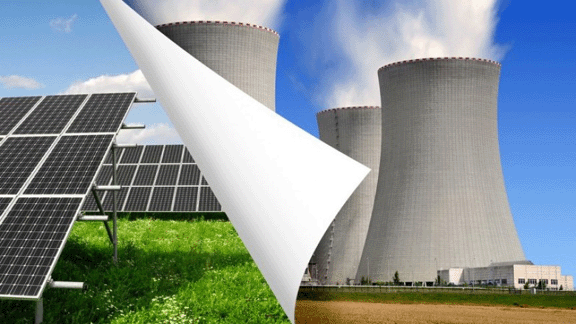
France needs ‘massive’ renewables growth, nuclear not only energy solution, says PM http://www.reuters.com/article/france-energy-idUSL8N1IK1T1 May 18
France needs “massive and rapid” growth in renewable energy capacity and nuclear power is not the country’s only energy solution, new Prime Minister Edouard Philippe said on Thursday.
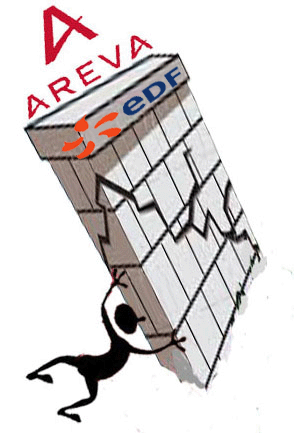
Philippe, who was appointed by newly inaugurated President Emmanuel Macron, used to work as head of public affairs for state nuclear energy group Areva, parts of which are set to be absorbed by EDF, the state power utility which operates the nation’s ageing nuclear power station fleet.
On Wednesday, Macron appointed environmentalist Nicolas Hulot as his environment minister with responsibility for energy matters – a move that hit EDF’s share price.
Nuclear power accounts for about three-quarters of French power generation at present.
France needs “to reach the objectives set out by the President,” Philippe said on France Inter radio. “That means an approach founded on the secure base of nuclear and a rapid, massive and visible development of renewables,” he added.
Philippe also said the government would take a “pragmatic” approach regarding France’s future energy and power supplies. (Reporting by Andrew Callus and Jean-Baptiste Vey; Editing by Sudip Kar-Gupta)
May 19, 2017
Posted by Christina Macpherson |
France, renewable |
Leave a comment
 Times 18th May 2017, Britain’s new £18 billion nuclear power plant is being funded by illegal French state aid, according to a lawsuit filed by Greenpeace. The environmental group is urging the European Commission to order EDF, the French state-owned energy giant that is building the plant at Hinkley Point in Somerset, to repay the 6.8 billion euros it received from the French
government.
The lawsuit is also a shot across the bows of Theresa May, who approved plans for Hinkley Point C last autumn, and President Macron of France, who organised the bailout of EDF when he was economy minister. At the time, EDF was struggling with debts of more than 37 billion and a requirement to find more than 50 billion to renovate its French reactors.
Critics, including the group’s own financial director, said that it could not afford its two-thirds share of the investment in Hinkley Point.
Greenpeace claims that the deal amounts to unfair state aid. “Instead of acting like a smart investor, the state is providing unconditional support to EDF and its nuclear projects that threaten the health of the company, notably Hinkley Point.
“There is no economic logic,”Laura Monnier, of Greenpeace France, said. “Greenpeace’s lawsuit aims to show that EDF’scapital increase is incompatible with European competition law.” The environmental organisation said that EDF had been wrong to invest in Hinkley Point “when it does not have the funds to invest in the maintenance and safety of its French nuclear fleet”.
Greenpeace’s lawsuit is unlikely to halt the Hinkley Point project, but it adds to the controversy over the scheme on both sides of the Channel.Shares in EDF slumped yesterday after the appointment of Nicolas Hulot, 62, France’s best known environmental campaigner, as minister of ecology and solidarity in Mr Macron’s government. Investors fear that Mr Hulot will press EDF to reduce its dependence on nuclear power and to pump funds into the development of renewable energy.
https://www.thetimes.co.uk/edition/business/hinkley-point-is-being-paid-for-by-illegal-french-aid-btqjg67r3
May 19, 2017
Posted by Christina Macpherson |
France, Legal |
Leave a comment
 CND 17th May 2017 The Labour Party manifesto has now been published. Its policy on nuclear weapons states: Labour supports the renewal of the Trident nuclear deterrent. As a nuclear-armed power, our country has a responsibility to fulfil our obligations under the Nuclear Non-Proliferation Treaty. Labour will lead multilateral efforts with international partners and the UN to
create a nuclear-free world.
This will come as a huge disappointment to many voters and CND supporters. Labour’s policy on nuclear weapons is in
accordance with the status quo, representing no change from what has gone before. At a time when a majority of countries are supporting a fresh initiative at the UN to negotiate a nuclear ban treaty, it is very disappointing that the Labour Party has made no reference to engaging with this process. There is a glimmer of hope from Labour’s planned Strategic
Defence and Security Review. http://www.cnduk.org/cnd-media/item/3408-labours-manifesto-and-nuclear-weapons
May 19, 2017
Posted by Christina Macpherson |
politics, UK |
Leave a comment
 Reuters 17th May 2017 Green activist Nicolas Hulot was appointed as the minister responsible for environment and energy in the new French government on Wednesday, sending the share price of nuclear utility EDF down as much as seven percent.
EDF shares had rallied strongly since the election of centrist Emmanuel Macron as president on May 7 as investors expected a pro-nuclear energy policy from the new government. But the appointment of Hulot – France’s best-known
environmental campaigner and a former television documentary maker – as ecology minister raised doubts in investors’ minds about the strength of that commitment.
Hulot is not known specifically as an anti-nuclear campaigner but has been critical of nuclear energy and of EDF’s strong
focus on nuclear, which accounts for 75 percent of France’s electricity generation. The world’s biggest operator of nuclear plants, EDF has a 18 billion pound ($23.3 billion) project to build two nuclear reactors at Hinkley Point, Britain and needs to spend 50 billion euro ($55.7 billion) on upgrading its ageing French nuclear plants. The planned takeover of Areva’s nuclear reactor unit will also cost several billions.
In an interview with Liberation newspaper last month, Hulot said one of France’s main challenges will be to reposition EDF on a path that is compatible with a transition from dependence on nuclear power towards the use of more
renewables.
“While elsewhere the energy transition accelerates, EDF gets closer to Areva, overinvests in costly nuclear projects like Hinkley Point, and does not invest enough in renewables,” he told the paper. Asked by Le Parisien newspaper in March whether France should stop using nuclear energy, he said: “That is a medium-term target”. “As renewable energy
becomes more and more competitive, the nuclear industry business model belongs to the past,” he said.
http://uk.reuters.com/article/france-election-government-energy-idUKL8N1IJ43S
May 19, 2017
Posted by Christina Macpherson |
France, politics |
Leave a comment
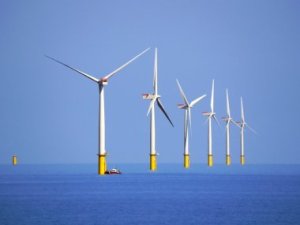
Business Green 17th May 2017 LEGO Group has today become the latest global brand to announce it has met a 100 per cent renewables goal, confirming that the opening of the Burbo Bank Extension wind farm means it has ‘balanced’ its annual power demand with electricity from renewable sources. The toy manufacturing giant confirmed the inauguration of the 258MW offshore wind farm in Liverpool Bay means the company’s annual power use is now matched by output from projects it has invested in.
It added that the goal had been met three years ahead of schedule. LEGO Group’s parent company KIRKBI A/S holds a 25 per cent stake in the Burbo Bank Extension project, alongside a 25 per cent stake held by Danish pension fund PKA and a 50 per cent stake held by developer DONG Energy. The company said the project meant LEGO has invested DKK6bn
($895m) in delivering two offshore wind farms over the past four years and has supported the development of more than 160MW of renewables capacity since 2012. http://www.businessgreen.com/bg/news/3010256/lego-breezes-past-100-per-cent-renewables-goal-thanks-to-uk-offshore-wind-farm
 Bloomberg 16th May 2017 Scottish judges paved the way for as much as 10 billion pounds ($13 billion) to be invested in offshore wind power by overturning a ruling that said projects may kill too many birds. Planning permission should move
forward at four wind farms being developed by SSE Plc, Mainstream Renewable Power Ltd., Fluor Corp. and SDIC Power Holdings Co., according to the ruling by three judges at the Inner House at the Court of Session in
Edinburgh on Tuesday.
They said a judge in the Outer Court was wrong to revoke consent in July for the wind farms, that may create as much as 2.3 gigawatts of new capacity off Scotland’s east coast. The earlier ruling asserted that Scottish ministers didn’t properly assess how the projects would threaten migratory seabirds such as the puffin.
Mainstream said it would now seek to develop the 2 billion pound Neart Na Goithe offshore wind farm as quickly as possible, according to a separate statement. The project has a contract with the U.K. government for a subsidy of 114 pounds a megawatt hour. https://www.bloomberg.com/news/articles/2017-05-16/scottish-offshore-wind-may-get-13-billion-lift-from-bird-ruling
Edie 17th May 2017 The planet’s biggest and most powerful wind turbines have begun generating electricity off the Liverpool coast, cementing Britain’s reputation as a world leader in the technology. Danish company Dong Energy has just finished installing 32 turbines in Liverpool Bay that are taller than the Gherkin skyscraper, with blades longer than nine London buses.
Dong Energy, the windfarm’s developer, believes these machines herald the future for offshore wind power: bigger, better and, most importantly, cheaper. Each of the 195m-tall turbines in the Burbo Bank extension has more than twice the power capacity of those in the neighbouring Burbo Bank windfarm completed a decade ago. “That shows you something about the scale-up of the industry, the scale-up of the technology,” said Benjamin Sykes, the country manager
for Dong Energy UK.
The project is the first time the 8MW turbines have been commercially used anywhere in the world, which Sykes hailed as a “very important milestone” for the sector. https://www.edie.net/news/10/Mersey-feat–world-s-biggest-wind-turbines-go-online-near-Liverpool/
Bloomberg 16th May 2017 Scotland was so bullish about becoming Europe’s wind energy hub its politicians fell out with a brash real-estate developer and reality TV star called Donald Trump. Five years on, Trump’s ambitions have taken him to the White House.
But instead of the 950 offshore turbines Scotland envisioned by the end of 2017, it has only 63 because of legal battles, geographical challenges and caps on government aid. The swooshing blades out at sea were a pivotal part of the nationalist-led Scottish government’s goal to get 100 percent of the nation’s electricity from renewable sources by 2020. It was supposed to be a growth area in what would be Europe’s newest state, along with turning Scotland into the Saudi Arabia of marine energy.
Despite four offshore wind projects getting the go-ahead this week, more targets have been missed than met and U.K. subsidies have been cut. With Scottish independence back in the political mix ahead of the June 8 election and the
economy in pain, the plans are under scrutiny again. “People overestimated the likely scale of deployment,” said Niall Stuart, chief executive of the Glasgow-based trade association Scottish Renewables. The whole of the U.K. was over-confident about the prospects for offshore wind, he said. “Clearly it’s nothing like the most optimistic scenario.” https://www.bloomberg.com/news/features/2017-05-16/how-is-a-watch-made-from-scratch
May 19, 2017
Posted by Christina Macpherson |
renewable, UK |
Leave a comment

 Reuters 17th May 2017, Swiss voters will on Sunday determine the fate of a law proposing billions of dollars in subsidies for renewable energy, a ban on new nuclear plants and a partial utilities bailout. Polling so far suggests the law will be approved in the binding referendum, but support has slipped.
A survey this month by research institute gfs.bern for state broadcaster SRG showed 56 percent of voters backed the law, down from 61 percent. The Swiss initiative mirrors efforts elsewhere in Europe to reduce dependence on nuclear power, partly sparked by Japan’s Fukushima disaster in 2011. Neighbouring Germany aims to phase out nuclear power by 2022. Nearby Austria banned it decades ago.
Debate on Switzerland’s “Energy Strategy 2050” has focused on what customers and taxpayers will pay for the measures
and whether a four-fold rise in solar and wind power by 2035, as envisaged in the law, can deliver reliable supplies.
http://uk.reuters.com/article/swiss-energy-idUKL8N1IJ3R6?rpc=401&
May 19, 2017
Posted by Christina Macpherson |
politics, Switzerland |
Leave a comment
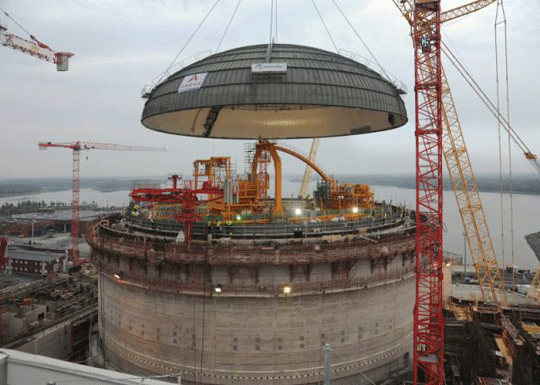
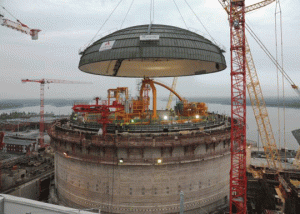 Nuclear plant nears completion after huge delays, Western Europe’s first atomic power station in 15 years is test of Areva technology FT.COM 18 MAY 17 by: Andrew Ward, Energy Editor On the shores of the Baltic Sea, beneath the big azure sky of a Nordic spring, Finland’s Olkiluoto-3 nuclear plant looks almost complete.
A team of painting contractors streaming out of the red reactor building at the end of their shift are the only external sign that this is still a work in progress. Yet, as the final touches are made to western Europe’s first new nuclear power station for 15 years, its owners have a blunt assessment of progress. “If the nuclear industry wants to have a future it cannot afford more projects like this,” says Pekka Lundmark, chief executive of Fortum, the Finnish power company which owns a 26 per cent stake in TVO, the consortium behind Olkiluoto-3.
Areva, the French reactor manufacturer, began building Olkiluoto in 2005 with a target for completion by 2009 at a cost of €3.2bn. The latest timetable would see it open almost a decade late at the end of 2018 and nearly three times over budget at €8.5bn. The project is the most extreme example of the delays and cost overruns which have become commonplace in the nuclear industry, plunging reactor companies such as Areva and Toshiba’s Westinghouse subsidiary into financial crisis………
Olkiluoto is entering a crucial phase with “cold functional testing”, the first operational trials of the reactor system, due to start in June. Several further important milestones must be cleared in the months ahead before the Finnish nuclear regulator can issue an operating licence…….
TVO facing an awkward balancing act, between co-operating with Areva to finish the project while simultaneously pursuing the French company and its former partner, Siemens, for billions of euros of compensation for the delays.
Talks aimed at a settlement broke down a year ago and the International Court of Arbitration made a “partial award” last November in favour of TVO. It has yet to rule how much Areva and Siemens, which exited the consortium in 2009, must pay. Olkiluoto liabilities were among the main factors which led the French government to arrange a €5bn bailout of Areva, 87 per cent owned by the state, and force it into a tie-up with EDF, the French utility, due for completion this year. Responsibility for Olkiluoto will remain in a separate “old Areva” to protect state-controlled EDF from TVO’s compensation claim, which would ultimately be borne by French taxpayers. The restructuring has raised alarm in Finland that Areva might neglect Olkiluoto in favour of projects at Flamanville in France and Hinkley Point in the UK which are both led by EDF. All three projects involve the European Pressurised Reactor, technology conceived by French and German engineers in the 1990s that was supposed to herald a new era of international growth for the French nuclear industry. Instead, it has turned into a nightmare as construction problems, along with renewed safety fears after the meltdown in 2011 at Japan’s Fukushima nuclear plant, have combined to curb demand.
The EPR was designed with safety as the top priority after the Chernobyl meltdown in Ukraine a decade earlier spewed radioactive fallout across Europe. But extra safeguards, such as a concrete dome over the reactor strong enough to withstand an aircraft strike, have proved ruinously expensive to build.
……..The Flamanville plant is six years late and €7bn over budget, with the risk of further delays beyond the current 2018 opening target as French regulators scrutinise potential faults with reactor components…….
EDF and Areva are hoping for a smoother experience at Hinkley Point, where
concrete was poured for the first permanent structures in March…..
After heavy losses elsewhere, EDF and Areva desperately need to make money from Hinkley’s two reactors. The £18bn project has been criticised in Britain for the £92.50 per megawatt hour price guaranteed to EDF for electricity from the plant, rising with inflation for 35 years. That is more than twice the current wholesale price, but it will only prove a good deal for EDF if it can control construction costs better than has been the case at Flamanville and Olkiluoto……..
https://www.ft.com/content/36bee56a-3a01-11e7-821a-6027b8a20f23
May 19, 2017
Posted by Christina Macpherson |
business and costs, Finland |
Leave a comment
 Reuters 17th May 2017 Greenpeace is filing a complaint with the European Commission arguing that the French government’s recapitalization of state-controlled EDF amounts to illegal state aid for the utility’s plan to build nuclear plants in HinkleyPoint, Britain.
Greenpeace said the 3 billion euro ($3.33 billion) capital injection for EDF in March, plus 3.8 billion euros of foregone dividends since 2015 – the state leaves money in EDF by taking a share dividend instead of a cash dividend – are incompatible with European Union competition law.
“Instead of acting like a smart investor, the state is providing unconditional support to EDF and its nuclear projects that
threaten the health of the company, notably Hinkley Point. There is no economic logic,” said Greenpeace France legal campaigner Laura Monnier. http://uk.reuters.com/article/us-edf-britain-subsidies-idUKKCN18D0MV
May 19, 2017
Posted by Christina Macpherson |
France, Legal |
Leave a comment
 Global News Wire 17th May 2017
EDF Group’s Board of Directors has approved the creation of the company EDVANCE which brings together EDF and AREVA NP engineers. This is a significant milestone in the reconstruction of the nuclear industry, announced in June 2015.
EDVANCE will be in charge of the basic design and implementation (studies, procurement support, assembly and commissioning) for projects involving nuclear islands and control systems for new reactors being built, both in France and around the world.
May 19, 2017
Posted by Christina Macpherson |
business and costs, France |
Leave a comment

 CORE 17th May 2017, Plans to build the £2.8Bn power transmission line connecting NuGen’s delayed Moorside project have been put on hold by National Grid so that it can align its plans with those of developer NuGen which have already been put on-hold.
NuGen has been forced to undertake a ‘strategic review of options’ following the financial meltdown of Moorside’s sole investor Toshiba and the bankruptcy of its subsidiary Westinghouse who was to supply the AP1000 reactors for the project.
Another casualty of NuGen’s faltering progress are the 1200 respondents to its Stage 2 public consultation which finished at the end of July 2016. Today, almost 10 months later, the consultation feedback report promised by NuGen for ‘Autumn 2016’ has still not materialised and neither has NuGen indicated that it will hold the further consultation called for by CORE, local authorities and others to make up for the lack of detailed information provided in the Stage 2 consultation documents.
These failures, in tandem with NuGen’s current Strategic Review of options, designed ‘to provide a more robust, stable and sustainable platform to meet its commitment to deliver the next generation of nuclear power’ has left those respondents not only in a NuGen no-man’s land but also questioning the merit of having already spent time and effort on responding to a project that now appears not only less than robust but also unstable and unsustainable. .. http://corecumbria.co.uk/briefings/nugens-investment-turmoil-sparks-pylon-delay-for-moorside-new-build/
May 19, 2017
Posted by Christina Macpherson |
business and costs, UK |
Leave a comment
Utility Week 17th May 2017, Plaid Cymru has pledged to cut the energy bills of customers in Wales by establishing a Welsh energy company. In its manifesto for the general election, published today (17 May), the nationalist party said the proposed energy company would channel the profits from Wales’ abundant renewable energy into cutting the cost of Welsh consumers bills.
Plaid proposes that the energy company would also support a shift in Wales to decentralised and distributed energy networks. The manifesto also pledges that Plaid would increase energy generation from renewable sources, including the delivery of tidal lagoons in Swansea Bay, Cardiff and Colwyn Bay.
The Welsh nationalists would transfer responsibility over Welsh energy generation to the National Assembly in Cardiff with the goal of achieving self-sufficiency in electricity generation from renewables. http://utilityweek.co.uk/news/Plaid-Cymru-pledges-to-create-Welsh-energy-company/1303042
May 19, 2017
Posted by Christina Macpherson |
decentralised, UK |
Leave a comment
 David Lowry’s Blog 15th May 2017 The cyber security attack on Friday has highlighted the vulnerability of UK national infrastructure to malicious cyber threats. So far it is the impact on the NHS that has hit the headlines.
But it could be far worse: what if it were our nuclear power plants that were disrupted? Next week- from 22 to 24 May – the Vienna –based World Institute for Nuclear Security (WINS) , headed by the former head of security at Sellafield, Dr Roger Howsley, is participating in the 2nd Annual Industrial Control Cyber Security Nuclear Summit, in Warrington, organised by Cyber Senate entitled with an important presentation entitled“Transformation, Preparedness and Developing Cyber Security Assurance”.
It is instructive to listen to the words of Russian cyber security expert, Eugene Kasperksy, founder and ceo of the Moscow-based Kasperksy Labs, warns governments engaged in cyber warfare that “everything you do – it’s a boomerang: it will get back to you.”
Four years ago he warned that Russian nuclear power plant infected by Stuxnet malware programme – widely believed to have been created by the US and Israel – had infected a Russian nuclear power plant.
Speaking at the Canberra Press Club 2013 in Australia’s capital city. Kasperksy recounted a story from “the Stuxnet time” when a friend of his working in an unnamed nuclear power plant reported that the plant’s computers were “badly infected by Stuxnet”. Kaspersky criticized government departments responsible for engineering cyber-attacks, The Stuxnet virus was first discovered in June 2010 and was found to specifically target industrial control systems manufactured by Siemens. The initial target of the virus is widely thought to have been the centrifuges used in Iran’s uranium enrichment programme. Although the goal of the virus was extremely specific, its method of proliferation was indiscriminate and the code has since been found on computers across the world…… http://drdavidlowry.blogspot.co.uk/2017/05/cyber-threats-you-aint-seen-nothin-yet.html
May 17, 2017
Posted by Christina Macpherson |
safety, UK |
Leave a comment
 Clean Tech 12th May 2017 The European Commission has approved France’s request to develop three separate schemes that are intended to support the development of more
than 17 gigawatts worth of new renewable energy capacity. The European Commission, the legislative body of the European Union, on May 5 approved three separate schemes for the development of small-scale onshore wind, solar, and sewage gas installations in France, which would allow France to develop more than 17 gigawatts (GW) of renewable energy capacity.
The onshore wind scheme will have a provisional budget of €1 billion per year, and will grant support for 15 GW of new capacity over the next 10 years. The projects are intended to be small projects, taking the form of what is called a premium on top of the market price, or in French, complement de remunération, providing support to operators of small-scale onshore installations of less than 6 wind turbines that themselves are no more than 3 megawatts (MW) in capacity….
https://cleantechnica.com/2017/05/12/france-can-move-forward-three-schemes-develop-17-gw-renewable-energy/
May 17, 2017
Posted by Christina Macpherson |
decentralised, France |
Leave a comment
 FT 14th May 2017 Tesco seeks to secure all of its electricity from renewable sources by 2030. Tesco is to turn its back on fossil fuels and ramp up its use of solar panels as the UK supermarket makes an ambitious pledge to cut its greenhouse gas emissions in line with the toughest goals of the Paris climate accord.
Tesco says it will cut its emissions in line with the more ambitious 1.5C target, partly by securing 100 per cent of its electricity from renewable sources such as solar panels by 2030 and by pushing its
suppliers to become greener. Tesco’s goals will require big investments in renewable power because about 65 per cent of its emissions come from electricity needed for its distribution centres and 6,500 stores around the world.
Refrigeration gases account for 15 per cent of the company’s emissions, according to Kené Umeasiegbu, Tesco’s head of climate change. Another 12 per cent comes from its delivery vehicles; 7.5 per cent from heating and 0.5 per cent from business travel…. https://www.ft.com/content/536fb55a-374e-11e7-bce4-9023f8c0fd2e
May 17, 2017
Posted by Christina Macpherson |
decentralised, UK |
Leave a comment