nuclear-news

The News That Matters about the Nuclear Industry Fukushima Chernobyl Mayak Three Mile Island Atomic Testing Radiation Isotope

Russia sells 49 percent stake in Akkuyu nuclear project to Turkish companies

Russia’s Rosatom sells 49 percent stake in Akkuyu nuclear project to Turkish companies, Hurriyet Daily News, 19 June 17 MOSCOW, Russia’s state-owned nuclear energy conglomerate Rosatom agreed to sell a 49 percent stake in a giant nuclear project in southern Turkey to Turkish investors in a preliminary agreement on June 19 on the sidelines of a nuclear conference in Moscow.

The stake in the Akkuyu project was sold for an undisclosed sum to the three Turkish companies Cengiz, Kolin and Kalyon, dubbed CKK as a consortium, which are quite active in construction and energy sectors. Each of these companies will have an equal stake.

The shareholders’ agreement will be signed by the end of the year, the consortium said in a follow-up press release. The sum of the deal is then expected to be revealed, according to the press release.

Turkey and Russia signed an intergovernmental agreement to build and operate a nuclear power plant in the southern province of Mersin’s Akkuyu in 2010. According to the agreement, Russian companies would own a minimum of 51 percent of stake in the nuclear power plant, marking a first in Turkey.

The respective parties are planning to start construction this year. ……http://www.hurriyetdailynews.com/russia-sells-stake-in-akkuyu-nuclear-plant-project-in-turkey—–.aspx?pageID=238&nID=114520&NewsCatID=348

June 21, 2017 Posted by | politics international, Russia, Turkey | Leave a comment

Climate change, and Portugal’s deadly fires

What impact did climate change have on Portugal’s deadly fires?  http://www.euronews.com/2017/06/18/what-impact-did-climate-change-have-in-portugal-s-deadly-wildfireEuronews, Chris Harris, 19 June 17 Global warming was a factor in a deadly wildfire that hit central Portugal and left more than 60 people dead, it’s been claimed. Thomas Curt, a researcher at the National Research Institute of Science and Technology for Environment and Agriculture, said climate change had extended the wildfire season from two to up to five months.

Curt, asked what role global warming plays in wildfires such as the ones seen in central Portugal, said: “It is a certainty, we are witnessing a rise in temperatures, but a warmer air is synonymous with drier, more flammable vegetation.

“These meteorological conditions increase the risk of fire but also their intensity. We can now see fires, like that of Portugal, which firefighters can hardly extinguish.

“Moreover, during the last fifty years, the fire season, before reduced to July and August, is extended from June to October.”

Curt said on top of climate change Portugal had an ‘enormous amount of combustible vegetation’ such as pine forests and eucalyptus trees.“In addition, the entire Iberian peninsula, including Portugal, is currently facing a particular meteorological situation. It is much hotter and much drier than usual in June.

“However, each time you gain degrees, you increase the risks and intensity of fires.

“As a further aggravating factor, the Iberian Peninsula is experiencing global warming more severely than other regions.Curt also said there was a growing trend of large, covering 100 hectares, and ‘mega’ wildfires, affecting more than 1,000 hectares. “It is really a growing problem all over the world and especially in Mediterranean Europe,” he added.

“They are still rare, accounting for only 2-3 percent of the fires, but are responsible for three-quarters of the burned areas.The different analyses of climate change show that these great fires will become more and more probable.”

June 19, 2017 Posted by | climate change, EUROPE | Leave a comment

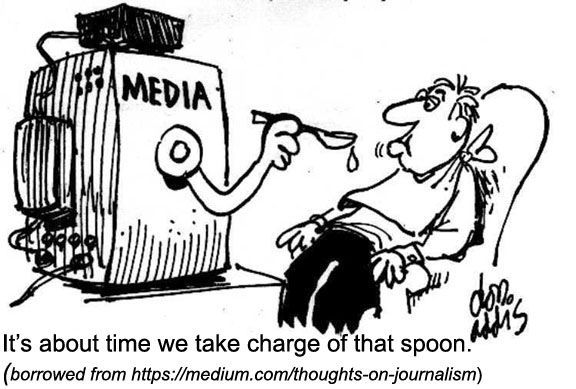
Media coverage of Ukraine dictated by USA political interests?

It also remains a question why the U.S. mainstream media feels that it must protect the American people from alternative views even as the risks of nuclear confrontation escalate.

Why Don’t the U.S. Mainstream Media Report Vladimir Putin’s Take on the Ukraine Crisis? http://www.truthdig.com/report/item/why_doesnt_mainstream_media_report_putins_take_on_ukraine_20170614 By Robert Parry / Consortiumnews, A prime example of how today’s mainstream media paradigm works in the U.S. is the case of Ukraine, where Americans have been shielded from evidence that the 2014 ouster of democratically elected President Viktor Yanukovych was a U.S.-supported coup d’etat spearheaded by violent neo-Nazi extremists.

As The New York Times has instructed us, there was no coup in Ukraine; there was no U.S. interference; and there weren’t even that many neo-Nazis. And, the ensuing civil conflict wasn’t a resistance among Yanukovych’s supporters to his illegal ouster; no, it was “Russian aggression” or a “Russian invasion.”

If you deviate from this groupthink – if you point out how U.S. Assistant Secretary of State Victoria Nuland talked about the U.S. spending $5 billion on Ukraine; if you mention her pre-coup intercepted phone call with U.S. Ambassador Geoffrey Pyatt discussing who the new leaders would be and how “to glue” or how “to “midwife this thing”; if you note how Nuland and Sen. John McCain urged on the violent anti-Yanukovych protesters; if you recognize that snipers firing from far-right-controlled buildings killed both police and protesters to provoke the climactic ouster of Yanukovych; and if you think all that indeed looks like a coup – you obviously are the victim of “Russian propaganda and disinformation.”

But most Americans probably haven’t heard any of that evidence revealing a coup, thanks to the mainstream U.S. media, which has essentially banned those deviant facts from the public discourse. If they are mentioned at all, they are lumped together with “fake news” amid the reassuring hope that soon there will be algorithms to purge such troublesome information from the Internet.

So, if Americans tune in to Part Three of Oliver Stone’s “The Putin Interviews” on “Showtime” and hear Russian President Vladimir Putin explain his perspective on the Ukraine crisis, they may become alarmed that Putin, leader of a nuclear-armed country, is delusional.

A Nuanced Perspective

In reality, Putin’s account of the Ukraine crisis is fairly nuanced. He notes that there was genuine popular anger over the corruption that came to dominate Ukraine after the Soviet Union’s collapse in 1991 and the selling off of the nation’s assets to well-connected “oligarchs.”

Putin recognizes that many Ukrainians felt that an association with the European Union could help solve their problems. But that created a problem for Russia because of the absence of tariffs between Russia and Ukraine and concerns about the future of bilateral trade that is especially important to Ukraine, which stood to lose some $160 billion.

When Yanukovych decided to postpone the E.U. agreement so he could iron out that problem, protests erupted, Putin said. But — from that point on — Putin’s narrative deviates from what the U.S. government and mainstream media tell the American people.

“Our European and American partners managed to mount this horse of discontent of the people and instead of trying to find out what was really happening, they decided to support the coup d’etat,” Putin said.

Contrary to the U.S. claims blaming Yanukovych for the violence in the Maidan protests, Putin said, “Yanukovych didn’t give an order to use weapons against civilians. And incidentally, our Western partners, including the United States, asked us to influence him so that he did not give any orders to use weapons. They told us, ‘We ask you to prevent President Yanukovych from using the armed forces.’ And they promised … they were going to do everything for the opposition to clear the squares and the administrative buildings.

“We said, ‘Very well, that is a good proposal. We are going to work on it.’ And, as you know, President Yanukovych didn’t resort to using the Armed Forces. And President Yanukovych said that he couldn’t imagine any other way of dealing with this situation. He couldn’t sign an order on the use of weapons.”

Though Putin did not specifically finger blame for the sniper fire on Feb. 20, 2014, which killed more than a dozen police and scores of protesters, he said, “Well, who could have placed these snipers? Interested parties, parties who wanted to escalate the situation. … We have information available to us that armed groups were trained in the western parts of Ukraine itself, in Poland, and in a number of other places.”

After the bloodshed of Feb. 20, Yanukovych and opposition leaders on Feb. 21 signed an accord, brokered and guaranteed by three European governments, for early elections and, in the meantime, a reduction of Yanukovych’s powers.

Ignoring a Political Deal

But the opposition, led by neo-Nazi and other extreme nationalist street fighters, brushed aside the agreement and escalated their seizing of government buildings, although The New York Times and other U.S. accounts would have the American people believe that Yanukovych simply abandoned his office.

“That’s the version used to justify the support granted to the coup,” Putin said. “Once the President left for Kharkov, the second largest city in the country to attend an internal political event, armed men seized the Presidential Residence. Imagine something like that in the U.S., if the White House was seized, what would you call that? A coup d’etat? Or say that they just came to sweep the floors?

“The Prosecutor General was shot at, one of the security officers was wounded. And the motorcade of President Yanukovych himself was shot at. So it’s nothing short of an armed seizure of power. Moreover, one day afterwards he used our support and relocated to Crimea (where he stayed for more than a week) thinking that there was still a chance that those who put their signatures on the (Feb. 21) agreement with the opposition would make an attempt to settle this conflict by civilized democratic legal means. But that never happened and it became clear that if he were taken he would be killed.

“Everything can be perverted and distorted, millions of people can be deceived, if you use the monopoly of the media. But in the end, I believe that for an impartial spectator it is clear what has happened – a coup d’etat had taken place.”

Putin noted how the new regime in Kiev immediately sought to limit use of the Russian language and allowed extreme nationalist elements to move against eastern provinces known as the Donbass where ethnic Russians were the vast majority of the population.

Putin continued, “First, there were attempts at arresting them [ethnic Russians] using the police, but the police defected to their side quite quickly. Then the central authorities started to use Special Forces and in the night, people were snatched and taken to prison. Certainly, people in Donbass, after that, they took up arms.

“But once this happened, hostilities started so instead of engaging in dialogue with people in the southeast part of Ukraine, they [Ukraine government officials] used Special Forces, and started to use weapons directly – tanks and even military aircraft. There were strikes from multiple rocket launchers against residential neighborhoods. … We repeatedly appealed to this new leadership asking them to abstain from extreme actions.”

However, the civil conflict only grew worse with thousands of people killed in some of the worst violence that Europe has seen since World War II. In the U.S. mainstream media, however, the crisis was blamed entirely on Putin and Russia.

The Crimea Case

As for the so-called “annexation” of Crimea, a peninsula in the Black Sea that was historically part of Russia and that even after the Soviet break-up hosted a major Russian naval base at Sevastopol, Putin’s account also deviated sharply from what Americans have been told.

When Stone asked about the “annexation,” Putin responded: “We were not the ones to annex Crimea. The citizens of Crimea decided to join Russia. The legitimate parliament of Crimea, which was elected based on the Ukrainian legislation, announced a referendum. The Parliament, by an overwhelming majority, voted to join Russia.

“The coup d’etat in Ukraine was accompanied by a surge in violence. And there was even the threat that violence would be perpetrated by nationalists against Crimea, against those who consider themselves to be Russian and who think Russian is their mother language. And people got concerned — they were preoccupied by their own safety.

“According to the corresponding international agreement [with Ukraine], we had a right to have 20,000 people at our military base in the Crimea. We had to facilitate the work of the Parliament of Crimea, the representative government body, in order for this Parliament to be able to assemble and affect actions in accordance with the law.

“The people had to feel they were safe. Yes, we created conditions for people to go to polling stations, but we did not engage in any hostilities. More than 90 percent of the Crimean population turned out, they voted, and once the ballot was cast, the [Crimean] Parliament, based on the outcome of the referendum, addressed the Russian parliament, asking to incorporate it into the Russian Federation.

“Moreover, Ukraine lost the territory, not due to Russia’s position, but due to the position assumed by those who are living in Crimea. These people didn’t want to live under the banner of nationalists.”

Stone challenged some of Putin’s concerns that Ukraine might have turned the Russian naval base over to NATO. “Even if NATO made an agreement with Ukraine, I still don’t see a threat to Russia with the new weaponry,” Stone said.

Putin responded: “I see a threat. The threat consists in the fact that once NATO comes to this or that country, the political leadership of that country as a whole, along with its population, cannot influence the decisions NATO takes, including the decisions related to stationing the military infrastructure. Even very sensitive weapons systems can be deployed. I’m also talking about the anti-ballistic missile systems.”

Putin also argued that the U.S. government exploited the situation in Ukraine to spread hostile propaganda against Russia, saying:

”Through initiating the crisis in Ukraine, they’ve [American officials] managed to stimulate such an attitude towards Russia, viewing Russia as an enemy, a possible potential aggressor. But very soon everyone is going to understand, that there is no threat whatsoever emanating from Russia, either to the Baltic countries, or to Eastern Europe, or to Western Europe.”

A Dangerous Standoff

Putin shed light, too, on a little-noticed confrontation involving a U.S. destroyer, the USS Donald Cook, that steamed through the Black Sea toward Crimea in the middle of the crisis but turned back when Russian aircraft buzzed the ship and Russia activated its shoreline defense systems.

Stone compared the situation to the Cuban Missile Crisis when a Soviet ship turned back rather than challenge the blockade that President John Kennedy had established around the island. But Putin didn’t see the confrontation with the U.S. destroyers as grave as that.

Putin said, “Once Crimea became a full-fledged part of the Russian Federation, our attitude toward this territory changed dramatically. If we see a threat to our territory, and Crimea is now part of Russia, just as any other country, we will have to protect our territory by all means at our disposal. …

“I wouldn’t draw an analogy with the Cuban Missile Crisis, because back then the world was on the brink of a nuclear apocalypse. Luckily, the situation didn’t go so far this time. Even though we did indeed deploy our most sophisticated, our cutting-edge systems for the coastal defense,” known as the Bastion.

“Certainly – against such missiles as the ones we’ve deployed in Crimea – such a ship as the Destroyer Donald Cook is simply defenseless. … Our Commanders always have the authorization to use any means for the defense of the Russian Federation. … Yes , certainly it would have been very bad. What was the Donald Cook doing so close to our land? Who was trying to provoke whom? And we are determined to protect our territory. …

“Once the destroyer was located and detected, they [the U.S. crew] saw that there was a threat, and the ship itself saw that it was the target of the missile systems. I don’t know who the Captain was, but he showed much restraint, I think he is a responsible man, and a courageous officer to boot. I think it was the right decision that he took. He decided not to escalate the situation. He decided not to proceed. It doesn’t at all mean that it would have been attacked by our missiles, but we had to show them that our coast was protected by the missile systems.

“The Captain sees right away that his ship has become the target of missile systems – he has special equipment to detect such kinds of situations. … But indeed we were brought to the brink, so to speak. … Yes, certainly. We had to respond somehow. Yes, we were open to positive dialogue. We did everything to achieve a political settlement. But they [U.S. officials] had to give their support to this unconstitutional seizure of power. I still wonder why they had to do that?”

It also remains a question why the U.S. mainstream media feels that it must protect the American people from alternative views even as the risks of nuclear confrontation escalate.

Regarding other issues discussed by Putin, click here. For more on Stone’s style in interviewing Putin, click here.

Investigative reporter Robert Parry broke many of the Iran-Contra stories for The Associated Press and Newsweek in the 1980s. You can buy his latest book, “America’s Stolen Narrative,” either in print here or as an e-book (from Amazon and barnesandnoble.com).

June 19, 2017 Posted by | media, secrets,lies and civil liberties, Ukraine, USA | Leave a comment

Russia angered by Nato surrounding Baltic fleet in Kaliningrad- unprecedented war games

Russia lets fly over nuclear war games as Nato surrounds Baltic fleet in Kaliningrad, Sunday Times, Russia’s western exclave of Kaliningrad was surrounded on three sides by Nato forces yesterday at the start of an unprecedented set of summer war games.

Operation Sabre Strike 2017 includes the first full deployment of America’s strategic nuclear bombers and a simulated air assault by the Royal Marines in the Baltics.

Russia’s Baltic fleet is based in Kaliningrad and the territory also plays host to a deployment of Iskander short-range ballistic missiles with a 300-mile reach capable of carrying nuclear warheads.
The “historic” deployment of all three types of USstrategic nuclear bomber — B-52, B-1 and the B-2 stealth aircraft — is to show American commitment to “ready and posture forces focused on deterring conflict”, said Lieutenant-General Richard Clark, a US airforce commander…….https://www.thetimes.co.uk/article/russia-lets-fly-over-nuclear-war-games-as-nato-surrounds-baltic-fleet-in-kaliningrad-9wzmw2qhg

June 19, 2017 Posted by | Russia, weapons and war | Leave a comment

French book on the atomic industry

Reporterre 17th June 2017 [Machine Translation] Here is an edifying and accessible book that reveals
the mysteries of the atomic industry in general and the operation of our nuclear power plants in particular.

On the occasion of its release, the Network Sortir du nucléaire has created its own publishing house, Yasnost’Editions. The author, Nozomi Shihiro, comes from the EDF seraglio and has endorsed the operator’s doctrine on transparency: “To tell the public everything he would not like to learn from others . He writes,however, under a pseudonym for fear of passing under the Caudines forks of his enterprise.

Throughout the book he endeavors to show that the transparency chanted by the national electrician is in reality only powder for the attention of the disinformed populations and the docile political world.
https://reporterre.net/Dans-les-arcanes-de-l-industrie-atomique

June 19, 2017 Posted by | France, media | Leave a comment

Climate change: making polluters pay. Sweden’s Climate Act

Climate Change
40 countries are making polluters pay for carbon pollution. Guess who’s not.
Most people who have given climate change policy any thought agree that it is important to put a price on greenhouse gas emissions. They are a form of harmful waste; those producing the waste should pay for the harms
http://www.environmentalhealthnews.org/t/2460133000468975388

Sweden passes ambitious climate law to be carbon neutral by 2045.
Sweden passed a new Climate Act on Thursday, legally binding the country to reach net-zero emissions by the year 2045. The act, which passed in parliament by a vote of 254 to 41, is even more ambitious than what the Scandinavian country pledged under the Paris Agreement: Under the new act, Sweden will reach carbon neutrality five years earlier.
http://www.environmentalhealthnews.org/t/2460133000468975393

June 19, 2017 Posted by | 2 WORLD, climate change, Sweden | Leave a comment

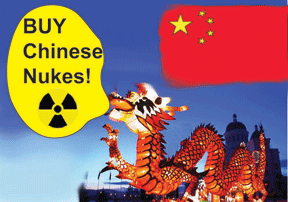
China sets up 3 nuclear companies in Britain, hopes to market its nukes worldwide

China Daily 15th June 2017, China’s CGN a step closer to bringing its nuclear technology to UK: China’s
goal of boosting its nuclear technology sector took a big step forward on Wednesday with the creation of three new companies in the UK by China General Nuclear Power Corporation. The new entities are: Bradwell Power
Corp, which will be responsible for the 100 percent Chinese-built Bradwell B nuclear plant; General Nuclear System Ltd, which will shepherd China’s Hualong technology through the exacting five-year UK approval process; and General Nuclear International, which will manage CGN’s projects in the UK.

He Yu, CGN chairman, said:  The unveiling of three companies is a solid step forward for CGN to expand its operation in the UK. With its new subsidiaries unfolding, the company is confident that it will grow steadily in the field of nuclear technology in Britain.”

The United Kingdom will formally assess the Hualong One technology as part of a deal reached last year, in which Chinese investment will help build the Hinkley Point C nuclear plant, in which France’s EDF is a major participant, and which will
feature French technology. CGN and EDF have been working together for more than 30 years on nuclear development and construction in China.

Under last year’s agreement, CGN and EDF will collaborate on three UK nuclear plants: Hinkley Point C, in Somerset; Sizewell C, in Suffolk; and Bradwell, in Essex.

CGN intends to use Hualong One technology at Bradwell, which could be the first nuclear plant in a developed economy to use Chinese technology. The companies will seek to get the Hualong One technology approved in the UK via an assessment known as the Generic Design Assessment process. It usually takes about five years to complete.

China hopes that UK approval of its technology will open the door to its use in other countries because the UK’s appraisal regime is considered by industry experts to be the strictest in the world. The proposed Bradwell project is in an early
pre-planning stage, something that is likely to continue for many years, via investigative work and public consultation, before detailed proposals will be produced, allowing a planning application to be made.
http://europe.chinadaily.com.cn/world/2017-06/15/content_29748140.htm

June 19, 2017 Posted by | China, marketing, UK | Leave a comment

Scotland’s National Academy inquiring into Scotland’s energy future

Scottish Energy News 16th June 2017, The Royal Society of Edinburgh – Scotland’s National Academy – has set up a
new Inquiry Committee to look at Scotland’s Energy Future. The inquiry
aims to contribute to the important debate around Scotland’s energy
supply, demand and use, as well as moral and environmental
responsibilities.

It will also look to inform the policy- and decision-making at a Scottish, UK and international levels in relation to
resources needed at acceptable financial, moral and environmental costs.The
committee, which is expected to sit for around 18 months, will consider how
Scotland can meet the future energy demand and how to ensure that the
energy used is secure, affordable and environmentally justifiable. It will
also examine all areas of the debate around Scotland’s energy future in
the context of its commitment to combat global climate change and the
environmental imperative to reduce carbon emissions. http://www.scottishenergynews.com/

June 19, 2017 Posted by | ENERGY, UK | Leave a comment

Campaign for Nuclear Disarmament widens its scope, to promote renewable energy

The Canary 14th June 2017, The Campaign for Nuclear Disarmament (CND) has criticised what it calls the
“ill-advised” appointment by Theresa May of Michael Gove as Environment
Secretary. Its condemnation comes ahead of a conference on renewable
energy. And The Canary spoke exclusively to CND General Secretary Kate
Hudson about climate change, renewables and the future under a potential
Conservative-led government.

The CND was formed in 1957, with the specific goal of campaigning for an end to nuclear weapons. But over the years, the
group has broadened its remit, and on Saturday 17 June it will be holding a
conference on renewable energy. Entitled No need for nuclear: the
renewables are here, it will be tackling: What’s wrong with nuclear
power; The politics of nuclear power; Energy demand and energy efficiency;

The scope of renewables in the UK. Hudson told The Canary, tackling nuclear
power is nothing new for the CND. In fact, she says the group has been
addressing renewables for “decades”: CND is best known for being
anti-nuclear weapons but for some decades now we have also had an
anti-nuclear power stance. The technologies are inextricably linked and the
radiation impacts are of shared devastation. Nuclear power is dirty,
dangerous, expensive and absolutely unnecessary. Renewables now demonstrate
that final point beyond all question. The idea that nuclear power is worth
the risk is finished. Many countries already recognise that and it’s time
for the UK to kick its nuclear addiction in the interests of people and
planet. https://www.thecanary.co/2017/06/14/major-campaign-group-slammed-ill-advised-appointment-climate-change-skeptic-government/

June 19, 2017 Posted by | opposition to nuclear, UK | Leave a comment

Scotland’s greenhouse emissions from energy have fallen, but transport still a big emitter

Herald 16th June 2017, Sarah Beattie-Smith, Senior Climate and Energy Policy Officer, WWF
Scotland: THIS week the Scottish Government announced that it hit the
annual target for cutting climate changing emissions. The news that
emissions fell by three per cent from 2014 to 2015 was welcomed by us and
many other environmental groups.

It’s yet more evidence that we can meet ambitious targets and it should drive even stronger action to embrace the
benefits of a low-carbon Scotland – from cleaner air to job creation and
from improving health to cutting fuel poverty. The hit target shows that
real progress has been made on waste and on energy, particularly on
renewables, which now meet more than half of Scotland’s electricity demand.

That progress means that, for the first time, the energy sector is no
longer the biggest emitter.

That unwelcome honour now falls to transport –
a sector where emissions have barely changed in 30 years. Indeed, emissions
from transport went up by 0.4 per cent in 2015, largely due to increased
road traffic. Such poor progress on emissions underline the urgent need for
bold, transformative action.

Across the world, other nations are setting high ambitions on switching from polluting fossil-fuelled cars to low or
zero-carbon electric vehicles. In India, a target has been set to end the
sale of new petrol and diesel cars in favour of 100 per cent electric
vehicles by 2030. In Norway, that target is for 2025. In Scotland, our goal
is to phase out just half of fossil-fuelled vehicles by 2030, and only in
urban environments. That equates to only 27 percent of new cars being
electric by 2030.

If Scotland is to retain its reputation as a world leader
on climate change, we need to at least keep up with other nations, if not
exceed their ambition.
http://www.heraldscotland.com/opinion/15351342.Scotland_must_keep_up_the_pressure_on_climate_change/

June 19, 2017 Posted by | climate change, UK | Leave a comment

Hinkley C nuclear station; a very poor bet for jobs

Morning Star 16th June 2017, Ian Fairlie: THE Labour Party’s recent election manifesto says a Labour
government would support nuclear power as part of a low-carbon energy mix and that it would continue to support Hinkley C. The reason is that Jeremy Corbyn needs trade union support and some major unions think that nuclear
power will furnish many jobs.

But this is a myth, a shibboleth. The real situation is that renewable energy already provides far more jobs than
nuclear does now, and will provide far more jobs more quickly than nuclear ever would — even if current government plans were to succeed. The problem is that promoting nuclear power diminishes the prospects of creating new jobs in renewable energy industries — eg in establishing a large offshore wind manufacturing base.

Let’s look at the Hinkley C site, for example. Although about 4,500 jobs would exist each year during the
main phase of construction, EDF has admitted most would be temporary and filled by overseas workers. And if it were ever completed, it would only employ 900 workers. In fact, Hinkley C would be a remarkably poor bet for Britain and British unions, as industry insiders expect 90 per cent of the work at Hinkley, and all high-tech work, would go to French firms. For example, in 2013, EDF Energy completed a very large gas-fired power station at West Burton in Nottinghamshire where 100 per cent of the engineering contracts — even the concrete — went to French firms.
http://www.morningstaronline.co.uk/a-b8c7-Does-nuclear-power-really-provide-jobs

June 19, 2017 Posted by | employment, UK | Leave a comment

France: nuclear power gets special privileges – undermining credibility of the Green Energy Minister Nichals Hulot

Dave Toke’s Blog 15th June 2017, The French Government’s announcement that it will legislate for a carbon floor price of 30 euros per MWh marks a dramatic turn in EU energy markets which will now be shifted to favour nuclear power above renewables. This is because just over half of nuclear power generated in the EU come from reactors in France, whereas less than 10 per cent of EU renewable energy production comes from France.

The fact that nuclear power is being given special privileges undermines the policy credibility of the Green Energy
Minister Nichals Hulot who has just been appointed by President Macron.

Given that three-quarters of electricity in France comes from nuclear power, and very little from fossil fuels, this measure is a thinly disguised extra incentive for nuclear power, an incentive that the large bulk of renewable generation in the EU will not be able to receive.

Only the UK has a carbon floor price, which is around 17 per cent lower than the proposed French one. A case in point is Germany, which generates a third of the wind power in the EU. German electricity wholesale power prices are
relatively low – much lower than in the case of the UK for example, and there are fears that some windfarms will no longer be economic after their feed-in tariff contracts end after 2020. But they would be likely to stay online of they had access to the carbon floor price being set in France.

There is no carbon floor price in Germany. Macron seems, in energy at least, to be continuing ‘business as usual’ in letting EDF run the French state. The French Government has effectively ploughed several billions into bankrupt nuclear generators AREVA and also injected money to EDF through a ‘share flotation’ (EDF is 85 per cent owned by the French Government) that seems associated with building Hinkley C power station.
http://realfeed-intariffs.blogspot.co.uk/2017/06/france-to-tilt-eu-energy-market-towards.html

June 19, 2017 Posted by | France, politics | Leave a comment

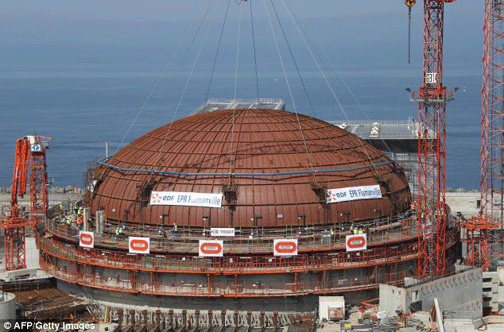
Flamanville nuclear reactor: EPR pressure vessel does not comply with safety regulations

Capital 15th June 2017, [Machine Translation] Documents from the Institute of Radiation Protection
and Nuclear Safety (IRSN) show that the EPR pressure vessel does not pass a strength test. It would therefore not be in compliance with the regulations, contrary to what is being said.

Areva and EDF play a major part of their economic future this month. First session today: As the Echos recall, the High Committee for Transparency and Information on Nuclear Safety meets to discuss the safety of the EPR nuclear reactor vessel built by Areva on behalf of a group of companies, EDF in Flamanville.

At the end of June, it will be up to the Permanent Expert Group on Nuclear Pressure Equipment (GPESPN) to assess its working. It will examine the findings of another body: the Institute of Radiation Protection and Nuclear Safety (IRSN), the
technical expert of the Nuclear Safety Authority (ASN).

A technical note published by IRSN last April, but until now completely unnoticed, shows that the pressure vessel does not comply with the regulation of nuclear equipment under pressure. And poses a major safety problem. Hidden in the
middle of a mass of documents put online, it is dated September 2015 and signed by Gérard Gary, a nuclear physicist, research director emeritus ex-CNRS attached to the laboratory of solid mechanics of the Ecole
http://www.capital.fr/entreprises-marches/epr-de-flamanville-cette-note-d-expert-qui-pointe-le-danger-de-la-cuve-1232494

June 19, 2017 Posted by | France, safety | Leave a comment

New law in whistleblowing in France

Major Changes on Whistleblowing in France, Lexology 
Blog The Anticorruption Blog Squire Patton Boggs France June 16 2017

From January 1, 2018, there will be an obligation on almost all employers to implement reporting/whistleblowing schemes.

France has historically been very reluctant to support workplace whistleblowing, especially anonymously. Whistleblowing schemes were effectively only authorized in 2005 to permit US companies to comply with their SOX obligations. Those regulations were very restrictive, limited to employees and only in relation to certain legal breaches.

However, since December 2016, we now have a law relating to “transparency, the fight against corruption and modernization of business life,” also known as “Sapin 2.” This has introduced a number of changes, including the obligation to implement whistleblowing schemes and anti-corruption compliance programs.

Definition of Whistleblower

Sapin 2 Law defines a whistleblower (in French “lanceur d’alerte”) as:

  • Any individual (i.e., not limited to employees)
  • Acting in good faith
  • Reporting or revealing a crime, a serious and manifest breach to an international treaty, a serious breach of a law or regulation, or a serious threat or harm to the public interest
  • Of which he or she has personal knowledge……….

Principles Governing Reporting Schemes

  • Reporting schemes must protect the identity of the whistleblower, the identity of any person incriminated and the information collected. The disclosure of any of these details carries up to two years’ imprisonment and a €30,000 fine (€150,000 for corporations)……….

Breach of Secrecy by the Whistleblower

A whistleblower will not be liable for breaching a secrecy obligation by law provided that:

  • The disclosure is necessary and proportionate for the protection of the interests at stake, and
  • The reporting procedures provided by law are complied with

However, Sapin 2 does not allow a whistleblower to disclose information covered by doctor/patient or client/lawyer professional secrecy or national security.

No Retaliation

Whistleblowers are protected from retaliation in the hiring process, in terms of access to an internship or professional courses or in salary or otherwise. However, where the report is made in bad faith, the employee can:

June 19, 2017 Posted by | civil liberties, France | Leave a comment

European Commission approves Germany’s plan for funding radioactive waste management

Reuters 16th June 2017, The European Commission said on Friday it had approved Germany’s plan to
create a public fund to deal with radioactive waste. Germany intends to
take over the liabilities relating to management of radioactive waste and
spent fuel from nuclear power plant operators.

They would have to pay in about 24.1 billion euros ($26.9 billion). This is made up of a basic amount
equivalent to the provisions already set aside by the operators for this
purpose and a risk premium aimed at covering the risk of cost increases in
the future.

The Commission concluded that the move did involve state aid
because of uncertainties over the cost of a repository for waste and the
possibility of cost overruns. Germany regards the measure as necessary as
it seeks to phase out nuclear energy production by 2022.  http://www.reuters.com/article/us-germany-eu-nuclearpower-subsidies-idUSKBN197144

June 19, 2017 Posted by | Germany, Legal | Leave a comment