nuclear-news

The News That Matters about the Nuclear Industry Fukushima Chernobyl Mayak Three Mile Island Atomic Testing Radiation Isotope

Turkey to go into big debt to Russia for $20 billion Akkuyu nuclear power plan

Turkey gives Rosatom go ahead to build nuclear plant, Reuters, 15 June 17,  

Russia’s State Atomic Energy Corporation (Rosatom) won approval from Turkey’s energy watchdog on Thursday to go ahead with building its $20 billion Akkuyu nuclear power plant in southern Turkey.

The project to construct four nuclear reactors has repeatedly run into delays, including being briefly halted after Turkey downed a Russian jet near the Syrian border in November 2015. Ties have since normalised between the two countries and work on the plant has resumed……

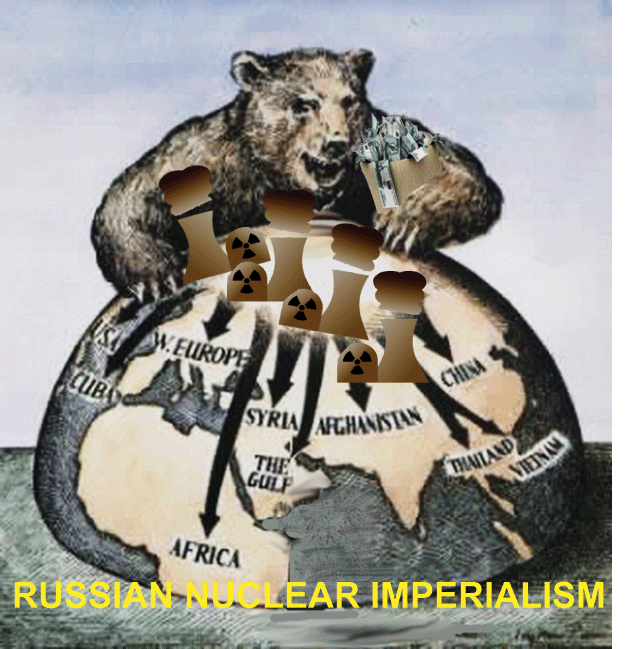
Rosatom has sold several nuclear reactors to developing countries under a model by which Russia finances, builds and operates the nuclear plant and sells power to its customer – a model that has also raised questions about Russia using energy policy as a means to political ends.

EPDK said it had given Rosatom’s project company Akkuyu Nukleer AS a 49-year production license.

Dependant on imports for almost all of its energy, Turkey has embarked on an ambitious nuclear programme, commissioning Rosatom in 2013 to build the four 1,200 megawatt (MW) reactors…..https://www.reuters.com/article/turkey-energy-nuclear-idUSL8N1JC3FL

June 16, 2017 Posted by | marketing, politics international, Russia, Turkey | Leave a comment

No planning in UK’s Brexit for the problem of EURATOM and UK’s trade in nuclear materials.

Nation Cymru 14th June 2017 When Theresa May triggered Article 50 a couple of months ago, she also
signalled her intention that the UK leave the obscure EURATOM treaty. The
treaty covers nuclear power, an issue which neither the Remain nor Leave
camps even mentioned during the referendum campaign.

How this decision will affect plans for a new nuclear power station at Wylfa on Ynys Môn does not
appear to have been noticed in Wales at all. But what is interesting is
that EURATOM is central in the UK’s trade in nuclear materials.

The nuclear fuel used in our power stations is actually owned by EURATOM and
its safe handling and storage is overseen by that organisation.

When May took over as PM, the core of her Government’s energy strategy was the
commitment to building new nuclear power stations, starting with Hinkley
Point C in Somerset, just 12 miles from the South Wales coast across the
Bristol Channel.

They don’t think that they have a problem, either because the UK will miraculously renegotiate a highly complex set of
regulations with the International Atomic Energy Agency (IAEA) within the two-year deadline, somehow arrange an extension of that deadline or perhaps not leave EURATOM after all. https://nation.cymru/2017/analysis-brexit-and-wylfa-bs-nuclear-fuel/

June 16, 2017 Posted by | politics international, UK | Leave a comment

Concern in UK over cuts to police who guard nuclear weapons

Cuts to police who guard nuclear weapons could be ‘catastrophic’ http://news.sky.com/story/cuts-to-police-who-guard-nuclear-weapons-could-be-catastrophic-10916066 It is claimed national security could be compromised as fewer firearms officers would be available for an emergency. Further cuts planned for the police force which guards the UK’s nuclear arsenal could be “catastrophic”, according to a leading police officer.

The Ministry of Defence Police (MDP) guards the country’s Trident nuclear deterrent, among other responsibilities.

The force is already understaffed with about 2,300 officers, according to the Defence Police Federation (DPF).

DPF chairman Eamon Keating will use a speech later to warn that plans to “reset” its strength to below that level will “harm national security”.

The MDP’s officers are all trained to use firearms and Mr Keating says cutting numbers means fewer available to help in a national emergency as part of Operation Temperer.

Temperer kicked in after the Manchester terror attack, when the threat risk was deemed critical. In that case, the military were deployed to help police.

“After a decade of budget and personnel cuts, it beggars belief the MoD would demand a further £12.5m from the police force entrusted with guarding Trident,” Mr Keating will tell the DPF’s annual conference.

“This ‘reset’ is an ill-considered decision that prioritises cost over security, and makes no sense given the financial value of the assets we protect,” Mr Keating will say.

Just a year ago the MDP had 2,600 officers – that was already a third down on previous levels after budget cuts in 2010.

The federation will also demand more detail on Conservative manifesto plans for an “Infrastructure Policing Force” by merging the MDP, the Civil Nuclear Constabulary and British Transport Police.

Mr Keating will add: “The Government must urgently rethink this catastrophic decision that further undermines police officers hamstrung by fitness tests inappropriate to the job they do, and a pension age different to the Home Office and Armed Forces.”

A Ministry of Defence spokesman said: “We are confident that the strength of our force keeps our people, sites and equipment safe.

“It also enables us to play our part in protecting the public, as we did when we supported the armed police response to the tragic events in Manchester last month.”

June 16, 2017 Posted by | safety, UK | Leave a comment

Energy-efficient solar panel cleaning robot

Energy-efficient cleaning robot, Science Daily 

Date:
June 14, 2017
Source:
SINTEF
Summary:
State-of-the-art solar cells are efficient — but are even more so when they are kept clean. A cleaning robot enables solar panels to deliver at full capacity.

State-of-the-art solar cells are efficient — but are even more so when they are kept clean. A cleaning robot developed by Norwegian researchers enables solar panels to deliver at full capacity……

https://www.sciencedaily.com/releases/2017/06/170614092728.htm

June 16, 2017 Posted by | EUROPE, renewable | Leave a comment

Smart Energy – UK

Scottish Energy News 15th June 2017, The UK electricity supply industry – which includes Scottish Power and
Perth-based utility SSE as grid operators – have formally set out for the
first time how the role of local electricity networks will change as the UK
‘smart’ energy grid becomes a reality.

A ‘smart’ grid will give British households, businesses and communities the ability to take
advantage of a new range of energy technologies and services to take
control of their energy and lower their costs – including renewable
generation, energy storage and BPVs (battery-powered cars).SSE has led the
way in demonstrating the benefits of a distributed system operator
transition through the Northern Isles New Energy Solutions (NINES) project
in Shetland.

“The NINES project was the first time active network management was deployed at scale in the UK. The headline result was that NINES enabled a 200% increase in renewable energy alongside a significant reduction in diesel generation, which is traditionally used to meet fluctuations in supply and demand.” http://www.scottishenergynews.com/

June 16, 2017 Posted by | ENERGY, UK | Leave a comment

Chernobyl nuclear station – smoke detected at crippled Unit 3

Smoke detected at crippled Chernobyl power plant – Ukraine nuclear watchdog, Rt.com  13 Jun, 2017 Ukraine’s nuclear regulatory body reported smoke at one of the rooms at Unit 3 in Chernobyl, adding that it was briefly “liquidated” by the state emergency personnel and the radiological situation at the site has not changed following the incident.
“At 15:57 pm we’ve received information from Chernobyl nuclear power plant about smoke in room 509 of Power Unit Three. At 16:00 the smoke was liquidated by the State Emergency Service staff,” a statement issued by the State Nuclear Regulatory Inspectorate of Ukraine reads.

“The radiological situation in the third power unit and the station’s territory has not changed,” it added.

No further details were immediately available……..https://www.rt.com/news/392114-smoke-chernobyl-nuclear-plant/

June 14, 2017 Posted by | incidents, Ukraine | Leave a comment

France set to close some nuclear reactors

France to close some nuclear reactors, says ecology minister Hulot, Reuters, 13 June 17,  French environment and energy minister Nicolas Hulot said on Monday that the government plans to close some nuclear reactors of state-controlled utility EDF (EDF.PA) to reduce nuclear’s share of the country’s power mix.

He gave no indication of timing.

Hulot told reporters at the G7 environment summit in the Italian city of Bologna that it was too early to give numbers about France’s aim to reduce the share of nuclear in its power generation to 50 percent from the current 75 percent.

“We are going to close some nuclear reactors and it won’t be just a symbolic move,” he said.

EDF shares, which were down 0.8 percent before Hulot’s comments, immediately fell further to stand 2.2 percent lower.

Asked about the possibility of introducing a carbon tax, Hulot said “France already has a carbon tax which we increase every year. At an EU level we want to increase the threshold,” he said……https://www.reuters.com/article/us-edf-nuclear-idUSKBN1931AD

June 14, 2017 Posted by | France, politics | Leave a comment

Scottish 6 to join historic global conference to agree nuclear weapons ban treaty 

Common Space Michael Gray  , 13 June 17, SCOTTISH CAMPAIGNERS will join the global movement to ban nuclear weapons this week in New York as pressure builds on the rogue nuclear states to ditch weapons that threaten the future of life on earth. 

The International Campaign to Abolish Nuclear Weapons (Ican) has made substantial progress in establishing a Nuclear Ban Treaty, with 123 countries backing progress towards a weapons ban last October at the United Nations. The UK was one of 38 nations opposed.

A cross-group civil society delegation of six will represent Scotland at the June-July session on the recently published draft Treaty document. With support from over 40 states, the Treaty will have legal status and, if successful, will enter a process of ratification. ….https://www.commonspace.scot/articles/11159/scottish-6-join-historic-global-conference-agree-nuclear-weapons-ban-treaty

June 14, 2017 Posted by | politics international, UK, weapons and war | Leave a comment

UK’s coal power to a large extent replaced by wind, solar and energy efficiency

Renew Economy 13th June 2017, Wind, solar and energy efficiency have replaced the vast majority of power
previously provided by the UK’s coal fleet, a new analysis shows.

Since the start of the coalition government in 2010, coal’s role in the
generation mix has fallen to historic lows, culminating in the country’s
first coal-free day since the 19th century earlier this year.

But the gap has not been plugged by natural gas, the UK’s now primary source of
electricity. Renewables and energy efficiency have together covered nearly
85% of the power the UK no longer gets from its coal plants.  http://reneweconomy.com.au/wind-solar-energy-efficiency-replaces-coal-generation-uk-33657/

June 14, 2017 Posted by | renewable, UK | Leave a comment

Devonport, UK – residents given booklets on safety during a nuclear emergency

Cornish Times 12th June 2017People in Saltash and Torpoint are being given important safety information on what to do in the event of a nuclear emergency at Devonport Dockyard. Homes and business that fall within the official public information zone are being sent a booklet which provides information about radiation, together with instructions to follow in the event of an accident. The booklets, which are updated once every three years to comply with Radiation
(Emergency Preparedness and Public Information) Regulations, tell thepublic what to do in ‘the very unlikely event’ that this happens.  http://www.cornish-times.co.uk/article.cfm?id=110309

June 14, 2017 Posted by | safety, UK | Leave a comment

A warning to Norway, on Russia’s bad history of nuclear waste disposal

For Nadezhda Kutepova, fighting for the rights of people living in the villages along the Techa river came with a price. First, the organization she founded in the 1990s, Planeta Nadezhd (Planet of Hopes), was declared «foreign agents» by the Justice Ministry in April 2015. The law labeling NGOs as «foreign agents» aims to close down activities of groups working with political questions and get funding from abroad. Recently afterwards, the federal TV channel Rossiya 1 aired the news that Planeta Nadezhd used American money to conduct industrial espionage.

Nadezhda’s group is one of 11 environmental NGOs to end up on the «foreign agents» list since the law was introduced in 2012.

Activist in exile says Norway’s nuclear waste support is irresponsible, Barents Observer, Thomas Nilsen,  June 07, 2017

Nadezhda Kutepova was forced to flee Russia after fighting for the rights of the residents in radioactive contaminated villages near Mayak, the site where all spent nuclear fuel from Andreeva Bay will be sent.

On June 27, the first shipment of containers with highly radioactive spent fuel elements will leave Andreeva Bay on the Kola Peninsula. Destination: Mayak reprocessing plant in the South-Ural.

For 20 years, Norway has financed infrastructure upgrades aimed at shipping spent nuclear fuel away from Andreeva Bay. The rundown facility is located 55 kilometers from the border to Norway on the Barents Sea coast and is considered to be the worst storage facility for Cold War nuclear waste in the Russian Arctic.

When the nuclear waste shipment sails away with the first few of an estimated 3,000 containers, Norway’s Foreign Minister Børge Brende and State Secretary Marit Berger Røsland will be on site and wave farewell.

This landmark event, though, is not welcomed by activists fighting for the rights of the people effected by radioactive contamination in the vicinity of Mayak.

«I think it is a irresponsible decision by Norway,» says Nadezhda Kutepova to the Barents Observer. She says out of sight, doesn’t mean out of mind.

I’m sure the Norwegian government knows about the situation in Mayak only from officials represented by Rosatom.» 

Rosatom is Russia’s state nuclear corporation in charge of operating the reprocessing plant in Mayak where all accumulated naval spent nuclear fuel from the fleet of submarines will be treated. In total, some 22.000 spent fuel elements are to be shipped from Andreeva Bay, first with boat to Murmansk, then by rail to the Mayak plant north of Chelyabinsk. Both the vessel to sail in shuttle between Andreeva Bay and Atomflot in Murmansk and the railwagons are special designed to assure best possible safety. Each container takes seven fuel assemblies. In total, 3.143 container transports will be needed before the storage tanks are empty. In other words, the containers will be shuttling back and forth between the Kola Peninsula and the Chelyabinsk region for years to come.

«Mayak’s reprocessing activities are dangerous. It is a very bad idea to send more waste. In reality, Norway can never check what happens there,» says Nadezhda Kutepova.

«Supporting the activities of Mayak, like reprocessing, Norway increases violations of human rights for the people who are living in the vicinity of the nuclear waste storages. Especially those living along the Techa river,» Kutepova explains.

Techa river became heavily contaminated by radioactive waste products from the production of plutonium for nuclear weapons that started at Mayak in 1949. Other accidents, like the 1957 Kyshtym disaster, have contaminated other areas in the neighborhood where tens of thousands of people were living.

Radioactive water from Mayak goes to a system of reservoirs. «Mayak can’t prevent leakages from the reservoirs into the Techa river. Espesially in the spring. They are lying,» Kutepova claims and says there are still some 5000 people living in four villages downstream the contaminated Techa river.

For Nadezhda Kutepova, fighting for the rights of people living in the villages along the Techa river came with a price. First, the organization she founded in the 1990s, Planeta Nadezhd (Planet of Hopes), was declared «foreign agents» by the Justice Ministry in April 2015. The law labeling NGOs as «foreign agents» aims to close down activities of groups working with political questions and get funding from abroad. Recently afterwards, the federal TV channel Rossiya 1 aired the news that Planeta Nadezhd used American money to conduct industrial espionage.

Nadezhda’s group is one of 11 environmental NGOs to end up on the «foreign agents» list since the law was introduced in 2012. Others working with nuclear safety in northern Russia are Ecodefense, Kola Eco Centre and Bellona Murmansk. The last played a key-role as whistleblower and solution seeker for radiological safety projects at Andreeva Bay. Like many other NGOs, Bellona Murmansk decided to close down the organization after being branded  «foreign agents.»

When accused of treason in media Kutepova fled to France seeking asylum. She is afraid the accusations presented on federal TV were just the beginning of what could be formal prosecution.

Talking to the Barents Observer from Paris, Nadezhda Kutepova explains how people die from cancer in the area polluted by Mayak. She should know. Growing up in the closed town of Ozyorsk – formerly known as Chelyabinsk-65 – her father and grandparents were victims of the nuclear industry they worked for. They died of cancer.

She says Norwegian authorities should talk to NGOs that have worked in the area. They can tell another story than officials from Rosatom will tell.

«They should visit the villages along the Techa river where peoples should have been evacuated long ago but still live there.»

«It would be better not to waste the money. They should have supported another storage from the first moment, but I know this isn’t an easy decision. But they need to study the issue better,» Kutepova argues.

Norwegian officials are well aware of the troubles in Mayak. Ingar Amundsen is head of section for international nuclear safety with the Radiation Protection Authorities. …..

The reprocessing plant in Mayak, named RT-1, started operation in 1977 and has until now only processed spent nuclear fuel from the first and second generation of Russian designed water cooled reactors from nuclear power plants. Recent upgrades, however, now make it possible to reprocess fuel also from submarine and icebreaker reactors……

At the reprocessing plant in Mayak, the spent nuclear fuel will be chemically separated, a process where plutonium and uranium will be recovered. Reprocessing, though, does not reduce the volum of high-level waste. It creates an increased volum in liquid form. Also, radiation from the remaining isotopes is high and therefore does not eliminate the need for a highest possible technical and security storage options. At Mayak, limited information is available in public domains about technical solutions for both the reprocessing itself and storage solutions for the waste products.

Ph. D. Natalia Mironova, a former Member of the Regional Duma in Chelyabinsk, has earlier told the Barents Observer that there are better options than reprocessing.

«Alternative to reprocessing is well known; dry storage.»

«Legacy of reprocessing spent nuclear fuel at Mayak has been a heavy burden for many generations. It is a big injustice for the local people,» Mironova says.

«Reprocessing is dangerous. We have bad experience in handling liquid radioactive waste,» she argues.

Mironova also points to the risks of transport and reloading the containers with fuel.

«Transportation is a risky process. Minimization of the risk is best strategy. Safe storing with less transport and far away from Mayak would be the best strategy.»

Most other nuclear power countries in the world chose to store the waste and not reprocess it.

On June 28, the joint Norwegian-Russian commission on nuclear and radiation safety will meet in Kirkenes, Norway’s border town to the Kola Peninsula in the north. Ingar Amundsen informs that future project cooperation related to Andreeva Bay will be discussed.

With project funding from the Ministry of Foreign Affairs, some 2 billion kroner are granted by Norway to nuclear safety projects in northern Russia over the last two decades. ……..

The storage dump in Andreeva Bay was built soon after the Soviet navy got its first nuclear powered submarine in the early 1960s. A pool type storage, given the code-name Building No. 5, had a leakage in the early 80s and the lethal fuel elements were urgently transferred to the three dry storage tanks. Supposed to be temporary, the totally run-down tanks have now served for more than 30 years. The 22.000 fuel elements in the tanks are equal to around 100 reactor cores.

In addition comes thousands of cubic meters of solid and liquid radioactive waste that one day will be removed.

Speaking at a seminar in Oslo devoted to Putin’s Year of Ecology, Bellona’s Frederic Hauge said the removal of the spent nuclear fuel from Andreeva Bay likely are the most risky part in the Post Cold War history of nuclear waste clean-up in the north. https://thebarentsobserver.com/en/node/2460
June 12, 2017 Posted by | EUROPE, Russia, wastes | Leave a comment

Is Britain unaware of the nuclear industry’s financial meltdown?

The Nuclear Industry Is in Financial Meltdown,   http://www.globalresearch.ca/the-nuclear-industry-is-in-financial-meltdown/5594253  By Ian Fairlie, Global Research, June 11, 2017 The Ecologist 9 June 2017 Most British politicians – waking up after a General Election which sent a strong message that the UK electorate don’t want railroading by its leaders – sail along blissfully innocent of nuclear’s impending denouement, not only in the rest of the world but in the UK too, writes IAN FAIRLIE.

The UK political situation on nuclear power is pretty uninspiring, apart from the Greens. Few political supporters of nuclear power appear to be aware that nuclear power is in free-fall around the world – especially in Western Europe and in the US, where many reactors are being closed without replacement.

Few seem aware of the legal, technical, regulatory, and economic difficulties faced by utilities in building the handful of new reactors and of the crippling costs of shutting down the many old ones. None appears aware of nuclear’s financial meltdown across the globe.

In a perceptive new article published by a prestigious US Ivy League University, Is Nuclear Power Coming To An End? Fred Pearce, a distinguished UK science writer, wrote:

“Now come the bankruptcies. In an astonishing hammer blow to a global industry in late March 2017, Westinghouse – the original developer of the workhorse of the global nuclear industry, the pressurized-water reactor (PWR), and for many decades the world’s largest provider of nuclear technology -filed for bankruptcy after hitting big problems with its latest reactor design, the AP1000.

“Largely as a result, its parent company, the Japanese nuclear engineering giant Toshiba, is also in dire financial straits and admits there is ‘substantial doubt’ about its ability to continue as a going concern.

“Meanwhile, France’s state-owned Électricité de France (EDF), Europe’s biggest builder and operator of nuclear power plants, is deep in debt thanks to its own technical missteps and could become a victim of the economic and energy policies of incoming President Emmanuel Macron.

“This is no short-term trend. While gas and renewables get cheaper, the price of nuclear power only rises. This is in large part to meet safety concerns linked to past reactor disasters like Chernobyl and Fukushima and to post-9/11 security worries, and also a result of utilities factoring in the costs of decommissioning their aging reactors.”

Pearce concludes by stating

“…the industry is in crisis. It looks ever more like a 20th-Century industrial dinosaur, unloved by investors, the public, and policymakers alike. The crisis could prove terminal.”

Most British politicians sail along blissfully innocent of nuclear’s impending denouement, not only in the rest of the world but in the UK too. The Government’s nuclear plans at Hinkley, Wylfa and Moorside are doubtful at best and moribund at worst.

First Anti-Nuclear Conference in 30 Years

We might shake our heads at the ignorance and irrationality of some of our senior politicians. However we should perhaps not despair too much, because on 17th June, CND is convening a one-day National Conference in London with a stellar array of speakers. No Need For Nuclear Conference

The Conference will explicitly discuss the incoherence and irrationality of the nuclear policies adopted by the main parties. Apart from Chernobyl or Fukushima anniversaries, this is the first anti-nuclear conference in the UK in about 30 years. As such, it marks the long overdue re-emergence of an important issue.

The UK anti-nuclear groups are relatively weak, under-resourced and fragmented, which means there has been little recent opposition to the Government’s irrational energy policies.

Perhaps this conference will help change that. No Need for Nuclear Conference booking:

Dr Ian Fairlie is an independent consultant on environmental radioactivity. He was formerly a senior scientist in the Civil Service and worked for the TUC as a researcher between 1975 and 1990.

June 12, 2017 Posted by | business and costs, UK, USA | Leave a comment

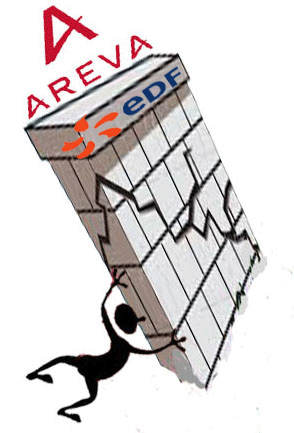
France’s EDF nuclear company is in a complicated mess – time for government action?

11 June 17, Alternatives Economiques, [Machine Translation] Who decides on the energy policy of France,especially for electricity?  The president of EDF, the minister of ecological and solidarity transition, in charge of energy, or the tenant of Bercy?  Perpetual  question that sends a lot of ink and weakens EDF, torn between conflicting interests.

It is time for the government to address the problems ofthe 83% -owned state, which is currently heavily indebted and whose financial situation is worrying.

On 6 April, EDF presented a strategic plan for its future investments as part of its Board of Directors’ plan of multiannual energy programming (PPE) 1 published at the end of October. On April 21, Ségolène Royal wrote to Jean-Bernard Levy, CEO of the EDF group, asking him to review his copy because “the actions foreseen by EDF do not make it possible to respect the objectives of diversification of electricity production set in the PPE “.

Among the points raised by the former minister, the absence of measures or means to prepare the closure of nuclear power plants, such as Fessenheim or coal.

Stopping a power station is not very complicated. Nuclear power stations are shut down regularly in France for maintenance or incidents. On the other hand, preparing the retraining of employees, developing new activities at the level of employment areas, organizing training courses for new trades … all this takes time.

EDF’s strategic plan, silent on these aspects, reveals the company’s will: to drag things out as much as possible. Moreover, it is rumored that EDF would have established a plan to reduce the share of nuclear energy to 50% in the energy mix by 2050 and not 2025 as foreseen in the energy transition law. EDF, but is not in any case in a hurry to revise its
strategic plan transmitted to the State. Why can not the state, which guarantees the implementation of the objectives of the Energy Transition Act, be heard?

For that, it would have to speak with one voice. And that is far from the case. For the shareholder state also has its interests in the matter. According to the Court of Auditors, it received a total of 11.3 billion euros of dividends between 2011 and 2016, an amount that the sages of the rue Cambon consider as exorbitant compared to the usual practices.

This financial interest has up to now pushed the State to support the nuclear sector and to defend the prolongation of the lifetime of power stations already depreciated, according to a short-term vision, which hampers investment in renewable energy energy savings.

But now, things are complicated for EDF, with a drop in its turnover and its production of electricity of nuclear origin. Moreover, very heavy investments are emerging: 55 billion euros in 10 years for the large fairing (upgrading of nuclear reactors), 15 to 20 billion euros for the two British EPRs of Hinkley Point, etc. https://www.alternatives-economiques.fr/anne-bringault/energie-edf-va-t-reviser-plan-strategique/00079236

June 12, 2017 Posted by | business and costs, France, politics | Leave a comment

Hitachi getting out of its financial risks in construction of new Nuclear Power Plant at Wylfa

Hitachi scrambles to divest UK nuclear risks after Toshiba fiasco.
Nikkei Asian Review 9th June 2017 Hitachi will curtail its financial risk in the construction of two nuclear power plants in the U.K. by divesting itself of the local subsidiary that will build and operate them, the Japanese conglomerate announced Thursday.

The news came at an event held here to draw partners to invest in Horizon Nuclear Power, which Hitachi acquired in 2012 as a wholly owned subsidiary. If Hitachi fails to do so before construction starts in 2019, forcing it to bear practically all the financial risk of the project, it will suspend its plans for the 2 trillion yen ($18.1 billion) project.

Hitachi is proceeding cautiously with its own nuclear energy business studying Toshiba’s troubles in the U.S. with Westinghouse Electric. Hitachi now is appealing to energy companies and others to invest in Horizon so it can turn the company into an unconsolidated subsidiary and is prepared to reduce its stake to as low as zero. Operation of the power plants would be entrusted to Horizon.   http://asia.nikkei.com/Business/Companies/Hitachi-scrambles-to-divest-UK-nuclear-risks-after-Toshiba-fiasco

June 12, 2017 Posted by | business and costs, Japan, UK | Leave a comment

Nuclear energy will be defunct before Sizewell C nuclear power station ever comes on line

East Anglian Daily Times 9th June 2017, A high-profile baroness and environmental campaigner has labelled Suffolk’s new nuclear proposals “incredibly disastrous”. Jenny Jones, Baroness of Moulsecoomb, made the comments at a recent meeting attended by more than 100 people in Woodbridge at which Sizewell C faced criticism from campaigners, academics and Suffolk residents.

Discussions ranged from climate change, alternative energy options and more. Baroness Jones, a Green Party representative in the House of Lords, chaired the meeting, which was intended to raise public awareness about the possible effects of Sizewell. She said nuclear power was “so incredibly disastrous”, highlighting its impact on economic and social justice as well as the environment. “Nuclear energy will be defunct by the time it comes online,” she said.
http://www.eadt.co.uk/business/baroness-jenny-jones-slams-disastrous-nuclear-proposals-at-woodbridge-conference-suffolk-sizewell-and-the-environment-1-5054946

June 12, 2017 Posted by | opposition to nuclear, UK | Leave a comment