
nuclear-news

The News That Matters about the Nuclear Industry Fukushima Chernobyl Mayak Three Mile Island Atomic Testing Radiation Isotope

Russia marketing nuclear power to Uganda

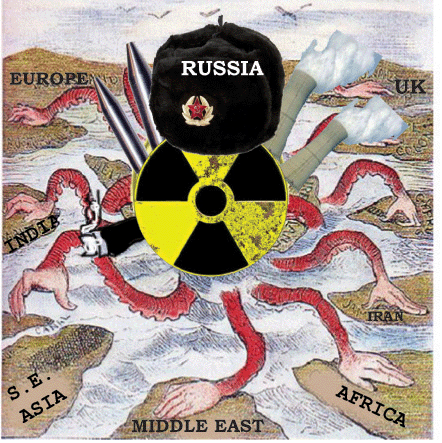
Uganda Could Become The First African Country To Develop Nuclear Power http://www.konbini.com/ng/lifestyle/uganda-could-become-the-first-african-country-to-develop-nuclear-power/ by Odunayo Eweniyi , 22 June 17 Like there’s not enough wrong in Africa right now, Uganda has signed a deal with Russia to develop uranium into nuclear power for peaceful purposes. Not to mention that it’s really suspicious that Russia seems intent on handing nuclear power to anyone and everyone who will take it. But let’s not worry, they said it’s for peaceful purposes.

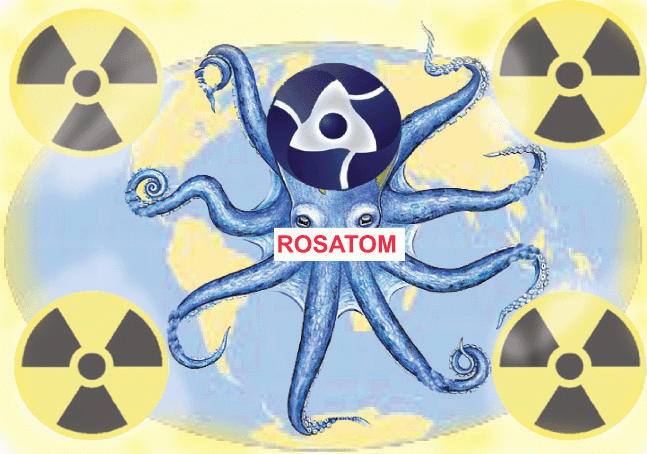
Uganda’s State Minister for Minerals, Simon D’Ujanga and Russia’s Deputy Director-General of Rosatom State Atomic Energy Corporation, Nikolai Spasskiy, signed the Memorandum of Understanding in Moscow, and it includes collaboration in the areas of radiological and physical security, fundamental and applied researches, human resource training, and nuclear research centres.

The discussions with Russia started last October, shortly after the launch of the Uganda-Russian Joint Permanent Commission, an inter-governmental framework for economic, scientific and technical cooperation.

 Uganda also has ongoing discussions with China to help develop peaceful nuclear power. This agreement with Russia comes just a month after a team from Uganda’s Ministry of Energy travelled to meet with the Zhonguan Engineering Corporation (CZEC), a subsidiary of China National Nuclear Corporation (CNNC).

At least 8 countries in Africa are actively considering starting nuclear programs – Nigeria (don’t laugh), Ghana, Senegal, Kenya, Uganda, Tanzania, Zambia, Namibia; but the question is why? Emerging countries like the ones listed generally do not have the expertise for this, so as opposed to focusing on building and relying on licenses from developed countries who arguably have their own agendas when sponsoring developments like this one in African countries, why don’t we focus on building the expertise first?

And African countries are largely unable to manage the present grid system that we have, where do we get the assurance that they can manage nuclear power plants, which they say are built for peaceful purposes, but could just as easily harm citizens?

June 23, 2017 Posted by | AFRICA, marketing, Russia | Leave a comment

Brexit brings Britain’s nuclear industry to a “cliff edge”

The Engineer 20th June 2017, Tom Greatrex, chief executive of the Nuclear Industry Association, argues
that any gap in the arrangements by which the UK nuclear industry
co-operates with the world could cause considerable disruption There’s a
common phrase popping up across many articles and interviews about Brexit
– ‘cliff edge’. Whether that’s the Institute of Directors, which
said the two-year timeframe is unlikely to be enough to sever ties and form
new trade deals; or EEF, the manufacturers’ organisation, calling for a
five-year transition period to ease the uncertainty for businesses,
they’ve all had this word in common.

The nuclear industry has also talked of an approaching cliff edge, a scenario backed by the both the Business,
Energy and Industrial Strategy Select Committee and the House of Lords
Science and Technology Committee.

That cliff edge was hidden in the smallprint of the supporting notes to the EU Withdrawal Bill, as it detailed how
the UK will also leave the European Atomic Energy Community – commonly
known as Euratom – at the same time as leaving the EU. Readers might say:
‘So what?’ All industries are under pressure.’ But, Euratom is a fairly unique proposition for the government to contend with and the cliff edge in our scenario could bring nuclear trade to a halt. https://www.theengineer.co.uk/brexit-towards-the-nuclear-cliff-edge/

June 23, 2017 Posted by | politics international, UK | Leave a comment

UK’s National Audit Office considers Hinkley Point C nuclear power plan ‘risky and expensive’

Hinkley Point deal ‘risky and expensive’, 23 June 2017

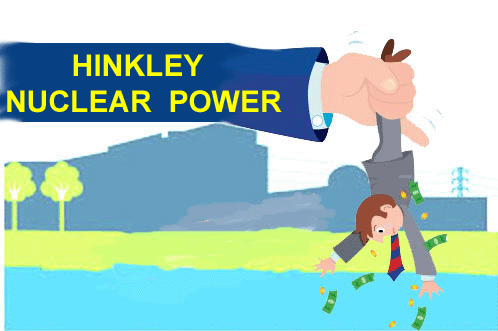
UK government plans for a new £18bn nuclear power station have come under fire from public auditors, who call it “a risky and expensive project”.BBC News 23 June

The case for the Hinkley Point C plant in Somerset was “marginal” and the deal was “not value for money”, according to the National Audit Office (NAO).

The NAO said the government had not sufficiently considered the costs and risks for consumers.

The government said building the plant was an “important strategic decision”.

The report comes nine months after the government granted final approval for the project, which is being financed by the French and Chinese governments.

State-controlled French energy firm EDF is funding two-thirds of the project, which will create more than 25,000 jobs, with China investing the remaining £6bn.

Critics of the deal have warned of escalating costs and the implications of allowing nuclear power plants to be built in the UK by foreign governments.

Case ‘uncertain’

The NAO’s report centred on the role of the Department for Business, Energy and Industrial Strategy (BEIS) in finalising the deal in 2016.

At the time, said the NAO, the department’s own value-for-money tests showed “the economic case for Hinkley Point C was marginal and subject to significant ……http://www.bbc.com/news/business-40372613

June 23, 2017 Posted by | business and costs, UK | Leave a comment

USA’s Michael Flynn involved in a secret hare-brained nuclear scheme with Russia and Saudi Arabia

the genius idea developed by Flynn and Co. was a U.S.-Russian partnership to build and operate nuclear plants and export the dangerous spent fuel under strict controls

It would be “funded entirely by Saudi Arabia and other Gulf countries” The kingdom’s upfront cost? “Close to a trillion dollars” 

the Saudis would recoup their costs by selling energy to Egypt, Jordan, Yemen and Gulf Cooperation Council (GCC) members Kuwait, Bahrain, Oman, the United Arab Emirates and Qatar—

MICHAEL FLYNN, RUSSIA AND A GRAND SCHEME TO BUILD NUCLEAR POWER PLANTS IN SAUDI ARABIA AND THE AND THE ARAB WORLD http://www.newsweek.com/flynn-russia-nuclear-energy-middle-east-iran-saudi-arabia-qatar-israel-donald-623396
BY JEFF STEIN ON 6/9/17     By the time Michael Flynn was fired as President Donald Trump’s nationalsecurity adviser in February, he had made a lot of bad decisions. One was taking money from the Russians (and failing to disclose it); another was taking money under the table from the Turks. But an overlooked line in his financial disclosure form, which he was forced to amend to detail those foreign payments, reveals he was also involved in one of the most audacious—and some say harebrained—schemes in recent memory:

In 2015 and 2016, according to his filing, Flynn was an adviser to X-Co Dynamics Inc./Iron Bridge Group, which at first glance looks like just another Pentagon consultancy that ex-military officers use to fatten their wallets. Its chairman and CEO was retired Admiral Michael Hewitt; another retiredadmiral, Frank “Skip” Bowman, who oversaw the Navy’s nuclear programs, was an adviser. Other top guns associated with it were former National Security Agency boss Keith Alexander and retired Marine Corps General James “Hoss” Cartwright, former vice chief of the Joint Chiefs of Staff, whose stellar career was marred when he was prosecuted last year for lying to the FBI during a leak investigation.

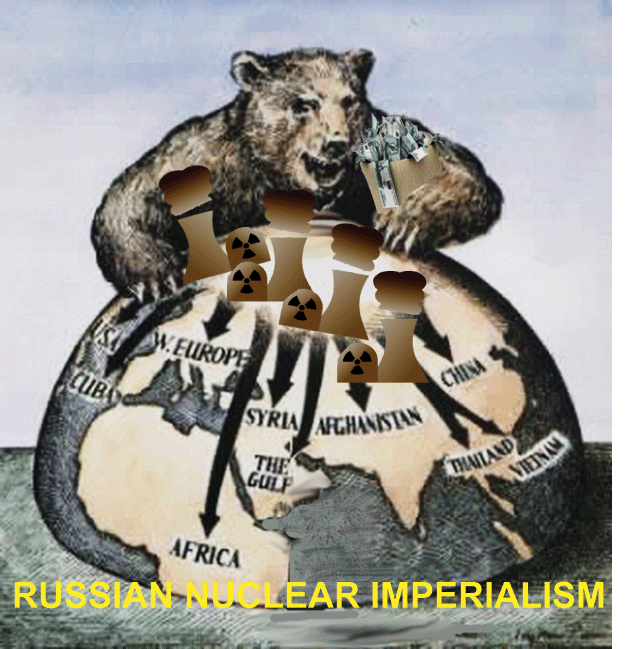
In the summer of 2015, knowledgeable sources tell Newsweek, Flynn flew to Egypt and Israel on behalf of X-Co/Iron Bridge. His mission: to gauge attitudes in Cairo and Jerusalem toward a fantastical plan for a joint U.S.-Russian (and Saudi-financed) program to get control over the Arab world’s rush to acquire nuclear power. At the core of their concern was a fear that states in the volatile Middle East would have inadequate security for the plants and safeguards for their radioactive waste—the stuff of nuclear bombs.

But no less a concern for Flynn and his partners was the moribund U.S. nuclear industry, which was losing out to Russian and even South Korean contractors in the region. Or as Stuart Solomon, a top executive along with Hewitt at his new venture, IP3 (International Peace, Power and Prosperity), put it in a recent speech to industry executives, “We find ourselves…standing on the sidelines and watching the competition pass us by.”

That the oil-rich, sun-soaked Arab Middle East would pursue nuclear energy seems paradoxical. But as The Economist noted in 2015, “Demand for electricity is rising, along with pressure to lower carbon emissions; nuclear plants tick both boxes.” And some of the region’s major players, like Egypt and Jordan, don’t have oil and gas resources and “want nuclear power to shore up the security of their energy supplies,” The Economist said.

So the genius idea developed by Flynn and Co. was a U.S.-Russian partnership to build and operate plants and export the dangerous spent fuel under strict controls. Flynn’s role would be helping X-Co/Iron Bridge design and implement a vast security network for the entire enterprise, according to an internal memo by ACU Strategic Partners, one of the lead companies involved, obtained by Newsweek.

Not only would the project revive the U.S. nuclear industry, but it would cost American taxpayers nothing, its principals asserted. It would be “funded entirely by Saudi Arabia and other Gulf countries,” according to the ACU memo. The kingdom’s upfront cost? “Close to a trillion dollars,” says a project insider, who asked for anonymity in exchange for discussing internal matters. Theoretically, the Saudis would recoup their costs by selling energy to Egypt, Jordan, Yemen and Gulf Cooperation Council (GCC) members Kuwait, Bahrain, Oman, the United Arab Emirates and Qatar—which hosts the largest U.S. military base in the region. (Qatar doesn’t seem to be an option for the moment, since six of the Arab states, led by the Saudis, severed diplomatic relations with it on June 5 over its alleged support of terrorism.)

Left out of this grand nuclear scheme: Iran (along with Syria, its war-ravaged Shiite proxy). In fact, “it was always part of the project that Russia’s involvement…would tilt Russia away from Iran,” Fred Johnson, ACU’s chief economist, wrote in an email to his advisers obtained by Newsweek. Not only would Russia earn cash for being a dumping ground for radioactive waste, Johnson wrote, but the consortium would purchase “Russian military hardware” to compensate Moscow for losing military sales to Iran.

“Further plans to sideline Iran,” Johnson wrote, included “the development of X-Co,” the Hewitt company that Flynn was advising, “with its very visible deployment of Sea Launch,” a Russian company “that would provide a platform for rockets.”

Attorney General Jeff Sessions talks with former National Security Advisor Michael Flynn inside of the inaugural parade reviewing stand in front of the White House on January 20, 2017 in Washington, 

It’s unclear whether Flynn was involved in negotiating with Sea Launch. The former general, now being pursued by federal investigators probing contacts between Russian officials and Trump’s inner circle, did not respond to an inquiry from Newsweek. People associated with the Middle East project say they thought Flynn’s involvement was limited to sounding out the Egyptians and Israelis on security aspects of the enterprise. He listed no income from X-Co/Iron Bridge on his financial disclosure form and “was not paid,” except for his travel expenses, according to Thomas Cochran, a prominent scientist and nuclear nonproliferation proponent involved with the project. (The cost of business-class round-trip airfare and exclusive hotels for the trip would have ranged between $10,000 and $15,000.)

Hewitt denied that isolating Iran was part of the plan. “X-Co wasn’t created to simply ‘sideline Iran,’” he responded to Johnson and their associates in an email. “It was designed to set the conditions for stability which were the precursors to building 40 plants” and to “solidify the GCC, Jordan, Egypt under a security construct, led by two superpowers, using state of the art capability.”

But the project faced opposition from the Obama administration, Cochran says. “They didn’t want to do it with the Russians and didn’t want to do it while they were negotiating the Iran deal,” he tells Newsweek.

Trump’s embrace of Russian President Vladimir Putin, on the other hand, offered an attractive possibility. And when Flynn, who had connections to the Russians, became the candidate’s national security adviser, the ACU team, led by British-American dealmaker Alex Copson, suddenly seemed to have an inside man. Last year, Copson was touting such connections when he tried to buy an unfinished nuclear plant in Alabama in concert with the Russians, telling a Huntsville reporter that “Alabama’s two senators”—both Republicans, and one, Jeff Sessions, then a top Trump campaign adviser—“can help the next administration move this project forward.” Copson’s bid for the plant failed.

When reports surfaced that the FBI was investigating possible collusion between the Russians and the Trump campaign, however, some of Copson’s partners and advisers decided it was time to walk away. “When Copson decided he was going to saddle up with the Trump team, that was the last straw for me,” the insider says. “I said it’s time to regroup.”

The Saudis hadn’t shown much interest anyway, the insider says. “Copson was promising the advisers lots of money if the Saudis put up money,” but it failed to materialize. “And so there’s nothing that anyone was going to gain unless the project was a success,” he tells Newsweek.

Hewitt and his associates also split from ACU to pursue their own path toward a nuclear-powered Middle East, one that would swap in China for Russia as a nuclear partner, two sources close to the project say. (Hewitt declined to discuss plans for IP3, telling Newsweek he was “working hard to create our public persona right now.”)

But the highly regarded Cochran stayed with ACU. A longtime senior scientist at the Natural Resources Defense Council, where he was director of its nuclear program, Cochran was the author of countless studies and articles over the decades and had initiated with Moscow the U.S.-Soviet nuclear test ban verification project in 1986. He “has extraordinary chutzpah,” a writer for Scientific American observed in 1998. “He is willing to take on what most people wouldn’t bother with because they assume it’s hopeless.”

Or nuts. In 2001, a writer for the left-wing In These Times weekly got hold of a draft proposal for a 1990s-era project that Cochran was involved in, the Nuclear Proliferation Trust, which envisioned taking control of spent fuel from reactors around the world and shipping it to Russia “on large ships mounted with an arsenal of weapons designed to ward off nuclear pirates,” wrote Jeffrey St. Clair. “The big question is what happens to the waste after it arrives in Russia.” Would NPT guards be authorized to fire on rogue Russian soldiers or Chechen rebels? And what would stop corrupt Russians from selling weapons-grade uranium to anyone who could pony up the cash?

Similar concerns are all the more reason to partner with the Russians today in an ironclad security arrangement, Hewitt says. “We’re always going to be engaged in the security of the Middle East,” he told a May gathering at the Nuclear Energy Institute. “It is in our best interests to ensure that nuclear power is introduced with all of the safety [standards of the U.S.].”

Cochran urges critics not to lose focus on the big picture, which he alternately likens to launching the U.S. Marshall Plan, which rebuilt Europe after World War II, and the Tennessee Valley Authority, which tamed rivers and brought electricity and industrial development to the American South in the 1930s. “It would provide energy and jobs and so forth for countries like Egypt and others in the region,” he says, “so that these young men have got something more useful to do than go out and shoot each other.”

For a project fraught with such diplomatic and logistical minefields, however, Copson is an odd choice to lead ACU into the Middle East. “A sometime bass player with the British rock band Iron Butterfly,” according to Time, Copson once famously “described the natives of the Marshall Islands as ‘fat, lazy fucks’ when they nixed one of his nuke dump schemes” in the Central Pacific Ocean, the muckraking journalist Greg Palast wrote in 2001. (The islands are now disappearing under rising seas.)

Copson did not respond to several calls and emails asking for comment. But it’s not likely the Trump team, many of whom are under close scrutiny for their undisclosed Russian contacts, will be any help to Copson now. And the Saudis aren’t “taking the kind of steps that would be required to really get serious about setting up a civil nuclear-energy infrastructure,” says Tristan Volpe, a fellow in the Nuclear Policy Program of the Carnegie Endowment for International Peace in Washington, D.C.

Others suspect the Saudis are up to something more nefarious because of the U.S.-led nuclear deal with Iran. The Saudis “have big ambitions for nuclear,” says David Albright, president of the Institute for Science and International Security in Washington, D.C. “The issue is whether they cross over into any processing or enrichment” with secret partners like Pakistan or China, he says.

Flynn once expressed deep worries about a Saudi-Iranian nuclear arms race. In a January 2016 interview with Al-Jazeera, he sounded like Cochran, the elder statesman of the nonproliferation movement. “An entirely new economy is what this region needs,” he said, especially for the millions of unemployed young men living under corrupt autocracies and tempted by extremism. “You’ve got to give them something else to do. If you don’t, they’re going to turn on their own governments.”

But that was before he hitched up with Trump, who has embraced the Saudi monarchy and ratcheted up his rhetoric against Iran. Talk of a grand scheme to create jobs in the Middle East, meanwhile, has evaporated, with the Russia scandal enveloping not only Flynn but Trump’s entire presidency.

Correction: An earlier version of this story called Thomas Cochran a onetime president of the Natural Resources Defense Council. He was director of its nuclear program.
June 21, 2017 Posted by | Russia, Saudi Arabia, secrets,lies and civil liberties, USA | Leave a comment

Russia keen to put Philippines into debt as it markets its Rosatom nuclear reactors

Duterte dials Russia for nuclear power future, Joel Guinto, ABS-CBN News,  Jun 19 2017 “…….President Rodrigo Duterte is bringing the Philippines closer to tapping nuclear power than any of his immediate predecessors by dialing Russia, which is offering its technology to the world. Duterte’s government forged an agreement with the Russian State Atomic Energy Corp. (ROSATOM) for the possible development of nuclear infrastructure, personnel training, and courting public support for the technology following his visit to Moscow last month.

Russia also offered to supply the Philippines with nuclear power barges and capsules.

ROSATOM on Monday opened an showcase of Russian nuclear technology, hoping to attract new clients from around the world, including the Philippines.

“We want to cooperate and be partners” said Sergey Kirienko, first deputy chief in the office of Russian President Vladimir Putin……

Project financing is the biggest concern of developing economies that seek to tap nuclear power, said Iliya Rebrov, economic and finance director at ROSATOM.

Rebrov said ROSATOM helps its clients secure funding from various sources, including loans.

“The key competitive factor is the ability of the contractor to arrange financing,” Rebrov said, citing a recent wind-farm project in southern Russia that was financed with Gazprombank.

ROSATOM is “very confident” in the world market as it diversifies its offerings to meet growing demand, said Kirill Komarov, the company’s First Deputy Director general for corporate development and international business. http://news.abs-cbn.com/focus/06/19/17/duterte-dials-russia-for-nuclear-power-future

June 21, 2017 Posted by | marketing, Philippines, Russia | Leave a comment

Hinkley Point the only UK nuclear plant that is likely to go ahead

The head of one of Britain’s top utilities said on Monday that EDF’s
planned nuclear power station at Hinkley Point is likely to be the only one
to go ahead in the UK.

Alistair Phillips-Davies, chief executive officer of
SSE – an energy supplier and a former investor in new nuclear plants – said
that nuclear power has a role to play in reducing carbon emissions, but
that existing technologies may not be the right ones. “The bottom line in
nuclear is that it looks like only Hinkley Point will get built and
Flamanville needs to go well for that to happen,” Phillips-Davies told
Reuters at the Eurelectric utilities conference in Estoril.

French nuclear regulator ASN is set to give a provisional ruling next month on whether
Flamanville can start up as planned in 2018, despite potential weak spots
in its reactor vessel.

In an opinion piece published last year, Phillips-Davies said Britain does not need EDF’s Hinkley Point C nuclear
plant to ensure the lights will stay on because alternative projects like
new gas plants will be able to fill the gap. Asked whether the Toshiba-led
NuGen and Hitachi-led Horizon consortia, which also plan to build nuclear
power stations in Britain, would go ahead despite the bankruptcy of
Toshiba-owned reactor builder Westinghouse, Phillips-Davies said “just
looking from the outside, it looks tricky”. “Toshiba looks like it has a
lot of problems and whether Hitachi will view that as meaning that they do
not want to have a go either, I think that is quite likely. I would not
expect them to get done any time soon,” he said.

New York Times 19th June 2017

https://www.nytimes.com/reuters/2017/06/19/business/19reuters-britain-nuclear.html

City AM 19th June 2017

http://www.cityam.com/266971/sse-boss-hinkley-point-likely-uks-only-nuclear-new-build

Reuters 19th June 2017

http://uk.reuters.com/article/uk-britain-nuclear-idUKKBN19A2KF?rpc=401&

June 21, 2017 Posted by | business and costs, UK | Leave a comment

UK’s facade of military nuclear power, as it boycotts UN Nuclear Disarmament Talks

UK Boycotts UN Nuclear Disarmament Talks to ‘Maintain Facade’ of Military Power, https://sputniknews.com/military/201706201054811611-uk-trident-nuclear-ban/    19 June 17 Over 120 countries have gathered at the United Nations to discuss a treaty to ban nuclear weapons. Leading the boycott of the event is the US – perhaps unsurprisingly, given officials’ avowed dedication to maintaining Trident, the UK has also refused to dispatch an official representative to the event.

The event, which began June 15, is attended by a majority of the world’s governments, and is hoped to conclude with the inking of the landmark international agreement by July 7. Setsuko Thurlow, a Hiroshima survivor and disarmament hero, has said he believes the treaty can, and will, change the world.

​In a statement, the International Campaign Against Nuclear Weapons said anything less than a categorical ban — requiring nuclear-armed countries to destroy their stockpiles in a time-bound, verifiable manner — would fundamentally fail in its objectives.

Despite the talks’ boycott by the US, UK and others, the treaty’s prospects appear positive. In all, 113 UN member nations voted to convene the talks in December 2016, and some nuclear weapon states appear receptive, or at least not totally opposed, to the prospect, with China, India, and Pakistan all abstaining — and attending the subsequent talks.

​The ban of many forms of weaponry has been proven largely effective — numerous chemical and biological weapons, cluster munitions, and landmines have all been banned, precipitating full-scale decommissioning and disarmament, and their virtual disappearance from military arsenals and battlefields.

The UK’s refusal to even attend the talks is puzzling, as a YouGov poll suggests 75 percent of the public is in favor of officials doing so. However, the UK’s determination to maintain Trident at all is arguably puzzling in itself.

A 2014 cross-party parliamentary report on Trident was unambiguous — the UK’s “independent” nuclear deterrent is in no way independent, and a “hostage to American goodwill.”

Moreover, the report’s authors suggested Trident would only ever be effective in cases of “nuclear blackmail” — which they acknowledged, the prospects of which would be slim. Their conclusions were also damning of many key myths used to justify Trident’s maintenance, and called for UK leaders to step up efforts to promote multilateral nuclear disarmament, and consider further steps to reduce Britain’s operational stockpile of nuclear warheads.

“The fact that, in theory, the Prime Minister could give the order to fire Trident missiles without getting prior approval from the White House has allowed the UK to maintain the facade of being a global military power. In practice, it is difficult to conceive of any situation in which a Prime Minister would fire Trident without prior US approval. The USA would see such an act as cutting across its self-declared prerogative as the world’s policeman, and would almost certainly make the UK pay a high price for its presumption,” the report said.

As the UK is completely technically dependent on the US for the maintenance of the Trident system, presumably one way the USA could demonstrate its displeasure would be to cut off the technical support needed for the UK to continue to send Trident to sea, robbing the country of any nuclear deterrent at all.

“In practice, the only way Britain is ever likely to use Trident is to give legitimacy to a US nuclear attack by participating in it. There are precedents for the USA using UK participation in this way for conventional military operations. The principal value of the UK’s participation in the recent Iraq war was to help legitimise the US attack. Likewise the principal value of the firing of UK cruise missiles as part of the larger US cruise missile attack on Baghdad was to help legitimise the use of such weapons against urban targets,” the report concluded.

Despite these findings, Trident continues to be deemed fundamental to the UK’s security, a particularly hot topic over the course of 2017, given the spate of terrorist attacks that have rocked the country North to South on an almost monthly basis since March.

After every atrocity, ministers have issued ringing declarations about the need to modernize the UK’s defenses against the threat of terror, in all its forms. However, Trident has been entirely absent from these discussions — officials have instead typically pushed for greater internet regulation, an end to encryption and enhanced surveillance powers for the intelligence services.

The reason for Trident’s dearth in these matters is obvious — it cannot defend against these attacks, and demonstrably has not done so, whether they are conducted by lone bombers, crazed car and van drivers or knife wielding maniacs. Evidently, such sources of violence pose a far greater threat to the country’s security than nuclear weapons — as do cyberattacks, which again Trident seems fundamentally ill-equipped to combat.

The election of Jeremy Corbyn — former Campaign for Nuclear Disarmament Vice President — as Labour leader likely offered much hope to the UK’s assorted anti-nuclear campaigners, although they were surely bitterly disappointed when a pledge to renew Trident wormed its way into Labour’s election manifesto.

​Corbyn’s seeming slippage may be attributable to the unending chorus of Conservative broadsides launched at him on the issue ever since his election in September 2015 — a wave that reached a crescendo when Defense Secretary Michael Fallon suggested Corbyn wasn’t up for the job of Prime Minister due to his refusal to launch a pre-emptive nuclear strike against a “hostile” nation.

Moreover, there are clear suggestions the UK public doesn’t hold Trident in such high affinity as the country’s ruling class — a July 2016 poll demonstrated that while 51 percent backed full renewal of the system, 49 percent opposed maintaining any system. In time, a greater swath of the populace may come round to the view that the UK’s need for a nuclear, as destructive as it is illogical, is non-existent

June 21, 2017 Posted by | politics international, UK, weapons and war | Leave a comment

Russia’s Rosatom denies any ‘secret deal’ with South Africa

Russia’s Rosatom says no ‘secret deal’ with South Africa http://af.reuters.com/article/energyOilNews/idAFR4N1JC007 Jun 20, 2017, MOSCOW,   – Deputy chief executive officer of Russia’s state nuclear firm Rosatom Kirill Komarov told a briefing on Tuesday that there was no “secret deal” between Russia and South Africa over nuclear projects.


He also said the nuclear pact between two countries from 2014 was standard for such circumstances.

Russia and South Africa discussed joint nuclear projects but those plans were disrupted after South Africa’s High Court deemed a nuclear cooperation pact with Russia unlawful earlier this year. (Reporting by Alexander Winning; writing by Maria Tsvetkova; editing by Vladimir Soldatkin)

June 21, 2017 Posted by | politics international, Russia, South Africa | Leave a comment

Russia pushing for selling nuclear reactors to India, Bangladesh, China

Rosatom may start building new nuclear power plants in India and Bangladesh http://tass.com/economy/952448   June 20, MOSCOW, Rosatom plans to initiate main activities for construction of the second stage of Kudankulam Nuclear Power Plant (NPP) in India, start building Ruppur NPP in Bangladesh ad commission power units at Tianwan NPP in China and two NPPs in Russia, First Deputy Chief Executive Officer of Russian nuclear corporation Rosatom Kirill Komarov said on Tuesday.

“We have serious ambitious plans on new starts this year because the third unit of Tianwan [NPP] in China and the fourth unit of Rostov NPP in Russia should start this year. We endeavor to start the first unit of Leningrad NPP-2 this year,” Komarov said. “We expect concreting start for the third and the fourth units of Kudankulam NPP in India this summer. We also expect concreting start on Ruppur site in Bangladesh, where we are building a two-unit NPP,” he added.

Rosatom has many plans for projects in Europe during this year, Komarov said.

Rosatom has reached agreements on construction of 34 power units across the globe to date.

June 21, 2017 Posted by | ASIA, India, marketing, Russia | 2 Comments

Russia marketing nuclear power to Zambia

Russia’s Rosatom to review opportunity of nuclear power plant building in Zambia http://tass.com/economy/952152   June 19 MOSCOW, Russian state nuclear corporation Rosatom will prepare a preliminary feasibility study for construction of a nuclear power plant (NPP) in Zambia. A relevant agreement was signed between the parties within the Atomexpo 2017 exhibition framework, TASS reports on Monday.

This document signifies the first stage of the project execution prior to making an investment decision on NPP construction in Zambia, Rosatom says.

A contract for services of assessment and development of the nuclear infrastructure in Zambia, a contractor for preliminary engineering survey in Zambia by Rosatom’s affiliate Atomstroiexport and an agreement on setup of a nuclear science and technology center in Zambia were signed also.

Memoranda of understanding and cooperation in peaceful use of nuclear energy with Uganda, Sudan and Ethiopia were also signed within the forum framework.

June 21, 2017 Posted by | AFRICA, marketing, Russia | Leave a comment

Bank of England to probe banks’ exposure to climate change

FT 16th June 2017, The Bank of England will probe banks’ exposure to climate change as it
steps up efforts to tackle what it says are “significant” financial threats
posed by global warming. Climate change experts said the BoE’s decision to
do an internal review of the banking sector, which the central bank
revealed on its website on Friday, marked a first. “This is
ground-breaking,” said Ben Caldecott, director of the sustainable finance
programme at Oxford University’s Smith School of Enterprise and the
Environment. “This is the first time a financial regulator has looked at
climate risk in such a comprehensive way and at the banking sector in
particular.”   https://www.ft.com/content/ec4d3446-52a1-11e7-a1f2-db19572361bb

June 21, 2017 Posted by | business and costs, climate change, UK | Leave a comment

UK conference held : No Need for Nuclear: The Renewables are Here

Youth & Student CND 19th June 2017, On the Saturday just gone, 17th June, while the rest of London sweltered at
the mercy of the hottest weekend so far this year, enthusiasts, activists,
and journalists alike, descended from across the world to Conway Hall,
Holborn,to take part in the first nuclear power conference in 30 years, No
Need for Nuclear: The Renewables are Here hosted by the Campaign for
Nuclear Disarmament. With over 150 attendees of all ages, and 17 speakers
comprised of distinguished academics, MPs and industry representatives, the
conference was deemed a great success. The conference was graced with a
keynote address from Caroline Lucas MP, all the way from New York where the
UN disarmament meetings are taking place. The conference was broken into 4
sections: What’s wrong with Nuclear power? and The Politics of Nuclear
Power followed by UK Energy Demand, Energy Supply, and The Renewables after
lunch.  http://www.yscnd.org/uk/what-you-missed-at-the-noneedfornuclear-conference/

June 21, 2017 Posted by | opposition to nuclear, UK | Leave a comment

Mystery drone flew over French nuclear power plant

Le Parisien  19th June 2017 A drone flew over a nuclear power plant located in the commune of Avoine, a
few kilometers from Chinon, Sunday evening in the early evening. An
investigation is underway. The Chinon nuclear power plant was overflown
by a drone on Sunday night. At around 8:20 pm, a small flying object was
observed by a station employee. Thirty minutes later, the specialized
gendarmes go to the scene, view the video surveillance images and confirm
the employee’s testimony. A research device was launched by the soldier. No
results so far. A complaint must be filed by the plant manager. The inquiry
is conducted by the Chinon Research Brigade.   http://www.leparisien.fr/faits-divers/indre-et-loire-un-drone-survole-la-centrale-nucleaire-de-chinon-19-06-2017-7066137.php

June 21, 2017 Posted by | France, incidents | Leave a comment

Fire in roof of French nuclear reactor

Reuters 19th June 2017, A fire that broke out on the roof of a nuclear reactor at the Bugey plant
in central-eastern France has been extinguished, operator EDF said on
Monday, citing fire brigade officials. The fire began at the plant’s
nuclear reactor number 5, some 35 kilometers from the city of Lyon, nuclear
regulator ASN said earlier in a statement. EDF said in a separate statement
there were no injuries or fatalities, while safety body IRSN said on
Twitter that sensors had not picked up any increase in radiation.  http://www.reuters.com/article/us-france-power-nuclearpower-idUSKBN19A2AH

June 21, 2017 Posted by | France, incidents | Leave a comment

Community energy initiative in UK

Utility Week 19th June 2017, Mongoose Energy has launched a new crowdfunding platform to secure
financing for community energy projects. The company hopes the platform
will widen the pool of potential investors, bring down the cost of capital
and enable greater innovation in funding. “More people want a bigger say
in where their power comes from, where their investments go, and in
improving their own communities,” said former energy secretary and
chairman of Mongoose Energy, Sir Ed Davey. “Launching our own
crowdfunding platform means we can dispatch better energy, better financial
returns and better social dividends to UK community investors.” Mongoose
Crowd will offer people the first ever opportunity to invest up to £20,000
per year in community energy schemes via the Innovative Finance ISA (IFISA)
for peer-to-peer lending which the government launched in April last year.
http://utilityweek.co.uk/news/Community-energy-crowdfunding-platform-takes-off/1305532

June 21, 2017 Posted by | decentralised, UK | Leave a comment