nuclear-news

The News That Matters about the Nuclear Industry Fukushima Chernobyl Mayak Three Mile Island Atomic Testing Radiation Isotope

  • Home
  • 1 This Month
  • ACTION !
  • Disclaimer
  • Links
  • PAGES on NUCLEAR ISSUES

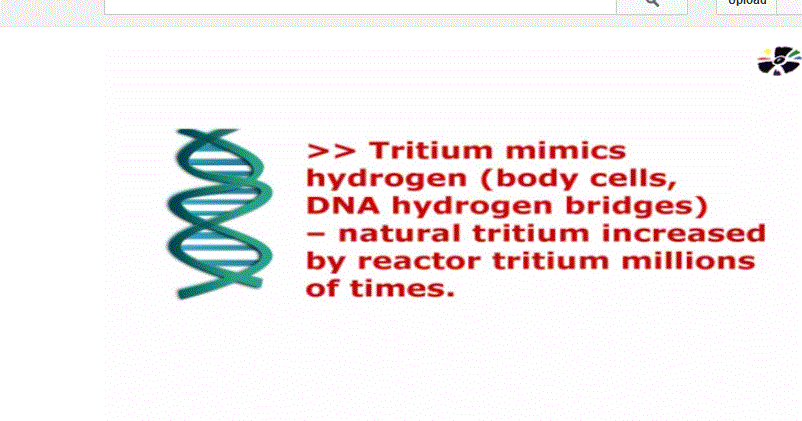
The nuclear lobby claims wrongly that tritium is harmless

APAG2 2nd Aug 2018 *Fusion** The nuclear lobby claims wrongly that tritium is harmless to discharge into
the environment, and that nuclear fusion, in which tritium is used as fuel,
is safe. With this consummate manipulation, the French nucleocrats are
passing ITER the nuclear fusion reactor currently under construction at
Cadarache [Bouches-du-Rhone] a carte blanche. But it is not safe.
https://apag2.wordpress.com/2018/08/02/iter-tritium-danger-%e2%80%a8larnaque-mortifere-du-lobby-du-nucleaire/

November 5, 2018 Posted by Christina Macpherson | France, technology | Leave a comment

Swedish Environmental Court has concerns about speed of corrosion of copper nuclear waste canisters

GDF Watch 4th Nov 2018 , The company responsible for delivering Sweden’s deep geological repository, SKB, is planning to subject their research into copper
corrosion to international peer review in the new year. SKB believe this is
the most transparent and open way in which to address concerns about the
contentious issue, which has held up final decision-making on the Swedish
national repository for higher activity radioactive waste.
Earlier this year the Swedish Environmental Court largely approved SKB’s plans for a
geological disposal facility in Osthammar. However, the Court had concerns
about the speed at which copper canisters corrode and the potential
consequential environmental impact. Conflicting scientific evidence was
presented to the Court. The Court decided that this was something the
Swedish Government needed to consider further before any approval was given
to the planned radioactive waste disposal facility. The Swedish Government
asked SKB to provide additional information by 31 March 2019.
http://www.gdfwatch.org.uk/2018/11/04/sweden-copper-corrosion-update/

November 5, 2018 Posted by Christina Macpherson | safety, Sweden, wastes | Leave a comment

Radioactivity induced mutations in the animals of Chernobyl

What We Know About the Chernobyl Animal Mutations https://www.thoughtco.com/chernobyl-animal-mutations-4155348?utm_source=facebook&utm_medium=social&utm_campaign=shareurlbuttons&fbclid=IwAR0ML06KNkYYmozGbreM6e9ApQ9154nFmnYLxzZFUkK0pznLEi2X9FM-FHQ   by

Anne Marie Helmenstine, Ph.D.  September 10, 2018

The 1986 Chernobyl accident resulted in one of the highest unintentional releases of radioactivity in history. The graphite moderator of reactor 4 was exposed to air and ignited, shooting plumes of radioactive fallout across what is now Belarus, Ukraine, Russia, and Europe. While few people live near Chernobyl now, animals living in the vicinity of the accident allow us to study the effects of radiation and gauge recovery from the disaster.

Most domestic animals have moved away from the accident, and those deformed farm animals that were born did not reproduce. After the first few years following the accident, scientists focused on studies of wild animals and pets that had been left behind, in order to learn about Chernobyl’s impact.

Although the Chernobyl accident can’t be compared to effects from a nuclear bombbecause the isotopes released by the reactor differ from those produced by a nuclear weapon, both accidents and bombs cause mutations and cancer.

It’s crucial to study the effects of the disaster to help people understand the serious and long-lasting consequences of nuclear releases. Moreover, understanding the effects of Chernobyl may help humanity react to other nuclear power plant accidents.

The Relationship Between Radioisotopes and Mutations 

You may wonder how, exactly, radioisotopes (a radioactive isotope) and mutations are connected. The energy from radiation can damage or break DNA molecules. If the damage is severe enough, cells can’t replicate and the organism dies. Sometimes DNA can’t be repaired, producing a mutation. Mutated DNA may result in tumors and affect an animal’s ability to reproduce. If a mutation occurs in gametes, it can result in a nonviable embryo or one with birth defects.

Additionally, some radioisotopes are both toxic and radioactive. The chemical effects of the isotopes also impact the health and reproduction of affected species.

The types of isotopes around Chernobyl change over time as elements undergo radioactive decay. Cesium-137 and iodine-131 are isotopes that accumulate in the food chain and produce most of the radiation exposure to people and animals in the affected zone.

Examples of Domestic Genetic Deformities

Ranchers noticed an increase in genetic abnormalities in farm animals immediately following the Chernobyl accident. In 1989 and 1990, the number of deformities spiked again, possibly as a result of radiation released from the sarcophagus intended to isolate the nuclear core. In 1990, around 400 deformed animals were born. Most deformities were so severe the animals only lived a few hours.

Examples of defects included facial malformations, extra appendages, abnormal coloring, and reduced size. Domestic animal mutations were most common in cattle and pigs. Also, cows exposed to fallout and fed radioactive feed produced radioactive milk.

The health and reproduction of animals near Chernobyl were diminished for at least the first six months following the accident. Since that time, plants and animals have rebounded and largely reclaimed the region. Scientists collect information about the animals by sampling radioactive dung and soil and watching animals using camera traps.

The Chernobyl exclusion zone is a mostly-off-limits area covering over 1,600 square miles around the accident. The exclusion zone is a sort of radioactive wildlife refuge. The animals are radioactive because they eat radioactive food, so they may produce fewer young and bear mutated progeny. Even so, some populations have grown. Ironically, the damaging effects of radiation inside the zone may be less than the threat posed by humans outside of it. Examples of animals seen within the zone include Przewalksi’s horses, wolves, badgers, swans, moose, elk, turtles, deer, foxes, beavers, boars, bison, mink, hares, otters, lynx, eagles, rodents, storks, bats, and owls.

Not all animals fare well in the exclusion zone. Invertebrate populations (including bees, butterflies, spiders, grasshoppers, and dragonflies) in particular have diminished. This is likely because the animals lay eggs in the top layer of soil, which contains high levels of radioactivity.

Radionuclides in water have settled into the sediment in lakes. Aquatic organisms are contaminated and face ongoing genetic instability. Affected species include frogs, fish, crustaceans, and insect larvae.

While birds abound in the exclusion zone, they are examples of animals that still face problems from radiation exposure. A study of barn swallows from 1991 to 2006 indicated birds in the exclusion zone displayed more abnormalities than birds from a control sample, including deformed beaks, albinistic feathers, bent tail feathers, and deformed air sacs. Birds in the exclusion zone had less reproductive success. Chernobyl birds (and also mammals) often had smaller brains, malformed sperm, and cataracts.

The Famous Puppies of Chernobyl 

Not all of the animals living around Chernobyl are entirely wild. There are around 900 stray dogs, mostly descended from those left behind when people evacuated the area. Veterinarians, radiation experts, and volunteers from a group called The Dogs of Chernobyl capture the dogs, vaccinate them against diseases, and tag them. In addition to tags, some dogs are fitted with radiation detector collars. The dogs offer a way to map radiation across the exclusion zone and study the ongoing effects of the accident. While scientists generally can’t get a close look at individual wild animals in the exclusion zone, they can monitor the dogs closely. The dogs are, of course, radioactive. Visitors to the area are advised to avoid petting the pooches to minimize radiation exposure.

References 

  • Galván, Ismael; Bonisoli-Alquati, Andrea; Jenkinson, Shanna; Ghanem, Ghanem; Wakamatsu, Kazumasa; Mousseau, Timothy A.; Møller, Anders P. (2014-12-01). “Chronic exposure to low-dose radiation at Chernobyl favours adaptation to oxidative stress in birds”. Functional Ecology. 28 (6): 1387–1403.
  • Moeller, A. P.; Mousseau, T. A. (2009). “Reduced abundance of insects and spiders linked to radiation at Chernobyl 20 years after the accident”. Biology Letters. 5 (3): 356–9.
  • Møller, Anders Pape; Bonisoli-Alquati, Andea; Rudolfsen, Geir; Mousseau, Timothy A. (2011). Brembs, Björn, ed. “Chernobyl Birds Have Smaller Brains”. PLoS ONE. 6 (2): e16862.
  • Poiarkov, V.A.; Nazarov, A.N.; Kaletnik, N.N. (1995). “Post-Chernobyl radiomonitoring of Ukrainian forest ecosystems”. Journal of Environmental Radioactivity. 26 (3): 259–271. 
  • Smith, J.T. (23 February 2008). “Is Chernobyl radiation really causing negative individual and population-level effects on barn swallows?”. Biology Letters. The Royal Society Publishing. 4 (1): 63–64. 
  • Wood, Mike; Beresford, Nick (2016). “The wildlife of Chernobyl: 30 years without man”. The Biologist. London,UK: Royal Society of Biology. 63 (2): 16–19. 


November 5, 2018 Posted by Christina Macpherson | environment, Reference, Ukraine | Leave a comment

Extreme weather and nuclear power plants

 https://nuclearexhaust.wordpress.com/2018/11/04/extreme-weather-and-nuclear-power-plants/

https://www.researchgate.net/publication/289163143_Extreme_weather_and_nuclear_power_plants_EXWE_EXWE_summary_report

see also download at :http://safir2014.vtt.fi/finalseminar/Day_2/TR5_8_4_EXWE_SAFIR2014.pd   fKirsti Jylhä
32.05Finnish Meteorological Institute, Hanna M. Mäkelä, 24.69Finnish Meteorological Institute, Ari Venäläinen
34.18Finnish Meteorological Institute, Milla Johansson, 19.57Finnish Meteorological Institute

“This research comprehensively described the occurrence of extreme weather and climate events and aspects of sea level rise that are relevant from the view point of safety of nuclear power plants.

Studies about the frequency, intensity, and spatial and temporal variation of the extreme weather events and their combinations were carried out utilising instrumental meteorological observations, a 1 200-year long preindustrial control simulation and future climate model simulations.

In addition to the role of natural climate variability, the study clarified the influence of human-induced climate change on extreme weather events and sea level values. The longest future climate and sea level projections extend to the end of the 21st century.

According to them, the daily maximum temperatures and the length of the longest hot spells will clearly increase in Finland. The largest changes, however, are projected for the wintertime minimum temperatures. During summer there will be more intensive precipitation events and during winter more frequent precipitation days. The mean sea level is projected to rise, the change depending on the location along the Finnish coastline. Uncertainty ranges in the mean sea level scenarios are large mainly due to uncertainties in the future behaviour of the continental ice sheets.” end quote. Please see original link above.

November 5, 2018 Posted by Christina Macpherson | climate change, Finland | Leave a comment

NuGen nuclear power project in Moorside, Cumbria, UK, soon to bite the dust?

Sunday Times 4th Nov 2018 Plans to build a nuclear power station to provide up to 7% of the
country’s electricity could be ditched within days after talks with a
potential buyer stalled.

The planned NuGen plant in Moorside, Cumbria, has
been in trouble since financial problems emerged in 2016 at the owner,
Toshiba, and its nuclear subsidiary Westinghouse Electric filed for
bankruptcy protection.

Toshiba has been trying to sell the project.
However, talks with South Korea’s state-owned Korean Electric Power
Corporation (Kepco) have yet to lead to a deal, and Kepco was stripped of
preferred bidder status in August.

It is thought that Toshiba’s board is
set to meet in Tokyo on Thursday, when directors will decide whether to
continue trying to find a buyer or to wind up the project, which is
believed to have been costing millions of pounds a month.

Winding up NuGen— seen as the likely outcome — would deal a big blow to the
government’s energy strategy. NuGen had been due to start powering about
6m homes from 2025. The private equity firm Brookfield, which bought
Westinghouse, was also in talks with Toshiba over the deal but it is
believed these have collapsed. China’s CGN has also been interested.
https://www.thetimes.co.uk/edition/business/crunch-talks-to-rule-on-cumbria-nuclear-plant-gvtg2ztrh

November 5, 2018 Posted by Christina Macpherson | business and costs, UK | Leave a comment

UK could be running solely on zero carbon renewable in summer months 2050.

Business Green 2nd Nov 2018 The UK power market will be able to withstand huge volumes of new renewable
generation coming on line according to new research, which suggests the
country could be running solely on zero carbon power during the summer
months by 2050.
The paper, released today by Aurora Energy Research,
explores what happens to the UK power market as it transitions to a high
level of renewable power. Aurora modelled a 2050 scenario where power
demand has risen by two-thirds from today, thanks to the rise of EVs, and
the grid now boasts 130GW of nuclear, wind and solar generation capacity.
Low power demand and a seasonal spike in renewables generation could
effectively lead to zero-carbon summers for the UK electricity grid under
this scenario, according to Aurora. But such large volumes of renewable
power would also “fundamentally alter” the workings of the power market,
with price crashes in the summer months as green power generation soars.
https://www.businessgreen.com/bg/news/3065602/aurora-er-uk-could-enjoy-zero-carbon-summer-power-by-2050

November 5, 2018 Posted by Christina Macpherson | renewable, UK | Leave a comment

Hackers accessed confidential documents about nuclear plants

Hackers obtain nuclear power plant plans in France, DW, 2 Nov 18 Hackers have accessed confidential documents about nuclear plants and prisons in a cyberattack on a French firm, media reported. Some of the data was found on a rented server in Germany, according to the reports.

Thousands of sensitive documents pertaining to nuclear power plants, prisons and tram networks have been stolen from the servers of a French company in a cyberattack, German and French media have reported Friday.

The data illegally accessed from the French company Ingerop back in June amounted to more than 65 gigabytes, according to reports by German public broadcaster NDR, the daily Süddeutsche Zeitung and French newspaper Le Monde.

A spokeswoman from Ingerop quoted by NDR said more than 11,000 files from a dozen projects were obtained. They were said to include plans showing the planned locations of video cameras for a French high-security prison, documents about a planned nuclear-waste dump in northeastern France and personal information on more than a thousand Ingerop workers.

Some of the documents were connected with the Fessenheim nuclear plant  on the border to Germany, reports said………https://www.dw.com/en/hackers-obtain-nuclear-power-plant-plans-in-france/a-46126878

November 3, 2018 Posted by Christina Macpherson | France, secrets,lies and civil liberties | Leave a comment

UK’s Sellafield nuclear decommisioning ‘a misuse of public funds’

CORE 31st Oct 2018 The findings of the spending watchdog’s latest report on the status of
Sellafield’s clean-up projects and costs makes yet more dreary reading
for the UK taxpayer – the costs described as ‘a misuse of public
funds’ by a spokesman for the report’s authors the Government’s
Public Accounts Committee (PAC).
The PAC report pulls few punches in its
criticism of the way the Nuclear Decommissioning Authority (NDA) is
managing many of the major projects needed to clean up Sellafield. The site
currently receives some £2Bn of public money every year and, over the next
100+ years of decommissioning is expected to cost a total of £91Bn.
In a slight but revealing departure from the pattern of previous reports, PAC
raises the spectre of the UK’s plutonium stockpile (40% of the world’s
global stock) and the latest thinking by Government on its long-term
plutonium management options. [An NDA FoI response to CORE (29.10.18)
suggests an update on its plutonium plans is currently being finalised by
the NDA and could be published in the next month or so]
http://corecumbria.co.uk/briefings/spendthrift-sellafield-wayward-governance-and-the-latest-plutonium-view/?doing_wp_cron=1541014253.9727599620819091796875

November 3, 2018 Posted by Christina Macpherson | decommission reactor, politics, UK | Leave a comment

French hypocrisy in decision to cancel decree of closure of Fessenheim NPP

Reporterre 30th Oct 2018 Fessenheim is the symbol of French energy hypocrisy. The decision of the
Council of State, Thursday, October 25, to cancel the decree of closure of
the nuclear power plant Fessenheim reveals, according to the speaker of
this forum, the hypocrisy of an energy system on which the political power
has no hold.
https://reporterre.net/Fessenheim-est-le-symbole-de-l-hypocrisie-energetique-francaise

November 3, 2018 Posted by Christina Macpherson | France, politics | Leave a comment

€45 billion renewables investment opportunity in France, with its new energy policy

French turn on nuclear opens €45 billion renewables investment opportunity  The French government is expected to show a draft plan on how to achieve nuclear generation reduction plans. After minister Hulot left the government in August, amidst disagreements with Macron’s handling of the nuclear lobby, the parliament has voted for a bill to reduce nuclear generation capacity. If the plans are realized in compliance with the climate targets, solar and wind deployment could grow significantly., PV Magazine,

OCTOBER 31, 2018 MARIAN WILLUHN UK-based analyst firm Aurora Energy Research projects a €45 billion investment opportunity for the French renewable energy market. The French government will present its plan (Programmations Plurianuelles de l’Energie) to lower its dependency on nuclear energy from 75% to 50% by 2025, while at the same time meeting Paris Agreement compliant emission reductions targets……..
Last week, the European Commission approved a new incentive scheme for self-consumption from distributed renewable resources for France. The plan comprises €200 million from the French State budget, for the support of the deployment of 490 MW of additional generation capacity. …….https://www.pv-magazine.com/2018/10/31/french-turn-on-nuclear-opens-e45-billion-renewables-investment-opportunity/?fbclid=IwAR2XkLLTvB2lhTnf__7j4skqGwszrTecissm4PhXOMMWBPiv1esVtNuFj5Q

November 3, 2018 Posted by Christina Macpherson | France, renewable | Leave a comment

The tide is turning against nuclear power, following the IPCC Report

 NuClear News, Nov 18 Tide Turns Against Nuclear   http://www.no2nuclearpower.org.uk/wp/wp-content/uploads/2018/10/NuClearNewsNo112.pdf

Following the recent National Infrastructure Assessment which advised the Government not to build more than two new nuclear stations (about 6GW) (1) and the Committee on Climate Change (CCC) statement that “If new nuclear projects were not to come forward, it is likely that renewables would be able to be deployed on shorter timescales and at lower cost,” (2) we have now seen the International Panel on Climate Change (IPCC) report making some pretty disparaging remarks about nuclear power. Perhaps the tide is finally turning.

The IPCC latest findings tell a nightmarish tale—one much worse than in previous reports— surveying the climate-change impacts we’re already experiencing with one degree of warming, and the severity of the impacts to come once we surpass 1.5 degrees of warming. Ten million more people would be exposed to permanent inundation, and several hundred million more to “climate-related risks and susceptible to poverty.” Malaria and dengue fever will be more widespread, and crops like maize, rice, and wheat will have smaller and smaller yields— particularly in sub-Saharan Africa, Southeast Asia, and Central and South America. Security and economic growth will be that much more imperilled. “Robust scientific literature now shows that there are significant differences between 1.5 and 2 degrees,” Adelle Thomas, a geographer from the Bahamas and also one of the report’s lead authors, told the New Yorker. “The scientific consensus is really strong. It’s not just a political slogan: ‘1.5 to stay alive.’ It’s true.” (3)

But the IPCC report points out that “the transition from the energy system that would be needed to limit global warming to 1.5 ° C is underway in many sectors and regions of the world. The technical, social, economic and political feasibility of solar energy, wind energy, and electricity storage technologies has improved considerably in recent years, while nuclear energy and Carbon dioxide (CCS) storage in the electricity sector did not show the same improvements.”


Nuclear: too weak, too slow, too expensive and too risky The IPCC report continues saying the timeframe between the date of decision and the commissioning of nuclear power plants is between 10 and 19 years, and current deployment capacity is slowed by public concern about the risk of accidents and problems with nuclear waste. In addition, the IPCC notes, that “the costs of nuclear energy have increased over time in some developed nations, mainly because of the prevailing conditions, where increased investment risks in high-capital-intensive technologies have become important.” The theoretical benefits that nuclear energy could bring in the fight against climate change are therefore far too weak, too slow, too expensive and too risky. While the IPCC report requires us to quickly reduce emissions, it is not possible to choose the slowest and most expensive electric generation technology to deploy, as well as the dirtiest and riskiest. Nuclear power is disqualified from the race of the climatic fight. (4)


The IPCC report also says: “In spite of the industry’s overall safety track record, a non-negligible risk for accidents in nuclear power plants and waste treatment facilities remains. The long-term storage of nuclear waste is a politically fraught subject, with no large-scale long-term storage operational worldwide. Negative impacts from upsteam uranium mining and milling are comparable to those of coal, hence replacing fossil fuel combustion by nuclear power would be neutral in that aspect. Increased occurrence of childhood leukaemia in populations living within 5 No2NuclearPower nuClear news No.112, November 2018 3 km of nuclear power plants was identified by some studies, even though a direct causal relation to ionizing radiation could not be established and other studies could not confirm any correlation”.


An April 2018 report from the International Renewable Energy Agency (IRENA) shows, renewable energy and energy efficiency can, in combination, provide over 90% of the necessary energy-related CO2 emission reductions the world needs. Furthermore, this can happen using technologies that are safe, reliable, affordable and widely available. While different paths can mitigate climate change, renewables and energy efficiency provide the optimal pathway to deliver most of the emission cuts needed at the necessary speed. But renewable energy will need to be scaled up at least six times faster for the world to meet the decarbonisation and climate mitigation goals set out in the Paris Agreement.


The total share of renewable energy must rise from around 18% of total final energy consumption (in 2015) to around two-thirds by 2050. Over the same period, the share of renewables in the power sector would increase from around one-quarter to 85%, mostly through growth in solar and wind power generation. The energy intensity of the global economy will have to fall by about two-thirds, lowering energy demand in 2050 to slightly less than 2015 levels. This is achievable, despite significant population and economic growth, by substantially improving energy efficiency, the report finds. (6)


 So what is the UK Government doing?

On 15th October the UK Government wrote a joint letter with the Welsh and Scottish governments to the Committee on Climate Change to seek updated advice on meeting the 1.5oC target. (7) Specifically, the governments asked the CCC to report on the date by which they should look to set a net zero target, as well as the range which UK greenhouse gas emissions reductions would need to be within, against 1990 levels, by 2050 as an appropriate contribution to the global goal of limiting global warming to “well below” 2oC above pre-industrial levels. It has also asked for the corresponding emissions range for a 1.5oC target. But the letter said carbon budgets already covering the period 2018-2032 were out of scope of the request.


The Intergovernmental Panel on Climate Change (IPCC) warned that limiting global warming to 1.5oC by the end of the century would require “rapid, far-reaching and unprecedented changes in all aspects of society”, and that the world is currently heading for a 3oC rise in temperature. (8)

The exclusion of the period from 2018 – 2032 led to protests from green groups and the opposition. Labour’s Energy Spokesperson, Alan Whitehead, called on the government to strengthen its review of the UK’s long term carbon targets and allow the Committee on Climate Change (CCC) to assess whether existing near-term carbon targets are compatible with keeping temperature increases below 1.5C. CCC chief executive Chris Stark admitted he was surprised the letter explicitly stated that “carbon budgets already set in legislation (Carbon Budgets 3-5 covering 2018-2032) are out of scope of this request”. (9

The Scottish Government has now written separately to the CCC changing its position, and saying the previous request “should not therefore prevent you from advising on all of Scotland’s targets.” (10) No2NuclearPower nuClear news No.112, November 2018 4

Devastating Critique of UK policies on renewables

Meanwhile the BBC’s File on Four programme aired an unprecedented critique of the UK government’s undermining of renewables. The government says it is committed to green energy – its recent ‘Clean Growth Strategy’ claims plans are in place to cut greenhouse gases by more than half of 1990 levels by 2030. And yet, research shows investment in green energy fell 56% last year, the biggest drop of any country – with policy change, subsidy cuts and ‘stop-start’ support from ministers being blamed. So, do Britain’s plans for a greener future add up? File on 4 takes to the road to find out. On a trip around the North East of England, Simon Cox asks why, when the offshore wind industry has grown, other cheap, renewable energies like onshore wind, solar power and now biofuels are struggling to survive. He examines whether changes in policy are hitting crucial investment, and if ambitious climate targets will really be met.


While offshore wind expands, it’s not the same story for onshore. Changes to planning laws mean it’s pretty impossible to build them in England and Wales. The CCC has warned of big gaps in the Government’s programme. We are going to need more onshore wind and solar to meet our targets. Gareth Miller of Cornwall Insight told the BBC that “to simply shut out the two undeniably cheapest technologies … from being built to their maximum capacity in the UK seems to be very, very strange indeed … There is a question of how serious the Government is when it says it wants to decarbonise the power sector at the lowest cost to the consumer in a world where they are currently shutting out the cheapest technologies to make that happen … I think we’ll see a significant slowdown if we haven’t already.”


In 2015 the tariff for generating solar electricity was slashed by two-thirds for homeowners and large solar farms. The domestic market has now gone back to the level it was at before the feedin tariff came in. A lot of very good companies have gone bust or shrunk. Next April the remaining tariff for exporting electricity to the grid will disappear – a further blow to investors in solar power – it will ruin the financial case for putting solar panels on your roof. It will be the final end of the domestic solar market in the UK. You are looking at thousands and thousands of job losses across the country. One recent survey found over 40% of UK solar installers are considering quitting the industry. To survive British companies have been forced to look overseas. Solar Century, for example, wouldn’t be able to survive if it was just reliant on the UK. Jeremy Leggett, founder of Solar Century says:


“If I needed any more persuading that we are dealing with hostile forces who basically over many years have taken every opportunity to set us back while promoting the cause of more expensive nuclear and more expensive shale gas then this is it … of all the things they have done to harm our industry over the years this is arguably the worst … the prize for the Government in a country desperate for jobs would have been to build a domestic industry – that is not going to happen because so many big British companies have been driven to bankruptcy.”


The opportunity to build a really healthy British solar industry has been lost.

Dr Gem Woods from Imperial College says: “We now know that even what seemed like an impossibly stretching target of reducing our greenhouse gas emissions by 80% by 2050 is not going to be anything like good enough. And so we have to think very fast (and do very fast) about what sort of systems that we need to be deploying over the next 5, 10 and 20 years – not the next 50 years. At the moment we have locked ourselves into a set of processes that in my view are really delaying meaningful implementation of the types of technologies and systems that will allow us and our children to have any kind of meaningfully good future.”


November 1, 2018 Posted by Christina Macpherson | climate change, UK | Leave a comment

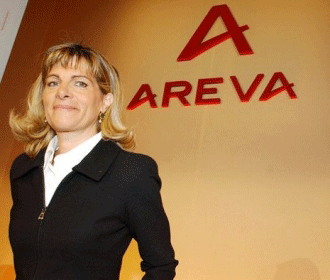
Nuclear company AREVA rebranded itself (Orano, Framatome) – but legal troubles linger

BFMTV 29th Oct 2018, Buyout of Uramin by Areva: the Paris Court of Appeal orders new indictments. In 2007, Areva, then led by Anne Lauvergeon, acquired this Canadian mining company for 1.8 billion euros. A financial fiasco on which justice leads several investigations.

The Paris Court of Appeal ordered further indictments including the former boss of the group.

https://www.bfmtv.com/economie/rachat-d-uramin-par-areva-la-cour-d-appel-de-paris-ordonne-de-nouvelles-mises-en-examen-1555034.html

November 1, 2018 Posted by Christina Macpherson | France, Legal | Leave a comment

Czech government might delay its nuclear power expansion plans

Reuters 29th Oct 2018 The Czech government may delay its decision for state-controlled utility
CEZ to build new reactors at its two nuclear power plants, Industry
Minister Marta Novakova was quoted as saying on Monday.

“The decision about building nuclear units can’t be done under pressure and we don’t
want to be put under pressure from suppliers or other entities,” Novakova
said in an interview published by Bloomberg. “The Finance Ministry is
also analyzing the risk of potential court disputes.” The project to
expand CEZ’s nuclear power plant fleet is the biggest investment ever
into Czech energy. CEZ operates two plants at Dukovany and Temelin that
together covered 38 percent of Czech energy needs last year.
https://uk.reuters.com/article/us-czech-nuclearpower/minister-czechs-may-delay-plan-to-boost-nuclear-power-capacity-bloomberg-idUSKCN1N31GF?rpc=401&

November 1, 2018 Posted by Christina Macpherson | EUROPE, politics | Leave a comment

France’s people turning away from nuclear power

French public opinion growing against nuclear power https://www.connexionfrance.com/French-news/French-public-opinion-is-growing-against-nuclear-power-as-awareness-of-environment-and-renewable-energy-growsThe French public is becoming less and less in favour of nuclear power, as awareness and concern for the environment grows, according to a new study.

Over half (53%) of French people said they were now opposed to nuclear power, in the survey by pollster Odoxa. This is compared to 67% who said they were in favour, in a another poll five years’ ago.

The change in opinion has been attributed to the growth and improvement in renewable energy sources, and the rising awareness of the public towards the environment.

The safety of nuclear reactors has also been in question recently, after a spike in breakdowns, and more and more people living within 80 km of a central reactor.

Environmental campaigner Greenpeace, said: “We have gone from a world in which French society believed that nuclear was the only choice. The public thought it was bad, but a necessary evil. But now, with the rise in renewable energy, with sun and wind, we can bypass nuclear completely.”

Concern over the environmental impact of nuclear power has also played a role, it suggested.

The statement continued: “We are waking up to the fact that when we turn on a light or a toaster at home, we are producing radioactive waste that is going to remain on Earth for thousands of years. We are starting to ask ourselves if this is a clean source of energy.”

Despite this, however, the same poll found that just 28% of people would be willing to pay more for their energy to fix the nuclear problem.

October 29, 2018 Posted by Christina Macpherson | France, politics | Leave a comment

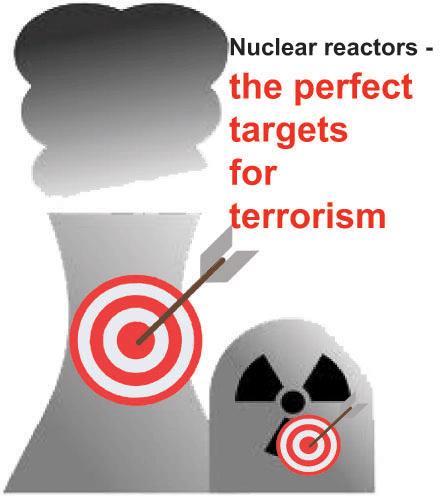
Nuclear facilities in UK – perfect targets for terrorism

Nuclear facilities as potential targets in China and UK https://nuclearexhaust.wordpress.com/2018/10/27/nuclear-facilities-as-potential-targets-in-china-and-uk/

Nuclear reactors as potential targets in UK

Wales
Trawsfynydd (not operating)
Latitude: 52° 55′ 30.06″ N (52.92502°)
Longitude: 3° 56′ 57.23″ W (-3.94923°
Wylfa (not operating)
Latitude: 53° 24′ 59.95″ N (53.41666°)
Longitude: 4° 28′ 59.24″ W (-4.48312°)
Scotland
Chapelcross nuclear power station (not operating)
Latitude: 55° 0′ 56.29″ N (55.01562°)
Longitude: 3° 13′ 33.78″ W (-3.22650°)
Dounreay – Dounreay Fast Reactor (not operating)
Latitude: 58° 34′ 49.94″ N (58.58054°)
Longitude: 3° 44′ 42.83″ W (-3.74521°)
Dounreay – Prototype Fast Reactor (not operating)
Latitude: 58° 34′ 41.48″ N (58.57819°)
Longitude: 3° 45′ 07.60″ W (-3.75211°)
Hunterston A nuclear power station (not operating)
Latitude: 55° 43′ 11.48″ N (55.71986°)
Longitude: 4° 53′ 47.82″ W (-4.89662°)
Hunterston B nuclear power station
Latitude: 55° 43′ 19.51″ N (55.72209°)
Longitude: 4° 53′ 24.31″ W (-4.89009°)
Torness nuclear power station
Latitude: 55° 58′ 04.77″ N (55.96799°)
Longitude: 2° 24′ 32.68″ W (-2.40908°)
England
Berkeley nuclear power station (not operating)
Latitude: 51° 41′ 33″ N 51.6925°
Longitude: 2° 29′ 37″ W -2.493611°
Bradwell Power Station (not operating)
Latitude: 51° 44′ 28.56″ N 51.741266°
Longitude: 0° 53′ 48.76″ E 0.896879°
Culham (JET)
Latitude: 51° 39′ 13″ N (51.634°)
Longitude: 1° 13′ 37″ W (-1.227°)
Dungeness A Power Station (not operating)
Latitude: 50° 54′ 50″ N 50.913889°
Longitude: 0° 57′ 50″ E 0.963889°
Dungeness B Power Station
Latitude: 50° 54′ 50″ N 50.913889°
Longitude: 0° 57′ 50″ E 0.963889°
Hartlepool nuclear power station
Latitude: 54° 38′ 6.12″ N 54.635034°
Longitude: 1° 10′ 51.02″ W -1.18084°
Harwell (decommissioned)
Latitude: 51° 34′ 32″ N (51.576°)
Longitude: 1° 18′ 49″ W (-1.314°)
Heysham 1 Power Station
Latitude: 54° 2′ 0″ N 54.033333°
Longitude: 2° 54′ 0″ W -2.9°
Heysham 2 Power Station
Latitude: 54° 2′ 0″ N 54.033333°
Longitude: 2° 54′ 0″ W -2.9°
Hinkley Point A nuclear power station (not operating)
Latitude: 51° 12′ 30.81″ N 51.208559°
Longitude: 3° 7′ 49.52″ W -3.130424°
Hinkley Point B nuclear power station
Latitude: 51° 12′ 30.81″ N 51.208559°
Longitude: 3° 7′ 49.52″ W -3.130424°
Hinkley Point C nuclear power station
Latitude: 51° 12′ 30.81″ N 51.208559°
Longitude: 3° 7′ 49.52″ W -3.130424°
Oldbury nuclear power station (decommissioned)
Latitude: 51° 38′ 56″ N 51.648889°
Longitude: 2° 34′ 15″ W -2.570833°
Sellafield (decommissioning)
Latitude: 54° 25′ 12″ N 54.42°
Longitude: 3° 30′ 0″ W -3.5°
Sizewell A nuclear power station (not operating)
Latitude: 52° 12′ 49″ N 52.213611°
Longitude: 1° 37′ 6″ E 1.618333°
Sizewell B nuclear power station
Latitude: 52° 12′ 49″ N 52.213611°
Longitude: 1° 37′ 6″ E 1.618333°
Winfrith (decommissioned)
Latitude: 50° 41′ 05.37″ N (50.68483°)
Longitude: 2° 15′ 43.51″ W (-2.26209°)

October 29, 2018 Posted by Christina Macpherson | safety, UK | Leave a comment

« Previous Entries     Next Entries »

1 This Month

23-25 October – on Zoom –  World BEYOND War’s annual global conferenc

​

Shut down the radiation-damaged Heysham nuclear reactors now

To see nuclear-related stories in greater depth and intensity – go to https://nuclearinformation.wordpress.com

Say No to NASA’s Reckless Nuclear Reactor on the Moon

Say No to NASA’s Reckless Nuclear Reactor on the Moon

  • Categories

    • 1
      • Arclight's Vision
    • 1 NUCLEAR ISSUES
      • business and costs
        • employment
        • marketing
      • climate change
      • culture and arts
      • ENERGY
        • renewable
          • decentralised
          • energy storage
      • environment
        • oceans
        • water
      • health
        • children
        • psychology – mental health
        • radiation
        • social effects
        • women
      • history
      • indigenous issues
      • Legal
        • deaths by radiation
        • legal
      • marketing of nuclear
      • media
        • investigative journalism
        • Wikileaks
      • opposition to nuclear
      • PERSONAL STORIES
      • politics
        • psychology and culture
          • Trump – personality
        • public opinion
        • USA election 2024
        • USA elections 2016
      • politics international
      • Religion and ethics
      • safety
        • incidents
      • secrets,lies and civil liberties
        • civil liberties
      • spinbuster
        • Education
      • technology
        • reprocessing
        • Small Modular Nuclear Reactors
        • space travel
      • Uranium
      • wastes
        • – plutonium
        • decommission reactor
      • weapons and war
        • Atrocities
        • depleted uranium
      • Women
    • 2 WORLD
      • ANTARCTICA
      • ARCTIC
      • ASIA
        • Burma
        • China
        • India
        • Indonesia
        • Japan
          • – Fukushima 2011
          • Fukushima 2012
          • Fukushima 2013
          • Fukushima 2014
          • Fukushima 2015
          • Fukushima 2016
          • Fukushima continuing
        • Malaysia
        • Mongolia
        • North Korea
        • Pakistan
        • South Korea
        • Taiwan
        • Turkey
        • Vietnam
      • EUROPE
        • Belarus
        • Bulgaria
        • Denmark
        • Finland
        • France
        • Germany
        • Greece
        • Ireland
        • Italy
        • Kazakhstan
        • Kyrgyzstan
        • Russia
        • Spain
        • Sweden
        • Switzerland
        • UK
        • Ukraine
      • MIDDLE EAST
        • Afghanistan
        • Egypt
        • Gaza
        • Iran
        • Iraq
        • Israel
        • Jordan
        • Libya
        • Saudi Arabia
        • Syria
        • Turkey
        • United Arab Emirates
      • NORTH AMERICA
        • Canada
        • USA
          • election USA 2020
      • OCEANIA
        • New Zealand
        • Philippines
      • SOUTH AMERICA
        • Brazil
    • ACTION
    • AFRICA
      • Kenya
      • Malawi
      • Mali
      • Namibia
      • Niger
      • Nigeria
      • Somalia
      • South Africa
    • Atrocities
    • AUSTRALIA
    • Christina's notes
    • Christina's themes
    • culture and arts
    • Events
    • Fuk 2022
    • Fuk 2023
    • Fukushima 2017
    • Fukushima 2018
    • fukushima 2019
    • Fukushima 2020
    • Fukushima 2021
    • general
    • global warming
    • Humour (God we need it)
    • Nuclear
    • RARE EARTHS
      • thorium
    • Reference
      • Reference archives
    • resources – print
    • Resources -audiovicual
    • Weekly Newsletter
    • World
    • World Nuclear
    • YouTube
  • Pages

    • 1 This Month
    • ACTION !
    • Disclaimer
    • Links
    • PAGES on NUCLEAR ISSUES
      • audio-visual news
      • Anti Nuclear, Clean Energy Movement
        • Anti Nuclear movement – a success story
          • – 2013 – the struggle for a nuclear-free, liveable world
          • – 2013: the battle to expose nuclear lies about ionising radiation
            • Speakers at Fukushima Symposium March 2013
            • Symposium 2013 Ian Fairlie
      • Civil Liberties
        • – Civil liberties – China and USA
      • Climate change
      • Climate Change
      • Economics
        • – Employment
        • – Marketing nuclear power
        • – Marketing Nuclear Power Internationally
        • nuclear ‘renaissance’?
        • Nuclear energy – the sick man of the corporate world
      • Energy
        • – Solar energy
      • Environment
        • – Nuclear Power and the Tragedy of the Commons
        • – Water
      • Health
        • Birth Defects in the Chernobyl Radiation Affected Region.
      • History
        • Nuclear History – the forgotten disasters
      • Indigenous issues
      • Ionising radiation
        • – Ionising radiation – medical
        • Fukushima FACT SHEET
      • Media
        • Nuclear Power and Media 2012
      • Nuclear Power and the Consumer Society – theme for December 2012
      • Peace and nuclear disarmament
        • Peace on a Nuclear Free Earth
      • Politics
        • – Politics USA
      • Public opinion
      • Religion and ethics
        • -Ethics of nuclear power
      • Resources – print
      • Safety
      • Secrets and lies
        • – NUCLEAR LIES – theme for January 2012
        • – Nuclear Secrets and Lies
      • Spinbuster
        • 2013 nuclear spin – all about FEAR -theme for June
        • Spinbuster 1
      • Technology
        • TECHNOLOGY Challenges
      • Wastes
        • NUCLEAR WASTES – theme for October 2012
        • – Plutonium
      • Weapons and war
      • Women
  • Archives

    • October 2026 (199)
    • September 2026 (339)
    • August 2026 (330)
    • July 2026 (355)
    • June 2026 (287)
    • May 2026 (306)
    • April 2026 (356)
    • March 2026 (251)
    • February 2026 (267)
    • January 2026 (308)
    • December 2025 (358)
    • November 2025 (359)
  • Categories

    • 1
      • Arclight's Vision
    • 1 NUCLEAR ISSUES
      • business and costs
        • employment
        • marketing
      • climate change
      • culture and arts
      • ENERGY
        • renewable
          • decentralised
          • energy storage
      • environment
        • oceans
        • water
      • health
        • children
        • psychology – mental health
        • radiation
        • social effects
        • women
      • history
      • indigenous issues
      • Legal
        • deaths by radiation
        • legal
      • marketing of nuclear
      • media
        • investigative journalism
        • Wikileaks
      • opposition to nuclear
      • PERSONAL STORIES
      • politics
        • psychology and culture
          • Trump – personality
        • public opinion
        • USA election 2024
        • USA elections 2016
      • politics international
      • Religion and ethics
      • safety
        • incidents
      • secrets,lies and civil liberties
        • civil liberties
      • spinbuster
        • Education
      • technology
        • reprocessing
        • Small Modular Nuclear Reactors
        • space travel
      • Uranium
      • wastes
        • – plutonium
        • decommission reactor
      • weapons and war
        • Atrocities
        • depleted uranium
      • Women
    • 2 WORLD
      • ANTARCTICA
      • ARCTIC
      • ASIA
        • Burma
        • China
        • India
        • Indonesia
        • Japan
          • – Fukushima 2011
          • Fukushima 2012
          • Fukushima 2013
          • Fukushima 2014
          • Fukushima 2015
          • Fukushima 2016
          • Fukushima continuing
        • Malaysia
        • Mongolia
        • North Korea
        • Pakistan
        • South Korea
        • Taiwan
        • Turkey
        • Vietnam
      • EUROPE
        • Belarus
        • Bulgaria
        • Denmark
        • Finland
        • France
        • Germany
        • Greece
        • Ireland
        • Italy
        • Kazakhstan
        • Kyrgyzstan
        • Russia
        • Spain
        • Sweden
        • Switzerland
        • UK
        • Ukraine
      • MIDDLE EAST
        • Afghanistan
        • Egypt
        • Gaza
        • Iran
        • Iraq
        • Israel
        • Jordan
        • Libya
        • Saudi Arabia
        • Syria
        • Turkey
        • United Arab Emirates
      • NORTH AMERICA
        • Canada
        • USA
          • election USA 2020
      • OCEANIA
        • New Zealand
        • Philippines
      • SOUTH AMERICA
        • Brazil
    • ACTION
    • AFRICA
      • Kenya
      • Malawi
      • Mali
      • Namibia
      • Niger
      • Nigeria
      • Somalia
      • South Africa
    • Atrocities
    • AUSTRALIA
    • Christina's notes
    • Christina's themes
    • culture and arts
    • Events
    • Fuk 2022
    • Fuk 2023
    • Fukushima 2017
    • Fukushima 2018
    • fukushima 2019
    • Fukushima 2020
    • Fukushima 2021
    • general
    • global warming
    • Humour (God we need it)
    • Nuclear
    • RARE EARTHS
      • thorium
    • Reference
      • Reference archives
    • resources – print
    • Resources -audiovicual
    • Weekly Newsletter
    • World
    • World Nuclear
    • YouTube
  • RSS

    Entries RSS
    Comments RSS

Site info

nuclear-news
Create a free website or blog at WordPress.com.
Privacy & Cookies: This site uses cookies. By continuing to use this website, you agree to their use.
To find out more, including how to control cookies, see here: Cookie Policy
  • Subscribe Subscribed
    nuclear-news
    Join 2,056 other subscribers

    Have a WordPress.com account? Log in now.

  • nuclear-news
    View site in Reader
    Manage subscriptionsSign upLog in
    Report this content
    Collapse this bar
Loading Comments...