NuGen’s failing Moorside nuclear project will cost Cumbrian residents a multimillion-pound bill for the preparatory work

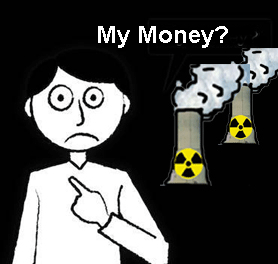
 Times 10th Nov 2018 Consumers face a multimillion-pound bill for work carried out in preparation for the proposed Cumbrian nuclear plant that may never be built.
National Grid said that it had spent tens of millions of pounds planning the 100-mile power line to connect Nugen’s Moorside plant to the electricity transmission network. Much of the cost is expected to be recovered from households and businesses via levies on their energy bills for decades to come. John Pettigrew, chief executive, said that work on the Moorside line had cost “tens of millions” of pounds and that there was a “regulatory process” to recover the costs.
Nugen is obliged to cover some of the cost, but one industry source said that it was on the hook for a little more than £10 million, while National Grid’s expenditure was thought to be in the high double digits. National Grid is expected to submit a claim to Ofgem, the energy regulator, to recoup the rest from consumers.
The regulator can refuse to allow expenditure it deems inefficient, but the rules are thought likely to allow the company to recover at least half of its costs. The eventual £2.8 billion proposal included £1.9 billion of “measures to reduce its impact on people, places and the environment”, including burying the lines through a 14-mile stretch of the Lake District and a 13-mile tunnel under MorecambeBay.
https://www.thetimes.co.uk/article/f1630fa6-e458-11e8-9838-efa7e96cbe2b
For Britain’s next nuclear boondoggle – Wylfa project, households might have to pay upfront for the construction.
 Times 11th Nov 2018 The business secretary Greg Clark held a crunch meeting with Hitachi in Tokyo last week over its planned £15bn Welsh nuclear power station, as a rival Japanese project collapsed. Toshiba killed off its NuGen power station plan in Cumbria last week after the ailing industrial giant struggled to find a buyer – denting Britain and Japan’s nuclear ambitions.
Toshiba’s exit leaves Britain’s nuclear power renaissance reliant on France’s EDF and Japan’s Hitachi. Clark is understood to have attended a dinner with the Hitachi chairman Hiroaki Nakanishi during a visit to Japan, where they discussed sealing a deal on Hitachi’s Horizon power station on Anglesey by Easter.
The British and Japanese governments are expected to take equal equity stakes in Horizon alongside Hitachi. Whitehall is also expected to provide all the debt for the 2.7 gigawatt project, which would be sold once it has started generating power. Clark agreed to help bankroll the Horizon project in June, marking a departure from previous policy.
Ministers want Horizon and Hinkley to replace a string of ageing coal and nuclear power plants that are due to close over the next decade. Under pressure from ministers, Hitachi is considering using a different form of financing – a regulated asset base – for future reactors on Anglesey and in Gloucestershire.
However, that risks further controversy as it would mean households fund the project before it has been completed. Clark’s latest visit also reflects growing tension between Tokyo and London over Brexit.
https://www.thetimes.co.uk/article/97c7a1de-e514-11e8-aa8a-1a554b586cbd
In 1966 USA lost a hydrogen nuclear bomb over Spain – environmental and health repercussions continue
When America lost a nuclear bomb, Fosters.com, By D. Allan Kerr news@seacoastonline.com 11 Nov 18, In January 1966, an American B-52 bomber collided mid-air with a refueling tanker off the coast of Spain. The resulting fiery crash claimed the lives of seven crew members.
While the loss of life was devastating, there was potential for even greater catastrophe – the B-52 was carrying four fully-loaded hydrogen bombs.
Three of the bombs were located within 24 hours, in the vicinity of a Spanish fishing village called Palomares. The fourth was nowhere to be found.
With the Cold War mired in a deep chill, the United States dispatched an entire Navy armada to try to locate the missing bomb, which was believed to have gone into the Atlantic Ocean. Among those involved in the search was a 23-year-old Navy officer named Donald Craig.
Craig was an ensign at the time, having graduated the previous year from Officer Candidate School at Newport, Rhode Island. He was serving aboard his first vessel, the minesweeper USS Sagacity (MSO 469).
As it happened, Sagacity was near Barcelona, Spain, on a Mediterranean cruise when the tragedy occurred. The minesweeper was dispatched to the scene and over the next several weeks took part in the massive search for the missing nuke.
Craig is now 76 years old, retired, and a longtime resident of Kittery Point, Maine. He still recalls the hunt for the missing nuclear bomb, and the race to get to it before the Soviet Union.
He also remains frustrated on behalf of fellow veterans who say they are dealing with adverse health effects from radiation exposure during the incident – with no assistance from the government that sent them there.
“We knew nothing,” Craig said recently of the possible aftereffects. “We were just out there doing our job.”
A disaster begins
It should have been a routine operation…………
At one point the Navy lost the bomb again in the process of bringing it to the surface, and it sank even deeper into the ravine. Eventually, the bomb and an unmanned vehicle, which had become entangled in its parachute lines, were hauled onto the deck of the submarine rescue ship USS Petrel nearly three months after the initial tragedy.
But then the United States government had to deal with a whole separate controversy – the environmental repercussions of an unleashed hydrogen bomb.
Plutonium blowing in the wind
Members of the U.S. Air Force and residents of Palomares were all exposed to radioactivity from the two bombs that had broken apart on land. Craig recalls winds of about 30 knots at the time.
“Plutonium was blowing in the wind, it was all over the place there,” he said. “They (Air Force personnel) were sitting on the edge of the crater eating their lunches.”
An area of about one square mile was contaminated, including the village’s tomato crop. American servicemen removed this soil and brought it back to South Carolina for disposal.
But in a rather bizarre attempt to show there was no danger, the U.S. government fed the contaminated tomatoes to our troops for “breakfast, lunch and dinner,” according to a June 2016 New York Times article. The U.S. ambassador to Spain and the Spanish minister of tourism swam at a nearby beach in front of a crowd of reporters to prove the waters were safe.
“If this is radioactivity, I love it!” Ambassador Angier Biddle Duke told the media.
Somehow, no civilians on the ground were seriously harmed by falling debris from the aircraft collision. America pledged to the Spanish government the site would be cleared of contamination.
“The main objective here is to leave Spain as we found it,” Duke told LIFE magazine back in 1966.
But as recently as 2015, then-Secretary of State John Kerry and Spain’s foreign minister agreed to negotiate a binding agreement to resume cleanup efforts and further removal of contaminated soil from the site. While no substantive findings have verified serious health issues among the villagers, studies of wildlife such as snails have turned up high radioactive levels.
Craig, however, is particularly outraged by the treatment of Air Force veterans who took part in cleanup efforts at Palomares and now say they are suffering ill health effects as a result. The 2016 Times article featured several former servicemen now suffering from cancer and other ailments.
The Air Force has long insisted there were no serious adverse effects from the incident, so these conditions are not covered under Veterans Administration benefits. An estimated 1,600 veterans took part in the cleanup.
“That shouldn’t happen. They should absolutely be taken care of,” Craig said. ”(The government) did not look after their safety, and there are a lot of people suffering for it now.”
Last year, a number of veterans filed a lawsuit in Connecticut over disability benefits they were denied because the Pentagon refused to release records and reports related to the incident………….
D. Allan Kerr is the author of “Silent Strength,” a book about the 1963 loss of the nuclear Navy submarine USS Thresher. http://www.fosters.com/news/20181111/when-america-lost-nuclear-bomb
Putin claims that Russia is developing an “invincible” nuclear weapon
World War 3: Russia to arm an ‘INVINCIBLE’ nuclear weapon by 2019 says Putin https://www.express.co.uk/news/world/1043374/world-war-3-vladimir-putin-latest-nuclear-weapon-ww3-russia
RUSSIA is finalising a nuclear weapon capable of wiping out an entire city by descending on Earth “like a meteorite” at 20 times the speed of sound, Vladimir Putin has claimed, sparking World War 3 fears. By ALICE SCARSI, Nov 9, 2018 Tensions between Washington and Moscow reached a new high as the Russian President claimed he has a weapon that can resist any anti-missile systems, making it almost invincible. Mr Putin said: “We know for certain, it’s an obvious fact and our colleagues realise it, that we surpassed all our competitors in this area. “Nobody has precise hypersonic weapons. Some plan to test theirs in 18 to 24 months. We have them in service already.”
Speaking to Russian news agency TASS, they said: “The scheduled period for placing the lead regiment on combat duty is the end of 2019.
Initially, the regiment will comprise at least two systems but eventually their number will rise to their organic quantity of six units.”
According to the claims made by Russia, the Avangard is an hypersonic glide vehicle, a spacecraft which is lofted into the atmosphere atop an intercontinental ballistic missile, such as the Satan II, to then glide down at hypersonic speed.
Being 20 times faster than the speed of sound means the Avangard could travel as fast as at 6860 m/s.
Russia now offering to help Norway to deal with the inappropriate storage of radioactive waste.
it was ready to assist Norway in dealing with the inappropriate storage of radioactive waste. Norway’s nuclear and radiation watchdog, the NRPA, now tells the Barents Observer that a cooperation with Russia is possible, but no formal inquiry has yet come from Moscow to the radiation authority in Norway.
https://thebarentsobserver.com/en/ecology/2018/11/norway-keeps-door-open-russian-assistance-secure-spent-nuclear-fuel-research
Cumbria Trust questions the independence of the Committee on Radioactive Waste Management (CoRWM)
Cumbria Trust 11th Nov 2018 , The Committee on Radioactive Waste Management (CoRWM) which advises BEIS on dealing with nuclear waste, has recently published a paper which Cumbria
Trust believes calls into question their independence. They are supposed to
act as an independent body, but some of their recent actions suggest to us
that they are too close to BEIS and failing to adequately perform their
advisory function and to challenge poor decision-making. A government
department which surrounds itself, and only listens to people who agree
with it, is at significant risk of repeating past mistakes. Cumbria Trust
have written the letter (below) to CoRWM expressing our concerns.
https://cumbriatrust.wordpress.com/2018/11/11/has-corwm-lost-its-independence/
Toshiba’s failure shows business can’t deliver a nuclear future
 Guardian,9 Nov 18 , Phillip Inman As Cumbria reactor plan stalls, it is clear that huge resources are needed for such projects. If the government was keen to boost Britain’s nuclear industry, it was always clear that the private market would struggle to deliver.
The decision by Toshiba to close down its UK operations is a case in point. After the deal to build new reactors at Hinkley Point with the French firm EDF, Toshiba was favoured by ministers to design and construct a smaller power station on the Cumbrian coast.
Hinkley was a deal that appeared to be with a private company but the really meaningful talks were between Whitehall officials and their counterparts in the French government, EDF’s controlling shareholder. It took years of agonising brinkmanship to conclude the talks, much of them conducted on the French side by the then economy minister, Emmanuel Macron.
Toshiba, on the other hand, is a private company struggling on its own to navigate the complex politics surrounding nuclear power in the wake of the Fukushima disaster.
In 2006 it bought the US nuclear business Westinghouse, part of British Nuclear Fuels and home to much of the UK’s nuclear power industry. With climate change creeping to the top of the agenda and demand for new nuclear plants around the world growing, it seemed like a good idea.
However, the 2011 Fukushima disaster changed all that. Governments in Japan and other countries halted the development of new nuclear plants. Last year, cost overruns on building the first new US nuclear power plants in three decades pushed Westinghouse into bankruptcy and Toshiba into financial meltdown. The future of the Cumbrian nuclear plant has been in doubt ever since.
Earlier this year Toshiba sold Westinghouse to a private equity outfit as a services provider for existing nuclear plants. The construction of new reactors was not on the agenda. To no one’s surprise, Toshiba has now confirmed it has abandoned building any new plants in the UK.
Without entering the argument about whether nuclear is a good option – and the government advisory body, the National Infrastructure Commission, is unequivocal that renewables such as wind and solar were going to be a safer, cheaper option – it is clear huge commitments of time, resources and political capital are necessary for infrastructure projects of this scale to get off the ground and through to completion.https://www.theguardian.com/business/2018/nov/08/toshibas-failure-shows-business-cant-deliver-a-nuclear-future
Plans for a new nuclear power station in Cumbria have been scrapped
 UK nuclear power station plans scrapped as Toshiba pulls out, Guardian, Adam Vaughan@adamvaughan_uk, 8 Nov 2018 Firm’s nuclear arm to wind up next year and scrap Cumbria plant leaving big hole in UK energy plans Plans for a new nuclear power station in Cumbria have been scrapped after the Japanese conglomerate Toshiba announced it was winding up the UK unit behind the project.
Toshiba said it would take a 18.8bn Japanese yen (£125m) hit from closing its NuGeneration subsidiary, which had already been cut to a skeleton staff,after it failed to find a buyer for the scheme.
The decision represents a major blow to the government’s ambitions for new nuclear and leaves a huge hole in energy policy. The plant would have provided about 7% of UK electricity.
“This is a huge disappointment and a crushing blow to hopes of a revival of the UK nuclear energy industry,” said Tim Yeo, the chair of pro-nuclear lobby group New Nuclear Watch Institute and a former Tory MP.
Greenpeace UK’s executive director, John Sauven, said: “The end of the Moorside plan represents a failure of the government’s nuclear gamble.”
After a board meeting of Toshiba on Thursday, the company said it was winding up NuGeneration because of its inability to find a buyer and the ongoing costs it was incurring. The firm has already spent more than £400m on the project.
“Toshiba recognises that the economically rational decision is to withdraw from the UK nuclear power plant construction project, and has resolved to take steps to wind-up NuGen,” the firm said in a statement………
Some industry watchers said the collapse of the scheme should be seen as an opportunity rather than a risk, for the UK to prioritise renewables instead.
Jonathan Marshall, an analyst at the ECIU thinktank, said: “Shifting away from expensive, complicated technology towards cheaper and easier to build renewables gives the UK the opportunity to build an electricity system that will keep bills for homes and businesses down for years to come.”
The government’s infrastructure advisers recently urged ministers to rethink their nuclear plans and focus on renewables instead……..https://www.theguardian.com/environment/2018/nov/08/toshiba-uk-nuclear-power-plant-project-nu-gen-cumbria
Toshiba dumps its UK nuclear business
 Toshiba Ditches UK Nuclear Business, U.S. LNG Operations, Oil Price.com Toshiba will also liquidate another nuclear subsidiary in the UK, Advance Energy UK Limited. The loss that the company will book from the wind-ups will come in at US$130 million (15 billion yen) and will be booked in its 2018/19 results………
Earlier this year, Toshiba sold its U.S. nuclear power business, Westinghouse, for US$4.6 billion to a group of investment companies led by Brookfield Asset Management. The deal puts an end to a major headache for the Japanese conglomerate, which last year warned that it might have trouble surviving if it didn’t find a buyer for the nuclear power plant constructor, which it acquired in 2006 for US$5 billion.
Plagued by project delays and cost overruns that came up to US$6 billion for two large-scale projects in the United States, Westinghouse filed for Chapter 11 bankruptcy protection last March. The business had by that time generated US$6.3 billion in writedowns for the parent company that resulted in Toshiba reporting a net loss of US$9.1 billion for 2016……..https://oilprice.com/Latest-Energy-News/World-News/Toshiba-Ditches-UK-Nuclear-Business-US-LNG-Operations.html
Russia warns that USA’s “limited nuclear operations” strategy could spark Word War 3
World War 3 alert: US nuclear weapon strategy will spark CATASTROPHE warns Russia, RUSSIA has warned a proposed US strategy involving the “limited” use of nuclear weapons would spark World War 3 if it is ever put into practice., Express UK, By HARVEY GAVIN, , Nov 8, 2018 |Elbridge Colby, who served as a high ranking official in Donald Trump’s administration, recently advocated the use of tactical nukes in targeted attacks to repel an attack by Russia or China. But Moscow today branded the plans “irresponsible and dangerous”, warning: “Using nuclear weapons in pinpoint attacks is tantamount to playing with the devil.” Mr Colby, a former deputy assistant secretary of defence for strategy and force development, explained the thinking behind his strategy in an article for Foreign Affairs magazine entitled ‘If you want peace, prepare for nuclear war’………
Russian Foreign Ministry Spokeswoman Maria Zakharova said any use of nukes, regardless of their size, would lead to global catastrophe.
Addressing reporters today, she said there are growing calls in Washington to “increase the role of nuclear weapons and expand the possibilities of the US nuclear arsenal” to counter the “mythical Russian threat”, according to the Moscow-based TASS news agency.
Ms Zakharova went on to demand answers on the proposed “limited nuclear operations” strategy.
She said: “I want a clarification: where would these limited operations be carried out?
“On what continent would this strategy be fulfilled, if it was fulfilled?”………https://www.express.co.uk/news/world/1042901/world-war-3-russia-usa-tactical-nuclear-weapon-strategy
Britain’s Bradwell nuclear project under scrutiny- risks of flooding, water overuse, environmental degradation
BANNG 7th Nov 2018 , BANNG’s visit to the Bradwell B site (reported on in the October edition)
gave an opportunity to discuss the early site assessment undertaken by the
company.
The question in all our minds was: ‘is this a suitable site for
the Bradwell B nuclear complex?’ At this stage the developer’s answer
is nuanced: a case of we hope so but we are a long way from knowing.
The Bradwell project is currently under scrutiny by the regulatory authorities
in a process known as Generic Design Assessment. Taken together the site
assessment and the GDA provide an opportunity for BANNG to press concerns
about three key issues which, we believe, make the site wholly unsuitable
and unsustainable.
The first is the high probability risk of flooding
‘especially during the later stages of operation and decommissioning of a
potential nuclear power station’. Second, is the issue of providing the
vast quantities of water needed to cool the reactors. The third issue is
the environmental destruction this project would cause.
https://www.banng.info/news/bradwell-b-an-unsuitable-site-for-development/
Toshiba closes down its UK operations – showing that nuclear power is just not commercially viable
 Toshiba’s failure shows business can’t deliver a nuclear future, Guardian, 9 Nov 18 Phillip Inman
As Cumbria reactor plan stalls, it is clear that huge resources are needed for such projects. If the government was keen to boost Britain’s nuclear industry, it was always clear that the private market would struggle to deliver.
The decision by Toshiba to close down its UK operations is a case in point. After the deal to build new reactors at Hinkley Point with the French firm EDF, Toshiba was favoured by ministers to design and construct a smaller power station on the Cumbrian coast.
Hinkley was a deal that appeared to be with a private company but the really meaningful talks were between Whitehall officials and their counterparts in the French government, EDF’s controlling shareholder. It took years of agonising brinkmanship to conclude the talks, much of them conducted on the French side by the then economy minister, Emmanuel Macron.
Toshiba, on the other hand, is a private company struggling on its own to navigate the complex politics surrounding nuclear power in the wake of the Fukushima disaster.
In 2006 it bought the US nuclear business Westinghouse, part of British Nuclear Fuels and home to much of the UK’s nuclear power industry. With climate change creeping to the top of the agenda and demand for new nuclear plants around the world growing, it seemed like a good idea.
However, the 2011 Fukushima disaster changed all that. Governments in Japan and other countries halted the development of new nuclear plants. Last year, cost overruns on building the first new US nuclear power plants in three decades pushed Westinghouse into bankruptcy and Toshiba into financial meltdown. The future of the Cumbrian nuclear plant has been in doubt ever since.
Earlier this year Toshiba sold Westinghouse to a private equity outfit as a services provider for existing nuclear plants. The construction of new reactors was not on the agenda. To no one’s surprise, Toshiba has now confirmed it has abandoned building any new plants in the UK.
Without entering the argument about whether nuclear is a good option – and the government advisory body, the National Infrastructure Commission, is unequivocal that renewables such as wind and solar were going to be a safer, cheaper option – it is clear huge commitments of time, resources and political capital are necessary for infrastructure projects of this scale to get off the ground and through to completion.https://www.theguardian.com/business/2018/nov/08/toshibas-failure-shows-business-cant-deliver-a-nuclear-future
Frazer Nash nuclear helps nuclear lobby to infiltrate academia

|
C2I 2018: South-West Nuclear Hub delivers access to nuclear skills
Category: Academic Innovator Supported by a £2.5m Catalyst Fund grant from HEFCE and £5m from the University of Bristol, the hub takes advantage of its proximity to a number of nuclear operations. These include the Magnox power station at Oldbury in Gloucestershire, decommissioning reactors at Berkeley, also Gloucestershire, Hinkley Point A in Somerset and Winfrith in Dorset, and the growing construction site for the new EPR reactor at Hinkley Point. Further afield but still within reach are another decommissioning power station at Trawsfynydd in Snowdonia and Wylfa on Anglesey. It also counts the nuclear fusion research centre at Culham in Oxfordshire, the Harwell research Centre and the nuclear submarine dismantling programme at Devonport as within its catchment area. Bristol and Oxford universities are already linked by a joint nuclear research centre (NRC) and the hub leverages this collaboration. …….Each research theme has a senior academic lead coordinating activity and identifying potential connections with other universities, including Oxford and the nearby University of the West of England……. The Nucleate centre is to be another collaboration, with partnerships between the University of Bristol, National laboratory and EDF Energy ……. Public engagement is also a key focus of the hub. It coordinates both national and regional outreach activities, which include a nuclear seminar series of public lectures. The hub acts as an independent gateway for promoting public understanding of nuclear energy, framing it within the context of climate change mitigation…….. The Headline sponsor for C2I2018 is Frazer-Nash Consultancy https://www.theengineer.co.uk/academic-innovator-south-west-nuclear-hub/
|
|
|
Europe has set up a mechanism to sidestep U.S. sanctions against Iran
 Why Europe wants to sidestep US sanctions over Iran nuclear might Signatories of 2015 weapons deal disagree with Trump over the effectiveness of the pact, Guardian, Saeed Kamali Dehghan@SaeedKD– 6 Nov 2018 |
|
|
Did Hungarian nuclear authorities fudge the measurement of water heating at Paks nuclear plant ?
 Police investigation into overheated river at Paks NPP after report by MEP Benedek Jávor, ATLATSZO English OROSZI BABETT by Babett Oroszi English version by Zsuzsanna Liptákné Horváth. 1 Nov 18 You can read the original, Hungarian-language story here. Hungarian police are investigating whether the water in the river Danube was warmer than 30 degrees at the Paks nuclear plant during the August heatwave. According to Hungarian regulations, if the water temperature reaches that point, the nuclear plant has to be shut off. It was not, but there is a suspicion that water temperature did reach 30 degrees. Hungarian MEP Jávor Benedekfiled a report at the police and now the case is being investigated.According to measurements by Átlátszó and Energiaklub, the temperature of the river Danube reached 30 °C during the August heatwave, exactly where the Paks nuclear plant’s cooling water enters the river. According to a 2001 government decree, the Paks nuclear plant must cease operations for environmental reasons if the temperature of the Danube reaches 30 °C anywhere in the 500 meters following the point where the cooling water is deposited into the river. The nuclear plant’s official thermometer never measured more than 30 °C in August, therefore the power plant or any of its blocks were not shut off. Concerned about the river’s ecosystem, MEP Benedek Jávor requested a police investigation. The first step that led to the current investigation was when Átlátszó and Energiaklub, a Hungarian NGO, measured the water temperature in August. Energiaklub had requested the official data about the river’s temperature before, filing a freedom of information request. However, during the time of the heatwave Paks stopped announcing their official data. Átlátszó’s group of experts had assumed that the temperature of the water rose above 30 °C. To prove this, and to protect wildlife in the river, we traveled to Paks and measured the water temperature. Before the point of entry of the nuclear plant’s cooling water, we measured 25-26 °C. Downstream, however, within 500 meters from the cooling water’s entry point, we measured above 30 °C at multiple locations. We took a video of the process and published an article about our unofficial data. These show that at every single location downstream where we measured the river’s temperature, it exceeded the 30 °C. The official numbers and Átlátszó’s findings do not match……… more https://english.atlatszo.hu/2018/11/01/police-investigation-into-overheated-river-at-paks-npp-after-report-by-mep-benedek-javor/ |
|
|
1 This Month
23-25 October – on Zoom – World BEYOND War’s annual global conferenc


Shut down the radiation-damaged Heysham nuclear reactors now
To see nuclear-related stories in greater depth and intensity – go to https://nuclearinformation.wordpress.com

Say No to NASA’s Reckless Nuclear Reactor on the Moon
Say No to NASA’s Reckless Nuclear Reactor on the Moon

-
Archives
- October 2026 (199)
- September 2026 (339)
- August 2026 (330)
- July 2026 (355)
- June 2026 (287)
- May 2026 (306)
- April 2026 (356)
- March 2026 (251)
- February 2026 (267)
- January 2026 (308)
- December 2025 (358)
- November 2025 (359)
-
Categories
- 1
- 1 NUCLEAR ISSUES
- business and costs
- climate change
- culture and arts
- ENERGY
- environment
- health
- history
- indigenous issues
- Legal
- marketing of nuclear
- media
- opposition to nuclear
- PERSONAL STORIES
- politics
- politics international
- Religion and ethics
- safety
- secrets,lies and civil liberties
- spinbuster
- technology
- Uranium
- wastes
- weapons and war
- Women
- 2 WORLD
- ACTION
- AFRICA
- Atrocities
- AUSTRALIA
- Christina's notes
- Christina's themes
- culture and arts
- Events
- Fuk 2022
- Fuk 2023
- Fukushima 2017
- Fukushima 2018
- fukushima 2019
- Fukushima 2020
- Fukushima 2021
- general
- global warming
- Humour (God we need it)
- Nuclear
- RARE EARTHS
- Reference
- resources – print
- Resources -audiovicual
- Weekly Newsletter
- World
- World Nuclear
- YouTube
-
RSS
Entries RSS
Comments RSS

