nuclear-news

The News That Matters about the Nuclear Industry Fukushima Chernobyl Mayak Three Mile Island Atomic Testing Radiation Isotope

In the 1980s Hungarian villagers defeated a nuclear waste dump plan. Can they do it again?

July 13, 2019 Posted by | EUROPE, opposition to nuclear, wastes | Leave a comment

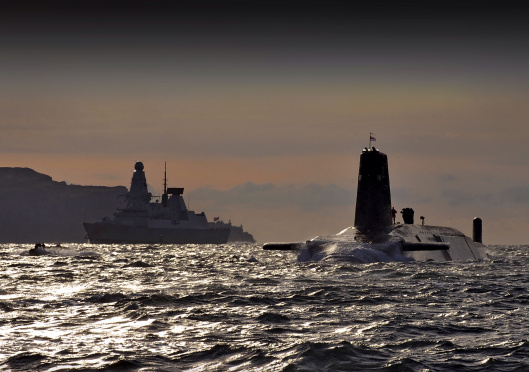
France’s nuclear-powered ‘Barracuda’ submarine lunched by President Emmanuel Macron

French President Emmanuel Macron unveils France’s nuclear-powered ‘Barracuda’ submarine   12/07/2019  French President Emmanuel Macron unveiled France’s latest nuclear-powered ‘Barracuda’ class submarine on Friday, a €9 billion stealth vessel programme Paris says is key to maintaining its naval presence for decades to come…….

The French government has placed an order for six of the 5,000-tonne submarines made by Naval Group, in which defence company Thales has a 35 percent stake.

The Australian defence minister Linda Reynolds attended the ceremony unveiling the submarine. Australia recently ordered a non-nuclear attack class submarine fleet from the Naval Group……… https://www.euronews.com/2019/07/12/french-president-emmanuel-macron-to-unveil-france-s-nuclear-powered-barracuda-submarine

July 13, 2019 Posted by | France, weapons and war | Leave a comment

Tax-payer funding absolutely critical to Russia’s nuclear industry

State support pivotal to Russia’s nuclear sector, says report, WNN 12 July 2019

Russia’s nuclear power industry consists of 89 enterprises that are owned by the state-run joint stock company Atomic Energy Power Corporation (AEPC), or Atomenergoprom, its Russian name.

Since commissioning its first, five-megawatt, nuclear power plant, in Obninsk in 1954, Russia has been one of the world’s leading countries in nuclear power generation, S&P says, and the country plays an important role in all parts of the nuclear cycle, from mining to construction.

The report – What Makes Russia’s Nuclear Sector Competitive – says state support includes capacity-supply agreements, ad hoc equity contributions from the government, and low nuclear liabilities that accrue only after 2011……….

“We expect domestic nuclear capacity to increase only moderately because electricity demand in Russia is stagnating, given only modest GDP growth, a significant potential for energy savings, and the government’s intention to avoid raising electricity prices through additional increases in capacity payments,” the report says.

The key risks, according to S&P, concern international projects: tighter requirements for new builds, which are likely to mean potential delays – “as seen with” the Hanhikivi project in Finland; and, nuclear phase-out policies in Western Europe that “could weigh on exports in the longer run”.

“That said, we believe exports of fuel and enrichment services should be resilient in the next several years because Russia mostly exports to nuclear-supportive countries under long-term contracts,” the report says.

“Meanwhile, treatment of nuclear waste or decommissioning services could increase in importance,” it adds.

AEPC has “solid” profitability and financial metrics compared with international and local peers, S&P says, which provides “financial capacity” for new nuclear power construction, domestically and abroad.

Although Russia is involved in a “record number” of international nuclear power construction projects, the prime contractor is AEPC’s unrated sister entity Atomstroyexport, and AEPC is only directly involved in two projects, Hanhikivi in Finland (34%) and Akkuyu in Turkey (96%), the report notes.

AEPC covers all stages of the civil nuclear cycle,  from uranium extraction (about 13% of global production) through enrichment and fuel fabrication (about 36% and 17% global market shares) to electricity generation in Russia. It is the sole operator of nuclear plants with 29.1 GW, or 12% of Russia’s total installed capacity, and 18% of the country’s electricity production, at ten plants and 35 units in operation. http://www.world-nuclear-news.org/Articles/S-P-report-on-Russia

July 13, 2019 Posted by | business and costs, politics, Russia | Leave a comment

THIS SUNKEN NUCLEAR SUB IS LEAKING RADIATION INTO THE OCEAN

July 11, 2019 Posted by | environment, oceans, Russia | 1 Comment

Belgium’s green party demands review of nuclear waste storage project

Belgium’s green party demands review of nuclear waste storage project  https://www.brusselstimes.com/all-news/belgium-all-news/science/60278/deforestations-impact-on-climate-change-deemed-worse-than-expected/

July 9, 2019 Posted by | EUROPE, wastes | Leave a comment

Was Russian nuclear submarine accident close to a planetary catastrophe?

Russian servicemen ‘averted planetary catastrophe’ during nuclear submarine accident, military official claims at funeral https://www.independent.co.uk/news/world/europe/russia-submarine-accident-fire-nuclear-reactor-catastrophe-sailors-dead-a8991531.html

Kremlin refuses to reveal mission of vessel, citing state secrets Tom Embury-Dennis   8 July 19, Families of the 14 Russian servicemen who were killed after a fire broke out on a nuclear submarine have reportedly been told that their relatives averted a “planetary catastrophe” before they died.

A high-ranking military official is said to have made the comment at a funeral for the crew in St Petersburgh days after the accident in the Barents Sea earlier this week.

The incident remains shrouded in mystery after the Russian government refused to reveal the submarine’s name and its mission, claiming them as state secrets.

However, the Kremlin has said the accident was sparked by a fire in the battery compartment of the submarine.

Defence minister Sergei Shoigu said earlier this week that the onboard nuclear reactor was “operational” after the crew took “necessary measures” to protect it.

  • His deputy Andrei Kartapolov also claimed the “hero” submariners sealed a hatch to contain the blaze.
  • The Kremlin has not revealed what exactly occurred, or whether a major incident was averted by the servicemen’s actions.Paying tribute to the crew at the memorial, the unnamed military official said the submariners had prevented a much bigger tragedy, Russian news outlet Open Media reported.

July 8, 2019 Posted by | incidents, Russia | Leave a comment

£1.68bn pre-tax loss forHorizon Nuclear Power, builder for suspended Wylfa Newydd project

BBC 5th July 2019 The company behind plans to build a new nuclear power station on Anglesey has reported a £1.68bn pre-tax loss. Work at Wylfa Newydd was suspended in
January by Hitachi due to rising costs. The latest accounts filed by its
subsidiary Horizon Nuclear Power Ltd show it cut the value of the land and
equipment by £1.52bn as it does not intend to build a new power station.

The accounts also show that staff redundancies and winding up work also
cost £127m. Horizon will now be put into a “suspended state” following the
release of most of its workforce and termination of most of its commercial
contracts, according to its annual report.

A report by the Welsh Affairs Committee said the UK government should encourage Hitachi to sell the site if it is not prepared to resume work. Horizon previously said its main
planning permission was being considered, as it keeps its options open.
“They are going ahead with the application because they’ve done so much
work already, it’s worth spending the additional money to finish that
work,” said Dr Edward Jones, economics lecturer at Bangor University.

https://www.bbc.co.uk/news/uk-wales-48888093

July 8, 2019 Posted by | business and costs, UK | Leave a comment

Expert opinion: small nuclear reactors a very bad deal for Scotland

“Even if a safe and affordable design were to emerge from the current research projects, the whole concept relies on there being a sufficient guaranteed pipeline of orders for the construction and ramping up to scale of a large and expensive production facility,” NCG said.

“Without such a pipeline – itself requiring an unlikely level of long-term policy consistency – it is difficult to see the private sector being willing to finance such a facility.”

“We need to rapidly scale up investments in clean, safe renewable power and improving energy efficiency rather than fall for the latest sales pitch of the failing nuclear industry.”

Small nuclear reactors for Scotland? No thanks, say experts, The Ferret, Jenny Tsilivakou on July 7, 2019

A report by scientists proposing that Scotland should consider building an array of small nuclear power reactors to help combat climate warming has been dismissed as “disingenuous”.

Three experts under the banner of the Nuclear Consulting Group think tank say that a new report from the Royal Society of Edinburgh (RSE) displayed a “disappointingly poor grasp of the realities of the nuclear issue”.

They have been backed by campaigners, but the RSE has warned against ruling out energy technologies that may not meet “every possible criterion”. The nuclear power industry welcomed RSE’s report.

The RSE report on ‘Scotland’s Energy Future’ was published on 17 June 2019 following a two-year inquiry. Its lead authors were Sir Muir Russell, who was head of the Scottish civil service and principal of the University of Glasgow, and Rebecca Lunn, an engineering professor at the University of Strathclyde.

It accepted that there were “well recognised challenges” with nuclear such as costs, decommissioning, and the disposal of radioactive waste. “Addressing these issues will require substantial investment over a prolonged period of time,” it said.

But the RSE report suggested that “small modular reactors” (SMRs) could be a solution. They are reactors designed to be assembled from pre-made parts to generate under 300 megawatts of electricity, a quarter of that produced by current nuclear stations……

“SMRs could provide many of the benefits of large-scale nuclear energy, but in a form that may prove more acceptable to the public,” the report said.

“There is a high level of uncertainty over how long this technology will take to sufficiently develop.”

The RSE report cautioned that “no energy policy, no matter how well-considered, will ever solve all of the problems and paradoxes of energy supply and use”. There was an “energy quadrilemma”, it contended, that had to take account of climate change, affordability, energy security, and social acceptability and economic wellbeing.

The Nuclear Consulting Group (NCG) has now issued a sharp riposte to the RSE report. It has published a paper by three experts: Dr Paul Dorfman from University College London; Tom Burke from the climate think tank E3G; and Steve Thomas, emeritus professor of energy policy from the University of Greenwich.

They concluded that “Scotland’s energy future has no need for nuclear”. They criticised the RSE report for “conflicting” and “confusing” messages about nuclear power.

The RSE report didn’t provide evidence to back up some of its claims, the NCG paper argued. The RSE failed “to note that all nuclear is significantly more carbon intensive than all renewables”.

NCG maintained that renewables such as wind power were cheaper than new nuclear. It was particularly critical of the idea that SMRs could help Scotland achieve its climate targets. Continue reading →

July 8, 2019 Posted by | Small Modular Nuclear Reactors, UK | Leave a comment

Together Against Sizewell C: the battle to save UK’s Suffolk coast from nuclear development

The nuclear fight for Sizewell on Suffolk’s coast, BBC, 7 July 2019  

Joan Girling has been fighting the nuclear industry most of her adult life.

She was at school when the new Magnox reactor was begun on the Suffolk coast at Sizewell in the 1960s.

Her father told her it was a “necessary evil”.

But when she moved to Leiston, just a few miles from the nuclear power station, and work began on Sizewell B in the 1980s, she could no longer ignore it………

in 1989 the Central Electricity Generating Board (CEGB) proposed a Sizewell C and Joan decided she had to do something.

At a fractious meeting at the Leiston Film Theatre in the High Street opposite the fish and chip shop, she founded Community Against Sizewell C.

Joan and an array of other anti-nuclear groups won that fight. Sizewell C was cancelled. The plan was resurrected in 1993 and Joan helped fight and win that one as a local councillor. But she has no illusions about what swung the argument.

“It was the finances that didn’t work out for them, ” she says resignedly. “Not the environment. It’s always finance that has the final say.” ……..

EDF and Sizewell C

The CEGB is now long gone. Today it is the giant French energy group EDF who wants to build Sizewell C. The protestors now call themselves Together Against Sizewell C (TASC).

In the next few weeks the plans will go to the Planning Inspectorate and then on to Secretary of State. If it is approved Joan expects ten years or more of construction, millions of tonnes of aggregate roaring in by road or rail, spoil heaps and a campus of more than 6,000 workers, on what she calls “my beloved coast.”………

Sizewell and Hinkley would  be a blueprint for a nuclear future.

Joan sighs at the thought: “No, nuclear plant, never, not one, has come in on time and on budget.”

Protected areas

Sizewell is hemmed in with every kind of protected area. Philip Ridley, Head of Planning and Coastal Management at East Suffolk Council, admits: “If you were looking for a place to build a nuclear power station you could not have chosen a more environmentally sensitive spot.”

The whole coast is an Area of Outstanding Natural Beauty (AONB). The shingle beach is a Site of Special Scientific Interest (SSSI). Sizewell Marshes, just behind the plant is a Special Protected Area (SPA). The Leiston Sandlings to the south are another SPA. There’s even an ancient monument nearby, Leiston Abbey.

Minsmere

But it is hard to compromise on Minsmere, a Special Area of Conservation (SAC) and an SSSI. The thousand hectares of marsh, less than a mile to the north, is the pride of the RSPB, where in 1947 the avocet, now the emblem of the charity, started breeding again for the first time in 100 years. It is home to 5,800 plant and animal species, marsh harriers, otters, water voles and bearded tits.

Adam Rowlands, Minsmere senior site manager, says: “For the RSPB, the scale of risk is higher than anything else we have ever been faced with before.

“The proposed footprint extends into the marshes behind the site which is managed by the Suffolk Wildlife Trust, and we are concerned at the loss of habitat over the ten years of construction due to noise and light and disturbances, and also the effects on the water table.”

At the moment Minsmere’s water levels are delicately controlled by sluices. Mr Rowlands says any unexpected rise or fall of a few centimetres could flood nests and destroy habitats.

It’s not just the fresh water inland but the salt water of the North Sea that worries the RSPB.

It is an unpredictable and mobile coastline. The RSPB fears that higher sea defences and a concrete landing strip for barges could drastically alter the shoreline – and Minsmere.

Consultations

In response EDF has issued lengthy consultation papers. The local Suffolk Wildlife Trust’s response to the latest and most detailed one is littered with references to “inadequate assessment”.

What’s more, there are fears EDF will only release a full assessment immediately before the plans go before the Planning Inspectorate, giving local groups little time to respond…….https://www.bbc.com/news/business-48828820

July 8, 2019 Posted by | environment, opposition to nuclear, UK | Leave a comment

Chernobyl’s $1.7B nuclear confinement shelter finally revealed

Chernobyl’s $1.7B nuclear confinement shelter revealed after taking 9 years to complete,  By Paulina Dedaj | Fox News  4 July 19  A new structure built to confine the Chernobyl reactor at the center of the world’s worst nuclear disaster was previewed for the media Tuesday.

Reactor No. 4 at the Chernobyl nuclear power plant in Ukraine exploded and burned April 26, 1986.

The complex construction effort to secure the molten reactor’s core and 200 tons of highly radioactive material has taken 9 years to complete under the auspices of the European Bank for Reconstruction and Development. It was built to cover the temporary concrete and steel Shelter Structure, which was built immediately after the disaster, but which had begun to deteriorate in the 1990s.

The structure itself cost 1.5 billion euros (almost $1.7 billion) and the entire shelter project cost 2.2 billion euros. The European Bank for Reconstruction and Development managed a fund with contributions from 45 countries, the European Union and 715 million euros in the bank’s own resources.

The shelter is the largest moveable land-based structure ever built, with a span of 843 feet and a total weight of over 36,000 tonnes.

“This was a very long project,” said Balthasar Lindauer, director of the bank’s Nuclear Safety Department. He noted that preliminary studies began in 1998 and the contract for the structure was placed in 2007.

He said Ukraine was a big contributor, contributing 100 million euros in cash along with expertise and personnel. ……. https://www.foxnews.com/world/chernobyl-nuclear-confinement-shelter-revealed

July 8, 2019 Posted by | safety, Ukraine | Leave a comment

French government wants an independent audit of EDF’s Flamanville nuclear plant

Reuters 5th July 2019 The French government has requested an independent audit of EDF’s
(EDF.PA) Flamanville nuclear plant, which faces new cost overruns and
delays of up to three years after a regulator ordered repairs last month.
ASN, the French nuclear watchdog, said that state-owned EDF would have to
repair eight faulty weldings in the reactor’s containment building,
adding that it had rejected a request to delay repairs until 2024.
France’s Economy minister Bruno Le Maire told BFM television on Friday
that “incidents” at Flamanville, northern France, were
“unacceptable”, adding that he had asked a former executive with car
maker PSA (PEUP.PA), Jean-Martin Folz, to conduct an independent inquiry.

https://uk.reuters.com/article/uk-edf-nuclearpower-flamanville/france-asks-for-independent-audit-of-edfs-flamanville-nuclear-plant-idUKKCN1U0268?rpc=401&

July 8, 2019 Posted by | Arclight's Vision, business and costs, France, politics | 1 Comment

Trip to check radiation after 1989 sinking of Russian sub 

AP News July 5, 2019  COPENHAGEN, Denmark (AP) — A joint Norwegian-Russian expedition will assess whether a Russian submarine that sank 30 years ago is leaking radioactive material, Norwegian authorities said Friday.

The Radiation and Nuclear Safety Authority say Norwegian research vessel G.O. Sars will set off Saturday from Tromsoe, northern Norway, to the Arctic Barents Sea where the Komsomolets submarine sank in 1989. Forty-two of the 69 crewmen died in a fire, and the submarine’s nuclear reactor and two nuclear warheads are still on board.

The agency said a Norwegian-built remote-controlled submersible would be used and the work “would be demanding” as the submarine “lies deep” at about 1,700 meters (5,610 feet)…… https://www.apnews.com/dd6e18dafde14bf799de6d9b5f13fccd

July 8, 2019 Posted by | oceans, radiation, Russia | Leave a comment

Fire on Russian nuclear submarine: heroic crew prevented nuclear catastrophe.

Russia’s nuclear submarine disaster will test President Vladimir Putin and his navy. ABC News, By Alexey Muraviev  4 July 19, Russia’s Ministry of Defence has officially acknowledged an incident this week with one of its deep-submergence vehicles (DSV) within Russian territorial waters.

The incident seems to point to one of Russia’s most closely guarded naval assets — the Project 10831 AS-31 (AS-12) Kalitka (Norsub-5), more commonly known as Losharik.

It is named after a popular Soviet cartoon character because of its design specifications — a series of titanium spheres under the hull designed to withstand extreme water pressure.

A secret assignment    According to the latest reports, all those killed onboard were assigned to a secret naval unit stationed in St Petersburg, which is responsible for operations of Project 18510 Nel’ma (X-Ray) “autonomous deep-sea stations” — Russia’s official description of the DSV-type platforms — the AS-21 and the AS-35.

However, the declared number of casualties and the seniority of the deceased personnel is unclear. It is assumed the tragedy occurred onboard the AS-12, which has an estimated crew of some 25 officers.

All these special-purpose submarines are assigned to the 29th “deep water” Submarine Division based at the Gadzhievo submarine base on the Kola peninsula.

Formally assigned to the Russian Northern Fleet, the “deep-water” submarine division is under the direct control of the Russian Ministry of Defence’s GUGI Directorate, which oversees covert marine and naval activities ranging from deep-sea oceanographic research to covert testing of advanced sea-based combat systems, to undersea special operations.

Covert trials of a nuclear-armed torpedo?   While official word suggests the submarine was undertaking scanning of the seabed in one sector of the Barents Sea, the actual mission being undertaken may be different.It is possible the submarine was taking part in the covert sea trials of the Poseidon sub-sea strategic combat system (a large calibre nuclear torpedo) .

The tragedy would be the first reported large-scale fatality sustained by GUGI’s secret force.

But it cannot be compared with previous disasters involving Russian nuclear-powered submarines such as the RFS Kursk Oscar II class catastrophe back in 2000 or the incident onboard RFS Nerpa Akula IIclass back in 2008.

This disaster has happened within a unit designed specifically to operate in extreme physical environments where the safety and professionalism of the crew is a key to survival and success.

The crew comprises only middle-to-senior rank officers…….

Was a nuclear disaster averted?

It is understood that the fire onboard led to the fatal intoxication of more than half of the crew — about 14 out of some 25 onboard — and serious injuries of another four or five onboard.

Any submariner would concur that a fire onboard a submarine on deployment poses a serious risk. Fire onboard a nuclear-powered submarine is even worse.

While it is unknown what triggered that fatal fire, a mechanical failure or a human error, the fact is clear: the crew, at the cost of their lives, prevented a potentially major environmental disaster if the DSV had sunk to the bottom of the ocean, or exploded…… https://www.abc.net.au/news/2019-07-03/russias-nuclear-submarine-disaster-test-vladimir-putin-navy/11274964

July 4, 2019 Posted by | incidents, Religion and ethics, Russia | Leave a comment

Local fishermen saw the Russian nuclear submarine accident

Fishermen witnessed nuclear submarine drama, The sub quickly surfaced and there were subsequent signs of panic on the deck, the local fishermen say. The accident might have been caused by a gas explosion. Barents Observer, By  Atle Staalesen,July 03, 2019

They were out doing illegal fishing and do not want to reveal their names. But the men who late Monday evening were onboard a small local fishing boat off the coast of the Kola Peninsula told news agency SeverPost that they witnessed what appeared as a state of emergency.

Eye witnesses

It happened around 9.30 pm near the Ura Bay, one of the witnesses says.

«We were heading towards Kildin, and then, about half past nine in the evening, a submarine surfaces. Suddenly and completely surfaces. I have never seen anything like it in my life. On the deck, people were running around and making fuss,» he told SeverPost.

The fishermen hid in nearby bay from where they saw that a navy vessel and two tugs quickly arrived on site. Around 11 pm, the vessels accompanied the submarine away from the area. There was no sign of smoke, they say.

Other locals later reported that they saw bodies being taken out of the submarine and to an approaching ship.

A source in the Russian Navy later told SeverPost that the submarine seen by the local fishermen was most likely the «Podmoskovie», the mother vessel of the special purpose submarine «Losharik» (AS-31). The «Podmoskovie» is a rebuilt Delta-IV class submarine designed to carry the much smaller «Losharik».

Sources in the Navy on Tuesday told Russian media that the accident had happened in the «Losharik». …… https://thebarentsobserver.com/en/security/2019/07/fishermen-witnessed-nuclear-submarine-drama


July 4, 2019 Posted by | incidents, Russia | Leave a comment

Russia’s nuclear submarine fire: what is known so far

What We Know About Russia’s Deadly Nuclear Sub Fire So Far https://www.themoscowtimes.com/2019/07/03/what-we-know-about-russias-deadly-nuclear-sub-fire-so-far-a66264 3 July 19   Fourteen sailors were killed in a fire on board a Russian Defense Ministry research vessel while carrying out a survey of the sea floor off Russia’s Arctic coast.

President Vladimir Putin has dispatched Defense Minister Sergei Shoigu to Severomorsk, the Russian naval base on the Barents Sea where the submarine is now located, to find out what caused the incident and report back to him.

Here’s what we know so far:

— The incident took place on Monday — nearly a day before the news was released — in Russian territorial waters in the Barents Sea, Shoigu reported to Putin.

— The 14 sailors died of smoke inhalation, Shoigu told Putin late on Tuesday.

— He said the crew extinguished the fire “through their decisive action.”

— A Navy commission has been tasked with investigating the cause of the tragedy and a military branch of Russia’s Investigative Committee has openedan inquiry into the deaths.

— The Defense Ministry had informed Putin of the accident on the day it occurred, Kremlin spokesman Dmitry Peskov said on Wednesday.

The submarine

— Russian officials have not commented on the type of vessel involved in the deadly fire.

— An unnamed source in the security forces told the RBC news website the incident took place on the AS-31, a secretive deep-sea nuclear submarine.

— Launched in 2003, the submarine nicknamed Losharik was designed for research, rescue and special military operations, and can hold up to 25 crew members. — It is made from a series of interconnected spheres, making it stronger than conventional submarine designs and allowing it to resist water pressure at great depths.

— Analysts believe the vessel is a key asset of GUGI, the Defense Ministry’s Main Directorate of Deep-Sea Research, and not part of the Russian Navy. St. Petersburg’s fontanka.ru news website and the Kommersant business daily reported that Losharik’s crew members allegedly belong to a military unit that reports to GUGI.

Casualties

— The Defense Ministry has not released the names of those on board the vessel.

— Putin noted that of the 14 casualties, seven held the rank of captain 1st rank and two had held the Hero of Russia award, the highest military honor issued in the post-Soviet period. — Shoigu confirmed that there were survivors, but did not specify how many. Anonymously sourced reports suggested four to five crew members survived the fire.

— RBC, citing social media, listed four names of possible casualties. They include the son of the military unit leader; a submarine commander who holds captain 1st rank and Hero of Russia; and a second captain 1st rank.

— An Orthodox cathedral in Murmansk, a city north of Severodvinsk, has listed 14 names in its announcement of a service “for the fallen seamen-submariners” on Wednesday evening.

Reactions

— Putin called the incident “a great loss for the [Northern] Fleet, and indeed for the Army.”

— Acting governor of St. Petersburg Alexander Beglov and Murmansk region governor Andrey Chibis expressed their condolences to the victims. — “The Losharik incident will likely have a deep operational impact on [GUGI], given how advanced and relatively few these submarines are,” a former U.S. National Security Council staffer told the Radio Free Europe/Radio Liberty news outlet.

— The United States has allegedly not received requests for assistance from the Russian government, a U.S. 6th Fleet spokesperson told the U.S. Naval Institute’s USNI News website.— Norwegian officials said they had been in touch with their Russian counterparts and were monitoring, but had not detected abnormally high levels of radiation.

— Colleagues around the world, including the U.S., will mourn the loss of 14 Russian sailors because of a “special bond between all submariners,” wroteWashington Examiner columnist Tom Rogan.

Past accidents

— This is the largest accident to take place on a Defense Ministry submarine since 2008, when a freon gas leak on the nuclear-powered submarine Nerpa killed 20 and injured 21.

— In August 2000, the Russian nuclear-powered submarine Kursk sank to the floor of the Barents Sea after two explosions in its bow, killing all 118 men aboard. That accident, soon after Putin took office, focused official attention on the state of the military and its hardware, which had been underfunded and neglected after the collapse of the Soviet Union.

July 4, 2019 Posted by | incidents, Russia | Leave a comment